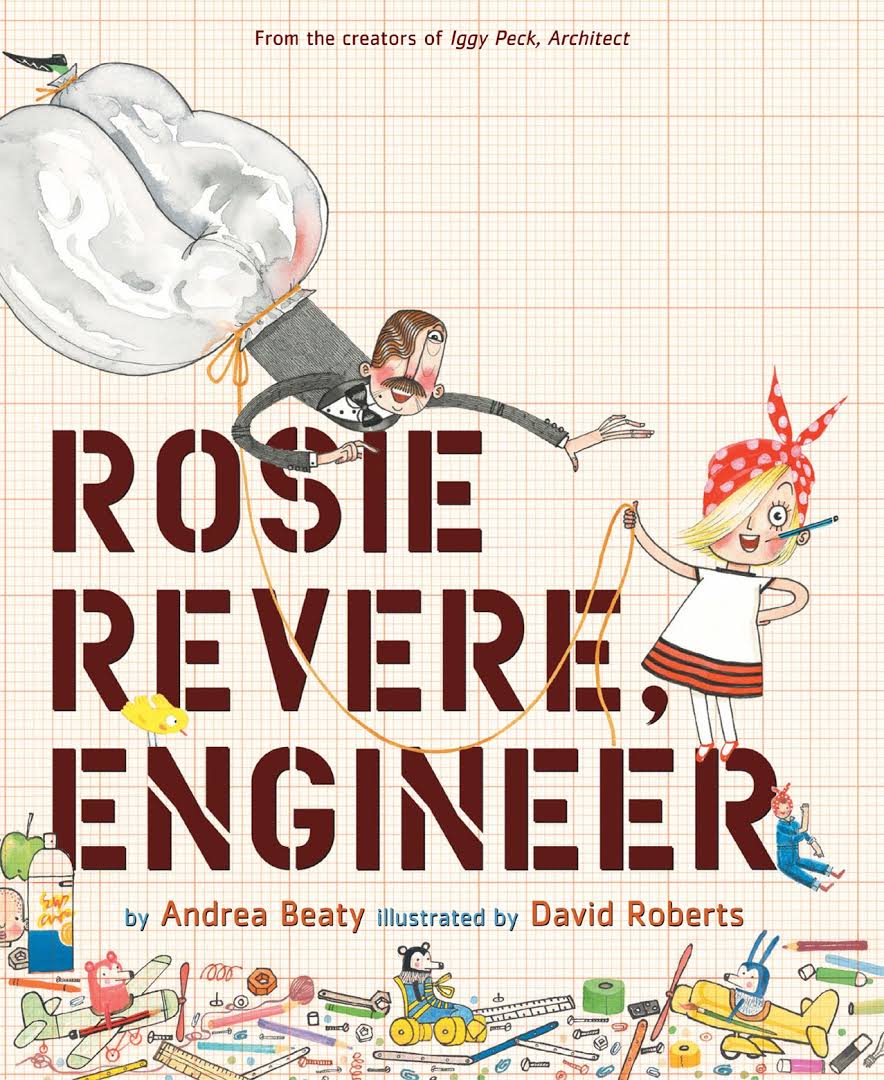
Rosie Revere, Engineer Author: Andrea Beaty; Illustrated by: David Roberts
Published: September 3, 2013 by Abrams
A Guest Review by Jennifer Zafetti
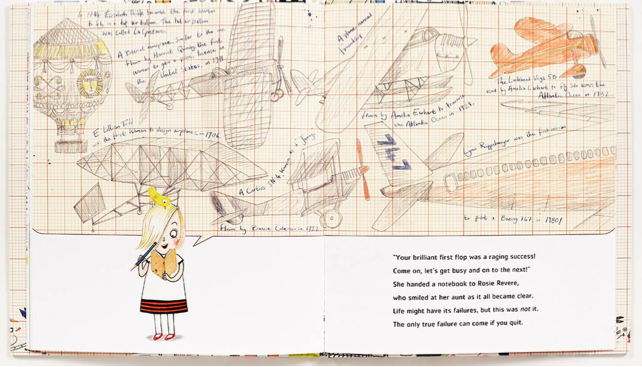
Summary: Rosie is an ambitious young girl who aspires to be an engineer. She creates an invention for her uncle, but becomes embarrassed when he laughs at her. She does not feel supported , until she meets her Great-Great-Aunt Rose who is both an adventurer and an explorer. Her great-great-aunt yearns to fly so Rosie builds her a contraption made out of cheese. When her great-great-aunt laughs at her failure, Rosie becomes disheartened and swears to never invent again. Rose provides her with comfort and explains that, “Your brilliant first flop was a raging success.” This provides Rosie with the encouragement she needs to try again!
Review: I really enjoyed reading this book! I think that it is so important for kids to embrace failures! If Rosie had admitted defeat after her first failure, she would have never been able to be successful. Rosie’s perserverance allowed her to create a flying contraption for her aunt. Furthermore, the rhyming sentences created an engaging tone that kept me wondering what would happen next. This is a great story to read-aloud to a classroom! Additionally, the illustrations on each page really add to the story and provide detailed visuals to accompany Rosie’s different inventions. Overall, I think that this book can be inspirational for all ages—the simple message: never give up!
Teachers’ Tools for Navigation: Rosie Revere, Engineer is an uplifting story in which failure turns into success. Teachers should use this children’s book to teach students about the importance of perseverance. When faced with challenges, students should use them as an opportunity to grow. If you believe in yourself, you can achieve anything!
Also, the teacher can pause the reading to ask for predictions.
Discussion Questions: How did Rosie’s mood change throughout the story?; When is a time that you persevered when facing a challenge?; When is a time that you have learned from a failure? How do Rosie’s family members impact her actions?
Flagged Passage:
Read This If You Loved: Ada Twist, Scientist by Andrea Beaty, and The Most Magnificent Thing by Ashley Spires
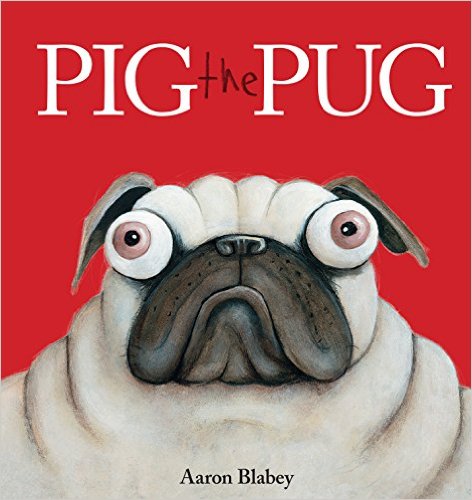
Pig the Pug Author: Aaron Blabey
Published: July 1, 2014 by Scholastic
A Guest Review by Rebecca Welch
Summary: Pig is a greedy dog and does not want to share his toys with his housemate, Trevor. Trevor thinks it would be a great idea if him and Pig shared toys because then they would be able to play together. Pig does not give in and gathers all of his toys so Trevor can’t get to them. A mishap occurs that makes pig realize the importance of sharing and friendship.
Review: This book is great for any elementary school classroom! I absolutely loved it and thought that the message at the end was applicable to any group of young children. The rhyming makes the book great for a fun read aloud and the illustrations are fantastic. There was also a bit of humor. I highly recommend this picture book.
Teachers’ Tools for Navigation: This book would be great to teach rhyming because each page rhymes. You could talk about the moral of a story and use it as a segway to students’ writing about a time where they learned an important lesson (moral). You could have students determine the meaning of the idiom “flip a wig” by the using context clues and then study other common idioms afterwards. In addition, you could introduce character traits and determine the traits of Pig and Trevor. You can also practice making predictions by predicting what will happen to Pig. It would also be a great classroom discussion facilitator on sharing and the importance of friendship.
Discussion Questions: How do you think Trevor may be feeling when Pig won’t share his toys?; What does it mean to be greedy or selfish?; What do you predict will happen to Pig?; Can we think of any times that we have been greedy or selfish?; What does “flip a wig mean”?; What is the moral of this story?
Flagged Passage: “I know what your game is, you want me to SHARE! But I’ll never do that! I won’t and I swear!” (p. 7).
Read This If You Loved: Dog vs. Cat by Chris Gall; Mr. Fuzzbuster Knows He’s the Favorite by Stacy McAnulty
Yesterday we revealed the Barkus teaching guide, today we get to share another new guide I wrote for another must-get early chapter book from Chronicle Books for all of my early elementary friends!
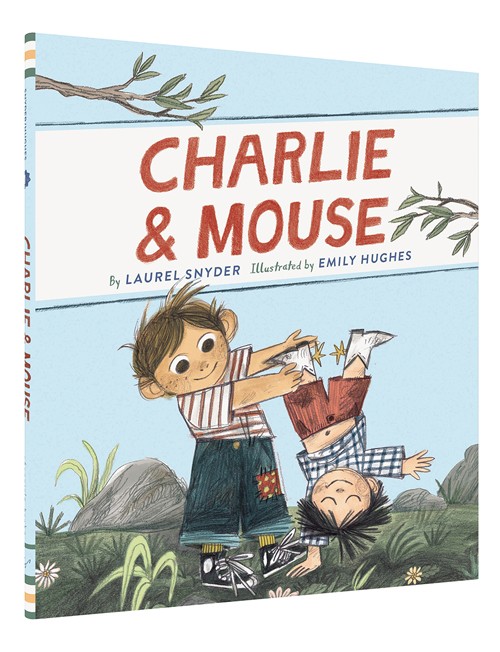
About the Book: Meet Charlie and Mouse! Join these irresistible and irrepressible sibs in their quest to talk to some lumps, take the neighborhood to a party, sell some rocks, and invent the bedtime banana. With imagination and humor, beloved author and illustrator team Laurel Snyder and Emily Hughes paint a lively picture of brotherhood in four irresistible stories that readers will relish.
About the Author: Laurel Snyder is the author of many books for children. She lives and writes in a small yellow house in Atlanta, Georgia, which she shares with her husband and two sons. She would like to state for the record that while none of these stories are exactly true, none of them are exactly untrue either.
About the Illustrator: Emily Hughes is an illustrator (and sometimes writer) who lives in windy Brighton, England, while thinking fondly of her hometown in Hilo, Hawaii. When making books she uses pencils, her tablet, and a very, very generous stack of paper.
About the Guide: This guide consists of discussion opportunities and classroom extension activities designed for use by Pre-K through first grade students in classroom, small group, or individual assignments. Charlie & Mouse allows children to exercise a variety of reading comprehension strategies, from gaining information about a story from the illustrations and text to retelling, describing, building vocabulary, and comparing and contrasting. Additionally, Charlie & Mouse helps young readers develop foundational reading skills such as learning to recognize sight words and text features.
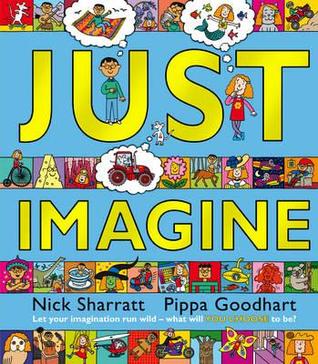
Just Imagine Illustrator: Nick Sharratt; Author: Pippa Goodhart
Published: August 30, 2012 by Kane Miller Books
Goodreads Summary: Just imagine what it would be like to be as small as a mouse; or as big as a house. Imagine exploring the depths of the ocean, traveling into the past or the future – or something even stranger…This wonderfully inventive and interactive book allows a child to tell their own story, combining new elements each time. And with intricately detailed illustrations for parent and child to pore over together, this really is a book to share time and time again.
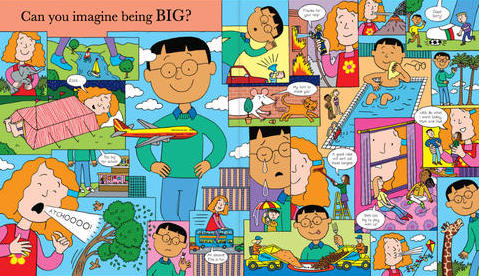
My Review: This book is everything the title promises. It will spark children’s imaginations as they consider what it would be like to be really, really big or what it would be like to travel through time or live underground. The illustrations are absolutely stunning. It is a book that is made for both a child and the parent/teacher reading it. I loved spending a long time on each page, exploring all of the different drawings to better imagine each scenario. After reading the book, I couldn’t help but want to meet the illustrator and give him a nod of approval. This is a book that will inspire a lot of creativity in homes and classrooms.
Teachers’ Tools for Navigation: This would be a fantastic way to jump start a creative writing unit. I could see the different pages as writing inspirations for students to use words to imagine a scenario of their choice from their favorite spread in the book. I also think it would be fun to ask students to add a page to this book—to imagine another scenario and illustrate what it would look like.
Discussion Questions: Choose one scenario and imagine other things that could have gone on the pages. Why might the illustrator have made the choices that he did?; How does the illustrator creatively imagine each scenario? How does he use color and art to make the book engaging?
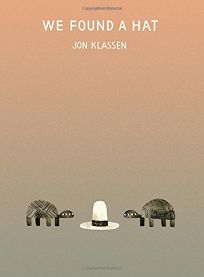
Happy book birthday to We Found a Hat by Jon Klassen!
We Found a Hat
Published October 11, 2016 by Candlewick Press
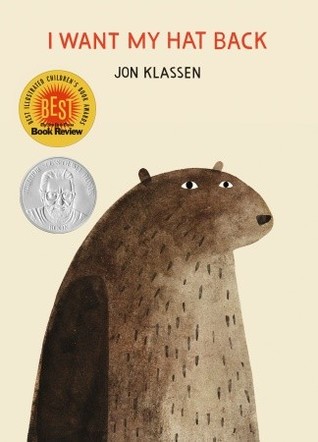
I Want My Hat Back Published September 27th, 2011 by Candlewick Press
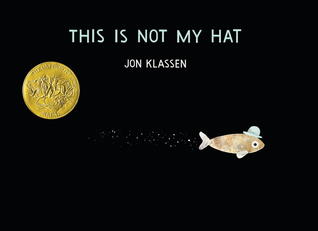
This Is Not My Hat
Published October 9th, 2012 by Candlewick Press
The first two books of The Hat Trilogy have enthralled readers for years. They have been read in many classrooms and in many bedrooms delighting millions of children (and adults!). Today we get to celebrate the final installment of the trilogy.
Summary of We Found a Hat: Two turtles find one hat – and it happens to look great on both of them.
Q&A With Jon Klassen:
Teachers’ Tools for Navigation and Discussion Questions:
I am happy to share the teaching guide for the books that I had the honor of writing!
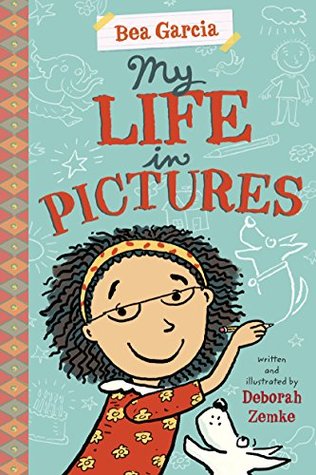
Bea Garcia: My Life in Pictures Author and Illustrator: Deborah Zemke
Published March 8th, 2016 by Dial Books
Summary: Bea Garcia is an artist. She draws anywhere and everywhere—but mostly in her own notebook. When Bea’s first and only best friend Yvonne moves to Australia, not even drawing makes Bea feel better. And things only get worse when a loud, rambunctious boy moves in next door. He’s nothing at all like Yvonne! But with a little imagination and a whole lot of doodles, Bea Garcia might just make a new friend.
This first book in a brand-new chapter book series is a must-read for doodlers everywhere.
Review: I am loving learning more about early middle grade books, and Bea Garcia is going to be a protagonist that will be welcomed in this group of books. Bea will join forces with so many strong girls that 4th through 6th graders can read about. What I love about Bea’s story is that it is one that so many readers will relate to. She deals with losing a best friend and a bully moving into her classroom and neighborhood. She also has a supportive and real family that will reflect many families out there. Also, I loved Deborah Zemke’s illustrations throughout. They really brought Bea’s personality, dreams, and thoughts.
Teachers’ Tools for Navigation: Bea’s story will be one that can be used to start so many discussions while being read aloud. It is a perfect story to discuss different types of people, bullying, friendship, school, etc. Also, I think it would be interesting to discuss the addition of illustrations and even voice with students. One idea would be to read aloud part of the story without showing the illustrations and discuss how the illustrations help the story and how Bea’s voice is crafted.
Discussion Questions: Bea uses drawing to think through her emotions. What do you use to help think through your emotions?; What would have been a different way that Bea could have dealt with Bert?; Is there a time that you lost a best friend? How did you deal with it?; How would Bea’s story have been different without illustrations?
Flagged Passages: “We played together at recess and after school, on weekends and vacations, running back and forth in the backyards from my house to her house.
One winter day, we rolled a snowball from her yard to mine and back a hundred times until it was the biggest snowball in the world. Then we turned the snowball into a giant Snow Kitty.
I don’t think Sophie liked Snow Kitty.
When it was warm, we played in the crabapple tree that was just the right size for us to climb.
It was a magic tree.” (p. 20-21)
Read This If You Loved: Amelia’s Notebook series by Marissa Moss, Popularity Papers series by Amy Ignatow, Mackenzie Blue series by Tina Wells, Middle School series by Jenni L. Holm
Recommended For:
**Thank you to Deborah for providing the book for review!**
Journey Trilogy
Author and Illustrator: Aaron Becker Journey Published August 6th, 2013 Quest Published August 26th, 2014 Return Published August 2nd, 2016
By Candlewick Press
Journey Summary: Follow a girl on an elaborate flight of fancy in a wondrously illustrated, wordless picture book about self-determination — and unexpected friendship.
A lonely girl draws a magic door on her bedroom wall and through it escapes into a world where wonder, adventure, and danger abound. Red marker in hand, she creates a boat, a balloon, and a flying carpet that carry her on a spectacular journey toward an uncertain destiny. When she is captured by a sinister emperor, only an act of tremendous courage and kindness can set her free. Can it also lead her home and to her heart’s desire? With supple line, luminous color, and nimble flights of fancy, author-illustrator Aaron Becker launches an ordinary child on an extraordinary journey toward her greatest and most exciting adventure of all.
Journey Review: This book is very hard to explain the magic of it. Lorna (@notforlunch) described it the best, I think: “a wonderful mashup of a David Wiesner book and Harold and the Purple Crayon.” I think this is perfect. It has the illustration beauty and magic of a wordless David Wiesner picture book and it is about creativity (and a crayon) like Harold. The beauty of the castle she visited also reminded me of Cathedral by David Macaulay. This book is just full of amazing!
Quest Summary: A king emerges from a hidden door in a city park, startling two children sheltering from the rain. No sooner does he push a map and some strange objects into their hands than he is captured by hostile forces that whisk him back through the enchanted door. Just like that, the children are caught up in a quest to rescue the king and his kingdom from darkness, while illuminating the farthest reaches of their imagination. Colored markers in hand, they make their own way through the portal, under the sea, through a tropical paradise, over a perilous bridge, and high in the air with the help of a winged friend. Journey lovers will be thrilled to follow its characters on a new adventure threaded with familiar elements, while new fans will be swept into a visually captivating story that is even richer and more exhilarating than the first.
QuestReview: Quest is a beautiful continuation of Journey. Aaron Becker starts where the first book left off, but Quest is as unique as Journey was. The kids we met in the first book are swept into an adventure to save a king who has armed them with the tools to save the kingdom. I read this book over and over again because there are so many different little nuances in this adventure that promotes creativity, imagination, and teamwork. To be honest, I almost like Quest better than journey because the kids work together.
Return Summary: Welcome the much-anticipated finale of Caldecott Honoree Aaron Becker’s wordless trilogy—a spectacular, emotionally satisfying story that brings its adventurer home.
Failing to get the attention of her busy father, a lonely girl turns back to a fantastic world for friendship and adventure. It’s her third journey into the enticing realm of kings and emperors, castles and canals, exotic creatures and enchanting landscapes. This time, it will take something truly powerful to persuade her to return home, as a gripping backstory is revealed that will hold readers in its thrall. Caldecott Honor winner Aaron Becker delivers a suspenseful and moving climax to his wordless trilogy, an epic that began with the award-winning Journey and continued with the celebrated follow-up Quest.
Return Review: You will adore the conclusion to the trilogy. Becker does an amazing job of tying the beginning of Journey to the end of Return. To think that all the books happened in a day! The girl had quite an amazing journey, quest, and return in only one day! It is amazing what can go on when magic is involved. I don’t want to give away much else about the finale, but I will say it is as much a must read as the first two.
Teachers’ Tools for Navigation: In my classroom, the first thing I would do is project the book and just have the students read it with me. No talking; just looking. Then we’d go back and discuss what is going on in the book, talk about some of the smaller parts of the illustrations, relive the journey. If I wanted to include a writing activity, we could add words to the book (although, I think this book’s illustrations stand alone). We could also discuss what we’d do if we had a magic crayon. I think this book would be a great addition to Dot Day and discussing creativity. Finally, I think a discussion of observing your surroundings would be appropriate as what the girl wanted the most was right in front of her at the beginning of the book. (From 10/5/13 post)
Additionally, this trilogy would be a wonderful mentor text to discuss narrative elements because Becker has given us a perfect plot arc filled with conflict, suspense, and resolution. It would also be interesting to talk to students about characterization in a wordless picture book because the characters still have very evident traits though it is through illustration and actions that we have to determine them. Although, I would be careful in taking the magic away from these books. I don’t want to analyze and dig into them too much because they are beautiful pieces of art that should be enjoyed first and foremost.
Discussion Questions: What would you do with a magic crayon?; Why did the girl have to turn to a magical land instead of remaining at home?; Were you surprised about who finally saved the day?; What is happening on the final page of Return? How do you feel about this resolution to the story?; How did the story progress through each book?