Review and Giveaway!: Once Upon a Camel by Kathi Appelt

Share

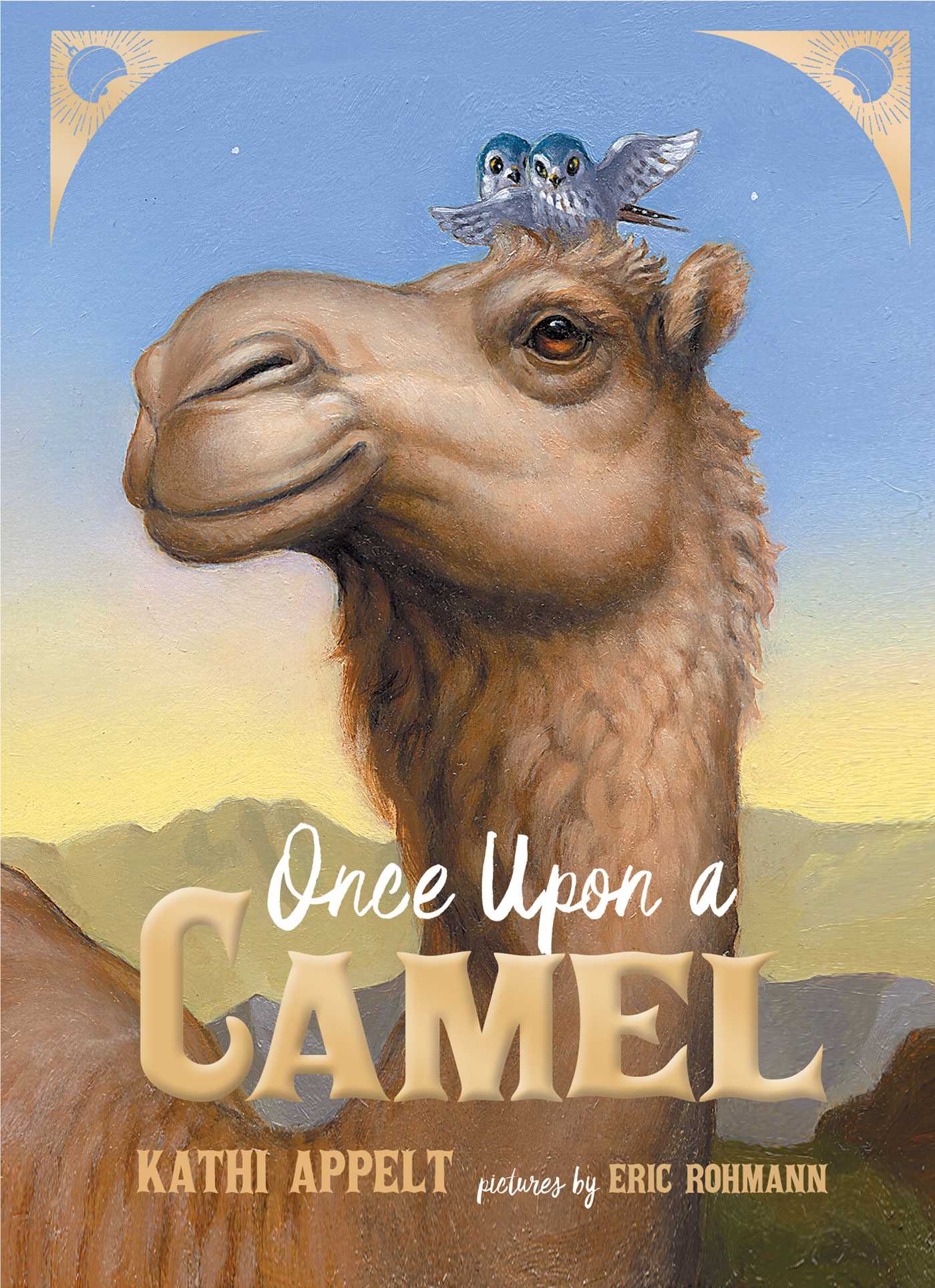
Once Upon a Camel
Author: Kathi Appelt
Illustrator: Eric Rohmann
Published September 7th, 2021 by Atheneum/Caitlyn Dlouhy Books

Summary: An old camel is out to save two baby kestrel chicks during a massive storm in the Texas desert.

Zada is a camel with a treasure trove of stories to tell. She’s won camel races for the royal Pasha of Smyrna, crossed treacherous oceans to new land, led army missions with her best camel friend by her side, and outsmarted a far too pompous mountain lion.

But those stories were from before. Now, Zada wanders the desert as the last camel in Texas. But she’s not alone. Two tiny kestrel chicks are nestled in the fluff of fur between her ears—kee-killy-keeing for their missing parents—and a dust storm the size of a mountain is taking Zada on one more grand adventure. And it could lead to this achy old camel’s most brilliant story yet.

About the Author: Kathi Appelt is the author of the Newbery Honoree, National Book Award Finalist, and bestselling The Underneath as well as the National Book Award Finalist for The True Blue Scouts of Sugar Man Swamp. Some of her award-winning books include Maybe a Fox (with Alison McGhee), Keeper, and Max Attacks to name just a few. She lives in College Station, Texas. To learn more, visit her website at kathiappelt.com.

Find Kathi Appelt on Facebook and Pinterest!
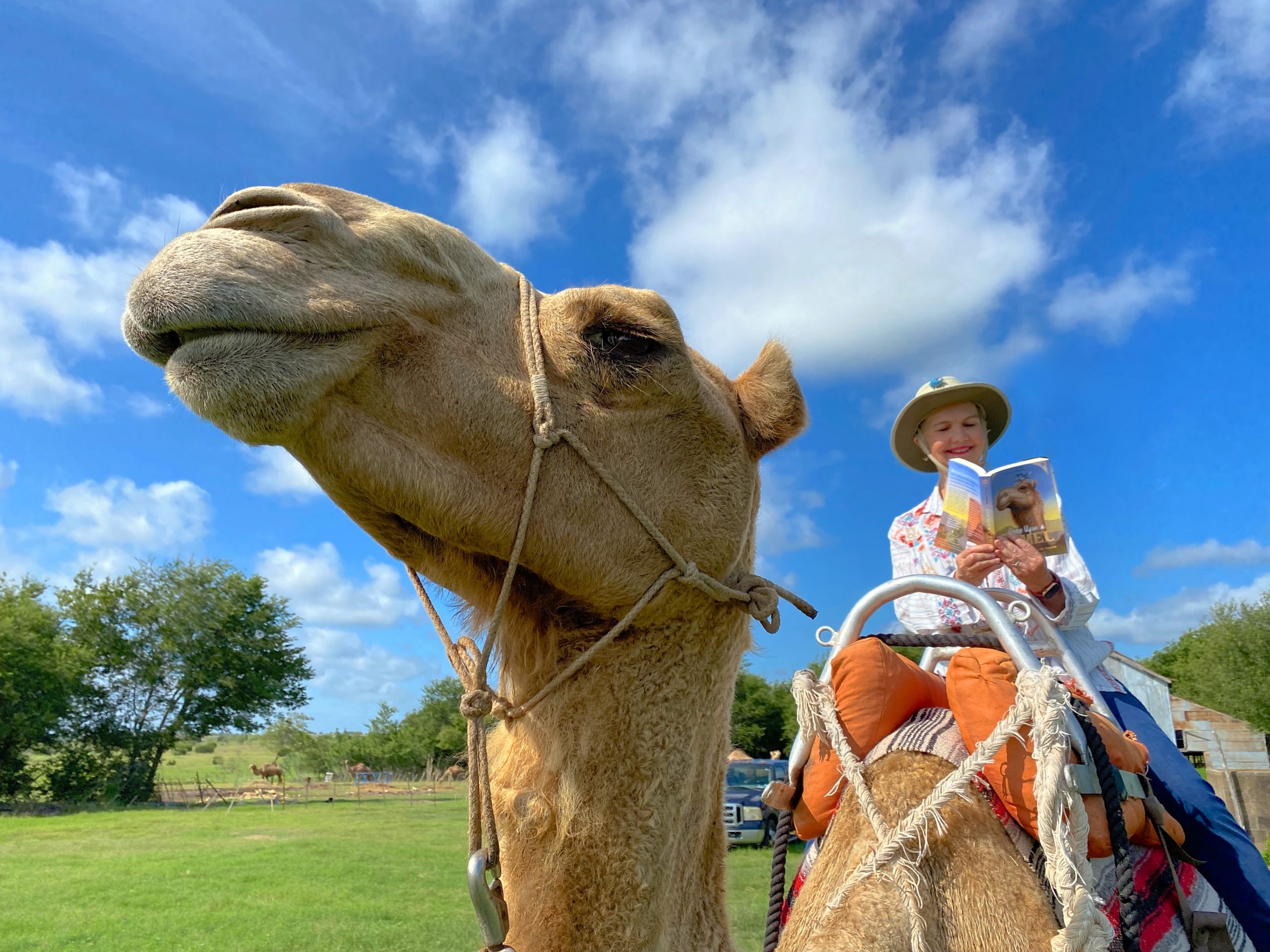
Richard, the camel, and Kathi Appelt taken at Texas Camel Corps. Photo credit: Doug Baum.

Review: Happy book birthday, Kathi & Once Upon a Camel! So honored to review this special book on your special day!

In all of Kathi Appelt’s books, what I have found that I adore the most is her ability to craft voice. She is brilliant. In this book, Zada the camel’s voice rings throughout with patience and determination. I was calmed by her stories of her upbringing as she works to keep the baby kestrels’ minds off of their parents. I think part of Appelt’s magic to craft voice is through her very specific word choice in all instances. Her descriptive words are so precise, and she is never deterred to use a word that may be challenging if it is the correct word. This leads to such lyrical prose–it is a pleasure to read!

There is also so much to learn throughout this story about stories: weather events (haboobs), animals of West Texas (kesterels, mountain lions, hawks, and more), and the history of camels. I found myself going on research tangents as I was introduced to different animals or different adventures that Zada goes on. It is no wonder that the Reading Group Guide is so extensive–there is so much to delve into!

Teachers’ Tools for Navigation (Excerpt from the publisher provided Reading Group Guide): 

  • Explain to students that alliteration is a literary device in which initial consonant sounds of successive or closely related words are repeated. This book contains tons of alliteration. Some examples include “arches and arroyos,” “moving mountain,” “posh Pasha palace,” “Pasha’s princess turns a little pale,” and “best beloved babies.” Using game tiles with letters or small pieces of paper with letters written on them, allow each student to draw a letter and write five alliterative sentences using that letter. Each sentence must contain a subject, verb, and describing words. Once everyone has written their sentences, each person should share their best alliterative sentence with the class.
  • Zada has had a long life filled with experiences and relationships. Her story in the book moves in time as she shares memories while continuing present experiences. Ask students to create a time line for Zada. There are online resources such as Adobe (https://www.adobe.com/express/create/timeline) and TimeGraphics (https://time.graphics) to help with organization. They may also do this in a slideshow format. Have them include dates, locations, and important experiences.
  • Beulah licks Wims, and he is upset. He is described as being “incensed. Put out. Piqued.” Discuss with students how this alliterative and repetitive approach to communicating his feelings is an effective way to convey the strength of those feelings as well as a lyrical way to engage the reader. Ask students to choose one emotion and make a list of synonyms or short expressions that express that emotion. Next, ask them to express the emotion in as many ways as possible in short sentences. Finally, ask them to use their list and sentences to write a paragraph that first explains why their character is feeling that emotion and that then elaborates on how they are feeling in as many ways and with as much creative imagery as possible.
  • Like humans and all other members of the animal kingdom, camels and kestrels have been classified based on shared characteristics. Looking at the list below, you can see that camels, kestrels, and humans are classified together in their kingdom and phylum, but begin to diverge at class groups and fully diverge in orders. Ask students to review the table and have a class discussion about classification. Give students the opportunity to consult some sources, if necessary, to answer their questions.
    • Camels: Animalia (Kingdom) / Chordata (Phylum) / Mammalia (Class) / Artiodactyla
      (Order) / Camelidae (Family) / Camelus (Genus) / Dromedarius or Bactrianus (Species)
    • American Kestrels: Animalia (Kingdom) / Chordata (Phylum) / Aves (Class) / Falconiformes
      (Order) / Falconidae (Family) / Falco (Genus) / F. tinnunculus (Species)
    • Humans: Animalia (Kingdom) / Chordata (Phylum) / Mammalia (Class) / Primates (Order) / Hominidae (Family) / Homo (Genus) / Homo Sapiens (Species)
    • After review and discussion, ask students to write short answers to the following questions:
      • Why do we classify animals and other living things in this manner?
      • What characteristics do all living things have in common?
      • Do camels, kestrels, and humans have the same basic needs?
      • Do humans understand more about animals than animals know about humans?
      • Even though humans and camels are both mammals, do humans or camels have more in common with kestrels than they do with one another?

Discussion Questions (Excerpt from the publisher provided Reading Group Guide): 

  • The story’s action begins with Pard and Perlita telling Zada that a mountain is eating everything and is soon going to eat them. Zada cannot comprehend this. Why do you think that is? How do you handle things you don’t understand? In truth, the mountain is a great sand-and-dust storm coming their way. How does knowing this change your perspective of the situation? How does Zada react?
  • The author explains how a camel has adapted to the desert, and how American kestrels are built for flight. All animals have adaptations: evolved physical and behavioral traits that help their species survive and thrive. Can you think of any other examples of this? What about cultural adaptations? Are there ways in which groups or individuals adapt for their own safety, comfort, or survival?
  • As Zada tries to outrun the storm, she wishes she could fly. This is not the first time in her life she has wished this. Why do you think she has continued to yearn for this ability? Thinking about your life and the environment in which you live, what other animal adaptations would come in handy for you? Explain your answers.
  • As Zada worries about Pecos de Leon, she reflects on the fact that she and the mountain lion have “both traveled a lot of miles and traversed a lot of country. That was worth something.” How can having many experiences help you? Do you think it’s important to experience situations similar to and different from your own life? What might you learn from someone who has lived a long time and done many things? Explain your answers.
  • As Zada moves through the storm carrying the chicks, an enormous old tree comes down behind them. “The wind had yanked it up by its roots. A hundred years, that old tree had stood there, watching over the creek, keeping generations of bird families safe. Now it lay in a heap on its side.” How does the falling tree make Zada feel? How did it make you feel? Do you think generations of bird families will be able to find a new home?
  • As the storm spins Perlita and Pard around, they call out, “‘Keep them safe!’” This is described as the “universal prayer” of parents. What does it mean for something to be universal? Do you have knowledge, ideas, or habits that are universal?
  • Zada’s and Asiye’s motto is “En parlak yildiz ol.” This means “Become the brightest star.” What do they mean by this? How do you see them striving to do this throughout the story?

Flagged Passages: “Chapter 1: Foothills, Chisos Mountains West Texas, 1910

“Incoming!”

Even in her sleep, Zada recognized that voice.

The old camel raised one eyelid. It was still dark. There was at least an hour left before dawn. She did not recall setting an early alarm bird.”

Book Trailer: 

Read This If You Love: Maybe a Fox by Kathi Appelt & Alison Mcghee, The Beatryce Prophecy by Kate DiCamillo, Journey of the Pale Bear by Susan Fletcher, Orphaned by Eliot Schrefer, Good Dog by Dan Gemeinhart, Granted by John David Anderson

Recommended For: 

classroomlibrarybuttonsmall 

Giveaway!

a Rafflecopter giveaway

Signature

**Thank you to Barbara at Blue Slip Media for providing a copy for review and giveaway!**
It’s Monday! What Are You Reading? #IMWAYR 9/6/21

Share

It’s Monday! What Are You Reading?
Sharing Picture Books, Early Readers, Middle Grade Books, and Young Adult Books for All Ages!

It’s Monday! What Are You Reading? is a weekly blog hop co-hosted by Unleashing Readers and Teach Mentor Texts which focuses on sharing books marketed for children and young adults. It offers opportunities to share and recommend books with each other.

The original IMWAYR, with an adult literature focus, was started by Sheila at Book Journeys and is now hosted by Kathryn at The Book Date.

We encourage you to write your own post sharing what you’re reading, link up below, leave a comment, and support other IMWAYR bloggers by visiting and commenting on at least three of the other linked blogs.

Happy reading!

Bold_line

Tuesday: Kellee’s #MustReadin2021 Fall Update!

Thursday: Review and Giveaway!: Magic Candies by Heena Baek, Translated by Sophie Bowman

**Click on any picture/link to view the post**

Bold_line

Kellee


  • Before I share the 3 graphic novels I read, I want to just share how truly awesome it is that there are graphic novels like there now! When I was younger, I loved comics, but the only easily accessible ones were Archie, which I loved, but I cannot even imagine if I had access to all that exists today!
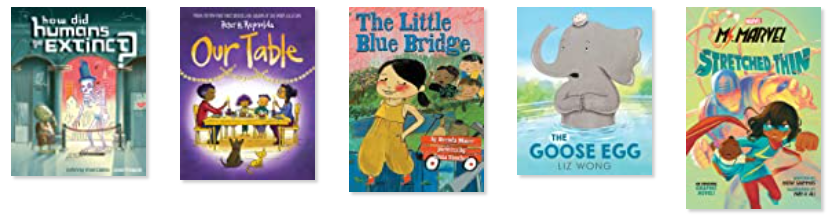
    • Ms. Marvel: Stretched Thin by Nadia Shammas, Illustrated by Nabi H. Ali: This new Ms. Marvel graphic novel definitely brings humanity to our super hero as Kamala deals with so much not only as Ms. Marvel but in her life. I loved the complete characterization of Kamala and learning more about her home life. I also liked the teamwork represented in the story to take on the villain.
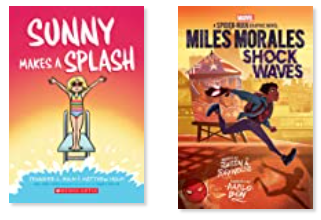
    • Sunny Makes a Splash by Jenni L. Holm, Illustrated by Matthew Holm: This may be my favorite Sunny book yet! Sunny is coming into her own and figuring out who she is which is so fun to watch!
    • Miles Morales: Shock Waves by Justin A. Reynolds, Illustrated by Pablo Leon: From the same new Scholastic Marvel series as Stretched Thin and similarly, Shock Waves shows us more about Miles’s life both at home and as Spiderman and how to balance it all. In addition, I really liked the villain story, and I’m excited to see how it continues.
  • Trent and I also read some great picture books at bedtime this week!
    • How Did Humans Go Extinct? by Johnny Marciano, Illustrated by Paul Hoppe: This book takes place 10 million years in the future where a frog-like creature is now the dominant species on Earth and Humans are an exhibit at their Natural History Museum. The curious protagonist loves learning about Humans and is so curious about what happened to them and this leads to a wonderful bedtime conversation. I love the curiosity this book exhibits as well as the reflection it will cause about our impact on Earth.
    • Our Table by Peter H. Reynolds: Peter H. Reynolds is brilliant. He writes such beautiful books, and each one is just as wonderful as the last one. Our Table looks at being present and the importance of family.
    • The Little Blue Bridge by Brenda Maier: A fun retelling of the three billy goats gruff where one again Ruby proves that her brothers underestimate her. I love Ruby as a character–she doesn’t give up and she is so innovative! I just wish her brothers would get with the program.
    • The Goose Egg by Liz Wong: This is a favorite picture book of Trent’s! I love the pun of a goose egg literally! Also, I like that this is like Mother Bruce but Henrietta loves her goose with all her heart.

To learn more about any of these books, check out my 2021 Goodreads Challenge page  or my read bookshelf on Goodreads.

Ricki

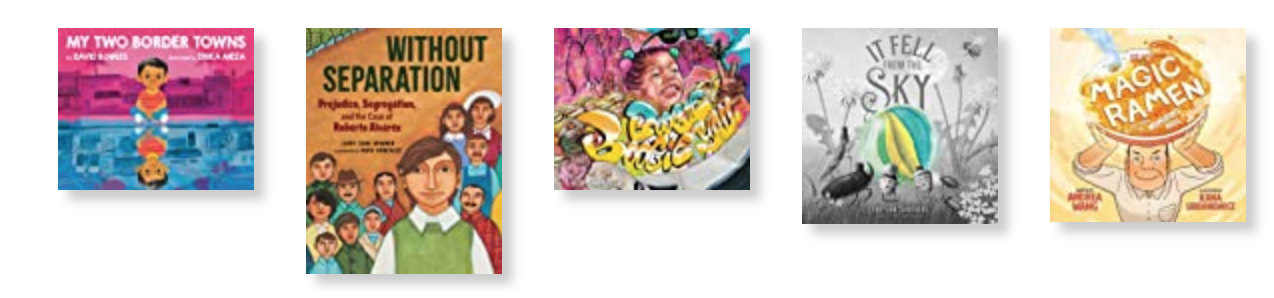
I read some great new picture books this week. My Two Border Towns by David Bowles is remarkably well done. I will be using this one in my classes. It tells the story of a boy who regularly travels to the other side of the US-Mexican border. Before they go home, they check with friends seeking asylum.

Without Separation:Prejudice, Segregation, and the Case of Roberto Alvarez by Larry Dane Brimner tells the true story of Roberto Alvarez. Roberto was no longer allowed to attend his school in 1937, when the townspeople tried to segregate the Mexican American children from the white children. The book follows the court case.

Boogie Boogie Y’all by C.G. Esperanza highlights the Boogie Down Bronx in its beauty. The book follows a great beat and the art flows off the walls (and the pages!). This one makes for a great read-aloud.

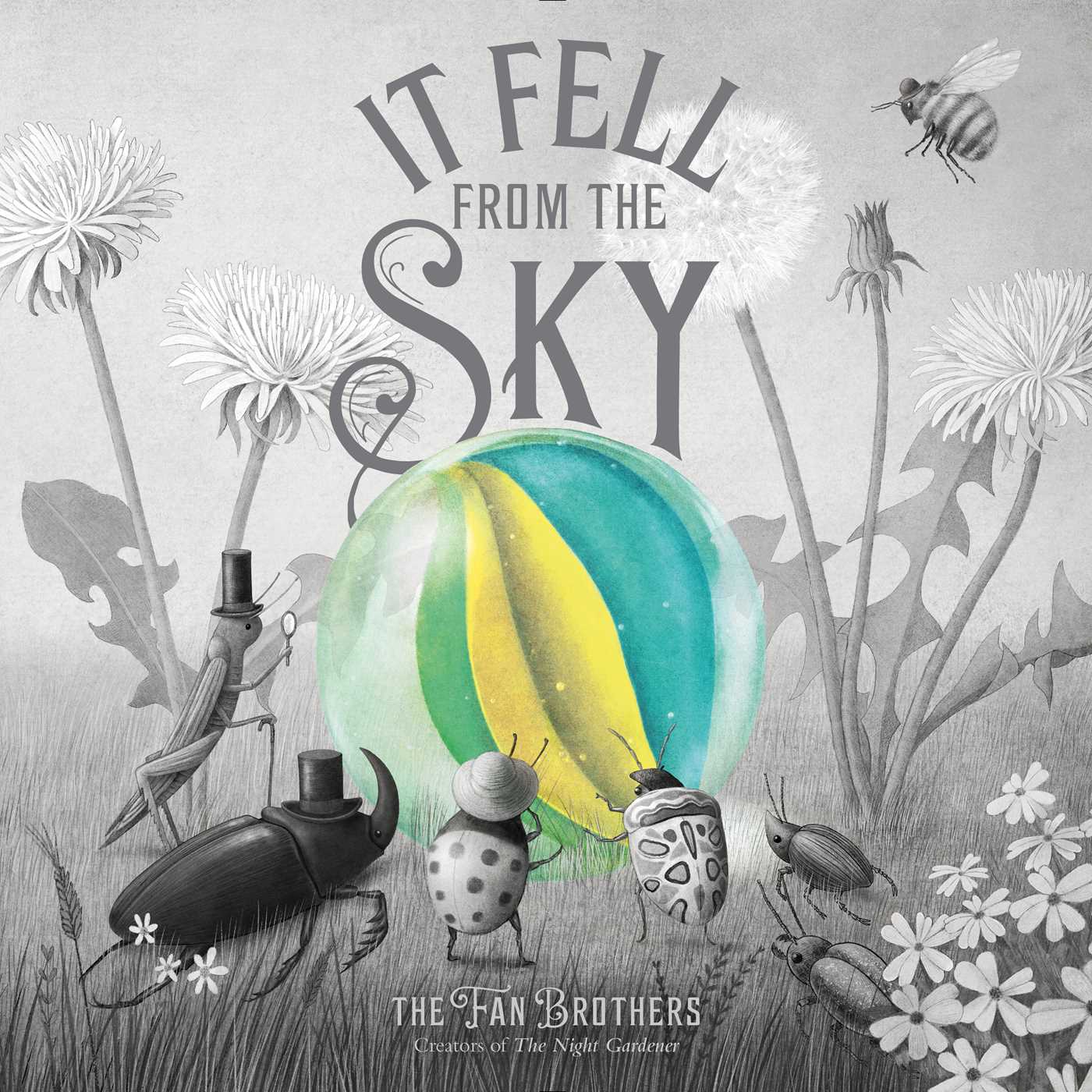
I’ll be reviewing It Fell From the Sky by the Fan brothers on Thursday. This is a whimsical story about insects’ reactions when a marble falls from the sky. A spider develops a plan…

Magic Ramen:The Story of Momofuku Ando by Andrea Wang came out in 2019, but I hadn’t read it until now! It tells the true story of the invention of ramen. This one is inspiring!

Bold_line

Kellee

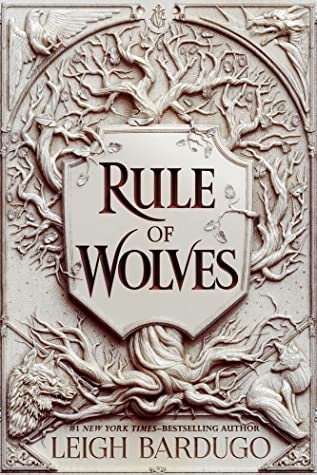
Reading: Rule of Wolves by Leigh Bardugo & Once Upon a Camel by Kathi Appelt

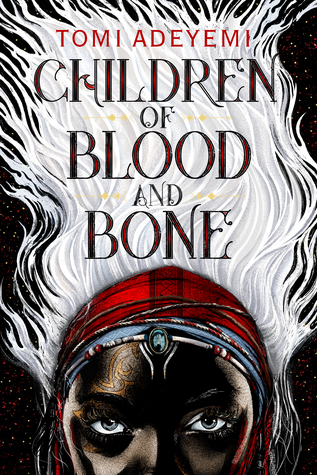
Listening: The Children of Blood and Bone by Tomi Adeyemi

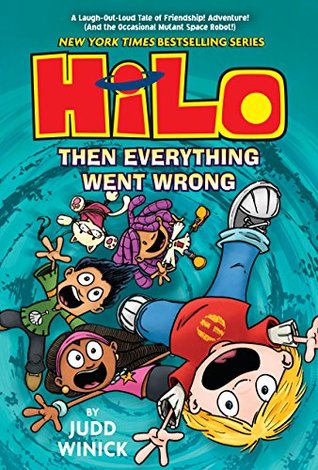
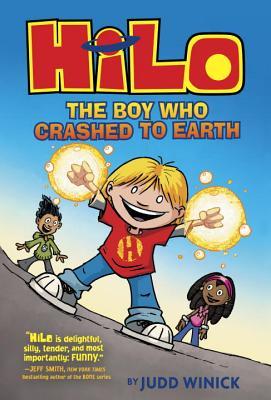
Trent reading during family reading time: HiLo Vol 5: Then Everything Went Wrong by Judd Winick

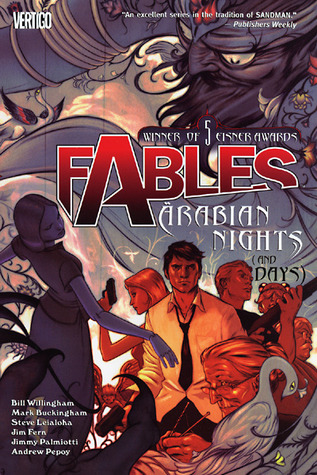
Jim reading during family reading time: Fables Vol 7: Arabian Nights (And Days) by Bill Willingham

Ricki

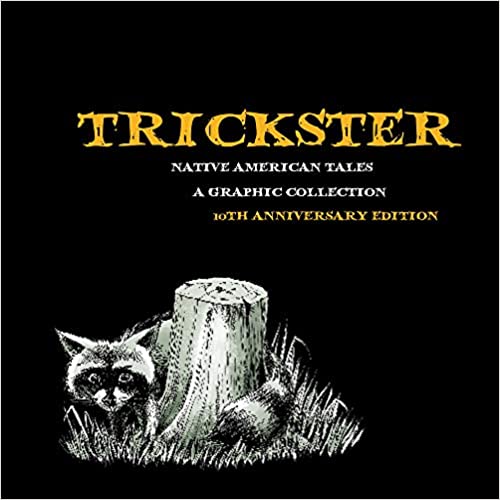
I just finished Black Boy Joy with Henry, and he loved how every story was so different and written by someone else. So I thought of an idea. I am reading Trickster: Native American Tales, A Graphic Collection with him. It’s edited by Matt Dembicki. If you haven’t read this one, I highly recommend it. The 10-year anniversary edition just came out!

Bold_line

Tuesday: Review and Giveaway!: Once Upon a Camel by Kathi Appelt

Thursday: It Fell From the Sky by The Fan Brothers

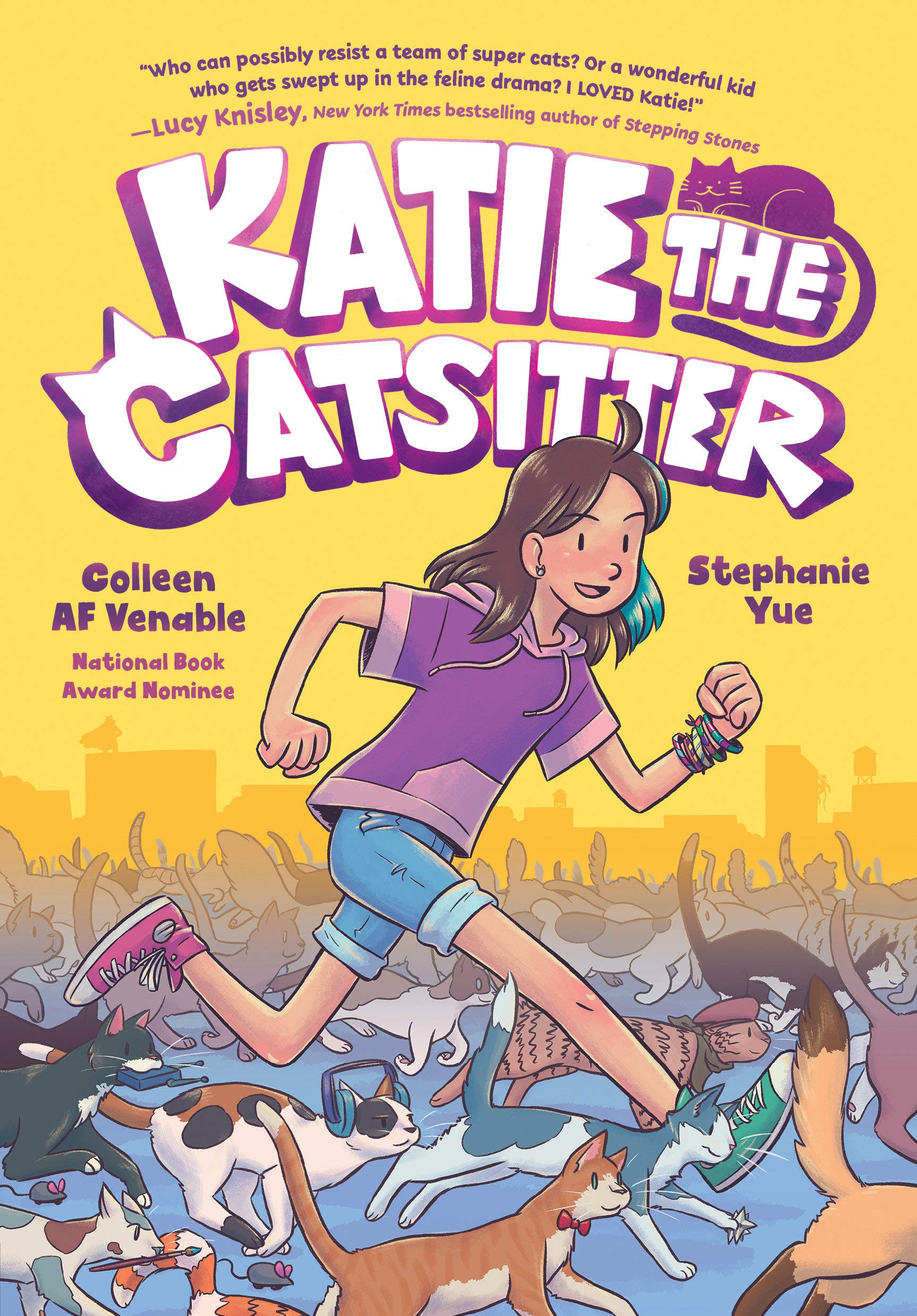
Saturday: Sofia’s Kids’ Corner: Katie the Catsitter by Colleen AF Venable & Stephanie Yue

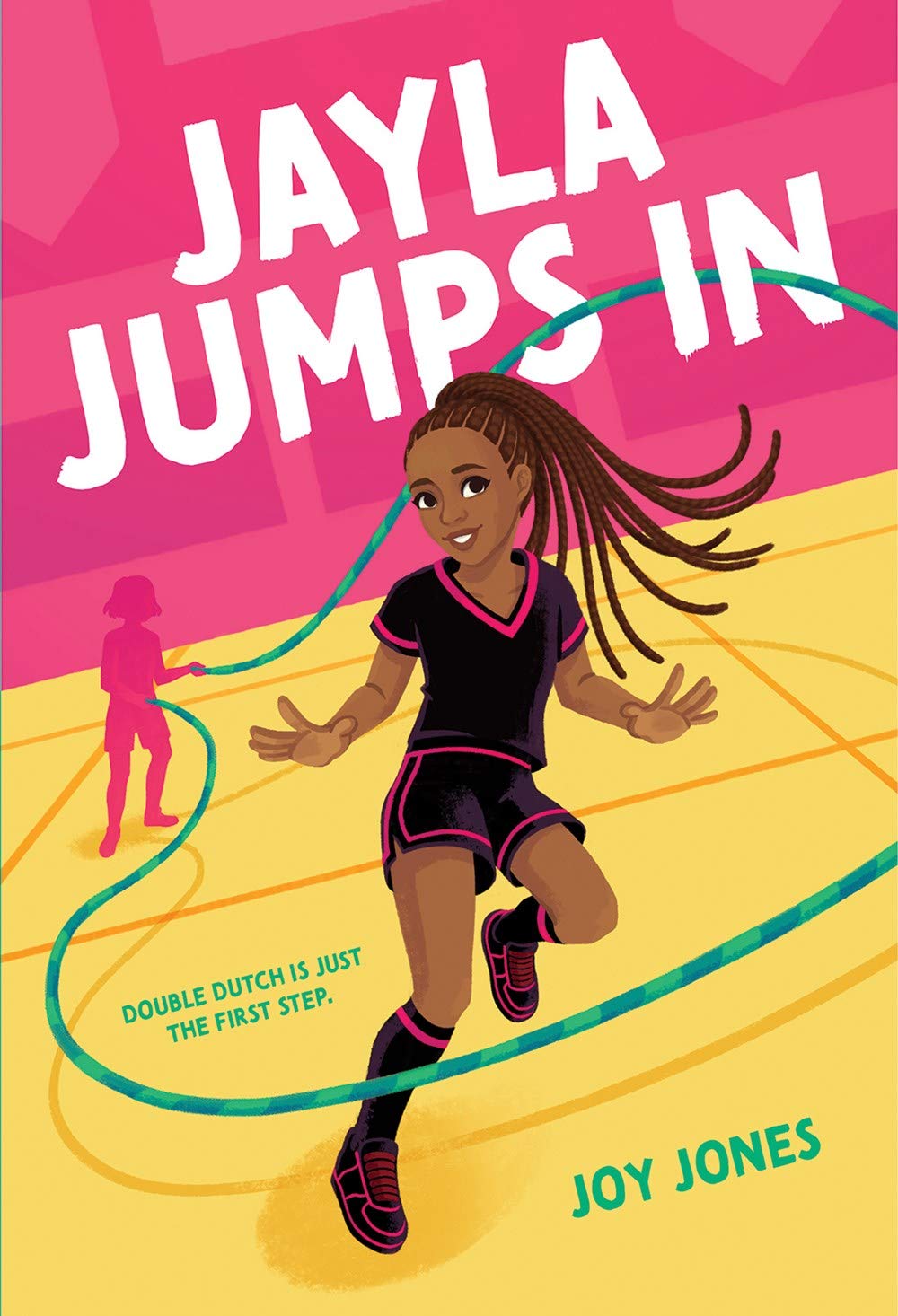
Sunday: Author Guest Post: “Tech Timeout, a Playwriting Lesson” by Joy Jones, Author of Jayla Jumps In

Bold_line

Link up below and go check out what everyone else is reading. Please support other bloggers by viewing and commenting on at least 3 other blogs. If you tweet about your Monday post, tag the tweet with #IMWAYR!

 Signature andRickiSig

Giveaway and Review!: Magic Candies by Heena Baek, Translated by Sophie Bowman

Share

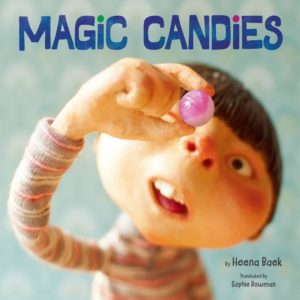
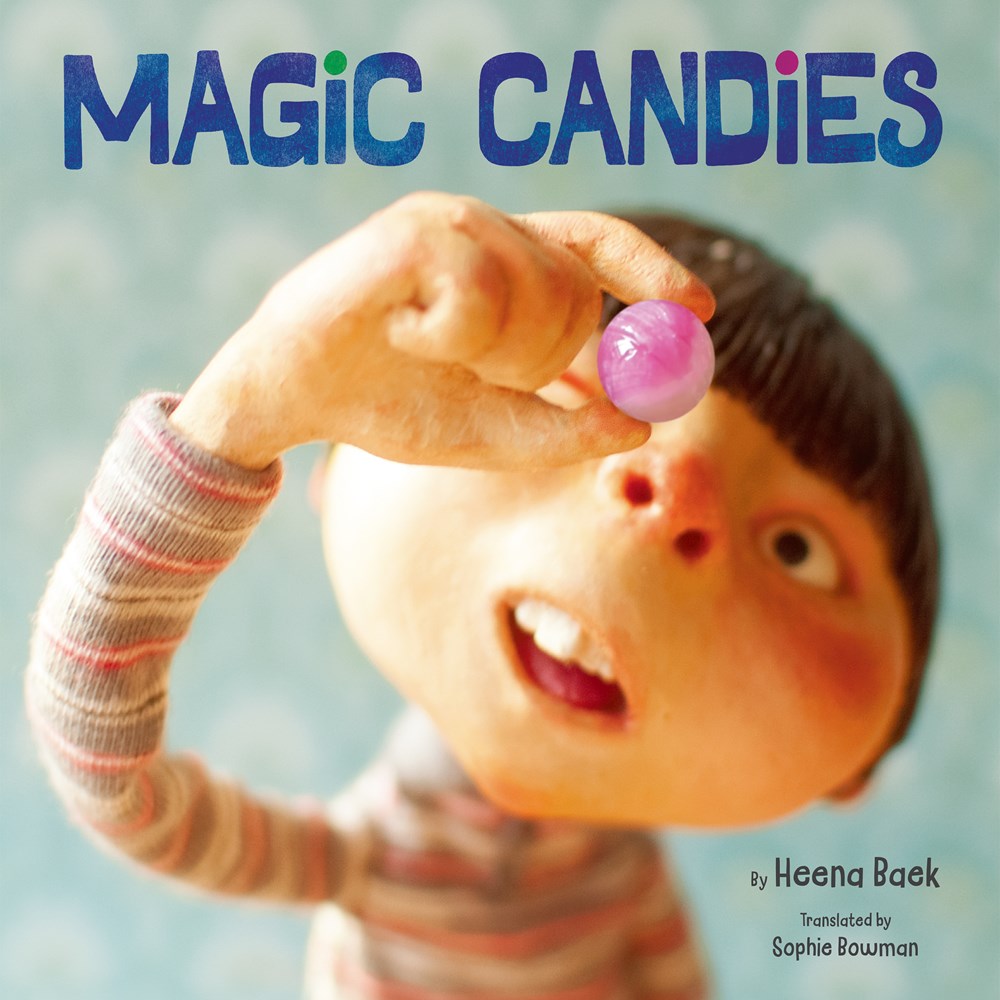
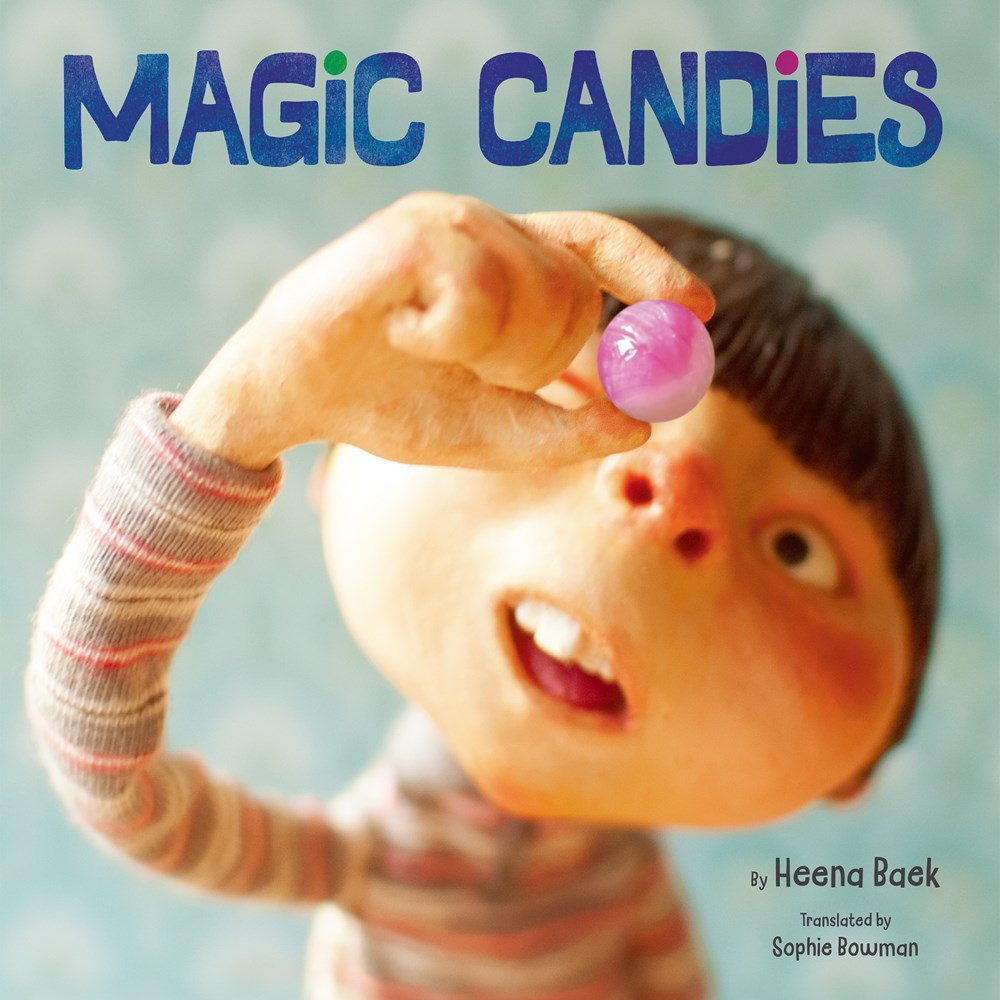
Magic Candies
Author: Heena Baek
Translator: Sophie Bowman
Published: September 1, 2021 by Amazon Crossing Kids

Summary: A quirky story about finding your voice, from internationally acclaimed author Heena Baek.

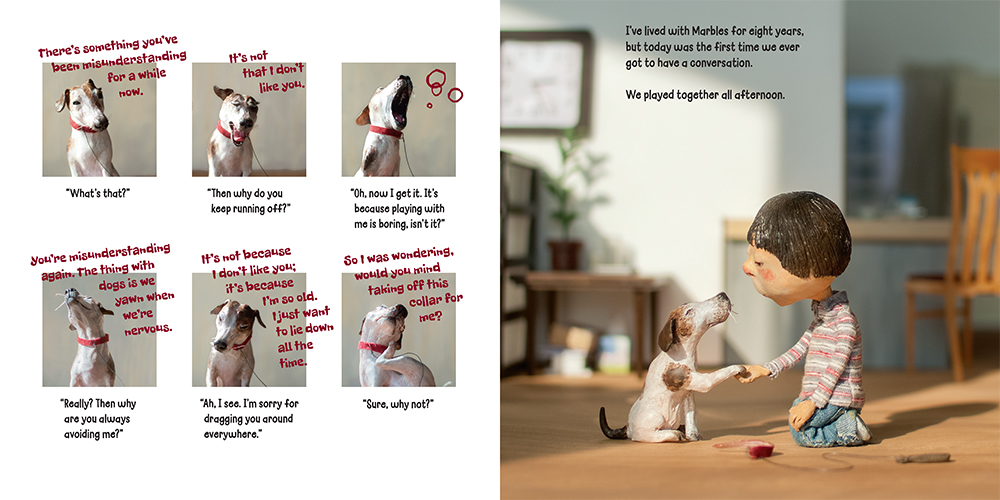
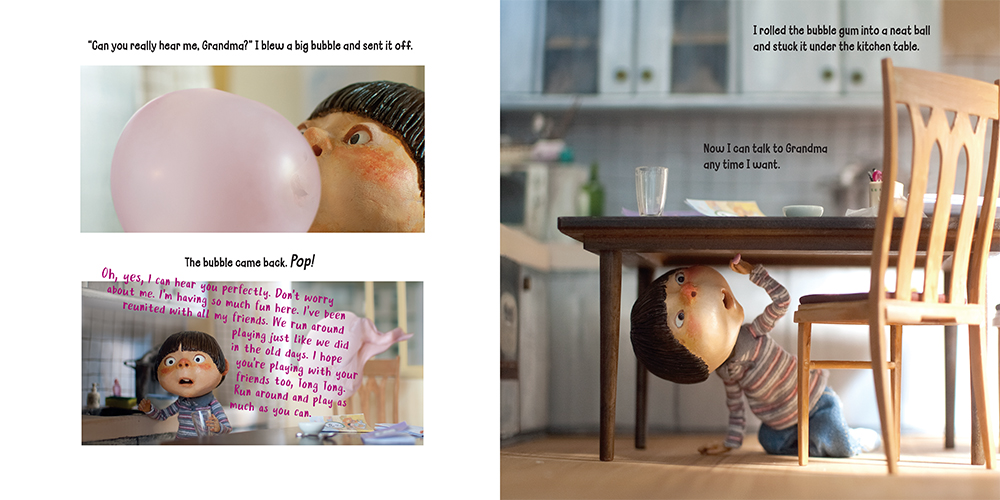
Tong Tong could never have imagined what everyone around him was thinking. But when he gets hold of some magic candies, suddenly there are voices everywhere. He can hear how his couch feels, what upsets his dog, that his demanding dad loves him. He even gets to catch up with his dead grandmother. It turns out, these voices in Tong Tong’s life have A LOT to say! Is Tong Tong ready to hear it?

At turns funny, weird, and heartfelt, this imaginative picture book from award-winning Korean author Heena Baek will take readers along on Tong Tong’s journey as he goes from lonely to brave.

★“Show-stopping spreads by Baek, similar to art by Red Nose Studio, feature molded, emotive figures in meticulously constructed scenery with miniature furniture, photographed under dramatic lighting—an effect startlingly close to animation. It’s a fully realized world that considers discerning meaning and making friends, while offering artwork that lingers in the memory.” —Publishers Weekly (starred)

“The enhanced artwork establishes depth and perspective…depictions of facial expressions are skillful and endearing, and the interplay between text and illustrations will cause readers to linger and ponder. An enigmatic, quirky representation of an active imagination in search of understanding and companionship.” —Kirkus Reviews

“Deeply touching, funny, and incredibly odd, this is the kind of picture book that gets you excited about picture books all over again…Magic Candies is so remarkable…a book that is both about giving voice to the voiceless and finding your own.” —Betsy Bird, School Library Journal

Heena Baek is an acclaimed picture book author and illustrator from South Korea. She won the 2020 Astrid Lindgren Memorial Award, a huge international award honoring the body of work of children’s book creators. She studied educational technology at Ewha Womans University and animation at the California Institute of the Arts. Utilizing her diverse animation production experience, Heena creates powerful and interesting picture books, often sculpting characters and building sets. She is the author and illustrator of a number of picture books, many of which have been translated and have received awards from South Korea and internationally. Follow her on Twitter @heenastory. On Instagram: @baekheena

Sophie Bowman is a PhD student at the University of Toronto, studying Korean literature. She was awarded the ICF Literature Translation Fellowship at Ewha Womans University. In 2015, she won the Korea Times Modern Korean Literature Translation Award grand prize for poetry with her translations of Jin Eun-young and co-translated Kim Bo-Young’s I’m Waiting for You and Other Stories. Follow her on Twitter @SophieOrbital.

Review: I was fortunate to receive this book about a month ago, and I have read it at least one hundred times to my children. They just can’t get enough of the quirkiness, and neither can I. After my very first reading, I immediately flipped to the first page to read it again. It’s a really neat book that sparks readers’ imaginations. The kids and I love to debate about which sculpture/illustration is our favorite. This book reminds me why I love picture books so much. It’s difficult to describe, but it offers a sense of magic for me. The main character’s words and actions bring out so many emotions for me. I felt simultaneous humor and sadness when he speaks to his grandmother through bubble gum under the table, for instance. The book is such a fascinating concept, and the author/illustrator is incredibly talented.

Teachers’ Tools for Navigation: Teachers might to ask students to use clay to sculpt and write a missing spread with a different colored candy in the book.

Discussion Questions: 

  • How does the author make the narrator come alive?
  • How does the candies differ? Evolve?
  • What is the dog’s name? Why is this interesting?
  • What does this book teach you about being human?

Flagged Passages: 

Read This If You Love: The Caiman by María Eugenia Manrique; Sam & Dave Dig a Hole by Mac Barnett; Hug Machine by Scott Campbell; Dragons Love Tacos by Adam Rubin

Giveaway:

a Rafflecopter giveaway

Recommended For: 

classroomlibrarybuttonsmall

**Thank you to Barbara at Blue Slip Media for Providing a Copy for Review!**
Kellee’s #MustReadIn2021 Fall Update!

Share

First, thank you to Carrie at There’s A Book for That for starting this challenge and to Leigh Ann of A Day in the Life and Cheriee of Library Matters for co-hosting the revival. Check out others’ fall updates on Library Matters.

In January, I shared about the #MustReadin2021 challenge and my plans. In April and June, I updated you all and it is time for the Fall update!

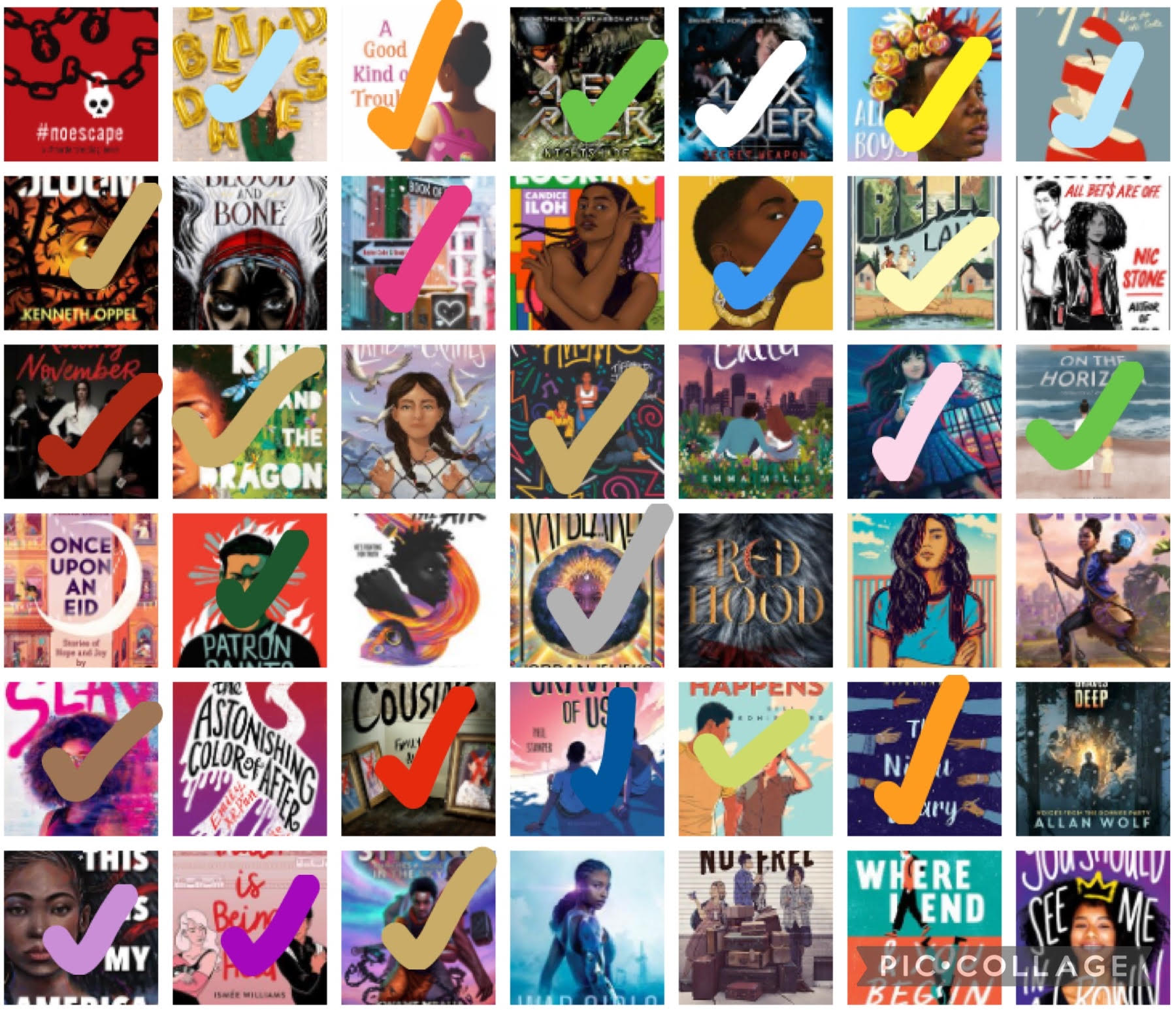
I chose 42 novels for my #MustReadin2021 challenge, and thus far, as of April I had read 13 of them, in June I was up to 20, and now I am at 25! (16 left to go!) I have linked each title to the IMWAYR post where I shared my thoughts on the books.

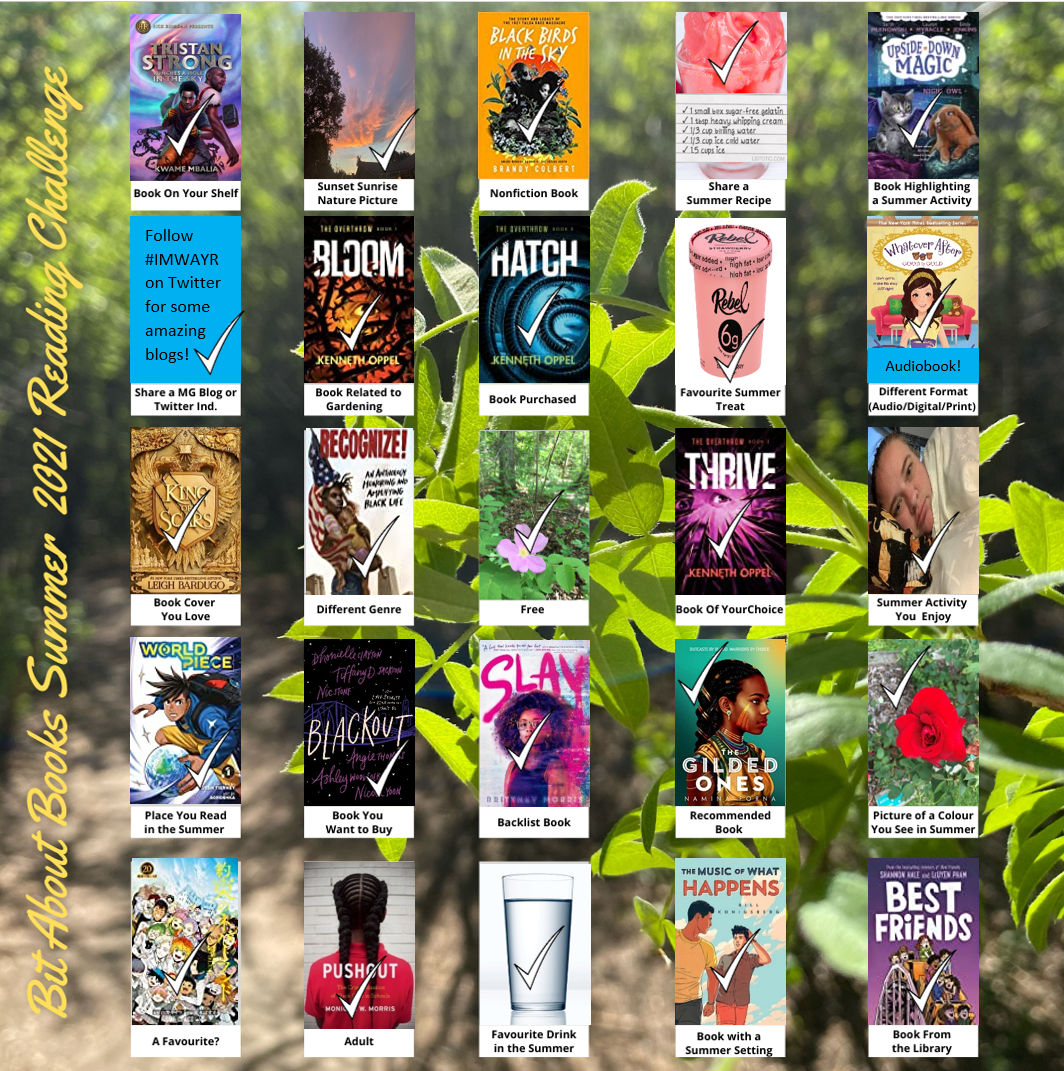
I also finished my #BitAbout Books Summer 2021 Reading Challenge!

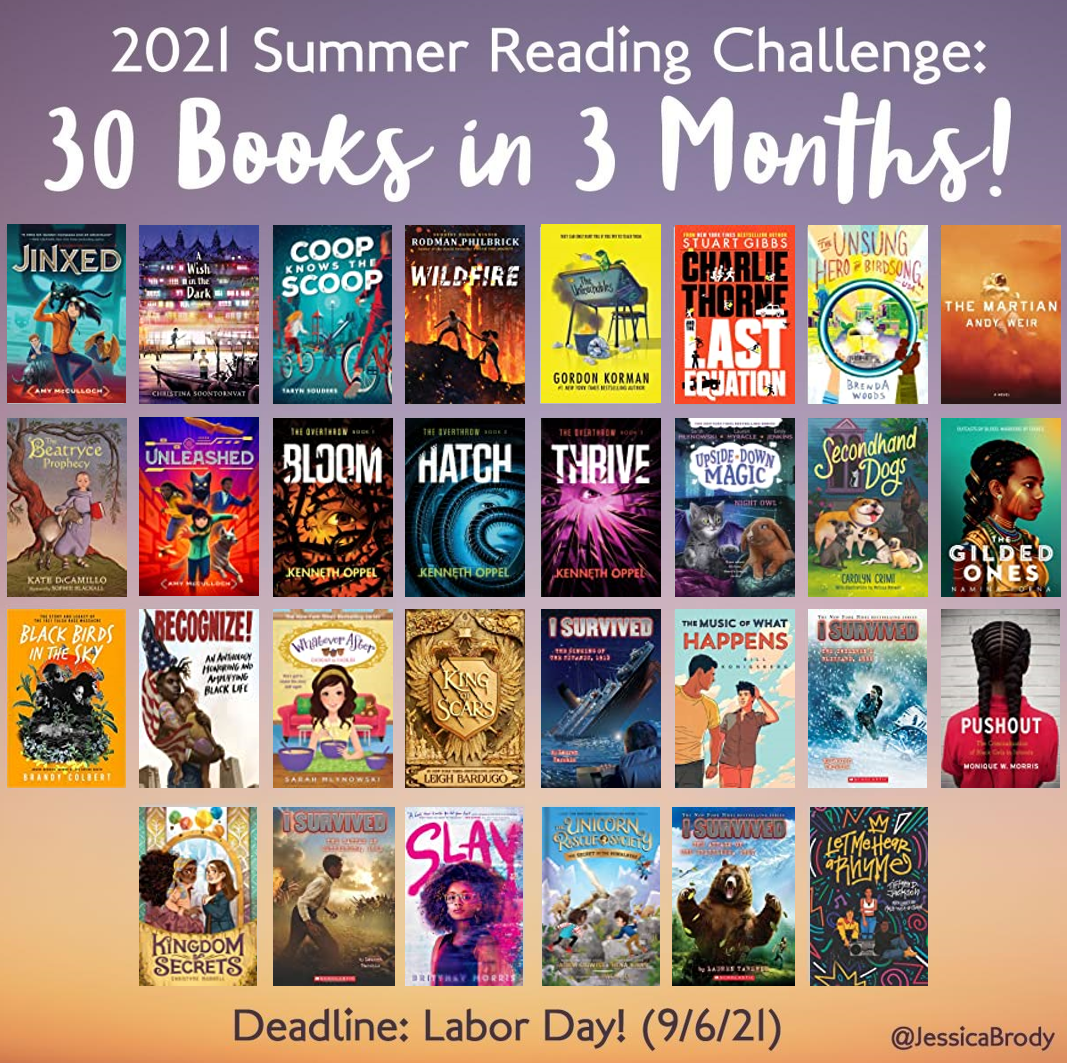
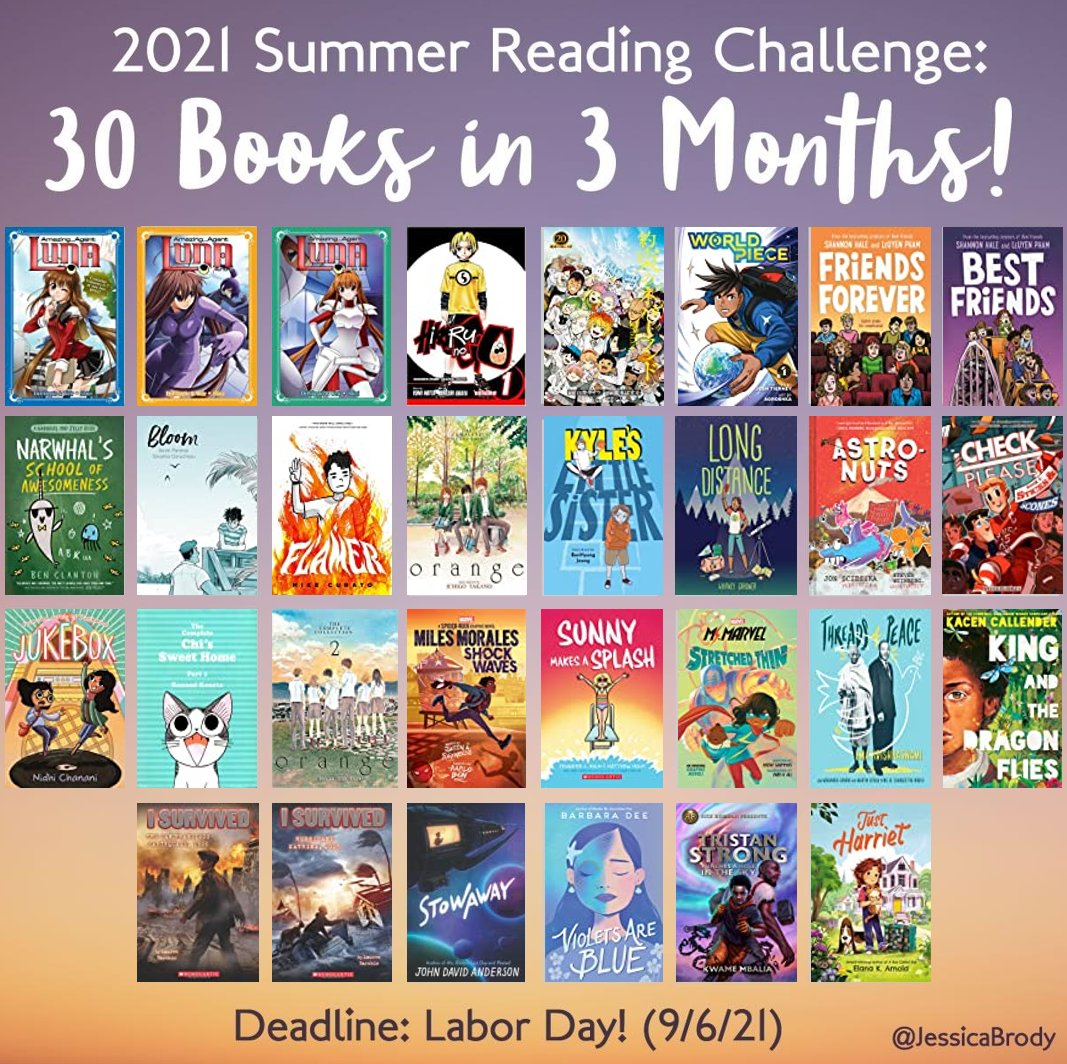
I also challenged myself to the 2021 Summer Reading Challenge: 30 Books in 3 Months! I separated my challenge, and I aimed to complete 30 prose books and 30 graphic books from June to Labor Day. And I didn’t exactly meet my challenge, but I did finish reading 60 books in 3 months!

I finished my prose YA & MG books challenge and have moved into my second 30.

I almost finished my graphic novel/manga challenge, but if I add in the prose YA & MG novels I’ve read in addition to the 30 above, it perfectly finishes it!

I’m having so much fun doing these challenges!! Check out my Goodreads 2021 Challenge or my Goodreads Read Bookshelf to learn more about any of these books as well 😊
What are you reading? 

It’s Monday! What Are You Reading? #IMWAYR 8/30/2021

Share

It’s Monday! What Are You Reading?
Sharing Picture Books, Early Readers, Middle Grade Books, and Young Adult Books for All Ages!

It’s Monday! What Are You Reading? is a weekly blog hop co-hosted by Unleashing Readers and Teach Mentor Texts which focuses on sharing books marketed for children and young adults. It offers opportunities to share and recommend books with each other.

The original IMWAYR, with an adult literature focus, was started by Sheila at Book Journeys and is now hosted by Kathryn at The Book Date.

We encourage you to write your own post sharing what you’re reading, link up below, leave a comment, and support other IMWAYR bloggers by visiting and commenting on at least three of the other linked blogs.

Happy reading!

Bold_line

Tuesday: Blog Tour with Review: Stowaway by John David Anderson

Thursday: Violets are Blue by Barbara Dee

Sunday: Author’s Guest Post: “Spreading Hope and Optimism with STEM Picture Books” by Linda Zajac, Author of Robo-Motion: Robots that Move Like Animals

**Click on any picture/link to view the post**
Bold_line

Kellee

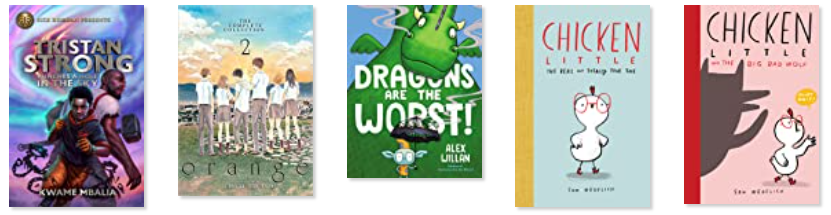
  • I have no idea why I waited so long to read Tristan Strong Punches a Hole in the Sky by Kwame Mbalia, but I am so glad that I finally picked it up. What an amazing adventure intertwined with African American folklore and amazing symbolism! Brilliant. I’ll definitely need to pick up the sequel.
  • Orange: The Complete Collection Vol. 2 by Ichigo Takano did not disappoint. It is hard to tell you about the second volume without giving away information about the first, but I recommend it!
  • Dragons are the Worst! by Alex Willan is the sequel to a family favorite and Sunshine State Young Reader Award, Jr. book, Unicorns are the Worst. Like the first book, Dragons looks at perspective and even shows how a person’s perception can change with just a little more information. Gilbert the Goblin narrates again which means that it is also just as hilarious as the first which helps the deliver this important message in a light way. Definitely loved having this second Gilbert book and hope there will be more!
  • We got the second Chicken Little book by Sam Wedelich, so we definitely had to reread the first. Chicken Little: The Real and True Tale and Chicken Little and the Big Bad Wolf are just fantastic. They have amazing voice, great humor, and a wonderful lesson about hysteria and research. Chicken Little is a hit in our house!

To learn more about any of these books, check out my 2021 Goodreads Challenge page  or my read bookshelf on Goodreads.

Ricki

I’m sorry! I will be back next week. School starting has be harder than I thought it would be!

Bold_line

Kellee

Reading: Rule of Wolves by Leigh Bardugo

Reading during family reading time: ??? Finished Orange, so have to pick something else up.

Trent reading during family reading time: The HiLo series by Judd Winnick

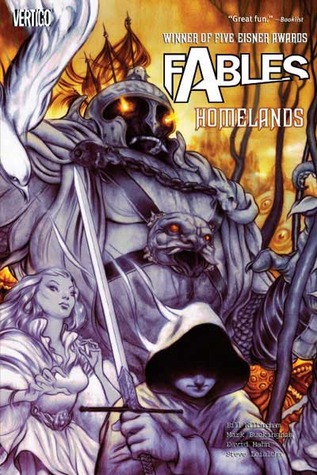
Jim reading during family reading time: Fables Vol 6: Homelands by Bill Willingham

Listening: Children of Blood and Bone by Tomi Adeyemi

Bold_line

Tuesday: Kellee’s #MustReadin2021 Fall Update!

Thursday: Review and Giveaway!: Magic Candies by Heena Baek, Translated by Sophie Bowman

Bold_line

Link up below and go check out what everyone else is reading. Please support other bloggers by viewing and commenting on at least 3 other blogs. If you tweet about your Monday post, tag the tweet with #IMWAYR!

 Signature andRickiSig

Author Guest Post: “Spread Hope and Optimism with STEM Picture Books” by Linda Zajac, Author of Robo-Motion: Robots That Move Like Animals

Share

“Spread Hope and Optimism with STEM Picture Books”

Last year was a challenging year for children. The pandemic disrupted familiar routines associated with school, play, and family life. Kids were thrust into a world with masks, Zoom, and isolation that have taken a toll on their social, emotional, and academic well-being. While news outlets reported grim statistics, students struggled to focus. For some families, basic needs like food and shelter were challenges. Mental-health related visits to pediatric emergency departments increased 24 percent for children aged 5–11 from mid-March 2020 to October 2020.

When the situation seems insurmountable, it’s hope and optimism that help us deal with the stress. Researchers from the University of Minnesota and the National and Kapodistrian University of Athens, Greece studied the qualities that make kids resilient to disasters like pandemics. They wrote that hope and optimism in families, schools, and communities contribute to resiliency.

In these extraordinary times, hope and optimism can brighten a world that seems dark. They can temper feelings of anger, worry, loneliness, anxiety, and despair. Hope and optimism in STEM books can educate, illuminate, and inspire while shining a light on science.

In STEM books, hope is a promising discovery, a new method, a novel solution, or an advancement in technology that benefits society. In addition to educating readers, STEM books with visions of a better tomorrow inspire them. In a time of rising seas, raging covid variants, and racist tensions, hopeful books can help a child cope and inspire them to action.

They are many benefits in giving kids hope. Hopeful children have better health and less anxiety. Studies show hope improves academic and athletic performance. It builds resilience and lessens stress in challenging times. Hope can motivate a child to take action towards a long-term goal.

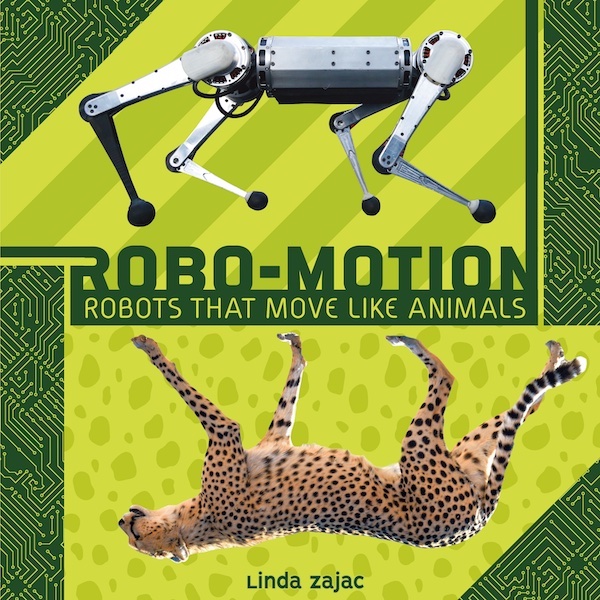
In my book, Robo-Motion: Robots That Move Like Animals, (Millbrook, 9/7/2021) the design team at Millbrook Press took my words and made them richer by surrounding them with color, intrigue, and hope. On each spread, in strikingly similar poses, animals are paired with the robots that mimic their motion,. Robo-Motion, a book about biomimicry, has action verbs on every page. Like animals in the wild, robots in the lab skitter, scuttle, grip, and glide. If we could move like animals, we could jump without getting tired, squeeze into tight spaces, and climb up glass. By building robots that mimic animal motion, we can move like them. Robo-Motion is a hopeful book about how robots can benefit society. A portion of the proceeds will be donated to charity.

With the following exercises, you can use Robo-Motion to boost hope and optimism in your classroom:

EXERCISE 1 – Gratitude

Ask children to pick the robot they are most thankful for. Have them write down the robot name and why they picked it.

EXERCISE 2 – Boost optimism

Have children close their eyes and spend some time thinking about the robot they picked. Ask them to imagine a scene where the robot is doing its job. The robot could be saving a life, cutting costs, gathering information, or making work more efficient.  Have them imagine that everything works out for the best.

EXERCISE 3 – Writing skills

Ask children to write an optimistic story about the robot they picked and how it helped society.

EXERCISE 4  – Spread optimism

Ask children to share their optimistic stories with the class.

You can also bring hope and optimism into your classroom with these recent STEM nonfiction picture books:

  • Crossings by Katy Duffield (Beach Lane, 2020) is a unique STEM book about structures built to protect wildlife from traffic. Although the vehicles that make crossings dangerous for animals are never mentioned in the main text, they appear in nearly all the illustrations. The book takes a fascinating look at manmade structures created to help various animals avoid traffic in the United States and abroad. The common thread is the desire to help wildlife and the hope that they will survive and flourish.
  • The Brilliant Deep by Kate Messner (Chronicle, 2018) is another book with a hopeful message. First, readers meet Ken Nedimyer, a diver. Then, in a wordless full-page spread, readers see the effect of one hotter-than-normal summer—bleached coral. Nedimyer and the Coral Restoration Foundation are farming corals and transplanting them to restore reefs. They’ve planted thousands of coral stalks off the Florida Keys and they’re working with other countries to help their threatened reefs. The book gives readers hope something can be done to regenerate corals damaged by warming ocean waters from climate change.
  • Mario and the Hole in the Sky by Elizabeth Rusch (Charlesbridge, 2019) is a story about Mario Molina discovering and helping to solve a global problem. In the 1980s, scientists discovered a huge hole in the ozone layer over Antarctica. When countries came together and agreed to stop making the CFC’s that were in everything from aerosols to air conditioners, the ozone layer began to recover. By comparing the ozone problem with climate change, readers see that by working together countries can solve global problems. We’ve done it before, we can do it again.
  • A leaking oil pipeline can wreak havoc on the environment. In We Are Water Protectors by Carole Lindstrom (Roaring Brook, 2020), the Ojibwe tribe fights to protect the ecosystem. A black snake symbolizes the oil pipeline that’s never mentioned in the text. The last page gives readers the opportunity to sign a pledge to protect the Earth. With gorgeous illustrations, this book is a rallying cry to action. It leaves the reader feeling hopeful that the tribe, along with others, will not give up their fight to protect water, land, plants, and animals.

STEM books with hope and optimism have power. They can broaden a child’s horizons, expand a child’s mind, and brighten a child’s world. In Emily Dickinson’s poetry collection, hope is the thing with feathers. In a post-pandemic classroom, hope is the thing with pages.

Resources:

Published September 7th, 2021 by Millbrook Press

About the Book: Like animals in the wild, robots in the lab skitter, scuttle, grip, and glide. In this STEAM title about biomimicry, crisp color photographs of animals are paired with the robots that mimic their motion. Action verbs and literary devices introduce each animal on the left, while details about each robot and its purpose grace the opposite page. This nonfiction picture book is a hopeful look at how robots can benefit society. Back matter includes a glossary and information about biomimicry. The book will appeal to young readers interested in animals, engineering, technology, and science. A portion of the proceeds will be donated to charity.

About the Author: Linda Zajac is an award-winning science writer. She’s a former computer programmer, systems analyst, and consultant who would have jumped at the chance to program a robot. Linda writes about cutting-edge science, technology, and biotechnology and how they’re used to save wildlife, advance medicine, and protect the environment. Linda is a Tassy Walden winner and a recipient of the PEN New England Susan P. Bloom Children’s Book Discovery Award. Her published works include six Minecraft books for kids along with many magazine articles in Highlights, MUSE, ChemMatters, and more. Robo-Motion: Robots That Move like Animals was published September 7, 2021 by Millbrook Press.

Thank you, Linda, for this post focusing on the social and emotional learning our students need to do in addition to academic and a way to combine the two!

Violets are Blue by Barbara Dee

Share

Violets are Blue
Author: Barbara Dee
Published: September 28, 2020 by Aladdin

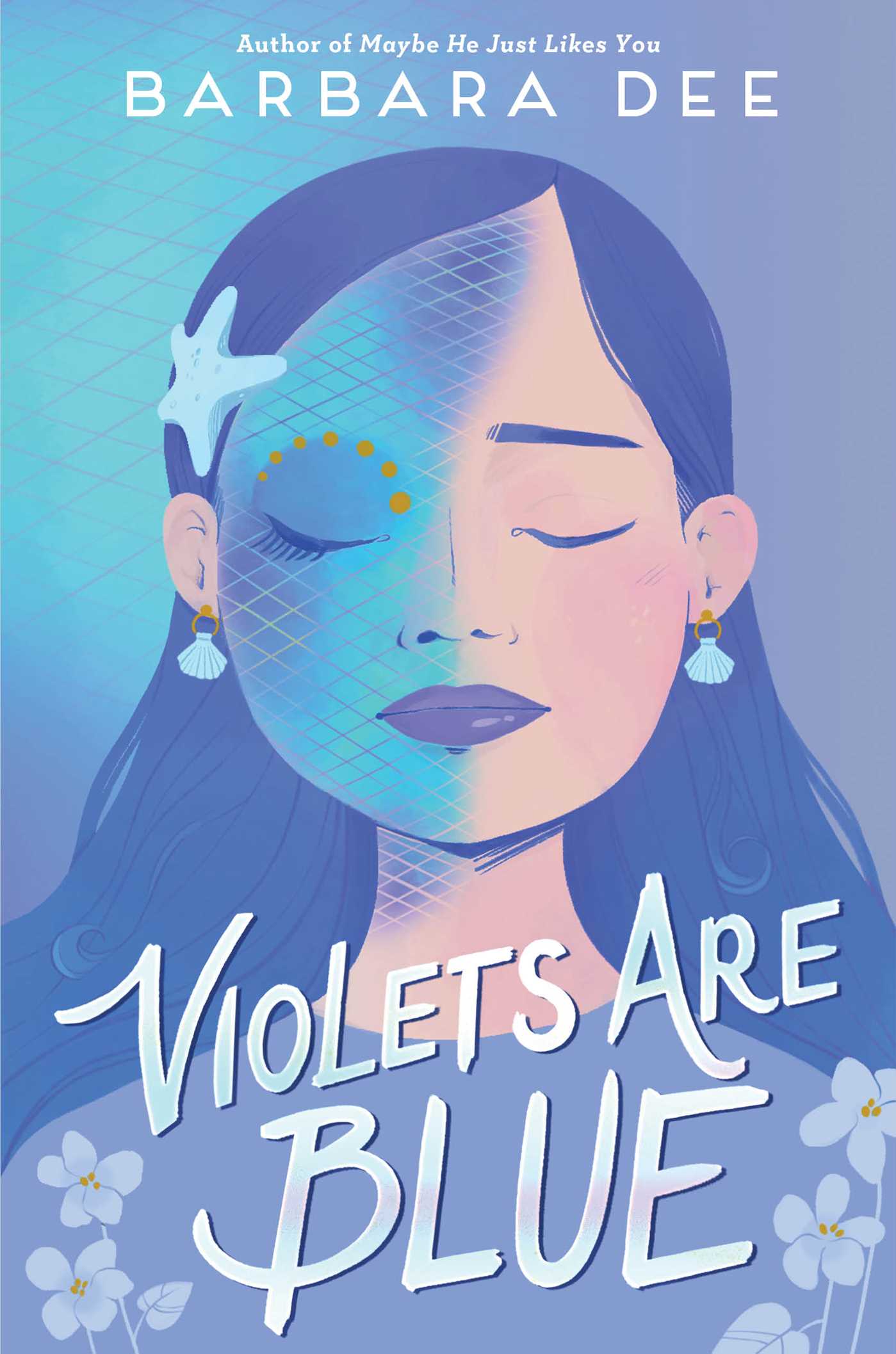
Summary: From the author of the acclaimed My Life in the Fish Tank and Maybe He Just Likes You comes a moving and relatable middle grade novel about secrets, family, and the power of forgiveness.

Twelve-year-old Wren loves makeup—special effect makeup, to be exact. When she is experimenting with new looks, Wren can create a different version of herself. A girl who isn’t in a sort-of-best friendship with someone who seems like she hates her. A girl whose parents aren’t divorced and doesn’t have to learn to like her new stepmom.

So, when Wren and her mom move to a new town for a fresh start, she is cautiously optimistic. And things seem to fall into place when Wren meets potential friends and gets selected as the makeup artist for her school’s upcoming production of Wicked.

Only, Wren’s mom isn’t doing so well. She’s taking a lot of naps, starts snapping at Wren for no reason, and always seems to be sick. And what’s worse, Wren keeps getting hints that things aren’t going well at her new job at the hospital, where her mom is a nurse. And after an opening night disaster leads to a heartbreaking discovery, Wren realizes that her mother has a serious problem—a problem that can’t be wiped away or covered up.

After all the progress she’s made, can Wren start over again with her devastating new normal? And will she ever be able to heal the broken trust with her mom?

Ricki’s Review: This book ripped me apart and put me back together. It is unflinchingly honest, and it is a book that so many middle grade kids need. The characterization is beautiful, and the book would make for a great study on the relationships between humans and a general study on humanity. No character in this book is perfect—all are flawed, and this reflects who we are as people. I stayed up late at night reading this book (when I should have been sleeping), and I cannot recommend it highly enough. We all deserve to reinvent ourselves, and this book gives us permission to do so.

Kellee’s Review: Barbara Dee is so wonderful at writing such relatable middle school books with characters that deal with the real issues that middle schoolers are dealing with today. This book is no different as we get to watch Wren deal with her own identity, dealing with divorce & remarriage, moving, finding new friends, and just learning how to be happy. All of this in addition to what Wren ends up needing to work through when it comes to her mom. Dee does a great job balancing all of these plot points while also building such full characters. All characters in the main characters in the book are well developed and are truly themselves–flaws and all!

Teachers’ Tools for Navigation: This book works beautiful to teach about characterization. Students might select a character to study in a group and then work individually to study a person in their own lives (personal or famous). This offers opportunities for rich discussions about imperfection and the flaws in all of us.

Discussion Questions:

  • How does Wren’s hobby with makeup reflect her life? How does it connect with the story?
  • How does Wren’s mother evolve in the story, and why do you think she makes specific decisions in the text?
  • Why do we keep secrets? How does secret-keeping impact others?
  • What did you learn from this story? What will you take with you?
  • How does Wren and her mom moving change the trajectory of the story?
  • Were there clues about Wren’s mom earlier in the book?
  • Why is it that people have such a hard time with girls and boys just being friends with each other?

Flagged Passage:

Chapter 2: Changes: “The day Dad left us, just a little over nine months ago, it all happened so fast. One gray Saturday morning in February, when we were still living in the house in Abingodon, I woke up to the sound of loud arguing in the kitchen. Yelling, actually, which happened a lot those days, followed by a car zooming out of our driveaway.”

Chapter 9: Nebula “[CatFX’s YouTube Channel] Here’s my secret message to you guys: fantasy is not the opposite of truth.”

Read This Book If You Loved: My Life in a Fish Tank by Barbara Dee; The Seventh Wish by Kate Messner; Sunny Side Up by Jennifer Holm and Matthew Holm; Genesis Begins Again by Alicia D. Williams

Recommended For: 

classroomlibrarybuttonsmall litcirclesbuttonsmall

  RickiSigand
**Thank you to Casey at Media Masters Publicity for providing a copy for review!