Review and Giveaway!: Can You Canoe? and Other Adventure Songs by The Okee Dokee Brothers

Share

can you canoe

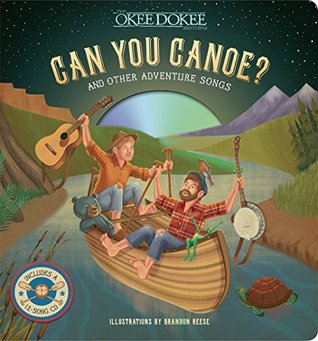
Can You Canoe? And Other Adventure Songs
Author: The Okee Dokee Brothers
Illustrator: Brandon Reese
Published April 19th, 2016 by Sterling Children’s Books

Summary: Can You Canoe? invites you to journey cross-country with The Okee Dokee Brothers through twelve of their irresistible, boot-stompin’ tunes. You’ll encounter hungry black bears and tall-tale spinners; quiet canoes and cozy camping tents; a jumpin’ jamboree and a bullfrog opera. As you listen to the songs and follow along with the illustrated lyrics in this collection, you might even be inspired to head out on some outdoor adventure of your own!

Kellee’s Review: We love music in my house, so anytime a book and music can be connected really makes me happy. I think the Okee Dokee Brothers’ music is catchy, knee-slapping, sometimes funny, and have great messages. I love how they all promote the out doors and adventure. And just when you think it cannot get any better, you see the illustrations. Brandon Reese’s illustrations are perfect! They are so colorful and loud and cartoon-ish. Just the type of fun you think would be in a book by the Okee Dokee Brothers. 

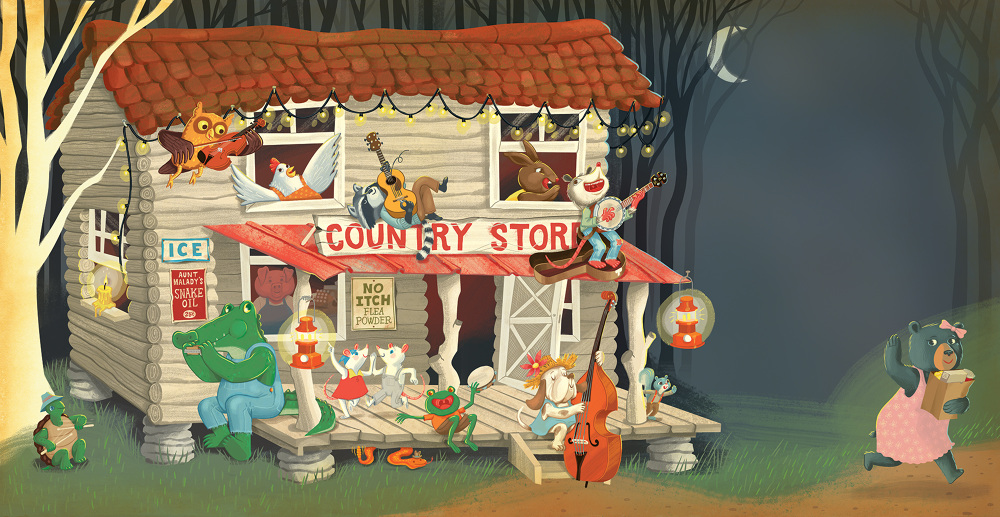
Ricki’s Review: This book is pure fun. My toddler was bouncing around the room as I played the CD. My husband is an outdoorsy guy, so he particularly liked the messages within the songs. The rhymes are great, and they will help my son learn the lyrics as we listen/read. I’ve never been to an Okee Dokee concert, and now I want to go to one! We’ll be bringing this CD along for long car rides. Below, we include an illustration, and you can see the pure beauty of this text. I will be buying it as a gift for my music-loving friends.

Teachers’ Tools for Navigation: We love using music during my poetry lessons because it helps students hear poetry and not be as afraid of it like they are with classics. Starting with music and lyrics allows you to help them understand how to read poetry differently than prose while using something they can easily understand. Can You Canoewould be a perfect text to use this for because you can analyze for poetic elements and meaning, but the Okee Dokee Brothers also have a field journal in the back which help give background information about each song making analyzing them less of a guessing game.

Can You Canoe? would also be a wonderful poetry mentor texts. The authors talk about how they find ideas for their songs and many of their songs have a format that could be emulated (like Jack in Love that Dog) if you wanted to go that route in class.

Discussion Questions: How do the authors use rhythm and rhyme in their lyrics?; What is a time that the authors used descriptive language to help the reader imagine the scene they are describing?; What is a time the authors used figurative language to add imagery to their songs?

Flagged Passages:

“There’s a country store
In a country town.
Every Friday night
The people dance around.
It don’t look like much
And it ain’t no chore,
But while they’re dancin’
They polish that floor.

They play this song
Right on key.
They play this song –
It’s called JAMBOREE.”

Okee_Jamboree_1000
(c) http://www.brandonreese.com/

Check out their You Tube channel to hear some of their music:
https://www.youtube.com/user/OkeeDokeeBros

Read This If You Loved: Goodnight Songs by Margaret Wise BrownFresh Delicious by Irene Latham

Recommended For:

  readaloudbuttonsmall closereadinganalysisbuttonsmall

Enter to win your own copy!

a Rafflecopter giveaway

Kellee Signatureand RickiSig

**Thank you to Lauren at Sterling Publishing for providing a copy for review!**

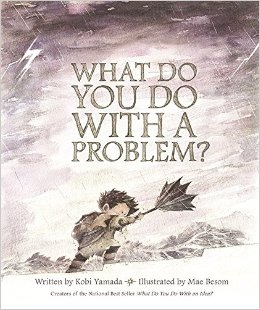
What Do You Do with a Problem? by Kobi Yamada

Share

what do you do with a problem

What Do You Do with a Problem?
Author: Kobi Yamada; Illustrator: Mae Besom
Published: July 1, 2016 by Compendium Inc.

GoodReads Summary: From the same author and illustrator as our #1 nationally best-selling What Do You Do With an Idea? comes a new book to encourage you to look closely at problems and discover the possibilities they can hold.

What do you do with a problem? Especially one that follows you around and doesn’t seem to be going away? Do you worry about it? Ignore it? Do you run and hide from it?

This is the story of a persistent problem and the child who isn’t so sure what to make of it. The longer the problem is avoided, the bigger it seems to get. But when the child finally musters up the courage to face it, the problem turns out to be something quite different than it appeared.

This is a story for anyone, at any age, who has ever had a problem that they wished would go away. It’s a story to inspire you to look closely at that problem and to find out why it’s here. Because you might discover something amazing about your problem… and yourself.

What are problems for? They challenge us, shape us, push us, and help us to discover just how strong and brave and capable we really are. Even though we don’t always want them, problems have a way of bringing unexpected gifts.

So, what will you do with your problem? Now that’s up to you.

Review: There is something so magical about the combination of writer Kobi Yamada and illustrator Mae Besom. When I saw that these creators of What Do You Do with an Idea? had another book, I jumped at the chance to read it. It’s no secret that I am in love with this first book. I have gifted it to many friends and children, and I include it on many of my favorites and Top Ten Tuesday lists. I was pleased that What Do You Do with a Problem? is just as stunning. These two books are a teacher’s dream. They utilize many literary elements and are perfect for close analysis. I would use them at all grade levels. What Do You Do with a Problem? is a great text to teach readers how to reconsider a problem (or problems) that they might have. They can compare the problem with illustrations and consider how that problem may, for example, be all-encompassing. I like how the book balances both the weight of the problem and the proverbial light at the end of the tunnel. By looking at this problem in a new light, readers will be able to take more of an outside perspective of the conflict—and hopefully/potentially work toward a resolution.

Teacher’s Tools for Navigation: To start, teachers might ask students to consider the symbolism within the text. They might even grapple with the definition of an allegory and discuss ways the definition might be connected with the text and illustrations. Then, students could think of an abstract idea and try to associate an object with that idea. They might even consider writing their own picture book that connects the object and abstract idea. I also think it would be great for teachers to read both this text and What Do You Do with an Idea? to students. Then, they might compare and contrast the stories and their messages.

Discussion Questions: What do you do with a problem? How do we deal with problems in different ways? How do others in our lives deal with problems in ways that differ from us?; How do the author and illustrator work together to create a compelling story? What symbols do they use to convey their message?

Flagged Passage: 

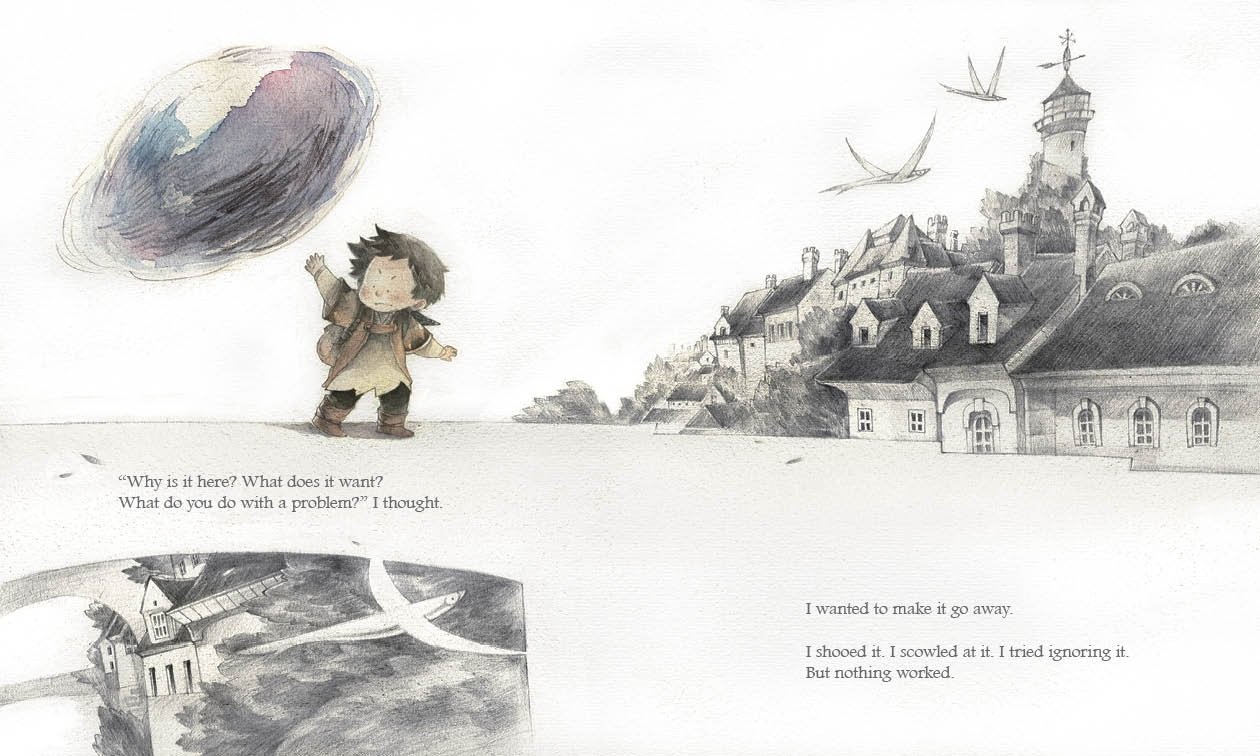
what do you do with a problem spread

Image from: www.amazon.com

Read This If You Loved: What Do You Do with an Idea? by Kobi Yamada; The Most Magnificent Thing by Ashley Spires; The Dot by Peter H. Reynolds, The Noisy Paint Box by Barb Rosenstock, Lost and Found by Oliver Jeffers, Journey by Aaron Becker

Recommended For:

  readaloudbuttonsmall closereadinganalysisbuttonsmall classroomlibrarybuttonsmall

RickiSig

Candlewick Nonfiction Picture Books: Who’s Like Me? by Nicola Davies; Can We Help? by George Ancona; Belle, the Last Mule at Gee’s Bend by Calvin Alexander Ramsey & Bettye Stroud; and The Boy Who Fell Off the Mayflower by P.J. Lynch

Share

NFPB2016

Nonfiction Wednesday

Nonfiction Picture Book Wednesday is hosted by Kid Lit Frenzy and was started to help promote the reading of nonfiction texts. Most Wednesdays, we will be participating and will review a nonfiction text (though it may not always be a picture book).
Be sure to visit Kid Lit Frenzy and see what other nonfiction books are shared this week!

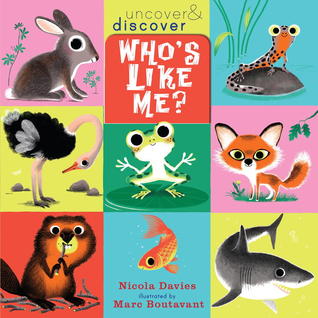
who's like me

Who’s Like Me?
Author: Nicola Davis
Illustrator: Marc Boutavant
Published February 28th, 2012 by Candlewick Press

Goodreads Summary: Lift the flaps and learn about animal life in this fresh, fun-filled book for curious preschoolers.

A bunny is furry and breathes air. Who else is like that — a pigeon, a fish, a chameleon, or a fox? Some animals have fins to swim with, some have feathers and a beak, some have skin that is scaly, or smooth and wet. But whatever features a creature has, someone else has them, too. Can you guess who? Big flaps and a matching spread at the end make animal classification fun.

My Thoughts: This flap book is going to be a big hit in my house both because it is entertaining and because it is informative. First, the author does a great job making the identification of animal types a game including flaps and comparisons/contrasts then she ensures that factual information follows the matching to explain the type of animal and the characteristics of the type.

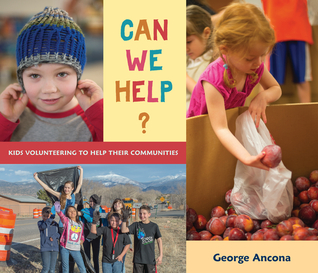
can we help

Can We Help? Kids Volunteering to Help their Communities
Author: George Ancona
Published August 25th, 2015 by Candlewick Press

Goodreads Summary: Real kids make a real difference in their communities in this vibrantly photographed chronicle by George Ancona.

George Ancona celebrates the joy of kids giving back. In one after-school program, middle-school students mentor and tutor younger children. Via a special partnership, schoolchildren help professionals train assistance dogs for people with disabilities. At a community farm, families plant, grow, and harvest produce for soup kitchens and charities. In these and other examples of volunteering, kids of all ages work together knitting hats and scarves for those who could use warm clothes, packing hot meals to deliver to housebound people, and keeping roadways clean. Young humanitarians reading these accounts may well be inspired to find ways that they can help, too.

My Thoughts: I think this picture book would be a wonderful one to read in conjunction with the 31 Ways to Change the World because that book includes suggestions while this one gives us narratives about those actually making a difference. I love the variety of ways the author highlights: from knitting to a community farm to training dogs and mentoring. These stories are inspiring and will make the reader (adult or child) want to do something to make a difference!

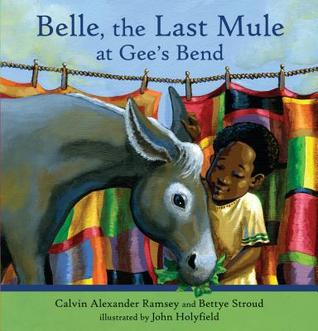
belle last mule

Belle, the Last Mule at Gee’s Bend
Authors: Calving Alexander Ramsey and Bettye Stroud
Illustrator: John Holyfield
Published September 13th, 2011 by Candlewick Press

Goodreads Summary: A true story inspires the moving tale of a mule that played a key role in the civil rights movement– and a young boy who sees history anew.

Sitting on a bench waiting for his mother, Alex spies a mule chomping on greens in someone’s garden, and he can’t help but ask about it.””Ol Belle?” says Miz Pettway next to him. “She can have all the collards she wants. She’s earned it.” And so begins the tale of a simple mule in Gee’s Bend, Alabama, who played a singular part in the civil rights movement of the 1960s. When African-Americans in a poor community– inspired by a visit from Dr. Martin Luther King, Jr.– defied local authorities who were trying to stop them from registering to vote, many got around a long detour on mule-drawn wagons. Later, after Dr. King’s assassination, two mules from Gee’s Bend pulled the farm wagon bearing his casket through the streets of Atlanta. As Alex looks into the eyes of gentle Belle, he begins to understand a powerful time in history in a very personal way.

My Thoughts: This story adds an extra truth to the story of Martin Luther King that many of us know. MLK was an advocate and leader and activist for all African and Black Americans and this meant a lot to so many communities of people around America including Gee’s Bend. To learn about Belle and King’s reason for having Belle pull his coffin really just shows how true his intentions of being a man of the people while fighting for the rights of all. And I loved how this story was told as a story from a Bender to a young boy visiting the town. Gee’s Bend is such a historical place, and I love this new part of their history that I didn’t know. (I love the quilts produced in Gee’s Bend! If you haven’t viewed them, Google it now!)

boy who fell

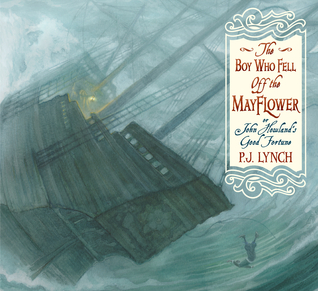
The Boy Who Fell Off the Mayflower or John Howland’s Good Fortune
Author and Illustrator: P.J. Lynch
Published September 22nd, 2015 by Candlewick Press

Goodreads Summary: In the first book he has both written and illustrated, master artist P.J. Lynch brings a Mayflower voyager’s story to vivid life.

At a young age, John Howland learned what it meant to take advantage of an opportunity. Leaving the docks of London on the Mayflower as an indentured servant to Pilgrim John Carver, John Howland little knew that he was embarking on the adventure of a lifetime. By his great good fortune, John survived falling overboard on the crossing of the Atlantic Ocean, and he earned his keep ashore by helping to scout a safe harbor and landing site for his bedraggled and ill shipmates. Would his luck continue to hold amid the dangers and adversity of the Pilgrims’ lives in New England? John Howland’s tale is masterfully told in his own voice, bringing an immediacy and young perspective to the oft-told Pilgrims’ story. P.J. Lynch captures this pivotal moment in American history in precise and exquisite detail, from the light on the froth of a breaking wave to the questioning voice of a teen in a new world.

My Thoughts: I have to start my review with discussing the art work. Describing P.J. Lynch as a master artist is a perfect statement. His watercolor and gouache full page plus illustrations are so lifelike and beautiful that the reader will spend time on each page viewing the art in addition to reading the text. And what makes the book even better is that the text is interesting. Told in first person from John Howland’s point of view, we travel from London to America through storms, a fall off the Mayflower, death, disease, famine, and shows how friendship and kindness pay. In the classroom, this text would be an informational and interesting introduction to the Mayflower voyage and Plymouth.


All Recommended For: 

classroomlibrarybuttonsmall readaloudbuttonsmall litcirclesbuttonsmall

Kellee Signature

Top Ten Tuesday: Reasons We Love Being Moms to Readers

Share

top ten tuesday

Top Ten Tuesday is an original feature/weekly meme created at The Broke and the Bookish. The feature was created because The Broke and Bookish are particularly fond of lists (as are we!). Each week a new Top Ten list topic is given and bloggers can participate.

 Today’s Topic: Reasons We Love Being Moms to Readers

Ricki

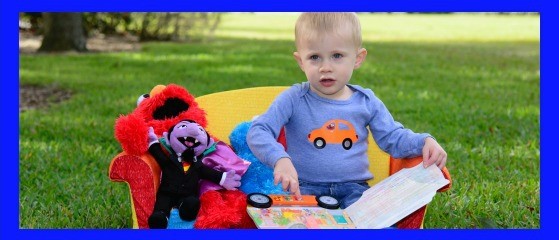
1. I feel compelled to keep up with the latest picture books.

2. We get extra family time, reading books together each night.

3. And then my son reads books by nightlight after we read as a family. The way he sneaks extra books reminds me of my own childhood.

4. I spend several days a week in the library, and it is a peaceful, wonderful place to be.

5. I have a partner to share my joy when we open packages that have books in them. His “Ooos” and “Ahhs” rivel mine.

6. (I am cheating with one more than my allowed five): I have a stronger sense of the power of rereading. My son can read the same book thirty times in one day (and this can extend over several months). It amazes me.

Kellee

I hope through raising my son around books and around a mom who loves books, he’ll become a voracious reader. He already loves books which makes me so happy!

Trent Book

1. Listening to my son “read” books to me. Trent is reaching the stage where he is learning what is said for each page in his favorite books, and it has gone further than just knowing a few words per book , liked Pete the Cat, and towards him knowing the entire book of board book s like Llama Llama Zippity Zoom and longer books like Go Dog Go. 

2. I love our time at night where Jim and I read to Trent. It is one of my favorite parts of the day.

3. Watching Trent learn through books is such an amazing experience. This is very similar to #1, but I love having him look at pictures and ask questions and learn. He is such an inquirer.

4. In the future, I cannot wait to listen to audiobooks of novels I love with Trent and especially cannot wait for Harry Potter.

5. In the future, I cannot wait to have a partner in library and book store visits. Right now, he does enjoy going, but it’ll be even more wonderful when he will wander the shelves with me and look at books and we can discuss and laugh and talk. My husband is a different type of reader than me, so I hope that Trent becomes a book lover like I am.

If you are a parent or caregiver, what is your favorite part about having a reader in your home?

RickiSig and Signature

It’s Monday! What Are You Reading? #IMWAYR 6/6/16

Share

IMWAYR 2015 logo

It’s Monday! What Are You Reading? From Picture Books to YA!

It’s Monday! What are you Reading? is a meme started by Sheila at Book Journeys and now hosted by Kathryn at The Book Date. It is a great way to recap what you read and/or reviewed the previous week and to plan out your reading and reviews for the upcoming week. It’s also a great chance to see what others are reading right now…you just might discover the next “must-read” book!

Kellee and Jen, of Teach Mentor Texts, decided to give It’s Monday! What Are You Reading? a kidlit focus. If you read and review books in children’s literature – picture books, chapter books, middle grade novels, young adult novels, anything in the world of kidlit – join us! We love this meme and think you will, too.

We encourage everyone who participates to support the blogging community by visiting at least three of the other book bloggers that link up and leave comments for them.

Bold_line

Last Week’s Posts

**Click on any picture/link to view the post**

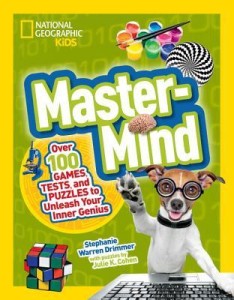
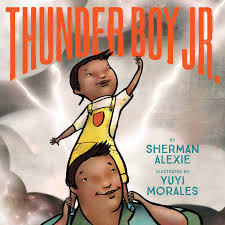
top ten tuesday  mastermind thunder boy jr

Screen-Shot-2015-12-13-at-1.01.23-AM-e1452184891507 rsz_front_cover

Tuesday: Ten Non-Shallow Beach Reads

Wednesday: Mastermind by National Geographic

Thursday: Thunder Boy Jr. by Sherman Alexie

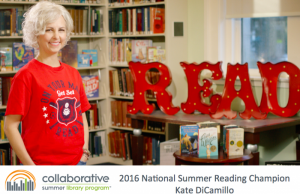
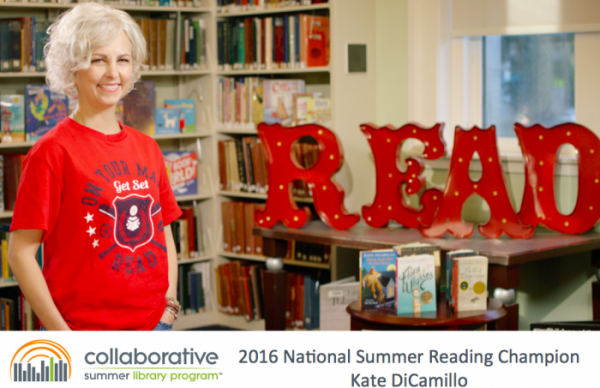
Friday: Kate DiCamillo: Collaborative Summer Library Program Summer Reading Champion for 2016

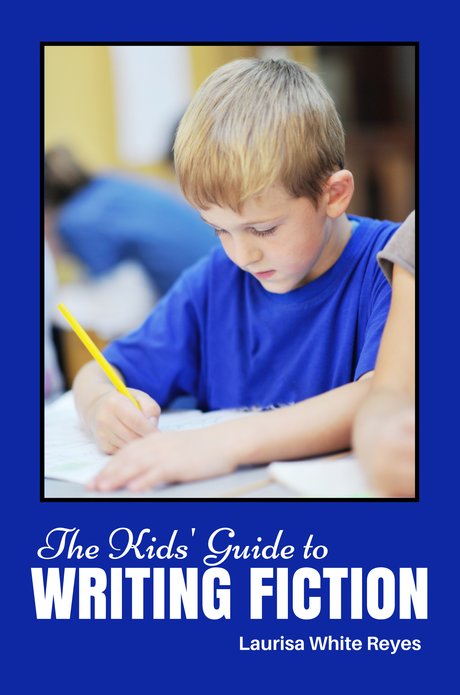
Sunday: Author Guest Post!: “Finding the Joy in Writing” by Laurisa White Reyes, Author of The Kids’ Guide to Writing Fiction

Bold_line

 Last Week’s Journeys
Kellee

From Thursday to Sunday this week, I was at the Future Problem Solvers International Competition at Michigan State University, so I was not able to write my IMWAYR post. I’ll update you all next week 🙂

Ricki

How the World Was

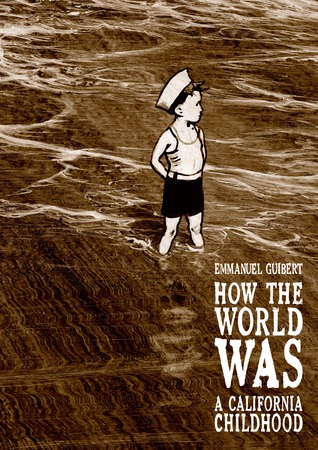
Many of you know Emmanuel Guibert’s graphic novel Alan’s War. Guibert is a French cartoonist who tells the true story of Alan Cope, an American GI in France in WWII. How the World Was: A California Childhood depicts Alan’s earlier childhood experiences, growing up during the Great Depression in California. The graphic novel is unlike others that I’ve read, and I really enjoy Guibert’s style. The chapters read like vignettes of Cope’s childhood; some of the scenes are graphic, and many are quite moving. This text would be excellent for close reading, and I don’t think readers even need to read it in its entirety to appreciate and understand each chapter.

honest truth

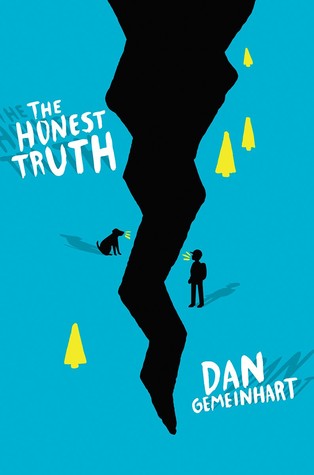
I finished The Honest Truth by Dan Gemeinhart in one sitting, and I totally agree with the hype. This book is excellent! It took me awhile to get to it, and I am glad I was finally intrigued enough to pick it up. It reminds me of so many works of literature that I love, yet it was quite different. I highly recommend this one.

Henry and I also read a lot of great picture books this week. This morning, we sat in his room for two hours and read about 50 books in a row. He enjoys laying across my pregnant belly and tells me he is reading to his baby brother. It’s these moments that make me love life. I won’t list the books here because most of them are older books or rereads. We did enjoy Chupie: The Binkie That Returned Home by Thalia.

Bold_line

This Week’s Expeditions
Ricki 

No cover

I continued reading the unnamed book by my author friend. I am 75% done and enjoying reading it before bed. It’s a great sci fi, but she’s asked that I not reveal any information yet. She’s feeling really shaky about it. I have lots of feedback for her, so I am excited to see where it goes!

this dark endeavor

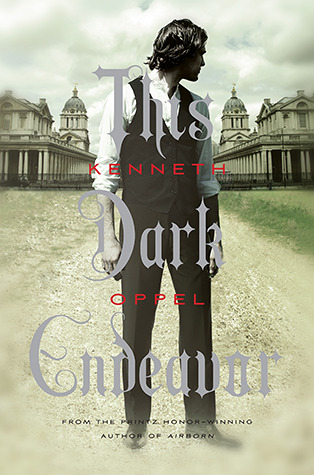
The Dark Endeavor by Kenneth Oppel has been on my TBR list forever. I added it to my #mustreadin2016 list this year, and am happy to say I am 2 hours away (audio) from finishing it! At first, I didn’t like it, and I was so bummed, but I realize now I made a huge mistake. This book is simply fantastic! Kellee’s voice was in the back of my head. She told me it was a great read. Because we usually agree, I give it a second chance.

Bold_line

Upcoming Week’s Posts

top ten tuesday belle last mule can we help who's like me boy who fell what do you do with a problem can you canoe

Tuesday: Ten Reasons We Love Being Moms to Readers

Wednesday: Candlewick Press Nonfiction Picture Books

Thursday: What Do You Do With a Problem? by Kobi Yamada

Friday: Can You Canoe? And Other Adventure Songs by The Okee Dokee Brothers

Sunday: Author Guest Post!

 So, what are you reading?

Link up below and go check out what everyone else is reading. Please support other bloggers by viewing and commenting on at least 3 other blogs. If you tweet about your Monday post, tag the tweet with #IMWAYR!

 Signature andRickiSig

Author Guest Post!: “Finding the Joy in Writing” by Laurisa White Reyes, Author of The Kids’ Guide to Writing Fiction

Share

“Finding the Joy in Writing”

Any parent knows that if you want a kid to really hate something, just tell him he has to do it, or else. That was my son’s reaction when I told him he had to write a five paragraph essay. My instructions were met with so much whining and moaning you would have thought I’d asked him to scrub the bathroom with a toothbrush. His reaction, however, was not an unusual one. Many parents can attest to their children’s seemingly built-in aversion to writing. While some kids seem naturally drawn to writing, others would rather carry a load of rocks up a mountain than write a compound sentence. This is why I wrote The Kids’ Guide to Writing Fiction, because within every child is a story waiting to be told, whether they realize it or not.

Make Writing Fun

Remember the classic children’s film Mary Poppins? Jane and Michael Banks live in turn of the century London. These conniving pranksters manage to chase away every nanny their father hired for them. Their parents are at their wits’ end. Then Mary Poppins arrives. One of the first tasks she requests of the children is to pick up their room. Jane and Michael balk and whine. To them it is a tedious, pointless chore. What does Mary Poppins do to change their attitudes? She throws in a spoonful of sugar and makes the whole thing a game. In no time at all the room is clean and the children are tucked neatly in their beds.

Now, obviously, real life doesn’t work quite like that. We have no magical carpetbag from which to pull out hat racks and measuring sticks. But as parents and/or educators, we do have the same power as Mary Poppins to create an atmosphere of cooperation and optimism in our homes and classrooms. Whether or not our children will hate what we ask them to do, or do it willingly and cheerfully, depends largely on us.

I started teaching creative writing classes to children and teens about the same time my son was learning to write those essays. I looked for ways to encourage my students to write, and met with great success. Once I applied what I was using in my classes to my son, his attitude toward writing changed. And although it is still not his favorite activity, he has become a capable and skilled writer.

Writing is a Means of Self-Expression   

Writing well demands that the writer enjoy writing. When writing is nothing more than an assignment with no purpose except to earn a grade on a report card, chances are that the student will come to dread writing. He will view it as chore, just like washing the dishes or making his bed.

Is this the attitude we want our children to have about writing? Do we want them to write five-paragraph essays just for a grade? Is that really the purpose of a writing education? Of course not. The ultimate goal is for our children to feel confident in their writing skills, to use writing as a means of self-expression. But to achieve that goal requires that we, as adults, help our kids find the joy in writing.

In my writing classes, I taught students how to write. I did not, however, grade anything, nor did I spend much time critiquing their work. In fact, my students didn’t even realize they were learning to write well, because they were so excited about what they were doing. Over the years, I’ve heard from many of my students’ parents about how their children were transformed from reluctant writers to kids who wouldn’t put their pencils down. The key to this transformation was that I made writing fun.

To me, there is nothing more enjoyable than sitting alone at my computer in the middle of the night to write. I would rather do that than just about anything else. The question is, how do we transfer this love of writing to our kids?

The first step in helping kids write well is to take writing out of the picture. Writing is a means to an end, a tool for getting what is inside someone’s head onto paper. What’s really important is the message or information writing conveys.

Think of words as clay. Clay by itself is nothing but a gray lump on a potter’s wheel. But in the hands of the potter, the clay begins to take shape. If the potter doesn’t like the form, he can squash it and start all over again. He can do this over and over until he gets it just right. Once it is finished and the piece is fired and glazed, we see not the lump of clay, but a beautiful piece of art or a functional object, such as a vase.

Writers use words to create something beautiful and useful. They are not as concerned with the words as they are with the finished product. When children focus on that finished product, be it a poem or essay or story, words become tools, the medium by which they can bring their dreams to life.

The Storyteller Within

One the most effective ways to help kids fall in love with writing is by helping them discover the storyteller within. We are all storytellers. A storyteller is someone who relates events in a logical order to someone else. Think about the last time you told a friend about a movie you a saw, or an event you attended, or even just something that happened that was interesting. How did you share that information? Most likely, you told it in the form of a story.

The reason so many children and teens are averse to writing, particularly in school, is because they have not yet tapped in to their own natural storytelling abilities. That is my objective with The Kids’ Guide to Writing Fiction. In this book, I teach kids about the six fundamental building blocks needed to create stories: characterization, setting, plot, perspective, imagery, and dialogue. I take them step-by-step through the process of crafting a story and help them excavate their own imaginations for ideas. Then I help them put those ideas into words and onto paper.

Once a child has written a story of his own, he feels a great sense of satisfaction. He discovers that writing is fun. This discovery is what can tear down the walls of resistance and self-doubt, and can build confidence in his ability to learn other forms of writing, such as those dreaded 5 paragraph essays.

The ultimate goal of a writing education is to teach kids to write well, but if they hate writing, that goal is nearly impossible to achieve. However, once a child discovers the joy of tapping into his own creativity, then, like Mary Poppins’ carpet bag, writing becomes limitless…and magical.

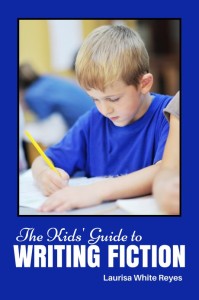
The Kids’ Guide to Writing Fiction
rsz_front_cover

About the Book: We are all storytellers. Whether weaving mythologies in ancient times or describing the plot of a favorite movie today, humans have, since the beginning of time, loved to tell stories. In The Kids’ Guide to Writing Fiction, students explore the building blocks needed to construct a story: characterization, setting, plot, perspective, plot, imagery, and dialog. Then, using these building blocks, they create their own stories.

Accessible to both the struggling student and the budding novelist—as well as to teachers, parents, and even adult aspiring writers, author Laurisa White Reyes presents key elements of story writing and clarifies them with examples and worksheets. Concepts are explained in simple, clear language while gently introducing vocabulary words.The Kids’ Guide to Writing Fiction offers welcome guidance to storytellers of all ages.

Links:
Twitter: @lwreyes


P10 (2)

About the Author: Laurisa White Reyes is the author of four novels for young readers, including the 2015 Spark Award winner, The Storytellers. She is also the author of The Kids’ Guide to Writing Fiction & Teaching Kids to Write Well: Six Secrets Every Grown-up Should Know. In addition to writing, she also manages to squeeze time into her busy life to teach college English; run her own editorial/publishing business, Skyrocket Press; and be mom to her five children. You can learn more about her at: www.LaurisaWhiteReyes.com.

Thank you to Laurisa for this very helpful post!
RickiSigandKellee Signature

Kate DiCamillo: Collaborative Summer Library Program Summer Reading Champion for 2016

Share

Screen-Shot-2015-12-13-at-1.01.23-AM-e1452184891507 
Two-time Newbery Medalist, former U.S. Ambassador for Young People’s Literature, and bestselling author Kate DiCamillo has  another title to add to her growing list of accomplishments. She is the 2016 National Summer Reading Champion for the Collaborative  Summer Library Program (CSLP) for the second year in a row.

“I know this sounds kind of funny,” says DiCamillo, “but I feel like I was born to be the CSLP Summer Reading Champion. The library was such a magical place for me as a kid—a place of possibility, safety, and promise. And my being a Summer Reading Champion is all  about hoping that kids and their families will get the chance to feel the same way about their own local library. Kids and libraries belong together all year long, but the summer is particularly special—a time of freedom and fun in reading. And freedom is how lifelong readers are made.”

CSLP is a nonprofit consortium of state libraries that work together to provide an annual unified summer reading theme and professionally created, evidence-based materials for member libraries to enable them to provide high-quality summer reading programs to their communities at the lowest possible cost. They reach approximately 15,000 member libraries nationwide, representing all fifty states.

The 2016 theme is “On Your Mark, Get Set . . . Read!” CSLP has created a comprehensive array of resources for libraries to use in their summer reading programs, including program ideas, booklists, posters, clip art, and activities for four age groups, from babies to adults. All materials are available in English and Spanish. DiCamillo has provided a top ten list of reasons to join a library summer reading program and will also create a list of her favorite recommended summer reads for 2016.

“We think the 2016 theme is perfect for an Olympic summer and have created a host of materials that are easily adaptable to any community,” says CSLP board chair and Mississippi Library Commission’s Senior Library Consultant Mac Buntin. “We’re absolutely thrilled to have Kate DiCamillo as our Champion. Her passion for summer reading and love of libraries—and librarians—is inspiring and infectious.”

Turn learn more about CSLP, visit their website at http://www.cslpreads.org and view the official press release here.

As a fan of DiCamillo, including her newest Raymie Nightingale, we are so happy to see her promoting not only summer reading, but book and library love in general. 

Kellee Signature