Oh, Ick!: 114 Science Experiments Guaranteed to Gross You Out! by Joy Masoff

Share

NFPB2016

Nonfiction Wednesday

Nonfiction Picture Book Wednesday is hosted by Kid Lit Frenzy and was started to help promote the reading of nonfiction texts. Most Wednesdays, we will be participating and will review a nonfiction text (though it may not always be a picture book).
Be sure to visit Kid Lit Frenzy and see what other nonfiction books are shared this week!

oh-ick

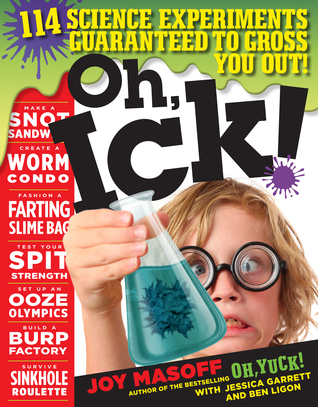
Oh, Ick!: 114 Science Experiments Guaranteed to Gross You Out
Author: Joy Masoff with Jessica Garrett and Ben Ligon
Published November 1st, 2016 by Workman Publishing Company

Summary: From the bestselling author of Oh, Yuck! and Oh, Yikes! here is an A-Z compendium of hands-on grossness.

Featuring 114 interactive experiments and ick-tivities, Oh, Ick!delves into the science behind everything disgusting.

Stage an Ooze Olympics to demonstrate viscosity and the nature of slime. Observe how fungi grow by making a Mold Zoo. Embark on an Insect Safari to get to know the creepy crawlies around your home. And learn what causes that embarrassing acne on your face by baking a Pimple Cake to pop—and eat. Eww!

Review: I always struggled with science, but I think if I had done more science experiments, putting the facts and information that I couldn’t memorize into practice, I would have been able to understand the concepts and information better. Books like Oh, Ick! and its companions Oh, Yuck! and Oh, Yikes! make science interesting thus helping kids put science into action and moving the information from short term to long term!

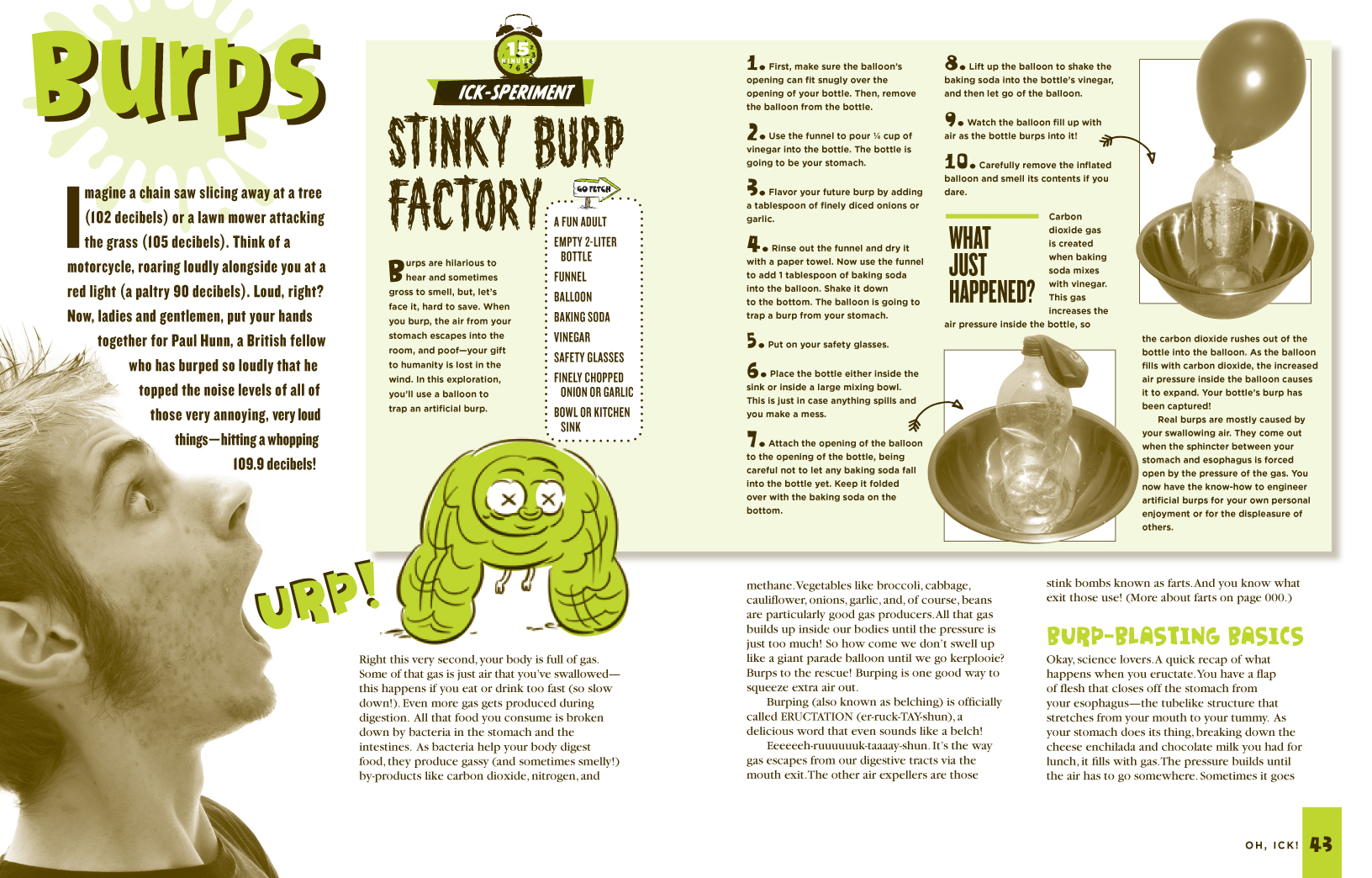
Teachers’ Tools for Navigation: I would love to see some of these icky experiments used in the classroom! Although the experiments are alphabetical by topic, the index gives teachers the ability to search for what they need. Want to teach about B cells and scabs, why not do “Spaghetti Scab Dinner?” Sound waves? Why not try “Sick Sounds?”

Flagged Passages: 

oh-ick-spread

Read This If You Loved: Gross and interesting science experiments

Recommended For: 

closereadinganalysisbuttonsmall

Signature

**Thank you to Estelle from Workman Publishing for providing a copy for review!**

Top Ten Tuesday: Favorite Movies When I was a Teen

Share

top ten tuesday

*It’s actually eleven. SHHHH! Don’t tell Ricki!*

Top Ten Tuesday is an original feature/weekly meme created at The Broke and the Bookish. The feature was created because The Broke and Bookish are particularly fond of lists (as are we!). Each week a new Top Ten list topic is given and bloggers can participate.

 Today’s Topic: Favorite Movies When I was a Teen

Kellee

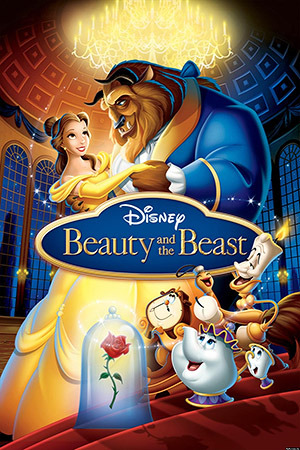
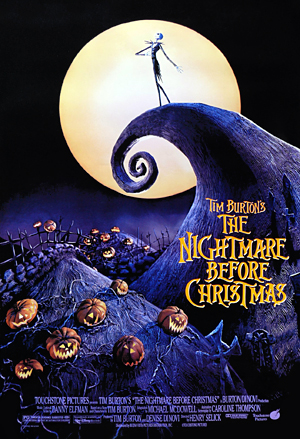
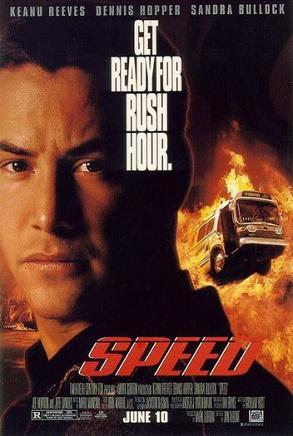
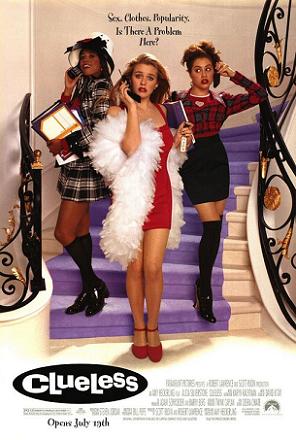
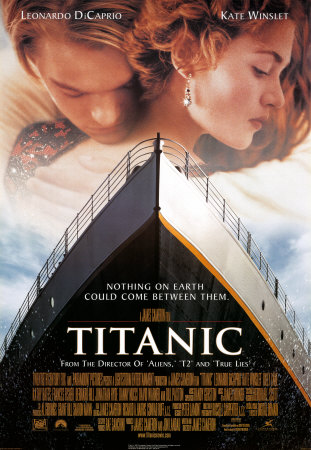
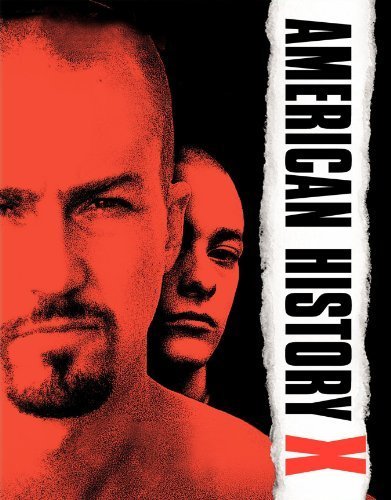
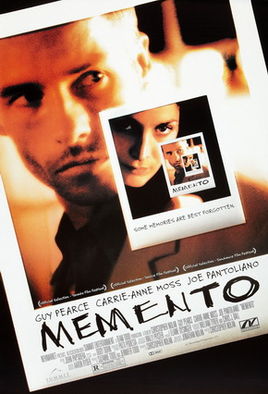
When I decide I like a movie, I can watch it over and over again. Here are the movies I watched so much as a teen (or preteen) that I knew all the words and would consider myself obsessed with (in rough chronological order):

beauty-and-the-beast league-of-their-own nightmare

speed-movie clueless titanic-movie american-history-x

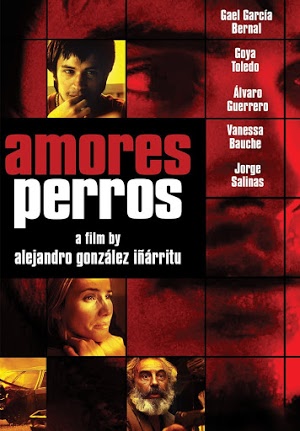
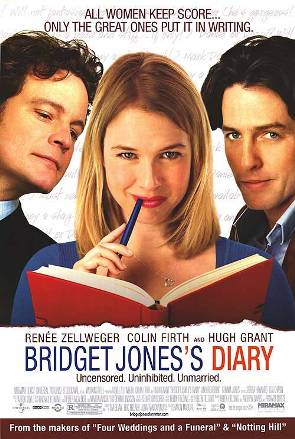
memento-movie 10-things amores-perros bridget-jones-diary

Did you enjoy these movies as well?
Which movies were you obsessed with when you were a teen?

Signature

It’s Monday! What Are You Reading? #IMWAYR 11/14/16

Share

IMWAYR 2015 logo

It’s Monday! What Are You Reading? From Picture Books to YA!

It’s Monday! What are you Reading? is a meme started by Sheila at Book Journeys and now hosted by Kathryn at The Book Date. It is a great way to recap what you read and/or reviewed the previous week and to plan out your reading and reviews for the upcoming week. It’s also a great chance to see what others are reading right now…you just might discover the next “must-read” book!

Kellee and Jen, of Teach Mentor Texts, decided to give It’s Monday! What Are You Reading? a kidlit focus. If you read and review books in children’s literature – picture books, chapter books, middle grade novels, young adult novels, anything in the world of kidlit – join us! We love this meme and think you will, too.

We encourage everyone who participates to support the blogging community by visiting at least three of the other book bloggers that link up and leave comments for them.

Bold_line

Ricki

Ricki is currently away on maternity leave! She has lined up reviews for the time she is away. While spending time with the newest member of her family, she is also working hard on completing her dissertation and is trying to focus her time accordingly. Ricki is looking forward to returning to share books with you all! Happy reading!

Bold_line

Last Week’s Posts

**Click on any picture/link to view the post**

top ten tuesday strange-unusual-gross-cool-animals honest truth six what-do-you-see transcendent-cover-image-high-res

Tuesday: Ten Books I’ve Added to my TBR Recently

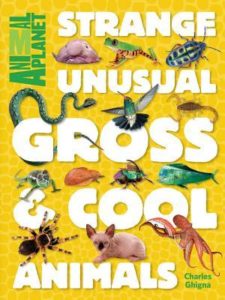
Wednesday: Strange, Unusual, Gross, & Cool Animals by Charles Ghigna

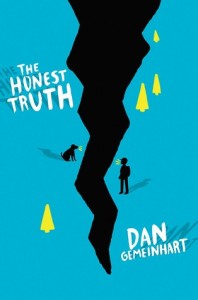
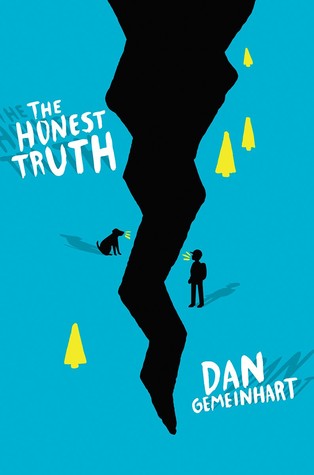
Thursday: The Honest Truth by Dan Gemeinhart

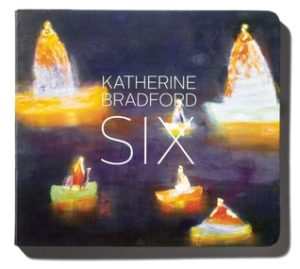
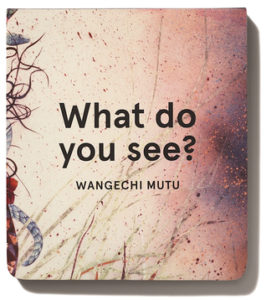
Friday: Mini Museum Series by Home Grown Books

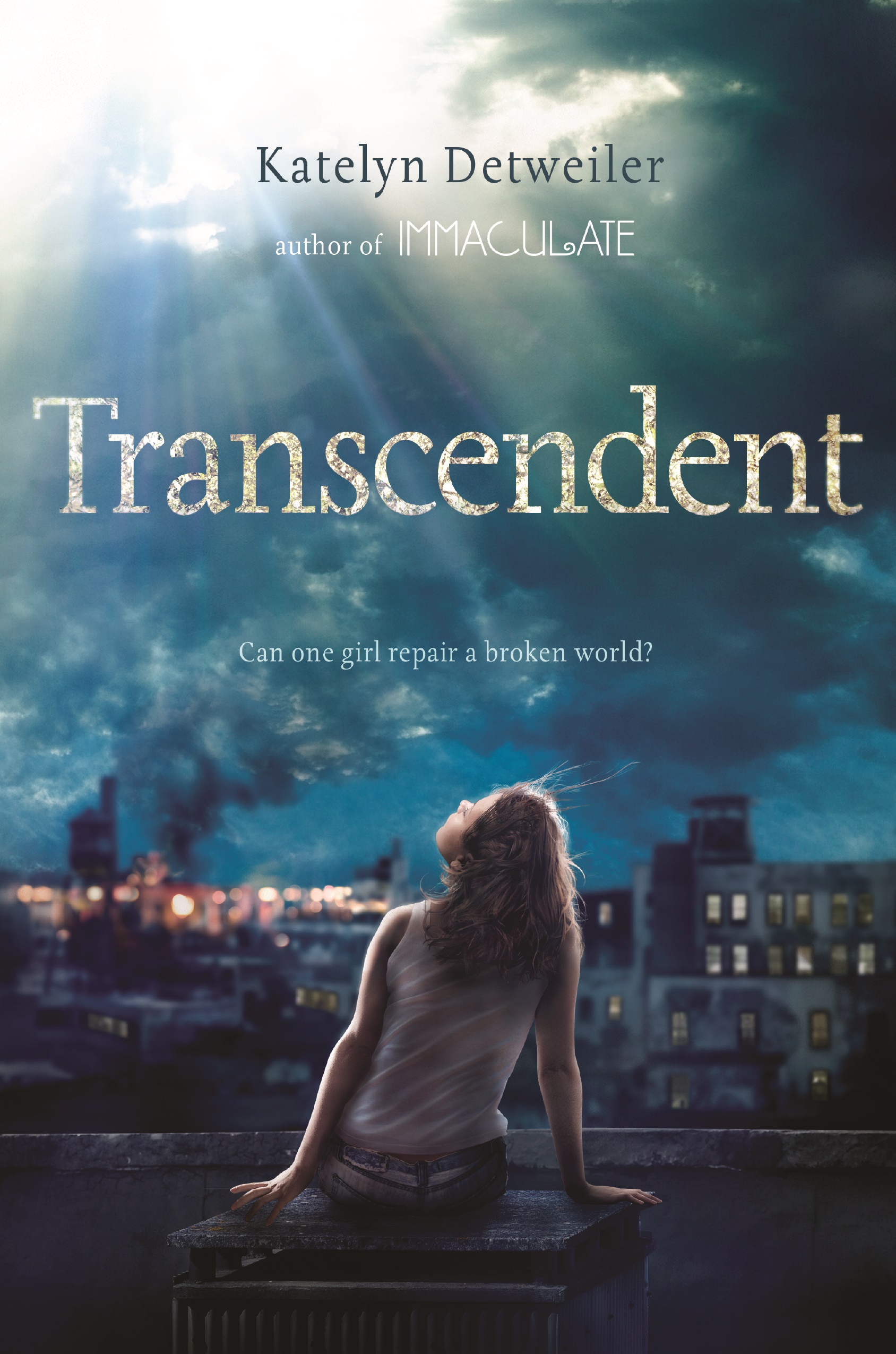
Sunday: Author Guest Post!: “How can Fiction Help us Cope with our World?” by Katelyn Detweiler, Author of Transcendent

Bold_line

 Last Week’s Journeys

Kellee

I cannot believe the NCTE conference is this week! You should definitely follow the #NCTE16 and #ALAN16 hashtags on social media if you aren’t able to attend!

sinister-sweetness

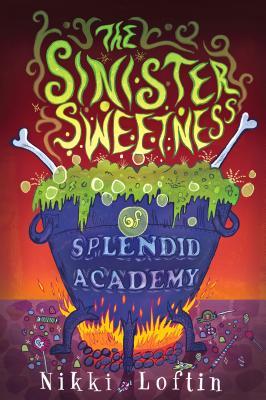
The Sinister Sweetness of Splendid Academy is a super odd, creepy retelling of Hansel & Gretel that reminds me a bit of Dahl’s The Witches. I overall enjoyed it (though there were some really messed up parts!), and kids are going to eat it up (pun intended).

dear-zoo

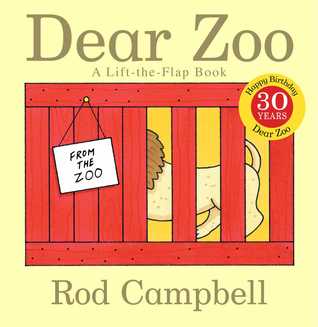
Trent also has a new favorite book which I had to include because I already have it memorized after buying it less than a week ago. Dear Zoo not only is about animals, it has flaps and has a fun premise.

IBold_line

This Week’s Expeditions
Kellee

every-hidden-thing

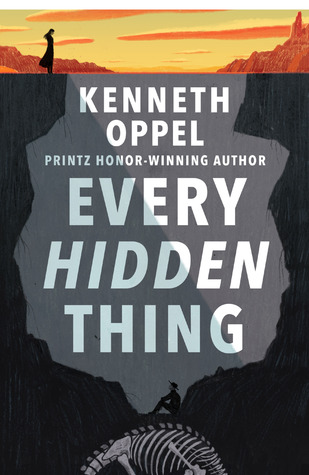
I am about halfway through Every Hidden Thing, the last book I need to read for ALAN, and I just love how Oppel writes. The verdict is still out on the book, but the premise is very unique (as are all of his books!).

charmed-children

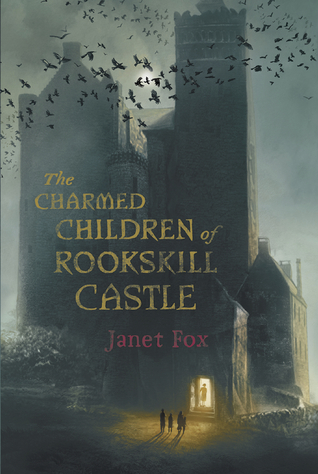
I’m also still listening to The Charmed Children of Rookskill Castle and am sad that I am going to have a chunk of time that I probably won’t listen to it. I may have to bring the physical book home and read it because I must know what is going to happen.

Bold_line

Upcoming Week’s Posts

top ten tuesday oh-ick just imagine reds-planet

Tuesday: Favorite Movies When I was a Teenager

Wednesday: Oh, Ick!: 114 Science Experiments Guaranteed to Gross You Out! by Joy Masoff

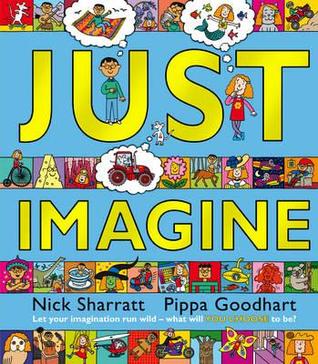
Thursday: Just Imagine by Nick Sharratt

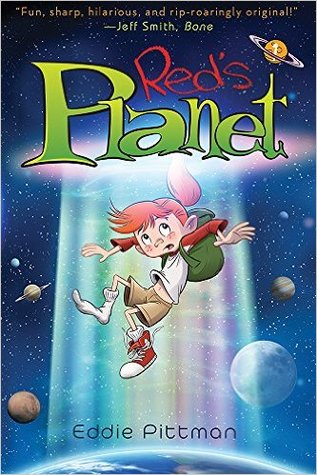
Friday: Teaching Guide for Red’s Planet by Eddie Pittman

 So, what are you reading?

Link up below and go check out what everyone else is reading. Please support other bloggers by viewing and commenting on at least 3 other blogs. If you tweet about your Monday post, tag the tweet with #IMWAYR!

 Signature andRickiSig

Author Guest Post!: “How can Fiction Help us Cope with our World?” by Katelyn Detweiler, Author of Transcendent

Share

How can fiction help us cope with our world?”

It hurts to read the news these days.

It hurts my brain, it hurts my heart. I can only read so much before I have to tune out, move on with my day. It’s not that I don’t want to know and understand what’s going on in our country and in our world—I do, of course I do. Awareness is the first step at enabling any kind of change. But still, I have a mental and emotional limit. There is only so much suffering my brain can absorb.

The speed of the news is part of it—every day a revolving flow of red letter, all cap headlines. We expect that in 2016; the Internet and social media have buoyed our expectations for fresh, compelling content. We mindlessly pick up our phones all day, refreshing our feeds: Instagram, Twitter, Facebook, repeat. Our phones are with us as soon as we wake up in the morning, right before we close our eyes at night. Even without directly checking news sites, the news reaches us, always. Our friends are talking about the latest shooting, the latest bombing, gun laws and foreign policies. Everyone has an opinion—and that’s great. It’s how it should be. Conversations are necessary, and the best way for each and every one of us to keep on learning, to keep on pushing and evolving our perspectives.

But what is our emotional limit? Week after week, day after day, it’s something new, something equally or more shocking than we’ve seen before, more graphic and uncensored. More real.

I worry that I’m becoming numb.

The names and faces fade so quickly. Too quickly. When the violence in Orlando happened, I felt sick, heartbroken that my own book, TRANSCENDENT, targets that same city. In my book, Disney World is the target—fiction that blurs scarily close to reality.

But already, just a few months later, Orlando and Pulse feel so long ago. We’ve had so much tragedy to face since then. We read the names, we stare at the faces. We try to imagine their families. We wonder about the life they’ll now never get to live. And then the next day, or the next week, there are new faces. The old faces, unintentionally, unconsciously, are hazier. Less vivid.

No place is immune. Orlando could be any city, every city. This is our reality now. We need some outlet for our fear—we need to find a way to still have hope.

So what can we do when we see too much, feel too much? How can teens in particular cope, begin to process and understand what is happening in their world—their present and their future?

For me at least, I turn to books. Fiction, stories, people and places who are only real in my imagination. Because sometimes it takes stepping out of reality, the day to day, to understand what is actually happening around me, and my place in it.

Books… they slow us down. They show us new perspectives, challenge our beliefs. In reading we can intimately identify with characters, individuals—like people we know, and more importantly, like people we don’t yet know. People we’ve never met in our small towns, or even in our big cities. But even in the differences, we (at least in a good book) can see things in them that speak to our own lives, our own fears and dreams.

Through books we question, we learn, we grow.

And, hopefully, we leave each story with a new understanding of our real world—a new appreciation of all the beautiful people in it—and a renewed sense of hope. Because more hate will not solve our problems. More hate will never solve anything. There is common ground that connects all of us, the deepest core of what makes us human. Books can help us—enable us to appreciate our similarities, and to celebrate what makes us all unique.

We can all be pieces of the solution. We can take the negative and react in positive ways—turn the bad news to good. We don’t have to give up, give in. It’s a message that’s important for our young people especially: Reach out to others. Help your community. Talk to someone new. Start small.

Because small things become big things, and big things can change our world.
transcendent-cover-image-high-res

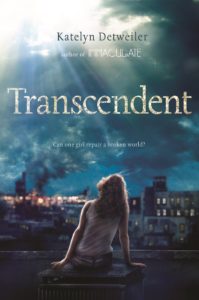
Transcendent
Author: Katelyn Detweiler
Published October 4th, 2016 by Viking Books for Young Readers

About the Book:  A beautiful work of magical realism, a story about a girl in the real world who is called upon to be a hero.

When terrorists bomb Disney World, seventeen-year-old Iris Spero is as horrified as anyone else. Then a stranger shows up on her stoop in Brooklyn, revealing a secret about the mysterious circumstances surrounding Iris’s birth, and throwing her entire identity into question. Everything she thought she knew about her parents, and about herself, is a lie.

Suddenly, the press is confronting Iris with the wild notion that she might be “special.” More than just special: she could be the miracle the world now so desperately needs. Families all across the grieving nation are pinning their hopes on Iris like she is some kind of saint or savior. She’s no longer sure whom she can trust—except for Zane, a homeless boy who long ago abandoned any kind of hope. She knows she can’t possibly be the glorified person everyone wants her to be… but she also can’t go back to being safe and anonymous. When nobody knows her but they all want a piece of her, who is Iris Spero now? And how can she—one teenage girl—possibly heal a broken world?

About the Author: Katelyn Detweiler was born and raised in a small town in eastern Pennsylvania, living in a centuries-old farmhouse surrounded by fields and woods. She spent the vast majority of childhood with her nose in a book or creating make-believe worlds with friends, daydreaming about how she could turn those interests into an actual paying career. After graduating from Penn State University with a B.A. in English Literature, emphasis in Creative Writing and Women’s Studies, she packed her bags and made the move to New York City, determined to break into the world of publishing. She worked for two years in the marketing department of Macmillan Children’s Group before moving in 2010 to the agency side of the business at Jill Grinberg Literary, where she is currently a literary agent representing books for all ages and across all genres.

Katelyn lives, works, and writes in Brooklyn, playing with words all day, every day, her dream come true. When she’s not reading or writing, Katelyn enjoys yoga, fancy cocktails, and road trips. She frequently treks back to her hometown in Pennsylvania, a lovely green escape from life in the city, and her favorite place to write.

Q&A WITH KATELYN DETWEILER

How did you come to write TRANSCENDENT?

My earliest, vague conception of the book was that it would start with an unprecedented tragedy, a state of international heartbreak and desperation so raw that the world would be at a total loss for what next—looking to anything, anyone, to bring stability or clarity or hope. I knew, too, that whatever the tragedy would be, it had to center on children. We can all recall how we felt when we heard about Sandy Hook. A mass shooting is horrifying no matter who the victims are—but targeting children? I couldn’t stop watching the news updates, staring at the faces of the students who’d been killed, thinking about the futures they would never have, the families left behind.  It was this memory that guided me here—the question of what could be so completely awful that people might actually stand still. Might remember, might keep remembering. For TRANSCENDENT, I chose a bombing. Disney World. I knew that my mind would have to go to dark places, that things had to get worse before they could get better. But it felt necessary to me, starting these conversations—and it feels more necessary, more relevant today than ever.

Did you write it with the 15th anniversary of 9/11 in mind?

It was completely unintentional, though the timing seems hugely important to me now. I was in high school when the towers were hit. It felt like such a terrible, extraordinary, surreal event at the time. It was the beginning—to my mind, at least—of a new era of terrorism, of that terrible state of wondering what awful tragedy would hit next. Teens today don’t know another reality outside of our current world; they’ve grown up in a place where acts of terrorism and mass shootings have become the norm. I was especially horrified when the Pulse shooting happened, to think that I’d targeted Orlando, too, in this book. But really, by the time it publishes, who knows how many other cities could be on the list of victims? No place is immune. Orlando could be any city, every city. This is our reality now. We need some outlet for our fear—we need to find a way to still have hope.

One of the big themes in the book is hope and forgiveness overcoming hate and despair. Can you talk more about that and why it’s so relevant for young people today?

It’s hard sometimes to not react to hate with more hate. To blindly lash out, hurt whoever hurt you, ensure justice is served. We see this in our personal lives. And we see it so often on an international scale—the fear that terrorism causes, the desperation. The feeling of weakness that can morph into something quite ugly, spawn intolerance for people who look a certain way, talk a certain way, pray a certain way. People desperately seek a target, someone to point a finger at—even if that blame is unjust, irrational. But we cannot sink to that level. More hate will not solve the problem. More hate won’t make terrorism go away. Young people are still just formulating their opinions about the world, about others—struggling with who they are, who they want to be. They are still figuring out the role they’ll play in the world, their responsibilities—“Can I make a difference?” How they learn to find answers to these questions helps to shape and strengthen their identity, their (our) future.

Is it important for people to believe in miracles and to have faith in difficult times?

I believe that in difficult times more than ever, people look for something bigger—they want to believe that the world is not as black and white as it seems, that there is hope to be found beyond our everyday existence. Faith isn’t necessarily about believing in God, or any god, some supreme being up in the clouds. It can be, sure, for some. But it can also be about trusting in yourself, in your family and/or your friends, in the love you choose to surround yourself with, the connections you make with the world around you. There’s a quote that opens IMMACULATE, attributed to Albert Einstein:  “There are only two ways to live your life. One is as though nothing is a miracle. The other is as though everything is.” I love this idea—this thought that we’re just too jaded to realize how many tiny miracles are around us every day, even in the ugliest, darkest times. Life is a miracle. We’re miracles. We’re more than just our cells and our DNA.

This story, like your previous book IMMACULATE, is centered on a virgin birth. Why did you choose to explore that topic? Is TRANSCENDENT a religious book?

I’ve been fascinated by the idea of a pregnant virgin in contemporary times for years now, ever since I was a teenager and asked my own mom: would you believe me if I said I was a pregnant virgin? She said yes. She would believe me. It stuck with me, the idea that faith—whether it be in a supreme being, or in a person you love and trust dearly—can be so all encompassing. That we can still believe in something that defies all science and reason. I would say that, at this point in life, I am spiritual more so than religious, and I think the book reflects this perspective. Spirituality—to me—is believing in more than the orderly scientific rules of our world, even if we can’t explain it, even if there’s no doctrine to help us better understand. My goal for both books was to explore and question with respect for all sides; I wanted there to be something for everyone, to find the commonalities that unite people of different faiths (or no faiths) rather than the differences.

Why was it important for this story to take place in Brooklyn?

I knew from the outset that I wanted the backdrop of Brooklyn—that a more sheltered, traditional small town wouldn’t do. Iris didn’t just grow up reading about the wider world in books or hearing about it on TV. She’s experienced it firsthand. She’s been exposed to all different kinds of people, seen lives and cultures that are so different than hers. This felt necessary to me in building a protagonist who was comfortable enough—empathetic enough, compassionate enough, bold enough—to step up to the plate, to be a voice of change. I grew up in a small town (surrounded by fields and woods rather than people and skyscrapers) and moved to NYC eight years ago, Brooklyn specifically for the last few. Living here has heightened my awareness of the world. A lot of things were so much more theoretical to me before—poverty and homelessness, for example. Different religions, different races, different cultures. I wanted a true microcosm for this story, a more accurate, complex representation of our world.

What role do race and privilege play in the book?

Privilege is key in all threads of the novel. To start: Disney is attacked because of the vast privilege it represents. This is not a park, a destination, for everyone. This is for a select, elite group. A fairytale that is unobtainable to so many—a tangible way of separating out the haves and the have-nots.

Iris herself is an upper middle class white teenager in Brooklyn. Though she’s open minded and aware of the disparity around her—volunteering at a soup kitchen, engaging with the homeless—she’s still very much in her own bubble. Iris’s Brooklyn is the version we see across the media: farmers markets and organic everything, beautiful old brownstones, hip, industrial-looking bars and restaurants, pretty white people with beards and buns and bicycles. Iris has accepted this privilege as normal, more or less, until for the first time the guarantees of her life come into question. Iris ends up at a homeless shelter; she’s confronted by a side of Brooklyn that she’d only glimpsed at surface-level before. Iris must question basic assumptions about herself—and others—as she struggles with how to reorient her life.

Do you think there’s value in exploring these ideas fictionally, vs. conversations that start from live news, internet articles, social media, etc. around current events?

Our perception of current events today is so heavily influenced by the speed of news, the internet and social media generally, the constant demand for fresh, compelling content; we’re blasted with horrific tragedies every week—becoming increasingly graphic and uncensored, as evidenced by the streaming video we saw of Philando Castile, dying after being shot by a cop. Week after week, day after day, it’s something new, something equally or more shocking than we’ve seen before. We’re becoming so numb—the names and faces fade so quickly. Already, Orlando and Pulse feel so long ago. We’ve had so much tragedy to face since then. Our brains can only absorb so much pain and suffering. I think it sometimes takes stepping *out* of our reality—our day to day—into literature (or movies, TV, etc.) to fully process our thoughts, to make sense of how we feel, what role we could possibly have in change. Books slow us down, show us new perspectives, challenge our beliefs. In reading we can intimately identify with characters, individuals—see something in them that speaks to our own lives, our own fears and dreams. And, hopefully, we leave books with a new understanding of our real world—and a new resilience.

Thank you Katelyn for this hope-filled and truthful post!

Kellee Signature andRickiSig

Mini Museum Series from Home Grown Books

Share

six

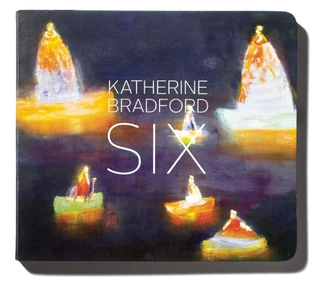
Six
Author: Kyla Ryman
Artist: Katherine Bradford
Published August 1st, 2015 by Home Grown Books

Summary: Children will love identifying what sort of thing is being repeated (is it a boat? a swimmer? a buoy?) while also becoming more familiar with counting. For young children, this is a beautiful introduction to the world of numbers. For toddlers and older children, the content of the paintings leave a lot of room for discussion and thought beyond the pages of the book. The numbers inside this board book are out of order, encouraging children to interact with the artwork and explore the paintings at their own pace.



what-do-you-see

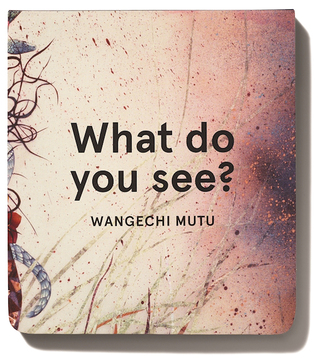
What do you see?
Author: Kyla Ryman
Artist: Wangechi Mutu
Published September 6th, 2016 by Home Grown Books

Summary: Deconstruct the collage work of Wangechi Mutu in this compelling art book for curious kids. Children will love exploring this mysterious world where objects are not quite what they seem.

About Home Grown Books: Home Grown Books develops books that support its core values – organic learning, creativity, sustainability and giving back. They reject a one-size-fits-all educational model, and are committed to treating all children as unique, creative individuals. The books honor children’s innate intelligence with compelling content that will spark their curiosity. As the books engage the imagination, little readers are drawn back to the books, effortlessly strengthening their reading habits and fostering confidence in themselves as a reader.  Believing in the power of art to engage a little reader’s mind, their books feature artwork by emerging and established artists that will capture the imaginations of your little one. The language is simple and the artwork is complex, leaving room beyond the words for a child’s imagination to explore. As part of their Mini Museum Series, they partnered with high profile artists such as Wangechi Mutu & Katherine Bradford, to produce visually stimulating board books. Home Grown Books are the only independent publisher that manufactures all their books in the US with eco-friendly practices. The NYC board books are printed with 100% recycled (min 35% post consumer) CCNB paperboard with an aqueous coating. The paperback books are printed on 50% post consumer paper using low-VOC vegetable inks, and renewable wind-powered energy and the book pack packaging is printed in New York on paper from managed forest using low-VOC vegetable inks and renewable wind-powered energy. More info and news can be viewed here: homegrownbooksnyc.com/blogs/news

About the Founder: Kyla Ryman saw a need for creative and compelling reading content for children. In 2012, she founded Home Grown Books to develop resources that empowered parents and inspired little readers. Kyla is a mother of two boys and an advocate of organic learning. She embraces thinking, playing, and creating as the building blocks for learning. More info here: homegrownbooksnyc.com/pages/about-us#founder.

My Review: Many of you may know, my father is the director of the Louisiana State University Art Museum, and I have grown up surrounded by art. Some of my first memories are at his art openings, and I cannot remember a time of my life where art wasn’t a part of it, either in viewing or in creating. Because of this lifetime love and respect for art, I love when art is included in picture books. These new Mini Museum Series books are different than I’ve ever encountered though as they specifically focus on contemporary art for very young children.

six-spread

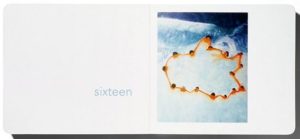
Six, filled with Bradford’s art, will be a perfect counting, identifying, and discussion book. In no consistent order, the text will show if the reader can count, and not just memorize what number comes next, and each page allows for discussion about the colors and images in each piece of art.

what-do-you-see-spread

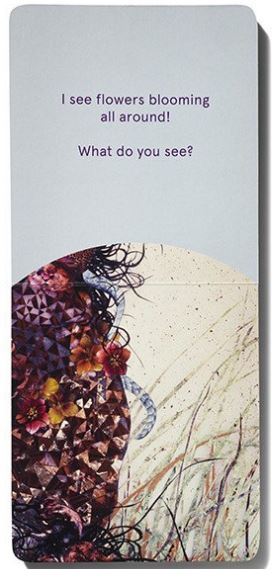
What Do You See?, filled with Mutu’s abstract art work, is a perfect way to introduce kids to the idea of abstraction and how art is different for anyone who is viewing it.

Read These If You Love: ART

Recommended For: 

classroomlibrarybuttonsmall readaloudbuttonsmall

*Home/Preschool Library & Discussion Aloud*

Kellee Signature

**Thank you to Home Grown Books for providing copies for review!**

The Honest Truth by Dan Gemeinhart

Share

honest truth

The Honest Truth
Author: Dan Gemeinhart
Published: January 27, 2015 by Scholastic Press

Summary: In all the ways that matter, Mark is a normal kid. He’s got a dog named Beau and a best friend, Jessie. He likes to take photos and write haiku poems in his notebook. He dreams of climbing a mountain one day.

But in one important way, Mark is not like other kids at all. Mark is sick. The kind of sick that means hospitals. And treatments. The kind of sick some people never get better from.

So Mark runs away. He leaves home with his camera, his notebook, his dog, and a plan to reach the top of Mount Rainier–even if it’s the last thing he ever does.

The Honest Truth is a rare and extraordinary novel about big questions, small moments, and the incredible journey of the human spirit.

Ricki’s Review: In the introduction of the ARC, Dan Gemeinhart writes that this story was inspired by his friend Mark, who passed away from cancer. While the book is not about Mark, there are “smooth rocks of truth” within it. He wrote the story in hopes that Mark would enjoy reading it. With this in mind, I began the book already emotionally invested. Mark is a 12-year-old boy who has recently relapsed with cancer. He is tired of being sick, and he has set out with his dog and plans to go to Mt. Rainier to die. Much of the book is Mark’s journey to Rainier, and we slowly learn about his experiences with cancer throughout the story. Every other chapter is written by his best friend Jesse, and I found their friendship to be inspiring, particularly given the author’s introduction. This is a beautiful story that will leave a mark on readers’ hearts. I will be recommending it often.

Kellee’s Review: The Honest Truth was my first choice for my school’s faculty book club because I had only hear amazing things about it. I jumped into reading it without knowing anything about it, but by the end of the first page, I knew that all my friends who recommended it to me were right. Mark has a voice that is so full of hurt and sorrow that it jumps off the page and into your heart. The obstacles he faces and overcomes while also making his way to die alone show the strength of his character. I also was a big fan of the two points of view because it allows the reader to see what was going on at home and maybe get some more truth than what Mark was telling us (though he swears it all is the honest truth).

For our book club meeting, I tabbed up my book with passages I loved (I’ll list all the pages below), haikus that Mark wrote, and descriptions of all of the photographs he took along the way.

Teachers’ Tools for Navigation: This would make a fantastic read-aloud. It has so much to discuss! The richly realized themes would make for fantastic conversations in the classroom. I would love to hear students’ thoughts about the story, particularly in relation to the discussion questions below. There are many debatable points in the story—which makes it all the more interesting to use as a read aloud!

Additionally, The Honest Truth would be a good introduction to haiku and visual story telling since Mark writes haiku and takes photographs to help tell his story. The haiku (in chronological order) are found on pages 120, 8, 22, 78, 79, 130. The photos Mark took are explained on pages 226-227. Using these as mentor texts, students can create their own story using poetry and photography.

More discussion ideas can be found at http://www.scholastic.com/teachers/lesson-plan/honest-truth-discussion-guide.

Discussion Questions: Was Mark selfish to leave home? Do you think he should have told his parents? Do you think what he did was fair? Were his actions fair to his dog?; If you were Jesse, would you have told authorities? Was she wrong to keep a secret? Do you think Mark had the ability to make such a big decision?; How did Gemeinhart use personification to help make the setting a character (see pages 34, 124, and 196)?; How much pressure do sick children have to act like adults?; How was Mark’s journey selfish? How was is selfless?; Who called? Wesley or Jess?; Why didn’t the mom ever look at her credit card report to see the train ticket?; Were you angry at Mark? Scared? How do you think students will feel?; Is a 12-year-old old enough to decide you want to die? Is it reasonable for adults to expect a kid to keep on going through treatment after treatment?

Flagged Passage: “Dogs die. But dogs live, too. Right up until they die, they live. They live brave, beautiful lives. They protect their families. And love us. And make our lives a little brighter. And they don’t waste time being afraid of tomorrow.”

Kellee’s favorite passages can be found on page 5 (“Here’s…”), 19 (“I bit…”), 21 (“I closed…”), 46 (“I was…”), 70 (“She knew…), 82 (“I like…), 97 (“Here’s…”), 179 (“They would…”), 212 (“And then…”), 228 (“There’s more…)

Read This Book If You Loved: “To Build a Fire” by Jack London; Hatchet by Gary Paulsen; The Call of the Wild by Jack London; Wonder by R.J. Palacio, The Fault in Our Stars by John Green

Recommended For: 

classroomlibrarybuttonsmall readaloudbuttonsmall litcirclesbuttonsmall

  RickiSigand Kellee Signature

Strange, Unusual, Gross, and Cool Animals by Charles Ghigna

Share

NFPB2016

Nonfiction Wednesday

Nonfiction Picture Book Wednesday is hosted by Kid Lit Frenzy and was started to help promote the reading of nonfiction texts. Most Wednesdays, we will be participating and will review a nonfiction text (though it may not always be a picture book).
Be sure to visit Kid Lit Frenzy and see what other nonfiction books are shared this week!

strange-unusual-gross-cool-animals

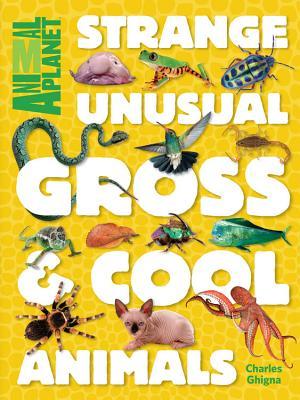
Strange, Unusual, Gross, and Cool Animals
Author: Charles Ghigna
Published October 11th, 2016 by Animal Planet

Summary: Animal Planet presents the ickiest, stickiest, blobbiest, and oddest animals in the world!

Did you know that an archerfish can spit water up to 16 feet? Or that the giant weta is the world’s largest and heaviest insect? Animal Planet’s fascinating exploration of animal oddities introduces young animal lovers to some of the most astonishing, gorgeous, and obscure animals in the world-including some brand new discoveries! Packed with more than 200 vibrant photographs and fun facts about animals with unusual behaviors, strange appearances, and remarkable stats, this deluxe gift book is perfect for reluctant readers or anyone who loves totally gross and amazing animals.

A portion of the proceeds from the sale of books in the Animal Bites series benefits the principal partners of R.O.A.R. (Reach Out. Act. Respond.), Animal Planet’s initiative dedicated to improving the lives of animals in our communities and in the wild.

strange-unusual-gross-cool-animals-ad

Review: I love learning about weird animals because it is so amazing to see what mother nature has made out there! This book shares with the reader some of the weirdest! Trent and I love to sit and look through the pages and look at the cool animals! 

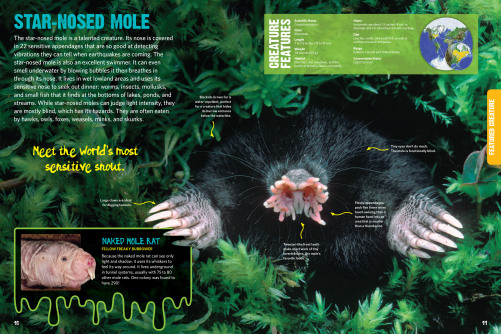
What I really like about Animal Planet texts is that they have a variety of spreads throughout the text and include really interesting information but also beautiful photographs. This text has four types of spreads: Gallery, a spread that explores a theme; Featured Creature, a spread that focuses on one animal; Creature Collection, a spread that compares and contrasts a group of animals; and Macroview, a spread that shows tiny details of small animals.

Teachers’ Tools for Navigation: In addition to being an amazing text to have in classroom and school libraries, this text is a wonderful way to begin inquiry projects. When I teach my central idea unit, for my final assessment I ask my students to write their own nonfiction text with a clear central idea and supporting details. Many students choose animals for their nonfiction text, but it is usually the same offenders: dolphins, cheetahs, and dogs, so it would be really nice to have this text to jump start the brainstorming process.

Discussion Questions: What type of features do some animals have the help them protect themselves from predators?; Which animal did you think was the oddest looking?; Which animal do you think is not that odd looking?; Which animal would you like to learn more about?

Flagged Passages: 

010-011_SUGC_Profiles.indd

Read This If You Loved: Pink is for Blobfish by Jess Keating and other nonfiction picture books about animals, Animal Planet & National Geographic nonfiction such as Real or Fake?, Ocean Animals, Awesome 8, Animal Atlas, or the Animal Bites series    

Recommended For:

  classroomlibrarybuttonsmall closereadinganalysisbuttonsmall

Kellee Signature

**Thank you Charles Ghigna and Animal Planet for providing a copy for review!**