Top Ten Tuesday: Ten Spring TBR (To Be Read) Titles

Share

top ten tuesday

Top Ten Tuesday is an original feature/weekly meme created at The Broke and the Bookish. The feature was created because The Broke and Bookish are particularly fond of lists (as are we!). Each week a new Top Ten list topic is given and bloggers can participate.

 Today’s Topic: Ten Spring TBR (To Be Read) Titles

Kellee

Here are some Spring publication titles that I look forward to reading soon 🙂

1. One Trick Pony by Nathan Hale
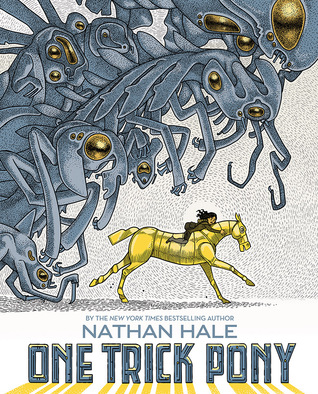
Publication Date: March 14th, 2017 by Amulet Books

Summary: The aliens have arrived. And they’re hungry for electricity. In the Earth of the future, humans are on the run from an alien force—giant blobs who suck up electrical devices wherever they can find them. Strata and her family are part of a caravan of digital rescuers, hoping to keep the memory of civilization alive by saving electronics wherever they can. Many humans have reverted to a pre-electrical age, and others have taken advantage of the invasion to become dangerous bandits and outlaws. When Strata and her brother are separated from the caravan, they must rely on a particularly beautiful and rare robot pony to escape the outlaws and aliens—and defeat the invaders once and for all.

2. Posted by John David Anderson
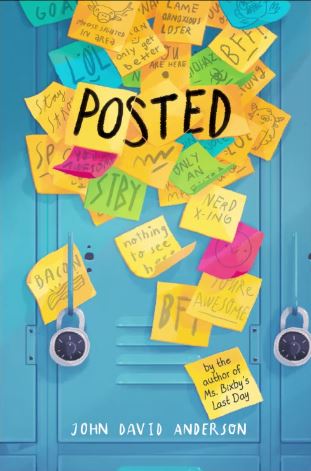
Publication Date: May 2nd, 2017 by Walden Pond Press

Summary: From John David Anderson, author of the acclaimed Ms. Bixby’s Last Day, comes a humorous, poignant, and original contemporary story about bullying, broken friendships, and the failures of communication between kids.

In middle school, words aren’t just words. They can be weapons. They can be gifts. The right words can win you friends or make you enemies. They can come back to haunt you. Sometimes they can change things forever.

When cell phones are banned at Branton Middle School, Frost and his friends Deedee, Wolf, and Bench come up with a new way to communicate: leaving sticky notes for each other all around the school. It catches on, and soon all the kids in school are leaving notes—though for every kind and friendly one, there is a cutting and cruel one as well.

In the middle of this, a new girl named Rose arrives at school and sits at Frost’s lunch table. Rose is not like anyone else at Branton Middle School, and it’s clear that the close circle of friends Frost has made for himself won’t easily hold another. As the sticky-note war escalates, and the pressure to choose sides mounts, Frost soon realizes that after this year, nothing will ever be the same.

3. World’s Greatest Detective by Caroline Carlson
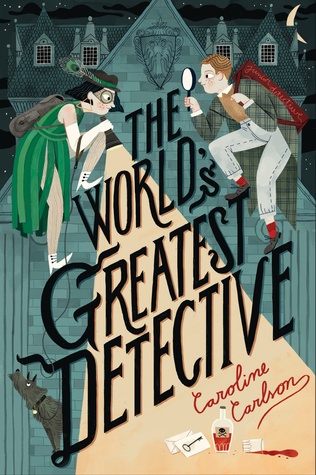
Publication Date: May 16th, 2017 by HarperCollins

Summary: By the end of our time together, someone in this house will be rich. Someone will be the World’s Greatest Detective. And someone, well, someone might be dead.

Detectives’ Row is full of talented investigators, but Toby Montrose isn’t one of them. He’s only an assistant at his uncle’s crime-solving business, and he’s not sure he’s even very good at that. But he sees his chance to prove he could be by entering Hugh Abernathy’s crime-solving contest in his uncle’s place.

Toby’s friend Ivy is the best detective around—or at least she thinks so. But she can’t show off her sleuthing skills and take the title because she’s not allowed to join the investigators’ ranks. Even though the competition is being held at her house.

Then a detective is found murdered before the games begin and his death becomes the World’s Greatest Mystery. And Toby and Ivy may be the only two who can crack the case.

In Caroline Carlson’s newest novel, hilarity and hijinks abound as the greatest detectives around try to solve the greatest mystery they’ve ever come across.

4. Triangle by Mac Barnett
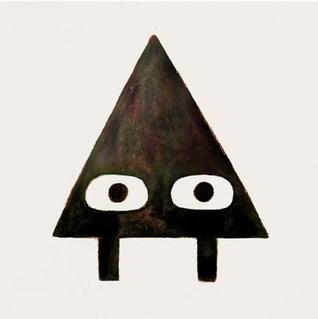
Publication Date March 14th, 2017 by Candlewick Press

Summary: Multi-award-winning, “New York Times “best-selling duo Mac Barnett and Jon Klassen conspire again on a slyly funny tale about some very sneaky shapes.

Meet Triangle. He is going to play a sneaky trick on his friend, Square. Or so Triangle thinks. . . . With this first tale in a new trilogy, partners in crime Mac Barnett and Jon Klassen upend the traditional concept book and approach it from a new angle. Visually stunning and full of wry humor, here is a perfectly paced treat that could come only from the minds of two of today s most irreverent and talented picture book creators.”

5. We’re All Wonders by RJ Palacio
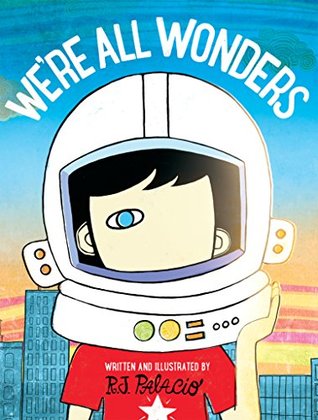
Publication Date: March 28th, 2017 by Knopf Books for Young Readers

Summary: The unforgettable bestseller Wonder has inspired a nationwide movement to Choose Kind. Now parents and educators can introduce the importance of choosing kind to younger readers with this gorgeous picture book, featuring Auggie and Daisy on an original adventure, written and illustrated by R. J. Palacio.
 
Over 5 million people have fallen in love with Wonder and have joined the movement to Choose Kind. Now younger readers can meet Auggie Pullman, an ordinary boy with an extraordinary face, and his beloved dog, Daisy.

Countless fans have asked R. J. Palacio to write a book for younger readers. With We’re All Wonders, she makes her picture-book debut as both author and artist, with a spare, powerful text and striking, richly imagined illustrations. Palacio shows readers what it’s like to live in Auggie’s world—a world in which he feels like any other kid, but he’s not always seen that way.

We’re All Wonders may be Auggie’s story, but it taps into every child’s longing to belong, and to be seen for who they truly are. It’s the perfect way for families and educators to talk about empathy and kindness with young children.

6. Felix YX by Lisa Bunker
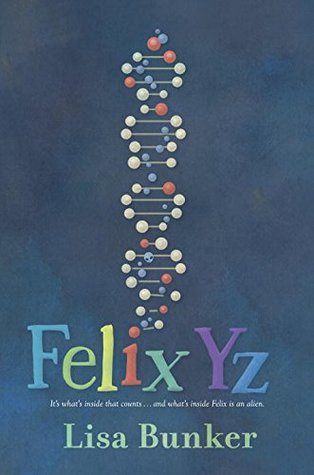
Publication Date: June 6th, 2017 by Viking Books for Young Readers

Summary: “If it wasn’t for the fused-with-Zyx thing, I suppose I would just be normal—whatever that means.”

When Felix Yz was three years old, a hyperintelligent fourth-dimensional being became fused inside him after one of his father’s science experiments went terribly wrong. The creature is friendly, but Felix—now thirteen—won’t be able to grow to adulthood while they’re still melded together. So a risky Procedure is planned to separate them . . . but it may end up killing them both instead.

This book is Felix’s secret blog, a chronicle of the days leading up to the Procedure. Some days it’s business as usual—time with his close-knit family, run-ins with a bully at school, anxiety about his crush. But life becomes more out of the ordinary with the arrival of an Estonian chess Grandmaster, the revelation of family secrets, and a train-hopping journey. When it all might be over in a few days, what matters most?

7. Beyond the Bright Sea by Lauren Wolk
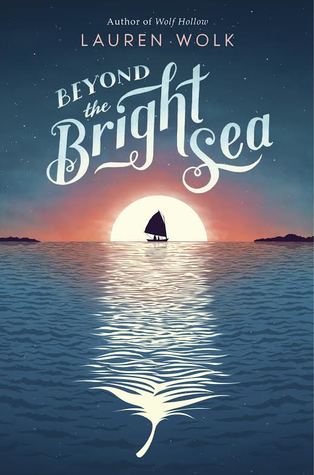
Publication Date: May 2nd, 2017 by Dutton Books for Young Readers

Summary: Twelve-year-old Crow has lived her entire life on a tiny, isolated piece of the starkly beautiful Elizabeth Islands in Massachusetts. Abandoned and set adrift on a small boat when she was just hours old, Crow’s only companions are Osh, the man who rescued and raised her, and Miss Maggie, their fierce and affectionate neighbor across the sandbar.

Crow has always been curious about the world around her, but it isn’t until the night a mysterious fire appears across the water that the unspoken question of her own history forms in her heart. Soon, an unstoppable chain of events is triggered, leading Crow down a path of discovery and danger.

Vivid and heart wrenching, Lauren Wolk’s Beyond the Bright Sea is a gorgeously crafted and tensely paced tale that explores questions of identity, belonging, and the true meaning of family.

8. The Lotterys Plus One by Emma Donoghue
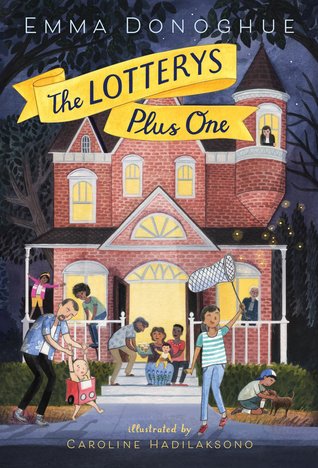
Publication Date: March 28th, 2017 by Arthur A. Levine Books

Summary: Sumac Lottery is nine years old and the self-proclaimed “good girl” of her (VERY) large, (EXTREMELY) unruly family. And what a family the Lotterys are: four parents, children both adopted and biological, and a menagerie of pets, all living and learning together in a sprawling house called Camelottery. Then one day, the news breaks that one of their grandfathers is suffering from dementia and will be coming to live with them. And not just any grandfather; the long dormant “Grumps,” who fell out with his son so long ago that he hasn’t been part of any of their lives.

Suddenly, everything changes. Sumac has to give up her room to make the newcomer feel at home. She tries to be nice, but prickly Grumps’s clearly disapproves of how the Lotterys live: whole grains, strange vegetables, rescue pets, a multicultural household… He’s worse than just tough to get along with — Grumps has got to go! But can Sumac help him find a home where he belongs?

9. The Case of the Stinky Stench by Josh Funk
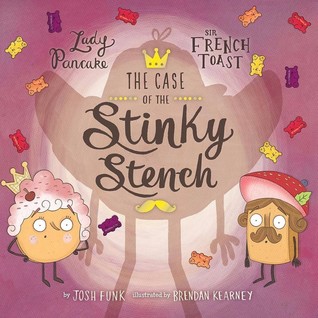
Publication Date: May 2nd, 2017 by Sterling

Summary: “‘Uncle,’ Crossaint said, ‘the fridge is in trouble!
A mystery stench turned a whole shelf to rubble!
I’m the last hope or the fridge will be lost!
Help me or else we’ll be cooked, served, and sauced.’”

There’s a stinky stench in the fridge—and our favorite foodie friends must solve a smelly mystery! Sir French Toast’s nephew, Inspector Croissant, begs him and Lady Pancake for help in finding the source of the foul odor. Could it be the devious Baron Von Waffle? A fetid fish lurking in the bottom of Corn Chowder Lake? Featuring the same delectable wordplay and delicious art that won critical raves for Lady Pancake & Sir French Toast—there’s even an actual red herring—his fun follow-up is an absolutely tasty treat for kids!

10. The Legend of Rock, Paper, Scissors by Drew Daywalt
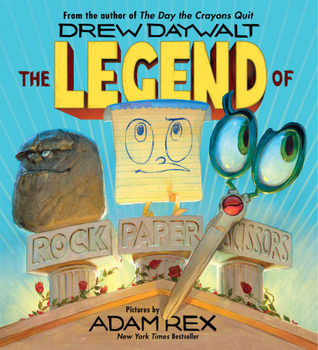
Publication Date: April 4th, 2017 by Balzer + Bray

Summary: You’ve played the game. Now read the legend of how it all began . . .

Long ago, in an ancient and distant realm called the Kingdom of Backyard, there lived a warrior named ROCK.
Meanwhile in the Empire of Mom’s Home Office, a second great warrior sought the glory of battle. And his name was PAPER.
At the same time, in the Kitchen Realm, in the tiny village of Junk Drawer, lived a third warrior. They called her SCISSORS.

These three were the strongest, smartest, and fastest in all the land. Time and again they beat the most fearsome opponents they could find: an apricot, a computer printer—even frozen, breaded, dinosaur-shaped chicken nuggets! But when the warriors finally meet each other, the most epic round of battles begins . . . and never ends. That is why, to this day, children around the world honor these worthy adversaries by playing ROCK, PAPER, SCISSORS

What books do you hope to read this Spring? 

Signature

It’s Monday! What Are You Reading? #IMWAYR 4/3/17

Share

IMWAYR 2015 logo

It’s Monday! What Are You Reading? From Picture Books to YA!

It’s Monday! What are you Reading? is a meme started by Sheila at Book Journeys and now hosted by Kathryn at The Book Date. It is a great way to recap what you read and/or reviewed the previous week and to plan out your reading and reviews for the upcoming week. It’s also a great chance to see what others are reading right now…you just might discover the next “must-read” book!

Kellee and Jen, of Teach Mentor Texts, decided to give It’s Monday! What Are You Reading? a kidlit focus. If you read and review books in children’s literature – picture books, chapter books, middle grade novels, young adult novels, anything in the world of kidlit – join us! We love this meme and think you will, too.

We encourage everyone who participates to support the blogging community by visiting at least three of the other book bloggers that link up and leave comments for them.

Bold_line

CONGRATULATIONS TO OUR GIVEAWAY WINNERS!

Angie O. won I am (Not) Scared!

Katie B. won the Blood Guard series!

Francis U. won Brobarians!

Bold_line

Last Week’s Posts

**Click on any picture/link to view the post**

top ten tuesday 


Tuesday: Top Ten Authors We Would Love to Meet

Wednesday: Teaching Guide for Ada’s Ideas by Fiona Robinson

Thursday: Guest Review: Pig the Pug by Aaron Blabey

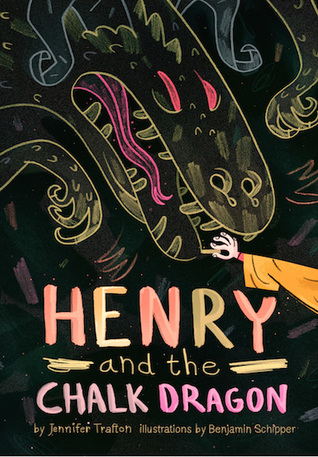
Friday: Review and Giveaway!: Henry and the Chalk Dragon by Jennifer Trafton

*Giveaway ends Thursday!*

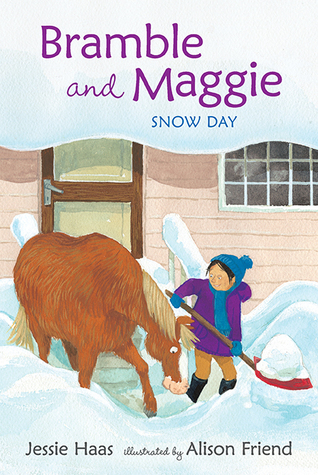
Sunday: Author Guest Post: “How Do We Know What Someone Else Is Feeling?: Body Language, the Big Horse Book, and Imaginative Leaps in Bramble and Maggie” by Jessie Haas

Bold_line

 Last Week’s Journeys

Kellee

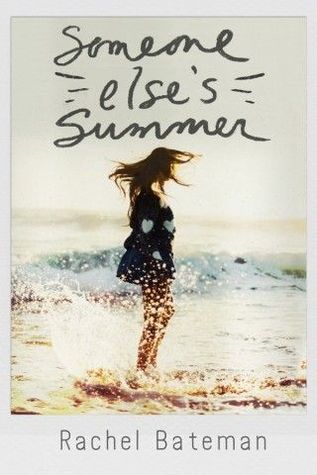
Before starting Legend like I said I was going to, I felt I needed a contemporary YA just to clean my pallet since I’d just read a fantasy novel. I picked up Someone Else’s Summer by Rachel Bateman and it was PERFECT–exactly what I needed. It is a road trip novel which is one of my favorite types of books! It was sad and thought-provoking but also lovely and romantic. It is a special book, and I look forward to reviewing it.

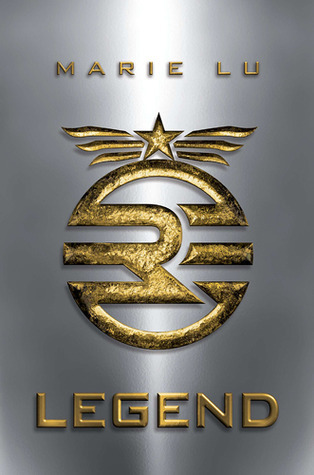
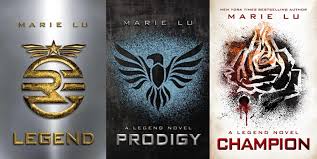
Then I started Legend, and oh man! I can see why my kids want me to read it. I haven’t read a great dystopian adventure in a while; it is nice to be back in this type of genre. I am currently reading Prodigy, and I cannot wait to see what happens!

 Ricki

Hi! I am off the grid this week because my dissertation goes to the committee this Wednesday. Hugs to you all, and I apologize for being so elusive this month!

Bold_line

This Week’s Expeditions
Kellee

I hope to finish the Legend series this week! I have to know what happens!

Bold_line

Upcoming Week’s Posts

top ten tuesday 


Tuesday: Spring TBR Books

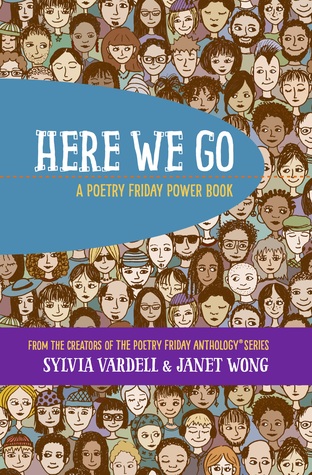
Wednesday: Here We Go: A Poetry Friday Power Book by Sylvia Vardell and Janet Wong

Thursday: #mustreadin2017 Spring Update

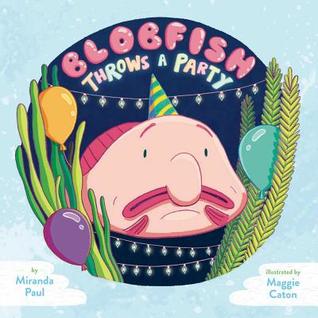
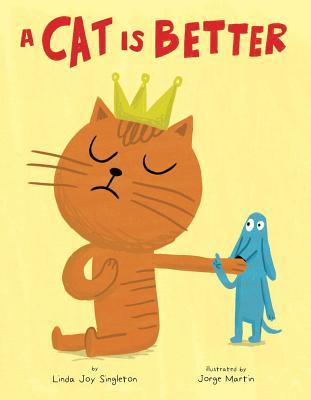
Friday: Upcoming Must Haves from little bee books: Race! by Sue Fliess; Toucans, Too by Bethanie Deeney Murguia; Blobfish Throws a Party by Miranda Paul; and A Cat is Better by Linda Joy Singleton

 So, what are you reading?

Link up below and go check out what everyone else is reading. Please support other bloggers by viewing and commenting on at least 3 other blogs. If you tweet about your Monday post, tag the tweet with #IMWAYR!

 Signature andRickiSig

Author Guest Post: “How Do We Know What Someone Else Is Feeling?: Body Language, the Big Horse Book, and Imaginative Leaps in Bramble and Maggie” by Jessie Haas

Share

How Do We Know What Someone Else Is Feeling?: Body Language, the Big Horse Book, and Imaginative Leaps in Bramble and Maggie

“Use your words,” kids are often told, when they’re melting down in tears or possibly hitting. Words are crucial so other people can understand what we’re feeling.

But what if the “person” you are trying to communicate with is from a species that doesn’t use words? Not space aliens—I’m talking about animals.

Most of us are familiar with how cats and dogs express themselves. Kisses and wiggles translate well, and I still remember my shock as a toddler when I was pestering the extremely gentle family dog, and he barked at me. I knew just what he meant!

Horses have feelings too, and figuring them out has been a big part of my life, as a horse-lover and an author. Usually my horse books are written from a human point of view, but the Bramble and Maggie books also incorporate the horse’s perspective. From Horse Meets Girl onward, the Bramble and Maggie books have been praised for incorporating both points of view without being anthropomorphic.

How does Maggie know what Bramble is feeling? She relies her ‘big horse book,’ which she carries everywhere. It is a source of such advice as “Don’t fall for the first horse you see.” Sometimes this is conveyed in the art, to keep the printed text clean and clear. At other times, when carrying the book isn’t practical, Maggie remembers what it says. From the beginning of the series, the ‘big horse book’ has allowed me to convey sophisticated information in bite-sized nuggets, and forms a counterpoint to Bramble’s more direct communication style (beautifully captured by illustrator Alison Friend).

InHorse Meets Girl, when left alone on her first night at Maggie’s house, Bramble kicks her stall repeatedly. Maggie consults the book. Learning that “. . . horses are herd animals. They like to be with other horses,” she tells Bramble a story, sings her a song, and when informed in no uncertain terms that that’s not good enough, she curls up in a sleeping bag outside Bramble’s stall. I have a horse, Maggie thought. And she has me.

In Give and Take Maggie saddles up for her first ride. ‘Bramble knew about rides. The rider sat in the saddle. The horse did all the work.’ Bramble does want to explore and meet the neighbors, but she has some stipulations. ‘Neither of them should be boss all the time. There should be some give and take.’ She holds her head high, refusing to be bridled. Maggie pulls out the big horse book, and gets an idea. ‘“If you put your head down, Bramble, I’ll give you a carrot.”

Bramble sniffed the air. Did Maggie really have a carrot?

Yes.

Bramble lowered her head. Maggie gave her a carrot, and Bramble took it. She let Maggie put on the bridle. This was better. Give and take.’

In Spooky Season, Bramble indulges in dramatic leaps of pretend fear to express the exuberance of an autumn day, causing Maggie to fall off (why do they call it Fall?).

‘Maggie knew what her big horse book said. If you fall off a horse, get right back on, before you have time to get scared.’

It’s too late for that. Maggie’s already scared. But Bramble communicates her concern, standing patiently, making her eyes soft and gentle. “I have to, don’t I?” Maggie said. “I hope you’re saying you’ll be good.” That’s exactly what Bramble is saying, and she makes good on that promise again on Halloween, when not even the spookiest ghost can scare her.

In the newest Bramble and Maggie book, Snow Day, a big storm is coming. “Does that horse need a blanket?” the neighbor asks. ‘“No,” Maggie said. “Her long hair will keep her warm.” That was what her big horse book said.’

But after dark, as the storm moves in, Maggie worries. Mom and the big horse book reassure her that horses lived through the Ice Age, and are adapted to cold. “Bramble is as safe and warm as we are,” Mom says.

But Bramble finds the storm exciting. She can’t stay still—and thanks to a not-quite-shut stall door, she’s soon outside. After taking a walk, she decides against going back indoors. ‘ . . . she liked it out here. The snow settled on her back, as thick as a blanket. It kept her warm. Bramble turned her tail to the wind. She put her head down.’

I’m now the author of my own ‘big horse book,’ (The Horse-Lover’s Encyclopedia, Storey, 2017). I know all about how horses are heated by the fires of their own digestion, insulated by layers of hair that create air pockets, kept dry by oils on their coats. They are northern animals. They were shaped by the Ice Age.

Still–I spend a lot of time and energy providing shelter for horses, only to see them horses standing out in the storms, backs to the wind, looking miserable. They can’t be miserable. They have the option of shelter. So why do they do that? Body language doesn’t tell me, and neither does my ‘big horse book’. All I’m left with is an imaginative leap.

‘She was stronger than the storm. It was just air and snowflakes.

She was a horse.

About the Book: Bramble the horse and her devoted girl, Maggie, face a major snowstorm in their fourth adventure.

The sky is white, the air is cold, and snowflakes are falling, tickling Bramble’s back. By bedtime, Maggie and her family are ready for the storm: they’ve shopped for supplies, covered Bramble’s hay with a tarp, and filled the bathtub with extra water. But Bramble is too excited to sleep; she wants to be out in the white, wild world. Luckily for Bramble, she has a shaggy coat to keep her warm. And luckily for Maggie and her family and friends, when morning comes, Bramble can help dig through the deep snow that has most of the neighbors stuck in their homes. Soon the snow day becomes a block party complete with marshmallows, cocoa, and lots of friends. Chapter-book readers of the horse-loving variety will relish the camaraderie and enjoy the equine exploits in this cozy wintertime tale.

Review and Author Q&A here on Unleashing Readers about the first three Bramble and Maggie books!

Kellee’s Review: There is a very specific time in a kid’s life where they are ready to begin reading longer books, but not ready to tackle chapter books yet. This is where Bramble and Maggie fits. These early chapter books will are perfect texts to help lead kids to longer chapter books. The work well for their targeted age level in that they never speak down to readers and have excellently paced stories that hold readers’ attention and will help them feel successful.  On top of all this, the Bramble and Maggie stories are just so sweet! I love all the different adventures they go on and the lessons they learn like overcoming fear, conquering loneliness, and gaining responsibility. Readers will adore these books.

Ricki’s Review: Kellee hit the nail on the head. As I was reading, I thought to myself, “Why didn’t I have these books available to me when I was transitioning to chapter books?” I remember being devastated that my books no longer had pictures in them, and I resisted the longer texts for this reason. This series is engaging, educative, and fun! The words repeat in ways that will help students learn the vocabulary, particularly the more difficult words that relate to horses. Each book delivers a strong message, and the bond between Bramble and Maggie is one which will connect with readers. When I think about these books, I will always remember Maggie dragging her sleeping bag to the stable to sleep beside Bramble. I can’t wait to share these books with my pre-service elementary school teachers. They will have a special place in classrooms.

Curriculum Guide

Interview with the Illustrator

Thank you, Jesse for this post!

RickiSigandKellee Signature

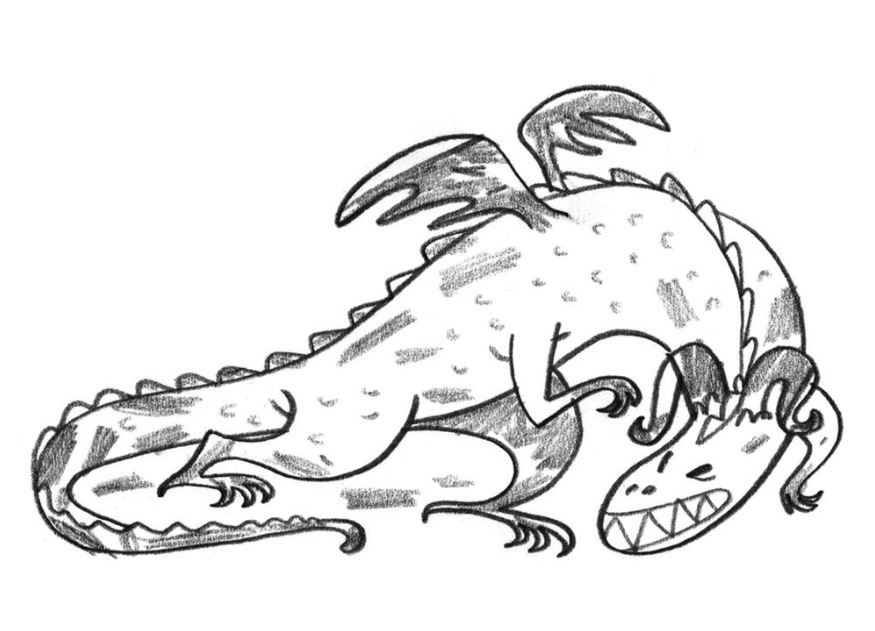
Review and Giveaway!: Henry and the Chalk Dragon by Jennifer Trafton

Share

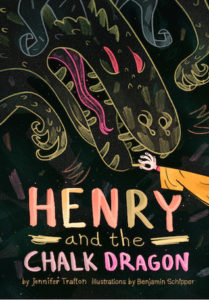
Henry and the Chalk Dragon
Author: Jennifer Trafton
Illustrator: Benjamin Schipper
Published April 4th, 2017 by Rabbit Room Press

Summary: In the town of Squashbuckle, just about anything can happen, and when Henry Penwhistle draws a mighty Chalk Dragon on his door, the dragon does what Henry least expects–it runs away. Now Henry’s art is out in the world for everyone to see, and it’s causing trouble for him and his schoolmates, Oscar and Jade. If they don’t stop it, the entire town could be doomed! To vanquish the threat of a rampaging Chalk Dragon, Sir Henry Penwhistle, Knight of La Muncha Elementary School, is going to have to do more than just catch his art–he’s going to have to let his imagination run wild. And THAT takes bravery.

About the Author: Jennifer Trafton is the author of The Rise and Fall of Mount Majestic (Dial, 2010) which received starred reviews in Publishers Weekly and School Library Journal and was a nominee for Tennessee’s Volunteer State Book Award and the National Homeschool Book Award. Henry and the Chalk Dragon arose from her lifelong love of drawing and her personal quest for the courage to be an artist. She lives in Nashville, Tennessee, where, in addition to pursuing her love of art and illustration, she teaches writing classes, workshops, and summer camps in a variety of schools, libraries, and homeschool groups in the Nashville area, as well as online classes to kids around the world. To learn more, and to download free materials, visit jennifertrafton.com.

Critical Praise: 

★“A delicious face-off between forces of conformity and creativity run amok, spiced with offbeat names as well as insights expressed with eloquent simplicity.” —Booklist (starred review)
★“A perfect title to hand to young readers looking for laughs along with a wild and crazy adventure.”
                                                                                —School Library Journal (starred review)

Review: I love any book that promotes imagination, and it isn’t too often that you find a novel that is all about keeping your imagination. Henry’s story is a Pleasantville one–he lives in a boring town and takes boring classes, but when he closes his door, his imagination goes wild. It is when his imaginative Chalk Dragon escapes and wrecks havoc on his school does the power of an imagination really start to show. 

On a side note, and only some of you will understand this, but the cover of Henry and the Chalk Dragon is matte and SO SOFT!

Teachers’ Tools for Navigation: Along with a read aloud, the text gives lots of opportunities to discuss imagination, art, and creative writing. Also, chunking the text to fit the most opportune times will lead to some great writing and art prompts.

Discussion Questions: How did the principal end up the way he is? How do we know that he was not that way when he was younger?; Was Henry’s class/school doing the best thing to promote Vegetable Week?; Which adults understand Henry and his imagination? Which hinder him?; How does the power of Henry’s imagination cause havoc on the school? How does it save the school?; What does Henry’s chalk dragon coming to life symbolize in the grand scheme of things?; What is the lesson that the author is trying to teach us about imagination and growing up?

Flagged Passages: “Henry recognized the curve of those horns and the arrow-tipped tail. He recognized every sharp green flick of scaly skin, every zigzag of the bony spines running down the creature’s back. It was his dragon. Just as he had imagined it. Just as he had drawn it. Here it was, standing in front of him! There was something brand new in the world, and he had put it there!

There is a kind of fear that squeezes your heart with an icy hand and freezes you into a popsicle. But there is another kind of fear that is thrilling and hot, that makes your fingers tingle and your toes tickle each other inside your shoes until you want to leap over the Empire State Building. Henry was afraid with this kind of fear, and it felt good.

The dragon stared back at him–up and down, from his sneakers to his shiny helmet. It did not look afraid of Henry. It spread its wings proudly. It stretched its scaly neck as high as it would go. Its mouth widened slowly into a dragonish grin.

How long had Henry been waiting for this moment? Here he was, in his shiny suit of armor, with a sword in his hand. And here was a real live dragon–a dragon who could knock the house down with a few flicks of its tail, who could eat his mother for breakfast, who could send a ball of fire bouncing down the street. He knew exactly what he had to do.” (p. 32-33)

Read This If You Loved: The Journey Trilogy by Aaron BeckerHarold and the Purple Crayon by Crockett Johnson, Other picture books that spark imagination

Recommended For:

classroomlibrarybuttonsmall 

Giveaway!

a Rafflecopter giveaway

**Thank you to Barbara at Blue Slip Media for providing a copy for review!**

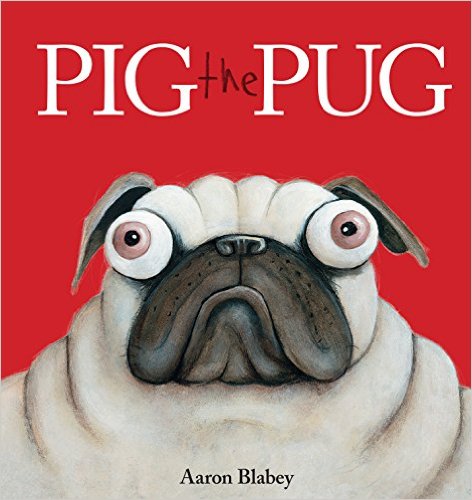
Pig the Pug by Aaron Blabey

Share

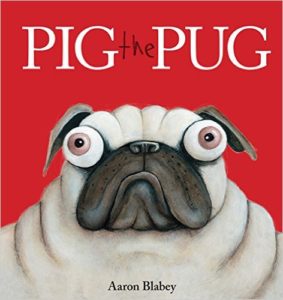
Pig the Pug
Author: Aaron Blabey
Published: July 1, 2014 by Scholastic

A Guest Review by Rebecca Welch

Summary: Pig is a greedy dog and does not want to share his toys with his housemate, Trevor. Trevor thinks it would be a great idea if him and Pig shared toys because then they would be able to play together. Pig does not give in and gathers all of his toys so Trevor can’t get to them. A mishap occurs that makes pig realize the importance of sharing and friendship.

Review: This book is great for any elementary school classroom! I absolutely loved it and thought that the message at the end was applicable to any group of young children. The rhyming makes the book great for a fun read aloud and the illustrations are fantastic. There was also a bit of humor. I highly recommend this picture book.

Teachers’ Tools for Navigation: This book would be great to teach rhyming because each page rhymes. You could talk about the moral of a story and use it as a segway to students’ writing about a time where they learned an important lesson (moral). You could have students determine the meaning of the idiom “flip a wig” by the using context clues and then study other common idioms afterwards. In addition, you could introduce character traits and determine the traits of Pig and Trevor. You can also practice making predictions by predicting what will happen to Pig. It would also be a great classroom discussion facilitator on sharing and the importance of friendship.

Discussion Questions: How do you think Trevor may be feeling when Pig won’t share his toys?; What does it mean to be greedy or selfish?; What do you predict will happen to Pig?; Can we think of any times that we have been greedy or selfish?; What does “flip a wig mean”?; What is the moral of this story?

Flagged Passage: “I know what your game is, you want me to SHARE! But I’ll never do that! I won’t and I swear!” (p. 7).

Read This If You Loved: Dog vs. Cat by Chris Gall; Mr. Fuzzbuster Knows He’s the Favorite by Stacy McAnulty

Recommended For:
 classroomlibrarybuttonsmall

Thank you, Rebecca!

RickiSig

Teaching Guide for Ada’s Ideas: The Story of Ada Lovelace, the World’s First Computer Programmer by Fiona Robinson

Share

nfpb2017

Nonfiction Wednesday

Nonfiction Picture Book Wednesday is hosted by Kid Lit Frenzy and was started to help promote the reading of nonfiction texts. Most Wednesdays, we will be participating and will review a nonfiction text (though it may not always be a picture book).
Be sure to visit Kid Lit Frenzy and see what other nonfiction books are shared this week!

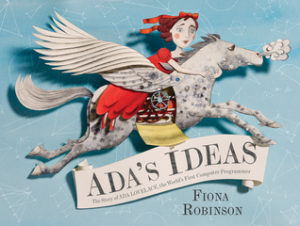
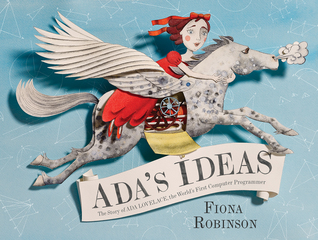
Ada’s Ideas: The Story of Ada Lovelace, the World’s First Computer Programmer
Author and Illustrator: Fiona Robinson
Published August 2nd, 2016 by Abrams Books

Summary: Ada Lovelace (1815–1852) was the daughter of Lord Byron, a poet, and Anna Isabella Milbanke, a mathematician. Her parents separated when she was young, and her mother insisted on a logic-focused education, rejecting Byron’s “mad” love of poetry. But Ada remained fascinated with her father and considered mathematics “poetical science.” Via her friendship with inventor Charles Babbage, she became involved in “programming” his Analytical Engine, a precursor to the computer, thus becoming the world’s first computer programmer. This picture book biography of Ada Lovelace is a portrait of a woman who saw the potential for numbers to make art.

Teaching Guide with Discussion Questions and Activities: 

Ada’s Ideas: The Story of ADA LOVELACE, the World’s First Computer Programmer

Ada Lovelace (1815–1852) was the daughter of Lord Byron, a poet, and Anna Isabella Milbanke, a mathematician. Her parents separated when she was young, and her mother insisted on a logic-focused education, rejecting Byron’s “mad” love of poetry. But Ada remained fascinated with her father and considered mathematics “poetical science.” Via her friendship with inventor Charles Babbage, she became involved in “programming” his Analytical Engine, a precursor to the computer, thus becoming the world’s first computer programmer. This picture book biography of Ada Lovelace is a portrait of a woman who saw the potential for numbers to make art.

Note about this guide and Ada’s Ideas

Ada Lovelace was a mathematician far ahead of her time. Because of this, much of the math included in Ada’s Ideas are quite complex. Because of this, Ada’s Ideas could be used for a wide range of students from early-elementary, focusing on Ada’s impact on math, to college, focusing on her use of complex math to write the first computer programs. Within this guide, you will find activities and discussion questions that primarily focus on its use in elementary and middle classrooms, but this does not limit it to these grade levels.

Vocabulary

These vocabulary words can be found throughout the book (in the order they are listed). Use these words as a starting point for a vocabulary study with Ada’s Ideas. Research shows that reading and discussing vocabulary within the context of reading is one of the most effective ways to learn vocabulary.

Despaired     |     Era     |    Defy     |    Reckless     |    Parallelogram     |    Influence     |    Steady     |    Whirred     |    Clanked     |    Newly Harnessed     |    Mechanical     |    Affectionate     |    Carrier Pigeon     |    Confined     |    Poetical expression     |    Aside     |    Eligible     |    Thrust     |     Regimented     |    Re-ignited     |    Potential     |    Orient     |    Corresponding     |    Loom     |    Thereby     |    Algorithm     |    Compute     |    Potential     |    Foresaw     |    Impact     |    Stunned     |    Envision

Activities: Use these activities to extend student learning with Ada’s Ideas.

Ana’s Parents

  • Ana’s parents are both well-renowned and intelligent; however, they are both very different.
  • Get to know George Byron
    • Have your students read the first stanza of “She Walks in Beauty” by Lord Byron. Analyze the stanza with them and discuss: How is Lord Byron describing the subject of his poem? Does it fit your idea of “Romantic” as Lord Byron was considered a leading figure in the Romantic Movement of poetry.
      • She walks in beauty, like the night
        Of cloudless climes and starry skies;
        And all that’s best of dark and bright
        Meet in her aspect and her eyes;
        Thus mellowed to that tender light
        Which heaven to gaudy day denies.
  • Get to know Anne Isabella Byron
    • Lady Byron was wealthy and educated. She was tutored by a Cambridge University professor as a child and found she excelled at mathematics. Discuss with your students: How did Lady Byron’s fascination of mathematics influence Ana’s life? Do you think her life would have been the same if her mother had not been a mathematician herself?

Nature vs. Nurture

  • Discuss with your students the idea of nature vs. nurture.
  • Lord and Lady Byron worked hard to separate Lord Byron from Ada to try and limit her poetical and imaginative behavior; however, Ada still ended up with quite the imagination. What does this show us about nature vs. nurture? Was Ada’s mother able to change how she was going to grow up by separating her from her father, or did it not matter since she is biologically his daughter?
  • Have your students break into two sides and research the ideas of nature vs. nurture then debate whether a person’s DNA decides their development or if experiences and environment can change the development.
    • Extension: Move the debate to Ada’s situation instead of a generic debate about the idea.

Industrial Revolution

  • The Industrial Revolution was possible because of the engineers, scientists, and mathematicians who put theory into practice. These new exciting feats of engineering and science included the first reliable steam engine, the cotton gin, telegraph, dynamite, vaccines, telephone, light bulb, airplane, and automobile.
  • Individually, in partners, or in groups, assign a different Industrial Revolution invention and look at how it was created, how it changed the world, and how it changed science/math/engineering then present their findings to the class.
  • After learning more about the Industrial Revolution, tie it back to Ada Lovelace’s life by discussing if the class believes that Ada’s accomplishments could have happened during a different time in history.

Influence

  • Ada Lovelace’s findings are largely said to be the first computer program. Her programs, in conjunction with Babbage’s hardware, were a theory over a century before the first computers were invented in the United States and England. Even though she was not part of the actual invention and start of computer science, she influenced much of modern computer science. Use the information below as the starting point for a research paper/project or discussion.
  • Some of the ways Ada has influenced computer science are:
    • Mill made by Babbage’s son
      • Charles Babbage’s son made the part of the analytical engine called the mill which carried out numerical operations.
    • Alan Turing
      • Babbage and Lovelace’s analytical engine was the original “drum” computer though Turing is often portrayed as the inventor of the idea.
    • John Graham-Cumming
      • Graham-Cumming is a British programmer who is working to bring the analytical engine, known as Plan 28, to realization.
    • Some ways Ada has been commemorated:
      • ADA: a standardized computer language used by the US Department of Defense
        • A computer language that appeared for the first time in 1980 and is still used today.
      • Ada Lovelace Day
        • Ada Lovelace Day was founded in 2011 and aims to share female pioneers in STEM fields. Ada Lovelace Day is the second Tuesday of October.

Discussion Questions: Use these questions as whole class discussions, reading check-ins, or as writing prompts with Ada’s Ideas. The discussion questions are written as if they are being asked to a student.

  • Ada’s schedule as an 8-year-old was very intense. Compare and contrast your current schooling schedule to what Ada was expected to do daily.
    • How many hours did she spend on each subject? How long do you spend?
    • Do you feel like what was expected of her was too high of expectations or fair?
  • How did Ada’s contraction of measles change her life?
  • Why did the author choose to cover Ada’s comforter in geometric shapes on the page when she is suffering with measles?
  • Ada surrounded herself with some very intelligent and influential people including Mary Fairfax Somerville, nominated to be jointly the first female member of the Royal Astronomical Society; Charles Dickens, one of the greatest novelist of the Victorian era; Florence Nightingale, the founder of modern nursing; and Charles Babbage. How do you think having these historical figures as her friends helped influence her focus and trajectory in life?
  • The mentorship of Charles Babbage changed Ada’s life as well as the trajectory of computer science. How did Ada influence Charles’s work and vice versa? Do you think either could have accomplished what they did without each other?
    • Compare their work to modern technologies: Ada’s work ended up influencing the creations of ____, and Mr. Babbage’s work ended up influencing the creations of ____.
  • How did Joseph-Marie Jacquard’s loom influence Ada’s idea of the program for the Analytical Engine?
  • The author’s note about Bernoulli Numbers states that Ada chose them as “beautiful examples” of the complexity of the Analytical Engine. Elaborate on this statement: Why would Ada choose something so complicated as the first program she wrote for the Analytical Engine?
  • The illustrations of Ada’s Ideas are Japanese watercolor pieces cut out and rearranged at different depths to achieve 3-D artwork then photographed. How does this artwork fit Ada’s story? Would another type of illustrations have been able to capture Ada’s ideas and personality as well?

Common Core Standards: English Language Arts

Examples of English Language Arts Common Core Anchor Standards that can be met by extending Ada’s Ideas with the above discussion questions/activities.

  • ELA-LITERACY.CCRA.R.1
    Read closely to determine what the text says explicitly and to make logical inferences from it; cite specific textual evidence when writing or speaking to support conclusions drawn from the text.
  • ELA-LITERACY.CCRA.R.2
    Determine central ideas or themes of a text and analyze their development; summarize the key supporting details and ideas.
  • ELA-LITERACY.CCRA.R.3
    Analyze how and why individuals, events, or ideas develop and interact over the course of a text.
  • ELA-LITERACY.CCRA.R.4
    Interpret words and phrases as they are used in a text, including determining technical, connotative, and figurative meanings, and analyze how specific word choices shape meaning or tone.
  • ELA-LITERACY.CCRA.R.5
    Analyze the structure of texts, including how specific sentences, paragraphs, and larger portions of the text (e.g., a section, chapter, scene, or stanza) relate to each other and the whole.
  • ELA-LITERACY.CCRA.W.7
    Conduct short as well as more sustained research projects based on focused questions, demonstrating understanding of the subject under investigation.
  • ELA-LITERACY.CCRA.W.9
    Draw evidence from literary or informational texts to support analysis, reflection, and research.

Computer Science Teachers Association Standards

  • Computational Thinking: Grades K-3, #4: The student will be able to recognize that software is created to control computer operations.
  • Computational Thinking: Grades K-6, #6: The student will be able to understand the connections between computer science and other fields.
  • Computational Thinking: Grades 6-9, #3: The student will be able to define an algorithm as a sequence of instructions that can be processed by a computer.
  • Computing Practice and Programming: Grades K-3, #5: The student will be able to identify jobs that use computing and technology.
  • Computing Practice and Programming: Grades 6-9, #7: The student will be able to identify interdisciplinary careers that are enhanced by computer science.
  • Computers and Communication Devices: Grades 6-9, #3: The student will be able to demonstrate an understanding of the relationship between hardware and software.
  • Computers and Communication Devices: Grade 6-9, #4: The student will be able to use developmentally appropriate, accurate terminology when communicating about technology.
  • Community, Global, and Ethical Impacts: Grade 6-9, #2: The student will be able to demonstrate the knowledge of changes in information technologies over time and the effects those changes have had on education, the workplace, and society.

Author/Illustrator

Fiona Robinson is originally from the north of England she now lives in Brooklyn, New York. She is an author and illustrator of books for children including Whale Shines, What Animals Really Look Like, and Ada’s Ideas. What Animals Really Like received the 2012 Irma Black Award, and Bank Street named it one of the 2012 Best Children’s Books. She has been praised by Publishers Weekly for her “humor tinged with heart,” and her work has been honored by the Royal Academy of Arts in London. Her favorite things include drawing, reading, drinking tea and telling her stories to children. She doesn’t like loud noises or clapping and often reads newspapers and magazines back to front. When she was in elementary school her teachers called her Little Leonardo, and she’s forever thankful for their support and that of her fabulous family in England too.

Resources

https://en.wikipedia.org/wiki/Ada_Lovelace

http://www.telegraph.co.uk/technology/11285007/Ada-Lovelace-paved-the-way-for-Alan-Turings-more-celebrated-codebreaking-a-century-before-he-was-born.html

http://findingada.com/

https://plus.maths.org/content/ada-lovelace-visions-today

The teaching guide can also be viewed at: https://www.scribd.com/document/341092371/Ada-s-Ideas-Teaching-Guide# or http://www.abramsbooks.com/academic-resources/teaching-guides/

Recommended For: 

classroomlibrarybuttonsmall closereadinganalysisbuttonsmall 

Signature

Top Ten Tuesday: Authors We Would Love to Meet

Share

top ten tuesday

Top Ten Tuesday is an original feature/weekly meme created at The Broke and the Bookish. The feature was created because The Broke and Bookish are particularly fond of lists (as are we!). Each week a new Top Ten list topic is given and bloggers can participate.

 Today’s Topic: Ten Authors We Would Love to Meet

See our 2015 list of the same topic! Some have changed; some have stayed! 🙂

Ricki

I’ve been incredibly fortunate to have met some of my favorite authors. I highly recommend the NCTE conference and ALAN Workshop to people who want to meet their author rockstars. If you want to enjoy a glass of wine with them, definitely attend the ALAN Workshop! Here are the authors I haven’t met and would love to meet someday.

1. Kevin Brooks

I absolutely love Kevin Brooks’ books. I would love to have him at NCTE, but I think England is a bit far for him to travel.

2. R. J. Palacio

I simply adore her books and would love to meet her! Wonder had a powerful impact on my life.

3. Sandra Cisneros

It would be so lovely to meet this woman. The House on Mango Street is one of my favorite books of all time.

4. Josh Funk

Josh is an incredible (online) friend. Someday, we will meet in person. Josh, I just read your book to Henry tonight! We had a nice talk about some of the foods he doesn’t know very well.

5. John Steinbeck

Ah, I know it is cheating to put him on this list. But if I could go back in time, I would absolutely love to meet this man. He’s my idol.

Kellee

I didn’t know we were time traveling! 🙂 That would make this list even longer!

1. J.K. Rowling

Because she is J.K. Freaking Rowling!

2. Mo Willems

I saw Mo Willems once from afar at NCTE, but I missed his signing. I think his picture books are brilliant and so does Trent.

3. Gene Luen Yang

I loved Yang’s work before I knew as much about him as I do now. With him becoming the National Ambassador for Young People’s Literature, I’ve been able to see what is near and dear to his heart, and I think things like the “Reading Without Borders” challenge is brilliant, admirable, and important.

4. Kristin Levine

I am just in love with Lions of Little Rock, and I would love to tell Kristin that.

5. Deborah Wiles

Like Kristin, Deborah Wiles’s historical fiction just touches my heart in a way that is hard to explain. The one ALAN I missed, Deborah attended, so I need to remedy missing her!

Which authors would you love to meet?

RickiSig and Signature