March Trilogy by John Lewis with Andrew Aydin (co-writer) and Nate Powell (illustrator)

Share

nfpb2017

Nonfiction Wednesday

Nonfiction Picture Book Wednesday is hosted by Kid Lit Frenzy and was started to help promote the reading of nonfiction texts. Most Wednesdays, we will be participating and will review a nonfiction text (though it may not always be a picture book).
Be sure to visit Kid Lit Frenzy and see what other nonfiction books are shared this week!
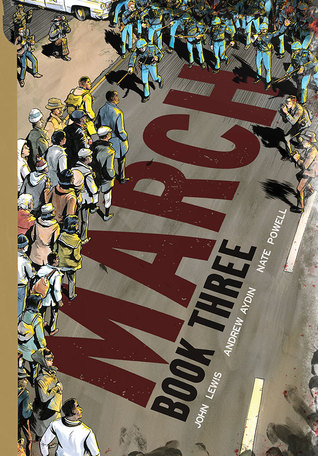
March Trilogy
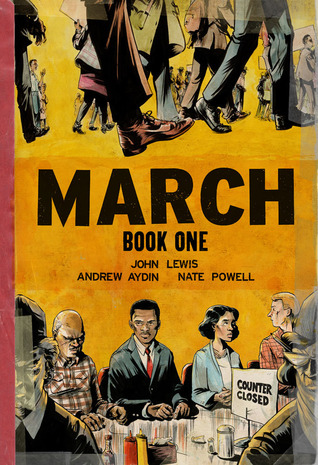
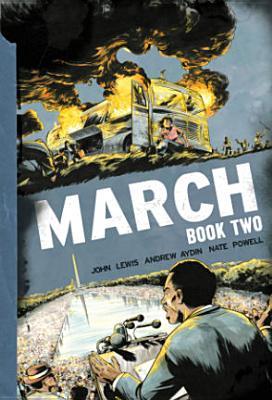
Author: John Lewis and Andrew Aydin
Illustrator: Nate Powell
Published 2013, 2015, & 2016 by Top Shelf Productions

Summary: Congressman John Lewis (GA-5) is an American icon, one of the key figures of the civil rights movement. His commitment to justice and nonviolence has taken him from an Alabama sharecropper’s farm to the halls of Congress, from a segregated schoolroom to the 1963 March on Washington, and from receiving beatings from state troopers to receiving the Medal of Freedom from the first African-American president.

Now, to share his remarkable story with new generations, Lewis presents March, a graphic novel trilogy, in collaboration with co-writer Andrew Aydin and New York Times best-selling artist Nate Powell (winner of the Eisner Award and LA Times Book Prize finalist for Swallow Me Whole).

March is a vivid first-hand account of John Lewis’ lifelong struggle for civil and human rights, meditating in the modern age on the distance traveled since the days of Jim Crow and segregation. Rooted in Lewis’ personal story, it also reflects on the highs and lows of the broader civil rights movement.

Book One: Begins with John Lewis’ youth in rural Alabama, his life-changing meeting with Martin Luther King, Jr., the birth of the Nashville Student Movement, and their battle to tear down segregation through nonviolent lunch counter sit-ins, building to a stunning climax on the steps of City Hall.

Book Two: After the success of the Nashville sit-in campaign, John Lewis is more committed than ever to changing the world through nonviolence – but as he and his fellow Freedom Riders board a bus into the vicious heart of the deep south, they will be tested like never before. Faced with beatings, police brutality, imprisonment, arson, and even murder, the young activists of the movement struggle with internal conflicts as well. But their courage will attract the notice of powerful allies, from Martin Luther King, Jr. to Attorney General Robert F. Kennedy… and once Lewis is elected chairman of the Student Nonviolent Coordinating Committee, this 23-year-old will be thrust into the national spotlight, becoming one of the “Big Six” leaders of the civil rights movement and a central figure in the landmark 1963 March on Washington for Jobs and Freedom.

Book Three: Fall 1963, the Civil Rights Movement is an undeniable keystone of the national conversation, and as chair of the Student Nonviolent Coordinating Committee, John Lewis is right in the thick of it. With the stakes continuing to rise, white supremacists intensify their opposition through government obstruction and civilian terrorist attacks, a supportive president is assassinated, and African-Americans across the South are still blatantly prohibited from voting. To carry out their nonviolent revolution, Lewis and an army of young activists launch a series of innovative projects, including the Freedom Vote, Mississippi Freedom Summer, and a pitched battle for the soul of the Democratic Party waged live on national television. But strategic disputes are deepening within the movement, even as 25-year-old John Lewis heads to Alabama to risk everything in a historic showdown that will shock the world.

Many years ago, John Lewis and other student activists drew inspiration from the 1950s comic book “Martin Luther King and the Montgomery Story.” Now, his own comics bring those days to life for a new audience, testifying to a movement whose echoes will be heard for generations.

Review: No matter what I say in this review, I am not going to give this trilogy justice. I mean, Book Three won the National Book Award, Sibert Medal, Printz Award, Coretta Scott King Award, YALSA Excellence in Nonfiction, and the Walter Dean Myers Award. And it had SIX starred reviews, Book Two had FOUR starred reviews, and Book One had FIVE starred reviews. That is FIFTEEN between the three! And they all deserve whatever praise or recognition they have received.

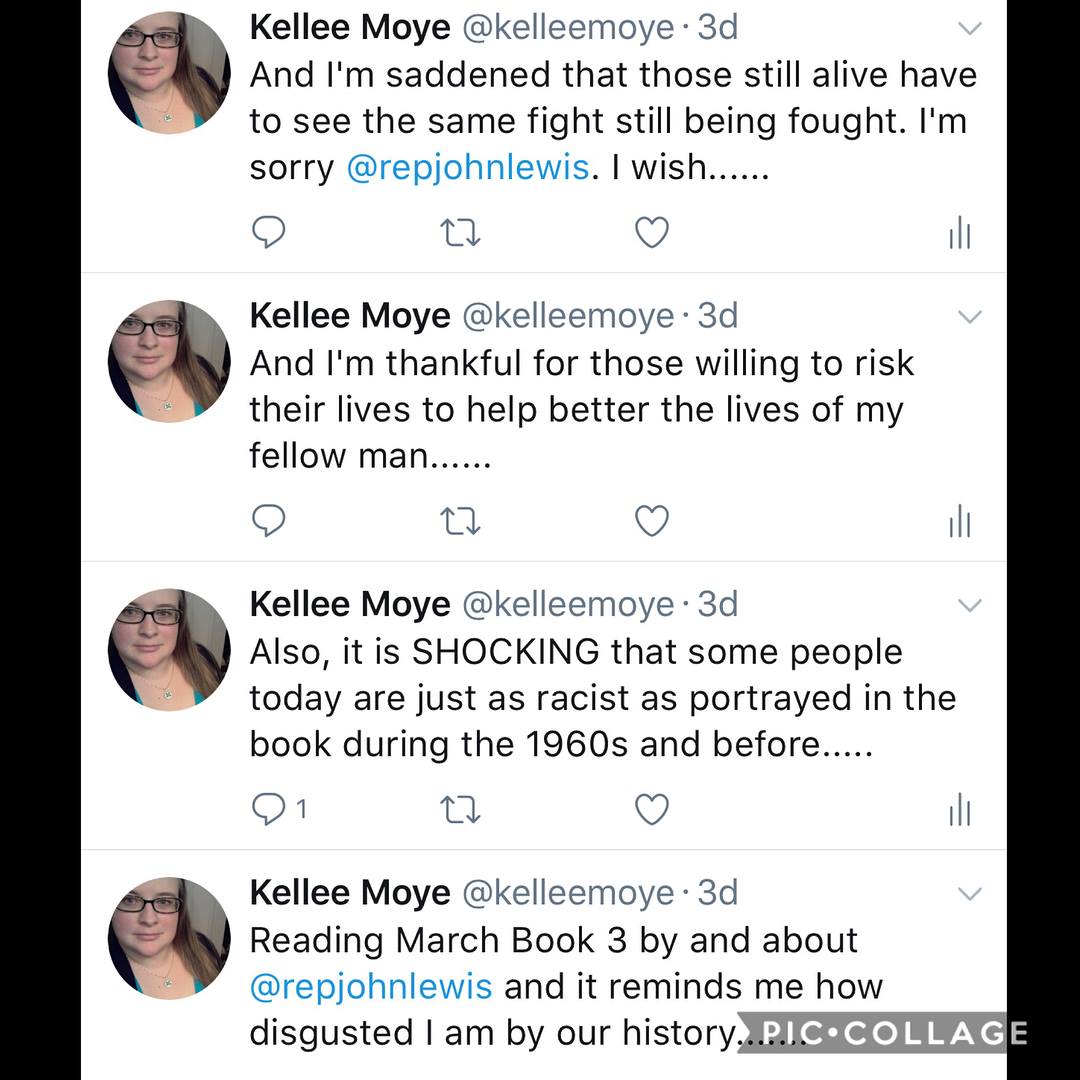
John Lewis’s story included many aspects of the Civil Rights movement I did know about; however, it gives insight into these events that no one else could give us as Lewis is the last of the March on Washington speakers to be with us. It also addresses aspects of the movement that are not taught in history books because it is ugly. Our history is ugly, but that is exactly why it needs to be talked about. There were times when reading where I had to put the book down (especially in Book Three) because this truth was harder to read than just any fiction I’ve encountered. These were my tweets as I was reading (read bottom to top):

But it is because of the shocking nature of our history that we must speak and read and learn about it. We are supposed to keep moving forward, and the only way to make sure we know which way that is, is to learn about what was in the past. John Lewis, with the help of his co-writer Andrew Aydin and the illustrator Nate Powell, have given us a gift with these books. A gift of a look into the past through the eyes of an insider.

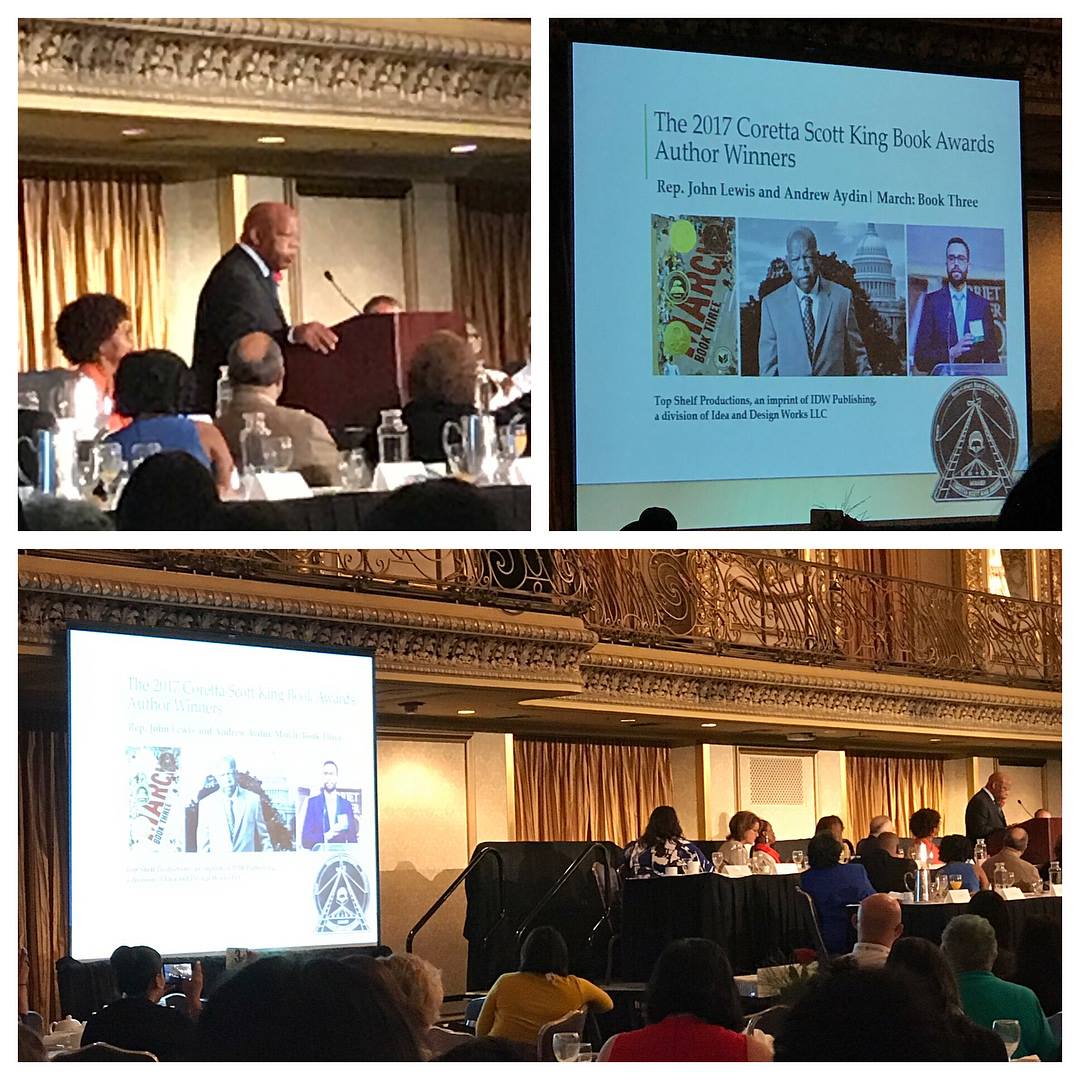
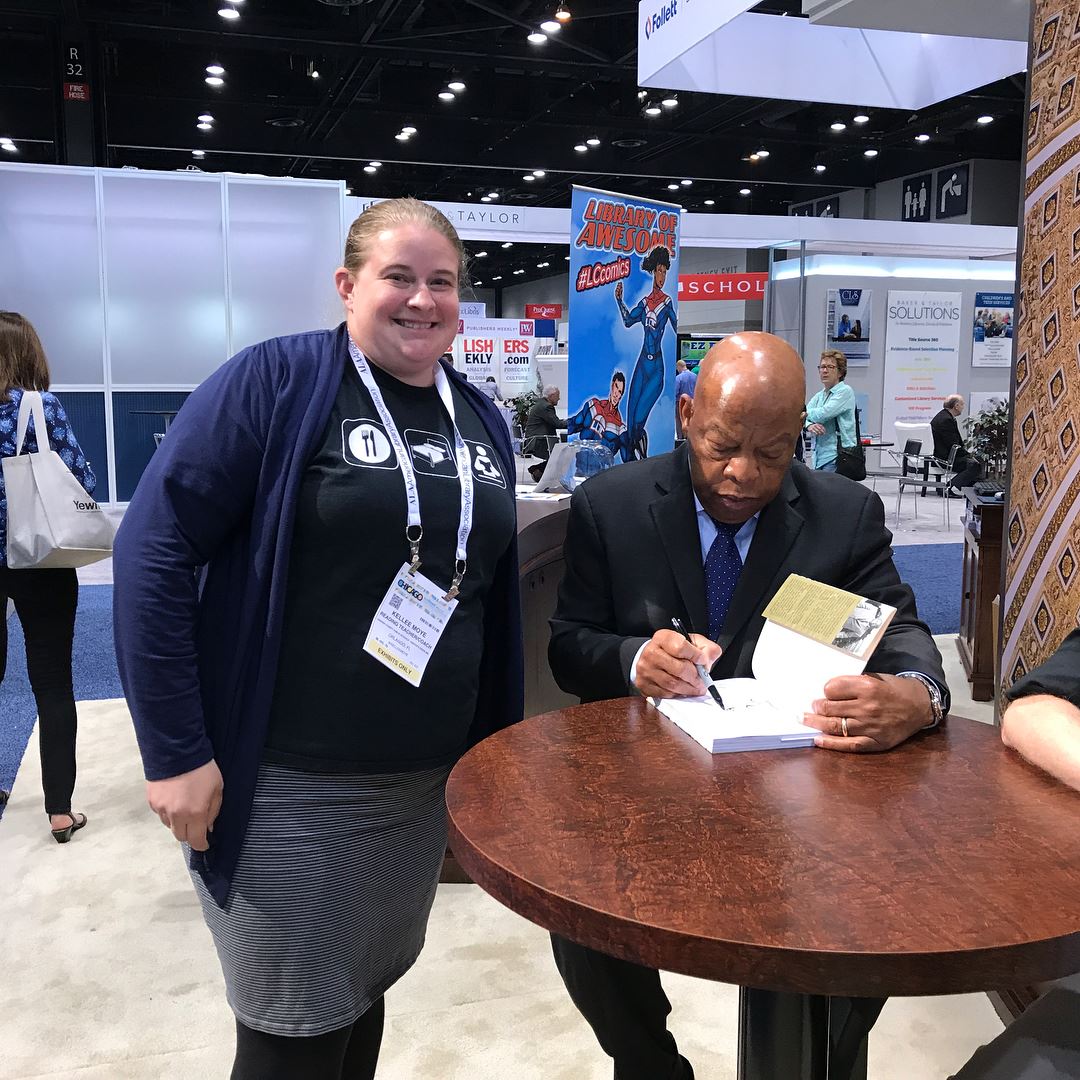
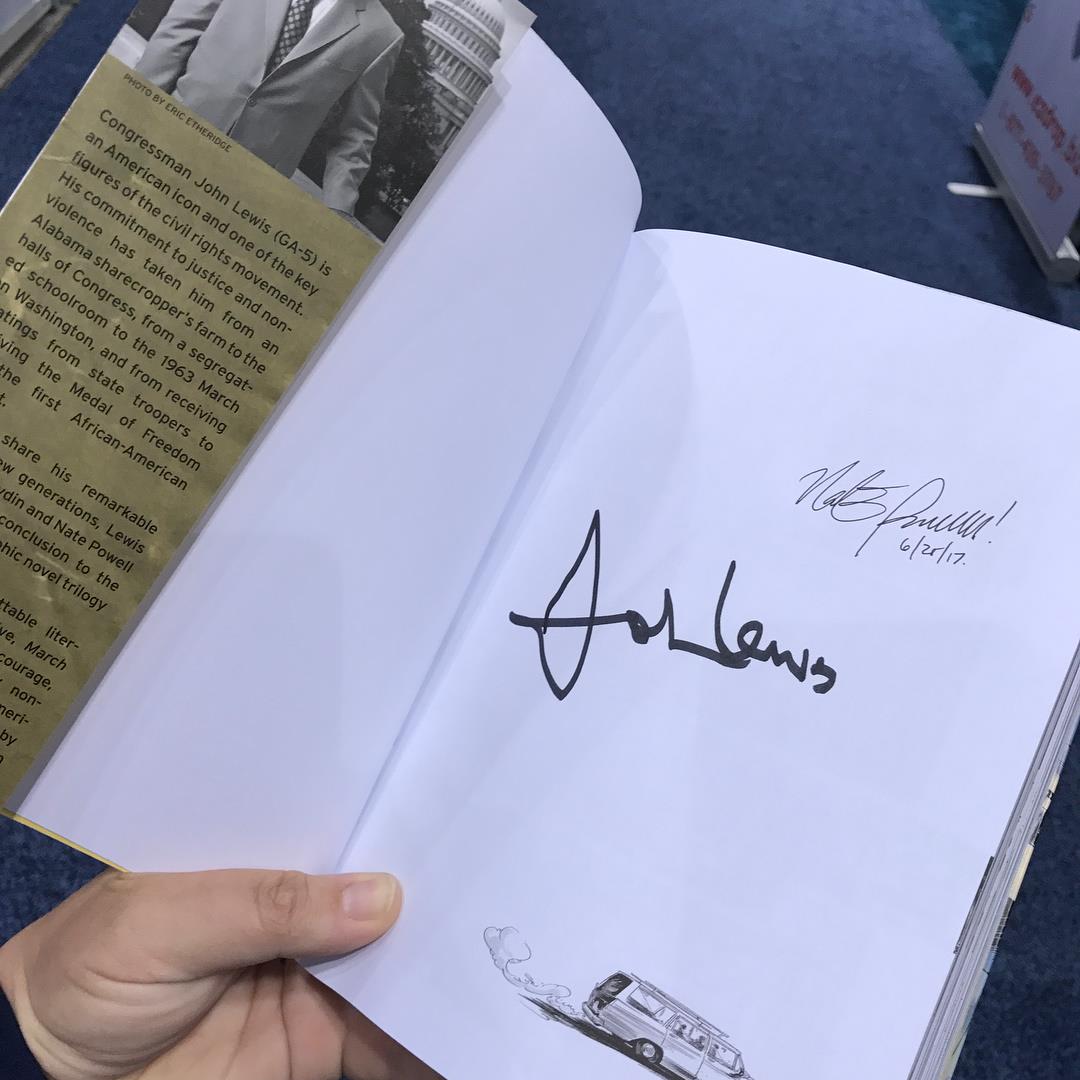
I’d also like to share how amazing it was to see John Lewis at ALA Annual in Chicago! I had the honor of hearing him speak twice: once at the Coretta Scott King Award breakfast and once in the Library of Congress pavilion. I also got to shake his hand (though the picture didn’t come out–boo!), thank him, and get my book signed by him and Nate Powell. I am still in awe of the experience!

Teachers’ Tools for Navigation: PLEASE put these in classrooms! U.S. History teachers, use these as your resource for teaching about Civil Rights. ELA teachers, use these as a nonfiction text in any unit. Anyone with a library for young adults, please put them in your collection. Everyone, read these with a young adult or get them to a young adult. Learning about John Lewis’s truth is how we keep history from repeating itself.

Discussion Questions: 

March Book One Teaching Guide

March Book Two Teaching Guide

March Book Three Example Lesson Plan

Flagged Passages: 

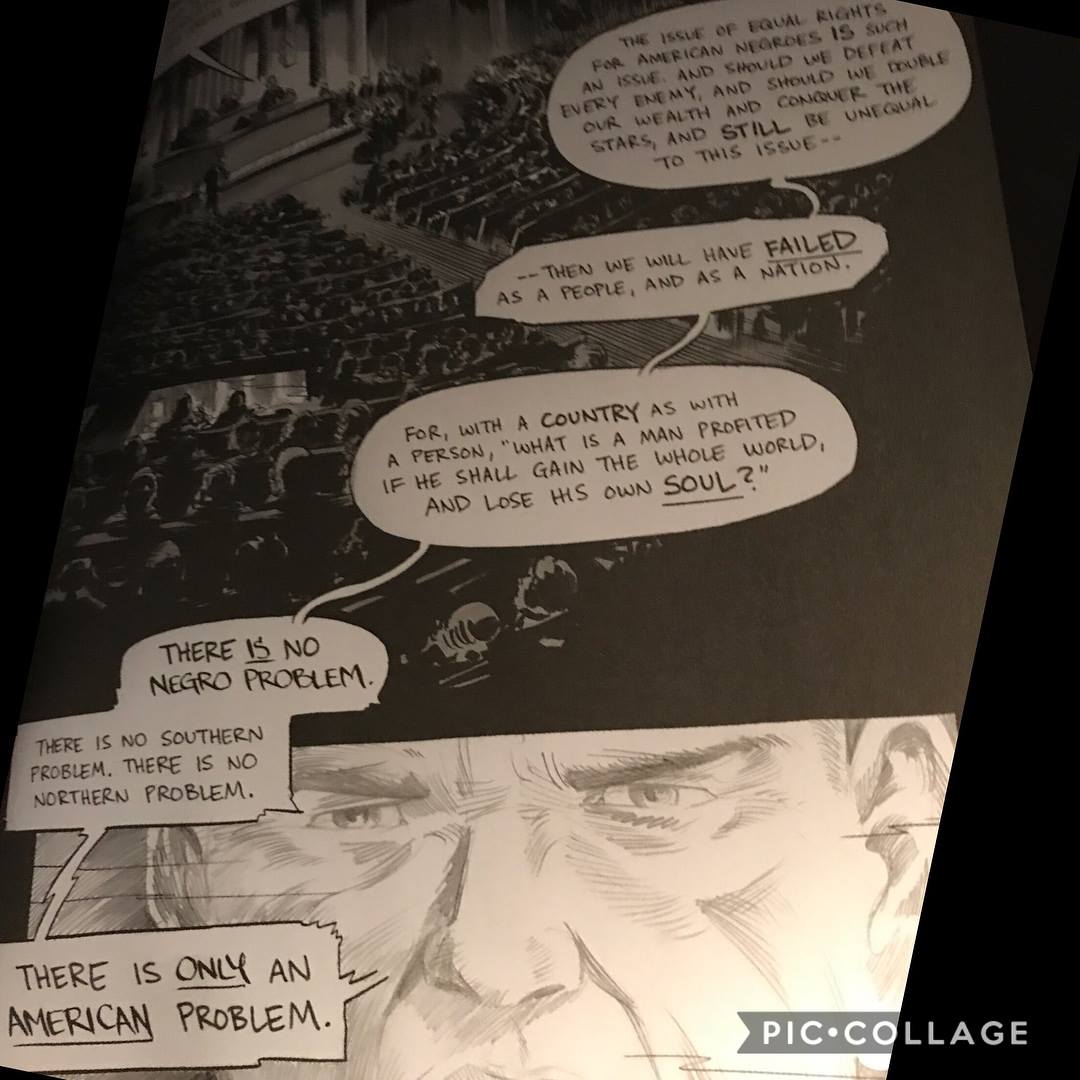
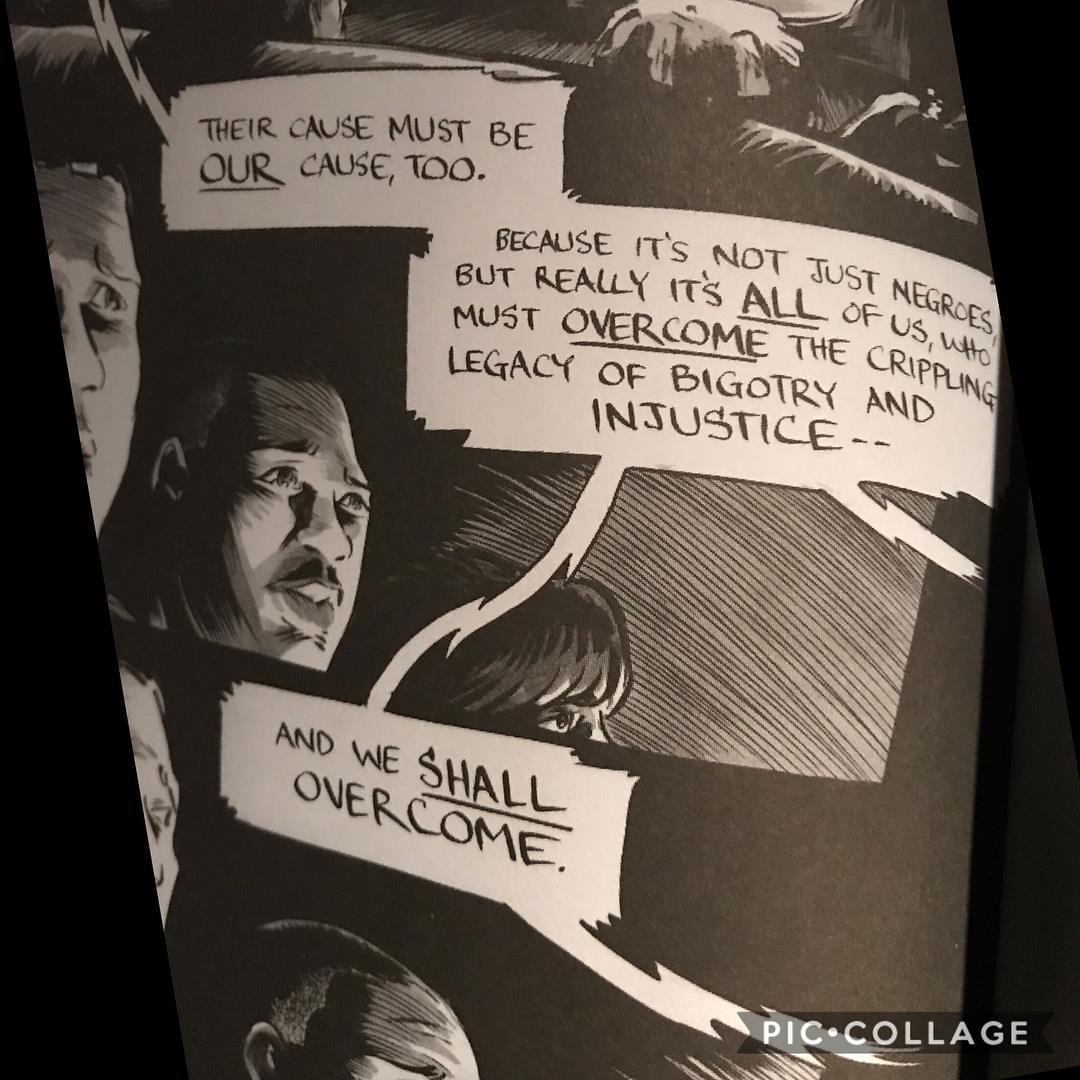
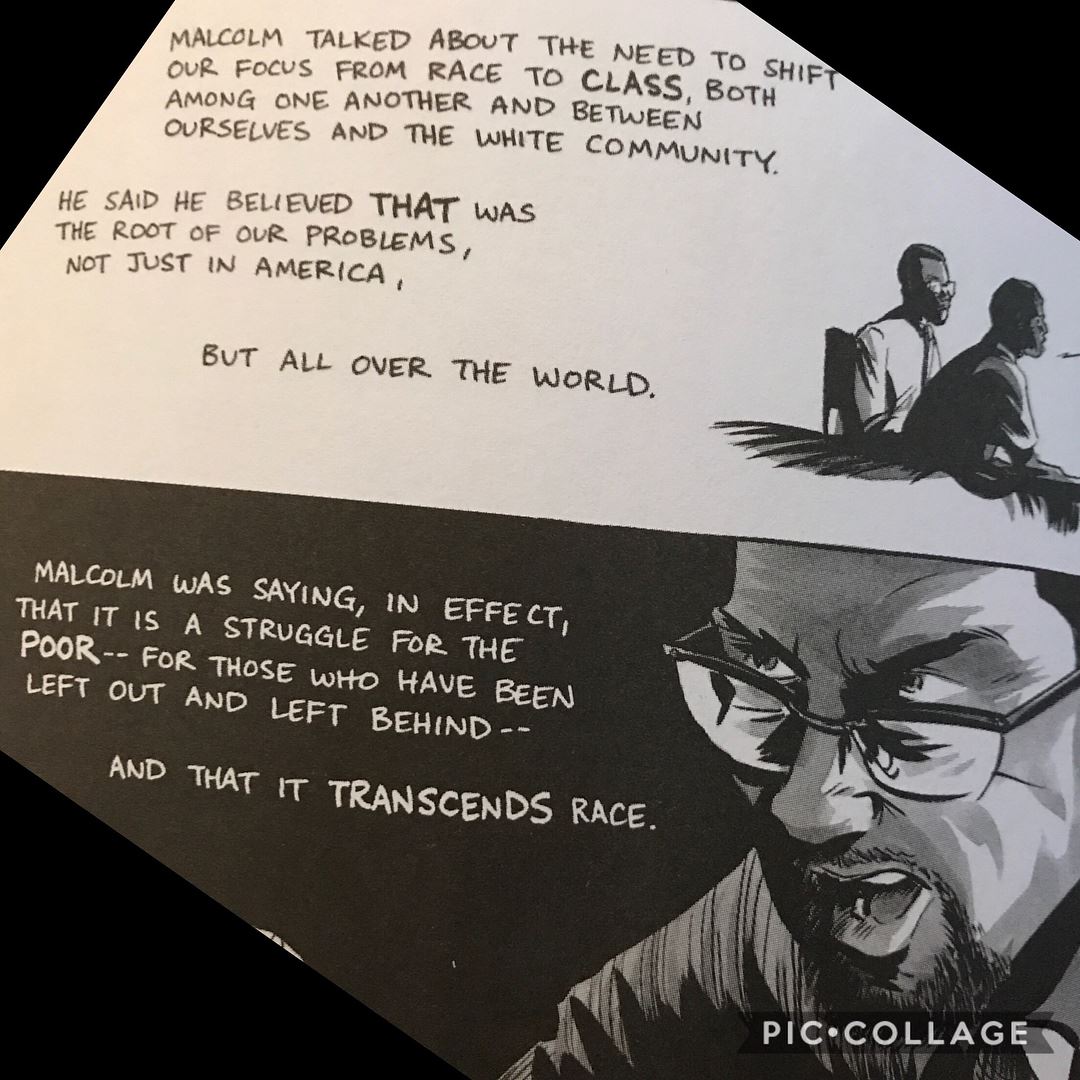
Here are three passages I took photos of because it shocked me how relevant they are to our society today. They may not be the best representation of John Lewis’s narrative; however, they do show the beautiful format and artwork as well as touch on some of the events in Book Three.

Read This If You Love: Just read these. I promise.

Recommended For: 

classroomlibrarybuttonsmall closereadinganalysisbuttonsmall 

Signature

Top Ten Tuesday: Top Ten Favorite Authors from Diego, 6th grade

Share

top ten tuesday

Top Ten Tuesday is an original feature/weekly meme created at The Broke and the Bookish. The feature was created because The Broke and Bookish are particularly fond of lists (as are we!). Each week a new Top Ten list topic is given and bloggers can participate.

 Today’s Topic: Top Ten Favorite Authors

From Diego P., 6th grade

1. Rick Riordan

Because of the Percy Jackson series

2. James Dashner

Because of The Maze Runner, a very good book

3. Lincoln Peirce

Because of the Big Nate series, my favorite books in elementary school

4. Lisa Bullard

Because of Turn Left at the Cow, one of my favorite books

5. Jeff Kinney

Because of the Diary of a Wimpy Kid series, my 2nd favorite series

6. Dav Pilkey

Because of Captain Underpants, my 3rd favorite series

7. J.K. Rowling

Because of the Harry Potter series, my favorite series

8. Len Vlahos

Because of Life in a Fishbowl which is very good

9. Jonathan Auxier

Because of Peter Nimble, one of the best books

10. Kazu Kibuishi

Because of the Amulet series, my go-to graphic novels

Thank you, Diego!

Signature

It’s Monday! What Are You Reading? #IMWAYR 7/10/17

Share

IMWAYR 2015 logo

It’s Monday! What Are You Reading? From Picture Books to YA!

It’s Monday! What are you Reading? is a meme started by Sheila at Book Journeys and now hosted by Kathryn at The Book Date. It is a great way to recap what you read and/or reviewed the previous week and to plan out your reading and reviews for the upcoming week. It’s also a great chance to see what others are reading right now…you just might discover the next “must-read” book!

Kellee and Jen, of Teach Mentor Texts, decided to give It’s Monday! What Are You Reading? a kidlit focus. If you read and review books in children’s literature – picture books, chapter books, middle grade novels, young adult novels, anything in the world of kidlit – join us! We love this meme and think you will, too.

We encourage everyone who participates to support the blogging community by visiting at least three of the other book bloggers that link up and leave comments for them.

Bold_line

Last Week’s Posts

**Click on any picture/link to view the post**


Tuesday: Listen to the U.S. Constitution and Declaration of Independence This Fourth of July #WeThePeopleListen

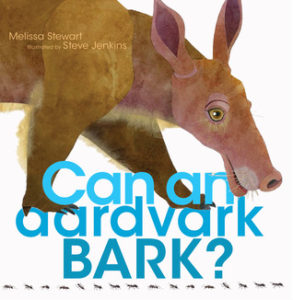
Wednesday: Can an Aardvark Bark? by Melissa Stewart

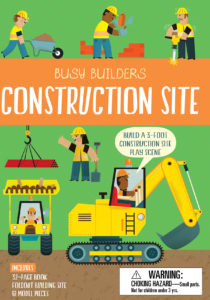
Thursday: Busy Builders: Construction Site by Katherine Sully

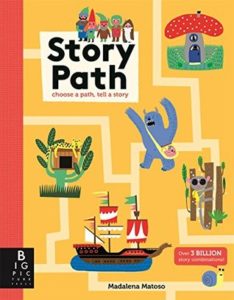
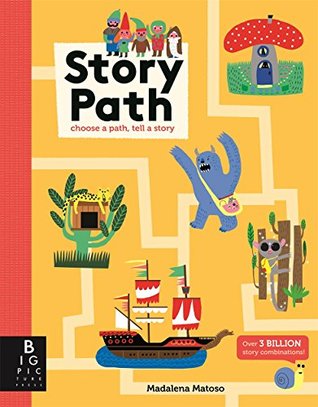
Friday: Story Path by Madalena Matoso

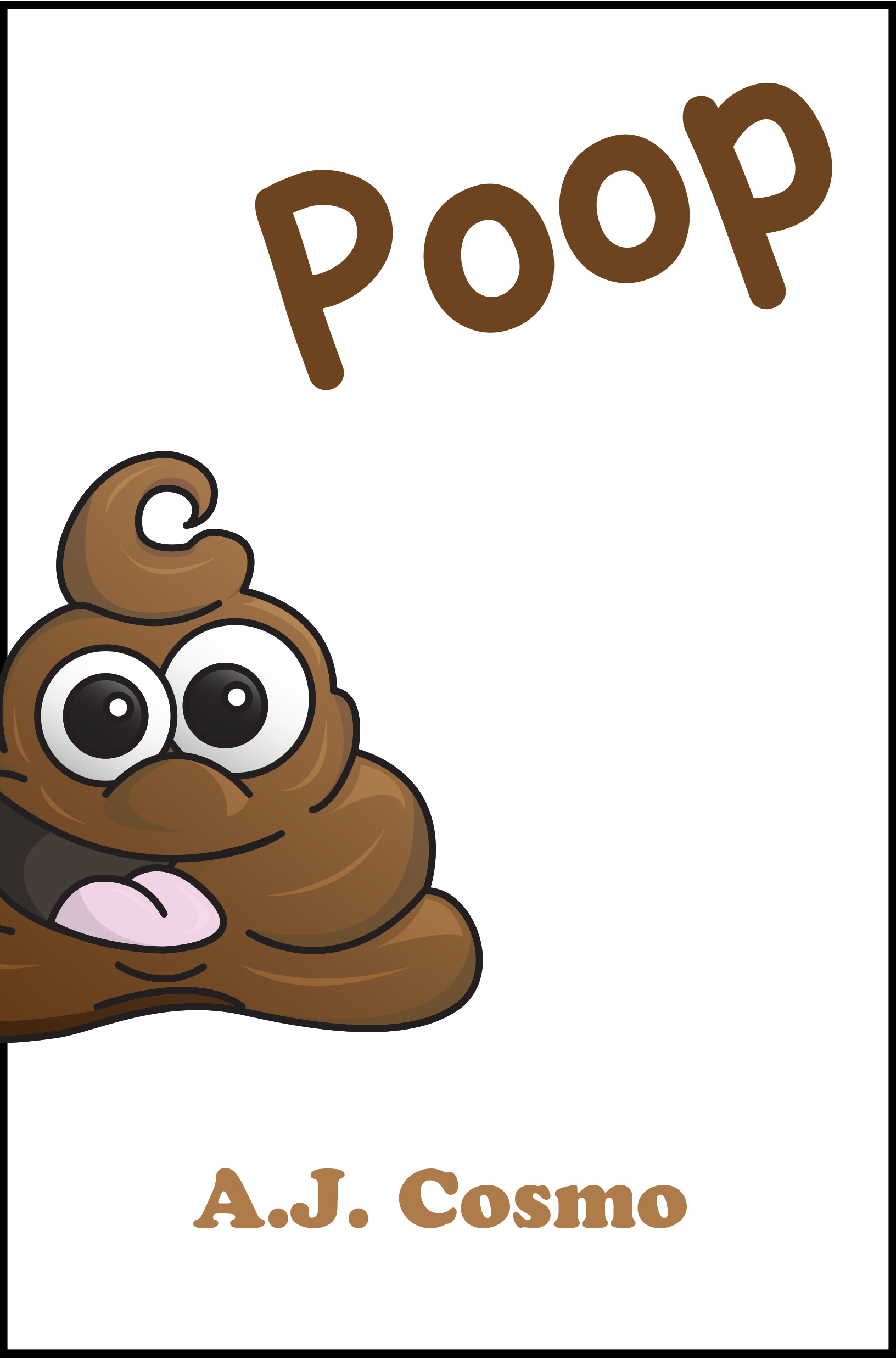
Sunday: Author Guest Post!: “Mature Poop” by A.J. Cosmo

Bold_line

 Last Week’s Journeys

Kellee

Since we are in the second half of summer, it is family time in the Moye household! I’m taking a 2 week blog vacation, so I will be back with you all later in July 🙂

 Ricki

I am moving across the country to Colorado to start my new job at Colorado State University! Yahoo! I am sorry that I will be gone for the next few weeks because internet access (and finding my computer) will likely be tricky. I’ll see you all in August!

Bold_line

Upcoming Week’s Posts

Tuesday: Top Ten Favorite Authors from Diego, 6th Grade

Wednesday: March Trilogy by John Lewis and Andrew Aydin

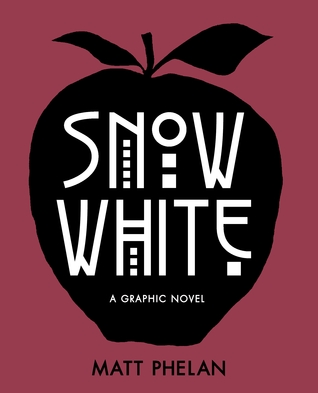
Thursday: Guest Review: Snow White by Matt Phelan

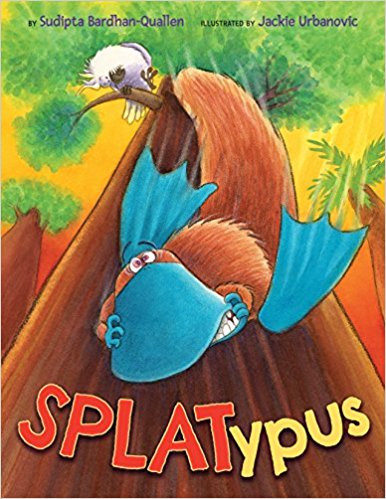
Friday: Splatypus by Sudipta Bardhan-Quallen

Sunday: Author Guest Post

 So, what are you reading?

Link up below and go check out what everyone else is reading. Please support other bloggers by viewing and commenting on at least 3 other blogs. If you tweet about your Monday post, tag the tweet with #IMWAYR!

 Signature andRickiSig

Author Guest Post!: “Mature Poop” by A.J. Cosmo

Share

“Mature Poop”

In my middle-grade novel Poop (don’t giggle), the main character’s journey is one of finding his maturity. He goes from a ten year old boy who believes that the world is out to get him to realizing that not only is the world indifferent to him, it requires him to take action. Liam’s development is in contrast to his estranged father who is an example that age and maturity are not necessarily correlated. But what exactly is maturity? It’s an abstract concept worth an hour of class discussion. With that in mind, here is how maturity is presented in Poop along with some questions to get the conversation going. (Once the giggling dies down that is.)

Maturity is your view of the world

One of the ways we can assess our maturity is through our view of the world. Do we consider ourselves to be the center of the universe? If so, then we are immature. Likewise, understanding that the world is neither for or against us is a hallmark of a mature personality. Ask your students how important they think they are to their inner circle and to the world at large.

Maturity is putting the needs of others in front of your own

Parents are by default considered mature because they are responsible for the well being of their children. We recognize that taking care of other people, especially when it takes something away from yourself, is an earmark of maturity. It’s remarkable when this trait for charity develops without the presence of children though. Ask your students for examples of times where they put the needs of someone else before their own.

Maturity is doing what you fear

It’s no secret that life often puts the thing you fear most directly in your path. Overcoming your fears and pressing on, in acceptance of being scared, is another sign of maturity. Think of the heroes that we praise for doing the right thing when everyone else was too scared to act. This can be anything from a fear of public speaking to a fear of walking alone at night. A mature person knows that they have the tools to face what is uncomfortable. Ask your students to share a time when they overcame their fears.

Maturity is owning up to your faults

Ask a toddler to admit something they did wrong and what do you get? Without fail, they will give you excuses and distractions. Being able fess up to your own mistakes is a huge part of maturity. No one is perfect, yet we all seem to want to project that we cannot make mistakes. Perhaps it’s a fear of punishment, or maybe it comes from pride, but we have all diverted the truth at some point. Ask your students about a mistake that they made and then lied about. Then ask them what happened and if they eventually had to confess.

Maturity is constant improvement

Growing up means knowing your flaws and being open to correction and improvement. A mature adult knows that growth and change is a constant part of life and works with it rather than against it. Ask any great artist and they will tell you that they still aren’t as good as what they wished they could be. The best athletes never stop practicing and the greatest minds never stop thinking. There is no stopping point and that’s the point of being an adult. Ask your students what they need to work on.

Maturity is trying again after failure

Fear of failure cripples far too many people, which is ironic, because young children never seem to care if they fall down. Being a mature person also means not avoiding failure. Sure, you may have to take care of a scraped knee, but maturity means accepting that failure is a part of growth and experience. Avoiding failure, by being a perfectionist, is actually a refusal to engage with life. After all, many of the great achievements of mankind came only after significant failure (just look up the story of inventing the jet engine.) Ask your students about a time they learned from their own failures.

More questions for your students:

What other traits do you imagine a mature person possesses?
Why is maturity important?
What could you do today to act more mature?

Though it’s an abstract concept, maturity carries with it enough identifiers to allow us to measure ourselves against our own potential. I hope that this has given your students a lot to think about and discuss and, hopefully, reminded a few adults about their own life choices as well. The great irony in creating a middle-grade novel called Poop is that everyone automatically assumes that I am both immature and witless, however, that couldn’t be further from the truth. Just like how Liam learns important life lessons from a talking pile of you know what, it’s oftentimes the most juvenile aspects of life that provide the greatest opportunities for maturity to blossom.

You’re now free to giggle.

Poop
Author: A.J. Cosmo
Published September 12th, 2016 by Thought Bubble Publishing

Summary: Poor Liam. On the very first day of fifth grade, in a strange new town, and a large new school, he interrupts everyone to bolt out and into the girl’s bathroom. There, down in the far stall, in pain from a horrible stomach condition, he meets a new friend: Poop. The cheery little guy says he’s there to help Liam through a tough time in his life. But what does Liam need help with? And who, in their right mind, would want Poop for a friend?

About the Author: A.J. Cosmo is the writer and illustrator of over thirty children’s books including the best selling The Monster That Ate My Socks and I Don’t Want to Go to SchoolPoop is available online or by asking your local bookstore. Say hi on twitter @ajcosmokids or at www.ajcosmo.com

Thank you A.J. for this post! Maturity is something that is always a necessary conversation in middle school! Also, thank you to Chris from Thought Bubble Publishing for getting us in touch with A.J.

 and

Story Path: Choose a Path, Tell a Story by Madalena Matoso

Share

Story Path: Choose a Path, Tell a Story
Author/Illustrator: Madalena Matoso
Published March, 2017 by Kane Miller EDC Publishing

Summary: Where you go, whom you meet, what you do next — it’s all up to you…

Travel along the story path and discover an enchanted world where princess battle with hairy monsters and vampire cats zoom through the galaxy on silver unicorns!

This innovative picture book allows you to choose your own characters, settings, and plots at every turn. With quirky illustrations by the award-winning Madalena Matoso, this is an imaginative storytelling experience for children of all ages.

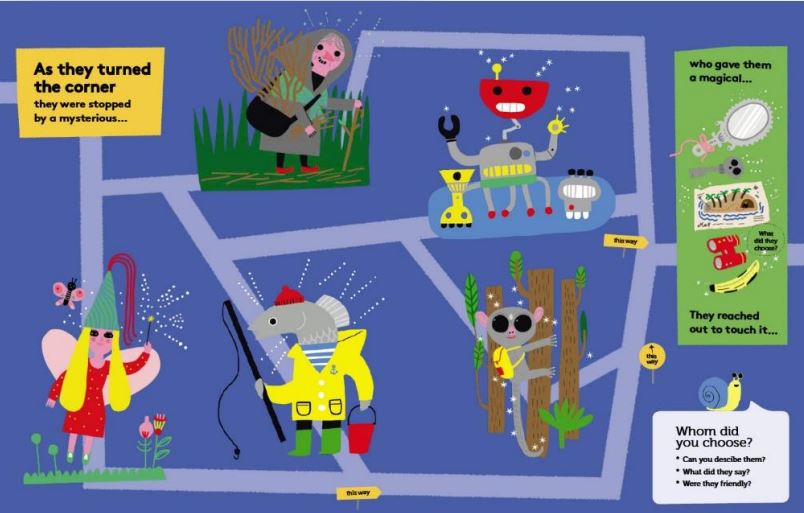
Review: I loved Choose Your Own Adventure books when I was younger because it made you part of the story to an extent that other books didn’t because you get to be the actual creator of the plot. Story Path does just this but for a younger audience! The author set up the book in a very friendly way that gives lots of options but also is easy to follow. On each page, the story continues with a beginning of a sentence like “One day, they were riding along on their…” and the reader then gets to pick from a set of illustrations. This spread includes options like a two-headed dragon, rocket ship, horse, boat, or an elephant. Then after the choice is made, the author included guiding questions to ask the reader like “What did you choose? What noise did it make? How fast was it? Where were they going?” This helps add even more to the story that the reader is creating. 

Teachers’ Tools for Navigation: This book could take narrative writing to a new level in the early elementary classroom! As students are first learning how to write stories, Story Path can help guide the writers through characters, setting, and plot yet each writer would have a different story.

Discussion Questions: What story did you create? Why did you pick what you did? What can you add to your story?

Flagged Passages: 

Read This If You Loved: Choose Your Own Adventure books, Journey trilogy by Aaron BeckerHenri Mouse by George Mendoza

Recommended For:

classroomlibrarybuttonsmall 

**Thank you to Lynn at Kane Miller for providing a copy for review!!**

Busy Builders: Construction Site by Katherine Sully

Share

Busy Builders Construction Site
Author: Katherine Sully
Illustrator: Carles Ballesteros
Published December 20, 2016 by Silver Dolphin

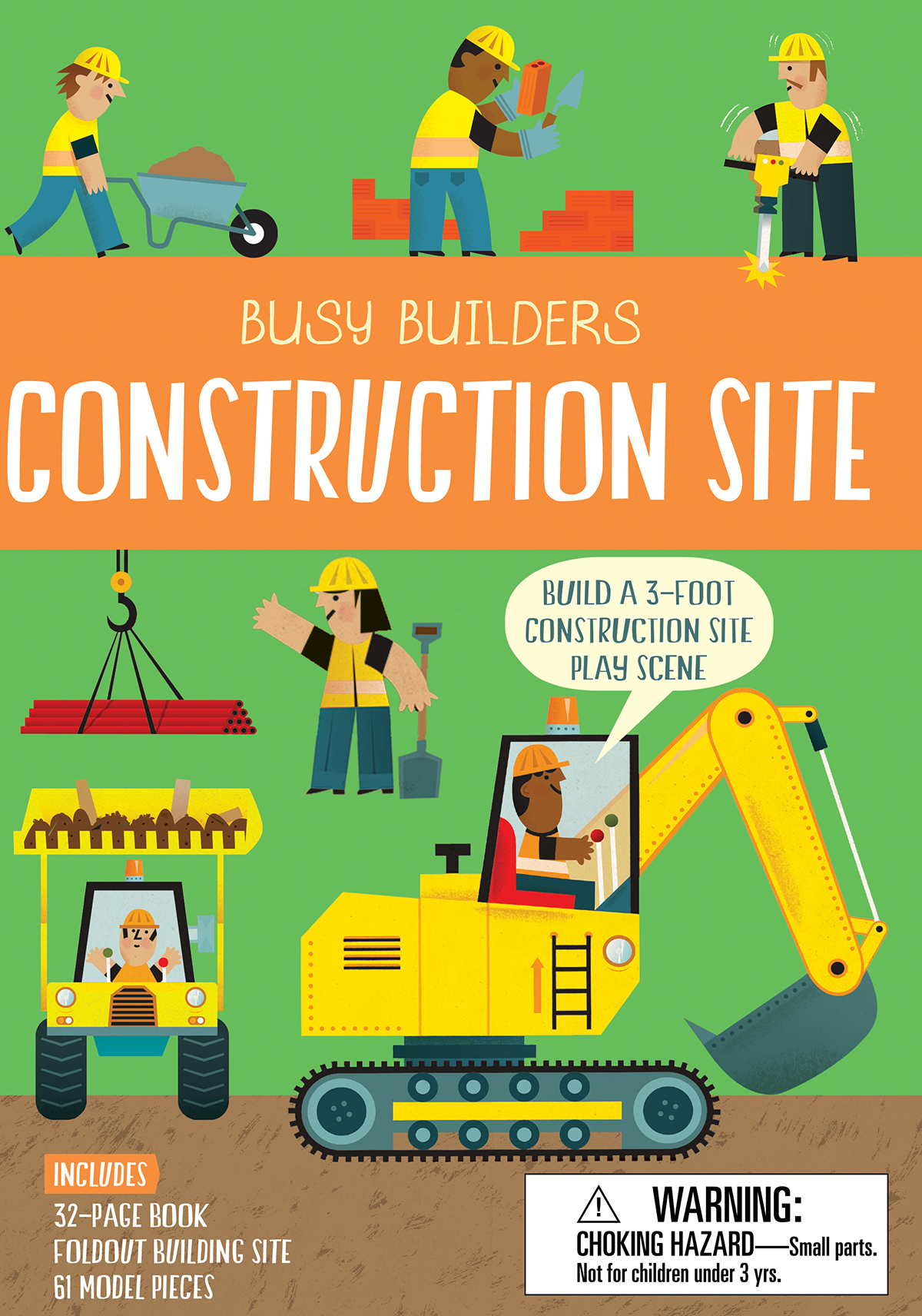
Summary: Dig in and get ready to work in Busy Builders: Construction Site. This three-dimensional interactive kit will bring young children to a busy building site, where they will meet the construction crew at work on a new school. The fact book introduces kids to the people and machines at a construction site, using colorful illustrations and simple text. Plus, the box folds out to form a school under construction, complete with model pieces for the building, vehicles, and construction workers.

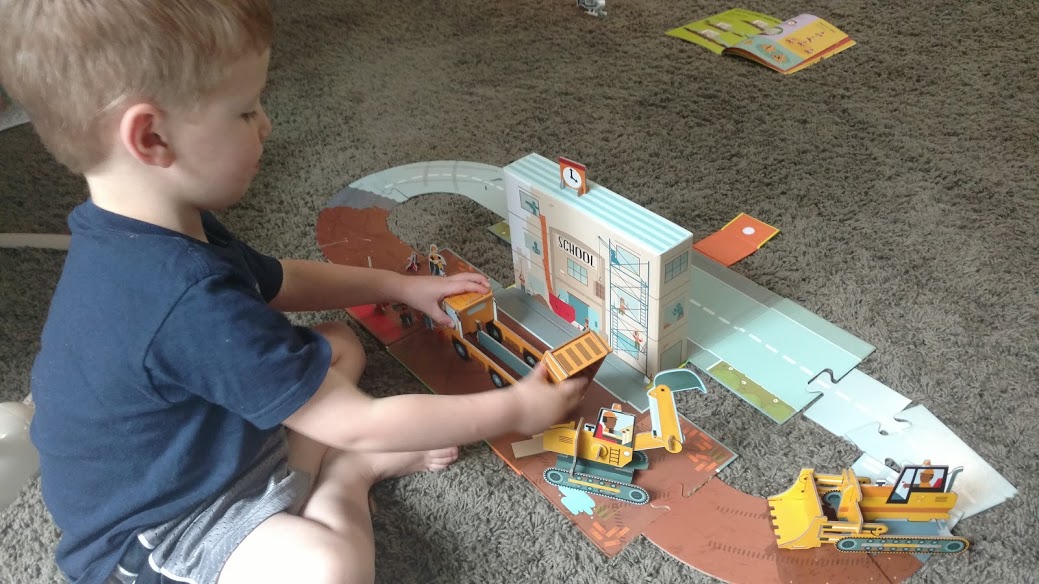
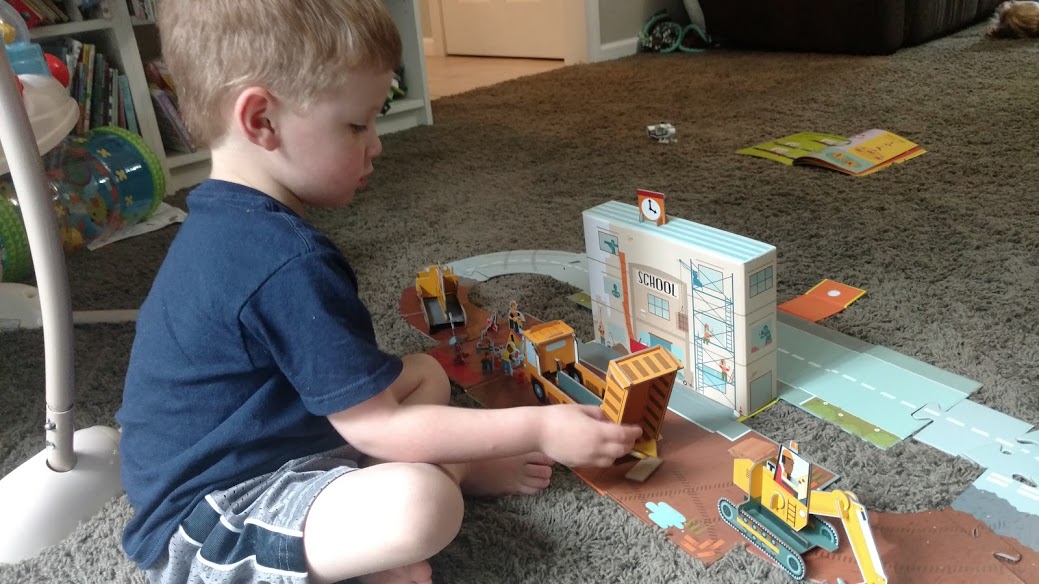
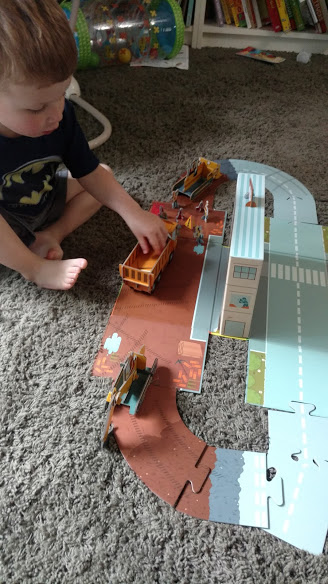
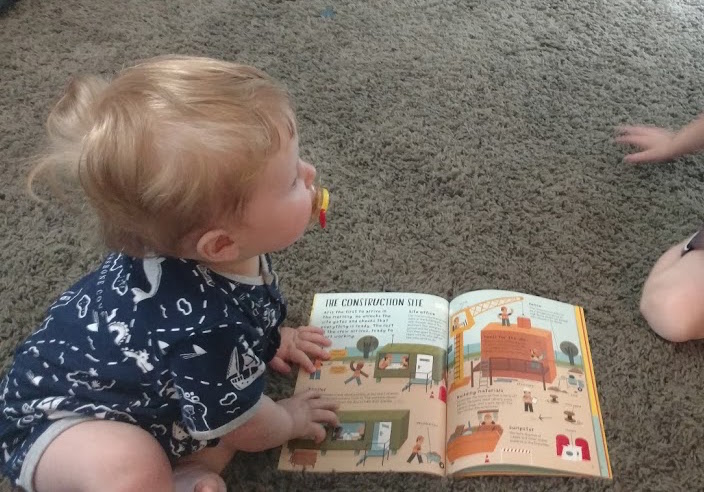
Review and Teachers’ Tools for Navigation: This book/kit was such a joy. I saved it for a gathering of kids at a lake house. Six kids (a 9 mo, 2 yo, 2.5 yo, 3.5 yo, 5 yo, and 7 yo) worked together to read the book and build the construction site. The two oldest kids were the best at putting the pieces together, and the parents helped. The directions were very easy to follow, and the construction vehicles swivel and move!

I didn’t remember to take pictures of the group effort in action, but I did take a few pictures of my two sons reading the book and playing with the kit the next day (see below). It was so fun to read about all of the construction workers and to have the figures in hand to place them on the construction site. This book would make a wonderful gift and would be great for a learning station in a class. My son is 3.5 years old, and I built most of the vehicles, but he helped with the smaller figures. Early elementary school students would be able to build this kit together with assistance, and the picture book is clear and easy to follow. For a learning stations, the kit can easily be disassembled between groups, or each group of students can build a different vehicle.

We are very excited to assemble the airport and fire station kits next!

Discussion Questions: Where do all of the crew members work? How do they work together to build the school?; How do you think the author and illustrator worked together to craft this book?

Fun Moments: 

An Hour Later (No Lie):

Read This If You Love: Building Models, Vehicles, Interactive Play, Engaging Reading Activities

Recommended For:

  classroomlibrarybuttonsmall

Can an Aardvark Bark? by Melissa Stewart

Share

nfpb2017

Nonfiction Wednesday

Nonfiction Picture Book Wednesday is hosted by Kid Lit Frenzy and was started to help promote the reading of nonfiction texts. Most Wednesdays, we will be participating and will review a nonfiction text (though it may not always be a picture book).
Be sure to visit Kid Lit Frenzy and see what other nonfiction books are shared this week!
Can an Aardvark Bark?
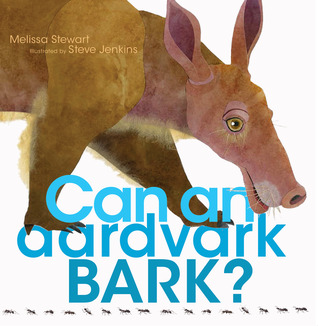
Author: Melissa Stewart
Illustrator: Steve Jenkins
Published June 13th, 2017 by Beach Lane Books

Summary: From award-winning author Melissa Stewart and Caldecott honoree Steve Jenkins comes a noisy nonfiction exploration of the many sounds animals make.

Can an aardvark bark? No, but it can grunt. Lots of other animals grunt too…

Barks, grunts, squeals—animals make all kinds of sounds to communicate and express themselves. With a growling salamander and a whining porcupine, bellowing giraffes and laughing gorillas, this boisterous book is chock-full of fun and interesting facts and is sure to be a favorite of even the youngest animal enthusiasts.

Review: This book came at a perfect time for my family! Trent had a doctor appointment last week and he was in the jungle room. While in the room, he started saying the noises for each animal and asking me what the ones he didn’t know make. I promptly found an app for that, and we’ve been exploring the app ever since listening to the sounds of all sorts of animals from chimpanzees to ibex to anteaters that live in the jungle to the farm to the mountains. And then we received Can an Aardvark Bark? in the mail, and it was such a happy coincidence! The book is a perfect addition to my new animal sound obsessed kid.

But in addition to my personal story of why we’re excited about this book the text is also filled with animal facts, fun to read, and illustrated by one of my favorite illustrators, Steve Jenkins.

Teachers’ Tools for Navigation: In an elementary classroom, Melissa Stewart’s work  is such a wonderful way to bring science into reading time and reading into science time. This one is no exception. The book includes a wide variety of animals and interesting information about each one. It also has a fun rhythmic and rhyming text that lends itself to read alouds. The book could also be a jumping off point for an animal inquiry project focused around either an animal in the book or a new animal.

Discussion Questions: What are different ways animals communicate?; What animal makes a sound that surprised you?; How did the author structure the book?; What are some animals not in the book? What sound do they make? Where would they fit in in the text structure? Or would they be in their own category?; What can animal sounds tell you about the animal?

Book Trailer: 

Read This If You Love: Nonfiction picture books about animals, Melissa Stewart’s work or Steve Jenkins’s work

Recommended For: 
classroomlibrarybuttonsmall closereadinganalysisbuttonsmall 

Signature