It’s Monday! What Are You Reading? #IMWAYR 6/4/18

Share

IMWAYR 2015 logo

It’s Monday! What Are You Reading? From Picture Books to YA!

It’s Monday! What are you Reading? is a meme started by Sheila at Book Journeys and now hosted by Kathryn at The Book Date. It is a great way to recap what you read and/or reviewed the previous week and to plan out your reading and reviews for the upcoming week. It’s also a great chance to see what others are reading right now…you just might discover the next “must-read” book!

Kellee and Jen, of Teach Mentor Texts, decided to give It’s Monday! What Are You Reading? a kidlit focus. If you read and review books in children’s literature – picture books, chapter books, middle grade novels, young adult novels, anything in the world of kidlit – join us! We love this meme and think you will, too.

We encourage everyone who participates to support the blogging community by visiting at least three of the other book bloggers that link up and leave comments for them.

Bold_line

Last Week’s Posts

Tuesday: Teaching Tuesday: Kellee’s Lunch Book Club

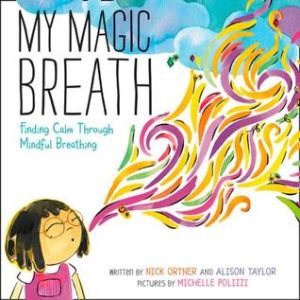
Wednesday: My Magic Breath: Finding Calm Through Mindful Breathing by Nick Ortner and Allison Taylor

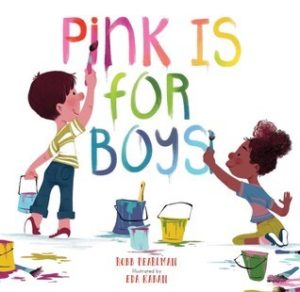
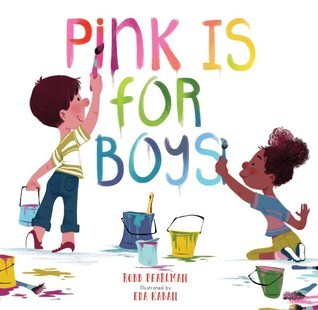
Thursday: Pink is for Boys by Robb Pearlman

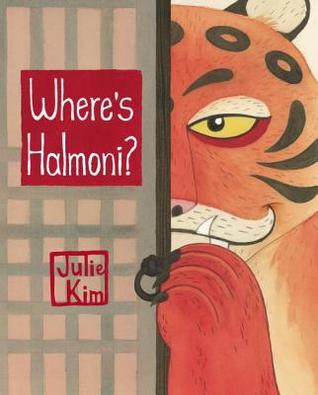
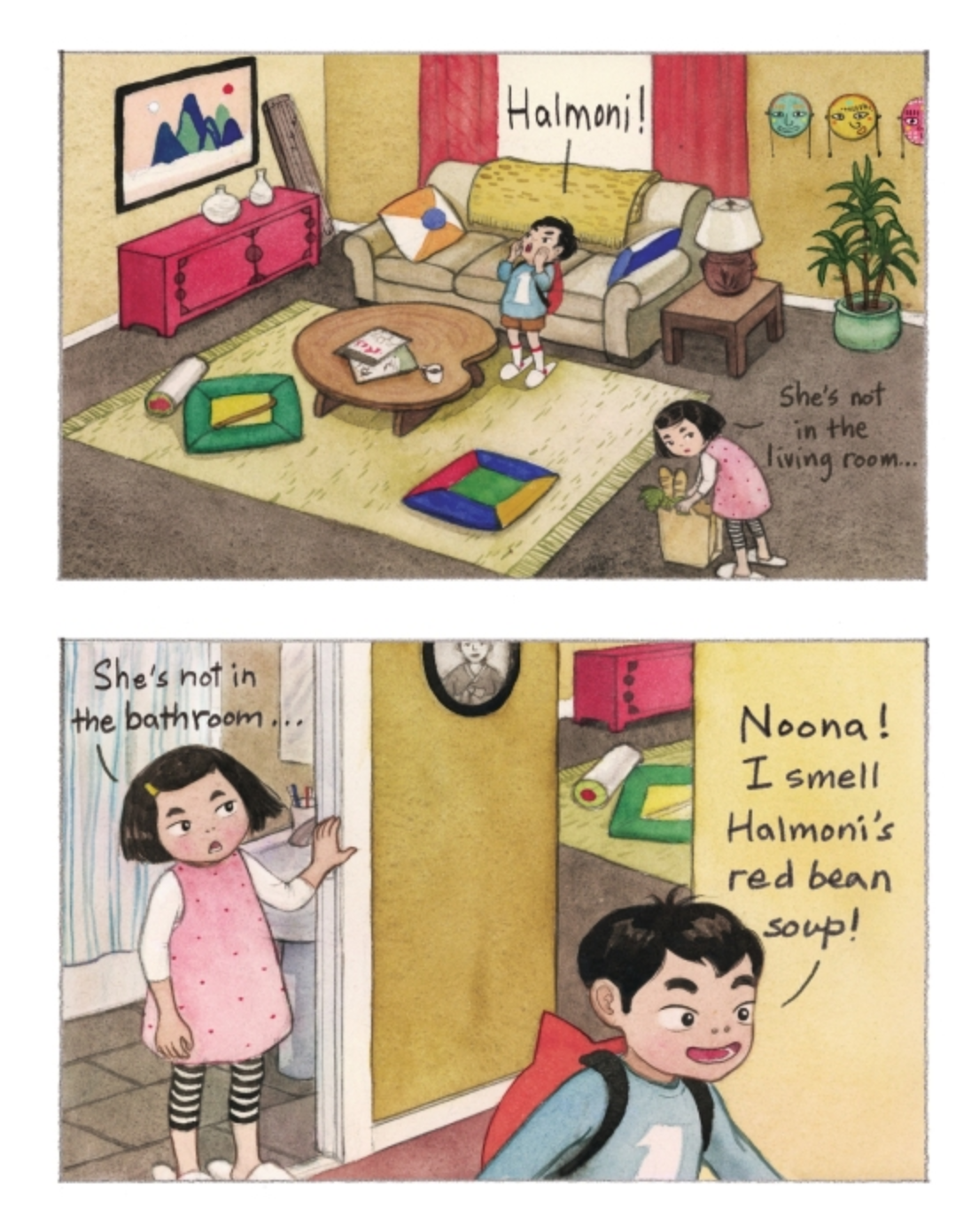
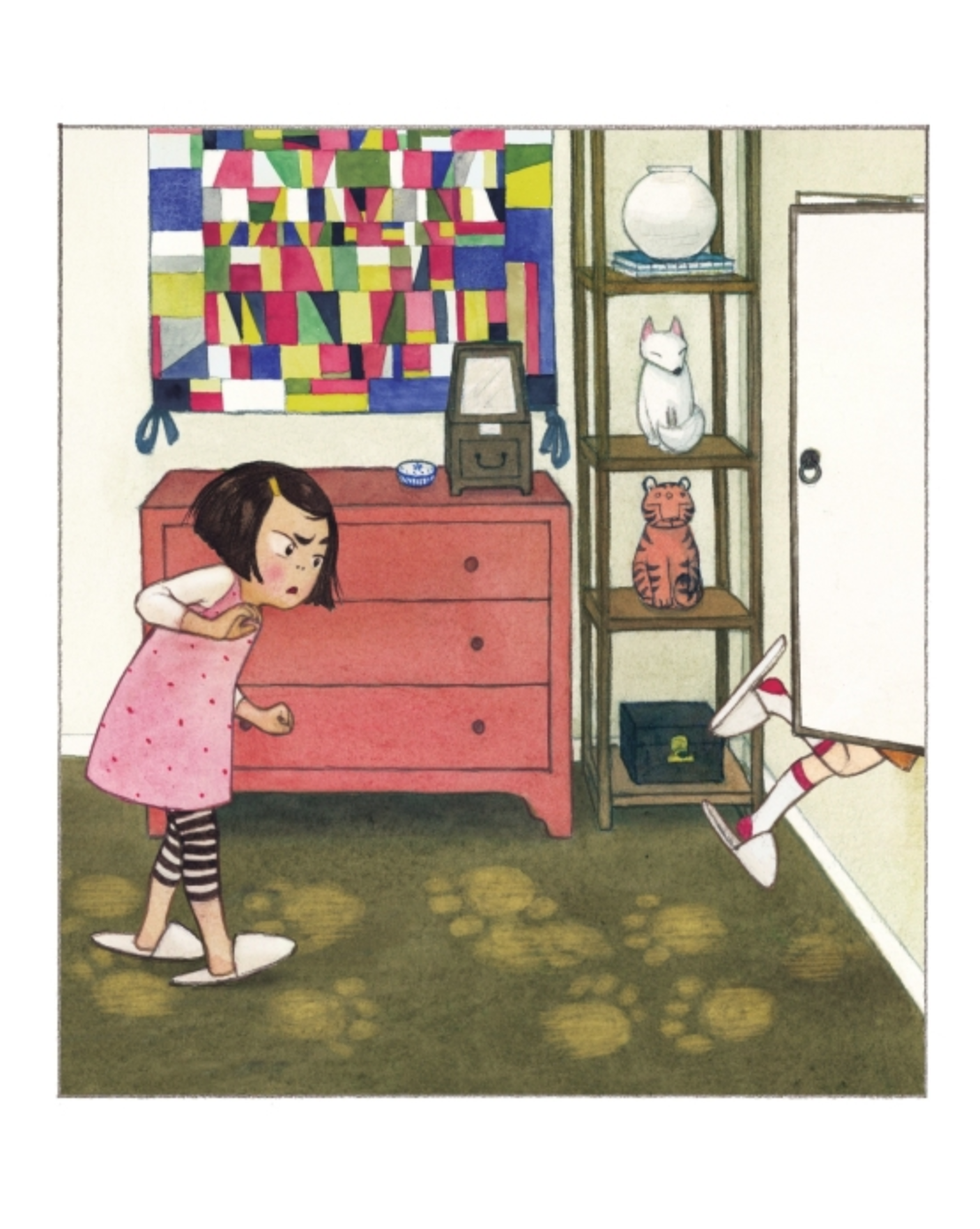
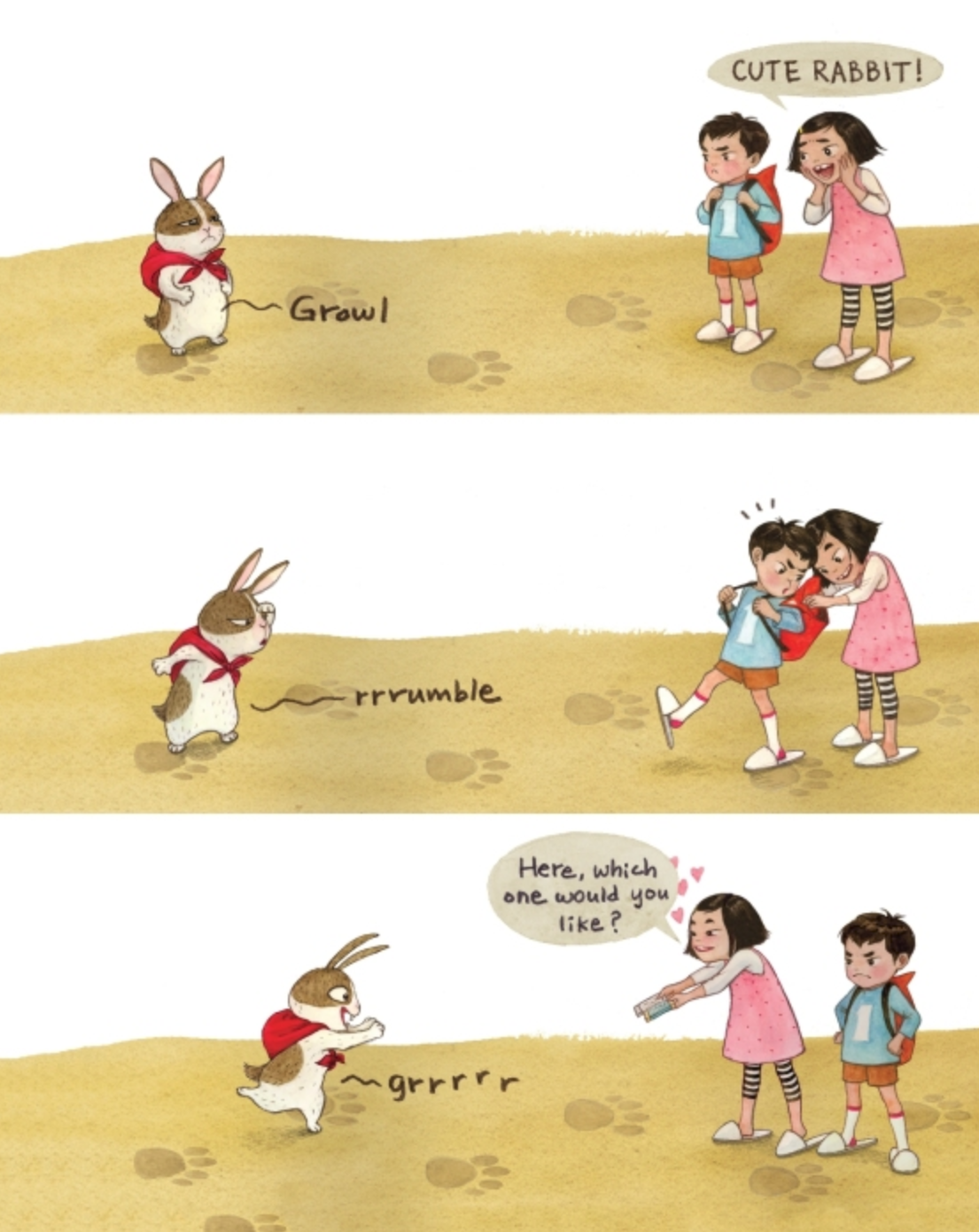
Friday: Where’s Halmoni? by Julie Kim

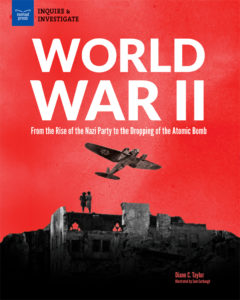
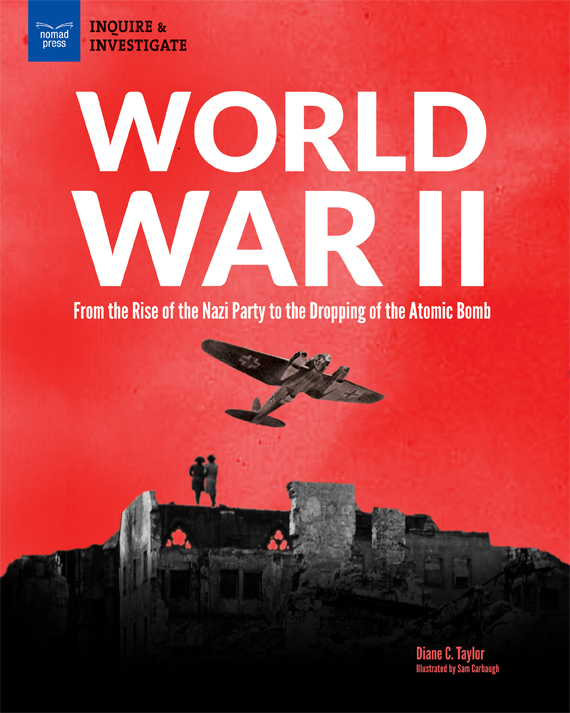
Sunday: Author Guest Post with Teaching Tools!: “Talking to Kids about World War II” by Diane C. Taylor, Author of World War II: From the Rise of the Nazi Party to the Dropping of the Atomic Bomb

**Click on any picture/link to view the post**

Bold_line

 Last Week’s Journeys

Kellee

I wanted to just take a bit to apologize in advanced for the upcoming weeks (through mid-July) where I may or may not be able to post or visit your posts. I’m about to go to the International Competition with my Future Problem Solvers club again followed by some family time, teachers’ guide creation time, ALA Annual, and a conference for Jim. I do hope to keep posting and stopping by your blogs, but I wanted to apologize now just in case 🙂 Now, without further adieu, my last couple of weeks of reading:
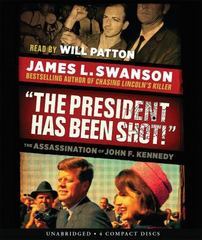
  

  • The President Has Been Shot by James L. Swanson is the last middle grade/young adult nonfiction book by him (I think?), and just like the others I was fascinated by it! It is sad how little I learned about history while in school; thank goodness for authors and books like this!
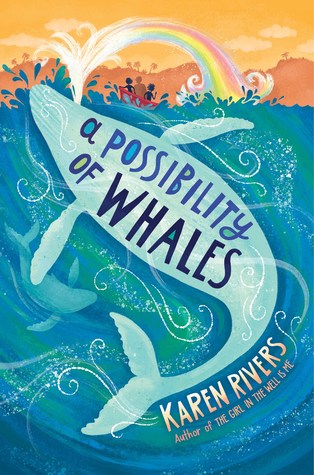
  • A Possibility of Whales by Karen Rivers is a coming of age story mixed with a look at gender identity, family, friendship, and whales–I look forward to reviewing it soon!
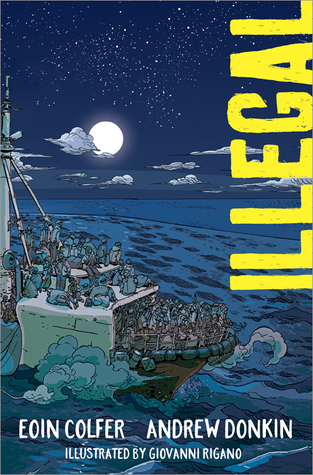
  • Illegal by Eoin Colfer is so powerful! It tells the story of Ebo who is a refugee hoping to make his way to Europe and freedom. Told in a then/now format, the story builds in suspense and worry as we learn more about the perilous journey he is on and where he came from.
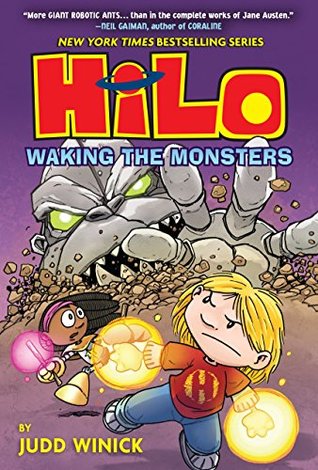
  • HiLo is one of my, and my students, favorite graphic novel series! I didn’t know that book 4 had come out, so when I saw it at the book store, I bought it immediately! And it did not disappoint. If you loved the first ones, this one is a must get.
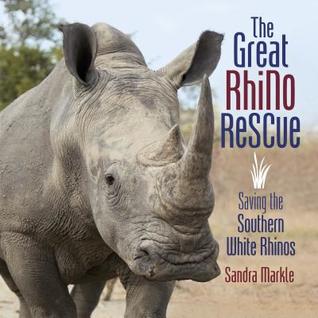
 

  • Sandra Markle continues to write nonfiction that is so important and well done. This one looks at trying to rescued the Southern White Rhino species in Africa while they are being threatened by poachers. It goes into the history behind their poaching, the different species of rhinos, the law surrounding rhinos, and what we can do to help.
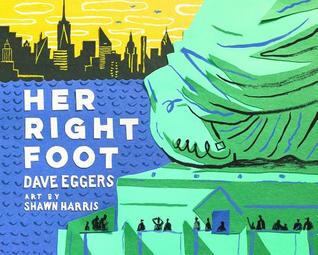
  • Her Right Foot by Dave Eggers is a picture book that I can’t believe I haven’t read yet. It is a perfect picture book for younger readers to learn about the Statue of Liberty and older students to delve deeper into.
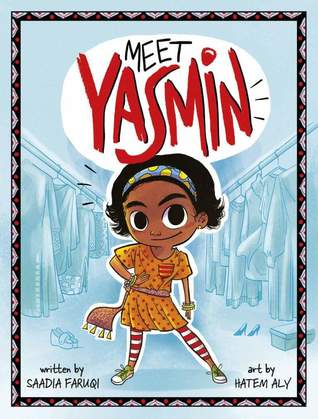
  • Meet Yasmin by Saadia Faruqi is a must get for any early elementary teacher! Yasmin has a huge imagination, is a great problem solver, has so much ambition, is creative, and is just someone you’d want your kid to hang out with (or at least be in the same class with!). Yasmin also will fill the role of a window or a mirror! She is Pakistani-American and has a multi-generational family who she lives with. Students will either finally see someone like themselves in an early reader or be exposed to a culture that may be new.
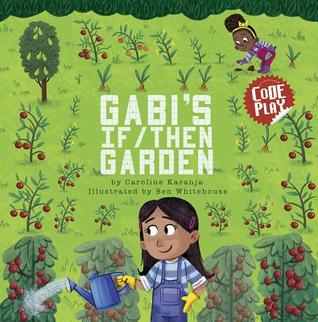
  • I was so excited to find Gabi’s If/Then Garden by Caroline Karanja because not only is it a perfect companion to Josh Funk’s How to Code a Sandcastle, it is also another book that is going to inspire young kids, girls especially, into looking at how to code thus expanding interest in STEAM.
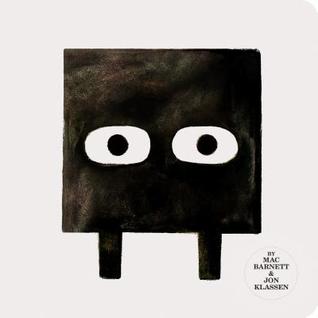
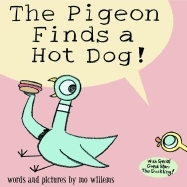
    

  • I cannot believe that I didn’t know that Square had come out! Triangle is a BIG favorite of ours, so as soon as I found out (2 weeks ago during IMWAYR), I got us a copy of Square. Through a very different story than Triangle, Barnett and Klassen expand the shape universe and introduce us to Circle who is a very special character indeed!
  • The rest of these titles are rereads that Trent and I read and listened to in the car using read-along e-books!
 Ricki
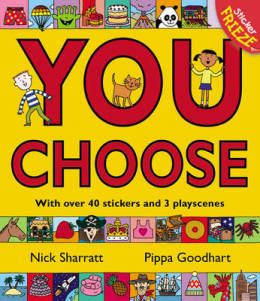
You Choose by Nick Sharratt and Pippa Goodhart is our family’s favorite book. We read it every night together (all four of us), and we each pick our homes, jobs, foods, etc. It brings so many good laughs. I LOVE this book.
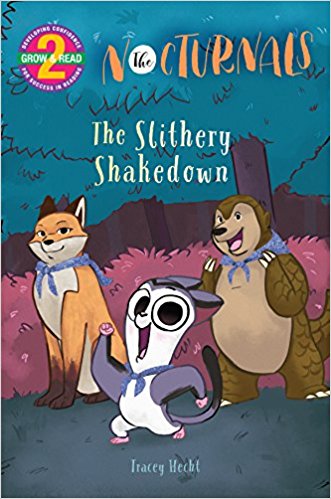
Nocturnals: The Slithery Shakedown by Tracey Hecht is great. My son really enjoyed learning about the nocturnal animals in this fun tale. In fact, he’s currently rereading it in his bed (when he is supposed to be sleeping).
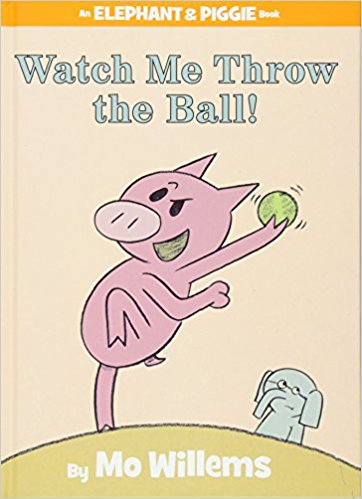
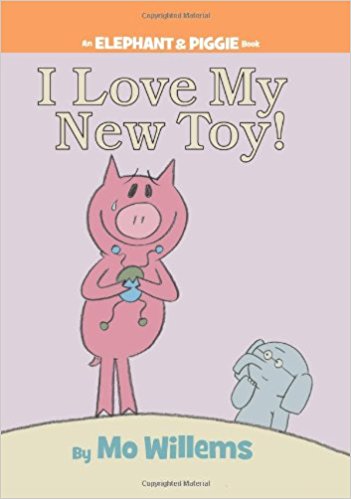
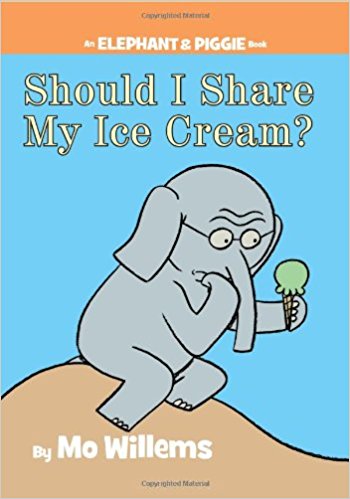
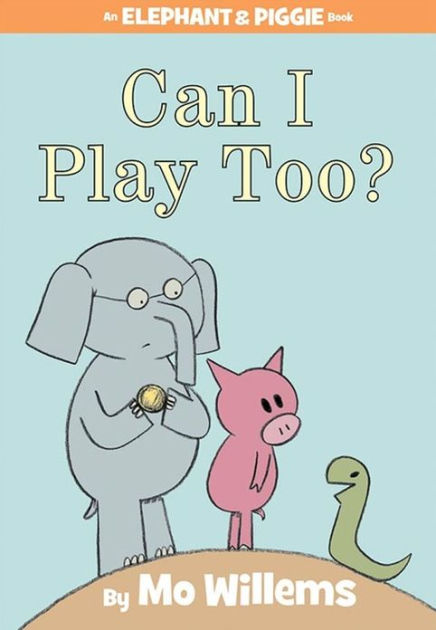
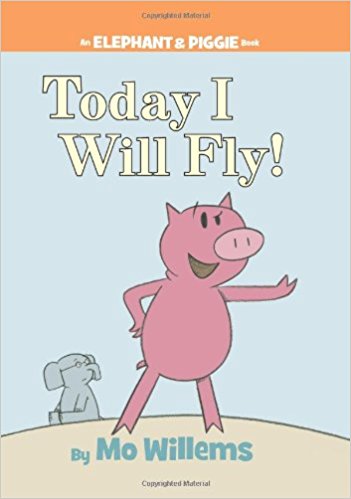
My son has recently gotten very into Mo Willems’ Elephant and Piggie series. Above are five of the eight or so books that we read this week. These ones stand out to me. 🙂 My favorite so far is Can I Play, Too? because it is so funny!

Bold_line

This Week’s Expeditions
Kellee


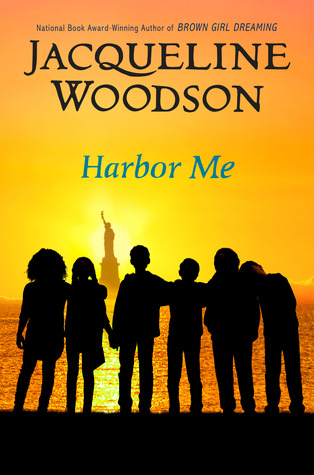
  • I know, I know! I can’t believe I haven’t finished it either, but I just have had most of my reading time not at home, so the books I have on my phone have been getting more reading. I will finish Harbor Me this week though!
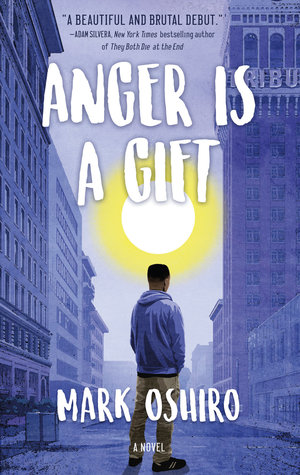
  • Anger is a Gift by Mark Oshiro is a multi-tiered special novel that I’m surprised isn’t getting more hype! I am glad someone (who were you?!?!) recommended it to me!
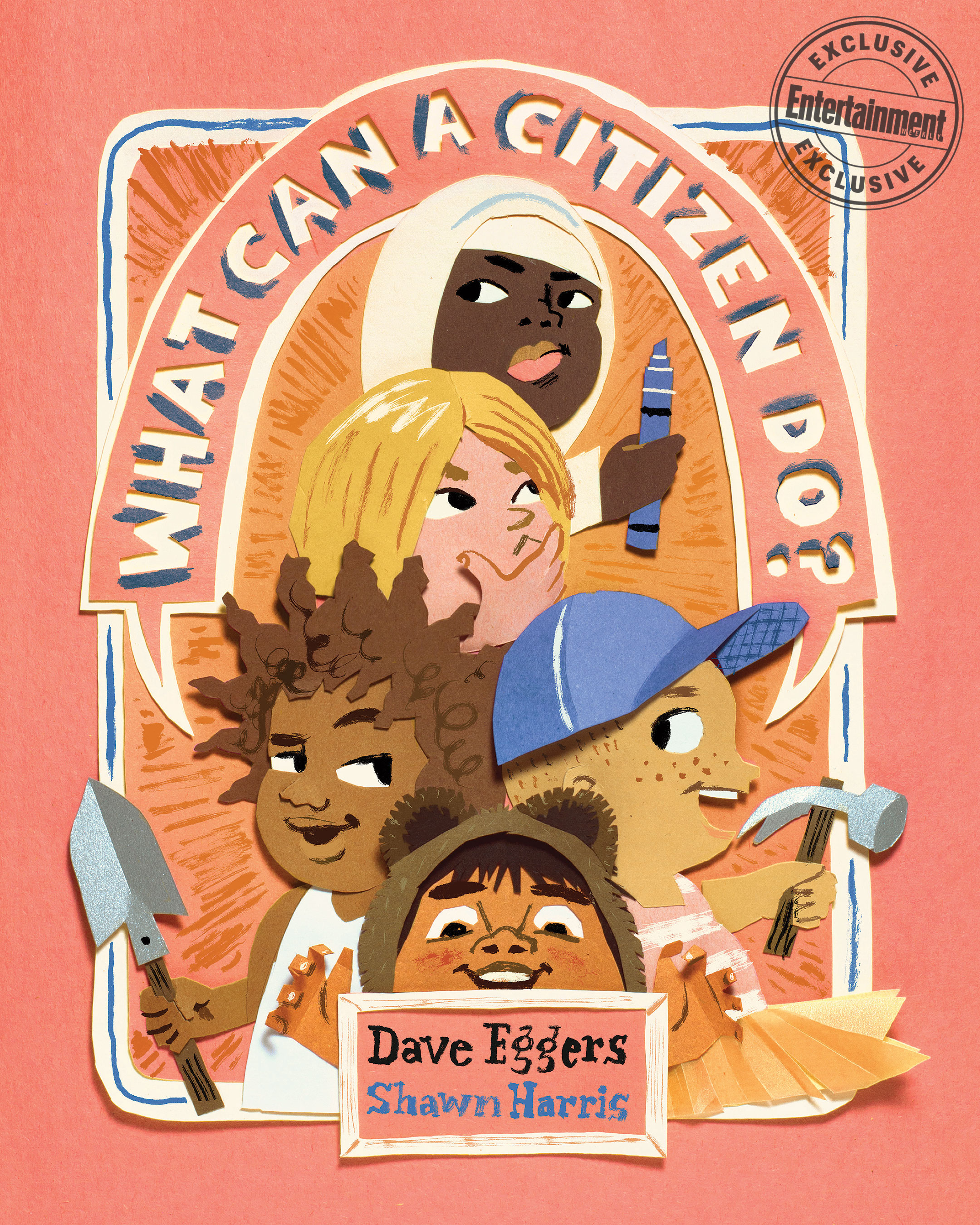
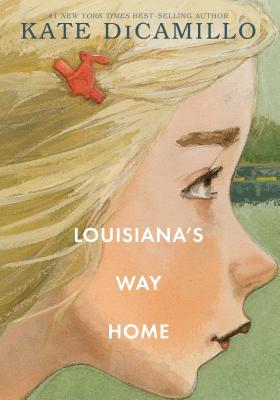
  • I’m very excited for What Can a Citizen Do? by Dave Eggers and illustrated by the same illustrator as Her Right Foot, Shawn Harris, and Louisiana’s Way Home by Kate DiCamillo, the companion to Raymie Nightingale!
  • I also have a pile of books I brought home from school, a pile of books next to my couch, a pile of books by my computer, and a ton of books on my phone that I want to read 🙂
Ricki
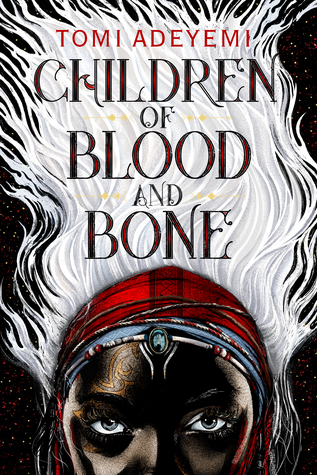
I am listening to (AND LOVING) Tomi Adeyemi’s Children of Blood and Bone. This book is definitely worth the hype.

Bold_line

Upcoming Week’s Posts

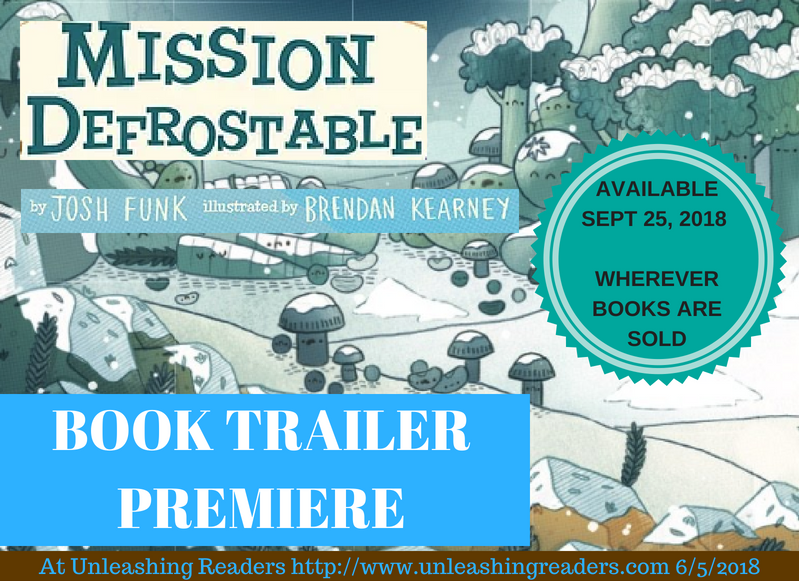
Tuesday: BOOK TRAILER PREMIERE!: Lady Pancake and Sir French Toast: Mission Defrostable by Josh Funk

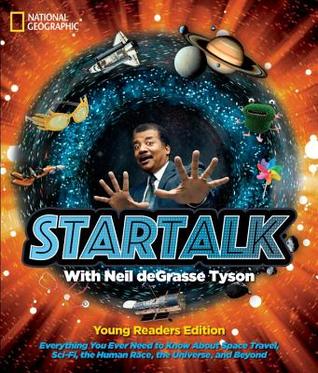
Wednesday: Startalk with Neil deGrasse Tyson: Young Readers Edition

Thursday:  Nocturnals: The Slithery Shakedown by Tracey Hecht

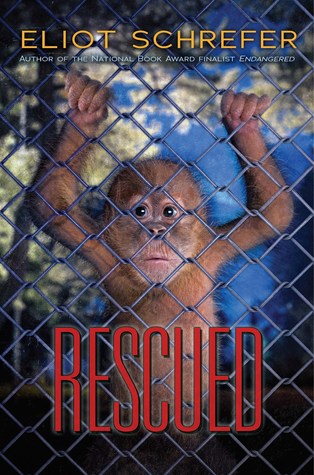
Friday: Teaching Rescued by Eliot Schrefer in a Middle School Reading Classroom

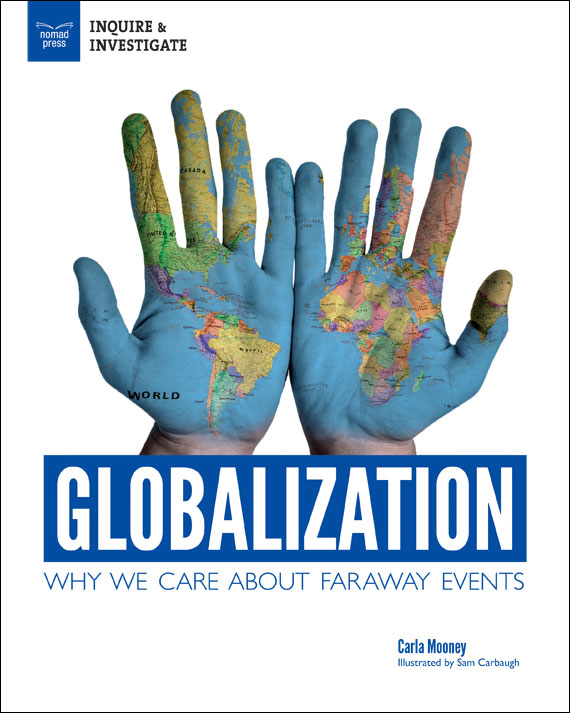
Sunday:  Author Guest Post with Teaching Tools!: “How can we tell we’re living in a global village?” by Carla Mooney, Author of Globalization: Why We Care About Faraway Events

Bold_line

 So, what are you reading?

Link up below and go check out what everyone else is reading. Please support other bloggers by viewing and commenting on at least 3 other blogs. If you tweet about your Monday post, tag the tweet with #IMWAYR!

 Signature andRickiSig

Author Guest Post with Teaching Tools!: “Talking to Kids about World War II” by Diane C. Taylor, Author of World War II: From the Rise of the Nazi Party to the Dropping of the Atomic Bomb

Share

World War II: From the Rise of the Nazi Party to the Dropping of the Atomic Bomb
Diane C. Taylor
Published May 1st, 2018 by Nomad Press

Summary: Why did the world find itself immersed in another global conflict only two decades after World War I?

World War II: From the Rise of the Nazi Party to the Dropping of the Atomic Bomb introduces kids ages 12 to 15 to the political, military, and cultural forces that shook the globe from 1939 to 1945 and beyond. Middle school students examine the events leading up to, during, and after WWII and the repercussions of these events on populations around the world, from Germany’s invasion of Poland to the resulting domino fall of events that engaged several countries and caused the deaths of 60 million people, including 40 million civilians. They also see how the dark side of Hitler’s ideology was always present, eventually resulting in the Holocaust, the systematic murder of 11 million people, including 6 million Jews and other populations.

About the Author: Diane C. Taylor is a freelance writer whose published works include both fiction and nonfiction. She has written educational material for a nonprofit arts program in Dallas, Texas, and has been an English instructor for students in middle school, high school, and college. Diane lives in Bowling Green, Kentucky.

Author Guest Post: 

“Talking to Kids About World War II”

No event of the twentieth century was as big or as bad as World War II. For six years, from 1939 to 1945, a conflict that started when Germany invaded Poland quickly encompassed all four corners of the globe. No one—neither countries nor individuals—sat out this conflict. The political and economic reverberations of the war were simply too widespread to be ignored.

Like it or not, there was no such thing as being a disinterested party to World War II.

I think the same can be said as it pertains to teaching this subject to children. World War II fundamentally changed the world, and it’s not done affecting us even today. Conflict between Israel and Palestine. Tensions within the European Union. The role of the United Nations. The challenge of caring for displaced persons. The nuclear arms race. Just listen to the news and you’ll hear about scores of international issues that trace their origins back to the Second World War.

If all the world is a stage, then World War II is the de facto backdrop of the ongoing drama. This is why teaching about World War II and the Holocaust is a crucial part of raising future generations who can solve problems that were created before these kids were even born.

But how do you explain something as monstrous—and as monstrously complex—as World War II to a 12-year-old child?

That was the foremost question on my mind the entire time I was writing World War II: From the Rise of Hitler to the Dropping of the Atomic Bomb. To my immense relief, I discovered that World War II can be dismantled and reassembled into a coherent narrative that a young reader can understand. If you take one piece of the story at a time, and strip it down to its barest essentials, you can put it all back together in a way that makes sense of the mass insanity that was the Second World War.

By working to ensure our kids know the history and consequences of the greatest conflict in human history, we can do our best to avoid future wars on the same scale.

Teachers’ Tools for Navigation: 

Hands-on activities are another great way to make the experiences of World War II feel relevant and important to teenagers. Try one of these!

Prevent Starvation

Throughout World War II, starvation was a constant concern. Food was scarce everywhere. As a result, people frequently planted vegetable gardens in any available outdoor space.

Form a group with friends or classmates and take a walk around your neighborhood. Your goal is to figure out where you can grow food.

  • How much land is available? Do homes have front or back yards? Are there parks or medians that you can use?
  • Is the available terrain easy to garden? Is it hilly or flat? Heavily or sparsely wooded? Do you have access to water?
  • Does the soil lend itself to gardening? How can you tell?

Draw up a map of where you will plant your gardens and indicate what you will grow. Can you calculate how much food you will produce or how many people will you be able to feed?

To investigate more, find out as much as you can about where you food comes from right now. Is much of it grown locally, or is it transported from far away? If the food distribution system in your area were disrupted, what products would stop showing up in the grocery store?

The President Speaks

On December 8, 1941, Americans tuned their radios to hear President Roosevelt declare war against Japan. You can listen to that address at this website.

Or try searching these words together: Roosevelt, congress, war.

In an era before television, this is most likely how you would have experienced this historic event.

Discuss your reaction to FDR’s speech among your classmates or friends, or write a journal entry.

  • What is the atmosphere surrounding this speech?
  • Did you learn anything new by listening to this broadcast?
  • What is your impression of President Roosevelt?

Would you have chosen to take the United States to war, or would you have followed the lead of Rep. Jeanette Rankin, who voted against the war? Compose and deliver a brief speech of your own, outlining your reasons for either going to war or staying out of the fight. Assume your audience is made up of friends or classmates.

To investigate more, click here to listen or watch speeches that other presidents of the United States have given. Contrast and compare one of those speeches to the one you listened to from President Roosevelt. How do they differ in style, language, and substance? How are they similar?

Find more resources in the free classroom teaching guide!

Thank you so much, Diane and Nomad Press!

Where’s Halmoni? by Julie Kim

Share

Where’s Halmoni?
Author: Julie Kim
Published October 3rd, 2017 by Little Bigfoot

Summary: Where’s Halmoni? is a picture book in a graphic novel style, which follows the story of a young Korean girl and boy whose search for their missing grandmother leads them into a world inspired by Korean folklore, filled with mischievous goblins (dokkebi), a greedy tiger, a clever rabbit, and a wily fox.
Two young children pay a visit to Halmoni (grandmother in Korean), only to discover she’s not home. As they search for her, noticing animal tracks covering the floor, they discover a pair of traditional Korean doors, slightly ajar, new to their grandmother’s home. Their curiosity gets the best of them, and the adventure begins when they crawl through and discover an unfamiliar, fantastical world. As they continue to search for their grandmother and solve the mystery of the tracks, they go deeper into the world of Korean folklore and experience their cultural heritage in unexpected ways, meeting a number of Korean-speaking characters along the way.

Translations to Korean text in the story and more about the folktale-inspired characters are included at the end.

About the Author: Julie Kim is an author and illustrator living in Seattle, WA. She has published with Cricket Magazine, Scholastic, and Mondo. Where’s Halmoni? is her authorial debut.

Praise: “Julie Kim has created a visually stunning world that effortlessly infuses Korean text (Hangul) in rich, expressive art.”Cybils Awards, winner

“For its jaw-dropping art, encouraging bilingual attitude, and conscientious portrayal of Korean culture, Where’s Halmoni? is a perfect choice.” —School Library Journal, starred

“A sophisticated mélange of urban households, traditional Asian landscapes, vibrant color schemes, cultural details, subtle visual jokes, [and] pitch-perfect dialogue… This book is an excellent choice for either the picture-book or graphic-novel collection.” —Booklist, starred

“Kim’s bright, expressive illustrations are a delight…an accessible, diverse title for a broad readership.” —Kirkus Reviews, starred

“The sibling banter is believable and delightful, [and] Kim’s panel sequences teem with energy.” —Publishers Weekly, starred

ReviewThis book is a piece of art. The way that Kim combined traditional Korean folklore characters, including giving an explanation about each of them in the back; realistic sibling relationships; an adventure with beautiful settings; and her amazing artwork lent to the creation of a very special book. There is so much to unpack including homage to traditional Asian art styles, inferring opportunities, introduction to Korean folktales, and inclusion of Korean language. This book will be perfect as a read aloud with discussions, lit circles looking at folktales, or as an independent book for your adventure or graphic novel fans.

Teachers’ Tools for Navigation: Where’s Halmoni? and its back matter are a perfect addition to a folklore unit including a discussion on how authors fracture/retell/modernize folktales in all cultures.

And P.S. a whole discussion/lesson could be done around the end pages!

Discussion Questions: 

  • How did Kim intertwine traditional Korean folktale characters into her story?
  • What do the end sheets tell you that the rest of the story did not?
  • What clues were there at the beginning of the book that ultimately they would encounter a tiger and a fox?
  • How could you infer that Halmoni was their grandmother?
  • Before reading the translations of the Korean in the back of the book, use the context clues and try to guess what the characters are saying.
  • Would you consider this book a picture book or a graphic novel? Why?

Flagged Passages: 

Read This If You Love: Retellings and new takes on folktales

Recommended For: 

classroomlibrarybuttonsmall  

Signature

**Thank you to little bigfoot for providing a copy for review!**

Pink is for Boys by Robb Pearlman

Share

Pink Is for Boys
Author: Robb Pearlman
Illustrator: Eda Kaban
Published: June 5, 2018 by Running Press

Goodreads Summary: An empowering and educational picture book that proves colors are for everyone, regardless of gender.

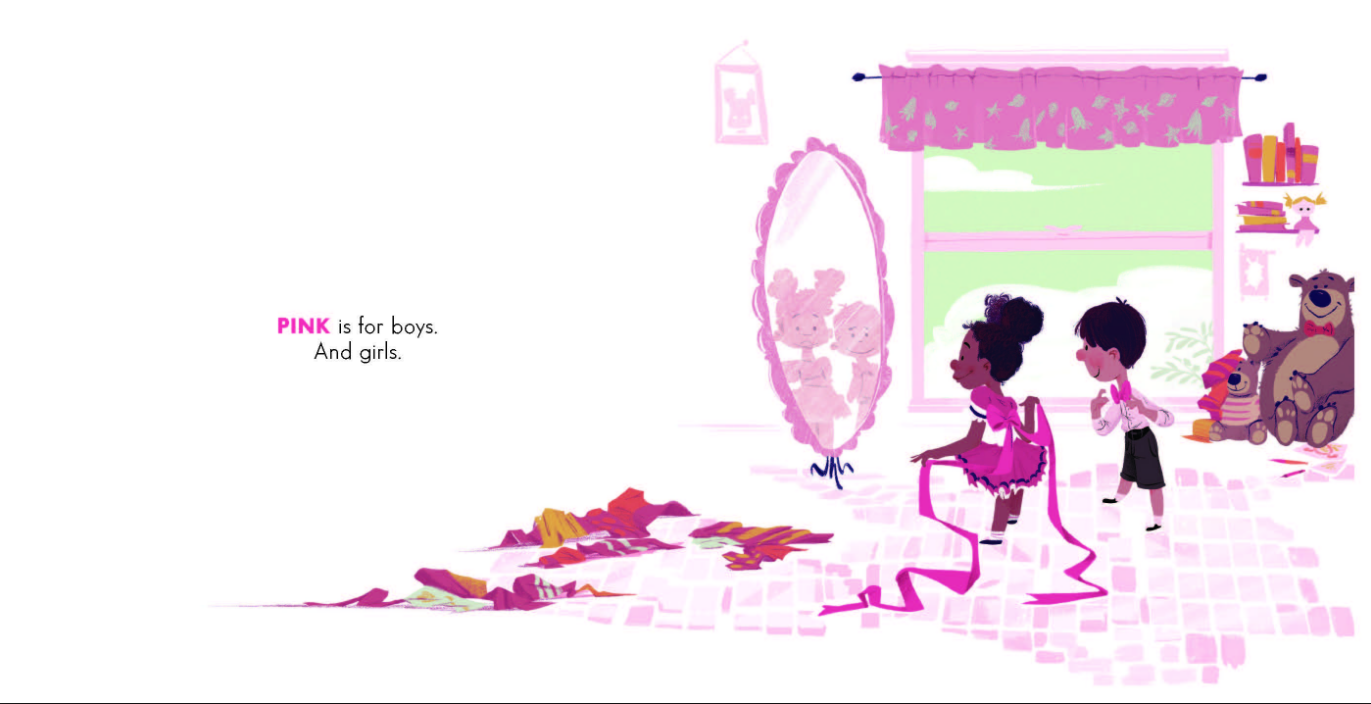
Pink is for boys . . . and girls . . . and everyone! This timely and beautiful picture book rethinks and reframes the stereotypical blue/pink gender binary and empowers kids-and their grown-ups-to express themselves in every color of the rainbow. Featuring a diverse group of relatable characters, Pink Is for Boys invites and encourages girls and boys to enjoy what they love to do, whether it’s racing cars and playing baseball, or loving unicorns and dressing up. Vibrant illustrations help children learn and identify the myriad colors that surround them every day, from the orange of a popsicle, to the green of a grassy field, all the way up to the wonder of a multicolored rainbow.

Parents and kids will delight in Robb Pearlman’s sweet, simple script, as well as its powerful message: life is not color-coded.

Ricki’s Review: I have two sons. I very much appreciate all of the wonderful girl-empowering books that have been published recently. I am constantly shooting up my fist and shouting “Hooray!” when these books are published. But as a mom, I appreciate even more the opportunities to tell my son, “Yes, it’s okay that your favorite color is ‘rainbow,'” “No, boys are not necessarily better at fixing things” (I’ll secretly admit that this one is actually true in our house—my husband is an engineer), or “Yes, it’s okay if your favorite Disney song is ‘Let It Go,’ even when you are the only boy in your class who thinks this.” (I should backtrack here and say that Moana is far better than Frozen.)

I have one more anecdote. The day after I read this book to my son, I went to a birthday party with my sons. My 19-month-old crashed into a boy who was about 2 and half. My kid, who is oddly resilient, popped right up, but the other boy cried. His dad said, “You need to man up. Boys don’t cry.” This kind of stuff has to end. It’s only with the publication of books like these that we will be able to defy these gender norms that drive me bonkers. Pink is for boys.

The basic (but well-conceived) drawings of this book make it shine. The point is clear—and younger readers will easily make sense of it. The characters are drawn as simple sketches and are understated. This makes the message all the more powerful. 

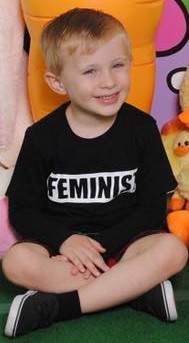
Kellee’s Review: My son loves all the colors. Except, according to him, pink and purple. Where did this come from?! In my house, all colors are wonderful colors and girls and boys can like and do whatever they want, but he must have been told by someone ‘out there’ that pink and purple are girl colors, and Trent, wanting to be accepted, now felt he couldn’t like these colors. I try to counteract this notion in my house, but it is ‘out there’ that minds need to shift or I am fighting a battle so much bigger than I may be able to handle. When will we [general societal we] stop saying “You throw like a girl” as an insult or “Man up” as a way to tell kids to not cry?! I can teach my son to be a feminist, but until things like those stated above change, society will always be pushing against what I am teaching him at home. 

Within the text, in addition to promoting the brilliance and beauty of all colors, I also truly appreciated how the characters were diverse in all aspects of the word and that the author purposefully rotated between girls and boys & boys and girls to show that neither deserves to go first.

Teachers’ Tools for Navigation: This book makes us itch to teach young kids. We would ask students to create their own versions (or posters) of this book. For example, they might create books called Crying is For Boys or Dirt is for Girls. As a secondary teacher, this book would be a great discussion starter about gender prejudice and assumptions in society.

Discussion Questions: How does the illustrator use simplistic drawings to better convey the meaning of the text?; How does the author convey the message implicitly and explicitly?

Flagged Passage:

Read This If You Loved: Julián Is a Mermaid by Jessica Love, Red: A Crayon’s Story by Michael Hall, The Boy In the Dress by Michael Walliams, The Sissy Duckling by Harvey Fierstein

Recommended For: 

readaloudbuttonsmall classroomlibrarybuttonsmall

RickiSigand Kellee Signature

**Thank you to Casey at Media Masters for providing copies for review!**

My Magic Breath: Finding Calm Through Mindful Breathing by Nick Ortner and Alison Taylor

Share

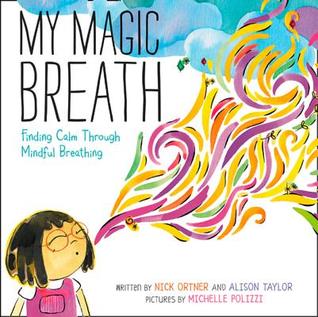
My Magic Breath: Finding Calm Through Mindful Breathing
Author: Nick Ortner and Alison Taylor
Illustrator: Michelle Polizzi
Published May 15th, 2018 by HarperCollins

Summary: Do YOU have the magic breath?

Let’s see…Take a deeeeeep breath in…and BLOW it out…

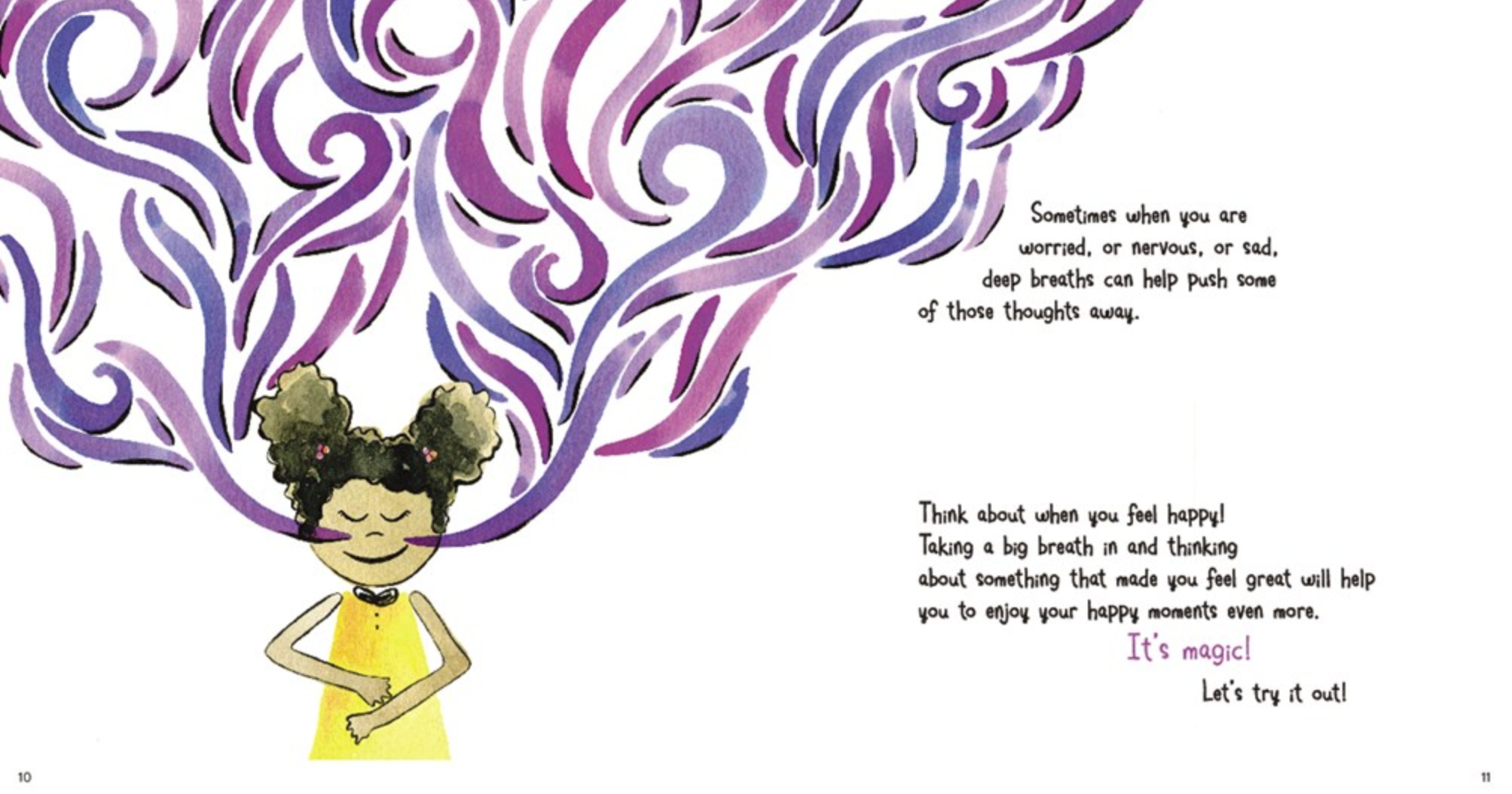
…and like magic, you can feel better just by breathing! Sometimes it’s hard to feel happy. But with this interactive picture book, children breathe along as they learn how to make angry or sad thoughts disappear.

In a world that is sometimes too busy, with too many things going on, My Magic Breath will help steer children into a serene space of mindfulness, self-awareness, and balance.

About the Authors and Illustrator: 

Nick Ortner is CEO of the Tapping Solution, LLC, a company with a mission to promote the natural healing method known as Emotional Freedom Techniques or “tapping” (a combination of Chinese healing practices). This is his second children’s book; his first was The Big Book of Hugs. He is also the New York Times bestselling author of The Tapping Solution, The Tapping Solution for Pain Relief, and the upcoming book The Tapping Solution for Manifesting Your Best Self. Nick lives in Newtown, CT, with his wife and daughter, June. You can find Nick at facebook.com/nortner.

Alison Taylor is an elementary school teacher and coauthor of The Big Book of Hugs. She writes to inspire young people, especially her beloved June and Harris, to find what makes them happy. She lives in Connecticut with her husband.

Michelle Polizzi is an illustrator and designer living and working in California. This is her second book working alongside Nick Ortner and Alison Taylor. She lives in the East Bay with her sons, Rowan and River, her husband, Nick, and their beloved Frenchie, Oscar, where they spend their days creating and inspiring one another. You can see more of her work at designbylovelyday.com.

ReviewDeep breathing is a tool that I have taught my son to use to deal with frustration, anger, or sadness. This lesson was even more supported when Daniel Tiger taught him to, “When you feel so mad you want to roar, take a deep breath and count to four.” We use this mantra often to help him refocus when his brain is getting fogged by an emotion. Additionally, some of Trent’s favorite books are interactive picture books like Press Here! or Don’t Touch This BookMy Magic Breath combines these connections in Trent’s life into one! It not only promotes meaningful breathing in a fun way, it turns it interactive through the illustrations and second person narrative. This is going to be a book that is easily going to jump into our picture book regulars, and I cannot wait to be able to be able to tell Trent to “Think about what happened. Now keep it in your mind! Close your eyes and take a deep breath in. Now blow out your breath…”

Teachers’ Tools for Navigation: Anxiety is something that many teachers now find themselves talking to their students about because so much pressure and stress are on kids these days either socially, academically, or at home. My Magic Breath will be a perfect book to introduce at the beginning of the year then use throughout the year to help students understand and deal with their emotions.

Discussion Questions: 

  • When do you feel the most anxious? Angry? Scared? Sad? Try using mindful breathing during these times.
  • How do you picture your magic breath would look when you blow out during these times? What about a happy time?

Flagged Passages: 

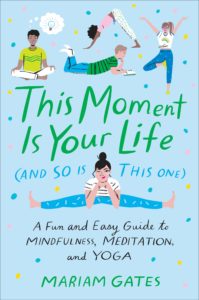
Read This If You Love: Good Morning Yoga by Mariam GatesThe Moment Is Your Life by Mariam GatesMoon by Alison OliverMy Friend is Sad by Mo Willems, The Color Monster by Anna LlenasGrumpy Bird by Jeremy Tankard

Recommended For: 

classroomlibrarybuttonsmall 

Signature

Kellee’s 7th Grade Lunch Book Club 2017-18

Share

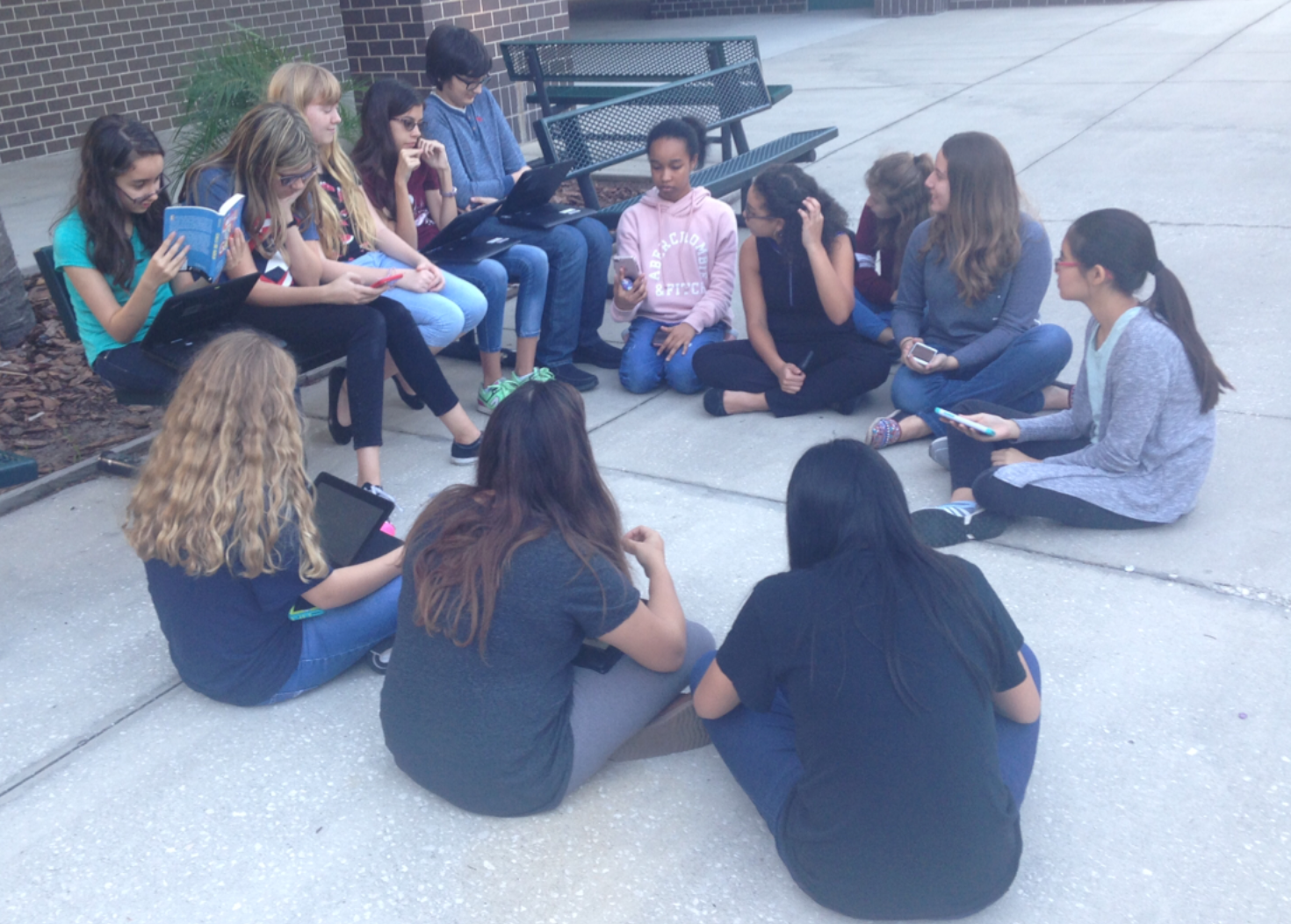
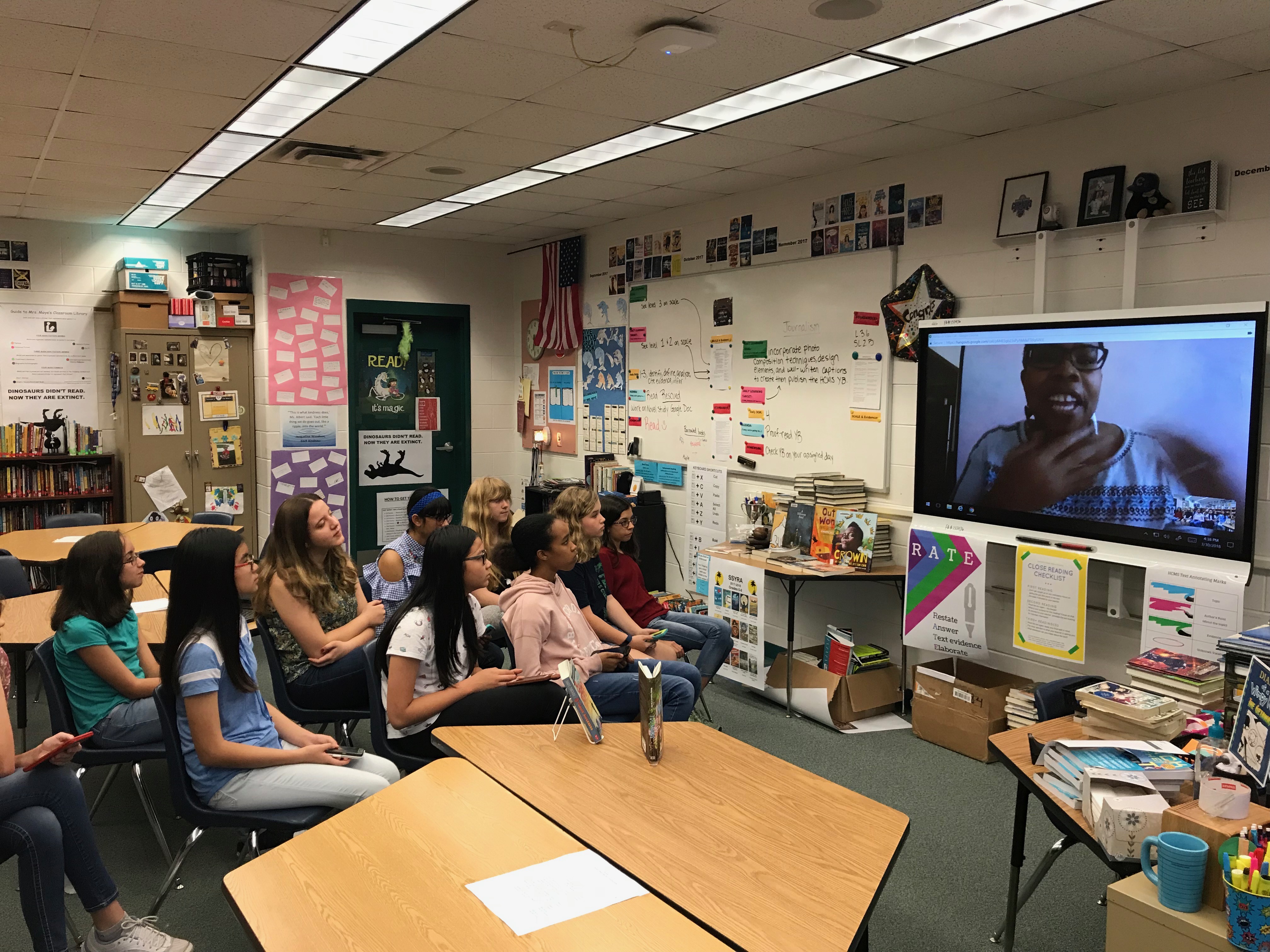
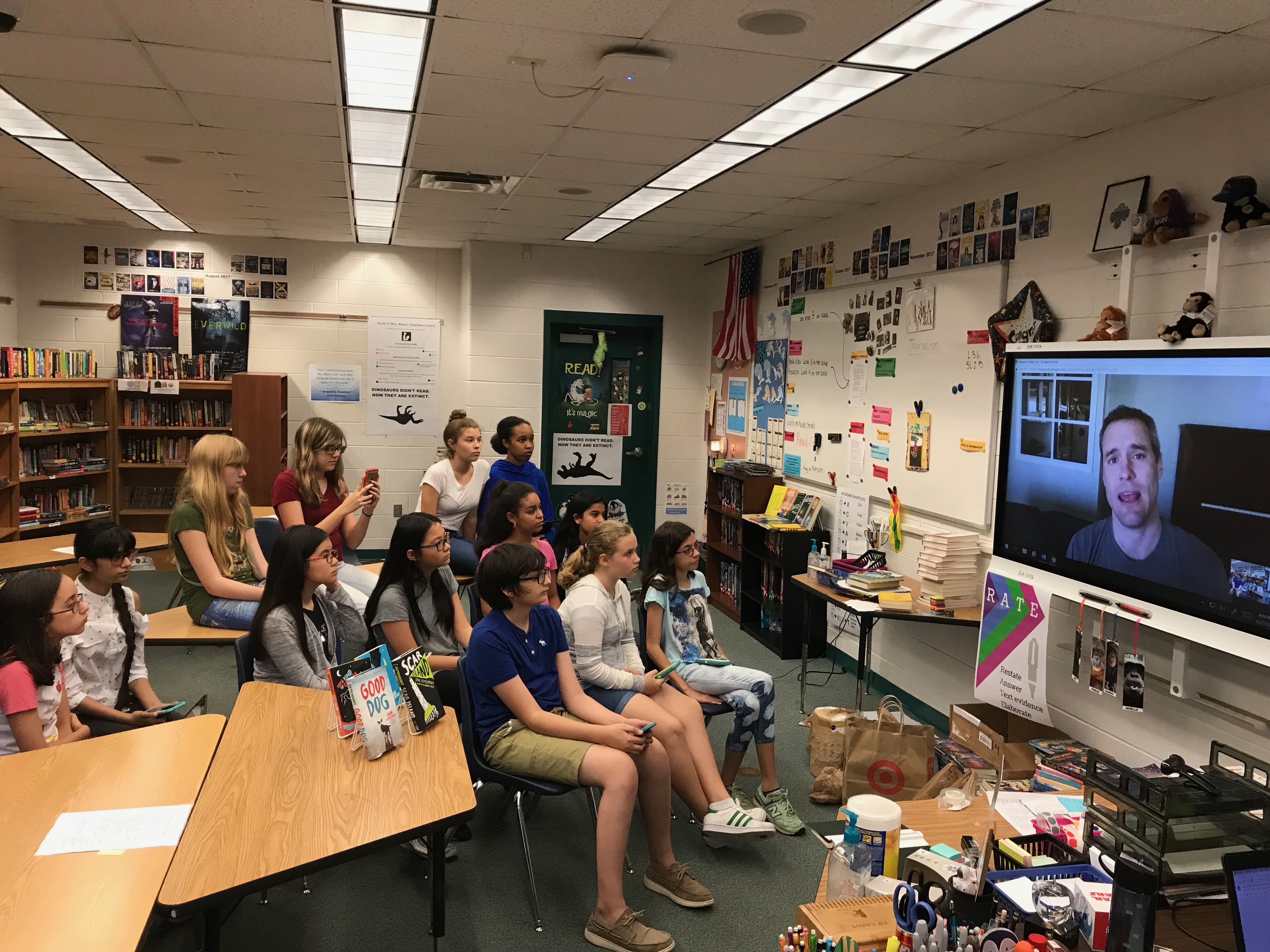
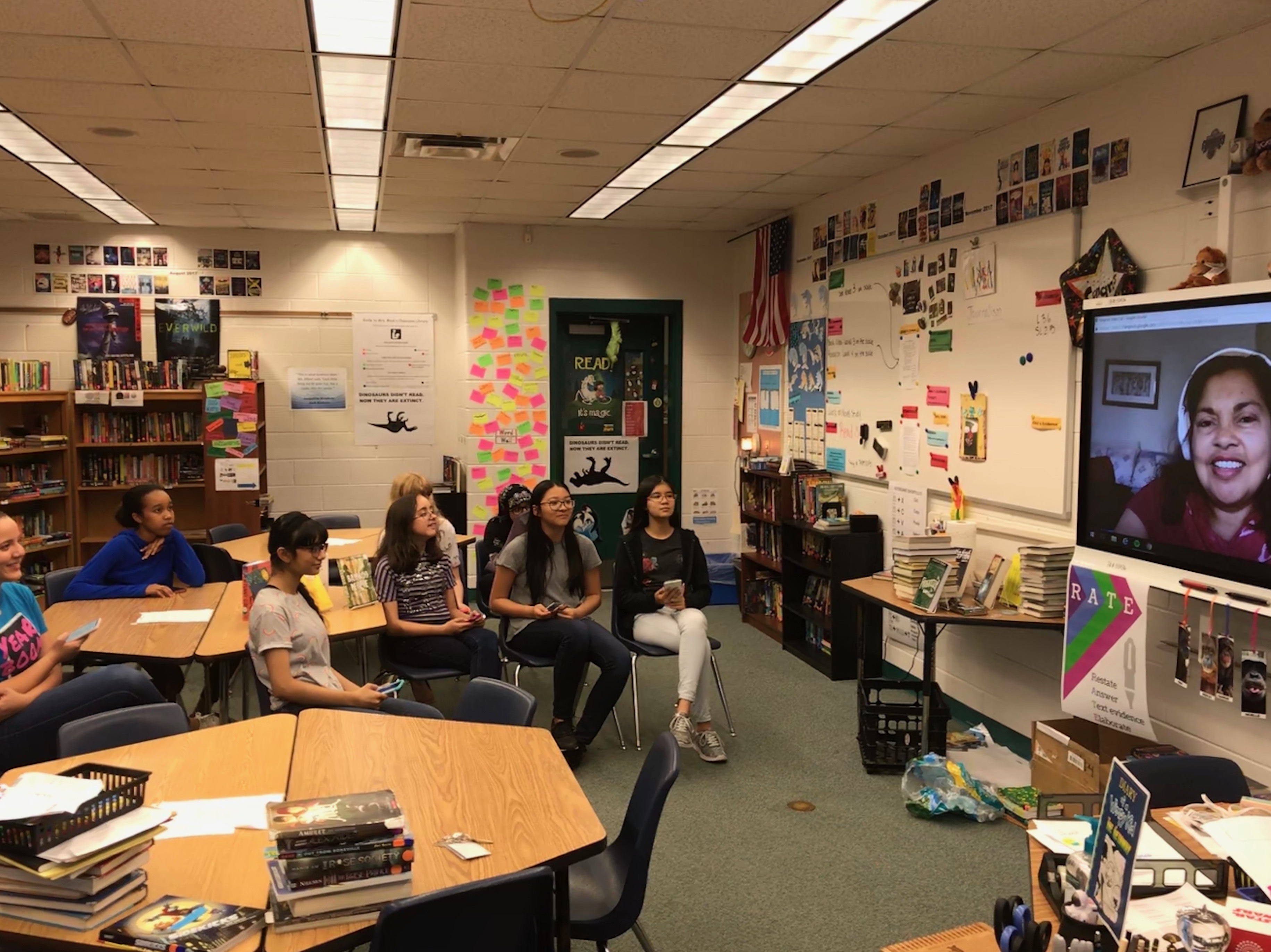
Two years ago, towards the end of the year, I walked into our library, and I noticed a smattering of kids sitting around the library. They were doing homework, reading, eating, sitting silently, etc. I started talking to them, and they shared how they felt the lunchroom just wasn’t the place for them: it was too loud, too full of drama, or too cliquey. It was then that I asked them if they would be interested in a lunch book club–they all answered with a resounding YES!

This year was my 2nd year with my book club, and I am so glad that I can give kids a friendly place to eat lunch, but equally important, I am so happy that I can give them some amazing reading opportunities as well! Last year, we split our book club into Mock Newbery, Author Skypes, and Harry Potter clubs. This year, the students really wanted to have more opinions in what they read, so they voted to only do author virtual visits this year.

Funding: Book Grant

Our Orange County Foundation Grants has a grant that is given each year to middle school book clubs, and I was lucky enough to receive it! This grant funds my book club completely (books for the entire year and food for an end-of-year party), and I cannot thank the Foundation enough for having this grant that is funded by the License 4 Learning and the School District Education Foundation Matching Grant Program.

Choosing Authors and Books

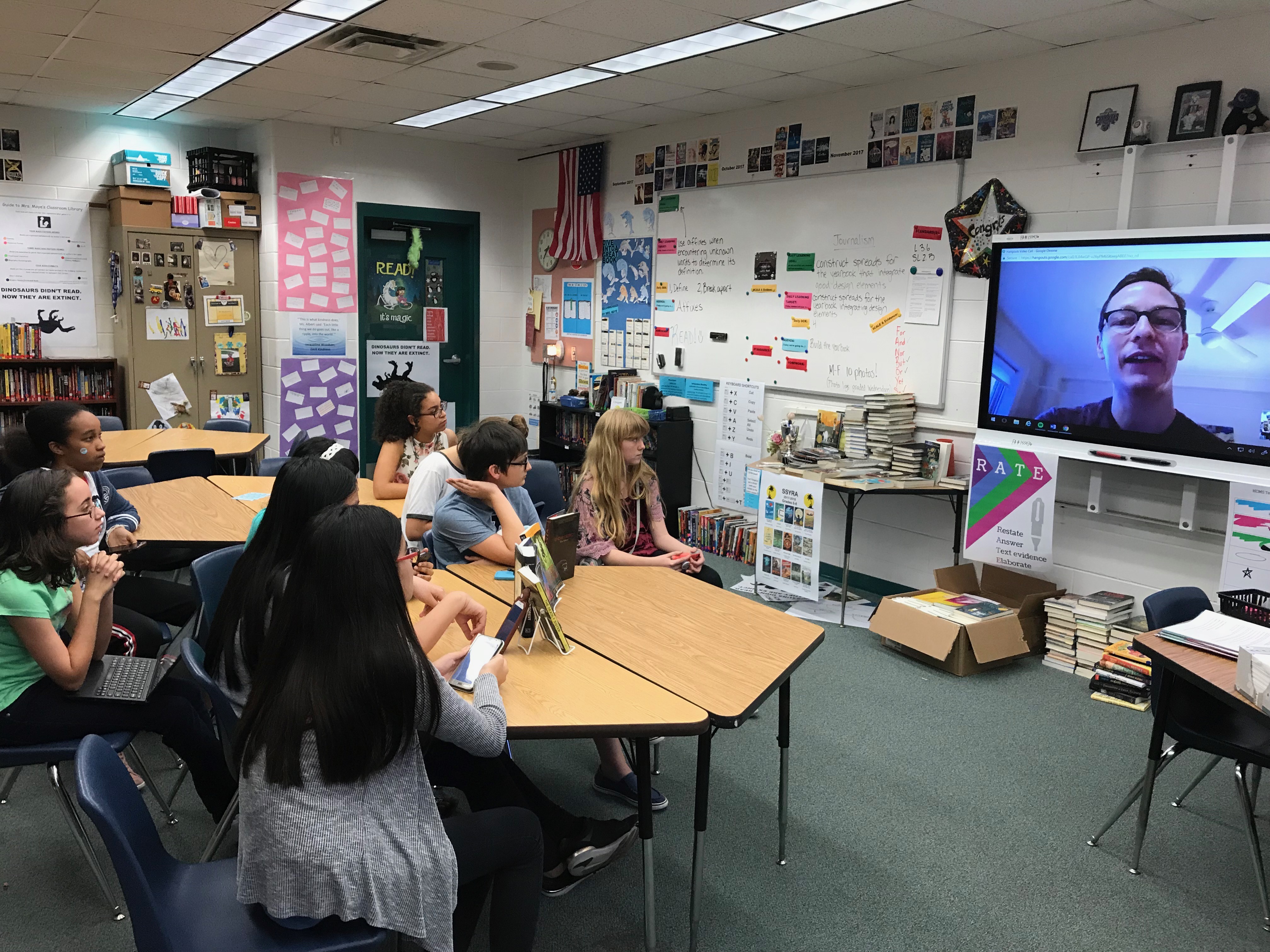
I want students to not find the book club to be a burden to their free choice of reading that we give at my school, so I do not give much guidance in their choices. We met for the first time in late September after I was told that I had received the grant. To start, we visit Kate Messner’s amazing list of authors who are gracious enough to virtually visit with students who have read their books for free. From this list, I had the students pick their top 6 authors (one for November, January, February, March, April, and May). We were so lucky that all 6 of the authors we contacted were able to visit with us, and we were able to find Fridays that worked for them and us!

My students purposefully picked their authors. They said they wanted a mix of authors they knew and didn’t know, and a mix of authors of different backgrounds and ethnicity. After researching the list and looking up authors, they chose:

  • Michele Weber Hurwitz
  • Laurel Snyder
  • Eliot Schrefer
  • Olugbemisola Rhuday-Perkovich
  • Dan Gemeinhart
  • Mitali Perkins

After we chose our authors and they had confirmed their availability, the group members were able to look at all of the author’s books and pick at least one title they wanted to read. They like doing it this way instead of the whole club reading the same book because it allows more freedom of choice. Once students chose their titles, I ordered them through the grant.

Set Up

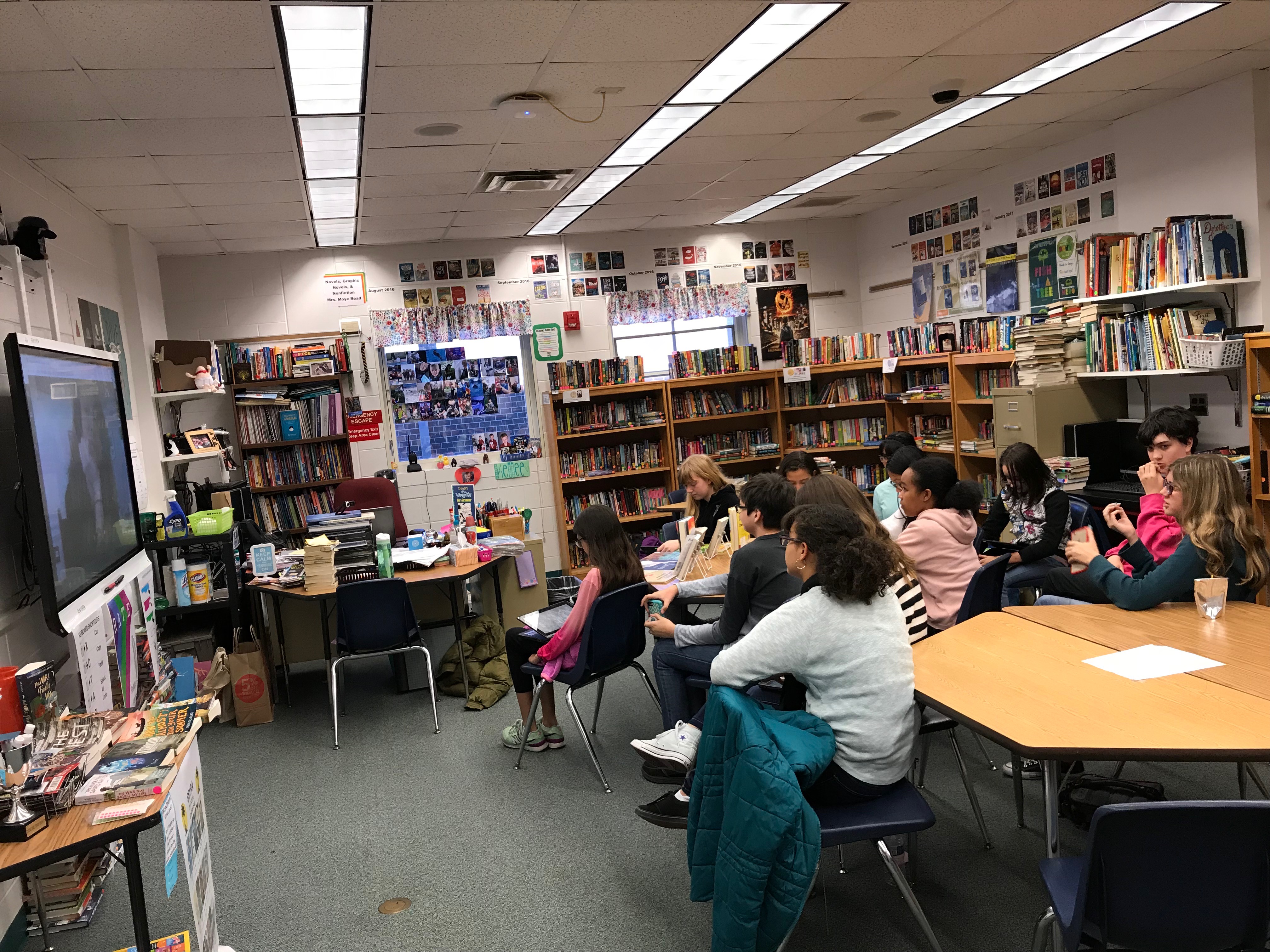
The book club originally was going to meet only Tuesday and Thursday, but after a bit they all wanted to start meeting every day, and I was so happy to do so (though it was not required). The book club is quite informal for 2 weeks out of the month: we just hang out together and eat. Then about 2 weeks before the author virtual visit, we spend our Tuesdays and Thursdays lunch periods chatting about the books, usually separated into smaller groups by what book they read. During their book meetings, they would also come up with questions for the author. We also use our online component (Canvas) to do online discussions. This allows students to put their thoughts down on a discussion board while they were thinking about it. Then they can use this if they need help during their book meetings. Finally, the last meetings before the virtual visit we get our questions in order and assign who is going to ask them, making sure that everyone has something to ask.

Virtual Visits

Each visit was as wonderful as the last! I always wish I had recorded them because I am terrible about taking notes when listening since the authors are so brilliant and funny and awesome!

I cannot thank these authors enough for their generous donation of their time! My students love this experience, and I am so lucky to be able to give this once-in-a-lifetime book club experience!

It’s Monday! What Are You Reading? #IMWAYR 5/28/18

Share

IMWAYR 2015 logo

It’s Monday! What Are You Reading? From Picture Books to YA!

It’s Monday! What are you Reading? is a meme started by Sheila at Book Journeys and now hosted by Kathryn at The Book Date. It is a great way to recap what you read and/or reviewed the previous week and to plan out your reading and reviews for the upcoming week. It’s also a great chance to see what others are reading right now…you just might discover the next “must-read” book!

Kellee and Jen, of Teach Mentor Texts, decided to give It’s Monday! What Are You Reading? a kidlit focus. If you read and review books in children’s literature – picture books, chapter books, middle grade novels, young adult novels, anything in the world of kidlit – join us! We love this meme and think you will, too.

We encourage everyone who participates to support the blogging community by visiting at least three of the other book bloggers that link up and leave comments for them.

Bold_line

Last Week’s Posts


Tuesday: Things I Wish I’d Known as a Beginning Teacher

Wednesday: Be a King by Carole Boston Weatherford

Thursday: Blog Tour with Review!: This Moment is Your Life (and so is this one) by Mariam Gates

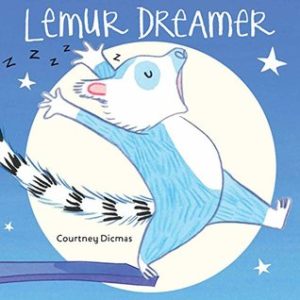
Friday: Lemur Dreamer by Courtney Dicmas

Sunday: Author Guest Post with Teaching Tools! by Matthew Brenden Wood, Author of The Space Race: How the Cold War Put Humans on the Moon

**Click on any picture/link to view the post**

Bold_line

 Last Week’s Journeys

Happy Memorial Day, friends! Both of us are spending our long weekend with our families and didn’t have a chance to write a book update. We hope you had a nice long weekend as well, and we’ll see you next week! 🙂

Upcoming Week’s Posts

Tuesday: Teaching Tuesday: Kellee’s Lunch Book Club

Wednesday: My Magic Breath: Finding Calm Through Mindful Breathing by Nick Ortner and Allison Taylor

Thursday: Pink is for Boys by Robb Pearlman

Friday: Where’s Halmoni? by Julie Kim

Sunday: Author Guest Post with Teaching Tools!: “Talking to Kids about World War II” by Diane C. Taylor, Author of World War II: From the Rise of the Nazi Party to the Dropping of the Atomic Bomb

Bold_line

 So, what are you reading?

Link up below and go check out what everyone else is reading. Please support other bloggers by viewing and commenting on at least 3 other blogs. If you tweet about your Monday post, tag the tweet with #IMWAYR!

 Signature andRickiSig