Author Guest Post: “Fridge Problems” by Josh Funk, Author of Lady Pancake & Sir French Toast #5: The Great Caper Caper

Share

“Fridge Problems”

First, thank you, Ricki and Kellee, for inviting me to post here at Unleashing Readers! It’s an honor to share on your awesome site.

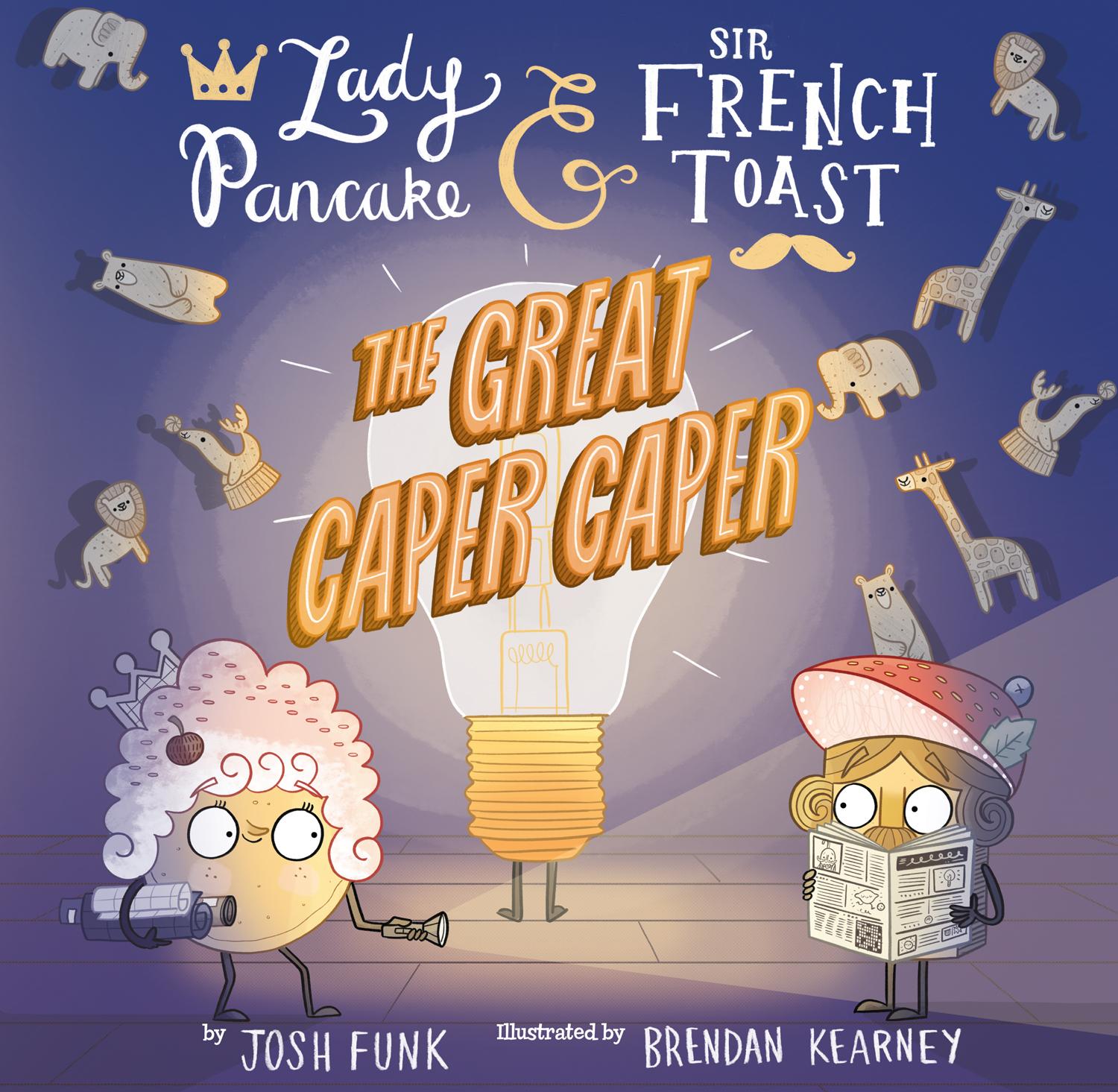
As the fifth Lady Pancake & Sir French Toast adventure, The Great Caper Caper, was just released, I thought I’d share a little bit of what I talk about with students when I visit schools.

After reading one of the Lady Pancake & Sir French Toast books and discussing how I wrote it and how Brendan Kearney illustrated it and how long (three and a half years) it took from the time I came up with the idea until it was available on bookshelves, I like to get some volunteers and create some characters. I’ll usually ask students to share their favorite foods and jobs they want to have when they grow up – and then we mash them together and end up with Doctor Pizza. Or Professor Cupcake. Or President Peanut. And we’ll make up a little story with these characters, but it doesn’t really get good until we introduce the most important ingredient: Conflict.

I tell students that in a story, we always need our characters to encounter some sort of challenge. Or something bad has to happen that they have to overcome. Or maybe we need … a villain (at which point I’ll rebrand the principal or librarian or some faculty member to be someone’s least favorite food mixed with a super scary animal/monster/creature. Say hello to Evil Mushroom Spider. Or Moldy Broccoli Vampire).

But conflict isn’t always a villain. In fact, when I write the Lady Pancake & Sir French Toast series, the conflict rarely is a villain (at least not directly). It’s usually a fridge problem. And I always try to keep them relatively kid-relatable.

I ask myself (and students) the question: What is a problem that could happen in a fridge?

  • Have you ever fought with a sibling over the last slice of pizza or last cookie or last drop of syrup? That’s what happens in the original Lady Pancake & Sir French Toast (the two titular characters race for the last drop of syrup).
  • Have you ever opened the fridge and smelled something kind of funny? That’s what happens in The Case of the Stinky Stench (a rotten smell threatens to take over the fridge)
  • Have you ever opened the fridge and things were too cold and starting to freeze? That’s what happens in Mission Defrostable (the fridge starts to freeze over).
  • Have you ever been excited to eat something, but when you took it out of the fridge it was all moldy and spoiled and gooey and gross? That’s what happens in Short & Sweet (Lady Pancake and Sir French Toast start to go stale).

And in the newest book in the series, The Great Caper Caper, fridge problem is: Have you ever opened the fridge and the light bulb had gone out?

I believe it’s important that conflicts have high stakes (pun intended). The higher the stakes the more satisfying the ending will be when the characters overcome the challenges. Sometimes the conflict affects the entire fridge community. Other times it’s more personal and affects only our main characters, but those stakes can be just as important.

So when it’s time to break out a pencil and paper and everyone creates their own characters, I always try to ask one question as I go around to see what all of the students have come up with:

What is the worst thing that could happen to your character?

And when they answer that all of the ketchup and mustard and relish paint was stolen from Art Teacher Hot Dog’s classroom, I tell them that that is the story they should write. And I can’t wait to see how their characters solve those conflicts.

Published November 15, 2020 by Union Square & Co

About the Book: Lady Pancake and Sir French Toast are back in a Las Veggies heist for the ages!

Lady Pancake and Sir French Toast awake one morning to near-darkness. Who could possibly have stolen the fridge light? And what if the fridge is—gasp—dark all the time? Not to worry; Lady Pancake and Sir French Toast are on the case! Along with their friends, they assemble blueprints, collect supplies, and investigate. Will they bring the fridge back to its bright self, or will they have to live in semi-darkness . . . forever?

About the Author: Josh Funk writes silly stories such as the Lady Pancake & Sir French Toast series (including sequels The Case of the Stinky Stench, Mission Defrostable, Short & Sweet, and The Great Caper Caper), the How to Code with Pearl and Pascal series (including How to Code a Sandcastle and How to Code a Rollercoaster), the It’s Not a Fairy Tale series (including ​It’s Not Jack and the Beanstalk, It’s Not Hansel and Gretel, It’s Not Little Red Riding Hood, and It’s Not the Three Little Pigs), the A Story of Patience & Fortitude series in conjunction with the New York Public Library (including Lost in the Library and Where Is Our Library?), Dear Dragon, My Pet Feet, and more.

Josh grew up in New England and studied Computer Science in school. Today, he still lives in New England and when not writing Java code or Python scripts, he drinks Java coffee and writes manuscripts. Since the fall of 2015, Josh has presented (or virtually presented) at over 650 schools, classrooms, and libraries.

Josh is terrible at writing bios, so please help fill in the blanks. Josh enjoys _______ during ________ and has always loved __________. He has played ____________ since age __ and his biggest fear in life is being eaten by a __________.

For more information about Josh Funk, visit him at www.joshfunkbooks.com and on Twitter, Instagram, and Facebook at @joshfunkbooks.

Thank you, Josh, for this fantastic idea as well as your always present and loveable humor!

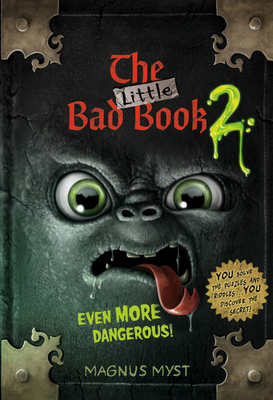
The Little Bad Book 2: Even More Dangerous by Magnus Myst

Share

The Little Bad Book 2: Even More Dangerous
Author and Illustrator: Magnus Myst
Published October 11, 2022 by Delacorte Press

Summary: In this second book in the Little Bad Book interactive series, young readers will be dared to solve tricky puzzles and funny riddles and to become part of the plot in eerily funny stories in order to reveal the Little Bad Book’s secret!

HEY, YOU! PSSST

You might not believe this, but I’ve discovered the biggest secret in the world. Yes, honestly! Should I tell you? Okay. Just be careful! It will be the scariest thing you’ve ever read! I hope you can take it. Can you I bet you can. You’re brave, aren’t you?

Do you dare to read me? Come on–do it–read me!

You are the lucky reader who can discover the secret the little bad book is willing to share. The puzzles and riddles will challenge you, but it is definitely worth it! Go ahead and take a chance! You are the baddest one there is!

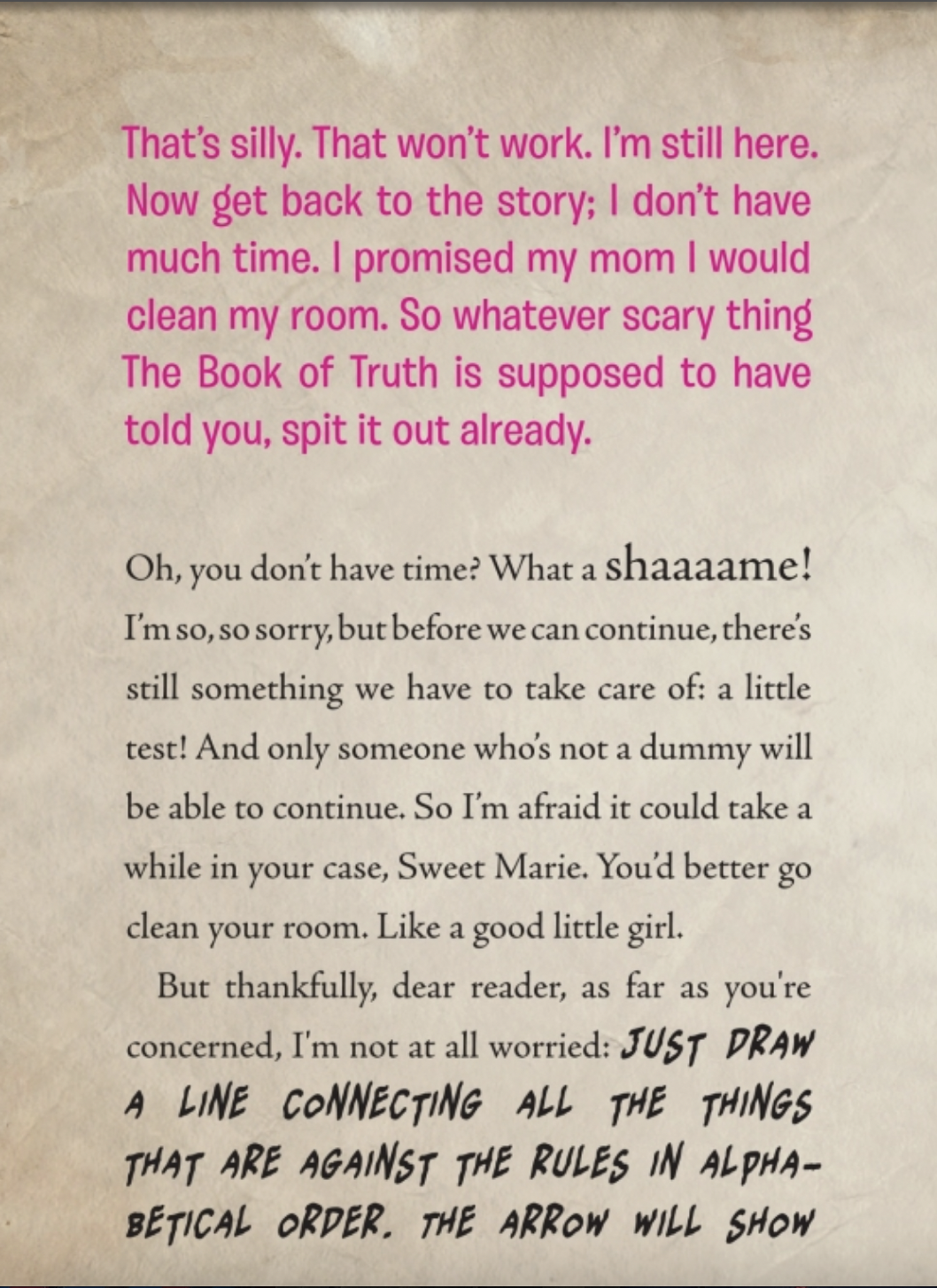
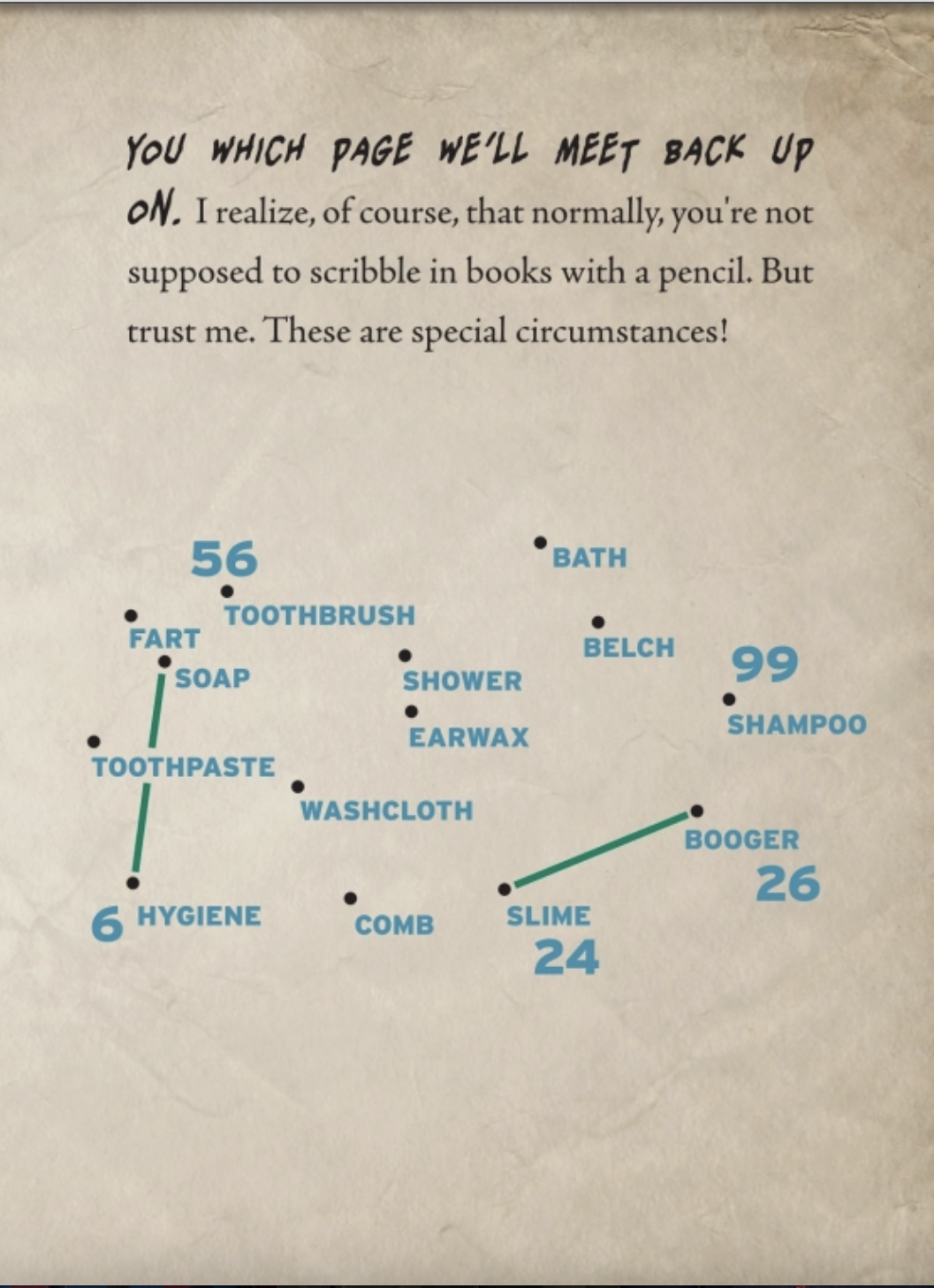
Review and Teachers’ Tools for Navigation: This interactive book enraptured both of my children (ages 6 and 9). The book breaks the fourth wall and speaks directly to the reader. I particularly appreciated the ways in which the book treats the reader as smart, capable people with agency. It also has that mild element of horror that really captures kids’ attention. This is a book that will be well-loved by the most avid readers and will hook readers who don’t typically fall in love with books. It’s extremely accessible. As a parent and teacher, I particularly loved how it tricks kids into math, reading comprehension, and logic puzzles. I was hooked (or tricked), as well. 🙂

Flagged Spreads: 

Read This If You Love: Interactive activity books filled with fun and educational activities

Recommended For: 

classroomlibrarybuttonsmall 

**Thank you to Cate from Nicole Banholzer Public Relations for providing copies for review!**

It’s Not the Three Little Pigs by Josh Funk, Illustrated by Edwardian Taylor

Share

It’s Not the Three Little Pigs
Author: Josh Funk
Illustrator: Edwardian Taylor
Published November 1st, 2022 by Two Lions

Summary: Meet the three (ahem—four!) little pigs as they convince the narrator to tell a slightly different version of their fairy tale:

First there’s Alan, the one pig in the bunch who is actually a builder. He’s got a BIG problem with building a home out of flimsy straw. Next there’s Alfred, who wants to be an actor and wouldn’t dream of getting his hands dirty. Then we have Alvin, whose dream is to be . . . a pumpkin. Last but not least is Alison, the fourth pig who is ready to bring some flair to this story, if only she can get the narrator to agree to a few changes. . . . And what about that wolf?

Grab your jet-packs and get ready for this rollicking retelling of the popular tale.

“Those who love to make up their own stories will be inspired, and readers who march to the beats of their own drums will be delighted. Will leave readers as happy as a pig in mud.” ―Kirkus Reviews

About the Creators: 

Like the characters in his books, Josh Funk doesn’t like being told how stories should go―so he writes his own. He is the author of a bunch of picture books, including My Pet Feet, illustrated by Billy Yong; the popular Lady Pancake & Sir French Toast series, illustrated by Brendan Kearney; How to Code a Sandcastle, illustrated by Sara Palacios; and Lost in the Library: A Story of Patience & Fortitude, illustrated by Stevie Lewis. He lives in New England with his wife and children. Learn more about him at www.joshfunkbooks.com and follow him on social media:

Facebook:  Josh Funk Books
Instagram: @joshfunkbooks
Twitter: @joshfunkbooks

Edwardian Taylor is the illustrator of multiple children’s books, including Hey, You’re Not Santa!, written by Ethan T. Berlin; Goldibooks and the Wee Bear, written by Troy Wilson; the Toy Academy chapter books, written by Brian Lynch; and the It’s Not a Fairy Tale books, written by Josh Funk, among other titles. He lives in Texas with his partner and their three dogs. Learn more about him at www.edwardiantaylor.com and follow him on TumblrInstagram, and Twitter @edwardiantaylor.

Kellee’s Review: I just find the concept of these books so clever; all of them! The breaking of the third wall between narrator and characters just makes them so funny, and I love that the characters go against the narrator. Often times through this exchange, the author is able to teach both the narrator and the reader lessons about assumptions, in this case when it came to the wolf. Other times, the characters just go silly which is also quite fun to read. This time the silliness comes in hot air balloons and jet packs! And, as a literacy teacher, I particularly loved the two literacy loving pigs: Alison, the storyteller, and Alfred, the scriptwriter and star. 

Trent’s Review: I liked this new book in the series because it is pretty much the opposite of the original three little pigs which adds a lot of action and surprises. I like that at the end of the story they’re actually on a stage and performing the tale because the set up for this was all through the book (and most of the other characters from the It’s Not books were in the audience!). The most surprising part of the story for me was that there was a fourth pig, and that makes it fit even more with the title because there is not three but four. I also like that the fourth pig is a girl and a storyteller. I was also surprised that the big bad wolf was a salesman trying to sell automatic vacuums because you assume usually that wolves are not nice in fairy tales, so this teaches the reader that not all things you assume are bad actually are bad. Josh Funk books are funny and questy, and this one was, too; I always like them! I like all of the picture books that Josh has written.

Teachers’ Tools for Navigation: This is a perfect mentor text for rewriting a fairy tale. Students can read the different books in the It’s Not series to see all of the creators’ examples of their factured fairy tales then they can pick their own to redo. First they would read the original fairy tale, determine how they were going to change it up, and write their own version of the fairy tale. Remind them to add some surprising elements, lessons, and silliness, just like Josh Funk.

For an enrichment activity, they could take their fairy tale and turn it into a play like Alfred did!

Discussion Questions: 

  • What was the most surprising part of the story for you?
  • Why are different speech bubbles written in different font colors?
  • How did you assume the different pigs’ personalities would be like? How is that the same/different than the book?
  • How does the author use the narrator differently than in most books?
  • Were there any vocabulary words you didn’t know? Were you able to determine the meaning from the context?
  • In addition to Cinderella’s fairy godmother, what other fairy tale creatures did you notice in the background of this book?

Flagged Passages: 


Read This If You Love: Fractured Fairy Tale Picture Books

Recommended For: 

classroomlibrarybuttonsmall 

Signature&

**Thank you to Blue Slip Media for providing a copy for review!**

Author Guest Post: “Bring the Text to Life: Baking the Cake” by Stephen Savage, Author of Moonlight

Share

“Bring the Text to Life: Baking the Cake”

In 2004, when I began my career in children’s books with a book called Polar Bear Night (published by Scholastic, written by Lauren Thompson), I thought I had it all figured out. I was of the mind that picture books were mainly about the visuals (why else would they call them “picture books”). And as crazy as what I am about to say sounds, I didn’t really understand how the text functioned. I knew it filled blank spaces in the illustrations, but that’s about it. It seemed like “the icing on the cake”. Little did I know.

Then in 2010, I decided I wanted to bake a cake and ice it, too. My daughter had just been born, and I felt inspired to write a story about her. One morning, as I stumbled across the Gowanus canal on my way to my studio in Brooklyn (I hadn’t gotten enough sleep the night before), I spotted a tug boat. “That’s my story”, I thought. I could see the visuals perfectly. 

But what about those blank spaces in the images? They’d need words! By this time, I had illustrated three books, visited a few classrooms, gotten to know the reading habits of kids, and was starting to figure things out a bit. I was learning that picture books were read-alouds, and that the words were very important (duh!).

I was on to the fact that words could be fun to say. Words could engage. More importantly, words could create a beginning, middle, and end in a book. I had so much to learn. I spent months writing my ideas down on index cards, until the cards fell together to form Little Tug (Roaring Brook Press/Macmillan).

This summer, my seventh book as both author and illustrator comes out. It’s called Moonlight. And I’m sure if I showed the book to my 2004 self, he’d scoff at the text. At only 85 words, he’d regard it as a very thin layer of icing on top of an already yummy cake.

But here’s what I’d say to my old, uniformed self: effective picture book text may seem effortless, but that’s not the case. I’d point out all the craft that went into the writing, a discussion of which, could be used to stimulate discussion in the classroom.

I’d point out FOUR examples of writing tools I used to bring the text to life:

  1. PERSONIFICATION: The book opens with the line “Something is on the move”. Personifying the moonlight, turning it into the protagonist in the story, was one way I put a new spin on the traditional lullaby/nighttime theme. 
  2. VIVID VERBS: Words like “slithering”, “drifting” and “tumbling” give the reader a sense of action and adventure. They create excitement and drama.
  3. ALLITERATION: “Sliding down silvery tracks” may just be my favorite line in the book. Why? It’s fun to say. And I have my editor, Neal Porter, to thank for that alliterative line. He replaced my original word, “Icy” with “silvery”. PS: I think it’s nice for young readers to hear how professional artists get help from their teachers (er, I mean editors 😉
  4. SENSORY LANGUAGE makes a story relatable. I used the line “Then it rests for a while, next to you” for a rush of emotion at the critical moment in the story when the moonlight journeys into the child’s bedroom. Certainly, the image of the cat snuggled up against the child reinforces this ‘touch’. 

So now that I’m thinking about it, this “icing on the cake” analogy doesn’t really apply anymore. In picture books, images always work together with text to tell the story. I had to work hard to figure this out, and luckily my editors and mentors have been generous with their advice and suggestions. Like most things in life, writing is about practice and good guidance. And a little piece of cake and a glass of milk while you’re working never hurts!

NOTE: Special thanks goes to teacher/reading specialist Renee Davis of Glastonbury, Connecticut (my sister-in-law) for acting as a consultant on this post.

Published August 23rd, 2022 by Neal Porter Books

About the Book: A lyrical bedtime read about the captivating effects of moonlight and its nightly journey.

Something is on the move.”

When moonlight shines, it’s not like most light. In the quietest hours of the night, it swings through trees and slithers down rivers. It drifts in the wake of steamships and catches on the propeller of a passing plane. It blankets neighborhoods before coming to rest by your side.

In this bedtime picture book, Stephen Savage, author and illustrator of And Then Came HopeBabysitter from Another Planet, and the Geisel Honor book Supertruck, presents a lyrical text and illustration full of dramatic light and shadow to pay homage to the mysterious moon and the unique ways it reveals itself each night.

About the Author: STEPHEN SAVAGE is an award-winning children’s book author and illustrator whose accolades include a New York Times Best Illustrated Book (Polar Bear Night) and a Geisel Honor (Supertruck). Polar Bear Night was a New York Times bestseller. He also wrote and illustrated And Then Came Hope and Babysitter from Another Planet. He teaches at the School of Visual Arts and lives in Brooklyn with his wife, daughter and two dogs. 

https://www.savageillustrator.com/
@savageillustrator on Instagram
@savageartist on Twitter

https://holidayhouse.com/book/moonlight/
@holidayhousebks on all platforms

Thank you, Stephen, for sharing sharing your analogy that can move writing to the next level!

What a Blast! Fart Games, Fart Puzzles, Fart Pranks, and More Farts! by Julie Winterbottom, Illustrated by Clau Souza

Share

Summary: Squeakers, butt puffs, trumpets and “the destroyer”. Celebrate farts in all their hilarious, honking glory!

Con-fart-ulations! You’ve found the book that confirms your fine appreciation for the fact that nothings funnier than a little pfffftt from someone’s butt. Cheerfully over-the-top, packed with activities, and grounded in the science of flatulence, What a Blast! Is a trip through the body’s digestive system to explore the whys, hows, and wherefores of farting. You’ll discover the fartiest food in the world, meet infamous farters from history, learn just what to say if you fart in public—“Yeah, you heard me!—and so much more!
Have fun with farts!

  • Solve the question of who farted?
  • Discover your gastrological sign.
  • Play free the fart through an intestinal maze.
  • Learn how to make elbow farts, hand farts, and armpit farts.
  • Throw a farty party.
  • And get creative with funny fill-in stories, like a fart to remember

Ricki’s Review: I should really get my three sons to review this book. They have had such a blast (pun intended) doing the workbook. Parents and teachers, if you want to get kids excited about reading and writing, this book will do it. I can’t tell you how many giggles this book has brought our family. I have to admit that I even giggled behind my hand. I can’t recommend this workbook highly enough—it is cleverly crafted and full of amazing reading and writing opportunities for kids. It has open-ended questions, quizzes, brackets, puzzles, games, etc.

We Flagged:

**Thank you to Claire and Ivanka from Workman for providing a copy for review**

Author Guest Post: “Understand the Rules, Then Forget Them” by Erin Entrada Kelly, Author of Surely Surely Marisol Rainey

Share

“Understand the Rules, Then Forget Them”

I run a kids book club at my local library. It’s for ages eight to twelve. Each month, we read and discuss a middle grade book then complete a related activity. After we read The Year I Flew Away by Marie Arnold, we created a mural inspired by Haitian art. For Jennifer L. Holm’s The Lion of Mars, one of the students crafted a clay astronaut. To celebrate Gregor the Overlander by Suzanne Collins, we excavated bugs.

One afternoon, as we prepared to discuss Dan Santat’s The Aquanaut, I pulled paper and pencils out of my bag. One of the young readers, Anthony, wrinkled his nose.

“Oh, no,” he said. “We’re not gonna write, are we?”

As a lifelong writer, it’s difficult for me to imagine not wanting to write. But over the years I have come to accept a disappointing reality: A lot of kids really hate writing. For them, it feels like work.

“I’m not good at it,” Anthony said. With a tilted whine to his voice, he added: “I haaaate writing.”

While it’s true that some young people hate writing, will forever hate writing, and will instead excel in some other trade or craft, it’s my mission, as a lifelong wordsmith, to make them hate it a little less.

One of the ways to do that is to eliminate all the qualities about writing that feel like work. Anything that shackles them. Anything that limits their imagination. When our goal is to simply create something, without worrying whether it’s grammatically correct or good or even readable, we are suddenly free to make mistakes. And if there’s one thing I know about young people—they don’t like making mistakes. It’s the mistakes that often prevent them from trying. It’s the mistakes that make them think they’re not good at something.

What if we limit the possibility of error? What if we create simply for the joy of creating?

Here are a few things I’ve done with students.

  • Toss the rules. Give students a writing prompt and encourage them to respond however they want. Tell them not to worry about any rules of grammar or spelling. They won’t be graded on either. In fact, they won’t be graded at all. It will be a ten-minute writing sprint and that’s it. Afterward, give them the freedom of choice: They can keep what they wrote, share it with a friend, or toss it in the trash.
  • Encourage storythinking. When you read books together, stop at the end of each chapter and ask them what they think will happen next. If too many students answer at once, take differing answers from two or three students then take a poll with the rest of the class. If you want to incorporate writing, ask your students to write one or two sentences with their predictions. They don’t need to show their predictions to anyone if they don’t want to.
  • Encourage storytelling. When you finish reading a chapter or a book, ask them how they would have written it to make it more interesting. I ask my book club these questions all the time. Their answer is almost always the same: “More dragons.” In their opinion, dragons always make things more interesting. If your students say “more dragons,” your instinct may be similar to mine—you’ll find yourself explaining why dragons aren’t logical in a story like Charlotte’s Web. But instead of launching into your logical explanation, why not embrace all their ideas? That’s what I did with my book club, and they were immediately engaged, firing off one idea after another, until they reached the end of their own story. For me, the importance of the moment wasn’t to force them to think critically about Charlotte’s Web. It was to get them excited about stories and all the possibilities they offer.

To develop a love of writing, we must develop a love of creativity, a love of storytelling, and an appreciation of how words create stories. Rules, logic, grammar, spelling—all of these sound like work. Because they are work. They serve a purpose, certainly, but they also confine us.

There are times when it’s okay to prioritize creativity above all else, and let the work come later. As grown-ups, we often forget that.

Published August 9th, 2022 by Greenwillow Books

About the Book: Everyone loves sports . . . except Marisol! The stand-alone companion to Newbery Medal winner and New York Times-bestselling Erin Entrada Kelly’s Maybe Maybe Marisol Rainey is an irresistible and humorous story about friendship, family, and fitting in. Fans of Clementine, Billy Miller Makes a Wish, and Ramona the Pest will find a new friend in Marisol.

Marisol Rainey’s two least-favorite things are radishes and gym class. She avoids radishes with very little trouble, but gym is another story–especially when Coach Decker announces that they will be learning to play kickball.

There are so many things that can go wrong in kickball. What if Marisol tries to kick the ball . . . but falls down? What if she tries to catch the ball and gets smacked in the nose? What if she’s the worst kickballer in the history of kickball? Marisol and her best friend Jada decide to get help from the most unlikely–and most annoying–athlete in the world: Marisol’s big brother, Oz.

Told in short chapters with illustrations by the author on almost every page, Erin Entrada Kelly’s stand-alone companion novel to Maybe Maybe Marisol Rainey celebrates the small but mighty Marisol, the joys of friendship, the power of being different, and the triumph of persevering.

About the Author: New York Times–bestselling author Erin Entrada Kelly was awarded the Newbery Medal for Hello, Universe and a Newbery Honor for We Dream of Space. She grew up in Lake Charles, Louisiana, and now lives in Delaware. She is a professor of children’s literature in the graduate fiction and publishing programs at Rosemont College, where she earned her MFA, and is on the faculty at Hamline University. Her short fiction has been nominated for the Philippines Free Press Literary Award for Short Fiction and the Pushcart Prize. Erin Entrada Kelly’s debut novel, Blackbird Fly, was a Kirkus Best Book, a School Library Journal Best Book, an ALSC Notable Book, and an Asian/Pacific American Literature Honor Book. She is also the author of The Land of Forgotten Girls, winner of the Asian/Pacific American Award for Literature; You Go First, a Spring 2018 Indie Next Pick; Lalani of the Distant Sea, an Indie Next Pick; and Maybe Maybe Marisol Rainey which she also illustrated.

Thank you, Erin, for this reminder to allow kids to write freely!

Author Guest Post: “Five Tips to Excite Students About Writing” by Laurel Solorzano, Author of The Land of Fake Believe

Share

“Five Tips to Excite Students About Writing”

One of the most difficult parts of teaching writing is convincing all students to be involved in the various activities. Some of my students have reached the end of the writing period with NOTHING on their paper. How many distractions could they possibly have had? These five tips should help you get those students not only involved but excited to tell their story.

Tip #1

Allow Alternative Ways to Tell Their Story. Most of the time, my students who have trouble putting words on paper are the ones who talk. Everyone else may be working quietly, but they are talking- to me, to the other students, to themselves. It doesn’t matter if anyone is responding or not, their mouths are moving.

One way I’ve been able to get these students involved is by using a recording device (a phone or an app on a tablet works well). I move them out into the hall and have them record themselves telling their story or answering the prompt. I usually tell them that they have two minutes to record it (any longer than that, and transcription takes a while).

They LOVE doing this, because they can talk and avoid writing for a few minutes with the teacher’s permission!

Once they’ve recorded themselves, depending on the student’s age, I can either use an online program to transcribe it for them (I then have them read what they “wrote” and fix the errors), OR I’ll have them transcribe it themselves.

Tip #2

SHARE their writing. Some of my students have disliked writing because they don’t get the chance to talk/share with their classmates. They prefer to tell the story out loud rather than write it down and pass it to me.

Whenever I’ve given them the chance to read their story/writing out loud, then they get more excited about writing it. They can’t wait to make their classmates laugh!

I give other students the chance to share too, but don’t force it on the quieter ones who already enjoy the writing.

Tip #3

Give them creative freedom. While mentor texts or examples that students can follow is helpful for SOME students, it can make others struggle. How can they make their writing sound like that writing? They become overwhelmed trying to make it perfect, so they either don’t try at all or copy the example writing and just change a word or two.

For example, if you give them the topic of writing about a favorite memory, then give them subject examples, but not paragraph examples. “Did you ever receive a special Christmas or birthday present? What made it special? Where have you gone that you really enjoyed? The zoo, amusement park?” This can get their ideas pumping without feeling like they have to churn out a perfect paragraph.

Tip #4

Don’t compare writing. You probably already know this, and you wouldn’t do it on purpose. However, sometimes, comments slip out accidentally. “Wow! Did everyone see what a great paragraph Johnny wrote?” or maybe even something that you think is more subtle because you are just speaking to the student. “Johnny, that was really great. I don’t know how you do it!”

Written feedback helps avoid this comparison. I always write one thing each student did well and one thing they can improve. Instead of writing that one student needs to fix their verb tenses and their quotation marks, indent their paragraphs, not use fragments, and. . . well, you get the idea. That would be overwhelming as an adult.

Pick one, concrete thing that they can improve, and write that one. For example, “Don’t start sentences with ‘and’” or “Use an apostrophe to show possession.” That way, they can improve and not be overwhelmed.

Tip #5

Connect reading and writing. A lot of students who don’t necessarily enjoy writing do enjoy listening to stories. Even when students can read on their own, they aren’t too old to be read to as well.

Once they have a story in their head, writing prompts related to the story can turn on their creativity.

Read-aloud continues in my classroom even through fifth grade, which is why I love picking stories that are fun not only for the kids but for me to read year after year as well. Check out my book below for a fun classroom read!

Fun Writing Ideas

Now that you have some ideas about how to involve the non-writers in writing time, here are some prompts to use in your class.

  • If you could meet one fairy tale character, who would it be? What would happen when you meet them?
  • (After reading a book or part of a book together) What do you think should happen in the next chapter?
  • Pick one notoriously bad guy (the Joker, the Big Bad Wolf, or Maleficent for example) and write about them as if they were good.

Published September 1st, 2022

About the Book: The Land of Fake Believe is a twisted fairy tale about two siblings and their fateful encounter with real amusement park characters. It is geared to children ages eight to twelve, but can be read aloud to younger children.

In this fractured fairy tale story, twelve-year-old Taylan is angry when her mom scolds her for telling her five-year-old sister, Judy, that Cinderella isn’t real, just as the little girl is about to meet her favorite princess at the famed Happily Ever After amusement park. Relegated to their vacation hotel room for the evening as a punishment, Taylan enlists the help of her ten-year-old brother, Colby, to prove her mom wrong. What they discover in the park after dark is beyond their wildest dreams—or nightmares.

Soon, the siblings find themselves in the middle of a secret century-long battle among the park’s characters—the good Ever Afters and the dark Ever Afters—and are in a race to help their new friends before the Evil Queen takes over the park for good. With Beauty, Cindy, and Peter Pan on their side, will they be able to survive the conflict before it’s too late?

Fun activities after reading the book including a coloring sheet, quiz, and maze: https://www.laurelsolorzano.com/activities

About the Author: Children’s book author Laurel Solorzano has been creating stories since she first learned how to write, completing her first full-length novel while in middle school. Her love for fairy tales is what inspired her to write The Land of Fake Believe.

Hailing from Raleigh, North Carolina, where she lives with her husband, Yader, Laurel is a Spanish and English teacher. When she’s not penning creative stories for young readers, Laurel enjoys reading and spending time with her two dogs. Also the published author of five young adult books, Laurel’s book The Land of Fake Believe is the debut book in a series of twisted fairy tales including book 2-Once Upon a Climb and book 3- The Princess and the Key.

Author Q&A can be seen here. https://www.laurelsolorzano.com/about

Facebook- https://www.facebook.com/laurelsbooks

Signing up for her newsletter on her website is the best way to stay connected!

Thank you, Laurel, for these amazing engaging tips!