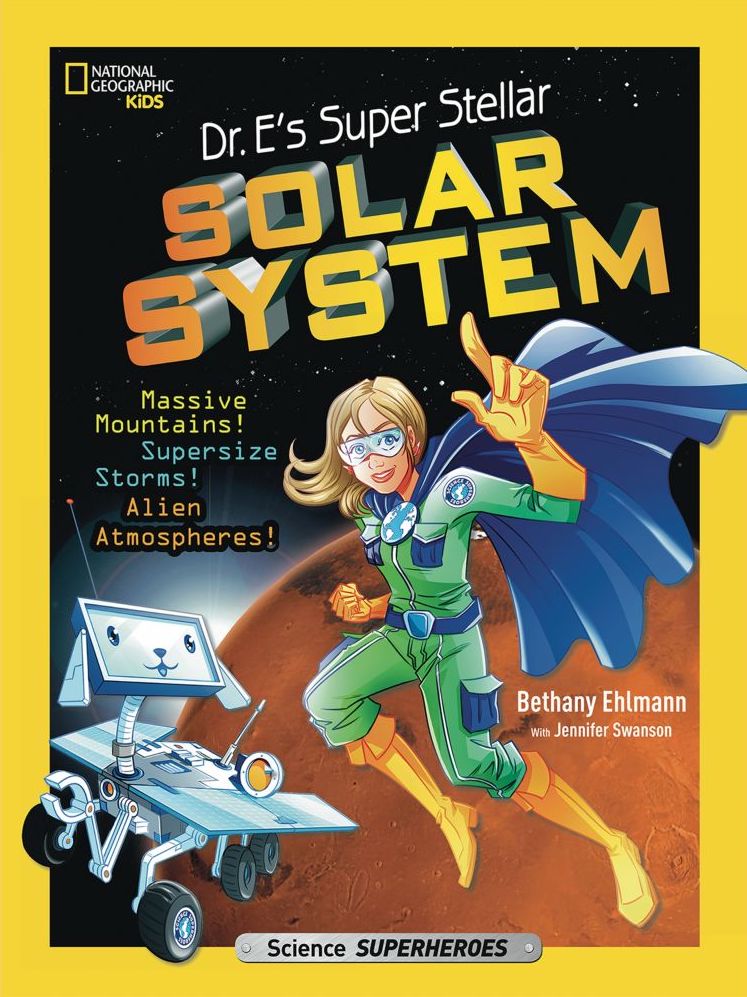
Dr. E’s Super Stellar Solar System Authors: Bethany Ehlmann with Jennifer Swanson
Published January 16, 2018 by National Geographic Children’s Books
Goodreads Summary: Take to the skies with Planetary Geologist Dr. E and her robot sidekick, Rover, to explore the solar system’s wildest, most astronomical geology–with comic book flair! This stellar book introduces kids to outer space through in-depth info and comic book adventure. Along the way, kids follow explorer Bethany Ehlmann, a member of the NASA Mars Rover Curiosity mission, and her lovable robo-dog, Rover, as they study and protect our amazing solar system. Dr. E’s conversational and funny explanations of the solar system and planetary geology will pull kids in like gravity. The pairing of fun, graphic novel side stories with science facts makes big concepts accessible and interesting to boys and girls of all levels, from STEM science fans to reluctant readers alike.
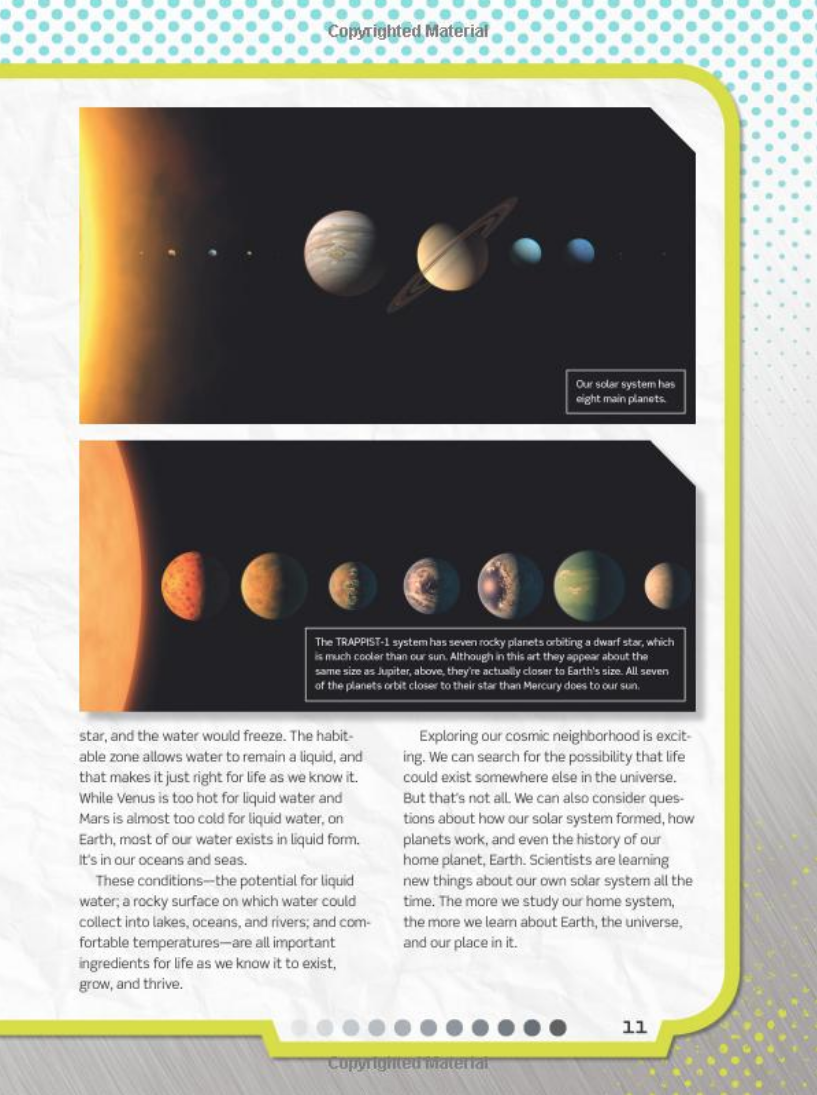
Review: This book is wild. I learned so much while reading it. I thought I knew a lot about space, but this book made me realize how much I didn’t know about it. My son is much too young for this book, but he loved looking at the pictures while I summarized the text on the pages. There are some fantastic photographs, and there are also digital representations of what things might look like. Most exciting, this book filled me with wonder. There are so many possibilities with space, and I am really excited about new discoveries and new information that will come in my lifetime and beyond. This is a must-read for space lovers and those who are curious about the world. I particularly appreciated the comics at the front of each chapter. They allowed me to better engage with the material that followed. Dr. E made me want to learn even more about space!
Teachers’ Tools for Navigation: I’d love to see this book used in literature circles. The National Geographic books are phenomenal, so teachers might collect books on various topics and allow students to form groups based on interest.
Discussion Questions: After reading about _____, what did you learn?; What do you still want to learn about space?
We Flagged:
Image from Amazon.
Read This If You Loved: Any nonfiction book about space, for background knowledge when reading science fiction that takes place in space (e.g. Space Encyclopedia)
Recommended For:
**Thank you to Karen at Media Masters Publicity for providing a copy for review**
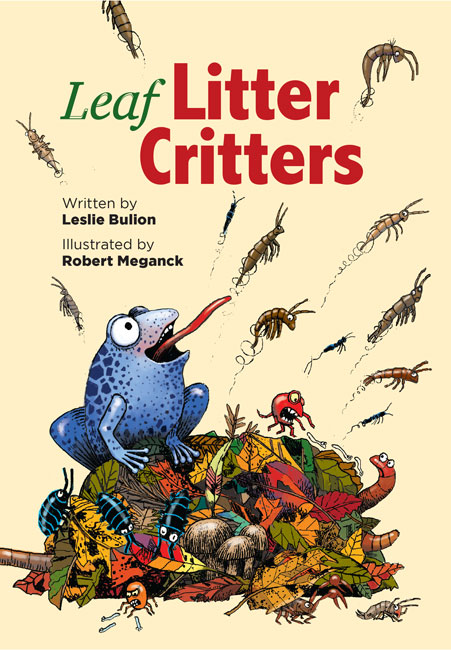
Leaf Litter Critters
Author: Leslie Bulion
Illustrator: Robert Meganck
Published March 8th, 2018 by Peachtree Publishers
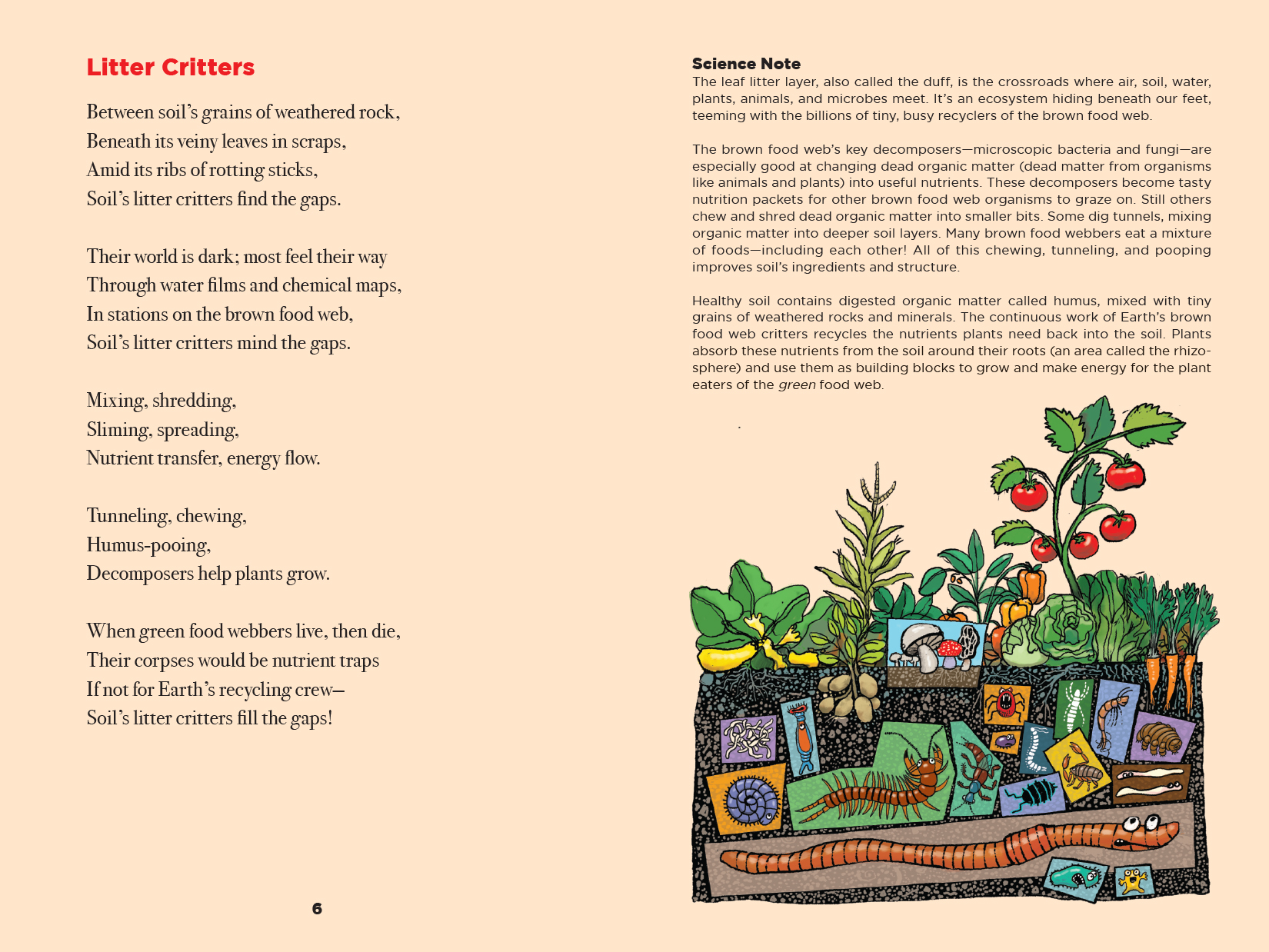
Summary: Have fun on this poetic tour through the leaf litter layer and dig into the fascinating facts about the tiny critters who live there. Nineteen poems in a variety of verse forms with accompanying science notes take readers on a decomposer safari through the “brown food web,” from bacteria through tardigrades and on to rove beetle predators with other busy recyclers in-between.
Zooming into the thin layer of decaying leaves, plant parts, and soil beneath our feet, Leaf Litter Critters digs into fascinating information about the world of decomposers–from the common earthworm to the amazing tardigarde.
Written in various poetic forms, acclaimed science poet and award-winning author Leslie Bulion combines intriguing scientific details with fun wordplay to create a collection of nonfiction verses amusing for all readers. Vibrant and entertaining artwork by distinguished illustrator Rober Meganck adds to the humor of each poem.
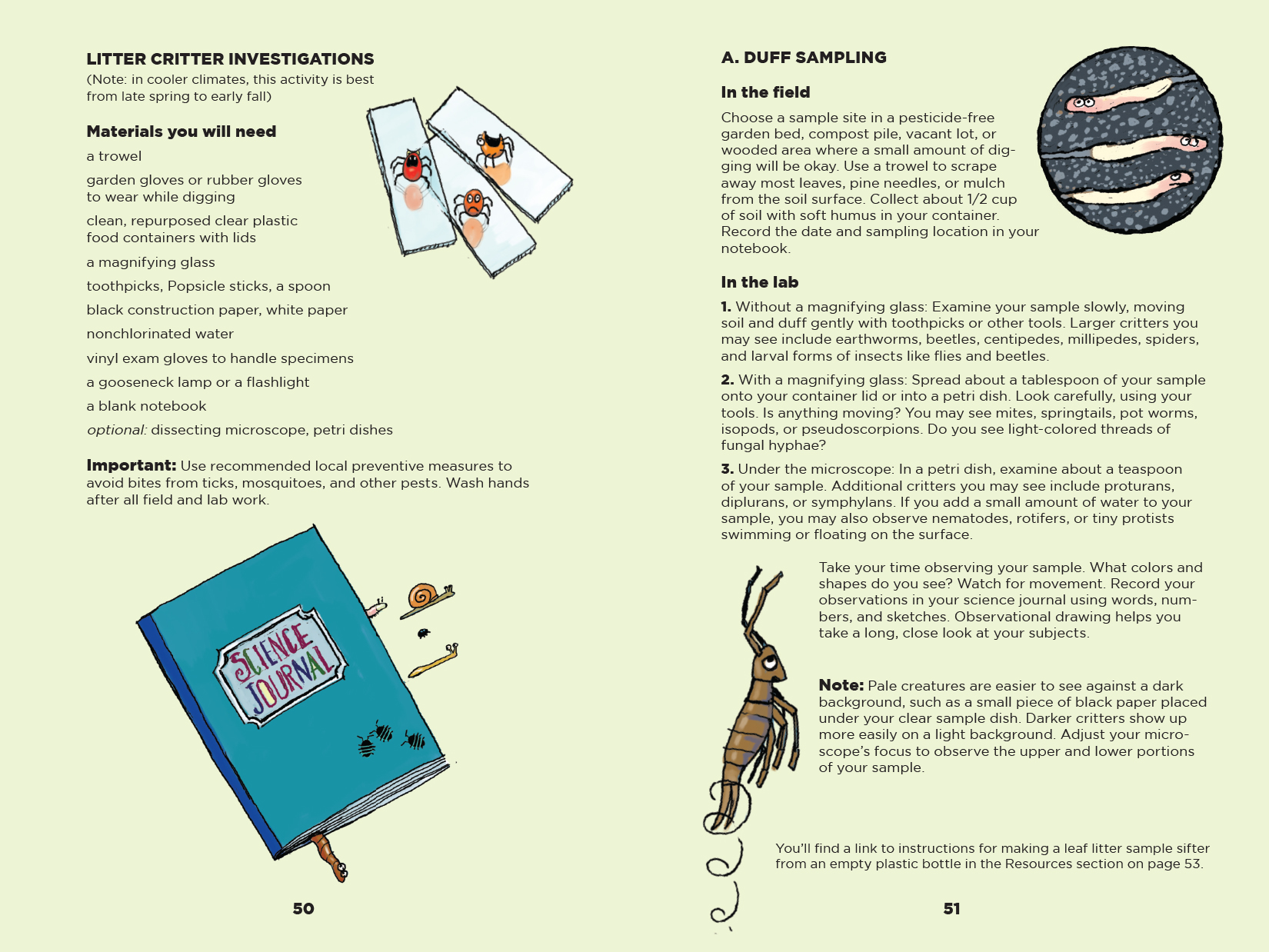
Perfect for cross curricular learning, Leaf Litter Critters has extensive back matter, including both science notes about each critter and poetry notes about each poetic form, as well as a glossary, hands-on activities, and additional resources for curious readers to further their investigations. It’s also a great read-aloud for Earth Day and beyond.
* “The poems are expertly crafted in a variety of forms (identified in the backmatter). The language is lively and the imagery appropriate. With alliteration, internal rhymes, and careful rhythm, these will be a delight to read aloud and learn…. Meganck’s engaging digital drawings give each creature pop-eyes and attitude…. A delightful, memorable introduction to an unsung ecosystem.” —Kirkus Reviews, STARRED REVIEW
“Bulion stuffs her poems with scientific detail and puts even more into accompanying “science notes.” Meganck’s cartoons strike sillier notes…balancing all of the information Bulion provides with hefty doses of fun.” —Publishers Weekly
Review & Teachers’ Tools for Navigation: I cannot wait to give this to my mentee who is a sixth grade science teacher who has a BS in biology–she is going to love this so much! And if I was an upper elementary teacher, I would love to use this text as a cross-curricular text during a poetry and biology unit. Not only did it teach me SO much about these amazing creatures that do weird and truly astonishing things, it goes through all the different types of poetry shared to ensure that the book isn’t just science nor poetry centered. I think the author did a beautiful job making sure that each spread had a wonderful poem and a deep science explanation just in case the poem doesn’t clarify anything. Additionally, the back matter includes investigative activities, a glossary, and more science information that would all be incredible assets to a classroom! I really cannot say enough how well the book is crafted for the purpose it was created for.
Discussion Questions:
How is each creature in the leaf litter layer important?
How did the illustrator use a pin to help you see the size of each critter on pages 54-55?
Write your own poem about one of the creatures that you learned about using whatever poetic style you choose.
How did the science notes on each page assist you in understanding the creature that was shared on each spread?
Which of the poetic forms/styles did you enjoy the most? Why?
Flagged Passages:
Read This If You Love: Biology, Poetry, Science
Recommended For:
**Thank you to Elyse at Peachtree for providing a copy for review!!**
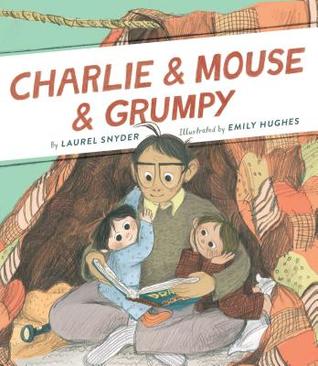
Charlie & Mouse & Grumpy Author: Laurel Snyder
Illustrator: Emily Hughes
Published October 3rd, 2017 by Chronicle
Summary: In this heartwarming sequel to Laurel Snyder’s beginning chapter book Charlie & Mouse, the two brothers enjoy a special visit from their grandpa, Grumpy. Follow along as they discuss being medium, pounce each other, sing the wrong songs, build blanket forts, and more. Paired with effervescent illustrations by Emily Hughes, this touching, funny celebration of imagination and bonding will enchant readers young and old.
Grumpy doesn’t know the right bedtime song to sing for Charlie and Mouse, so he tries to guess. Using the clues he gave, we can assume he was talking about “Circle Game” by Joni Mitchell, “Hush, Little Baby,” and possibly “Jump in the River” by Sinead O’Connor. Play these three songs for your students.
Which do you like the most? Why?
Which do you think would be the best bedtime song? Why?
After Grumpy guesses, Charlie sings the right bedtime song to Grumpy.
We don’t know what song Charlie sang, but what song would you have sung to Grumpy?
After gathering all of the bedtime songs discussed as a group, have students analyze the different songs (theirs and the three Grumpy mentioned) by having them (in groups or independently):
Identify rhyming words within the songs.
Does the author repeat any words? Why did the author choose to repeat these words?
How does the author supply rhythm in the song?
Infer
There are a few times in the book that the text doesn’t tell you what happened, but you can infer from the illustrations what occurred such as p. 17, p. 27, and p.37. Have students use the illustrations to see how each of these chapters concluded and have them write out what they see in the illustrations.
Rain
In the final chapter, it is raining while Charlie and Mouse say good-bye to Grumpy. Even though the rain seems to be happening because of the mood of the chapter, rain actually occurs because of the water cycle. After discussing the mood of the chapter (see discussion question), share the scientific reason for rain by sharing the water cycle. One activity that could be done to help students understand the water cycle is the “Simple Water Cycle in a Bag” experiment: http://www.rookieparenting.com/what-is-water-cycle/.
Discussion Questions include:
The text never says that Grumpy is Charlie and Mouse’s grandfather, but you can infer he is. What clues from the text and illustration help you know that he is their grandfather?
In the final chapter, the author chose to have it be raining. Why does this type of weather make the most sense for this final chapter? What mood does it set for the chapter?
Using the clues throughout the book, how many days and nights did Grumpy stay with Charlie and Mouse? How did you know?
Teaching Guide Created by Me (Kellee):
You can also access the teaching guide through Chronicle’s website here.
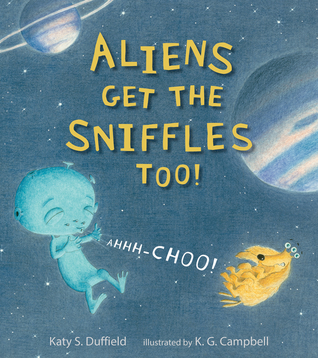
Aliens Get the Sniffles Too Author: Katy S. Duffield
Illustrator: K. G. Campbell
Published November 7, 2017 by Candlewick
Summary: Ahhh-flying-saucer-shooting-star-CHOO! Laughter is the best medicine when you’re a little alien feeling under the weather.
Little Alien is sick. And sick is extra-terrestrial bad when you have two scratchy throats, five ears that hurt, and three runny noses. Splatch! Sputter! Spurt! Luckily Mama and Daddy Alien have an arsenal of lunar decongestants and meteor showers on hand to make him feel a little better (not to mention a Milky Way milkshake to help the medicine go down). Even so, the family’s alien pooch, Mars Rover, can’t stand to see his little buddy feeling out of sorts. Can a loyal pup’s funny tricks finally coax a smile?
About the Author and Illustrator: Katy Duffield is the award-winning author of more than twenty-five books for children. She lives in Florida with her husband. To learn more, and to download classroom resources, visit katyduffield.com. Twitter: @KatyDuffield
K. G. Campbell is the illustrator of Flora & Ulysses by Kate DiCamillo and the author-illustrator of Lester’s Dreadful Sweaters. He was born in Kenya, raised in Scotland, and now lives in southern California.
Ricki’s Review: This book has been a blessing in my house. Both of my kids have had colds for the past several weeks. It seems they catch cold after cold! We’ve been reading this book quite often and making connections with Little Alien. As a parent, I particularly appreciate that the end of the book allows me space to talk about how Little Alien got Mars Rover sick. Every time we read the book, we point to the part where Little Alien spreads his germs to Mars Rover. Then, we make the cause-effect relationship about what happens when we spread our germs. I know that teachers in elementary school will love this connect. We spend a lot of time talking with kids of all ages about spreading germs!
On a literary note, the author has some great plays on words. I chuckle every time that I read the book. Kids who are obsessed with space will adore this book and all of its space references.
Kellee’s Review:Whenever Trent is sick, he is so miserable, so Little Alien’s story of trying everything to feel better is going to be the perfect companion to my sweet boy when he is feeling under the weather. Just like Mars Rover will do anything to help make Little Alien feel better, I will as well, and Aliens Get the Sniffles, Too! will be a perfect part of our feel better routine.
I loved the use of onomatopeoias in the book and mixed with the detailed, colorful, full page illustrations really brings Little Alien’s story to life.
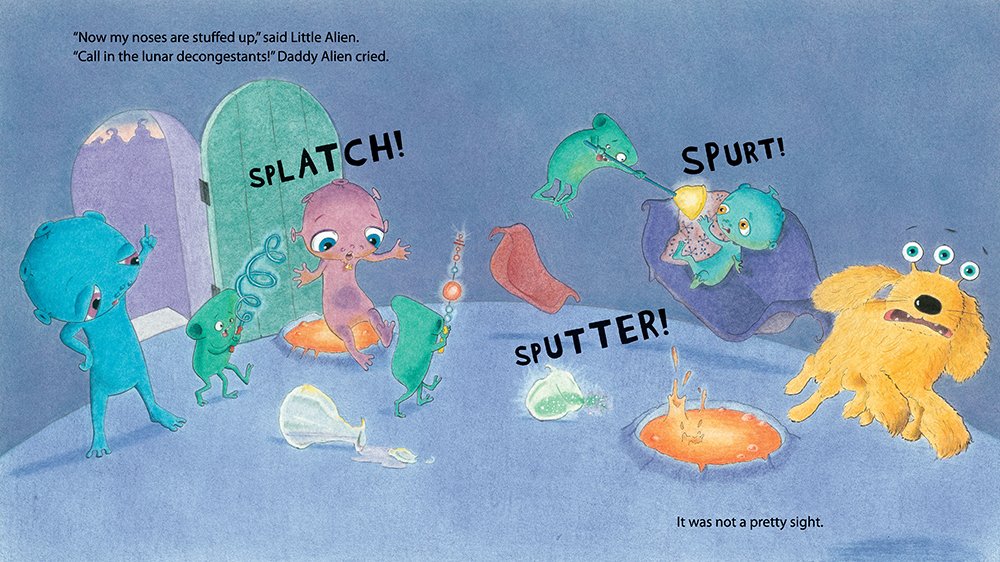
Teachers’ Tools for Navigation: Teacher might group students in pairs and assign them a spread. Students might hunt for the references to space on the pages and look up to learn more about those aspects of space. For example, for the spread below, students might look up the word “lunar” and share it with the whole group. Then, the teacher might reread the entire text again and pause to allow students to share the word play of their assigned spread as they read the book aloud together.
Discussion Questions: How does Mars Rover feel when Little Alien gets sick? Have you ever felt that way when a friend or family member got sick?; How does Mars Rover get sick? Can you point to the specific page?; Which new words did you learn while reading this book? How are they connected to the story? How does the author create a theme around the concept of space?
One grand-prize winner will receive a out-of-this-world alien backpack with a signed copy of Aliens Get the Sniffles Too! along with tissue packs, toy mini aliens, and space pencils.
Ten lucky runners-up will receive a copy of Aliens Get the Sniffles Too!
Nonfiction Picture Book Wednesday is hosted by Kid Lit Frenzy and was started to help promote the reading of nonfiction texts. Most Wednesdays, we will be participating and will review a nonfiction text (though it may not always be a picture book).
Be sure to visit Kid Lit Frenzy and see what other nonfiction books are shared this week!
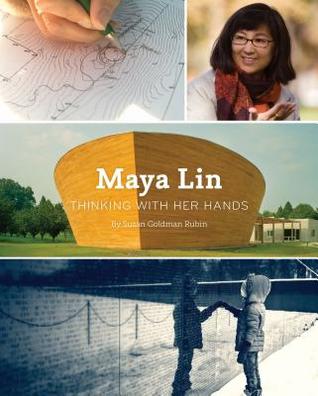
Maya Lin: Thinking With Her Hands Author: Susan Goldman Rubin
Published November 7th, 2017 by Chronicle
Summary: In the tradition of DELICIOUS, WIDENESS & WONDER, and EVERYBODY PAINTS!, this is Susan Goldman Rubin’s extensively researched and very accessible biography of civic activist Maya Lin, most famous for her design of the Vietnam Veterans Memorial. The Vietnam Veterans Memorial in Washington, D.C., is one of the most famous pieces of civic architecture in the world. But most people are not as familiar with the reserved college student who entered and won the design competition to build it. This accessible biography tells the story of Maya Lin, from her struggle to stick with her vision of the memorial to the wide variety of works she has created since then. Illustrated extensively with photos and drawings, the carefully researched text crosses multiple interests–American history, civic activism, art history, and cultural diversity–and offers a timely celebration of the memorial’s 35th anniversary, as well as contributing to the current, important discussion of the role of women and minorities in American society.
Activities include:
Pre-Reading
Building Historical and Scientific Background Knowledge: To better understand much of Maya Lin’s extensive work, background knowledge of certain historical and scientific events are needed. Before reading Maya Lin’s biography, separate the class into five groups and assign each group one of these events:
Vietnam War
Civil Rights Movement
Chinese-American Immigration
Endangered and threatened animals
Lewis and Clark’s expedition and the effect on the Indigenous People of Washington State
Have each group create a timeline using an interactive timeline creator that showcases their event chronologically. Within the timeline, the students should not only have important dates but they should incorporate visuals, the impact of each event on history/science, and any other supplemental information/media that will increase the knowledge of their event.
Students then will present their timelines to their classmates to allow for all students to possess knowledge of all five historical and scientific events before beginning Maya Lin’s biography.
Post-Reading
Symbolism: Unlike traditional minimalists, Maya Lin uses symbolism in her work. Begin with working with students on symbolism within familiar stories they know. Show students What is Symbolism? at https://www.youtube.com/watch?v=8Vwek28P9Gk then read the Story of William Tell (http://www.mainlesson.com/display.php?author=baldwin&book=fifty&story=tell) and discuss what the apple symbolizes. After this discussion tell students that symbolism in art is the same–symbolism is when a piece of art or an aspect of a piece of art represents something more than its literal meaning.Then, have students analyze her pieces of work for symbols within them. Students should then create a symbolism T-chart showing their found symbolism.Some examples:
The ark shape of the Riggio-Lynch Chapel
Symbolizes that the chapel is a safe place just as Noah’s Ark was.
The water on the Civil Rights memorial
Symbolizes the justice rolling down like waters and righteousness like a mighty stream mentioned in “I Have a Dream” speech by Martin Luther King, Jr.
From a young age, Maya Lin did not like the color red. Why does she not like the color red? What does red represent to her? The color red was included in the Museum of Chinese in America, however. Why was the color included in this project even though Maya Lin does not like it?
After completing the Vietnam War Memorial, Lin felt like she was boxed in as a “monument designer,” and refused many invitations to complete more memorials. Why do you think the Civil Rights Memorial was the work that she finally agreed to complete?
Maya Lin’s message of sustainability (avoiding the depletion of natural resources to maintain a balance within nature) reaches us through not only her What is Missing? project but through many of her other pieces of work. She states, “A lot of my work is not very glorious. If I succeed, you may never know I was here.” How did Maya Lin’s message of sustainability come through her works?
Susan Goldman Rubin’s chapter titles are very specific word choices. Looking at the titles (Clay, Granite, Water, Earth, Glass, Celadon, Dunes and Driftwood, Wood, and Memories), why do you believe the author choose these words to title each chapter?
Teaching Guide Created by Me (Kellee):
You can also access the teaching guide through Chronicle’s website here.
Nonfiction Picture Book Wednesday is hosted by Kid Lit Frenzy and was started to help promote the reading of nonfiction texts. Most Wednesdays, we will be participating and will review a nonfiction text (though it may not always be a picture book).
Be sure to visit Kid Lit Frenzy and see what other nonfiction books are shared this week!
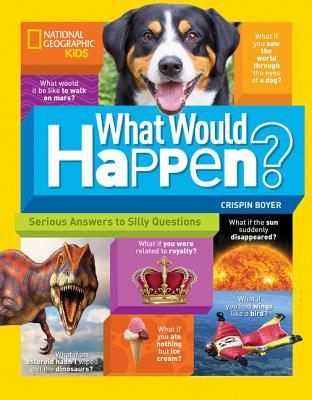
National Geographic Kids: What Would Happen?
Author: Crispin Boyer
Published July 11th, 2017 by National Geographic Society
Summary: Ever wondered what would happen if some cool or crazy things were possible? Like what would happen if: you got sucked into a black hole; dinosaurs still existed; humans could fly; you could communicate with dolphins; or you could dig a hole through to the center of the Earth?
Get ready to explore all kinds of scenarios that would or could happen if the world was just a slightly different place. Each scenario is examined with real scientific, historical, and cultural facts in mind. This out-of-the-box book encourages readers to cultivate a better understanding of the world as it is – and as it could be!
Review: A favorite book of mine and my husband’s that we read years ago was Why do Men have Nipples?, and we really loved getting answers to questions that you may not even know to ask yet are really intriguing. What Would Happen? is the middle grade equivalent! So many interesting questions are answered! Do you want to know about global warming? Honeybees? Time machines? You will find answers in this book. Each question’s answer is set up to give the reader background knowledge, potential outcomes, extenuating circumstances, etc. to fill in any blanks and curiosities there may be. And as with all National Geographic books, the photographs are superb!
Teachers’ Tools for Navigation: I love that so many of the National Geographic books touch on such a variety of topics, but also in the books that are like What Would Happen?, the information only touches the surface. This book would be a perfect jump start to passion or inquiry projects. What do students want to learn more about? They can start by reading the spread in What Would Happen? then research more to prepare a presentation about everything they learn.
The book also definitely has a place in libraries: school, classroom, and home. It is a wonderful book filled with questions that kids will love to learn the answers to!
Discussion Questions: Every page in this book has a discussion question!
Flagged Passages:
Read This If You Love: Getting answers to burning questions
Recommended For:
**Thank you to Karen from Media Masters Publicity for providing a copy for review!**
Nonfiction Picture Book Wednesday is hosted by Kid Lit Frenzy and was started to help promote the reading of nonfiction texts. Most Wednesdays, we will be participating and will review a nonfiction text (though it may not always be a picture book).
Be sure to visit Kid Lit Frenzy and see what other nonfiction books are shared this week!
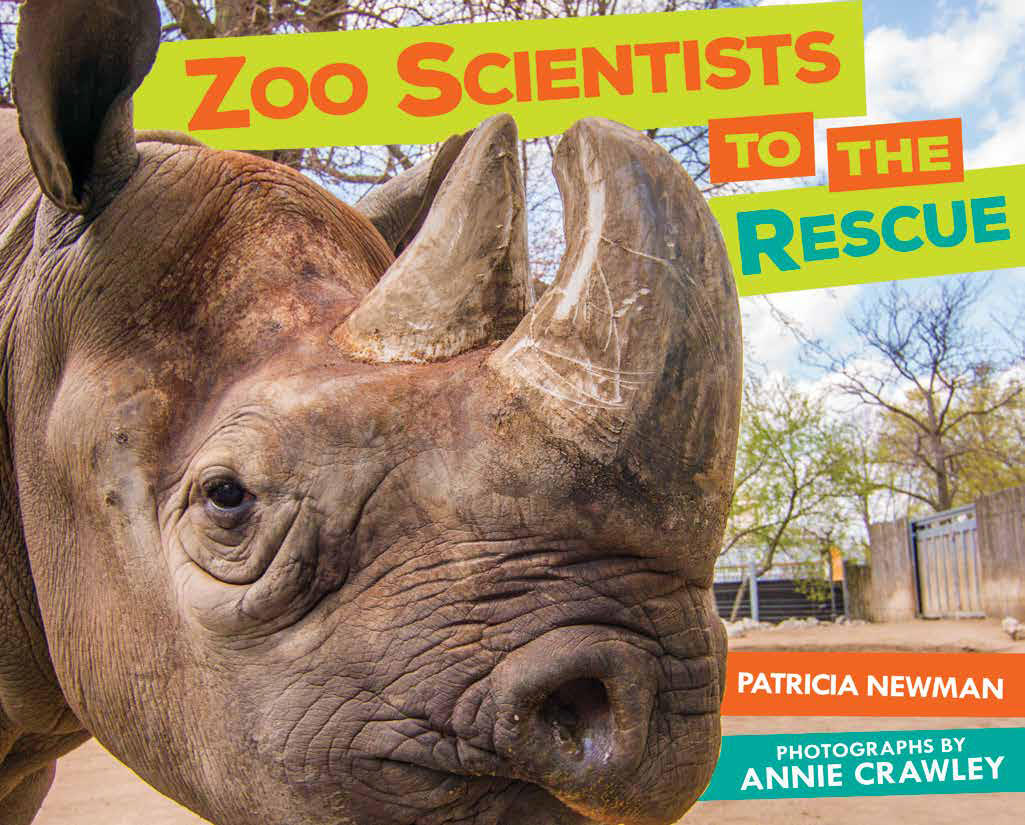
Zoo Scientists to the Rescue
Author: Patricia Newman
Photographer: Annie Crawley
Published October 1st, 2017 by Millbrook Press
Summary: Zoos take care of animals and welcome visitors of all ages, but that’s not all zoos do. Author Patricia Newman and photographer Annie Crawley bring readers behind the scenes at three zoos to meet scientists working to save endangered animals.
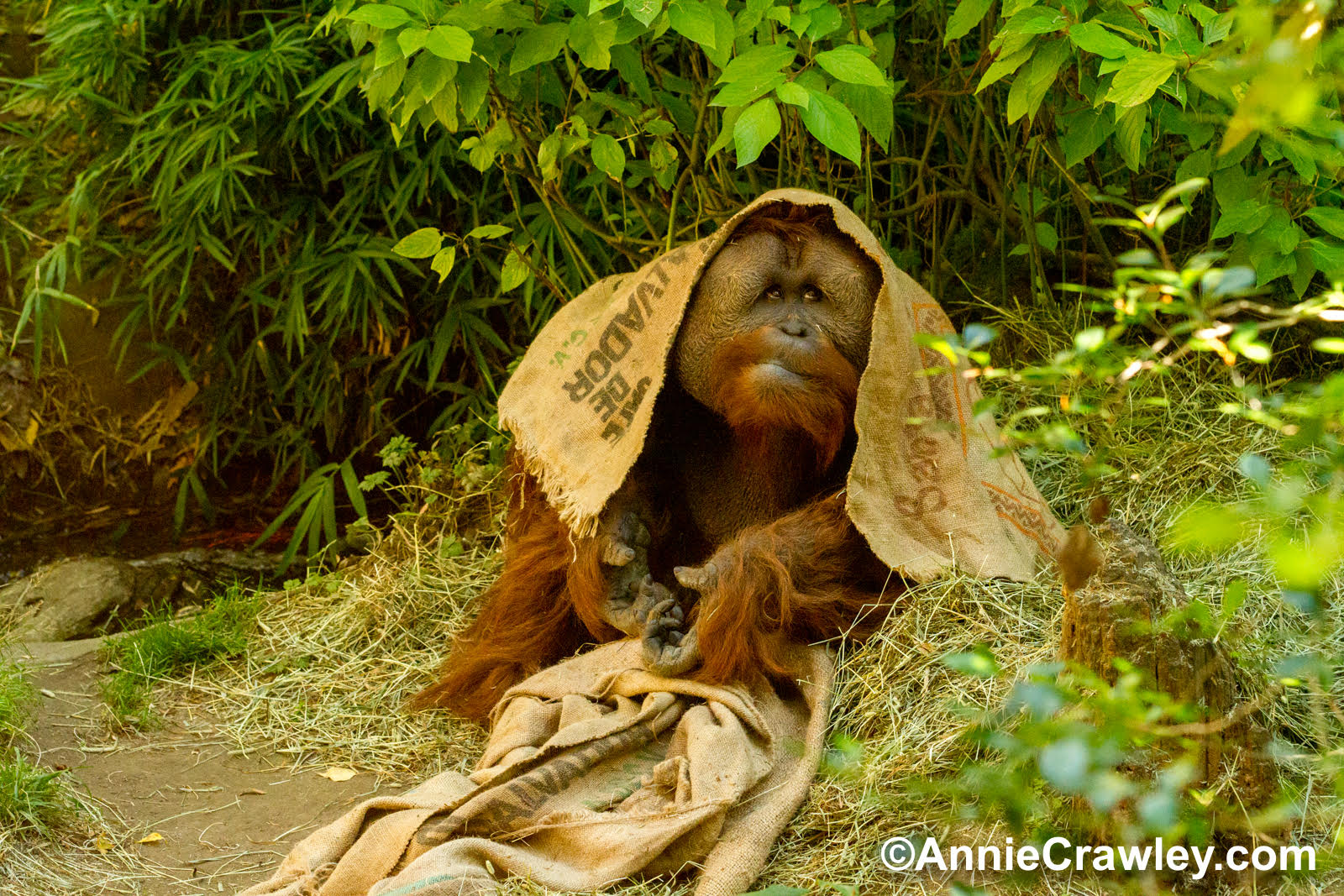
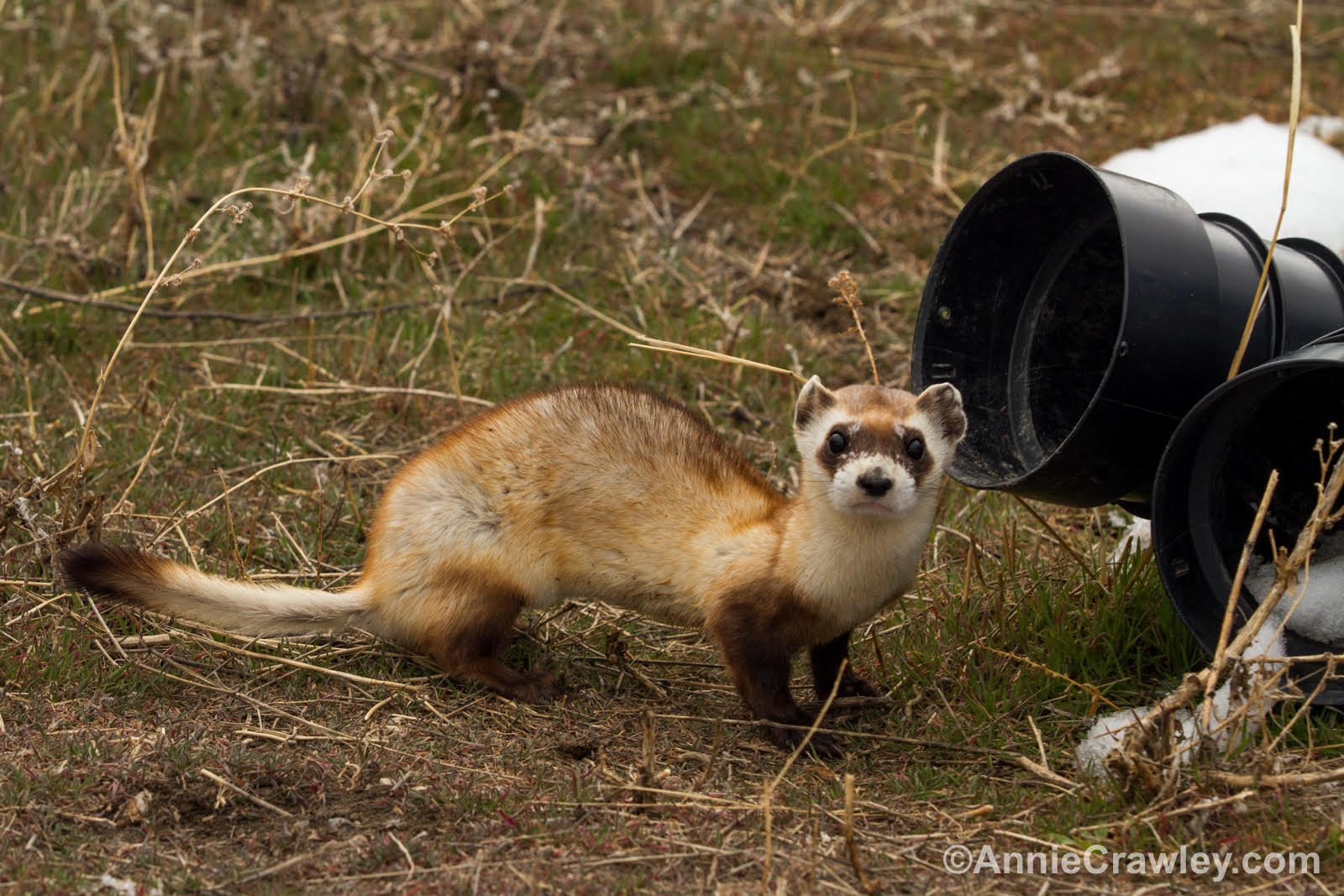
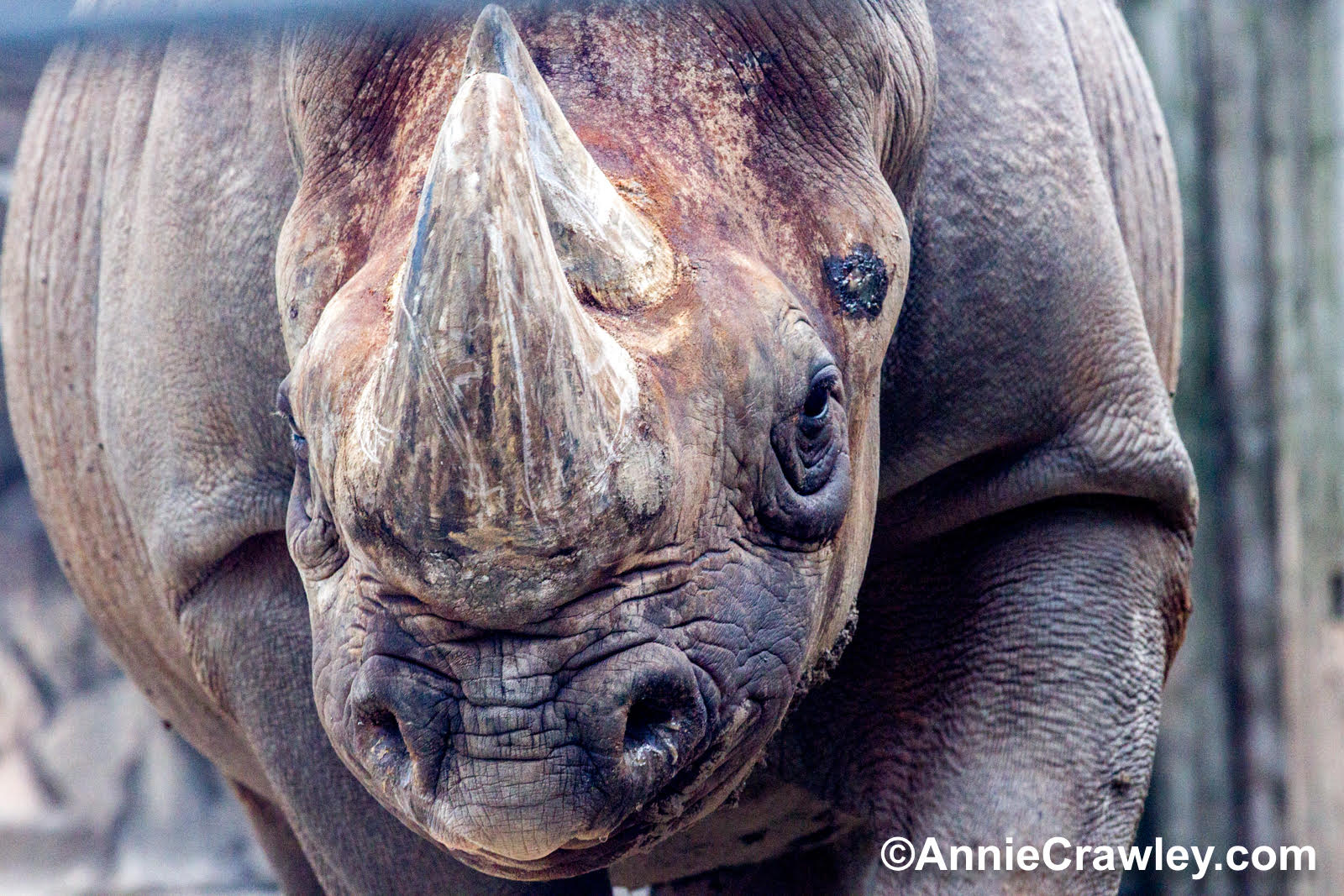
Meredith Bastian’s experiences studying wild orangutans help educate both zoo visitors and the zoo workers who care for captive orangutans. Jeff Baughman breeds black-footed ferrets and reintroduces them into the wild. And Rachel Santymire examines poop from black rhinoceroses at the zoo and in their natural habitat to benefit all black rhinos. Find out how zoo scientists are helping us learn more about these remarkable, at-risk species before it’s too late!
Review: Patricia Newman’s work always blows me away and Annie Crawley’s photos in Plastics, Ahoy! were breathtaking, so I was so happy to see that they had a new book coming out. In Zoo Scientists, a text is just as brilliantly done as Newman’s other works, she once again focuses on a topic that needs a spotlight. This time, we see how zoos are working towards saving endangered animals. Zoos are such important places when they are done correctly, so I loved this focus on three specific stories about how zoos are helping rhinos, orangutans, and black-footed ferrets. Each section tells us about a scientist at a different zoo, how they came to be where they are today, and how they help the species they work with. I loved the inclusion of each scientist’s story paying special attention to how they each became an expert. This makes Zoo Scientists perfect for looking at not only looking at endangered animals and zoos but how to reach your potential in a career making this book a must-get for classrooms that study any of these things.
Consider an Author for Earth Day visit! Consider an Authors for Earth Day visit in conjunction with Zoo Scientists to the Rescue. Students research a list of five conservation nominees selected by Patricia Newman and then vote for their favorite. Newman writes a check to the winning organization. The mission? To empower young readers to shape the world around them!
Discussion Questions: Use any or all of these discussion questions to extend the learning with Zoo Scientists to the Rescue:
What steps did each scientist take to become an expert in their field?
Why are orangutans’ habitat being destroyed?
Why is the poaching of rhinos for their horns such a devastating action?
How did the expansion of our nation effect the black-footed ferret?
How did humans play a role in each of these animals’ endangered status?
What can you do to help these animals?
Visit some of the resources about other conservation stories in the end of the book and share what you learn.
What words did you learn from the book? (Check out the glossary!)
Flagged Passages:
“A sign outside the orangutan enclosure at the National Zoo explains that the apes red coloring mimics shadows in the forest’s canopy. As little as 30 feet above the forest floor, orangutans essentially disappear, which is surprising given their bulk. Fully grown wild wild male orangutans can weigh up to 220 pounds and wild females can weight up to 120 pounds. Zoo orangutans tend to be between 50 to 100 pounds heavier because of their nutritious diet.”
“About 15 years ago, black-footed ferrets roamed the Great Plains from Canada to Mexico. The Lakota call them pispiza itopta sapa (black-faced prairie dog) and believe they are sacred. But in the late 1800s, settlers moving westward and travelers from across the Pacific Ocean unknowingly put the ferrets in danger.”
“Unfortunately, rhinos are no match for armed poachers, hunters who kill wild animals illegally for profit. Approximately 5,050 black rhinos remain in the world due to poaching and habitat loss. They are labeled critically endangered–one step from extinct in the wild, and only two steps from fully extinct. Lincoln Park Zoo hopes to play a role in saving them.”
Book Trailer:
Read This If You Love: Zoos, Animals, Learning about scientists, Science, Conservation efforts, Earth Day
Recommended For:
Make sure to visit the other stops on the Blog Tour!