Blog Tour, Giveaway, and Review!: The Typewriter by Bill Thomson

Share

Thomson_TheTypewriter_6603_JK_FL_ v3.indd

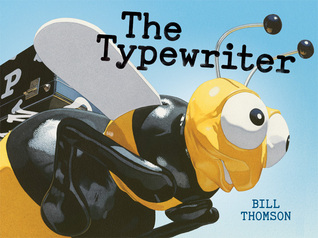
The Typewriter
Author & Illustrator: Bill Thomson
Published March 8th, 2016 by Two Lions

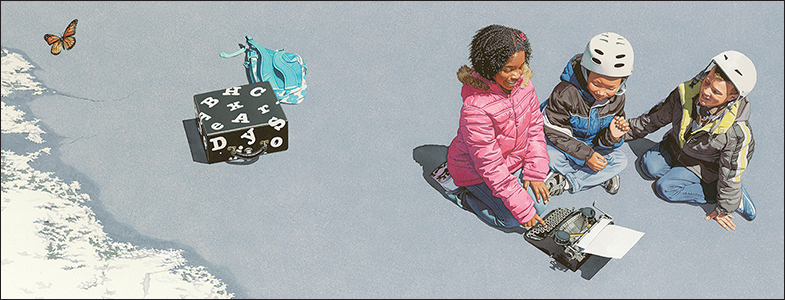
Goodreads Summary: Using just nine words, the award-winning creator of Chalk takes readers on another unforgettable journey. When three children discover a typewriter on a carousel, they are transported on an adventure of their own creation—complete with a giant beach ball and a threatening crab. Stunning, richly colored artwork is paired with limited text so children can tell their own version of the story.

About the Author: Bill Thomson is the creator of Chalk and Fossil and the illustrator of Baseball Hour, Karate Hour, Soccer Hour, and Building with Dad, all written by Carol Nevius. Thomson’s books have received many accolades: the National Parenting Publications Gold Award, designation as a Notable Children’s Book by the American Library Association, a Teacher’s Choice selection from the International Reading Association, a Booklist Editor’s Choice, the Connecticut Book Award for Children’s Illustrator, Kentucky’s Bluegrass Award, Ohio’s Buckeye Children’s Book Award, and the Prix Livrentête in Paris, France. Thomson’s artwork has also received more than 75 awards in the country’s most prestigious juried illustration competitions.

Bill Thomson RGB photo (2)

Thomson lives with his family in Southington, Connecticut and is also a professor of illustration at the University of Hartford. To see more of his artwork, visit: www.billthomson.com.

Kellee’s Review: I often hear that it is best to show not tell in writing, and this is taken to another level with this wordless picture book. I’m always blown away by excellent wordless picture books because there are illustrators that can take you on such an amazing journey without telling you anything. Although Bill Thomson does use nine words in The Typewriter, it is his illustrations that transport you into the story. He is an incredibly talented illustrator. Just like with Chalk, I am in awe of how realistic his illustrations are!

Ricki’s Review: This book is very innovative in the way it shares story. Readers will zoom into and out of the scenes on each page and will be pulled right into the book. My son has read this book several times, and I love how he carefully and slowly examines all of the illustrations on the pages. When he gets a bit older, I plan to ask him to tell his own story that connects the illustrations. We can change the story just a bit each night. Thomson creates the story to be interpretive for readers, and I can’t wait to hear what my son comes up with! This would be a great story for the classroom. The magic of this book will not be lost on readers.

Teachers’ Tools for Navigation: The Typewriter is a wonderful jumping off point for a creative writing unit. There are two different directions that it can be taken. First, as with all wordless picture books, you can have students narrate The Typewriter. I also would love to see what students would do if they had the magic typewriter. The Typewriter could be used as a prompt for students to write their own story as a sequel when they find the magic typewriter on the carousel.

Other classroom activities can be found in the free curriculum guide.

Discussion Questions: Without using words, how does the author show how the characters feel during the story?; What do you think the backstory of the typewriter is? How did it get there? Where did it come from?; What is the turning point in the story?; What caused the kids to put the typewriter back?

We Flagged: 

Thomson-TheTypewriter-8-9 (2)
Illustration from THE TYPEWRITER copyright © 2016 by Bill Thomson Published by Two Lions

Read This If You Loved: Chalk by Bill Thomson, Journey by Aaron Becker, Float by Daniel Miyares, Mr. Wuffles by David Wiesner

Recommended For: 

classroomlibrarybuttonsmall readaloudbuttonsmall

Follow All the Stops on the Tour: 

Fri, Mar 4
Teach Mentor Texts
Mon, Mar 7
The Book Monsters
Tues, Mar 8
Kid Lit Frenzy
Wed, Mar 9
5 Minutes for Books
Thur, Mar 10
Cracking the Cover
Fri, Mar 11
Unleashing Readers
Mon, Mar 14
Sharpread
Tues, Mar 15
Jean Little Library
Wed, Mar 16
NC Teacher Stuff
Thur, Mar 17
A Rup Life
Fri, Mar 18
A Foodie Bibliophile in Wanderlust
Tues, Mar 22
Library Fanatic

And Don’t Forget to Enter the Giveaway!

a Rafflecopter giveaway

Kellee Signature andRickiSig

**Thank you to Barbara for sending us this book and for allowing us to host the giveaway!**

Blog Tour, Giveaway, and Review!: Good Morning Yoga by Mariam Gates

Share

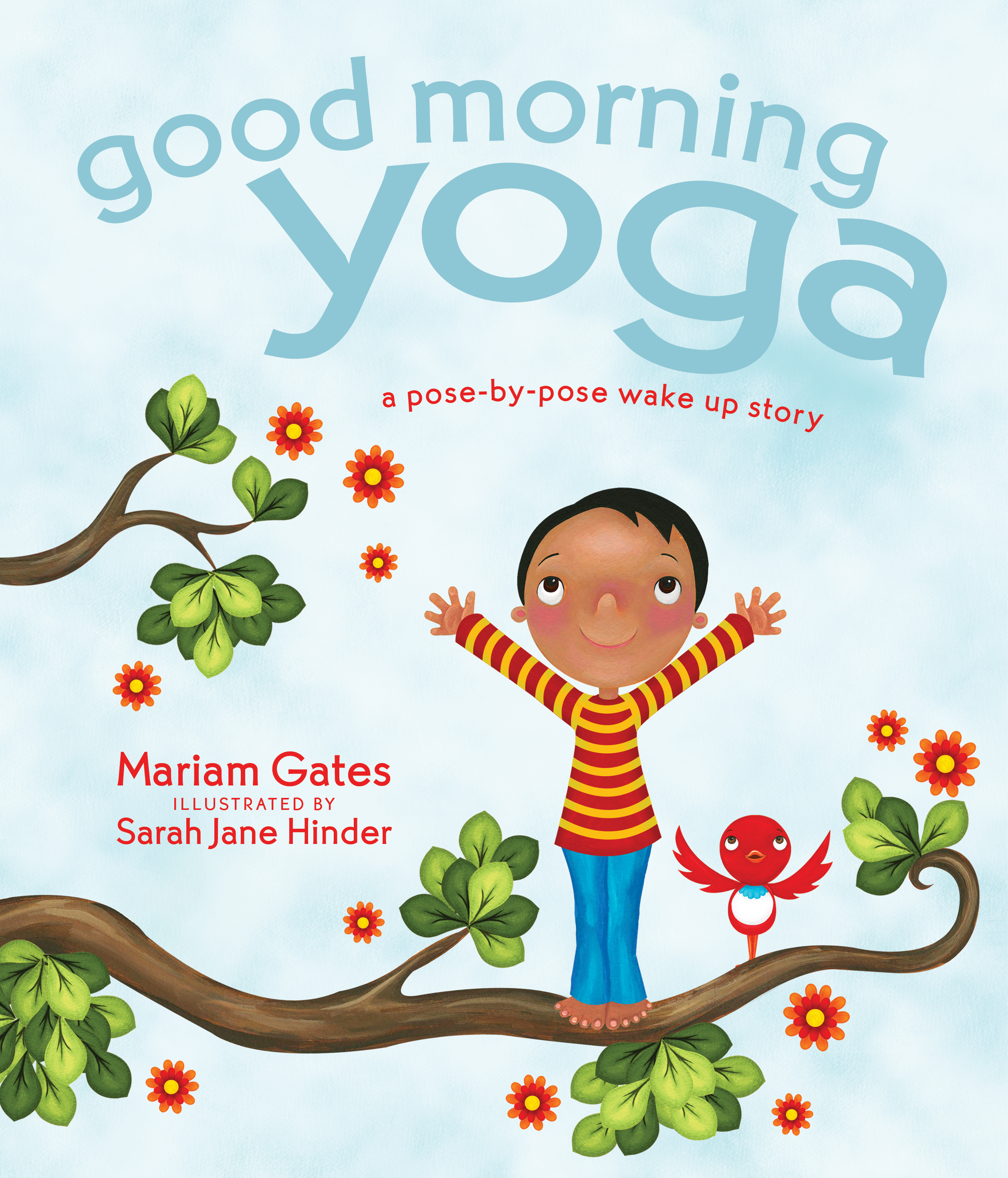
Good Morning Yoga-UPDATED cover hi-res

Good Morning Yoga: A Pose-By-Pose Wake Up Story
Author: Mariam Gates; Illustrator: Sarah Jane Hinder
Published March 1, 2016 by Sounds True

Goodreads Summary: Yoga helps children learn how to focus, relax, and both self-monitor and self-soothe Good Morning Yoga instills these four skills and more, enabling children to jumpstart the day with energy and excitement and meet the adventures that come with mindfulness and perspective.

Good Night Yoga tells the story of the world retiring for the evening and a new generation of readers has fallen in love with the relaxing sequences and beautiful pictures that lead them to dreamland. Good Morning Yoga weaves gentle exercises with a heartwarming narrative and wonderful illustrations to empower children to manage the energies that visit throughout the day from the fiery volcano to the mountain quiet and still. Good Morning Yoga concludes with a visualization for kids to set intentions for the day.

About the Author: Mariam Gates holds a master’s in education from Harvard University and has more than twenty years’ experience working with children. Her renowned Kid Power Yoga program combines her love of yoga with teaching to help children access their inner gifts. She is the author of Good Night Yoga (Sounds True, April 2015), and lives in Santa Cruz, CA, with her husband, yoga teacher Rolf Gates, and their two children. For more information, visit mariamgates.com.

Twitter:  @gatesmariam
Instagram: mariam.gates

Mariam Gates

Review: My father is a pediatrician, and he is constantly recommending meditation and yoga to his patients. He wasn’t a meditation kind of guy when he started practicing medicine, but he came to realize that many of the children who came to him were asking for natural ways to deal with stress and anxiety. I can’t wait to share this book (and Good Night Yoga) with him! There is a definite need for these two texts. Children are rarely taught stress-relieving practices in school, and I wish I’d been taught yoga as a child. 

My two-year-old son and I have had so much fun with this book since it arrived. He constantly asks for the “Woga book.” We practice yoga at least once a day with this book, and it we really enjoy this time together. The narrative that weaves through the book will engage readers and allow them to connect with the yoga moves. The illustrations match the calm beauty of this text, and I think kids will love it. I can’t help but think about how Gates’ books would really help kids grow and develop emotionally and physically.

Teachers’ Tools for Navigation: As a high school teacher, there were many times that I found my students’ energy was flagging. Also, during exams, they were very stressed. We stopped for stretch or meditation breaks. They appreciated these moments and reminded me of them when they’d visit me many years later. This book would be excellent to use in classrooms of all ages. The teacher might read the entire text the first time and then use excerpts in future yoga breaks, depending on time allowance. Research shows that kids who have more recess time perform better. I’d love to do some research on the effect of yoga breaks during schools! This book should be printed in oversized book format!

Encourage yoga time in your home, bookstore, or library with this downloadable kit!

Discussion Questions: How did reading this book make you feel? How might yoga fit into your life?; What are the benefits of yoga?; How does the author’s language connect you with the narrative and yoga moves? How does the illustrator creatively depict the text?; How do the different yoga moves work together?

Book Trailer:


Book Reading:

Another Great Video!:

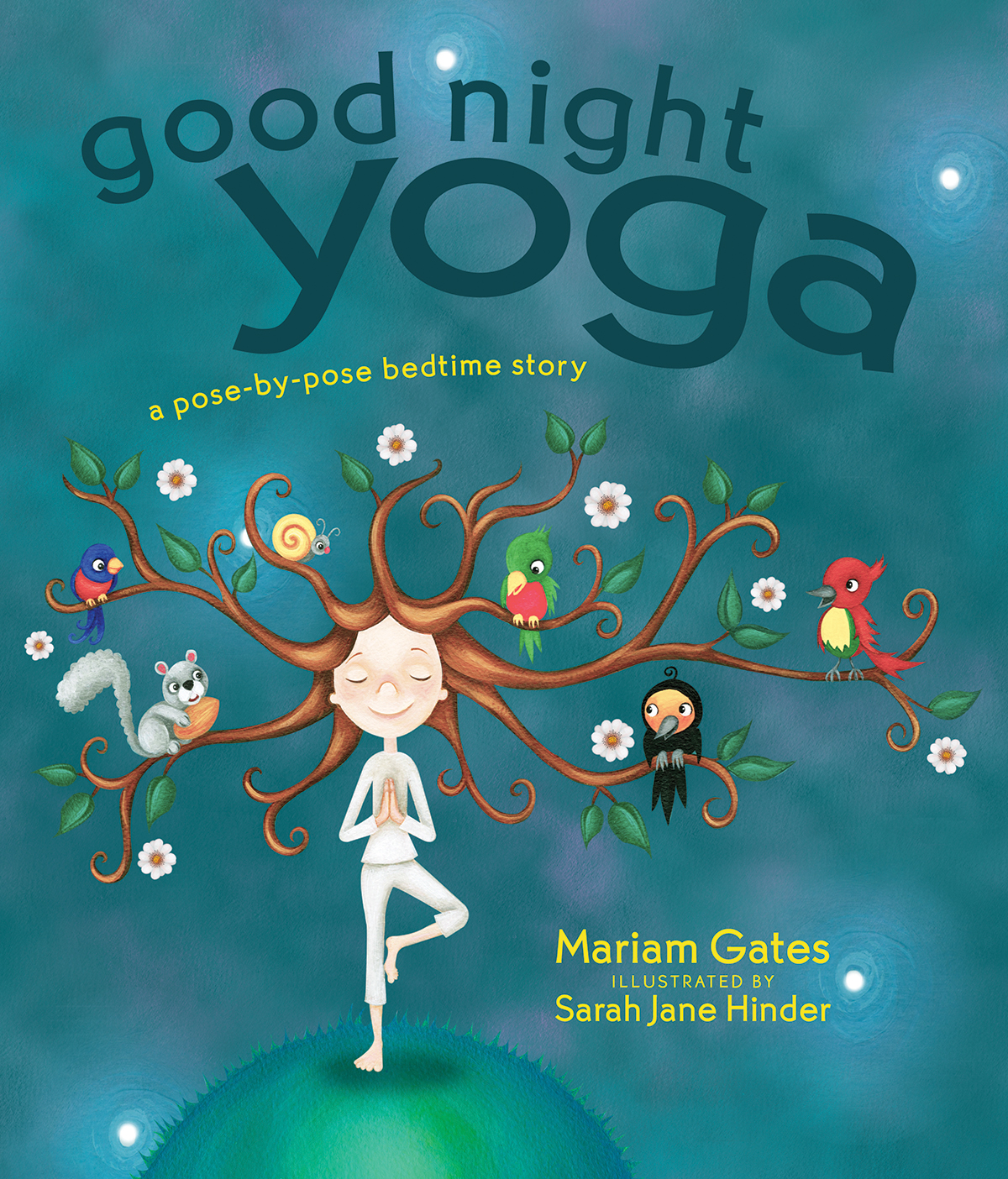
Read This If You Loved: 

Good Night Yoga (2)

Recommended For: 

readaloudbuttonsmall classroomlibrarybuttonsmall


Follow All the Stops on the Tour: 

Wed, Feb 24
Teach Mentor Texts
Fri, Feb 26
Where Imagination Grows
Mon, Feb 29
A Rup Life
Tues, Mar 1
Proseandkahn
Wed, Mar 2
Kid Lit Frenzy
Thurs, Mar 3
5 Minutes for Books
Fri, Mar 4
Once Upon a Story
Mon, Mar 7
Wrapped in Foil
Tues, Mar 8
Sharpread
Wed, Mar 9
A Foodie Bibliophile in Wanderlust
Thurs, Mar 10
Unleashing Readers
Fri, Mar 11
Children’s Book Review
Tues, Mar 15
The Library Fanatic
And Don’t Forget to Enter the Giveaway!:

a Rafflecopter giveaway

RickiSig

**Thank you to Barbara Fisch for sending us this book and for allowing us to host the giveaway!**

Blog Tour, Author Guest Post, and Review!: Dig In! by Cindy Jenson-Elliott

Share

NFPB2016

Nonfiction Wednesday

Nonfiction Picture Book Wednesday is hosted by Kid Lit Frenzy and was started to help promote the reading of nonfiction texts. Most Wednesdays, we will be participating and will review a nonfiction text (though it may not always be a picture book).
Be sure to visit Kid Lit Frenzy and see what other nonfiction books are shared this week!
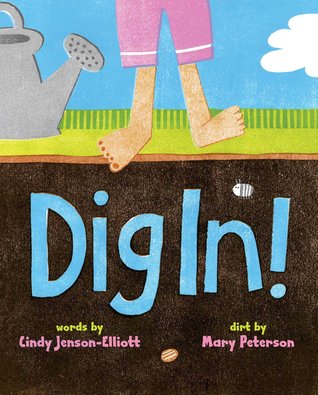
dig in

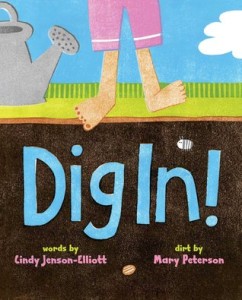
Dig In!
Author: Cindy Jenson-Elliott
Illustrator: Mary Peterson
Published March 1st, 2016 by Beach Lane Books

Summary: Dig in to this vibrant picture book that celebrates all the surprises found down in the dirt!

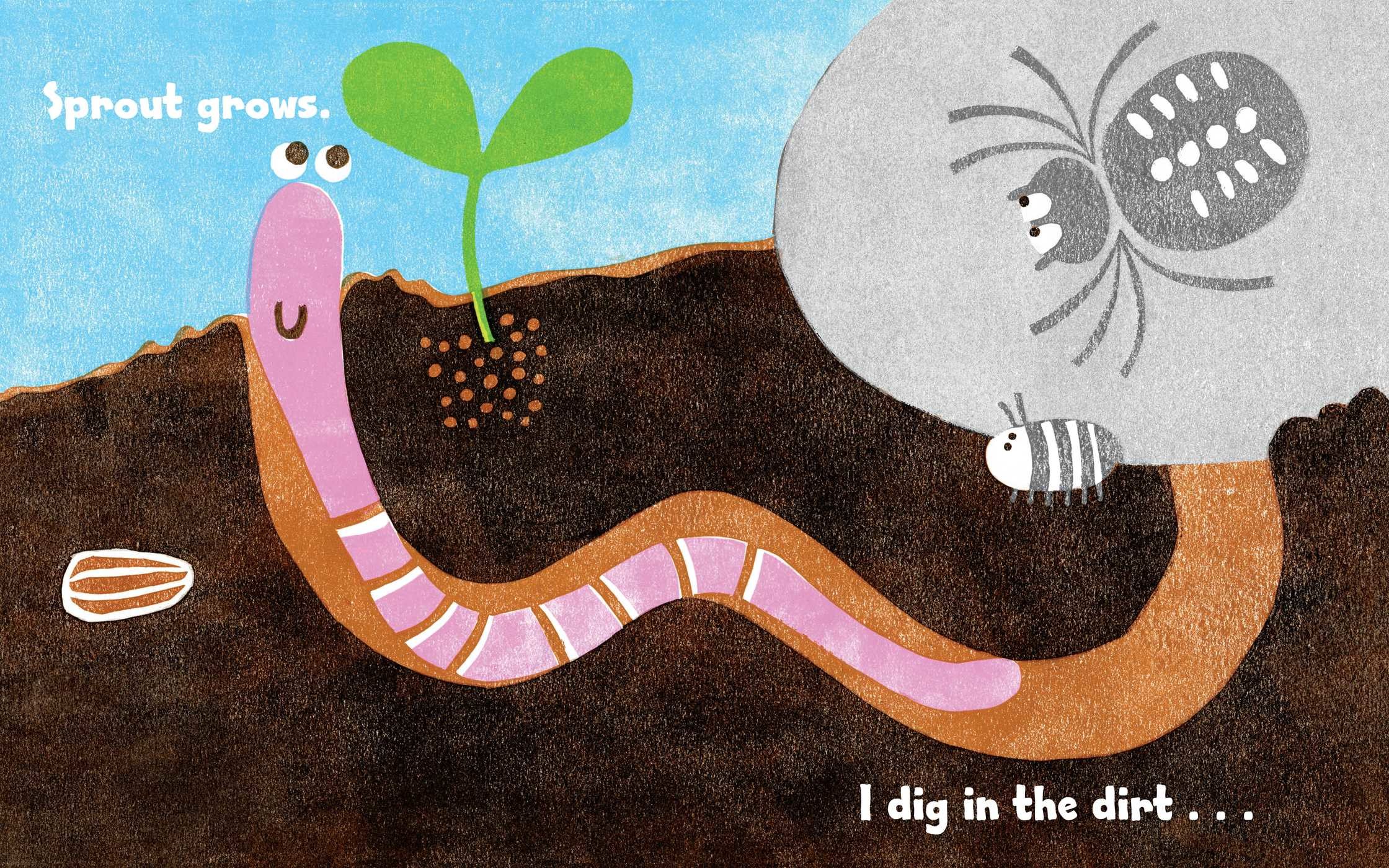
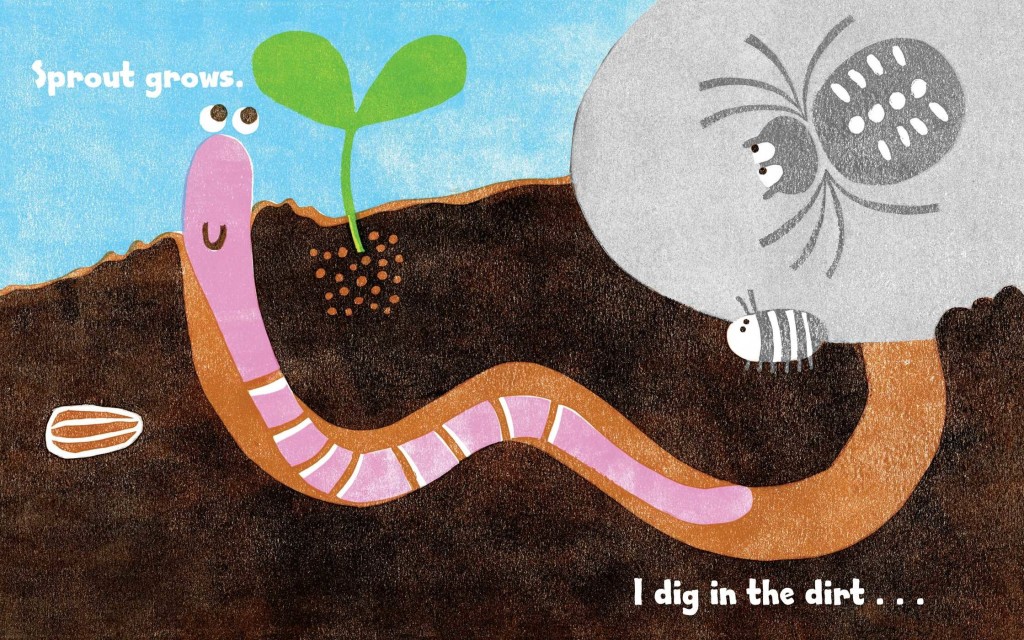
I dig in the dirt…and find a seed.
Seed waits.
I dig in the dirt…and find a spider.
Spider runs.

Explore all of the creepy, crawly, dirty, muddy, green, and growing things that can be found outside in the garden. From pill bugs to worms to leafy green sprouts, young readers will love discovering the muddy garden habitat within the pages of this book—and outside in their own backyards!

This sweet and playful celebration of outdoor exploration is a perfect read aloud for story time.

About the Author: Cindy Jenson-Elliott is the author of the celebrated Weeds Find a Way illustrated by Carolyn Fisher. She is a freelance writer for a variety of newspapers, magazines, and educational publishers, as well as a teacher and natural history instructor. She has an MA in education, and she enjoys spending time outdoors in San Diego, California, where she lives with her family. Visit her at CindyJensonElliott.com.

Kellee’s Review: Both of Cindy Jenson-Elliott’s books have truly made me want to get down and dirty in the garden which, if you know me, is exactly the opposite of what you would guess I want to do. Jenson-Elliott has a way of making the ordinary, and dirty, seem extraordinary. It would be great to have students catalog all of the things they find in a dirt. This would make their trips outside quite exciting!

Ricki’s Review: Kellee is absolutely right. Reading this book made me want to get outside in my garden! Oh, I cannot wait for spring! When my son and I read this book, I kept pointing to the pictures and telling him about all of the digging we will do this spring, and I am excited to have this book (and Jenson-Elliott’s Weeds Find a Way) on hand for when the time comes! We live in Connecticut (which is much colder than where Kellee lives), so we can’t quite do any digging yet. This book emanates warmth, and it will make kids want to go outside and start exploring! Cindy Jenson-Elliott seems to find the beauty in things that others may perceive negatively, and I love teaching my son to find the beauty in these unappreciated things!

Teachers’ Tools for Navigation: Cindy Jenson-Elliott has some amazing ideas on how to bring a garden into your curriculum (see below), but you can also use Dig In! to discuss sequencing and cause/effect. First, you can discuss sequencing by having students share each step of what needs to be done to plant and maintain a garden. You can also take the sequencing and extend it into cause/effect by discussing different things you can do to a garden to help or hurt it. It would also be interesting to ask students to research local dirt inhabitants. They might then research the garden plants and critters of another location to learn more about different habitats.

Some More Teachers’ Tools from Cindy Jenson-Elliott:  

“From Compost to Blossoms: Falling in Love with Literature in the School Garden”

An empty pile of dirt. A blank page. A great book. A tender idea. This is how most of my garden adventures with children begin.

Teaching in the garden is alive with possibility in more ways than one. Ideas spring up like weeds – a crazy tangle without discernable order. Bringing an idea to fruition –doing something I have never done before — feels like an enormous reach.  It is like trying to untangle a vine: where should the project begin? What are the steps? Who will help me figure it out? It’s terrifying — and thrilling! Teaching in the garden wakes you up to being a learner, even as you teach. You and the students are partners, learning together from nature. We all know teaching is risky business. Hands-on, project-based teaching – especially in the garden–  is downright dangerous.

Books take the edge off and give you a jumping off point for great projects that connect inside and outside learning. Here are some book ideas to get you started on some thrilling garden adventures of your own.

Sunflower House

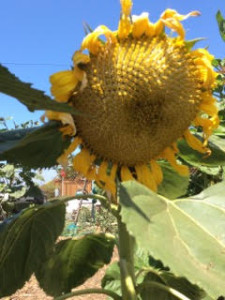
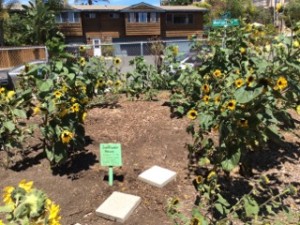
On one particular day in November, I shared Sunflower House by Eve Bunting with my TK- grade 3 students. My crazy idea was to grow our own sunflower house in a bare patch of dirt in the corner of the school garden.

First, I read the book to the children, and I shared my idea.

“We’re going to need a nice pile of garden dirt to go over in that corner,” I told them. “Right now it’s just hard clay.”

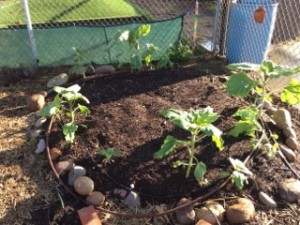
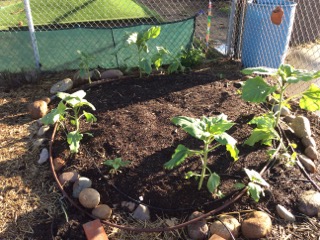
We piled dirt and compost on top of cafeteria trays reserved for gardening and students worked in partners to carry them over to the corner. We made a round, flat pad 1 foot high and 10 feet across. After school, I tapped into our drip-line watering system and ran a flexible watering tube over to the circle, looping around and around. The next garden time, students added a small amount of organic fertilizer and planted dozens of sunflower seeds. We planted Russian Mammoths, but also other multicolored and multi-sized varieties. We created a pathway leading to the dirt pad, and put up stakes protecting the area. Then we sat back and and waited, working on other garden projects all the while.

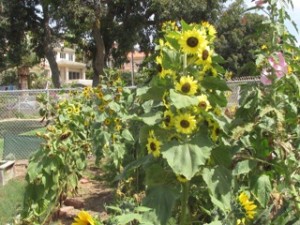
Winter rains in drought-stricken Southern California were sparse, but with dripping irrigation a few times a week, soon the sunflowers were sprouting. We measured them week by week, watching them grow higher and higher. Soon they were as high as a first grader’s head. Finally they were higher than my own head and shooting out buds.

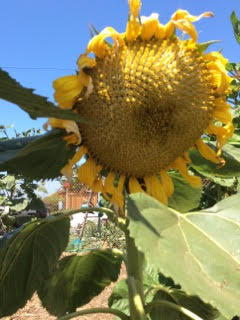
The Sunflower House gave us endless opportunities for learning. We measured and drew the growing plants with pastels and black paper to draw blossoms. Some teachers extended the activity by learning about Van Gough and looking at his paintings of sunflowers. We watched bees visit the blossoms and learned about pollination. When the stalks dried and the heads turned inside out, we learned about the birds that came to eat the seeds. And when the next generation of sunflowers sprouted up from fallen seeds, we could see the complete cycle of life in our circle of flowers. Best of all, students loved sitting in the Sunflower  House to write or draw, or just be. From one book, we developed an entire year’s worth of activities.

Weeds Find a Way
weeds find a way

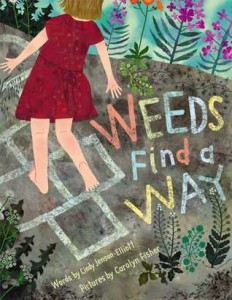
After reading my 2014 picture book Weeds Find a Way we searched our garden for the weeds pictured in the book. We drew weeds and researched them, asking how the weeds adapted for survival. Some classes used Weeds Find a Way as a mentor text to write their own “Something Finds a Way” books about another topic. We wrote poetry, and students developed social-emotional understandings by looking at the tenacity, grit and adaptability of weeds and comparing it with their own. Finally, we tried our hands at botanical drawing and we made a giant art piece to hang on the fence of the garden.

Trellis-Bridge Project

A trellis we built last year to hold up a new passion fruit vine in the garden  collapsed and we needed a new trellis. This problem was the catalyst for learning about bridges. Pop’s Bridge by Eve Bunting and Bridges! By Carol Johmann and Elizabeth J. Rieth, were jumping off points for learning about bridges, and designing and building a trellis to hold up our passion fruit plants.

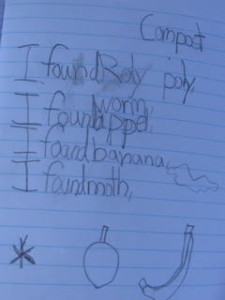
Dig In! #1000HandsDigIn Photography Project

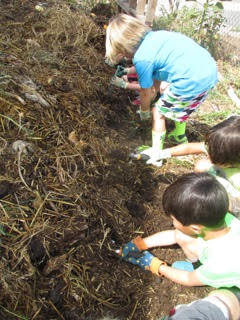
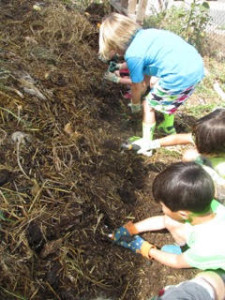
Last week we read Dig In! for the first time. Then we went out to the garden to dig in and photograph our hands and whatever our Mixed Age Class (MAC) grade 1 – 3 students found in the school garden. Students learned to frame, take and edit photos from fabulous teacher Margit Boyeson. Students are sharing their photos to twitter at #1000HandDigIn.

Engagement with Common Core Reading and Writing in the School Garden

            Picture books are the perfect way to connect inside learning and outside doing in the garden. Read Roxaboxen or Westlandia and create your  own special civilization. Read Creepy Carrots and plant a less scary variety. Then write your own creepy stories. Dive into Muncha, Munch, Muncha and see what critters are eating up your garden. Then write your own stories about the critters in the garden. And before you even plant seeds, take a look at your soil. Read Dig In! and discover the wonders living in your dirt.

What will you find when you Dig In! to gardening and literature? A world of wonder!

To see more literature-based projects you can do with students in the school garden, visit my website and follow the links to my naturexplorer blog at www.cindyjensonelliott.com.
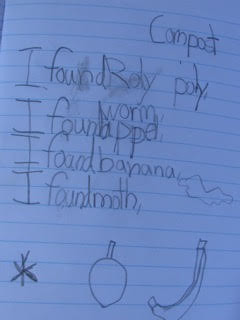
unnamed (1) unnamed Ava's 1000HandsPhoto unnamed (2)

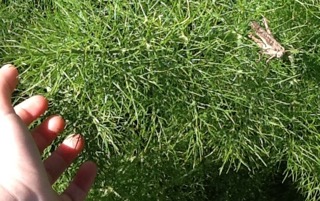
IMG_0211 IMG_3441 (1) IMG_1308

Discussion Questions: How are worms, spider, and pillbugs beneficial to a garden?; What other bugs are beneficial to gardens?; What else does a garden need to succeed?

We Flagged: 
dig-in-9781442412613.in03

Read This If You Loved: Weeds Find a Way by Cindy Jenson-ElliottThe Troublemaker by Lauren Castillo, In the Garden by Elizabeth Spurr

Recommended For: 

classroomlibrarybuttonsmall readaloudbuttonsmall

Kellee Signature andRickiSig

**Thank you Shifa at Simon & Schuster and Cindy Jenson-Elliott for providing a copy for review and for having us as part of the blog tour!**

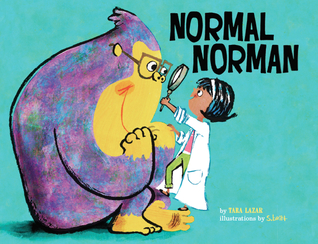
Normal Norman Written by Tara Lazar, Illustrated by S.britt

Share

normal norman

Normal Norman
Author: Tara Lazar; Illustrator: S. britt
Published March 1, 2016 by Sterling Children’s Books

GoodReads Summary: What is “normal?” That’s the question an eager young scientist, narrating her very first book, hopes to answer. Unfortunately, her exceedingly “normal” subject—an orangutan named Norman—turns out to be exceptionally strange. He speaks English, sleeps in a bed, loves his stuffed toy, goes bananas over pizza, and even deep-sea dives! Oh, no: what’s a “normal” scientist to do?

Ricki’s Review: Norman is one of those great literary characters that will stick with readers for a long time. The book is quite humorous, and my son was giggling as we read it together. Norman is anything but normal, yet the young scientist makes strong efforts to prove that he is normal. She becomes very frustrated, and then Norman teaches her an important lesson. I enjoyed this book because it was a fresh take on the idea of: What does it mean to be normal? I also enjoyed the layout of each page. The quote bubbles from the characters added another layer to the text that would be great to discuss in the classroom with a close reading. This will be a favorite in classrooms, and I recommend it highly.

Kellee’s Review: I love everything that this book stands for. It shows that normal is whatever you make it, that everyone should be accepted for what they are, and normal isn’t always what it seems. Norman helps mold the young scientist’s mind which will hopefully lead readers to also rethink what they think normal is. I am definitely going to use this book as one of our “precepts” in the future because I really think it’ll make students think. 

Teachers’ Tools for Navigation: Teachers might consider using this text to teach broad conceptions of normalcy. Often, young students conceive of normalcy as anything similar to them. A teacher might introduce different groups, customs, and cultures to allow students to understand that normal is a socially constructed concept, and people can be different yet still normal. Or perhaps, students might determine that there is no such thing as being “normal.”

Discussion Questions: What does it mean to be normal? Is anyone normal? How might we conceive of normalcy more broadly?; What lessons does the scientist learn? How does she learn them?

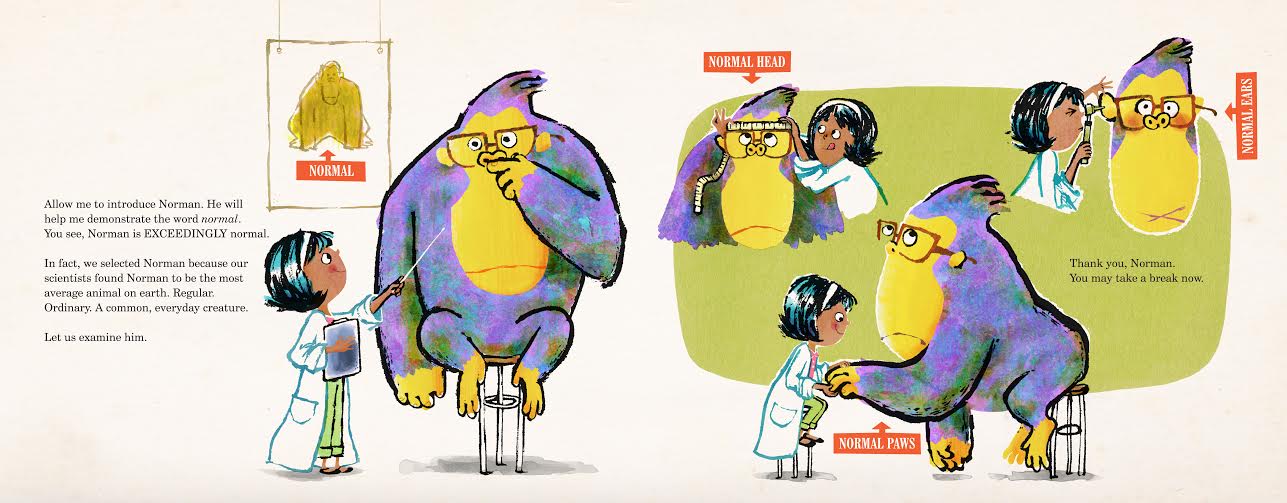
We Flagged: “Allow me to introduce Norman. He will help me demonstrate the word normal. You see, Norman is EXCEEDINGLY normal.” 

normal norman spread

Reprinted with permission from Normal Norman © 2016 by Tara Lazar, Sterling Children’s Books, an imprint of Sterling Publishing Co., Inc. Illustrations © 2016 by Stephan Britt.

Read This If You Loved: You Are (Not) Small by Anna KangGiraffes Can’t Dance by Giles Andreae, Unicorn Thinks He’s Pretty Great by Bob SheaThe Magic of Maxwell and His Tail by Maureen Stolar Kanefield

Recommended For: 

closereadinganalysisbuttonsmall readaloudbuttonsmall classroomlibrarybuttonsmall

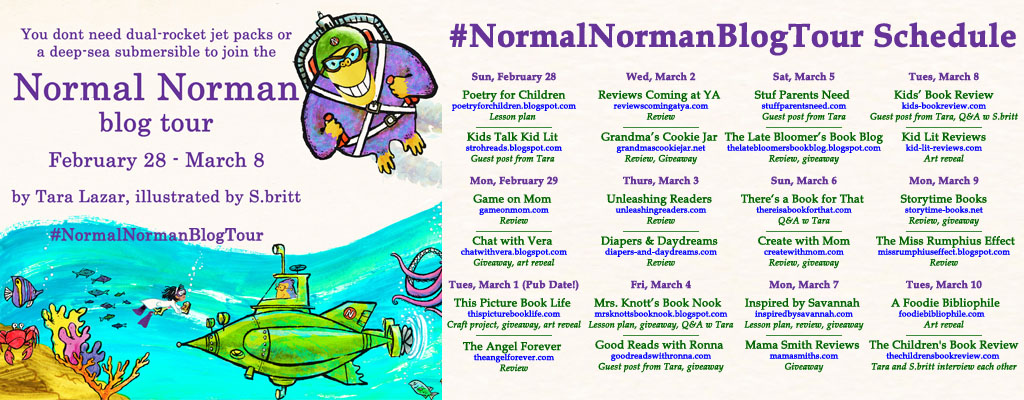
Check Out Normal Norman at the other stops on the tour!:

NN Tour Schedule - Sized for Twitter (1)

RickiSigandKellee Signature

**Thank you to Josh from Sterling books for providing copies for review!!**

Trent’s Favorite Books: One to Two Years Old

Share

1-2yearsbooks

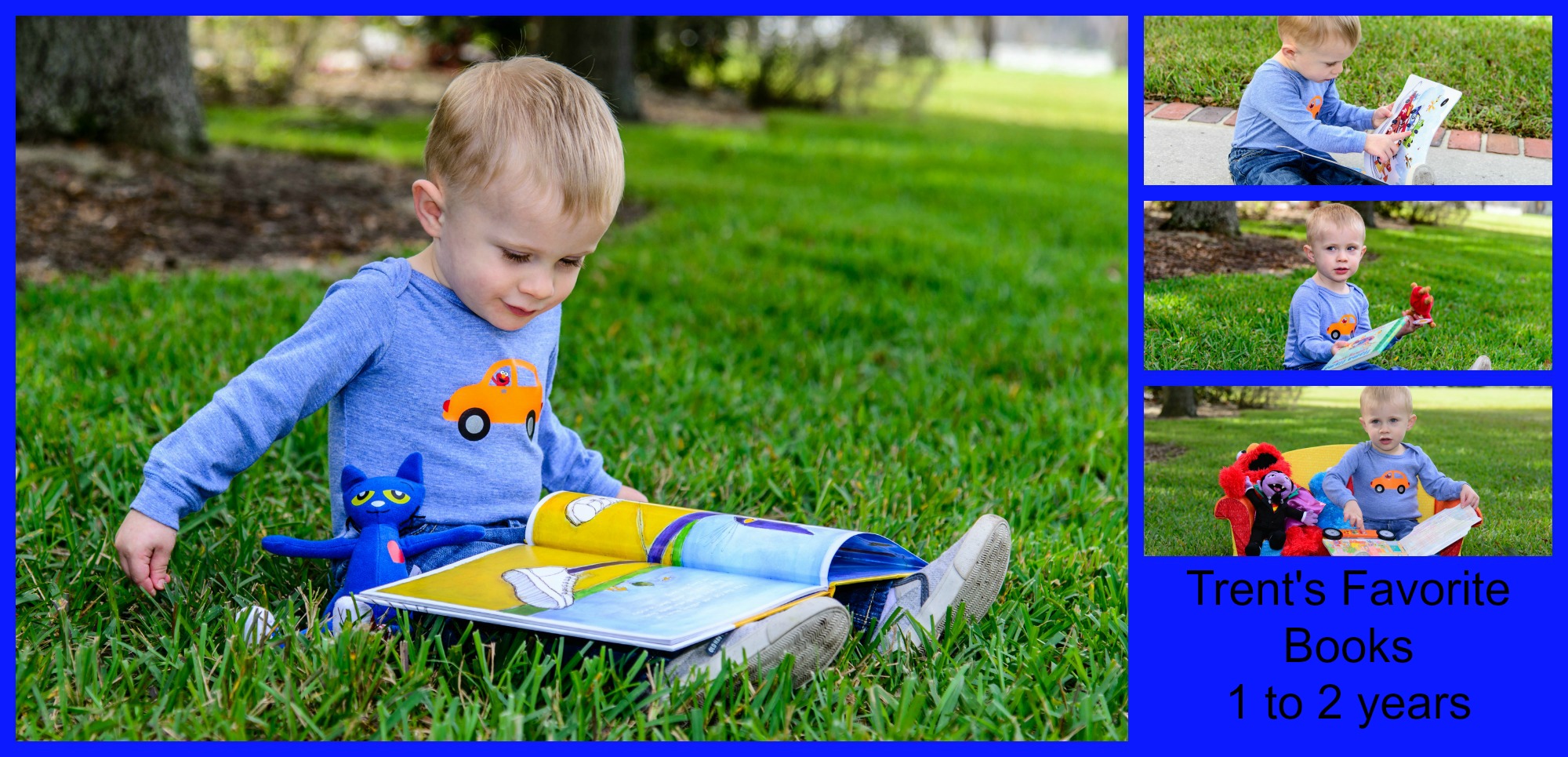
I cannot believe that Trent is two! He is such a smart, sweet, funny boy who is really coming into his own. Additionally, over the last year, he has gotten a reading personality. I used to be able to force him to listen to whatever I wanted to read, but now he drives the book bus. He’ll still listen to new books I love sometimes, but most of the time, he is choosing what he wants to read, and he definitely has favorites. I will preface with the fact that most of these are board books because that is what he primarily has access too. I cannot wait until he isn’t into tearing book pages, and we can dive into all of his picture books freely!

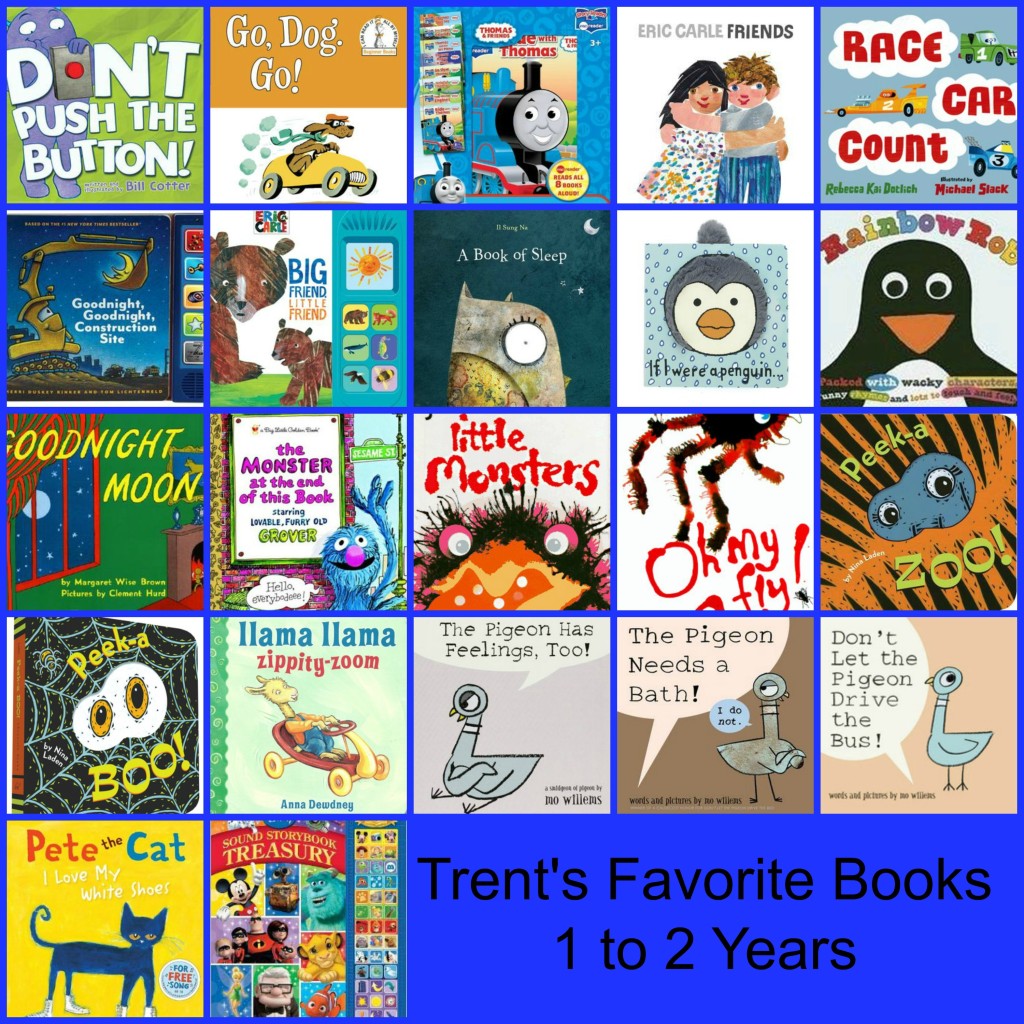
Here are his favorite books over the last year (in no particular order):

1-2yearsbookcollage

Don’t Push the Button by Bill Cotter

This book is hilarious! Trent loves the interactive parts, and I love how clever it is.

Go, Dog, Go! by P.D. Eastman

A classic! Trent says good bye at the end of the hat scene which is adorable! I also love how it teaches colors, prepositions, and opposites.

Thomas the Tank Engine Me Reader

This lets Trent be in control. It has a reader that allows him to pick which book he wants to read then each page he is reading has a symbol that he presses and it reads the page to him.

Friends by Eric Carle

A new favorite of his. There is a part in the middle where the character is on an adventure to find his friend, and Trent loves the onomatopoeias that are within this section.

Race Car Count by Rebecca Kai Dotlich

I am so glad we got this book because it may just be Trent’s favorite. He loves the orange car the best. I really think this book is the reason why he knew all of his colors by 22 months!

Goodnight, Goodnight Construction Site (Sound book) by  Sherri Duskey Rinker

Trent is a fan of sound books and construction machinery, so this is a perfect mix and a great bedtime story.

Big Friend, Little Friend from the World of Eric Carle

Another sound book which looks at big and little animals that live in the same habitat. Another combo of two things Trent loves.

A Book of Sleep by Il Sung Na

This has been a favorite of Trent’s from the second we read it the first time. He loves his owl book. He’s also started having us read Little Owl’s Night by Divya Srinivasan, so I can see it sneaking in and being a loved owl bedtime story too.

If I Were a Penguin by Anne Wilkinson

Another favorite for his entire life. He loves the touch-and-feel aspects and penguins.

Rainbow Rob by Roger Priddy

This book is such a great mixture of humor, touch-and-feel, and learning. It teaches about different animals and colors within a humorous story with each animal having a different textured aspect.

Goodnight Moon by Margaret Wise Brown

At first Trent had no interest in Goodnight Moon, but recently we had started saying goodnight to everything around the house, so I decided to bring it back out. Now it is the book that we end every day with. He crawls into bed, and I read it to him right before kissing him goodnight.

The Monster at the End of this Book and its sequel by Jon Stone

My boy is a Sesame Street kid (and proud of it), and we love both Monster books.

Little Monsters and Oh My a Fly! by Jan Pieńkowski

These are both pop-up books that we had when I was younger, and my mom passed on to me. They are a little gross and weird, but Trent just thinks that’s hilarious.

Peek-A-Zoo and Peek-A-Boo by Nina Laden

This along with Pete the Cat and Llama Llama are the first books that Trent “read” because he memorized what to say (or parts of what to say). He loves turning the page and “scaring” himself with the animal or Halloween-themed thing beneath the page.

Llama Llama Zippity Zoom and other Llama Llama board books by Anna Dewdney

Llama Llama Zippity Zoom is one of my favorite books to read with Trent because he reads along with you and loves the different rhyming words throughout. He yells VROOM VROOM VROOM every time–it is so great! He is also starting to like the rest of the Llama Llama board books we have, so I see him being a huge Llama Llama fan in the future.

Pigeon books by Mo Willems

We have progressed through many of the pigeon books over time. Originally, we read mostly the board book The Pigeon Has Feelings Too, but one day Trent saw The Pigeon Needs a Bath on the shelf and asked for it. The rest is history. He now has Don’t Let the Pigeon Drive the Bus in the mix as well.

Pete the Cat books by Eric Litwin and James Dean

We love Pete. The original is still our favorite and probably always will be, but Trent is good with reading any Pete book.

Disney Sound Storybook Treasury and other Disney books

We are a Disney family, so Trent is a bit obsessed with some of the characters (Anna, Olaf, Ariel, Mike Wyzowski, Sully, Buzz, Woody, Mickey, and Minnie to name a few), so he often wants to read our Disney books.

Reading with my child is something that I cherish. And I love that he is a fan of reading and has been since birth:
A First Year Full of Books
Trent and Kellee’s Favorite Books: Nine to Twelve Months
Trent and Kellee’s Favorite Books: Six to Nine Months
Trent and Kellee’s Favorite Books: Three to Six Months
Trent and Kellee’s Favorite Books: First Three Months

I cannot wait to see what the next year in books looks like for my sweet boy!

Kellee Signature

The Happy Dandelion App

Share

Happy Dandelion

The Happy Dandelion App

We were contacted by Joshua and Donna Wilson, a husband-wife team and The Happy Dandelion creators, who asked if we’d review their picture book app. Because apps stray toward the advertising sector, we always review the apps carefully before we feature them on the blog. As you all know, we are not for-profit, and we are truly here for the love of teaching books, but after previewing the app, we decided it was too lovely not to share.

The books featured are picture books for all ages, and we were able to pull our sons (who are toddlers) onto our laps, and they loved pushing parts of the books to see the words spin, bump, and twist. It was fun to navigate the books because there were so many places to push, and we felt like we’d won for each time that we pushed the right places!

The first book we reviewed was The Sometimes Road. This was a calming book that is directed more for adults and is about the twists and turns of life. It was a story that will be appreciated by kids, too! There were many quotable sections that felt very zen to us. The music in the background was peaceful, and the storyline discusses the difficulties and triumphs we experience in life. The artwork is absolutely stunning. Ricki accessed this book after yoga class, and it was the perfect time to look at it. It kept her heart calm and made her feel peaceful.

We also accessed The UnStealer, which was very different from the first book. The watercolors popped, and there were many fun twists to this story. It is about an UnStealer who steals, “uns,” which was a very fun play on words. Our kids loved this one, and we think this would be very fun to use as a read-aloud in class. It would be great to take student volunteers to push different parts of the book during the read-aloud.

Check out The UnStealer in action:

We loved playing around with The Happy Dandelion app and think it would be a great resource in a classroom. This would be a great app to load onto an iPad for kids to use during independent reading or to use in groups at a reading station. A special thanks to Joshua and Donna Wilson for recommending their app to us. We had great fun!

RickiSigand Kellee Signature

Author Guest Post!: “All About Imps” by Henry Herz, Author of When You Give an Imp a Penny

Share

“All About Imps”

According to German mythology, imps are lesser goblins who often seek humans on whom to commit mischievous, not evil, acts. Imps are described as small, wild and willful; in some cultures they are synonymous with fairies. They are sometimes depicted as unattractive small demons. Although immortal, imps could be harmed with magical weapons or kept out of one’s house with magical wards.

There’s a certain pathos associated with imps, as their mischief is meant to attract human attention and friendship, but typically produces the opposite effect. Even in “successful” situations, the imp remains true to its nature, and continues to play pranks on its human host. Hence the term “impish” is often used today to describe someone who is a trickster or practical joker.

Given their quasi-demonic appearance, some believed that imps were servants of witches and warlocks, sometimes known as familiars. Such familiars, in the form of the all-too-common black cat, black dog, or toad, were considered proof of witchcraft during the era of witch hunts. Science!!

Imp legend in some cases associates imps with an object. Some imps were kept within a container, like a bottle or lamp. Others were not contained within, but magically bound to an object like a sword or jewel.

Imps could be considered the alter-egos of the far more helpful brownies (not to be confused with young girl scouts or a delicious chocolatey treat). According to Scottish and English folklore, brownies are small humanoids that inhabit unused portions of houses, such as attics, basements, or within the walls. Brownies help with the household chores, but because they don’t like to be seen, they work at night. They appreciate gifts of food, particularly honey, porridge and dairy products. But brownies may depart the home if their gifts are referred to as payments, or if the human occupants mistreat them. It seems like a brownie would be a natural solution to an imp infestation.

Imps appear in the games Forgotten Realms and Dungeons & Dragon, and in the books THE BOTTLE IMP by Robert Louis Stevenson, LIVES OF THE NECROMANCER by William Godwin, THE IMP AND THE CRUST by Leo Tolstoy, The Oz series by L. Frank Baum, and MONSTER GOOSE NURSERY RHYMES by Henry Herz.

Henry Herz’s latest picture book, published by Pelican, is WHEN YOU GIVE AN IMP A PENNY. Before you lend an imp a penny, there’s something you should know—such a simple act of generosity could set off a side-splitting chain of events! A colorful picture book full of mythology, mischief, and magic, WHEN YOU GIVE AN IMP A PENNY shows us just what happens when an accident-prone—but well-intentioned—imp comes along asking for favors! The same writer/illustrator duo that brought you MONSTER GOOSE NURSERY RHYMES brings to life a comedy of fabled proportions.

From tracking mud on the floor to setting the broom on fire, this clumsy little imp causes accidents wherever he goes, but he’s determined make things right again. The only thing it will cost his host is a little patience—and maybe a bit of time cleaning up some messes! It won’t be long before this troublemaker has won over the entire family (except for the cat) with his irrepressible charm. Herz’s whimsical prose and Larson’s bold illustrations make this tale a laugh from beginning to end—and then again!

imp

When You Give an Imp a Penny
Author: Henry, Josh, and Harrison Herz
Illustrator: Abigail Larson
Published February 1st, 2016 by Pelican Publishing Company

Goodreads Summary: If you’ve ever given an imp a penny, then you know how outrageous things can get. If you haven’t…consider yourself warned! In this vibrant new story from the writer and illustrator behind Monster Goose Nursery Rhymes, a well-meaning imp needs one tiny favor. But sometimes even the smallest of good deeds can lead to huge accidents! When he tries to help you clean house, this clumsy imp will leave everything messier than ever. And once he’s done burying his money bag for safekeeping, your yard might never be the same. With colorful illustrations right out of a fairy tale and a story that will get the whole family laughing, this book is a must-have for every lover of fantasy.

About the Author: Henry Herz writes fantasy and science fiction for children. He is represented by Deborah Warren of East/West Literary Agency. His debut traditionally published picture book, MONSTER GOOSE NURSERY RHYMES (reviewed here on 3/27/15), was published by Pelican in January 2015. WHEN YOU GIVE AN IMP A PENNY and LITTLE RED CUTTLEFISH will follow in 2016. Henry and his sons have also indie-published four children’s books. NIMPENTOAD reached #1 in Kindle Best Sellers large print sci-fi & fantasy, and was featured in Young Entrepreneur, Wired GeekDad, and CNN. BEYOND THE PALE featured short stories by award-winning and New York Times bestselling authors Saladin Ahmed, Peter S. Beagle, Heather Brewer, Jim Butcher, Rachel Caine, Kami Garcia, Nancy Holder, Gillian Philip & Jane Yolen, and reached #2 in Amazon Science Fiction & Fantasy > Fantasy > Anthologies.

Henry is a member of the Society of Children’s Book Writers & Illustrators (SCBWI) and the Science Fiction & Fantasy Writers of America (SFWA). Henry participates in literature panels at a variety of conventions, including San Diego Comic-Con and WonderCon. Henry created KidLit Creature Week (www.birchtreepub.com/kcw/), an annual online gallery of monsters, creatures, and other imaginary beasts from children’s books. Henry writes articles about children’s literature for TheWriteLife.com. He reviews children’s books for the San Francisco Book Review and the San Diego Book Review.

Blog: http://www.henryherz.com
Facebook: https://www.facebook.com/henry.herz/
Twitter: https://twitter.com/Nimpentoad

HerzHenry3-72

Thank you Henry for sharing your newest picture book!

RickiSig andKellee Signature