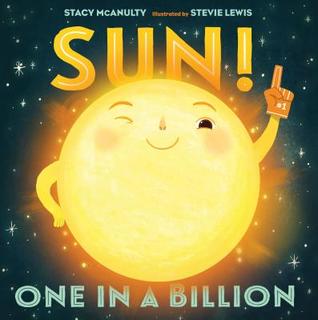
Sun! One in a Billion by Stacy McAnulty

Share

Sun! One in a Billion
Author: Stacy McAnulty
Illustrator: Stevie Lewis
Published October 23, 2018

Summary: From the author of Earth! My First 4.54 Billion Years comes a new picture book about space—
this time starring our Sun!

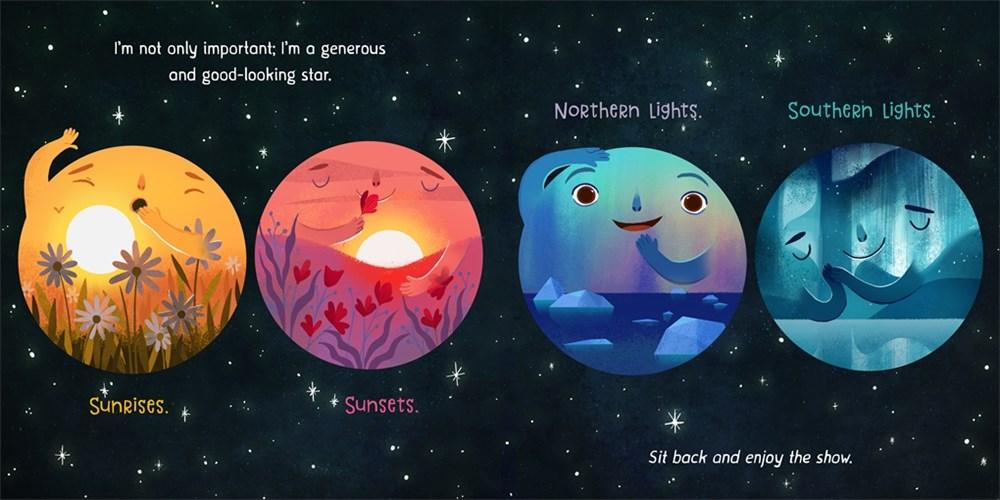
Meet Sun: He’s a star! And not just any star—he’s one in a billion. He lights up our solar system and makes life possible. With characteristic humor and charm, Stacy McAnulty channels the voice of Sun in this next celestial “autobiography.” Rich with kid-friendly facts and beautifully illustrated, this is an equally charming and irresistible companion to Earth! My First 4.54 Billion Years.

Ricki’s ReviewThis is my new favorite book about space. (And I have read a lot of books about space.) The author perfectly balances factual information and appeal. The illustrations pop off of the page, and the planets, sun, etc. are personified. I feel very lucky to have received this book for review. I am quite excited to read it to my son tomorrow night. I think I smiled throughout my entire reading of the book. If you are interested in space, get this book. It includes facts that were new to me, and the back matter offers a wealth of information for readers who want to delve deeper.

Kellee’s Review: The humor that Stacy McAnulty adds to her books about space really add to the engagement factor (for both the reader and listener); the Sun’s attitude in this one actually made me laugh out loud while reading, but I also learned some pretty cool facts while reading. I know that this book is going to be in our rotation because Trent wants to be an astronaut, and this one was an instant hit! I am so glad that there are amazing space books out there that add something new to the conversation and go about the information in a new and funny way! I really hope that this series continues because I’d love to see the personalities of all of the other parts of our solar system (and maybe some cool space objects from other systems!).

Teachers’ Tools for Navigation: Teachers might ask students to pick one fact in the book that makes them want to learn more about the world. They could look, for example, into a planet, or into the history of Earth. This inspires student-centered inquiry about a topic of choice!

Discussion Questions: 

  • How is the text structured in ways that are engaging and interesting?
  • What new facts did you learn?
  • Which page was your favorite, and why?
  • Did this book inspire you to want to learn more about any topics or information?

Flagged Passages: 

Read This If You Love: Earth! My First 4.54 Billion Years by Stacy McAnulty; Science, Space, Picture books with humorous narrators like It’s Not Jack and the Beanstalk by Josh FunkNothing Rhymes with Orange by Adam Rex

Recommended For: 

classroomlibrarybuttonsmall closereadinganalysisbuttonsmall

andSignature

**Thank you to Kelsey at Macmillan for setting up the blog tour for Sun!**

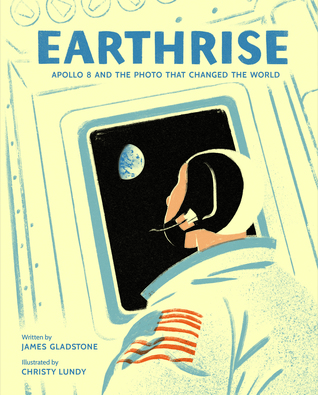
Earthrise: Apollo 8 and the Photo that Changed the World by James Gladstone

Share

Earthrise: Apollo 8 and the Photo that Changed the World
Author: James Gladstone
Illustrator: Christy Lundy
Published October 15th, 2018 by OwlKids

Summary: 1968 was a year of unrest: many nations were at war. People marched for peace, fairness, and freedom. At the same time, the Apollo 8 crew was about to go farther into space than anyone had gone before–to the moon.

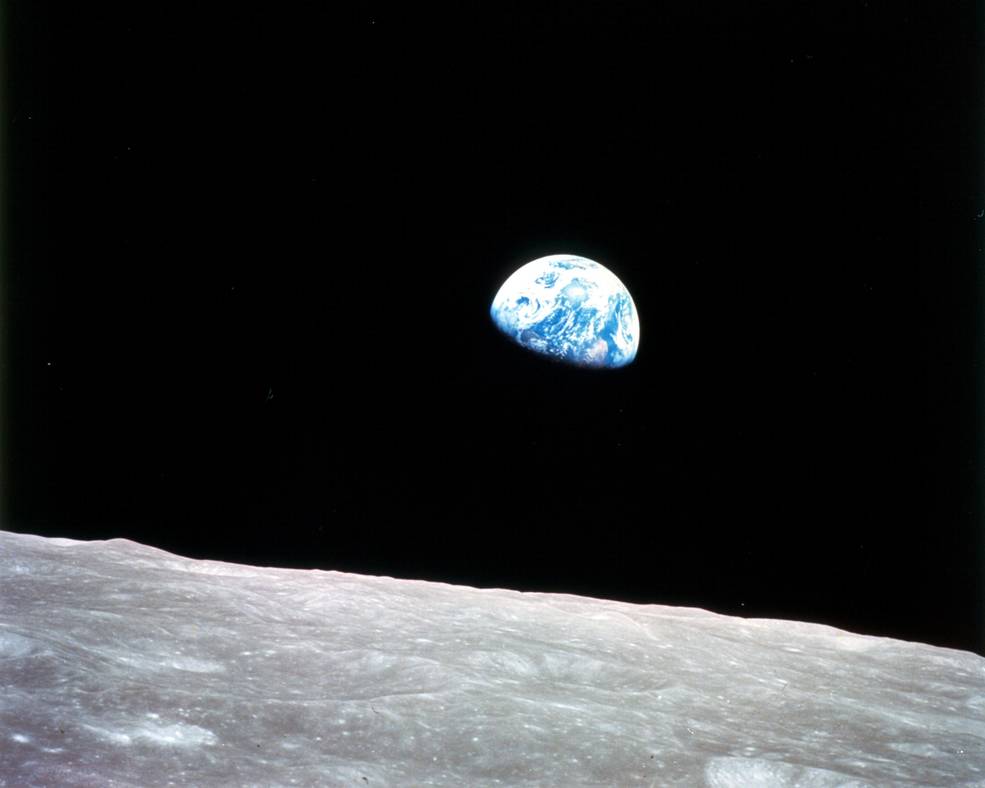
As they surveyed the moon’s surface, astronauts aboard Apollo 8 looked up just when Earth was rising out of the darkness of space. They saw the whole planet–no countries, no borders. The photograph they took, Earthrise, had a profound effect when published widely back on Earth, galvanizing the environmental movement, changing the way people saw our single, fragile home planet, and sparking hope during a year of unrest.

This important and timely picture book is publishing to coincide with the 50th anniversary of the Apollo 8 mission, telling the story behind the photograph, both inside the spaceship and back on Earth. Text includes dialogue pulled from NASA’s Apollo 8 transcript, drawing readers into the moment Earth was first photographed in color from space. An author’s note at the end explains more about the photograph, the Apollo 8 mission, and how Earthrise went on to inspire Earth Day.

About the Author: JAMES GLADSTONE is an editor and author of books for children. His great fondness for planet Earth inspired him to write Earthrise. James is also the author of When Planet Earth Was New and Turtle Pond. James lives in Toronto, Ontario.

About the Illustrator: CHRISTY LUNDY enjoys exploring the relationship between characters and their environment in her work. She designs locations and creates background paintings for children’s animated shows, as well as doing editorial illustrations for a wide variety of clients. Earthrise is her first children’s book.

Praise: A Junior Library Guild Selection, 2018; Starred Review, Kirkus Reviews

Review: My son wants to be an astronaut, so I have read many space books; however, I never tire of them because there is just so much to learn about when it comes to our space history, space future, and space in general. I, of course, had seen the Earthrise photograph, but I did not know its story nor did I know about the importance of Apollo 8, so I enjoyed learning about the voyage (and going on a bit of a Google spiral after learning more). Gladstone did a great job incorporating the mission with life on Earth in 1968 as well as getting specific about the mission but without getting so specific that readers will be lost. I also am a huge fan of Lundy’s illustrations which are purposeful in their use of line and color and have a huge impact on the book.

Teachers’ Tools for Navigation: There are many photographs that can be used in conjunction with the picture book including the original Earthrise and photographs of the astronauts, the rocket, and 1968.

This year is the 50th anniversary, so it would be fantastic to introduce students to this mission as many may not know it, and Earthrise is a perfect way to introduce it, and there are many aspects of the text that can be applied to standards in addition to its ability to be a perfect read aloud.

Discussion Questions: 

  • How did the image taken from the Apollo 8 spacecraft effect civilians when they saw it?
    • How was this different than the live feed that was sent earlier in the mission?
  • Based on the book, what has changed over the last 50 years?
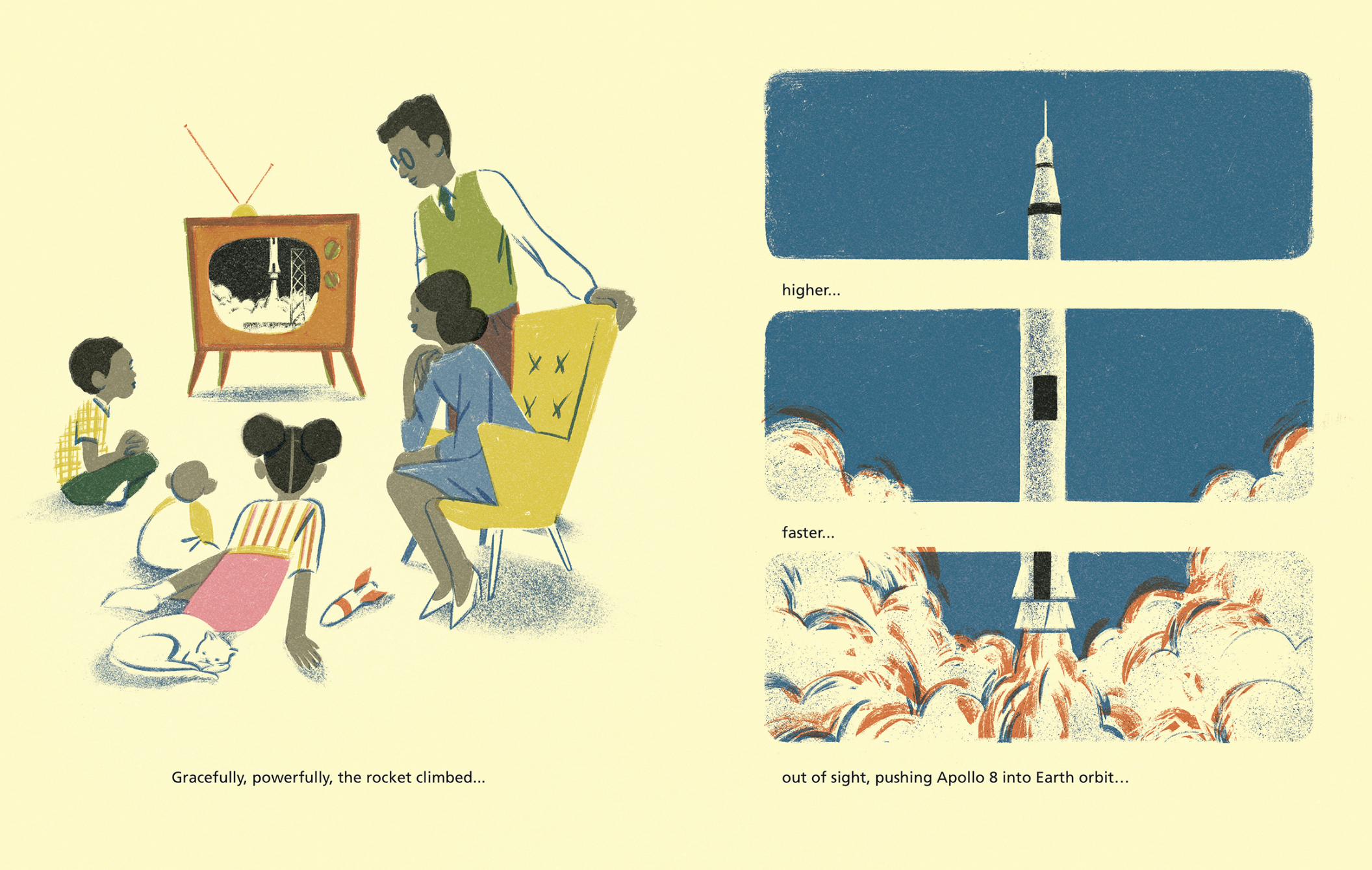
  • Saturn V and Apollo 8 took off together–how was the rocket/space craft set up?
  • The author seems to have two purposes in writing this story–what do you think they are?
  • How did the images back on Earth help tell the story of the Apollo 8 mission?

Flagged Passages: 

Read This If You Love: Space, Learning about History, Astronauts, Photography/Art Impact

Recommended For: 

classroomlibrarybuttonsmall 

Signature

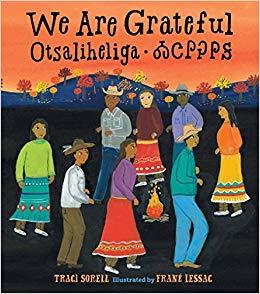
We Are Grateful: Otsaliheliga by Traci Sorell

Share

We Are Grateful: Otsaliheliga
Author: Traci Sorell
Illustrator: Frané Lessac
Published September 4, 2018 by Charlesbridge Publishing

Summary: A look at modern Native American life as told by a citizen of the Cherokee Nation

The word otsaliheliga (oh-jah-LEE-hay-lee-gah) is used by members of the Cherokee Nation to express gratitude. Beginning in the fall with the new year and ending in summer, follow a full Cherokee year of celebrations and experiences.

Appended with a glossary and the complete Cherokee syllabary, originally created by Sequoyah

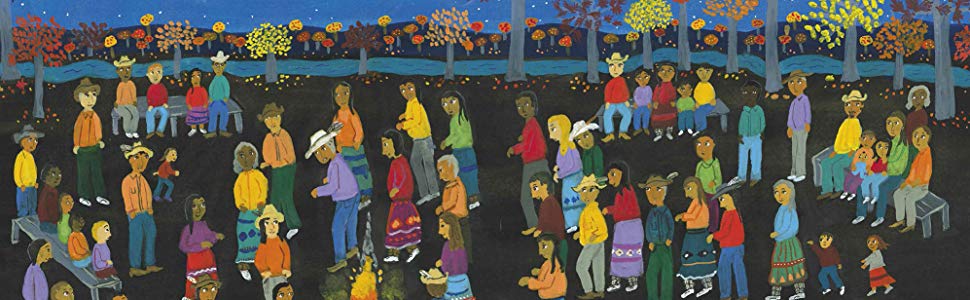
Review: This beautiful book makes for a wonderful read-aloud. I loved the repetition and the different things to be grateful for. The images are captivating, and I found myself slowing down as I read and turned each page. The seasons shift through the text, which offers great opportunities for discussion. Indigenous people are often perceived to be people of the past, but this book demonstrates that they are living, breathing people. The culture is very much alive. I’ll be gifting this book to several friends with young children.

Teacher’s Tool For Navigation: Students might list the different things that they are grateful for and draw accompanying pictures. It offers great opportunities for discussing how Native people still exists and are not relics of the past, reserved for discussions on Thanksgiving day.

Discussion Questions: How do the seasons change across the pages? How does this shift the story?; Describe the people you see on the pages. What can you learn from them?; Find three words that you don’t know. Learn what they mean and share their definitions with a peer.

We Flagged: “…while we collect buckbrush and honeysuckle to weave baskets.”

Read This If You Loved: The People Shall Continue by Simon J. Ortiz; Dreamers by Yuyi Morales; The Day You Begin by Jacqueline Woodson

Recommended For: 

readaloudbuttonsmall classroomlibrarybuttonsmall 

RickiSig

**Thank you, Donna, from Charlesbridge Publishing for sending a copy for review!**

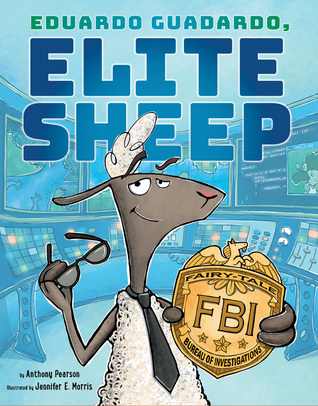
Blog Tour with Review, Book Trailer, and Giveaway!: Eduardo Guadardo, Elite Sheep by Anthony Pearson

Share

Eduardo Guadardo, Elite Sheet
Author: Anthony Pearson
Illustrator: Jennifer E. Morris
Published October 1st, 2018 by Two Lions

Summary: Eduardo Guadardo may look fluffy. He may look cute. But he’s no little lamb. He’s about to graduate from the FBI—that’s the Fairytale Bureau of Investigations—as an Elite Sheep. He knows five forms of kung fu, and he can outfox the foxiest of foxes. In fact, he’s so good they put him on his own case: to keep the farmer’s daughter, Mary, safe from Wolf, Troll, and Witch. It’s a job for somebody baaaaaaad—someone like a soon-to-be Elite Sheep. The thing is, protecting Mary isn’t quite as easy as Eduardo expected…

This imaginary backstory for “Mary Had a Little Lamb” is hilarious, action-packed, and filled with subterfuge (that means pulling the wool over your eyes, for you civilians).

About the Author: Anthony Pearson is not a spy. He’s not. We promise. He’s actually a school counselor, a child therapist, and the author of Baby Bear Eats the Night, illustrated by Bonnie Leick. But that didn’t stop him from digging for clues about “Mary Had a Little Lamb.” What he found made him imagine what could have inspired the rhyme: a sheep that is totally, absolutely, 100 percent in control of things … or maybe just 95 percent. And squirrels in sunglasses. Oh, and a witch flying a helicopter. But you didn’t hear about the Fairytale Bureau of Investigations from him. Anthony and his family live in deep cover in Georgia. Get more intel about him at www.AnthonyPearson.info. Twitter: @APearson_Writer

About the Illustrator: Jennifer E. Morris has written and illustrated award-winning picture books and has also illustrated children’s magazines, greeting cards, partyware, and educational materials. She has not illustrated classified documents nor is she a super secret agent. She is, however, the creator of May I Please Have a Cookie? which has infiltrated more than a million homes. If you say “The dove flies at noon,” she may tell you what the ducks recorded on their cameras. Maybe. But most likely not. Jennifer lives with her family in Massachusetts, just a few miles from the little red schoolhouse where “Mary Had a Little Lamb” originated. Read more of her dossier (that’s DAH-see-ay) at www.jenmorris.com. Twitter: @jemorrisbooks

Review: What a fun and quite smart idea! I didn’t know that I ever wondered how Mary got her lamb, but this backstory is one epic way for that nursery rhyme to come about! And Eduardo Guadardo is quite the character, and it really does give another outlook on why Mary’s lamb went to school with her. I also liked the additional layer that the author added to the story to show how arrogance does not lead to success and that even if you are good at something, if you can’t learn and work with others, you will not do well.

Teachers’ Tools for Navigation: Allusions, allusions, allusions! Eduardo Guadardo may be a backstory for Mary Has a Little Lamb, but so many other fairy tale and nursery rhyme characters are scattered throughout the book! Trent and I played a scavenger hunt for characters in the book and with older students who could do more discussions and analysis with these cameos.

Discussion Questions: 

  • What other fairy tale and nursery rhyme characters did you see in the book?
  • Why were the witch, troll, and wolf the bad guys in the story? What other stories are they the antagonists?
    • How did the author use your preconceived notions to trick you about these three in the end?
  • Why did Mary’s lamb follow her to school one day?
  • How did Mary trick Eduardo? What did the trick teach Eduardo?
  • Based on the final spread, what fairy tale are Eduardo and Mary going to take on next?
    • What do you think is going to happen?

Book Trailer: 

Read This If You Love: Fractured Fairy Tales!

Recommended For: 

classroomlibrarybuttonsmall 

Giveaway!

a Rafflecopter giveaway

Signature

*Thank you to Blue Slip Media and Two Lions for providing copies for review and giveaway!**

Teaching Tuesday: Close Reading Lesson with Tacky the Penguin, an Aesop Fable, a TED Talk, and Sit-Ins

Share

Just so we all have the same definition of close reading, I wanted to share how I define it:
The process of close reading is reading a short, worthy text more than once to get deeper into its meaning.
(See “A Secret About Close Reading” for more information.)

Here is a fun close reading activity I did with my reading classes a couple of weeks ago.

Standards for this lesson: RL.1 & RI.1 (Inference & text evidence), RL.2 (Theme), RI.2 (Central Idea), RL.3 (Narrative elements interact)
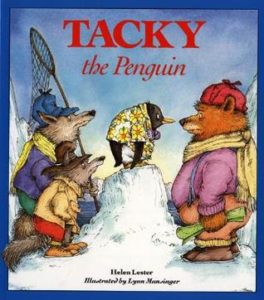
Tacky the Penguin by Helen Lester is a much more complex text than it first seems, so I really wanted to take this fun text and push my students’ thinking to realize that Tacky teaches us more than they first thought.

First read: For the first read of Tacky the Penguin, I just had my students enjoy the story. I love watching kids see this book for the first time because he is such a ridiculous yet awesome penguin.

Second read: When we read the story again, this time I chunked the text and had them take notes about a different characters’ emotions for each section. They then went on our Canvas discussion board and made an inference about how the character was feeling based on their notes and included evidence.

“The other penguins are much more accepting of Tacky at the end. In the text it shows that all the penguins hugged Tacky since his oddness had scared the hunters away and saved them. This action showed that even though they might disagree on how to do things they were still thankful of him.” -EX, 8th grade

“I think that the other penguins, Goodly, Lovely, Angel, Neatly and Perfect are happy that Tacky is around. In the story it is showing all the penguins celebrating that the hunters were gone. Usually when you are celebrating it is because someone has accomplished something and you feel happy for them. So, you can conclude that the other penguins are happy that Tacky is around because he got rid of the hunters and without Tacky they might’ve died.” -JK, 6th grade

For the final section of the text, I asked them to think about the theme of the story, and they answered their inferred theme with evidence on the discussion board.

“I think the theme of Tacky the penguin is that differences can be good. I think that because at first the other penguins didn’t like Tacky because he was very different in the way he acted. They thought he was annoying and didn’t really include him in their group. At the end, they appreciate him because he saved them from the hunters, so his differences were good.” -AN, 8th grade

“The theme is to treat everyone fairly. Because in the beginning the other penguins treated Tacky badly, by excluding him, being annoyed at his greets, singing, and diving. But when Tacky acted like a hero they all appreciated him like they should of in the beginning.” -AK, 8th grade

“I think the theme of TACKY THE PENGUIN is to always be yourself. In the beginning of the story, the other penguins didn’t seem to really like Tacky because he did things so differently from them. However, as the middle towards end of the story, Tacky uses that to his advantage to scare away the hunters. So really, because Tacky was himself, he saved the day!” -DV, 7th grade

As we know, there are many themes that can be taken from a story, and most of the themes I received were spot on and focused primarily on how Tacky may seem odd but that doesn’t mean being different is bad. But there was one theme that I didn’t have any students pick up on, and I felt it was a big one. So, for the third read, I added in another text.
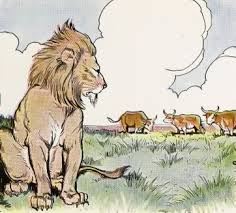
Third read: For the third read, I had my students read an Aesop Fable to connect with Tacky. “The Lion and the Three Bullocks” has the theme “In Unity is Strength” because the bulls survive the predator because they work together. The students did a wonderful job realizing that this theme connected to Tacky because it was only when all the of the penguins worked together that they were able to ward off the hunters.

“The theme “Unity is Strength” works for both books because together they defeated the enemy(ies). In Tacky the Penguin it says, “ Tacky began to sing, and from behind the block of ice came the voices of his companions, all singing as loudly and dreadfully as they could.” This shows that together the penguins can work together to be strong. The next page says “The hunters could not stand the horrible singing” This evidence illustrates that together as a team they can do anything. In Aesop For Children (Three Bullocks and a Lion), it says that a hungry lion is looking for his next meal. He was only sitting and watching because all of them were together so he would lose. In a little bit the bullocks separated and it was the lion’s time to strike (He ate them). This shows that when you are together you can be even stronger then when you were alone.” -EN, 7th grade

At this point, I was so proud of the connections my students were making, but it was still on a level where they were not connecting it to life–they saw it as a penguin and bullocks lesson mostly. This meant that I added in another text that I had them close read:

Scila Elworthy’s TED Talk is titled “Fighting with Nonviolence” and shares how fighting violence with violence is not successful while using nonviolence has been successful. I love TED Talks because you have the video and the transcript! What a great text for the classroom! (And thank you Jennifer Shettel for pointing me in this direction!)

First read: We watched the first 5 minutes and 11 seconds of the TED talk, and I gave each student a Post-It note. I asked them to write down words that stuck out to them. We then shared the words and defined any words they didn’t know.

Second read: For their second read of the text, they went to the transcript and were to focus on the central idea of this section of the text. Each person wrote down their own central idea.

Then I did a variety on one of the discussion ideas that Ricki shared in her Engaging Classroom Discussion Techniques post. Kind of like in Facts of Five, I had students then go into groups of three and come up with a consensus of a central idea together. They then wrote these on sentences strips to display in the room. We also discussed each one and talked about the supporting evidence for each central idea. I called it “Most Important Point.”

“As a group for the “most important point activity” we came up with the point that “solving a problem with violence only ever causes more violence”. Toward the end of the ted talk the speaker gives an example of when her ‘heroine’ was faced with guns during a protest and solved it by walking up to them and getting them to put their guns down. Had she not solved that problem this way it can be assumed that the soldiers would have shot them. By solving a situation with non violence she avoided the problem all together. We concluded from this, and the other points she made in ted talk including Nelson Mandela and her own personal anecdote about non violence, that that was the central point.” -KA, 8th grade

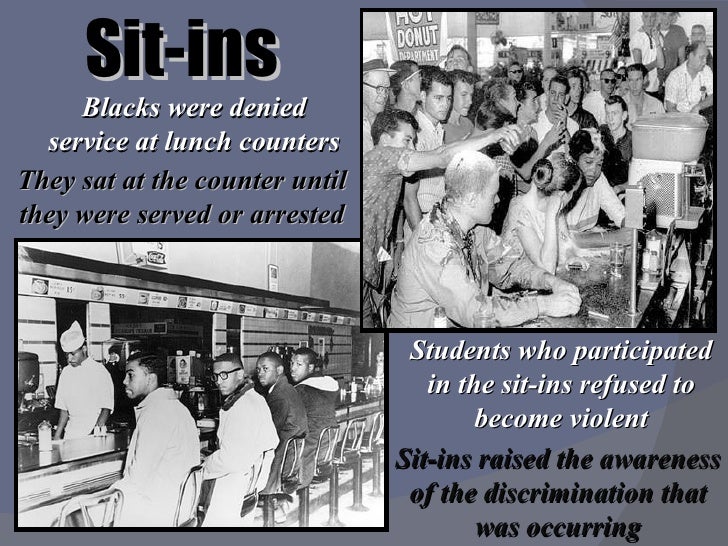
Third read: For the culminating task for all of these texts, I added in one more text to truly make all of this connect to reality. I knew I wanted to pick an image from the Civil Rights Movement because it is a true example of this idea at work. I introduced my students to sit-ins.
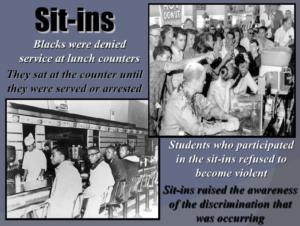
I then asked, “Why did we watch this TED Talk and why did I share the Sit-In images after reading Tacky the Penguin and the Aesop Fable? How do they all connect? Write a short paragraph explaining the connection, and remember to Restate, Answer, have Text evidence, and Explain/elaborate.”

All of these connect because they all show them going against things together. In “Tacky the Penguin” all of the penguins started singing in the end together, driving them away. If it was only Tacky singing, the hunters might not have gone away if the other penguins had not shown up.  In “Three Bullocks and a Lion”, the lion would not attack them when they were together because he knew he was no match for all three of them combined. In the Sit- In photo, there are four people sitting at a counter, and in the other photo, it shows them getting drinks poured on them from other people in the restaurant. If there was only one person sitting at the counter, the point would not have been proven as well as it would if there were four. All of them show that when they are together, they are stronger.” -MA, 7th grade

The Ted Talk, Sit-in images, Tacky the Penguin, and Aesop Fable connect because they show how if we stick together and try to solve conflict in nonviolent ways, we will not have to resolve problems with more fighting.  The Ted Talk says that bullies use violence to intimidate, terrorize, and undermine, but “only very rarely in few cases does it work to use more violence.” This just makes people more and more violent. An example is when the “Students who participated in sit-ins refused to become violent” even when people were not treating them fair by not serving them or even pouring a drink on them. Tacky the Penguin helped save all the penguins from being taken away by hunters because he had the attitude that people should be friendly and kind to each other and because he acted like this, it scared the hunters and they ran away. In the Aesop Fable, the bulls were able to keep the lion from eating them by staying close and being strong together. When they began to argue and separated from each other, they were not strong enough alone to keep from being attacked. “It was now an easy matter for the lion to attack them one at a time, and this he proceeded to do with the greatest satisfaction and relish.” This shows that we need each other to be strong and reach our goals and when we begin to fight, we lose our strength against enemies. We can control all of this, like she says, “It’s my response, my attitude, to oppression that I’ve got control over, and that I can do something about.” -DA, 6th grade

I was so impressed with my students’ deep thinking, connections, inferences, and elaboration! And overall they truly loved the activity, and I think that it truly shows that a text to analyze can be more than the canon!



Carlos Santana: Sound of the Heart, Song of the World by Gary Golio

Share

Carlos Santana: Sound of the Heart, Song of the World
Author: Gary Golio
Illustrator: Rudy Gutierrez
Published: September 4, 2018 by Henry Holt

Summary: Discover the childhood story of Carlos Santana in Gary Golio’s Sound of the Heart, Song of the World, featuring illustrations by Rudy Gutierrez,the internationally celebrated artist who created the iconic Carlos Santana Shaman CD cover.

Carlos Santana grew up surrounded by music. His father, a beloved mariachi performer, teaches his son how to play the violin when he is only six years old. But when Carlos discovers American blues, he is captivated by the raw honesty of the music. Unable to think of anything else, he loses all interest in the violin. When Carlos finally receives his first guitar, his whole life begins to change.

From his early exposure to mariachi to his successful fusing of rock, blues, jazz, and Latin influences, here is the childhood story of a legendary musician.

My Review: I absolutely loved this book. My son and I had so much fun reading it, and then he asked to listen to some of Carlos Santana’s music. A few days later, we heard a Carlos Santana song on the radio, and my husband excitedly reminded my son about the book. It feels good to connect him with such a powerful man in our history. He shaped music in powerful ways. The book is beautifully written. I liked how it focused predominantly on Santana’s childhood. This kept my son’s interest and helped him connect with Santana. The art flows beautifully and looks like visual music on the page.

Teachers’ Tools for Navigation: I would love to use this book in literature circles with kids. Students could each read a picture book about a famous person in our history of music (see some of the options below). They could share out to their peers and play a clip from the music. These interdisciplinary activities would make for a warm, powerful learning environment.

Discussion Questions: 

  • Describe Carlos Santana’s childhood.
  • What inspired Santana?
  • What was Santana’s relationship with his parents? How do you think this may have shaped his life? What did working beside his father teach him about himself?
  • Describe Santana’s journey into music. What influenced him?

Flagged Passage: Check out the beautiful interiors on the book’s Macmillan page.

Read This If You Love: How Pete Seeger Got America Singing by Leda SchubertStand Up and Sing! by Susanna ReichWhen Bob Met Woody by Gary Golio, Jimi: Sounds Like a Rainbow by Gary Golio

Recommended For: 

classroomlibrarybuttonsmall 

**Thank you to Madison at Macmillan for providing the book for review!**