Author Guest Post: “Bonding a Classroom Over Books: Read Aloud as a Community Builder” by Kristin Thorsness, Author of The Wicked Tree

Share

“Bonding a Classroom Over Books: Read Aloud as a Community Builder”

My third year of teaching, I welcomed my fifth-grade class back from mid-winter break by revealing Sharon Creech’s Walk Two Moons as our next read aloud. Immediately, an excited titter spread amongst the table groups of my classroom. A student raised his hand with a grin and asked, “Are you going to cry? I heard when you read that book last year, you cried … in front of everyone!” The students exchanged excited looks, shocked by the boldness of the question-asking kid and eagerly waiting for the answer. I smiled and nodded.

It was true—I would cry. Walk Two Moons always makes me cry. Always. It did when I first read it as a fifth grader, curled up on the couch in the formal living room of my childhood home (the only place to escape my three younger siblings for quiet reading time), it did every time I read it aloud to one of my classes as a teacher in my twenties, and if I read it today … you guessed it, blubbery mess. That’s what evocative writing does to me, and Sharon Creech is a master.

Over the course of weeks, I read the book aloud to my class and we dissected it together. We made predictions about where Phoebe’s mother had gone, about what would happen if Sal did/didn’t reach her own mother by her birthday, about who the “lunatic” might be, and what, if anything, would happen between Sal and Ben. We discussed our favorite and least favorite characters—writing scenes from their perspectives, really getting into their heads—and when we got to THE SCENE (Walk Two Moons is an older book, but just in case I’ll avoid any spoilers!), my eyes weren’t the only wet ones in the room.

Did all my students cry? Of course not. But no one mocked those who did, which, in the world of tweens, showed a level of respect and empathy I always worked hard to build into my classroom. Whether they were moved to tears or not, they had shared an emotional experience, and they understood that that meant something. They were more than just classmates; they’d gone on a journey together.

This is the power of books.

Not all my read aloud choices were “crying” books. I made sure to read a wide variety of authors and genres to my classes, and I also let them propose read aloud books for the group to vote on. Listening to students explain why they loved a book and why they thought the whole class should read it always gave us insight into them as a person. And the more insight students have into each other, the more tightly knit a classroom becomes. We read scary books, mysteries, historical fiction, funny books, on a student’s recommendation I even read Brian Seiznick’s The Invention of Hugo Cabret (a heavily illustrated novel) under the document camera so we could all experience the magic that happens when a well written story and beautiful illustrations combine.

Whenever it was time to choose a new book, inevitably there would be questions about which books I had found sad, scary, or funny when I was a tween. The kids were always delighted if I named a book they’d read and enjoyed—books were sometimes my best “in” with struggling students. If you’re curious, some of my top answers were  Wilson Rawls’s Where the Red Fern Grows (sad), Mary Downing Hahn’s Wait Til Helen Comes (scary books are my personal favorite—I still have the battered copy of this book that I received in third grade!), and Louis Sachar’s There’s a Boy in the Girl’s Bathroom (funny, though that book really runs the gamut).

I made sure to have copies of all these books in my classroom library, and almost without fail, any book I endorsed quickly became a hot commodity. Students would discuss with me and with each other what their own takes on my recommended books were. Then, they’d suggest books they thought I might like, which is how I discovered Mary Downing Hahn is still the queen of ghost stories. (I can only hope to still be publishing books when I’m in my eighties!)

The five years I spent in the classroom showed me that not only is reading a fun way to spend a rainy afternoon (or the last ten minutes of lunch), books have the power to forge connections. I loved spending my days with the delightful, witty (and yes, sometimes sassy!), tween students in my class. When I left teaching to raise my young children and write, I thought of my former students often and my desire to write was refined into a desire to write books for them—for middle grade readers.

My debut middle grade novel, The Wicked Tree, is first and foremost a creepy tale, but there is humor, grief, mystery, and a lot of friendship woven in. I can’t wait for Tav’s story to be in the hands of middle grade readers and their teachers, and it would be my greatest joy to hear that it sparked a classroom discussion that helped bring the students and teacher closer together.

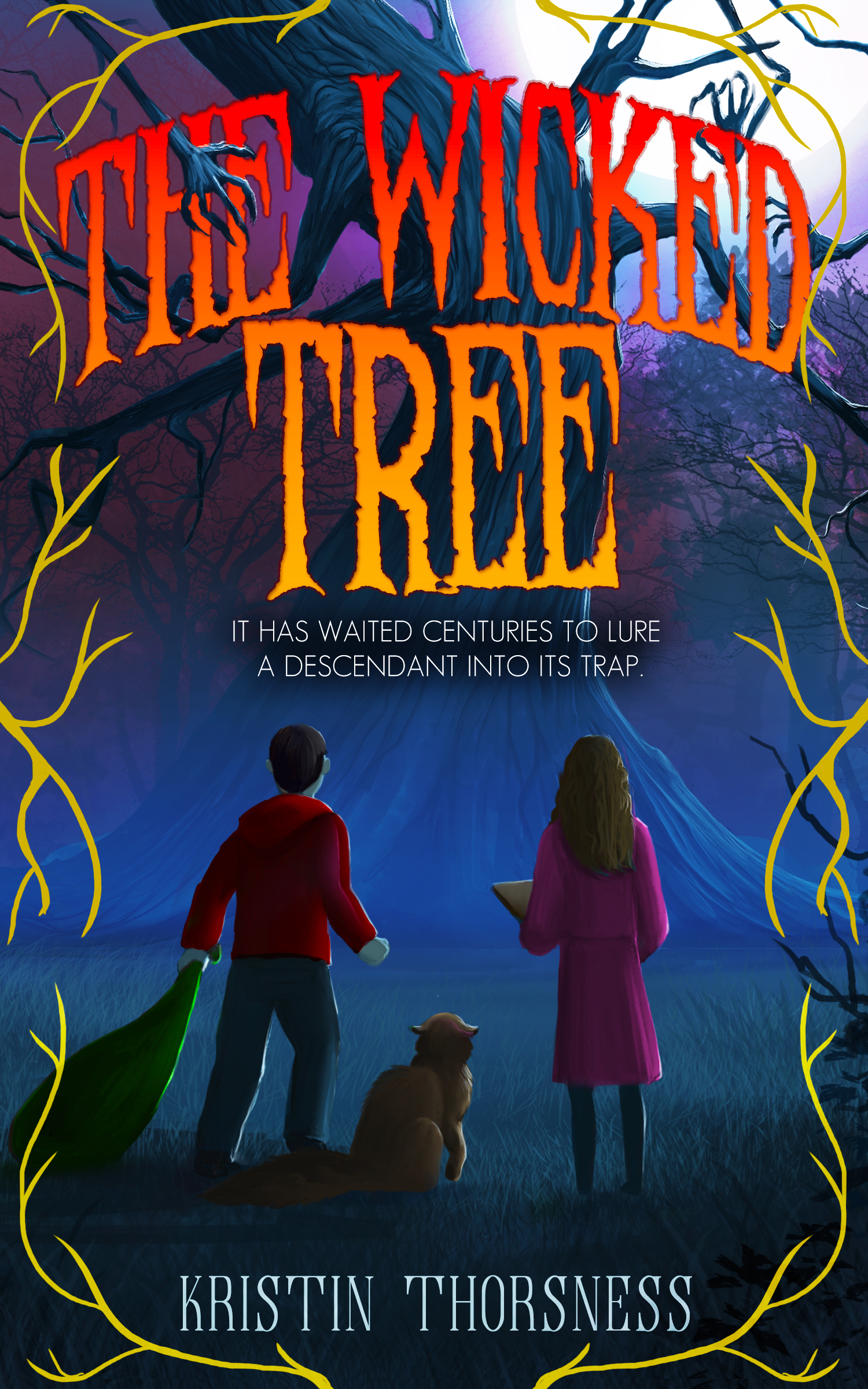
The Wicked Tree
Author: Kristin Thorsness
Publication Date: October 8th, 2019 by Month 9 Books

About the Book: Deep in the woods, a gnarled tree grows. Its thick, black trunk twists angrily up into the night sky. Held in place by the magic of a long-ago patriarch, it has waited centuries to lure a descendant into its trap.

Eleven-year-old Tavorian Kreet hates it when money troubles force his mom to move them in with his great-grandmother – though the historic house and grounds are pretty awesome. Tav is told to stay out of the estate’s woods, but he can’t resist the chance to explore.

After Tav’s first trip into the woods, he begins to have strange dreams about a supernatural tree. The dreams start out pleasant, but soon grow dark and menacing. On a dare, Tav ventures further into the woods with his new friend Harper, and they meet a mysterious, mute boy named Edward who lives in a decrepit cabin there. Though he’s unable to communicate where he came from or why he lives alone, in clear distress he scrawls two words: Bad Tree.

Tav knows what it’s like to be afraid. If he’d been brave enough to act four years ago, he could have saved his dad from the fire that took their home. But he wasn’t, and he’s been trying to redeem himself since. Now Tav is determined to help Edward. He enlists Harper, and together they search the estate for clues to Edward’s identity and how to help him.

While searching, Tav and Harper find antique photo albums, ancient diaries, and a secret laboratory. They piece together the Kreet family history, and discover a curse that’s been waiting generations for an heir. Tav’s dreams grow more ominous, and he realizes time is running short. To save himself and his friends, Tav must go to the heart of the woods, find the Bad Tree, and confront an evil magic before it consumes him completely.

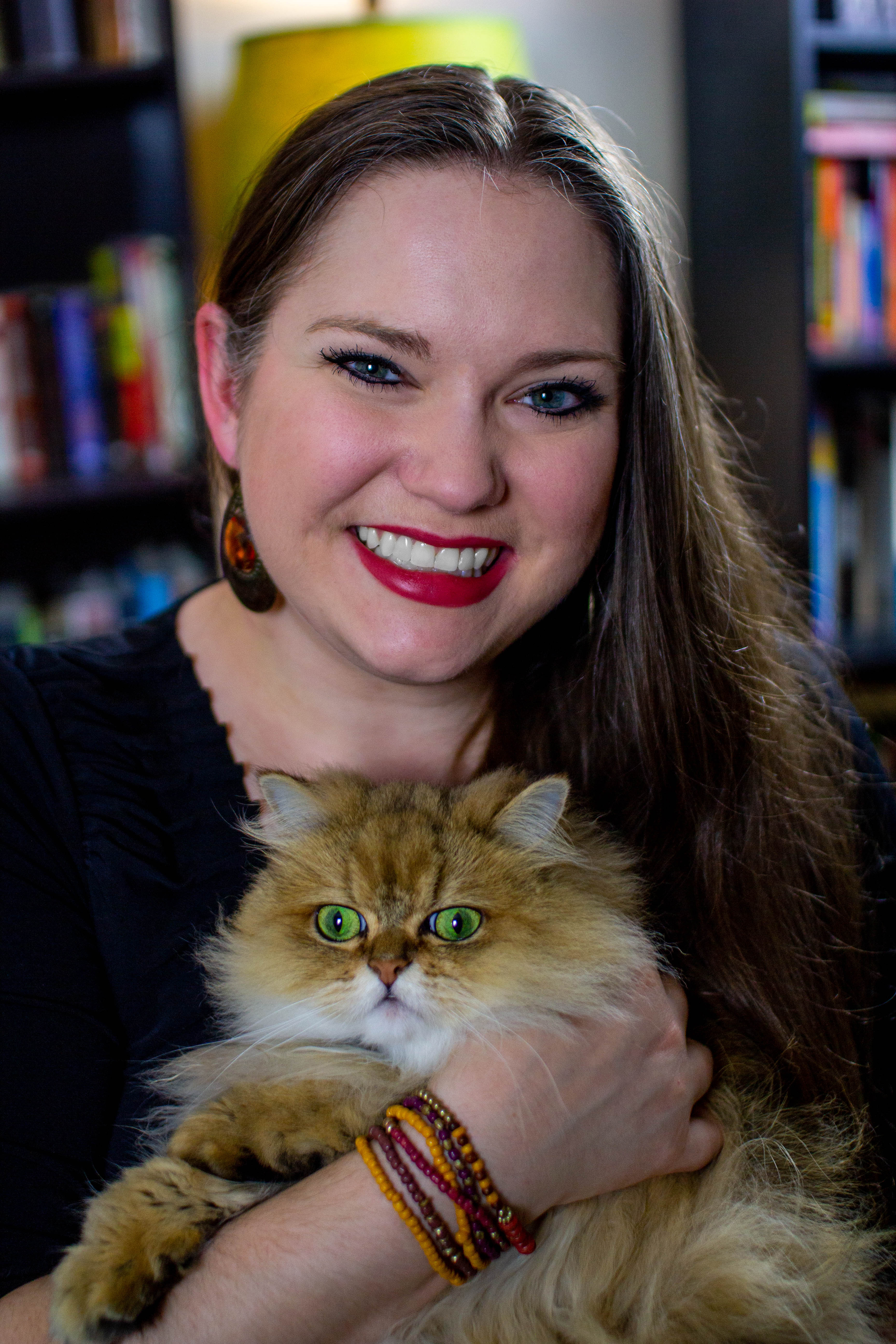
About the Author: Kristin Thorsness is a former 5th and 6th grade teacher who lives in the Pacific Northwest with her husband, their son and daughter, and two spoiled dogs. She likes dark chocolate, strong coffee, and creepy stories that keep her up reading late into the night. For more info or to get in touch, visit her online at www.kristinthorsness.com.

Thank you so much for this guest post about the power of books!

OCPS Appetite for Instruction Podcast with Kellee: Unleashing Young Readers

Share

Orange County Public Schools’ Innovation Office opened in 2018 to support identified “Schools of Innovation” and to support staff in the implementation and development of innovative practices within and across these schools. My school was lucky enough to be considered a “School of Innovation” when the learning community opened in 2018. Then, in the Spring of 2019, the Innovation Office began recording their Appetite for Instruction podcast, and my colleague, Caitlin Chacon, and I were so lucky to be asked to participate.

Our podcast episode was titled “Unleashing Young Readers,” I’m assuming as an homage to this blog, and we shared what literacy instruction looks like at our school, both in the podcast and the companion write up:

Unleashing Young Readers (Episode 3)

Happy listening 🙂

Signature

Author Guest Post: “Making Lemonade out of Lemons: Creating Humor out of Sadness” by Naomi Milliner, Author of Super Jake & the King of Chaos

Share

“Making Lemonade out of Lemons: Creating Humor out of Sadness”

One of the things I’m asked most often about my debut middle grade novel, SUPER JAKE & THE KING OF CHAOS, is the role of humor – specifically how there’s so much in what could be a very sad book. Both the humor and the heaviness stem from truth, because SUPER JAKE is inspired by life with my three sons, the youngest of whom (Jake) had special needs.

Jake’s many limitations were heartbreaking, as was his death at only 28 months. And yet, my family – especially Jake’s big brothers – managed to find, and create, a lot of laughter and joy despite the difficulties. For that reason I tried to balance the inherent sadness surrounding his fragile health with a sense of playfulness and humor throughout the book. Here are five ways to use humor in a sad story, with examples from SUPER JAKE.

  • Establish a fun, or funny, tone from the get-go.

In early drafts, the story opened with the 11-year-old hero, Ethan, being awakened in the middle of the night because of a Jake-related medical emergency. This scene is still in the book; it just comes 155 pages later. Although it was a sure-fire dramatic start, as the main story shifted from Jake to Ethan, it was clear that the book needed to start with Ethan doing his favorite thing: magic. And what could be funnier, and more endearing, than entertaining a dozen 3-year-old girls dressed like Disney princesses? Throw in goofy younger brother, 7-year-old Freddy, and an unexpected appearance by SpongeBob, and you’ve got a fun tone to kick things off. Later in the chapter Jake shows up, too, and a bit of sadness creeps in but – hopefully – the reader already knows this story will have plenty of lighthearted moments.

  • Include a character who provides comic relief.

This, without question, is Freddy, the lovable middle brother. I could always count on him to come to the rescue when things got too sad. Sometimes it was a simple visual gag, like bubble gum exploding all over his face. Other times it was unexpected dialogue, or his interrupting a somber moment any number of ways. And sometimes, it was just his sweet, innocent take on things: he was a great vehicle to lighten tension.

  • Incorporate a sense of play, and playfulness, to mitigate sad circumstances.

There is nothing remotely fun, or funny, about having to “stretch” Jake’s arms and legs because he was unable to do it on his own. And yet in the book, as in real life, his big brothers got in on the act and even managed to turn physical therapy into a good time: Ethan takes a benign teddy bear and creates… Ninja Bear! Another example is how Jake’s unusual hearing creates a funny scene when Ethan plays his trumpet without waking Jake to stir, but Mom’s quiet (and angry) whisper immediately wakes him up.

  • Do something surprising.

This technique is very helpful and can be used frequently and in many ways. Have someone you wouldn’t expect do something unexpected: Ms. Carlin, Ethan’s beloved English teacher, has a crush on Ethan’s hero, Magnus the Magnificent. (Spoiler alert: teachers are human! You heard it here first.) Have an unexpected dialogue exchange, like on p. 23:

Freddy:            I’m doing a huge battle of dinosaurs versus Star Wars. I thought the Star Wars people would win because they’ve got lightsabers. But the dinosaurs were  hungry, so they ate them.

Ethan:              The lightsabers?

Freddy:            The people.

Or create an unexpected, and much-needed, break in tension. This occurs organically in lots of Ethan’s magic tricks. It seems like something has gone wrong, then he pulls it off. Another example of breaking tension with humor is when Ethan tries to convince his frenemy, Ned, that cake will make him feel better. Just as Ethan is about to give up, Ned asks, “What flavor is it?”

  • Switch from tears to laughter.

One of my favorite writers, Paula Danziger, said that her favorite thing to do was switch from tears to laughter, or laughter to tears, “on a dime.” I have tried to do the same. Even if it’s something small, the contrast makes the new, unexpected emotion pack a bigger punch.

Laughter to tears is pretty easy when you’ve got a character like Jake. Here’s bit with Ethan and his buddies at lunch, as they try to figure out how he can pay for a magic competition:

Brian:              Hey! Maybe you could sell one of your brothers.

Ethan:              Nah. I’d have to pay somebody to take Freddy.

Daniel:            How about Jake? Lots of people want babies.

Brian:              Only perfect ones.

Tears to laughter usually happens courtesy of Freddy. In the dialogue below, the truth is the possibility of Jake ever tackling homework is a sad reminder that his limitations are far-reaching and probably permanent. And yet…

Freddy:            Hey, Ethan, you think someday I’ll help Jake with his math homework?

Ethan:              I don’t know. How much is eight plus two?

Freddy:            Twelve?

Creating laughter from tears, or happiness from sadness, isn’t only doable: it’s critical, especially in children’s books. I hope these approaches will show readers that they can find – and make – joy out of even the saddest situations.

More information on the book can be found at: https://www.hachettebookgroup.com/titles/naomi-milliner/super-jake-and-the-king-of-chaos/9780762466160/.

Super Jake & the King of Chaos
Author: Naomi Milliner
Published May 7th, 2019 by Running Press Kids

About the Book: A debut contemporary novel about 11-year-old aspiring magician Ethan, who discovers that heroes come in all sizes, and real magic can be found in the most unexpected places.

When life revolves around stressed-out parents and ER visits for his special needs little brother Jake, eleven-year-old Ethan escapes to a world of top hats, trick decks, and magic wands. When he hears of a junior magic competition where the top prize is to meet and perform with his hero, Magnus the Magnificent, Ethan is determined to do whatever he needs to get there–and to win.

His dedication and hard work pay off, and he makes it to the top five finalists: his dream really could come true! Then Jake falls dangerously ill and Ethan’s hopes and plans are in jeopardy. As he searches for any sort of magic that might save Jake, Ethan learns what is truly important . . . and what real magic is.

About the Author: Naomi Milliner has a Bachelor’s Degree in English and a Master’s in Screenwriting from USC Film School. As a long-time member of SCBWI, she created the Authors Book Club (ABC) for published authors and illustrators to share their journey with other members. She has also served on the Women’s National Book Association’s Great Group Reads Committee since 2009. She lives in Maryland, with her husband and sons.

Thank you so much for this guest post about how authors mix sadness and humor!

Kellee’s End of Year Student Survey Results, Students’ Favorite Books, and Top Checked Out Books 2018-19

Share

Another school year is in the books! Time to celebrate and reflect!
And I know this is a long post, but I hope you’ll take the time to check out my students’ points of view and their reading choices 🙂

End of Year Survey

At the end of each year, I give my students a survey to help me grown and learn as a teacher but also for them to reflect on the year. Here are some answers from the survey:

This is about the same as last year. I did change my status check to only weekly instead of daily to see how it went (some kids were saying asking every day made it seem more of a chore), but I really think by not asking daily, I didn’t keep up with my students’ progress and conference correctly. Back to daily-ish next year!

This is a big deal for me because it is the first year that 100% of the answers were yes or yes, a small one! Yay!!

Does my classroom library benefit students? How did it benefit you this year?

  • Yes. The library has a huge variety of genres of great books that even people who aren’t avid readers can enjoy. The library helped me reach my personal goal of reading 10 books this school year.
  • YASSSSSSSSSSSS. I used to love fiction and I still do but I have also expanded my likes because of all of the genres in your mini library.
  • Of course! I was able to expand my reading options knowing that I can get a book quick and easy.
  • Of course, you can find any books in Mrs Moye’s library and there are so many kinds of books that everybody would enjoy, its like a second resource for anybody who could not find the book they wanted in the Media Center can find it in Mrs Moye’s library, or even find something better.
  • It does because it gives them a way to develop their reading love and your system makes it easier. You also have many great books and you give many great recommendations based on our interests.
  • You classroom definitely benefits students. It benefited me this year by giving me a wide variety of books to choose from.
  • It does benefit students. It provides a wide arrangement of books that can satisfy the interests of students as well as providing new books and find new reading interests.
  • Yes. It started my love of reading.

What would you say to someone that says that a classroom library is a waste of money?
I started asking this question after a friend of mine, on a post of hers, had a comment that said a classroom library was a waste of money.

  • You are incorrect, goodbye. *turns and walks away*
  • I would respect their opinion but I would say “I think it is not a waste of money because just 20 minutes of reading a day makes you very smart.”
  • I would say that they have obviously not had a good one and they don’t know what there talking about.
  • I would say the person who said that is wrong because yes it is a lot of money but in my opinion the benefits outweigh the cost.
  • “Man, you are sure wrong”
  • It’s not! It’s a major benefit for students and lets them be able to explore more reading options. Also, if the library or other book source doesn’t have a specific book, that classroom library might save the day.
  • It really isn’t. A classroom library makes it much easier to check out and return books. Especially when they belong to a teacher who you see almost everyday, while the school library is sometimes closed and can’t always be reached.
  • I would say that a classroom library isn’t a waste of money because it shows how much that teacher loves to read and how much they care about our education as readers.
  • I would start a whole argument about books (as usual…).
  • that they need to take this class
  • That they are wrong because with books you can block the real world and explore different worlds and enjoy it.
  • I would say that a classroom library is actually useful because it helps students find books they want to read easily and allows a lot of options, and may motivate some students to read more.
  • I disagree because throughout the year while there was a library that is easy to have access to, I have been able to read more book than ever before (19 books)
  • I would bring up lots of evidence to show the benefits of reading and why it is more needed
  • I would tell them that they don’t really understand classroom libraries. Classroom libraries are there to provide books. Books help to broaden people’s vocabulary and imagination.

Do you like how the classroom library was organized? Explain.
I ask this question because I used to organize by genre but did not find success with it, so I switched it back to A-Z but with genre stickers. This question helps me ensure that the way it is organized meets the needs of my readers. 100% of student said they do like how it is organized–yay! Here are some examples:

  • I love how the classroom library is organized and it makes books really easy to find.
  • I think it’s nice but they really should give you a bigger room to fill with books.
  • I did like how the classroom library was organized. It was pretty easy to find books based on the last name of the author. It was also nice to have the stickers showing what genre it was and whether or not it was YA.

What would you say to a teacher who says independent reading is a waste of class time?

  • Maybe it’s just you who doesn’t like reading.
  • I would say that they need to understand that it’s a proven fact that the time spent reading is in direct correlation to higher test scores.
  • I would say to the teacher that they are wrong because independent reading have kids learn and have fun at the same time.
  • I would tell them they are wrong because there has been many studies done to prove that reading is fundamental.
  • This also is not a waste of time. It’s proven that kids who read around 20 minutes a day get in the 90% percentile on tests. Reading only benefits kids.
  • It’s actually the opposite. Independent reading, or just reading in general, can help with brain growth and increase skills that you may not even know you possess. Not reading doesn’t really effect you, but it can definitely benefit you a lot more than just reading 2 or 3 books in class with a teacher.
  • That they are really wrong, that reading is such a good thing for your body and mind, by reading you can explore and create a world of fiction, fantasy and more, and it’s better for you cause people don’t disturb you while you are reading, which is one of the worse things that happens in life. (for me)
  • “Shut your face.” (say it in my head because I don’t want to be rude)
  • Have you tried it?
  • Independent reading helps students to form ideas and inferences on their own. They can also learn more vocabulary if they have to figure it out themselves rather than being told.

What do you think the benefit of taking advanced reading is?
I want to make sure that my class is benefiting my students!

  • It’s a life altering class. So some of the benefits are well, everything.
  • You get to have fun with reading instead of reading something boring you don’t care about.
  • The benefit of taking advanced reading is that you get to know things that other kids who are not in advanced reading don’t know.
  • You read more, you get to learn about real life controversies and every side of it, and your language arts skills will improve.
  • I think the benefit of taking advanced reading is knowledge. By using the tools, resources, and skills Mrs. Moye has taught us, we are able to use this and put it into the work we do. We will forever be able to use affixes when reading, to compare/contrast a play and a text, and so much more.
  • Kids who don’t usually read can be exposed to a wormhole of books in your class and it can really become something different for them. So I think the biggest benefit of being in an advanced reading class is just, being given the chance to read.
  • I think the benefits of taking advanced reading is so you can be around books (duh ;P) and you get to have an extra class that’s related to language art (so when the teacher calls on you, you’ll be like “WOW ME!”). Also, your vocabulary will get better (which is REALLY helpful.)
  • You get to read more!
  • The benefit of taking advanced reading is that it really helps with reading and writing skills.
  • Advanced reading gives you the tools to think for yourself while reading and doing other activities.

What have you learned about yourself through the assignments in this class?

  • That I’m able to do things that I didn’t know I could do.
  • I think is that I should trust myself more with what I do and not second guess myself.
  • I use more advanced vocabulary than most my age.
  • I learned that I can do more things that I have thought if I really try.
  • I have learned that sometimes you just have to try stuff, even if it isn’t your favorite, because you’ll never know what might happen. I did some things that weren’t exactly my favorite, and I ended up loving them.
  • I learned that I should start reading more and to try harder.
  • That I sometimes need to push myself harder but that’s alright.
  • That I am a hard working and I should never give up and doubt myself.
  • That I can achieve greater things with reading and reading can make you happier and smarter.

What was your favorite assignment or activity we did in class? Why?

  • I really liked the book trailers; it let me express my feelings about the books that I love.
  • My favorite assignment that we did was the Pygmalion myth play and musical analysis one pager. This was my favorite because it was a great story and the one pager allowed me to be creative while also pushing me to dig deeper and pull out the important things.
  • My favorite activity was probably the weird but true facts. I learned a lot of weird facts and it was overall a really fun project that incorporated research.
  • I really enjoyed when we did the thought logs in class. It pushed me to read an entire book of which I wasn’t entirely that interested in. And once we finished the books and the logs, it became one of my favorites. As well as the fact that I was in a group with two other students who I had never really spoken to before then.
  • The book club because it was fun sharing yours and others people opinion of the same book that we were reading.
  • My favorite assignment or activity was the Civil Rights Timeline. It was fun to work with all the classes to create one big timeline we can all view. It was also fun to research our topics and learn about all the other topics.
  • Probably when we made the affixes to hang in the hallway to share with everyone.
  • The one where we had to guess who did that speech in a high school and it ended up being Obama.

Favorite Books My Students Read This Year

My students read A LOT again this year! My 47 Advanced Reading students read 1,657 books! That is an average of 35 books per student! I am so proud of them!


Here are the titles they listed as their favorites on our end of year survey:

Top Checked Out Books from my Classroom Library

Yearly, starting with 2012-2013 (and excluding 2013-2014), I have shared the most popular books in my classroom library:
2012-2013
2014-2015
2015-2016
2016-2017
2017-2018

From 2011-2013, I taught an intensive reading class with students who had not been successful on the state reading test. Now, since 2014, I switched to teaching advanced reading, an elective that students choose to be in (and I still get to work with my striving readers through being reading coach–a win/win!). Students from all intervention reading classes and my lunch book club as well as my classes use my classroom library.


1. Smile series by Raina Telgemeier
2. Drama by Raina Telgemeier
3. The Ascendance Trilogy by Jennifer A. Nielsen
4. Ghosts by Raina Telgemeier
5. Amulet series by Kazu Kibuishi


T-6. Track series by Jason Reynolds
T-6. Diary of a Wimpy Kid by Jeff Kinney
T-8. Embassy Row series by Ally Carter
T-8. The Honest Truth by Dan Gemeinhart
10. Dog Man series by Dav Pilkey

T-11. Divergent series by Veronica Roth
T-11. House Arrest series by K.A. Holt
T-11. Arc of a Scythe series by Neal Shusterman
14. Rhyme Schemer by K.A. Holt


T-15. Legend series by Marie Lu
T-15. Renegades series by Marissa Meyer
T-15. The Young Elites series by Marie Lu
T-15. War Cross duology by Marie Lu

T-19. Long Way Down by Jason Reynolds
T-19. Resistance by Jennifer A. Nielsen
T-19. The Crossover by Kwame Alexander

Note 1: If a book is in a series, I placed the series at the spot of the highest ranked book from the series. This allows me to highlight more checked out books instead of listing all the different books from a series.

Note 2: I use Booksource’s Classroom Library to track my book checkouts, and my book checkout history does not reset yearly. Instead it counts for any student in the system. Since I have students that check out from me for up to 3 years, sometimes a book they checked out in 6th grade will still be counted when they are in 8th grade. I figure all of this will even out as 8th graders are removed each year since there is no way to change this setting.

Note 3: These series/books account for the top 40 checked out books of my classroom library!

Happy summer to all of my fellow teachers, and here’s to another awesome school year in the books!

P.S. Please continue to stop by on Tuesdays during summer as I share my STUDENT VOICES series of blog posts written by my students. 

Teachers’ Guide for Merci Suárez Changes Gears by Meg Medina

Share

Merci Suárez Changes Gears
Author: Meg Medina
Published: September 11th, 2018 by Candlewick Press

Summary: Thoughtful, strong-willed sixth-grader Merci Suárez navigates difficult changes with friends, family, and everyone in between in a resonant new novel from Meg Medina.

Merci Suárez knew that sixth grade would be different, but she had no idea just how different. For starters, Merci has never been like the other kids at her private school in Florida, because she and her older brother, Roli, are scholarship students. They don’t have a big house or a fancy boat, and they have to do extra community service to make up for their free tuition. So when bossy Edna Santos sets her sights on the new boy who happens to be Merci’s school-assigned Sunshine Buddy, Merci becomes the target of Edna’s jealousy. Things aren’t going well at home, either: Merci’s grandfather and most trusted ally, Lolo, has been acting strangely lately — forgetting important things, falling from his bike, and getting angry over nothing. No one in her family will tell Merci what’s going on, so she’s left to her own worries, while also feeling all on her own at school. In a coming-of-age tale full of humor and wisdom, award-winning author Meg Medina gets to the heart of the confusion and constant change that defines middle school — and the steadfast connection that defines family.

Teachers’ Tools for Navigation and Discussion Questions: 

Please view and enjoy the teachers’ guide I created for Merci Suárez Changes Gears:

You can also access the teaching guide here.

You can learn more about Merci on Candlewick Press’s Merci Suárez Changes Gears page.

Recommended For: 

readaloudbuttonsmall classroomlibrarybuttonsmall litcirclesbuttonsmall closereadinganalysisbuttonsmall

Kellee Signature

Thunderhead by Neal Shusterman

Share

Thunderhead
Author: Neal Shusterman
Published: January 9, 2018 by Simon & Schuster

Guest Review by Natalia Sperry

Summary: Rowan and Citra take opposite stances on the morality of the Scythedom, putting them at odds, in the second novel of the chilling New York Times bestselling series from Neal Shusterman.

Rowan has gone rogue, and has taken it upon himself to put the Scythedom through a trial by fire. Literally. In the year since Winter Conclave, he has gone off-grid, and has been striking out against corrupt scythes—not only in MidMerica, but across the entire continent. He is a dark folk hero now—“Scythe Lucifer”—a vigilante taking down corrupt scythes in flames.

Citra, now a junior scythe under Scythe Curie, sees the corruption and wants to help change it from the inside out, but is thwarted at every turn, and threatened by the “new order” scythes. Realizing she cannot do this alone—or even with the help of Scythe Curie and Faraday, she does the unthinkable, and risks being “deadish” so she can communicate with the Thunderhead—the only being on earth wise enough to solve the dire problems of a perfect world. But will it help solve those problems, or simply watch as perfection goes into decline?

Review: Thunderhead packs a punch as a conceptually compelling and action-packed follow up to award-winning Scythe. While at times it moves slowly and teeters on the precarious edge of “middle book syndrome.” Its expansion of the world of the Scythdome helps the book feel more well-rounded. Despite the action, Thunderhead shines most in its explorations of democracy and the implications of AI technology.

Citra’s questioning of identity, though immediately rooted in her struggle between her civilian past and scythedom, provides a good example of identity searching for teen readers. For Citra and Rowan, the stakes are high– despite the novel’s focus on the guiding AI of the Thunderhead, the fate of the world rests not on the shoulders of the political technology or the Scythe’s government, but on the teenage protagonist’s shoulders. Though Thunderhead didn’t invent the trope of teens saving the world, in 2018 it feels all the more prevalent.

Teacher’s Tool For Navigation: As a sequel, Thunderhead will primarily be useful in addition to classroom libraries. However, in discussing the Arc of a Scythe series as a whole, Thunderhead raises interesting questions of power dynamics in politics, democracy, and the role of AI technology. If Scythe is already a text you’ve considered using in literature circles, a discussion about the themes raised in the sequel could provide an interesting supplement to the unit.

Discussion Questions:  Is the Thunderhead justified? Is the Scythedom?  In what ways is the world of the Scythes in MidMerica and beyond a dystopia or utopia?

Flagged: “You may laugh when I tell you this, but I resent my own perfection. Humans learn from their mistakes. I cannot. I make no mistakes. When it comes to making decisions, I deal only in various shades of correct.” (Chapter 4).

Read This If You Loved: Scythe by Neal Shusterman, Illuminae by Amie Kaufman, Jay Kristoff, This Savage Song by Victoria Schwab

Recommended For: 

classroomlibrarybuttonsmall 

RickiSig

Author Guest Post: “Igniting Your Students’ Passions by Using the FIRE Method” by Scott Wilson, Author of METL: The Angel Weapon

Share

“Igniting Your Students’ Passions by Using the FIRE Method”

Recently I was asked by my middle school alma mater to give a talk to sixth graders as part of their curriculum on pursuing passions. The teacher specifically asked that I be as honest as possible, since a lot of the students were not being very realistic and assumed that life was going to be handed to them.

To explain it in as fun and clear a way as possible, I used the “fire” method: comparing a burning passion to a burning fire. Passions and fires can both be dangerous if you’re not careful, and both require the same three elements to stay burning: a spark, oxygen, and fuel.

#1. Spark: The thing that sparked the student’s interest

Just like how a fire can’t exist without an initial spark, a passion can’t exist without one either.

For me, my passion is writing, and the biggest spark came when I was 13 years old and waiting for the fifth Harry Potter book to come out. Instead of waiting another two years, I decided to just write my own fanfiction version. That was the first time I realized that I could write a book, since up until then I’d always thought writers had to have a special office with some sort of writer magic in it. But as it turned out, all anyone needs is an idea and something to write it on.

Sparks can come in all sorts of varieties. If the student’s passion is basketball, maybe it was the first time they played with their friends. If their passion is baking, maybe it was the first time they tasted a slice of cake. If their passion is video games, maybe it was beating their first game by themselves.

Having students think about their spark can help remind them why their passion is their passion in the first place, and prepare them for the next two steps.

#2. Oxygen: The perseverance that prevents the student’s fire from going out.

It’s important for students to be aware that while pursuing their passion, obstacles are going to get in their way. It’s during those times that they have to take a deep breath full of oxygen and tell themselves it’s going to be okay.

For me, that happened when I wrote my first original book. I sent it out to publishers and got nothing but rejections or silence. So I wrote another, and the same thing happened. Again and again for a total of five books and nothing to show for it except tumbleweeds in my inbox.

My fiery passion for writing was dying, and I needed oxygen. Just like you can pump air into a dying fire with a bellows, I had to do the same: take deep breaths, get that oxygen, and persevere. I wrote another book, and the sixth time was the charm. That was when my first book was finally picked up by a publisher.

There are many different types of oxygen. If the student’s passion is being an athlete, maybe no team wants to have them play for them. If their passion is being a doctor, maybe they discover that they can’t stand the sight of blood. If their passion is being as actor, maybe they can’t find any acting jobs.

Thinking about what kind of obstacles can get in the way of their passion is a good way for students to prepare for them down the road. It can hurt to be very passionate about something and have it not work out right away, but as long as they remember to breathe in that oxygen, learn from their mistakes, and keep going, their flame won’t go out.

#3. Fuel: The job that pays the bills.

Just like a fire needs some kind of fuel to keep burning (wood, charcoal, etc.), passions need fuel too. Students should know that a lot of creative passions don’t pay well, and if they don’t have money for a roof over their head, then it’ll be hard to write, create music, make art, or whatever they want to do.

But the good news is that their “fuel job” can be related to their passion. For me, I work as a writer/editor at the news-entertainment website SoraNews24. Not only do I get to put my writing experience into practice, but I also get to pay the bills and have food in the fridge too. Meanwhile, after work, I still get to pursue my passion of writing books.

There are a ton of different “fuel jobs” out there. If the student’s passion is sports, maybe they could be a personal trainer, or a coach for a school team. If their passion is music, maybe they could be a music teacher/tutor, or edit music for movies/videos. If their passion is gaming, maybe they could playtest games, or help market them.

Being realistic with students can help broaden their view of what they can do with their passion. It also can help show them that they’re not a failure if they don’t achieve their dream job, they’re just fueling their passion in a different way.

Students can come up with their own list of the three elements, and then see for themselves how they link together: the spark that made them interested in the first place and reminds them why they love it, the oxygen to help them overcome obstacles, and the fuel to feed their passion. It’s a lot of fun to have them share their sparks, oxygen, and fuel with each other, and give suggestions as well.

Just like a real fire, as long as they have all three elements, their passion will burn bright for a long time.

About the Author: Scott Wilson works as a translator and editor for the Japanese news-entertainment website SoraNews24. He runs ScottWritesStuff, a creative writing livestream on Twitch, and in his free time can be found playing video games and Magic: The Gathering with friends. Metl: The ANGEL Weapon is his first novel. He lives in the Japanese countryside with his wife.

METL: The Angel Weapon
Author: Scott Wilson
Published March 5th, 2019 by Month9Books

About the Book: When technology is outlawed, the future looks a lot like the past.

Thirteen-year-old Caden Aire spends his days working in the fields and his nights sleeping in a horse stable, all under the watch of Metl—Earth’s mysterious and artificial second moon, a looming relic of humanity’s lost era.

But Caden’s simple life changes when one night, a fiery red X suddenly appears on Metl’s surface, and the same red Xs start glowing on his palms.

Now Caden must find the only person who knows what’s happening to him, but he doesn’t have much time. Metl has started on an impact course with Earth, and to stop it, Caden will have to face both the unsettling truth about his world … and about himself.

Thank you, Scott, for the advice on how to keep our students’ writing passion burning bright!