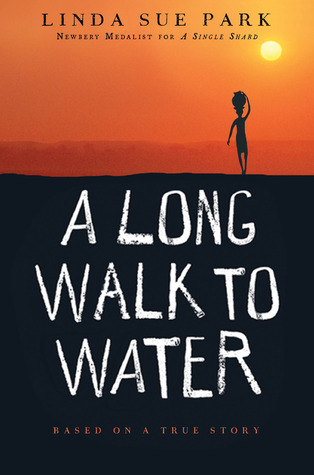
A Long Walk to Water by Linda Sue Park

Share

longwalk

A Long Walk to Water
Author: Linda Sue Park
Published November, 2010 by Houghton Mifflin Harcourt

Goodreads Summary: A Long Walk to Water begins as two stories, told in alternating sections, about a girl in Sudan in 2008 and a boy in Sudan in 1985. The girl, Nya, is fetching water from a pond that is two hours’ walk from her home: she makes two trips to the pond every day. The boy, Salva, becomes one of the “lost boys” of Sudan, refugees who cover the African continent on foot as they search for their families and for a safe place to stay. Enduring every hardship from loneliness to attack by armed rebels to contact with killer lions and crocodiles, Salva is a survivor, and his story goes on to intersect with Nya’s in an astonishing and moving way.

My Review and Teachers’ Tools for Navigation: The wars in Sudan and Darfur are the most violent and long lasting wars in the world; however, most Americans are unaware that they are even occurring. Linda Sue Park took a true story of a lost boy’s survival (watch a video about the true story here) after being chased from his village because of war and transformed it into a novel that will leave the reader with a feeling of awe. Awe of the bravery and pure fearlessness of Salva and the other Lost boys of Sudan and awe of the world of riches and blindness we live in while a horrendous war wages on the other side of the world. I love this book because it is very accessible to children, it won’t bog them down with too much history; however, it will definitely make them aware of the situation in Sudan.

Discussion Questions: What is a way that you could share what you learned about the Lost Boys of Sudan? How can you help? 

We Flagged: “Salva took a few steps towards the men.
‘Hey!’
A soldier approached Salva and raised his gun.
Salva froze. All he could see was the gun’s huge barrel, black and gleaming, as it moved toward his face.
The end of the barrel touched his chin.
Salva felt his knees turn to water. He closed his eyes.
If I die now, I will never see my family again.
Somehow, this thought strengthened him enough to keep him from collapsing in terror.
He took a deep breath and opened his eyes.” (p. 11)

“Going was easy.
Going, the big plastic container held only air… There was little weight, going. There was only heat, the sun already baking the air, even though it was long before noon. It would take her half the morning if she didn’t stop on the way.
Heat. Time. And thorns…
Nya filled the container all the way to the top. Then she tied the gourd in back in place and took the padded cloth doughnut from her pocked. The doughnut went on her head first, followed by the heavy container of water, which she would hold in place with one hand.
With the water balanced on her head, and her foot still sore from the thorn, Nya knew that going home would take longer than coming had. But she might reach home by noon, if all went well.” (p. 1, 14-15)

Read This If You Loved: The Queen of Water by Laura Resau, Now is the Time for Running by Michael Williams, Sold by Patricia McCormick, Diamonds in the Shadows by Caroline B. Cooney, Shabanu by Suzanne Fisher Staples, So Long a Letter by Mariama Ba

Recommended For: 
readaloudbuttonsmall closereadinganalysisbuttonsmall
classroomlibrarybuttonsmall litcirclesbuttonsmall
Signature

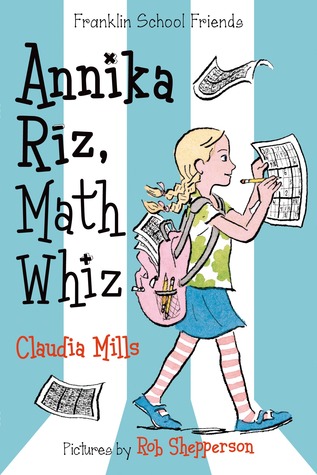
Annika Riz, Math Whiz by Claudia Mills

Share

annika riz math whiz

Annika Riz, Math Whiz (Franklin School Friends series)

Author: Claudia Mills

Pictures by: Rob Shepperson

Published: May 13th, 2014 by Farrar, Strous, and Giroux

Summary: (Grades 2-4) Annika Riz loves math more than anything. She’s trying to teach her dog, Prime, to count. She’s determined to beat fellow math whiz Simon Ellis in a Sudoku contest at the public library. She even sleeps under number-patterned sheets. But Annika’s best friends Kelsey and Izzy think math is boring. All they care about is the upcoming school carnival: their principal is going to be dunked in a dunking tank and their class is going to have a booth selling home-baked cookies. But then disaster foils the friends’ cookie-baking plans. Can math save the day?

Review: Each of the books in the Franklin School Friends series tells the story of a different third-grade student with a passion for a school subject.  I was excited to read Annika Riz’s story because she is a math whiz—and I love math! Annika looks at the world through math-tinted glasses, and she wants everyone to love the subject as much as she does. She even attempts to teach her dog, Prime, how to count. I found the story to be so very charming. Annika is an endearing character who will resonate with many kids (and adults). Her energy and enthusiasm is refreshing. I suspect that readers will appreciate math much more by the end of this book. This series would be a great addition to elementary school classrooms. Series books are a big step in many students’ journey to becoming avid readers. Most adult readers list series books as a major part of their reading identities, so I am a strong advocate of having these texts available to students.

Teacher’s Tools for Navigation: Annika looks at the world through a math mind. Teachers might ask students to pick a school subject and show how that subject is important in many of their everyday activities. This would teach students to apply what they are learning in school to their world.

Check out the downloadable curriculum guide for the Franklin School Friends here!

Discussion Questions: How does Annika approach the sudoku contest? Do you think she does a good job preparing for it?; What role do Annika’s friends play in her life? Because the girls have such varying interests, are you surprised they are friends? Why or why not?; Why do the girls decide to make lemonade? Do you think this was a good choice?; In what ways does Annika use math to examine aspects of her world?

We Flagged: “Kelsey loved reading and Izzy loved running the same way that Annika loved math. But Annika didn’t hate reading and running the same way that the others hated math. It was hard when your two best friends hated the thing in the world that you loved the most” (4).

Read This If You Loved: Clementine by Sara Pennypacker, Judy Moody by Megan McDonald, and Ivy and Bean by Annie Barrows

Recommended For:

litcirclesbuttonsmall classroomlibrarybuttonsmall

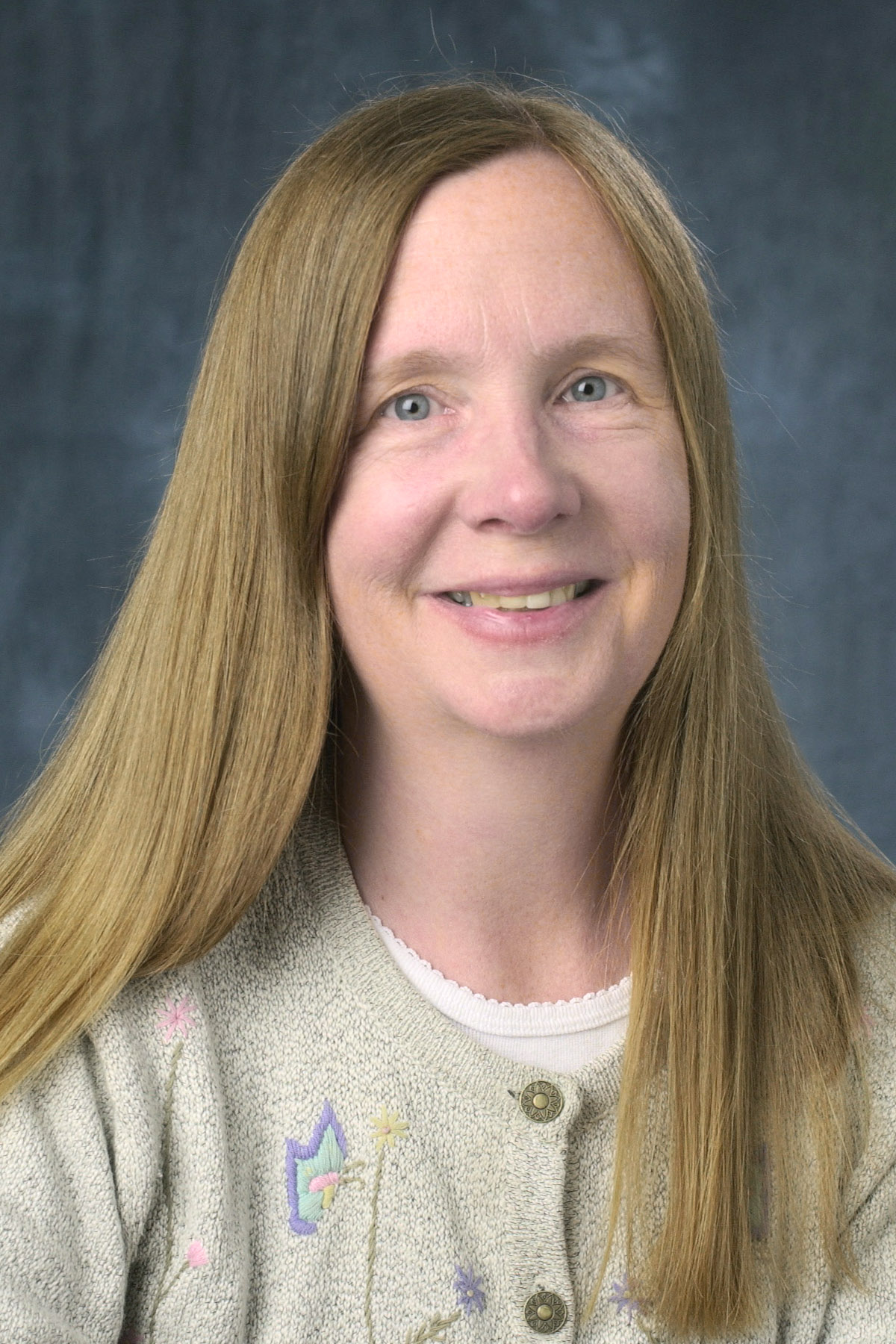
Claudia Mills, Philosophy claudia.mills@colorado.edu photo by: Larry Harwood

Claudia Mills is the acclaimed author of fifty early-chapter and middle-grade books, including 7 x 9 = Trouble!, How Oliver Olson Changed the World, and Zero Tolerance. Claudia was a professor of philosophy for over twenty years at the University of Colorado at Boulder, where she received many teaching awards, before leaving the university to write full time. She has two sons. To learn more, visit her website at claudiamillsauthor.com.

RickiSig

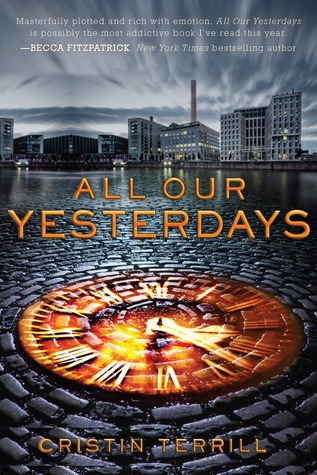
All Our Yesterdays by Cristin Terrill [Kellee’s Review]

Share

yesterdays

All Our Yesterdays
Author: Cristin Terrill
Published September 3rd, 2013 by Disney Hyperion

Goodreads Summary: What would you change?

Imprisoned in the heart of a secret military base, Em has nothing except the voice of the boy in the cell next door and the list of instructions she finds taped inside the drain.

Only Em can complete the final instruction. She’s tried everything to prevent the creation of a time machine that will tear the world apart. She holds the proof: a list she has never seen before, written in her own hand. Each failed attempt in the past has led her to the same terrible present—imprisoned and tortured by a sadistic man called the doctor while war rages outside.

Marina has loved her best friend, James, since they were children. A gorgeous, introverted science prodigy from one of America’s most famous families, James finally seems to be seeing Marina in a new way, too. But on one disastrous night, James’s life crumbles, and with it, Marina’s hopes for their future. Marina will protect James, no matter what. Even if it means opening her eyes to a truth so terrible that she may not survive it… at least, not as the girl she once was. Em and Marina are in a race against time that only one of them can win.

All Our Yesterdays is a wrenching, brilliantly plotted story of fierce love, unthinkable sacrifice, and the infinite implications of our every choice.

My Review and Teachers’ Tools for Navigation: This is a book that keeps you reading. I couldn’t put it down. I found myself reading whenever I could (including times when I was holding my sleeping son or when I should have been sleeping).  When you find out how Marina and Em are connected, it just blew my mind! I then had to find out how everything was going to turn out. I was just so impressed with everything:

First, the plot. It is so complex and intricate. You have to pay attention to keep up with the timeline, but it isn’t so bad that you’ll get lost. It is so admirable that the author was able to craft such intense timelines and intertwine them seamlessly.

Second, the language. I loved how Cristin Terrill wrote. The imagery throughout transported you into the story.

Third, the suspense. I just HAD to know what was going to happen!

Fourth, the characters. In a way that I’ve never experience before, Cristin Terrill truly gets you into the minds and hearts of the characters. You understand their motives, who they used to be, who they’ll become, all because of the way that Terrill tells the story and crafts her characters. You feel their heartbreak with them (and one particular realization that you find out in the very end just broke my heart and blew my mind), and you are so invested in everything they do.

Finally, the themes. The discussions that would come from this novel would be so interesting. Just the idea of power and corruption that is dealt with would lead to quite a debate.

Ricki also pointed out in her review how fun it would be to have students imagine what they would change if time travel existed.

This text would be a wonderful mentor text to discuss plot and character development, theme, and style. And most importantly, it will be a text that students will be intrigued with, not want to put down, and share with everyone.

Discussion Questions: What would you change if you had the ability to change time?; How far would you go to protect your best friend?; How did Cristin Terrill build suspense throughout the novel?; Why does power lead to corruption? Where have we seen this happen in history?

We Flagged: “Far down the hallway, I hear the clink of a door. Someone is approaching. I bolt upright and lunge for the drain. No telling what the doctor will do if he finds me breaking into it, and if he sees the sheet of paper… The though sends ice through my veins. He’ll kill me for sure. Hands clumsy with rushing, I break the spoon into several pieces and drop them down the drain. I can now make out a pair of heavy boots against the cement. I jam the grating back onto the drain and replace the screws as best I can with fingertips and nails. I swipe up the plastic bag and piece of paper and throw myself at my mattress. I show them both underneath just as Kessler’s face appears at the small window in my cell door.” (p. 9-10)

Read This If You Loved: Chronal Engine by Greg Leitich Smith, Ruby Red by Kerstin Gier, Awaken by Katie Kacvinsky, Lost Time by Susan Maupin Schmid, When You Reach Me by Rebecca Stead, Found by Margaret Peterson Haddix, London Calling by Edward Bloor

Recommended For: 

closereadinganalysisbuttonsmall classroomlibrarybuttonsmall litcirclesbuttonsmall

Signature

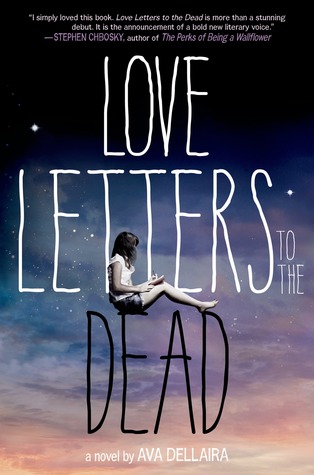
Love Letters to the Dead by Ava Dellaira

Share

love letters to the dead

Love Letters to the Dead
Author: Ava Dellaira
Published: April 1st, 2014 by Farrar, Strous, and Giroux

Summary: It begins as an assignment for English class: Write a letter to a dead person. Laurel chooses Kurt Cobain because her sister, May, loved him. And he died young, just like May did. Soon, Laurel has a notebook full of letters to people like Janis Joplin, Amy Winehouse, Amelia Earhart, Heath Ledger, and more; though she never gives a single one of them to her teacher. She writes about starting high school, navigating new friendships, falling in love for the first time, learning to live with her splintering family. And, finally, about the abuse she suffered while May was supposed to be looking out for her. Only then, once Laurel has written down the truth about what happened to herself, can she truly begin to accept what happened to May. And only when Laurel has begun to see her sister as the person she was; lovely and amazing and deeply flawed; can she begin to discover her own path.

Review: Fans of The Perks of Being a Wallflower will fall in love with this story. After her sister’s death, Laurel feels broken. I just wanted to reach in the book and give her a big squeeze. As she writes letters to the dead, she grows and learns more about herself. While most high schoolers may not have experienced a loss like Laurel’s, I think every teen will be able to see themselves in her. Her characterization is authentic and honest. I am including several passages (below) from the book. Rather than describe the power of this book, I want you to get lost in Dellaira’s words.

Teacher’s Tools for Navigation: It may seem a rather obvious assignment for this book, but I think students would truly learn about themselves by writing letters to the dead. I would probably pair this with a mini-research assignment. For example, Laurel knows background information about the people she writes to. She uses this knowledge to make connections to her life.

Discussion Questions: How does Laurel grieve? How does this differ from her parents’ grieving processes?; What commonalities exist across the people Laurel writes to? What specific connections does she make with them?; Do you think Laurel is ready for a romantic relationship? Why or why not?

We Flagged: I can’t help myself. Enjoy the beautiful quotes below. I apologize that there aren’t page numbers, but I wrote the location in the e-book!

“Maybe if I can learn to be more like her, I will know how to be better at living without her.” (Loc 185, 5%)

“I think a lot of people want to be someone, but we are scared that if we try, we won’t be as good as everyone imagines we could be.” (Loc 1651. 43%)

“When we are in love, we are both completely in danger and completely saved.” (Loc 1763, 46%)

“Truth is beautiful, no matter what the truth is. Even if it’s scary or bad. It is beauty simply because it’s true. And truth is bright. Truth makes you more you. I want to be me.” (Loc 1969, 51%)

“I have found that sometimes, moments get stuck in your body. They are there, lodged under your skin like hard seed-stones of wonder of sadness or fear, everything else growing up around them.” (Loc 2153, 56%)

“A friend is someone who gives you total freedom to be yourself—and especially to feel, or not feel. Whatever you happen to be feeling at any moment is fine with them. That’s what real love amounts to—letting a person be what he really is.” (Loc 3117, 81%).

Read This If You Loved: The Perks of Being a Wallflower by Stephen Chbosky, If I Stay by Gayle Forman, Twenty Boy Summer by Sarah Ockler, The Sky is Everywhere by Jandy Nelson

Recommended For:

litcirclesbuttonsmall classroomlibrarybuttonsmall

026F3FBCC8C3913BD3A4D3F6920340D5

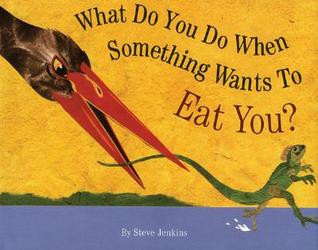
What Do You Do When Something Wants To Eat You? by Steve Jenkins

Share

NF PB 2014

Nonfiction Picture Book Wednesday

Nonfiction Picture Book Wednesday is hosted by Kid Lit Frenzy and was started to help promote the reading of nonfiction texts. Most Wednesdays, we will be participating and will review a nonfiction text (though it may not always be a picture book).
Be sure to visit Kid Lit Frenzy and see what other nonfiction books are shared this week!

eatyou

What Do You Do When Something Wants To Eat You?
Author and Illustrator: Steve Jenkins
Published October 27th, 1997 by HMH Books for Young Readers

Goodreads Summary: What would you do if something wanted to eat you? Walk on water? Stick out your tongue? Play dead? Animals in the wild use all kinds of methods to protect themselves from their enemies. Using dynamic and intricate cut-paper collages, Steve Jenkins explores the many fascinating and unique defense mechanisms creatures use to escape from danger.

My Review: Steve Jenkins just has a way of making nonfiction more interesting than other authors, and this book is no different than his others. This book takes different animals and shows the different ways they protect themselves: from squirting ink to camouflage.  The illustrations are done in Steve Jenkins’s paper-cut style and are done as well as his other books. The text, though simple, is full of information and definitely makes the reader want to learn more.

Teachers’ Tools for Navigation: This book can definitely be used in reading and science class. It is a good introduction to animal defenses and animal adaptations. It can lead to inquiry and research of each of these animals. It would be a great first research project for students to choose one of the animals and learn more about them. It is also a good introduction to cause and effect. What causes _____ to need to defend themselves? What is the effect of ____ being attacked?

Discussion Questions: What type of defenses do animals use to keep themselves from being harmed?; How does camouflage work?; What causes animals to need to defend themselves? What are the effects of them being attacked?

We Flagged: “A flying fish escapes danger by leaping from the water, spreading its winglike fins, and gliding as far as a thousand feet.”

Read This If You Loved: Any Steve Jenkins book, Any Seymour Simon animal book, Lifetime by Lola M. Schaefer, Frog Song by Brenda Z. Guiberson

Recommended For: 

readaloudbuttonsmall closereadinganalysisbuttonsmall
classroomlibrarybuttonsmall litcirclesbuttonsmall

Signature

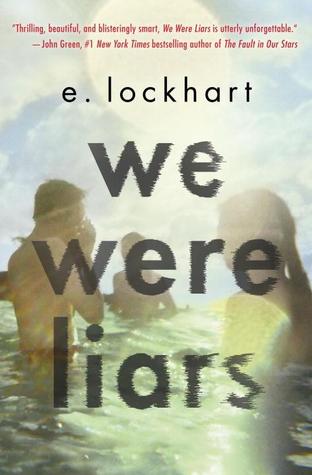
We Were Liars by e. lockhart

Share

we were liars

We Were Liars
Author: e. lockhart
Expected Publication: May 13th, 2014 by Delacorte

Summary: A beautiful and distinguished family.
A private island.
A brilliant, damaged girl; a passionate, political boy.
A group of four friends—the Liars—whose friendship turns destructive.
A revolution. An accident. A secret.
Lies upon lies.
True love.
The truth.

We Were Liars is a modern, sophisticated suspense novel from National Book Award finalist and Printz Award honoree e. lockhart.

Read it.
And if anyone asks you how it ends, just LIE.

Review: I can’t tell you anything about this book without giving anything way, and I would never do that to you, so let me just say this—this is a book that I will remember forever. It is haunting and sent chills up my spine. I was sucked into the story of this beautifully screwed up family with too much money for its own good.

Teacher’s Tools for Navigation: This would bridge beautifully with The Great Gatsby. There are so many parallels, and I can’t write them here, or I will give away too much of the plot. The figurative language in this title is also stunning. English teachers will go gaga over the pages upon pages of text that can be used for close reading. It made me want to go back to teaching English!

Discussion Questions: What does this story teach us about humanity?; What drives each of the family members?; What does Gat’s character add to the story?; How does lockhart unravel the plot? What makes her an effective writer?; What is the message of this complex text?

We Flagged: “If you want to live where people are not afraid of mice, you must give up living in palaces” (Chapter 40).

Please note: The above quote is from the Advanced Reader Copy. The chapter numbers is included instead of page numbers because the e-reader did not provide page numbers. The quotes may change when the book is published.

Read This If You Loved: The Great Gatsby by F. Scott Fitzgerald, I Will Save You by Matt de la Peña, If I Stay by Gayle Forman

Recommended For:

closereadinganalysisbuttonsmall litcirclesbuttonsmall classroomlibrarybuttonsmall

RickiSig

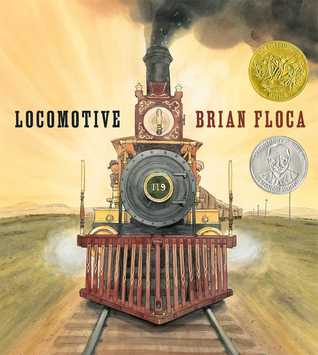
Locomotive by Brian Floca (Kellee’s Review)

Share

NF PB 2014

Nonfiction Picture Book Wednesday

Nonfiction Picture Book Wednesday is hosted by Kid Lit Frenzy and was started to help promote the reading of nonfiction texts. Most Wednesdays, we will be participating and will review a nonfiction text (though it may not always be a picture book).
Be sure to visit Kid Lit Frenzy and see what other nonfiction books are shared this week!

locomotive

Locomotive
Author and Illustrator: Brian Floca
Published September 3rd, 2013 by Atheneum Books for Young Readers

Goodreads Summary: The Caldecott Medal Winner, Sibert Honor Book, and New York Timesbestseller Locomotive is a rich and detailed sensory exploration of America’s early railroads, from the creator of the “stunning” (Booklist)Moonshot.

It is the summer of 1869, and trains, crews, and family are traveling together, riding America’s brand-new transcontinental railroad. These pages come alive with the details of the trip and the sounds, speed, and strength of the mighty locomotives; the work that keeps them moving; and the thrill of travel from plains to mountain to ocean.

Come hear the hiss of the steam, feel the heat of the engine, watch the landscape race by. Come ride the rails, come cross the young country!

My Review: Rhythm. Onomatopoeias. (Well-researched) History. Gorgeous (and historically accurate) illustrations. Lyrical narrative. Unique point of view. This book has everything.

YOU (second person POV!) are a passenger on a train cross America with your family in 1869. Throughout the book, you will encounter many different landmarks, experience things on a train very few had at this time in history, and learn about the intricacies of the train. So fascinating! And all told in rich, beautiful language. It is hard to even share much more about the book because it is such an experience.

Check out Ricki’s review of Locomotive as well HERE.

Teachers’ Tools for Navigation: I would LOVE to read this to kids. There are so many places to stop and discuss and research and learn, but never without an enthralling story accompanying.  It would be a great book to use across subjects. There are definitely opportunities for all subjects: social studies (trans-continental travel, history, trains); science (the science of steam engines); math (travel); reading/writing (onomatopoeia, point of view, rhythm).

Also, and this is fresh on my mind because I just read it, but I would love to read this and The Donner Dinner Party and then look at the two journeys. How long did each take? Dangers? It would be an interesting look at how trains truly changed transportation.

Discussion Questions: How does having the book in 2nd point of view make it more enthralling?; What onomatopoeias were used in the book? How did these words help suck you into the story?; How did the author’s rhythm make you feel like you are actually on the train?; What are the landmarks that were passed on the trans-continental railroad? Why are these landmarks significant?; How does a steam engine work? What are the jobs of all of the different people on board?

We Flagged:
“Here is how this road was built,
with a grunt and a heave and a swing,
with the ring of shovels on stone,
the ring of hammers on spikes:

CLANK CLANK CLANK!

Men came from far away
to build from the East,
to build from the West,
to meet in the middle.

They cleared the rocks
and dug the tunnels.
They raised the hammers
and brought them down—

“Three strokes to the spike,
ten spikes to the rail!”

CLANK CLANK CLANK!”

Read This If You Loved: The Donner Dinner Party by Nathan Hale, Train by Elisha Cooper

Recommended For: 

readaloudbuttonsmall closereadinganalysisbuttonsmall classroomlibrarybuttonsmall

Signature