Author Guest Post: “Overwhelm and Fear” by Mary Cronk Farrell, Author of Fannie Never Flinched

Share

“Overwhelm and Fear”

One of the hardest things about writing is getting started, and two of the most common obstacles are overwhelm and fear. The subject of my new biography, Fannie Sellins, showed me how to work through both.
Beginning writers, students of all levels and even best-selling authors sometimes face overwhelm and fear, feelings that can cause you to procrastinate, or tighten you up, make you hold back and keep you from doing your best writing.

It’s tempting when beset by overwhelm or fear to tell yourself to man up, or put on your big girl panties and charge ahead as these emotions are irrelevant. If this works for you, go ahead and stop reading here, because I believe these feelings are part of the creative process, and working through them gives you the courage to do powerful work.

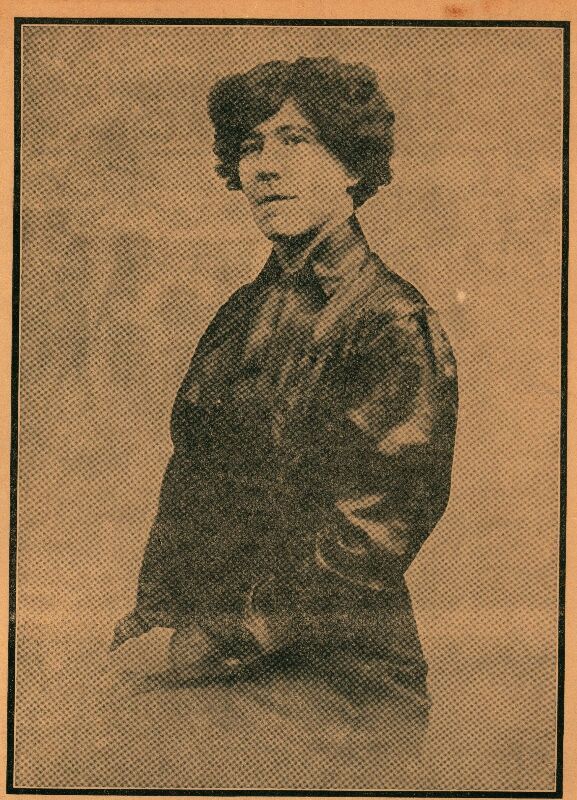
Fannie Never Flinched: The Story of One Woman’s Courage in the Struggle for American Labor Union Rights tells of a garment worker at the height of the Industrial Revolution, who left her sewing machine to inspire and organize workers to stand up and demand just wages and humane treatment.

Fannie was so good, she frightened the powerful men who ran coal and steel companies. They threatened her life, told her to leave town. And when she stayed and kept encouraging men to strike, they shot her dead.

If Fannie could find that kind of courage, I told myself, surely, I can find the courage to put words on a blank page.

In the early 1900s, poor workers fought a losing battle, especially in West Virginia and Pennsylvania. Strikes for shorter hours and better pay, sometimes won small concessions short term, but overall, companies aided by local deputies and federal soldiers slammed unions into submission. Now, that’s overwhelm.

Still, Fannie got up every day, went out and talked to workers, convinced them they deserved better, inspired them to take a chance, join the union. Often, it was the wives she encouraged, who in turn emboldened their husbands. A father had a hard time walking off the job, if his children were hungry. Fannie started a strike with social work, soliciting money, seeing to the basic needs of families.

In my research I never found anything Fannie said about how she coped with overwhelm. But looking at her actions, it seems to me that she maintained a double-focused vision. She kept one eye like a laser on the close-up, seeing what was right in front of her and dealing with it. At the same time, she never lost sight of the larger picture, her belief in the dignity of workers and the justice they deserved.

This strategy cuts through overwhelm when I see a sprawl of research, a mess of unconnected ideas, or when a project feels impossible to finish. Grounded in my larger goal, I can pick one small place to start, write one sentence, or choose one task. Keeping a double focus, I can let go of most of the work and tackle one thing at a time.

But even with a solid plan and the best of intentions, fear can rush in, cloud your focus and stop you from doing even one small thing. What I learned from Fannie Sellins, is to look at fear straight on. Fannie admitted that the first time she first stood at a podium to speak to a large crowd, she was scared.

But during her first strike, Fannie traveled around the country speaking for two years, telling people about the garment workers plight, raising funds and urging a boycott of suits and pants sewed in sweatshop conditions. She became a charismatic speaker, gaining enough support for the strikers to hold out for two years until their demands were met.

Fannie explained that she overcame her fear before speaking by remembering the faces of the women she had worked with in the factory. Fannie used compassion to motivate herself to move out of her comfort zone. She used love to deflate fear.

I knew last week that I needed to get going on a revision of my current manuscript. But every time I thought about it, I felt this clutch in my stomach. And when I sat at the computer I got a slighter version of that feeling in my chest when somebody runs a red light and barely misses crashing into me at full speed.

Now that I’ve been writing for a couple decades, I know those emotions are normal. If I didn’t care about my writing, if I wasn’t risking anything, if I didn’t believe my words would be important, there’d be nothing to fear. So, I follow Fannie’s example and choose to have compassion, for the girls in the factory and for myself at the keyboard.

I put my hand on my heart, and I tell myself there’s nothing wrong with being afraid.

I look at my fear straight on, honor that the feeling is real, and ask myself what am I afraid of? Here are some of the bugaboos I discover. I’m afraid I’m not a good enough writer. I’m afraid I’ll disappoint myself. I’m afraid it will be too hard. I see that basically I’m afraid I’ll fail. With compassion I remind myself, it’s okay to be afraid because it’s true. I might fail.

And now, the decision I need to make is clear. Would failing be so bad that I dare not risk it?

Would failing to make progress on this one revision of this one manuscript, on this one particular day mean I’m a total failure? If so, I should probably deal with some other s#%t first, figure out how to have some compassion for myself.

But if I can find enough compassion for myself to live with this kind if failure, why not take a stab at it? And that’s what I usually do, and it’s usually not as hard as I think it will be once I get started.

Finding compassion and facing fear straight on allows the rational brain to evaluate the risks of failure more accurately. Having a double focus, an eye on both the long term vision and one next step allows everything in-between to drop away and reduces the overwhelming magnitude of the work to be done. For further inspiration in writing and life, read more about Fannie Sellins in Fannie Never Flinched.
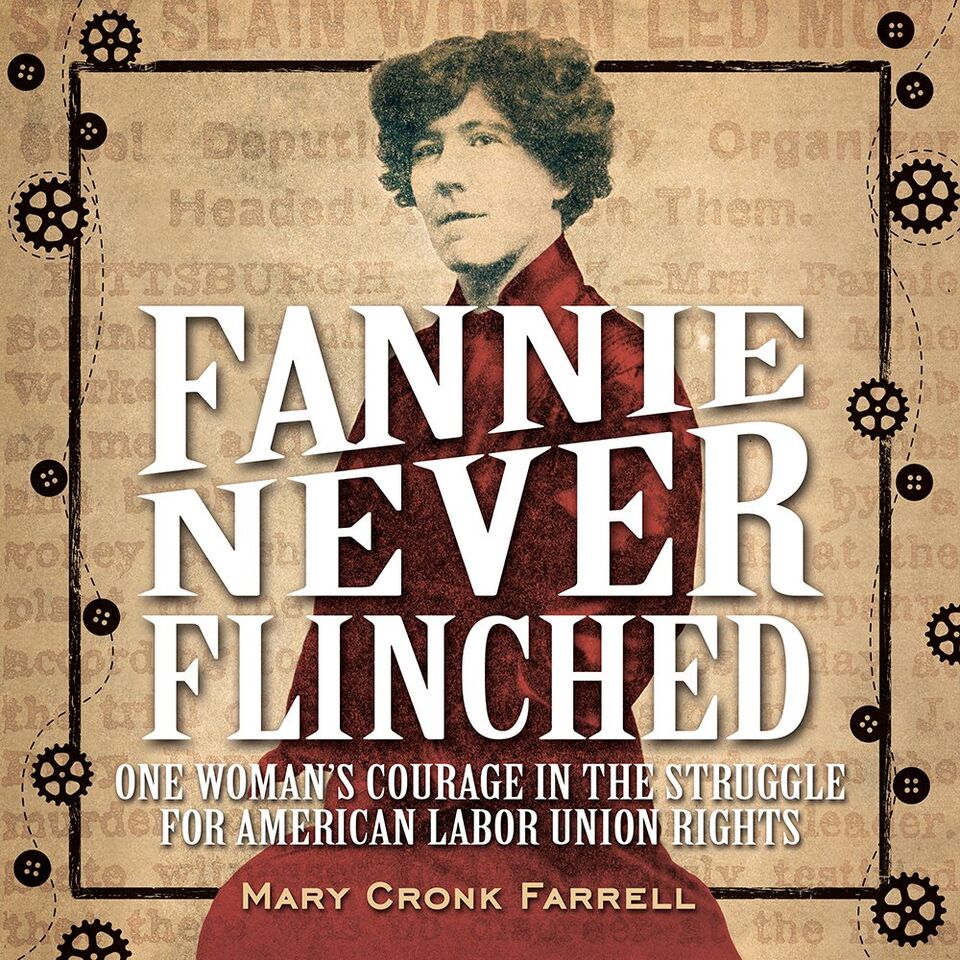
About the Book: Fannie Sellins (1872–1919) lived during the Gilded Age of American Industrialization, when the Carnegies and Morgans wore jewels while their laborers wore rags. Fannie dreamed that America could achieve its ideals of equality and justice for all, and she sacrificed her life to help that dream come true. Fannie became a union activist, helping to create St. Louis, Missouri, Local 67 of the United Garment Workers of America. She traveled the nation and eventually gave her life, calling for fair wages and decent working and living conditions for workers in both the garment and mining industries. Her accomplishments live on today. This book includes an index, glossary, a timeline of unions in the United States, and endnotes.
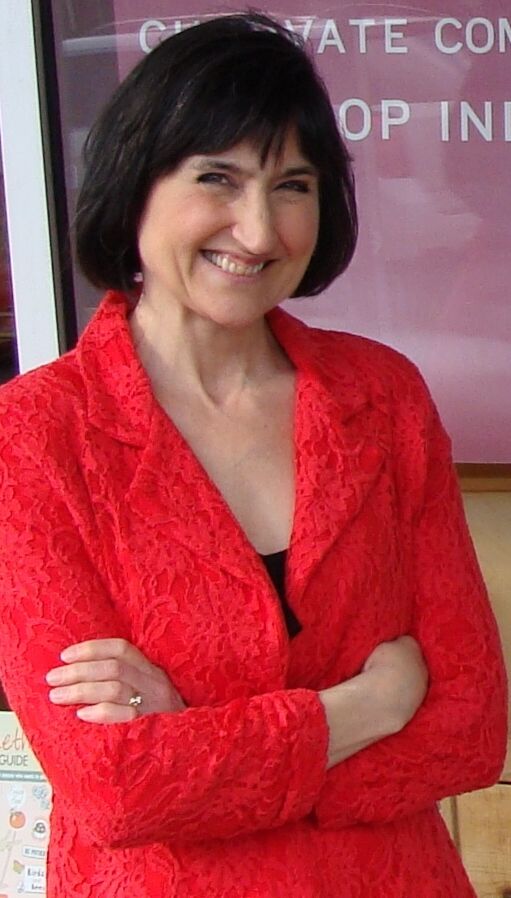
About the Author: Mary Cronk Farrell is an award-winning author of five books for young people and former television journalist with a passion for stories about women facing great adversity with courage. She researches little known stories form history and relates them with engaging and powerful language in her books, multi-media presentations and workshops. Farrell has appeared on TB and radio across the nation. She speaks to women’s groups, civic groups, and at museums, schools and libraries.

Thank you for inspiring us, Mary!!

Kellee Signature andRickiSig

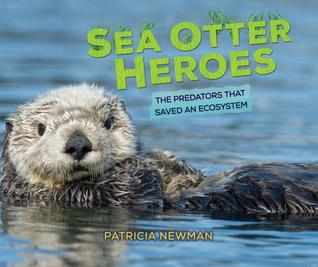
Sea Otter Heroes: The Predators That Saved an Ecosystem by Patricia Newman

Share

nfpb2017

Nonfiction Wednesday

Nonfiction Picture Book Wednesday is hosted by Kid Lit Frenzy and was started to help promote the reading of nonfiction texts. Most Wednesdays, we will be participating and will review a nonfiction text (though it may not always be a picture book).
Be sure to visit Kid Lit Frenzy and see what other nonfiction books are shared this week!

Sea Otter Heroes: The Predators That Saved an Ecosystem
Author: Patricia Newman
Published by January 1st, 2017 by Millbrook Press

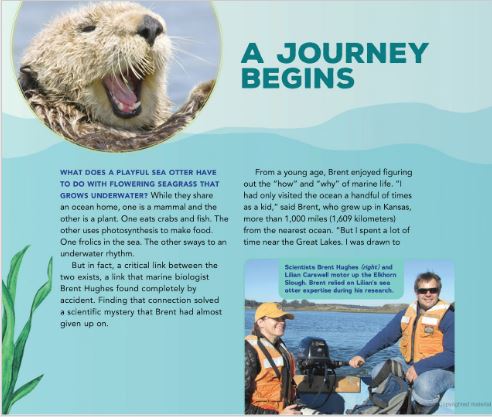
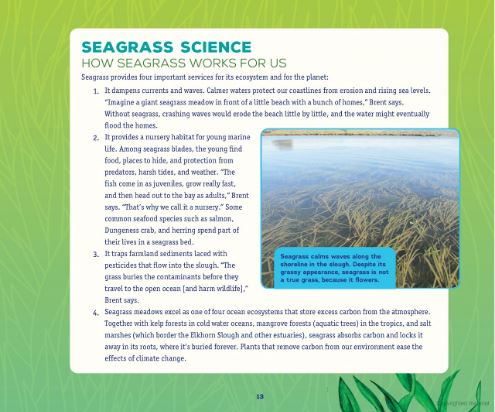
Summary: Marine biologist Brent Hughes didn’t think sea otters and sea grass had much in common. But his research at Elkhorn Slough, an estuary on Monterey Bay in northern California, revealed a new and surprising connection between the two. The scientist expected this estuary to be overrun with algae due to the fertilizer runoff from surrounding fields. But it wasn’t. Why?

Review: As someone who struggled with biology when in school, I love narrative nonfiction about nature because it helps me fill in education gaps. Sea Otter Heroes looks at trophic cascade (cause and effect relationships within a food chain) and how it affects an ecosystem–so interesting! This information along with the beautiful photographs make this book a scientific journey.

Teachers’ Tools for Navigation: Patricia Newman’s books (Plastics, Ahoy! and Ebola included) are made for classrooms. This text includes not only the cause-effect relationship between otters and sea grass, but also has experiments, information about careers, a glossary, and an afterword about rethinking our relationship with nature giving the reader real ways they can make a difference. This book would be perfect to use in a life science unit or class.

Discussion Questions: What is the “critical link between” sea otters and flowering sea grass?; Finding the link was an accident, what was Brent Hughes studying when he found the connection? What was the proof that the connection existed?; How does the Elkhorn Slough exist?; What are Hughes’s 7 steps to think like a scientist? Observe nature and go through the 7 steps yourself.; What part did sea hares play in Brett Hughes’s experiment?; What is a trophic cascade?; How are what was discovered about the otters similar to the situations with wolves and sperm whales Newman shared?

Flagged Passages: 

Read This If You Love: Scientists in the Field books, National Geographic and Animal Planet books about animals 

Recommended For:

  readaloudbuttonsmall classroomlibrarybuttonsmall 

Kellee Signature

**Thank you to Lerner and Patricia for providing a copy for review!**

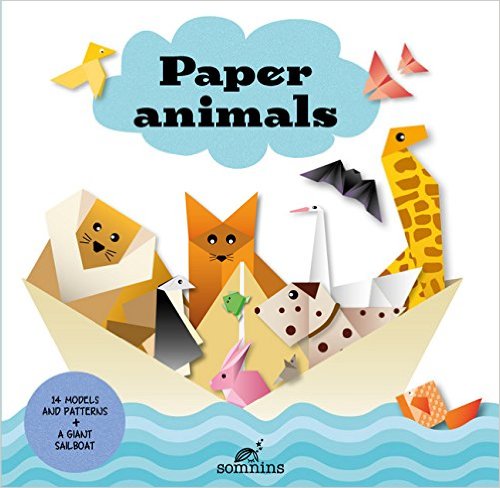
Paper Animals by Kane Miller Books

Share

Paper Animals

Paper Animals
Published: December 5, 2016 by Kane Miller Books

Goodreads Summary: In this book there are 14 different animals, with step-by-step instructions and different levels of difficulty, which will help you become an origami expert. Once you have all the animals ready, fold the giant boat at the end of the book and take all the passengers on board! Included are thirty pages of patterned paper, with printed fold lines. Develops hand eye co-ordination. Learn a form of communication without language. Focuses patience and increases self-esteem. Well-suited to a classroom of 30 or more students. Creates and manipulates basic geometric shapes such as squares, rectangles, and triangles. Reflects the ingenuity and aesthetics of Japanese culture; children gain appreciation of a different culture, opening a doorway to exploration and increased tolerance. Learn the ancient art of origami! In this book there are 14 different animals, with step-by-step instructions and different levels of difficulty.

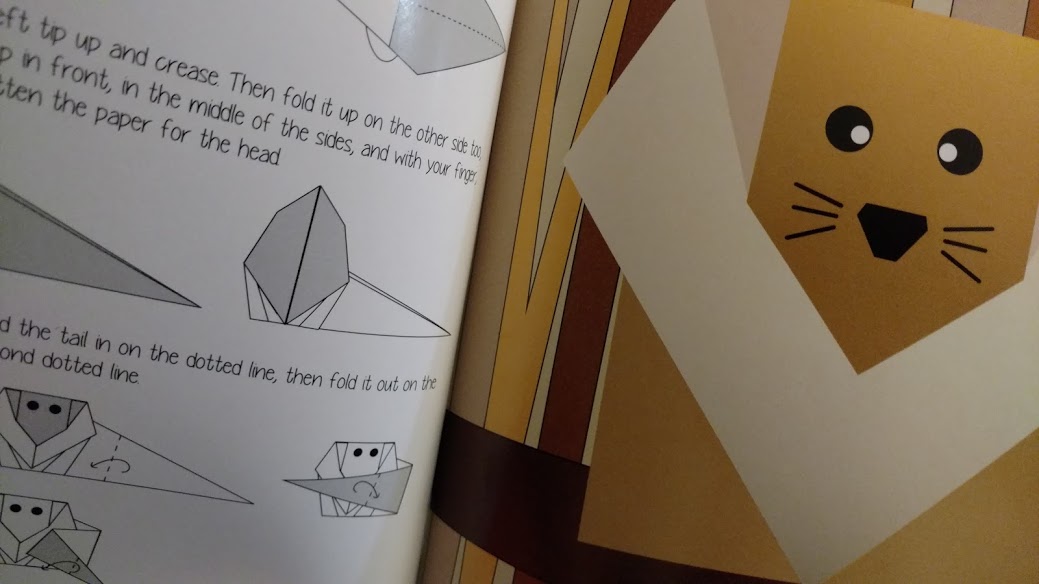
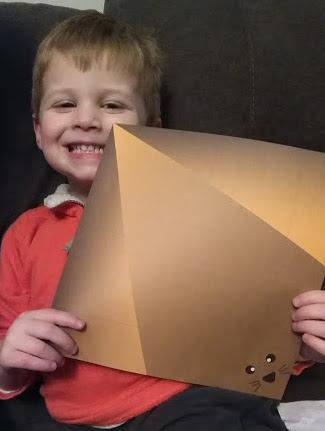
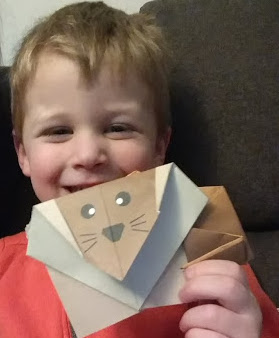
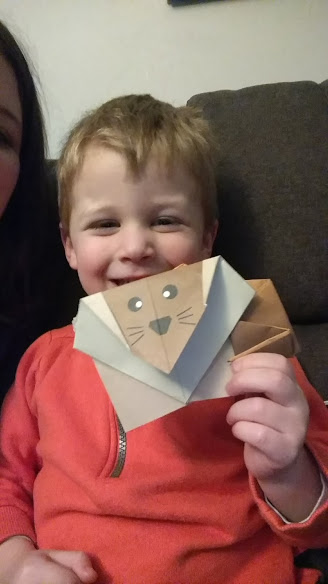
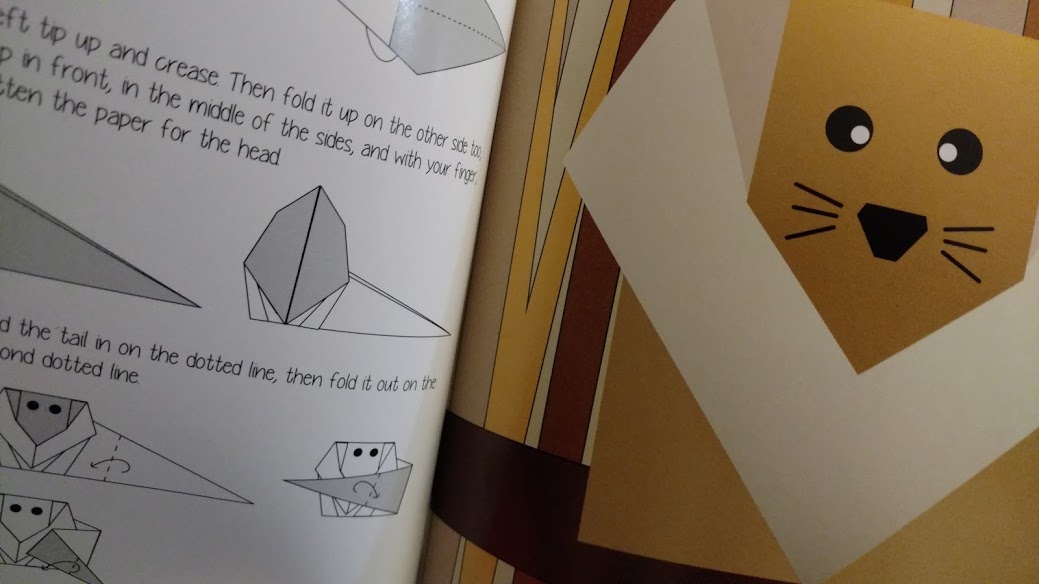
My Review: I have always enjoyed origami, so this book made me feel a bit nostalgic. The first half of the book features pictures of the finished products and directions. The second half of the book includes origami paper that is tailored to each of the animals in the front of the book. So, for example, there is a lion instruction page in the first half of the book, and there is a page of lion origami paper at the end of the book that includes dotted lines for folds and a lion face! My three-year-old is absolutely obsessed with this book. We do one paper animal per day, and we put the animal inside of the giant book (included in the back of the book). He is too young to do the folding himself, but he cheers me on as I fold the paper. I would recommend this book to upper elementary schoolers through adults. Even as an adult, I found some of the paper animals to be very tricky.

Teachers’ Tools for Navigation: In high school, we were required to give a speech that included very specific instructions for participants. I made an origami crane and my peers followed my instructions at their seats. It would be fun to use this as a model for the speech activity. As an alternative, students might create their own origami animal with instructions! This would be hard to do, but it would be great fun!

Discussion Questions: What aspects are important when we give instructions? How did the authors of this book make the instructions easier to follow?; Which animals proved more difficult to make, and why?

Flagged Spread: 

origamil2

origami3 origami4

Read This If You Loved: Activity Books; Origami

Recommended For: 

 classroomlibrarybuttonsmall

RickiSig

The Book of Heroines: Tales of History’s Gutsiest Gals & The Book of Heroes: Tales of History’s Most Daring Dudes from National Geographic Kids

Share

nfpb2017

Nonfiction Wednesday

Nonfiction Picture Book Wednesday is hosted by Kid Lit Frenzy and was started to help promote the reading of nonfiction texts. Most Wednesdays, we will be participating and will review a nonfiction text (though it may not always be a picture book).
Be sure to visit Kid Lit Frenzy and see what other nonfiction books are shared this week!

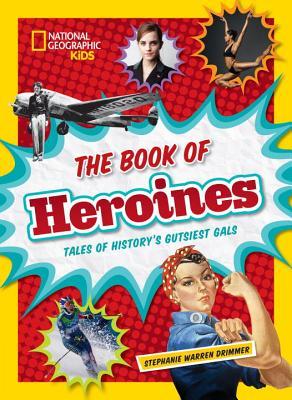
book-of-heroines

The Book of Heroines: Tales of History’s Gutsiest Gals
Author: Stephanie Warren Drimmer
Published November 8th, 2016 by National Geographic Children’s Books

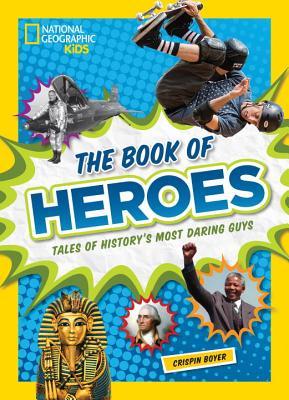
book-of-heroes

The Book of Heroes: Tales of History’s Most Daring Guys
Author: Cristpin Boyer
Published November 8th, 2016 by National Geographic Children’s Books

The Book of Heroines Summary: Everybody needs a role model! Discover true stories of superstars, war heroes, world leaders, gusty gals, and everyday girls who changed the world.

From Sacagawea to Mother Teresa, Annie Oakley to Malala Yousafzai, these famous females hiked up their pants and petticoats or charged full-speed ahead to prove that girls are just as tough as boys…maybe even tougher. Complete with amazing images and a fun design, this is the book that every kid with a goal, hope, or dream will want to own.

The Book of Heroes Summary: Everybody needs a role model! Discover the true stories of superheroes, rebels, world leaders, action heroes, sports legends, and many more daring dudes, all of whom played their part to make their mark, make a contribution, and make the world a better place.

From Abraham Lincoln to Sitting Bull, Stephen Hawking to Galileo, these cool guys had the boldness, bravery, and brains to meet the challenges of their day. With a fun design, engaging text, and high-quality photographs, this is ultimate hero guide and keepsake for 21st century kids .

Review: As I’ve stated over and over, I am so impressed with all the new National Geographic Kids books that I have encountered over the last couple of years. With this text, I specifically found the way that the publisher/authors structure the texts makes them so thematic-based thus accessible and informative. The books also have something for everyone as so many different types of heroines/heroes are featured from scientists, historical heroes, political heroes, and more! I cannot wait to put these in my classroom and find out how to use them with students!

Teachers’ Tools for Navigation: Teachers will find this book irreplaceable! It has so much information to fit into so many different units, connect with so many different texts, and relates to so many parts of history. These texts could also be used as the basis of a inquiry project where students use these texts as previews and they choose a theme or a hero/heroine and complete a research/inquiry project around it or maybe even create a text set around the theme or the person.

Discussion Questions: Which heroine/hero do you think changed history the most?; If you were to take part in an inquiry project about one hero/heroine, who would you like to learn more about?; Why did the author/publisher choose to structure the text in the way they did? What other structures could they have chosen? Which do you feel would have had a bigger impact?

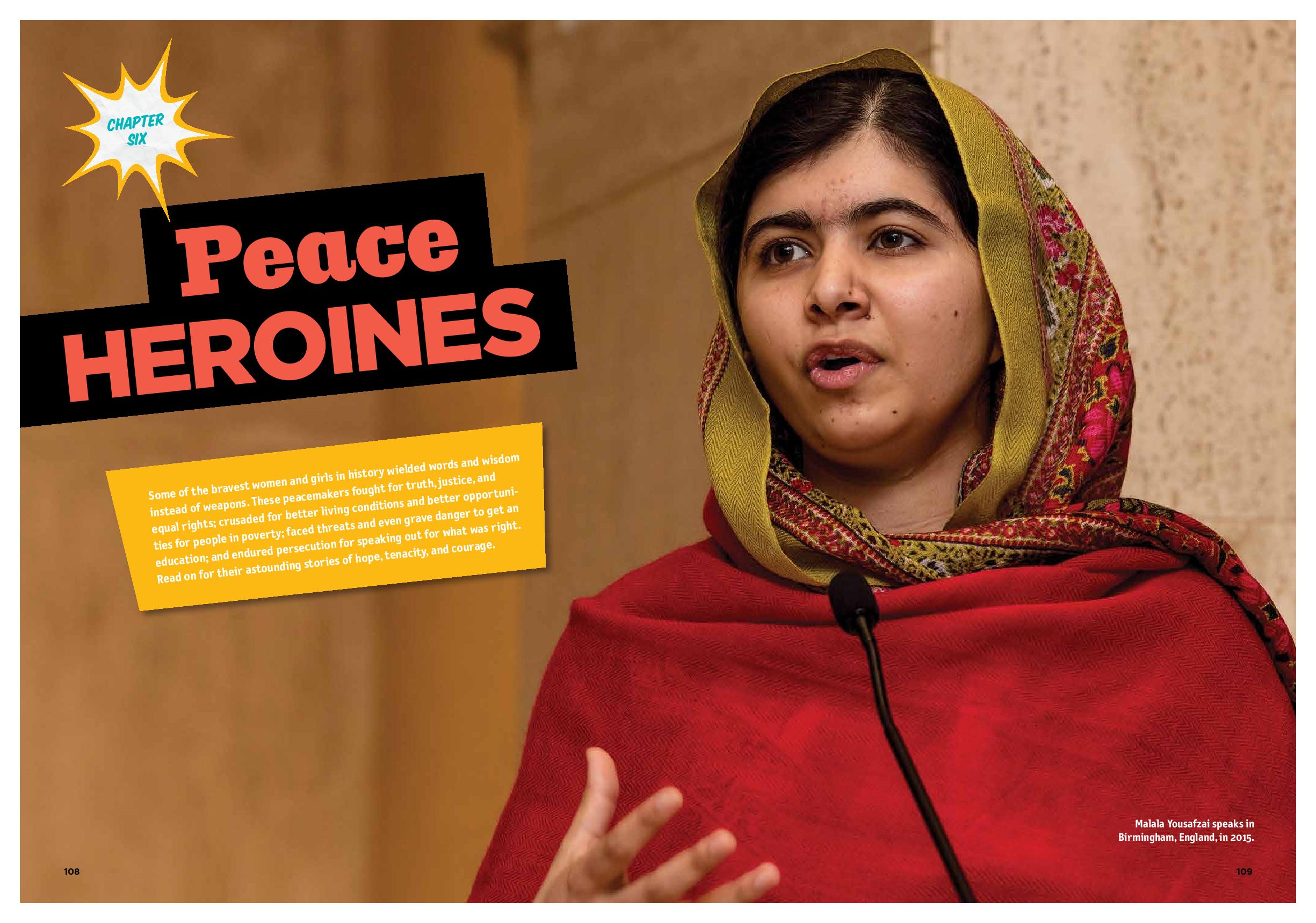
Flagged Passages: 

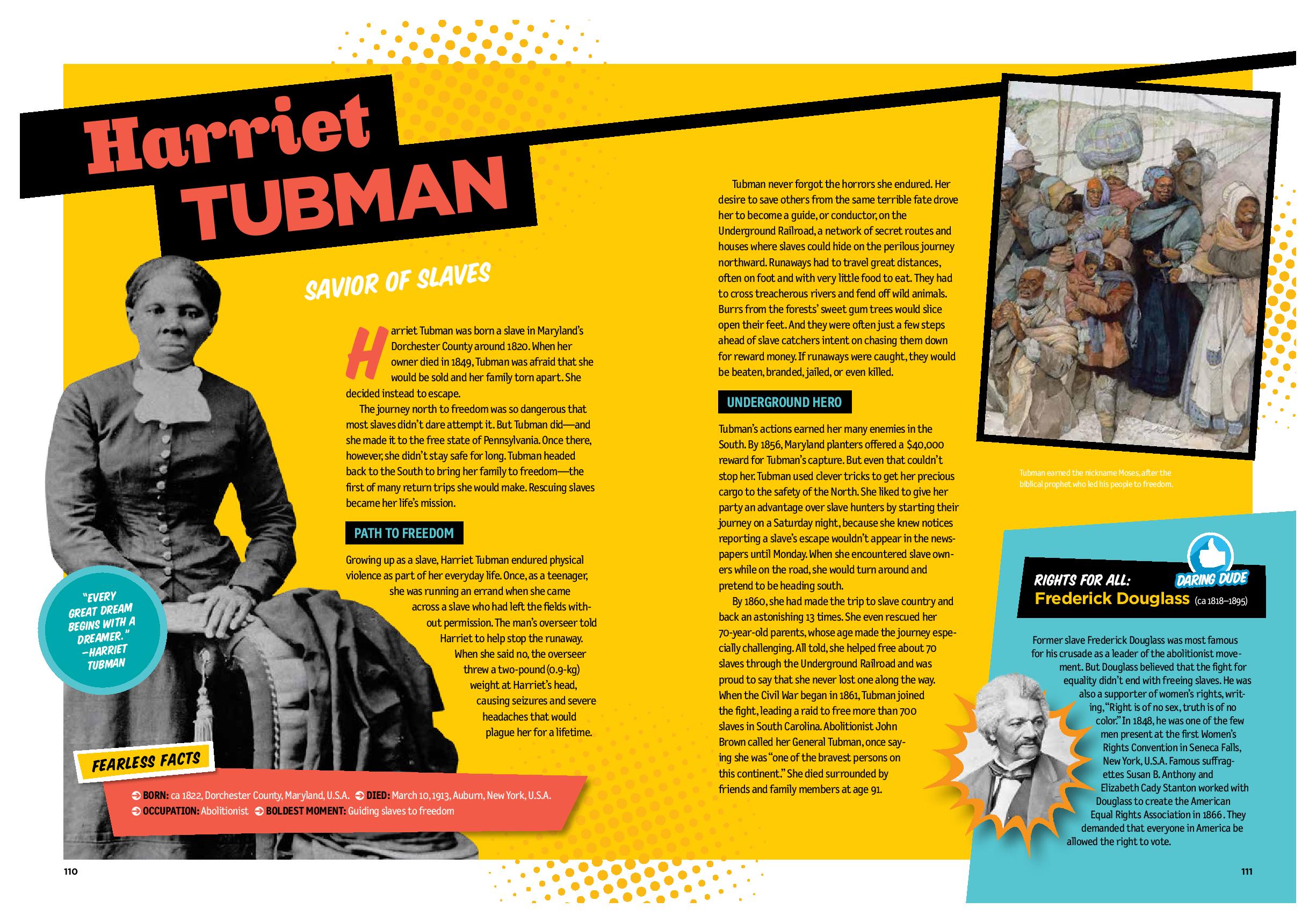
books-of-heroines-108-111-116-117-peace-heroines-page-001books-of-heroines-108-111-116-117-peace-heroines-page-002books-of-heroines-108-111-116-117-peace-heroines-page-003

Read This If You Love: Biographies, History, Women’s Rights, Science, Animals, Mythology

Recommended For: 

classroomlibrarybuttonsmall closereadinganalysisbuttonsmall

Signature

**Thank you to Karen at Media Masters Publicity for providing copies for review!**

Frightlopedia by Julie Winterbottom

Share

nfpb2017

Nonfiction Wednesday

Nonfiction Picture Book Wednesday is hosted by Kid Lit Frenzy and was started to help promote the reading of nonfiction texts. Most Wednesdays, we will be participating and will review a nonfiction text (though it may not always be a picture book).
Be sure to visit Kid Lit Frenzy and see what other nonfiction books are shared this week!

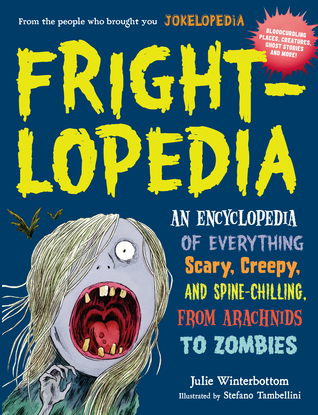
frightlopedia

Frightlopedia: An Encyclopedia of Everything Scary, Creepy, and Spine-Chilling, from Arachnids to Zombies
Author: Julie Winterbottom
Illustrator: Stefano Tambellini
Published August 23rd, 2016 by Workman Publishing Company

Summary: Here’s the book for kids who love scary stuff, whether it’s telling ghost stories around a campfire, discovering the origins of various vampires, monsters, and witches, or reading creepy tales under the covers with a flashlight.

Combining fact, fiction, and hands-on activities, Frightlopedia is an illustrated A-Z collection of some of the world’s most frightening places, scariest stories, and gruesomest creatures, both real and imagined. Discover Borneo’s Gomantong Cave, where literally millions of bats, cockroaches, spiders, and rats coexist—in pitch darkness. Learn about mythical creatures like the Mongolian Death Worm—and scarily real ones like killer bees, which were accidentally created by scientists in the 1950s. Visit New Orleans’s Beauregard-Keyes house, where Civil War soldiers are said to still clash in the front hall. Plus ghost stories from around the world, a cross-cultural study of vampires, and how to transform into a zombie with makeup. Each entry includes a “Fright Meter” measurement from 1 to 3, because while being scared is fun, everyone has their limit.

Review: I loved the structure of this text, and students and other teachers will as well. Different than a traditional encyclopedia, the Frightlopedia mixes fact, fiction, traditional literature, and hands-on activities which makes this a perfect classroom text as it will suck in readers in so many different ways, and it will also work in such a variety of classroom activities as well.

Teachers’ Tools for Navigation: Like I shared above, this text has a really nice mix of genres along with hands-on activities. For example, parts of the text could be used during lessons on mythology, literary standards, traditional literature, science, or history. There is just so much, it is hard to actually share it all. Go into MONSTERS, if you want include mythological creatures; SHARKS or JELLYFISH during biology; CAPUCHIN CATACOMBS or MUMMIES in history; XYLOPHOBIA or CLAUSTROPHOBIA during word students of affixes; WRITE YOUR OWN GHOST STORY during creative writing; and so much more!

Discussion Questions: Which section did you find the most frightening? Why? The most interesting? Why?; Do you believe in ghosts?; How were mummies made in different cultures?; Which animal is the most frightening to you?

Flagged Passages: 

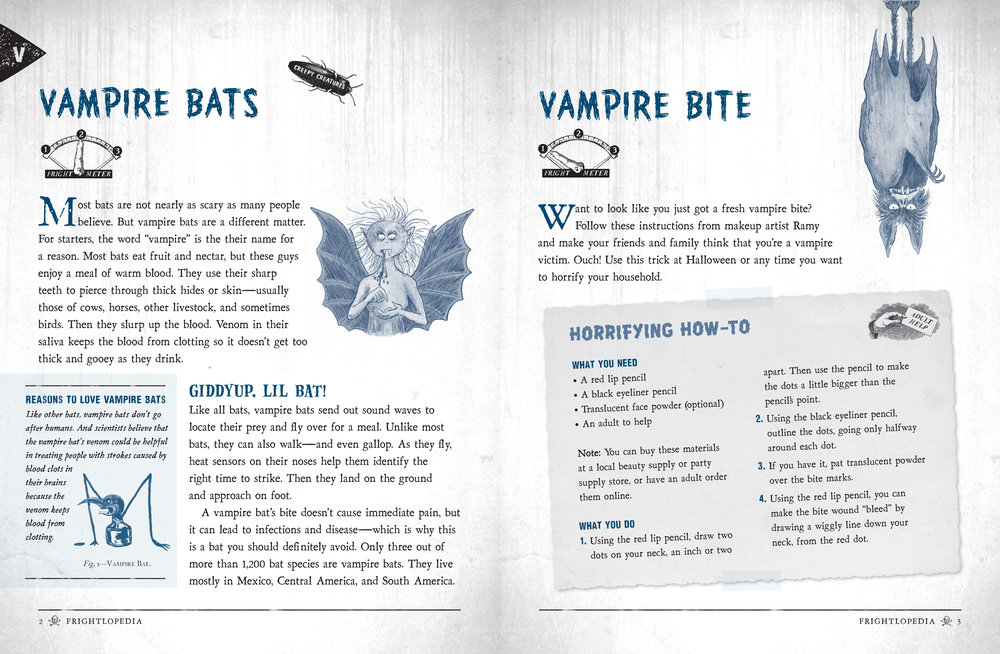
frightlopedia-vampire

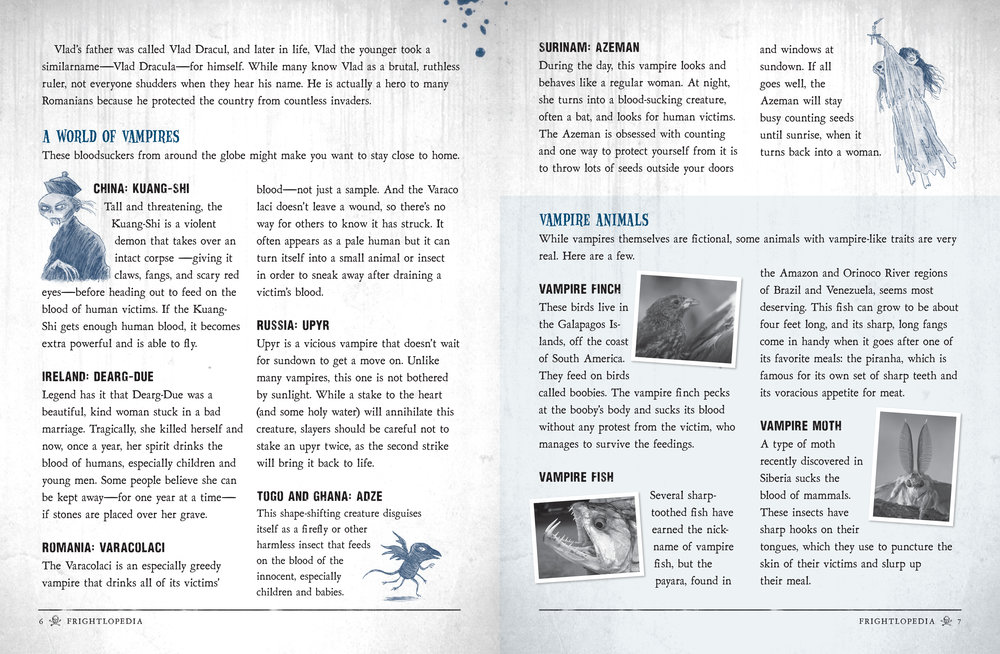
frightlopedia-vampire-2

Read This If You Love: Ghost stories, mythology, being scared, learning about weird animals, learning about scary history

Recommended For: 

classroomlibrarybuttonsmall closereadinganalysisbuttonsmall

Signature

Dining with Dinosaurs: A Tasty Guide to Mesozoic Munching by Hannah Bonner

Share

nfpb2017

Nonfiction Wednesday

Nonfiction Picture Book Wednesday is hosted by Kid Lit Frenzy and was started to help promote the reading of nonfiction texts. Most Wednesdays, we will be participating and will review a nonfiction text (though it may not always be a picture book).
Be sure to visit Kid Lit Frenzy and see what other nonfiction books are shared this week!

Also, I’d like to thank Sarah Brannen for making such a beautiful piece of artwork for our weekly nonfiction link up. It is perfect for illustrating why nonfiction is so important!

dining-with-dinosaurs

Dining with Dinosaurs: A Tasty Guide to Mesozoic Munching
Author: Hannah Bonner
Published September 20th, 2016 by National Geographic Children’s Books

Summary: Sure you know T-Rex was the meat-eating king and brontosaurus munched on leaves, but what else was on the dino dining menu during the Mesozoic era?

Meet the ‘vores: carnivores, piscivores, herbivores, insectivores, “trashivores,” “sunivores,” and omnivores like us.

Readers will be surprised and inspired to learn about dino diets and they’ll get to explore how scientists can tell which dinosaurs ate what just from looking at fossils!

Journey through artist and author Hannah Bonner’s whimsical world to learn how the dinosaurs and their contemporaries bit, chewed, and soaked up their food.

Review: Although the cover looks a bit silly, this text is to be taken seriously. Hannah Bonner does a wonderful job examining what different dinosaurs ate, the science behind what and why they ate what they did, how paleontologists know what dinos ate, and where all these dinosaurs fit in the grand scheme of things. Told in a unique structure that alternates between Hannah and a microraptor narrating and comic strip interviews with scientists, the text is not only informative but very entertaining.

Teachers’ Tools for Navigation: This is going to be the perfect text for a dinosaur unit in a classroom. It allows for so many different discussions including the different periods within the Mesozoic Era (and Cenozoic Era), connections between dinosaur diets and modern animals, types of scientists that study dinosaurs, different species of dinosaurs, and even text structure. Such a wide range of opportunities for classroom discussion (and even extension activities from the discussions). Additionally, the back matter of the text is filled to the brim with information and even an experiment.

Discussion Questions: What are some ways paleontologists can tell which dinosaurs ate what?; What modern animals fit into each of the ‘vore categories in the text?; Why did the author choose to include the comic strip interviews throughout the book?

Flagged Passages: 

dining-with-dinosaurs-spread

dining-with-dinosaurs-comic-strip-interview

Read This If You Love: Dinosaurs 

Recommended For: 

classroomlibrarybuttonsmall closereadinganalysisbuttonsmall

Signature

**Thank you to Karen at Media Masters Publicity for providing a copy for review!!**

Kellee’s Favorite Reads in 2016

Share

kellees-favorite-reads

In 2016, I am so proud of myself that I read 291 books! My goal was 250, so I surpassed it–YAY! Last year I finished 288, but I was able to keep track of first reads of so many picture books that I have now read over and over again and wasn’t able to put as 2016 books because I wanted to keep their original date on Goodreads, so I am considering this year a much better reading year.

Today, I want to share with you 60 favorites (broken up into 5 categories) from the 291 that I read in 2016. If you haven’t read any of these, put them on your TBR now!!!!!
*These are books I read in 2016, not books that were published (only) in 2016
**In no particular order
***I included links to Unleashing Readers reviews if I wrote one

My 15 Favorite Fiction Picture Books I Read in 2016

hug-machine one-day shy A Child of Books Rosie Revere

ada twist iggy peck pirasaurs the day the crayons came home thank you book

a piece of home return we found a hat dear dragon nibbles

Reviews: 
Shy by Deborah Freedman
A Child of Books by Oliver Jeffers and Sam Winston
Ada Twist, Scientist by Andrea Beaty
Pirasaurs! by Josh Funk
A Piece of Home by Jeri Watts
Return by Aaron Becker
We Found a Hat by Jon Klassen
Dear Dragon by Josh Funk
Nibbles: The Book Monster by Emma Yarlett

My 10 Favorite Non-Fiction Books I Read in 2016

giant-squid adas-violin antsy-adams Dorothea's Eyes radiant-child

i-dissent hillary rodham clinton some-writer Enchanted Air loving-vs-virginia

Reviews:
Antsy Ansel by Cindy Jenson-Elliott
Dorothea’s Eyes by Barb Rosenstock
Hillary Rodham Clinton by Michelle Markel

My 5 Favorite Graphic Novels I Read in 2016

hilo-3 outside-circle Nameless City narwhal alamo

My 20 Favorite Middle Grade Novels I Read in 2016

orbiting-jupiter perry-t-cook seventh-wish ghost charmed-children

some-kind-of-happiness counting-thyme echo upside-down-magic cloud-and-wallfish

SUMMER final cover image (2) still a work in progress moo ms bixby masterminds

war that saved far-from-fair sophie quire honest truth raymie

Reviews: 
Still a Work in Progress by Jo Knowles
Ms. Bixby’s Last Day by John David Anderson
Sophie Quire and the Last Storyguard by Jonathan Auxier
The Honest Truth by Dan Gemeinhart
Raymie Nightingale by Kate DiCamillo

My 10 Favorite Young Adult Novels I Read in 2016

honestly-ben last-true-love-story more happy than not rescued salt to the sea

all american boys mexican darkest-corners great-american all fall down

Reviews: 
Rescued by Eliot Schrefer
Salt to the Sea by Ruta Sepetys
All American Boys by Jason Reynolds and Brendan Kiely

This year was a phenomenal reading year; I hope yours was too! Here’s to another year full of books and stories!

Kellee Signature