Islandborn by Junot Díaz

Share


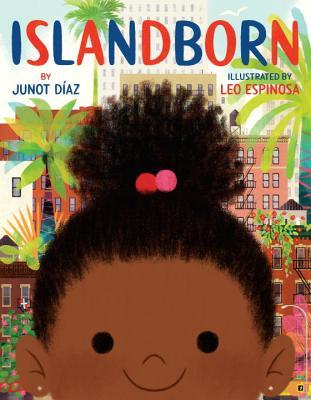
Islandborn
Author: Junot Díaz
Illustrator: Leo Espinosa
Published: March 13, 2018 by Dial

Summary: From New York Times bestseller and Pulitzer Prize winner Junot Díaz comes a debut picture book about the magic of memory and the infinite power of the imagination.

Every kid in Lola’s school was from somewhere else. Hers was a school of faraway places.

So when Lola’s teacher asks the students to draw a picture of where their families immigrated from, all the kids are excited. Except Lola. She can’t remember The Island—she left when she was just a baby. But with the help of her family and friends, and their memories—joyous, fantastical, heartbreaking, and frightening—Lola’s imagination takes her on an extraordinary journey back to The Island. As she draws closer to the heart of her family’s story, Lola comes to understand the truth of her abuela’s words: “Just because you don’t remember a place doesn’t mean it’s not in you.”

Gloriously illustrated and lyrically written, Islandborn is a celebration of creativity, diversity, and our imagination’s boundless ability to connect us—to our families, to our past and to ourselves.

Review: This book is absolutely enchanting. I can confidently say that it will always be one of my favorite picture books of all time. When Lola asks family and friends about the island that she came from, they have wonderful memories that they share with her. The illustrations and words dance off of the page—Díaz and Espinosa, the author-illustrator team, combine to create a work that will stun readers with its beauty and complexity. I took the pages from the F&G and hung them on my office walls, and they inspire me daily.

As I read this book, I continually paused to reflect on the words (“Just because you don’t remember a place doesn’t mean it’s not in you” and “Memory is magic.”). There is so much to teach from this book, and I am really looking forward to sharing it with students. If you haven’t read this book, I recommend you get in your car and drive immediately to the bookstore.

Teacher’s Tool For Navigation: There are so many possibilities for this section for teacher. They might analyze text and word choice, focusing on figurative language. Or they could examine the emotions that Lola experiences as she tries to learn about the place that she comes from. Or they might have students research their own countries of origin and create an image that represents the magic of the country. Or they might consider a monster that exists in their country and draw it metaphorically or symbolically. This is a book that is meant to be shared and shared.

Discussion Questions: How does Lola feel when she can’t remember the country she came from? How does she learn more about it?; What do Lola’s friends and family tell her about the country she came from? What are the good and bad memories that they share? What might the bad memory represent?

We Flagged:
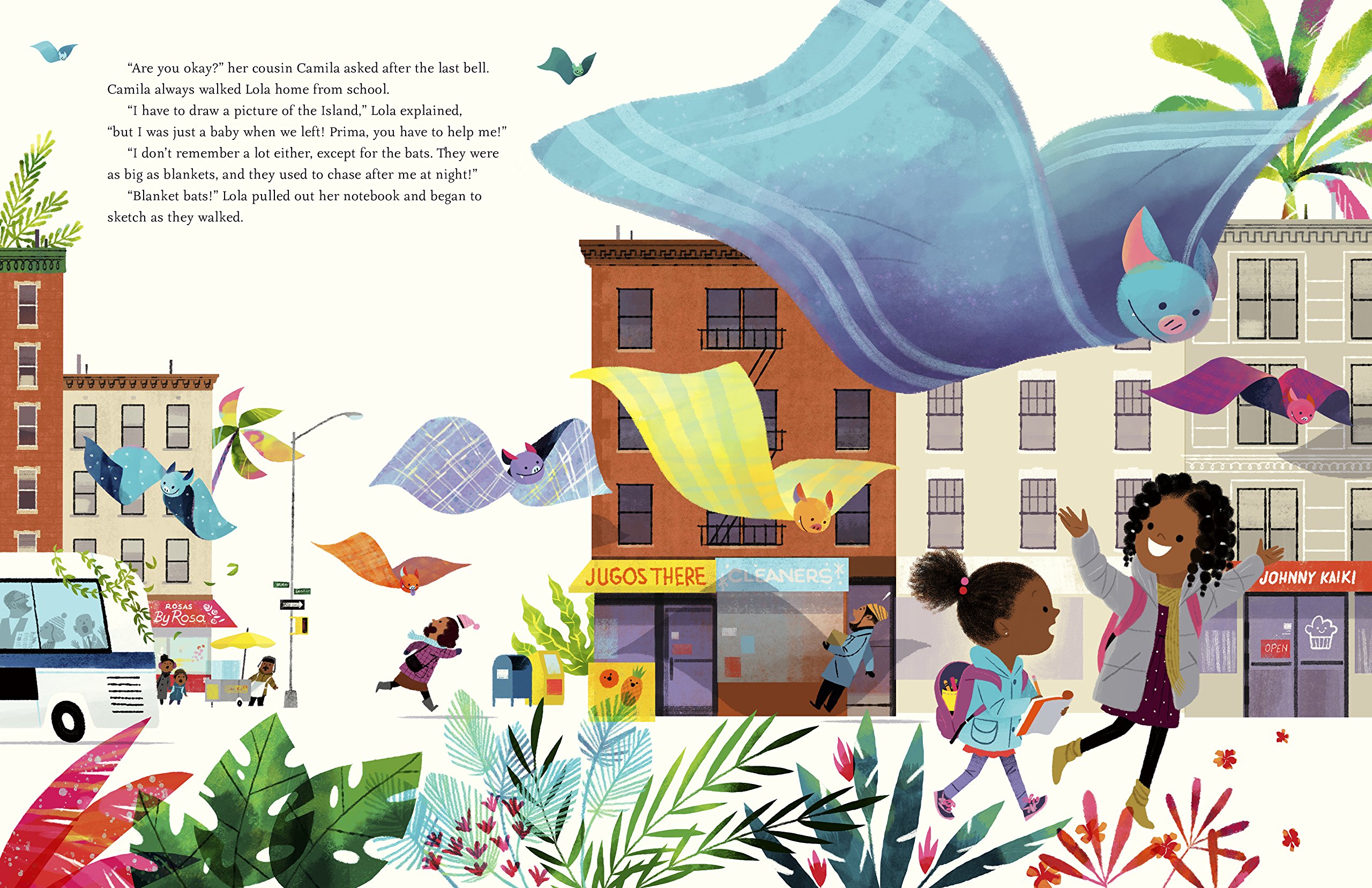
Read This If You Loved: Works by Junot Díaz; Miguel and the Grand Harmony by Matt de la Peña; Echo by Pam Muñoz Ryan, Esperanza Rising by Pam Muñoz Ryan; Last Stop on Market Street by Matt de la Peña, Each Kindness by Jacqueline Woodson

Recommended For: 

readaloudbuttonsmallclassroomlibrarybuttonsmall 

RickiSig

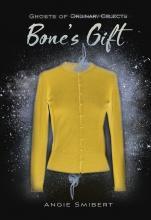
Blog Tour with Review and Giveaway!: Bone’s Gift by Angie Smibert

Share

Bone’s Gift
Author: Angie Smibert
Published March 20th, 2018 by Boyd’s Mill Press

Summary: Boyds Mills Press is pleased to announce the March publication of BONE’S GIFT, a supernatural historical mystery written by Angie Smibert about twelve-year-old Bone, who possesses a Gift that allows her to see the stories in everyday objects. When Bone receives a note that says her mother’s Gift killed her, Bone seeks to unravel the mysteries of her mother’s death, the schisms in her family, and the Gifts themselves.

In a southern Virginia coal-mining town in 1942, Bone Phillips has just reached the age when most members of her family discover their Gift. Bone has a Gift that disturbs her; she can sense stories when she touches an object that was important to someone. She sees both sad and happy—the death of a deer in an arrowhead, the pain of a beating in a baseball cap, and the sense of joy in a fiddle. There are also stories woven into her dead mama’s butter-yellow sweater—stories Bone yearns for and fears. When Bone receives a note that says her mama’s Gift is what killed her, Bone tries to uncover the truth. Could Bone’s Gift do the same?

This beautifully resonant coming-of-age tale about learning to trust the power of your own story is “charming” says School Library Connection, while Kirkus Reviews says, “Smibert surrounds Bone with a loving, complicated extended family….(with) language, which feels real and down-to-earth, like her characters. An intriguing blend of history and magic.”

About the Author: Angie is the author of several young adult books, including Memento NoraThe Forgetting Curve, and The Meme Plague, and numerous nonfiction books for children, as well as many short stories for both adults and teens. She lives in Roanoke, Virginia.

ReviewBone’s Gift was a special story looking at a well-known time period in a less-known setting. Normally stories in the 1940s focus primarily on the World War in Europe and the Pacific Islands, but this story focuses on a young girl who stays home when her father leaves to fight for his country. What happens to the children who have no mother and whose father leave for the war? Mostly a young girl whose family don’t all get along? And a young girl who is working very hard to figure out something important in her life while also learning truths about her mother’s life. This is that story. Bone is a character that the reader will love and will want to know what happened to her. Between Bone’s loss of her mother, her father going to WWII, Appalachian folklore & setting, and family dynamics, Bone’s Gift has so many different aspects weaving their way throughout the story, but it is all done beautifully in a way that all comes together in the resolution.

Teachers’ Tools for Navigation: 

(Resources from http://www.angiesmibert.com/blog/?mbdb_book=bones-gift)

Discussion Questions: 

  • What genre would you consider Bone’s Gift?
  • How did the author incorporate Appalachian Folklore in Bone’s story?
  • What theme would you say was the main theme of the story?
  • What incident in the book changed the trajectory of the plot?
  • How would a changed setting have changed the story?

Flagged Passages: “Bone Phillips floated in the cool, muddy water of the New River up to her eyeballs. The sky above was as blue as a robin’s egg, and the sun was the color of her mama’s butter-yellow sweater.

Her mother was still everywhere and nowhere Bone looked.

She let herself sink under the water and swam along the river bottom toward shore–toward Will.

In the shallows, her hand brushed against something hard and jagged on the silky river bottom. An image poured over her like cold bathwater. A young boy had hit his head on this rock. He struggled for air. The current grabbed at him–and her, pulling her along back in time. Bone snatched her hand away from the rock and came up for air with a gasp.” (p. 1)

Read This If You Love: Magical Realism, Folk lore, Historical Fiction, Mysteries

Giveaway!

a Rafflecopter giveaway

Don’t miss the other stops on the blog tour!

Monday, April 9 YA Books Central

Tuesday, April 10 Ms. Yingling Reads

Wednesday, April 11 Unleashing Readers

Thursday, April 12 The Brain Lair AND Genrefluent

Friday, April 13 Always in the Middle

Recommended For: 

classroomlibrarybuttonsmall closereadinganalysisbuttonsmall

Signature

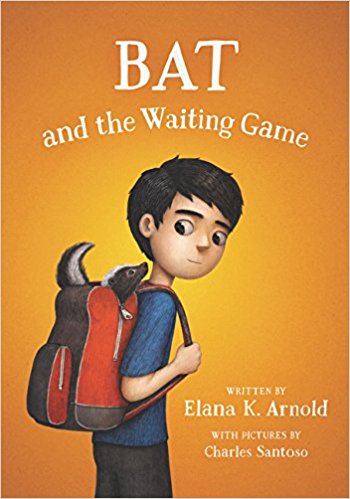
Blog Tour with Review and Educators’ Resource Guide!: Bat and the Waiting Game by Elana K. Arnold

Share

Bat and the Waiting Game
Author: Elana K. Arnold
Illustrator: Charles Santoso
Published March 27th, 2018 by Walden Pond Press

Summary: The second book in the irresistible and “quietly groundbreaking”* young middle grade series starring Bat, an unforgettable boy on the autism spectrum.

For Bixby Alexander Tam (nicknamed Bat), life is pretty great. He’s the caretaker of the best baby skunk in the world—even Janie, his older sister, is warming up to Thor.

When Janie gets a part in the school play and can’t watch Bat after school, it means some pretty big changes. Someone else has to take care of the skunk kit in the afternoons.

Janie is having sleepovers with her new friends. Bat just wants everything to go back to normal. He just has to make it to the night of Janie’s performance…

*Kirkus Reviews

Critical Praise: 

“Delightful. This humorous follow-up is even stronger than its predecessor and will leave readers hoping for a third book featuring Bat and his family.” — School Library Journal

“A gentle tale of shared similarities rather than differences that divide and a fine read-aloud with a useful but not didactic message of acceptance.”  — Kirkus Reviews

A winsome blend of humor and heart, vibrant characters, and laugh-out-loud dialogue. Arnold’s narrative also gracefully explores life through the eyes of a boy on the autism spectrum.  The ever-lovable Bat is sure to resonate with readers of all ages. — Booklist Online

About the Author: Elana K. Arnold grew up in California, where she, like Bat, was lucky enough to have her own perfect pet — a gorgeous mare named Rainbow — and a family who let her read as many books as she wanted. She is the author of picture books, middle grade novels, and books for teens, including the National Book Award finalist title What Girls Are Made Of. Elana lives in Huntington Beach, California, with her husband, two children, and a menagerie of animals. She calls the “Bat” series for Walden Pond Press “books of her heart.” You can find her online at www.elanakarnold.com.

ReviewBat is one of my favorite characters ever. He is a flawed character but is also so perfect as who he is! What I love about Bat, other than his amazingly sweet personality, his brilliance when it comes to skunks, and his coping skills, is that he teaches us to treasure the little things. Also, the way that Elana write Bat, his story will help middle grade readers think about their classmates who may not think or act the way that they think is normal. We are all normal for who we are! Bat’s story shows about the good in life and teaches us what good humans are like.

Teachers’ Tools for Navigation: In addition to an amazing read aloud opportunity, I can definitely see the text being part of lit circles. Bat himself is unique, but he and his story remind me of so many other characters who I love and I wish all students would read about: Auggie from Wonder; Melody from Out of my Mind; David from Rules; Candice from The Categorical Universe of Candice Phee; Rose from Rain, Reign; and Adam from How to Speak Dolphin. All of these texts are must reads! I picture all of these texts with their extraordinary characters being part of lit circles with a focus on disabilities/disorders and empathy. [From my review of A Boy Called Bat, 3/10/17]

Educators’ Resource Guide: 

Flagged Passages: “Maybe, Bat though, there was something better in the world than cradling a sleepy, just-fed baby skunk in your arms. But at this moment, it didn’t seem likely.

Bat was sitting in his beanbag chair, having just put down the tiny, nearly empty bottle of formula. In Bat’s hand, licking his fine soft whiskers with a tiny pink tongue and then yawning widely to reveal two rows of new white teeth, was a six-week-old skunk kit named Thor.” (p. 1-2)

“When Israel first handed [a skunk kit sculpture] to Bat last Monday at school, it had taken Bat a moment to figure out what exactly he was holding…

Bat had rubbed his thumb down the smooth shiny back of the clay ump. It didn’t look much like a skunk kit, but its pleasant weight felt good in his hand. And when he had flipped it over to find the words ‘From Israel’ on the bottom, a warm good feeling spread through his chest and up his neck.

A friend had given him a gift. And even if it didn’t look much like the real baby skunk now nestled in his hands, it definitely deserved a place on his bookshelf,a long with his other important things.” (p. 4-5)

Read This If You Love: A Boy Called Bat by Elana K. Arnold, Any lit circle book listed under Teacher’s Tools

Recommended For: 


Don’t miss out on the other blog tour stops!

3/12 For Those About to Mock, @abouttomock Sam Eddington

3/15 Mrs. Knott’s Book Nook @knott_michele Michele Knott

3/15 @iowaamber Amber Kuehler

3/16 The Hiding Spot @thehidingspot Sara Grochowski

3/18 Educate*Empower*Inspire…Teach @guerette79 Melissa Guerrette

3/19 Maria’s Melange @mariaselke Maria Selke

3/20 Nerdy Book Club post by Elana

3/20 Writers Rumpus @kirsticall Kirsti Call

3/22 Bluestocking Thinking @bluesockgirl Nicole Levesque

3/28 Unleashing Readers @unleashreaders Kellee Moye

Signature

**Thank you to Walden Pond Press for hosting the blog tour and providing a copy for review!!**

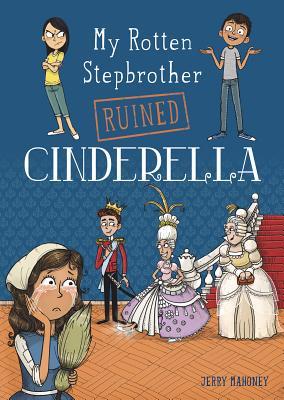
My Rotten Stepbrother Ruined Cinderella by Jerry Mahoney

Share

My Rotten Stepbrother Ruined Cinderella
Author: Jerry Mahoney
Illustrator: Aleksei Bitskoff
Published August 1st, 2017 by Stone Arch Books

Summary: Holden, what have you done?! It wasn’t enough to ruin Maddie’s report on Cinderella, but now you’ve somehow broken the ACTUAL fairy tale? The ugly stepsister is marrying the prince and there’s no happy ever after! You need to fix this and the only way seems to be by entering the story. But beware: if you can’t mend it, you can never return…

ReviewEveryone! You listening?!?! If you or any of your students are a fan of the Whatever After series, you need to get this for you/them. It is a perfect companion for them! But don’t think that this is just a duplicate of the series, it is similar yet also so different! First, Holden and Maddie already don’t work well together, so going into the fairy tale is not only about fixing the fairy tale but also about fixing their relationship. Second, the fracturing of fairy tales gets even more ridiculous than you can even imagine. Third, Holden and Maddie are in the fairy tales as characters, not as themselves. I will say that both this book and the Mlynowski series looks at the problems in fairy tales and how the stories could be better told to make everyone happy.

(I will say the only “issue” I had was I really don’t like the negative connotation around step-siblings, so calling a step-brother rotten really doesn’t help that idea; however, I do like how Maddie has to learn that her opinion on her stepbrother may not be correct.)

Teachers’ Tools for Navigation: First and foremost, this book will be a hilarious read aloud and an independent reading books that will fall into so many hands. Additionally, in the backmatter of the book, the author includes a glossary including the harder vocabulary in the book, a think again section with three questions for readers to think about, and finally a section about how to write a ruined version of a favorite tale. All three of these activities help make the book even more useful in a classroom.

Discussion Questions: (From the “Think Again” section by the author)

  • Everyone has someone in their life like Holden, who’s unavoidable and hard to get along with. Who’s someone you’ve struggled to relate to, and what would you do if you had to work with him or her to “fix” a fairy tale?
  • There are details about the wicked stepsisters that weren’t in the original tale, such as Beautianna’s desire to go to art school. Think of a supporting character from one of your favorite books whom you wish you knew more about. Come up with your own ideas for his or her character traits, wants, and needs. You can even try to write the whole story from that character’s perspective.
  • What do you think of the questions Holden raises about Cinderella? Do you think he makes some good points, or would you be as annoyed with him as Maddie was? Pick another story you know well and try to imagine what Holden’s problems with that story might be.

Flagged Passages: “Maddie hadn’t seen her before, but she could tell this woman had plenty to be sad about, starting with her clothes. They were filthy, patched-up work clothes, and her hair was tied back with a rag. She sat in front of a pile of roses, and one by one, she plucked the thorns off each stem and placed them into a vase. Her hands were scratched and bruised from hours of performing this tedious, excruciating task. No wonder she was crying.

‘Do you need a tissue?’ Maddie asked her.

‘Tissue?’ the woman replied. ‘What’s a tissue?’ The woman turned her head and gazed at Maddie, confused.

Of course, Maddie thought. They don’t have tissues in fairy tales. They weren’t invented yet. While she wondered how to explain this, she had another realization. This wasn’t any ordinary, sad woman. She was kind and familiar, the most beautiful woman Maddie had ever seen. She had bright blue eyes and, underneath the rag on her head, hair that seemed to be made from pure gold.

‘Oh my gosh!’ Maddie exclaimed. ‘You’re–you’re Cinderella!’

‘You seem surprised to see me, Glamoremma,’ the young woman replied.” (p. 29-30)

Read This If You Love: Whatever After by Sarah Mlynowski, It’s NOT Jack and the Beanstalk by Josh Funk, Fractured fairy tales

Recommended For: 

Signature

**Thank you so much to the author for providing a copy for review!**

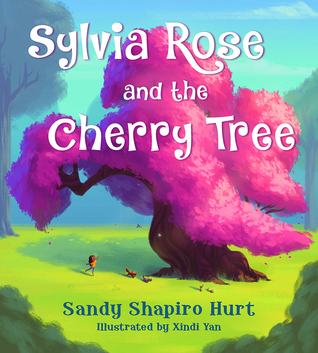
Sylvia Rose and the Cherry Tree by Sandy Shapiro Hurt

Share

Sylvia Rose and the Cherry Tree
Author: Sandy Shapiro Hurt
Illustrator: Xindi Yan
Published Tilbury House Publishers

Summary: This very strange tale began in May.

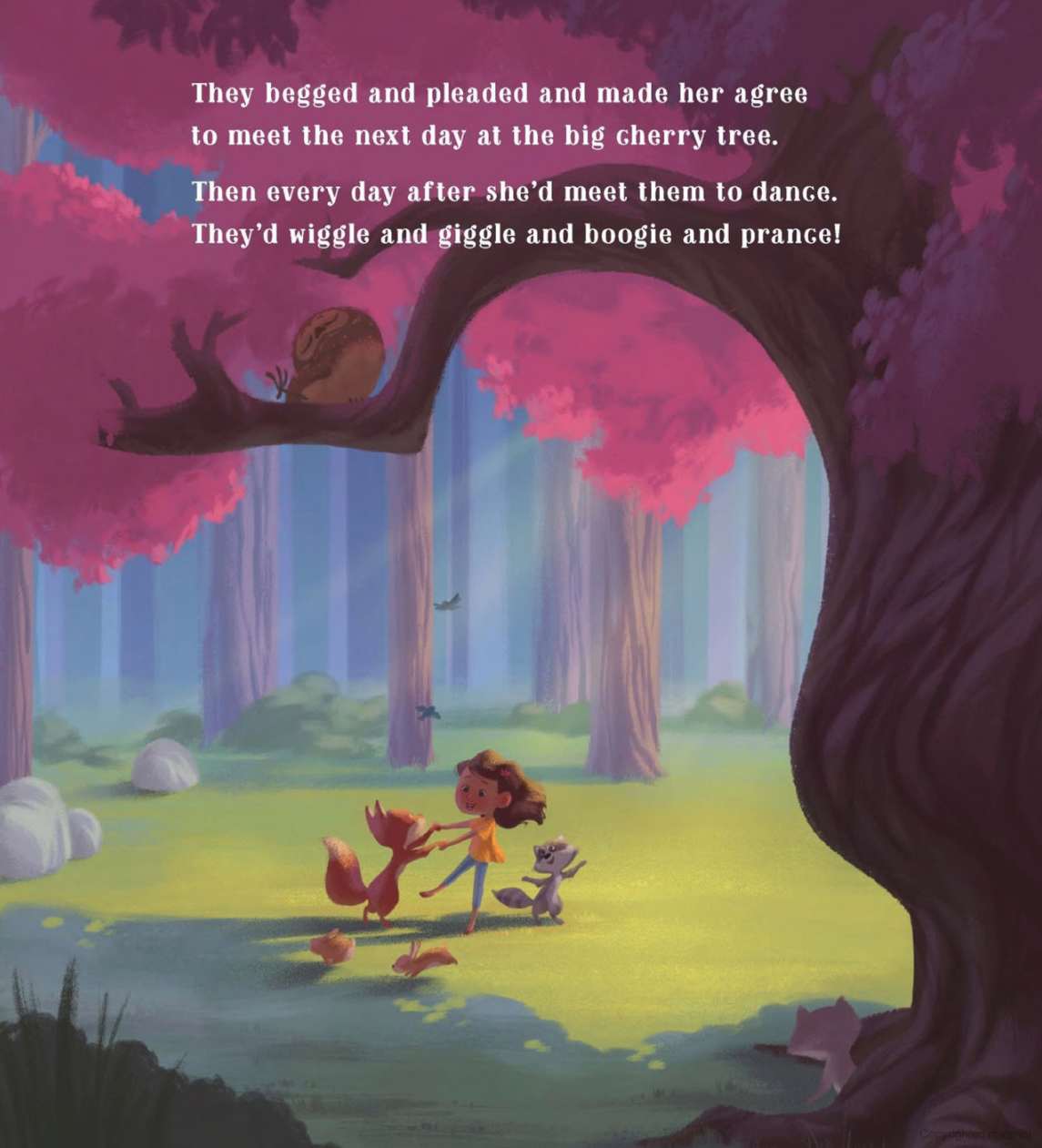
in a friendly forest on a sunny day

Skipping along a path in the wood

danced Sylvia Rose, and man, she was GOOD!

Laughing and leaping came Sylvia Rose,

Whirling and twirling on twinkly toes.

Bold, adventurous Sylvia Rose loves visiting the animals and trees of the forest. The girl and her favorite cherry tree share almost everything, including dancing and stories, but they can’t travel the world together because the tree is rooted deep in the earth. Determined to overcome this obstacle, Sylvia Rose enlists her animal friends to uproot the glorious tree, and Sylvia and the tree set off globetrotting together, taking in the wonders of the world from the Eiffel Tower to the Sydney Opera House, each sight more amazing than the last.

Back home in the forest, however, the animals begin to suffer without the food and shelter of their life-sustaining cherry tree. Can the tree give up her newfound freedom and return to her role in the forest ecosystem?

ReviewThis was such a fun book to read aloud! The rhyming and rhythm make it so sing-songy which always makes a book a pleasure to read aloud. Hurt was very smart with her rhymes and none of them seemed forced. She also kept a very specific rhythm throughout the book which made everything seem clean. I also was immediately taken by the artwork. Yan’s vibrant colors and exuberant characters really pull everything together, and as the reader I could not help but smile as Sylvia and the Cherry Tree go on their adventures. While reading, I was immediately excited for this book to make its way to classrooms, and I cannot wait to share it with my friend that teaches 2nd grade.

Teachers’ Tools for Navigation: Sylvia Rose and the Cherry Tree is a perfect mentor text for the introduction of rhyming and rhyme scheme because of the clear rhyming and easy pattern. Students could write their own story of one of the animals in the story using the rhyme scheme and rhythm of the book.

Sylvia Rose and the Cherry Tree also is a good story to use when talking about big ideas including priorities, fun vs. responsibilities, and homesickness. This discussion could also grow into one about theme.

Finally, cross curricularly the story could be used to look at habitats. The animals that live in the forest suffer when the Cherry Tree leaves because their home is no longer there. This conversation could also include why removing forests is detrimental to the wildlife in the area.

Discussion Questions: 

  • Why is the tree and all the animals immediately drawn to Sylvia Rose?
  • Why does the tree want to go on adventures?
  • What are some effects of the tree’s decision to go with Sylvia Rose?
  • Using clues in the illustration, where did Sylvia Rose and the Cherry Tree go visit?
  • Do you agree with the decision that the tree made in the end? Why or why not?

Flagged Passages: 

Read This If You Love: The Giving Tree by Shel Silverstein, The Day the Crayons Quit by Drew Daywalt, A Bad Case of the Stripes by David Shannon

Recommended For: 


Signature

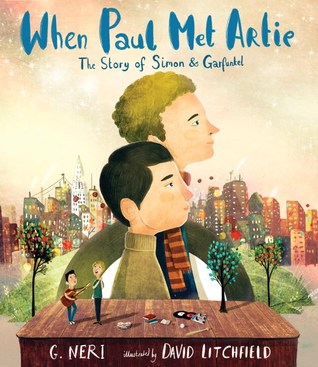
When Paul Met Artie: The Story of Simon & Garfunkel by G. Neri

Share

When Paul Met Artie: The Story of Simon & Garfunkel
Author: G. Neri
Illustrator: David Litchfield
Expected Publication on March 20th, 2018 by Candlewick Press

Summary: From childhood friendship to brief teenage stardom, from early failures to musical greatness — the incredible story of how Simon & Garfunkel became a cherished voice of their generation.

Long before they became one of the most beloved and successful duos of all time, Paul Simon and Art Garfunkel were just two kids growing up in Queens, New York — best friends who met in a sixth-grade production of Alice in Wonderland and bonded over girls, baseball, and rock ’n’ roll. As teens, they practiced singing into a tape recorder, building harmonies that blended their now-famous voices until they sounded just right. They wrote songs together, pursued big-time music producers, and dreamed of becoming stars, never imagining how far their music would take them. Against a backdrop of street-corner doo-wop gangs, the electrifying beginnings of rock ’n’ roll, and the rise of the counterculture folk music scene, G. Neri and David Litchfield chronicle the path that led two young boys from Queens to teenage stardom and back to obscurity, before finding their own true voices and captivating the world with their talent. Back matter includes an afterword, a discography, a bibliography, and a fascinating list of song influences.

ReviewWow. G. Neri and David Litchfield have captured the story of Simon & Garfunkel and released it into the world in a way that oozes the same beauty that their music does. Neri’s lyrical narrative flows and is perfect for a biography of one of the most beloved duos ever while Litchfield’s illustrations have the tone and coloring that just fit Simon & Garfunkel’s music–a bit dreamy yet raw and colorful. Their two pieces of artwork put together make for a beautiful picture book biography.

P.S. Make sure you take off the cover and look at the book design. BEAUTIFUL!

Teachers’ Tools for Navigation: While I’m not sure if such a class exists, this text would be perfect for a history of rock and roll class. It really goes through how the time period was changing when it came to music and how each artist influenced each other. If this class doesn’t exist, I wish it did, and I wish I could take it!

The structure of the text also lends to a great lesson looking at both why the author chose verse instead of prose as well as why he chose the timeline that he did. What was his purpose?

Discussion Questions: 

  • How did the author structure the book?
  • Why do you believe that the author chose to write the narrative in verse?
  • Paul and Artie, as children, are both different and similar. Explain.
  • How did Artie use his interest in math to help the duo?
  • How did music around Paul and Artie affect their music?
  • Why is this time period so important for the history of rock and roll?
  • What other artists does the author and illustrator highlight during the book as influences for Simon & Garfunkel?
  • What would have happened if Paul and Artie had given up after all of the rejection?
  • How did the duo go from rejection to success?
  • What clues can the musical connections give to us about the duo’s musical journey?

Flagged Passages: 

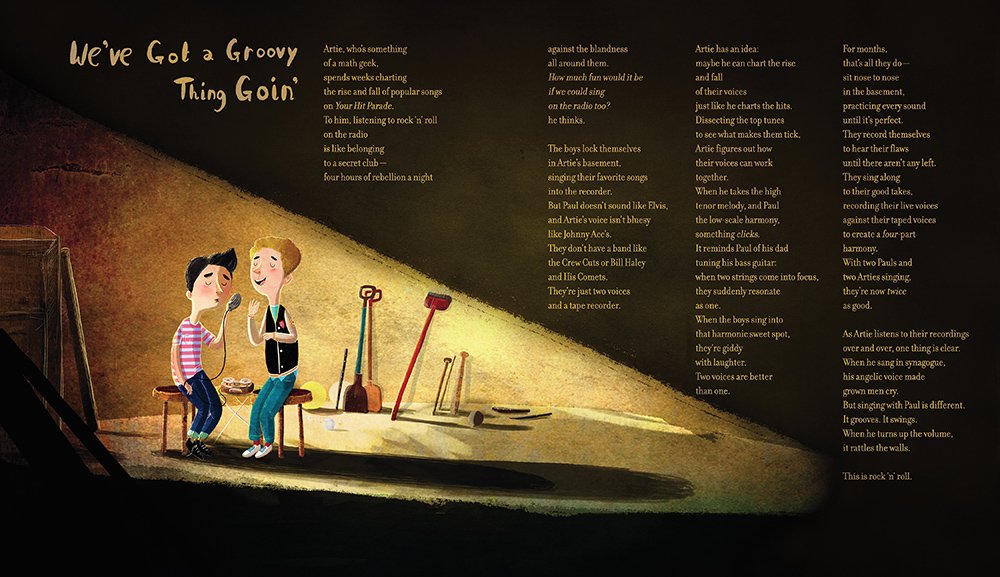
“We’ve Got a Groovy Thing Goin’

…When he takes the high
tenor melody, and Paul
the low-scale harmony,
something clicks.
It reminds Paul of his dad
tuning his bass guitar:
when two strings come into focus,
they suddenly resonate
as one…”

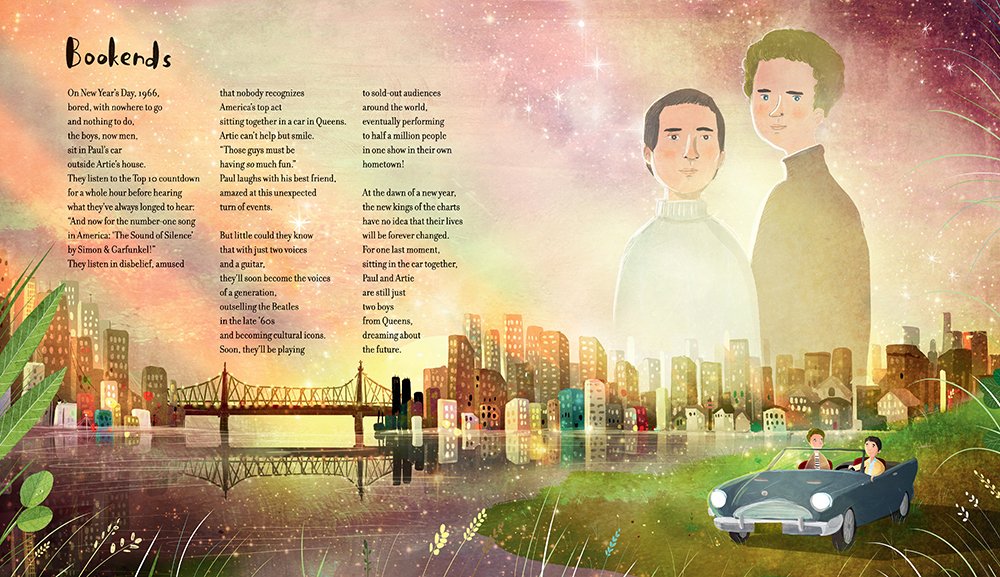
“Bookends

…At the dawn of a new year,
the new kinds of the charts
have no idea that their lives
will be forever changed.
For one last moment,
sitting int he car together,
Paul and Artie
are still just
two boys
from Queens
dreaming about
the future.”

Read This If You Love: Music, the 60s, Rock and Roll, biographies

Recommended For: 

classroomlibrarybuttonsmall closereadinganalysisbuttonsmall 

Signature

**Thank you to Raquel at Candlewick for providing a copy for review!!**

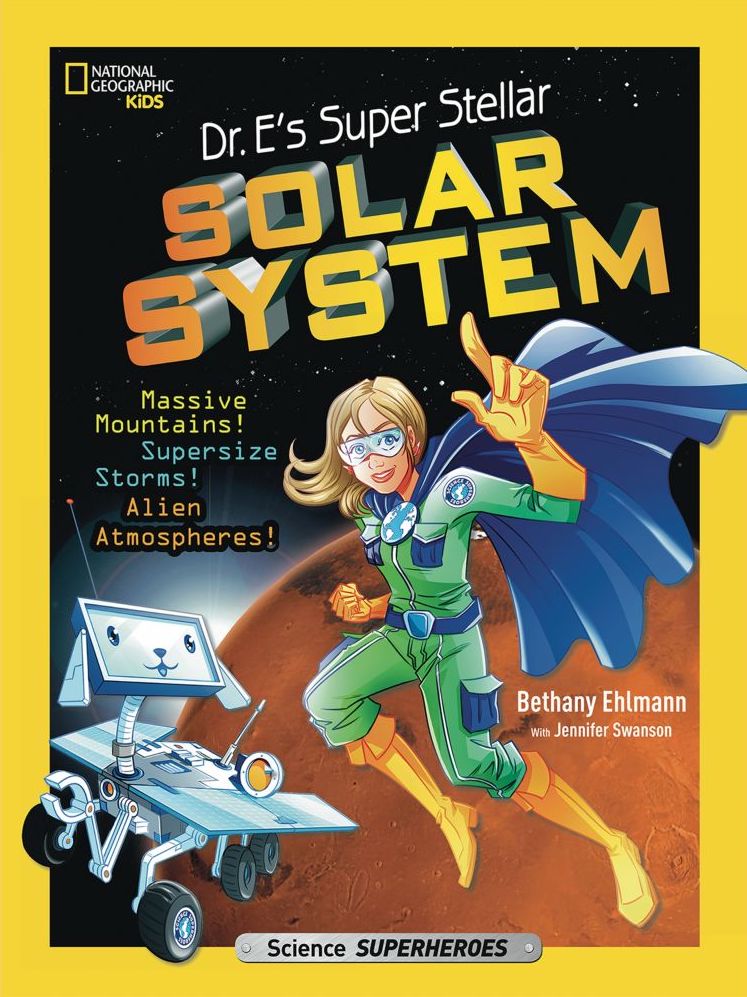
Dr. E’s Super Stellar Solar System by Bethany Ehlmann with Jennifer Swanson

Share

Dr. E’s Super Stellar Solar System
Authors: Bethany Ehlmann with Jennifer Swanson
Published January 16, 2018 by National Geographic Children’s Books

Goodreads Summary: Take to the skies with Planetary Geologist Dr. E and her robot sidekick, Rover, to explore the solar system’s wildest, most astronomical geology–with comic book flair! This stellar book introduces kids to outer space through in-depth info and comic book adventure. Along the way, kids follow explorer Bethany Ehlmann, a member of the NASA Mars Rover Curiosity mission, and her lovable robo-dog, Rover, as they study and protect our amazing solar system. Dr. E’s conversational and funny explanations of the solar system and planetary geology will pull kids in like gravity. The pairing of fun, graphic novel side stories with science facts makes big concepts accessible and interesting to boys and girls of all levels, from STEM science fans to reluctant readers alike.

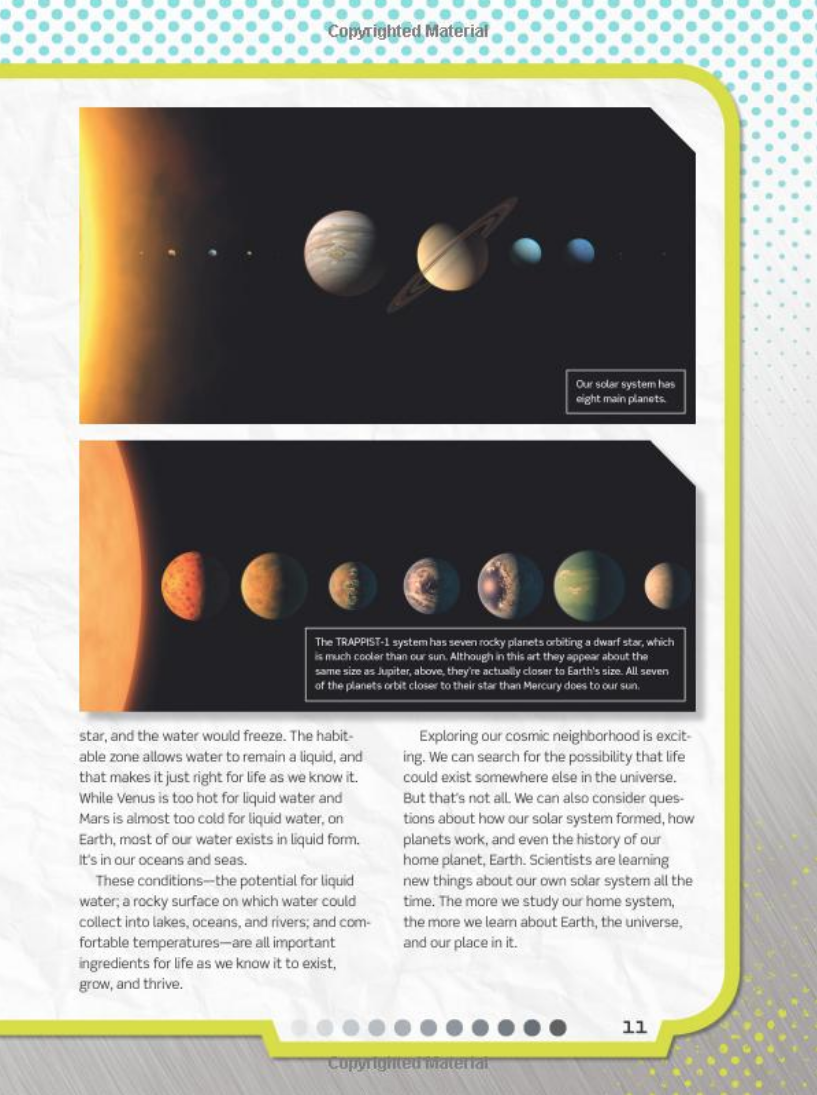
Review: This book is wild. I learned so much while reading it. I thought I knew a lot about space, but this book made me realize how much I didn’t know about it. My son is much too young for this book, but he loved looking at the pictures while I summarized the text on the pages. There are some fantastic photographs, and there are also digital representations of what things might look like. Most exciting, this book filled me with wonder. There are so many possibilities with space, and I am really excited about new discoveries and new information that will come in my lifetime and beyond. This is a must-read for space lovers and those who are curious about the world. I particularly appreciated the comics at the front of each chapter. They allowed me to better engage with the material that followed. Dr. E made me want to learn even more about space!

Teachers’ Tools for Navigation: I’d love to see this book used in literature circles. The National Geographic books are phenomenal, so teachers might collect books on various topics and allow students to form groups based on interest.

Discussion Questions: After reading about _____, what did you learn?; What do you still want to learn about space?

We Flagged: 

Image from Amazon.

Read This If You Loved: Any nonfiction book about space, for background knowledge when reading science fiction that takes place in space (e.g. Space Encyclopedia)

Recommended For: 

classroomlibrarybuttonsmall closereadinganalysisbuttonsmall

**Thank you to Karen at Media Masters Publicity for providing a copy for review**