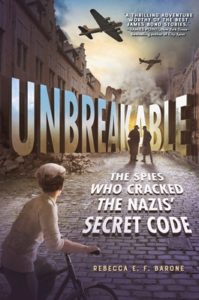
Unbreakable: The Spies Who Cracked the Nazis’ Secret Code by Rebecca E.F. Barone

Share

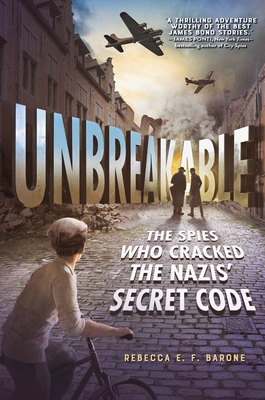
Unbreakable: The Spies Who Cracked the Nazis’ Secret Code
Author: Rebecca E.F. Barone
Publishing October 25th, 2022 by Henry Holt and Co.

Summary: Unbreakable is the true story of the codebreakers, spies, and navy men who cracked the Nazis’ infamous Enigma encryption machine and turned the tide of World War II.

As the Germans waged a brutal war across Europe, details of every Nazi plan, every attack, every troop movement were sent over radio. But to the Allied troops listening in—and they were always listening—the crucial messages sounded like gibberish. The communications were encoded with a powerful cipher, making all information utterly inaccessible . . . unless you could unlock the key to the secret code behind the German’s powerful Enigma machine.

Complete with more than sixty historical photos, Unbreakable tells the true story of one of the most dangerous war-time codebreaking efforts ever. While Hitler marched his troops across newly conquered lands and deadly “wolfpacks” of German U-Boats prowled the open seas, a team of codebreakers, spies, and navy men raced against the clock to uncover the secrets that hid German messages in plain sight. Victory—or defeat—in World War II would hinge on their desperate attempts to crack the code.

Praise: 

*”A riveting tribute to epic tests of men against the elements.” —Kirkus, starred review

*”A compelling narrative focused on science and technology, embedded in a cluster of thrilling adventure stories . . . Highly ­recommended.” —School Library Journal, starred review

*”Readers will be caught up in the real-time action sequences.” —Booklist, starred review

*”Exemplary.” —BCCB, starred review

About the Author: Rebecca E. F. Barone holds a Bachelor of Arts in English and a Bachelor of Science in Mechanical Engineering from Bucknell University along with multiple graduate degrees in mechanical engineering. Her technical projects include injury analysis for the National Football League, and her short-form STEM writing has been published in the award-winning Muse magazine. She is passionate about serving and mentoring underrepresented populations in STEM. She is also the author of Race to the Bottom of the Earth: Surviving Antarctica (which received four starred reviews).

Review: This book read like a page-turning, action-packed thriller and adventure story. But it is all real! Which makes it even better because it is truly unbelievable. Barone writes the different scenes, shared in vignette-type short stories that come together to show a whole picture, in a way that just grabs the reader’s attention and keeps you reading to figure out how everyone comes together to crack the secret code.

Teachers’ Tools for Navigation: This book will find its most success as an independent reading book and will definitely be a book to share with middle school readers who think they do not like nonfiction.

Also, check out the cover reveal on MGBookVillage for some background information from the author.

Discussion Questions: 

  • How did all of the countries work together (or not work together) to crack the code?
  • Who do you think was the greatest asset in the journey?
  • Why do you think the author chose to write the book in vignette-type short stories?
  • How does the inclusion of photographs add to the book?
  • The author states that the mathematicians were the hero of the story–do you agree? Why or why not?

Flagged Passages: 

ONE: TRAITOR
1929—Warsaw, Poland

THE BOX ARRIVED on the last Saturday in January.

Business in the Polish customs office went on as usual, the rhythm of sorting and inspecting undisturbed by the heavy package with a German postmark. In fact, the officer in charge had nearly finished when the urgent request came in.

Return it immediately, the German embassy demanded. There had been a mistake. It was a German package, intended for a German recipient. It should never have been sent to Poland. Cease operations and give it back.

Now, that made the customs officer pause.

He did not return the box. He opened it.

A polished surface gleamed in the light. Along a hinge in the back, a wood cover opened to reveal something almost like a typewriter. Elevated keys were arranged in three rows along the bottom, each labeled with a letter of the German alphabet.

But that was where the similarity to a typewriter ended.

There was no inked ribbon, no carriage in which to hold paper to type a letter. Instead, the top of the box was filled with small circular windows arranged in three rows identical to the keyboard below; each window contained a single letter printed on translucent material.

If the customs officer pressed a key, instantly, in the top rows, one letter began to glow. As soon as he released the key, the light went out. If he pressed the same letter key again, an entirely different light and letter shone back.

Quickly, the Polish customs officer made a call. Across town, two men secretly working for the Polish cipher agency understood immediately and rushed to the customs office.

Over the next two days and through the next two nights, the men disassembled, examined, and reassembled the machine.

By Monday morning, they had meticulously put every part back into place. They repackaged the machine in the same box and wrapped it in the same brown paper in which it had arrived.

Poland would return German property to Germany, as requested. The delay, inevitable, due simply to the weekend.

No one in Germany suspected a thing.

Enigma in use.

[Bundesarchiv, Bild 183–2007–0705–502 / Walther / CC-BY-SA 3.0]

Two years later, Sunday, November 1, 1931—the German-Belgian border

Hans-Thilo Schmidt rushed through the doors of the Grand Hotel in Verviers, Belgium, two hours late. He never saw the man sitting in the lobby waiting for him.

To this man, Schmidt was an ordinary German of average build, wearing a dark hat and dark coat. Schmidt was red in the face and puffy around the eyes, both traits the man watching him had been expecting. He knew that Schmidt’s train was late, and Schmidt sweated and grew flushed as he hurried to make up lost time. Schmidt’s puffy eyes had been expected as well. The people this man watched often suffered from sleepless nights. Treason was never an easy decision.

Not that Schmidt would have noticed the man even if he’d been relaxed and alert. Hans-Thilo Schmidt was far from experienced in spy craft. Last June, when he had first decided to trade secrets for money, he simply walked into the French embassy in Berlin. Incredibly, he plainly announced his intent to sell information to the French government. Without cover and without any personal security, he asked whom he should contact in Paris to do so. Somehow, he had neither been arrested by the Germans nor ignored by the French.

Now, five months later, the German Schmidt was about to meet face-to-face with a French intelligence officer. Hans-Thilo was nervous, and he was late.

At the front desk, the receptionist checked Schmidt into a room already reserved for him and handed him an envelope along with his key. He entered the elevator, and as the doors closed in front of him, the man watching him from the lobby saw him rip into the letter, which read “You are expected in suite 31, first floor, at 12 noon.”

At precisely noon, as the letter instructed, Schmidt knocked at suite 31.

The door opened into another world where time seemed to slow as an older woman with elegantly styled white hair greeted him and asked him to wait in the comfortable, richly furnished room. Soft music played gently over the radio. An inviting arrangement of liquor and crystal glasses was set out next to a display of fine cigars. Gratefully, Schmidt eased himself into a plush chair.

“Guten Morgen, Herr Schmidt! Hatten sie eine gute Reise?”

Schmidt jumped as an unfamiliar voice boomed at him in German. An immense man with a shaved head came through a doorway, entering the living area through another room in the suite. Round, dark spectacles framed icy blue eyes that pierced Schmidt with an unwavering stare.

“Sit down, please,” the man continued. “How are Madame Schmidt and your two children?”

Schmidt, already on edge, tensed more. He was currently living alone, and his wife, son, and daughter were living with his wife’s parents.

“I know,” the man said, cutting Schmidt off before he had a chance to answer. “You will want to bring your family back together soon and resume a pleasant life. That, of course, depends on you. We will assist you if your cooperation proves fruitful to us.”

Taking an offered glass of whiskey, Schmidt sat back down.

The man confronting him became even more serious. “Your resourcefulness last June in Berlin was quite exceptional and effective, Mr. Schmidt. Quite fortunately you happened upon an official of the French embassy who … was inconspicuous. What would you have done if he had thought you were an agent provocateur and called the police?”

This pushed Hans-Thilo Schmidt to his limit. “I thought you would understand!” he snapped, defiant. “If you feel this way, my only option is to withdraw. Others will know how to interpret my motivations and the rationale of my propositions.”

“Easy now, Mr. Schmidt,” the man responded. “We appreciate your initiative and the benefit we can gain from it.

“Let me be frank,” the man continued, “my name is Lemoine, and I represent the French Intelligence Bureau.”

Read This If You Love: World War II (and other war) nonfiction books

Recommended For: 

classroomlibrarybuttonsmall 

Signature

**Thank you, Kelsey from Macmillan Publishing, for providing a copy for review!**

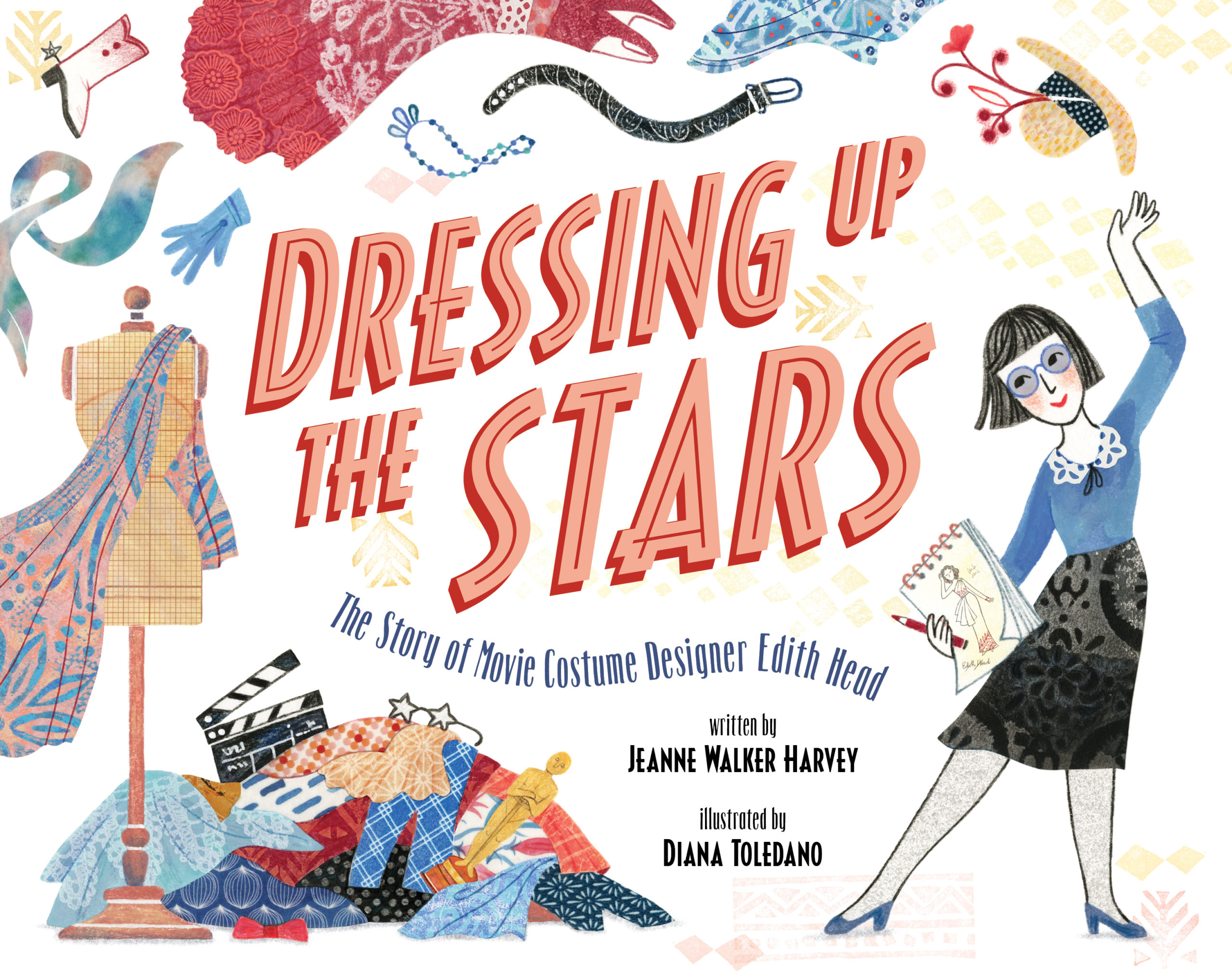
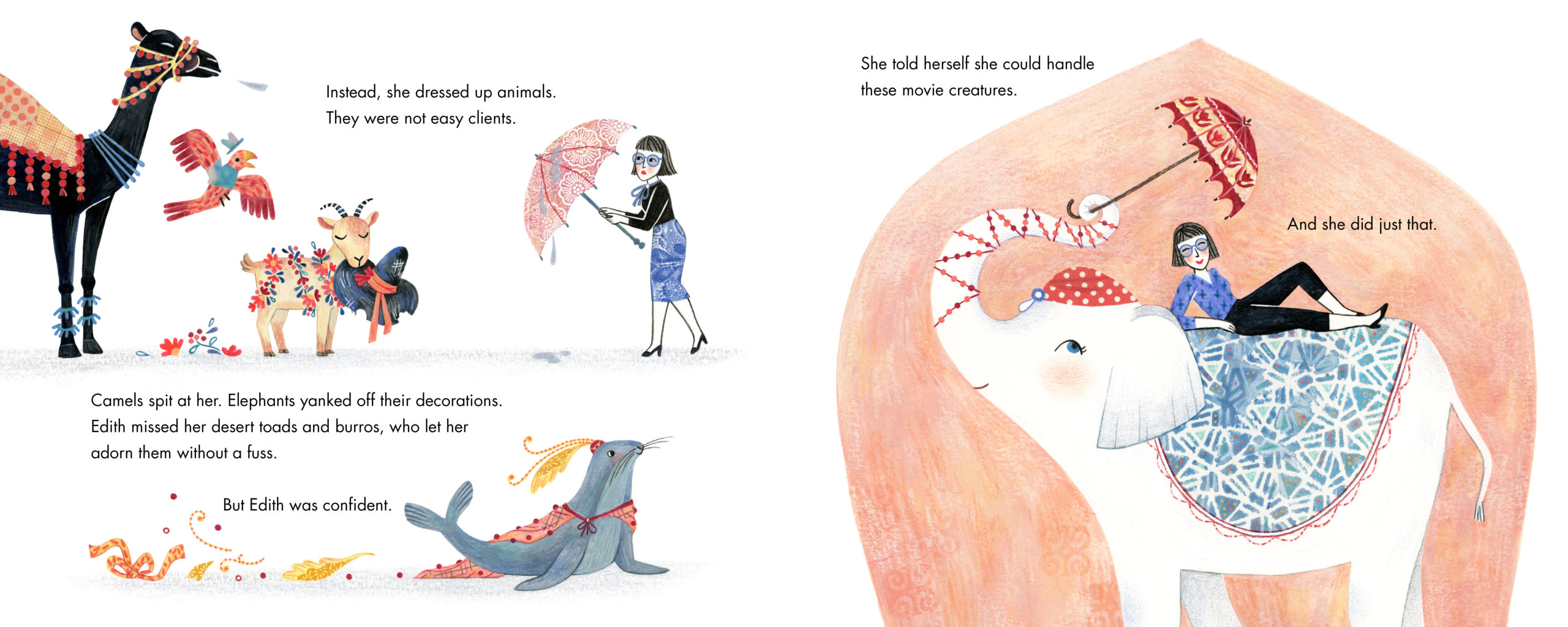
Dressing Up the Stars: The Story of Movie Costume Designer Edith Head by Jeanne Walker Harvey, Illustrated by Diana Toledano

Share

Dressing Up the Stars: The Story of Movie Costume Designer Edith Head
Author: Jeanne Walker Harvey
Illustrator: Diana Toledano
Published September 20th, 2022 by Beach Lane Books

Summary: Discover the true story of how a shy miner’s daughter became one of the most legendary costume designers in Hollywood in this inspiring nonfiction picture book biography.

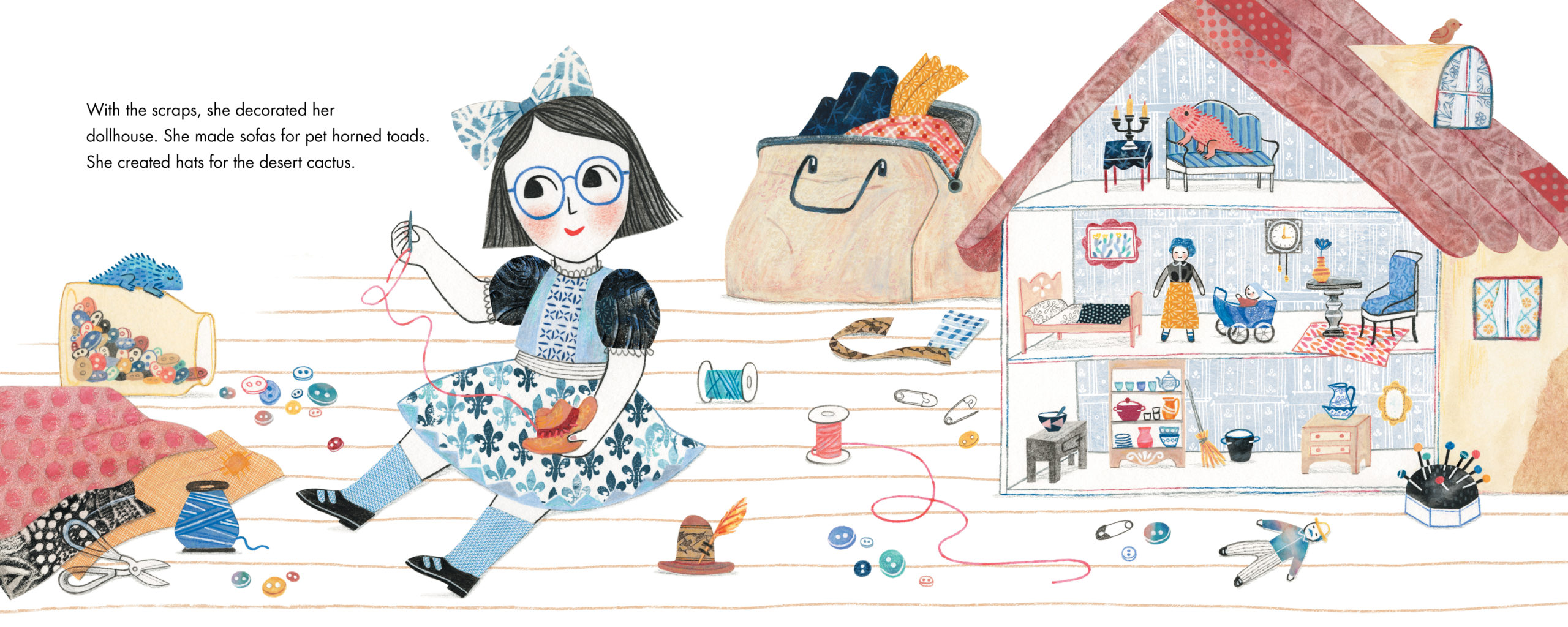
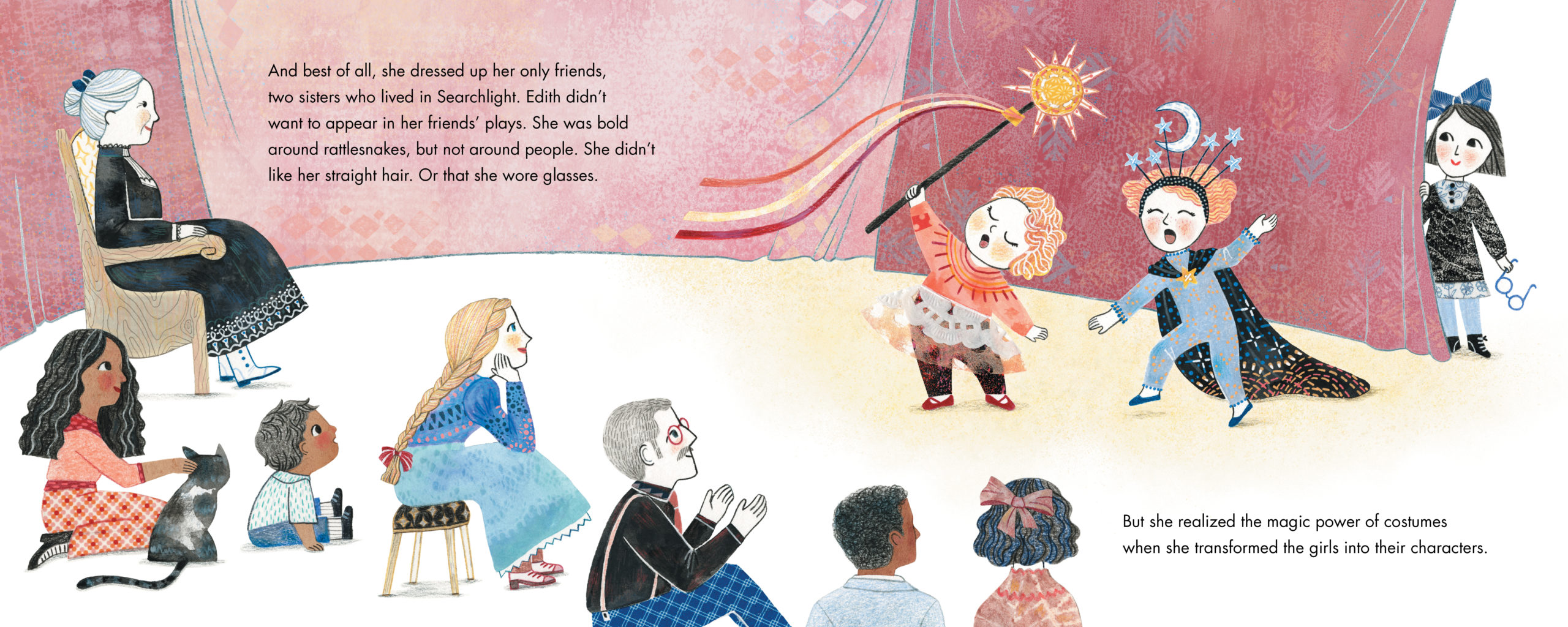
As a child in the small mining town of Searchlight, Nevada, Edith Head (1897 – 1981) had few friends and spent most of her time dressing up her toys and pets and even wild animals using fabric scraps. She always knew she wanted to move somewhere full of people and excitement. She set her sights on Hollywood and talked her way into a job sketching costumes for a movie studio.

Did she have formal training? Did she know how to draw or sew costumes? No. But that didn’t stop her!

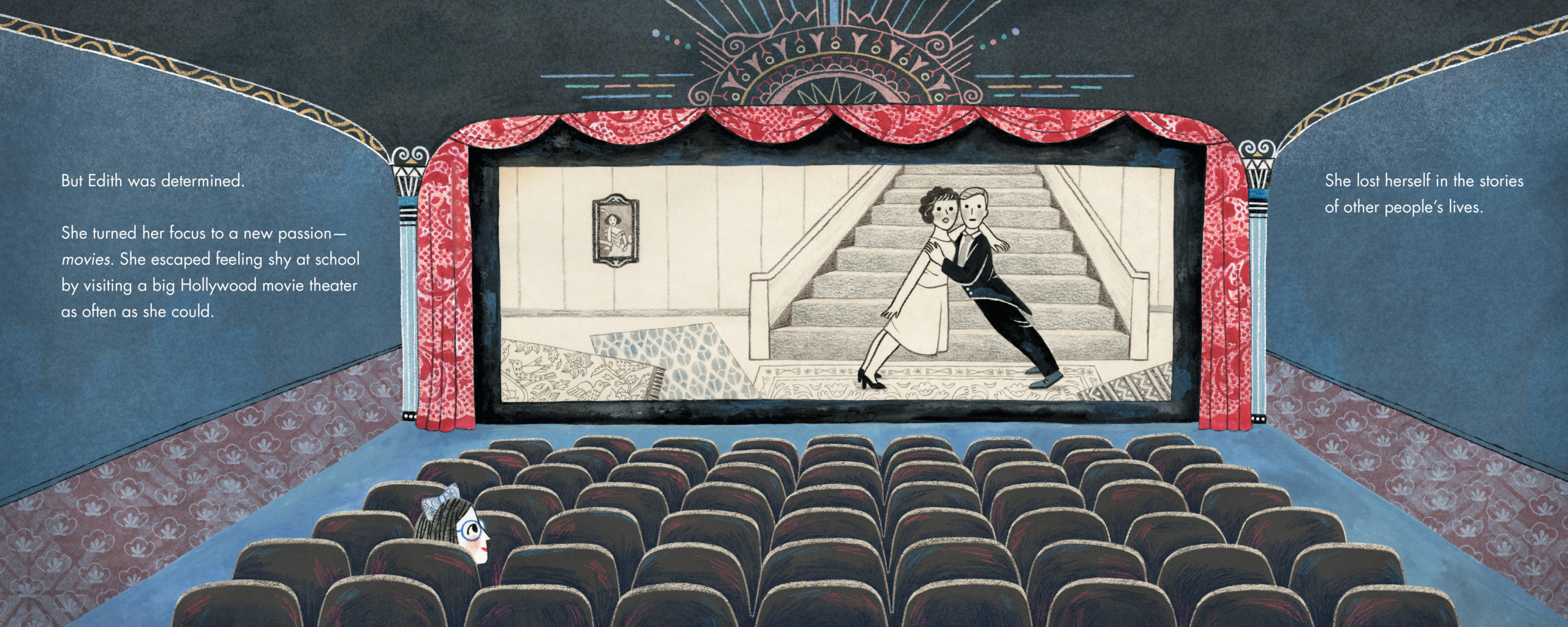
Strong and determined, Edith taught herself how to sew and tirelessly worked her way up until she was dressing some of the biggest stars of the day. These included Audrey Hepburn, Grace Kelly, Ginger Rogers, and Elizabeth Taylor. She made costumes for films like Sabrina and Rear Window and TV shows like Bewitched. She also designed costumes for many of Alfred Hitchcock’s movies, including To Catch a ThiefNotorious, and The Trouble With Harry. She became the first woman to head a major Hollywood movie studio costume department and went on to win eight Academy Awards for best costume design—and she defined the style of an era.

By ultimately becoming one of Hollywood’s most sought-after designers, Edith Head proved that with tenacity, anything is possible. This insightful behind-the-scenes look at the iconic figure is a must-have for cinephiles, history buffs, and fashionistas alike.

FUN FACT! Edith served as the inspiration for the iconic character Edna Mode in the Pixar film The Incredibles! With her classic hairstyle and glasses, Edith will be recognizable as the inspiration for Edna to the observant reader.

Praise:

* “Together, the art and storytelling capture Head’s belief in the transformative magic of costumes, which will certainly strike a chord with dress-up enthusiasts.” — ALA Booklist (STARRED review)

“Toledano’s mixed-media artwork… combined with starry-eyed prose, the result is a glamorous life story with a Hollywood ending.” — Publishers Weekly

About the Creators: 

Jeanne Walker Harvey studied literature and psychology at Stanford University and has worn many job hats, ranging from being a roller coaster ride operator to an attorney, a middle school language arts teacher, and a long-time docent for school groups at the San Francisco Museum of Modern Art. She is the author of several books for young readers, including the picture book biographies Dressing up the Stars: The Story of Movie Costume Designer Edith HeadAblaze with Color: A Story of Painter Alma Thomas, and Maya Lin: Artist-Architect of Light and Lines. Jeanne lives in Northern California. Visit her online at JeanneHarvey.com.

Twitter: @JeanneWHarvey
Pinterest: @JeanneWalkerHarvey
Check out the many resources here at Jeanne Walker Harvey’s website!

Diana Toledano is an illustrator, writer, and educator. She is also a Pisces who loves children’s books, patterns, and dancing her heart out. Originally from Spain, Diana (pronounced the Spanish way: dee-ah-na) grew up in Madrid where she studied art history and illustration. Now she lives in San Francisco with her husband and two fluffy cats. Her mixed media art seeks to capture the magic of the ordinary. Diana’s product designs, picture books, board books, and chapter books have been published and sold all over the world. Diana also teaches workshops for kids and adults. She enjoys doing school visits and speaking at conferences. Learn more at Diana-Toledano.com.

Instagram: @dianatoledano
Facebook: Diana Toledano
Pinterest: Diana Toledano

Review: As a fan of old Hollywood, I recognized Edith Head’s costumes right away. I mean–Grace Kelly in Rear Window, Audrey Hepburn in Breakfast at Tiffany’s, Tippi Hedren in The Birds, Fred Astaire in Holiday Inn, Elvis Presley in Blue Hawaii–anyone?!? And this is just the tip of the iceberg of Head’s designing. She was nominated for an Academy Award THIRTY FIVE times and won EIGHT making her the most awarded woman in the Academy’s history. But yet, she was behind the scenes and not as well known as the actors in front of the camera, so I am so happy to have this picture book biography to bring to light her genius. A self-taught young woman with no experience fighting her way up to being an Oscar winner–yes, please! Harvey does a fantastic job of sharing Edith’s magic from her childhood dreams to her adult reality and Toledano’s illustrations work perfectly for Edith’s style and costumes.

Teachers’ Tools for Navigation: 

Check out the publisher-provided activity kit for some fun activities to do with the book:

Discussion Questions: 

  • What does Edith’s journey to her dream job teach you about growth mindset?
  • How did Edith’s hobbies as a child help her reach her dreams?
  • Why do you think Edith chose to wear black or other dark, neutral colors when dressing stars?
  • How does a costume designer impact a movie or show?
  • Why do you think Edith was given a second chance after she failed to create costumes for dancers dressed as candy?
  • How do you think Edith grew her confidence overtime so much that she was able to not allow nay-sayers to make her question herself?
  • What are some words in the book that you did not know? What do you think they mean based on context? Check your guess by looking ups its definition.
  • How does the Author’s Note at the end of the book add to the book experience?

Book Trailer: 

The trailer can also be viewed on the author’s website:
https://www.jeanneharvey.com/dressingupthe-stars

Flagged Passages: 

Read This If You Love: Nonfiction biography picture books, specifically about groundbreaking women, including Harvey’s books on Maya Lin and Alma Thomas

Recommended For: 

classroomlibrarybuttonsmall 

Signature

**Thank you to Alex at Simon & Schuster and Barbara at Blue Slip Media for providing a copy for review!**
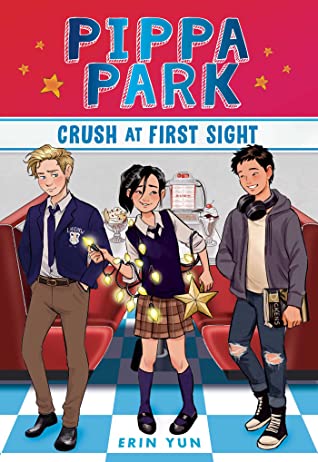
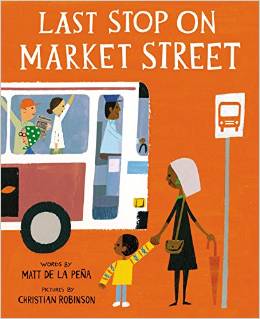
Guest Review: Last Stop on Market Street by Matt de la Peña, Illustrated by Christian Robinson

Share

Guest Reviewer: Amanda & Sendy, UCF Elementary Education Student

Last Stop on Market Street
Author: Matt de la Peña
Illustrator: Christian Robinson
Published January 8, 2015 by Penguin Books

Summary: “Sometimes when you’re surrounded by dirt, CJ, you’re a better witness for what’s beautiful.”

CJ begins his weekly bus journey around the city with disappointment and dissatisfaction, wondering why he and his family can’t drive a car like his friends. Through energy and encouragement, CJ’s nana helps him see the beauty and fun in their routine.

This beautifully illustrated, emotive picture book explores urban life with honesty, interest, and gratitude.

Last Stop on Market Street is a story about appreciating differences, happiness, and inequity. CJ and his Nana take the bus to its last stop on Market Street every Sunday after Church. On the Sunday this book is set on, CJ begins to wonder why they must wait in the rain for the bus instead of buying a car. Nana enlightens him by giving him different ways of appreciating what they have, what they do in their everyday lives, and all the types of people they meet. The theme of the novel is Nana showing CJ the value in how they live their lives and helping those who need it.

Last Stop on Market Street has won multiple awards and spent time at the number one spot in the New York Times Bestseller List.

About the Author: Matt de la Peña is the #1 New York Times-bestselling. Newbery Medal-winning author of five picture books and six critically acclaimed young adult novels.  He was also awarded the NCTE Intellectual Freedom Award and received his MFA in creative writing from San Diego State University. He is currently living in Brooklyn, NY with his family.

About the Illustrator: Christian Robinson has received a Coretta Scott King Illustrator Honor for his art in Last Stop on Market Street. He was born in Hollywood, California. He was awarded a Caldecott Honor and the Newbery Medal

Review: Last Stop on Market Street is a stunning contribution to art in children’s literature and the future of book of storytelling. This novel reveals the creative potential of a powerful cross-cultural author-illustrator partnership. The art combined with the theme of the novel embraces the diversity in ourselves and everyday routine but others.

This book is such an amazing book! It is easy to see the bad that goes on in our lives, and things that we do not like, but this book is a great reminder to see the good in those situations that it is difficult to. I would recommend “The last stop on Market Street” to every teacher and parent to read to their children and/or have them read it themselves.

Throughout this book, a little boy named CJ had many questions. He did not like riding the bus or going to the soup kitchen after church and always questioned why he didn’t have certain things. Nana always had a clever response and see’s the brighter side to every situation. CJ learns this from her and begins to see it too allowing him to feel more confident and happier about his situations.

Just as adults need these reminders that your life is just as good as your mindset, it is good to instill it into our children as well. If they grow up feeling like they don’t have enough, it will transfer into adulthood. This is an amazing book that brings an amazing lesson to all ages. There’s beautiful in even the ugliest things

Teachers’ Tools for Navigation: This book is perfect to teach students about acceptance and the importance of helping others in need. As CJ ends his bus ride with his Nana, he goes to work at a soup kitchen which enables him to understand how he gives back to his community.

Also, it would be a great opportunity to use this book in the classroom during group reading, or even partner reading. This book would bring a great opportunity in a group setting because it will allow the students to have discussions. They will be able to discuss what they think about the book, how they feel about the main characters and have the opportunity to express the times that they have felt unhappy. This can now turn into a conversation of how they can see these situations in a better light next time. this will allow the students to sharpen up their critical thinking skills, learn how to have discussions and understand what is like to be open minded.

Since last stop on market Street is the street where the soup kitchen is, this book can also be read during history time to focus on the soup kitchen, how soup kitchens came about, the reasons for them and why people go to them

Discussion Questions: 

  • Who is telling the story? How do you know?
  • How and why does CJ’s mood change throughout the book?
  • How do CJ and Nana look at life differently?
  • Why do you think Nana volunteers? What does she gain?
  • How can you show more gratitude and optimism, like Nana?
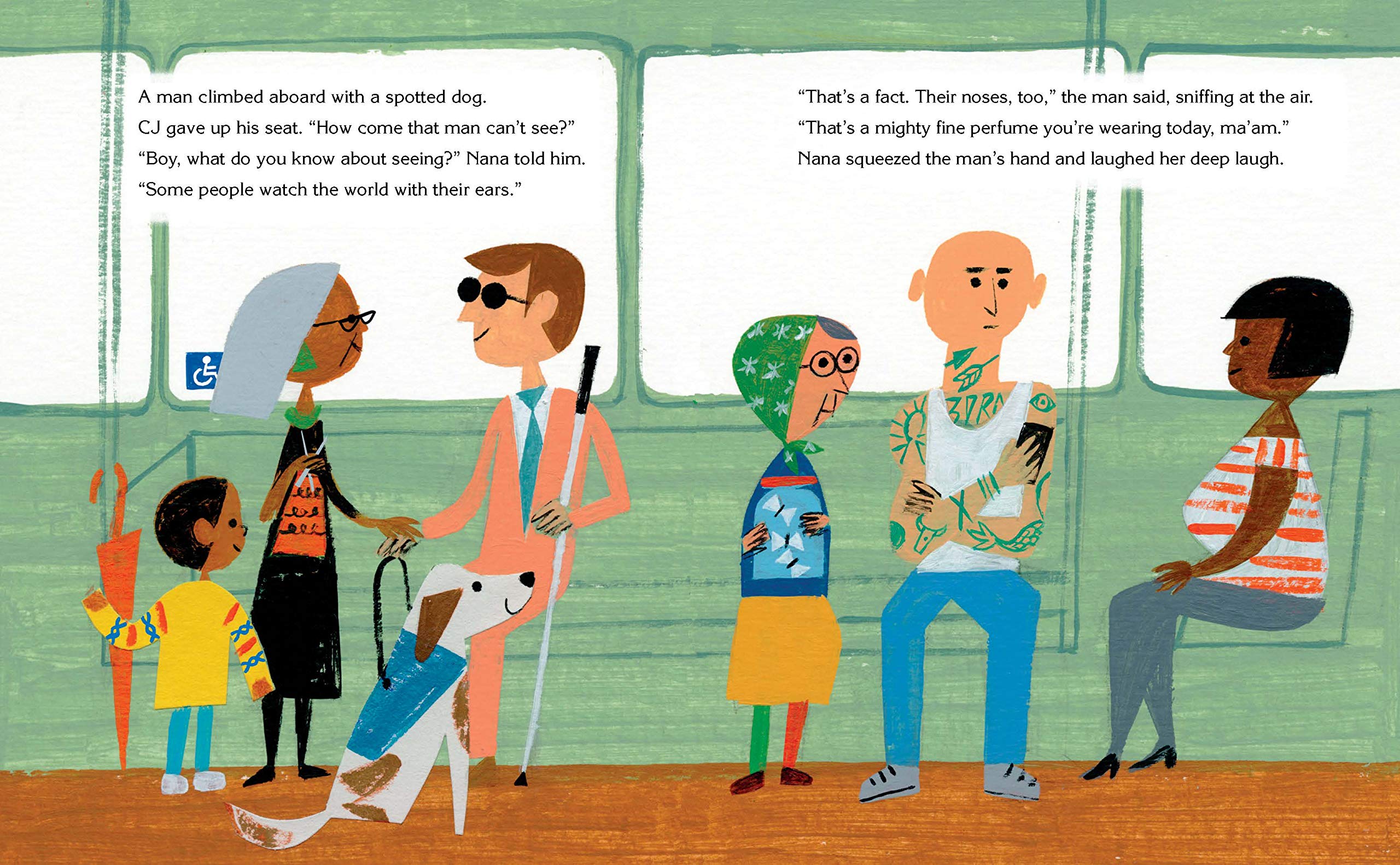
  • What do we learn about the different settings from the illustrations?
  • where was CJ and his Nana coming from in the beginning of the story?
  • What animal their Nana used to describe the bus?
  • Who were the people that CJ was talking about on the bus?
  • What was the name of the bus driver?
  • What is on the last stop of Market Street that CJ and his Nana went to?
  • Why didn’t CJ like the last stop?
  • What did CJ see over the building at the end of the book?

Flagged Passages: 

Book Trailer: 

Recommended For: 

classroomlibrarybuttonsmall

Thank you, Amanda & Sendy, for your reviews!

Haven Jacobs Saves the Planet by Barbara Dee

Share

Haven Jacobs Saves the Planet
Author: Barbara Dee
Published September 27th, 2022 by Aladdin

Summary: Twelve-year-old Haven Jacobs can’t stop thinking about the climate crisis. In fact, her anxiety about the state of the planet is starting to interfere with her schoolwork, her friendships, even her sleep. She can’t stop wondering why grownups aren’t even trying to solve the earth’s problem—and if there’s anything meaningful that she, as a seventh grader, can contribute.

When Haven’s social studies teacher urges her to find a specific, manageable way to make a difference to the planet, Haven focuses on the annual science class project at the local Belmont River, where her class will take samples of the water to analyze. Students have been doing the project for years, and her older brother tells her that his favorite part was studying and catching frogs.

But when Haven and her classmates get to the river, there’s no sign of frogs or other wildlife—but there is ample evidence of pollution. The only thing that’s changed by the river is the opening of Gemba, the new factory where Haven’s dad works. It doesn’t take much investigation before Haven is convinced Gemba is behind the slow pollution of the river.

She’s determined to expose Gemba and force them to clean up their act. But when it becomes clear taking action might put her dad’s job—and some friendships—in jeopardy, Haven must decide how far she’s willing to go.

About the Author: Barbara Dee is the author of twelve middle grade novels including Violets Are Blue, Haven Jacobs Saves the Planet, My Life in the Fish Tank, Maybe He Just Likes You, Everything I Know About You, Halfway Normal, and Star-Crossed. Her books have earned several starred reviews and have been named to many best-of lists, including The Washington Post’s Best Children’s Books, the ALA Notable Children’s Books, the ALA Rise: A Feminist Book Project List, the NCSS-CBC Notable Social Studies Trade Books for Young People, and the ALA Rainbow List Top Ten. Barbara lives with her family, including a naughty cat named Luna and a sweet rescue hound named Ripley, in Westchester County, New York.

Review: I’ve never read a book about eco-anxiety before, but I could definitely empathize with Haven Jacobs and her true anxiety over the state of our planet. I loved that the book gave tangible things that could be done in a community and also looks at global issues. Additionally, like all of Barbara Dee’s books, she does a great job balancing teaching (about science and climate change) and storytelling.

Teachers’ Tools for Navigation: The publisher-provided reading group guide also includes extension activities:

1. Choose one of the following and write an essay:

– How does Haven’s name reflect the major theme of the book?

– Revisit the chapter titled “The Scratch,” and the scene in which the author describes Haven’s room and talks about how her room shows readers who she is and what’s important to her. Then write a description of your own room, and ask a partner if they can identify what is most important to you.

– Using the quote attributed to Dr. Martin Luther King Jr. (“If I cannot do great things, I can do small things in a great way”), write an essay about what that means, giving specific examples from the book.

2. Haven’s heroine is a fictional Inuit teen climate activist named Kirima Ansong. Choose a real-life teen activist and write a report about them, the issue they support, and the actions they’ve taken.

3. The headline of the RiverFest story is “SEVENTH GRADER GRIPPED BY ECO-ANXIETY,” which nicely sums up the major theme of this book. How prevalent is eco-anxiety among the kids at your school? Create a survey and share it to discover the answer. Write a report sharing your findings.

4. Choose one of the following topics from the book to research and write a report about, using the facts shared in the book as a jumping-off point to learn more.

Discussion Questions:
(Chosen questions from the publisher-provided reading group guide; there are 16 questions on the guide)

1. Talk about how the two events that Haven relates in the book’s opening chapter illustrate two of the book’s major themes. What does the bouncy house incident show readers about Haven’s personality? Do you agree with Grandpa Aaron that “‘Haven’s a true problem solver’”? (Chapter: Sensitive) Do you consider yourself to be a problem solver?

2. Why does Haven decide to become a vegetarian? Do you understand and sympathize with her reaction when she goes fishing with Carter and her dad? Are you a vegetarian, or do you have friends who are? What are some other reasons that people make this choice? Talk about how vegetarianism connects with the issue of climate change.

3. Do you understand why Haven is so upset about climate change? How do you feel about her statement that “’no one cares about anything except what’s going on in their own lives’”? (Chapter: Dinner) Why do some of her friends think climate change is too depressing to talk about? Haven tells Lauren, the reporter, that all kids are worried about the issue. How do you and your friends feel?

4. Have you ever heard of eco-anxiety? What are some of the signs of eco-anxiety that Haven is experiencing? How might eco-anxiety feel different from other things kids are anxious about, like taking tests or giving oral reports? What are some actions Haven takes, or could take, to relieve this anxiety?

5. Ms. Packer says to Haven: “‘There’s a positive way to be upset, and another way that just makes you feel hopeless and depressed.’” (Chapter: The Blanks) Do you understand both options? Do you identify with one more than the other? What do you think when Haven says she feels that going to school is pointless, that there are more important things going on?

Flagged Passages: 

Read This If You Love: Learning or reading about climate change, science, and/or mental health

Recommended For: 

classroomlibrarybuttonsmall 

Signature

**Thank you to Casey at Media Masters Publicity for providing a copy for review!**
A River’s Gifts: The Mighty Elwha River Reborn by Patricia Newman, Illustrated by Natasha Donovan

Share

A River’s Gifts: The Mighty Elwha River Reborn
Author: Patricia Newman
Illustrator: Natasha Donovan
Published September 6th, 2022 by Millbrook Press

Summary: A mighty river. A long history.

For thousands of years, the Elwha river flowed north to the sea. The river churned with salmon, which helped feed bears, otters, and eagles. The Lower Elwha Klallam Tribe, known as the Strong People located in the Pacific Northwest, were grateful for the river’s abundance. All that changed in the 1790s when strangers came who did not understand the river’s gifts. The strangers built dams, and the environmental consequences were disastrous.

Sibert honoree Patricia Newman and award-winning illustrator Natasha Donovan join forces to tell the story of the Elwha, chronicling how the Strong People successfully fought to restore the river and their way of life.

About the Creators: 

Patricia Newman’s books inspire young readers to seek connections to the real world. Her titles encourage readers to use their imaginations to solve real world problems and act on behalf of their communities. These books include Sibert Honor title Sea Otter Heroes: The Predators That Saved an Ecosystem; Orbis Pictus Recommended Book Planet Ocean: Why We All Need a Healthy Ocean; Bank Street College Best Book Zoo Scientists to the Rescue; Booklist Editor’s Choice Ebola: Fears and Facts; and Green Earth Book Award winner Plastic, Ahoy! Investigating the Great Pacific Garbage Patch. Patricia frequently speaks at schools and conferences to share how children of any age can affect change. Visit her at www.patriciamnewman.com.

Natasha Donovan is the illustrator of the award-winning Mothers of Xsan series (written by Brett Huson). She illustrated the graphic novel Surviving the City (written by Tasha Spillett), which won a Manitoba Book Award and received an American Indian Youth Literature Award (AIYLA) honor. She also illustrated Classified: The Secret Career of Mary Golda Ross, Cherokee Aerospace Engineer which won an Orbis Pictus Honor Book and an American Indian Youth Literature Award (AIYLA). Natasha is Métis, and spent her early life in Vancouver, British Columbia. Although she moved to the United States to marry a mathematician, she prefers to keep her own calculations to the world of color and line. She lives in Washington. www.natashadonovan.com

Review: This book is different than Newman’s other books as it is illustrated and more lyrical than her books of the past; however, there is no need to worry — the book is beautiful! Newman does a fantastic job balancing the narrative of the river and the Lower Elwha Klallam Tribe with informative information about water, salmon, dams, and other wildlife. Newman’s prose also does amazing justice when it comes to the river’s legacy and the indigenous tribes that relied on, and lost, the river.

To add to Newman’s work, Donovan’s illustrations bring everything to life that Newman shares. Her work is filled with color and life and brings the whole book together.

A spectacular nonfiction picture book that takes the reader on a journey of a river’s legacy filled with lyrical prose and important information.

Teachers’ Tools for Navigation: The publisher has provided a Teaching Guide for The River’s Gifts:

There is also an interview with Patricia Newman that digs deeper into her book:

Flagged Passages: 

Book Trailer: 

Read This If You Love: Environmental nonfiction picture books

Recommended For: 

classroomlibrarybuttonsmall 

Signature

**Thank you to Patricia Newman and Lerner for providing a copy for review!**
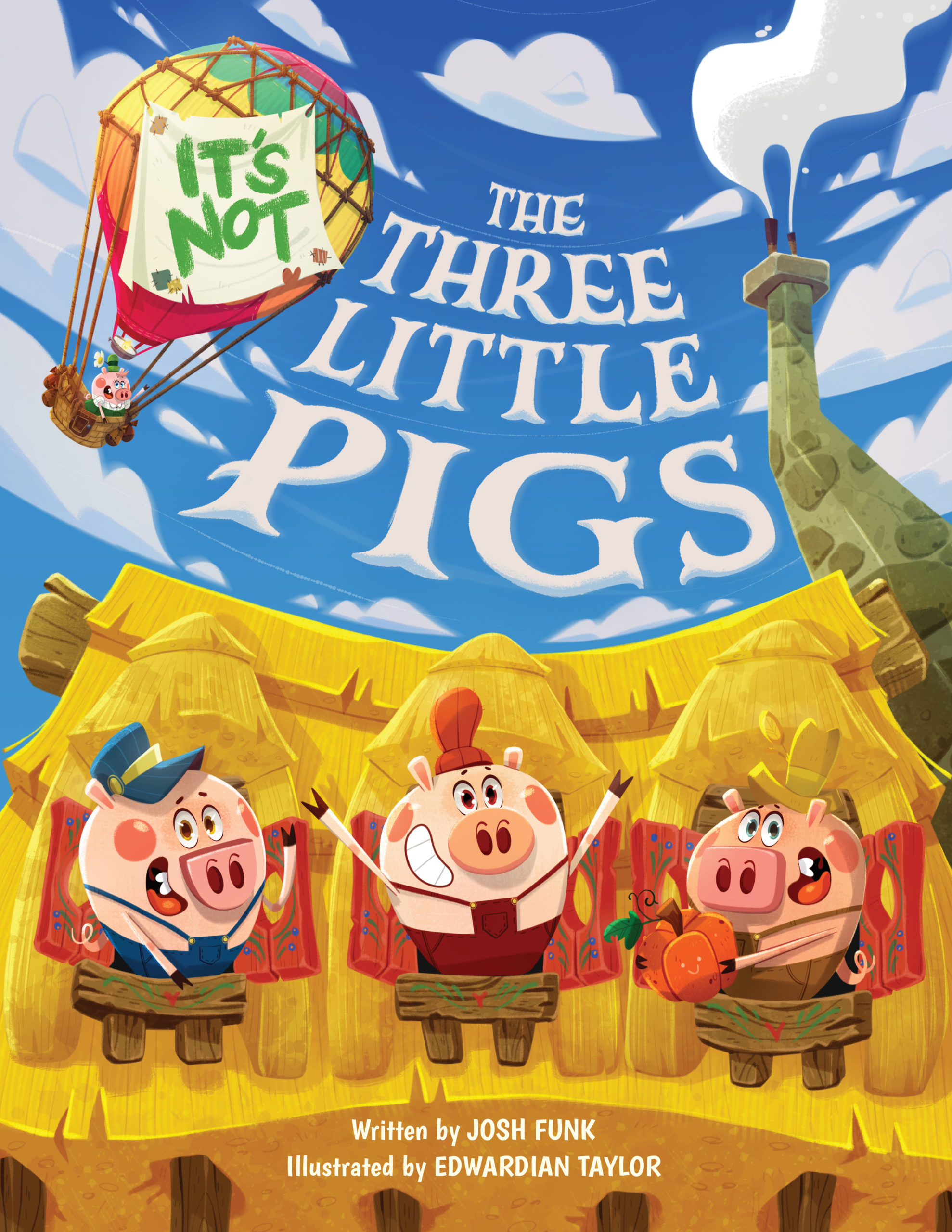
Guest Review: We Can: Portraits of Power by Tyler Gordon

Share

Guest Reviewer: Sailor, UCF Elementary Education Student

We Can: Portraits of Power
Creator: Tyler Gordon
Published September 28th, 2021 by Farrar, Straus & Giroux

Summary: “When I was born, the doctors told my mom that if I did survive I would have lots of health problems and be blind, deaf and severely mentally delayed . . . Boy were they wrong!” —Tyler Gordon

Fifteen-year-old Tyler Gordon’s journey from a regular kid growing up in San Jose, California, to a nationally recognized artist wasn’t without its challenges. For the first six years of his life he was fully deaf, which led to a stutter and bullying. Art gave him a creative outlet for his pain. Then, after painting a portrait of Kamala Harris and posting it on social media, he received a call from the vice president herself! Soon his art was everywhere. He had an interview with the The Today Show. He was the youngest artist featured in the Beverly Center. His portrait of LeBron James graced the cover of TIME Magazine. And that was only the beginning!

Here is a debut picture book by partially deaf prodigy Tyler Gordon, featuring his bold paintings of over 30 icons—musicians, artists, writers, civils rights leaders, sports legends, change-makers, record-setters, and more—alongside short explanations of how these people inspire him.

If Tyler can make art and follow his dreams, you can, too. We all can.

About the Author: Tyler Gordon is a fourteen-year-old painter whose work has been featured in TIME Magazine, Essence, Good Morning America, and ABC News. In 2020, he was awarded the Global Child Prodigy Award. He currently lives in San Jose, California with his family.

Review: We Can: Portraits of Power by Tyler Gordon is by far one of the best books for children to read. This book provides a lot of historical, and current information, that many people do not know, but should, about very famous and influential people. Tyler Gordon was only 14 years old when his book was published. He relates every single person that he paints to himself and talks about the honorable work that these people have done, walls they have torn down, and glass ceilings they have broken through.

Every single student can relate to this book in some way or another, with over 30 people showcased in We Can: Portraits of Power, students will be able to see themselves through one of them, all of them, or even through Tyler Gordon himself. This book is filled with politicians, artists, athletes, singers, philanthropists, civil rights activists, and many more. This story is able to empower students to be activists for theirs, and other people’s rights, all while also getting them excited and encouraging  them to learn about the history that some of these amazing  people have made, and are continuing to make.

I loved reading this book and looking at the beautiful art that Tyler has done and will continue to do. I cannot wait to see what this young man’s future holds.

Teachers’ Tools for Navigation: We Can: Portraits of Power by Tyler Gordon provides many great opportunities for use within the classroom. To start, teachers are able to have students pick their favorite person that Tyler had painted and write why that person was also an inspiration to them.  Teachers can also have students paint a portrait of someone who had has a big impact in their lives,  and. then write about them.

I think that one of the best ideas to pair with We Can: Portraits of Power by Tyler Gordon. would be to have students make a list of people who they look up to, and people that empower them to be great. After students make their lists, they would go back and write why these people have been so influential in their life, and then finally paint an image of them. Creating their own mini versions of We Can: Portraits of Power.

Discussion Questions: 

  • How does Tyler relate to President Biden? Do you know anyone that could also relate to President Biden and Tyler? Why is it good to be able to relate to successful people?
  • How did Tyler’s creativity help him?
  • How did this book inspire you?
  • Who did you relate to in this book? Why?
  • Why did Tyler use athletes, politicians, and historical figures in this book? What did it do to the story that he used  a variety of people?
  • Who do you think is the most important person in this book? Why do you think that? How can you relate to this person?

Flagged Passages: 

Read This If You Love: Art, Diversity, Empowerment

Recommended For: 

classroomlibrarybuttonsmall

Thank you, Sailor, for your review!

Killer Underwear Invasion!: How to Spot Fake News, Misinformation, & Conspiracy Theories by Elise Gravel

Share

Killer Underwear Invasion: How to Spot Fake News, Disinformation & Conspiracy Theories
Author: Elise Gravel
Published September 20, 2022 by Chronicle

Summary: A hilarious and timely tool to help kids learn how to tell what news is true and what isn’t

Can peanuts give you super strength? Were unicorns discovered on the moon? Did Martians really invade New Jersey? For anyone who has ever encountered outrageous stories like these and wondered whether they were true, this funny, yet informative book breaks down what fake news is, why people spread it, and how to tell what is true and what isn’t. With quirky illustrations and a humorous tone, Elise Gravel brings her kid-accessible wit to the increasingly important subject of media literacy and equips younger readers with the skills needed to interact with global news.

Review and Teachers’ Tools for Navigation: My kids love this book, and I love the way it allows kids to think about critical literacy! I used excerpts of this in my college class to demonstrate how accessible conversations about critical literacy can be. I also found myself sharing pages of the text with my brother (who said he would be ordering it for his daughter). This book is wholly impressive and critical for classrooms. Teachers could do close readings of the text and pair this text with conversations about disinformation, evaluating sources, etc.

Flagged Passage:  

Read This If You Love: Humor, Books about Critical Literacy, Retaliation against Fake News!!

Recommended For: