Drawing Outside the Lines: A Julia Morgan Novel by Susan J. Austin

Share

Drawing Outside the Lines: A Julia Morgan Novel
Author: Susan J. Austin
Published October 18th, 2022 by SparkPress

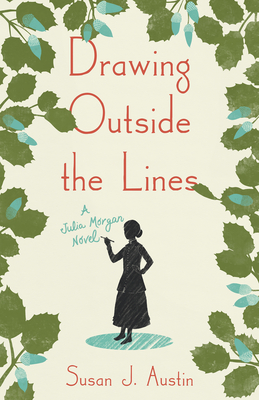
Summary: Meet the brilliant, fearless, and ambitious Julia Morgan. In 1883, eleven-year-old Julia visits the amazing new Brooklyn Bridge—an experience that ignites within her a small but persistent flame. Someday, she decides, she too will build an astounding structure.

Growing up in horse-and-buggy Oakland, Julia enjoys daring fence walks, climbing the tallest trees, and constantly testing her mother’s patience with her lack of interest in domestic duties and social events. At a time when “brainy” girls are the object of ridicule, Julia excels in school and consistently outsmarts her ornery brothers—but she has an even greater battle ahead. When she enrolls at university to study engineering, the male students taunt her, and the professors belittle her. Through it all, however, Julia holds on to her dream of becoming an architect. She faces each challenge head-on, firmly standing up to those who believe a woman’s place is in the home. Fortunately, the world has yet to meet anyone like the indomitable Miss Morgan.

Drawing Outside the Lines is an imagined childhood of pioneering architect Julia Morgan, who left behind her an extraordinary legacy of creativity, beauty, and engineering marvels.

Author: Susan Austin

Praise:

  • “Austin imagines Julia Morgan’s life with authority.  She makes an important historical figure accessible to us.  Drawing Outside the Lines makes us see and feel what Morgan was up against, which makes her spectacular work all the more impressive.” —Gennifer Choldenko, Newbery Honor-winning author of the Alcatraz series
  • “Austin imagines Julia Morgan’s life with authority.  She makes an important historical figure accessible to us.  Drawing Outside the Lines makes us see and feel what Morgan was up against, which makes her spectacular work all the more impressive.” —Joan Schoettler, author of Ruth Asawa: A Sculpting Life 
  • “Diligent research and a rich imagination make Susan Austin’s new book on the young Julia Morgan a pleasure to read for all ages. Morgan is an amazing role model for young women everywhere. Austin offers plenty of examples of Morgan’s determination and talent and embroiders on these to create a convincing narrative. This book is a charming introduction to a great woman architect.” Sarah Gill, author of Julia Morgan’s Berkeley City Club

About the Author: As an educator, Susan J. Austin knows the minds of young readers. Her first novel, The Bamboo Garden, is set in Berkeley, California, 1923, and describes an unlikely friendship between two girls that is tested by a fierce fire that threatens to destroy their town. Currently, she is writing about 12-year-old Goldie, a whiz kid in the kitchen who hopes that her culinary magic can help her family’s delicatessen out of a pickle in 1928 Hollywood. Her characters are always brave, strong-willed, risk-takers. Writing historical fiction offers her a way to educate and excite her readers about the past. She and her husband live in Northern California, surrounded by family, their splendid, but fussy rose bushes, and a lifetime collection of books. Learn more at www.susanjaustin.com

Review: I loved stepping back to the turn of the 20th century with Julia and experience her marvel as engineering and architectural feats were occurring all over America. I also learned so much along with Julia in the book–it was intriguing to learn about architecture, architectural materials, engineering, and more!

Although I know that much of the book is fiction, that Julia is based on a real woman made the story easier to connect with because you knew she succeeded; you knew that all of the hate and bullying and sexism didn’t keep her down. And I wanted to keep following her journey to see all of the amazing things she did to prove people wrong.

Overall, a well-researched and also engaging historical fiction novel about a topic and time period not often shared with our middle grade readers. I look forward to sharing it with students and am happy to share it here.

Teachers’ Tools for Navigation: This novel lends itself to be a companion when teaching historical architecture, engineering, or mechanical drawing. It also includes great anecdotes that could add to a lesson about the turn of the century’s amazing feats such as the Brooklyn Bridge, Eifel Tower, and Ferris Wheel.

Additionally, must of Julia’s story is shrouded in sexism which would go well with a discussion on women’s rights during American history.

The book could also be a mentor text for students to write their own historical fiction story based on an individual. The author’s note could be used to show how the author took what she learned through research and then made the story her own while still honoring the historical time and figure.

Discussion Questions: 

  • How did the author use what she knew about Julia Morgan to create this story?
  • Which of Julia’s mentors do you think influenced her the most?
  • Why did Julia’s mom have more trouble with letting Julia focus on academics than her father did?
  • Even though Mary and Julia were very different, how did they complement each other and help each other succeed?
  • Is there anything in the book that you really wanted to be true but the author’s not shared it was fiction?
  • How was Julia treated versus her male counterparts in her university?
  • What barriers did Julia face and overcome? Why did the barriers exist and how did she overcome them?
  • How did Julia’s family both shape and inhibit her?

Flagged Passages:

Part II: The Choice

Oakland High School in the 1880s

Chapter 11: Too Brainy

“The tower with windows on all four sides, offers a fine view of the city. After considering several sites, I decide on an unusual structure I frequently pass by.

The next day, as I climb the tower’s narrow staircase, voices and thumping noises dash my hope of being alone. The room is packed with fellow drawing students. As soon as I step inside, the place turns eerily quiet.

I’m not surprised. The boys have never approved of me. Pencils go missing from my desk, my work is crumpled or tossed to the floor, and every day my stool mysteriously moves to the back of the room. It hardly ever happens to the few girls in the class. Just me. Although I hate the situation, it would be worse if I spoke up. Over the years, I’ve grown used to being teased by both boys and girls, mainly about my good grades. But high school is different. The boys in mechanical drawing have made it clear: I am not welcome.

I make my way to the best window for viewing my subject—the Pardee water tower. It’s a two-story wood construction, wider at the bottom, and topped with a windmill. Two boys standing by the window appear absorbed in their drawings. When I head toward a second, less favorable window, the boys standing there act as if I’m invisible. The air in this crowded, silent room is stale and unpleasant, much like the smell of dirty laundry in my brothers’ bedroom.

Heading to a third window, I steel myself for trouble, resolving to be sugar sweet. I will shame them. With a cheery smile, I say, “Excuse me. Is there room for one more here?”

The boy with freckles finally looks up from his sketchpad. “Have to wait ’til we’re done. And that could take a while.” I glance at his notebook. Blank.

I want to race back down those stairs, but I stay. Still smiling, I say, “Frankly, I think your estimate is incorrect. I shall not take up much room.”

If they are like my brothers, they will back down like timid deer. Can they hear the frantic flutter in my chest? After the briefest pause, they shuffle aside, red-faced, leaving me a tiny space.

The water tower is visible against a flame-red sunset. Within minutes I have a decent rendering. A quick glance at the boys’ sketchbooks confirms my hunch. Still blank.

The floorboards creak as I leave the church-quiet room. Reaching the bottom of the stairs, I hear that familiar refrain. “She’s too brainy for a girl.”

The laughter that follows stings worse than the words. I shut the door behind me, angry. What’s wrong with a girl being smarter than a boy? And so what if I draw well? It’s easy for me, like breathing.”

Read This If You Love: Historical fiction with strong women who overcome the odds of the limitations set by their time period, Architecture

Recommended For: 

classroomlibrarybuttonsmall

Signature

**Thank you to Spark Point Studio for providing a copy for review!**
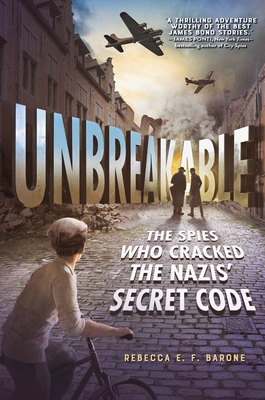
Unbreakable: The Spies Who Cracked the Nazis’ Secret Code by Rebecca E.F. Barone

Share

Unbreakable: The Spies Who Cracked the Nazis’ Secret Code
Author: Rebecca E.F. Barone
Publishing October 25th, 2022 by Henry Holt and Co.

Summary: Unbreakable is the true story of the codebreakers, spies, and navy men who cracked the Nazis’ infamous Enigma encryption machine and turned the tide of World War II.

As the Germans waged a brutal war across Europe, details of every Nazi plan, every attack, every troop movement were sent over radio. But to the Allied troops listening in—and they were always listening—the crucial messages sounded like gibberish. The communications were encoded with a powerful cipher, making all information utterly inaccessible . . . unless you could unlock the key to the secret code behind the German’s powerful Enigma machine.

Complete with more than sixty historical photos, Unbreakable tells the true story of one of the most dangerous war-time codebreaking efforts ever. While Hitler marched his troops across newly conquered lands and deadly “wolfpacks” of German U-Boats prowled the open seas, a team of codebreakers, spies, and navy men raced against the clock to uncover the secrets that hid German messages in plain sight. Victory—or defeat—in World War II would hinge on their desperate attempts to crack the code.

Praise: 

*”A riveting tribute to epic tests of men against the elements.” —Kirkus, starred review

*”A compelling narrative focused on science and technology, embedded in a cluster of thrilling adventure stories . . . Highly ­recommended.” —School Library Journal, starred review

*”Readers will be caught up in the real-time action sequences.” —Booklist, starred review

*”Exemplary.” —BCCB, starred review

About the Author: Rebecca E. F. Barone holds a Bachelor of Arts in English and a Bachelor of Science in Mechanical Engineering from Bucknell University along with multiple graduate degrees in mechanical engineering. Her technical projects include injury analysis for the National Football League, and her short-form STEM writing has been published in the award-winning Muse magazine. She is passionate about serving and mentoring underrepresented populations in STEM. She is also the author of Race to the Bottom of the Earth: Surviving Antarctica (which received four starred reviews).

Review: This book read like a page-turning, action-packed thriller and adventure story. But it is all real! Which makes it even better because it is truly unbelievable. Barone writes the different scenes, shared in vignette-type short stories that come together to show a whole picture, in a way that just grabs the reader’s attention and keeps you reading to figure out how everyone comes together to crack the secret code.

Teachers’ Tools for Navigation: This book will find its most success as an independent reading book and will definitely be a book to share with middle school readers who think they do not like nonfiction.

Also, check out the cover reveal on MGBookVillage for some background information from the author.

Discussion Questions: 

  • How did all of the countries work together (or not work together) to crack the code?
  • Who do you think was the greatest asset in the journey?
  • Why do you think the author chose to write the book in vignette-type short stories?
  • How does the inclusion of photographs add to the book?
  • The author states that the mathematicians were the hero of the story–do you agree? Why or why not?

Flagged Passages: 

ONE: TRAITOR
1929—Warsaw, Poland

THE BOX ARRIVED on the last Saturday in January.

Business in the Polish customs office went on as usual, the rhythm of sorting and inspecting undisturbed by the heavy package with a German postmark. In fact, the officer in charge had nearly finished when the urgent request came in.

Return it immediately, the German embassy demanded. There had been a mistake. It was a German package, intended for a German recipient. It should never have been sent to Poland. Cease operations and give it back.

Now, that made the customs officer pause.

He did not return the box. He opened it.

A polished surface gleamed in the light. Along a hinge in the back, a wood cover opened to reveal something almost like a typewriter. Elevated keys were arranged in three rows along the bottom, each labeled with a letter of the German alphabet.

But that was where the similarity to a typewriter ended.

There was no inked ribbon, no carriage in which to hold paper to type a letter. Instead, the top of the box was filled with small circular windows arranged in three rows identical to the keyboard below; each window contained a single letter printed on translucent material.

If the customs officer pressed a key, instantly, in the top rows, one letter began to glow. As soon as he released the key, the light went out. If he pressed the same letter key again, an entirely different light and letter shone back.

Quickly, the Polish customs officer made a call. Across town, two men secretly working for the Polish cipher agency understood immediately and rushed to the customs office.

Over the next two days and through the next two nights, the men disassembled, examined, and reassembled the machine.

By Monday morning, they had meticulously put every part back into place. They repackaged the machine in the same box and wrapped it in the same brown paper in which it had arrived.

Poland would return German property to Germany, as requested. The delay, inevitable, due simply to the weekend.

No one in Germany suspected a thing.

Enigma in use.

[Bundesarchiv, Bild 183–2007–0705–502 / Walther / CC-BY-SA 3.0]

Two years later, Sunday, November 1, 1931—the German-Belgian border

Hans-Thilo Schmidt rushed through the doors of the Grand Hotel in Verviers, Belgium, two hours late. He never saw the man sitting in the lobby waiting for him.

To this man, Schmidt was an ordinary German of average build, wearing a dark hat and dark coat. Schmidt was red in the face and puffy around the eyes, both traits the man watching him had been expecting. He knew that Schmidt’s train was late, and Schmidt sweated and grew flushed as he hurried to make up lost time. Schmidt’s puffy eyes had been expected as well. The people this man watched often suffered from sleepless nights. Treason was never an easy decision.

Not that Schmidt would have noticed the man even if he’d been relaxed and alert. Hans-Thilo Schmidt was far from experienced in spy craft. Last June, when he had first decided to trade secrets for money, he simply walked into the French embassy in Berlin. Incredibly, he plainly announced his intent to sell information to the French government. Without cover and without any personal security, he asked whom he should contact in Paris to do so. Somehow, he had neither been arrested by the Germans nor ignored by the French.

Now, five months later, the German Schmidt was about to meet face-to-face with a French intelligence officer. Hans-Thilo was nervous, and he was late.

At the front desk, the receptionist checked Schmidt into a room already reserved for him and handed him an envelope along with his key. He entered the elevator, and as the doors closed in front of him, the man watching him from the lobby saw him rip into the letter, which read “You are expected in suite 31, first floor, at 12 noon.”

At precisely noon, as the letter instructed, Schmidt knocked at suite 31.

The door opened into another world where time seemed to slow as an older woman with elegantly styled white hair greeted him and asked him to wait in the comfortable, richly furnished room. Soft music played gently over the radio. An inviting arrangement of liquor and crystal glasses was set out next to a display of fine cigars. Gratefully, Schmidt eased himself into a plush chair.

“Guten Morgen, Herr Schmidt! Hatten sie eine gute Reise?”

Schmidt jumped as an unfamiliar voice boomed at him in German. An immense man with a shaved head came through a doorway, entering the living area through another room in the suite. Round, dark spectacles framed icy blue eyes that pierced Schmidt with an unwavering stare.

“Sit down, please,” the man continued. “How are Madame Schmidt and your two children?”

Schmidt, already on edge, tensed more. He was currently living alone, and his wife, son, and daughter were living with his wife’s parents.

“I know,” the man said, cutting Schmidt off before he had a chance to answer. “You will want to bring your family back together soon and resume a pleasant life. That, of course, depends on you. We will assist you if your cooperation proves fruitful to us.”

Taking an offered glass of whiskey, Schmidt sat back down.

The man confronting him became even more serious. “Your resourcefulness last June in Berlin was quite exceptional and effective, Mr. Schmidt. Quite fortunately you happened upon an official of the French embassy who … was inconspicuous. What would you have done if he had thought you were an agent provocateur and called the police?”

This pushed Hans-Thilo Schmidt to his limit. “I thought you would understand!” he snapped, defiant. “If you feel this way, my only option is to withdraw. Others will know how to interpret my motivations and the rationale of my propositions.”

“Easy now, Mr. Schmidt,” the man responded. “We appreciate your initiative and the benefit we can gain from it.

“Let me be frank,” the man continued, “my name is Lemoine, and I represent the French Intelligence Bureau.”

Read This If You Love: World War II (and other war) nonfiction books

Recommended For: 

classroomlibrarybuttonsmall 

Signature

**Thank you, Kelsey from Macmillan Publishing, for providing a copy for review!**
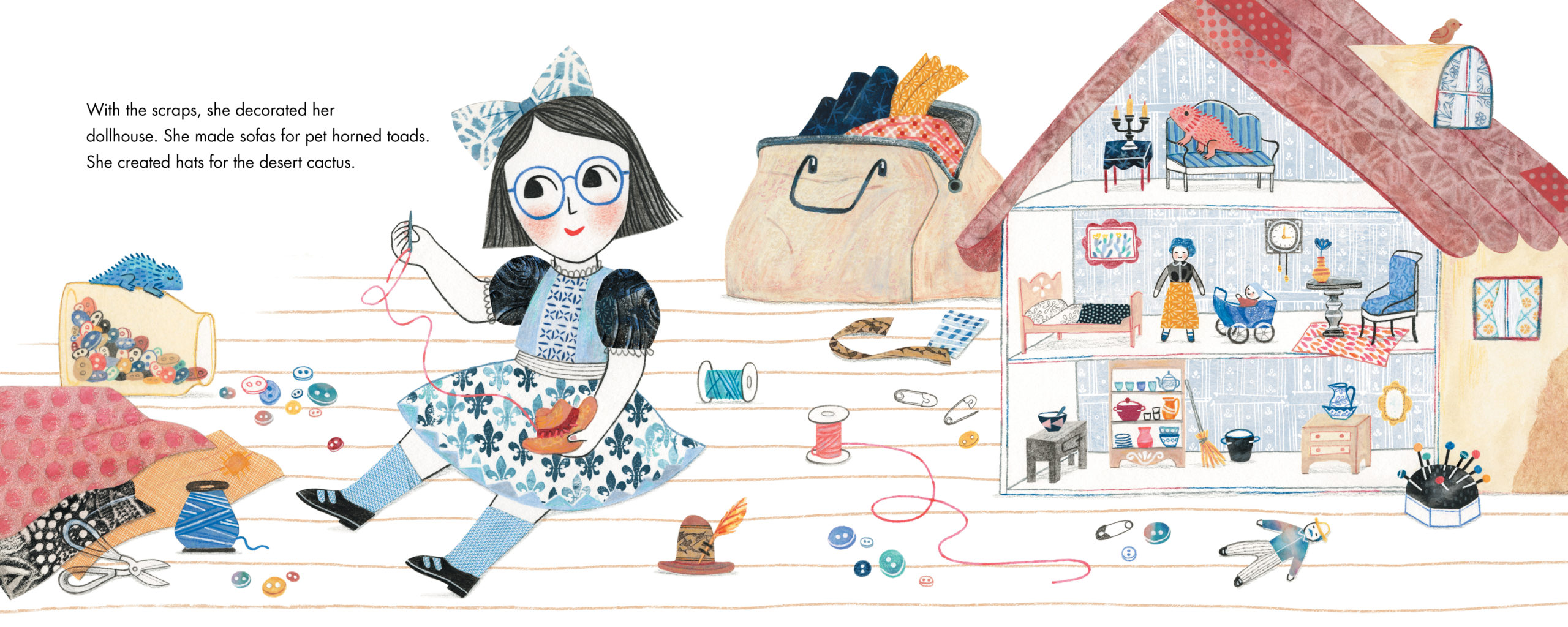
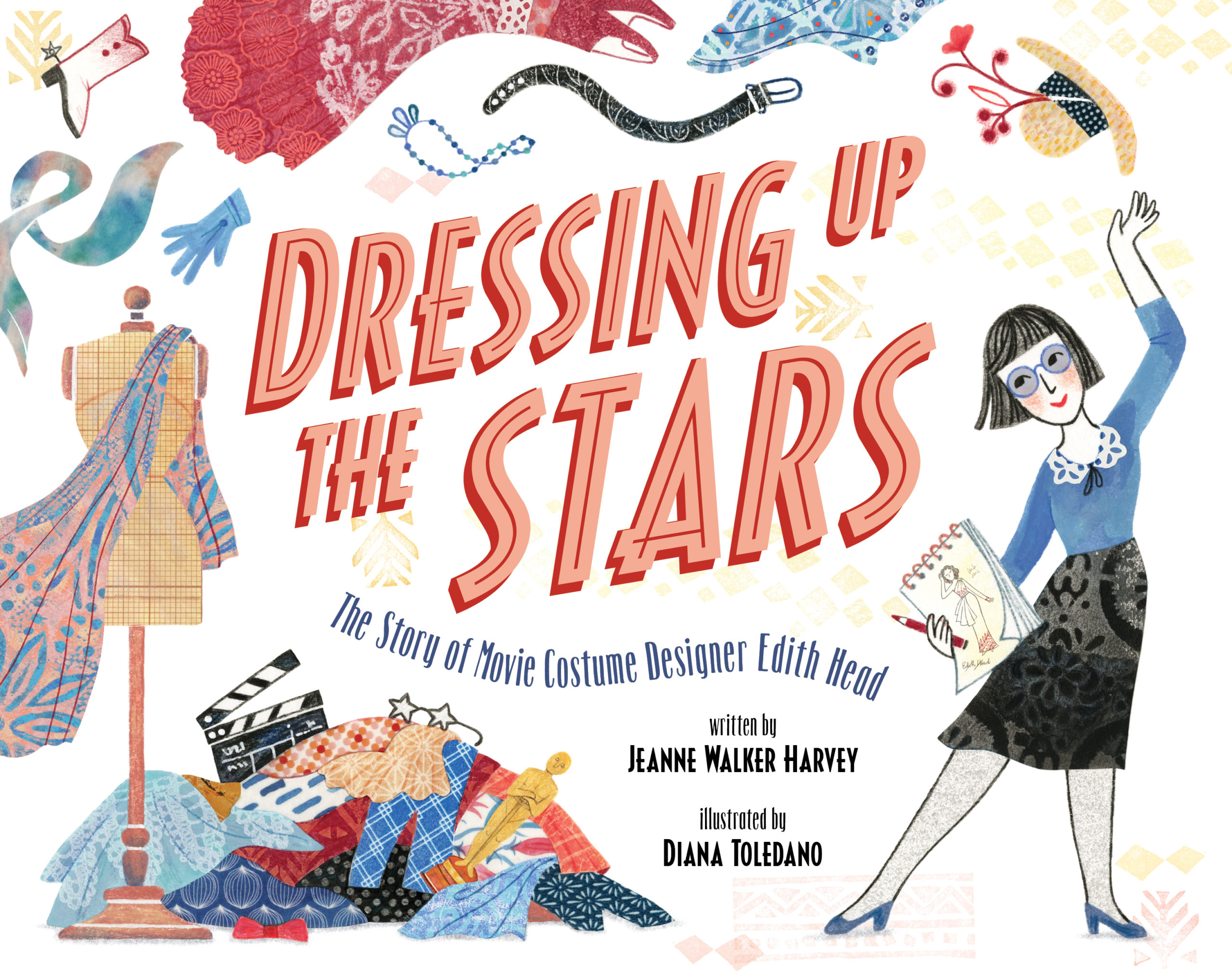
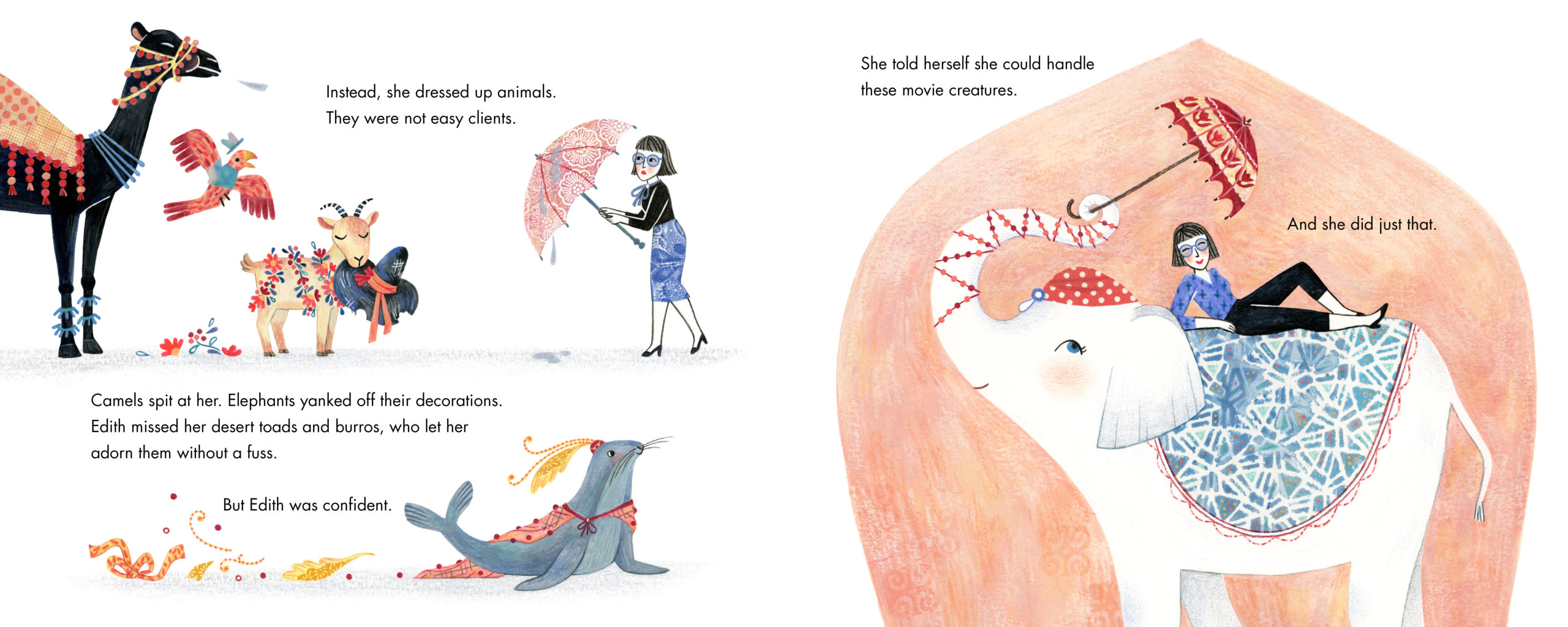
Dressing Up the Stars: The Story of Movie Costume Designer Edith Head by Jeanne Walker Harvey, Illustrated by Diana Toledano

Share

Dressing Up the Stars: The Story of Movie Costume Designer Edith Head
Author: Jeanne Walker Harvey
Illustrator: Diana Toledano
Published September 20th, 2022 by Beach Lane Books

Summary: Discover the true story of how a shy miner’s daughter became one of the most legendary costume designers in Hollywood in this inspiring nonfiction picture book biography.

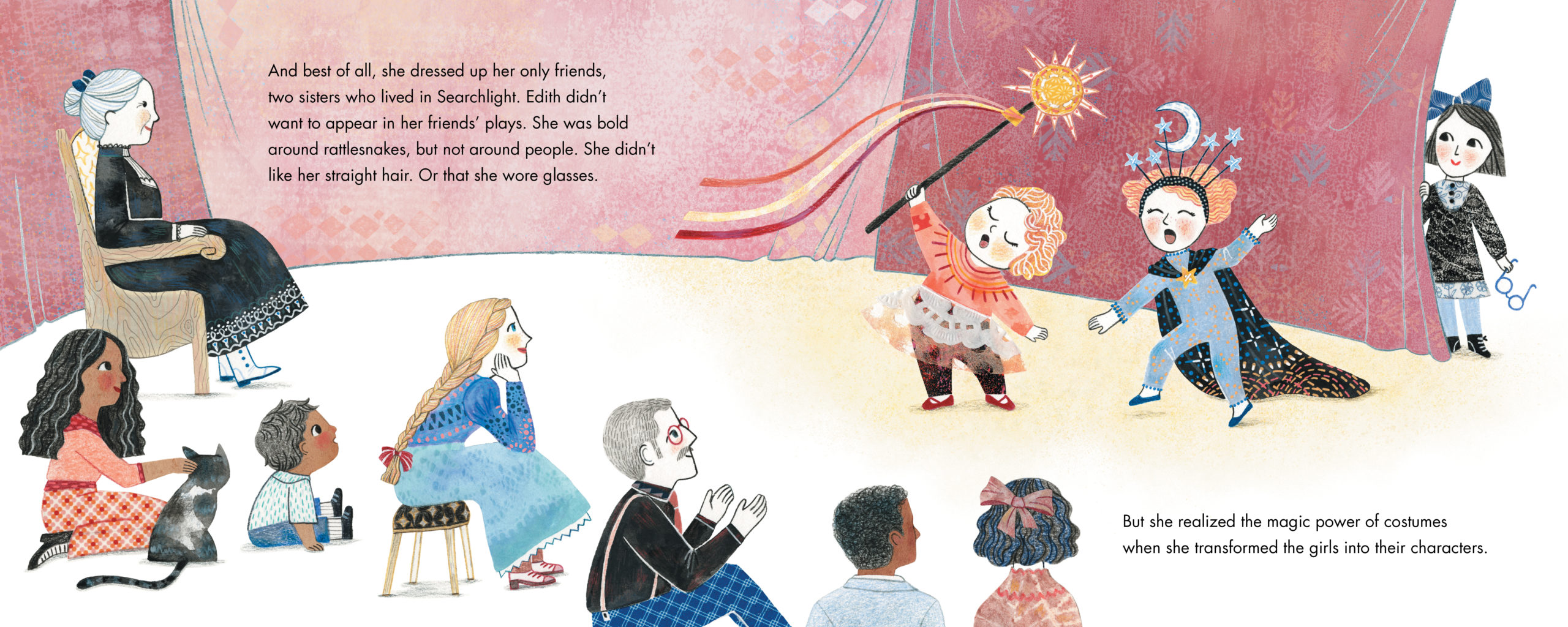
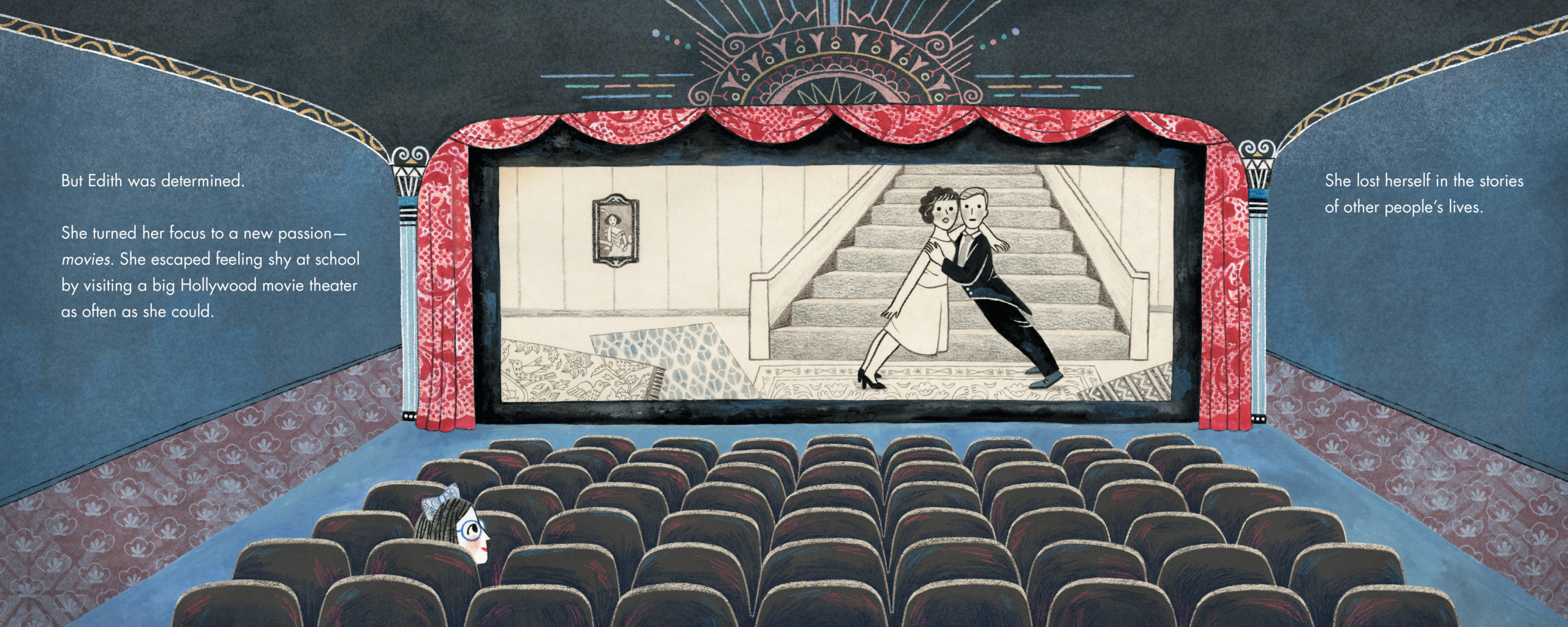
As a child in the small mining town of Searchlight, Nevada, Edith Head (1897 – 1981) had few friends and spent most of her time dressing up her toys and pets and even wild animals using fabric scraps. She always knew she wanted to move somewhere full of people and excitement. She set her sights on Hollywood and talked her way into a job sketching costumes for a movie studio.

Did she have formal training? Did she know how to draw or sew costumes? No. But that didn’t stop her!

Strong and determined, Edith taught herself how to sew and tirelessly worked her way up until she was dressing some of the biggest stars of the day. These included Audrey Hepburn, Grace Kelly, Ginger Rogers, and Elizabeth Taylor. She made costumes for films like Sabrina and Rear Window and TV shows like Bewitched. She also designed costumes for many of Alfred Hitchcock’s movies, including To Catch a ThiefNotorious, and The Trouble With Harry. She became the first woman to head a major Hollywood movie studio costume department and went on to win eight Academy Awards for best costume design—and she defined the style of an era.

By ultimately becoming one of Hollywood’s most sought-after designers, Edith Head proved that with tenacity, anything is possible. This insightful behind-the-scenes look at the iconic figure is a must-have for cinephiles, history buffs, and fashionistas alike.

FUN FACT! Edith served as the inspiration for the iconic character Edna Mode in the Pixar film The Incredibles! With her classic hairstyle and glasses, Edith will be recognizable as the inspiration for Edna to the observant reader.

Praise:

* “Together, the art and storytelling capture Head’s belief in the transformative magic of costumes, which will certainly strike a chord with dress-up enthusiasts.” — ALA Booklist (STARRED review)

“Toledano’s mixed-media artwork… combined with starry-eyed prose, the result is a glamorous life story with a Hollywood ending.” — Publishers Weekly

About the Creators: 

Jeanne Walker Harvey studied literature and psychology at Stanford University and has worn many job hats, ranging from being a roller coaster ride operator to an attorney, a middle school language arts teacher, and a long-time docent for school groups at the San Francisco Museum of Modern Art. She is the author of several books for young readers, including the picture book biographies Dressing up the Stars: The Story of Movie Costume Designer Edith HeadAblaze with Color: A Story of Painter Alma Thomas, and Maya Lin: Artist-Architect of Light and Lines. Jeanne lives in Northern California. Visit her online at JeanneHarvey.com.

Twitter: @JeanneWHarvey
Pinterest: @JeanneWalkerHarvey
Check out the many resources here at Jeanne Walker Harvey’s website!

Diana Toledano is an illustrator, writer, and educator. She is also a Pisces who loves children’s books, patterns, and dancing her heart out. Originally from Spain, Diana (pronounced the Spanish way: dee-ah-na) grew up in Madrid where she studied art history and illustration. Now she lives in San Francisco with her husband and two fluffy cats. Her mixed media art seeks to capture the magic of the ordinary. Diana’s product designs, picture books, board books, and chapter books have been published and sold all over the world. Diana also teaches workshops for kids and adults. She enjoys doing school visits and speaking at conferences. Learn more at Diana-Toledano.com.

Instagram: @dianatoledano
Facebook: Diana Toledano
Pinterest: Diana Toledano

Review: As a fan of old Hollywood, I recognized Edith Head’s costumes right away. I mean–Grace Kelly in Rear Window, Audrey Hepburn in Breakfast at Tiffany’s, Tippi Hedren in The Birds, Fred Astaire in Holiday Inn, Elvis Presley in Blue Hawaii–anyone?!? And this is just the tip of the iceberg of Head’s designing. She was nominated for an Academy Award THIRTY FIVE times and won EIGHT making her the most awarded woman in the Academy’s history. But yet, she was behind the scenes and not as well known as the actors in front of the camera, so I am so happy to have this picture book biography to bring to light her genius. A self-taught young woman with no experience fighting her way up to being an Oscar winner–yes, please! Harvey does a fantastic job of sharing Edith’s magic from her childhood dreams to her adult reality and Toledano’s illustrations work perfectly for Edith’s style and costumes.

Teachers’ Tools for Navigation: 

Check out the publisher-provided activity kit for some fun activities to do with the book:

Discussion Questions: 

  • What does Edith’s journey to her dream job teach you about growth mindset?
  • How did Edith’s hobbies as a child help her reach her dreams?
  • Why do you think Edith chose to wear black or other dark, neutral colors when dressing stars?
  • How does a costume designer impact a movie or show?
  • Why do you think Edith was given a second chance after she failed to create costumes for dancers dressed as candy?
  • How do you think Edith grew her confidence overtime so much that she was able to not allow nay-sayers to make her question herself?
  • What are some words in the book that you did not know? What do you think they mean based on context? Check your guess by looking ups its definition.
  • How does the Author’s Note at the end of the book add to the book experience?

Book Trailer: 

The trailer can also be viewed on the author’s website:
https://www.jeanneharvey.com/dressingupthe-stars

Flagged Passages: 

Read This If You Love: Nonfiction biography picture books, specifically about groundbreaking women, including Harvey’s books on Maya Lin and Alma Thomas

Recommended For: 

classroomlibrarybuttonsmall 

Signature

**Thank you to Alex at Simon & Schuster and Barbara at Blue Slip Media for providing a copy for review!**
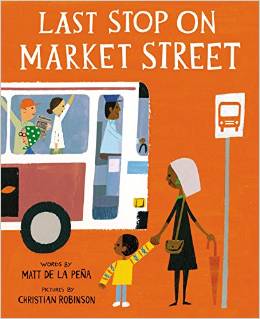
Guest Review: Last Stop on Market Street by Matt de la Peña, Illustrated by Christian Robinson

Share

Guest Reviewer: Amanda & Sendy, UCF Elementary Education Student

Last Stop on Market Street
Author: Matt de la Peña
Illustrator: Christian Robinson
Published January 8, 2015 by Penguin Books

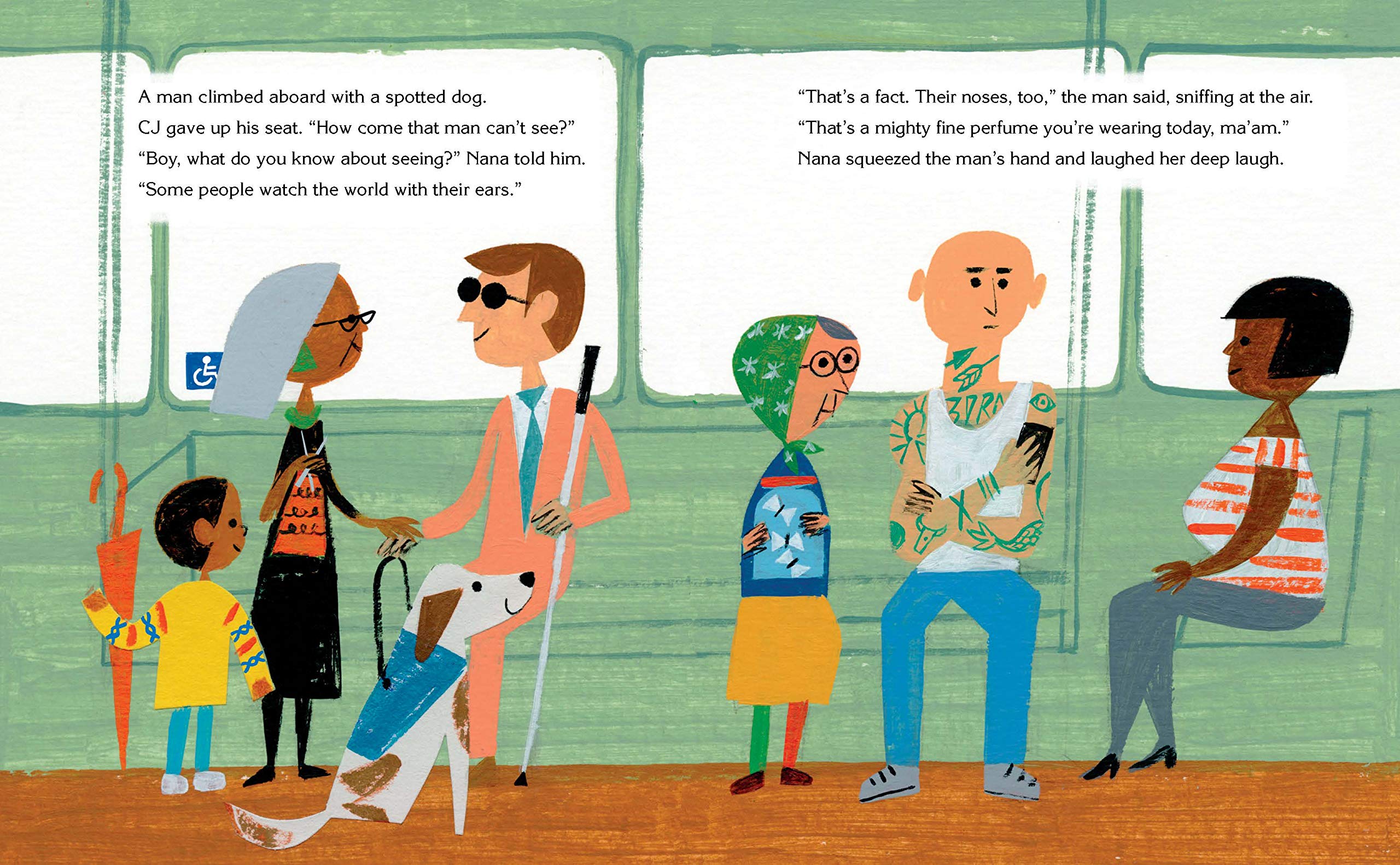
Summary: “Sometimes when you’re surrounded by dirt, CJ, you’re a better witness for what’s beautiful.”

CJ begins his weekly bus journey around the city with disappointment and dissatisfaction, wondering why he and his family can’t drive a car like his friends. Through energy and encouragement, CJ’s nana helps him see the beauty and fun in their routine.

This beautifully illustrated, emotive picture book explores urban life with honesty, interest, and gratitude.

Last Stop on Market Street is a story about appreciating differences, happiness, and inequity. CJ and his Nana take the bus to its last stop on Market Street every Sunday after Church. On the Sunday this book is set on, CJ begins to wonder why they must wait in the rain for the bus instead of buying a car. Nana enlightens him by giving him different ways of appreciating what they have, what they do in their everyday lives, and all the types of people they meet. The theme of the novel is Nana showing CJ the value in how they live their lives and helping those who need it.

Last Stop on Market Street has won multiple awards and spent time at the number one spot in the New York Times Bestseller List.

About the Author: Matt de la Peña is the #1 New York Times-bestselling. Newbery Medal-winning author of five picture books and six critically acclaimed young adult novels.  He was also awarded the NCTE Intellectual Freedom Award and received his MFA in creative writing from San Diego State University. He is currently living in Brooklyn, NY with his family.

About the Illustrator: Christian Robinson has received a Coretta Scott King Illustrator Honor for his art in Last Stop on Market Street. He was born in Hollywood, California. He was awarded a Caldecott Honor and the Newbery Medal

Review: Last Stop on Market Street is a stunning contribution to art in children’s literature and the future of book of storytelling. This novel reveals the creative potential of a powerful cross-cultural author-illustrator partnership. The art combined with the theme of the novel embraces the diversity in ourselves and everyday routine but others.

This book is such an amazing book! It is easy to see the bad that goes on in our lives, and things that we do not like, but this book is a great reminder to see the good in those situations that it is difficult to. I would recommend “The last stop on Market Street” to every teacher and parent to read to their children and/or have them read it themselves.

Throughout this book, a little boy named CJ had many questions. He did not like riding the bus or going to the soup kitchen after church and always questioned why he didn’t have certain things. Nana always had a clever response and see’s the brighter side to every situation. CJ learns this from her and begins to see it too allowing him to feel more confident and happier about his situations.

Just as adults need these reminders that your life is just as good as your mindset, it is good to instill it into our children as well. If they grow up feeling like they don’t have enough, it will transfer into adulthood. This is an amazing book that brings an amazing lesson to all ages. There’s beautiful in even the ugliest things

Teachers’ Tools for Navigation: This book is perfect to teach students about acceptance and the importance of helping others in need. As CJ ends his bus ride with his Nana, he goes to work at a soup kitchen which enables him to understand how he gives back to his community.

Also, it would be a great opportunity to use this book in the classroom during group reading, or even partner reading. This book would bring a great opportunity in a group setting because it will allow the students to have discussions. They will be able to discuss what they think about the book, how they feel about the main characters and have the opportunity to express the times that they have felt unhappy. This can now turn into a conversation of how they can see these situations in a better light next time. this will allow the students to sharpen up their critical thinking skills, learn how to have discussions and understand what is like to be open minded.

Since last stop on market Street is the street where the soup kitchen is, this book can also be read during history time to focus on the soup kitchen, how soup kitchens came about, the reasons for them and why people go to them

Discussion Questions: 

  • Who is telling the story? How do you know?
  • How and why does CJ’s mood change throughout the book?
  • How do CJ and Nana look at life differently?
  • Why do you think Nana volunteers? What does she gain?
  • How can you show more gratitude and optimism, like Nana?
  • What do we learn about the different settings from the illustrations?
  • where was CJ and his Nana coming from in the beginning of the story?
  • What animal their Nana used to describe the bus?
  • Who were the people that CJ was talking about on the bus?
  • What was the name of the bus driver?
  • What is on the last stop of Market Street that CJ and his Nana went to?
  • Why didn’t CJ like the last stop?
  • What did CJ see over the building at the end of the book?

Flagged Passages: 

Book Trailer: 

Recommended For: 

classroomlibrarybuttonsmall

Thank you, Amanda & Sendy, for your reviews!

The More You Give by Marcy Campbell, Illustrated by Francesca Sanna

Share

The More You Give
Author: Marcy Campbell
Illustrator: Francesca Sanna
Publishing December 28, 2021 by Chronicle

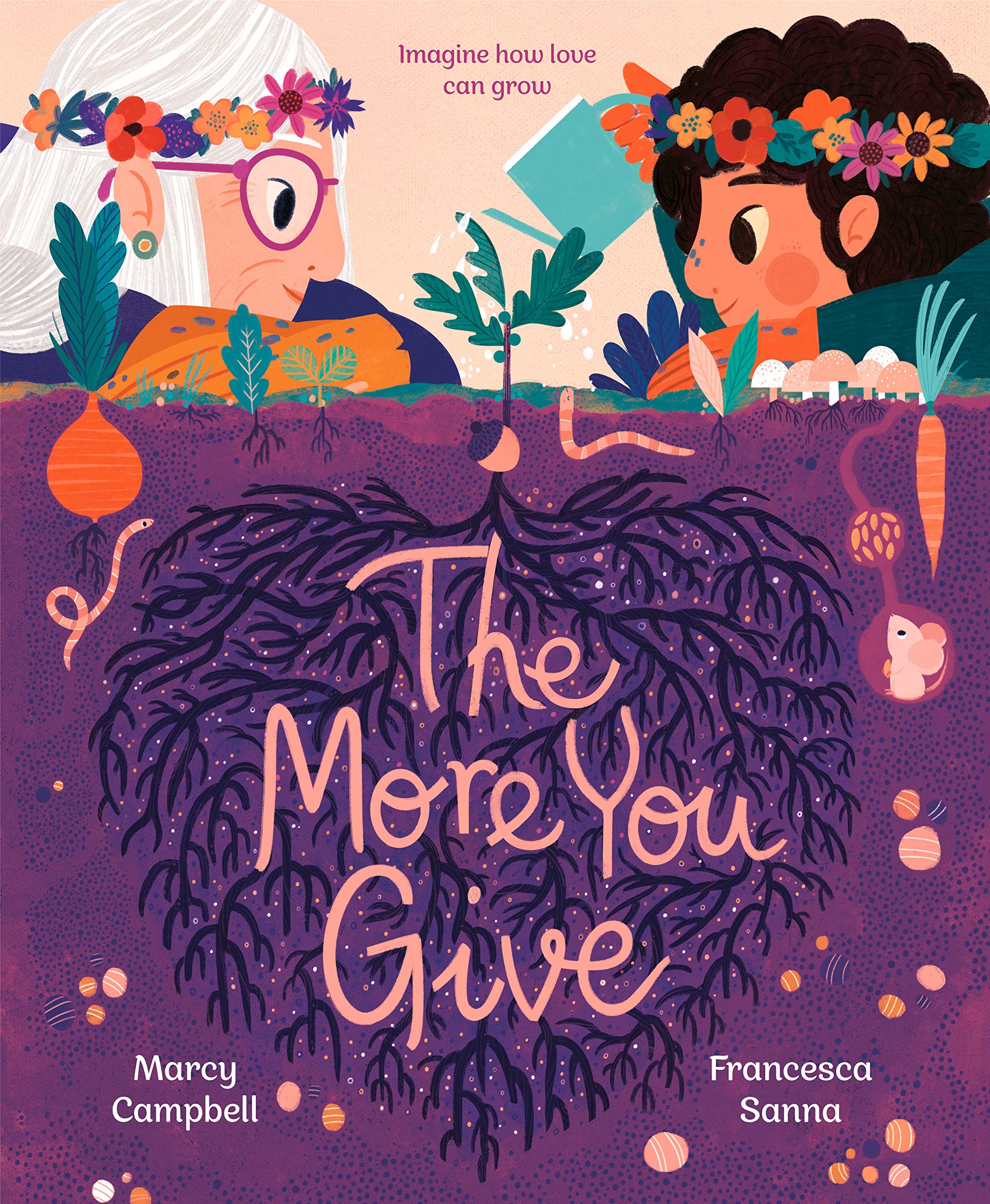
Summary: A modern-day response to The Giving Tree, this lyrical picturebook shows how a family passes down love from generation to generation, leaving a legacy of growing both trees and community.

Once there was a wide-open field, and a boy who loved his grandmother,
who loved him back.

The boy’s grandmother gives him many gifts, like hugs, and Sunday morning pancakes, and acorns with wild and woolly caps. And all her wisdom about how things grow. As the boy becomes a father, he gives his daughter bedtime stories his grandmother told him, and piggyback rides. He gives her acorns, and the wisdom he learned about how things grow. His daughter continues the chain, then passing down gifts of her own. Here is a picture book about the legacy of love that comes when we nurture living things—be they people or trees.

Ricki’s Review: This book is absolutely stunning. It captures the beautiful spirit of giving as it passes through generations. I found myself drawn into the text, captivated by the words and the powerful illustrations. I loved the ways in which the spirit of giving is captured across three generations. Overall, I love the way it captures kindness, wisdom, and love.

Teachers’ Tools for Navigation: Teachers might read The Giving Tree and then read this book. Students could engage in a discussion of giving. The two texts exist as foils for each other, and the giving does not just go one way.

Discussion Questions: 

  • How do we give? What do we give?
  • What does it mean to give?
  • What does giving mean for the boy in the book? His grandmother?
  • What have elders given to you?

Book Trailer:

Read This If You Love: Books about Giving; Books about Intergenerational Love; Books about Kindness

Recommended For: 

**Thank you to Cynthia at Random House Children’s Books for providing a copy for review!**
Haven Jacobs Saves the Planet by Barbara Dee

Share

Haven Jacobs Saves the Planet
Author: Barbara Dee
Published September 27th, 2022 by Aladdin

Summary: Twelve-year-old Haven Jacobs can’t stop thinking about the climate crisis. In fact, her anxiety about the state of the planet is starting to interfere with her schoolwork, her friendships, even her sleep. She can’t stop wondering why grownups aren’t even trying to solve the earth’s problem—and if there’s anything meaningful that she, as a seventh grader, can contribute.

When Haven’s social studies teacher urges her to find a specific, manageable way to make a difference to the planet, Haven focuses on the annual science class project at the local Belmont River, where her class will take samples of the water to analyze. Students have been doing the project for years, and her older brother tells her that his favorite part was studying and catching frogs.

But when Haven and her classmates get to the river, there’s no sign of frogs or other wildlife—but there is ample evidence of pollution. The only thing that’s changed by the river is the opening of Gemba, the new factory where Haven’s dad works. It doesn’t take much investigation before Haven is convinced Gemba is behind the slow pollution of the river.

She’s determined to expose Gemba and force them to clean up their act. But when it becomes clear taking action might put her dad’s job—and some friendships—in jeopardy, Haven must decide how far she’s willing to go.

About the Author: Barbara Dee is the author of twelve middle grade novels including Violets Are Blue, Haven Jacobs Saves the Planet, My Life in the Fish Tank, Maybe He Just Likes You, Everything I Know About You, Halfway Normal, and Star-Crossed. Her books have earned several starred reviews and have been named to many best-of lists, including The Washington Post’s Best Children’s Books, the ALA Notable Children’s Books, the ALA Rise: A Feminist Book Project List, the NCSS-CBC Notable Social Studies Trade Books for Young People, and the ALA Rainbow List Top Ten. Barbara lives with her family, including a naughty cat named Luna and a sweet rescue hound named Ripley, in Westchester County, New York.

Review: I’ve never read a book about eco-anxiety before, but I could definitely empathize with Haven Jacobs and her true anxiety over the state of our planet. I loved that the book gave tangible things that could be done in a community and also looks at global issues. Additionally, like all of Barbara Dee’s books, she does a great job balancing teaching (about science and climate change) and storytelling.

Teachers’ Tools for Navigation: The publisher-provided reading group guide also includes extension activities:

1. Choose one of the following and write an essay:

– How does Haven’s name reflect the major theme of the book?

– Revisit the chapter titled “The Scratch,” and the scene in which the author describes Haven’s room and talks about how her room shows readers who she is and what’s important to her. Then write a description of your own room, and ask a partner if they can identify what is most important to you.

– Using the quote attributed to Dr. Martin Luther King Jr. (“If I cannot do great things, I can do small things in a great way”), write an essay about what that means, giving specific examples from the book.

2. Haven’s heroine is a fictional Inuit teen climate activist named Kirima Ansong. Choose a real-life teen activist and write a report about them, the issue they support, and the actions they’ve taken.

3. The headline of the RiverFest story is “SEVENTH GRADER GRIPPED BY ECO-ANXIETY,” which nicely sums up the major theme of this book. How prevalent is eco-anxiety among the kids at your school? Create a survey and share it to discover the answer. Write a report sharing your findings.

4. Choose one of the following topics from the book to research and write a report about, using the facts shared in the book as a jumping-off point to learn more.

Discussion Questions:
(Chosen questions from the publisher-provided reading group guide; there are 16 questions on the guide)

1. Talk about how the two events that Haven relates in the book’s opening chapter illustrate two of the book’s major themes. What does the bouncy house incident show readers about Haven’s personality? Do you agree with Grandpa Aaron that “‘Haven’s a true problem solver’”? (Chapter: Sensitive) Do you consider yourself to be a problem solver?

2. Why does Haven decide to become a vegetarian? Do you understand and sympathize with her reaction when she goes fishing with Carter and her dad? Are you a vegetarian, or do you have friends who are? What are some other reasons that people make this choice? Talk about how vegetarianism connects with the issue of climate change.

3. Do you understand why Haven is so upset about climate change? How do you feel about her statement that “’no one cares about anything except what’s going on in their own lives’”? (Chapter: Dinner) Why do some of her friends think climate change is too depressing to talk about? Haven tells Lauren, the reporter, that all kids are worried about the issue. How do you and your friends feel?

4. Have you ever heard of eco-anxiety? What are some of the signs of eco-anxiety that Haven is experiencing? How might eco-anxiety feel different from other things kids are anxious about, like taking tests or giving oral reports? What are some actions Haven takes, or could take, to relieve this anxiety?

5. Ms. Packer says to Haven: “‘There’s a positive way to be upset, and another way that just makes you feel hopeless and depressed.’” (Chapter: The Blanks) Do you understand both options? Do you identify with one more than the other? What do you think when Haven says she feels that going to school is pointless, that there are more important things going on?

Flagged Passages: 

Read This If You Love: Learning or reading about climate change, science, and/or mental health

Recommended For: 

classroomlibrarybuttonsmall 

Signature

**Thank you to Casey at Media Masters Publicity for providing a copy for review!**
Guest Review: All Are Welcome by Alexandra Penfold, Illustrated by Suzanne Kaufman

Share

Guest Reviewer: Sharon, UCF Elementary Education Student

All Are Welcome
Author: Alexandra Penfold
Illustrator: Suzanne Kaufman
Published July 10th, 2018 by Bloomsbury Publishing

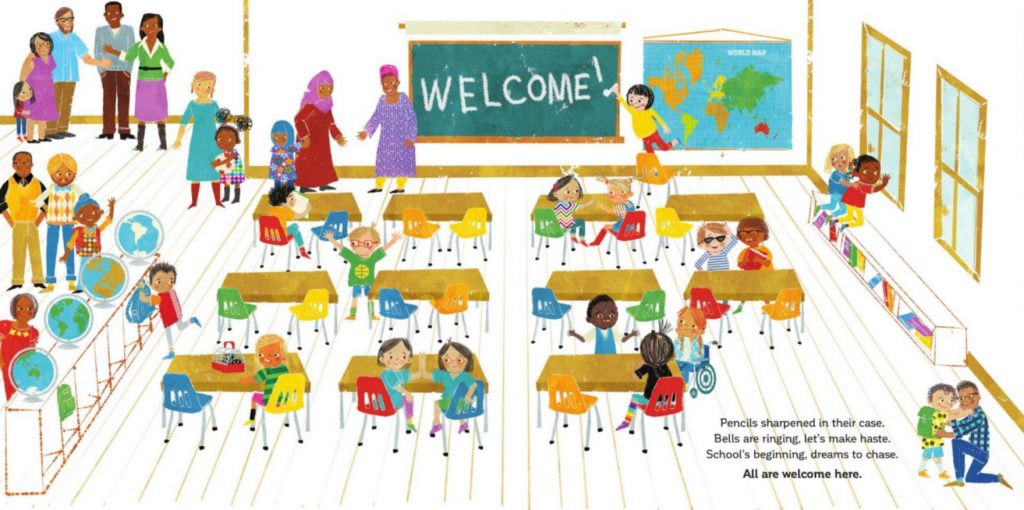
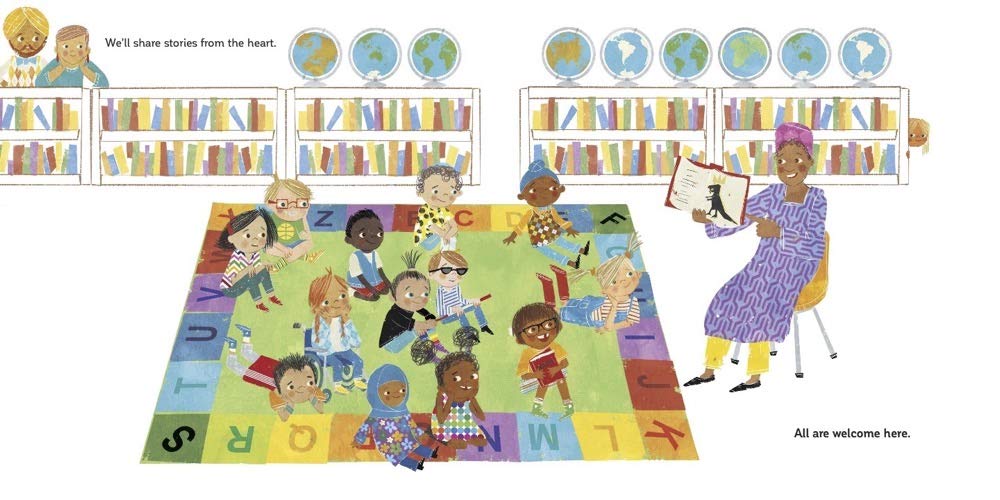
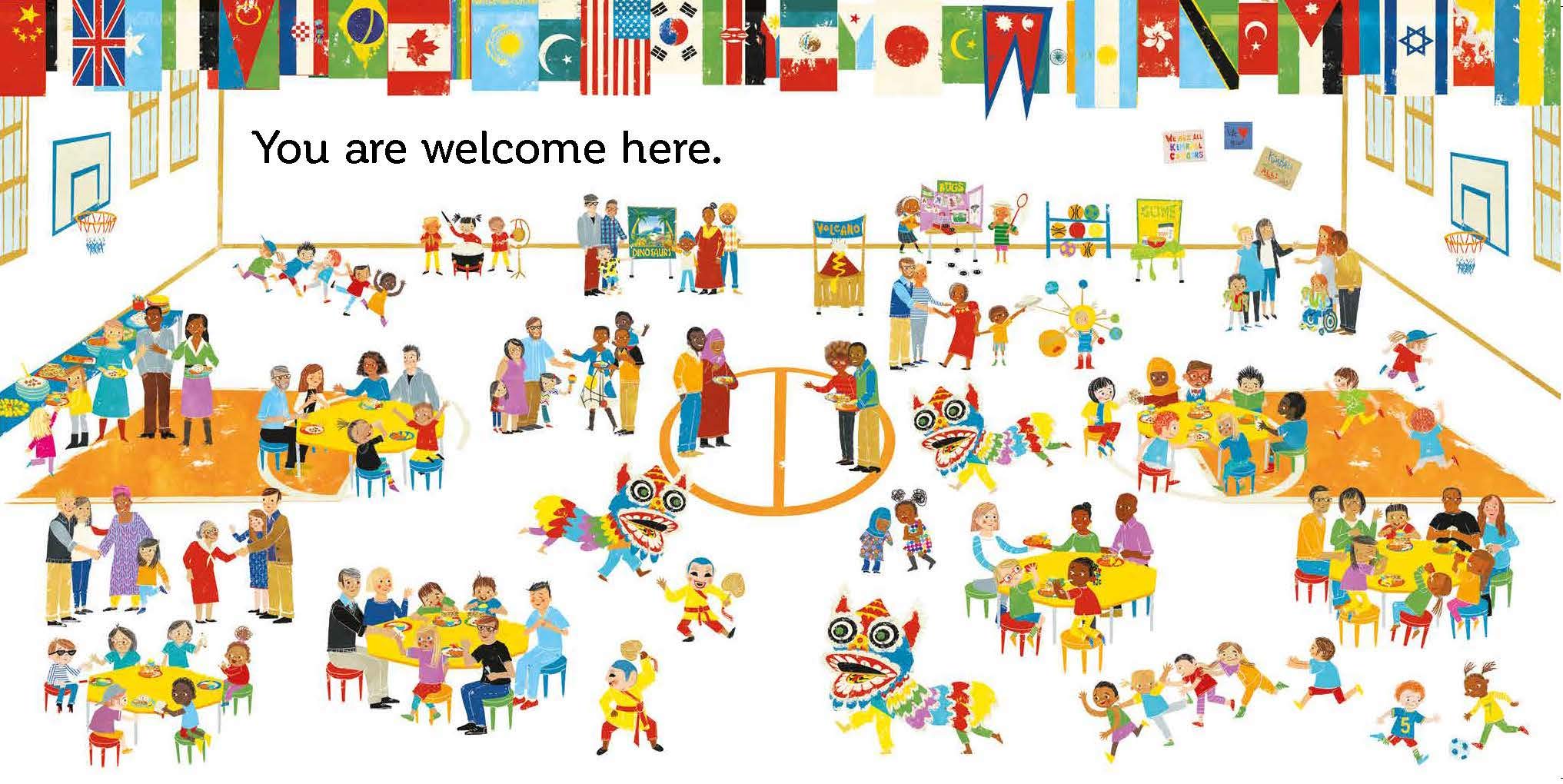
Summary: Follow a group of children through a day in their school, where everyone is welcomed with open arms. A school where kids in patkas, hijabs, and yamulkes play side-by-side with friends in baseball caps. A school where students grow and learn from each other’s traditions and the whole community gathers to celebrate the Lunar New Year.

All Are Welcome lets young children know that no matter what, they have a place, they have a space, they are welcome in their school.

About the Creators: 

A graduate of New York University’s Gallatin School of Individualized Study, Alexandra Penfold began her career in publishing as a children’s book publicist at Simon & Schuster where she worked on media campaigns that appeared in USA Today, Newsweek, US News and World Report, and NPR’s All Things Considered. For eight years she served as an editor at Paula Wiseman Books/Simon & Schuster working on award-winning books for young readers of all ages. She is currently a literary agent with Upstart Crow Literary representing children book authors and illustrators as well as select adult projects.

Suzanne Kaufman is the New York Times bestselling illustrator of All Are Welcome.  She is the recipient of The Ezra Jack Keats/Kerlan Memorial Fellowship, Society of Children’s Book Writers Illustrators Mentorship and Portfolio Honors and Bologna Children’s Book Fair. Her books have been awarded Bank Street College Education Best Children’s Books of the Year Honors, Notable Books for a Global Society, CCBC Choice Award, Washington State Best Picture Book Award, Mathical Honor Award, and Amazon Best Children Book of the Year.  Her books include her own book Confiscated and illustrated work: Big Feelings, Take Your Pets to School Day, 100 Bugs, Naughty Claudine Christmas, and Samanthasaurus Rex.  She has presented at SCBWI Summer Conference, NMAEYC Conference, Tucson Book Festival, Los Angeles Festival of Books and Penguin Random House Book Festival.

Review: This story was very inspiring, and I enjoyed reading it very much. This story resembles what I wish for my future classroom and school to be like. I think it is very important to teach acceptance to children at a very young age and to show them that not everyone looks the same or has the same traditions. This book teaches children that diversity is something good and a strength. This book will hopefully make students feel that no matter what they are welcomed and have a safe space in their school. There are a lot of illustrations and repetition that will help ELL students. This book shows flags of other countries and different types of people which I think will make ELL students feel welcomed at their new school. Students should find someone in the book they can relate to and feel special that they have someone like them in the story. This book emphasizes that no matter what you do at home with your family, what clothes you wear, where you come from, what foods you eat, or what traditions you have with your family, everyone is able to come together and be friends and play together at school. This message is so important and so strong. Children who learn about diversity early on will later become more understanding of their differences with others and will realize what a good thing it is to have diversity.

Teachers’ Tools for Navigation: This book could be used to talk about different countries and the types of traditions different people have around the world. Teacher’s can pause while reading the book and discuss different characters’ countries. This book also teaches the valuable lesson that everyone is welcomed and that acceptance of others is very important. This is a good book to read to teach the class about acceptance and in an underlying way it also prevents bullying. If students learn to be accepting of each other’s differences, that could stop a lot of the bullying that goes on in schools. Teachers can use this book to discuss how their community is similar and different to the one portrayed in the book. Students can also discuss how diversity makes a community better and why they think that. Teachers can also discuss with students times they have felt unwelcomed and what they could do to make others feel welcomed.

Discussion Questions: 

  • What makes the kids in the book remind you of yourself and your friends?
  • Based on what you have seen in the book, do you think having a diverse community like the one in the book is better? Why or why not?
  • If you could be a part of this classroom would you want to? Why or why not.
  • What are some things that the children in the book are doing that makes you think they are kind? Look close at the illustrations on each page. What are some kind things you could do to other students?
  • What is something you and your family do that you think is unique? Explain what it is that you do and why it is unique.
  • What do you think is happening in the cover illustration of the book?

Flagged Passages: 

Read This If You Love: Inclusion and diversity

Recommended For: 

classroomlibrarybuttonsmall

Thank you, Sharon, for your review!