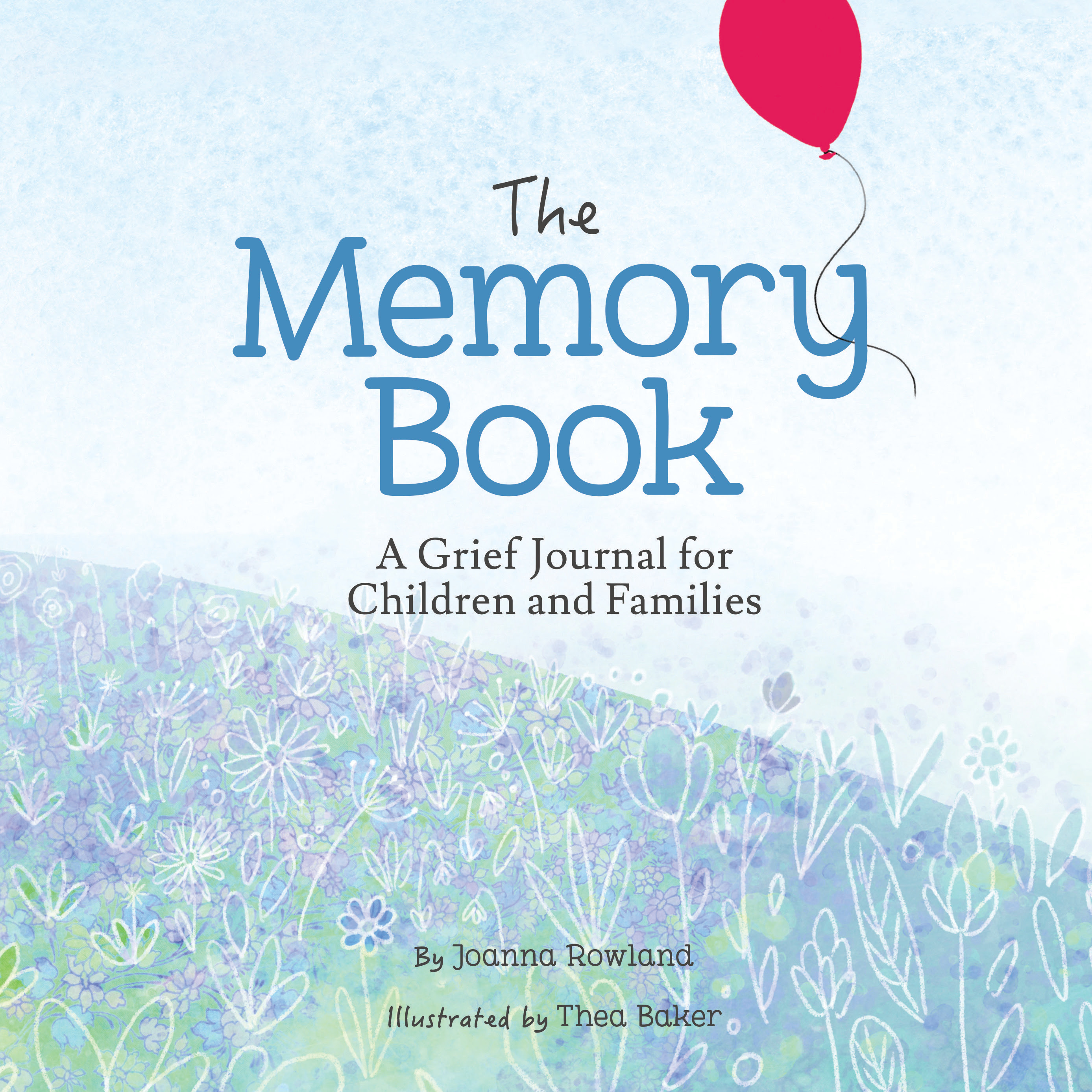
The Memory Book: A Grief Journal for Children and Families
Author: Joanna Rowland; Illustrator: Thea Baker
Published: January 14, 2020 by Beaming Books
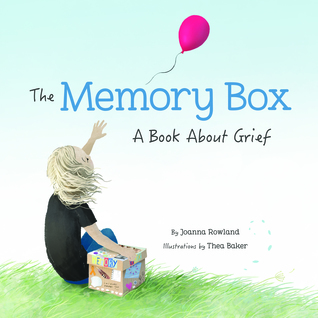
You might recognize the book which inspired this journal, The Memory Box: A Book AboutGrief:
The child in the book generates a box of mementoes of a loved one she lost. It’s a magnificent book that encourages children to generate boxes of mementoes of their own loved ones. We recommend it highly–particularly for children who are experiencing loss. This book inspired the grief journal, The Memory Book.
Goodreads Summary of The Memory Book: I will always remember you . . .Joanna Rowland’s best-selling The Memory Box: A Book about Grief has helped thousands of children and families work through the complex emotions that arise after the loss of a loved one. Now, with The Memory Book, Rowland has created a beautiful grief journal to help readers put her methods into practice. The Memory Book helps grieving families process their emotions together by remembering their lost loved one and creating their own memory album full of photos and keepsakes of the person they lost. With gentle prompts and ideas for journaling, drawing, and talking through grief, this journal will bring comfort in the midst of loss and be a keepsake for families for years to come.
Rowland discusses the process of writing The Memory Box:
“In writing The Memory Box, a book about grief, there were three people and their families that I was thinking about. In 2014, a relative that was meant to get my first published book Always Mom, Forever Dad (a positive picture book on divorce) lost her father suddenly a month before the book’s publication. I knew she needed a different type of book, and that’s when I knew I needed to write a picture book on grief. When I first found out her dad had passed away, I saw a photo of her holding her dad’s hand on the beach with the waves coming toward them. That image stayed with me. I knew somehow that I wanted to make a nod toward that scene in my writing. At the time, I had no idea what that story was going to be. I tried a couple of different ways to write about grief. My first attempt was a nature poem. But when thinking about how I would help a young child through grief, eventually the idea of a memory box came.
I was also thinking about my childhood friend, Scott, who was also gone too soon. He studied birds and had such a sweet soul. I have some sweet memories growing up with him. He’ll always hold a special place in my heart.
During the two years I spent writing about grief, we lost Marisa to cancer. I had coached her in synchronized swimming for years, and she swam with my niece and older daughters. It was heartbreaking. Marisa was so full of life with the most contagious smile.
All of these people were gone much too soon. These families had lost a father, a son, an only child, a daughter and a sister.
I had to get this story right. I think going through grief and taking my youngest to her first funeral at age six, helped me find a way to talk about death with my youngest and find the heart of the story. It still took me over two years to get the story right.
Grief is hard. Everyone has his or her journey with it. Allow yourself to grieve however you need to. There is no right or wrong way. There are support groups out there and other resources to help. Grief can be hard to communicate. I hope The Memory Box can be a tool to foster conversations and help keep the memories of your loved ones alive. The book also includes a guide in back that discusses ways to talk to your child about grief.
For anyone struggling with grief, my thoughts are with you.”
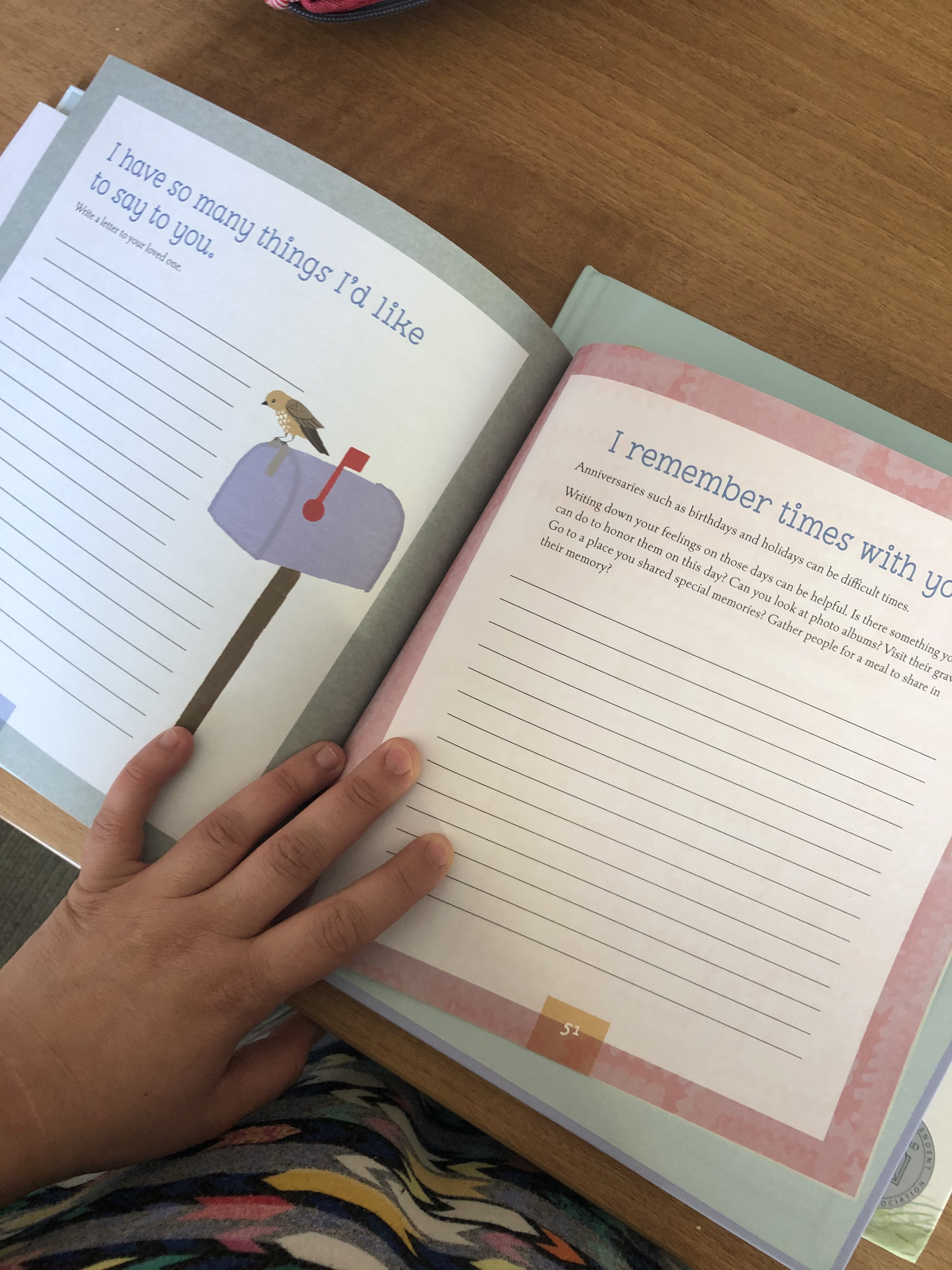
Ricki’s Review:I often see posts on parent forums in which folks are requesting books about grief. There are some amazing books out there, particularly Rowland’s bestselling picture book The Memory Box. Yet I have never seen a journal about this topic. I was intrigued and really looking forward to reviewing it. When I cracked the cover, it took my breath away. The pages are stunning, and the prompts are incredibly thoughtful. This book is one that I will recommend again and again to parents/teachers who are seeking to talk about grief with children. It allows children to negotiate with the many emotions that come with grief and celebrate the people they are grieving. I am so grateful that this book exists in the world.
Kellee’s Review: My son suffered a huge amount of loss this last summer: 3 pets (ours and my in-law’s who we live next door to) and his grandfather, my father-in-law. As a mom, I was lost at how to help him through this time, mostly as I was figuring out how to navigate the grief as well. In the end, Trent has done extremely well emotionally for the tough time we went through! However, he definitely still talks often about his lost loved ones, so when I saw this book, I knew it was one that I would want to share with him because I truly believe that the best way to deal with loss is to talk about it. The Memory Box and The Memory Book are perfect jumping off points for discussing memories of lost loved ones with kids. It is a healthy way to navigate such a tough time! I am thankful books like this exist to help their kids when loss impacts their lives.
Teachers’ Tools for Navigation: Last semester, I (Ricki) asked my students (teacher educators) to describe a moment in their schooling in which they thought their teachers were wrong. One student shared that she was still deeply impacted by the death of a student during her middle school year. She said the teachers never spoke about the student’s death, which made it harder. This book offers thoughtful prompts that teachers can use in their classrooms (and that parents can use with their children).
Discussion Questions: Which prompts do you find most inspiring? Why?; Which prompts were harder to write? Why?; How did you feel as you wrote about your loved one?
Check Out the Beautiful Pages:
Read This If You Loved: The Memory Box: A Book about Grief by Joanna Rowland; The Remember Balloons by Jessie Oliveros; What a Beautiful Morning by Arthur A. Levine; Forget Me Not by Nancy Van Laan; Still My Grandma by Veronique Van Den Abeele, Really and Truly by Emilie Rivard; Wilfrid Gordon McDonald Partridge by Mem Fox; What’s Happening to Grandpa? by Maria Shriver
Recommended For:
and
**Thank you to Casey at Media Masters Publicity for providing copies of the books for review!**
If you are anything like us right now, you are quietly panicking a bit. Our young children (three, in Ricki’s case) are home for quite a while, and they cannot go to public places. This is different from the summer because…they cannot go to public places. Our parenting strategy is always to keep them busy. Our kids thrive on trips to the playground, visiting museums, play dates, etc. When we keep ourselves busy, everyone does well.
We know that online learning content offers a lot for kids. We did some hunting, and we found some screen-time options that offer great educational content. Luckily for us all, there are many generous people and companies offering educational opportunities for our kids. We’re sharing the list below and invite you to share other options! Something we are trying to remember—this will hopefully be a short time period. We all hope this passes quickly. In the meantime, we are all going to do the best that we can. Solidarity with the parents and guardians out there. <3 BE WELL!
There are some incredible authors who are doing LIVE (yes, LIVE!) readings and doodle alongs of their books. We are, quite frankly, blown away and in awe of these authors. Ricki’s and Kellee’s children are loving so many of these! Here’s amazing opportunities (some available for a limited time) for our children/students as we move to digital/distance learning:
Read Alouds
Mac Barnett, author of EXTRA YARN, SAM AND DAVID DIG A HOLE, THE TERRIBLE TWO, Shapes Series; THE TERRIBLE TWO, and so many more!
Mac is reading is books in order of publication, and he has over 40 books. We will be watching him every single day! He’s quite entertaining! Follow him on Instagram* to watch live at 12pm PST or watch the video within 24 hours! He recommends that kids wear a hat, and he answers questions at the end.
Starting 3/28, Mac Barnett switched to read alouds on Monday through Friday with a Live Cartoon on Saturdays.
Starting 4/2, Mac Barnett moved to using IGTV which means the read alouds do not expire at 24 hours! And he is going back to reread all of the books that expired on IG Live.
Starting 6/1, Mac Barnett is moving to once a week Book Show Club Book Show meetings on Saturdays.
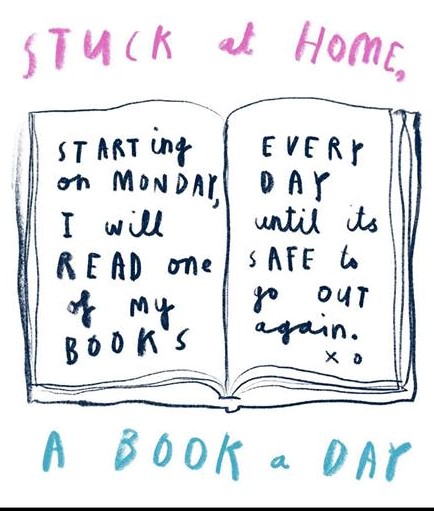
Oliver Jeffers, author of STUCK, LOST AND FOUND, The Boy Series, THE INCREDIBLE BOOK EATING BOY, ONCE UPON AN ALPHABET, HERE WE ARE, and so many more!
At 2pm EST and 11am PST starting on Monday, Oliver Jeffers will read one of his books every weekday on Instagram* Live and talk about “some of the things that went into making it.” He talks about what he was thinking when he made each book, which is really neat to learn. He is archiving the videos on his website.
As of 4/29, Oliver Jeffers finished reading all of his books and is no longer doing Stuck at Home Book Club; however, they all are available on his website.
Kate Messner, author of the Over and Under Series, Ranger in Time Series, HOW TO READ A STORY, and so many more!
She has also gotten permission from her publisher to do read alouds on her You Tube Channel! Including the upcoming OVER AND UNDER THE RAINFOREST which doesn’t come out until August!
More read alouds available:
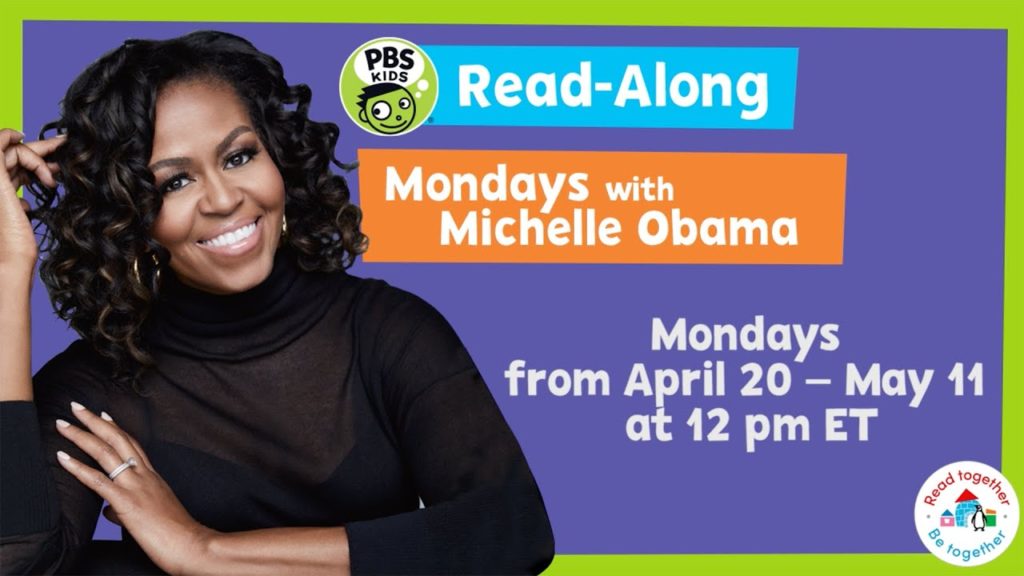
From April 20th to May 11th, PBS & Penguin Random House have collaborated to bring storytime with Michelle Obama. Families can tune in to the livestream on PBS Kids’ Facebook page and YouTube channel, or the Penguin Random House Facebook page.
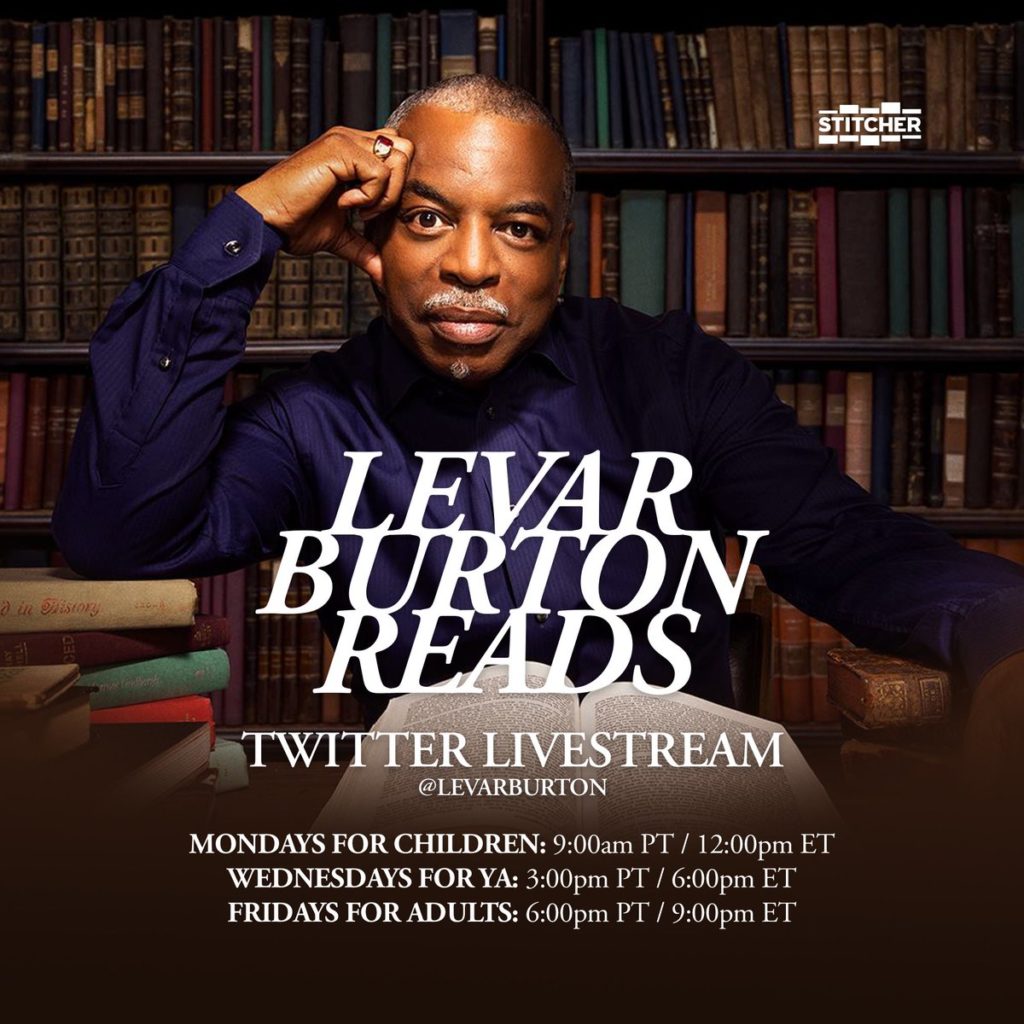
Levar Burton is back to reading stories to us, and he is reading for everyone on his Twitter Livestream!
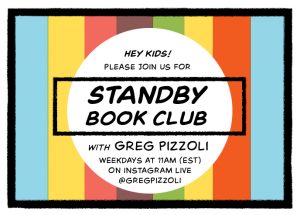
Greg Pizzoli is hosting the Standby Book Club on weekdays at 11am ET on Instagram* Live. (After 4/21, he will be moving to weekly Monday meetings at 11am ET.)
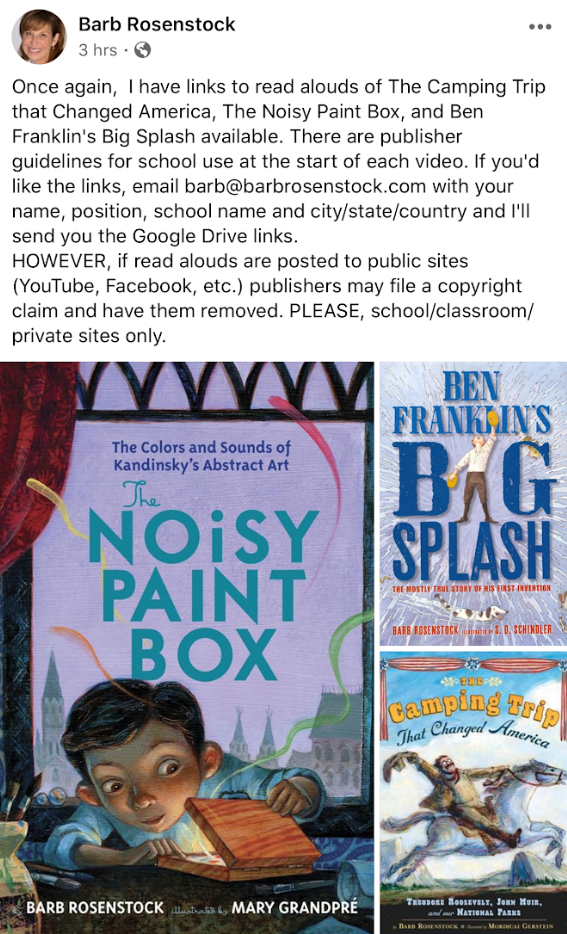
Barb Rosenstock is offering to share read alouds to some of her picture books. Please see the image above for guidelines.
Josh Funk has announced that on his Facebook he will be doing read louds there and on his Instagram.
On her You Tube channel, Laurel Snyder read aloud her newest Charlie and Mouse book and included an activity at the end. When finished, she is also reading from her picture books.
Josh Gad is reading books on his Twitter and Instagram* accounts.
The Atlantic White Shark Conservancy is going to do Shark Story Hour every day this week at 10am on Facebook Live! Available to watch later in the day as well! (Moved to about once weekly starting in May.)
Storyline Online has videos of celebrities reading their favorite picture books.
From April 2nd to June 4th, Dolly Parton is reading books from her Imagination Library during Goodnight with Dolly on Thursdays at 9pm on her Facebook.
Daisey Ridleyread BB-8 on the Run by Drew Daywalt on the Disney You Tube channel.
On Facebook and You Tube, Neal Shusterman is going to do a Storyman Virtual Reading Series reading some of his less well-known short stories. He’ll be posting two or three times a week.
At-Home with Kwame Alexander includes many videos including a reading of Crossover that has been added during the quarantine.
Dav Pilkey is joining in! He’s read from Dog Man and done some drawing on You Tube during Dav Pilkey at Home.
Audio Book Sync is back! SYNC is a free summer audiobook program for teens 13+. Returning April 30th and continuing 13 weeks until July 29, SYNC gives participants two thematically paired audiobooks a week.
Dan Santat has created the SANTAT ONLINE SURVIVAL SCHOOL FOR THE PANDEMIC #DANDEMIC! He’ll be sharing lessons on Instagram, and all lessons are available in a Drop Box as well.
Penguin Random House Audio is offering a collection of free audiobook downloads for teachers and parents with kids home from school – or anyone looking for a great story right now. The free “Listen at Home” collection of classic titles is accessible via Penguin Random House Audio’s Volumes app (through 4/30).
Time for Kids has released their entire Digital Library free for the rest of the school year.
Also, amazing news: Kid Lit Authors are joining together and organizing a virtual book festival for May called Everywhere Book Fest which is archived and available.
Follow #CandlewickClassroom on social media to see videos including #WriteWithKate, weekly writing prompts and tips from Kate DiCamillo, from Kate DiCamillo. Candlewick is also hosting Instagram Live events, including My First Book Club Live with Shannon and Dean Hale talking about Princess in Black. Also, they have a You Tube playlist called Stay Home with Candlewick Press which have short and fun educational videos.
Candlewick Press also created a book about the coronavirus for children and are offering it as a free download.
#OneBookConnects is a part of Read to Them, a non-profit organization that focuses on family literacy, and is an “opportunity for families and schools to read the same book together digitally.”
And don’t forget publishers always have amazing educator guides for us to use!
**Please note: This is just a small sampling of all of the amazing publisher resources out there!
Doodle Alongs
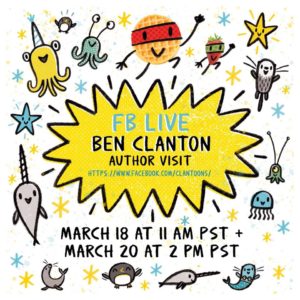
Ben Clanton, Author of the Narwhal and Jelly Book Series, BOO WHO?, and so many more!
Ben Clanton will be reading and drawing Tuesday and Friday this week. Our kids are very excited for this one.
Note: Now that these FB Live events have passed, Ben is moving to Instagram* Live each Monday at 12:30pm ET.
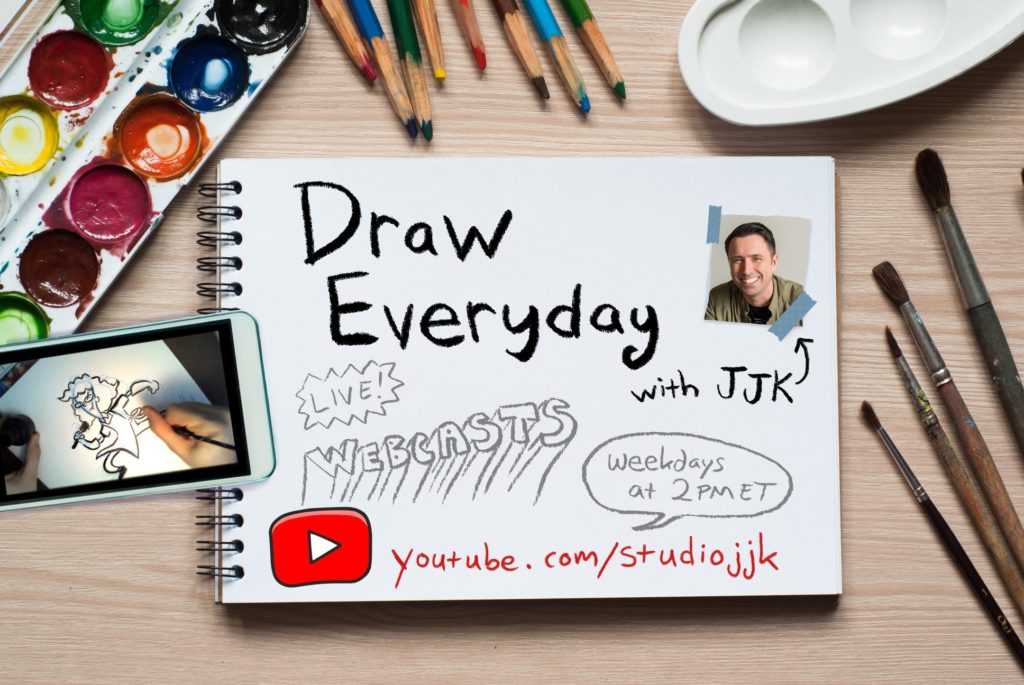
Jarrett J. Krosoczka, author of the Lunch Lady Series, HEY KIDDO!, and so many more!
At 2pm ET, Jarrett will be doing a live webcast! And since it is on his You Tube channel, if you cannot watch live, they will be archived. We cannot wait to see what Jarrett will teach us to draw!
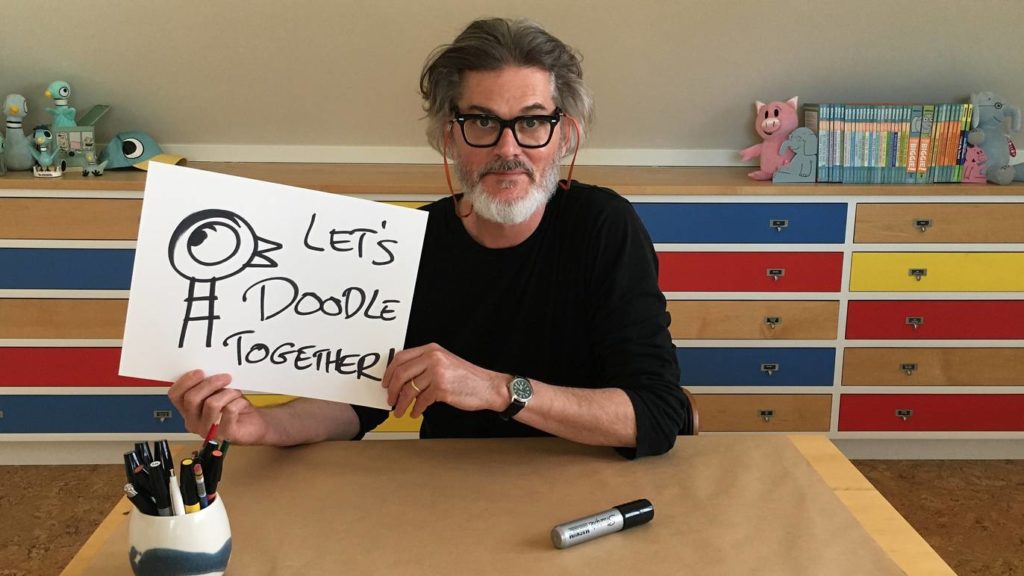
Mo Willems, author of the Elephant & Piggie Series, Pigeon Series, Knuffle Bunny Trilogy, and so many more!
Mo Willems is hosting a lunch doodle each day at 1pm ET. “Learners worldwide can draw, doodle and explore new ways of writing by visiting Mo’s studio virtually once a day for the next few weeks. Grab some paper and pencils, pens, or crayons and join Mo to explore ways of writing and making together.” Lunch Doodles with Mo ran for 3 weeks and ended on April 3rd.
During the month of May, Mo hosted Thank-O-Rama each Thursday in May at 1pm ET.
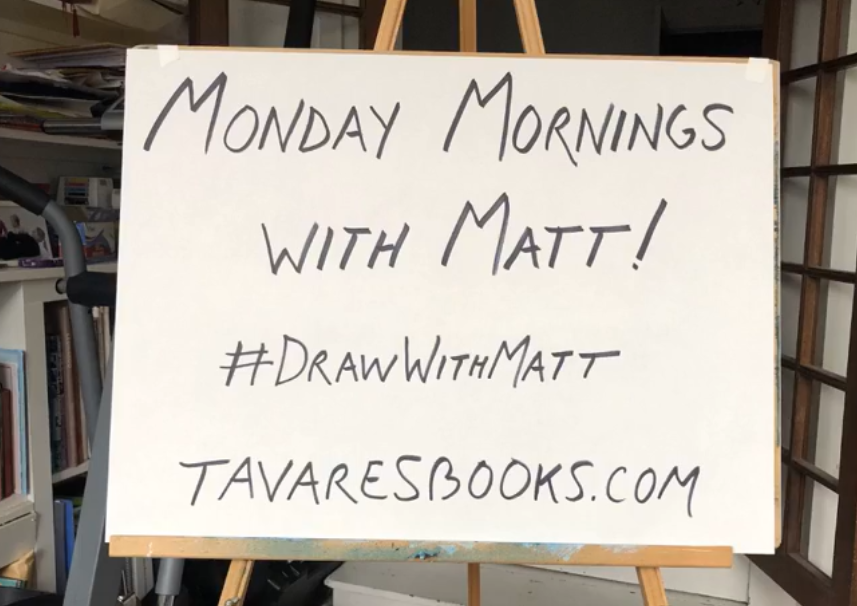
Matt Tavares, author of Red & Lulu, Crossing Niagra, and so many more!
Matt Tavares, on his Facebook page live at 10am ET, is hosting Monday Mornings with Matt! The videos are saved on his page to view later.
More Art-Focused Activities
On his You Tube, Nathan Hale is doing an Adventure Comic activity called Cooped Up Comics and other fun activites!
These coloring pages from some of our favorite illustrators.
And many museums are stepping up on their blogs and websites to give us activities and resources to help with quarantine distance learning. For example, the Inside LSU MOA (LSU Museum of Art) blog has art activities and stories in art activity.
The Knock Knock Children’s Museum has started a Knock Knock at Your Door series to continue their objective even while closed.
Art Time Today with retired Elementary Art Teacher and Arts Ed Professor (and my Art in Elementary teacher at UCF!) Cheryl Smith includes lessons for all ages of kids!
Mark Siegel and the 5 Worlds team has released a free sample of their coloring book for the book series.
Visit the Cincinnati Zoo at 3pm ET/1pm MST Live where they highlight an animal each day on Facebook Live and include an activity to do. (Available to watch later in the day, as well).
Find a science-related video at Mystery Science! (Free memberships with some content available).
Kiwi Co., a company that has STEM focused monthly subscription boxes, is now updating their At-Home Resources for Kids (and their grownups) daily to help with STEM activities while schools are closed.
Oceans Initiative, whale experts from Seattle, have shared a free, virtual marine biology camp to entertain and inform kids while schools are closed.
Little Passports, a company that has social studies focused monthly subscription boxes, has opened up their activities for fun learning at home to all.
Scholastic has rolled out FREE! Learn At Home lessons that are very easy to follow Scholastic lesson plans (book, video, discussion questions)! They also shared that more will be coming.
PBS Learning Media has curated standards-aligned videos, interactives, lesson plans, and more for educators, and PBS Digital Studios has a ton of content in many different content areas.
Other Fantastic Learning Explorations
Our friend Jenny Seiler has put together an Edu Resources Padlet with lots of resources as well–it is separated by type of experience and is continuously being added to!
Join Miss Megan’s Camp Kindergarten for Morning Meeting (ages 3-7)! Videos are posted to the website and can be accessed whenever you are eating breakfast!
Join Mr. Jon and Friends weekday mornings live for musical fun at 10:30am EST/ 7:30am MST (or watch later on the page).
There is this great list of 150+Enrichment Activities for children while their parents work remotely.
Zoom is being kind and allowing their service for free! Zoom will easily allow anyone to have face to face meetings. And a kind educator created a document for instructions for students/kids.
Disney and Kennedy Space Center are offering free online activities, such as Facebook Live events and imagineering in a box, for kids during school closures.
Washington Teachers’ Union has createdLessons on TV where each day of the week will feature a 30-minute lesson for a particular grade group. (Mondays – Early Childhood 1st Grade; Tuesdays – 2nd & 3rd Grade; Wednesdays – 4th & 5th Grade; Thursdays – Middle Grades; and Fridays – High School)
John Krasinski is hosting Some Good News on You Tube. Not exactly education-focused, but it is good for life in general.
* Please note: Instagram Live recordings can be watched for 24 hours after the recording before they expire, and they have to be watched from your phone.
What are some ideas that you’ve found? Share them in the comments! We are in this together. <3
Please note: This post was updated by us often from its publication until May 31st, 2020. After 5/31, the links and information may not be as accurate.
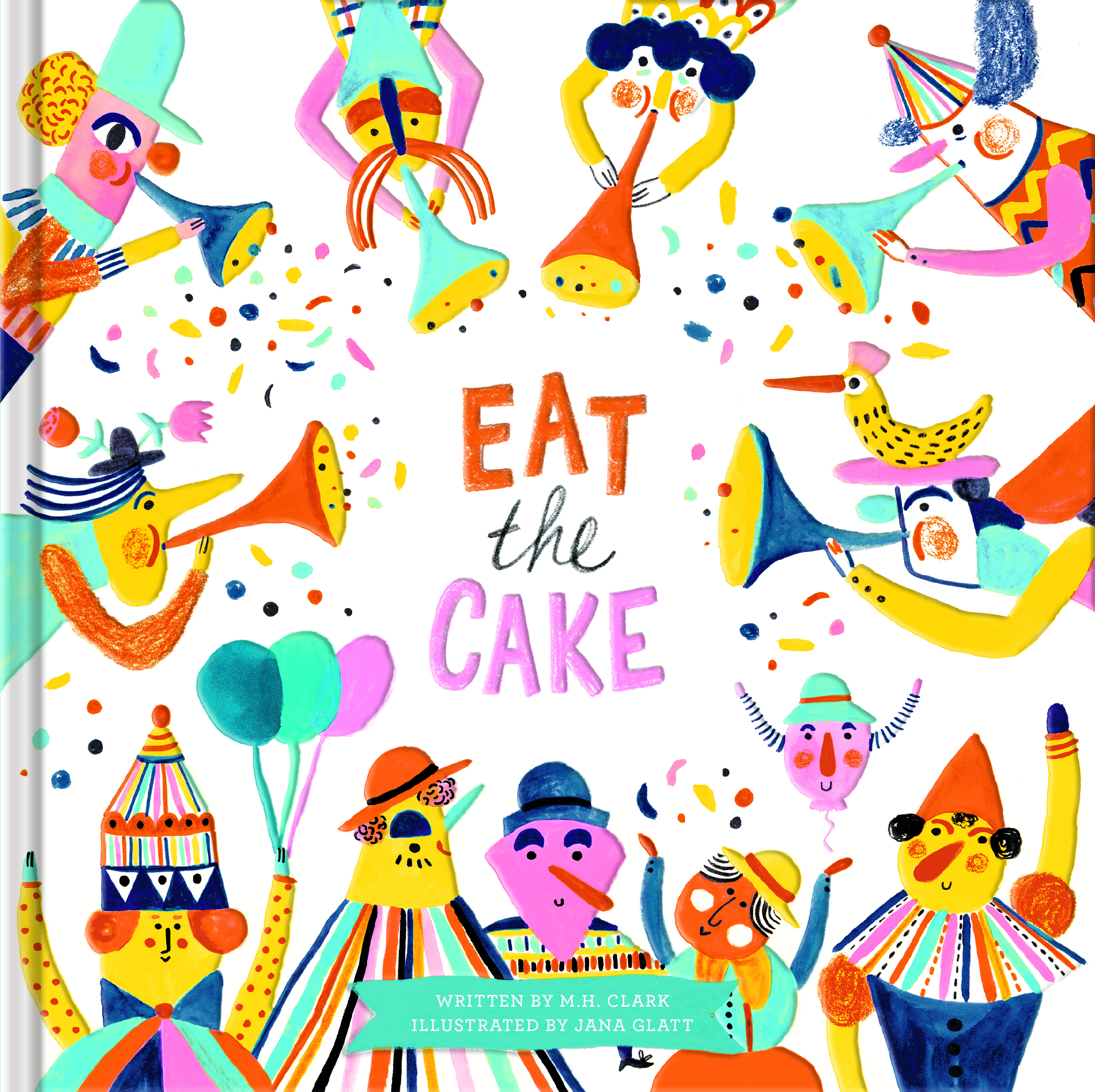
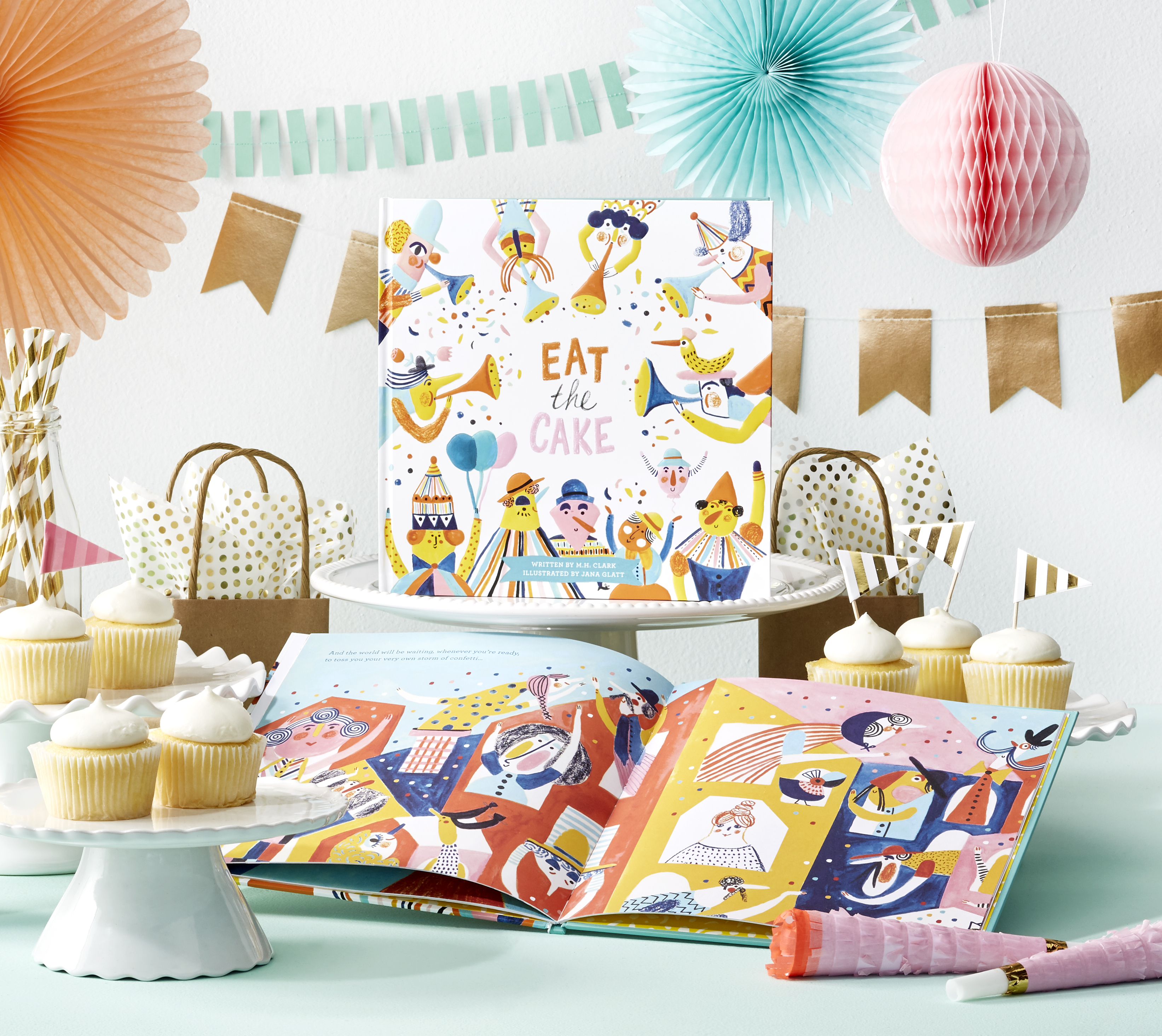
Eat the Cake Author: M. H. Clark
Illustrator: Jana Glatt
Published February 1, 2020 by Compendium
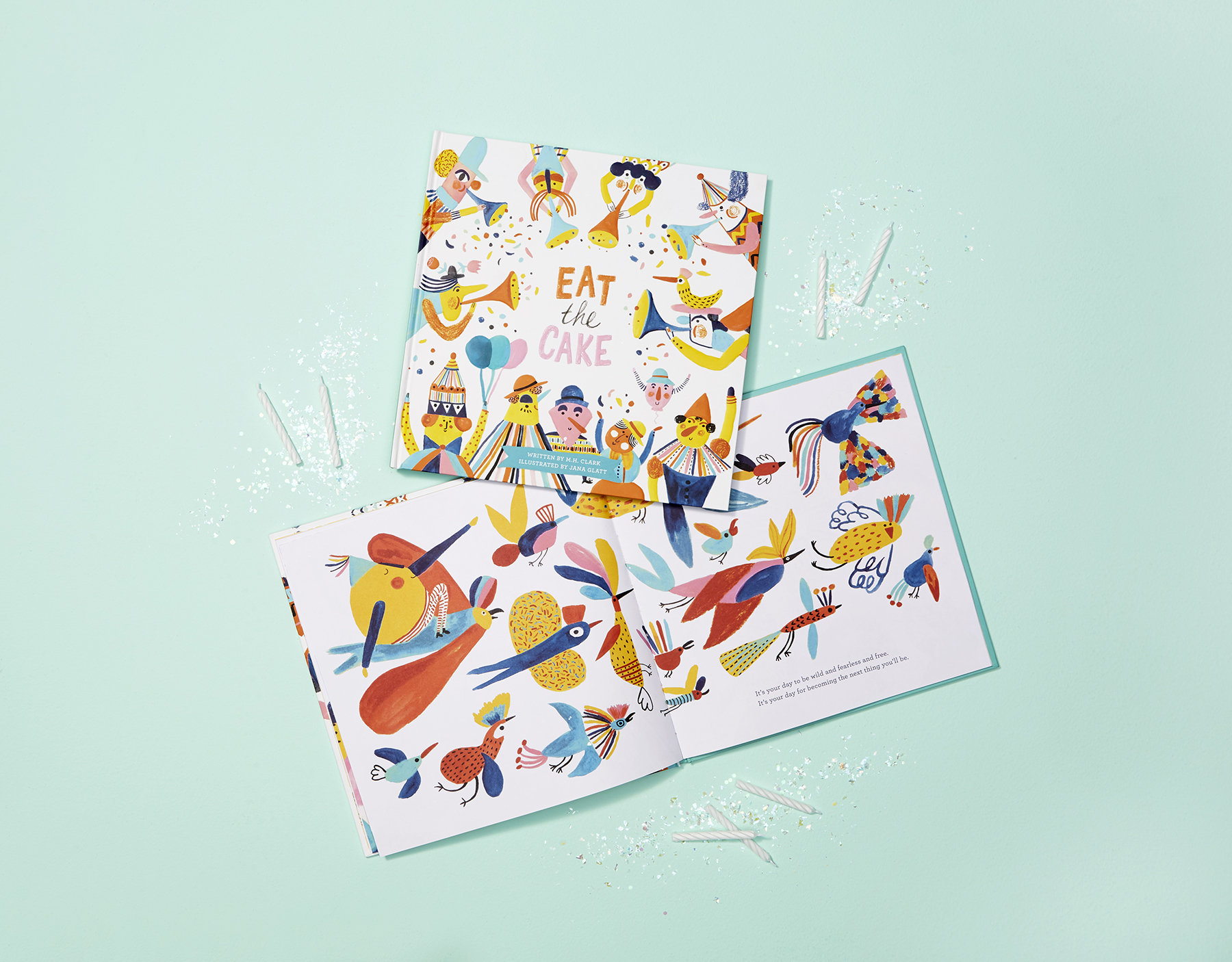
Summary:It’s your day to be wild and fearless and free. It’s your day for becoming the next thing you’ll be. Though today is your party, it doesn’t stop here–it should keep right on going and last you all year.
Roll out the streamers, blow up the balloons, and celebrate all the great things that are coming your way! With its colorful cast of characters, delightfully detailed illustrations, and playful rhymes, this festive book will ignite good feelings for birthdays and any occasion where cake is appropriate. (And cake is always appropriate!) A fun and joyfilled gift for anyone ages 5 to 105. Features a hardcover with embossing.
Review: We all need to celebrate ourselves! This book gives readers the perfect excuse to do so! This is a very motivational text that reminds readers all of the reasons that they should be proud and happy to be themselves. Readers will come away from this book wanting to try new things and go to new places. This book would make a WONDERFUL gift to readers of all ages. Folks tend to buy the Oh, the Places You’ll Go book, but Eat the Cake offers something new and fresh (and something that another relative might not buy!).
Teachers’ Tools for Navigation: If I was still teaching K-12 and had the means to do so, I would buy this book for every single one of my students at graduation. It would make a wonderful read aloud for the last day. I don’t think I could read this to my exiting students without crying! I will be purchasing this treasure for my graduate assistants. 🙂
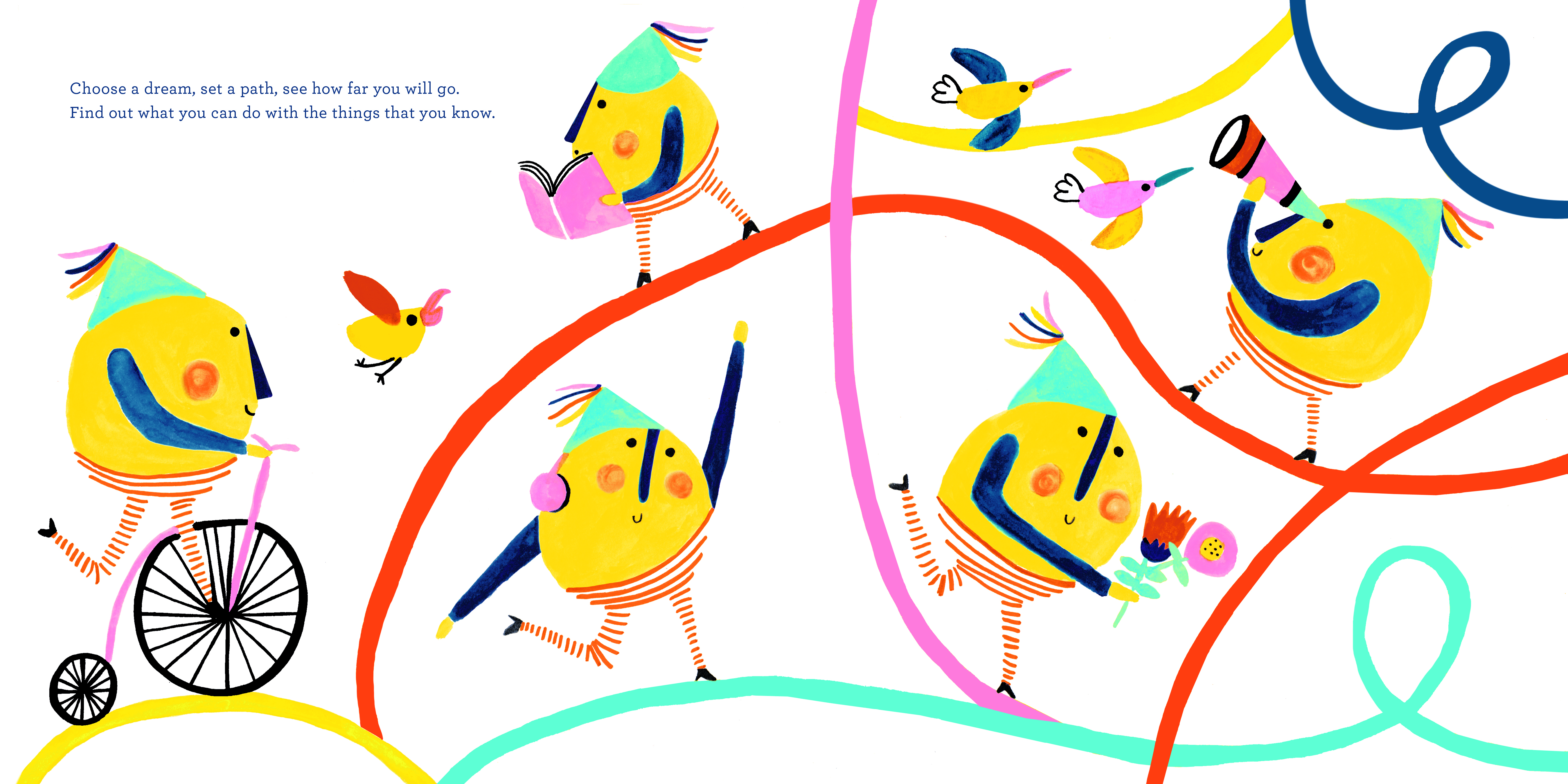
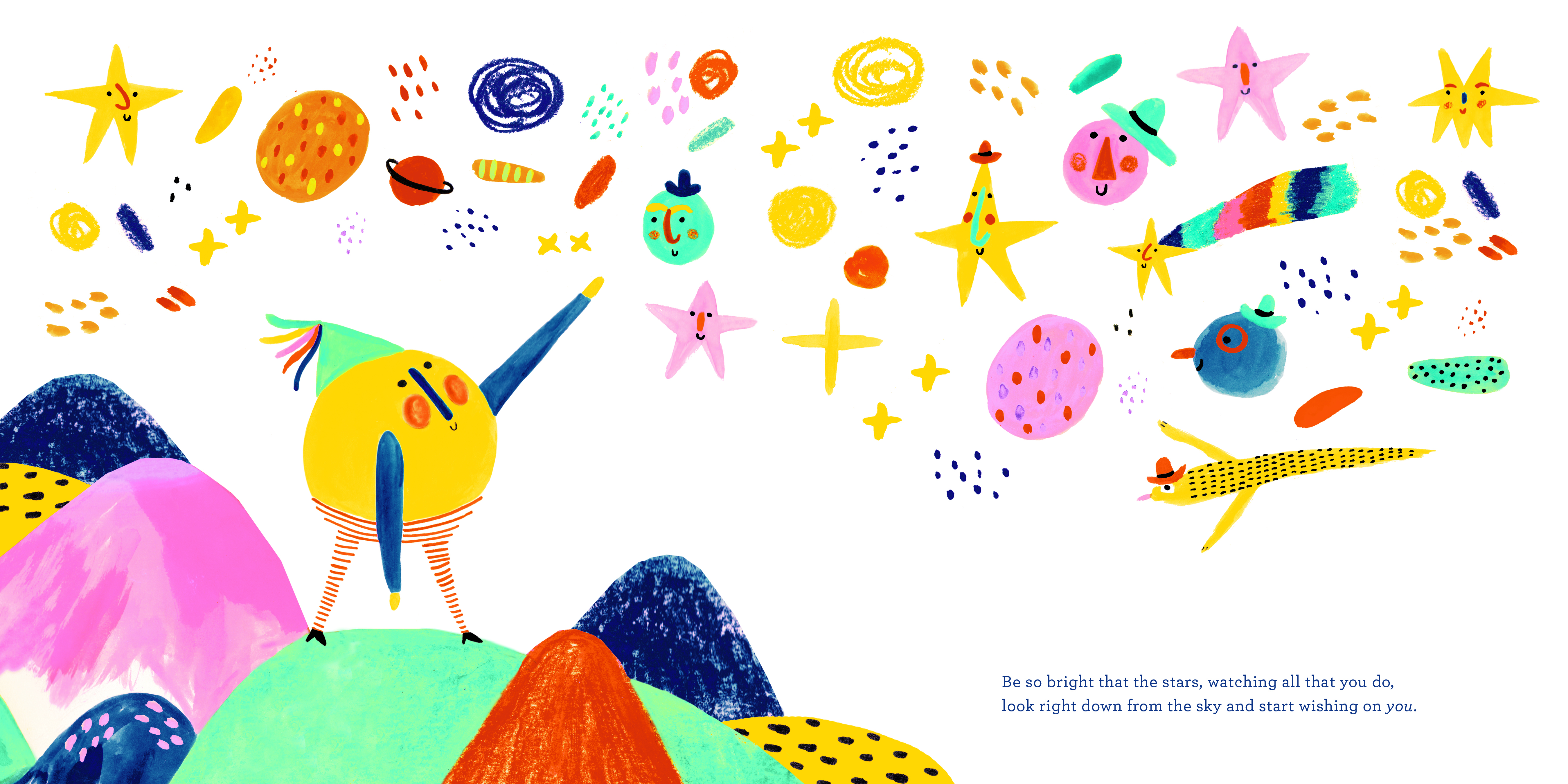
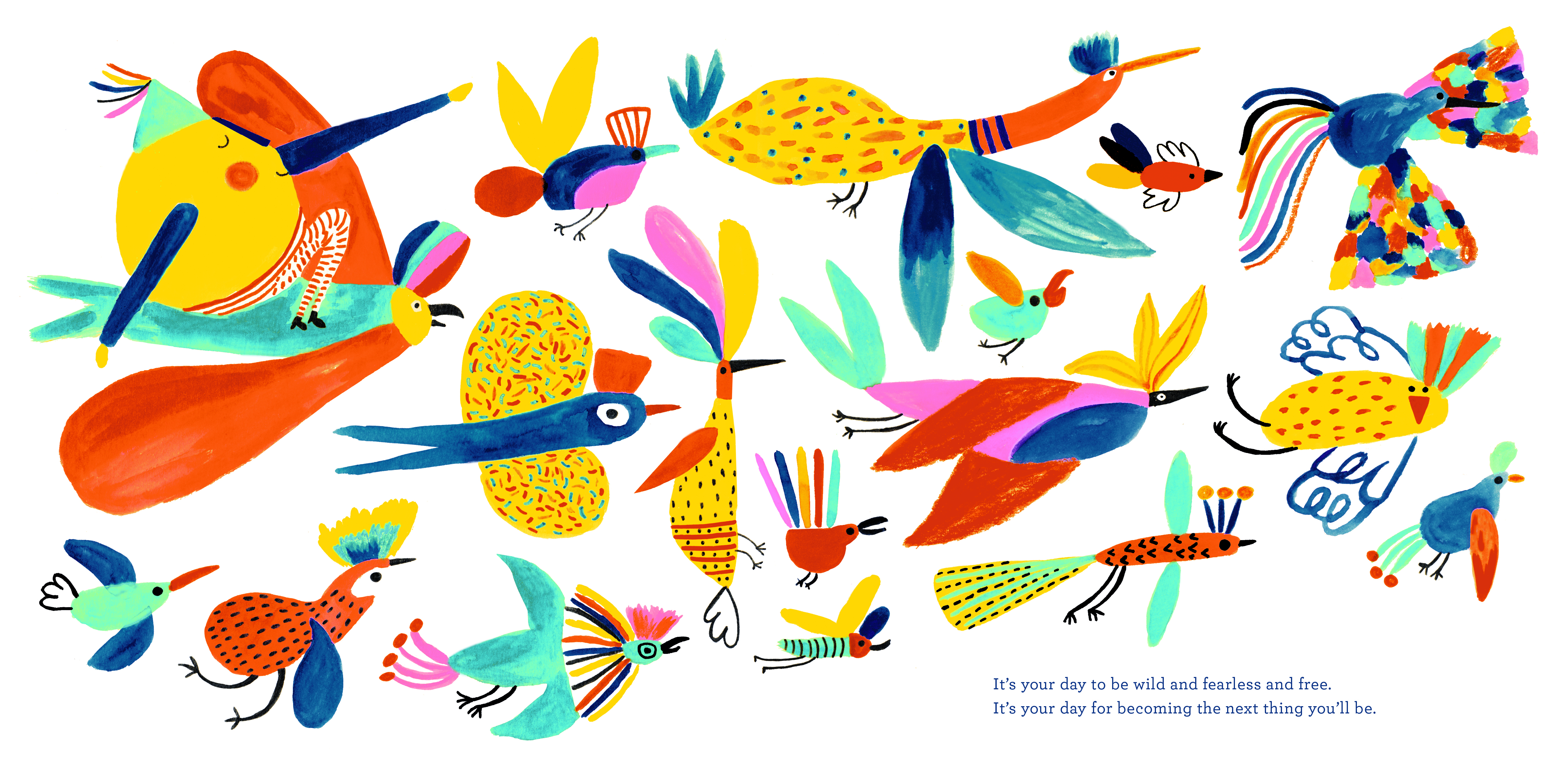
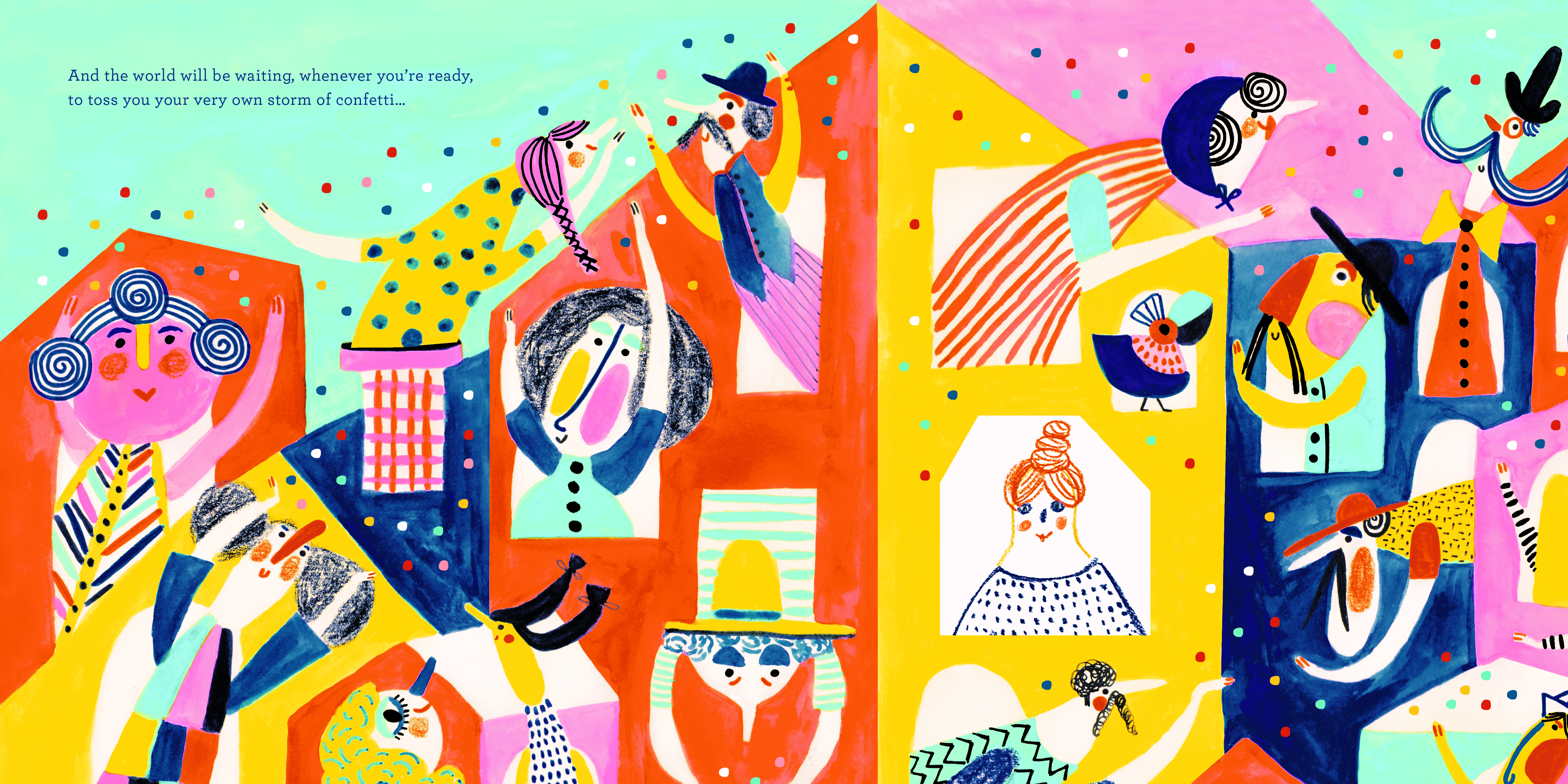
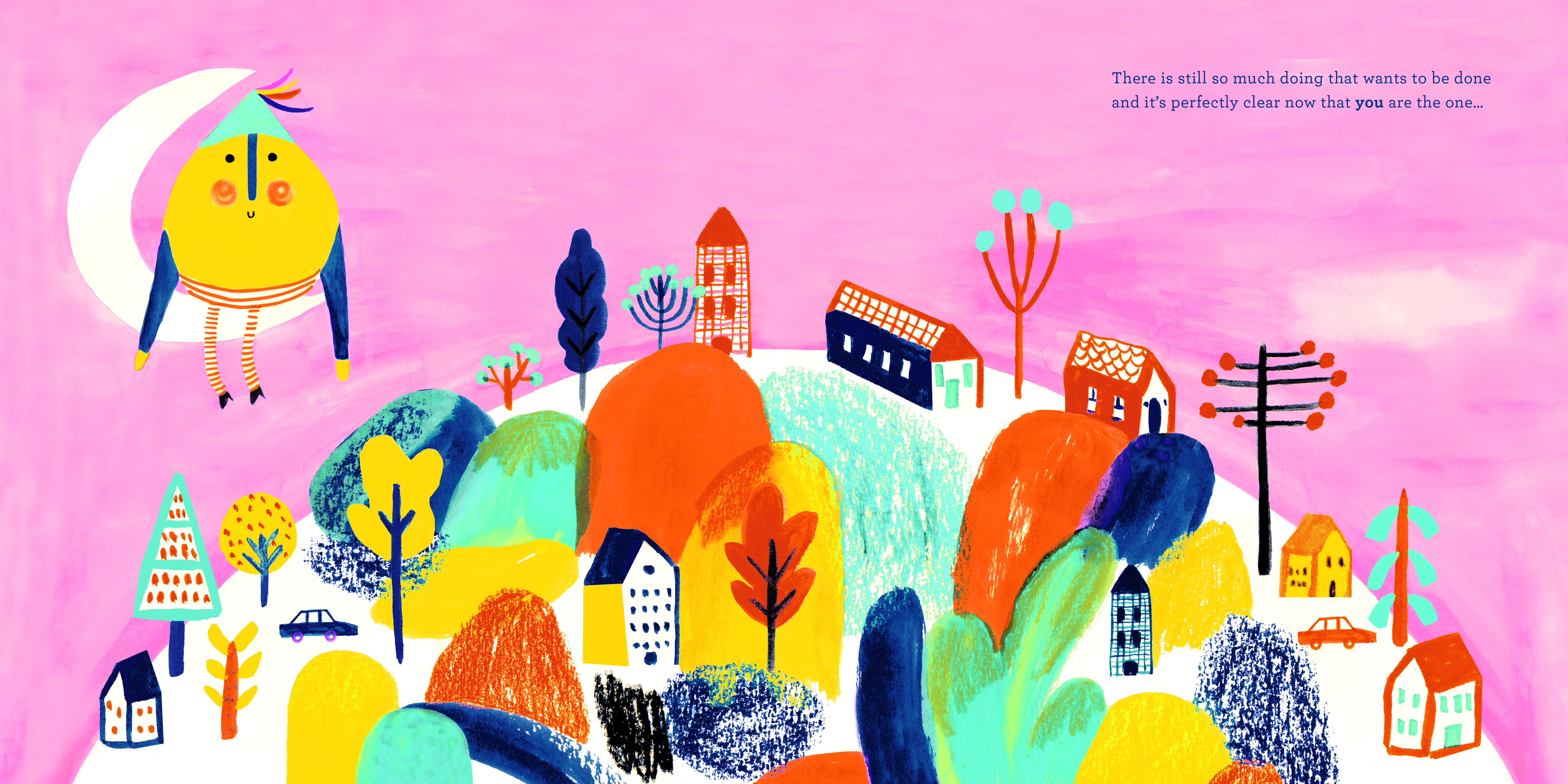
Book Spreads! Book Spreads!:
Read This If You Loved:Oh, the Places You’ll Go by Dr. Seuss, Lady Pancake and Sir French Toast by Josh Funk,Inspirational Books
Recommended For:
**Thank you to Compendium for providing a copy for review!!**
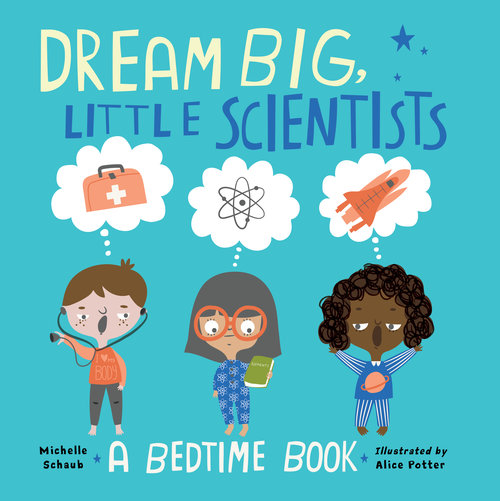
Dream Big, Little Scientists: A Bedtime Book Author: Michelle Schaub
Illustrator: Alice Potter
Published: February 18, 2020 by Charlesbridge
Summary: Twelve kids. A dozen bedtimes. Endless sweet ways to say goodnight with science! Spark curiosity and exploration with this innovative bedtime story for budding scientists that introduces eleven branches of science. From astronomy to physics to chemistry to geology, this STEM picture book will help kids get excited to explore. Includes further information about each branch of science.
Praise:
About the Author: Michelle Schaub is an author, a veteran teacher, and a poetry-in-the-classroom advocate. Her books include Finding Treasure: A Collection of Collections and Fresh-Picked Poetry: A Day at the Farmers’ Market; her poems have appeared in And the Crowd Goes Wild, A Global Gathering of Sports Poems, and The Poetry Anthology for Celebrations. To download free activity kits and curriculum guides for her books, visit her website: http://www.michelleschaub.com/; Twitter: @Schaubwrites; Instagram: @schaubwrites
About the Illustrator: Alice Potter is a London-based illustrator and children’s-wear print designer. Dream Big, Little Scientists is her first picture book. www.alicepotter.co.uk
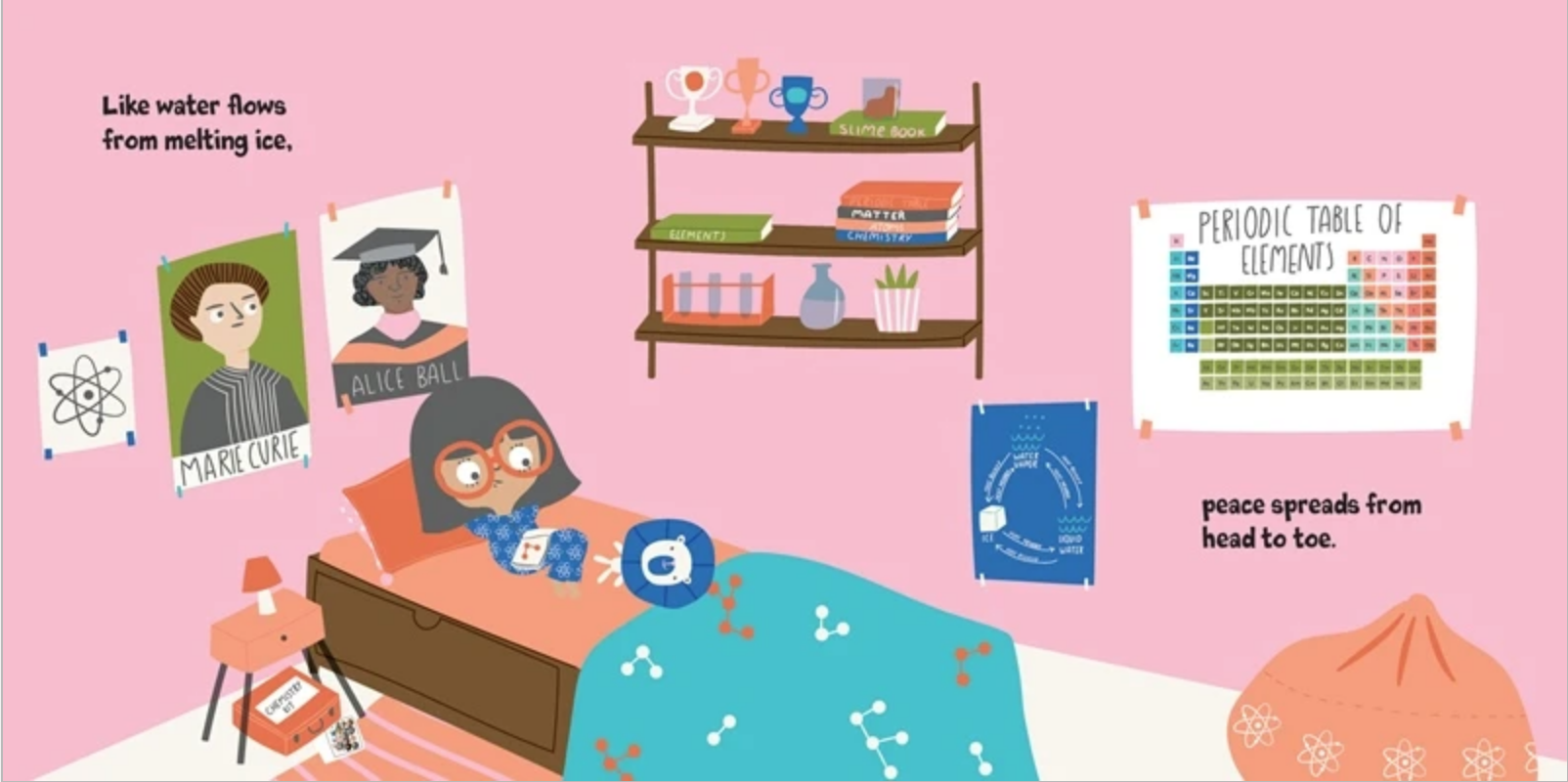
Ricki’s Review: This book is very cleverly conceived. The spreads depict the different branches of science, and I had a lot of fun (as an adult) playing detective and examining the different bedrooms. My sons adored the book and asked questions about the different scientists and posters on the walls of the bedroom. We googled and learned about new scientists! A significant amount of thought and care went into this book, and it was not lost on me. I’ve read this several times now with my sons, and each time, I find something new that I enjoy. This book will make readers really excited to learn about science. Further, the language is beautiful, and it is very fun to read aloud. I have two science-y friends who are having a baby soon. You bet that I’ll be buying this book for them!
Kellee’s Review: I love when a traditional book is turned upside down and turned into something new and fresh, and that is exactly what Michelle Schaub and Alice Potter have done. It is a next level bedtime book because while it has such lyrical text that definitely will bring some yawns, it also is a book that will bring lots of curiosity to its readers as each spread unleashes another discussion about a different branch of science. Each page we looked at the posters, decorations, and books to see how they all connect. It was wonderful how the illustrator brought the authors intentions to life!
From the author’s note: “Be curious! Look around, explore, and talk about the world where you live . . . just like a scientist! To explore the different branches of science even more, visit: www.sciencekids.co.nz
Visit www.michelleschaub.com/scientists to learn about the scientists on the posters in each kid’s room.”
There are some great assets for this book in addition to learning about each scientist, including a book trailer. Here’s the link to the page on her site: https://www.michelleschaub.com/dream-big.
Additionally, doing a visual analysis of each spread as a connection to science would be such an interesting activity!
Discussion Questions:
Which page excites you the most? Which branch of science is depicted on that page? Why did the page interest you?
Which scientist intrigues you? Why?
How did the author creatively organize this book? How does this increase your interest, as a reader?
How does each room reflect the branch of science the child likes?
We Flagged:
Read This If You Love: Books about Science; Bedtime Books
Recommended For:
and
**Thank you to Barbara at Blue Slip Media for providing a copies for review**
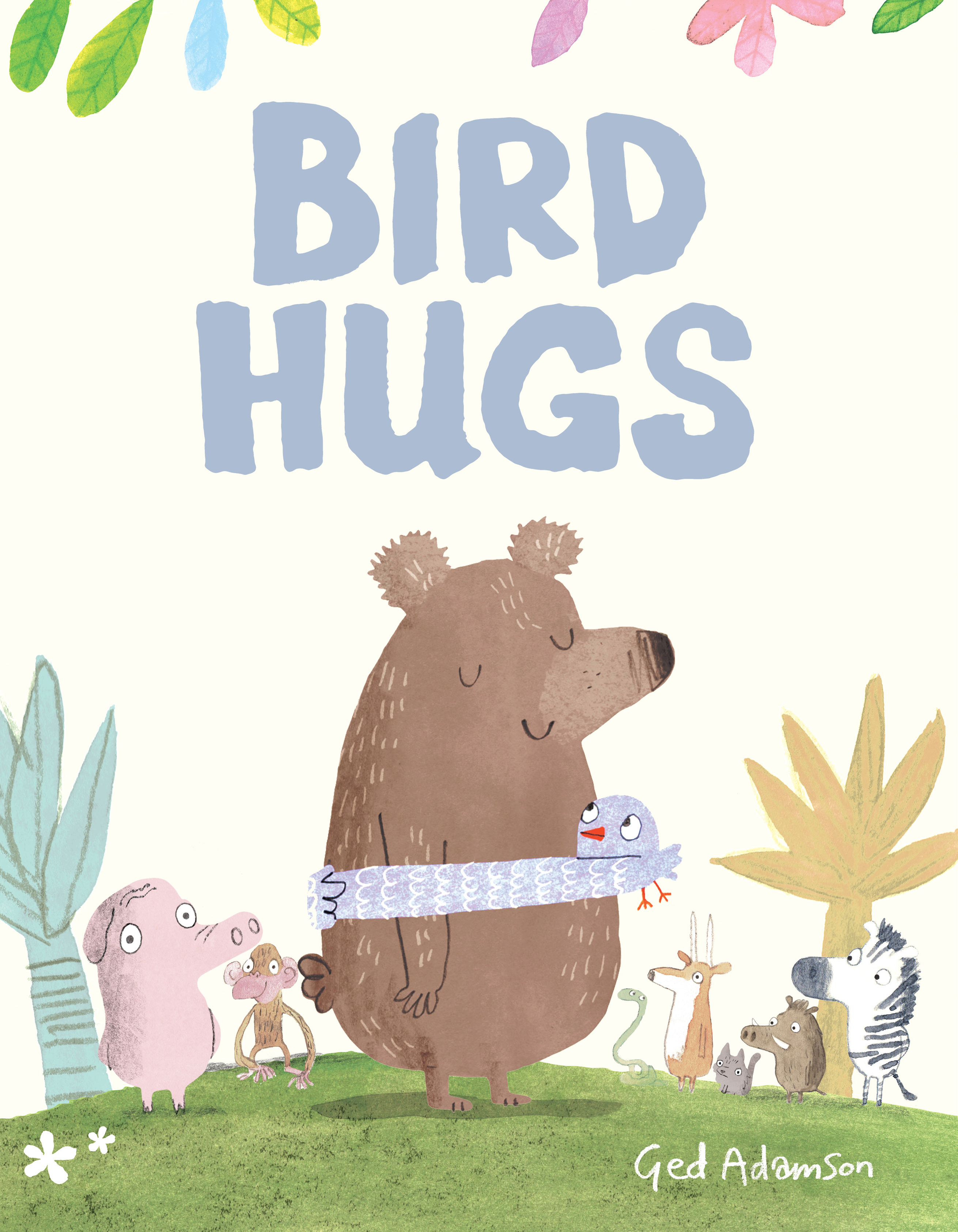
Bird Hugs Author and Illustrator: Ged Adamson
Published: February 1, 2020 by Two Lions
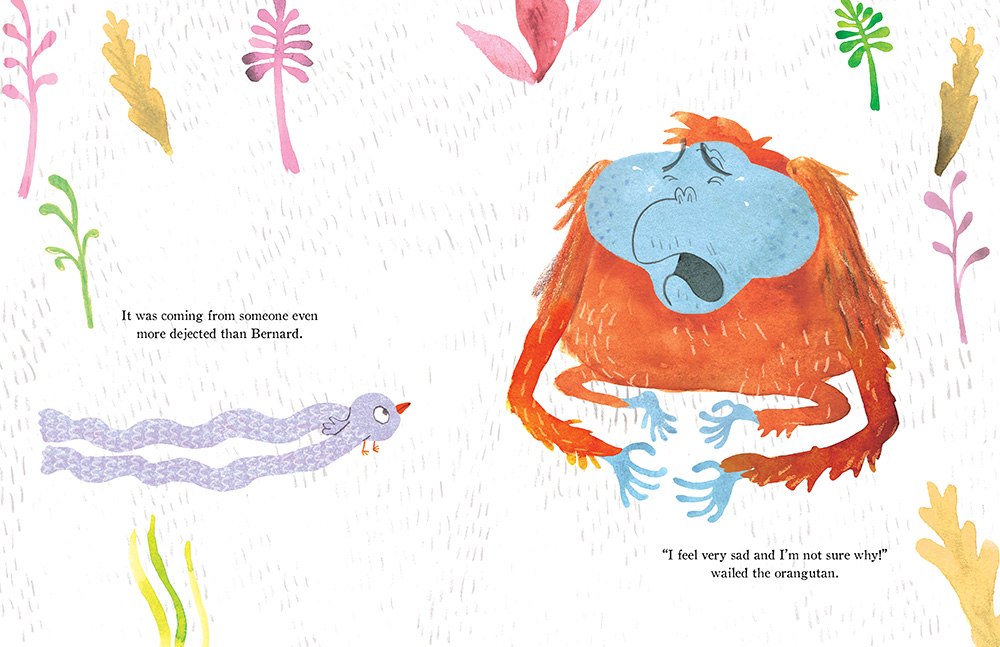
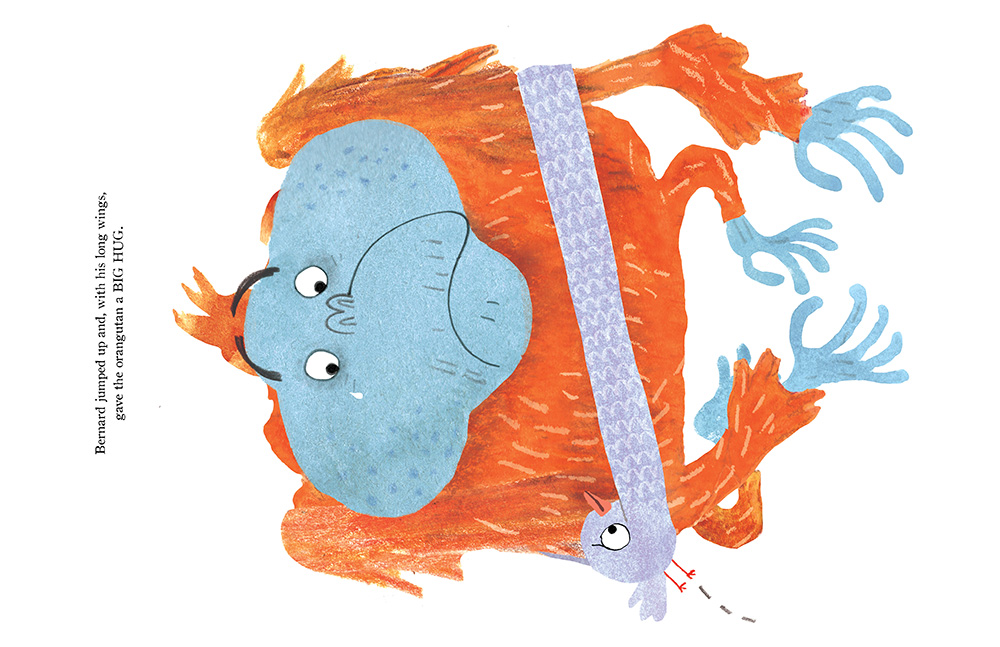
GoodReads Summary: Bernard isn’t like other birds. His wings are impossibly long, and try as he might, he just can’t seem to fly. He’s left wondering what his wings are good for…if they’re even good for anything at all. But a chance encounter with a dejected orangutan leads Bernard to a surprising discovery: that maybe what makes him different is actually something to be embraced.
Ricki’s Review:Oh my goodness. This book made my heart feel so, so full. It tells the story of a bird who is very different from the other birds. He cannot fly because he has abnormally large wings. As the title suggests, he learns that his wings are good for something other than flying. But it doesn’t end there! The bird becomes so well-loved by the other animals that they take him on his dream flight! There are so many wonderful lessons in this book. I’ll be gifting this book to several friends. It’s that good.
Kellee’s Review: My friend Kaleigh read this book before me because it was sitting by my couch when she came to visit. When she finished she looked at me and said, “You will love this book. and get ready to cry.” And gosh darn it, she was right! Bernard’s story just made me so sad and then so happy. Bernard’s journey is a lot like many kids though–they are taught that a certain way is the only way, either through peers or parents or media, but there is so much out there for us to be. Bernard teaches us that. Everyone should read this book.
About the Author: Ged Adamson is a children’s book author and illustrator. His picture books include A Fox Found a Box; Douglas, You Need Glasses!; Shark Dog!; and Ava and the Rainbow (Who Stayed). He has also worked as a cartoonist, storyboard artist, and composer for film and TV. He lives in London with his partner, Helen, and son, Rex. To learn more, visit his website: https://gedadamson.myportfolio.com/home-page
Twitter: @ged_adamson
Instagram: @gedadamson
Praise for Bird Hugs:
“Readers will agree: All differences should be hugged, er, embraced.” —Kirkus Reviews
“The lesson is a simple, familiar one—selflessness and sympathy are key to making friends—but Adamson’s gentle humor and his eager-eyed characters’ yearning become an eloquent testimony to the power of a little TLC.” —Publishers Weekly
Teachers’ Tools for Navigation: Students might journal about some aspect of them (emotional, physical) that is different. They might explore the ways in which this aspect is actually a strength.
This book could definitely be used in the first week of school during norm and team building. Combine it with the Be Kind! themed books to look at how different doesn’t equal bad.
Discussion Questions:
How does Bernard feel when he cannot fly? When he feels really good about himself, he tries to fly again. What happens? Why? What does this teach us?
What are some qualities that some people might dislike about us? How might we use these qualities as a strength?
Today, I woke up with utter jubilation. As I told a colleague, the ALA YMA announcements are one of my favorite days of the year. I love the idea that all of the working committees report out their hard work and deliberation. Having served on a book award committee in the past, I know that it takes a significant amount of time and care to serve on these committees, so I am always appreciative of the honorees and winners, regardless of my own personal thoughts of who I hoped would win. I also love that the award lists give me such passion to read. I am itching to end this blog post to get reading!
I’d prepared my students. We were going to watch the awards during class. They were also excited. I ferried my children to school and noticed that I had several emails about award winners. I thought, “Uh oh! Folks are releasing the details early!” I messaged Kellee, and she very kindly informed me that I had calculated my time zones two hours in the wrong direction. The awards were released at 6am MST rather than 10am MST. I think that was my first major time zone goof-up in the three years that I’ve lived in Colorado. Alas!
I told my students that we were going to watch the video and PRETEND we were watching live. We did work while the awards played in the background. As usual, I gasped at some of the winners and honorees and also nodded along at titles I’d hoped and expected to win other awards. Ah! It is just so exciting!
Our class talked about the ways in which teachers can generate Mock Newbery/Mock Printz/Mock Caldecott/Mock Sibert/Mock Schneider/Mock ____ committees among their students. Discussions like these always make me miss the classroom a bit. I long to run a Mock committee among students again! All in all, the books and awards bring me such joy. I nabbed the audio of one of the books that I didn’t read, I brought home a few books from my office home to read, and I reserved a few more from the library. Pure bliss.
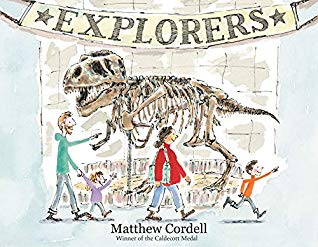
Explorers Author and Illustrator: Matthew Cordell
Anticipated Publication: September 24, 2019 by Feiwel and Friends
Goodreads Summary: From Caldecott Medalist Matthew Cordell, Explorers is a new picture book about an extraordinary trip to a museum.
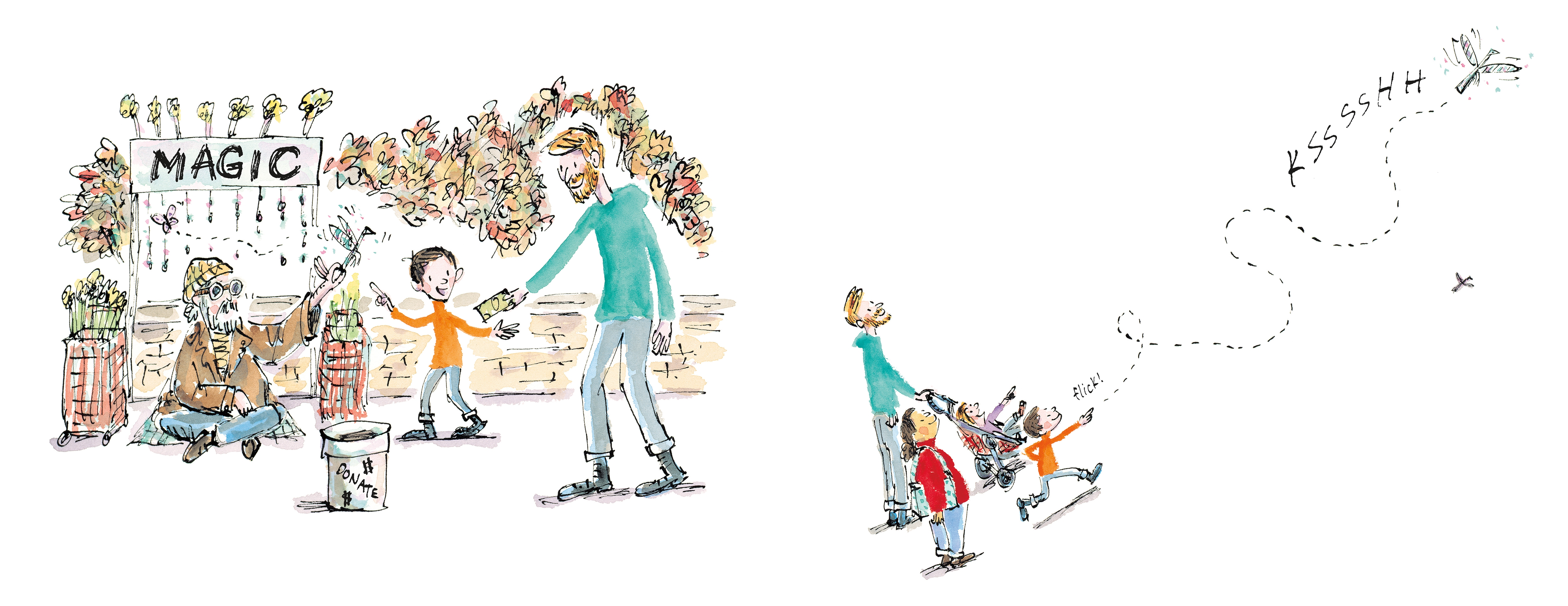
When a family goes to a local museum, a boy notices a homeless man sitting outside, making brightly colored origami birds. He convinces his dad to buy a bird the man makes just for him.
Once inside the museum, his little sister takes the bird and launches it into the air. Is it lost? Soon another boy helps him look, and the paper bird brings two families―and two new friends―together.
With the style he used in Wolf in the Snow, Matthew Cordell shows how an ordinary family outing can be both extraordinary and magical.
My Review: Matthew Cordell’s newest picture book is a hit in my house. Explorers tells the story of a boy who finds a homeless man fashioning origami birds outside of a museum. The origami bird brings together two families in a way that is magical—or is it? This one made me think a lot, and I like books that make me think. It is almost wordless with only a couple of words in the entire book, but the pictures tell the story beautifully.
Teachers’ Tools for Navigation: Students might enjoy debating whether the actions in the book are reflective of magic or not. Teachers might also group students and have each tell the story based on the pictures. They could talk about how their interpretations were or were not different.
Discussion Questions: Who was the man beside the road? What is his role in the family?; How does the main character change throughout the book? What does he learn?
Flagged Passage:
Read This If You Love: Journeyby Aaron Becker, Wolf in the Snow by Matthew Cordell, The Girl and the Bicycle by Mark Pett




 and
and