Sofia’s Kids’ Corner: The Crayon Man: The True Story of the Invention of Crayola Crayons by Natascha Biebow, Illustrated by Steven Salerno

Share

Sofia is an 9-year-old brilliant reader who aspires to be a book reviewer. On select Saturdays, Sofia shares her favorite books with kids! She is one of the most well-read elementary schoolers that we know, so she is highly qualified for this role!


Dear readers,

I have just come across this amazing book in the library and it is called The Crayon Man: the True Story of the Invention of Crayola Crayons by Natascha Biebow! I read it the first time to my four-year-old sister, and we love it! I bet you would love it too. This book is recommended for ages 6-9 on Amazon but I think it is great for any age.

Edwin was an inventor in the late 1800’s. He loved colors and was the actual inventor of the Crayola crayon! This book talks about how he worked on his invention to make it perfect. His wife encouraged him and actually came up with the name! He had made gray, white and really black crayons but his wife and family kept telling him what he could do to make them better and one major idea was to make them in different colors. At the end the book even shows how Crayola Crayons are made today and lists different steps with photographs!

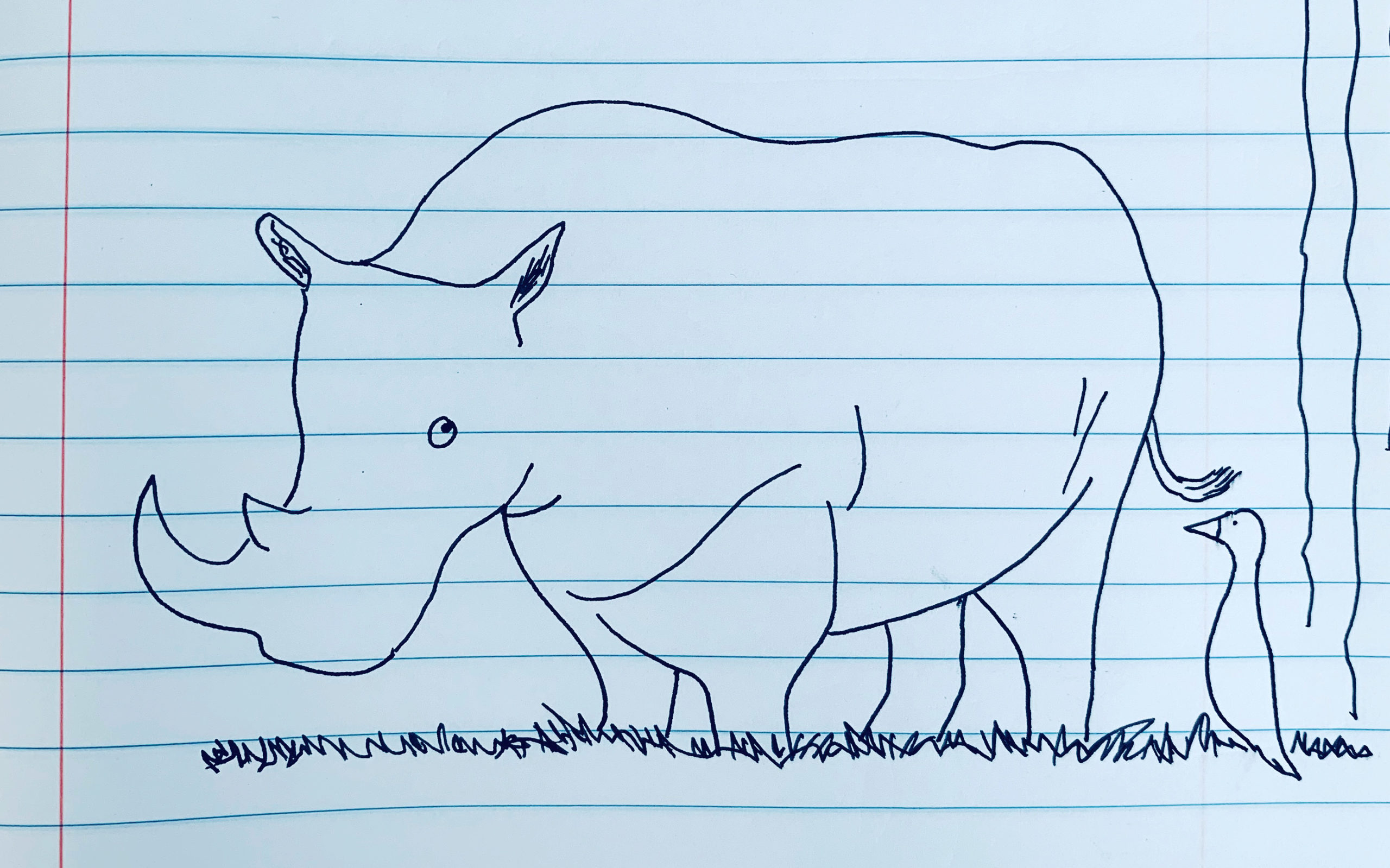
I love this book because of its beautiful illustrations. They bring amazing colors into the picture and really make me feel like I am there. Another reason I love this book is because it makes great read-alouds!!! When I read this to my preschool sister who is four she said “This book is amazing!” Another great thing about this book is that it is good for questions. For example, you can ask your students or children to name the colors in the Crayola crayon package or you can just enjoy reading it through and ask a question like “Who was your favorite character and why?” or something like “How do you think Edwin felt when he ran home to his wife with his new invention?”. One last reason why I love this book is you can make tons of crafts out of it! For example, I told my sister to draw a few things out of the book using crayons. Here is the final product!

**Thanks so much to Sofia for this awesome post! Victoria, your drawing ROCKS! We loved having you this week, too!**


Blog Tour with Review and THREE BOOK Giveaway!: It’s Not Little Red Riding Hood by Josh Funk, Illustrated by Edwardian Taylor

Share

It’s Not Little Red Riding Hood
Author: Josh Funk
Illustrator: Edwardian Taylor
Anticipated Publication: October 27, 2020 by Two Lions

Goodreads Summary: Once again, the beleaguered storyteller tries to tell a traditional fairy tale, with little success. Red has some questions about her delivery to Grandma’s house, the wolf calls in sick, and more chaos ensues.

About the Creators: 

Like the characters in his books, Josh Funk doesn’t like being told how stories should go—so he writes his own. He is the author of many popular picture books, including the popular Lady Pancake & Sir French Toast series, illustrated by Brendan Kearney, and the It’s Not a Fairytale books, illustrated by Edwardian Taylor. He lives in New England with his family. Learn more about him at www.joshfunkbooks.com and follow him on Twitter @joshfunkbooks and Instagram: @joshfunkbooks.

Edwardian Taylor is the illustrator of multiple children’s books, including Race!, written by Sue Fliess; the Toy Academy chapter books, written by Brian Lynch; and the It’s Not a Fairytale books, written by Josh Funk. He lives in Texas with his partner and their four dogs. Learn more about him at www.edwardiantaylor.com.
Twitter: @edwardiantaylor
Instagram: edwardiantaylor
Tumblr: Edwardian Taylor

Review: With each book that comes out in this series, I have a long, intense internal debate. I ask myself, “But which one in the series is your favorite NOW?” And I simply cannot decide. Josh Funk and Edwardian Taylor’s It’s Not a Fairytale books are the best picture book fairytale retellings that exist. I know that’s a bold statement, but it is the truth. If you’ve missed this series, you must order copies from your nearest bookstore. They are such beautiful, thoughtful texts, and they inspire amazing classroom opportunities and critical thinking.

When I pulled out It’s Not Little Red Riding Hood, I suspect the shrieks of joy from my children could be heard by passersby outside of my house. These books are so cherished in our home. I’ve had It’s Not Little Red Riding Hood about a week, and I think we’ve read it about fifteen times (no exaggeration). Similarly to the other books in the series, Red is smarter than the narrator, and she tells her own story and does so boldly. Readers will laugh aloud as they read it! It offers good critical discussions about the stories we hear and read. I loved it and can’t wait to read it (several times) tomorrow. Thanks so much to Josh and Edwardian for another great book in this series!

Teachers’ Tools for Navigation: This book would be great to read as a Readers’ Theatre. Students could read different characters and the narrator aloud to create a powerful effect. Fairy tale retellings offer great opportunities for kids to tell counterstories to the narratives that are popular in society or the media, and teachers might ask students to write retellings and counterstories to those that are commonly told.

Discussion Questions: 

  • How would you describe Red?
  • How do the author and illustrator work together to create a story?
  • What aspects of the retelling are different from the traditional fairy tale? What does this make you think about when you consider the original fairy tale? How is the story improved in this retelling?

Flagged Spreads: 

Giveaway:

a Rafflecopter giveaway

Read This If You Loved:  It’s Not Hansel and Gretel by Josh Funk, It’s Not Jack and the Beanstalk by Josh Funk; Dear Dragon by Josh Funk; Lady Pancake & Sir French Toast by Josh Funk; Whose Story is This, Anyway? by Mike Flaherty; Battle Bunny by Jon Scieszka and Mac Barnett; A Tale Dark and Grimm by Adam Gidwitz

Recommended For: 

readaloudbuttonsmall classroomlibrarybuttonsmall closereadinganalysisbuttonsmall

RickiSig

**Thank you to Barbara at Blue Slip Media and Two Lions for providing copies for review and giveaway!**

Sofia’s Kids’ Corner: Kenny and the Dragon by Tony DiTerlizzi

Share

Sofia is an 9-year-old brilliant reader who aspires to be a book reviewer. On select Saturdays, Sofia shares her favorite books with kids! She is one of the most well-read elementary schoolers that we know, so she is highly qualified for this role!


Dear readers,

If you are a dragon lover like my friend who recommended this book to me or love a kindhearted tale this would be your book: Kenny and the Dragon by Tony DiTerlizzi! This book is recommended for ages 8-12.

Kenny is a little rabbit who always has his head stuck in a book. One day, Kenny’s father rushes into the kitchen all out of  breath. He tells his family to move out straight away but the Mom sits him down for dinner and then tells him to explain. The father says that a Dragon lives on the hill next to their farm and Kenny, the bookworm, obviously wants to see the dragon. The mom protests but the father says he can go but he has to be careful. Kenny quickly goes upstairs and covers himself in pots and pans like a knight and takes a benastary (a book of beasts) with him. Once Kenny gets up on the hill and sees the dragon he gets very scared. Once Kenny meets the dragon he becomes best friends with him. Kenny’s parents think that they should meet the dragon, whose name is Grahame, so they go over to Grahame’s house and have a cup of tea. Later Kenny goes to the village to meet his friend George who lends him books. Kenny discovers that George is assigned to kill Grahame! Will Kenny be able to explain to George that this monstrous but kind beast is his friend before it is too late?

I love this book so much because of its kindness and how it proves the saying “don’t judge a book by its cover”. It warms my heart when I see how the two companions work together to stop Grahame (the dragon) from getting hurt. I also love this book because of the cute pencil drawings and the great words that express the story. For example, this is how the book starts: ”Many years ago . . . Hold on, I know what you are thinking. You’re thinking a book about a dragon should start with “Once upon a time.” But this one doesn’t because frankly, I don’t really know what “Once upon a time” means.” Ha ha ha by now you must be laughing! Now you can see how the whole book is told in an exciting way. I hope this book captures your heart and your imagination. Either way HAVE FUN!!!

Discussion questions

  • If you were Kenny would you go up to a mountain that your father tells you has a dragon in it?
  • When Kenny decides to help his friend Grahame do you think that was the right thing to do? Why?
  • Which character is like you the most? What do you have in common?
  • Which of Kenny’s actions surprised you and why did they surprise you?

If this book got the action in you going or you just liked it then be sure to check out The Spiderwick Chronicles by Tony DiTerlizzi. I have not read it yet but have watched the movie twice and can’t wait to get my hands on that book!

**We feel so lucky to have Sofia.**


Sometimes a Wall… by Dianne White, Illustrated by Barroux

Share

Sometimes a Wall…
Author: Dianne White; Illustrator: Barroux
Published: October 15, 2020 by OwlKids

Summary: An afternoon in the playground introduces different kinds of walls: a brick wall to draw on with chalk, a water wall, and a climbing wall. What follows is a playful yet profound exploration of the many ways walls can divide us or bring us together. When one child is excluded from a game, another builds a castle to leave him out. When the builder declares the castle MINE, other kids feel alienated―but the builder becomes lonely, too, when the others have fun without him. The book ends with the optimism of a new start: friendship, forgiveness, and imagination give the wall new meaning.

Told with short, simple lines of playful, rhyming text and loose line illustrations by internationally known artist Barroux, this book sparks questions with empathy, insight, and charm. It’s a timely tool for inquiry-based and social-emotional learning, sharing the important message that walls can unite or divide, depending on the choices we make. 

“Rhyme, rhythm, and simple art—all including references to walls—show children expressing different emotions and behaviors… Mending walls for the nursery crowd.” –Kirkus Reviews

Review: My own children have been asking about walls. They hear about them in school (in preschool and first grade), and they come home with a lot of questions. This book offers such great fodder for conversations about walls. The wall in this book evolves, and it is up to the reader to interpret many aspects about the wall and its purpose. I love how this opens discussions for what walls might represent and how they might differ in various conceptions. For instance, the wall in this book might be described as a border wall or it might be describe attached to a metaphorical or ideological wall. This is a book that will make readers of all ages think. I read the book three times in a row (which is not often my approach) because I kept thinking about new applications of the text. This would make a phenomenal classroom text and would be great for critical thinking and discussions. I recommend it highly.

Teacher’s Tool For Navigation: I’d love to use this book to teach the concept of a metaphor. For me, the wall in this text can be used as a metaphor to talk about a lot of concepts (concrete and abstract).

The “Why” Behind the Book:

A Letter to Parents and Educators

A Letter to Young Readers

Discussion Guide:

Sometimes a Wall… Discussion Guide

A Lesson In 3 Movements:

• Intro to the Unit (PLEASE READ FIRST!)

• What’s Different About Reading Wordless/Nearly Wordless Picture Books?

• 1st Movement: TOGETHER (I Walk with Vanessa by Kerascoët)

 2nd Movement: APART (Draw the Line by Kathryn Otoshi)

• 3rd Movement: REGRET. NEW START? (Sometimes a Wall … by Dianne White, illustrated by Barroux)

Coloring Pages For Younger Students:

We Are Kind coloring page

Be Kind coloring page

Discussion Questions: 

  • What might the wall represent?
  • How does the wall evolve in the text?
  • What kinds of walls do you have in your life? Do they serve good or bad purposes (or both)?

We Flagged: 

Read This If You Loved: I Walk with Vanessa by Kerascoët, Draw the Line by Kathryn Otoshi, The Wall in the Middle of the Book by Jon Agee

Recommended For: 


Sofia’s Kids’ Corner: The One and Only Ivan and The One and Only Bob by Katherine Applegate

Share

Sofia is an 8-year-old brilliant reader who aspires to be a book reviewer. On select Saturdays, Sofia will share her favorite books with kids! She is one of the most well-read elementary schoolers that we know, so she is highly qualified for this role!

Dear readers,

If you are looking for two books about kindness and bravery then these books would be those books. Drumroll please… The One and Only Ivan and the sequel The One and Only Bob by Kathrine Applegate!!! These books are totally recommended for read aloud! If you want any of these books for read aloud I would say they are appropriate for second grade and above. These books are recommended for ages 8-12 if you read them yourself.

The One and Only Ivan

Ivan is a big and kind gorilla. He lives at a mall owned by a person called Mack. Mack makes shows to attract more people to his mall and Ivan and some of his friends are in it. Ivan makes some friends at the mall like an old circus elephant named Stella, Julia who is Mack’s daughter and later on a young elephant named Ruby who was taken away from her family when she was very young. They are trapped in big cages made of glass so the people can see the animals when they walk past the cages. Mack is very harsh when the animals don’t follow his directions and sometimes he even takes out a whip! Will Ivan and his friends be able to escape Mack’s mall without being harmed?

The One and Only Bob

Bob is a dog. He got taken away from his mom when he was little. He got dropped off in the road and became a street dog searching through garbage cans for as much food as he could find.  When Bob meets Ivan in the first book they become best buddies and they also become friends with Ruby, the elephant that lives at the mall with Ivan. As you will know if you have read The One and Only Ivan Bob eventually goes to stay with Julia, Mack’s daughter. Bob visits his friends every day. But one time there is a big storm and Julia loses Bob in the middle of a monstrous flood! Will he make it out alive?

I love both of these books because they really make me feel like I am actually there and witnessing the event, like all good books do. I also love these books because they are a bit silly because the stories are told from an animal’s point of view. The animals say a lot of weird things about us because they don’t really understand our ways. For example, the book says “I have learned to understand human words over the years, but understanding human speech is not the same as understanding humans. Humans speak too much. They chatter like chimps, crowding the world with their noise even when they have nothing to say.” I am sure any reader would have fun with this so ENJOY!!!

If you loved these books then you might want to read Crenshaw By Katharine Applegate. Crenshaw is a cat. I have not read it yet but it sounds very interesting!

**Thank you, Sofia, for your continued brilliance. You inspire us!**


K-2 Teachers: Indigenous Peoples Day and Thanksgiving

Share

My son’s phenomenal elementary school teacher, started the first week of school reading Fry Bread: A Native American Family Story by Kevin Noble Maillard. Children volunteered to share their tribal membership and lineage. They talked about family and what fry bread meant to them and their families. From the first day of school, I noticed the beauty of her instructional approach as she read different picture books aloud which invited the children to share their stories. She doesn’t limit books to designated months and is sharing year-round and her pedagogies are culturally sustaining in so many ways (but this is not the purpose of this post, so I’ll stop there).

Recently, two K-2 teachers asked me specifically: What can I do for Indigenous Peoples Day and Thanksgiving? These are two teachers who I didn’t need to say: first, don’t make this a single day or a month. They knew this. I shared with them some of the resources from good sources that I know, and I am sharing them here in case others find them useful. My expertise is in 6-12 teacher education, but I know others who do research/writing in this area or write books for K-2 (and beyond), and they are cited among the resources below. There are so many resources outside of this post, so if this is your first go at it, please don’t limit yourself to this post here. If you are grades 6-12, this is not really the post for you, and on another day, I might venture into recommendations for this age level, which I feel are even more bountiful (which include publications by some of the people cited on the list below, among other brilliant authors and scholars). If you are K-2 and have more suggestions, lay them out in the comments section.

First, I recommend Debbie Reese and Jean Mendoza’s Tips for Teachers: Developing Instructional Materials about American Indians (which is K-12). This just offers grounding knowledge that is imperative. If you will read nothing else on this page, read this (and their two comments below the post, which include resources that primarily feature resources for grades 4 and up but are very good).

Indigenous Peoples Day

Every family celebrates Indigenous Peoples Day differently. With my relatives and (non-school) community, growing up, we most often talked about the truth about Columbus on this particular day because it was such a glaring holiday on our school calendar. Looking back, this centers Whiteness in many ways because we were so keenly focused on that day. But it was a reality for us as I would come home with worksheets from school coloring in his face. It is still celebrated as “Columbus Day” in the school district that I grew up in as a student. This made school very confusing to me, where Columbus was revered. It wasn’t until I was in middle school that I felt like my relatives shifted to more of a Indigenous Peoples Day conception and celebration (although they have no problem talking about some of the absurdities of who is revered in holidays—such as Columbus). I don’t know if others celebrated it this way growing up, but this was my experience as a child in K-6.

When these K-2 teachers asked me how they might talk about Indigenous Peoples Day this coming Monday, I recommended that they start by ensuring that their 5- and 6-year-old students knew that Indigenous people are still alive. I know this feels like a basic thing, but young kids are often taught about Indigenous people as a thing in the past, and they don’t seem to connect this past and present connection at this age. The way Native Americans are depicted in history and books, they are frozen in time. If you want to show them that Indigenous people are not a thing of history, you could, for instance, show the Project 562 gallery or you could show this video of an elementary school which offers a bilingual Ojibwe program and bilingual Cree program. Celebrate famous Indigenous people in the news, sports, etc. today. These are quick suggestions, and I am sure others have more.

You might also talk with kids about the land that they live on. I like the Native Land Digital website a lot. This gets complicated because territories are a Western notion, but this site offers a starting point. You can talk about the nations that exist in your area and their present day issues (rather than solely focusing on historical) and look at the nations’ websites.

Native Knowledge 360 offers ideas for instruction (sortable by grade). Beyond the K-2 suggestions, you might offer a modified version of this project about environmental challenges for your students.

Focus on reading stories by Indigenous authors. The American Indian Youth Literature Award is a great place to start.


Thanksgiving

This holiday is associated with a lot of hard experiences for me—and the holiday is inextricably tied to experiences in my schooling. It is these schooling experiences that compelled me to decide to go into teaching. There’s a lot to unpack and it’s beyond this post, so instead, I can offer a brief list of don’ts for teaching: Thanksgiving plays/feasts, dressing up as Indians/Pilgrims, stereotypical images of Indians and pilgrims, Indian names (and while we are at it, spirit animals), Native American craft time, and paper headdresses or fake feathers.

When I was younger, we did a harvest dinner, and our family talked about what this day meant (and it wasn’t a happy pilgrims/Indians thing). As a starting point, Teaching Tolerance offers age-appropriate ideas for teachers, Oyate has a website about myths about Thanksgiving, and you might check out the blog post “Do American Indians celebrate Thanksgiving?” There is also an “interactive historian” website that works against myths about the holiday.

For our family, when we sit down to dinner on that Thursday that is revered by many, we do take the time (and we do this every day) to talk about the food that we are eating and honoring where it came from; the land that we reside on and the original habitants and the cost at which it came to us; and those for whom we are grateful. Along this line, I especially recommend We Are Grateful: Otsaliheliga by Traci Sorrell. She has another book coming out in April 2021 that is available for pre-order.

I debated not writing this post because I am not a K-2 teacher, and I am not someone who specializes in representation. But I am a parent. And I was a K-2 child once, and this age carries a lot of weight for me, primarily because of how I struggled in school. When these teachers asked me for help, they asked me genuinely, and they were earnest in their goals of doing what is in the best interest of kids. If your expertise falls more in this area and you have recommendations, comment below. If you have questions, comment below. I’ll come back on another day with more 6-12 books, but as I noted, there are so many great resources in this area, that I felt it best to start with K-2.

Sofia’s Kids’ Corner: The Word Collector by Peter H. Reynolds

Share

Sofia is an 8-year-old brilliant reader who aspires to be a book reviewer. On select Saturdays, Sofia will share her favorite books with kids! She is one of the most well-read elementary schoolers that we know, so she is highly qualified for this role!

Dear readers,

This book is entertaining for ages young and old and is very sweet. It is called…The Word Collector by Peter H. Reynolds! This picture book has been recommended to me by my little sister and she loves the illustrations. I do too. I recommend this book to teachers and parents for read alouds for any age.

I am going to tell you what my family thinks about this book. My sister says “I love everything about this book!” My dad says “It’s a good book!”(Translated out of my dad’s language that means amazeballs!) My mom says “This book is beautiful beyond words!” And I think it definitely deserves a review!

Jerome collects words. Some words catch his interest. Some are multi-syllable while some have only one syllable. Jerome writes these words on tiny scraps of paper and sticks those scraps into the fitting book for the word. For example, the word Peru would go in a book called Geography. But one day Jerome slips and his words get mixed up! After that he sees words in a different way. He makes poems and songs with his words and they delight people.

I love this book because it teaches wonderful lessons. For example the book teaches that small nice words can make people’s day. I also like this book because of its eye catching illustrations. The illustrations are by the author, Peter H. Reynolds, and I think he did a quite lovely job. Happy reading!

If you love the lessons this book teaches, the wonderful illustrations and are just wanting to get another of Peter H. Reynolds books, then I definitely recommend The Dot by him.

**Thank you, Sofia, for your continued brilliance. You inspire us!**