K-2 Teachers: Indigenous Peoples Day and Thanksgiving

Share

My son’s phenomenal elementary school teacher, started the first week of school reading Fry Bread: A Native American Family Story by Kevin Noble Maillard. Children volunteered to share their tribal membership and lineage. They talked about family and what fry bread meant to them and their families. From the first day of school, I noticed the beauty of her instructional approach as she read different picture books aloud which invited the children to share their stories. She doesn’t limit books to designated months and is sharing year-round and her pedagogies are culturally sustaining in so many ways (but this is not the purpose of this post, so I’ll stop there).

Recently, two K-2 teachers asked me specifically: What can I do for Indigenous Peoples Day and Thanksgiving? These are two teachers who I didn’t need to say: first, don’t make this a single day or a month. They knew this. I shared with them some of the resources from good sources that I know, and I am sharing them here in case others find them useful. My expertise is in 6-12 teacher education, but I know others who do research/writing in this area or write books for K-2 (and beyond), and they are cited among the resources below. There are so many resources outside of this post, so if this is your first go at it, please don’t limit yourself to this post here. If you are grades 6-12, this is not really the post for you, and on another day, I might venture into recommendations for this age level, which I feel are even more bountiful (which include publications by some of the people cited on the list below, among other brilliant authors and scholars). If you are K-2 and have more suggestions, lay them out in the comments section.

First, I recommend Debbie Reese and Jean Mendoza’s Tips for Teachers: Developing Instructional Materials about American Indians (which is K-12). This just offers grounding knowledge that is imperative. If you will read nothing else on this page, read this (and their two comments below the post, which include resources that primarily feature resources for grades 4 and up but are very good).

Indigenous Peoples Day

Every family celebrates Indigenous Peoples Day differently. With my relatives and (non-school) community, growing up, we most often talked about the truth about Columbus on this particular day because it was such a glaring holiday on our school calendar. Looking back, this centers Whiteness in many ways because we were so keenly focused on that day. But it was a reality for us as I would come home with worksheets from school coloring in his face. It is still celebrated as “Columbus Day” in the school district that I grew up in as a student. This made school very confusing to me, where Columbus was revered. It wasn’t until I was in middle school that I felt like my relatives shifted to more of a Indigenous Peoples Day conception and celebration (although they have no problem talking about some of the absurdities of who is revered in holidays—such as Columbus). I don’t know if others celebrated it this way growing up, but this was my experience as a child in K-6.

When these K-2 teachers asked me how they might talk about Indigenous Peoples Day this coming Monday, I recommended that they start by ensuring that their 5- and 6-year-old students knew that Indigenous people are still alive. I know this feels like a basic thing, but young kids are often taught about Indigenous people as a thing in the past, and they don’t seem to connect this past and present connection at this age. The way Native Americans are depicted in history and books, they are frozen in time. If you want to show them that Indigenous people are not a thing of history, you could, for instance, show the Project 562 gallery or you could show this video of an elementary school which offers a bilingual Ojibwe program and bilingual Cree program. Celebrate famous Indigenous people in the news, sports, etc. today. These are quick suggestions, and I am sure others have more.

You might also talk with kids about the land that they live on. I like the Native Land Digital website a lot. This gets complicated because territories are a Western notion, but this site offers a starting point. You can talk about the nations that exist in your area and their present day issues (rather than solely focusing on historical) and look at the nations’ websites.

Native Knowledge 360 offers ideas for instruction (sortable by grade). Beyond the K-2 suggestions, you might offer a modified version of this project about environmental challenges for your students.

Focus on reading stories by Indigenous authors. The American Indian Youth Literature Award is a great place to start.


Thanksgiving

This holiday is associated with a lot of hard experiences for me—and the holiday is inextricably tied to experiences in my schooling. It is these schooling experiences that compelled me to decide to go into teaching. There’s a lot to unpack and it’s beyond this post, so instead, I can offer a brief list of don’ts for teaching: Thanksgiving plays/feasts, dressing up as Indians/Pilgrims, stereotypical images of Indians and pilgrims, Indian names (and while we are at it, spirit animals), Native American craft time, and paper headdresses or fake feathers.

When I was younger, we did a harvest dinner, and our family talked about what this day meant (and it wasn’t a happy pilgrims/Indians thing). As a starting point, Teaching Tolerance offers age-appropriate ideas for teachers, Oyate has a website about myths about Thanksgiving, and you might check out the blog post “Do American Indians celebrate Thanksgiving?” There is also an “interactive historian” website that works against myths about the holiday.

For our family, when we sit down to dinner on that Thursday that is revered by many, we do take the time (and we do this every day) to talk about the food that we are eating and honoring where it came from; the land that we reside on and the original habitants and the cost at which it came to us; and those for whom we are grateful. Along this line, I especially recommend We Are Grateful: Otsaliheliga by Traci Sorrell. She has another book coming out in April 2021 that is available for pre-order.

I debated not writing this post because I am not a K-2 teacher, and I am not someone who specializes in representation. But I am a parent. And I was a K-2 child once, and this age carries a lot of weight for me, primarily because of how I struggled in school. When these teachers asked me for help, they asked me genuinely, and they were earnest in their goals of doing what is in the best interest of kids. If your expertise falls more in this area and you have recommendations, comment below. If you have questions, comment below. I’ll come back on another day with more 6-12 books, but as I noted, there are so many great resources in this area, that I felt it best to start with K-2.

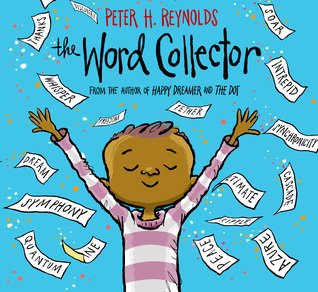
Sofia’s Kids’ Corner: The Word Collector by Peter H. Reynolds

Share

Sofia is an 8-year-old brilliant reader who aspires to be a book reviewer. On select Saturdays, Sofia will share her favorite books with kids! She is one of the most well-read elementary schoolers that we know, so she is highly qualified for this role!

Dear readers,

This book is entertaining for ages young and old and is very sweet. It is called…The Word Collector by Peter H. Reynolds! This picture book has been recommended to me by my little sister and she loves the illustrations. I do too. I recommend this book to teachers and parents for read alouds for any age.

I am going to tell you what my family thinks about this book. My sister says “I love everything about this book!” My dad says “It’s a good book!”(Translated out of my dad’s language that means amazeballs!) My mom says “This book is beautiful beyond words!” And I think it definitely deserves a review!

Jerome collects words. Some words catch his interest. Some are multi-syllable while some have only one syllable. Jerome writes these words on tiny scraps of paper and sticks those scraps into the fitting book for the word. For example, the word Peru would go in a book called Geography. But one day Jerome slips and his words get mixed up! After that he sees words in a different way. He makes poems and songs with his words and they delight people.

I love this book because it teaches wonderful lessons. For example the book teaches that small nice words can make people’s day. I also like this book because of its eye catching illustrations. The illustrations are by the author, Peter H. Reynolds, and I think he did a quite lovely job. Happy reading!

If you love the lessons this book teaches, the wonderful illustrations and are just wanting to get another of Peter H. Reynolds books, then I definitely recommend The Dot by him.

**Thank you, Sofia, for your continued brilliance. You inspire us!**

Magnificent Makers: How to Test a Friendship by Theanne Griffith, Illustrated by Reggie Brown

Share

Magnificent Makers: How to Test a Friendship
Author: Theanne Griffith
Illustrator: Reggie Brown
Published May 19, 2020 by Random House Children’s Books

Summary: BOOM! SNAP! WHIZ! ZAP! The Magnificent Makers series is filled with science, adventure, and characters that readers will love!

A modern-day Magic School Bus for chapter book readers!

Violet and Pablo are best friends who love science! So when they discover a riddle that opens a magic portal in the Science Space at school, they can’t wait to check it out! Along with their new classmate, Deepak, the friends discover a magical makerspace called the Maker Maze. It’s a laboratory full of robots, 3D printers, an antigravity chamber, and more. Doors line the walls of the makerspace, with a new science adventure waiting behind each one.

Ricki’s Review: I think I’ve recommended this book to about fifteen people since we’ve read it. I really admire the way in which Griffith incorporates science in such a fun way. The book almost feels interactive. I am going to admit that I, an adult, learned some cool science information as we read this one. We read this book with our virtual book club of kids, and they all loved it. It was very easy to host discussions, and the kids were very animated as they talked about the sections that they loved most. This is a great early chapter book series that is going to be well-loved by teachers. The interdisciplinary nature of the text makes it very easy to teach. We will definitely be getting the next book in the series.

Kellee’s Review: As a mom of 1st grader who loves to read, we are always looking for new early chapter books that will grab his attention and this book is everything we could want. First, it is relatable. The dynamics between the three characters are accurate and just on point. It also deals with real feelings like jealousy and competitiveness. Second, it is about science! Trent is definitely a science loving kid, and adding some science into his books makes him love them more. Third, it is a reflection of the real world (even though they travel to another dimension) because there are a diversity of kids and adults both in looks and behavior. We have already gone to buy the next three in the series, and we cannot wait to see what adventure happens next!

Teachers’ Tools for Navigation: This book offers many questions that can lead to inquiry and many topics that can be explored further by kids. Teachers might ask students to select a topic in science and write a fictional story about it. This would require some research and thinking about how information is presented in fiction.

Discussion Questions: 

  • What was your favorite aspect of science that you learned from the book?
  • What emotions did the characters experience in the book? Have you been in situations where you’ve felt these emotions?
  • What could you research from this book to learn more (e.g. robots, 3D printers, an antigravity chamber, the ecosystem)?

Flagged Passage: “Producers, consumers, decomposers, oh my! All are necessary for an ecosystem to survive. Most animals are __________. Living things, beware! If ____________ disappeared, we wouldn’t have fresh air. And without ______________, nature’s garbage would be everywhere! Solve this riddle to enter the maker maze” (p. 11).

Read This If You Love: Science books, early chapter books, interdisciplinary learning

Recommended For: 

classroomlibrarybuttonsmall

and Signature

Sofia’s Kids’ Corner: Front Desk by Kelly Yang

Share

Sofia is an 8-year-old brilliant reader who aspires to be a book reviewer. On select Saturdays, Sofia will share her favorite books with kids! She is one of the most well-read elementary schoolers that we know, so she is highly qualified for this role!

Dear readers,

I am going to recommend a book about an amazing girl who went through a lot of hard times and stayed brave. This amazing book is called Front Desk by Kelly Yang. This book is recommended for ages 8-12.

Mia is an immigrant from China and moves to America. She lives in a car for some time while her parents look for jobs. They see an ad in the newspapers saying there is a motel owner looking for an experienced motel manager. The ad says that the owner of a little motel in Anaheim, California is looking for someone to run the place. Mia’s parents jump at the chance and they get hired. They would also get paid a lot of money while doing it! Mia makes amazing friendships with customers and when she thinks nothing can go wrong the owner whose name is Mr. Yao lowers their pay. That means that there isn’t much money they are getting and that is bad. When Mia starts going to school more problems pop up. Like a girl named Lupe. She is Mia’s friend and Mia thinks it is because she told her she lives in a big house and has a golden retriever but none of that is true. It gets even worse when she realizes that the motel owner’s  son is in her class. The thing is the son is not exactly nice to her.

One person loses a job because of Mr. Yao and can not pay to stay in Mr. Yao’s motel anymore so Mr. Yao tells him to go. That person is one of Mia’s best friends and Mia hides him inside of the motel. Soon Mia’s immigrant relatives start coming and stay for free. Will Mr. Yao find them and kick them out or will Mia and her family keep the immigrants hidden from him?

There is so much more to this story but you have to read it for yourself.

I love this book because of all the suspense it gave me reading it. So many times I guessed the wrong thing that would happen next. I also love this book because it also really pulled me into the story. My parents could even listen to music and I wouldn’t even hear it! I also had that book with me everywhere I went. My parents almost couldn’t convince me for a bike ride, one of my favorite things! I hope you get as wound up in the book as I did!!

If this book leads you to want to know more of her story then check out the sequel called Three Keys! I have not read it yet but it is definitely on my Need To Read!!!!! list.

**Thank you, Sofia, for your continued brilliance. You inspire us!**


Sofia’s Kids’ Corner: My Favorite Books by Roald Dahl

Share

Sofia is an 8-year-old brilliant reader who aspires to be a book reviewer. On select Saturdays, Sofia will share her favorite books with kids! She is one of the most well-read elementary schoolers that we know, so she is highly qualified for this role!

Dear readers,

I have again decided to change things up a bit. This time I will be recommending several books by the same author. His name is Roald Dahl. I haven’t read many of his books, but the ones that I have read were truly amazing. They make great read-alouds, too. I recommend the books that I am covering in this review for about ages 7-12.

The first time I heard about this author’s creations was when my first grade teacher read my class Charlie and the Chocolate Factory, probably Roald Dahl’s most famous book. Charlie and the Chocolate Factory is about a poor boy named Charlie Bucket who walks past Willy Wonka’s

factory on his way to school. Charlie always stops and sniffs the amazing smells of Wonka’s factory for he only gets one candy bar per year and that is on his birthday. That singular bar he gets on his birthday, he saves by nibbling little by little off each day. When Willy Wonka announces in the newspaper that five, only five, of his Wonka bars have a golden ticket inside that will get five lucky kids into the factory, everybody goes crazy about buying Wonka bars. It seems unlikely for Charlie to get the Golden Ticket but who knows, maybe he will be lucky…

I was very excited when my friend visited and gave me a collection of most of Roald Dahl’s children’s books. She even recommended Matilda which is now one of my favorite books by him. Matilda is about a girl named Matilda who loves to read and is super smart. Matilda’s parents are mean and force her to watch television when she would rather be reading a book, so she puts up a secret policy of her own… When Matilda is finally old enough to go to school she meets her nice teacher Miss Honey and her terrible principal Miss Trunchbull. Matilda is the smartest kid in her class because she reads so many books. Miss Honey is fascinated by Matilda’s knowledge and likes that she does not brag about it.

This book was so good I decided to read it to my four year old sister. Introducing Fantastic Mr Fox! Fantastic Mr Fox is about a father fox and his family. When it gets dark the father fox always carefully slips out of his home to steal some food from three mean farmers. Their names are Bean, Bunce and Boggis and they all run their own type of farm. They are very mean and know that he is stealing their stuff and are furious about it. They make plans to catch him, but none of them have worked so far. Can they do it or will Mr Fox outfox them?

The book that I am about to present to you is one that I read with my friend for a sort of book club. Presenting The Witches! The Witches is about a boy who has a grandma who tells stories about witches. She tells him always to be on the lookout for them because they can kill you and eat you. She tells him a few things that witches always have. First, a real witch is certain to have gloves. Second, a real witch is always bald but wears a wig that usually itches. Third, a real witch has slightly bigger nostrils. Fourth, a real witch has different eyes than normal people because where we have a black dot in the middle of our eye theirs change color all the time. There are more ways to identify a witch, but you need to read the book to find out. The grandma says that there is a Grand High Witch which is basically the queen of all witches. She is the meanest of all the witches and all of the witches are petrified of her. When the boy comes out to climb a tree one time, a strange lady suddenly appears under the tree and tells him to come down. The boy suddenly sees she has all the characteristics of a witch and starts to climb higher. Will the witch get him or will he escape?

This book must be popular among my teachers because after I read it my teacher read it, too. A perfectly magical book called The Magic Finger! The Magic Finger is about a girl who has a finger that shoots some sort of magic when someone makes her mad. Her neighbors have a habit of hunting and the girl doesn’t like them doing it. She thinks that it doesn’t seem right to kill animals just for the fun of it. The girl can’t help it, she puts the magic finger on them all, even the wife that does not hunt. Sorry, but you have to read the book to find out what happens to them.

In case it is not obvious why I like these books, it is because Roald Dahl is a great storyteller and his books are bursting with fantasy and crazy ideas. If you want to learn about the author, I highly recommend a book called Who was Roald Dahl? by True Kelly.

**Thank you, Sofia, for your continued brilliance. You inspire us!**


Sofia’s Kids’ Corner: The Girl who Drank the Moon by Kelly Barnhill

Share

Sofia is an 8-year-old brilliant reader who aspires to be a book reviewer. On select Saturdays, Sofia will share her favorite books with kids! She is one of the most well-read elementary schoolers that we know, so she is highly qualified for this role!

Dear readers,

Hi! Are you searching for a book that makes you sad and happy at the same time? Then The Girl Who Drank the Moon by Kelly Barnhill would be a good choice. This book has gotten a Newbery Medal. It is recommended for ages 10-14 on Amazon, but I think an eight or nine year old that is good at reading could read it too.

In the woods lives a witch called Xan. She is nice, but the people of the Protectorate think she will bring harm to their town. Every year the Protectorate takes the youngest baby in the town and puts it in a big stone circle in the woods. The Grand Elders (the mayors) never thought there was a witch and thought the baby was going to be eaten by animals. They are not correct because every year Xan comes to the stone circle and takes the baby to a welcoming city called a Free City.

They call the child that Xan brings a Star Child and treat the day she comes like a holiday. Xan feeds the babies starlight while she carries them to a Free City. One time though she accidentally feeds a baby moon light by which she enmagicks her. This is a quote from the book: “There is magic in starlight, of course. This is well known. Moonlight, however. That is a different story. Moonlight is magic. Ask anyone you like.” Xan decides she cannot leave this baby with an ordinary person, so she decides to raise her as her own and names her Luna.

Antain is a boy of the Protectorate and an “Elder in training” when this book starts and grows older. As he grows older he decides not to be an Elder, instead he becomes a well known carpenter. He gets married and this time his wife’s baby is the youngest in the Protectorate and it is getting close to the day they take the baby away from them…This book is told from several different points of view. For example: Xan, the kind witch, Luna, Xan’s child, and a Protectorate mother.

I love this book so much because it teaches that if you haven’t met a person you can’t really say anything about them even if you are pretty sure it’s true. I also like this book because of a dragon that thinks he is really big even though he is the smallest thing ever.

This year before the coronavirus I was walking through our school library and saw this book. I didn’t pay much attention to it. I am kind of sad and kind of glad about that because later in the year I looked at what it was about on Amazon and decided to buy it with my pocket money. It was a great purchase.

I am excited to check out this other book by the same author called The Witch’s Boy. I hope it is as good as The Girl Who Drank the Moon. Enjoy!

**Thank you, Sofia, for your continued brilliance. You inspire us!**


Our World: A First Book of Geography by Sue Lowell Gallion

Share

Our World: A First Book of Geography
Author: Sue Lowell Gallion; Illustrator: Lisk Feng
Published: July 15, 2020 by Phaidon Press

Summary: A read-aloud introduction to geography for young children that, when opened and folded back, creates a freestanding globe

Children are invited to identify and experience the Earth’s amazing geography through rhyming verse and lush illustrations: from rivers, lakes, and oceans deep, to valleys, hills, and mountains steep. Secondary text offers more detailed, curriculum-focused facts and encourages readers to consider their own living environments, making the reading experience personal yet set within a global backdrop. This informative homage to Earth is sure to inspire readers to learn more about their planet – and to engage with the world around them.

ReviewOh, how I love this book! It is very cleverly designed. My sons have decided that they will alternate having it in their rooms each week, so it was a hit in my household. The book opens to form a globe! The information within the book is educational for both kids and adults. For instance, I learned about the different temperatures of deserts. Very cool! The book is marketed to ages 2-5, but my almost 7-year-old found it fascinating and learned new information (as did I!). I think other elementary schoolers would also really enjoy this book.

Each page features a theme of information and artworking, like a living environment or the rivers, lakes, and oceans. It’s packed with interesting facts on the thick, sturdy board book pages. This book would make a great gift to a teacher or child. I recommend it highly!

Teachers’ Tools for Navigation: Teachers could pair this book with a unit on geography. Students might each take a different page and research further the topic of the page. Alternatively, kids might design their own three-dimensional books using this one as their mentor text. For instance, they might design a book based on a planet or some other theme. I am hoping for more books in this style!

Discussion Questions: Which was your favorite page? Why? What did you learn on the page? What other information could you research about the topic?; How do the pages work together to teach us about our world?

We Flagged: 

Read This If You Love: Any nonfiction books about the geography and our world; interactive books

Recommended For: 

classroomlibrarybuttonsmall

**Thank you to Wendy Kitts and Frannie Gordon for introducing me to this book and providing a copy for review!**