National Geographic Kids Early Reader Biographies: George Washington Carver & Sonia Sotomayor

Share

NFPB2016

Nonfiction Wednesday

Nonfiction Picture Book Wednesday is hosted by Kid Lit Frenzy and was started to help promote the reading of nonfiction texts. Most Wednesdays, we will be participating and will review a nonfiction text (though it may not always be a picture book).
Be sure to visit Kid Lit Frenzy and see what other nonfiction books are shared this week!

gwc

George Washington Carver
Author: Kitson Jazynka
Published January 12th, 2016 by National Geographic Children’s Books

Summary: Take a bite into the fascinating history of peanut butter and the man who invented it. Through leveled text and engaging photos, kids meet George Washington Carver and learn about his important work with peanuts and other plants. This Level 1 reader is carefully leveled for an early independent reading or read aloud experience, perfect to encourage the scientists and explorers of tomorrow!

Discussion Questions: Why did Carver have to move when he was 13?; What events in Carver’s life helped him become the first black student at Iowa State and eventually a professor?; What inventions did Carver discover?

We Flagged: “In Carver’s time, life was hard for many black people in the United States. They did not have the same rights as white people.

Carver felt that this was wrong. He used his ideas about farming to help change people’s lives.” (p. 7)

NG - Sonia Sotomayor

Sonia Sotomayor
Author: Barbara Kramer
Published January 12th, 2016 by National Geographic Children’s Books

Summary: Explore one of the most recognized names in modern America with this biography of Supreme Court Justice Sonya Sotomayor. Kids will learn about her rise to be the first Hispanic Supreme Court Justice and the trials she faced along the way. The level 3 text provides accessible, yet wide-ranging, information for independent readers.

Discussion Questions: What traits does Sotomayor have that helped her succeed in education to eventually become a Supreme Court justice?; Sotomayor has not forgotten where she comes from. In what ways does she give to her childhood community?; What did Sotomayor do that was so extraordinary?

We Flagged: “In August 2009, Sonia Sotomayor became a Super Court justice. It is a special job. Sotomayor is the 111th person ever to receive that honor. She is the third woman and the first Hispanic justice to serve on that court.” (p. 4)


My Review: These texts are such a wonderful way to introduce readers to some very important people in history. The books don’t back down from hard subjects like racism and poverty, but instead teach the reader about it in an easy to understand way. And to help the reader even more, throughout the books, any tough words are defined, sidebars are filled with additional information, and text features such as illustrations, graphs, and timelines elaborate on the story.

Teachers’ Tools for Navigation: These books could be used in many different ways including guided reading during a teacher-led small group or as biography lit circles.

Read These If You Love: Biographies

Recommended For: 

classroomlibrarybuttonsmall litcirclesbuttonsmall

Kellee Signature

**Thank you to Karen from Media Masters for providing copies for review!**

It’s Monday! What Are You Reading? #IMWAYR 2/29/16

Share

IMWAYR 2015 logo

It’s Monday! What Are You Reading? From Picture Books to YA!

It’s Monday! What are you Reading? is a meme started by Sheila at Book Journeys and now hosted by Kathryn at The Book Date. It is a great way to recap what you read and/or reviewed the previous week and to plan out your reading and reviews for the upcoming week. It’s also a great chance to see what others are reading right now…you just might discover the next “must-read” book!

Kellee and Jen, of Teach Mentor Texts, decided to give It’s Monday! What Are You Reading? a kidlit focus. If you read and review books in children’s literature – picture books, chapter books, middle grade novels, young adult novels, anything in the world of kidlit – join us! We love this meme and think you will, too.

We encourage everyone who participates to support the blogging community by visiting at least three of the other book bloggers that link up and leave comments for them.

Last Week’s Posts

top ten tuesday Reproductive Rights learning to labor

1-2yearsbooks RampartGuards_CVR_MED

Tuesday: Ten Books We Enjoyed Recently that Weren’t Typical Genres/Topics We Read

Wednesday: Blog Tour, Author Guest Post, and Review!: Reproductive RightsWho Decides?  by Vicki Oransky Wittenstein

Thursday: Learning to Labor by Paul Willis (Ricki’s reflection on the educational fallacies we promote in schools today)

Friday: Trent’s Favorite Books: 1 to 2 Years

Sunday: Author Guest Post!: “Stories are Everywhere” by Wendy Terrien, Author of Rampart Guards

**Click on any picture/link to view the post**

 Last Week’s Journeys

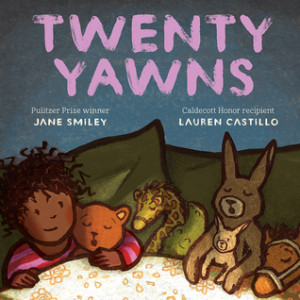
Kellee: This week has been filled with picture books! Trent and I read, and loved!, Normal Norman by Tara Lazar and Twenty Yawns by Jane Smiley. He actually let me read him new books, and I thank the amazing illustrations and story. We’ll be sharing both of these soon. I also read the two National Geographic early reader biographies that I will be reviewing on Wednesday.

Ricki: Like, Kel, I also read Normal Norman by Tara Lazar and Twenty Yawns by Jane Smiley! I brought Normal Norman to my parents’ house to show them. They have a dog named Norman, and they loved reading it to him, too! It is a fun book with a great message. Twenty Yawns is a fantastic bedtime story that made me yawn and yawn!

This Week’s Expeditions

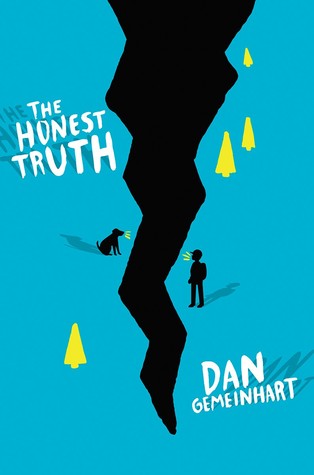
Kellee: I’m currently reading Maybe a Fox by Kathi Appelt. I am really loving her prose–she just has a way with words. After I am done, I plan on reading The Honest Truth by Dan Gemeinhart in preparation for my school’s first faculty book club!

Ricki: Well, this isn’t much different, either! I am also reading Maybe a Fox like Kellee! I guess we are focused on our blogging books this week! I am just about finished listening to Grasshopper Jungle by Andrew Smith. More on that next week. 😉

Upcoming Week’s Posts

top ten tuesday gwcNG - Sonia Sotomayor

normal norman tyranny of petticoats dragon of the month

Tuesday: Books to Read if You Are in the Mood for a Good Laugh

Wednesday: National Geographic Early Reader Biographies: George Washington Carver and Sonia Sotomayor

Thursday: Blog Tour and Review!: Normal Norman by Tara Lazar

Friday: A Tyranny of Petticoats Blog Tour with Author Q&As by Caroline Richmond, Lindsay Smith, and Robin Talley

Sunday: Author Guest Post!: “School Visits” by Iain Reading, Author of The Dragon of the Month Club

 So, what are you reading?

Link up below and go check out what everyone else is reading. Please support other bloggers by viewing and commenting on at least 3 other blogs. If you tweet about your Monday post, tag the tweet with #IMWAYR!

 Signature andRickiSig

Author Guest Post!: “Stories are Everywhere” by Wendy Terrien

Share

“Stories are Everywhere”

Stories are everywhere. And there’s no one right way to discover them.

This probably isn’t a profound statement to adults. But maybe, just maybe, it might spark something in a kid.

THE RAMPART GUARDS was borne out of an hour of easy-going, not-too-intellectual television viewing. Television! That which we should all spend less time doing. If we want to better ourselves, we should be reading, or writing poetry, or exercising, or calling our parents or siblings, or hanging out with friends. Those are the things that make us better, more well-rounded people. Right? Television certainly isn’t going to do the trick.

But I watched television. And then I wrote a novel.

I was already immersed in the idea of writing a novel, and I’d been busy attending conferences and workshops, and exploring the world of publishing. I had some ideas for stories I could write, but nothing excited me. And then I watched an episode of Bones, and that night’s murderer appeared to be a chupacabra. What is a chupacabra? That’s exactly what I asked myself. A moment later I heard the word cryptozoologist and again found myself wondering what the characters on the show could possibly be talking about. Off to the Google I went.

For those of you who don’t know, a chupacabra is a creature, rumored to exist, that enjoys attacking and drinking the blood of goats. Lovely, no? Because its existence is not proven, the chupacabra falls into the category of cryptid. And the study of such creatures, which also includes things like Bigfoot, the Loch Ness Monster, and the Mongolian Death Worm, is the job of the cryptozoologist.

One Google led to another. I soon discovered that there were many unknown creatures that may or may not exist, and I was fascinated. This was the spark for me, that thing that triggered the “what if” questions, and research, and story development. And now THE RAMPART GUARDS exists.

What if I hadn’t been watching Bones that night? Would I have ever written THE RAMPART GUARDS? It’s tough to say. But if I hadn’t connected with this story, I believe something else would have found it’s way to me through some channel. My point being, it’s important for us to hold open every possible door for our kids to create, to think, to question. Yes, television can be mindless, and there are times when that, too, serves a purpose, in my humble opinion. But if we’re engaged, if we’re thinking, there is learning in everything.

By using activities and other things kids love to do every day, we can help kids stretch their minds in new ways. Ask them: what if a character from their favorite television show met someone from their favorite game? What would happen? Would they like each other? What kinds of things would they do together?

Maybe there’s a funny or unusual commercial running that everyone’s talking about. Ask what happened before those thirty seconds, or what happens afterward, or even how they might make the commercial better. (And if anyone can explain why Paul Giamatti is in that family’s home talking about Xfinity while they direct his performance, please enlighten me. I really don’t get it. At all. But I digress.)

What if iPhone’s Siri met Android’s Cortana?

What if we really lived in Candyland? What would each student’s house look like? Or where would they want to live on the Monopoly board and why?

What would happen to Bert and Ernie if Bert got a new job out of state?

What can be mixed up in their world right now, and envisioned in a different way? Can the students take a character out of a book the class is reading, and invent a new story for them? One that happens away from the story they’re reading? Or maybe it’s a person from history, or an event, or even one of those made up holidays like National Peanut Butter Day (which was January 24th, by the way)—why was it important to someone to establish National Peanut Butter Day? What is their story?

Is some of this silly? Sure. But I bet it made you think just a little bit differently, even for the brief moment when you read and wondered about National Peanut Butter Day, didn’t it? It opened you up, pushed you ever so slightly out of the box, and engaged you with a creative part of the brain that might otherwise sit dormant. Offer this to kids, too. Encourage them to be silly, and think differently about stories, and create their own new versions in the best, fun way.

As we know, learning is everywhere. And there’s no one way to discover, and love, learning.

RampartGuards_CVR_MED

The Rampart Guards: Chronicle One in the Adventures of Jason Lex
Author: Wendy Terrien
Published February 26th, 2016 by Camashea Press

Goodreads Summary: After his mom disappears, Jason Lex and his family move to a small town where he has no friends, no fun, no life. Things get worse when he’s chased by weird flying creatures that only he can see—Jason thinks he’s losing it.

But when Jason discovers new information about his family, he’s stunned to learn that creatures like Skyfish, Kappa, and the Mongolian Death Worm aren’t just stories on the Internet—they’re real and they live unseen alongside the human race. Many of these creatures naturally emit energy capable of incinerating humans. An invisible shield keeps these creatures hidden and protects the human race from their threatening force, but someone, or some thing, is trying to destroy it.

Unsure who he can trust, Jason is drawn into the fight to save the people closest to him, and he finds help in surprising places. Confronted with loss, uncertainty, and a devastating betrayal, Jason must make a gut-wrenching decision:
Who lives, and who dies?

About the Author: Wendy Terrien has been writing stories since she was in grade school. Her debut novel The Rampart Guards (February 26, 2016) is the first in her urban fantasy series.

Raised in Salt Lake City, Wendy graduated from the University of Utah and soon transplanted to Colorado where she completed her MBA at the University of Denver. Having applied her marketing expertise to the financial and network security industries, it wasn’t until a career coach stepped in that she fully immersed herself in her passion for writing. Wendy began attending writers conferences, workshops and retreats.

Wendy lives in Colorado with her husband Kevin and their three dogs: Maggie, Shea and Boon. All three of her dogs are rescues and Wendy is passionate about promoting shelter adoptions. If you’re ever in Colorado, you may even be able to spot her by her “Adopt a Shelter Pet” license plates.

Make sure to check out the rest of the blog tour!

Kellee Signature andRickiSig

**Thank you to Wendy and Sami for providing the guest post and having us be part of the blog tour!**

Trent’s Favorite Books: One to Two Years Old

Share

1-2yearsbooks

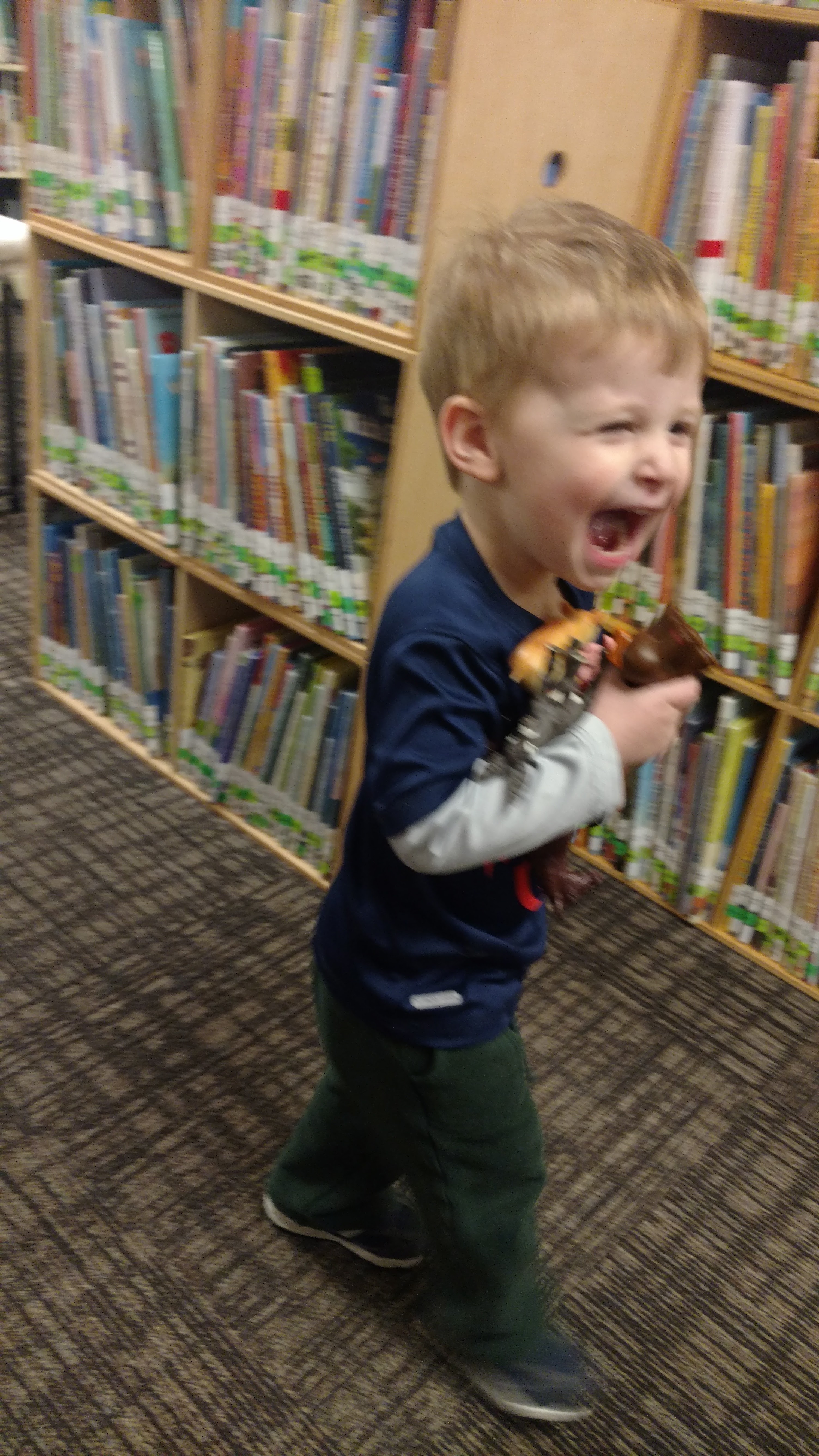
I cannot believe that Trent is two! He is such a smart, sweet, funny boy who is really coming into his own. Additionally, over the last year, he has gotten a reading personality. I used to be able to force him to listen to whatever I wanted to read, but now he drives the book bus. He’ll still listen to new books I love sometimes, but most of the time, he is choosing what he wants to read, and he definitely has favorites. I will preface with the fact that most of these are board books because that is what he primarily has access too. I cannot wait until he isn’t into tearing book pages, and we can dive into all of his picture books freely!

Here are his favorite books over the last year (in no particular order):

1-2yearsbookcollage

Don’t Push the Button by Bill Cotter

This book is hilarious! Trent loves the interactive parts, and I love how clever it is.

Go, Dog, Go! by P.D. Eastman

A classic! Trent says good bye at the end of the hat scene which is adorable! I also love how it teaches colors, prepositions, and opposites.

Thomas the Tank Engine Me Reader

This lets Trent be in control. It has a reader that allows him to pick which book he wants to read then each page he is reading has a symbol that he presses and it reads the page to him.

Friends by Eric Carle

A new favorite of his. There is a part in the middle where the character is on an adventure to find his friend, and Trent loves the onomatopoeias that are within this section.

Race Car Count by Rebecca Kai Dotlich

I am so glad we got this book because it may just be Trent’s favorite. He loves the orange car the best. I really think this book is the reason why he knew all of his colors by 22 months!

Goodnight, Goodnight Construction Site (Sound book) by  Sherri Duskey Rinker

Trent is a fan of sound books and construction machinery, so this is a perfect mix and a great bedtime story.

Big Friend, Little Friend from the World of Eric Carle

Another sound book which looks at big and little animals that live in the same habitat. Another combo of two things Trent loves.

A Book of Sleep by Il Sung Na

This has been a favorite of Trent’s from the second we read it the first time. He loves his owl book. He’s also started having us read Little Owl’s Night by Divya Srinivasan, so I can see it sneaking in and being a loved owl bedtime story too.

If I Were a Penguin by Anne Wilkinson

Another favorite for his entire life. He loves the touch-and-feel aspects and penguins.

Rainbow Rob by Roger Priddy

This book is such a great mixture of humor, touch-and-feel, and learning. It teaches about different animals and colors within a humorous story with each animal having a different textured aspect.

Goodnight Moon by Margaret Wise Brown

At first Trent had no interest in Goodnight Moon, but recently we had started saying goodnight to everything around the house, so I decided to bring it back out. Now it is the book that we end every day with. He crawls into bed, and I read it to him right before kissing him goodnight.

The Monster at the End of this Book and its sequel by Jon Stone

My boy is a Sesame Street kid (and proud of it), and we love both Monster books.

Little Monsters and Oh My a Fly! by Jan Pieńkowski

These are both pop-up books that we had when I was younger, and my mom passed on to me. They are a little gross and weird, but Trent just thinks that’s hilarious.

Peek-A-Zoo and Peek-A-Boo by Nina Laden

This along with Pete the Cat and Llama Llama are the first books that Trent “read” because he memorized what to say (or parts of what to say). He loves turning the page and “scaring” himself with the animal or Halloween-themed thing beneath the page.

Llama Llama Zippity Zoom and other Llama Llama board books by Anna Dewdney

Llama Llama Zippity Zoom is one of my favorite books to read with Trent because he reads along with you and loves the different rhyming words throughout. He yells VROOM VROOM VROOM every time–it is so great! He is also starting to like the rest of the Llama Llama board books we have, so I see him being a huge Llama Llama fan in the future.

Pigeon books by Mo Willems

We have progressed through many of the pigeon books over time. Originally, we read mostly the board book The Pigeon Has Feelings Too, but one day Trent saw The Pigeon Needs a Bath on the shelf and asked for it. The rest is history. He now has Don’t Let the Pigeon Drive the Bus in the mix as well.

Pete the Cat books by Eric Litwin and James Dean

We love Pete. The original is still our favorite and probably always will be, but Trent is good with reading any Pete book.

Disney Sound Storybook Treasury and other Disney books

We are a Disney family, so Trent is a bit obsessed with some of the characters (Anna, Olaf, Ariel, Mike Wyzowski, Sully, Buzz, Woody, Mickey, and Minnie to name a few), so he often wants to read our Disney books.

Reading with my child is something that I cherish. And I love that he is a fan of reading and has been since birth:
A First Year Full of Books
Trent and Kellee’s Favorite Books: Nine to Twelve Months
Trent and Kellee’s Favorite Books: Six to Nine Months
Trent and Kellee’s Favorite Books: Three to Six Months
Trent and Kellee’s Favorite Books: First Three Months

I cannot wait to see what the next year in books looks like for my sweet boy!

Kellee Signature

Blog Tour, Author Guest Post, and Review!: Reproductive Rights: Who Decides? by Vicki Oransky Wittenstein

Share

NFPB2016

Nonfiction Wednesday

Nonfiction Picture Book Wednesday is hosted by Kid Lit Frenzy and was started to help promote the reading of nonfiction texts. Most Wednesdays, we will be participating and will review a nonfiction text (though it may not always be a picture book).
Be sure to visit Kid Lit Frenzy and see what other nonfiction books are shared this week!

Reproductive Rights

Reproductive Rights: Who Decides?
Author: Vicki Oransky Wittenstein
Published January 1st, 2016 by Twenty-First Century Books

Summary: Throughout history, men and women have always found ways to control reproduction. In some ancient societies, people turned to herbs or traditional rituals. Others turned to methods that are still used in the twenty-first century, such as abstinence, condoms, and abortions.

Legislating access to birth control, sex education, and abortion is also not new. In 1873 the US Congress made it illegal to mail “obscene, lewd, or lascivious materials”—including any object designed for contraception or to induce abortion. In some states in the 1900s, it was illegal for Americans to possess, sell, advertise, or even speak about methods of controlling pregnancy.

At the beginning of the twentieth century, Margaret Sanger, Mary Ware Dennett, and others began to defy these laws and advocate for the legalization of birth control and for better women’s reproductive healthcare. By 1960 doctors had developed the Pill, but it wasn’t until 1972 that all US citizens had legal access to birth control. And in the landmark decision Roe v Wade (1973), the US Supreme Court ruled that women had a constitutional right to terminate a pregnancy.

Disputes over contraception, sex education, and abortion continue to roil the nation, leading to controversial legal and political rulings and occasionally violence. As society changes—and as new reproductive technologies expand the possibilities for controlling and initiating pregnancy—Americans will continue to debate reproductive rights for all.

About the Author: Before becoming an author, VICKI ORANKSY WITTENSTEIN prosecuted criminal cases as an assistant district attorney with the Manhattan District Attorney’s office. She earned an MFA in writing for children and young adults from Vermont College of Fine Arts. Vicki has written a number of science articles and books for the juvenile market, including Planet Hunter: Geoff Marcy and the Search for Other Earths, which won the 2011 Science Communication Award from the American Institute of Physics. Her book For the Good of Mankind? The Shameful History of Human Medical Experimentation was a Junior Literary Guild selection. Vicki and her husband live in Brooklyn, New York. Visit her website at vickiwittenstein.com.

Kellee’s Review: Wittenstein obviously did her research. Her text is filled to the brim with facts and unbiased information of all sides of the reproductive rights debate. I loved learning about the history of reproductive rights as well as the more details than I knew about the present situation and even information about possibilities in the future. I think Wittenstein did a good job with including primary sources, text features, and some narratives to help move the text along as well. 

Ricki’s Review: This is a very comprehensive book that was interesting to read from the beginning to the end! I enjoyed how Wittenstein presented factual information in ways that will engage readers. For instance, she describes the various ways that people of different cultures and time periods believe(d) they can (or could) avoid pregnancy. For instance, you might walk three times around a tree where a pregnant wolf has urinated. This sounds like it would be very difficult to do! This is a great book that students will enjoy. It is a controversial, so I’d probably check with students that they feel comfortable with the content before they sign it out. I don’t believe in censorship, and instead, I believe in allowing students to self-censor when they aren’t comfortable with content. This book is very important for classrooms because it ensures that kids are not in the dark about reproductive issues.

Teachers’ Tools for Navigation: This text is such an amazing resource. It will definitely be an asset either as a textbook or resource in a college or high school class that is touching on or researching reproductive rights, women’s rights, or legal proceedings. It is such a wonderful starting point for learning about the history and progression of reproductive rights.

Discussion Questions: What legal case was the biggest turning point for reproductive rights?; How has women’s rights progressed overtime?

Author Guest Post answering “What inspired you to write Reproductive Rights?” and “What was your research process for the book?”

There were so many inspirations for this book, so I will try to limit myself to a few! First, for as long as I can remember, I have been passionate about women’s rights. When I was in college, I co-organized one of the first domestic violence conferences in Philadelphia. Later, as an Assistant District Attorney in Manhattan, I spoke to many women who had been assaulted by their partners. That first-hand experience led me to chair the board of an organization that sheltered women victims. In addition, I grew up in the 60’s and 70’s during a time when women were just beginning to enter traditionally all-male professions, such as law and medicine. A good part of this new freedom was due to the availability of the Pill and the legality of contraception and abortion. These reproductive rights helped countless women believe they could achieve advanced degrees and build careers.

More recently, worries about setting the historical record straight sparked my interest in writing about this topic. Over the last decade or so, people have learned much of their worldwide news from short media sound bites flashed across the Internet. For many teens, these bits and pieces about new reproductive rights legislation or video clips of rallies against or for abortion are heard without an historical context. Without history, how can we expect young people to navigate through the minefield of these complex and controversial issues, understand what’s at stake with the hundreds of new laws that limit access to contraception and abortion, and form their own opinions?

For thousands of years—from ancient civilizations, through Colonial America, the development of the Pill, the legalization of contraception and abortion, and the brave new world of reproductive technologies—men and women have always found ways to control reproduction. By viewing reproductive rights through an historical lens, teens can learn that controlling procreation is a human need that is not new. This rich history can inform debate and analysis of availability of, access to, and funding for contraception, sex education, and abortion. Today’s teens are the ones who will be most affected by the laws enacted by our federal and state legislators and argued before our courts. And as new reproductive technologies expand the possibilities for controlling and initiating pregnancy, teens are the future adults who will define what it means to be a parent and under what circumstances. So, in many ways this book was inspired by my desire to lay a roadmap for the next generation of parents.

Most of my research was accomplished inside the New York City Public Library, a building filled with astounding resources and fabulous librarians. I also accessed many scholarly and legal articles online through university research collections, as well as letters, diaries, etc. Often just one article or the mention of an event or name led to the next kernel of information, as I worked to fit all the pieces into the puzzle. In many instances, my research uncovered names and events I had never heard of before. For example, I was astounded to learn about two largely unsung heroines: Mary Ware Dennett, who wrote one of the first pamphlets for young people about sex and paved the way for gutting the laws banning the discussion and use of contraception; and Katharine McCormick, the wealthy suffragist and biologist who funded and oversaw the initial development of the Pill. Another big help was the continual flow of media attention that reproductive rights issues provoke. Newspaper articles about state laws and court cases restricting access to women’s clinics led me to explore and understand the lay of the land today. I read lots of articles about the ways in which laws were restricting access to clinics by persuading women not to have abortions and forcing the closure of clinics.

Unfortunately, the media attention surrounding abortion has overshadowed what it means to be in favor of reproductive rights, as most reproductive health care involves cancer screenings, pregnancy prevention and care, and family planning—services mostly unrelated to abortion. I hope the current presidential debates and the appointment of a new Supreme Court justice shine a spotlight on reproductive rights, and that educators will continue to spur critical discussion of these important issues.

Thank you, Kellee and Ricki, for hosting me today!

We Flagged: “In the United States of the twenty-first century, reproductive health is hotly debated. For example, assisted reproductive technologies (ART) for infertile couples raise new ethical and moral issues…”

Read This If You Loved: Nonfiction texts about women’s rights

Follow the tour:
Mon, Feb 15
Proseandkahn
Tues, Feb 16
The Book Monsters
Wed, Feb 17
Library Fanatic
Thurs, Feb 18
Kid Lit Frenzy
Fri, Feb 19
The Nonfiction Detectives
Sat, Feb 20
Ms. Yingling Reads
Mon, Feb 22
The Launch Pad
Tues, Feb 23
Through the Tollbooth
Wed, Feb 24
Unleashing Readers
Thurs, Feb 25
The Pirate Tree
Fri, Feb 26
Teach Mentor Texts

Recommended For: 

classroomlibrarybuttonsmall

Signatureand RickiSig

**Thank you to Barbara at Blue Slip Media for providing copies for review!**

It’s Monday! What Are You Reading? #IMWAYR 2/22/16

Share

IMWAYR 2015 logo

It’s Monday! What Are You Reading? From Picture Books to YA!

It’s Monday! What are you Reading? is a meme started by Sheila at Book Journeys and now hosted by Kathryn at The Book Date. It is a great way to recap what you read and/or reviewed the previous week and to plan out your reading and reviews for the upcoming week. It’s also a great chance to see what others are reading right now…you just might discover the next “must-read” book!

Kellee and Jen, of Teach Mentor Texts, decided to give It’s Monday! What Are You Reading? a kidlit focus. If you read and review books in children’s literature – picture books, chapter books, middle grade novels, young adult novels, anything in the world of kidlit – join us! We love this meme and think you will, too.

We encourage everyone who participates to support the blogging community by visiting at least three of the other book bloggers that link up and leave comments for them.

Last Week’s Posts

top ten tuesday trashed

happy dandelion

Blog20160208_160614 Sleight of Hand

Tuesday: Songs We Wish Were Books

Wednesday: Trashed by Derf Backderf

Thursday: The Happy Dandelion App

Friday: Precepts

Sunday: Author Guest Post! by Sue Duff, Author of Sleight of Hand

 Last Week’s Journeys

Kellee: I’ve had a really varied reading week of three middle grade books!

First, I read Mystery of the Map by Jack Chabert which is the first book in a new graphic novel series based off of Jeff Kinney’s Poptropica game. It is going to be LOVED by middle grade students.

Next, I finished Kiki and Jacques by Susan Ross which is a story of a small town in Maine who has a group of African refugees. It is a middle grade book that is fun but also looks at some very important issues. I cannot wait to review it for you all–it needs to get into more kids’ hands.

Finally, I read Agent Darcy and Ninja Steve in Tiger Trouble by Grant Goodman which is an engaging adventure book willed with ninjas, wit, and action.

Ricki: I finished a really interesting book called Learning to Labor: How Working Class Kids Get Working Class Jobs. It was really depressing but true attack on today’s educational system and how it actually works to promote the stratification of social class levels. I am going to write a blog post/review about it this Thursday because I can’t stop thinking about how relevant it is.

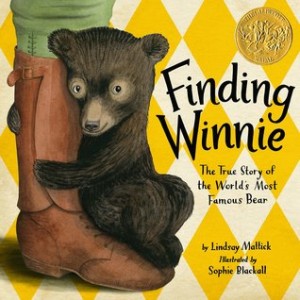
Henry and I read (and loved) Finding Winnie: The True Story of the World’s Most Famous Bear by Lindsay Mattick. This book is worthy of its praise. I broke my rule about not buying books and had to splurge and get it. It is such an incredible book! We also read The Most Magnificent Thing by Ashley Spire. I love books like this. It inspires kids to be creative and confident in their creations. We also read Waiting by Kevin Henkes. I loved how simplistic this text was, and I plan to use it to teach my son about patience.

This Week’s Expeditions

Kellee: I cannot wait to jump into my next book: Maybe a Fox by Kathi Appelt! I love Kathi Appelt’s work, so I am looking forward to it. I’m not sure what else I’ll read this week! I’ll let you know 🙂

Ricki: I also plan to read Maybe a Fox by Kathi Appelt! I am quite excited. I have been bogged down with reading for my human rights class. The readings are very good, but I am still struggling to manage school reading, pleasure reading, and motherhood. Pleasure reading is taking a slight back seat, but I am hoping things will wind down very soon.

Upcoming Week’s Posts

top ten tuesday Reproductive Rights learning to labor

1-2yearsbooks RampartGuards_CVR_MED

Tuesday: Ten Books We Enjoyed Recently that Weren’t Typical Genres/Topics We Read

Wednesday: Blog Tour, Author Guest Post, and Review!: Reproductive RightsWho Decides?  by Vicki Oransky Wittenstein

Thursday: Learning to Labor by Paul Willis (Ricki’s reflection on the educational fallacies we promote in schools today)

Friday: Trent’s Favorite Books: 1 to 2 Years

Sunday: Author Guest Post!: “Stories are Everywhere” by Wendy Terrien, Author of Rampart Guards

 So, what are you reading?

Link up below and go check out what everyone else is reading. Please support other bloggers by viewing and commenting on at least 3 other blogs. If you tweet about your Monday post, tag the tweet with #IMWAYR!

 Signature andRickiSig

Precepts: Analyzing and Reflecting Within the Middle School Classroom

Share

precepts

In Wonder by R.J. Palacio, Mr. Browne assigns his students a precept monthly that they will discuss and write an essay about. He defines precepts as “rules about really important things.” Mr. Browne truly inspired me. He is one of those teachers in books that you read and wish you could work with them. Ever since I’d finished Wonder, I’ve wanted to do a precept activity in my class, so this year, I jumped in and do a (mostly) weekly precept.

On most Fridays, students enter my classroom to a precept projected on the board. They read the precept and immediately begin writing. What is the theme of the precept? Why did the author say/write it? What does the precept mean to your life? Does it make you want to change anything? I let them write for about ten minutes and then we begin discussing.

I love many different things about tackling precepts with my students.

First, it gives them time to think about life. Too often during the school day the curriculum is just that: curriculum. Students don’t often get to reflect and think about their own life.

Second, it hits on reading and writing! Students are thinking about theme, author’s point of view, author’s perspective, inferences, and more then are writing a reflection sharing these using evidence and specific examples.

Third, we have some amazing discussions after they read, reflect, and write. Anyone who is worried about the future hasn’t had a really good conversation with a 12-year-old.

Blog20160208_160558 Blog20160208_160614 Blog20160208_160625

Although I have used Mr. Browne’s precepts as an inspiration, I’ve gone a bit rogue from the 365 Days of Wonder book and even include picture books as part of our precept activity. I’ve tried to tie the precepts to our units and also to what is going on in the world like a quote from a 9/11 widow. Here are the precepts we did during the first semester with some students responses.

Picture Books

Each Kindness by Jacqueline Wilson
“Each kindness makes the whole world a little bit better.”

Students made vows of kindness that are posted around the precept.

The Dot by Peter H. Reynolds
“Just make a mark and see where it takes you.” 

Student response: I feel like this book means a lot. First it means that you might think that your not good enough and that doesn’t mean that your bad it just means you need practice and practice makes perfect. Then I feel like when someone inspires you and gives you kindness you should pass it on. Lastly I feel like if you start little and then you practice and become big don’t forget how you started who inspired you and cut the kindness, you should be big and kind to the little ones or the ones who are just starting because you never know when you can be the cause of something big. I think that this book can help a lot of people even though it was a picture book and that’s why you shouldn’t judge a book by how big it is or its cover because a little amount of words can change someone’s life.

Red: A Crayon’s Story by Michael Hall
“He was blue. And everyone was talking…He’s really reaching for the sky. And he really was!”

Student response: “Don’t  tell someone to be something they’re not. Let them discover who they are on their own.”

Last Stop on Market Street by Matt de la Peña
“He wondered how his nana always found beautiful where he never even though to look. He looked all around them again at the…broken streetlamps still lit up…”

Student response: Even if you are broken you can still shine brighter than others.

Poetry

I’m Nobody! Who Are You?” (260) by Emily Dickinson

Student response: I think the theme of the poem is that being a person that tries to be in the pinnacle of attention is not how you will achieve happiness. To me this poem means that being yourself is the easiest source of happiness of life.

Precepts

“When given the choice between being right or being kind, choose kind.” 
-Dr. Wayne Dyer, but found in Wonder by R.J. Palacio

Student response: We as people face choices everyday. Sometimes there easy, sometimes we don’t even realize we’re making one! This precept can be taken many different ways and all are correct. To me, this precept means love over opinion.

We Need Diverse Books

Student response: We need diverse books because when you read read the book and see all these races you think to yourself that its true,you look around you and you see the truth about the world. This is important because we need to be aware that all the people are different but they are all equal.

“If we learn nothing else form this tragedy, we learn that life is short and there is no time for hate.” 
Sandy Dahl, wife of Flight 93 pilot, Jason Dahl

Student response: This precept means that life is shorter than you think and if you live your life hated someone, you will live your life with hate. Most of the time, when you hate, you are angry, that is why you will live your life filled with hatred for another person. I think the author meant that she has partially forgiven the terrorists because she does not want to love her life with hatred. Mrs. Dahl doesn’t want you to live a terrible life just because of some people. You want to live your life to the fullest. This precept means to me that you should not live a short life filled with hate, but a short life living joyfully, which will seem longer than it is. This precept makes me think of many things: the people that have done wrong to me, the terrorists, and 9/11.

“Having the freedom to read and the freedom to choose is one of the best gifts my parents ever gave me.” 
Judy Blume

Student response: I think that this precept means that when you are given the freedom to choose which books you like it is really good because you can maybe relate to the book or learn from it. If you are deprived from books that you really enjoy, you might not even want to read at all because you want to read a certain type of book so much that any other book might not be fun to read. This is kind of like a movie you would want to watch. If you want to watch a movie for the right reasons, such as wanting to learn things or if it seems interesting, and you parents say you cannot watch it, other movies may not be that enjoyable because you are so set on watching a certain movie. You can also learn to be street smart smart from a book ahead of time so if you are in a situation, you have an idea of what to do. I think the author is happy that she was allowed to choose any book that she wanted because she might have learned something from books or maybe she gets very emotionally attached to certain books and she enjoys them very much. Maybe some people just read to go into a different world in their head because their family might be fighting or something. So, all in all the freedom of choosing whatever book you want to read is very important.

“Don’t strive for love, be it.”
Hugh Prather

Student response: I think the precept means that you should be the person to love not wait for someone to love you. Because if you wait you might never have love. And if you love you might get someone to love you back for who you are. Never be in the corner or in your room, always be out there to explore life and what it has to offer. Never give up who you like or what good qualities they have. Always stay true to yourself.

Precepts have given me a way to talk to my students about some tough subjects and get to know them better. Thank you R.J. Palacio and Mr. Browne for the inspiration!

Kellee Signature

Check out R.J. Palacios Nerdy Book Club post about Mr. Browne’s first precept
and her Tumblr post for a list of the Mr. Browne’s monthly precepts