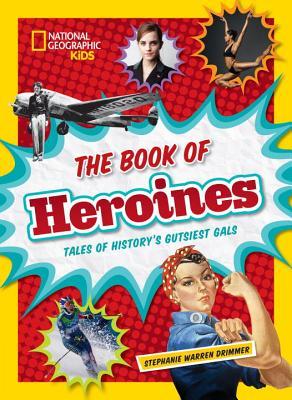
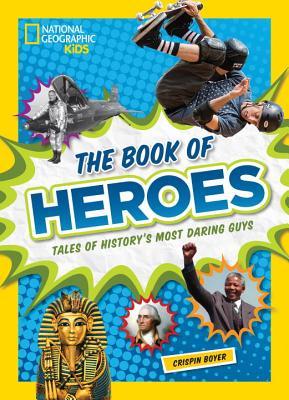
The Book of Heroines: Tales of History’s Gutsiest Gals & The Book of Heroes: Tales of History’s Most Daring Dudes from National Geographic Kids

Share

nfpb2017

Nonfiction Wednesday

Nonfiction Picture Book Wednesday is hosted by Kid Lit Frenzy and was started to help promote the reading of nonfiction texts. Most Wednesdays, we will be participating and will review a nonfiction text (though it may not always be a picture book).
Be sure to visit Kid Lit Frenzy and see what other nonfiction books are shared this week!
book-of-heroines

The Book of Heroines: Tales of History’s Gutsiest Gals
Author: Stephanie Warren Drimmer
Published November 8th, 2016 by National Geographic Children’s Books
book-of-heroes

The Book of Heroes: Tales of History’s Most Daring Guys
Author: Cristpin Boyer
Published November 8th, 2016 by National Geographic Children’s Books

The Book of Heroines Summary: Everybody needs a role model! Discover true stories of superstars, war heroes, world leaders, gusty gals, and everyday girls who changed the world.

From Sacagawea to Mother Teresa, Annie Oakley to Malala Yousafzai, these famous females hiked up their pants and petticoats or charged full-speed ahead to prove that girls are just as tough as boys…maybe even tougher. Complete with amazing images and a fun design, this is the book that every kid with a goal, hope, or dream will want to own.

The Book of Heroes Summary: Everybody needs a role model! Discover the true stories of superheroes, rebels, world leaders, action heroes, sports legends, and many more daring dudes, all of whom played their part to make their mark, make a contribution, and make the world a better place.

From Abraham Lincoln to Sitting Bull, Stephen Hawking to Galileo, these cool guys had the boldness, bravery, and brains to meet the challenges of their day. With a fun design, engaging text, and high-quality photographs, this is ultimate hero guide and keepsake for 21st century kids .

Review: As I’ve stated over and over, I am so impressed with all the new National Geographic Kids books that I have encountered over the last couple of years. With this text, I specifically found the way that the publisher/authors structure the texts makes them so thematic-based thus accessible and informative. The books also have something for everyone as so many different types of heroines/heroes are featured from scientists, historical heroes, political heroes, and more! I cannot wait to put these in my classroom and find out how to use them with students!

Teachers’ Tools for Navigation: Teachers will find this book irreplaceable! It has so much information to fit into so many different units, connect with so many different texts, and relates to so many parts of history. These texts could also be used as the basis of a inquiry project where students use these texts as previews and they choose a theme or a hero/heroine and complete a research/inquiry project around it or maybe even create a text set around the theme or the person.

Discussion Questions: Which heroine/hero do you think changed history the most?; If you were to take part in an inquiry project about one hero/heroine, who would you like to learn more about?; Why did the author/publisher choose to structure the text in the way they did? What other structures could they have chosen? Which do you feel would have had a bigger impact?

Flagged Passages: 
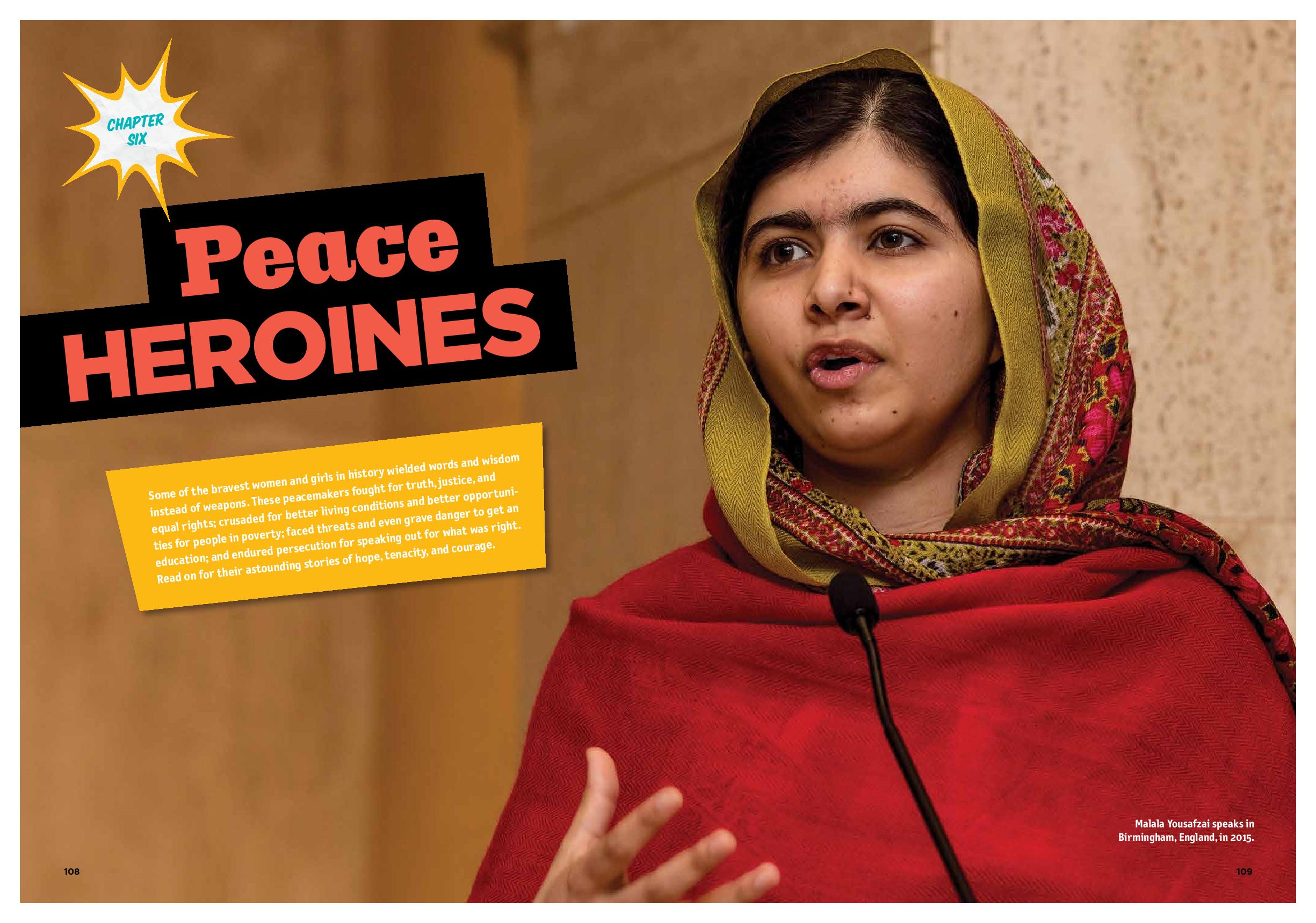
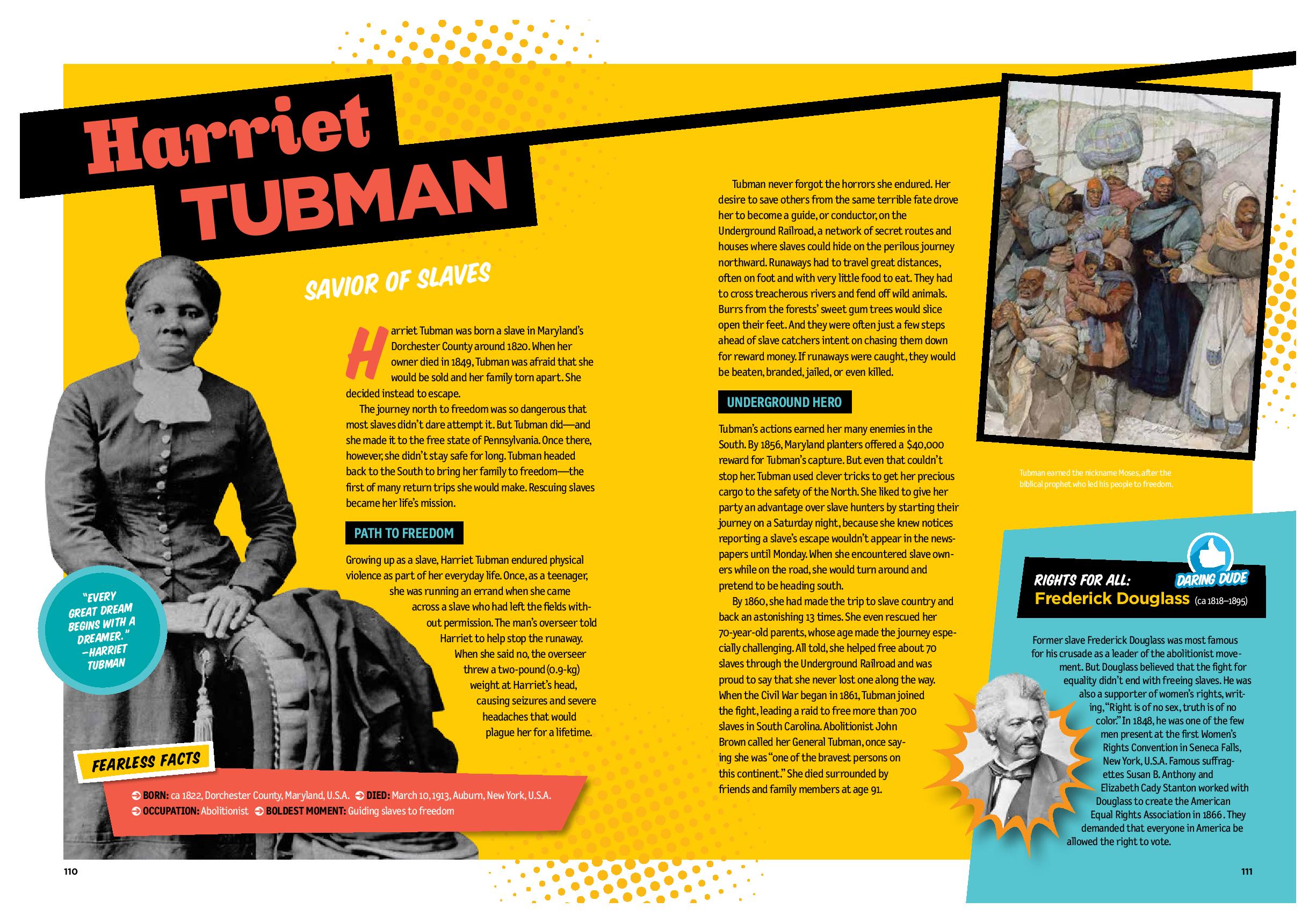
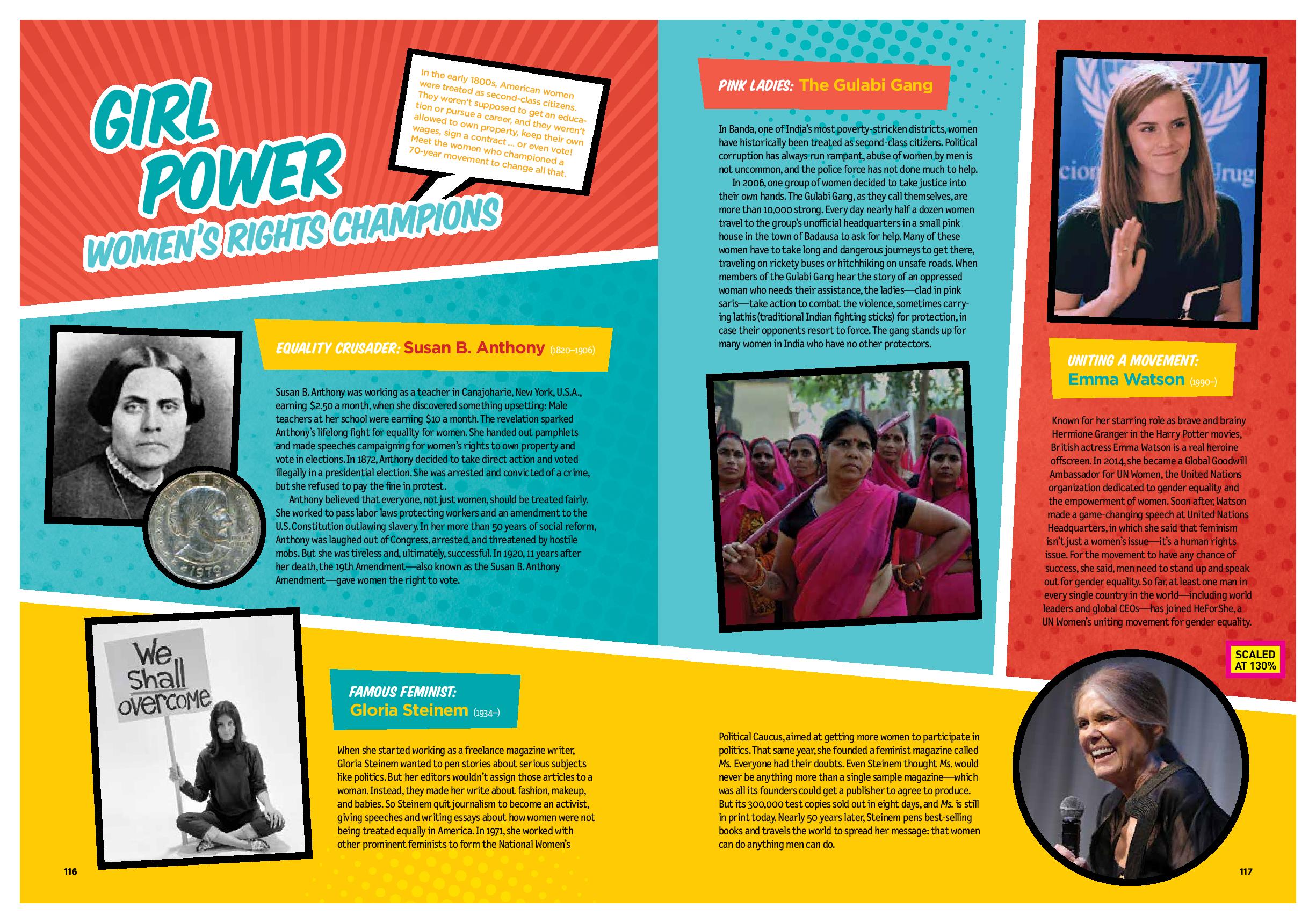
books-of-heroines-108-111-116-117-peace-heroines-page-001books-of-heroines-108-111-116-117-peace-heroines-page-002books-of-heroines-108-111-116-117-peace-heroines-page-003

Read This If You Love: Biographies, History, Women’s Rights, Science, Animals, Mythology

Recommended For: 

classroomlibrarybuttonsmall closereadinganalysisbuttonsmall

Signature

**Thank you to Karen at Media Masters Publicity for providing copies for review!**
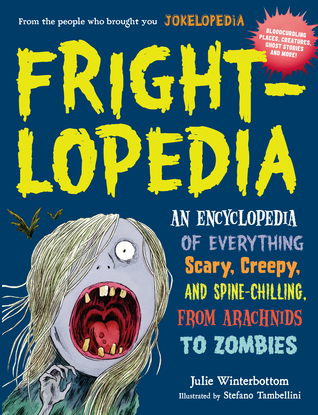
Frightlopedia by Julie Winterbottom

Share

nfpb2017

Nonfiction Wednesday

Nonfiction Picture Book Wednesday is hosted by Kid Lit Frenzy and was started to help promote the reading of nonfiction texts. Most Wednesdays, we will be participating and will review a nonfiction text (though it may not always be a picture book).
Be sure to visit Kid Lit Frenzy and see what other nonfiction books are shared this week!

frightlopedia

Frightlopedia: An Encyclopedia of Everything Scary, Creepy, and Spine-Chilling, from Arachnids to Zombies
Author: Julie Winterbottom
Illustrator: Stefano Tambellini
Published August 23rd, 2016 by Workman Publishing Company

Summary: Here’s the book for kids who love scary stuff, whether it’s telling ghost stories around a campfire, discovering the origins of various vampires, monsters, and witches, or reading creepy tales under the covers with a flashlight.

Combining fact, fiction, and hands-on activities, Frightlopedia is an illustrated A-Z collection of some of the world’s most frightening places, scariest stories, and gruesomest creatures, both real and imagined. Discover Borneo’s Gomantong Cave, where literally millions of bats, cockroaches, spiders, and rats coexist—in pitch darkness. Learn about mythical creatures like the Mongolian Death Worm—and scarily real ones like killer bees, which were accidentally created by scientists in the 1950s. Visit New Orleans’s Beauregard-Keyes house, where Civil War soldiers are said to still clash in the front hall. Plus ghost stories from around the world, a cross-cultural study of vampires, and how to transform into a zombie with makeup. Each entry includes a “Fright Meter” measurement from 1 to 3, because while being scared is fun, everyone has their limit.

Review: I loved the structure of this text, and students and other teachers will as well. Different than a traditional encyclopedia, the Frightlopedia mixes fact, fiction, traditional literature, and hands-on activities which makes this a perfect classroom text as it will suck in readers in so many different ways, and it will also work in such a variety of classroom activities as well.

Teachers’ Tools for Navigation: Like I shared above, this text has a really nice mix of genres along with hands-on activities. For example, parts of the text could be used during lessons on mythology, literary standards, traditional literature, science, or history. There is just so much, it is hard to actually share it all. Go into MONSTERS, if you want include mythological creatures; SHARKS or JELLYFISH during biology; CAPUCHIN CATACOMBS or MUMMIES in history; XYLOPHOBIA or CLAUSTROPHOBIA during word students of affixes; WRITE YOUR OWN GHOST STORY during creative writing; and so much more!

Discussion Questions: Which section did you find the most frightening? Why? The most interesting? Why?; Do you believe in ghosts?; How were mummies made in different cultures?; Which animal is the most frightening to you?

Flagged Passages: 

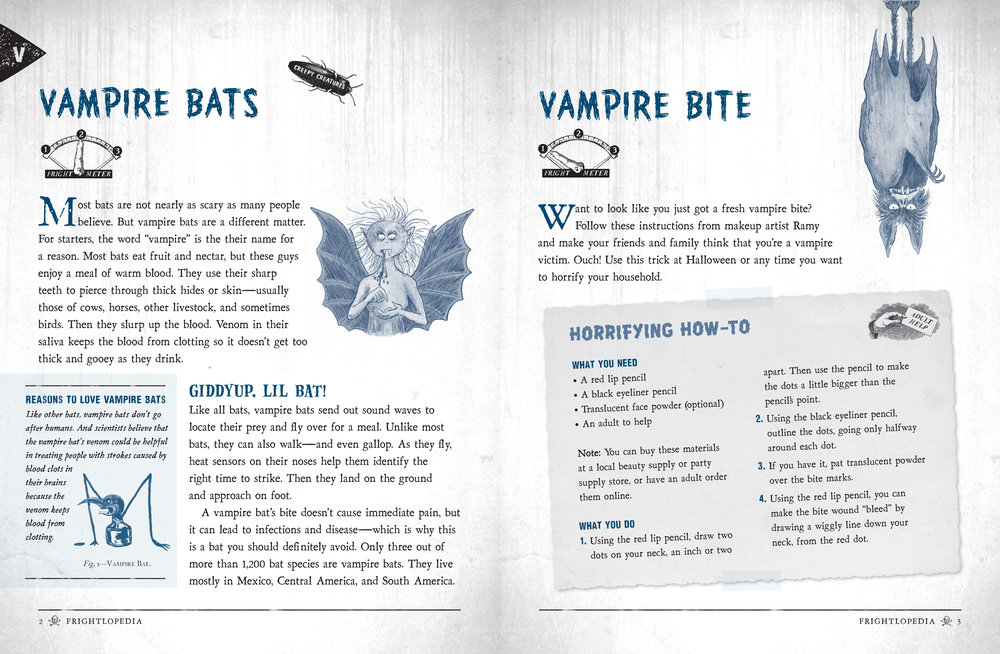
frightlopedia-vampire

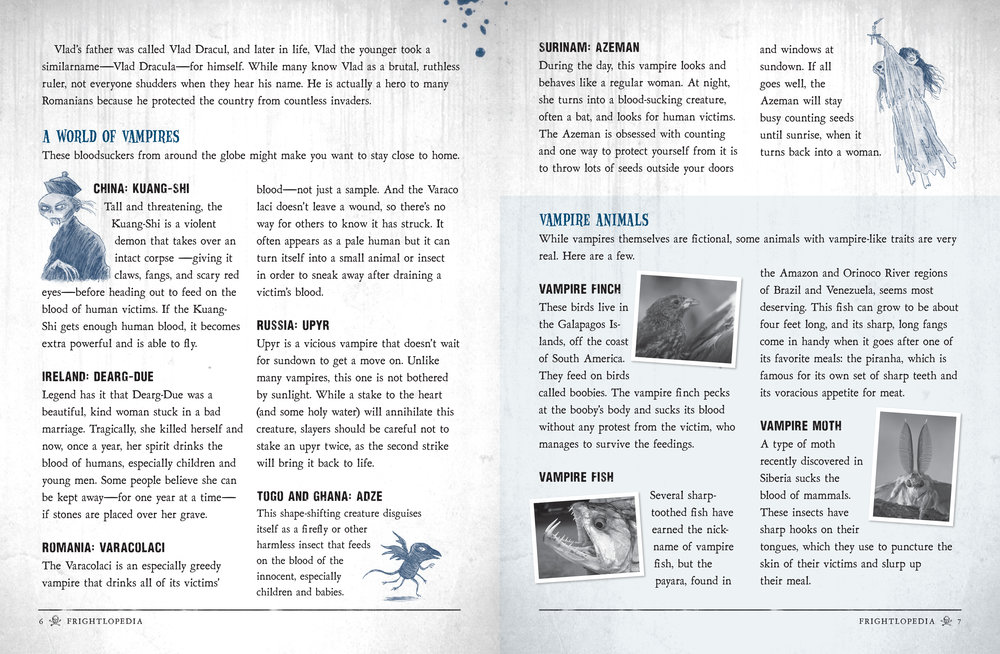
frightlopedia-vampire-2

Read This If You Love: Ghost stories, mythology, being scared, learning about weird animals, learning about scary history

Recommended For: 

classroomlibrarybuttonsmall closereadinganalysisbuttonsmall

Signature

Who Wins?: 100 Historical Figures Go Head-to-Head and You Decide the Winner! by Clay Swartz

Share

NFPB2016

Nonfiction Wednesday

Nonfiction Picture Book Wednesday is hosted by Kid Lit Frenzy and was started to help promote the reading of nonfiction texts. Most Wednesdays, we will be participating and will review a nonfiction text (though it may not always be a picture book).
Be sure to visit Kid Lit Frenzy and see what other nonfiction books are shared this week!

who-wins

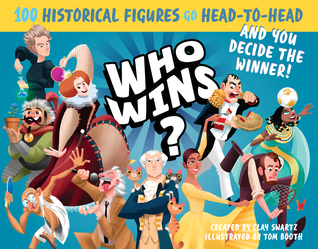
Who Wins? 100 Historical Figures Go Head-to-Head and You Decide the Winner!
Created by Clay Swartz
Illustrated by Tom Booth
Published July 12th, 2016 by Workman Publishing Company

Summary: Who would rock the mic at karaoke night? Abraham “The Great Emancipator” Lincoln or Jane “Lady Persuasion” Austen? How about a hot dog eating contest between Harry “Mr. Magic” Houdini and Mary “Mother of Frankenstein” Shelley? What about a pie contest? A staring contest? And who has a better chance of sneaking into Area 51, Isaac “Gravity Guy” Newton or Sacagawea aka “The Pathfinder”?

In Who Wins?: History, you decide the winner in over 50 head-to-head challenges between 100 of history’s most illustrious characters. But choosing the victor isn’t arbitrary. Readers must justify their answers using each of the historical figures’ six 0-10 category rankings in bravery, leadership, artistry, wealth, wisdom, and fitness; as well as facts from short biographies.

As funny as it is informative, the book is uniquely formatted so readers can match up each and every character in any of the head-to-head battles. History has never been so much fun!

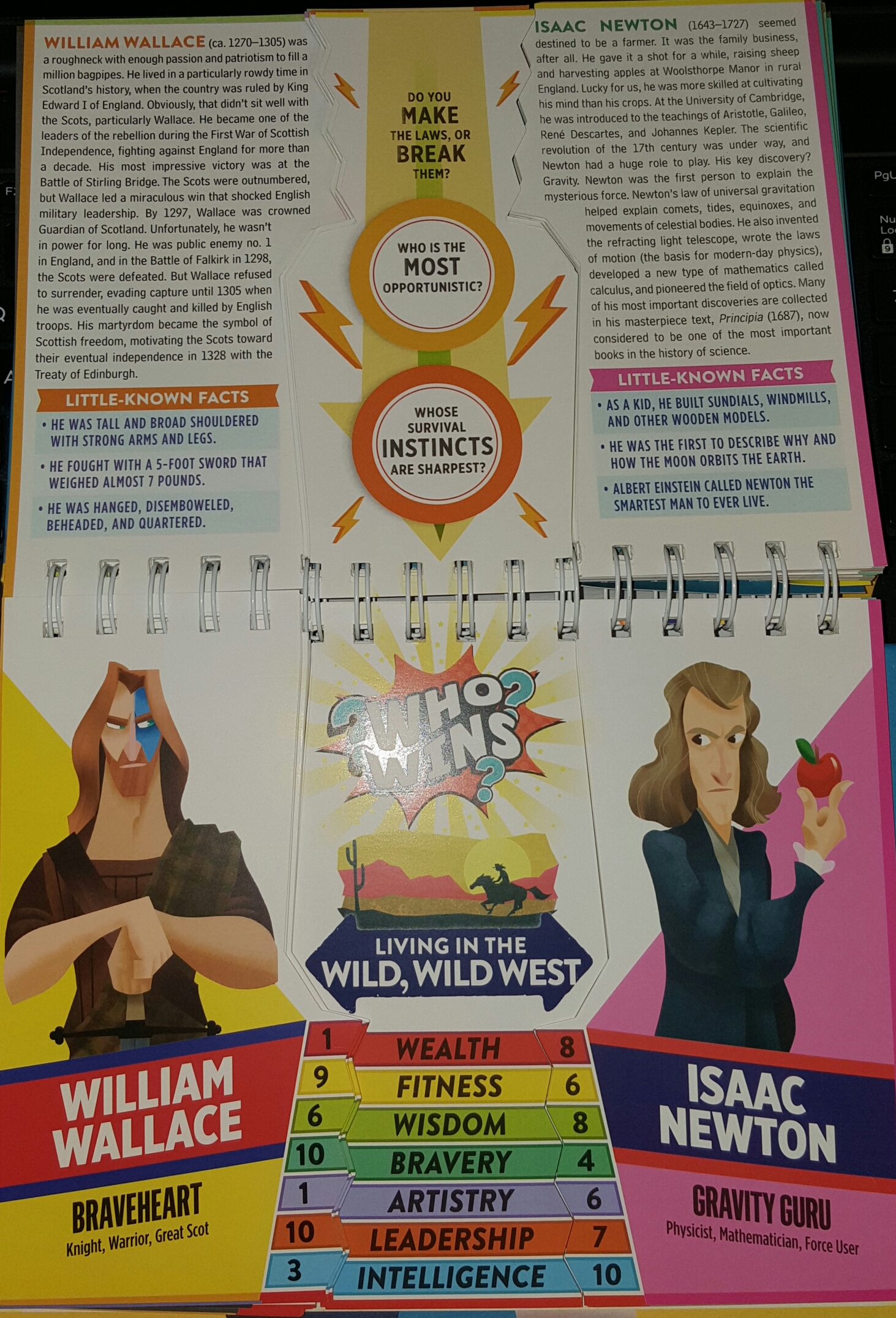
Kellee’s Review: Who Wins? is informative, funny, and so cleverly formatted that it is going to be a star in homes and classrooms. I love how the book gives each historical figure a nickname (either one they already were given, like Satchmo, or made up, like Gravity Guru for Isaac Newton) to add a bit of humor to the book; however, still makes sure to include a plethora of information about each figure including a bio then 3 little-known facts. Each head-to-head situation also helps guide your decision by giving some example questions to think about. Let’s look at a head-to-head, so you can really see how clever it is!

William Wallace “Braveheart” vs. Isaac Newton “Gravity Guru”
Who Wins Living in the Wild, Wild West?

20161008_221140-1

Ricki’s Review: What a clever concept! This spiral-bound book will be a staple for car rides. I could also see it being a great book for fast finishers in the classroom. The book consists of three columns that are split. So, for example, I randomly flipped to three pages (one of each column). At the far right, there is a short summary of Louis Armstrong’s biography and picture. Then, in the middle, the column I flipped to is the “talent show” and asks “Who is the most well-rounded? Who has the most experience entertaining?” Then on the far right, I flipped to Abraham Lincoln. While this one seems like a clear winner for Louis Armstrong, I think we could conceivably argue for either person for the two questions. I’ll be hanging on to this book. It will be a great book to give to my kids in the backseat. Fun family debates are the best!

Teachers’ Tools for Navigation: Are you an elementary school teacher or a social studies teacher or a language arts teacher? Then buy this. It is a perfect bell work or paper prompts or discussion starter or debate topic creator or whatever else you can think of!

Discussion Questions: Who wins?

Read This If You Love: History, Historical Figures, Debates 

Recommended For: 

closereadinganalysisbuttonsmall classroomlibrarybuttonsmall

Signatureand RickiSig

**Thank you to Estelle at Workman’s for providing copies for review!**
Risking Exposure by Jeanne Moran

Share

risking exposure

Risking Exposure
Author: Jeanne Moran
Published September 13th, 2013 by CreateSpace Independent Publishing Platform

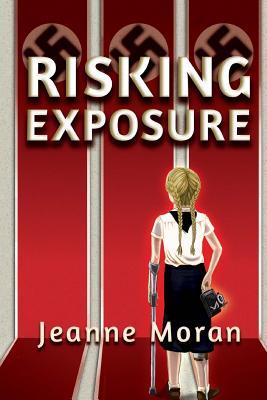
Summary: Munich, Germany, 1938. The Nazis are in power and war is on the horizon.

Timid Sophie Adler is a member of Hitler Youth and a talented amateur photographer. When she contracts polio, her Youth leader supplies her with film. Photographs she takes of fellow polio patients are turned into propaganda, mocking people with disabilities, people just like her.

Sophie’s new disability has changed her status. She has joined the ranks of the outsiders, targets of Nazi scorn and possible persecution.

Her only weapon is her camera.

Review: Sophie’s story is one that is not often told. World War II stories often focus on the impact of the Holocaust on the Jewish population of Europe; however, what happened to those in Germany who weren’t Jewish yet the Nazis felt were useless? This story looks at one girls’ version of a story, but Sophie still is “useful” to the Nazis because she is a photographer, but she has to make a choice between taking photographs of what she is told or photographs of the truth about what is going on in Germany. 

Much of Sophie’s story is universal: bullying, friendship, family issues, etc., but readers will also learn about the Hitler Youth and the beginning of Hitler’s rise in Germany.

Teachers’ Tools for Navigation: In addition to being a book that should definitely be in classroom libraries, I could also see Risking Exposure being a perfect addition to World War II lit circles/text sets. Since Sophie’s story is so unique, it will make any set of books include more diverse stories about WWII.

Discussion Questions: If you were Sophie, would you go with what she knew was right or would you do what was ordered of you?; How did contracting polio change Sophie’s life?; How did being a photographer potentially save Sophie’s life?; How did Sophie’s kindness cause her to contract polio?; How is Sophie’s story different than other WWII stories you’ve read?; How do you think Sophie’s decision is going to affect her life?

Flagged Passages: “When Werner ordered me to grab my camera and follow him into the woods, I obeyed. He was the Scharfuhrer, the Master Sergeant. What else could I do?

My best friend Ronnie bolted to her feet alongside me. ‘You don’t need to go everywhere Sophie does, Renate,’ Wener said to her in his usual high-pitched whine. But she ignored him and winked at me as we crashed through the underbrush. Rennie got away with a certain level of disobedience. Younger sisters can.

But I wasn’t Werner’s sister. I couldn’t risk it.” (p. 3)

Read This If You Loved: The War that Saved my Life by Kimberly Brubaker Bradley, Hitler Youth by Susan Campbell Bartoletti

Recommended For:

classroomlibrarybuttonsmall litcirclesbuttonsmall

Kellee Signature

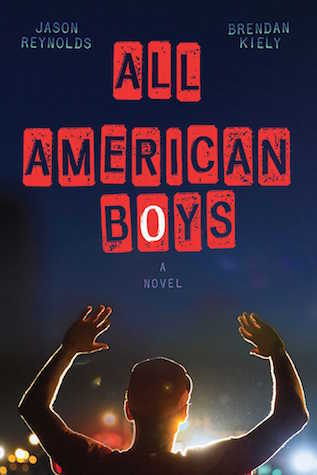
All American Boys by Jason Reynolds and Brendan Kiely

Share

All American Boys

All American Boys
Authors: Jason Reynolds and Brendan Kiely
Published: September 29, 2015 byAtheneum/Caitlyn Dlouhy Books

GoodReads Summary: Rashad is absent again today.

That’s the sidewalk graffiti that started it all…

Well, no, actually, a lady tripping over Rashad at the store, making him drop a bag of chips, was what started it all. Because it didn’t matter what Rashad said next—that it was an accident, that he wasn’t stealing—the cop just kept pounding him. Over and over, pummeling him into the pavement. So then Rashad, an ROTC kid with mad art skills, was absent again…and again…stuck in a hospital room. Why? Because it looked like he was stealing. And he was a black kid in baggy clothes. So he must have been stealing.

And that’s how it started.

And that’s what Quinn, a white kid, saw. He saw his best friend’s older brother beating the daylights out of a classmate. At first Quinn doesn’t tell a soul…He’s not even sure he understands it. And does it matter? The whole thing was caught on camera, anyway. But when the school—and nation—start to divide on what happens, blame spreads like wildfire fed by ugly words like “racism” and “police brutality.” Quinn realizes he’sgot to understand it, because, bystander or not, he’s a part of history. He just has to figure out what side of history that will be.

Rashad and Quinn—one black, one white, both American—face the unspeakable truth that racism and prejudice didn’t die after the civil rights movement. There’s a future at stake, a future where no one else will have to be absent because of police brutality. They just have to risk everything to change the world.

Cuz that’s how it can end.

Ricki’s Review: I read this book a few months ago, and frankly, I can’t stop thinking about how important this story is. We read so many books in our lifetimes, and some just take our breath away. This is one of those books. I can’t recommend this book highly enough. I believe it belongs in every classroom. The strength of the two voices in this book is remarkable, and it makes for an excellent teaching tool—about heroism; about doing what is right and true; and about being a good, decent human being. The acts within this book are all-to-common, and I believe this book promotes genuine change. The book is literary at the same time that it is engaging. It will pull (and has pulled) readers of all ages and backgrounds. I typically don’t review books long after they have been published, but this book feels too important to leave out. If you haven’t read it already, I recommend it move to the top of your TBR list. It’s and incredible story.

Kellee’s Review: I too read this book a few months ago. It was a choice for our Faculty Book Club, and it was a perfect book to discuss with a bunch of educators. All American Boys is a book that is going to be a classic because it highlights modern history in a thoughtful and truthful way. This is a book that I would recommend to everyone to read. It is a perfect jumping off point to discuss race relations, Black Lives Matter, and We Need Diverse Books. The way the book is set up, with two voices, will help readers have permission to talk about what is happening in our country, the Civil Rights movement and its tie into modern times, and the racial tension currently happening in our country.

Jason & Brendan

I’d like to also add that I recently was lucky enough to see Jason Reynolds and Brendan Kiely accept their Coretta Scott King Author Honor Award at the ALA Annual Conference here in Orlando, and they both moved me to tears. Jason actually gave two speeches since he won an honor for All American Boys and Boy in the Black Suit. His second speech was a brilliant advocacy poem titled Machetes which can be viewed here or read here. His first speech and Brendan’s speech are not available yet. Brendan says School Library Journal will be publishing his, and I am not sure about Jason’s; however, I did tweet some quotes as I sat and listened:

  • I hope The Boy in the Black Suit gives young men permission to feel and be human and sometimes need a hug. – Jason Reynolds
  • Memory in of itself is life. -Jason Reynolds
  • If you are doing this work, this award is yours too. -Jason Reynolds
  • Jason Reynolds talking about his mama made me cry. I hope my son’s love can be as true as his is.
  • There are bodies missing, and I cannot bring them back. It is time for action. -Brendan Kiely
  • Revolution begins in the heart. -Brendan Kiely
  • Love is art. Love is education. Love is accountability. And it needs repeating love is love is love is love. -Brendan Kiely
  • I want to reckon w whiteness…speak truth to myself. -Brendan Kiely

Teachers’ Tools for Navigation: This book begs to be taught in classrooms. If I was still teaching it would be the first book that I would request to be added to curriculum. I think it would be particularly fascinating to use this book as a read-aloud while simultaneously doing literature circles with by Ilyassah Shabazz and Kekla Magoon, The Rock and the River by Kekla Magoon, and How it Went Down by Kekla Magoon. These books all deal with civil rights issues, as well, and it would be interesting to look at civil rights across time and history and also within other relevant contexts.

The Simon & Schuster Reading Group Guide gives some discussion questions, journal responses, and research ideas.

Discussion Questions: How do Rashad’s and Quinn’s voices shine differently in the text?; Did Quinn do the right thing? Would you have done the same?; What would you have done if you had been in Rashad’s circumstance? Would you have done anything differently?; How is racism present both in obvious and nuanced ways in the plot events of this text?

Flagged Passage: “If you are neutral in situations of injustice, you have chosen the side of the oppressor.”

Read This If You Loved: by Ilyassah Shabazz and Kekla Magoon; The Rock and the River by Kekla Magoon; How it Went Down by Kekla Magoon; Freedom Summer by Deborah Wiles; Audacity by Melanie Crowder; The Boy in the Black Suit by Jason Reynolds

Recommended For:

readaloudbuttonsmall litcirclesbuttonsmall closereadinganalysisbuttonsmall classroomlibrarybuttonsmall

RickiSig andKellee Signature

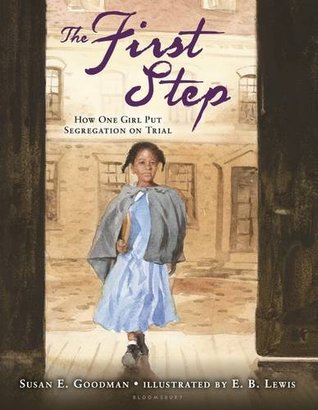
The First Step: How One Girl Put Segregation on Trial by Susan E. Goodman

Share

NFPB2016

Nonfiction Wednesday

Nonfiction Picture Book Wednesday is hosted by Kid Lit Frenzy and was started to help promote the reading of nonfiction texts. Most Wednesdays, we will be participating and will review a nonfiction text (though it may not always be a picture book).
Be sure to visit Kid Lit Frenzy and see what other nonfiction books are shared this week!

first step

The First Step: How One Girl Put Segregation on Trial
Author: Susan E. Goodman
Illustrator: E.B. Lewis
Published January 5th, 2016 by Bloomsbury Children’s Books

Goodreads Summary: In 1847, a young African American girl named Sarah Roberts was attending a school in Boston. Then one day she was told she could never come back. She didn’t belong. The Otis School was for white children only.

Sarah deserved an equal education, and the Roberts family fought for change. They made history. Roberts v. City of Boston was the first case challenging our legal system to outlaw segregated schools. It was the first time an African American lawyer argued in a supreme court.

These first steps set in motion changes that ultimately led to equality under the law in the United States. Sarah’s cause was won when people–black and white–stood together and said, No more. Now, right now, it is time for change!

With gorgeous art from award-winning illustrator E. B. Lewis,The First Step is an inspiring look at the first lawsuit to demand desegregation–long before the American Civil Rights movement, even before the Civil War.

Backmatter includes: integration timeline, bios on key people in the book, list of resources, and author’s note.

My Review: I really appreciate the abundance of quality nonfiction books about the early civil rights in our country because I fear that so much of the prejudice still remains, so it is important to learn about history so hopefully it will not repeat itself. The First Step is a story that shows how even if you do not win your fight, that doesn’t mean that the effort you put forth was for naught. Sarah Roberts and her family were so brave in standing up for her education and rights, and their fight helped pave the way for the bumpy road of integration in schools. Goodman does a wonderful job starting with Sarah’s story but tying it to the Brown v. Board of Education trial while not taking away any credit from the Roberts’ part of history.  

Teachers’ Tools for Navigation: My first thought is to do a jigsaw type activity with The First Step and other civil rights nonfiction picture books (such as the ones listed below in recommended reading). Students can learn about different parts of the history of civil rights by reading the picture books and maybe even researching extra. They would then either present as a group to the class or you can jigsaw the kids back together (pull one person from picture book and put them together as a group), and they can each teach each other about what they learned. This is one of my favorite activities to do with picture books because it allows students to learn in depth about one subject then teach the rest of their class thus everyone learns about all subjects.

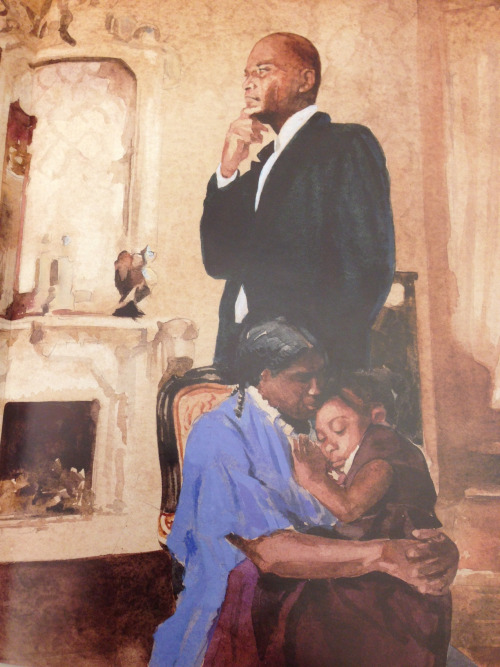
Discussion Questions: How did Sarah Roberts’s family’s fight lead to the integration of schools even though she did not win her case?; How did the author structure the book to go through the history of segregation?; How do the illustrations by Lewis help bring Goodman’s story to life?

We Flagged: 

first step spread

“Adeline and Benjamin Roberts tried to imagine Sarah’s walk to the Smith School, which was for African American children. She would have to zigzag through many streets, crossing one neighborhood after another.

Sarah would have to go all that way for a school that never taught subjects like history or drawing. All that way for Boston’s only school without a play yard. A school that owned only one book.”

Read This If You Loved: Separate is Never Equal by Duncan TonatiuhFreedom Summer (Kellee’s Review, Ricki’s Review) by Deborah Wiles, Seeds of Freedom by Hester Bass

Recommended For: 

classroomlibrarybuttonsmall readaloudbuttonsmall litcirclesbuttonsmall

Signature

Candlewick Nonfiction Picture Books: Who’s Like Me? by Nicola Davies; Can We Help? by George Ancona; Belle, the Last Mule at Gee’s Bend by Calvin Alexander Ramsey & Bettye Stroud; and The Boy Who Fell Off the Mayflower by P.J. Lynch

Share

NFPB2016

Nonfiction Wednesday

Nonfiction Picture Book Wednesday is hosted by Kid Lit Frenzy and was started to help promote the reading of nonfiction texts. Most Wednesdays, we will be participating and will review a nonfiction text (though it may not always be a picture book).
Be sure to visit Kid Lit Frenzy and see what other nonfiction books are shared this week!

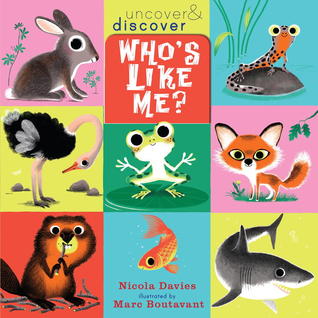
who's like me

Who’s Like Me?
Author: Nicola Davis
Illustrator: Marc Boutavant
Published February 28th, 2012 by Candlewick Press

Goodreads Summary: Lift the flaps and learn about animal life in this fresh, fun-filled book for curious preschoolers.

A bunny is furry and breathes air. Who else is like that — a pigeon, a fish, a chameleon, or a fox? Some animals have fins to swim with, some have feathers and a beak, some have skin that is scaly, or smooth and wet. But whatever features a creature has, someone else has them, too. Can you guess who? Big flaps and a matching spread at the end make animal classification fun.

My Thoughts: This flap book is going to be a big hit in my house both because it is entertaining and because it is informative. First, the author does a great job making the identification of animal types a game including flaps and comparisons/contrasts then she ensures that factual information follows the matching to explain the type of animal and the characteristics of the type.

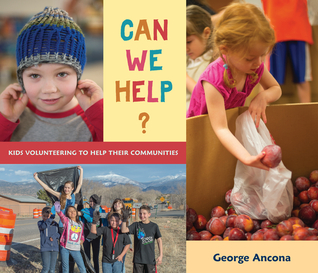
can we help

Can We Help? Kids Volunteering to Help their Communities
Author: George Ancona
Published August 25th, 2015 by Candlewick Press

Goodreads Summary: Real kids make a real difference in their communities in this vibrantly photographed chronicle by George Ancona.

George Ancona celebrates the joy of kids giving back. In one after-school program, middle-school students mentor and tutor younger children. Via a special partnership, schoolchildren help professionals train assistance dogs for people with disabilities. At a community farm, families plant, grow, and harvest produce for soup kitchens and charities. In these and other examples of volunteering, kids of all ages work together knitting hats and scarves for those who could use warm clothes, packing hot meals to deliver to housebound people, and keeping roadways clean. Young humanitarians reading these accounts may well be inspired to find ways that they can help, too.

My Thoughts: I think this picture book would be a wonderful one to read in conjunction with the 31 Ways to Change the World because that book includes suggestions while this one gives us narratives about those actually making a difference. I love the variety of ways the author highlights: from knitting to a community farm to training dogs and mentoring. These stories are inspiring and will make the reader (adult or child) want to do something to make a difference!

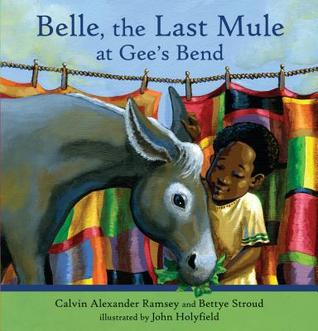
belle last mule

Belle, the Last Mule at Gee’s Bend
Authors: Calving Alexander Ramsey and Bettye Stroud
Illustrator: John Holyfield
Published September 13th, 2011 by Candlewick Press

Goodreads Summary: A true story inspires the moving tale of a mule that played a key role in the civil rights movement– and a young boy who sees history anew.

Sitting on a bench waiting for his mother, Alex spies a mule chomping on greens in someone’s garden, and he can’t help but ask about it.””Ol Belle?” says Miz Pettway next to him. “She can have all the collards she wants. She’s earned it.” And so begins the tale of a simple mule in Gee’s Bend, Alabama, who played a singular part in the civil rights movement of the 1960s. When African-Americans in a poor community– inspired by a visit from Dr. Martin Luther King, Jr.– defied local authorities who were trying to stop them from registering to vote, many got around a long detour on mule-drawn wagons. Later, after Dr. King’s assassination, two mules from Gee’s Bend pulled the farm wagon bearing his casket through the streets of Atlanta. As Alex looks into the eyes of gentle Belle, he begins to understand a powerful time in history in a very personal way.

My Thoughts: This story adds an extra truth to the story of Martin Luther King that many of us know. MLK was an advocate and leader and activist for all African and Black Americans and this meant a lot to so many communities of people around America including Gee’s Bend. To learn about Belle and King’s reason for having Belle pull his coffin really just shows how true his intentions of being a man of the people while fighting for the rights of all. And I loved how this story was told as a story from a Bender to a young boy visiting the town. Gee’s Bend is such a historical place, and I love this new part of their history that I didn’t know. (I love the quilts produced in Gee’s Bend! If you haven’t viewed them, Google it now!)

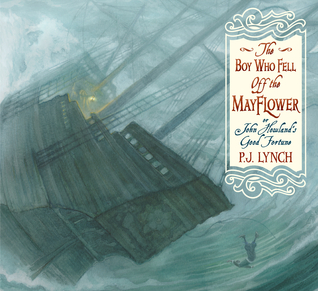
boy who fell

The Boy Who Fell Off the Mayflower or John Howland’s Good Fortune
Author and Illustrator: P.J. Lynch
Published September 22nd, 2015 by Candlewick Press

Goodreads Summary: In the first book he has both written and illustrated, master artist P.J. Lynch brings a Mayflower voyager’s story to vivid life.

At a young age, John Howland learned what it meant to take advantage of an opportunity. Leaving the docks of London on the Mayflower as an indentured servant to Pilgrim John Carver, John Howland little knew that he was embarking on the adventure of a lifetime. By his great good fortune, John survived falling overboard on the crossing of the Atlantic Ocean, and he earned his keep ashore by helping to scout a safe harbor and landing site for his bedraggled and ill shipmates. Would his luck continue to hold amid the dangers and adversity of the Pilgrims’ lives in New England? John Howland’s tale is masterfully told in his own voice, bringing an immediacy and young perspective to the oft-told Pilgrims’ story. P.J. Lynch captures this pivotal moment in American history in precise and exquisite detail, from the light on the froth of a breaking wave to the questioning voice of a teen in a new world.

My Thoughts: I have to start my review with discussing the art work. Describing P.J. Lynch as a master artist is a perfect statement. His watercolor and gouache full page plus illustrations are so lifelike and beautiful that the reader will spend time on each page viewing the art in addition to reading the text. And what makes the book even better is that the text is interesting. Told in first person from John Howland’s point of view, we travel from London to America through storms, a fall off the Mayflower, death, disease, famine, and shows how friendship and kindness pay. In the classroom, this text would be an informational and interesting introduction to the Mayflower voyage and Plymouth.


All Recommended For: 

classroomlibrarybuttonsmall readaloudbuttonsmall litcirclesbuttonsmall

Kellee Signature