Author Guest Post: “Finding ‘HOME’ in Poetry” by Dianne White, Author of Look and Listen

Share

FINDING ‘HOME’ in POETRY

When I was growing up, my middle sister was the storyteller in our family. Her vivid imagination and ability to embellish details to suit the occasion came in handy whenever it was time to write. 

I was not that kind of storyteller. I did my assignments as asked, but never once did I think of myself as a writer.  It wouldn’t be until years later, towards the end grad school, when that changed. How? My professor complimented my writing. She’d admired the way I’d organized my thoughts and supported my opinions succinctly and thoroughly. Though it was a completely different kind of writing – preparation for the comprehensive exams – it was the boost I needed.

Strange, isn’t it? One sincere complement changed my relationship to writing. As soon I finished my advanced degree, I was ready for a new challenge, and I knew exactly what it would be: I wanted to write for children. 

My experiences in the classroom had already introduced me to hundreds of picture books. It was the late 80s, early 90s, a time when Whole Language was a buzz word and using “real books” to support reading and writing was common practice. I loved everything about this kind of teaching and discovered a new-found appreciation for the complexities and possibilities of picture books. 

Also at that time, as a bilingual educator in California, primary language instruction (Spanish, in my classroom) was the rule of the day. I loved that, too, but as a first-grade teacher responsible for helping kids learn to read, I was looking for more… 

I remembered a favorite record of Mother Goose rhymes that my sister and I had listened to as kids the week we were both sick in bed with the mumps. (No vaccines yet!)  I wondered – what was the Spanish version of those early childhood rhymes that I remembered so fondly?

That’s when I discovered poems and songs in Spanish: “Luna, Lunera/ Cascabelera/Cinco pollitos y una ternera.” 

I began to integrate more poetry – rhymes, songs, anthologies, and collections – into my classroom. We read oodles of children’s poetry in both English and Spanish, and we began to write it, too. The same lessons that inspired my students to write became inspiration for me. But it took a while to realize that my most true writing home – my querencia, as poet and teacher Georgia Heard speaks about in her book, WRITING TOWARD HOME – is poetry.

So that’s my invitation to teachers. Bring poetry into the classroom. Perhaps your students will find their home there, too. 

Here are 3 ways to do that:

  1. Start with something familiar. School. Someone special –a grandparent? A friend? A pet? Or something as ordinary as the coming and going of a rainstorm, the inspiration for my first book, BLUE on BLUE.

    Brainstorm a long list of words related to the topic. Nouns. Strong verbs. Phrases. Colors. Include words that address the senses. Think image and sound, taste and touch. Kids don’t need to be overly fussy. Nor do they need to rhyme. Let them play with words, moving them around, breaking the lines, and experimenting with the shapes of their poems. This is poetry exploration at its best. Let them have fun creating!

  2. Pick a subject you’re studying in class or a discovery the children have made. I remember one morning, as the bell rang and the kids lined up, a child spotted a praying mantis waiting for us beside the classroom door. We picked her up and placed her in a container, poked some holes in the lid, and settled ourselves in a big circle to share our discovery. This would become our writing workshop for the day.

    We observed, noticed, asked questions. I pulled up a photo of a praying mantis on the smart board and we looked closer, noting the three body parts, the mandible, the spines on the front legs. We used our imaginations. What did this photo remind us of? An alien? A warrior? A conductor? Then, we wrote, starting with an image and a simile: “Like a conductor, the praying mantis raises her baton…”

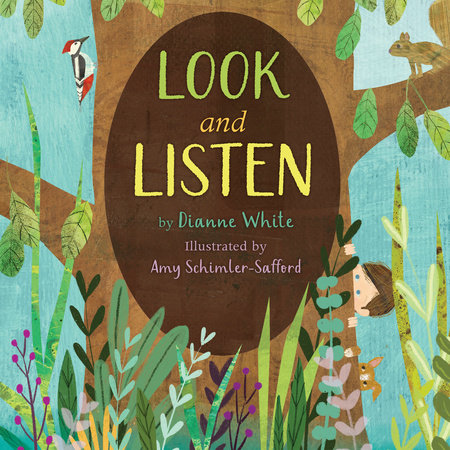
  3. Write a riddle, as I do in my latest book, LOOK and LISTEN: Who’s in the Garden, Meadow, Brook?, illustrated by Amy Schimler-Safford. Have each student choose an animal and then describe it in the form of a question. Feel free to use the structure of the first riddle in the book as a poetry frame (example below). Don’t insist on rhyme but do let kids experiment. And while you’re at it? Why not have them draw an imaginary animal and describe it! They can choose a SOUND their creature makes and a made-up (rhyming) NAME for the last line.

    One of the best parts of writing workshop is sharing new work with an audience. Short on time? Do a version of “popcorn reading” – one student reads a line from their poem, pauses, makes eye contact with another student, who then reads a line, and so on. Although this takes a little practice, once kids get the hang of this version of “shared reading”, it’s a nice, centering way to close out the day.

Happy Poetry Writing! 

Look and Listen: Who’s in the Garden, Meadow, Brook?
Author: Dianne White
Illustrator: Amy Schimler-Safford
Published June 14th, 2022 by Margaret Ferguson Books

About the Book: A guessing game in a book that celebrates the curiosity and delight of a jaunt through a garden, meadow, and alongside a brook.

A child steps outside and strolls along, taking in the sights and sounds of nature. Rhythmic, rhyming text tracks his journey through a garden, meadow, and next to a brook, introducing a new color and animal found in that ecosystem with every turn of the page, transforming an ordinary walk into a feast for the senses.

Complete with material that explains the rich variety of wildlife and natural habitats found in the book, author Dianne White’s playful text is paired with the vibrant collage artwork of Amy Schimler-Safford, making for an exciting read-aloud and guessing game for budding nature lovers. 

About the Author: Dianne White is the award-winning author of numerous children’s picture books, including Blue Blue, Green on Green, and Who Eats Orange? As a teacher who was privileged to share her love of books and poetry with many students over many years, she now has the pleasure of  writing full-time. Most days, she strolls the neighborhood and fields near her home in sunny Arizona, looking and listening for buzzing bees, hopping bunnies and croaking frogs. Visit her at diannewrites.com.

Thank you, Dianne, for helping bring poetry into the classroom!

Guest Post: Classroom Uses for Stargazing by Jen Wang, The Party by Sergio Ruzzier, Twins by Varian Johnson, and When Stars Are Scattered by Victoria Jamieson and Omar Mohamed

Share

One of the assignments during my Spring Children’s Literature course at UCF was creating a mini-teaching guide for the books we read for book clubs. We started with picture books for practice then students created them in their book clubs each week.

Today, I am happy to share the classroom uses and discussion questions found by my UCF Elementary Education students created for these graphic novels they read.

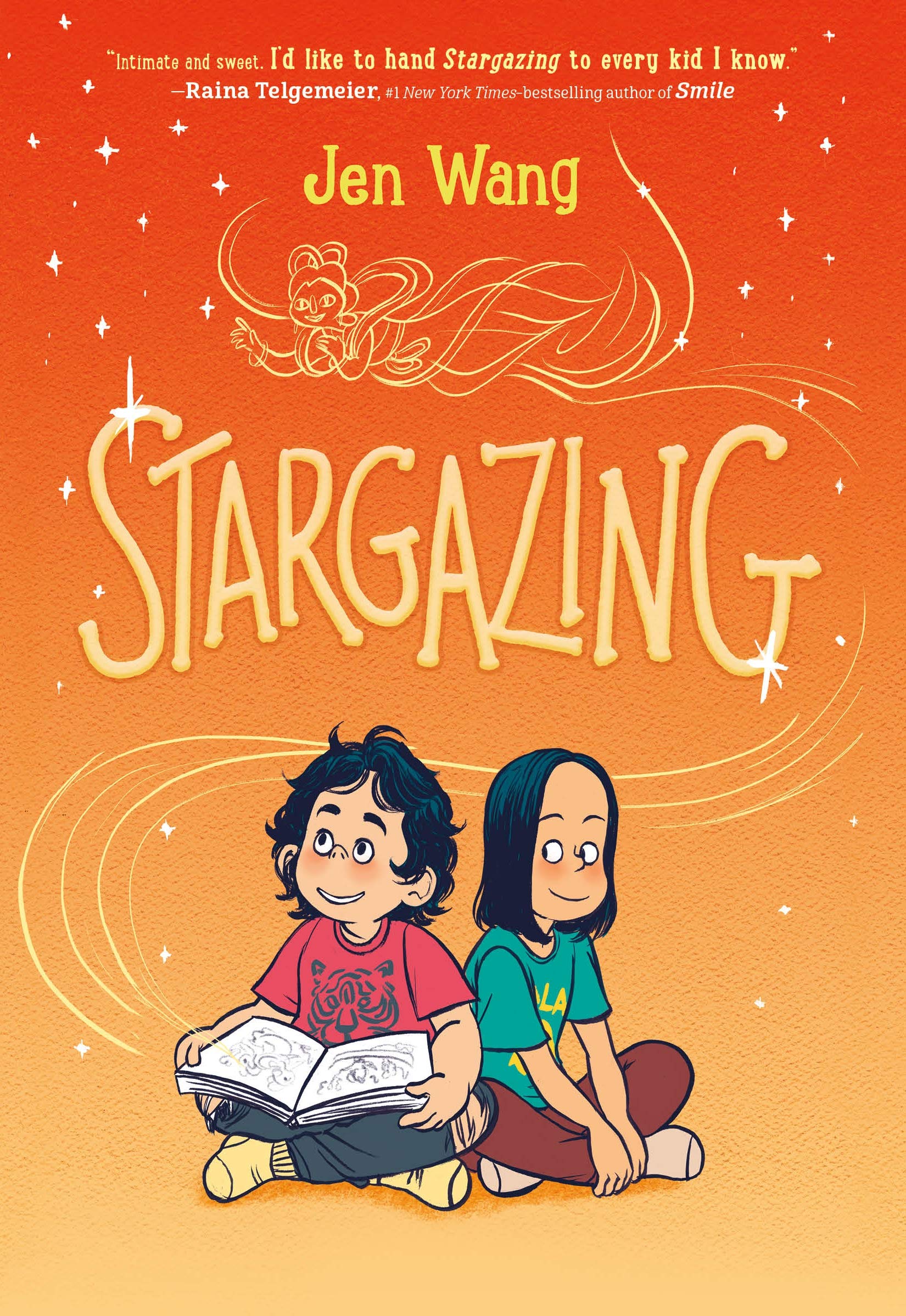
Stargazing
Author: Jen Wang
Published September 10th, 2019 by First Second

Summary: Christine is a young girl who plays the violin and is suggested by her parents to join the talent show. She then meets a girl, Moon, who is rumored to beat up other kids. Once she gets to know her, she finds out that she is actually a good person and they become great friends who decide on performing in the talent show together. The girls get closer but when Christine’s schedule gets busier, Moon finds a new friend in Madison, making Christine jealous to the point she leaves Moon’s journal open on the table for everyone to see. The girls start laughing at the drawings in the journal but when Moon encounters situations that upset her, she doesn’t know how to act and gets violent. After attacking a classmate, Moon passes out and it’s discovered she has a tumor in her brain that requires surgery. Christine avoids talking to Moon as she was the one that caused the fight and Moon gets surgery to remove her tumor. The girls make up afterwards and Christine bands together with their other classmates to perform at the talent show in tribute to Moon while the school hosts the night as a Fundraiser for Moon and her mother.

Teachers’ Tools for Navigation: This book would be useful in the classroom to help students learn the importance of accepting differences, treating others fairly and anger management. The book touches on topics such as stereotyping, homelessness, and bullying which can help students in the classroom.

Discussion Questions: 

  • How would you react if you were Christine and learned that your new friend has a brain tumor?
  • Have you ever had a vegetarian dish, if so what was it?
  • What are some other ways Moon could handle Angela reading her pictures to everyone at the birthday party?
  • In the book the characters participate in a talent show, if you were to participate one what would your talent be?
  • Why do you think Moon left during Chinese learning class, do you think she should’ve gone back to learn Chinese?
  • If one of your friends were feeling sad and alone like Moon was after her surgery, how would you comfort them?
  • Do you think that Moon was wrong in sharing her concert ticket with Madison after Christine said she didn’t want to go?
  • Do you believe it was right for Moon to attack Gabrielle for making fun of Vivian about her math puzzles.
  • Was Christine’s father right for getting mad at Christine for painting her nails and not telling her parents about it?

Recommended For: 

classroomlibrarybuttonsmall


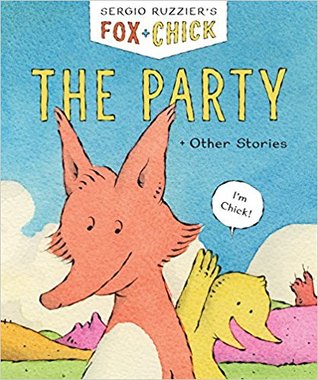
Fox & Chick: The Party and other stories
Author: Sergio Ruzzier
Published April 17th, 2018 by Chronicle Books

Summary: Fox and Chick don’t always agree. But Fox and Chick are always friends.

Teachers’ Tools for Navigation: A great activity to do with this book would be “post-ful thinking” where students put sticky notes on pages where they have a connection to while reading and jot a quick comment. These connections are shared when the group meets to identify issues for discussion. The sticky notes can also be used to revisit the book around a particular issue by marking pages relevant to the issue as a way to prepare for the discussion.

This book touched on more of the social-emotional aspects of life which is important for the age that the book is for.

Discussion Questions: 

  • Do you believe Chick’s question was properly stated in The Party?
  • Did Chick do as he said he would in The Party?
  • How would you reword Chick’s question in The Party?
  • How would you react if someone did something they didn’t mention before?
  • What time of day do you think the story Good Soup is?
  • Have you ever found yourself not being able to sit still like Chick?
  • What did you do to help yourself sit still in this situation?
  • Do you think Fox was correct when they didn’t paint Chick? What would you have done if your friend would not sit still?
  • What lessons can you take away from this book?
  • Have you ever made assumed something before you got to know someone like Chick did?

Recommended For: 

classroomlibrarybuttonsmall


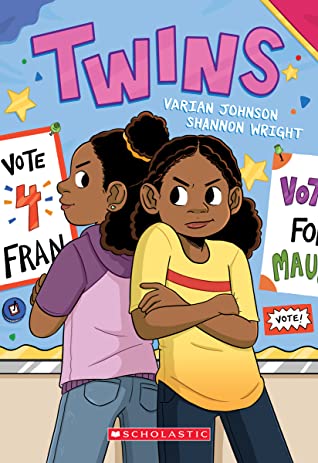
Twins
Author: Varian Johnson
Illustrator: Shannon Wright
Published October 6th, 2020 by Graphix

Summary:Maureen and Francine Carter are twins and best friends. They participate in the same clubs, enjoy the same foods, and are partners on all their school projects. But just before the girls start sixth grade, Francine becomes Fran — a girl who wants to join the chorus, run for class president, and dress in fashionable outfits that set her apart from Maureen. A girl who seems happy to share only two classes with her sister!

Maureen and Francine are growing apart and there’s nothing Maureen can do to stop it. Are sisters really forever? Or will middle school change things for good?

Teachers’ Tools for Navigation: This book would be useful in classrooms when trying to teach students about the importance of self-confidence, friendships and personal identity.

After reading the book, students can make a quick graphic or symbolic drawing reflecting how the story Twins made them feel/what they thought about the story and discuss their drawings.

Discussion Questions: 

  • How did Maureen and Francine find self-confidence?
  • How do Maureen and Francine change throughout the story?
  • What parts of the story do you see these changes?
  • How are Maureen and Francine alike?
  • How are Maureen and Francine different?
  • Why do you think Maureen ran for President instead of another position, such as Vice President or Treasurer?
  • Why do you think Maureen and Francine’s parents asked the twins to keep the election civil?
  • How do you think the parents feel about Maureen and Francine feuding with each other?
  • How does Maureen and Francine’s story influence how you see yourself? Do you know yourself?
  • Has the story of Maureen and Francine influenced how you view the concept of self confidence?

Recommended For: 

classroomlibrarybuttonsmall


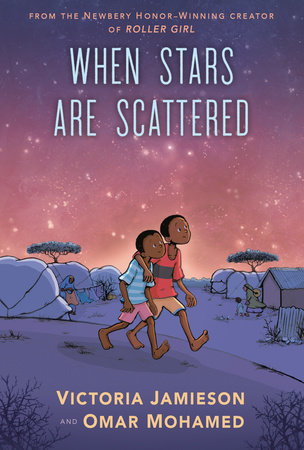
When Stars Are Scattered
Author: Victoria Jamieson & Omar Mohamed
Illustrator: Victoria Jamieson
Published April 14th, 2020 by Dial Books

Summary: Heartbreak and hope exist together in this remarkable graphic novel about growing up in a refugee camp, as told by a Somali refugee to the Newbery Honor-winning creator of Roller Girl.

Omar and his younger brother, Hassan, have spent most of their lives in Dadaab, a refugee camp in Kenya. Life is hard there: never enough food, achingly dull, and without access to the medical care Omar knows his nonverbal brother needs. So when Omar has the opportunity to go to school, he knows it might be a chance to change their future . . . but it would also mean leaving his brother, the only family member he has left, every day.

Heartbreak, hope, and gentle humor exist together in this graphic novel about a childhood spent waiting, and a young man who is able to create a sense of family and home in the most difficult of settings. It’s an intimate, important, unforgettable look at the day-to-day life of a refugee, as told to New York Times Bestselling author/artist Victoria Jamieson by Omar Mohamed, the Somali man who lived the story.

Teachers’ Tools for Navigation: When Stars are Scattered is an impactful graphic novel that tells the story of the authors hardships throughout his childhood.  It places us into his shoes as he navigates his new life in a Kenyan refugee camp.  It was interesting to see our country from another persons point of view.  Throughout this book Omar and his brother had to face challenges not familiar to most his age.  They often went hungry, not knowing when or where the next meal would be coming from.  It was really great to see and show children that what we might take for granted is not available to others across the world.  In the book Omar had to decide if school was worth leaving his brother by himself everyday.  School wasn’t accessible to everyone in the camp, especially middle and high school.  It was a great accomplishment that Omar was accepted into middle school.  Omar also had to battle taking care of his brother by himself with the help of a neighbor.  Omar and his brother got separated from their mother shortly after fleeing their home.  Overall this book is a great example of what children across the world go through on a daily basis. 

This book has a lot in it that can be unpacked and discussed within the classroom.  This book hits on war, disability representation, women’s rights, and perseverance.  Omar and his brother were faced with challenges they shouldn’t have been faced with at their age.  But they overcame them and eventually accomplished their goal.  You could open up a discussion within the classroom talking about the hard topics that might not get talked about anywhere else.  You could talk about war and how it happens around the world.  You could show how Omar’s brother had a disability but didn’t let it stop him from achieving his goals.  You could hit on how women are treated in other countries compared to our own.  Honestly I feel this book is a great book to just promote a safe space for open discussions.  Children might not have a safe space to discuss these types of things.

Social Studies tie-in: The students can use this graphic novels to study the region of this book, the conflicts that have taken place, and how others around the world live.

Math tie-in: The refugee camps that are mentioned in the graphic novel are very large have the students calculate how large these camps by adding together the size of the three. Have the students graph the number of refugees coming to the camp every year.

Art tie-in: Have students draw their own section of a graphic novel inspired by this book.

Economics tie-in: Throughout this book Omar and Jeri do their best to make money in order to buy new essentials such as clothing and food. Have the students analyze how the market in the refugee camp fluctuates and how Jeri and Omar made profits.

Astronomy/History tie-in: Students can learn about stars and how they have guided travelers of the past.

Social Emotional Learning tie-in: The book could teach students about responsibility, compassion and values. Students can relate to the message this story brings. Some kids can be going through a somewhat similar situation that you may not be aware of. It teaches students the importance of perseverance through difficult times. It allows for students to engage in discussions about social issues that are going on and how to be compassionate about them.

Discussion Questions: 

  • Who do you believe had the most influence on Omar’s life in the camp?
  • What is your first impression of Omar and Hassan?
  • Why do the boys think of Fatima as their foster mom? What is a foster parent?
  • Why was Omar hesitant to go to school?
  • Why was Maryam forced to quit school?
  • When Omar went to school why was there less girls then boys?  Was this normal?
  • Why was it so difficult for Omar to talk about his mom at the UN?
  • Why was Omar not going to school and when Salmen offered for him to go to school?
  • Write a diary entry from the perspective of Omar, describing thoughts and feelings about your day at school.
  • Omar realizes that he does have many people that love and support him, write about what you are grateful for, do you feel that love and support are things that mean the most in the world?
  • If you were Omar, would you have chosen the same path and attended school? Or stayed home to take care of Hassan? Explain
  • Throughout this graphic novel young girls and boys are treated differently within camp. Write about a time that you have seen someone be treated differently based on something they can’t control.
  • How were the schools within the refugee camp different from the schools in the United States?
  • Fatuma is considered a part of Omar and Hassan’s family despite not being related to them. Write about a person who is not related to you but who you love and consider a part of your family.
  • Which child in the story did you relate to and why?
  • Did this novel change your perspective of school? How so?
  • What is one lesson you learned from this book?
  • Have you ever read a story about a refugee before? Did it change your thoughts about what it means to be a refugee?
  • Who do you believe had the most influence on Omar’s life in the camp?
  • What do you want to be when you grow up?  What makes you want to do that?
  • What is your first impression of Omar and Hassan?
  • Why do the boys think of Fatuma as their ‘foster mum’? What is a foster parent?
  • Why did the author choose “Hooyo” to be the last words said in the story?

Recommended For: 

classroomlibrarybuttonsmall


Guest Post: Classroom Uses for Astronuts by Jon Sciezska, El Deafo by Cece Bell, Jukebox by Nidhi Chanani, One Dead Spy by Nathan Hale, and Squish: Super Amoeba by Jennifer L. Holm

Share

One of the assignments during my Spring Children’s Literature course at UCF was creating a mini-teaching guide for the books we read for book clubs. We started with picture books for practice then students created them in their book clubs each week.

Today, I am happy to share the classroom uses and discussion questions found by my UCF Elementary Education students about these graphic novels.

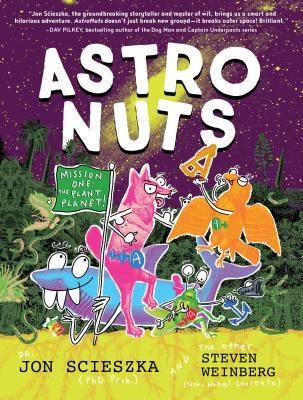
AstroNuts Mission One: The Plant Planet
Author: Jon Scieszka
Illustrator: Steven Weinberg
Published September 10th, 2019 by Chronicle Books

Summary: AstroWolf, LaserShark, SmartHawk, and StinkBug are animal astronauts that were sent on a mission to find a sustainable planet for humans to live on once we’ve ruined Earth. So off they rocket to the Plant Planet in the nose rocket! They must perform experiments to gather all the information needed to know if the planet would be able to sustain humans, Or do Plant Planet’s inhabitants have a different plan in store. This book uses real life science with a fun twist.

Teachers’ Tools for Navigation: This book would be great for teaching all about planet Earth, how to recycle, and how to protect the planet. Also, this book does a great job on putting a fun, zany twist on its characters that make this educational, engaging, and entertaining. These are all great things that students can look forward to when reading this book and are introduced to it, in the classroom.

In terms of interdisciplinary elements, we have discussed that the best subject that the book AstroNuts can be connected to is science. This book can be seen from many different angles when connected to science, but can be more specifically geared towards the knowledge of climate change, protecting one’s planet, and cell information (ex: plant cells).

Discussion Questions: 

  • Why do you think AstroWolf thought that he knew it all?
  • Out of all the characters in AstroNuts (AstroWolf, LaserShark, etc.), which character do you think you could relate to the most? Explain.
  • What could the AstroNuts have done differently in order to not anger the plants, when they first arrived on the planet?
  • Which of the AstroNuts do you feel accomplished their goal for the mission? Why or why not?
  • What aspects of the story do you see in our society when it comes to protecting our planet?
  • How does this book inspire you when it talks about the environment and the ongoing topic of global warming?
  • Which AstroNut do you think contributed the most to their mission? Explain.
  • If you were an official for the NNASA how could you help prepare the AstroNuts for their next mission?
  • If you were to draw Plant Planet, how would it look different from Earth. What types of things would be shown in your illustration? Explain.

Recommended For: 

classroomlibrarybuttonsmall


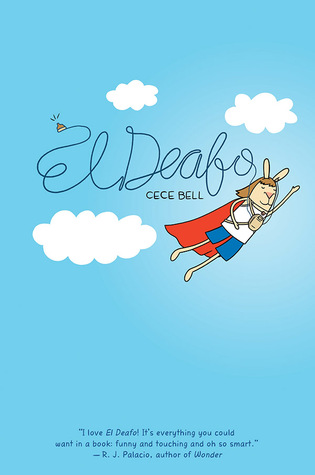
El Deafo
Author: Cece Bell
Published September 2nd, 2014 by Abrams Books

Summary: Starting at a new school is scary, even more so with a giant hearing aid strapped to your chest! At her old school, everyone in Cece’s class was deaf. Here she is different. She is sure the kids are staring at the Phonic Ear, the powerful aid that will help her hear her teacher. Too bad it also seems certain to repel potential friends.

Then Cece makes a startling discovery. With the Phonic Ear she can hear her teacher not just in the classroom, but anywhere her teacher is in school — in the hallway… in the teacher’s lounge… in the bathroom! This is power. Maybe even superpower! Cece is on her way to becoming El Deafo, Listener for All. But the funny thing about being a superhero is that it’s just another way of feeling different… and lonely. Can Cece channel her powers into finding the thing she wants most, a true friend?

Teachers’ Tools for Navigation: El Deafo teaches students about inclusivity which is something kids sometimes struggle with, and its books like this, that may just do the trick! This novel could also be a great choice as a book club book because it is a real-life story and could very well be a kids favorite. You can challenge your students, and have them create a piece of writing or art work that is inspired by this story, to show understanding. It’s great to have different books about kids with certain challenges, so other students can read and understand them better and see that they are not so different from other students, which is why it is encouraged that you to add this to your classroom library if it isn’t there already!

Discussion Questions: 

  • Based off of the cover of the book, what predictions do you have for the book?
  • Why did Cece dislike the way Ginny spoke to her?
  • How did Martha treat Cece when they first met?
  • Do you think that Mike Miller was a good influence?
  • Do you think that Cece missed out on a new opportunity to learn something new because she went into sign language school with a negative attitude?
  • What would you have done if you were in Ceces’ shoes when the teacher slipped out of the classroom and your friends wanted you to listen for her?
  • Why do you think the illustrator chose bunnies to be the characters?
  • Based off of the cover of the book, what predictions do you have for the book?
  • In what ways can you relate to Cece?
  • Cece thought about herself as a superhero? What do you think makes a person a superhero?
  • Why did Cece dislike the way Ginny spoke to her?
  • How did Martha treat Cece when they first met?
  • Do you think that Mike Miller was a good influence?
  • Do you think that Cece missed out on a new opportunity to learn something new because she went into sign language school with a negative attitude?
  • What would you have done if you were in Ceces’ shoes when the teacher slipped out of the classroom and your friends wanted you to listen for her?
  • Why do you think the illustrator chose bunnies to be the characters?
  • How did the illustration help you understand what is going on in the story?

Recommended For: 

classroomlibrarybuttonsmall


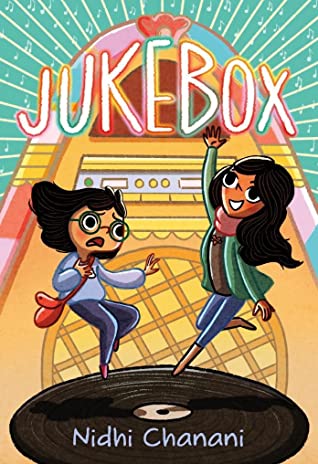
Jukebox
Author: Nidhi Chanani
Published June 22nd, 2021 by First Second

Summary: When her dad goes missing, Shahi and her cousin Naz discover a magical time traveling Jukebox and are transported throughout history. Traveling through time, Shahi and Naz race to find Gio and uncover the truth behind the Jukebox.

Teachers’ Tools for Navigation: This book is educational because it goes over important social issues and it has an engaging story line that will catch the reader’s attention.

Literature logs would allow students to make connections and critically think while they read the novel. The students can then revisit their notes before coming together for class discussions. Free writes allow students to get their real impressions of the book out. They are asked to write freely about the novel for a given amount of time. The absence of a prompt gives the students the chance to explore the aspects of the novel that stood out to them the most.

This book’s interdisciplinary concepts contain history, music and sexuality. Each record that plays brings you back to an event in history without giving too much information, this may lead readers to want to learn more about what was happening at different points of musical history and history in general. Along with this, there was mention of sexuality and the acceptance of it in their family. This can show the reader that it is okay to have a sexuality that isn’t heterosexuality.

Discussion Questions: 

  • Describe the relationship Shahi has with her parents and with Naz.
  • What clues does the illustrator use to let the reader know what time period they are in?
  • Why do you think Gio and Earl prefer to listen to music on records?
  • Are you familiar with any of the music artists talked about in the book? If so, who and how did you learn about them? If not, who do you think would listen to and why?
  • Do you think the store owner (Earl) was a bit selfish, if so, why do you think that?
  • How does music influence your life?
  • Do you think music and history go hand in hand to shape our communities today?
  • Which historic time travel trip stood out to you the most and why?
  • Describe one event in the book that stood out to you the most. Give your reasoning.
  • Did you think that Shahi and Naz were ever going to find their father/ uncle? Why or why not?
  • Why do you think the Jukebox was so important to Gio and Earl?
  • Describe one time in history that was mentioned in the book that you would like to go back to.

Recommended For: 

classroomlibrarybuttonsmall


One Dead Spy
Author: Nathan Hale
Published August 1st, 2012 by Abrams Books

Summary: Nathan Hale is the first ever American spy during the Revolutionary War, who is to be hung by the British.  Before the approval of the hanging a giant history book picks him up to go through the past events through Nathans’ point of view which made him a spy during the Revolutionary War, and what the future of the war will be.

Teachers’ Tools for Navigation: The book can be used with history and also when learning the time period the book is a good reference as far as word choice and vocabulary. It gives a good reference as far as seeing into the reality of the time period. It has great comedic relief and can be used to be an ice breaker when dealing with difficult things such as history, especially with our ELLs because it incorporates pictures and texts will allow them to make connections when reading and following along with pictures as well.

Discussion Questions: 

  • How does this book compare to the textbook as far as history? Does this text provide more of a reference or as pleasant reading?
  • Knowing now that the main character is in reference to a real time activity, how does this change the pace and voice of the book?
  • What connections can we make from the graphic novel to the text as we are reading the text?
  • What can we infer from the textbook to foreshadow to happen in the graphic novel?
  • Why couldn’t the British soldier hang Nathan at the beginning of the graphic novel?
  • What were Nathan Hale’s famous last words?
  • What other history figures are present in the book?
  • How did Henry Knox get the cannons to General Wasington?
  • What was the first American victory of the war? And who won it?
  • How does the setting and the time period give more background knowledge as a reader? Does it help you for see the ending of the book?

Recommended For: 

classroomlibrarybuttonsmall


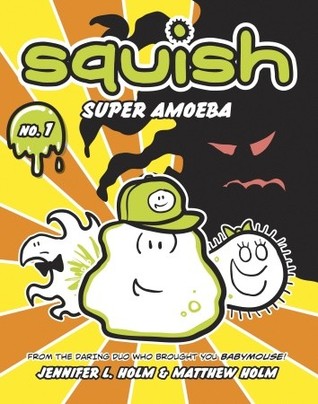
Squish: Super Amoeba
Author: Jennifer L. Holm
Illustrator: Matthew Holm
Published May 10th, 2011 by Random House

Summary: A student named Squish (who loves Science) encounters school life with his friends Peggy and Pod. In the midst of his everyday shenanigans, Squish discovers the meaning of right and wrong when faced with unexpected occurrences at his school. Looking up to his favorite role model, “Super Amoeba”, Squish is determined to become his own superhero, save his friend Peggy from the school bully, and fight against the difficulties that come his way!

Teachers’ Tools for Navigation: When it comes to interdisciplinary elements in this book, we have found that the closest subject that could be connected to Squish is science. Some ways in which you could connect the book to science is by conducting a couple of experiments where students can find amoebas, or other microorganisms,  under a microscope. Amoebas can be found in water puddles and lakes, and most of these places are nearby a school, which can be a great field day for students as well.

Discussion Questions: 

  • What event(s) in the book do you think shows poor/unfriendly behavior? Why?
  • What is a Planaria? Why did the authors make the principal of Squish’s school a Planaria?
  • If you were a friend of Squish, what advice would you give him when confronting the bully in the story? Would you not give him advice? Why or why not?
  • What types of connections could you make with Squish’s character, and his emotions at the end of the story? Explain.
  • Why do you think Mr. Rotifer didn’t ask more questions on why Squish helped Lynwood?
  • Is Pod a good friend in your opinion? Why or why not?
  • What animal would you want to eat the bully in the story? Explain.
  • Would you help the bully cheat to protect your friend?
  • What are some ways that Squish could have handled his bullying situation?Why or why not?

Recommended For: 

classroomlibrarybuttonsmall


Student Voices: Insights from Karina D., Emma Y., Nour B., Maria F., Bianca C., and Anabella S.

Share

Insights

Favorite Book Quotes by Karina D., 6th grade, & Emma Y., 7th grade

The Inheritance Games by Jennifer Lynn Barnes

  • “Sometimes, things that appear very different on the surface are actually the exact same at their core.” – Jameson Winchester Hawthorne from The Inheritance Games (the first book) by Jennifer Lynn Barnes
    • This quote stuck out to me as I was reading the book, this specific scene stuck in my head. Basically, the main character, Avery, was trying to unlock her new inherited billionaire house and she had a task of finding the key. The thing is, the keychain that the key was attached to contained a bunch of other keys – all similar to each other in shape and size. She figured the odd one out in record time while on a call with Jameson Winchester Hawthorne – who inhabits a part of the billionaire mansion. He was surprised, and then decided to say this quote, which stuck out to me since it hints at a deeper mystery in the book. – Emma
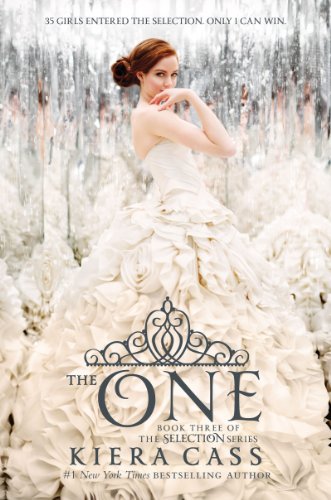
Amazon.com: The One (The Selection Book 3) eBook : Cass, Kiera: Kindle Store

  • “Break my heart. Break it a thousand times if you like. It was only ever yours to break anyway.” – Maxon Schreave from The One (the third book of The Selection) by Kiera Cass
    • This quote stuck out to me as I was reading this book, because it really wrapped a lot of things up in the story. They were in a situation where it was life or death, which adds a lot more suspense to the book itself, and the quote. It also provides information about who Prince Maxon chooses in The One to marry and spend the rest of his life with. This moment filled my heart with joy, which is why I definitely like this quote. Also because it’s something that I would understand myself, if I were to be in love I’d think back to this quote and smile, to fully understand the meaning behind the words.  – Emma

Shadow and Bone by Leigh Bardugo

  • “I’ve been waiting for you a long time, Alina” He said. “You and I are going to change the world.” ― The Darkling from Shadow and Bone (the first book) by Leigh Bardugo
    • This quote stuck out to me because it’s really funny, it’s misleading because of what happens with the Darkling – let’s just say it’s an interesting thing to take note of. He really acknowledges the fact that the darkling and Alina can change the world together, change the Grishaverse and The Fold itself, which may or may not happen in this book, the first book of the series.. They make a powerful duo, but we find out later in the book if it’s for better or for worse. Definitely recommend, there’s also a bunch of other good lines in this story to take note of. – Emma
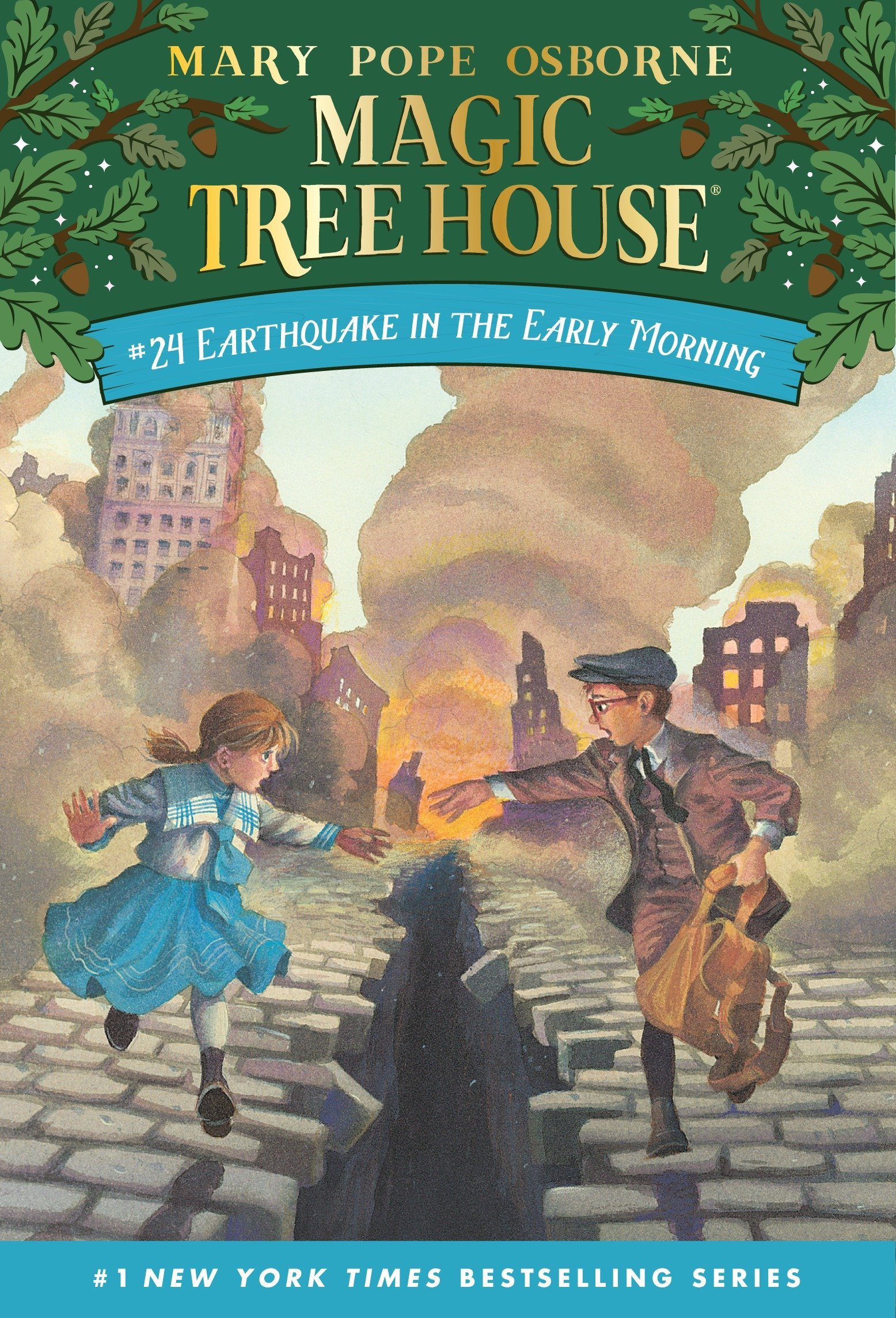
Amazon.com: Earthquake in the Early Morning (Magic Tree House #24) (Magic  Tree House (R)): 9780679890706: Osborne, Mary Pope, Murdocca, Sal: Books

  • “There is no water and still less soap. We have no city, but lots of hope.” ― Mary Pope Osborne, Earthquake in the Early Morning
    • This quote stuck out to me because just when they lost their house to an earthquake, with all their belongings, (and continued) the one thing they didn’t lose was their hope, just as inspiring as it sounds. That told me when times are rough, just don’t lose hope. – Karina
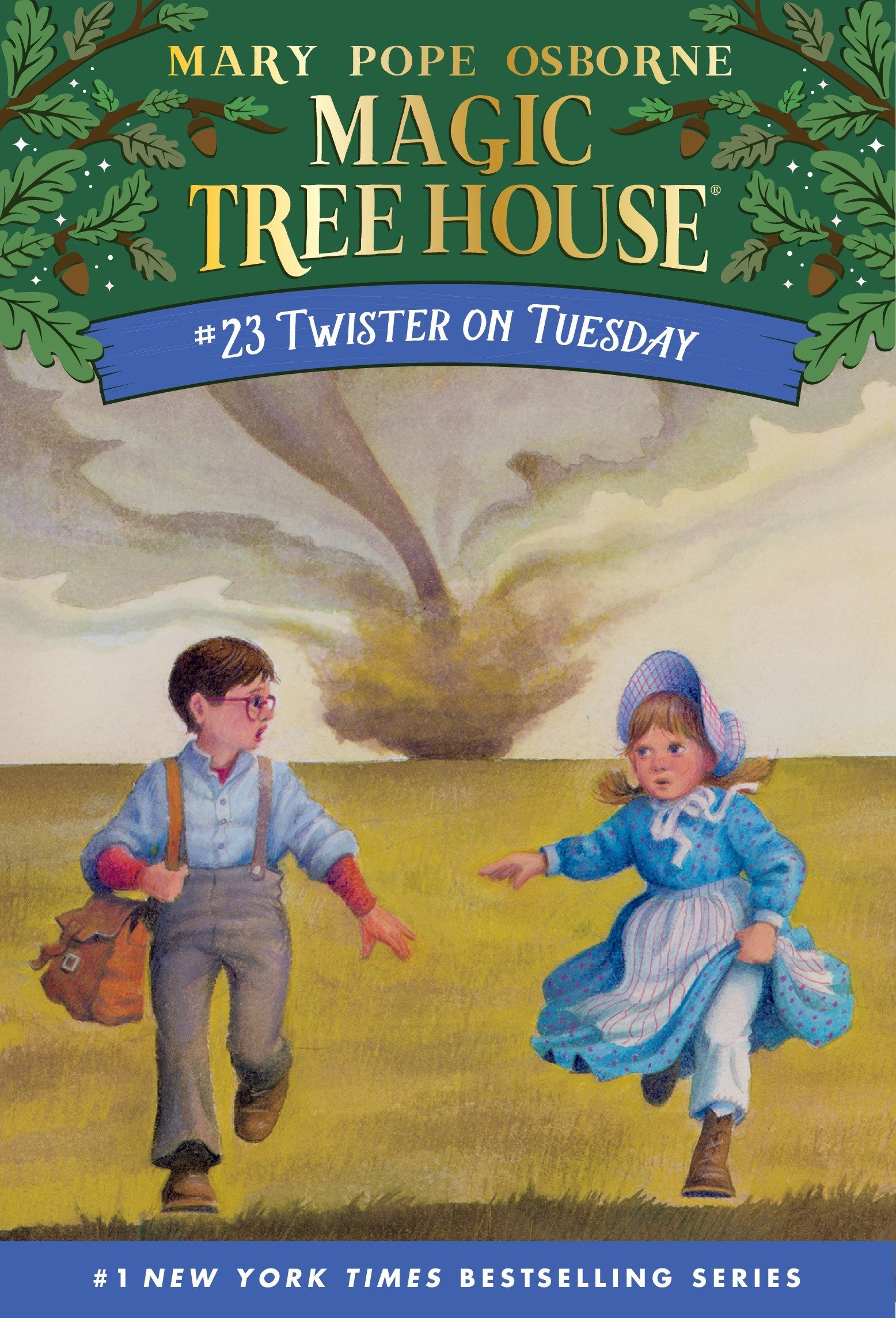
Amazon.com: Twister on Tuesday (Magic Tree House, No. 23): 9780679890690:  Osborne, Mary Pope, Murdocca, Sal: Books

  • “I love teaching. It’s a job that lasts forever. Whatever you teach children today travels with them far into the future.” ― Mary Pope Osborne, Twister on Tuesday
    • This book Quote stuck out to me cause it shows that the knowledge you teach is the knowledge that could lead to the future. Which shows that knowledge can last for eternity and just will be taught over and over again. – Karina

Books vs. Movies by Nour B., 7th grade
Debate: Books vs Movies — RVA Weekly

Is the book always better than the movie? In most cases, yes. The reason behind this is that most of the time the book is too boring to turn into a film. So the directors had to add extra parts to make it more interesting or leave stuff out because it wouldn’t add anything to the movie. 

When the book is being turned into a film, it’s probably better to let the author direct it so they can portray the book exactly like they wanted it to be. The movie is almost always the directors point of view of the book which can be interpreted differently so many times. While authors can portray the book just how they wanted to. Most people say the book is better than the movie or TV show because they’ve read the book and were disappointed by how they left out some of their favorite parts from the book. 

One of the reasons the book is (almost always) better than the book is. The director has to fit the book into about a 1.5-3 hour movie. That’s pretty hard considering all the details included in the book. When you read books you get to see what the character is thinking while in movies you often don’t get that privilege This leaves us to fiure out what the character is thinking through what they say or do in the given situation. Books also provide background knowledge while the movie doesn’t have enough time for that. When you read a book you get a lot of information about the characters, in the movie they just show the characters and give you no information on who they are and what happened to make them who they are.

Reading the book leaves you with some type of imagination to picture where they are or what the character looks like while the movie the characters and setting look completely different than what is described in the book. The book gives you freedom to imagine what the character look like and what the setting is like. This is often ignored by movie directors  and many fans of the book are left disappointed or upset.

In conclusion, the book is almost always better than the movie. While there are some exceptions to this, it is correct most of the time. Reading allows you to feel like you are also experiencing it while the movie just feels like you’re just watching it. 

The Truth About The Hunger Game Series (Spoiler Alert!) by Maria F., 8th grade
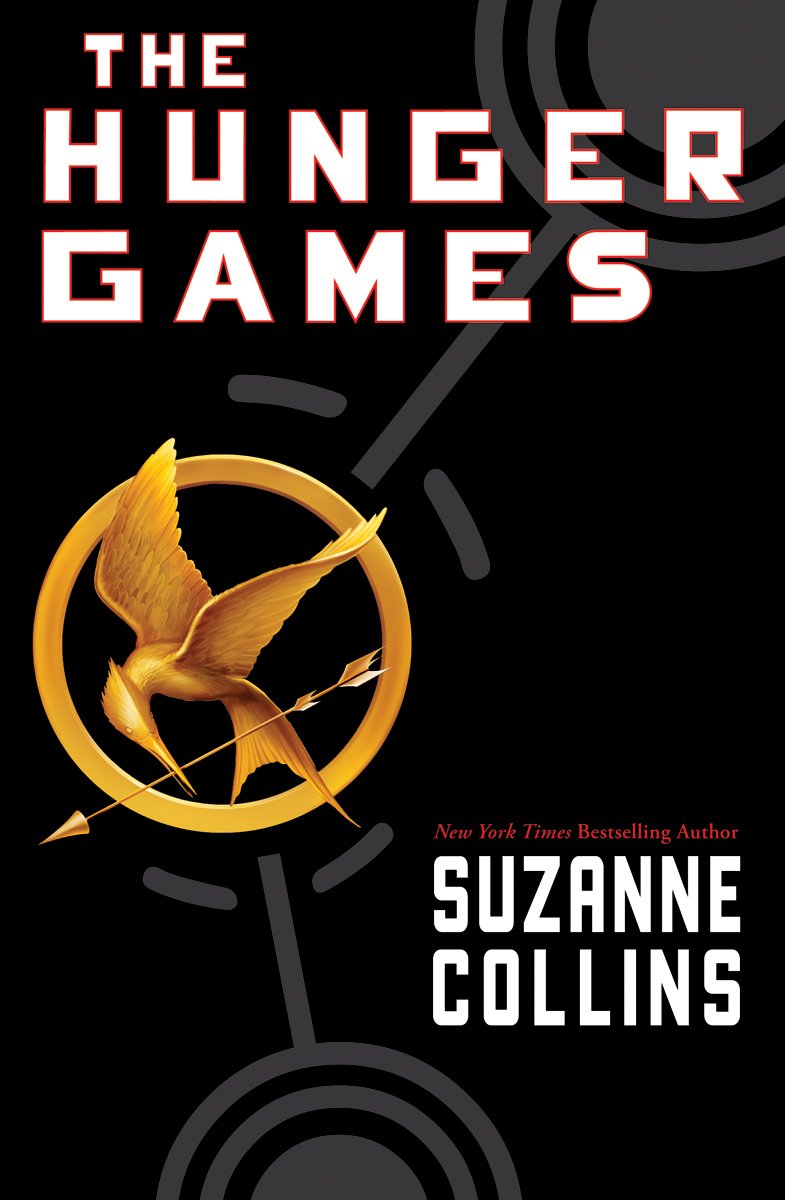
Amazon.com: The Hunger Games - Library Edition: 9780545310581: Collins,  Suzanne: Books

The inner workings of what actually happens! 

Warning: A lot of unpopular opinions are present 

The Hunger Games series is such a good book series but have you ever thought about who is the true villain or looked at who we should blame for prim’s death. Also what is truly going on with every character and their motives. Today I’m going to be going into more depth on what I think of the series and provide several theories that might even answer some of the questions above. 

Gale Is One of the Villains Of Our story! 

Hey I know what you might be thinking, Gale how could Gale be a villain, he was always there for Katniss! Or was he? From the very beginning of our story we were introduced to Gale and the author introduced him as a side character who played a protagonist role in the series. But why would we question his actions then. Well let’s look a little deeper, in the beginning gale acted like he and Katniss were just good friends and “he cared for her.” But later on in the story it proves that he did actually have secret feelings for Katniss and this had inevitably confused Katniss on who to chose, which didn’t help her mental health state. At Katniss’ lowest point in life Gale showed up and made it more confusing. Fine this doesn’t make him a villain but it does serve us every right to call him not a good person. But now let’s look more into Gale’s character throughout the book series. Gale has been proven time and time again that he hates the way the government is run, and clearly despises the capital.  So lets flash forward to the third book when gale designs that nuclear bomb that ends up killing one of my favorite characters Prim! He claims he did not know what the purpose of the bomb was and had no idea it was going to kill prim. But clearly he knew that designing a bomb is made to kill people. So Gale was willing to kill innocent people all around the capital? Also the real question is he designed a super powerful bomb but yet didn’t even take one second to ask what it was for! He killed his people and not only that, he ruined Katniss as well. So in conclusion, gale is a secret villain in disguise you decide!

Peeta Is the Best Character In the books! 

In the Hunger Games series peta is presented as a main side character so how can he be the best character in the whole series. Well let’s just say Susan Colonies knew what she was doing when she presented peta. She made peta a lovable character from the start who just happened to fall head over heels for our main character Katniss. The reason why Katniss is not the best character is because of her thought process on things, and instead of character development in Katniss we saw none of it. But yet in peta we did, peta even with his PTSD that he got in the hunger games, Yet he was still able to think with a strong mind. Peeta Is a character who went through so much for Katniss and we love him for that. 

Katniss went through too much and yet she still didn’t fail us? 

I feel like this is a given idea that Katniss has been through so much that mentally is not ok. But I did feel like putting it in here since it does contribute to topic one. What I mean by that is clearly Katniss has been through a lot from going through the hunger games and losing her sister. But yet Gale never helped,I feel like Gale just worried her more than helped which is why I say that he was never the best character. But yet Katniss didn’t fail us because in the end she ended up killing president coin. Many might say that was a foolish move on her behalf. But I think even in her terrible mental state her killing president coin was the best move she could have made. It was brave due to the fact that was her own leader and she knew what she was risking. The killing coin has stopped form another version of hunger games arising and yet she did this all in her terrible state of mine!

Effie Trinket Hates The Games! 

How could Effie hate the games if she announces the whole procure and draws the names. I don’t have that much evidence to support this theory but you can tell that Effie never enjoyed having to see Katniss and Peeta go through what they went through. You can tell that she had a soft spot for them and her having to see all that happen to them just didn’t sit well with her. 

President Snow Just wanted what was best for the Capital 

I had left the best one for last! How could someone as cold as president Snow want something good that is not for himself. Well hear me out although we can all agree president snow had the most evil character traits in the books. He did unfortunately care for the capital but never for the right reason. President Snow had worked so hard to create the evil foundation that he made from the districts divisions to the capitol. So just like anybody that worked hard on something they don’t want it to crumble. So when Katniss had posed a threat he was shocked on how somebody could have dared to do such a thing. Which is why what happened in the second book happened. President Snow did that in hopes of having Katniss’ death come true which didn’t happen and resulted in President Snow’s enemy never to be gone. So he had to take drastic measures due to the fact that he just wanted to protect the capital. So in the end president snow never cared for the district people but for his capital. 

My Mixed Feelings on the Author of Harry Potter by Bianca C., 8th grade

J.K. Rowling's tweets on LGBTQ community sparks outrage - YouTube

Although I do love the Harry Potter series: I think it pretty amazing. I love the whole story line of Harry Potter adventures to defeat lord Voldemort… But I do have a big problem with the Author J.K Rowling because of her being anti- trans. As someone who is in the LGBTQ+ community, it is something I have a problem with because I believe that just because you weren’t biologically born a woman doesn’t mean you aren’t because I believe we can be whoever we want to be.  

I get that she is a huge feminist, but it just isn’t right telling trans- women that they aren’t real women because they weren’t born as one but they can still be a women in their heart, and if you feel like you are a women then you are you don’t have to go through being pregnant or getting your period 7 days a month to be a she. So that why I have a huge problem with J.K Rowling.

We should all get to choose who we want to be: even our gender.  We choose the decisions in our lives we can be who we want to be and J.K ROWLING HAS NO RIGHT SAYING WE CAN’T MAKE THAT CHOICE. And by her treating trans- women like this, she’s making people feel tarnished by the Harry Potter books because of J.K Rowling anti trans posts on twitter And a lot of the actors from the harry potter movies totally disagree on J.K. Rowling’s views on trans women. They have repeatedly argued on the trans topic.

She is totally mistaken if she believes trans women aren’t real women because they are and that the truth is why I have mixed feelings on Harry Potter because I hate what she’s been saying about trans people, but I do love her books so you can see why I’m confused.

4 Classics I Want to Read That Actually Sound Good by Anabella S., 8th grade
The Project Gutenberg eBook of The Yellow Wallpaper, by Charlotte Perkins  Gilman

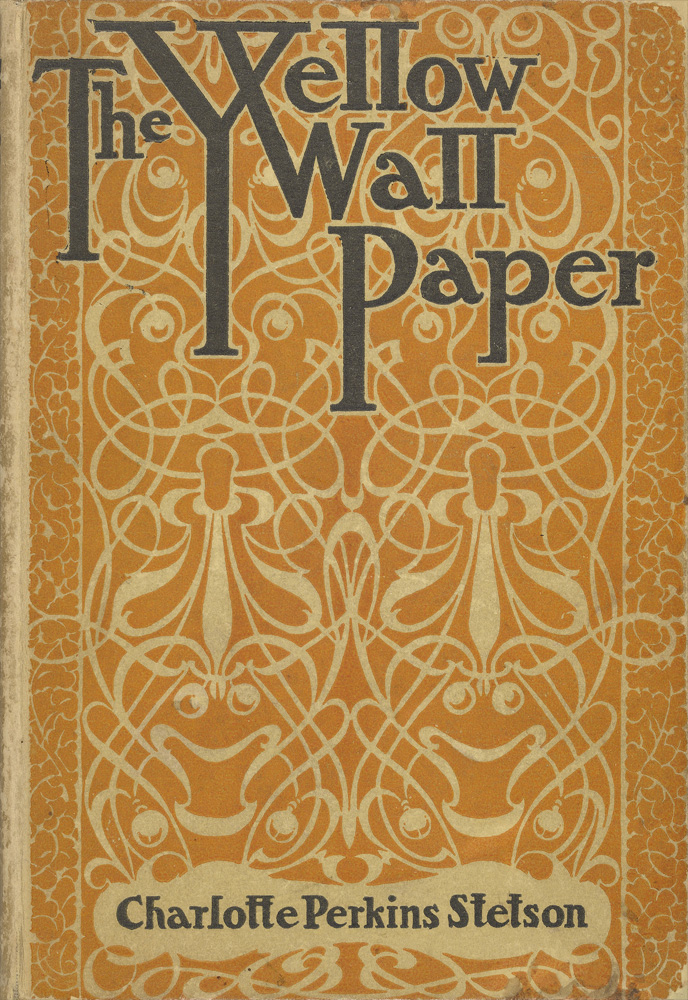
The Yellow Wallpaper by Charlotte Perkins Stetson

The Yellow Wallpaper is a short story with only about 64 pages, and It sounds like every last page is going to be a masterpiece. The story follows a woman and her husband who rent a house for their summer vacation. The Narrator (the woman) suffers from depression while her husband John, who’s a doctor, belittles her illness, thoughts, and concerns. The Narrator’s treatment for her depression (given to her by her husband) is that she must do nothing active.  However, she feels that writing is a form of freedom for her and so she decides to start a secret journal to help calm her mind. In this Journal, she mostly describes the house. She speaks mainly positively about the house but then some disturbing elements start to pop up. The Narrator becomes obsessed with the yellow wallpaper in particular in one of the rooms and she starts to believe she can see things (a woman) trapped in the wallpaper. What was first believed to be a fun summer getaway turns into a psychological battle of terror, solitude, and freedom. A woman who slowly goes insane trapped in a room surrounded by dull yellow wallpaper. 
Crime and Punishment - Wikipedia

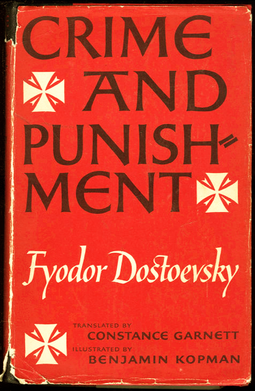
Crime and Punishment by Fyodor Dostoevsky

Crime and Punishment is one of the most well-known pieces of classical literature and for good reason. The story is about Raskolnikov, a former student who lives in poverty in Saint Petersburg, and one day he decides to murder an elderly local pawnbroker who has made her way to a small fortune. Raskolnikov wants this fortune for himself and so he kills her as his solution to get the money. Then from the point in which he kills her onward, his mental states start to darken and deteriorate. Raskolnikov becomes enveloped by his guilt and then has to deal with moral dilemmas on whether he should confess or continue to lie about what he did. This book has me crazy with the urge to read it and get a full understanding of everything that happens and I’m also really intrigued by Dostoevsky’s style of writing. 
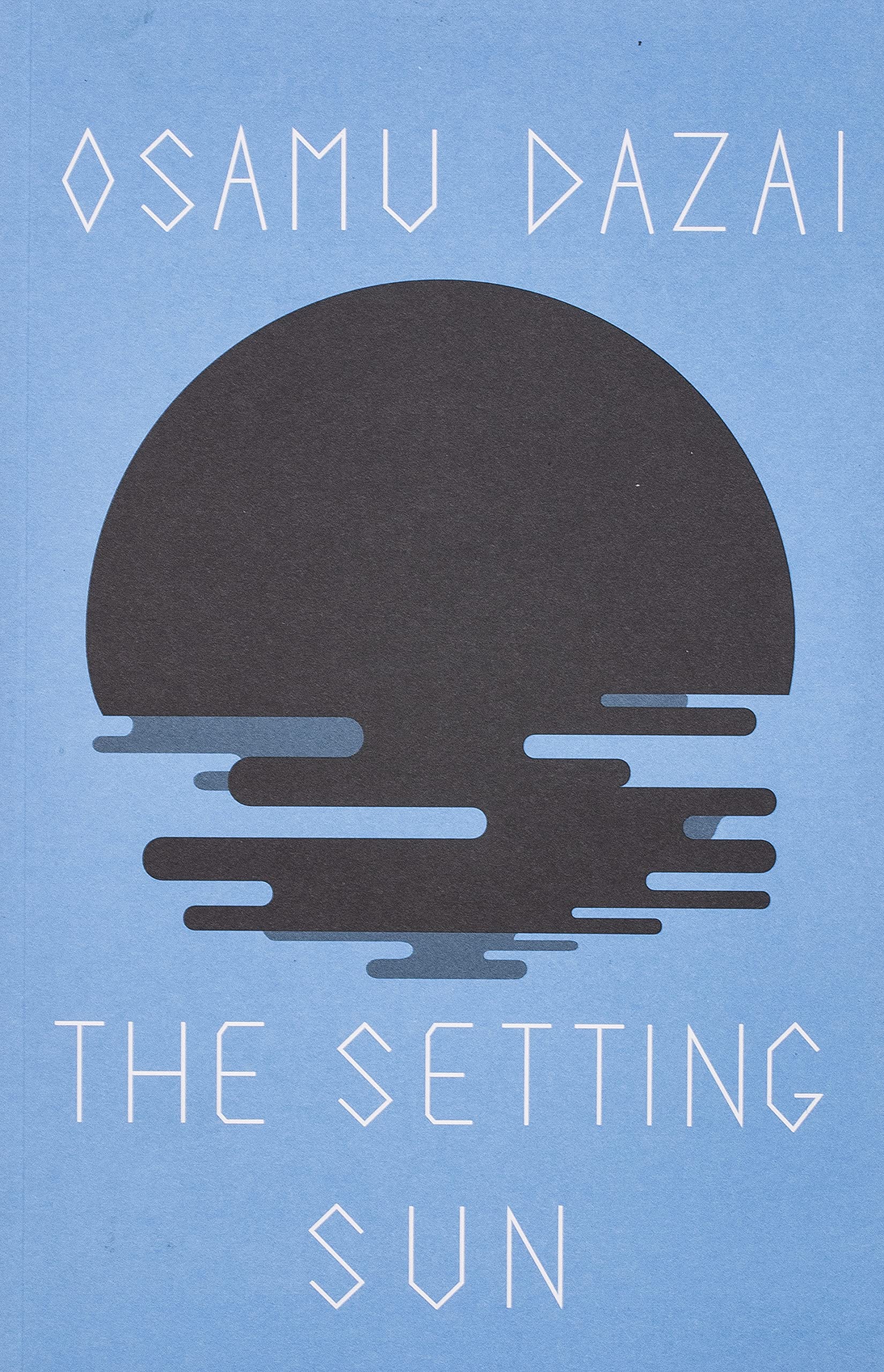
Amazon.com: The Setting Sun (New Directions Book): 9780811200325: Dazai,  Osamu, Bett, Sam: Books

The Setting Sun by Osamu Dazai 

Osamu Dazai is a great classic Japanese author who also wrote the book No Longer Human. No Longer Human is my favorite book to this day so I have high expectations for The Setting Sun and I have a feeling it won’t disappoint. (The Setting Sun is originally in Japanese and translated to English). The story of The Setting Sun is set in the early post-war years of WW2. It follows a 29-year-old aristocrat called Kazuko who divorced her husband and decided to move back in with her mother. After the war had ended the family had lost most if not all of their money due to the war and would now have to move from Tokyo to the countryside. We get to follow Kazuko as she tries to make a living for herself while her mother’s health is declining and her brother is trying to come to terms with the new state of the world after the war. The biggest reason why I want to read this book so much is due to Dazai’s amazing way of being able to show the change in society after so much harm was done to the people post-war and how the spirit, culture, and moral code at the time were changing. He also does an amazing job of showing how society and the changes happening put a strain on the main character. You get to see clearly into the mind of the character and how they think, making the character feel real while making you connect with them and understand all that is happening to them at the time. 

The Catcher in the Rye by J.D. Salinger

The Catcher In The Rye by J.D. Salinger

This is again another common classic piece of literature most people know, but it should be noted that the book does touch on a lot of hard topics, so I recommend you look into the book more before you decide to read it. The story is set in the 1950s and follows Holden Caulfield who is 16 years old. We first meet him right when he is released from an institution and his story starts at Pencey prep, Pennsylvania (The fourth school he has gone to and is on his way to failing again). After getting into a fight with a friend Holden packs up early and goes home to Manhattan. In Manhattan, he stays in a hotel where he finds a girl and asks her to run away with him but when she denies him he gets angry and heads to his childhood home where his little sister is. He tells her that he has failed out of yet another school and she gets angry telling him that he can’t go around hating everything. He ends up going to the same school as his little sister and continues to try to find himself and form some kind of future for himself. The story doesn’t have much of an elaborate plot besides an angry kid having to change schools over and over yet the book calls my attention and I think it might be because of all the things I’ve heard about the style of writing and the way that the characters are expressed. I feel like there is a lot more to the book which I don’t know yet and I’m crazy to figure it out. 

Thank you so much to my student voices today and their look at ___!

It’s Monday! What Are You Reading? #IMWAYR 8/8/22

Share

It’s Monday! What Are You Reading?
Sharing Picture Books, Early Readers, Middle Grade Books, and Young Adult Books for All Ages!

It’s Monday! What Are You Reading? is a weekly blog hop co-hosted by Unleashing Readers and Teach Mentor Texts which focuses on sharing books marketed for children and young adults. It offers opportunities to share and recommend books with each other.

The original IMWAYR, with an adult literature focus, was started by Sheila at Book Journeys and is now hosted by Kathryn at The Book Date.

We encourage you to write your own post sharing what you’re reading, link up below, leave a comment, and support other IMWAYR bloggers by visiting and commenting on at least three of the other linked blogs.

Happy reading!

Bold_line

Thursday: Warrior Princess: The Story of Khutulun by Sally Deng

Saturday: Guest Review: Hidden Figures: The True Story of Four Black Women and the Space Race by Margot Lee Shetterly, Illustrated by Laura Freeman

Sunday: Author Guest Post by Mary Batten, Author of Life in Hot Water: Wildlife at the Bottom of the Ocean

**Click on any picture/link to view the post**

Bold_line

Kellee

Teen

Don't Ask Me Where I'm From by Jennifer  De Leon We Were Liars by E. Lockhart Genuine Fraud by E. Lockhart

  • Don’t Ask Me Where I’m From by Jennifer De Leon: I really, really, really liked this book, and I don’t see why there hasn’t been more hype around it. I loved the characters, the story, the evolution, and definitely the theme. Beautifully written with real representation.
  • We Were Liars by E. Lockhart: I can see why this book is so popular–the characters are pretentious yet interesting enough that you are intrigued and you have to figure out the truth behind all of the terrible. I know lots of people said they figured it out; I didn’t, so the reveal worked for me. I look forward to reading the prequel.
  • Genuine Fraud by E. Lockhart: This one was harder for me to get into. It reminded me of Memento the movie in that you never knew what was true and what wasn’t and the sequence just wasn’t right. This one didn’t work for me as well, but I am glad I read it!

Middle Grade

The Nerdy Dozen by Jeff     Miller The Million Dollar Race by Matthew Ross Smith Fenris & Mott by Greg Van Eekhout

  • The Nerdy Dozen by Jeff Miller: I can see why students like this book–it is full of action and keeps you on the edge of your seat!
  • The Million Dollar Race by Matthew Ross Smith: I ended up really liking this book! It is just written really well, and I loved the characters–you just cannot help but rooting for them all!
  • Fenris & Mott by Greg Van Eekhout: This is a newly released book that all of my elementary and middle school educators will want to get for their classroom or library! Van Eekhout takes the reader on a heart-stopping adventure full of Norse mythology, including the potential for the mythological pup, Fenris, to eat the entire world. Mott is a character that readers will connect with and the friendships found within the pages are unique and heartwarming. I cannot wait to share this book with students!

Teen Manga

Your Lie in April, Vol. 1 by Naoshi Arakawa Penguin & House, Vol. 1 by Akiho Ieda

  • Your Lie in April Vol. 1 by Naoshi Arakawa: Always looking for new manga for my library, and this is one a friend recommended. It is a slice of life story that has a sad premise but also has hope. I have a feeling it gets sadder as the series goes along though…
  • Penguin & House Vol. 1 by Akiho Ieda: YAY! An all ages manga! I am so happy my friend Shannon is as into finding mangas for the school library as I am. This one is just so silly and charming–I mean it is a brilliant penguin and a blockhead guy in silly antics!

Adult

By the Book by Jasmine Guillory

  • By the Book by Jasmine Guillory: I loved this Beauty and the Beast retelling with an editorial assistant and a past-prime bad boy who is supposed to be writing a memoir. Kept the essence of the fairy tale but got rid of all the cringe parts.

To learn more about any of these books, check out my 2022 Goodreads Challenge page or my read bookshelf on Goodreads.

Ricki

It is Kellee’s week to share a long IMWAYR post, and she’s taking next week, too; I will update you all on my reading in a couple of weeks!

Bold_line

Kellee

Delirium (Delirium, #1) Hooky The Mysterious Benedict Society (The Mysterious Benedict Society, #1) Stella

Reading: Delirium by Lauren Oliver & Hooky by Míriam Bonastre Tur

Listening to: The Mysterious Benedict Society by Trenton Lee Stewart & Stella by McCall Hoyle

Bold_line

Tuesday: Student Voices: Insights from Karina D., Emma Y., Nour B., Maria F., Bianca C., and Anabella S.

Thursday: Guest Post: Classroom Uses for Astronuts by Jon Sciezska, El Deafo by Cece Bell, Jukebox by Nidhi Chanani, One Dead Spy by Nathan Hale, and Squish: Super Amoeba by Jennifer L. Holm

Saturday: Guest Post: Classroom Uses for Stargazing by Jen Wang, The Party by Sergio Ruzzier, Twins by Varian Johnson, and When Stars Are Scattered by Victoria Jamieson and Omar Mohamed

Sunday: Author Guest Post by Dianne White, Author of Look and Listen

Bold_line

Link up below and go check out what everyone else is reading. Please support other bloggers by viewing and commenting on at least 3 other blogs. If you tweet about your Monday post, tag the tweet with #IMWAYR!

 Signature andRickiSig

Author Guest Post: “Why I Write Science Books for Children” by Mary Batten, Author of Life in Hot Water: Wildlife at the Bottom of the Ocean

Share

“Why I Write Science Books for Children”

One day some years ago when I was writing scripts for the Children’s Television Workshop science series 3-2-1 Contact, I took my four-year-old daughter to my office and introduced her to the show’s actors. Afterwards, she looked at me and said, “I didn’t know they were real.” I was astounded. She had learned from watching Sesame Street and the show I was working on–the only TV shows we allowed her to watch–that what you see on TV is pretend. Big Bird, Cookie Monster and the other muppets were imaginary characters. Sesame Street was an imaginary street. My little daughter had learned the difference between fact and fiction.

From toddler age, children are fascinated by the real world. I consider them budding field biologists. They pick up the tiniest pieces of their environment–a pebble, a shell, a feather, a blade of grass–and excitedly present it to their parent or caretaker. As soon as they can, they repeatedly ask “Why?” About everything! These questions are the beginning of scientific curiosity. And it is my hope that my books tap into and nourish that curiosity.

By third grade, most children have learned about the two literary genres, fiction and nonfiction. The books I write are nonfiction–science, nature. When people ask me why I write nonfiction, I have two answers: First, I am fascinated and excited by the complex interrelationships among animals, plants, microbes, soil, sun and water that hold ecosystems together. Secondly, what goes on in nature is more fantastic, more bizarre than anything science fiction writers have imagined. Sex-changing fishes, flowers that use trickery to attract pollinators, insects that look like leaves and sticks, symbiotic partnerships between totally different species, and creatures that live in water hot enough to melt lead–these and many more are all real!

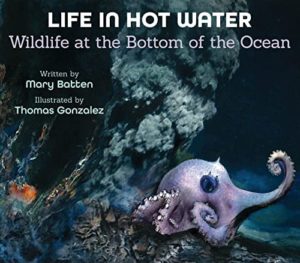
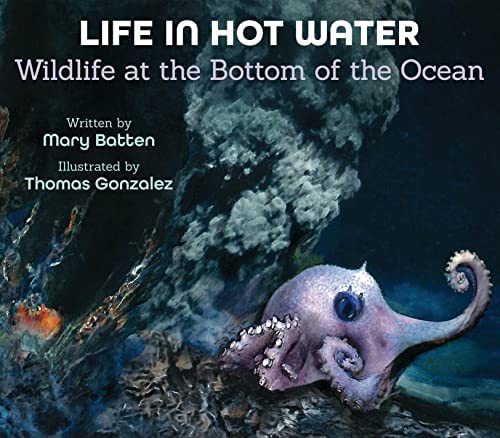
My newest book, Life in Hot Water: Wildlife at the Bottom of the Ocean, is about animals that live in the hottest, most extreme environment on Earth–hydrothermal vents. It is the second book in a series I created called “Life in the Extreme,” about the incredible ability of living things to evolve and take up residence in nooks and crannies of the most extreme environments. Discovery of hydrothermal vents in 1977 is one of the greatest adventures in science. 

Hydrothermal vents are underwater hot springs that form along the mid-ocean ridge, the longest mountain range on Earth. You can’t see it because it’s at the bottom of the sea. There it snakes more than 40,000 miles (65,000 kilometers) around the planet. When scientists first descended into this world, nobody expected to find any living thing. But the porthole of their tiny submarine revealed fish, clams, shrimp, crabs, and giant red-tipped tube worms never seen before. How could anything live amidst plumes of superhot, toxic liquid gushing from strange chimney-like structures?

Like toddlers who develop by asking questions, scientists also gather knowledge by asking questions and searching for answers. Questions open doors to discovery and the mind-blowing discovery of hydrothermal vents raised many questions. One of the most important was, “What are these creatures eating?”

Until vents were discovered, scientists thought that green plants and the sun were the base of all food chains–a process called photosynthesis. But no sunlight reaches the total darkness of the vent world miles below the ocean’s surface. And no green plants grow in this world. What then?

Following up these and other questions, scientists discovered an entirely new food chain–one that depends on energy from the Earth instead of energy from the sun. Amazingly, vent animals eat bacteria that feed on toxic chemicals such as hydrogen sulfide, which smells like rotten eggs, spewed from Earth’s interior by undersea volcanoes that create the vents. Scientists called this process chemosynthesis. Robert Ballard, the oceanographer who discovered where the sunken ship Titanic lay, called it “Probably one of the biggest biological discoveries ever made on Earth.”*

Textbooks had to be rewritten to include chemosynthesis as well as photosynthesis. Today research to learn more about hydrothermal vents is going on all over the world.

For me, one of the joys of writing nonfiction is reaching out to scientists who are doing the real work and interviewing them. One of the scientists whom I consulted for this book, Dr. Janet Voight, Associate Curator at the Field Museum in Chicago, said, “There’s so much about the deep sea that we haven’t even begun to explore. It’s all discovery, and that makes it exciting.”

Children are natural born explorers. Tapping into their questions is one of the most exciting and productive ways to foster children’s developmental curiosity, engage them in the basic scientific process, and encourage them to write their own nonfiction. Children’s science books, such as Life in Hot Water, can be used to create multi-disciplinary units engaging biology, geography, art, and creative writing. 

*Bill Nye discusses discovery of hydrothermal vents with Robert Ballard: http://www.youtube.com/watch?v=D69hGvCsWgA

Published June 21, 2022 by Peachtree

About the Book: .A dramatic overview of the deep-sea extremophiles that thrive in scalding water and permanent darkness at the bottom of the ocean

The scalding-hot water gushing from vents at the bottom of the ocean is one of the most extreme environments on Earth. Yet over millions of years, many organisms—from chemical-eating bacteria to eyeless crabs and iron-shelled snails—have evolved in amazing ways that enable them to thrive in this unlikely habitat. Scientists are hard at work to learn more about the complex ecosystems of the ocean depths.

Award-winning science writer Mary Batten and NYT best-selling illustrator Thomas Gonzalez, the masterful duo that created Life in a Frozen World, team up again in this impressive overview of hydrothermal ocean vents. Her clear, informative text coupled with his unique and eerily realistic paintings of sights never seen on land—gushing “black smokers,” ghostly blind shrimp, red-plumed tube worms—will entice readers to learn more about this once-hidden world at the bottom of the sea.

About the Author: Mary Batten is an award-winning writer for television, film and publishing. Her many writing projects have taken her into tropical rainforests, astronomical observatories, and scientific laboratories. She scripted some 50 television documentaries, was nominated for an Emmy, and is the author of many children’s science books, including Aliens From Earth, and Life in a Frozen World: Wildlife of Antarctica. Her most recent book is Life in Hot Water: Wildlife at the Bottom of the Ocean.

Thank you, Sara at Holiday House, for connecting us with Mary!

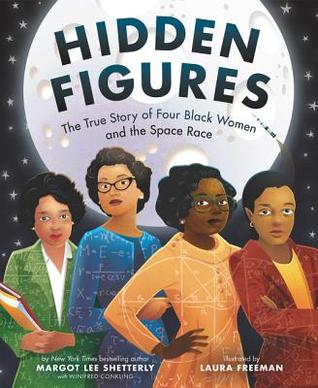
Guest Review: Hidden Figures: The True Story of Four Black Women and the Space Race by Margot Lee Shetterly, Illustrated by Laura Freeman

Share

Guest Reviewer: Kayla, UCF Elementary Education Student

Hidden Figures: The True Story of Four Black Women and the Space Race
Author: Margot Lee Shetterly
Illustrator: Laura Freeman
Published

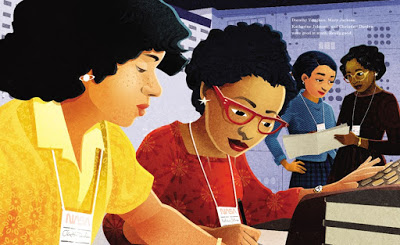
Summary: Dorothy Vaughan, Mary Jackson, Katherine Johnson, and Christine Darden were good at math…really good.

They participated in some of NASA’s greatest successes, like providing the calculations for America’s first journeys into space. And they did so during a time when being black and a woman limited what they could do. But they worked hard. They persisted. And they used their genius minds to change the world.

In this illustrated picture book edition, we explore the story of four female African American mathematicians at NASA, known as “colored computers,” and how they overcame gender and racial barriers to succeed in a highly challenging STEM-based career.

About the Creators: 

Margot Lee Shetterly is the author of  Hidden Figures: The American Dream and the Untold Story of the Black Women Mathematicians Who Helped Win the Space Race (William Morrow/HarperCollins). Shetterly is also the founder of The Human Computer Project, an endeavor that is recovering the names and accomplishments of all of the women who worked as computers, mathematicians, scientists and engineers at the NACA and NASA from the 1930s through the 1980s. Shetterly is a Virginia native, University of Virginia graduate, an entrepreneur, and an intrepid traveler who spent 11 years living in Mexico. She currently lives in Charlottesville, VA.

Originally from New York City, Laura Freeman now live in Atlanta with her husband and their two children. Freeman received my BFA from the School of Visual Arts and began her career working for various editorial clients. She has illustrated over thirty children’s books, including Hidden Figures written by Margot Lee Shetterly, the Nikki & Deja series by Karen English and Fancy Party Gowns by Deborah Blumenthal. In addition to illustrating books and editorial content, Freeman’s art can be found on a wide range of products, from dishes and textiles to greeting cards.

Review: This book was a gem to find. I didn’t really know the story of how NASA got the skills to make it to space when planning the exploration. I was very intrigued when I read the story of these four African American women who were mathematical geniuses. These women were around during the segregation era but that didn’t stop them from doing what they loved even through tough times. In this picture book I was able to explore their story and how they made everything possible to help NASA put the first man into space. I also really like the message of women entering a career we only see men in but overcoming gender and racial barriers will allow any women to be successful in her career.

Teachers’ Tools for Navigation: This book can be used in many ways. We can use in social studies when talking and exploring segregation and how these women overcame a lot of obstacles to help NASA but men into space. We can also speak about STEM based careers and how difficult it was for many women to enter science or engineering jobs or schools because it was considered a “mans” job. This book will allow many children to see that hard work and dedication pays off. We should follow are dream and work hard and overall, not let any obstacle allow us to fail.

Discussion Questions: 

  • How did these 4 women make NASA hire them to work on the program to allow humans into space?
  • Was it easy for these women to get into school or even work for NASA? Why?
  • Who would you identify more with Dorothy, Mary, Katherine or Christine?
  • Descried how the segregation affected Black people?
  • What two major obstacles did Dorothy Vaughan face to become a computer at the Langley Laboratory?
  • Using the timeline in the book what were the most important events in the story?

Flagged Passages: 

Read This If You Love: Counting on Katherine by Helaine Becker, Mae Among the Stars by Roda Ahmed

Recommended For: 

classroomlibrarybuttonsmall

Thank you, Kayla, for your review!