Top Ten Tuesday: Favorite Books with a ________ Setting

Share

top ten tuesday

Top Ten Tuesday is an original feature/weekly meme created at The Broke and the Bookish. The feature was created because The Broke and Bookish are particularly fond of lists (as are we!). Each week a new Top Ten list topic is given and bloggers can participate.

 Today’s Topic: Favorite Books with a ________ Setting

Here are our favorites within each of these great settings! As always—no spoilers!

1. Post- Apocalyptic World

Ricki: Ashfall by Mike Mullin

This is an epic story that has always been a hit in my classroom. Many of my students list it as their favorite book, and they are often compelled to research about super-volcanoes after reading Ashfall. The imagery and setting details are fantastic, and readers will feel as if they are right there with Alex after the super-volcano erupts.

Kellee: Life as we Knew it by Susan Beth Pfeffer

This book, like Ashfall, is so realistic and that is why it is on my list. In Life as we Knew it a meteor hits the moon, and all heck breaks loose! The description of the disasters that inflict Miranda, her family, and the rest of the world are so terrifying, it will give you nightmares!

2. Dystopian World

Ricki: Little Brother by Cory Doctorow

I love dystopian novels and try to read every book published within this genre. Even when the trend has long passed, I will still continue to devour books within this setting. It was difficult for me to choose just one book for this category because there are so many incredible choices. In the end, I chose Little Brother because it is a modern interpretation of 1984, one of my favorite classic novels. I love the lessons it teaches readers and think the setting is realistically interpreted, which allows it to be believable to students. I also think it would make for a great bridge for teachers to use alongside 1984, and it could lead to some great discussions/research about technology.

Kellee: Divergent by Veronica Roth

This is one of my favorite dystopian novels (series), but it is also one of my favorite settings. I think it is because it is actually set in Chicago, so I was able to connect to the setting thus making the book even more impactful to the reader. It is the dystopian novel that seems the most likely to happen in the future and I think it is because of the realism of the setting.

3. World War II

Ricki: Between Shades of Gray by Ruta Sepetys

If it is set in World War II, I will read it. With all of the books I’ve read that are set in this time period, this choice was very easy for me. I chose Between Shades of Gray because it doesn’t portray the Nazi Germany conflict, but instead, it teaches readers about Stalin and the Soviets. Lina, the main character, travels to Siberia, and readers won’t be able to put this book down. Students will feel a need for social justice after reading it. I have taught it to about fifty students (so far), and every single student fell in love with this story. Fellow teachers will know that this is a very difficult feat, with the varied tastes and interests of our students!

Kellee: The Boy Who Dared by Susan Campbell Bartoletti

Like Ricki, I am fascinated by World War II. Because of that, this one was actually really hard to choose. I decided on The Boy Who Dared because I like the point of view which it is told. The Boy Who Dared is told from the point of view of Helmut Hubner, an actual member of Germany’s Hitler Youth, and tells us a fictionalized narrative of Helmut’s life (though all based in truth). I, unfortunately, had a very narrow history (thanks to Texas middle school Texas history and a high school where football coaches taught history), so I was not aware of the Hitler Youth and Susan Cambell Bartoletti became my teacher. This book is so informative yet so suspenseful and interesting!

4. School

Ricki: Nothing by Janne Teller

Pierre Anthon walks out of the classroom and climbs a plum tree. He yells down to his fellow classmates, “It’s all a waste of time […] Everything begins only to end. The moment you were born you begin to die. That’s how it is with everything.” His schoolmates decide to prove Pierre Anthon wrong, and they set out to create a heap of meaning. This is a chilling allegory that readers will find utterly disturbing. It isn’t entirely set in the classroom, but the characters are all classmates and depict an average group of everyday children. When I think of this book, I can’t help but remember the door that smiled as Pierre Anthon walks out of the room.

Kellee: Sideways Stories from Wayside School by Louis Sachar

I. Love. This. Book! Such a classic and so hilarious! I’ve read is many, many times and I cannot wait to share it with new students each year and someday with my own children. If you haven’t read it, Sideways Stories is the first book of the Wayside School series. Wayside School is a 30-story school with one classroom per floor. Our story focuses on Mrs. Gorf’s class on the 30th story. Each student is such a character and tells a different chapter. For example, Calvin has a tattoo of a potato, Jenny wears a motorcycle helmet, and Kathy has a pet skunk.

5. Fantasy world

Ricki: The Scorpio Races by Maggie Stiefvater

The wild, flesh-eating horses of this story make its mystical setting beautiful and bone-chilling. I can’t describe the magic of this world as well as Stiefvater does: “They came in with the tide. The moon illuminated long lines of froth as the waves gathered and gathered and gathered offshore, and when they finally broke on the sand, the capaill uisce tumbled onto the shore with them. The horses pulled their heads up with effort, trying to break free from the salt water.”

Kellee: Hero’s Guide to Saving the Kingdom by Christopher Healy

I love Chris Healy’s Hero’s Guide books and it is only because of the fabulous world that he created. I LOVE retellings of fairy tales and this one is no exception. What is even better about this retelling is it is HILARIOUS! It reminds me a bit of Shrek except I liked the humor in Hero’s Guide better because I feel it is a very smart funny. Just the concept is funny and smart  (the four Princes Charming from the Snow White, Cinderella, Rapunzel and Sleeping Beauty stories star in this book – unlike the original stories where they don’t even get credit with their real name! – and the Princes each have such a fun, unique personality).  And just like Shrek, in Hero’s Guide our characters explore all the kingdoms that have been created and the uniqueness of the kingdoms adds another “character” to the story.

6. Urban

Ricki: Tyrell by Coe Booth

I teach in an urban setting, so this setting category is very important to me. My students adore urban fiction, and Tyrell seems to be their favorite. They love how realistic Tyrell’s world is in comparison with their own. Coe Booth does not soften the blow for readers who don’t understand what it is like to be homeless and broke. She describes Tyrell’s life in great detail, taking readers right into the projects. “We still got roaches on the bed, walls, and floors, but Troy ain’t even crying ‘bout them no more. He probably too used to them by now.”

Kellee: Yummy by G. Neri

Yummy takes place in the southside of Chicago in 1994 and explores gang violence. This story tells of Yummy who is 11-years-old and has become part of a gang.  He is given a task that changes his life and really effects his community. Yummy explores some really tough subjects and is quite a hard read; however, it is a read that many students connect with and passes from students’ hands to hands.

7. Rural

Ricki: The Lone Ranger and Tonto Fistfight in Heaven by Sherman Alexie

I can’t help but turn to this book when I think of rural settings. I am not quite sure if it fits in the typical stereotype of the urban setting with the fields of hay and farm life, but to me, it feels rural. The book is comprised of a collection of interconnected short stories about characters who live on the Spokane Indian Reservation. Its depiction of life on the reservation is stunning, and readers will feel the humiliation, desperation, and conviction of its characters.

Kellee: Shine by Lauren Myracle

Shine takes places in a very small rural southern community. To be honest, I think this story would have almost not taken place without the setting. In Shine, Patrick, a gay teenager, is attacked and Cat knows that the town’s police is going to blame it on outsiders instead of investigate. In a larger community, this would be unacceptable; however, Cat’s town is filled with poverty and intolerance and breeds corruption.

8. Not America

Ricki: Never Fall Down by Patricia McCormick

Written in broken English, McCormick sheds light on the Cambodian genocide of the 1970s—the largest act of genocide of a country against its own people. Arn is separated from his family and works in the “Killing Fields,” where he bears witness to the dark side of man. Arn’s harrowing tale will stay with me forever.

Kellee: A Long Walk to Water by Linda Sue Park

This one was one of the hardest ones for me to choose because there is a LONG list of amazing books that take place outside of the United States; however, I chose A Long Walk to Water because I loved the story and the lesson that this book tells. It is about survival and resilience.

9. Early America 

Ricki: Copper Sun by Sharon Draper

This story begins in Africa in 1738, where Amari has a peaceful, beautiful life in her village, until she is captured and sold to an American man as a slave for his son’s 16th birthday. Polly is an indentured servant and feels superior to the black slaves. After her parents die, she is forced to take on their debt, as well, and she must serve for fourteen years until she is allowed freedom. As they travel from Africa to America, readers will learn much about the slave trade and will feel compassion and anger for the injustice that occurs in this excellently-researched story.

Kellee: Chains by Laurie Halse Anderson

Laurie Halse Anderson is an amazing storyteller and though she is most famous for her contemporary fiction, her historical fiction is just as superb and I’ve enjoyed all 3 of her HF books. I chose Chains to share with you all because Isabel is one of the strongest and most determined young female characters I’ve ever read. On top of that, Anderson obviously did her research because in the backdrop of Isabel’s story is the American Revolution.

10. Civil Rights

Ricki: The Rock and the River by Kekla Magoon

Sam struggles to decide if he should stick by his father, a powerful civil rights activist in the community, or join his brother, a Black Panther. The amount of frustration I felt while I read this book proves just how powerful it is. I highly recommend this text to readers who want to see the various sides of the civil rights movement, as Sam’s family is split in their ideals.

Kellee: Sit-In: How Four Friends Stood Up by Sitting Down and Boycott Blues: How Rosa Parks Inspired a Nation by Andrea Davis Pinkney

If you have not read any of Pinkney’s nonfiction picture books, it is a must, and these two Civil Rights focused books are no different. Sit-In: The combination of the powerful story, poetic writing and a bright, colorful artistic style makes this book so powerful. Figurative language fills the book and the story is linked back to the Civil Rights Movement by the timeline presented in the back. Boycott Blues: Music and history intertwines in the Pinkneys telling of the Montgomery bus boycott.

 Did we miss any of your favorites? Please share!

RickiSigandSignature


It’s Monday! What are you Reading? 8/12/13

Share

IMWAYR

It’s Monday! What Are You Reading? From Picture Books to YA!

It’s Monday! What are you Reading? is a meme hosted by Sheila at Book Journeys. It is a great way to recap what you read and/or reviewed the previous week and to plan out your reading and reviews for the upcoming week. It’s also a great chance to see what others are reading right now…you just might discover the next “must-read” book!

Jen Vincent, of Teach Mentor Texts, and Kellee decided to give It’s Monday! What Are You Reading? a kidlit focus. If you read and review books in children’s literature – picture books, chapter books, middle grade novels, young adult novels, anything in the world of kidlit – join us! We love this meme and think you will, too.

We encourage everyone who participates to support the blogging community by visiting at least three of the other book bloggers that link up and leave comments for them.

Last Week’s Posts

top ten tuesday brave truth

passengers endangered aristotleand fault

 Genres

**Click on any picture to view the post**


Last Week’s Journeys

Kellee: Wow – this was a crazy week for me. First, I had a two day training on the new mandated curriculum for my county’s reading classes. Then, on Wednesday I did 6 hours of online training followed by a 6 hour drive to South Florida for a Lifetouch Yearbook Workshop on Thursday and Friday. Then on Friday I drove the 6 hours back home. The training and workshop led to me working all day and really frying my brain! This meant, it wasn’t until Saturday that I did any reading for pleasure. Since then I finally finished Feynman and also read The Salem Witch Trials: An Unsolved Mystery from History by Jane Yolen and Barbed Wire Baseball by Marissa Moss which were both really, really great nonfiction picture books. I’ll be reviewing all of these for you later.

Ricki: This week, I finished Double Vision by F.T. Bradley. It was a great middle grade book that will be enjoyable to kids who love adventure and investigative stories. I agreed to participate in a blog tour for the book in October, so I will share more about it then! I also read Jake by Olivia Carter. It was one of those books that kept me guessing about plot details. I can see 8th-9th graders enjoying it. Stop back on Thursday for the review and a book giveaway!

Lastly, I finished The Nazi Hunters by Neal Bascomb. This was an incredible work of narrative nonfiction. I am a tough critic when it comes to nonfiction because I find I become easily disengaged. I stayed up until late in the night, reading about the Nazi Hunters who were seeking to capture Adolf Eichmann, one of the leading organizers during the Holocaust. I will post a review on August 22nd (next Thursday), but be sure to get your hands on this one when it is published on August 27th. It will change many of your fiction-loving students into nonfiction believers. 🙂

This Week’s Expeditions

Kellee:  Back to school, back to school, jiggity jig! I know I have not been reading very much, but I know it is going to slow down even more now that school is starting again. Also, with car pooling (which I hope to do with 2 different people as much as possible this year) I know that audiobooks are a no-go this year. So, much of my reading right now is just going to be day-to-day. My plan for my next book is Rump by Liesl Shurtliff followed by Doll Bones by Holly Black. I also have 2 picture books to read: Unicorn Thinks He’s Pretty Great by Bob Shea and The Day the Crayons Quit by Drew Daywalt.

Ricki: This week, I plan to tackle more professional development reading. I received a copy of Black Ants and Buddhists by Mary Cowhey. I believe it is aimed for elementary school teachers, but I am teaching a cohort of elementary school students this semester, and this is the course’s required reading. I’ve heard great things. Has anyone else read this one? I also want to read Into that Forest by Louis Nowra. I signed up for the ARC on NetGalley because the summary looked so neat! I’ve never read a book with a setting in the Tasmanian bush! This one is due to be published on September 3rd.

Upcoming Week’s Posts

top ten tuesday on a beam Jake_Fcover(1)

6399414 9844623 genrepyramid

 So, what are you reading?

Link up below and go check out what everyone else is reading. Please support other bloggers by viewing and commenting on at least 3 other blogs. If you tweet about your Monday post, tag the tweet with #IMWAYR!

RickiSigand Signature

Genre/Format Introductions

Share

Earlier this month on Twitter, Andrea P. and Shannon C. asked me about my genre introductions that I do at the beginning of the year with my students. This made me think that it since the new school year is upon us, it may be time to share the lesson I used the last few years to share genres and formats with my students.  Now as my school’s reading coach, I look forward to sharing this post/lesson with my reading department so that they can continue to find the success that I did. 

      At the beginning of each school year, I know I need to acclimate my students to books and my classroom library. Since I teach intensive reading, many of my students are reluctant and struggling readers which means that they have not been around or fans of books, so my classroom library is a bit overwhelming. The best way I have found to introduce my students to my classsroom library and books in general is a mini-genre study. The way it works is I spend each day introducing a genre. I separate my genres into 7- realistic fiction, fantasy, science fiction, historical fiction, informational nonfiction, biography, and traditional literature – and 3 formats – graphic novels, poetry, and short stories.  Thus, the mini-study lasts approximately 10 days including 1 review day and 1 assessment day.
     Each mini-study goes the same: After discussion about what students think each genre is, I define the genre (using students’ words when I could) and we enter the definition onto a tree map. Then, the students brainstorm aspects and examples of the genre using a circle map. In the circle of the map, students put words that define the genre and examples of what could be in the books while in the square (frame of reference) they put examples of books, movies, TV shows, etc. for the genre. For example, if we are doing “Fantasy”, the circle would include things like: magic, vampires, talking animals, dragons, couldn’t ever happen, etc. while the frame of reference would include: Harry PotterTwilightAmulet, etc.
     Following our discussion of each genre I read a picture book of that genre and then we discuss how it is said genre. There are so many picture books for each genre, so have fun choosing! The picture books I used last year were:

Historical Fiction: Titanicat by Marty Crisp

Biography: Martin’s Big Words or John’s Sweet Dreams by Doreen Rappaport [I let the kids choose.]
or
Realistic Fiction: First Day Jitters by Julie Danneberg

Fantasy: Where the Wild Things Are by Maurice Sendak

Traditional Literature: Lon Po Po by Ed Young

Science Fiction: Zathura by Chris Van Allsburg
(though we discuss how this one could be considered fantasy as well)

Informational Nonfiction: Volcano by Patricia Lauber [previewed the book]
volcano

Poetry: Falling Up by Shel Silverstein (read Strange Restaurant)
Short Story: Nightmare Hour by R.L. Stine [read part of Pumpkinhead]
Graphic Novel: Into the Volcano by Don Wood [previewed the novel]


     After each picture book/story, I use this opportunity to show students how to respond to writing like I am going to ask them to do weekly by modeling a journal entry after each complete picture book.
     Next, I allow my students to access the classroom library. Each student gets to pick two books of the discussed genre (books are marked with a sticker to distinguish between the genres).  I then do a book pass where students pass around the books they chose. With each set of books, the students get 2 minutes to preview the book and decide if they want to add it to their “Books to Read” list.
     The last thing we do, and this was new this year (an idea that I stole from my friend), was after the book pass, as an exit slip, they needed to tell me why the book at least one of the books they wrote about on their “Books to Read” list was the genre we are discussing. For example, if a student had Suck it Up by Brian Meehl they would put that Suck it Up is fantasy because it has vampires in it and vampires don’t exist.
     After going through all 7 genres and 3 formats, we review by playing the Pyramid Game and 4 corners and we finally end with an assessment which includes multiple choice, short answers, and students writing a story of a specific genre. By the end of the unit, students have a long list of books they want to read from all the genres and know how to find books in the classroom library.
This is the beginning of cultivating readers.
Happy growing!
Signature


Walden Award Winner!: A Review

Share

Today we are happy to share our review of the winner of the

2013 Amelia Elizabeth Walden Award!

fault

The Fault in our Stars
Author: John Green
Published January 10th, 2012 by Dutton Books

Summary: Hazel has been preparing to die since she was thirteen and was diagnosed with Stage IV Thyroid Cancer. Now, she is sixteen, a modern medical miracle and living with the side effects of the medication and of the cancer. Hazel finds herself between the levels of normalcy and dying. When she meets Augustus Waters, she begins to feel normal for the first time in a long time. Through this amazing friendship, both Hazel and Augustus learn how to truly live.

Ricki’s Review: Every once in a while, a book comes around that changes you. Admittedly, I am a huge fan of John Green and am always biased toward his books. While others may not agree with me, I would argue that this is definitely his best work. I have twenty books on my “favorite books” shelf, and this addition was a no-brainer. (I won’t tell you which one I removed to put this one on the shelf.) The characters are intelligent and witty, and I was continually laughing out loud. This book sends readers on a roller-coaster of emotions. It is the first book in a long time that made me truly feel a sense of catharsis. And Augustus recognizes my emotions as both worthy and real: “‘That’s the thing about pain,’ Augustus said, and then glanced back at me. ‘It demands to be felt'” (p. 63). The language and word choice make dozens of pages flag-worthy, and teachers will love doing close readings with this text. It is liquid gold for classroom teachers.

This is not a predictable cancer story because it is incredibly honest. Hazel recognizes the “perks” she gets as a cancer patient, and she has no trouble admitting that she doesn’t really have friends. When she goes shopping with her one female friend, she secretly wants to be anti-social and pull out a book to read. But when she meets Augustus, everything changes. If you haven’t read this book yet, be grateful–I am envious of you because I want to read this book again for the first time

Kellee’s Review: I’ll be honest—I had a really hard time writing a review of this book. I just don’t know if I am going to be able to do it justice. It is one of those books that as you read, there are so many good things and so much you love, and you know that it is something so special. Even now, as I sit here, I don’t know what to say. I know that I wish that it was more appropriate for middle schoolers so I could share it with more students, I know that it is a book that everyone should read, and I know that it is a book that I am glad to be sharing.

The Fault in our Stars is not only an emotional and funny book, it is beautifully written. As I read, I knew I wanted to mark quotes for a review, but it was hard to find a page to not mark.

TFIOS

John Green has a way with words. If you have read anything by him, you know what I am talking about. I think what makes this book even more powerful is that it is a combination of John Green’s voice and a deep, amazing story. Put the two together, and you get a masterpiece.

Discussion Questions: Hazel has a book that is her favorite and means so much to her; what book do you love that you could not live without? Choose your favorite line or quote from the book and discuss why  you connected with it so much.; Who is someone who made an impression on you but who you have lost touch with?

We Flagged: “Sometimes you read a book and it fills you with this weird evangelical zeal and you become convinced that the shattered world will never be put back together unless and until all living humans read that book” (p. 33).

“It wasn’t even that the book was so good or anything; it was just that the author, Peter Van Houten, seemed to understand me in weird and impossible ways. An Imperial Affliction was my book, in the way my body was my body and my thoughts were my thoughts” (p. 36).

“My thoughts are stars I can’t fathom into constellations” (p. 311).

Read This If You Loved: Looking for Alaska by John Green, Will Grayson, Will Grayson by David Levithan and John Green, Drums, Girls, and Dangerous Pie by Jordan Sonnenblick, The Survival Kit by Donna Freitas, A Monster Calls by Patrick Ness, If I Stay by Gayle Forman, Julius Caesar by William Shakespeare, Romeo and Juliet by William Shakespeare

Recommended For: 
readaloudbuttonsmall closereadinganalysisbuttonsmall

classroomlibrarybuttonsmall litcirclesbuttonsmall

Have you read The Fault in our Stars? Did it affect you the way that it did us? 

RickiSig andSignature

Walden Award 2014 Finalists: Reviews

Share

Today, we are excited to review the three Amelia Elizabeth Walden Award finalists, and tomorrow, we can’t wait to review the winner! Please join us in the celebration of these three extraordinary texts which are very deserving of this recognition. We’ll see you tomorrow for our review of the winner!


aristotleand

Aristotle and Dante Discover the Secrets of the Universe
Author: Benjamin Alire Saenz
Published February 21st, 2012 by Simon & Schuster Books for Young Readers

Summary: Aristotle is an angry teen who doesn’t have friends until he meets Dante. Through Dante, he learns about friendship, life, and loyalty. These two boys develop an unbreakable bond that helps them discover themselves.

Kellee’s Review: So beautifully written. This is one of those books that you want to tell everyone to read because it is so literary and lyrical. While reading, I felt I had to keep stopping to take notes because I had so much I wanted to share with you all; Aristotle & Dante reminded me of John Green’s characters in that way. His characters are so intelligent, the voice so pure and mesmerizing, and the story so enthralling- all aspects of a literary young adult novel. I am not surprised at all of the awards that Aristotle & Dante took home from the ALA Awards as it deserved each and every one of them (Stonewall Book Award, Printz Honor, Pura Belpre Author Award). I know this seems mighty gushy, but I really fell in love with this novel.

There were so many passages throughout that could be used for exemplar pieces of writing (specifically while reading I picked up on the literary devices, characterization, and voice) and can be used to practice reading strategies.  The book might not automatically be popular because I could see students thinking it was pretty slow because it is more character-driven than plot-driven. It is about Aristotle & Dante growing up and finding themselves (once again, reminds me a bit of a John Green Novel). Though I can see students who give it a chance being as touched by the book as I am.

Ricki’s Review: This beautiful, quiet book is well-deserving of all of the awards it has received. The characters are very special and will stick with readers long after the last page. Adolescents will identify with the boys’ feelings of loneliness and longing, and will be carried away by the magic of their friendship. Saenz’s lyrical language is strong and powerful, delivering undeniable messages to the readers. Readers will grow with Aristotle and Dante and learn what it means to be accepted, to be loyal, and to be a good person.

When I read this book for the first time, I wondered if it would appeal to all types of readers as the beautiful language takes precedent over an action-filled plot. We chose it for our school’s book club before it won the awards, so I was unsure about the students’ reaction. They absolutely adored the characters, and it was one of the most well-received books we’ve done in book club. This text would make for a great choice for literature circles, book clubs, and close analysis, as the language is remarkable.

Discussion Questions: Aristotle and Dante love to make up stories about the people on the bus (see p. 21); go and sit outside where you can people watch and spontaneously write short stories about a handful of them.; What does it mean to be alone? Can another person cure loneliness, or is it something that must be healed from within?; What makes a good friend? What makes a good person?; How do your family dynamics influence who you are as a person?

We Flagged:  “I felt alone, but not in a bad way. I really liked being alone. Maybe I liked it too much. Maybe my father was like that too. I thought of Dante and wondered about him.  And it seemed to me that Dante’s face was a map of the world. A world without darkness. Wow, a world without darkness. How beautiful was that?” (p. 56)

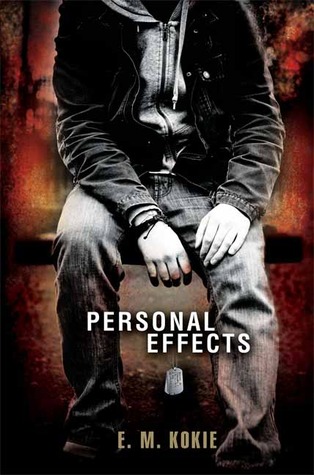
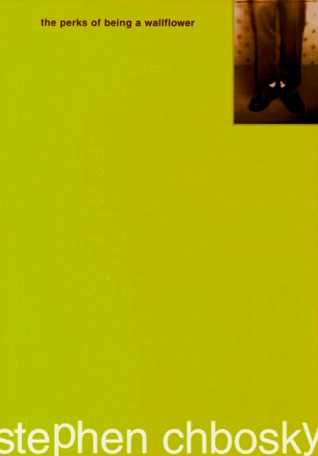
Read This If You Loved: Personal Effects by EM Kokie, Looking for Alaska by John Green, Shine by Lauren Myracle, Ask the Passengers by A.S. King, The Perks of Being a Wallflower by Stephen Chbosky

Recommended For: 
 closereadinganalysisbuttonsmall litcirclesbuttonsmall classroomlibrarybuttonsmall


endangered

Endangered
Author: Eliot Schrefer
Published October 1st, 2013 by Scholastic Press

Summary: Sophie is a normal teenager who travels between her divorced parents who live in completely different cultural situations–her father has an office job in America and her mother runs a bonobo sanctuary in Congo. Though she was born in the Congo, the last few years have been spent in America with her father and return trips to her mother’s sanctuary. The book begins with Sophie waiting in a check point, where she spots a baby bonobo who is not being treated well and, against everyone’s wishes, she buys him.

Kellee’s Review: With Sophie’s purchase, Otto enters into her life and ours. He becomes the co-star of the book and begins to change Sophie’s feelings about being at the sanctuary. But then, right before she is about to leave, chaos at the hand of revolutionaries envelopes Congo and Sophie finds herself in a completely type of situation.

Now if you follow me here or on Twitter, you know that I am a sucker for ape books and I have been lucky that many people who care a lot about apes write some amazing ape books – this is a book to add to that list. It left me with even more of a passion for saving these animals who are our closest relative. I. Love. This. Book. It quickly moved into my favorites list even while I was only half way through with it. It is such a journey that you take with this young lady and the growth you see in her (and Otto) is incredible. On top of that, Eliot Schrefer is an author who not only can tell a good story, but he can help you become part of the story and visualize and feel everything that is happening. And I am not alone in this love. Endangered was a finalist for The National Book Award and Walden Award, Eliot Schrefer was a hit at the Scholastic Brunch at NCTE, and it is being gushed about on Twitter.

On top of all of this, I read it with my 8th graders this year and they adored it! Check out my End of (School) Year Reflection to see my reflections on teaching the novel as well as Skyping with Eliot.

Ricki’s Review: This is a beautifully crafted novel, one which will stick with me. I learned a lot about the horrors that exist within the war-torn country of the Democratic Republic of Congo, a place which I had limited knowledge about—but it also gave me a look into the life of bonobos. Each year, I give very few books a 5-star rating on GoodReads, but this one is well deserving. I wish I could give it more than five stars, to be frank. Eliot Schrefer does a brilliant job describing the powerful bond between humans and animals. There are so many elements of this text that teachers can use in the classroom that it feels like a gold mine. I’ve recommended it to adults and teens again and again—and with the confidence that I know they will appreciate the intricate beautiful of this novel. Endangered will always rank as one of the best books I have ever read. When my student returned this book, she handed it to me and paused. I waited in anticipation of her response, as she reads over a hundred books a year and is very critical. She chose her words slowly and carefully. “I don’t like animals, so I didn’t want to read this. You kept talking about it, so I finally decided to just go for it. This isn’t a book about animals, and really, it isn’t a book about war. It is a book that is about being human.”

Discussion Questions: Sophie makes many decisions throughout the book that many people, specifically her parents, would not have agreed with. Would you have made the same decisions as her? Were there any you would have done differently? Do you think her decisions were worth it? Use textual evidence to back your answers.; What does this book teach us about being human?; In what ways do the bonobos reflect humanity?; How does the war-torn setting add to this story?

We Flagged: “The man released the bonobo. The little ape sat down tiredly in the dirt and lowered his arms, wincing as his sore muscles relaxed. I kneeled and reached out to him. The bonobo glanced at his master before working up the energy to stand and toddle over to me. He leaned against my shin for a moment, then extended his arms to be picked up. I lift him easily and hugged himself to me, his fragile arms as light as a necklace. I could make out his individual ribs under my figures, could feel his heart flutter against my throat. He pressed his lips against my check , I guess to get as close as possible to my skin, and only then did I hear his faint cries; he’d been making them for so long that his voice was gone.” (p. 3-4)

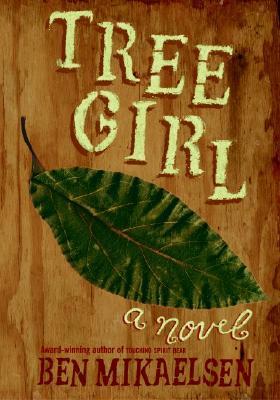
Read This If You Loved: Half Brother by Kenneth Oppel, Hurt Go Happy by Ginny Rorby, The One and Only Ivan by Katherine Applegate, The Chimpanzees I Love by Jane Goodall, Tree Girl by Ben Mikaelsen, Heart of Darkness by Joseph Conrad, Faithful Elephants by Yukio Tsuchiya, Non-fiction books about bonobos or the Democratic Republic of Congo

Recommended For: 
readaloudbuttonsmall closereadinganalysisbuttonsmall

litcirclesbuttonsmall classroomlibrarybuttonsmall


passengers

Ask the Passengers
Author: A.S. King
Published October 23rd, 2012 by Little, Brown Books for Young Readers

Summary: Astrid is very cerebral–she can get lost in philosophical theories and questions about the world. Her favorite pastime is laying on the bench in her backyard so she can send her love to the passengers on the airplanes that fly overhead. At her catering job, Astrid meets Dee, and she falls in love. She isn’t sure if this makes her a lesbian, as she has never loved another girl, and society wants to fit her in a box that she isn’t quite sure describes her.

Kellee’s Review: I am fascinated with the setting of this book. It seems like a perfect place to live, but really everyone is living a lie. It reminds me a bit of “Stepford Wives.” What a sad existence. Maybe I am (the opposite of) sheltered because my parents and my friends always supported me to be who I am. However, because of King’s perfect depiction of Astrid’s experiences, it transplants me right into Astrid’s shoes.

Besides the setting, the characters are what makes this book a star. Astrid is a character that every reader will connect with in one way or another: she doesn’t exactly fit in though she doesn’t stick out, she has a secret she feels like she can’t tell anyone, and as a teenager she doesn’t exactly get along with her family. While Astrid is strong, so are the secondary characters. You know that if you want to jump into a book and just go off on a character that the author has done their job (UGH! The mom will drive you crazy too!).  This book would not move without its secondary characters; although Astrid is our protagonist, it is the secondary characters that drive much of the story. It is amazing how all of the characters are so fleshed out.

Finally, like all King novels, the way it is written just adds that element that pushes this book to being an award winner. King’s ability to give her characters a voice is phenomenal. Each of her novels have such a unique personality and she is able to give them each a unique voice. She also adds humor and intelligence to each of her books.

Ricki’s Review: Astrid’s character felt very real to me. Despite the heartache and lack of love in her own life, she manages to send all of her love to people she doesn’t even know–strangers in the sky. I can’t help but peer up at airplanes now and send my love to the passengers. Astrid is not a typical high school student. She lives by her principles and stays true to herself amidst the pressures that teens face. She is an unbelievable role model for both adolescents and adults.

Astrid teaches us to give our love away when we aren’t feeling any ourselves. She connects herself with complete strangers when those who are closest to her are emotionally failing her. Teens will learn to reach out and grasp love in the most unconventional places. The warmth that emanates from this book makes it incredibly special.

Discussion Questions: How do the passengers’ stories add to the richness of this text?; How does the setting influence aspects of the book?; Does society expect us to fit into neat boxes with labels?; What complications exist in Astrid’s life? Which coping mechanisms does she use to relieve her pain? Which other coping mechanisms might she use?

We Flagged: “I mean to say: Everybody’s always looking for the person they’re better than.” (page 231)

Read This If You Loved: Please Ignore Vera Deitz by A.S. King, Everybody Sees the Ants by A.S. King, Personal Effects by E.M. Kokie, The Perks of Being a Wallflower by Stephen Chbosky, Luna by Julie Anne Peters, Almost Perfect by Brian Katcher

Recommended For: 
 closereadinganalysisbuttonsmall litcirclesbuttonsmall classroomlibrarybuttonsmall

Which of these finalists have you read? What did you think of them?
We’re so excited to review the winner tomorrow!

Signature andRickiSig

The Truth About You & Me by Amanda Grace

Share

16088678

The Truth About You & Me
Author: Amanda Grace
Expected Publication: September 8th, 2013 by Flux

Summary: “I think that’s why my parents trusted me so much back then. It’s easy to trust a smart girl. Smart girls aren’t supposed to do stupid things.” Madelyn is a smart girl—so smart that she doesn’t take normal high school classes at age sixteen, and instead, she is enrolled in college courses with the Running Start program at a local community college. When she meets Bennett Cartwright, her biology professor, she falls head over heels for him. He is very professional, and it isn’t until she runs into him on a local hiking trail that they get to know each other better. Written as an apology letter to Bennett, this novel will keep readers glued to the pages. Because while we, the readers, know that Bennett and Madelyn have a ten-year age gap, Madelyn keeps Bennett in the dark.

Review: This is a very controversial, uncomfortable topic that is often perceived to be “hands off” by authors and publishers. Teachers and students should not have intimate relationships, and the idea that a person may justify a relationship of this kind is considered taboo by most. The way this story differs from the usual story about the topic is in the deceit that exists between Madelyn and Bennett. He has no idea that Madelyn is a minor.

From the very first few pages, I felt like I was tumbling downhill to an inevitable plunge. In her early letters, Madelyn is very clear that this story does not have a happy ending, yet I couldn’t help but wonder exactly how the story would play out. Many readers will be extremely frustrated with Madelyn because she is incredibly deceitful, and Bennett is very well-intentioned. The great part about this book was that, by the end, the reader can’t help but ponder the situation. My favorite books are those that make me think deeply about a subject I hadn’t considered, and this one is sure to promote critical, emotional discussion from students.

Teacher’s Tools for Navigation: Madelyn’s voice is very strong throughout her letters to Bennett. I can’t help but wonder what Bennett would write back to her. It would be wonderful to hear his side of the story. Students would also enjoy rewriting the ending to the this book. There are a few key, decisive moments, particularly at the end, that could have gone much differently, which would completely alter the direction of the story. After reading this text, students might research more about statutory rape, and I envision this book leading to a great classroom debate. Also, students might examine Madelyn’s life to try to determine if this played a role in her deceit.

Discussion Questions: Can a relationship be successful if it is built on a lie?; Who is to blame in this story?; Can there be any justification for statutory rape?; Does Madelyn seem truly remorseful?; Are there flaws in Madelyn’s character (or life) that lead to her deceit?

We Flagged: “That’s how it was with us. One day we were two separate people and the next we collided, and neither of us stood a chance.”

“That’s the moment I decided, Bennett, that I wanted to be with you, and even though there was one very good reason we couldn’t be something, I could come up with one million reasons we could.”

Please note: The above quotes are from the Advanced Reader Copy. The e-book (a galley) did not provide page or chapter numbers. The quotes may change when the book is published.

Read This If You Loved: The Infinite Moment of Us  by Lauren Myracle, Perfect Chemistry by Simone Elkeles, Same Difference by Siobhan Vivian

Recommended For:
classroomlibrarybuttonsmall
026F3FBCC8C3913BD3A4D3F6920340D5

**Thank you to NetGalley and Flux books for sending me the Advanced Reader Copy!**

Brave Girl by Michelle Markel

Share

NF PB 2013

Nonfiction Picture Book Wednesday

Nonfiction Picture Book Wednesday is hosted by Kid Lit Frenzy and was started to help promote the reading of nonfiction texts. Most Wednesdays, we will be participating and will review a nonfiction text (though it may not always be a picture book).
Be sure to visit Kid Lit Frenzy and see what other nonfiction books are shared this week!

brave

Brave Girl: Clara and the Shirtwaist Makers’ Strike of 1909
Author: Michelle Markel
Illustrator: Melissa Sweet
Published January 22nd, 2013 by Balzer + Bray

Summary: Clara and her family immigrated to New York. They were searching for the American dream. When her father could not find a job, Clara quit school and became a garment worker to support her family. The conditions at her factory were appalling: low wages, unfair rules, and locks on the door. After discussions between the workers, Clara helps urge the girls to fight for their rights.
Review: I am sucker for this biographical picture book for two reasons: 1) I had not known about the Shirtwaist Makers’ Strike of 1909 before and I love learning about new historical moments. I know that it interested me (as I know it would for kids), because after I read the additional information about the garment industry I was on the internet searching for more information. 2) Clara is such a great example of girl power! AND she is a historical figure that shows girls (and boys) that girls can stand up for themselves when they are not being treated well (in real life). I love that she overcame so much to not only stand up for her rights, but also to get an education and take care of her family. What an amazing person to learn about.

Teacher’s Tools for Navigation: The main way that I would use this book is as a read aloud. It will definitely cause a great discussion and may push students to do further research. It would also be a perfect read aloud for a unit on women’s rights, immigration, overcoming obstacles, girl power, labor laws, or the early 1900s to help make connections to history. 

Discussion Questions: Do you think that Clara continuing her education helped her in being able to fight for her labor rights?; Clara made a tough decision between continuing school during the day or working. Do you agree or disagree with her decision? Why or why not? How did her decision affect her life?; What caused the garment workers to strike?

We Flagged: “But Clara is uncrushable. She wants to read, she wants to learn! At the end of her shift, though her eyes hurt from straining in the gaslight and her back hurts from hunching over the sewing machine, she walks to the library. She fills her empty stomach with a single glass of milk and goes to school at night. When she gets home in the late evening, she sleeps only a few hours before rising again.” (p. 12-13)

To see a preview of the illustrations, visit Amazon’s “Look Inside” for Brave Girl.

Read This If You Loved: Here Comes the Girl Scouts! by Shana Corey, The Price of Freedom by Dennis Brindell Fradin, Boycott Blues by Andrea Davis Pinkney, Annie and Helen by Deborah Hopkinson

Recommended for: 

readaloudbuttonsmall closereadinganalysisbuttonsmall classroomlibrarybuttonsmall

Who is a female historical figure who shows as much girl power as Clara that you believe should be talked about more?

Signature