Helping our Students Achieve the Reading and Writing Flow

Share

Achieving Flow-page0001

Kelly Gallagher stresses balance in his book, Readicide. We, as teachers, try our best not to tear apart texts for students. We want to study author’s craft, but if we overanalyze and nitpick at every detail, it becomes terribly boring for students (and us!). So where is the balance? How do we help students come to appreciate the minute details of an author’s writing without committing this act of readicide? Gallagher also discusses the “reading flow.” It is important for teachers to understand when to stop students and when to allow them to find the flow—to get into the groove of reading. It makes sense, thinking of my own reading habits. If I was forced to stop at every page (or even every ten pages) to analyze an author’s writing, I would throw the book at the wall.

 How do you help your students achieve reading flow?

As a teacher, what works best for me (and this may not work best for you), is to analyze the first few pages of a text. I have my students do a close reading, and we try to examine elements like voice, writing style, form, and manipulation of language, among others. Then, I let them explore. I try to assign them enough reading so they can hit the flow but not too much reading that they don’t do the assignment. For me, this is the most effective way to help students find this “reading flow” that Gallagher discusses. Once I have helped my students grapple with and (hopefully) appreciate the language of an author, I set them free from the nest. This approach doesn’t work well with every text. For example, much more complex texts may require more analysis and comprehension techniques before I can set my students free.

But how do we find the flow for writing? Recently, I read a section of Murray’s Write to Learn. He made me think more about how this “reading flow” concept might be applied to writing. From my experience, my students feel like stuttering cars when they begin to write. Often, they can’t even get their cars to start. Some of the techniques that Murray offers are interesting when I look at them through the lens of the writing flow.

We need our students to connect to their writing. One way to start is by having students write down their territories. Murray starts this in a brainstorming list, where students make a list of topics. He suggests connect elements on their lists to try to find ideas for writing. Murray also describes other methods that won’t be new to most teachers like freewriting about topics or brainstorming in the form of a map or tree. With the map, students can show the way their thoughts emerge from and digress to each other. With the tree, students can brainstorm about a more focused topic. Murray also suggests interviewing ourselves.

How do you help your students achieve writing flow?

One technique I have found to be useful to help students start writing short stories is by providing the first sentence for them. I write a series of evocative sentences like “He was a most peculiar boy.” Or, “As his name was called, he knew his life would drastically change.” Or, “She woke up barefoot, lost, and with something unusual beside her.” My students brainstorm the second sentence for a dozen or so of these sentence starters. Then, I set them free to expand one of the starters a bit further. We don’t look at grammar, and instead, we focus on just keeping the flow. I remind them that authors often discuss how their first draft is terrible, and this is okay. We are getting ideas onto paper and finding our flow. We’ll worry about the revision and editing later, right?

Let’s share!

How do we get our students to hit this reading and/or writing flow?

Do any activities work well for you?

RickiSig

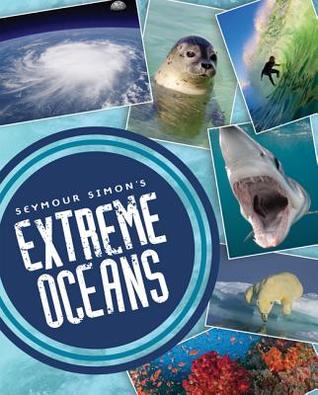
Seymour Simon’s Extreme Oceans and Extreme Earth Records

Share

NF PB 2013

Nonfiction Picture Book Wednesday

Nonfiction Picture Book Wednesday is hosted by Kid Lit Frenzy and was started to help promote the reading of nonfiction texts. Most Wednesdays, we will be participating and will review a nonfiction text (though it may not always be a picture book).
Be sure to visit Kid Lit Frenzy and see what other nonfiction books are shared this week!

oceans earth

Extreme Oceans and Extreme Earth Records
Author: Seymour Simon
Published April 2nd, 2013 and August 29th, 2012 by Chronicle Books

Extreme Oceans Goodreads Summary: Join Seymour Simon, the “dean” of children’s science nonfiction, as he investigates the most extreme environments, animals, plants, and weather in the ocean. Imagine exploring the most extreme parts of our amazing oceans—riding the tallest waves, diving to the darkest depths, and encountering the largest and most dangerous sea creatures on Earth. These mind-bending facts and stunning photographs make for an exciting, and sometimes unbelievable, underwater expedition!

Extreme Earth Records Goodreads Summary: Imagine exploring the most extreme parts of our amazing planet—trekking though the driest desert, climbing the snowiest mountaintops, and diving to the deepest regions of the ocean floor. Seymour Simon, the dean of children’s science nonfiction, investigates Earth’s biggest, smallest, deepest, and coldest environments, animals, plants, and most severe weather. These mind-bending facts and photographs invite readers on an exciting, and sometimes unbelievable, scientific expedition of Earth’s most amazing records!

My Review: These books take the other Seymour Simon books I read and just pushes them to the extreme (pun intended). Both books take on different topics and gives the readers extreme facts and information about the topics. Topics range from “Big Waves and Giant Tides”, “Dangerous Sea Animals”, and “Climate Change” in Extreme Oceans and “The Coldest Place on Earth”, “The Biggest Earthquake on Earth”, and “The Largest Volcanic Eruption on Earth” in Extreme Earth Records. In each section, there are bits of information, photographs, sidebars, and text boxes all which add to the topic. All of the information is fascinating and by the end of each section definitely gives insight into the topic. Also, the photographs in these books are just breathtaking!

Teacher’s Tools For Navigation: Like other Simon books, students will definitely love to just read these as they include some fascinating information. Teachers can use them in a couple of different ways: as supplemental materials when teaching a topic, as a research source, or to discuss text features (and I’m sure a bunch of other different ways that I have not even thought of).

Discussion Questions: Would you rather live in the coldest or hottest place on Earth?; Which of the most dangerous ocean animals scares you the most? Why?; Many other discussion questions based on the topics

We Flagged: “Stormy Seas: Imagine being caught at sea in a small ship in the middle of a monster storm that stretches for hundreds of miles in all directions. That’s what happened to a fishing ship, the Andrea Gail, on October 30, 1991. The storm was so big that there was no way to get out. Huge waves and howling winds sampled and sank the boat. It was called the ‘perfect storm’ because all the different factors that can make up a huge storm came together at one time and one place.” (Extreme Oceans p. 25)

“The Largest Volcanic Eruption on Earth: As you read this book, somewhere around the world there are approximately twenty volcanoes erupting. Three-quarters of volcanic eruptions occur unseen beneath the oceans, and no one knows when they happen.” (Extreme Earth Records p. 49)

Read This If You Loved: National Geographic Kids Weird But TrueDangerous Animals of the Sea by Samantha Flores,  Pompeii by Mary Pope Osborne, Discovery Channel’s Top 10 Deadliest Sharks, 50 Climate Questions by Peter Christie, Giant Squid by Mary M. Cerullo, The Top of the World by Steve Jenkins

Recommended For: 

classroomlibrarybuttonsmall closereadinganalysisbuttonsmall

Signature

Top Ten Tuesday: New to Us Authors We Read in 2013

Share

top ten tuesday

Top Ten Tuesday is an original feature/weekly meme created at The Broke and the Bookish. The feature was created because The Broke and Bookish are particularly fond of lists (as are we!). Each week a new Top Ten list topic is given and bloggers can participate.

 Today’s Topic: Top Ten New to Us Authors We Read in 2013

We loved these authors and can’t wait to read more by them!

Ricki

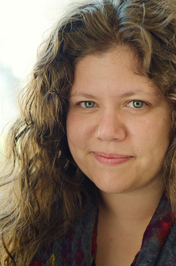
1. Rainbow Rowell

rainbow rowell

I loved both Eleanor & Park and Fangirl. Wow. This author understands humans in a way that makes her books come alive!

2. Katherine Applegate

katherine applegate

I missed The One and Only Ivan last year, and I was so glad Kellee insisted I read it. I would share this book with readers of all levels and can’t wait to read more from her (as I haven’t read any of her others).

3. Elizabeth Wein

elizabeth wein

I read both Code Name Verity and Rose Under Fire this year. These are two of my favorite young adult books of all time. I will be pre-ordering anything that Elizabeth Wein writes!

4. Barry Lyga

barry lyga

I was hooked to I Hunt Killers and am excited to get lost in more of Barry Lyga’s books. They have such strong appeal. My past students still message me about Jasper!

5. R. J. Palacio

RJ Palacio

I can’t stop thinking about Wonder. I am in love with this beautiful story and am longing for Palacio to write another book!

Kellee

1. Rainbow Rowell

rainbow rowell

I really liked Eleanor and Park and the realness of the story and look forward to reading Fangirl.

2. Matthew Quick

Matthew Quick is an author that very often brought up on award and best selling lists. I am so happy that I finally picked up Boy 21 this year so I could be exposed to his writing.

3. Benjamin Alire Saenz

Benjamin Saenz 2009.jpg

Aristotle and Dante Discover the Secrets of the Universe is beautiful. I am so glad to be introduced to Saenz.

4. Eliot Schrefer

Eliot Schrefer has quickly become one of my favorite people and authors. Endangered climbed my list of favorite books after reading it and then reading it aloud with my students. He also skyped with my students and was such a good sport. Then after meeting him at ALAN I know that he is going to be not only an author I go back to constantly, but also a friend. (I also just read his 2014 novel Threatened and it is so great!)

5. Jeffrey Brown

Jeffrey Brown is so funny and his illustrations really bring his books to life. This year I read 3 of his books: Darth Vader and SonVader’s Little Princess, and Star Wars: Jedi Academy and I really enjoyed all of them.

Which authors were new to you in 2013?

RickiSig andSignature

It’s Monday! What Are You Reading? 12/16/13

Share

IMWAYR

It’s Monday! What Are You Reading? From Picture Books to YA!

It’s Monday! What are you Reading? is a meme hosted by Sheila at Book Journeys. It is a great way to recap what you read and/or reviewed the previous week and to plan out your reading and reviews for the upcoming week. It’s also a great chance to see what others are reading right now…you just might discover the next “must-read” book!

Jen Vincent, of Teach Mentor Texts, and Kellee decided to give It’s Monday! What Are You Reading? a kidlit focus. If you read and review books in children’s literature – picture books, chapter books, middle grade novels, young adult novels, anything in the world of kidlit – join us! We love this meme and think you will, too.

We encourage everyone who participates to support the blogging community by visiting at least three of the other book bloggers that link up and leave comments for them.

Last Week’s Posts

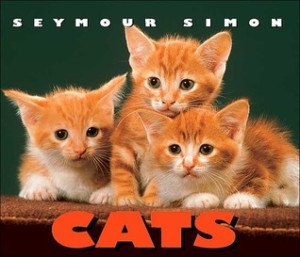
top ten tuesday cats penguins

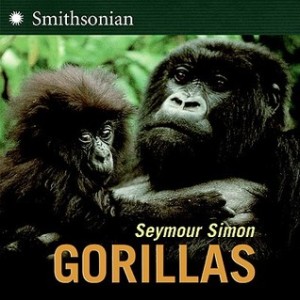
gorillas 6135987 explorer

salem2 salem1 Baby Shower Books

**Click on any picture to view the post**


Last Week’s Journeys

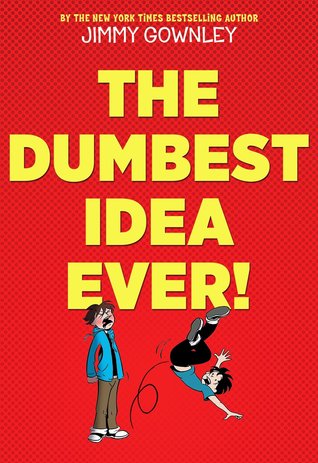
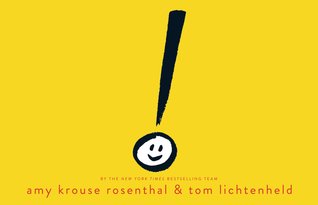
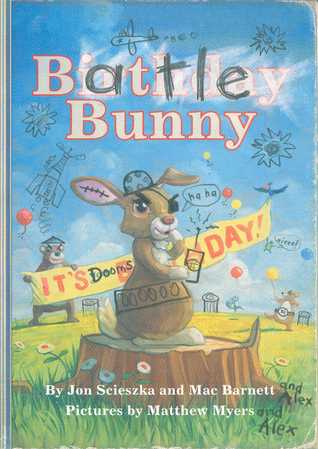
Kellee: The busy-ness that started with my mom’s surprise visit and my baby shower kept going this week; however, this weekend I was able to get some reading done. First, I finished The Dumbest Idea Ever! by Jimmy Gownley and will be sharing it with you this week. I then started reading some of the Nerdy award finalists so I am more knowledgeable for voting (I’ll also review most of these for you). The ones I got through this weekend are: Battle Bunny by Jon Sciezska, I’m a Frog & A Big Guy Took My Ball by Mo Willems, Exclamation Mark by Amy Krouse Rosenthal, Ling & Ting Share a Birthday by Grace Lin, Bluebird by Bob Staake, and Penny and Her Marble by Kevin Henkes. I can definitely see why these were nominated!

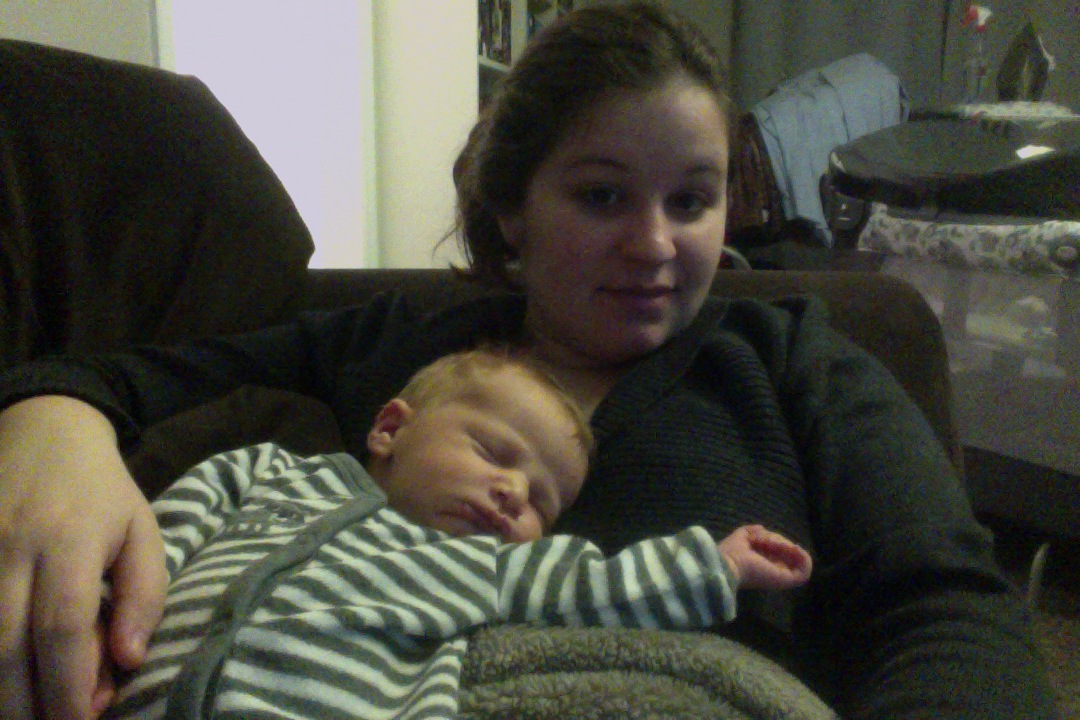
Ricki:  Henry (my new baby) is in his second week right now. We read a counting book together and Strega Nona by Tomie de Paola. How did I miss this one as a kid? It teaches some great lessons. We are also making our way through The Velveteen Rabbit by Margerie Williams, but Henry tends to cry after a few pages. While he sleeps, I am busy reading The Killing Woods by Lucy Christopher and The Living by Matt de la Peña. He is one of my favorite YA authors!

Here is a picture of Henry as I type this blog post on my laptop (don’t mind the messy background of my house…):

Photo on 12-15-13 at 8.22 PM


This Week’s Expeditions

Kellee: I have a couple more Nerdy finalists to read this week. After those, I’ll probably read Gareth Hinds’s Romeo and Juliet. Once winter break starts (FRIDAY!), I hope to get through some of the YA novels I have set aside. 

Ricki: No promises, but I have all intentions of finishing The Killing Woods by Lucy Christopher and The Living by Matt de la Peña. Henry and I will also finish a few children’s books (whichever are within my arm’s reach while feeding him—but there are some great ones (new and old!).

Upcoming Week’s Posts

top ten tuesday earth oceans Achieving Flow-page0001

18222546 exclamation battle

 So, what are you reading?

Link up below and go check out what everyone else is reading. Please support other bloggers by viewing and commenting on at least 3 other blogs. If you tweet about your Monday post, tag the tweet with #IMWAYR!

 Signature andRickiSig

Baby Boy Moye’s Newest Book Acquisitions

Share

Baby Shower Books

My friend Amanda was so kind to throw me a baby shower last Saturday and it was perfect!

I was surrounded by my best girl friends and the love was just radiating throughout the room. Also, my mother surprised me by coming down from Chattanooga.

And on top of that, she made my shower BOOK THEMED! Attendees were asked to bring a book for Baby Boy Moye in place of a card, one of the games was book themed, and all of the food was based off of books. YES!

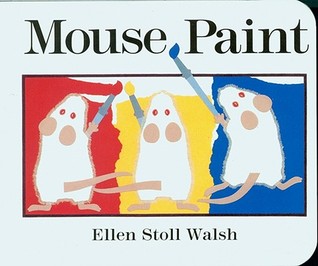
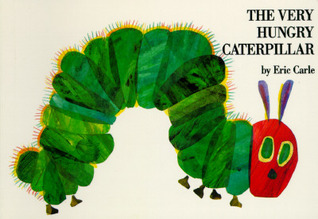
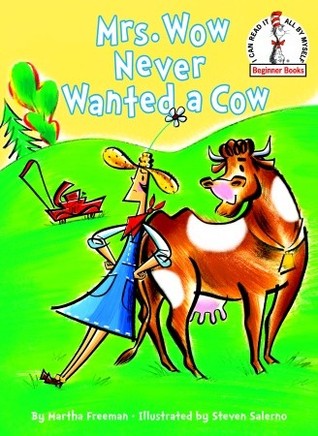
Here are Baby Boy Moye’s newest book acquisitions!
I am so excited to read them all to him!

231850 1296415 15945902 887922 402332 4948 310259 209628 301141

122105 94807 601674 23257523772 6602290  13376278 773951 232958 191113 2865944 7253305144863 815234 370493

3060118 

17841538 1129584 3872116

37377 17265267 759611

276553 6902546 

My baby is already so blessed (and has one awesome baby library!).

Signature

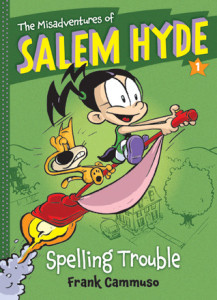
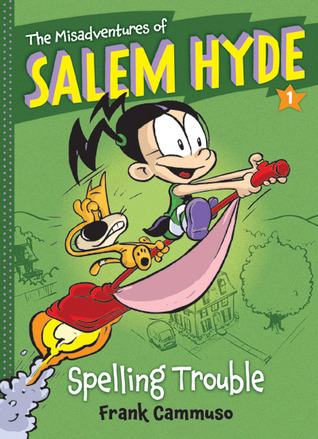
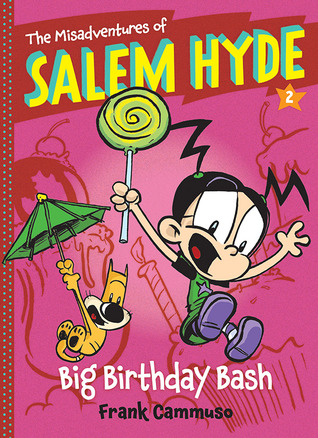
The Misadventures of Salem Hyde by Frank Cammuso

Share

salem1

Spelling Trouble
Author and Illustrator: Frank Cammuso
Published October 1st, 2013 by Harry N. Abrams

salem2

Big Birthday Bash
Author and Illustrator: Frank Cammuso
Published May 20th, 2014 by Amulet Books

Spelling Troubles Goodreads Summary: Salem Hyde just isn’t like other kids. For one thing, she’s stubborn, independent, and impulsive. For another, she’s a witch. Salem acts first and thinks later—which means most of her thinking involves coming up with excuses!

Good thing she’s been assigned an animal companion, Lord Percival J. Whamsford III. This over-anxious cat doesn’t like Salem calling him “Whammy,” and Salem doesn’t like listening to his long-winded explanations as to why she shouldn’t do something . . . like enter the class spelling bee.

Salem knows she can beat all her classmates at spells, no problem. Too late, she realizes the competition is about spelling words, not magic. And there’s nothing like a misspelled spell to cause all kinds of havoc!

Big Birthday Bash Goodreads Summary: Young witch Salem Hyde is stubborn, impulsive, and loves flying. Her cat companion, Whammy, is nervous, careful, and loves staying on the ground. Somehow, though, they’re best friends. In this second book in the series, Salem is invited to a birthday party, and she wants to make sure everything goes perfectly. But from the invitations to the presents, party games, and spells gone awry, nothing happens exactly the way it should, and she’ll need Whammy’s help to sort it all out. 

My Review: I made sure to pick this up at NCTE from Abrams because Frank Cammuso is a big hit in my classroom. His series, Knights of the Lunch Table (great allusion to King Arthur!) is loved by many a reader (so much so that I think my copy of the first in the series just bit the dust and I’ll need to replace it). Although they did tell me that readers of TKotLT are older than the intended audience for Salem Hyde I wanted to make sure to read it because I was sure I was going to enjoy it—and I did! I’m also so pleased with the embracing of graphic novels that have been happening over the last 5 years and even graphic novels for young readers. The amount of graphic novels for young readers is really starting to accumulate and I have been impressed with most of the ones I’ve read, Salem Hyde included. I feel that many of the juvenile graphic novels are well done, multi-layered, and truly respectable just like the YA graphic novels.

Salem Hyde reminds me of Sabrina the Teenage Witch, but a bit more of a trouble maker. Salem made me laugh and made me shake my head. She is one headstrong, independent little lady who, mixed with trying to figure out all of her match powers as she grows up as a witch, is a great main character.

Teacher’s Tools for Navigation: These books will find most of its success in children’s hands; however, it could definitely be used as a read aloud. Also, in both of these books Whammy, at one point, tells Salem a story to help teacher her a lesson and they are both based off of classics. In Spelling Trouble it is Moby Dick and in Big Birthday Bash it is Gift of the Magi. Salem Hyde would be a perfect introduction to these two stories for young readers.  Another aspect of Salem Hyde that I, as a teacher, may use in the classroom are the character introductions that were included. Each new character got a “Getting to know ____” with their likes, dislikes, and other fun facts (magic powers, etc.). This would be a fun activity to do when writing a narrative and trying to develop characters.

Discussion Questions: How does Whammy use stories to help Salem understand?; How is Salem a better friend to Edgar than Shelly?; Why was Whammy exactly what Salem needed?

We Flagged: 

Or “Look Inside” Spelling Troubles on Amazon

Read This If You Loved: Babymouse and Squish series by Jennifer and Matthew Holm, Gabby and Gator by James Burk, Luz Makes a Splash by Claudia Davila, Sadie and Ratz by Sonya Hartnett, Lulu series by Judith Viorst, Bink and Gollie series by Kate DiCamillo, Franny K. Stein series by Jim Benton, Marty McGuire series by Kate Messner, Giants Beware by Jorge Aguirre

Recommended For: 

classroomlibrarybuttonsmall readaloudbuttonsmall closereadinganalysisbuttonsmall

Signature

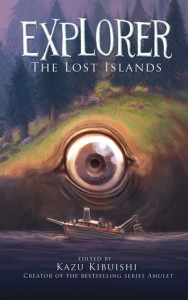
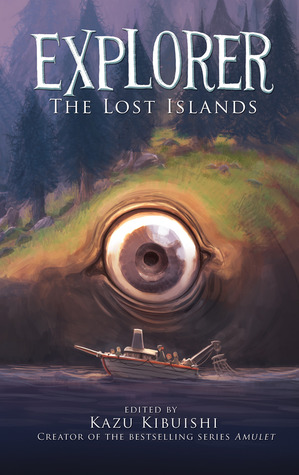
Explorer: The Lost Islands edited by Kazu Kibuishi

Share

explorer

Explorer: The Lost Islands
Edited by Kazu Kibuishi
Published October 15th, 2013 by Harry N. Abrams

Goodreads Summary: The highly anticipated second volume to the critically acclaimed Explorer series, The Lost Islands is a collection of seven all-new stories written and illustrated by an award-winning roster of comics artists, with each story centered around the theme of hidden places. Edited by the New York Times bestselling comics creator Kazu Kibuishi, this graphic anthology includes well-written, beautifully illustrated stories by Kazu (the Amulet series), Jason Caffoe (the Flight series), Raina Telgemeier (Drama and Smile), Dave Roman (the Astronaut Academy series), Jake Parker (the Missile Mouse series), Michel Gagné (The Saga of Rex), Katie and Steven Shanahan (the Flight series), and up-and-coming new artist Chrystin Garland.

My Review and Teacher’s Tools for Navigation: I am a huge fan of Kazu Kibuishi. His artwork and his stories are so beautiful, so I know when he pulls together an anthology it is going to be phenomenal and this one does not disappoint. Each story revolves around an island although every story is very different. And I’ll be honest for a second, most of the time when I read short story anthologies, there is at least one story that is just “EH” for me, but I really liked each of these and they all fit a different purpose: Rabbit Island by Jake Parker was fun but had a great message, Loah by Michel Gagne was an artistic masterpiece, Radio Adrift by Katie and Steven Shanahan is so different from the others, etc.

Teacher’s Tools for Navigation: What I love about anthologies is that each story is different and can be used to discuss different narrative aspects. For example, Kazu Kibuishi’s story can be compared to Moby Dick and can also be used for cause and effect, Raina Telgemeier’s story would be great to use for inferencing and Carapace by Jason Caffoe can be compared to other fantasy stories (and these are just what I thought of off the top of my head). And, of course, on top of all of this, it will be read and loved by kids.

Discussion Questions: Which story out of the anthology is your favorite and why?; Which island out of the anthology would you like to live on? Which would you avoid?; How is the captain in Kazu Kibuishi’s story similar to Captain Ahab?; In Carapace, the boy lands on a fantastical island. What fantastical island does it remind you of?

We Flagged: 

(Desert Island Playlist by Dave Roman and Raina Telgemeier, p. 58)
Shared by Raina Telegemeier on Goodreads: https://www.goodreads.com/author_blog_posts/5048366-explorer-the-lost-islands-out-now

Read This If You Loved: Flight series edited by Kazu Kibuishi, Explorer: The Mystery Boxes edited by Kazu Kibuishi, Teen Boat! by Dave Roman, Smile and Drama by Raina Telgemeier, Amulet by Kazu Kibuishi

Recommended For: 

classroomlibrarybuttonsmall closereadinganalysisbuttonsmall

Signature