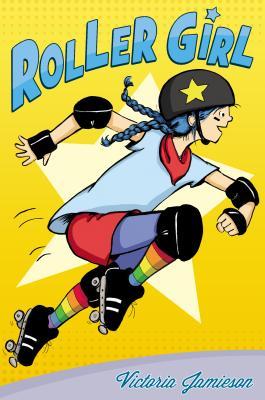
Roller Girl
Author and Illustrator: Victoria Jamieson
Published March 10th, 2015 by Dial Books
Goodreads Summary: For most of her twelve years, Astrid has done everything with her best friend Nicole. But after Astrid falls in love with roller derby and signs up for derby camp, Nicole decides to go to dance camp instead. And so begins the most difficult summer of Astrid’s life as she struggles to keep up with the older girls at camp, hang on to the friend she feels slipping away, and cautiously embark on a new friendship. As the end of summer nears and her first roller derby bout (and junior high!) draws closer, Astrid realizes that maybe she is strong enough to handle the bout, a lost friendship, and middle school… in short, strong enough to be a roller girl.
In her graphic novel debut, real-life derby girl Victoria Jamieson has created an inspiring coming-of-age story about friendship, perseverence, and girl power!
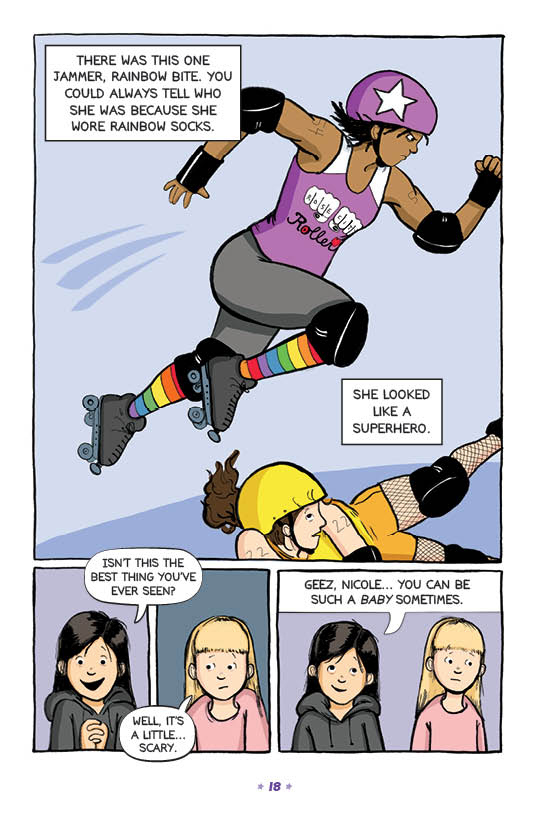
My Review and Teachers’ Tools for Navigation: How did I not read this book the instant it came out?! First, it has eye-catching, colorful artwork which is my favorite in graphic novels. Yes, everyone is comparing it to Raina’s work, and I can see why, because they are both just so well done and fun to read. Second, it is such a girl power book. Not an over-the-top girl power book, but it is a book about being a girl and being awesome at it. Third, it has roller derby in it! I love that we get to learn about the sport with Astrid. Fourth, the book has an awesome mom! Even when Astrid is complaining about her, she is being awesome (like taking her to poetry readings and the art museum). Fifth, this book is also about friendships and the ebbs and flows that come with teenage friends. Finally, it is about putting your mind to something and doing it! Astrid works her butt off, and it pays off. I think Roller Girl is also a great jumping off point to talk about bullying, friendship, and working hard to meet a goal.
This book is going to be loved by fans of Raina Telgemeier, El Deafo, The Dumbest Idea Ever!, Astronaut Academy, and Cleopatra in Space. It is definitely going to make the rounds in my classroom library!
Discussion Questions: How should Astrid had dealt with Nicole not going to derby camp?; Have you had a friend like Nicole?; Astrid really wants to learn roller derby; Nicole wants to get better at ballet–what is your passion?; How did Rainbow Brite help Astrid?; What do you think about Astrid’s mom?
We Flagged:
Read This If You Loved: Smile, Sisters, and Dramaby Raina Telgemeier, El Deafo by Cece Bell, The Dumbest Idea Ever! by Jimmy Gownley, Astronaut Academy by Dave Roman, Cleopatra in Space by Mike Maihack
Nonfiction Picture Book Wednesday is hosted by Kid Lit Frenzy and was started to help promote the reading of nonfiction texts. Most Wednesdays, we will be participating and will review a nonfiction text (though it may not always be a picture book).
Be sure to visit Kid Lit Frenzy and see what other nonfiction books are shared this week!
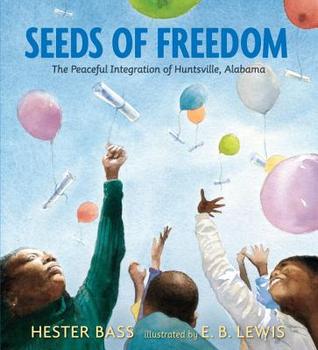
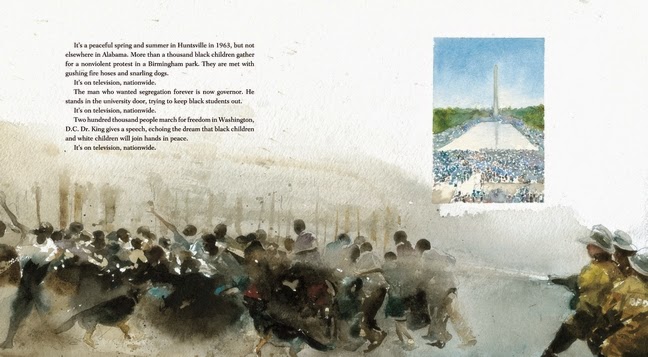
Seeds of Freedom: The Peaceful Integration of Huntsville, Alabama Author: Hester Bass
Illustrator: E.B. Lewis
Published January 27th, 2015 by Candlewick Press
Goodreads Summary: Explore a little-known story of the Civil Rights movement, in which black and white citizens in one Alabama city worked together nonviolently to end segregation.
Mention the Civil Rights era in Alabama, and most people recall images of terrible violence. But something different was happening in Huntsville. For the citizens of that city, creativity, courage, and cooperation were the keys to working together to integrate their city and schools in peace. In an engaging celebration of this lesser-known chapter in American and African-American history, author Hester Bass and illustrator E. B. Lewis show children how racial discrimination, bullying, and unfairness can be faced successfully with perseverance and ingenuity.
Kellee’s Review: I loved learning about Huntsville! It is amazing that in the middle of the violence and ignorance that ran rampant during the Civil Rights Movement, there was a Southern town that was peaceful and worked together to integrate. The story is so inspiring and gives me faith in humanity! I love how Bass ties together history and the movement throughout the nation to what was going on in Huntsville. It really shows the comparison between the rest of the nation and Huntsville. The illustrations are also extremely beautiful. I fell in love with his art in Each Kindness, and I am so happy to experience it again.
Ricki’s Review: The metaphor of the seeds of freedom dances across the pages of this book. E. B. Lewis’ illustrations are masterful. I spent a long time on each spread, soaking in the way the artwork connected with the words. This is a book about civil rights, and it is also a book about the goodness of people and the quiet persistence of the people of Huntsville, Alabama as they saw injustice, and they pressed on to fight against it. Students will learn a bit about history, but they will learn a lot about themselves. I plan to use this book in my methods classes to show how history can come alive in picture books. This book shines brightly.
Teachers’ Tools for Navigation: This book is a wonderful introduction to the civil rights movement. It gives a peaceful account and also shares information about the dark times. We think it would be fascinating to take the events mentioned in Seeds of Freedom and put them on a timeline, so students can visually see when each event was happening. It was also be interesting to compare and contrast Birmingham and Huntsville during this time period. Additionally, Seeds would be a perfect companion to Lions of Little Rock. Teachers might consider using this book in a text set to give students a rich understanding of the civil rights movement, or they might create a text set around themes such as persistence or protest in history.
Discussion Questions: How was Huntsville’s civil rights movement different than other cities around the nation?; How did the author use a seed as a metaphor for the civil rights movement?; What is reverse integration?; Who are some of the main people who helped integration within the United States?
Top Ten Tuesday is an original feature/weekly meme created at The Broke and the Bookish. The feature was created because The Broke and Bookish are particularly fond of lists (as are we!). Each week a new Top Ten list topic is given and bloggers can participate.
Today’s Topic: Top Ten Parental Figures in Books
As moms, we are happy to share this list!
Ricki
When I created this list, I was saddened that there seem to be so many more negative examples of mothers and fathers in literature than positive examples of mothers and fathers. We need to change this!
1. Atticus Finch in To Kill a Mockingbird by Harper Lee
I strive to be as good of a parent as this man. He is easily my favorite parent in any book I’ve read because he is wise and treats his kids with respect.
2. The unnamed mother in Love You Forever by Robert Munsch
I completely understand that many people find this mother’s devotion to her son to be a bit creepy. I get it. But I don’t find it creepy at all. The backstory of the book is here.
These two penguins are very devoted to little Tango. They show a love and affection that is admirable. I still laugh that this book is censored.
4. The bee-keeping sisters in The Secret Life of Bees by Sue Monk Kidd
For me, this book was about motherhood. It taught me that mothers aren’t perfect, but they are often simply doing their best. These bee-keeping sisters are some of the best written characters I’ve read.
5. The women of A Thousand Splendid Sons by Khaled Hosseini
I am going to admit that I may be wrong here. My memory of this book is of hard-working mothers who are devoted to their families. I think about this book often (even though I read it over five years ago), and I envy the strength of these women.
Kellee
Like Ricki said, too often parents are the antagonist in books–just another bad guy to overcome OR they are nonexistent OR they die and aren’t part of the protagonist’s life at all. We wanted to highlight parents that were present and wonderful in books. I, too, wanted to choose Atticus Finch because he is the best dad in literature ever, but no doubling up!, so here are my 5 top parents from books.
1. Willow’s parents and then Pattie from Counting by 7s by Holly Goldberg Sloan
Willow is very lucky to always have an adult looking out for her, and even after her parents’ death, Pattie stepped up and ensured that Willow was well taken care of. Even if it was a bit unconventional.
2. Mr. Mendez from Separate is Never Equal by Duncan Tonatiuh
He did everything in his power to ensure that his children received a good education. To make matters even better, this is a true story.
3. Doris from When I Was the Greatest by Jason Reynolds
Doris is real. She is a real mom that has to work hard to support her kids.
4. Rafe’s parents from Openly Straight by Bill Konigsberg
Although they may annoy him a bit (a lot), I love how supportive and loving they are.
5. Most of the parents in The Baby-Sitters Club by Ann M. Martin
One of the things I loved about BSC is the different types of families that were represented, and no matter how different they were, the parent(s) were always supportive and trying to do their best.
Which parents stick out in your mind? Share them with us!
Happy upcoming Mother’s Day and Father’s Day to all of our parent readers out there!
It’s Monday! What Are You Reading? From Picture Books to YA!
It’s Monday! What are you Reading? is a meme hosted by Sheila at Book Journeys. It is a great way to recap what you read and/or reviewed the previous week and to plan out your reading and reviews for the upcoming week. It’s also a great chance to see what others are reading right now…you just might discover the next “must-read” book!
Jen Vincent, of Teach Mentor Texts, and Kellee decided to give It’s Monday! What Are You Reading? a kidlit focus. If you read and review books in children’s literature – picture books, chapter books, middle grade novels, young adult novels, anything in the world of kidlit – join us! We love this meme and think you will, too.
We encourage everyone who participates to support the blogging community by visiting at least three of the other book bloggers that link up and leave comments for them.
Kellee:I’ve had a pretty great reading week! I read three nonfiction books: Seeds of Freedom by Hester Bass, Photos Framed by Ruth Thomson, and Chips and Cheese and Nana’s Knees: What is Alliteration by Brian P. Cleary. I truly enjoyed all three! Seeds and Photos both looked into history that I thought I knew and now know even more about. We’ll be reviewing both of these. Chips and Cheese was just as good as the rest of the series. A great way to introduce a concept to students. I finished two novels this week as well: A Death-Struck Year by Makiia Lucier, a story of a teenage girl in Portland during the Spanish influenza outbreak in 1918, and The Paper Cowboy by Kristin Levine, an intense story that looks at family and community and got better and better as I read (listened). Finally, I read five wonderful graphic novels:
Nathan Hale’s Hazardous Tales: The Underground Abductor by Nathan Hale is another amazing installment of Hale’s Hazardous Tales. I am a huge fan of this series, and the newest book is a fascinating look at Harriet Tubman. I look forward to reviewing this for you in a couple of weeks.
Rutabaga the Adventure Cook by Eric Colossal is the first book in a new series about a cook who travels around looking for exotic food to cook and seems to find himself in some unexpected situations such as fighting a dragon or on an expedition with three warriors looking for a monster.
The Creeps: Night of the Frankenfrogs by Chris Schweizer is the first book in a series about a group of misfits who help save the day in their town (with no thanks from anyone!).
The Misadventures of Salem Hyde: Dinosaur Dilemma by Frank Cammuso is the fourth Salem Hyde book and is one of my favorite. It is the first I read since I presented with Frank at NCTE where he explained that he tried to make each page its own comic strip like Garfield or Peanuts, so I read this one differently. I loved seeing the humor in each page and how they all fit together.
Roller Girl by Victoria Jamieson is so wonderful! I don’t know how I missed it in March! I review this one for you this week.
Ricki: I have returned from Chicago! I had a blast and got to see some great sessions. I went to a session about building learning communities in schools. In this learning community, several professors came together and developed a reading list and met each month to learn more about culturally and linguistically diverse learners. It was very inspiring!
I finished Writing Up Qualitative Research by Harry F. Wolcott. It is similar to Anne Lamott’s Bird by Bird but more focused on academic writing. If anyone is interested in writing an article, I highly recommend this book. It made me want to drop everything and write.
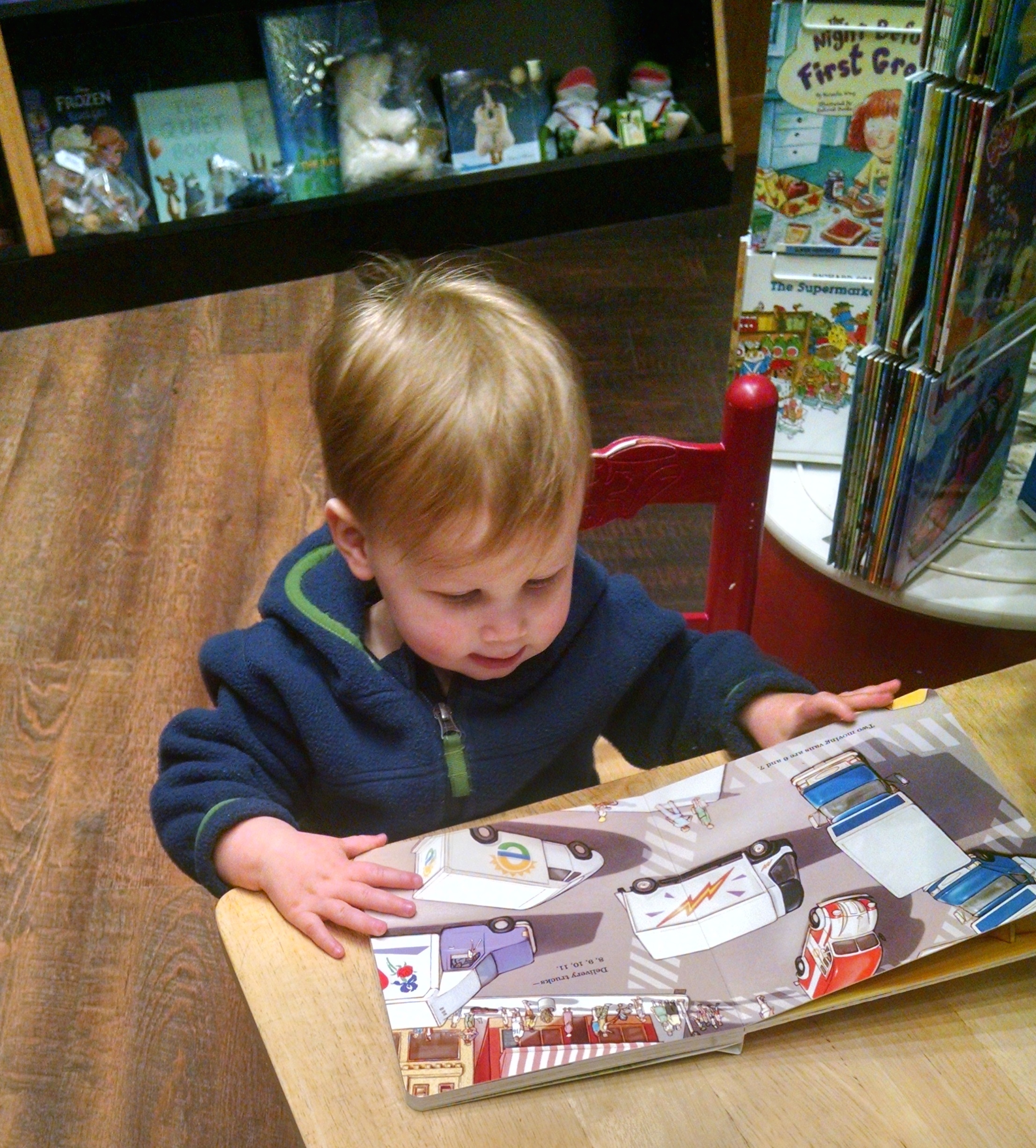
Henry and I have been visiting different bookstores lately. I enjoy letting him peruse the shelves to touch the books. His face lights up when he finds books with cars on them. His newest favorite (a non-car book) is Bear Snores On by Karma Wilson. Gosh, this is such a fun book to read. It has such great rhythm!
Our trip to the bookstore today!
This Week’s Expeditions
Kellee:This week I am going to be starting a new audiobook: The Very Nearly Honorable League of Pirates: Magic Marks the Spot by Caroline Carlson. It’d put it on hold, so when it became available 13 days ago it automatically checked out. That means I only have a week to try to finish it. It is over 5 and a half hours long which is more than I listen to in a week usually, so we’ll see! I also am planning on reading Falls the Shadow by Stefanie Gaither and A Creature of Moonlight by Rebecca Hahn, if I have time.
Ricki:I will be reading Seeds of Freedom by Hester Bass to prepare for this week’s post. I have my comprehensive exams this week, so I won’t be able to read anything else (except my oral defense presentation a few billion times!). I hope they go well!
Upcoming Week’s Posts
Tuesday: Top Ten Parents in Books
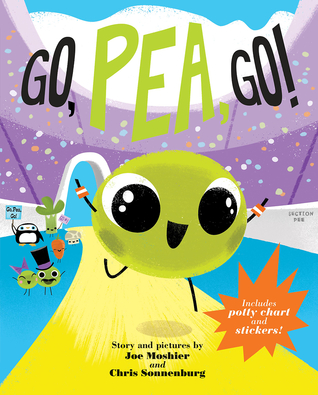
Friday: Blog Tour, Review, and Author Guest Post: Go, Pea, Go by Joe Moshier and Chris Sonnenburg
So, what are you reading?
Link up below and go check out what everyone else is reading. Please support other bloggers by viewing and commenting on at least 3 other blogs. If you tweet about your Monday post, tag the tweet with #IMWAYR!
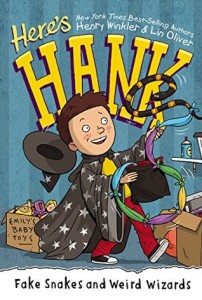
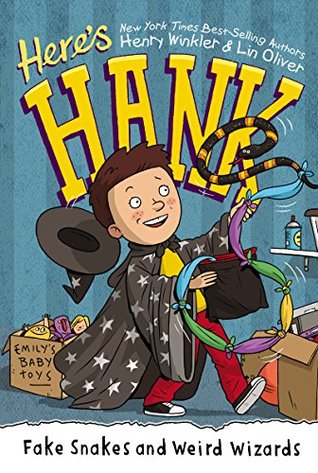
Here’s Hank #4: Fake Snakes and Weird Wizards Author: Henry Winkler and Lin Oliver
Illustrator: Scott Garrett
Published February 10th, 2015 by Grosset & Dunlap
Goodreads Summary: Hank’s sister Emily wants Ralph’s Reptile Show to perform at her birthday party more than anything, but Ralph is booked solid. So Hank comes up with a plan: he’ll disguise himself as a magician called The Westside Wizard and pull a snake from thin air! But when Hank’s true identity is revealed during his performance, his good deed might just turn into a huge disaster.
About the Authors: Henry Winkler is an actor, producer, and director, and he speaks publicly all over the world. In addition, he has a star on the Hollywood Boulevard, was awarded an honorary Order of the British Empire, and the jacket he wore as the Fonz hangs in the Smithsonian Museum in Washington, DC. But if you asked him what he was proudest of, he would say, “Writing the Hank Zipzer books with my partner, Lin Oliver,” He lives in Los Angeles with his wide, Stacey. They have three children named Jed, Zoe, and Max, and two dogs named Monty and Charlotte. Charlotte catches a ball so well that she could definitely play outfield for the New York Mets.
Lin Oliver is a writer and producer of movies, book, and television series for children and families. She has written more than twenty-five novels for children and one hundred episodes of television. She is cofounder and executive director of the Society of Children’s Book Writers and Illustrators, an international organization of twenty thousand authors and illustrators of children’s books. She lives in Los Angeles with her husband, Alan. They have three sons named Theo, Ollie, and Cole. She loves tuna melts, curious kids, any sport that involves a racket and children’s book writers everywhere.
My Review: I like Hank! I am so glad to be introduced to him! Hank is a good friend, a great brother, and just all around a good kid. This book was all about how he was going to make sure his sister’s birthday party was the best she could have. Throughout there are some funny moments and some definite “learning a lesson” times, but in the end, it is all about friends and family. I like that although Hank is a bit of a funny guy, he isn’t a trouble maker or bad kid. He is a good role model, but not over-the-top goody-goody. I think kids are going to really like him, and his books are a great early chapter book!
Teachers’ Tools for Navigation: This is the first book I’ve read that was published in Dyslexie, an easy-to-read font designed especially for dyslexic readers. Dyslexie is “designed to make letters more distinct from one another and to keep them tied down, so to speak, so that the readers are less likely to flip them in their minds. The letters in the font are also spaced wide apart to make reading them easier.” I love that Winkler, a dyslexic, is using his published novels to help make books more accessible to readers with learning disabilities.
A few facts about dyslexia:
1 in 10 Americans has dyslexia
Over 40 million American adults have dyslexia and only 2 million know it
20% of school-aged children in the US are dyslexic
Dyslexia is not tied to IQ (over 50% of NASA employees are dyslexic, as was Einstein and many other leading thinkers)
I would definitely recommend these books for classroom libraries! Not only because of the new font but because Hank is such a relatable and good kid!
Discussion Questions: Do you think Emily should have been mad at Hank?; What type of personality traits does Hank show by not giving up on learning the magic trick?; What is the one thing you would love to have at your next birthday party?
We Flagged: “Our family was spending the morning at the West End Avenue street fair. The whole block was lined with booths selling everything from blueberry muffins to tube socks. Leave it to Emily to find the one snake booth. That girl can sniff out a reptile better than my dog, Cheerio, can sniff out a hunk of pot roast under the dining-room table.” (p. 2)
Read This If You Loved: Cody and the Fountain of Happiness by Tricia Springstubb, Lulu and the Brontosaurus by Judith Viorst, Marty McGuire by Kate Messner, Leroy Ninker Saddles Up by Kate DiCamillo
Recommended For:
**Thank you to Penguin Young Readers for providing a copy for review!**
I have had the honor of serving on the Editorial Team for The ALAN Review for the past year with my dear friends and colleagues, Wendy Glenn and Dani King. We are very excited about the giveaway that Ruta Sepetys is offering—a free classroom set of her books (either Between Shades of Gray or Out of the Easy), and I wanted to share it here. Both are phenomenal books.
When I was a high school teacher, I loved teaching Between Shades of Gray (Out of the Easy is also excellent, but it came out in the last year that I was teaching, so I didn’t have time to order multiple copies). Between Shades of Gray was remarkable in that it touched the lives of so many of my students. That book inspired two of my sophomore boys (who swore they hated reading) to walk over to my bookshelves (together…because it is scary) to look for other books “just like that one.” One boy’s mother called me to thank me for getting her son to read. I highly recommend both books for classroom instruction. They make history very accessible!
Ruta Sepetys wrote a beautiful article that will be published in the next themed issue of The ALAN Review: “(Re)membering and (Re)living: Probing the Collective and Individual Past.” In honor of her article, she is offering a giveaway of a classroom set of books! (I know. We were also stunned by her generosity.) The winner will receive 30 paperback copies of Between Shades of Gray or Out of the Easy. Ruta’s article, “Historical Fiction: The Silent Soldier,” will be featured in the Summer 2015 issue of The ALAN Review. The winner will be selected on June 15, 2015 and *must be an ALAN member*. To enter the giveaway, please go to: http://goo.gl/forms/YWF7VFYfyX.
If you like young adult literature and are not an ALAN member, I highly recommend you consider joining ALAN. Check out the Facebook page or ALAN website. It is $30 to join, and you get three journals per year (filled with articles about young adult literature—these articles are written by teachers, librarians, teacher educators, and young adult authors). I love being an ALAN member. #IamALAN
Nonfiction Picture Book Wednesday is hosted by Kid Lit Frenzy and was started to help promote the reading of nonfiction texts. Most Wednesdays, we will be participating and will review a nonfiction text (though it may not always be a picture book).
Be sure to visit Kid Lit Frenzy and see what other nonfiction books are shared this week!
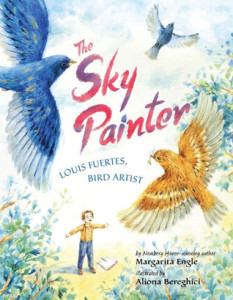
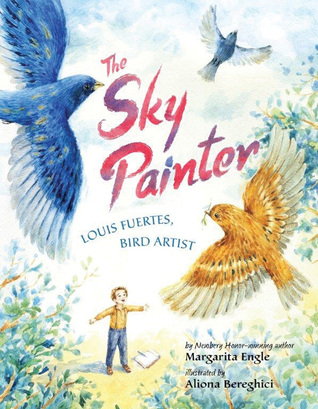
The Sky Painter: Louis Fuertes, Bird Artist Author: Margarita Engle
Illustrator: Aliona Bereghici
Published April 28th, 2015 by Two Lions
Goodreads Summary: Louis loves to watch birds. He takes care of injured birds and studies how they look and how they move. His father wants him to become an engineer, but Louis dreams of being a bird artist. To achieve this dream, he must practice, practice, practice. He learns from the art of John James Audubon. But as Louis grows up, he begins to draw and paint living, flying birds in their natural habitats.
Louis Agassiz Fuertes (1874–1927) is now known as the father of modern bird art. He traveled with many scientific expeditions all over the world. His best-known works—paintings for habitat exhibits at the American Museum of Natural History in New York—are still beloved by visitors today. His art helped to encourage wildlife conservation, inspiring people to celebrate and protect the world of wings.
Poems by Newbery Honor–winning author Margarita Engle and illustrations by Aliona Bereghici capture the life of Louis Fuertes and the deep sense of wonder that he felt when he painted the sky.
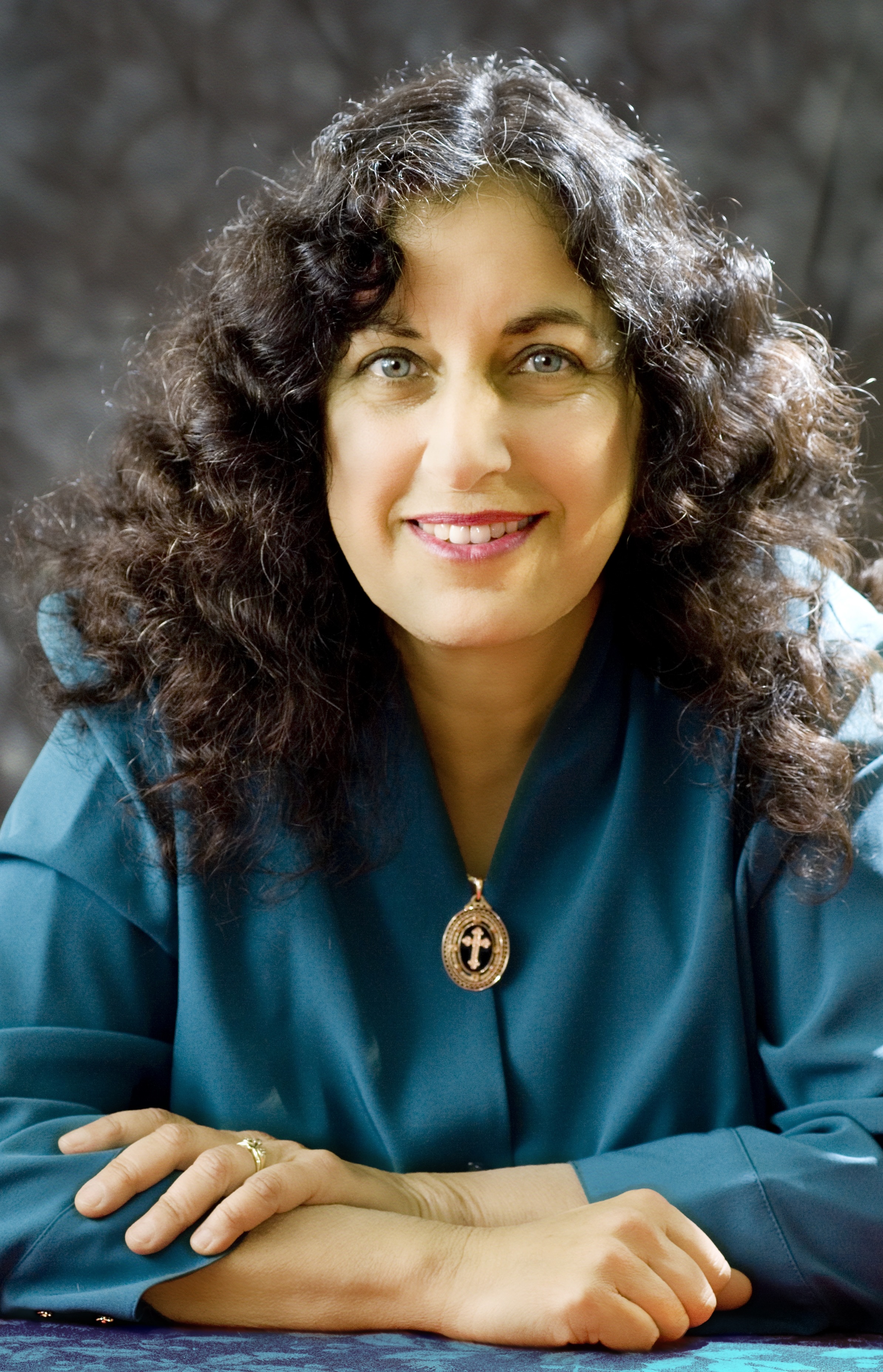
About the Author: Margarita Engle is a Cuban American poet and novelist whose work has been published in many countries. Her books include The Poet Slave of Cuba, winner of the Pura Belpré Award for narrative and the Américas Award; The Surrender Tree, a Newbery Honor book; Summer Birds: The Butterflies of Maria Merian, a Kirkus Best Book for Children; and The Lightning Dreamer, Cuba’s Greatest Abolitionist, winner of the 2014 PEN Center USA Literary Award for Young Adult/Children’s Literature. Margarita lives in California, where she enjoys bird-watching and helping her husband with his volunteer work for wilderness search-and-rescue dog training programs. To learn more, and to download a free activity kit for The Sky Painter, visit: www.margaritaengle.com
Kellee’s Review:Louis Fuertes is an inspirational man, and Engle’s biography of him is perfect. I think what I enjoyed most was how Fuertes was not only an artist, but an animal activist, family man, and educator. He is a role model for any kid that wants to grow up to be happy. Like Ricki shares below, this book shares an important lesson about how there are so many different special things out there to be observed. Nature is phenomenal.
I loved learning not only of Fuertes and his journey to live his passion, I loved the beautiful poetry and watercolor that were used to craft his story. Both the poetry and the artwork do Fuertes’s story justice like no other format would have. The format also gives the reader a chance to look at each poem as a stand alone and also part of the whole biography which gives each poem two different purposes and two different ways they can be analyzed.
Ricki’s Review:Louis Fuertes is a remarkable man, and this book not only pays homage to his extraordinary life, but it teaches young people important lessons. He nurtures and cares for birds in ways that children can emulate in many aspects of their lives. The book shows he devoted his life to birds and wanted others to see their beauty. I’ve seen Fuertes’ artwork in a variety of places, but I never considered him as an artist. This book reminded me that sometimes I go about life, not considering something very important and special. I am so glad I learned about Fuertes’ story and will think about him whenever I read or learn about birds. This book would be an excellent gift to give to a child. The poetry is gorgeous, and the illustrations are breath-taking.
Teachers’ Tools for Navigation: As a teacher, we can think of a plethora of ways to use this text in the classroom. We love to offer our students options, so we might provide them opportunities to read different biographies of different people who are following their passion. Students the could get in lit circles to discuss the biography then come back together to share what they learned. They could also choose any artist or person in history and write poems reflecting this individual’s biography. It would be fun to illustrate and bind these books to share them with others. We can imagine a class sitting in a circle, reading their poetry and learning about lesser-known individuals in history.
Discussion Questions: How did Fuertes change animal painting/drawing forever?; How do you feel that some artists kill animals to draw or paint them?; How did following his passions help make Fueres’s life happier?
Book Trailer:
Interview with Margarita Engle
Unleashing Readers: What inspired you to write about Fuertes?
Margarita Engle: I became fascinated by Fuertes while I was researching rain forest ecology and visiting wildlife preserves, during the process of writing a historical verse novel called Silver People: Voices From the Panama Canal. In many references, Fuertes was mentioned as the bird artist for all the great geographic expeditions of the early twentieth century. When I learned that he was a conservationist who pioneered the painting of living birds in flight—instead of killing and posing them like Audubon—I was astonished. Why wasn’t he a household name, like Audubon? Instantly, Fuertes became the most important link in my ongoing quest for biographical picture books about great Latino naturalists who have been forgotten by history. I hope The Sky Painter helps teachers, librarians, and parents introduce children from all backgrounds to this amazing Puerto Rican/American scientist. Fuertes is a fantastic role model because he was a creative thinker who decided to learn how to paint faster, to save the lives of birds.
UR: What did your research process look like? Do you have any recommendations for students who are doing research?
ME: I try to read every book I can find, in addition to online sources. Many historical studies simply have not yet been digitized, so interlibrary loan is really helpful. I rely on bibliographies to help me move farther and farther back in time, until I discover first person narratives. Diaries, letters, field notes, etc. are incredibly helpful. Fortunately, Fuertes and the scientists he worked with on expeditions recorded fascinating details!
UR: Was there any information that you found interesting that you decided not to include in the book?
ME: Yes, because this book is for young children, I decided not to include the tragic way he died. Soon after he returned from his expedition to Africa, he was driving to show new paintings to another ornithologist. His car was hit by a train. The paintings survived, but he did not.
UR: Because we are a blog devoted to teachers, do you have any ideas about how you envision your book in classrooms?
ME: The Sky Painter can fit into science, art, poetry, or multicultural programs. One of the really clever cartoon exercises Fuertes taught children who visited his studio was simply sketching three circles, then deciding how to connect them. Two circles could become arms or wings, depending on how they’re connected. One circle is always the head. Children decide whether to create a person, a bird, or some sort of funny hybrid.
For older children, I think The Sky Painter can also be used to teach history, if a teacher discusses the way important accomplishments are sometimes omitted from textbooks. Because there’s a tendency for each generation of textbooks to include material from past editions, incredibly important topics may be gradually forgotten.
Fuertes was not only a great artist and scientist, he was also a groundbreaking conservationist. It would make me very happy to see The Sky Painter featured during Hispanic Heritage Month in September–October, as well as on Earth Day, which happens to fall during National Poetry Month in April. It would be especially thrilling to see The Sky Painter used by a teacher preparing students for a field trip, whether it’s a video or a virtual trip on a nature website, an outdoor nature walk on the school-grounds, a walk in a nearby park, or a visit to the Natural History Museum in New York to see the murals Fuertes painted as backgrounds for habitat displays. The possibilities are incredible!
Perhaps most important, The Sky Painter can be used to teach about creative thinking. Are there old attitudes we might try changing—just as Fuertes did—to promote conservation of wildlife and natural habitats?
Read This If You Loved: Feathers: Not Just For Flying by Melissa Stewart, A Boy and a Jaguar by Alan Rabinowitz, Manfish by Jennifer Berne, Look Up!: Bird-Watching In Your Own Backyard by Annette LeBlanc Cate