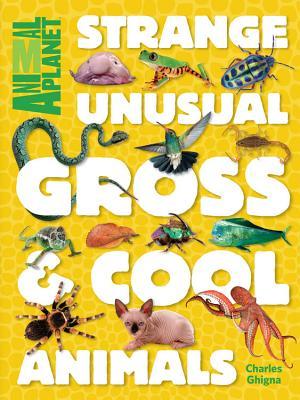
Strange, Unusual, Gross, and Cool Animals by Charles Ghigna

Share

NFPB2016

Nonfiction Wednesday

Nonfiction Picture Book Wednesday is hosted by Kid Lit Frenzy and was started to help promote the reading of nonfiction texts. Most Wednesdays, we will be participating and will review a nonfiction text (though it may not always be a picture book).
Be sure to visit Kid Lit Frenzy and see what other nonfiction books are shared this week!

strange-unusual-gross-cool-animals

Strange, Unusual, Gross, and Cool Animals
Author: Charles Ghigna
Published October 11th, 2016 by Animal Planet

Summary: Animal Planet presents the ickiest, stickiest, blobbiest, and oddest animals in the world!

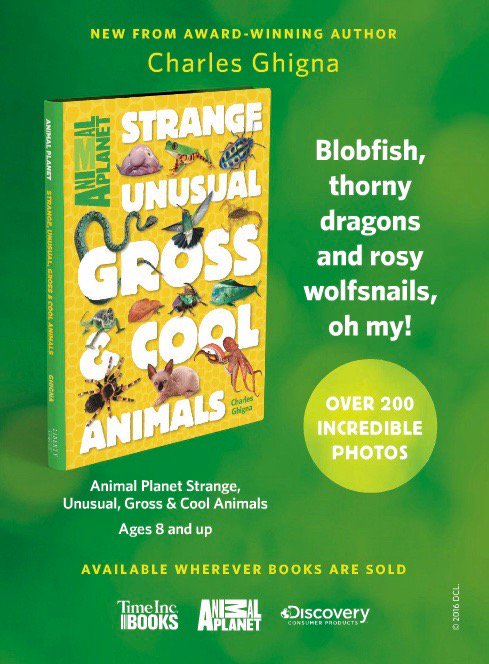
Did you know that an archerfish can spit water up to 16 feet? Or that the giant weta is the world’s largest and heaviest insect? Animal Planet’s fascinating exploration of animal oddities introduces young animal lovers to some of the most astonishing, gorgeous, and obscure animals in the world-including some brand new discoveries! Packed with more than 200 vibrant photographs and fun facts about animals with unusual behaviors, strange appearances, and remarkable stats, this deluxe gift book is perfect for reluctant readers or anyone who loves totally gross and amazing animals.

A portion of the proceeds from the sale of books in the Animal Bites series benefits the principal partners of R.O.A.R. (Reach Out. Act. Respond.), Animal Planet’s initiative dedicated to improving the lives of animals in our communities and in the wild.

strange-unusual-gross-cool-animals-ad

Review: I love learning about weird animals because it is so amazing to see what mother nature has made out there! This book shares with the reader some of the weirdest! Trent and I love to sit and look through the pages and look at the cool animals! 

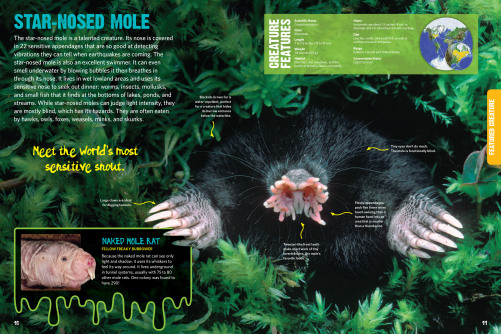
What I really like about Animal Planet texts is that they have a variety of spreads throughout the text and include really interesting information but also beautiful photographs. This text has four types of spreads: Gallery, a spread that explores a theme; Featured Creature, a spread that focuses on one animal; Creature Collection, a spread that compares and contrasts a group of animals; and Macroview, a spread that shows tiny details of small animals.

Teachers’ Tools for Navigation: In addition to being an amazing text to have in classroom and school libraries, this text is a wonderful way to begin inquiry projects. When I teach my central idea unit, for my final assessment I ask my students to write their own nonfiction text with a clear central idea and supporting details. Many students choose animals for their nonfiction text, but it is usually the same offenders: dolphins, cheetahs, and dogs, so it would be really nice to have this text to jump start the brainstorming process.

Discussion Questions: What type of features do some animals have the help them protect themselves from predators?; Which animal did you think was the oddest looking?; Which animal do you think is not that odd looking?; Which animal would you like to learn more about?

Flagged Passages: 

010-011_SUGC_Profiles.indd

Read This If You Loved: Pink is for Blobfish by Jess Keating and other nonfiction picture books about animals, Animal Planet & National Geographic nonfiction such as Real or Fake?, Ocean Animals, Awesome 8, Animal Atlas, or the Animal Bites series    

Recommended For:

  classroomlibrarybuttonsmall closereadinganalysisbuttonsmall

Kellee Signature

**Thank you Charles Ghigna and Animal Planet for providing a copy for review!**

Blog Tour with Author Guest Post and Giveaway!: Ornaments of Love by Sharlin Craig

Share

I’m sure I’m not alone when I say Christmas is my favorite time of the year. And when it comes to kids, the majority of them probably agree. Sure, the kids are excited because Santa comes and brings them presents, but also because there’s a festive feel in the air. People tend to be happier and smile more during the holiday season. Fun activities abound during the season between Thanksgiving and Christmas such as parties, baking cookies, decorating the tree, reading favorite Christmas books, singing Christmas carols and so much more.

I was inspired by my own happy family experiences growing up and also by my husband and now 9-year-old daughter to write my debut children’s book titled, “Ornaments of Love”.  It’s a story about a mom and dad who get too busy over the Christmas season to find the time to decorate the tree with their 10 year-old-daughter, Ayana.  As the story evolves, the family is pulled together by an unexpected, serendipitous event.

As a teacher, why not integrate some of the fun and excitement of the holidays into the classroom setting? Below are some ways of utilizing the “Ornaments of Love” story with this purpose in mind:

English Language Arts: Poetry related to family theme or holiday-(Can be about Christmas or a different holiday if the child doesn’t celebrate Christmas i.e. Hanukah/Ramadan/Chinese New Year, etc)

Cinquain

Christmas (2 syllables)
Family time (4 syllables)
Presents, Decorations (6 syllables)
Laughter, Smiles, Cookies, Music (8 syllables)
Happy (2 syllables)

Haiku

I love Christmas time (5 syllables)
Believe, Joy, Hope, Love, Faith, Peace (7 syllables)
Celebration time (5 syllables)

I am Poem

I am (two special characteristics) (happy and excited)
I wonder (something you are actually curious about) (when we’ll decorate the tree?)
I hear (an imaginary sound) (Rosie bark)
I see (an imaginary sight) (a bare Christmas tree)
I want (an actual desire) (to decorate the tree with my family)
I am (the first line of the poem restated) (happy and excited)
I pretend (something you actually pretend to do) (that they’re decorating the tree right now)
I feel (a feeling about something imaginary) (lonely)
I touch (an imaginary touch) (an ornament)
I worry (something that really bothers you) (that it will be this way each year from now on)
I cry (something that makes you very sad) (because I want to do this with them)
I am (the first line of the poem repeated) (happy and excited)
I understand (something you know is true) (that they’re busy)
I say (something you believe in)  (that I want to spend time with them)
I dream (something you actually dream about) (of many happy Christmases)
I try (something you really make an effort about) (to decorate this tree by myself)
I hope (something you actually hope for) (that they’ll come help me soon)
I am (the first line of the poem repeated) (happy and excited)

Acrostic-(A poem, word puzzle, or other composition in which certain letters in each line form a word or words.)

O ld
R egal
N ew
A nimals
M e as a baby
E nchanting
N ativity
T welve days of Christmas

Character analysis-Open Mind Portrait

Students considers the thoughts that each character in the story is having.

Student creates a portrait surrounded by characters’ thoughts in thought bubbles.

Writing Prompts– Here are some creative writing prompts and journal ideas teachers can use during the month of December:

-A wonderful Christmas or Holiday memory
-If I owned a toy store
-What does ‘Peace on Earth’ mean to you?
-A letter to Santa about a friend who has been very good this year
-Why we should have the Christmas spirit all year long
-What I want to do over the winter holiday
-My vacation at the North Pole
-If I could give a gift to the world, what would it be?

Ornament Hunt Game-For homeschoolers or teachers who have Christmas trees set up in the classroom, teachers can have students write a description down for each ornament that will be going on the tree. While the children aren’t in the room, the teacher can hang the ornaments on the tree and when the students return, they can play a game finding each ornament and checking  them off their lists.

Social Studies: Celebrating Christmas around the world: “Ornaments of Love” can be used as one example of how Christmas is celebrated in the United States. This provides a gateway for learning about how other cultures around the world celebrate Christmas. This can also open a discussion about cultures that don’t celebrate Christmas and what holidays they do celebrate.

Science: Investigating Christmas trees

-Have students look at a real, mini Christmas tree and describe the color and branches. Discuss how the tree’s leaves stay green in the winter because Evergreens are adapted to survive the cold weather, how most Evergreen trees do not have regular leaves, how they are needles or really hard leaves, with a thick-skin, and how they have an ‘antifreeze’ chemical in the leaf to keep it from freezing.

-Explain how they produce chlorophyll year round, which helps with photosynthesis and therefore keeps the Evergreens green all year long.

– Have the children smell the tree, feel it and describe the texture. Show them the roots and talk about how the roots absorb the water. Have them measure the tree: the height, width, length of the branches and width of the leaves. Older children can produce a graph of the data. Look at the leaves through a magnifying glass and discuss what they find.

Visual Arts:

-Students can design and create ornaments out of various materials available in the classroom.

-Students can create an original cover for “Ornaments of Love” with the cover including the title of the book and the author.

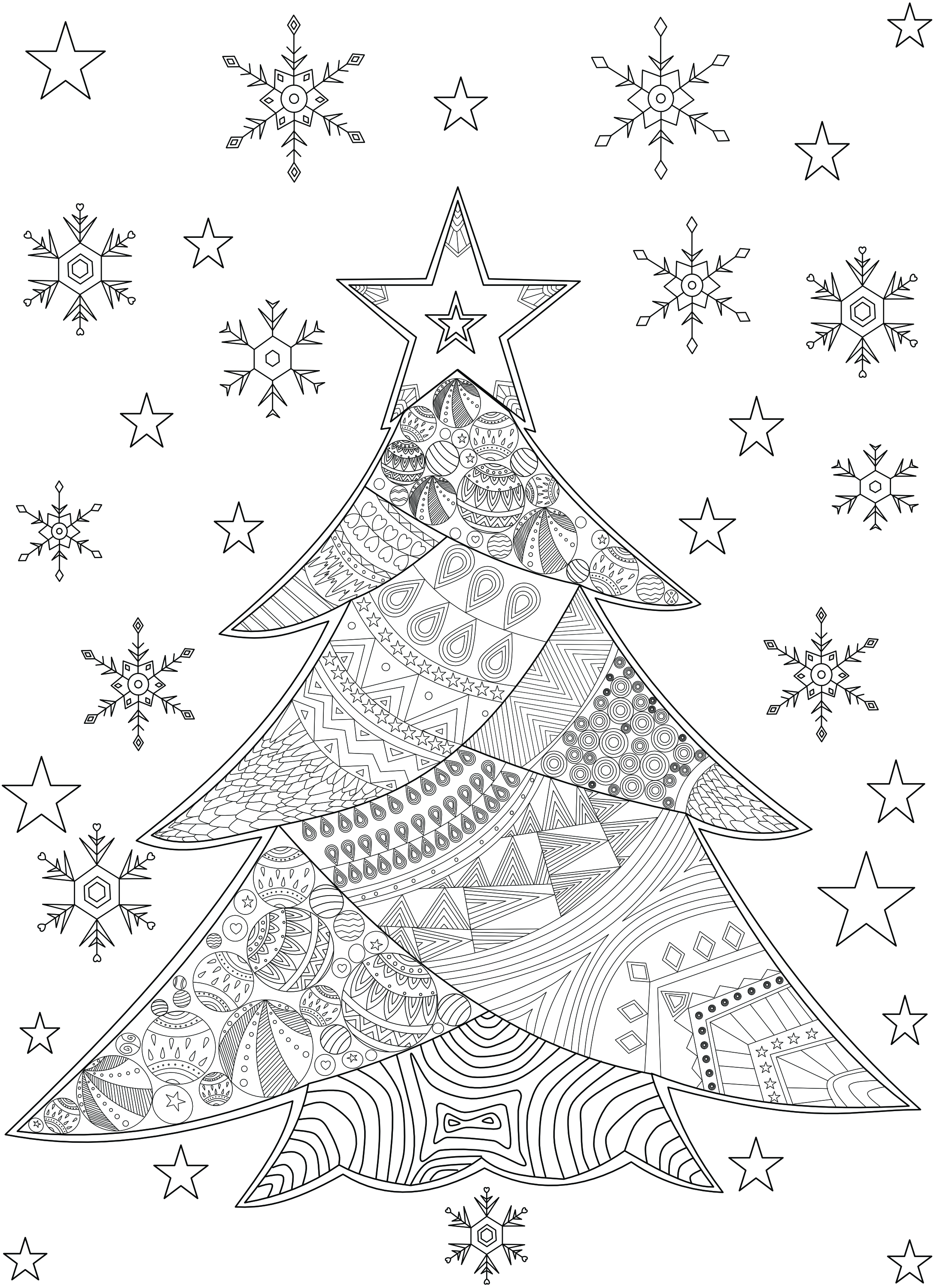
-Coloring Pages: The teacher can copy coloring pages from the “Ornaments of Love Coloring Book” and have the students color them. Colored pencils or crayons can be used and students can practice the art of shading darks and lights within the pictures.

Performing Arts:

-Students may break into groups of 3-4 (Ayana, Mom, Dad and Rosie) and select a portion of the book to reenact.

-Students may select class members to represent characters in the story and interview them.
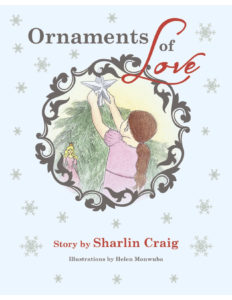
ornoflovecover

Ornaments of Love Description: A touching Christmas story with glowing illustrations, Ornaments of Love is a story to cherish for years to come. A beautiful tale of Ayana, an endearing ten-year-old who excitedly anticipates that special time of year when the entire family joins together to decorate and admire the Christmas tree.

But sadly this year is different. Ayana realizes that her mom and dad are far too busy with everything else to enjoy the tree with Ayana. Then, something unexpected happens and the family is brought together with tenderness and joy.

Filled to the brim and overflowing with charming moments, gentle humor, and timeless illustrations, this beautiful story is a wonderful reminder of what’s important not only during the Christmas season, but every day of our lives. Ornaments of Love is destined to become one of your favorite holiday stories. One that will remain in your heart forever.
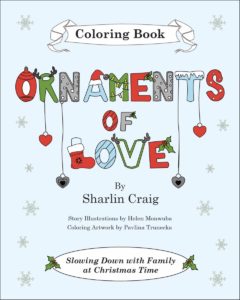
colbook-frontcover

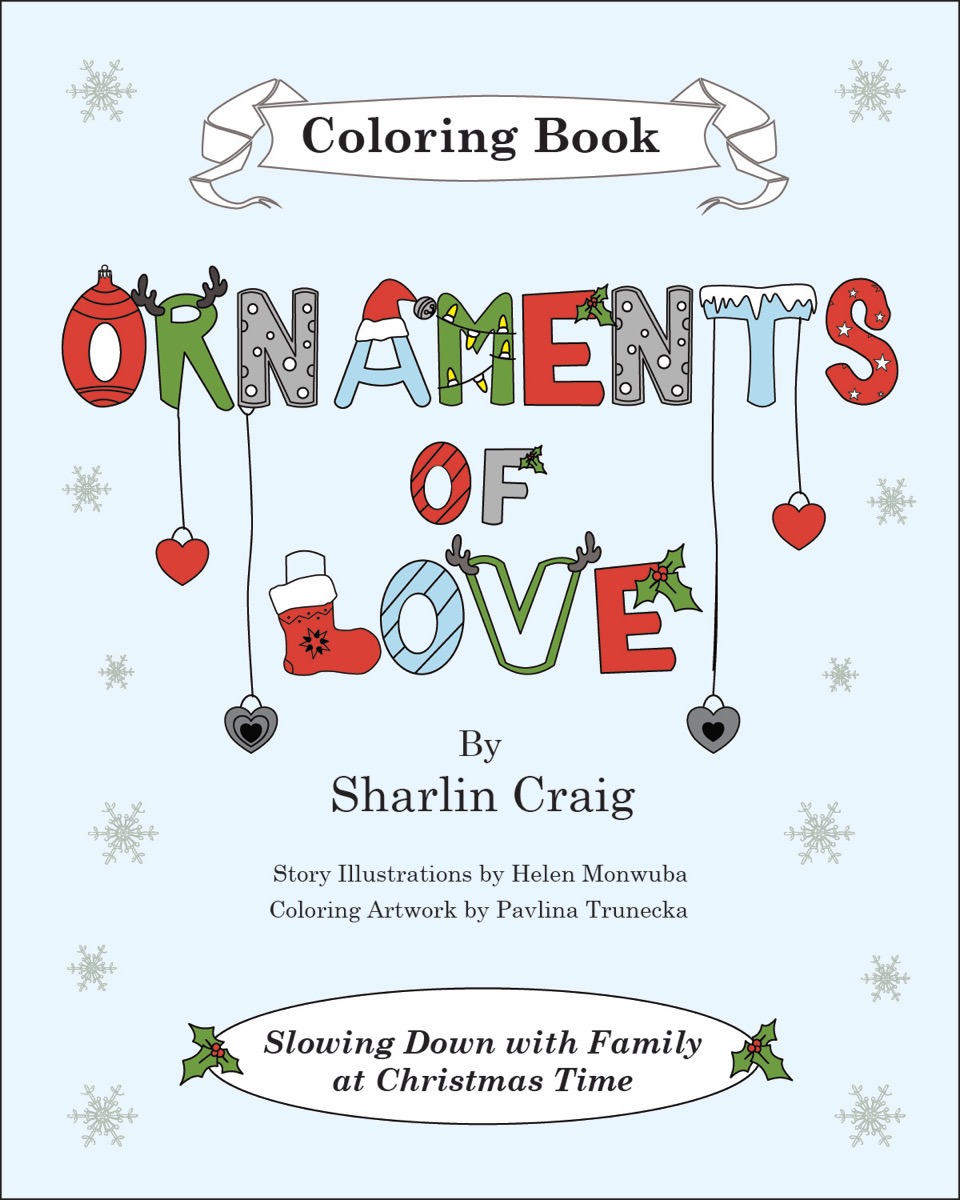
Ornaments of Love Coloring Book Description: This beautifully designed coloring book is a companion or stand-alone book to the original Ornaments of Love picture book. It contains not only the complete story of Ornaments of Love, but also provides 21 full-size coloring pages for artists of all ages. The Ornaments of Love coloring book was created to bring families together at Christmas time. It provides families a perfect way to reduce holiday stress by spending quiet time coloring pages that showcase angels, bells, stars and much more.

Coloring pages range from easy to difficult, perfect for all family members!

Additional complimentary coloring pages are available to print online with the purchase of the coloring book.

Make this a special gift for your loved ones by also purchasing the original Ornaments of Love picture book with full color illustrations.

Three coloring pages are available on Sharlin’s website for preview: http://www.sharlincraig.com/
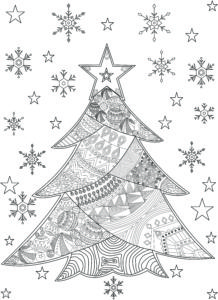
colbook-example

sharlin

About the Author: Sharlin Craig, a Detroit native who now resides in southern California with her husband and daughter, is dedicated to writing inspirational children’s books that touch the spirit of her readers. A graduate of Oakland University, she’s taught music to children for several years while also writing music and lyrics. She’s combined her love for children and writing into authoring her debut children’s Christmas picture book, Ornaments of Love.

Sharlin believes that with the right surroundings and daily encouragement, children are boundless. She’s passionate about helping children feel understood and empowered through her books and hopes that her stories make them smile.

Giveaway!

a Rafflecopter giveaway

Don’t miss out on other blog tour stops!

Thursday, Oct. 27th: This Mom’s Delight (Review)
Tuesday, Nov. 1st: K&A’s Childrens’ Book Reviews (Review & Giveaway)
Thursday, Nov. 3rd: Amanda’s Books and More (Review & Giveaway)
Friday, Nov. 4th: Mamitales (Review & Giveaway)
Saturday, Nov. 5th: Christy’s Cozy Corners (Review, Guest Post-‘My Favorite Ornament Memories’ & Giveaway)
Sunday, November 6th:: Unleashing Readers (Guest Post-‘Integrating Ornaments of Love into the Classroom Setting’ & Giveaway)
Monday, November 7th: The Write Chris (Author Interview & Giveaway)
Wednesday, November 9th: This Mom’s Delight (Guest Post-‘Affirm Your Child’s Worth by Spending Time with Them’ & Giveaway)
Friday, November 11th: All Done Monkey (Post-‘10 Ways to Make the Holidays Special’, Review & Giveaway)
Monday, November 14th: Connie M. Huddleston (Monday Morning Indie: Review & Interview)

 Thank you so much Sharlin for the guest post that will definitely be useful to many teachers coming this winter!

Kellee Signature andRickiSig

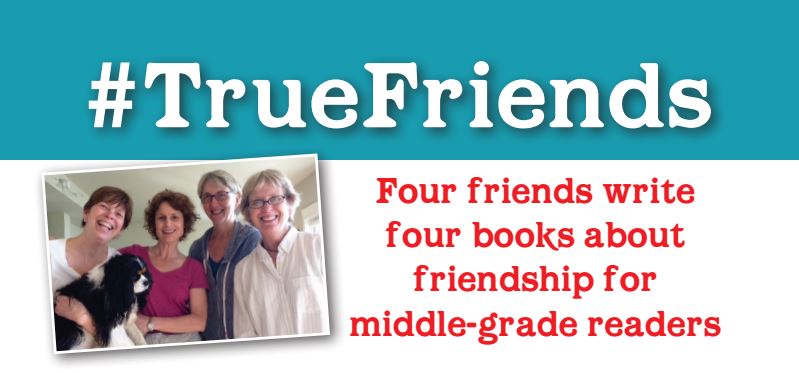
#TrueFriends with Kirby Larson, Augusta Scattergood, Barbara O’Connor, and Susan Hill Long

Share

truefriends

Four authors.
Four friends.
Four books.
All about friendship.

Friendship is the key to happiness, especially during the middle-grade years when kids are facing so much. It is so important to have novels within our classrooms, libraries, and homes that promote positive, true friendships to help our readers find their way through these years. Join Kirby Larson, Susan Hill Long, August Scattergood, and Barbara O’Connor to explore true friendship using their newest novels!

Below each author will introduce their book, discuss the importance of friendship within, then end with a writing prompt.

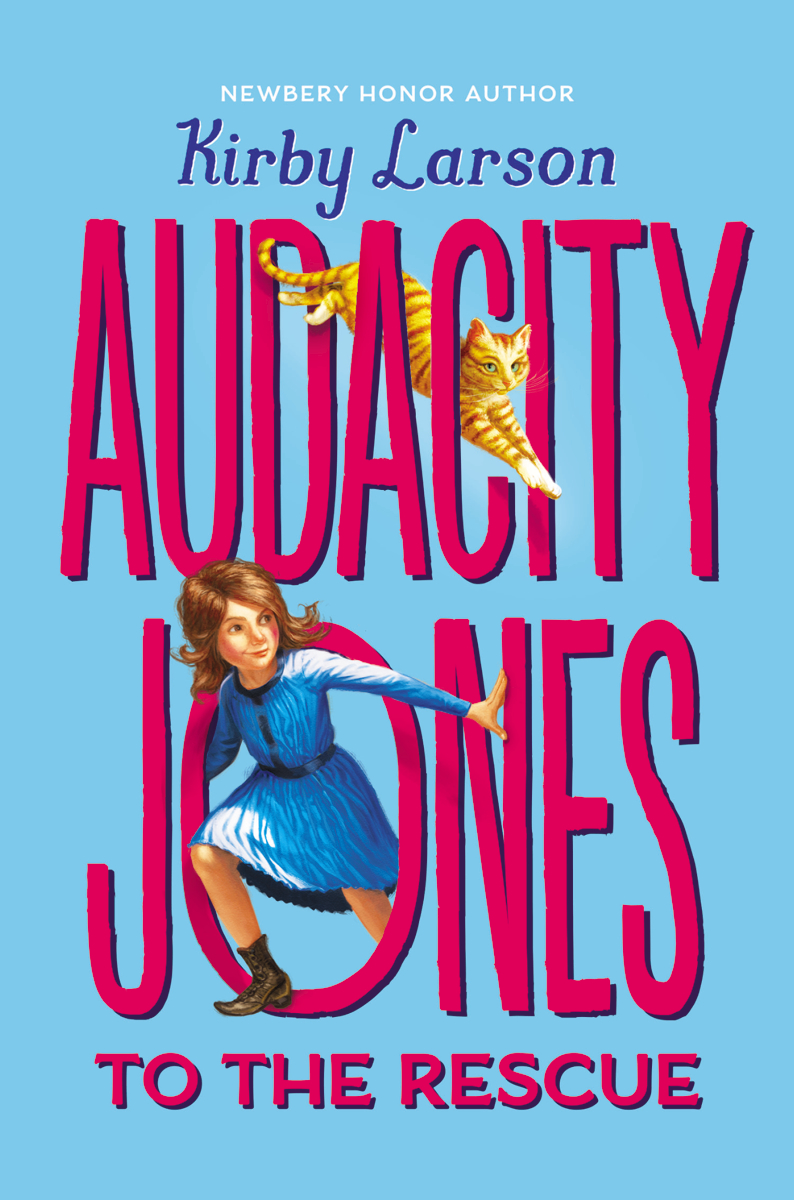
jkt_9780545840569.pdf Kirby Larson

Audacity Jones to the Rescue by Kirby Larson
Published January 26th, 2016 by Scholastic Press

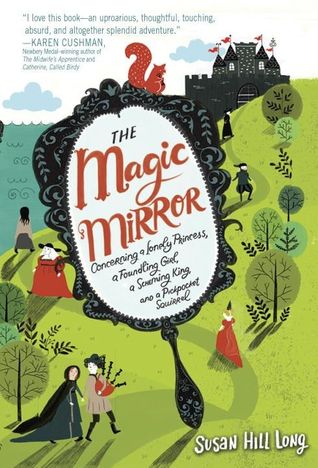
magic-mirror susan-hill-long-author-photo_5-12-16-_credit-jeanne-birdsall

The Magic Mirror: Concerning a Lonely Princess, a Foundling Girl, a Scheming King, and a Pickpocket Squirrel by Susan Hill Long
Published May 10th, 2016 by Knopf Books for Young Readers

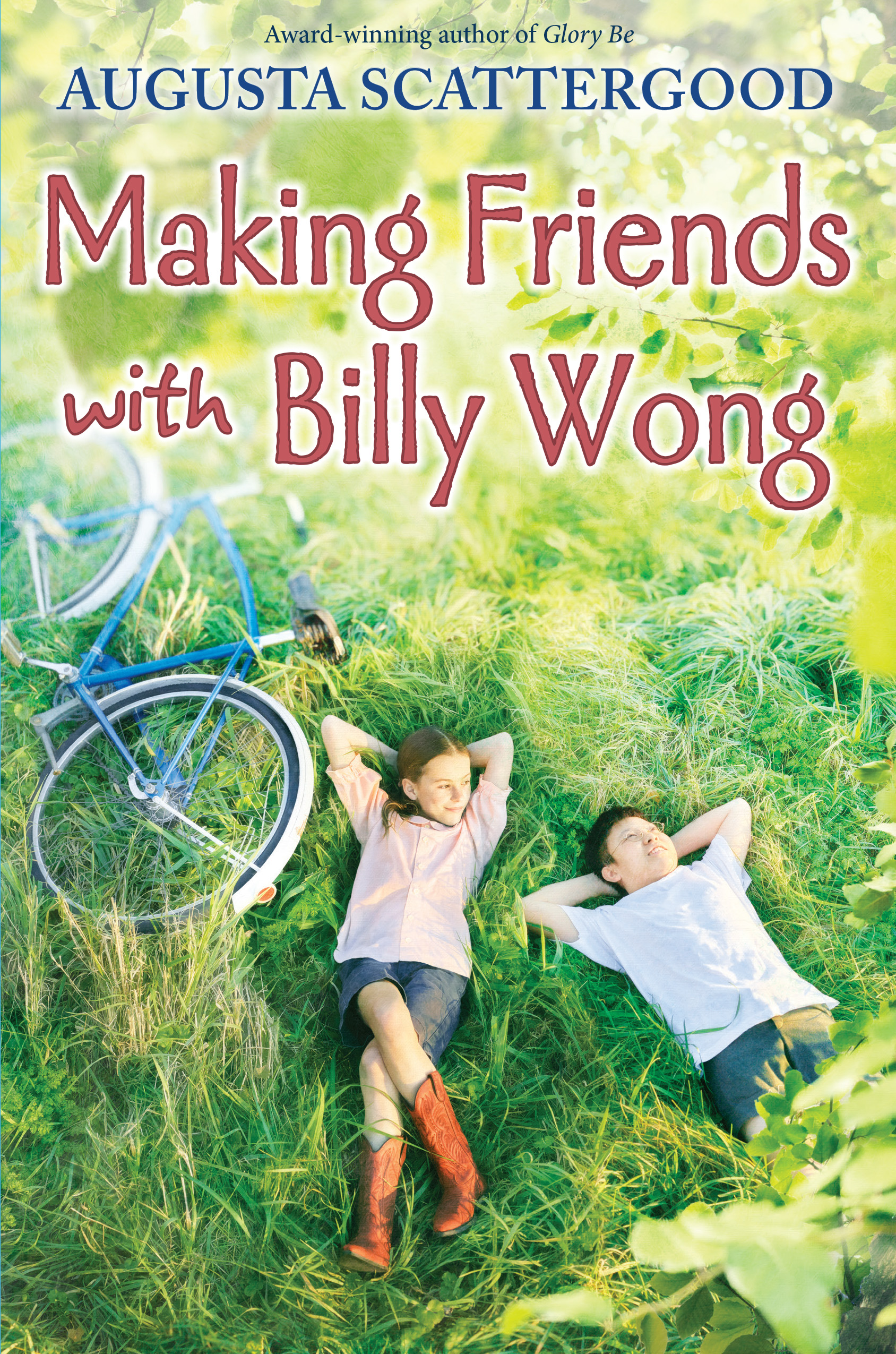
billy-wong-hires-cvr-2 augusta-scattergood-photo_eh-closer-headshot-2

Making Friends with Billy Wong by August Scattergood
Published August 30th, 2016 by Scholastic Press

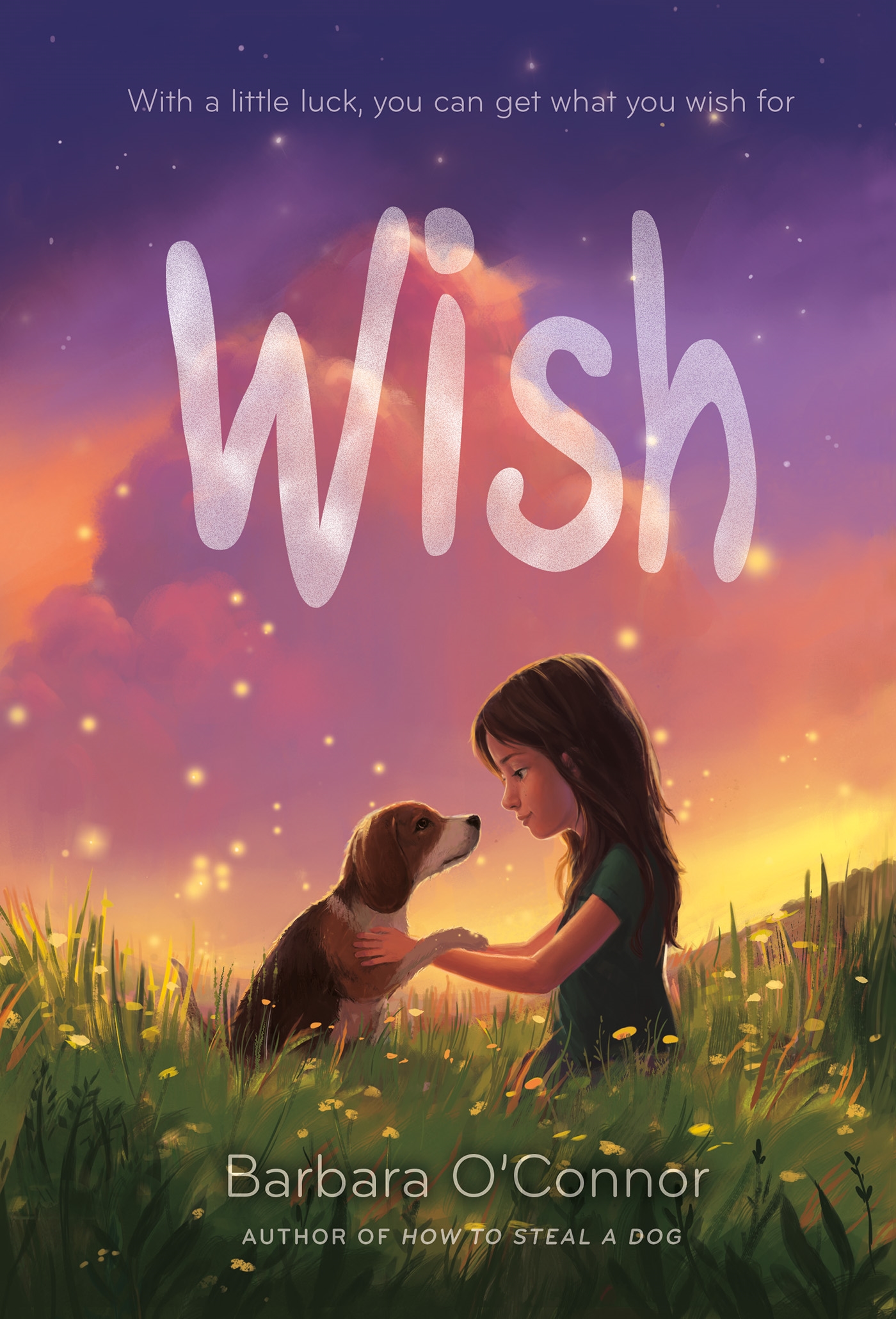
wish-cover barbara-oconnor-photo

Wish by Barbara O’Connor
Published August 30th, 2016 by Farrar, Straus and Giroux

Activity Kit

The activity kit can also be accessed at HERE.

Giveaway!

Fifteen lucky winners will receive a set of the four #TrueFriends books: AUDACITY JONES TO THE RESCUE, THE MAGIC MIRROR, MAKING FRIENDS WITH BILLY WONG, and WISH. In addition, four Grand Prize winners will win a set of the books PLUS a 30-40 minute Skype visit for their school, classroom, or library with one of the #TrueFriends authors: Kirby Larson, Susan Hill Long, Augusta Scattergood, and Barbara O’Connor.

ENTER HERE!

And don’t miss out on any #TrueFriends information! Make sure to visit their You Tube Channel!

Thank you to the #TrueFriends authors and Blue Slip Media for having us be part of this celebration of friendship!

Kellee Signature andRickiSig

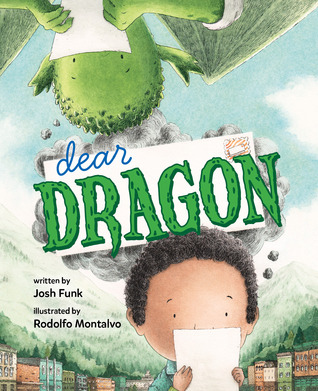
Dear Dragon by Josh Funk

Share

dear dragon

Dear Dragon
Author: Josh Funk
Illustrator: Rodolfo Montalvo
Anticipated Publication: September 6, 2016 by Viking Books for Young Readers

Goodreads Summary: A sweet and clever friendship story in rhyme, about looking past physical differences to appreciate the person (or dragon) underneath.

George and Blaise are pen pals, and they write letters to each other about everything: their pets, birthdays, favorite sports, and science fair projects. There’s just one thing that the two friends don’t know: George is a human, while Blaise is a dragon! What will happen when these pen pals finally meet face-to-face?

Ricki’s Review: I simply adored this book. It was quite clever and imaginative! I imagine it took a lot of thought to try to show how different George and Blaise’s lives might be and how they might misinterpret the descriptions of simple daily life events. I am a huge fan of Josh Funk’s writing and recommend all of his books. They all are witty and humorous, and my son and I always giggle while we read them. Each of his books teaches a life lesson that has been very useful for me as a mom, and I know they are equally useful for elementary school teachers. For Lady Pancake & Sir French Toast, I have been able to constantly refer to the variety of foods in the text in order to help my son with his picky eating habits. With this book, Dear Dragon, I have been able to talk with my son about differences and how we might work to understand how others might lead different daily lives than ours. I am really looking forward to Josh’s next book, Pirasaurs!. Based on his other books, I know it will be a good one!

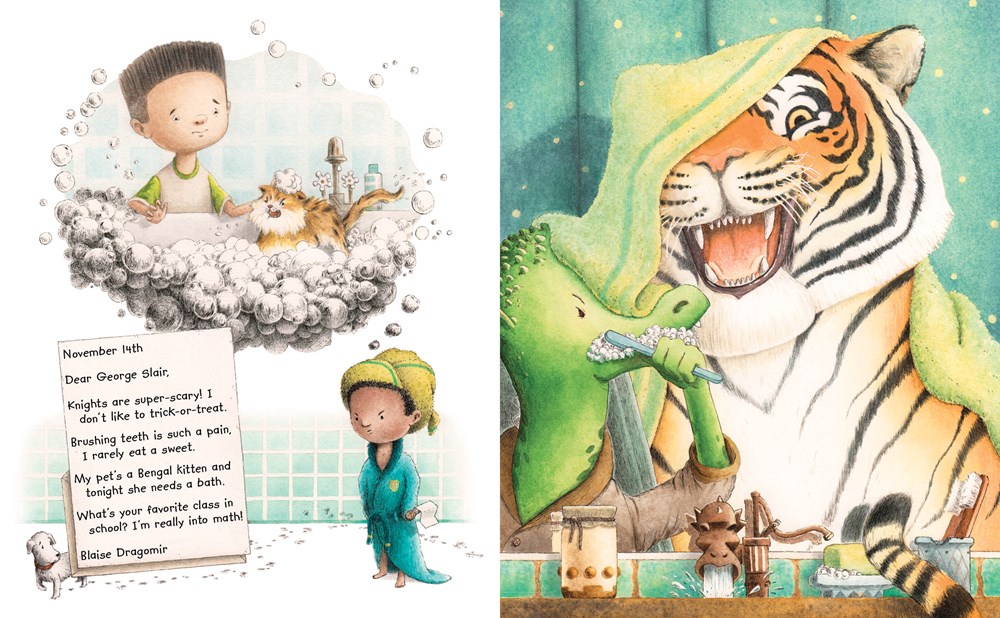
Kellee’s Review: The books I find myself gravitating towards and recommending the most are the books that I not only love as a mother but can also definitely see the application of the book in all levels of classrooms. Dear Dragon fits into this category because it is such an amusing and fun book that is just a blast to read and discuss; however, it also has so many ways that I can see myself and other teachers using it in the classroom: for a mentor text, for a pen pal unit, for a read aloud. Dear Dragon also is an amazing set up to discuss first impressions and differences between people in safe place (since, you know, Blaise is a dragon). I also loved the quirky, colorful, detailed illustrations that accompany George and Blaise’s letters. The silly conversations just from these will make for a wonderful conversation.

Teachers’ Tools for Navigation: Ricki fondly remembers her elementary school experiences with pen pals. Her fourth class wrote to a class in Germany. It was so interesting to learn about all of the differences between our lives. This book would make for a great jumpstart to a pen pal project. It would be neat to connect to a class in another country or even across our own country. Students would learn a lot about how we are both similar and different from others—and how this is a good thing, indeed!

In addition to being a ton of fun, Dear Dragon will also be a perfect mentor text for a variety of reading skills and standards. The letters are a perfect opportunity to discuss point of view, voice, letter writing, and rhyming. The book also has a wonderful theme, the illustrations and letters could be compared/contrasted, and the entire text structure could be analyzed.

Discussion Questions: What are the similarities and differences between George and Blaise? How do they build their friendship across letters?; How do they each misinterpret the other’s letters in ways that are funny and enlightening? How do the illustrations reflect these misinterpretations?; This book is a fantasy, but how might you compare this book to real life?

Flagged Spread: 

9780451472304_IL_3_05101

Read This If You Loved: Lady Pancake & Sir French Toast by Josh Funk; Same, Same but Different by Jenny Sue Kostecki-Shaw; Whose Story is This, Anyway? by Mike Flaherty; Dragons Love Tacos by Adam Rubin; Have You Seen my Dragon? by Steve Light; Tony Baloney: Pen Pal by Pam Muñoz Ryan; Dear Mrs. Larue series by Mark Teague

Recommended For: 

readaloudbuttonsmall classroomlibrarybuttonsmall closereadinganalysisbuttonsmall

RickiSigandSignature

Author Guest Post!: “How an Author Deals with Not Writing Something New” by Jordan Elizabeth, Author of The Escape from Witchwood Hollow

Share

“How an Author Deals with Not Writing Something New”

I started telling stories as an infant.  My maternal grandmother recorded them for me on cassettes and would later write them down.  This went on until junior high (I had horrible handwriting) when I got my first computer.  After that, no one could stop my writing flow.  I whipped out stories like it was nobody’s business.

Short stories.  Novels.  The words flowed off my fingertips into the keyboard, messy handwriting thrown to the wind.

After high school, I set myself a goal.  Every night, I would write at least one chapter.  It is thanks to that goal that I now have 27 completed manuscripts and 9 published works.  Nothing could stop my writing streak.  I would lock myself into my bedroom and not come out – and not talk to anyone either – until I had completed that day’s chapter.

Okay, so nothing could stop my writing…except a pregnancy.  Not having the energy to write, losing that writing zone, was a blow.  I’d been sick before, but I’d always pushed myself to do at least a paragraph (it usually turned into my chapter).  Suddenly, I had no will to write.

It wasn’t a lack of motivation exactly.  It seemed to be a lot of things.  Stress, fear, exhaustion.  I would sit down at the computer, and when I pushed myself to do one paragraph, that’s all I got.  One paragraph.  One really crappy paragraph.

My characters reminded me of the characters in another of my books.  The setting was like the setting in yet another book.  I didn’t know where to take the story.  Such roadblocks had never happened before, and of course that just added onto my already huge array of negative emotions.

A writer has to write.

Right?

Wrong.  A writer has to be involved in books, but not necessarily writing.  I became depressed, feeling as if my writing career was crumbling, and I took that proverbial step back to reflect.  It sounds cliché, but it worked.  For me, at this point in time, writing wasn’t working, but I had to stay involved.  Since I wasn’t turning out new work, I could take a look at the old.

I called up one of my old manuscripts and gave it a fresh edit.  It wasn’t as tiring as writing something new and I could fully immerse myself in the fantasy world.  Pleased with this new edit, I let the story go into the world, and wouldn’t you know it found a home with a publisher?  The book is KISTISHI ISLAND, due to be released October 27, 2016 from Clean Reads.

I am now in the middle of editing another work.  Before, I would finish one and dive right into the next.  It feels great to explore these old worlds and beloved old friends without the guilt of not writing something new.  Yes, I am totally guilt free now about not writing and that is one less negative emotion on my plate.

People have told me being pregnant means I can eat anything I want without feeling guilty.  I have no urge to pig out yet (maybe that comes later?).  I’m changing that idea around into, “Being pregnant means I can edit all I want and not write without feeling guilty.”  I’ll get back into writing later.  For now, I have old manuscripts to keep me company.

DSC07793

About the Author: Jordan Elizabeth, formally Jordan Elizabeth Mierek, writes down her nightmares in order to live her dreams. With an eclectic job history behind her, she is now diving into the world of author. It happens to be her most favorite one yet. When she’s not creating art or searching for lost history in the woods, she’s updating her blog, Kissed by Literature.  Her published works include ESCAPE FROM WITCHWOOD HOLLOW, TREASURE DARKLY, BORN OF TREASURE, COGLING, RUNNERS & RIDERS, VICTORIAN, GOAT CHILDREN, and KISTISHI ISLAND.

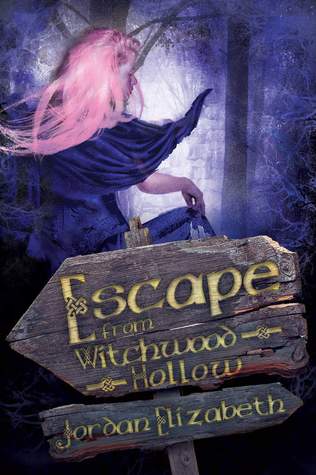
Escape from Witchwood

About the Book: Everyone in Arnn – a small farming town with more legends than residents – knows the story of Witchwood Hollow: if you venture into the whispering forest, the witch will trap your soul among the shadowed trees.

After losing her parents in a horrific terrorist attack on the Twin Towers, fifteen-year-old Honoria and her older brother escape New York City to Arnn. In the lure of that perpetual darkness, Honoria finds hope, when she should be afraid.

Perhaps the witch can reunite her with her lost parents. Awakening the witch, however, brings more than salvation from mourning, for Honoria discovers a past of missing children and broken promises.

To save the citizens of Arnn from becoming the witch’s next victims, she must find the truth behind the woman’s madness.

How deep into Witchwood Hollow does Honoria dare venture?

Thank you Jordan for the reminder that writing isn’t only writing something new!

Kellee Signature andRickiSig

The Uncorker of Ocean Bottles by Michelle Cuevas

Share

uncorker of bottles

The Uncorker of Ocean Bottles
Author: Michelle Cuevas
Illustrator: Erin E. Stead
Published August 23rd, 2016 by Dial Books

Summary: The Uncorker of Ocean Bottles, who lives alone atop a hill, has a job of the utmost importance. It is his task to open any bottles found at sea and make sure that the messages are delivered. He loves his job, though he has always wished that, someday, one of the letters would be addressed to him. One day he opens a party invitation—but there’s no name attached. As he devotes himself to the mystery of the intended recipient, he ends up finding something even more special: the possibility of new friends.

Kellee’s Review: I love the premise of an Uncorker of Ocean Bottles even existing! There are so many notes (notes in a bottle, notes to Santa, etc.) that are out there floating around, so it is so much fun to imagine what happens to them. But the story is really about the Uncorker himself. What is it like to have a very important job yet be alone all the time? No matter how much you love what you do, is being alone ever going to be easy?  

Erin Stead’s art always makes me want to pick up a book! Her use of woodblock prints, oil pastels, and pencil give a perfect feel for this story of a man who didn’t even know he was lonely. The illustrations give a wistful feel that fits Cuevas’s hopeful story. 

Ricki’s Review: This is a book that readers will never forget. Years from now, I will sit in the sand on a beach and think of the Uncorker and all of his gentleness as a human being. His loneliness emanated from the pages, and I longed to go to him, to stay with him, and to become his friend. This would be a great book to discuss relationships and friendships with kids, and it also would be an excellent way to talk about loneliness. All people—kids included—feel loneliness, so a book like this will open up wonderful conversations about this emotion that is not discussed often. 

The illustrations make this book stand out. I felt as if they were freshly drawn for my eyes only. I have a print hanging up in my son’s nursery, and I love looking at it every morning.

Teachers’ Tools for Navigation: As a read aloud in a classroom, The Uncorker of Ocean Bottles would be a perfect discussion starter on many levels. At the beginning of the book, students can guess what they think some of the bottle say when all they are told is that they are “dipped in sadness” or “very old” or “made people quite happy.” The conversation can continue about how they would feel living alone, even if they were doing something important and something they loved. Then they can make predictions about the message that is revealed then analyze how it changes the Uncorkers life.

Discussion Questions: What do you think the messages say?; What would you write as a message in a bottle if you were going to write one?; What do you think the Uncorker is going to do with the unaddressed message?; Would you like living alone?

Flagged Passages: “While the Uncorker of Ocean Bottles loved his job, he couldn’t help but wonder if he would ever receive a letter. Truth be told, each time he opened a bottle, a part of him hoped to see his own name winking from the top of the page.

But then he remembered that this was about as likely as finding a mermaid’s toenail on the beach. For he had no name. He had no friends. He stank of seaweed and salt and fishermen’s feet. No one would ever write him a letter.”

Read This If You Loved: Little Tree by Loren LongLenny & Lucy by Philip C. Stead, The Giving Tree by Shel Silverstein

Recommended For:

  classroomlibrarybuttonsmall readaloudbuttonsmall

Kellee Signatureand RickiSig

Author Guest Post!: “Building Stories with Words” by John E. Stith, Author of Deep Quarry, Manhattan Transfer, and others

Share

“Building Stories with Words” 

The writing life is filled with challenges. Early on it might be the need to sell that first story. Later you could be irked that Hollywood picked that actor to play your protagonist.

Today’s focus is the early stage, where stories are being rejected too often, or some of your Amazon reviews mention grammar.

“I can always hire an editor,” you might say, and I would reply, “But you want to be a writer. You build stories with words. You have to know how to use the only tools you have.”

In fiction, when you get one detail wrong, and then another, readers start to doubt you. That undermines your entire job. And when you misuse words, readers start to wonder, “If this writer hasn’t yet spent the time to master basic use of words, how will the writer handle far more difficult stuff, like creating compelling characters and generating a satisfying ending?” Word misuse is a red flag.

What readers want from a story covers a spectrum, but most readers are going to notice, either subliminally, or directly, if you make spelling or grammar errors. I’m not talking about the rare typo, but the actual and consistent misuse of words.

Here are highlights from the list of problems I see most frequently in workshop manuscripts or books published by impatient writers who haven’t yet learned the craft.

***

Emphasis is typically not indicated with ALL CAPS. Don’t use the comic-book style of multiple exclamation points. (Use ! or ? or whatever’s applicable; avoid ?!, ??, !!, and variations.)

Avoid dialect. Show different speech patterns and word choices in ways that are easier on the reader.
“Aggravate” means to make worse, not to irritate.
“All right” is preferred over “alright.”
“Alot” isn’t correct when you mean to say, “A lot of the…”
“Anxious” isn’t the same as “eager.”
“Awhile” means “for a while.” “For awhile” means “for for a while.”
“Farther” is for distance; “further” is for metaphorical use or to mean “additional.”
“Grey” is the British spelling; “gray” is the U.S. version. Use all US spellings for the US market and all British spellings for the British market. Arbitrarily mixing them makes you look inexperienced or pretentious.
Watch out for misusing “hopefully.” “Hopefully the tree will survive” is wrong unless the tree truly is hopeful.
“It’s” means “it is.” “Its” is possessive.
Look up “lie” and “lay” if all country songs sound grammatically correct to you. Look them up anyway.
If you’re tempted to write “close proximity” look up the meaning of “proximity.”
“Return back” is redundant. Use “return” or “go back” but don’t try to get them both into the sentence.

Hyphenate compound modifiers, but “ly” adverbs don’t take hyphens.

Almost always, starting a sentence with “so” is superfluous.

Be careful with gerund phrases, e.g. “Dialing the phone, I broke a nail.”  Unless you add a qualifier such as “before” or “after,” “while” is implied at the start of the gerund phrase. (While dialing the phone, I broke a nail.”) If you mentally put in the “while” you’ll probably find it harder to mistakenly complete the sentence with an action that does not happen concurrently. To belabor the point: “Dialing the phone, I asked the store what time they opened,” is wrong because the events are sequential, not concurrent. For sequential actions put “after” at the beginning.

Here’s a good example from Dan Brown’s ANGELS & DEMONS. “After parking the cart on the wide lawn directly behind St. Peter’s Basilica, the guard escorted Langdon and Vittoria up a stone escarpment to a marble plaza off the back of the basilica.” (He uses the old-fashioned–most would say sexist–technique of last name for male and first name for female, but the gerund usage is correct. A less careful writer would have skipped the “after.”)

Use “said” ninety percent of the time, or more, for dialogue (or omit speech tags); using your thesaurus for substitutes just calls attention to the substitute. Write dialogue clear enough that you don’t have to resort to writing things like: “You always get the good ones,” she said enviously.   Don’t use a substitute that doesn’t actually mean “say.”

Look carefully when you’re reading published fiction by a pro to see how dialogue is punctuated.
WRONG: “Hello,” he laughed.
RIGHT: “Hello.” He laughed.
RIGHT: “Hello,” he said with a laugh.

Set off direct address with commas.
WRONG: “Yes sir.” “Hello Frank.”
RIGHT: “Yes, sir.” “Hello, Frank.”

Think about the huge difference between these two lines:
“Let’s eat, dad.”
“Let’s eat dad.”

Semicolons can join related and complete sentences; don’t use them to join fragments. Semicolons are not interchangeable with commas.
WRONG: “The mist was clearing, Samantha could tell it was going to be a beautiful day.”
RIGHT: “The mist was clearing. Samantha could tell it was going to be a beautiful day.”

Don’t splice complete sentences together with commas. Don’t just guess when to use a semicolon (and don’t sprinkle apostrophes around just in case if you haven’t learned how to differentiate between contractions, plurals, and possessives.)   Use the serial comma (the last comma in the previous sentence and AKA the Oxford comma) because sometimes it really matters and being consistent helps clarity. Newspapers don’t use them, and newspapers have other stylistic ways they differ from fiction. Newspapers also use single quotation marks, where in fiction the double quotes are used–except when the sentence itself is in quotation marks.
WRONG: The car was advertised ‘as-is.’
RIGHT: The car was advertised “as-is.”
RIGHT: “The car was advertised ‘as-is,'” Sally said.

Additional note on the serial comma. The whole point of normally using the serial comma is for clarity, especially in the rare cases when the sentence is correct without it. For example: “The menu included the choices of pancakes, waffles, fish and chips.” If you normally use the serial comma correctly in other instances, the reader will know the omission of the serial comma here indicates the last choice on the menu is fish and chips, not chips.

Be consistent with singular and plural. “He” is singular, as is “she.” “Their” is plural. Some new writers try to avoid sexist writing merely by substituting “their” for “his” for instance, and some new writers just don’t understand the issue. With no more effort, any sentence can be written gender-neutral without introducing grammatical errors. Example:
OLD: A writer should express his own opinions.
WRONG: A writer should express their own opinions.
NEW: Writers should express their own opinions.

***

Some new writers are tempted to skip the basics, or they succumb to the perception that they need to get out lots of books instead of great books, or they make marketing errors like ending a book with a cliffhanger to get people to buy the next.

Don’t.

Some of your potential audience might not give you a second chance.

John, Crested Butte, 2011, cropped

About the Author: John E. Stith is a Nebula Award nominee for Redshift Rendezvous (Ace Books). His backlist is being reissued by ReAnimus Press during 2016 and 2017. Find him at http://www.neverend.com, on Facebook at https://www.facebook.com/john.e.stith, and on Twitter @JohnEStith.

John Stith

Thank you, John, for this post! We, as English and reading teachers, couldn’t agree with you more. 

Kellee Signature andRickiSig