My Magic Breath: Finding Calm Through Mindful Breathing by Nick Ortner and Alison Taylor

Share

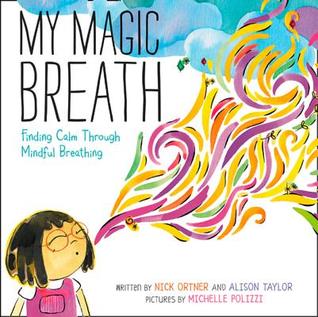
My Magic Breath: Finding Calm Through Mindful Breathing
Author: Nick Ortner and Alison Taylor
Illustrator: Michelle Polizzi
Published May 15th, 2018 by HarperCollins

Summary: Do YOU have the magic breath?

Let’s see…Take a deeeeeep breath in…and BLOW it out…

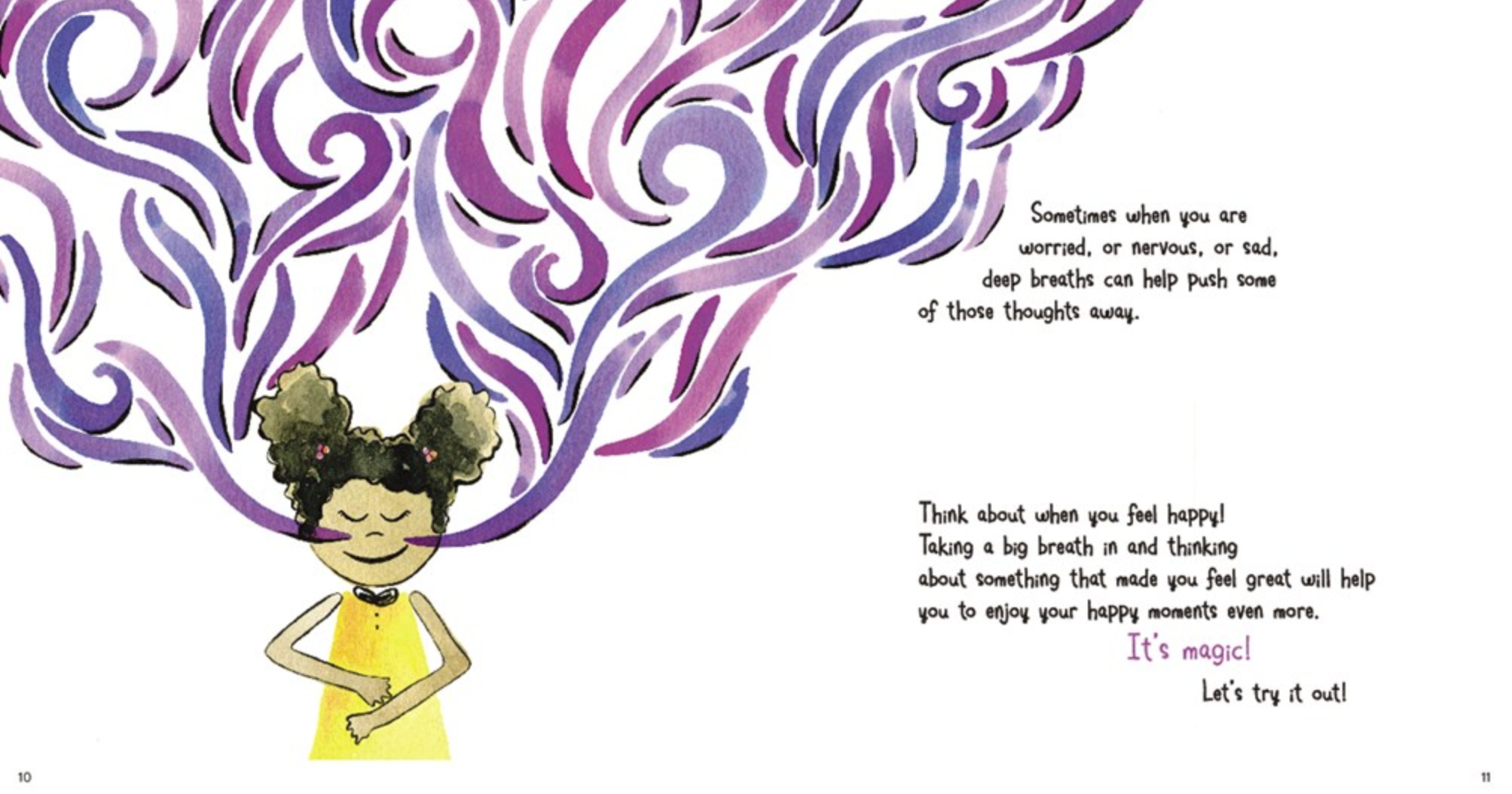
…and like magic, you can feel better just by breathing! Sometimes it’s hard to feel happy. But with this interactive picture book, children breathe along as they learn how to make angry or sad thoughts disappear.

In a world that is sometimes too busy, with too many things going on, My Magic Breath will help steer children into a serene space of mindfulness, self-awareness, and balance.

About the Authors and Illustrator: 

Nick Ortner is CEO of the Tapping Solution, LLC, a company with a mission to promote the natural healing method known as Emotional Freedom Techniques or “tapping” (a combination of Chinese healing practices). This is his second children’s book; his first was The Big Book of Hugs. He is also the New York Times bestselling author of The Tapping Solution, The Tapping Solution for Pain Relief, and the upcoming book The Tapping Solution for Manifesting Your Best Self. Nick lives in Newtown, CT, with his wife and daughter, June. You can find Nick at facebook.com/nortner.

Alison Taylor is an elementary school teacher and coauthor of The Big Book of Hugs. She writes to inspire young people, especially her beloved June and Harris, to find what makes them happy. She lives in Connecticut with her husband.

Michelle Polizzi is an illustrator and designer living and working in California. This is her second book working alongside Nick Ortner and Alison Taylor. She lives in the East Bay with her sons, Rowan and River, her husband, Nick, and their beloved Frenchie, Oscar, where they spend their days creating and inspiring one another. You can see more of her work at designbylovelyday.com.

ReviewDeep breathing is a tool that I have taught my son to use to deal with frustration, anger, or sadness. This lesson was even more supported when Daniel Tiger taught him to, “When you feel so mad you want to roar, take a deep breath and count to four.” We use this mantra often to help him refocus when his brain is getting fogged by an emotion. Additionally, some of Trent’s favorite books are interactive picture books like Press Here! or Don’t Touch This BookMy Magic Breath combines these connections in Trent’s life into one! It not only promotes meaningful breathing in a fun way, it turns it interactive through the illustrations and second person narrative. This is going to be a book that is easily going to jump into our picture book regulars, and I cannot wait to be able to be able to tell Trent to “Think about what happened. Now keep it in your mind! Close your eyes and take a deep breath in. Now blow out your breath…”

Teachers’ Tools for Navigation: Anxiety is something that many teachers now find themselves talking to their students about because so much pressure and stress are on kids these days either socially, academically, or at home. My Magic Breath will be a perfect book to introduce at the beginning of the year then use throughout the year to help students understand and deal with their emotions.

Discussion Questions: 

  • When do you feel the most anxious? Angry? Scared? Sad? Try using mindful breathing during these times.
  • How do you picture your magic breath would look when you blow out during these times? What about a happy time?

Flagged Passages: 

Read This If You Love: Good Morning Yoga by Mariam GatesThe Moment Is Your Life by Mariam GatesMoon by Alison OliverMy Friend is Sad by Mo Willems, The Color Monster by Anna LlenasGrumpy Bird by Jeremy Tankard

Recommended For: 

classroomlibrarybuttonsmall 

Signature

Lemur Dreamer by Courtney Dicmas

Share

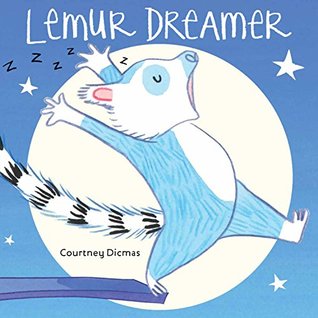
Lemur Dreamer
Author and Illustrator: Courtney Dicmas
Published February 1st, 2015 by Kane Miller

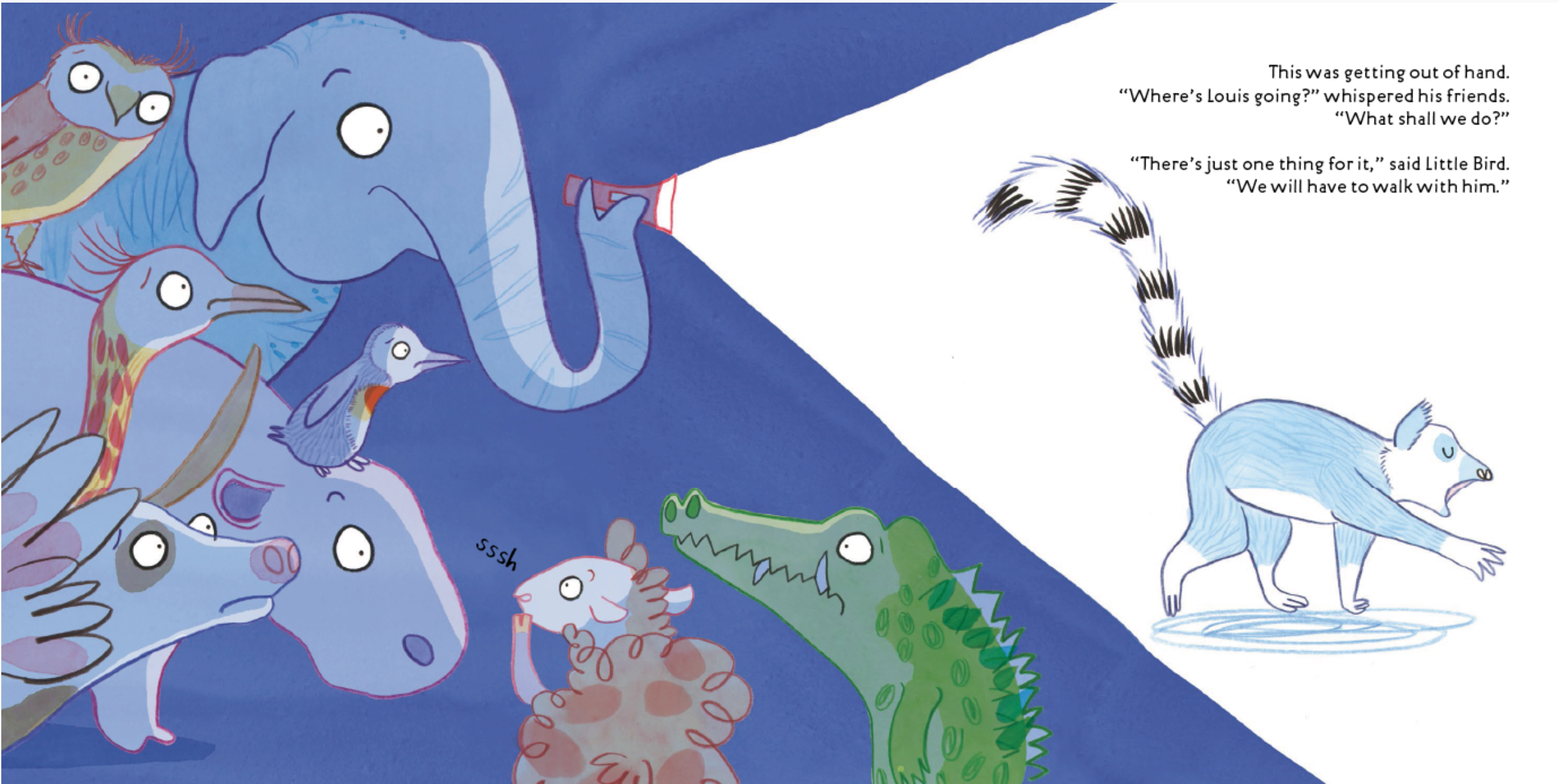
Summary: All the residents of 32 Pebbly Lane lead mostly unextraordinary lives…Except for Louis the Lemur. He’s a sleepwalker! After his night-time antics cause mischief, his friends decide to follow him one night, with hilarious consequences. This is the crazy, colorful, wonderful new title from the artist of Harold Finds a Voice, nominated for the 2014 Waterstones Prize.

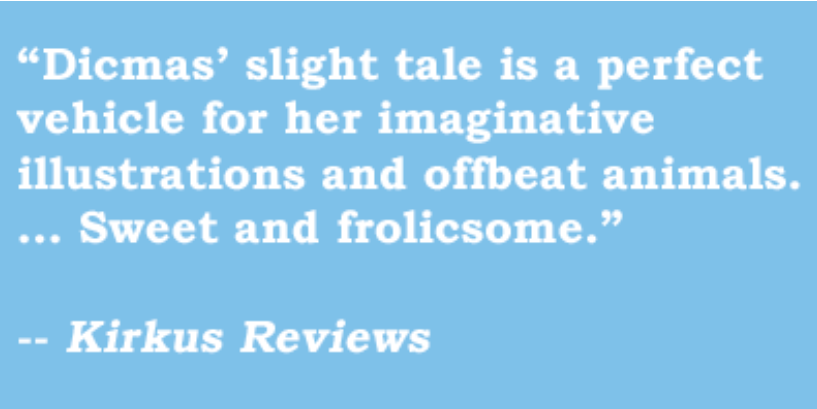
ReviewLouis the Lemur has the best friends! When they notice that poor Louis’s sleepwalking is getting worse, they know that they have to help him be safe, so they stay with Louis as he walks to keep him safe–what a great ode to friendship. I loved Dicmas’s expressive illustrations and how each of the secondary animals were not forgotten in the detailing. These characters combined with the funny sequential plot makes for a fantastic read aloud.

Now, I do think that sleepwalking is being used as entertainment in the story which can be a bit problematic if dealing with kids who do sleepwalk; however, I think it used in a thoughtful way because Louis is never demonized for his sleepwalking. Instead, the book is entertaining while also starting a conversation about something that kids often deal with and never find in conversations. It would also be good to read with siblings dealing with others sleepwalking.

Teachers’ Tools for Navigation: In addition to discussion sleepwalking and on a less serious note, Louis’s story has great cause and effect as well as problem and solution moments. I also loved hearing about what Louis was dreaming about then going back and looking at his sleepwalking path and matching the actual to the dream.

Discussion Questions:

  • What do you think Louis is dreaming about as he is sleepwalking? Did his actual dream match your prediction? How does is dream match the actuality while he was sleepwalking?
  • Find events in the book that were caused by another and complete a cause and effect map.
  • What traits do Louis’s neighbors have that show that they are good friends?

Flagged Passages: 

Read This If You Love: Leaping Lemmings by John BriggsMoon by Alison OliverPandamonia by Chris OwensInky’s Great Escape by Casey Lyall

Recommended For: 

classroomlibrarybuttonsmall 

Signature

**Thank you to Lynn at Kane Miller for providing a copy for review!**
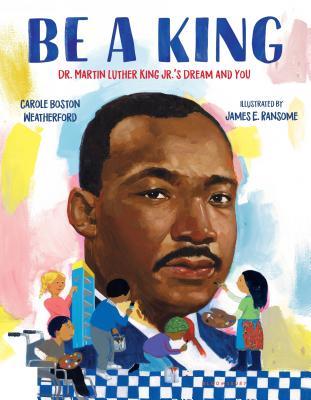
Be A King: Dr. Martin Luther King Jr.’s Dream and You by Carole Boston Weatherford

Share

Be A King: Dr. Martin Luther King Jr.’s Dream and You
Author: Carole Boston Weatherford
Illustrator: James E. Ransome
Published January 2nd, 2018 by Bloomsbury USA Childrens

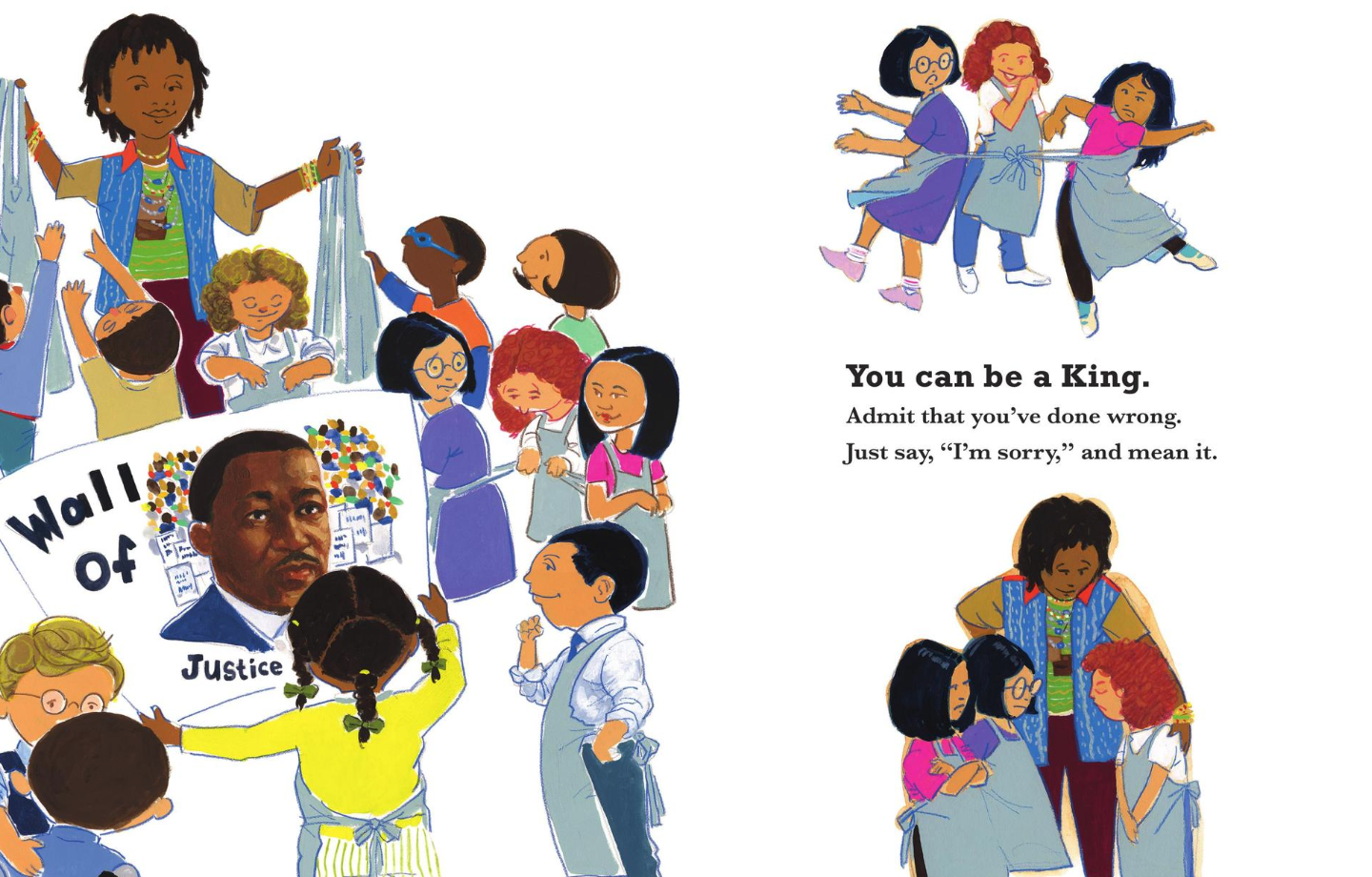
Summary: You can be a King. Stamp out hatred. Put your foot down and walk tall.
You can be a King. Beat the drum for justice. March to your own conscience.

Featuring a dual narrative of the key moments of Dr. King’s life alongside a modern class as the students learn about him, Carole Weatherford’s poetic text encapsulates the moments that readers today can reenact in their own lives. See a class of young students as they begin a school project inspired by Dr. Martin Luther King Jr. and learn to follow his example, as he dealt with adversity and never lost hope that a future of equality and justice would soon be a reality. As times change, Dr. King’s example remains, encouraging a new generation of children to take charge and change the world . . . to be a King. 

Praise: 

“While the book is accessible as an inspiring primer on social justice and taking action, it also challenges more sophisticated readers to make connections between the art, the text, Dr. King’s life, the civil rights movement at large, and the continuing struggle to affect change . . .This book is sure to spark discussion and empower readers of all ages.” –  Starred review, School Library Journal

“Thoughtful paintings of moving scenes are paired with brief, motivational reflections that evoke all the sentiment and fervor of the American civil rights movement.” –  Foreword Review

“The book manages to make essential lessons in civic responsibility accessible to the very young reader.” –  Booklist

“The historical scenes, painted in Ransome’s signature thick, saturated style, are infused with a powerful sense of narrative.” –  Publishers Weekly

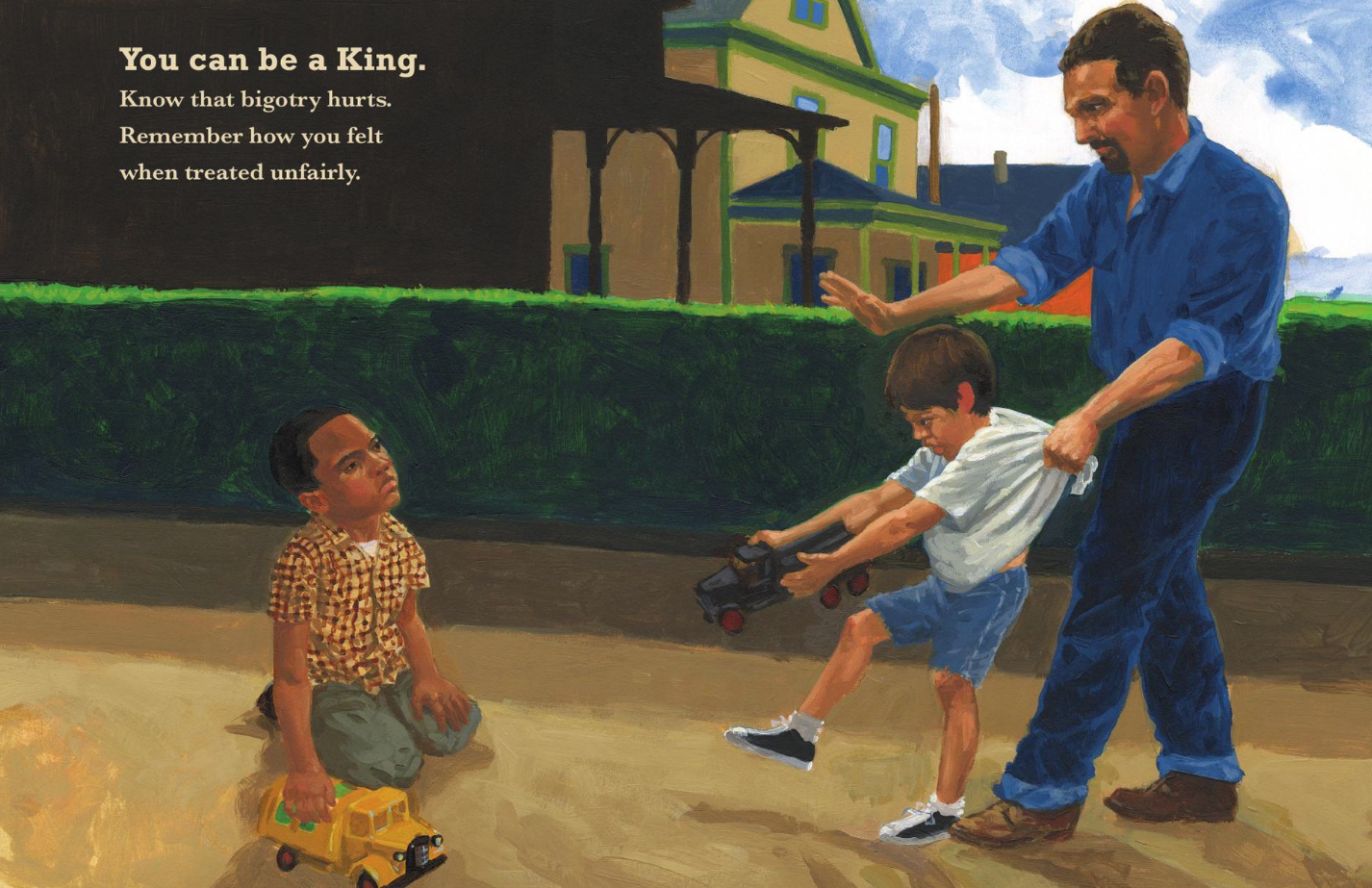
“The use of rich, realistic paintings with pencil detailing for King’s life contrasts with the brighter, simpler drawings for the contemporary children, giving a physical reminder that his work is ongoing.” –  School Library Connection

ReviewI am so happy that a book like this exists! It makes a beautiful connection between King’s history and how the same concepts can (and should!) drive us today. The book is very young kid friendly and is a great scaffold to talk about Dr. King or about kindness; however, it could also be used with older kids to infer and go deeper into the lyrical language Weatherford uses. I also loved how Ransome’s illustrations changed between King’s biography and the more contemporary school narrative.

P.S. As a teacher and a person who believes in kindness and equity and acceptance and friendship, I am so happy to see conversations like this happening so freely now! My students and I speak about injustice and prejudice and equity so often now when it would have been a stigma just a few years ago to even mention race or other social justice issues. It is important to talk about race in a non-prejudicial way with children to allow them to learn and grown and reflect. Sadly, it has been through horrific injustices that has gotten us to this point, but hopefully with our future generations having these types of conversations starting at such a young age, these injustices will stop.

Teachers’ Tools for Navigation: Have students look at each school spread (or split up the spreads between groups of students) and ask them to connect the ideals happening in the spread with something that King spoke about. This idea can also be used with the King spreads because it does not explicitly state what historical event each spread is representing, so students could look through King’s story and try to match each illustration and words with an event in his life.

Discussion Questions: 

  • What was Dr. King’s dream?
  • What are some ways you can fulfill this dream?
  • Although he was speaking of a much larger issue than a classroom, how can King’s ideals be transferred to how we treat each other in the classroom?
  • What events of King’s life were portrayed in the illustrations?
  • What other ways could you BE A KING?
  • Why do you believe the author wrote this story?
  • What is the author trying to teach the reader?
  • How did the author structure the story to reach her purpose and theme?

Flagged Passages: 

Read This If You Love: Stories of MLK, Jr.’s life, Books (historical fiction or nonfiction) about the Civil Rights MovementEach Kindness by Jacqueline Woodson

Recommended For: 

classroomlibrarybuttonsmall closereadinganalysisbuttonsmall 

Signature

How to Code a Sandcastle by Josh Funk

Share

How to Code a Sandcastle
(How to Code with Pearl and Pascal #1)
Author: Josh Funk
Illustrator: Sara Palacios
Foreword by Reshma Saujani, founder of Girls Who Code
Published May 15th, 2018 by Viking

Summary: From the computer science nonprofit Girls Who Code comes this lively and funny story introducing kids to computer coding concepts.

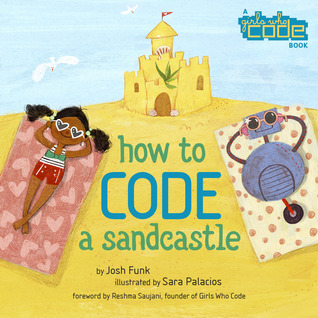
Pearl and her trusty rust-proof robot, Pascal, need to build a sandcastle before summer vacation is over, and they’re going to do it using code. Pearl breaks the big we-need-a-sandcastle problem into smaller steps, then uses conditionals, loops, and other basic coding concepts to tell Pascal exactly what to do. But building a sandcastle isn’t as easy as it sounds when surfboards, mischievous dogs, and coding mishaps get in the way! Just when it looks like the sandcastle might never work, Pearl uses her coding skills to save the day and create something even better: a gorgeous sandcastle kingdom!

Kellee’s Review:  Through books like the Secret Coders series, Two Naomis, and now How to Code a Sandcastle, I’ve slowly begun to learn more and more about coding, and I find it fascinating! If I was a kid now, I would be so excited to have books like these to introduce me to coding. How to Code a Sandcastle is special because it takes coding, which is a tool that is primarily not taught until middle school or later, and makes it accessible to younger kids helping them build their coding vocabulary and knowledge at a young age. My son at age 4 now knows a basic idea of what coding is which is such a great foundation! Bravo Josh and Brava Sara for producing such an essential and gosh-darn funny book for kids.

Ricki’s Review: Josh Funk does it again and again and again. He creates highly engaging books that are so teachable! This is my first book in the Girls Who Code series, and it most certainly won’t be my last. It makes coding quite fun and offers an engaging introduction to children. I don’t know anything about coding, and I had fun learning the vocabulary with my son. After we read the book, we went through again and reviewed all of the new words that we learned about coding. The educational value of this book is very high—it is a great first dive into STEM, it could be used to teach step-by-step instructional writing, and it’s an incredible and hilarious read-aloud! Thanks for this wonderful new text for our classrooms, Josh!

Teachers’ Tools for Navigation: Like we shared above, How to Code a Sancastle is a wonderful foundation for learning about coding and would be an awesome read aloud in an elementary classroom as students are first being introduced to coding maybe on the “Day of Code” or before a computer course. It has a lot of introductory vocabulary and ideas that won’t overwhelm young children but will instead make them curious. Alternatively, it is also a great example of step-by-step instructional writing mixed with a hilarious narrative, so it would be a great mentor text for these writings.

Discussion Questions: 

  • Why did Pearl feel she needed to bring Pascal to build a sandcastle?
  • How did Pearl fix mistakes when she made them when coding Pascal?
  • What cause and effect relationships do you see in the story?
  • What problem and solution relationships do you see in the story?
  • How did the author include step-by-step instructions within the narrative while also keeping the story going?

Flagged Passages: 

Read This If You Love: Secret Coders series by Gene Luen Yang, Girls Who Code books, The coding references in Two Naomis by Olugbemisola Rhuday-Perkovich, Twenty Yawns by Jane SmileyOn Gull Beach by Jane Yolen

Recommended For: 

classroomlibrarybuttonsmall closereadinganalysisbuttonsmall 

Signatureand 

Blog Tour with Review!: Don’t Ask a Dinosaur by Deborah Bruss & Matt Forrest Esenwine

Share

Don’t Ask a Dinosaur
Author: Deborah Bruss & Matt Forrest Esenwine
Illustrator: Louie Chin
Published April 17th by POW!

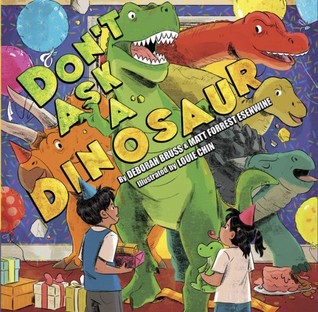
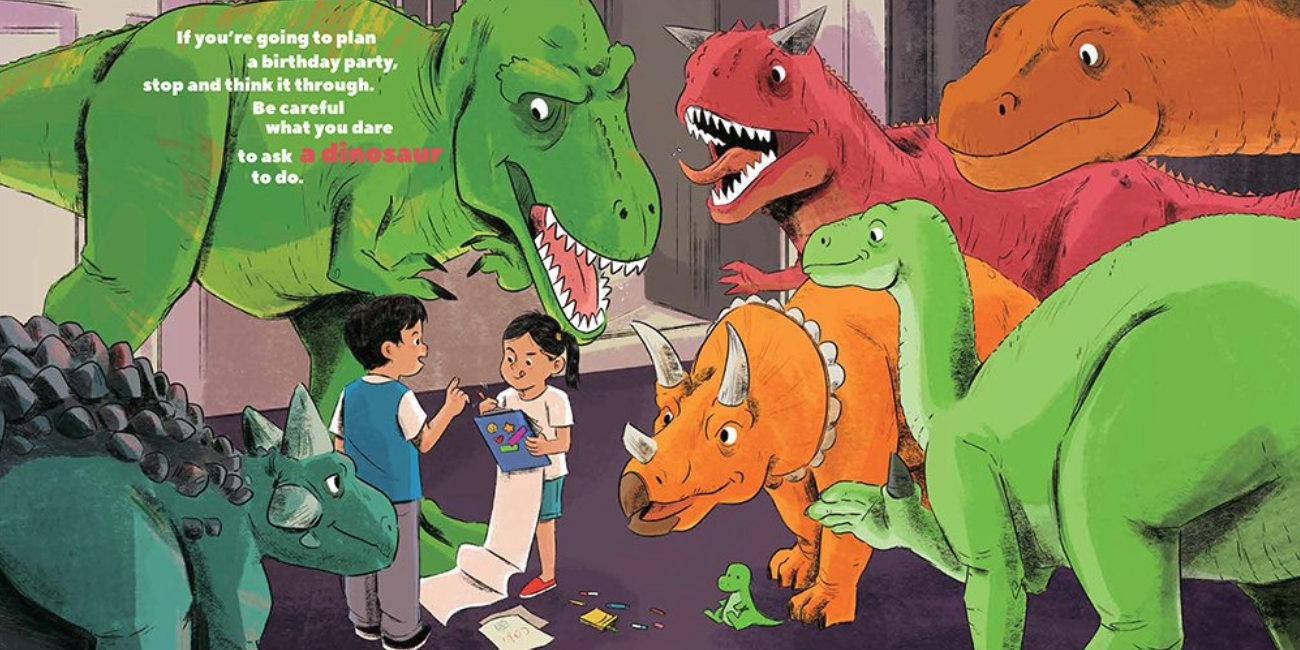
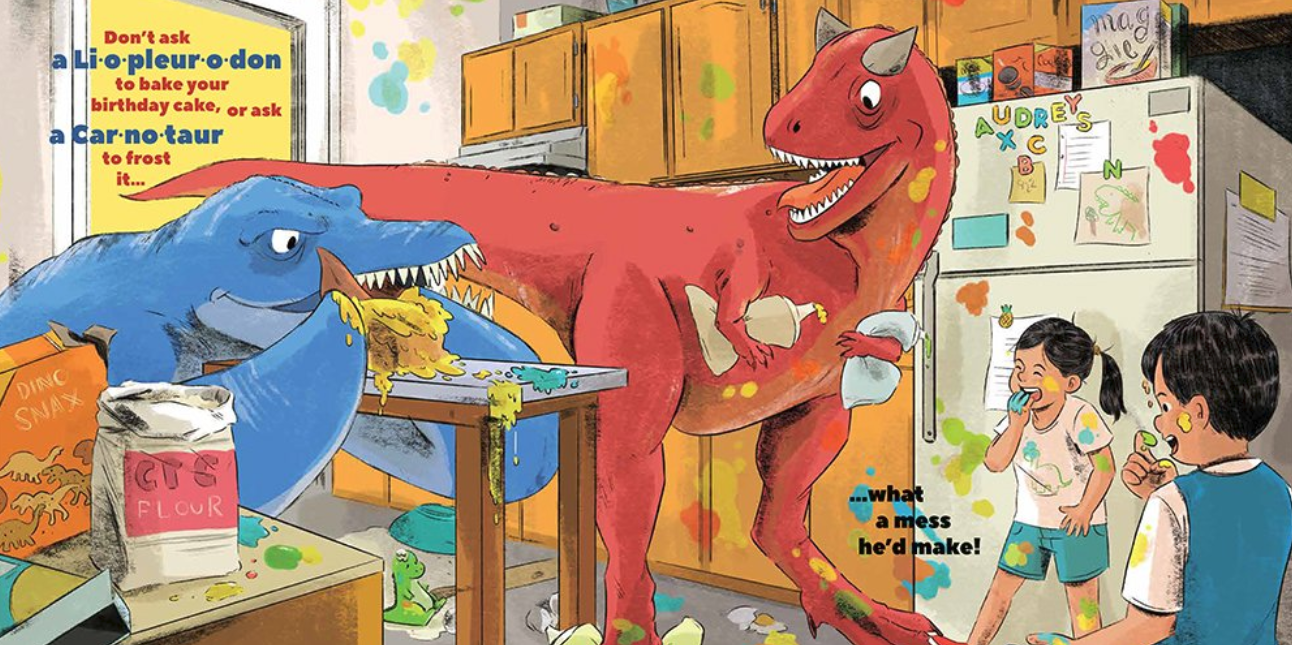
Summary: Don’t Ask a Dinosaur is about a party that goes wildly awry when a pack of dinosaurs with very unique physical attributes attempt to help set up.

“Don’t ask Deinocheirus to set the forks and spoons,” because his hands were enormous, “Therizinosaurus cannot blow up balloons,” because he had very long claws. In the end they find the one thing everyone can help do is to blow out the candles on the cake…but will it create yet another mess?

ReviewDon’t ask a dinosaur what he thinks about this book! Unless he says it is awesome, funny, and informative. Then ask him, and trust his answer.

I was introduced to Esenwine’s work when I read Flashlight Night, and I was immediately impressed with his work–he just had a way with words! While this picture book is quite different, it is not going to let Esenwine fans down. It for sure didn’t let Trent down; he already has had us read this multiple times with different questions each time we read. He also thinks it is hilarious, finding something silly each time he reads.

I also loved the book for a couple other specific reasons. First, I loved that the story included some pretty unknown dinosaurs to help the readers get introduced to them in a fun way. Esenwine and Bruss also did a fantastic job with their rhyming using syllable count to make it even more rhythmic than it would be without. And the addition of phonetic spellings of the dinosaur names was a nice touch to help with the pronunciation for the adult reader and for the child as they learn about the dinosaurs.

Teachers’ Tools for Navigation: On the surface, this text will be a way to introduce a bunch of different types of dinosaurs in a fun, rhyming text; however, this can just be a jumping off point for either a creative writing activity or a science activity (or both!). Because of Esenwine & Bruss’s specific syllables and rhyming, it would be quite challenging and fun to ask students to pick dinosaurs and try to think of other things that they may not be good at and ask them to write their own mini-dino poems. Or students can take the dinosaurs that are introduced in the book and research them to find out what they really wouldn’t be able to do in real life.

Discussion Questions: 

  • Why did the certain dino get chosen for each activity?
  • What dinosaur was new to you?
  • If you could have one dinosaur at your birthday party, what dinosaur would you pick? What would you make sure not to have it do?
  • How does the phonetic spelling of the dinosaur names help with the rhythm of the text?
  • What is going on in the background, in the illustrations, as the narrator helps you see what dinosaurs shouldn’t do?

Flagged Passages: 

Read This If You Love: Dinosaurs!, Jane Yolen & Mark Teague “How Does a Dinosaur” series, PBS’s Dinosaur Train

Recommended For: 

classroomlibrarybuttonsmall closereadinganalysisbuttonsmall 

Make sure to stop by other stops on the Dinosaur Tour!

April 6:        Michelle H. Barnes (Interview w/month-long writing prompt)
April 8:        Kate Narita (Trailer & activity sheet spotlight)
April 11:      Deborah Kalb (Interview w/Matt Forrest Esenwine & Deborah Bruss)
April 13:      Radio, Rhythm, & Rhyme (Interview w/Louie Chin)
April 16:      KidLit Exchange (Blog post re: process of illustration)
April 17:      Momma’s Bacon
April 18:      Bonnie Ferrante
April 19:      Brenda Harsham
April 25:      Bonnie Ferrante (Interview)
May 2:         Unleashing Readers

Signature

**Thank you to POW! and Matt Forrest Esenwine for making this blog tour happen!**

Author Guest Post!: “What Kinds of Storybook Characters Teach the Best Lessons” by Patty Costello, Author of Catalina and the Kind’s Wall

Share

“What Kinds of Storybook Characters Teach the Best Lessons?”

Do you want to teach your students prosocial behaviors? What are good ways to teach children about sharing, caring, helping, honesty, fairness, and responsibility? One popular way is through storybooks, which have been a part of children’s lives and schooling for hundreds of years. Storybooks entertain, but they can also teach important life and moral lessons. But what are the best kind of characters in storybooks to teach children prosocial behavior? Does one type of character work better than another? Many stories for young children often contain animal characters who are anthropomorphized: they take on human characteristics and can talk, walk, eat, and get into all sorts of mischief too. A group of researchers at the Jackman Institute of Child Study in Toronto found that in a review of over 1000 children’s books, more than half the books featured animals, and only 2% were realistic depictions of the animals; in other words, 98% of the animals in over half of picture books feature anthropomorphized animals. People on all sides of the picture book equation – teachers, students, parents, authors, and illustrators – all have assumed that children are naturally attracted to animals and therefore in using anthropomorphized animals, a story may be more enchanting and its lessons more accessible to children’s young minds. And the bigger assumption is that children may be more likely to act in agreement with the moral of the anthropomorphized animal story.

But is this true? These same researchers – Nicole Larsen, Kang Lee and Patricia Ganea – realized in 2017 that no direct psychological or child development study had ever asked this question – are anthropomorphized animals better at promoting prosocial behavior in children compared to a book featuring human characters? The researchers realized that it was unclear as to whether children can learn prosocial moral lessons from stories with anthropomorphized animal characters and then act accordingly.

The researchers designed a study to help answer this very question: Can children learn prosocial moral lessons from stories with anthropomorphized animal characters? Do stories with anthropomorphized animal characters work better than stories with human characters at teaching kids lessons?

How did they study this? They first picked a book called Little Racoon Learns to Share by Mary Pacard. The book has a sharing theme and a moral lesson – that sharing makes you feel good. The story features anthropomorphized animals as the main characters. The researchers took the book and used Photoshop to create the same book, only with human characters instead.

All children in the study (males and females ages 4 – 6) had a vocabulary test first to make sure that they were all at a similar language ability level. Next, the children were allowed to choose 10 of their favorite stickers from a huge pile of stickers. They were then told that there was a child their same age that could not be there that day and therefore would not get any stickers. The children were told that they could share some of their stickers with this (imaginary) child by putting them into an envelope when no one would be looking. This was the pre-test or baseline measure to get a sense of their sharing level before they heard the book about sharing.

Next, students were divided into three groups of 32 children each. The first group heard the sharing story with the human characters. The second group heard the same story, but with the original animal characters. The third group, the control group, heard a story about seeds. The children in the control condition were also asked to choose between reading either a book about human characters or a book about animal characters. This question was asked to determine whether children would prefer to read the animal book or the human book when given a choice. If the argument that using anthropomorphized animal characters makes a story more captivating to young children is correct, then children should be more likely to choose the book about animal characters. I’ll cut to the chase on this one – the children in this control group picked each book equally – there was not a clear preference for the animal book over the human book.

After the three groups heard the book, the same sticker sharing task was given with new stickers (post-test). The researchers measured the differences in sticker donation before and after the story reading. Again, the researchers were wondering whether reading storybooks with a sharing theme could significantly increase children’s generous giving relative to reading the control story about seeds. More importantly, they examined whether the story in the animal condition with anthropomorphized animal characters and the story in the human condition with real human characters would have differential effects in promoting generosity in young children, that is, would the children share more stickers after hearing the sharing story with animals or humans, or would it even matter?

What happened? I bet you are very curious by now! Reading a book about sharing had an immediate effect on children’s sharing behavior: Children who read the book with human characters became more generous with how many stickers they donated to the fictional child. In contrast, there was no difference in generosity between children who read the book with anthropomorphized animal characters and the control book; both groups decreased how many stickers they gave.

Here is the chart I adopted from the study:

Condition Before the book: How many stickers did they donate? After hearing the book: How many stickers did they donate?
Human characters 2.03 stickers 3 stickers ↑
Animals characters 2.31 stickers 1.7 stickers ↓
Control condition – book about seeds 2.14 stickers 2 stickers ↓

Why did the researchers think this happened? Maybe children see anthropomorphic characters more as animals than humans. Maybe they are not able to interpret the anthropomorphic characters as being similar to themselves, and as a result, the lesson in the story is not absorbed. This does not mean that children should never hear stories with animal characters, but it’s important to keep this in mind.

Future research future should look at whether anthropomorphism in books has the same effect on older children as on younger children as this study was done on 4 – 6-year olds.

It’s fun (at least for me as a cognitive neuroscientist!) to think about storybooks from an academic perspective – maybe the assumptions we hold are not true – studying these assumptions in a systematic way can provide real answers and guidance for future generations of teachers and parents.

This post was adopted from the following article should you like to read it yourself: Larsen, N.E., Lee, K., Ganea, P.A. (2017). Do storybooks with anthropomorphized animal characters promote prosocial behaviors in young children? Developmental Science, pp. 1-9.

About the Author: Patty lives in Boise, Idaho with her husband, a zany awesome toddler, a dog named Pippa, and a dog named Spencer. She grew up in the Twin Cities and is a Minnesotan at heart (you betcha!). She has a BS in Psychology from the University of St Thomas and a PhD in Neuroscience from the University of Minnesota. She currently works in higher education. Her first book, Catalina and the King’s Wall, released May 5th, 2018 from Eifrig Publishing. At all hours of the day (and night) she can be found standing at her desk, helping her university run smoothly and working on her next children’s book. For fun, she likes to trail run, mountain bike, cross country ski, and hike. She is also a voracious volunteer for various local organizations.

Catalina and the King’s Wall
Author: Patty Costello
Illustrator: Diana Cojocaru
Expected publication: May 5th, 2018 by Eifrig Publishing

About Catalina and the King’s WallWhen Catalina overhears the king planning to build a wall, she fears her family won’t ever be able to visit. Catalina tricks the king into building walls that droop, drip, swirl, and swoosh away. But now the king demands an impenetrable wall. Luckily, Catalina has the perfect ingredients to bake up a family reunion! Through beautiful illustrations and enjoyable prose, kids learn how to stand by their convictions of inclusivity and kindness even when powerful people tell them not to.

Thank you, Patty, for a look at this study and for sharing your book!

It’s a Puppy’s Life by Seth Casteel

Share

It’s a Puppy’s Life
Author: Seth Casteel
Published March 20, 2018 by National Geographic Society

Summary: Have you ever wanted to know what goes on in the life of one of nature’s most beloved animals–the puppy? Follow along in this picture book featuring the photography of Seth Casteel.

Follow several puppies as they play, go for walks, eat, sleep, and romp about.

My Review: Who doesn’t love puppies? I don’t have a dog right now, and this made me want to take a trip to the pet store! Seth Casteel does a phenomenal job capturing the spirit of these energetic pups. I enjoyed looking at the different angles that he used. Further, I loved the key at the end of the book that distinguished between the breeds. This is a charming book that kids will love.

Teachers’ Tools for Navigation: This book inspired me to want to take photographs! Teachers might use this at the start of a photography unit. They can examine the angles of the photographs and talk about how the author captured such incredible images.

Discussion Questions: Which puppy is your favorite? How does the author capture the spirit of the puppies? How does he organize the book?

We Flagged: 

Read This If You Love: Dogs; Photography

Recommended For: 

RickiSig

**Thank you to Media Masters for providing copies for review!!**