Review and Giveaway: The Caiman by María Eugenia Manrique, Illustrated by Ramón París, Translated by Amy Brill

Share

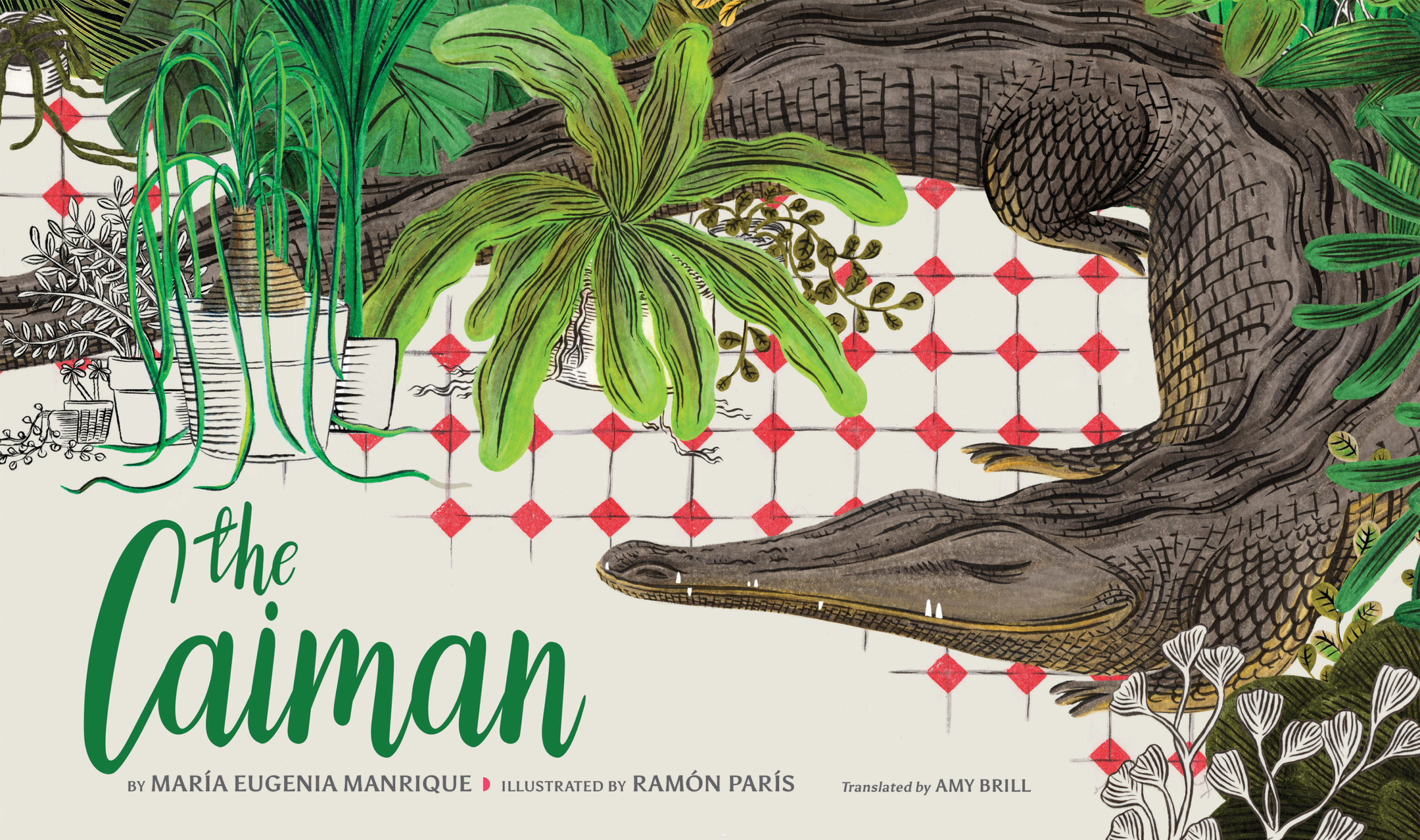
The Caiman
Author: María Eugenia Manrique
Illustrator: Ramón París
Translator: Amy Brill
Published: July 1, 2021 by Amazon Crossing Kids

Summary: The unforgettable story of a man and his alligator.

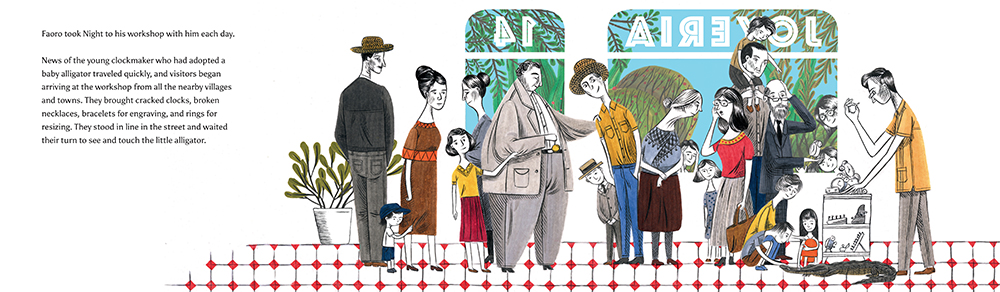
When Faoro the clockmaker adopts a baby alligator, he has no idea that someday their story will travel far and wide. But the town of San Fernando de Apure would never forget this kind young man and his adoring alligator, who played with the neighborhood children, took part in Faoro’s wedding, and, eventually, mourned his loss. Now their story is being shared with the world.

In this delightful picture book first published in Venezuela, the author brings us back to her own childhood in Venezuela, as one of the children who used to visit this famous caiman, to tell the story of a man who loved animals and how his friendship with his alligator sparked a lasting legacy.

A New York Times Globetrotting Pick!

★“The striking illustrations…have a wild and whimsical feel about them, featuring lush foliage and expressive characters, including the eventually enormous caiman. It’s a memorable and unexpected demonstration of the universality of love, grief, and kindness.” —Booklist (starred review)

María Eugenia Manrique is one of the girls portrayed in this story. She rode the caiman when she visited her family in San Fernando de Apure. She was born in Caracas, Venezuela, and currently lives in Barcelona, Spain. She studied fine art in Mexico City, specializing in xylography and engraving; Eastern painting at Nankín University, China; and sumi-e and calligraphy at the Nihon Shuji Kyoiku Zaidan Foundation in Japan. Her work has been exhibited in museums and galleries around the world. The Caiman is her first children’s book. For more information, visit her website: https://mariaeugeniamanrique.wordpress.com/.

Instagram: @mem.manrique

Ramón París was born in Caracas, Venezuela, and as a child lived in Barinas, a plains state like Apure, where he also heard the story of the caiman. He currently lives in Barcelona, Spain. Hismost recent book for children, Duermevela, was selected for the Bologna Book Fair Illustrators Exhibition. His books have been recognized with honors including Los Mejores del Banco del Libro and  the IBBY Honor List, among others, and they have been translated into numerous languages. Visit him at: ramon.paris.

Instagram: @ramon_paris_ilustrador

Amy Brill’s fiction and nonfiction have appeared in numerous publications including the Washington Post, Medium, Real Simple, Oprah.com, and One Story. Her first novel, The Movement of Stars, was published by Riverhead Books. A native New Yorker, Amy lives in Brooklyn with her husband and two daughters.

Ricki’s Review: It’s NONFICTION. I read this book and couldn’t believe that the story was true, and it made me love it even more! The author beautifully tells the story of Jose Faoro, who adopts a baby alligator when it is just days old. My children have always dreamed of adopting a large animal such as this, so it offered a wonderfully intriguing read. Although, I might add that they now think that we can take in an alligator in our house (ha!). This is the story of a great man who loved animals and loved those around him. I absolutely adored the gentle telling, and it felt like a book that would be translated because children all over the world would be captivated by this story. The illustrations stand out to me because they are timeless. They feel contemporary to my boys, but they also filled my heart with a softness because they reminded me of the classic illustrations of the stories I read and loved as a child. Ahhh, I just adore this book.

Teachers’ Tools for Navigation: This book is accessible to all levels, but I’d love to see it in elementary school classrooms, where teachers ask their students to research examples of other people who did something out of the ordinary. They could write their own picture books.

Discussion Questions: 

  • How do the words and illustrations work together to form a cohesive story?
  • Does Faoro’s story surprise you? Why or why not?
  • What does Faoro’s life tell you about him?
  • What did you learn from the story?

Flagged Passages: 

Read This If You Love: Nonfiction Picture Books; Timeless Stories; Books about Animals

Giveaway:

a Rafflecopter giveaway

Recommended For: 

classroomlibrarybuttonsmall   

**Thank you to Barbara at Blue Slip Media for Providing a Copy for Review!**

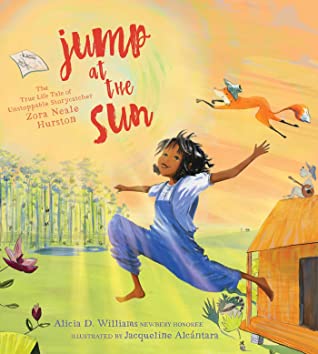
Jump at the Sun: The True Life Tale of Unstoppable Storycatcher Zora Neale Hurston by Alicia D. Williams, Illustrated by Jacqueline Alcántara

Share

Jump at the Sun: The True Life Tale of Unstoppable Storycatcher Zora Neale Hurston
Author: Alicia D. Williams
Illustrator: Jacqueline Alcántara
Published January 12th, 2021 by Atheneum/Caitlyn Dlouhy Books

Summary: A picture book that shines the light on Zora Neale Hurston, the writer and storycatcher extraordinaire who changed the face of American literature.

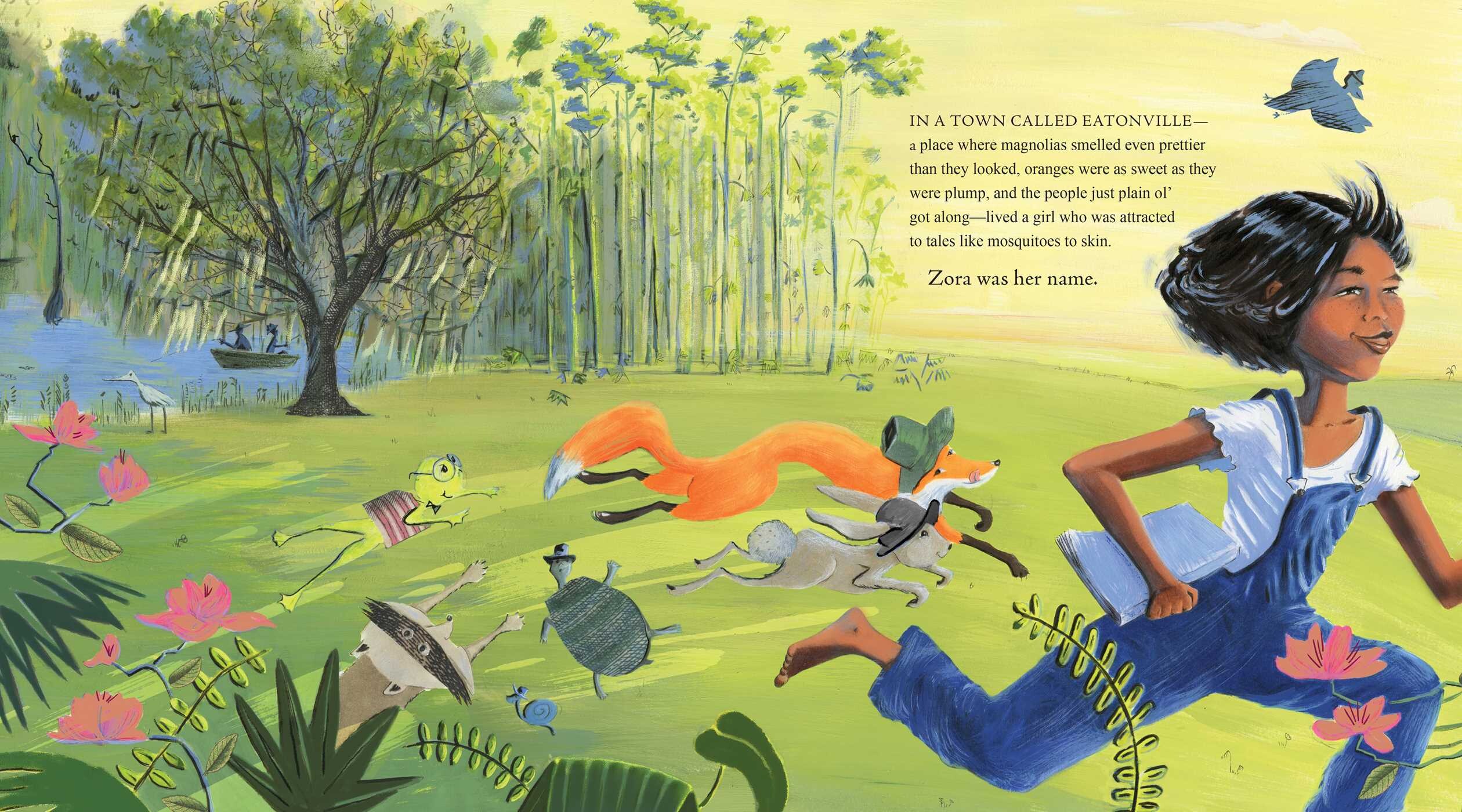
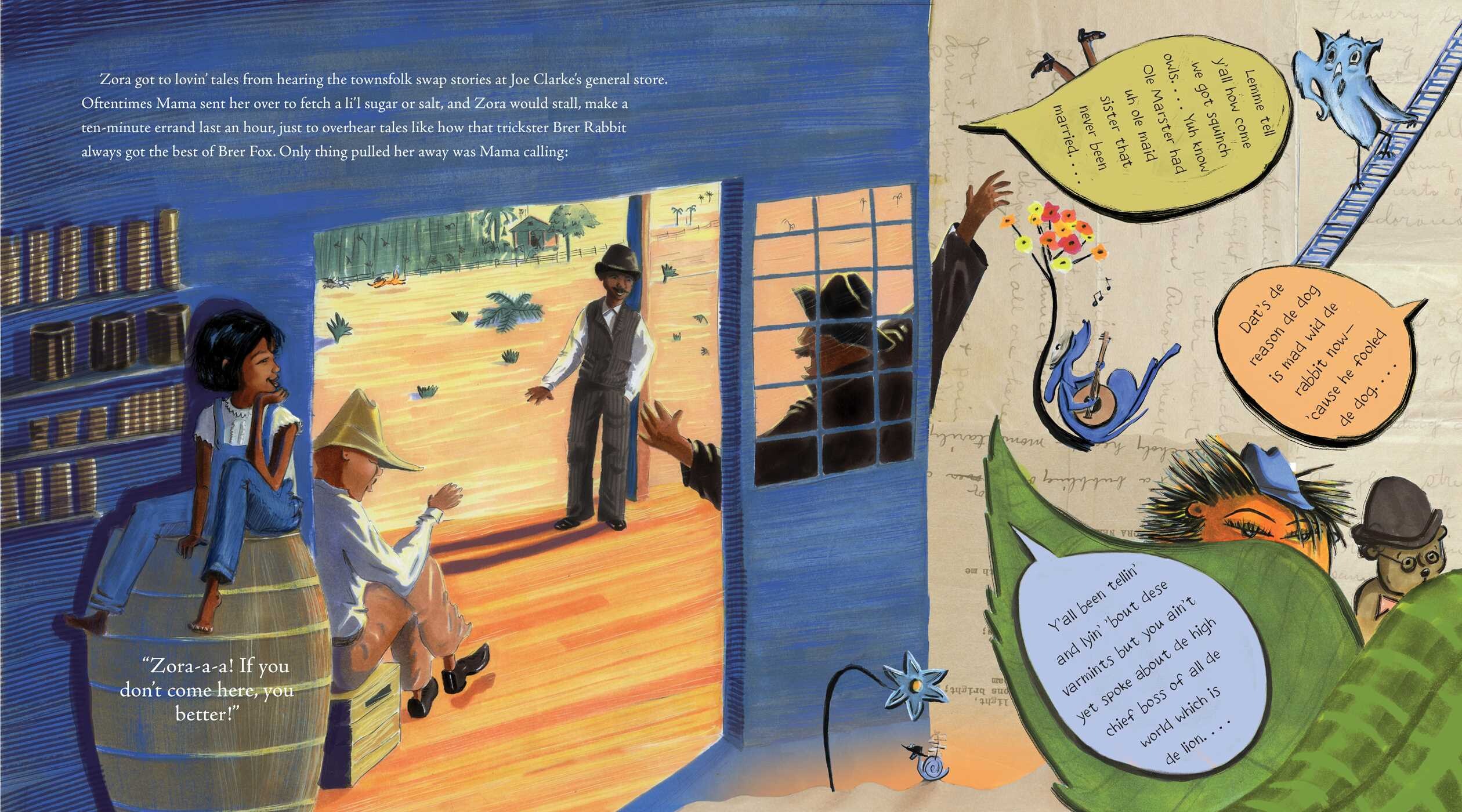
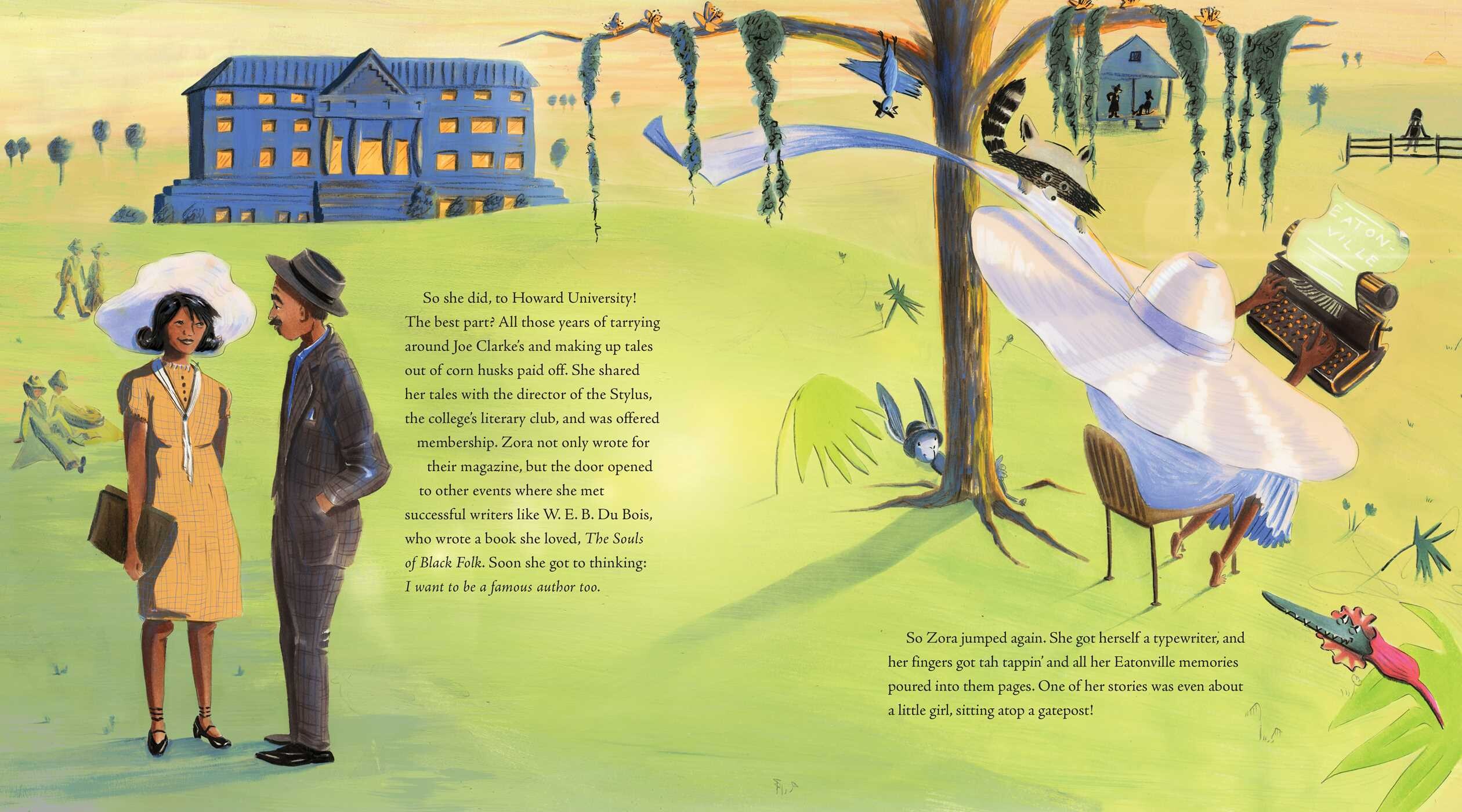
Zora was a girl who hankered for tales like bees for honey. Now, her mama always told her that if she wanted something, “to jump at de sun”, because even though you might not land quite that high, at least you’d get off the ground. So Zora jumped from place to place, from the porch of the general store where she listened to folktales, to Howard University, to Harlem. And everywhere she jumped, she shined sunlight on the tales most people hadn’t been bothered to listen to until Zora. The tales no one had written down until Zora. Tales on a whole culture of literature overlooked…until Zora. Until Zora jumped.

About the Creators:

Alicia D. Williams is the author of Genesis Begins Again, which received a Newbery and Kirkus Prize honors, was a William C. Morris Award finalist, and for which she won the Coretta Scott King – John Steptoe Award for New Talent. A graduate of the MFA program at Hamline University, and an oral storyteller in the African American tradition, she is also a teacher in Charlotte, North Carolina.

Jacqueline Alcántara is the illustrator of the critically acclaimed The Field and Freedom Soup. Her favorite days are spent drawing, painting, writing, and walking her dog. In 2016, she was awarded the inaugural We Need Diverse Books Illustrator mentorship. Find out more at JacquelineAlcantara.com.

Praise: 

*”A lively, joyfully rendered portrait of a literary legend.” – Publisher Weekly, starred review

* “Williams’ narration is a readaloud dream….it will be a joyful guide for folklore enthusiasts” – BCCB, starred review

* “This introduction to an American icon feels just right.” – Kirkus Reviews, starred review

* “A welcome addition to any picture book biography collection.” – School Library Journal, starred review

Review: Zora Neale Hurston has a special place in my heart as Eatonville is right around the corner, and I love the opportunity to be so close to Zora’s home, be inspired by her story, and learn from her. If you are ever here, stop by the Zora Neale Hurston National Museum of Fine Arts!

Alicia D. Williams does a beautiful job capturing the spirit of Zora and showing how truly special she was as a person and story teller. And I loved learning new things about her that I hadn’t known before (like that she graduated from high school at 28 and that she may have been lost to white-washed history if not for Alice Walker). And Alicia’s words mixed with the colorful and active illustrations of Alcántara, Zora is brought to life through the pages of this book.

Teachers’ Tools for Navigation: The publisher provided Curriculum Guide is the best resource for using this book in your classroom:

Discussion Questions: 

  • How are the end pages representative of Zora?
  • How were Zora’s stories important to American literature?
  • Why did the author call Zora a “storycatcher?”
  • How did the author integrate fictional characters and stories within her nonfiction biography of Zora Neale Hurston?
  • Why was some of Zora’s storytelling looked down upon?
  • What does the figurative phrase “reach/jump to the sun” mean?

Flagged Passages: 

Read This If You Love: Zora Neale Hurston, Picture book biographies

Recommended For: 

classroomlibrarybuttonsmall 

Signature

**Thank you to Simon & Schuster for a copy of the book to review!**

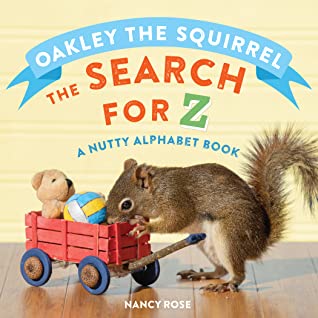
Oakley the Squirrel: The Search for Z: A Nutty Alphabet Book

Share

Oakley the Squirrel: The Search for Z: A Nutty Alphabet Book
Author: Nancy Rose
Anticipated Publication: June 22nd 2021 by Workman Publishing Company

Goodreads Summary: The letter Z is missing! Help little Oakley find it in this charming picture book with photos of real squirrels!

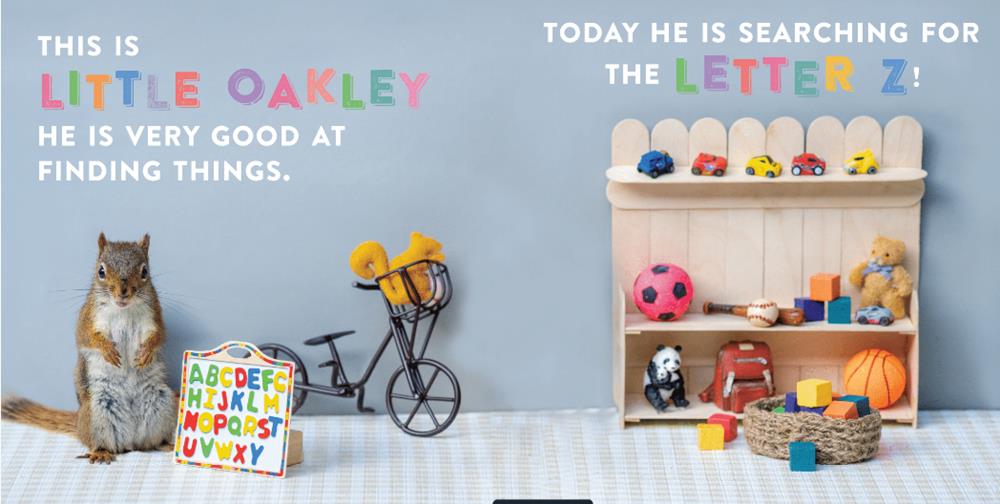
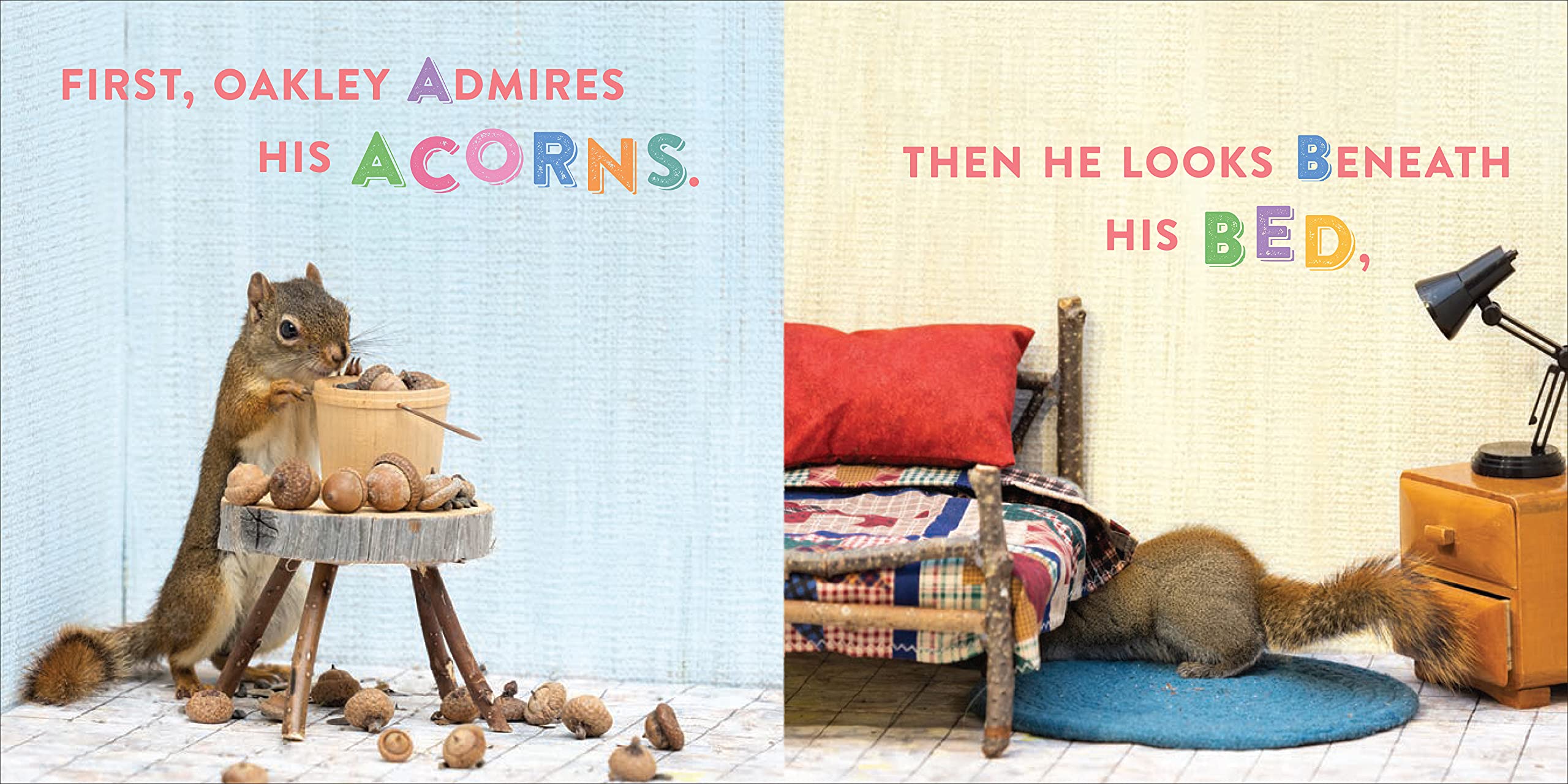
Oakley the Squirrel: The Search for Z is an alphabet book like no other. In it, we meet Little Oakley as he embarks on a quest to find the letter Z. He searches through an alphabet of human objects—looks beneath the Bed, claws through the Closet, digs through Drawers, examines his Easel, and so on. By the time he gets to a basket of yarn, Oakley starts to yawn, and soon falls asleep. And Z—as in, Zzzzzz!—appears!

Review and Teachers’ Tools for Navigation:I wish I had recorded my two-year-old giggling on each page as we read this book. It is a clever way to engage kids and make them think about each letter individually. The photographs are just hysterical. I love squirrels, so I was laughing right along with my son. I’d love to use this book with kids to take photographs to generate their own alphabet books. This would be an incredibly fun class project!

Discussion Questions: 

  • Where are some of the places that Oakley looks for the letter z?
  • Which is your favorite letter page and why?
  • Choose one image and rewrite it. What does Oakley do differently in your alphabet page?

We Flagged: 

Read This If You Love: Nonfiction books about animals; Alphabet books

Recommended For: 

classroomlibrarybuttonsmall readaloudbuttonsmall

RickiSig

**Thank you to Sara at Skyhorse Publishing for providing copies for review!**

Watercress by Andrea Wang, Illustrated by Jason Chin

Share

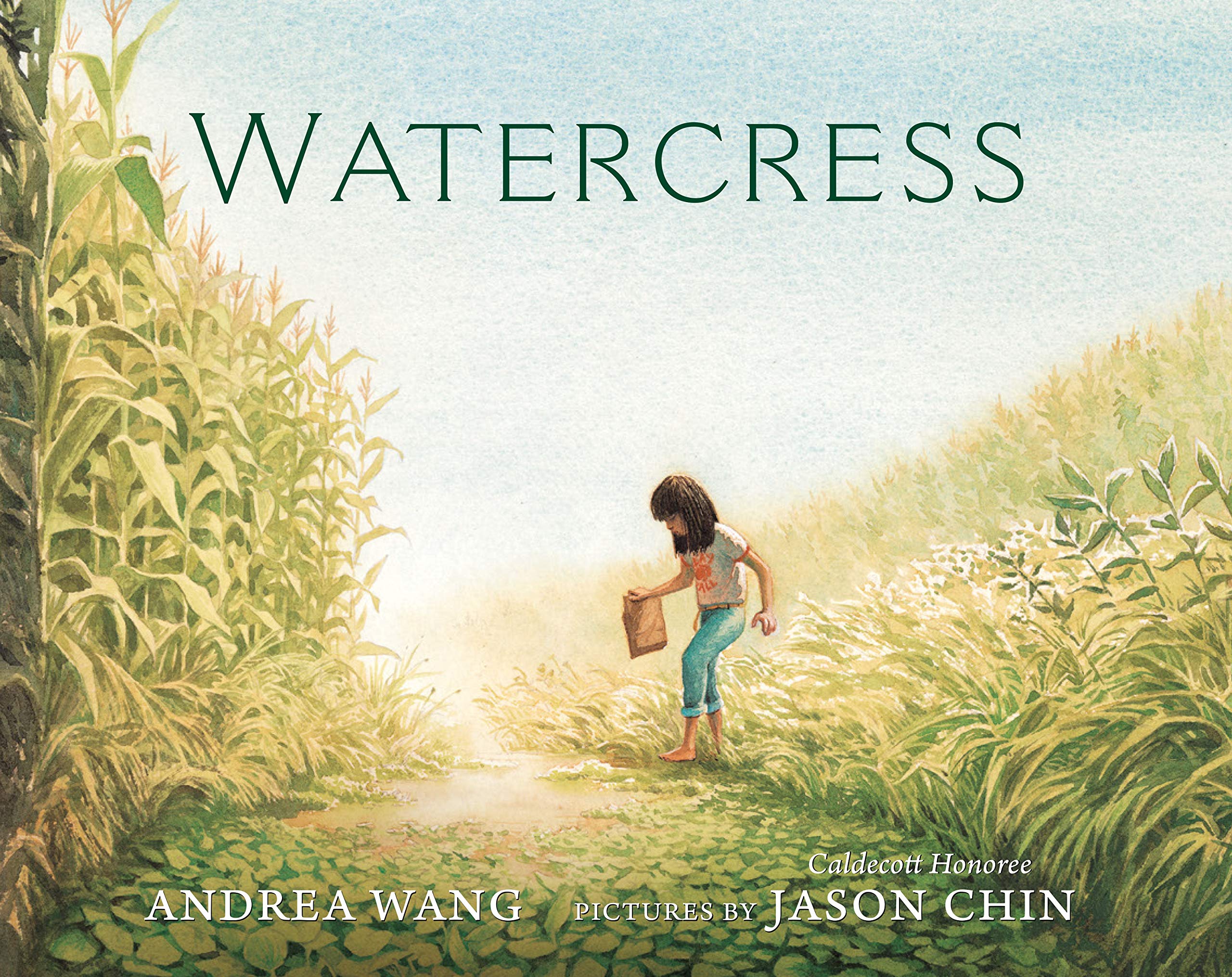
Watercress
Author: Andrea Wang
Illustrator: Jason Chin
Published: March 30, 2021 by Neal Porter Books

Summary: Gathering watercress by the side of the road brings a girl closer to her family’s Chinese Heritage.

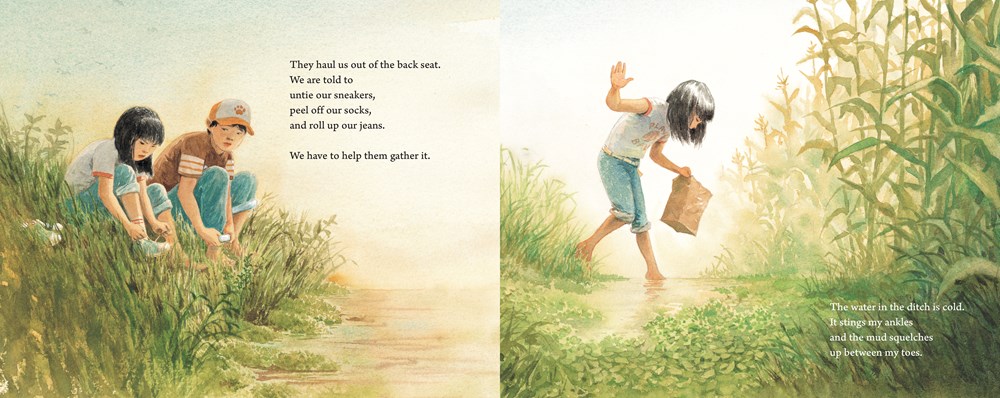
Driving through Ohio in an old Pontiac, a young girl’s parents stop suddenly when they spot watercress growing wild in a ditch by the side of the road. Grabbing an old paper bag and some rusty scissors, the whole family wades into the muck to collect as much of the muddy, snail covered watercress as they can.

At first, she’s embarrassed. Why can’t her family get food from the grocery store? But when her mother shares a story of her family’s time in China, the girl learns to appreciate the fresh food they foraged. Together, they make a new memory of watercress.

Andrea Wang tells a moving autobiographical story of a child of immigrants discovering and connecting with her heritage, illustrated by award winning author and artist Jason Chin, working in an entirely new style, inspired by Chinese painting techniques. An author’s note in the back shares Andrea’s childhood experience with her parents.

A Junior Library Guild Gold Standard Selection!

Ricki’s Review: This book took my breath away. A girl’s family stops by the side of the road, and she is embarrassed as they fill paper bags with muddy watercress and eat it for dinner. Her mother shares a story of her childhood and talks about a brother who has passed on. I will be recommending this book over and over again. The story is stunningly written and captures painful memories that are passed intergenerationally. The author writes that it is “both an apology and a love letter” to her parents. I imagine the story would make her parents very proud. There is a bond between the family that reaches off the pages and pulls readers into the story. I highly recommend this book.

Teachers’ Tools for Navigation: Teachers might use this book to ask students to share moments that they were embarrassed about a family or friend situation. They might then add layers to that story–what do these stories tell? How do these stories reveal layers of their lives?

Discussion Questions: 

  • How does the author write about emotion? What feelings does the narrator have, and how do these feelings change?
  • How are stories passed intergenerationally?
  • What does the narrator learn, and how does this knowledge change her?

Flagged Spread:


Read This If You Love: Fry Bread: A Native American Family Story by Kevin Noble Maillard; A Big Mooncake for Little Star by Grace Lin; Eyes that Kiss in the Corners by Joanna Ho

  classroomlibrarybuttonsmall

**Thank you, Sara, from Holiday House and Pixel+Ink for sending a copy for review!**

Educators’ Guide for The Rock from the Sky by Jon Klassen

Share

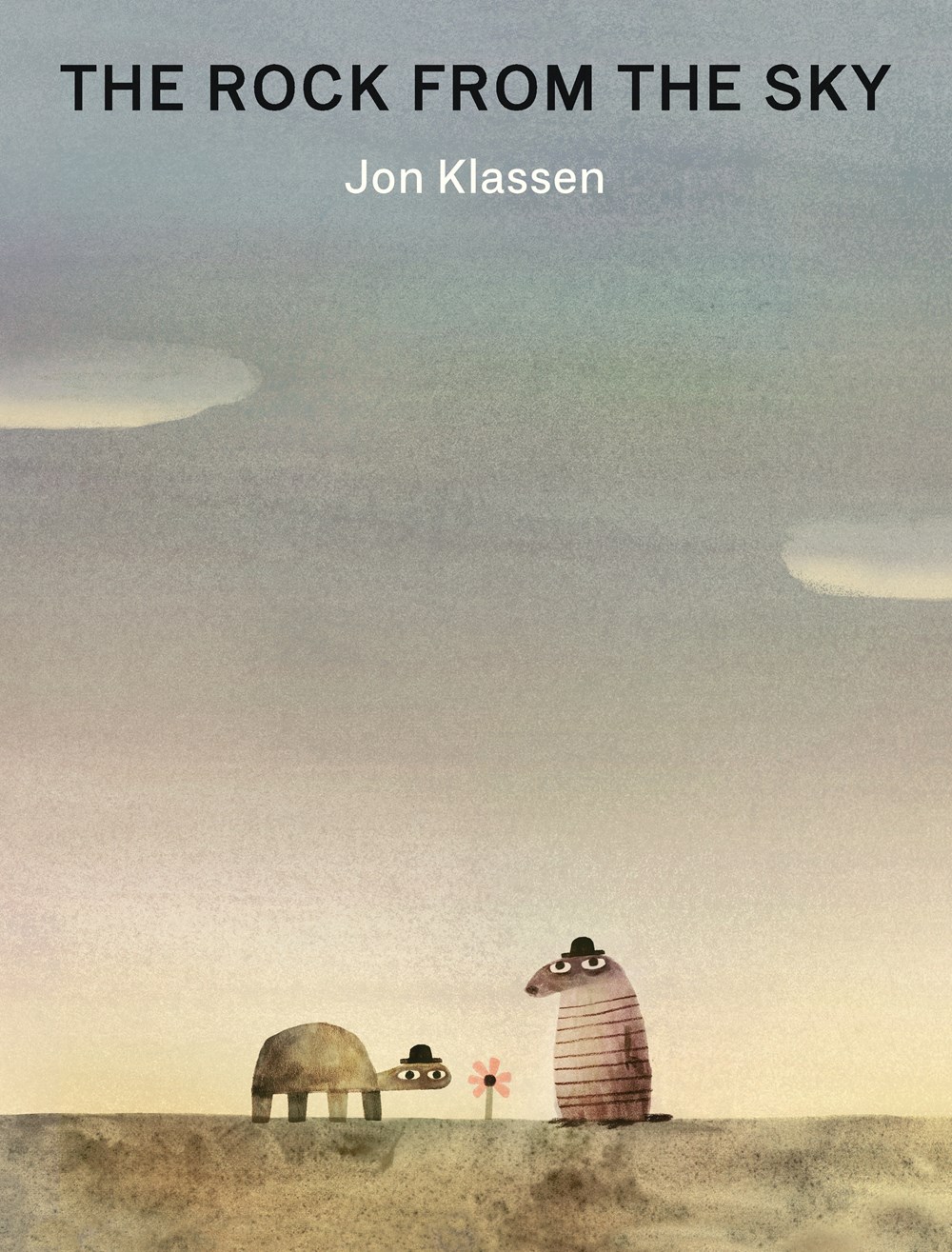
The Rock from the Sky
Author & Illustrator: Jon Klassen
Published: April 13, 2021 by Candlewick Press

Summary: Look up!

Turtle really likes standing in his favorite spot. He likes it so much that he asks his friend Armadillo to come over and stand in it, too. But now that Armadillo is standing in that spot, he has a bad feeling about it . . .

Here comes The Rock from the Sky, a meditation on the workings of friendship, fate, shared futuristic visions, and that funny feeling you get that there’s something off somewhere, but you just can’t put your finger on it.

Teachers’ Tools for Navigation and Discussion Questions: 

Please view and enjoy the teachers’ guide I created for Candlewick Press for The Rock from the Sky:

You can also access the teaching guide here.

You can learn more about The Rock in the Sky on Candlewick’s page.

Recommended For: 

readaloudbuttonsmall classroomlibrarybuttonsmall litcirclesbuttonsmall closereadinganalysisbuttonsmall

Kellee Signature

Author Guest Post: “Using Similes and Metaphors to Spark Conversations about the Power of Empathy” by Michelle Schaub, Author of Kindness is a Kite String

Share

Using Similes and Metaphors to Spark Conversations about the Power of Empathy

One of the most important things we can do as parents and educators is encourage kids to be kind.  Not only does fostering a culture of kindness and empathy create a positive learning environment, but it also improves kids’ sense of well-being and agency. Besides, spreading kindness makes the world a little brighter. And who doesn’t want that?

How can you cultivate kindness, both in the classroom and at home?

One simple way to develop this much needed virtue is by sharing books that model kind behavior. My picture book, Kindness is a Kite String, does just that. The book starts with the words, “Kindness is like sunshine, it starts the day off right” and shows a child hugging his mom. This starts a wave of kindness that ripples through the community, connect diverse groups of people. As readers follow the story, they gather ideas for ways they can lift others with kindness.

Building Connections with Similes and Metaphors

Each action in Kindness is a Kite String is described using a simile or metaphor. For example, “Kindness is an open door to welcome others through,” and “Kindness runs like dominoes. Reach out and tip a tile.” As a writer and teacher, I know that similes and metaphors are powerful tools. They unlock readers’ imaginations and inspire mental pictures. Similes and metaphors build connections that promote understanding. They help kids comprehend something unfamiliar or abstract (like kindness) by comparing it to something they know well (like sunshine or an open door). In this way, similes and metaphors go hand in hand with kindness. When you act with kindness, you also bridge the gap between something familiar (yourself) and something that might seem new or different (others).

Kindness is a Kite String packs a double educational punch. Not only does the book help spark conversations about empathy, but it also provides models of similes and metaphors in action. That’s good news, considering knowledge of figurative language, including similes and metaphors, is part of the ELA Common Core Standards starting in grade three. However, this concept is often introduced with even younger kids.

Kindness is…

How can you use Kindness is a Kite String to reinforce the concept of similes and metaphors?

One way is by creating a collective “kindness poem.” I have found writing collective poems to be a very effective and engaging strategy to use with students. In a collective poem, each child contributes a line according to a provided prompt or rule. Collective poetry is a great warm-up writing activity because it invites all students to participate without the pressure of having to compose an entire poem from the get-go. It’s also an effective way to explore different perspectives on a topic, like kindness.

After reading KINDNESS IS A KITE STRING with your class, take some time to define and review similes and metaphors. The Authors Note at the back of the book will help you do this. Then provide the provide the prompts, “Kindness is  like…”(for similes)  and/or “Kindness is… (for metaphors.) If you’re working with students in person, you can write this prompt on the board. If you’re working with students remotely, try posting the prompt with an online program like Padlet or Flipgrid.  Ask students to think of something that they enjoy doing or something makes them happy. Ask them how this activity or object might relate to kindness. After modeling some possible responses, invite each student to contribute their own simile or metaphor to complete the prompt. String the student responses together and you’ll have a kindness poem to display in your classroom or home.

Here’s an example of a kindness poem I started with second and third graders:

Kindness is
a cuddly kitten-
it makes you feel warm and cozy.

Kindness is like
a trampoline
bouncing happiness from one person to another.

Kindness is
Lego bricks
because kind deeds build on one another.

Kindness is like
a bowl of popcorn
because it’s meant to be shared.

Not only will your kindness poem remind kids to act with kindness, but it will also serve as great student-created examples of similes and metaphors.

Continue the Kindness Chain

There are many other ways Kindness is a Kite String can spark conversations about the power of empathy. The front of the book includes prompts to use before, during, and after reading. For example, one prompt says: “The last line of the book is ‘When you catch it, pass it on.’ Ask your child what kindness they have caught. What can they do to pass it on?” A free Readers Guide, downloadable from my website,  also accompanies the book. It includes activities like a printable Kindness certificates and a kindness journal for kids to log their empathetic actions.

You can continue to reinforce kindness by exploring other recent picture books with themes of empathy, including Evie’s Field Day, by Claire Noland, Be Kind, by Pat Zietlow Miller, The Big Umbrella, by Amy June Bates, and Scribble Stones, by Diane Alber.

I hope I’ve inspired you with some new ways to promote kindness with kids.  After all, as I say at the end of Kindness is a Kite String, “kindness is contagious. When you catch it… pass it on!”
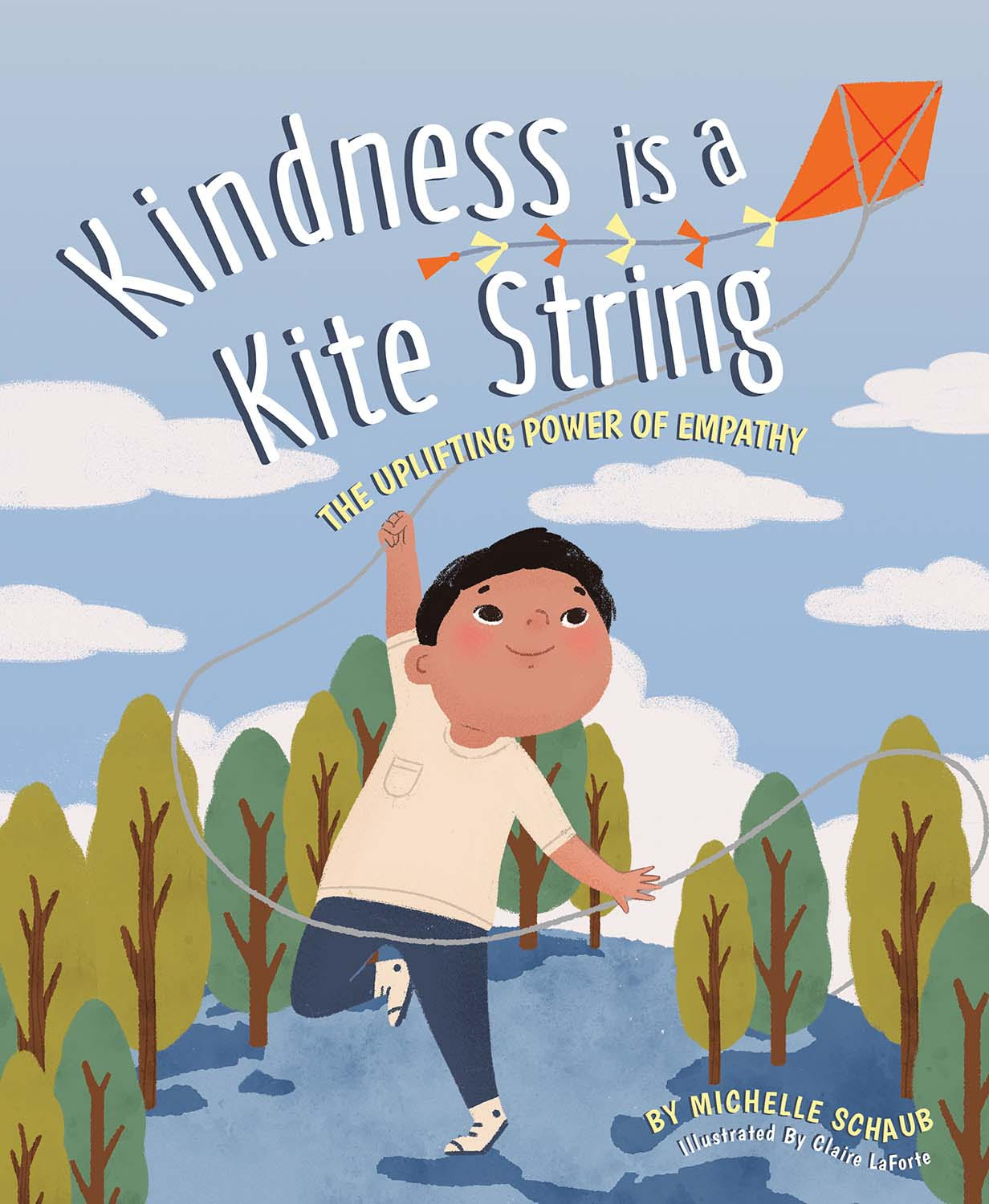
Kindness is a Kite String: The Uplifting Power of Empathy
Author: Michelle Schaub
Illustrator: Claire LaForte
Published April 1st, 2021 by Cardinal Rule Press

About the Book: Cultivating kindness is easy when you try. Spread a little kindness and watch empathy ripple through the community… spreading happiness like sunshine, connecting diverse groups like a footbridge and lifting hope like a kite string.

How can YOU lift others with kindness?

This compelling book illustrates simple, yet impactful ways, to spread kindness and brighten the lives of others. Through poetry, the inspiring words uplift young readers, planting seeds of empathy, kindness and community support.

The best book for positively teaching kindness.

Kindness is a Kite by Michelle Schaub carries the key message of kindness as well as how to teach similes and metaphors supported by the many advocates of positive parenting solutions. It’ll sit comfortably on your shelf alongside other books that focus on the power of kindness.

This book comes with a free Reader’s Guide for children. The guide is available for free download from the publisher website. Lesson plans, activities and discussion questions to allow parents, teachers and caregivers to explore the topic further and deepen comprehension.

READER’S GUIDE

COLORING PAGES

READ-ALOUD

SEE INSIDE THE BOOK

About the Author: Michelle Schaub is an award-winning children’s author and language arts teacher. Her previous books include Dream Big, Little Scientists, Finding Treasure: A Collection of Collections, and Fresh-Picked Poetry: A Day at the Farmers’ Market. Her poems appear in several anthologies, including Great Morning! Poems for School Leaders to Read Aloud. Michelle speaks at conferences on the power of poetry to boost literacy. Michelle lives near Chicago, where she loves finding creative ways to cultivate kindness.

Thank you, Michelle, for writing this book for kids. Kindness and empathy are what is going to change this world–thank you for opening up the conversation more!

Already a Butterfly: A Meditation Story by Julia Alvarez, Illustrated by Raúl Colón

Share

Already a Butterfly: A Meditation Story
Author: Julia Alvarez
Illustrator: Raúl Colón
Published June 16, 2020 by Henry Holt and Co.

Summary: Already a Butterfly is a gentle picture book tale about self-soothing practices and self-confidence beliefs.

With so much to do in so little time, Mari is constantly on the move, flitting from flower to flower, practicing her camouflage poses, and planning for migration. She’s the busiest butterfly around. But does being productive mean she is happy? Mari couldn’t say. The only way she feels like a butterfly is by acting like one. Little does Mari know, the secret to feeling like herself is simply to focus her breath, find her quiet place, and follow her instincts. With the guidance of a thoughtful flower bud, Mari soon learns to meditate and appreciate that she was a butterfly all along.

Acclaimed author Julia Alvarez extolls the importance of mindfulness, reflection, and self-care for young children in this gratifying picture book, stunningly illustrated by award-winning artist Raúl Colón.

About the Author: 

Julia Alvarez is the author of numerous bestselling and award-winning novels including How the García Girls Lost Their Accents and In the Time of Butterflies, collections of poems, and works of nonfiction as well as picture books. She has won the Pura Belpré Award, the Américas Award, the Hispanic Heritage Award in Literature, the F. Scott Fitzgerald Award for Outstanding Achievement in American Literature, and the National Medal of Arts.

Raúl Colón has illustrated several highly acclaimed picture books, including Draw!; the New York Times-bestselling Angela and the Baby Jesus by Frank McCourt; Susanna Reich’s José! Born to Dance; and Jill Biden’s Don’t Forget, God Bless Our Troops. Mr. Colón lived in Puerto Rico as a young boy and now resides in New City, New York, with his family.

Praise:

“Soft, textured illustrations full of floral elements match the gentle quality of the tale. In a world that can’t seem to slow down, this story reminds readers to trust their instincts and breathe.” —Kirkus Reviews

“This is a tale about learning to be joyful in a world that seems to demand more and more of individuals. Young readers will find the prose and the dreamlike pictures of Mari’s journey soothing—and something to meditate on.” —Booklist

“Alvarez pens this introduction to meditation with advisory zeal, focusing on explanations that will appeal to caretakers who seek to support young meditation practitioners. Jewel-toned spreads by Colón provide scope for dreaming: Mari’s distinctive features—her black braids, her elflike shoes, her golden crown—give readers a fantasy heroine to linger over.” —Publishers Weekly

Review: At first glance, Mari seems like the perfect butterfly. She is beautiful, busy, efficient… but is she happy? She is doing what she things she should do but is she embracing who she is? These are the types of questions that this book is asking.

To be honest, reading this book may have hit home more for me than for Trent. The book is about slowing down and taking the time to be happy. Trent is still young and knows how to enjoy time, but it is important for me to show him that I too have time for the small things and also help him continue to do so. But just like the book made me think about passions, being busy, and how we come off, it will do the same for most readers.

I really loved the backmatter as well, learning how the author was inspired by the Mariposa DR Foundation’s Center for Girls and her granddaughters. It truly brought the book together and shows how the ideas within the book can be used in the real world.

Now, take all of this beautifulness in words and story and add in Colón’s beautiful watercolor illustrations that bring Mari to life, and this book clearly is a must have when discussing mindfulness with all ages!

Teachers’ Tools for Navigation: Use Already a Butterfly and the ideas in the “Growing Your Own Wings” backmatter to bring meditation into your classroom. A great day to introduce this would be World Meditation Day which is May 21st!

An extension reflection activity that would be fun is to have students make their own butterfly wings and write items, moments, people, etc. on their wings that make them truly happy. These wings can be a symbol to remind them to cherish those things.

Tips for Mindful Meditation: 

Discussion Questions: 

  • Why did the author choose Mari as the butterfly’s name?
  • How was the author inspired by her time with the Mariposa DR Foundation’s Center for Girls?
  • How could Mari’s story be compared to your life?
  • What did Bud teach Mari?
  • Why was Mari happier in her chrysalis?
  • Do you think what Bud taught Mari will make her happier?

Flagged Passages: 

Read This If You Love: I am Peace by Susan Verde, Calm with the Very Hungry Caterpillar by Eric Carle, My Magic Breath by Nick OrntnerGood Morning Yoga by Miriam Gates

Recommended For: 

classroomlibrarybuttonsmall 

Signature

**Thank you to Barbara at Blue Slip Media for providing a copy for review!**