Blog Tour with Review and Giveaway!: The Leaf Detective: How Margaret Lowman Uncovered Secrets in the Rainforest by Heather Lang, Illustrated by Jana Christy

Share

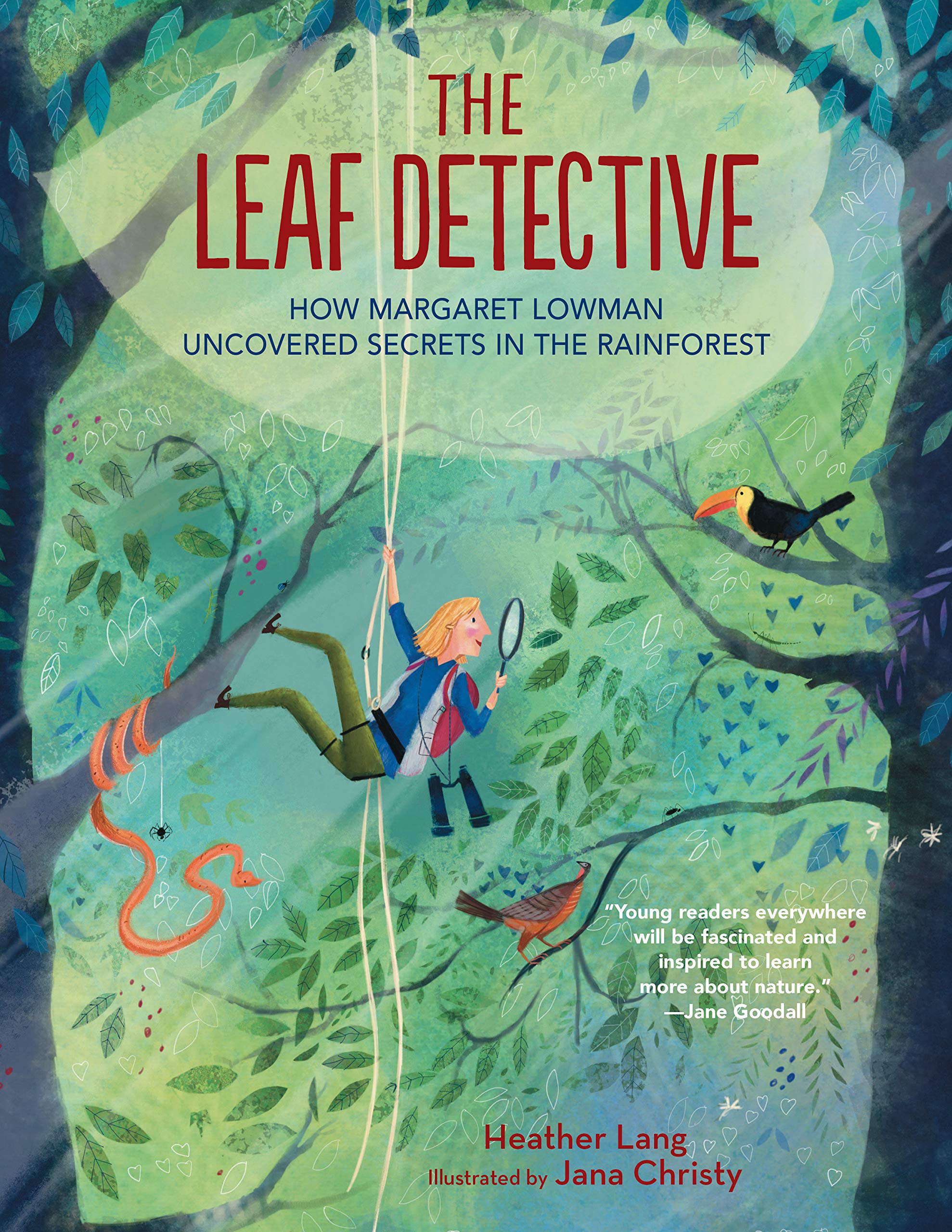
The Leaf Detective: How Margaret Lowman Uncovered Secrets in the Rainforest
Author: Heather Lang
Illustrator: Jana Christy
Published February 9th, 2021 by Calkins Creek

Summary: Meg Lowman was determined to investigate the marvelous, undiscovered world of the rainforest treetops. Meg’s perseverance and creativity allowed her to achieve this goal, but when this fantastic ecosystem started to disappear, Meg needed to act quickly.

Meg Lowman was always fascinated by the natural world above her head. The colors, the branches, and, most of all, the leaves and mysterious organisms living there. As a scientist, Meg set out to climb up and investigate the rain forest tree canopies– and to be the first scientist to do so. But she encountered challenge after challenge. Male teachers would not let her into their classrooms, the high canopy was difficult to get to, and worst of all, people were logging and clearing the forests. Meg never gave up or gave in. She studied, invented, and persevered, not only creating a future for herself as a scientist, but making sure that the rainforests had a future as well. Working closely with Meg Lowman, author Heather Lang and artist Jana Christy beautifully capture Meg’s world in the treetops.

About the Creators: 

Heather Lang loves to write about real women who overcame extraordinary obstacles and never gave up on their dreams. Her award-winning picture book biographies include Fearless Flyer: Ruth Law and Her Flying Machine.

Jana Christy currently lives in the Berkshire Mountains in Massachusetts. She is the illustrator of various titles, including I’m the Big One Now!: Poems about Growing Up. Visit janachristy.wixsite.com/illustrations.

Review: Heather Lang does an amazing job of the layering in this book ensuring to include many different aspects of Margaret (Meg) Lowman’s life including her passion for the environment, challenges of being a woman in the sciences in 1970s and the barriers that came with the institutional sexism, and someone wanting to be innovative yet being shut down left and right.

The narrative of the story is written in beautiful verses mixed with direct quotes from Lowman and extra side bar notes that includes facts and information that help drive the biography. And finally the illustrations, filled with vibrant blues and greens, bring the story and setting to life for the reader.

The back matter includes an author note sharing about Lang’s interest in Lowman and about meeting and interviewing her, and it includes photos of Lowman and Lang! This shows the reader Lang’s research methods and how the quote throughout the book are primary sources.

Teachers’ Tools for Navigation: 

Publisher-provided Educator Guide:

Flagged Passages: 

View two spreads from the book by visiting the publisher’s page:

Book Trailer: 

Read This If You Love: Marjory Saves the Everglades by Sandra Neil Wallace, The Blue Giant by Katie Cottle, Over and Under series by Kate Messner, Swimming with Sharks by Heather Lang, Me…Jane by Patrick McDonnell, The Fantastic Undersea Life of Jacques Cousteau by Dan Yaccarino, The Tree Lady by Joseph H. Hopkins

Recommended For: 

classroomlibrarybuttonsmall 

Giveaway!: 

a Rafflecopter giveaway

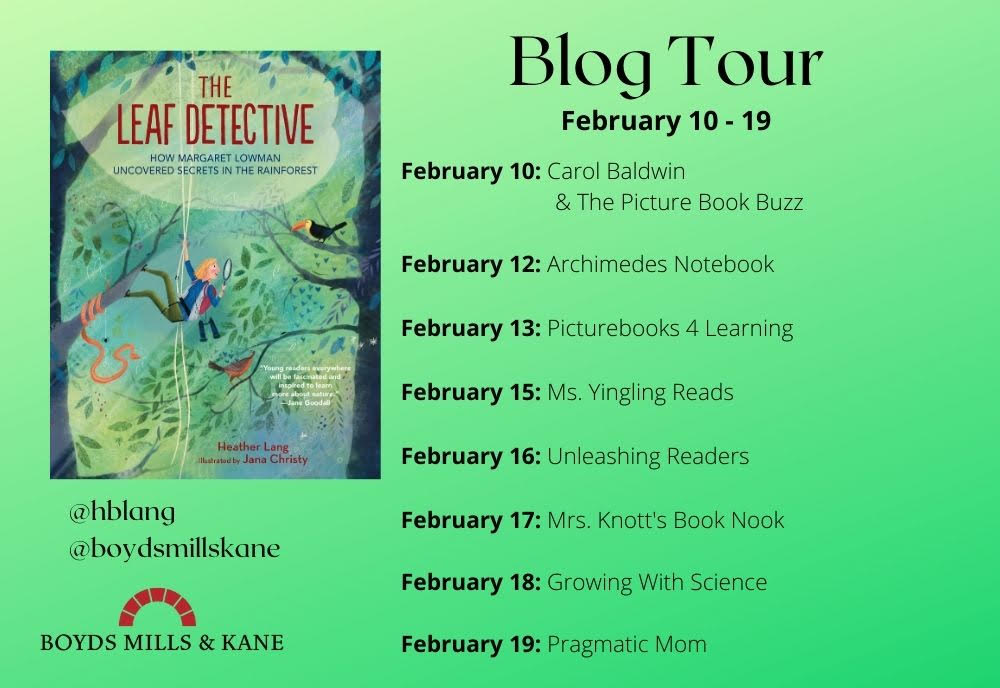
Don’t miss the other stops on the tour!

Signature

**Thank you to Boyds Mills & Kane for providing a copy for review and giveaway!**

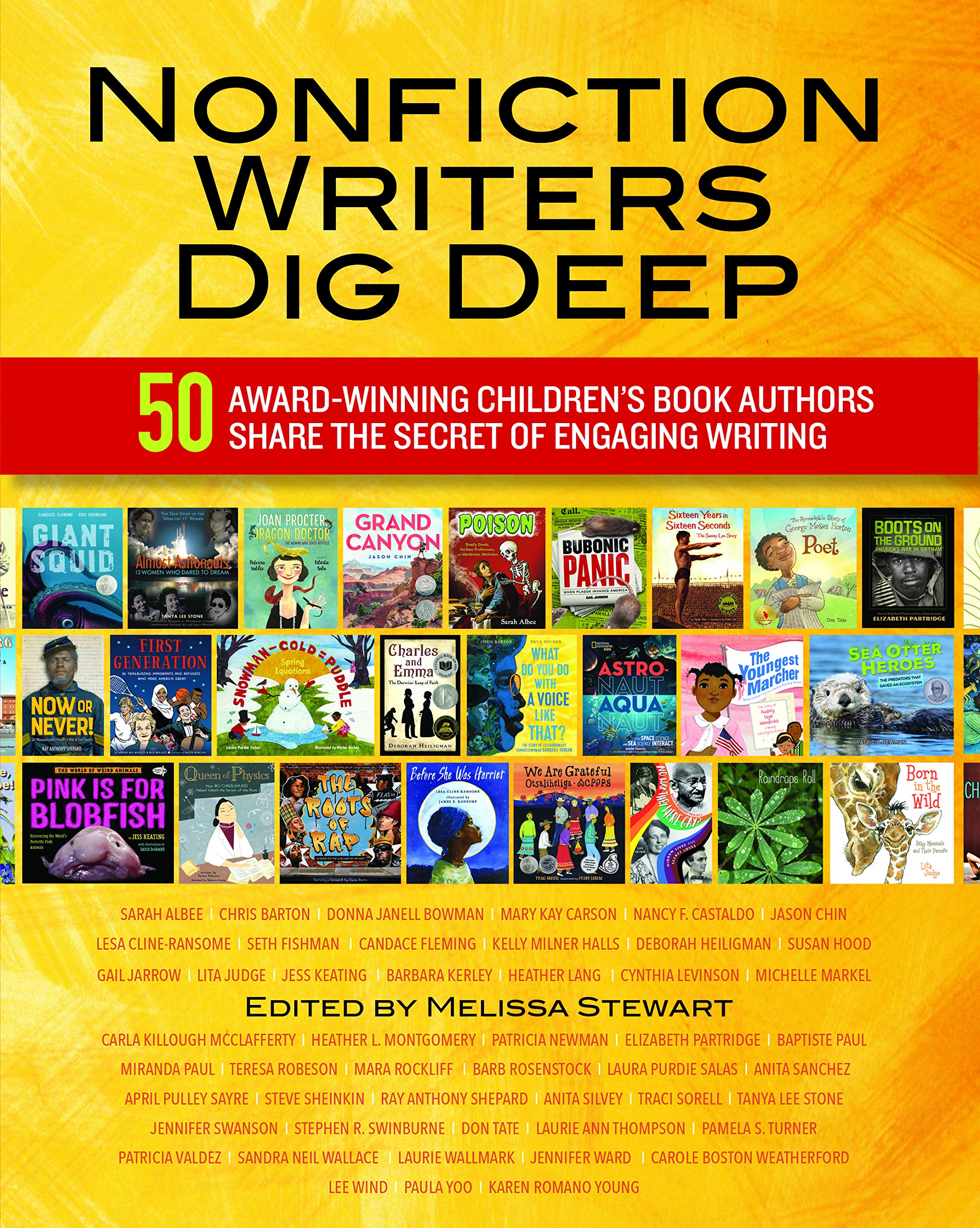
Nonfiction Writers Dig Deep: 50 Award Winning Children’s Book Authors Share the Secret of Engaging Writing Edited by Melissa Stewart

Share


Nonfiction Writers Dig Deep: 50 Award Winning Children’s Book Authors Share the Secret of Engaging Writing
Editor: Melissa Stewart
Published November 2020 by National Council of Teachers of English

Summary: In Nonfiction Writers Dig Deep: 50 Award-Winning Children’s Book Authors Share the Secret of Engaging Writing, some of today’s most celebrated writers for children share essays that describe a critical part of the informational writing process that is often left out of classroom instruction.

To craft engaging nonfiction, professional writers choose topics that fascinate them and explore concepts and themes that reflect their passions, personalities, beliefs, and experiences in the world. By scrutinizing the information they collect to make their own personal meaning, they create distinctive books that delight as well as inform.

In addition to essays from mentor authors, Nonfiction Writers Dig Deep includes a wide range of tips, tools, teaching strategies, and activity ideas from editor Melissa Stewart to help students (1) choose a topic, (2) focus that topic by identifying a core idea, theme, or concept, and (3) analyze their research to find a personal connection. By adding a piece of themselves to their drafts, students will learn to craft rich, unique prose.

100 percent of the proceeds will be divided among the National Council of Teachers for English (NCTE), We Need Diverse Books (WNDB), and the Society of Children’s Book Writers and Illustrators (SCBWI)

About the Author: Melissa Stewart has written more than 180 science books for children, including the ALA Notable Feathers: Not Just for Flying, illustrated by Sarah S. Brannen; the SCBWI Golden Kite Honor title Pipsqueaks, Slowpokes, and Stinkers: Celebrating Animal Underdogs, illustrated by Stephanie Laberis; and Can an Aardvark Bark?, illustrated by Caldecott Honoree Steve Jenkins. She coauthored 5 Kinds of Nonfiction: Enriching Reading and Writing Instruction with Children’s Books (forthcoming) and grades K-2 and 3-5 editions of Perfect Pairs: Using Fiction & Nonfiction Picture Books to Teach Life Science. Stewart maintains the award-winning blog Celebrate Science and serves on the Society of Children’s Book Writers and Illustrators board of advisors. Her highly regarded website features a rich array of nonfiction writing resources.

Contributors: Sarah AlbeeChris BartonDonna Janell BowmanMary Kay CarsonNancy CastaldoJason ChinLesa Cline-RansomeSeth FishmanCandace FlemingKelly Milner HallsDeborah HeiligmanSusan HoodGail JarrowLita JudgeJess KeatingBarbara KerleyHeather LangCynthia LevinsonMichelle MarkelCarla Killough McClaffertyHeather L. MontgomeryPatricia NewmanElizabeth PartridgeBaptiste PaulMiranda PaulTeresa RobesonMara RockliffBarb RosenstockLaura Purdie SalasAnita SanchezApril Pulley SayreSteve SheinkinRay Anthony ShepardAnita SilveyTraci SorellTanya Lee StoneJennifer SwansonStephen R. SwinburneDon TateLaurie Ann ThompsonPamela S. TurnerPatricia ValdezSandra Neil WallaceLaurie WallmarkJennifer WardCarole Boston WeatherfordLee WindPaula YooKaren Romano Young

From Melissa Stewart: “Behind the Book”

The idea for this book traces back to the 2017 National Council of Teachers of English (NCTE) Annual Convention in St. Louis, Missouri, when I was fortunate to participate in a panel titled ‘The Secret of Crafting Engaging Nonfiction’ with two of the most talented children’s nonfiction authors of our time—Candace Fleming and Deborah Heiligman.

During our discussion, moderated by educator and children’s nonfiction enthusiast Alyson Beecher, we dove deeply into what fuels our work and why we routinely dedicate years of our lives to a single manuscript. As we compared our thoughts and experiences, we came to realize something critically important—each of our books has a piece of us at its heart. And that personal connection is what drives us to keep working despite the inevitable obstacles and setbacks.

Several other nonfiction authors attended our presentation, and afterward they praised our insights. That conversation helped us all understand our creative process in a new and exciting way. And it eventually led to the essays in this anthology, which are our way of sharing an important—and often unrecognized and underappreciated—aspect of nonfiction writing with educators and students.

Review and Teachers’ Tools for Navigation: I was star struck seeing all of the authors who had contributed! I was lucky enough to be at the presentation that this book’s seed of an idea started, so when I heard about this book, I knew it would be a book I would need!

This book is all about moving nonfiction writing to an authentic experience. The book is broken into 3 sections to help guide writing instruction:

  • Choosing a Topic
  • Finding a Focus
  • Making is Personal

Within each section there are essays by mentor authors focusing on different aspects of the topic. I loved reading the essays that ranged from a look at how to take an idea and make it grow, about complexities within nonfiction, about the bumps along the way, about the writing process, and everything else you can think of.

Then the last part of the chapter is In the Classroom which helps tie the essays all together with how to take it to our students.

This book is written specifically with teachers in mind–it is such an amazing resource!

Video about the Book: https://melissa-stewart.com/books/teachers/bk_nonfiction_writers_dig_deep.html

Read This If You Love: Teaching authentic nonfiction writing

Recommended For: 

Signature

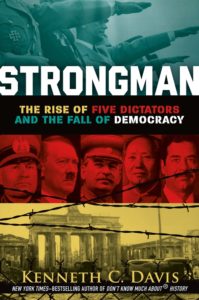
Author Q&A with Kenneth C. Davis, Author of Strongman: The Rise of Five Dictators and the Fall of Democracy

Share

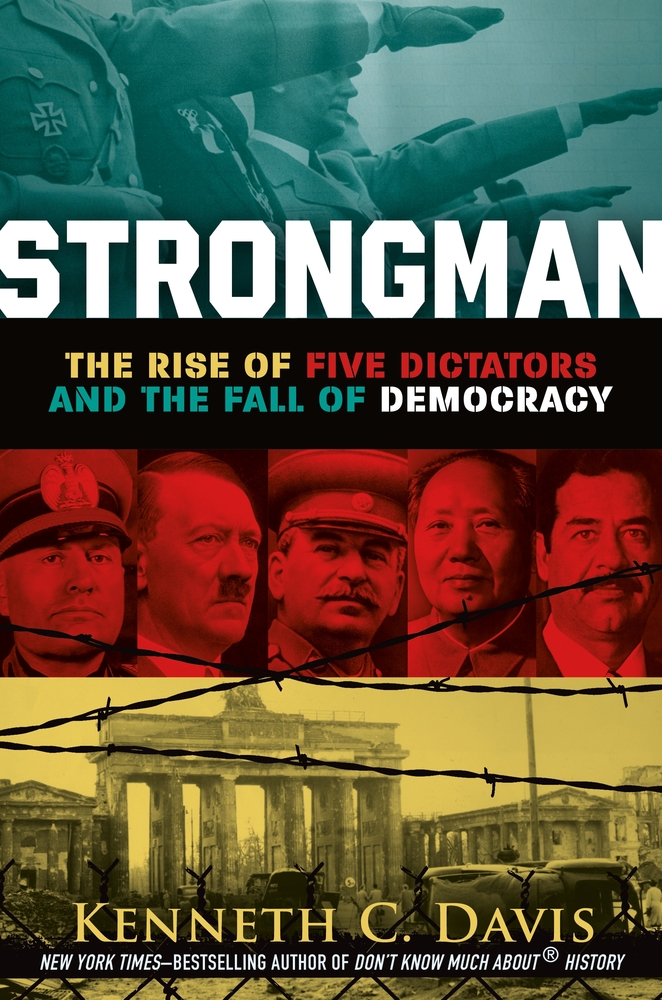
Strongman: The Rise of Five Dictators and the Fall of Democracy
Author: Kenneth C. Davis
Published October 6th, 2020 by Henry Holt and Co.

About the Book: From the bestselling author of the Don’t Know Much About books comes a dramatic account of the origins of democracy, the history of authoritarianism, and the reigns of five of history’s deadliest dictators.

What makes a country fall to a dictator? How do authoritarian leaders—strongmen—capable of killing millions acquire their power? How are they able to defeat the ideal of democracy? And what can we do to make sure it doesn’t happen again?

By profiling five of the most notoriously ruthless dictators in history—Adolf Hitler, Benito Mussolini, Joseph Stalin, Mao Zedong, and Saddam Hussein—Kenneth C. Davis seeks to answer these questions, examining the forces in these strongmen’s personal lives and historical periods that shaped the leaders they’d become. Meticulously researched and complete with photographs, Strongman provides insight into the lives of five leaders who callously transformed the world and serves as an invaluable resource in an era when democracy itself seems in peril.

Q&A

Q1. What led you to choose this topic and this audience (teens) for your new book?

A1.   I have been writing about history for some thirty years and was always fairly optimistic about the future of America. In spite of the flaws I have catalogued in my books, I always believed in the United States as the “last, best hope on earth”—Lincoln’s words—and that its democratic system still moved towards more progress.

But something has changed. And for some time now, I have been concerned that democracy, at home and abroad, was under assault. That is not only sad but dangerous. I felt I had to tell the story of these dictators and how quickly democracy can vanish. It is meant as a warning, a cautionary tale for our time.

On the question of writing for teens, let me first say that I think my books aimed at younger readers are not that different from my earlier work aimed at older adults. In fact, many older readers don’t know these are “Young Adult” books. I try and write for everyone in an accessible style that welcomes the reader, older or younger.

I started writing for younger readers several years ago because I have spoken to so many of them in classrooms over time and came away impressed by their curiosity, engagement, and interest in history. But I wanted to deliver a message to those young people that democracy can’t be taken for granted and that they have a real stake in protecting our rights and freedoms.

Q2.   What is the key takeaway you hope that young people get from reading it?

A2.   There are several key issues at work in this book and, I would say, all of my work. First is that history is not a collection of facts—dates, battles, speeches, laws – but real stories about real people doing real things. When we read about history that way, it becomes far more compelling and connected to our own lives.

Next is that we read and learn from these accounts to understand who we are and how we got here. Part of that idea is the story of how enormous sacrifices have been made in the name of rights and progress—from abolition to suffrage, civil rights, and fair labor laws. That often comes from the bottom up, not the top down, which means people without a vote still had a voice.

It is also a book that asks hard questions about what people are willing to do in following a leader. And that brings me to my earlier point: Democracy is not a spectator sport. We must protect it if we think it is worth keeping.

Q3.   What was the hardest part about writing the book?

A3.   I actually write about that in the closing words of the book. This was, in many ways, an extremely difficult project. I have written about many hard and awful events and periods in the past, including the stories of racial slavery I told in my earlier book, In the Shadow of Liberty.

But describing the levels of cruelty, inhumanity, and indecency are unavoidable in writing the history of the Strongmen –the murderous dictators whose stories I tell. We can’t sugarcoat that history. Or ignore it. That made this project a true test of my fundamental belief in the general goodness of humanity. I had to write about the vast numbers of people who were complicit in the genocidal crimes of a Strongman like Hitler or Stalin.

Q4.   If a teacher asked for recommendations for teaching your book, what would you suggest?

A4.   My writing career has mostly been about asking questions and presenting facts and evidence in real stories. I think that teachers –especially those in Social studies—can follow that general premise with their students. Ask questions and allow students to find answers through accurate, documented evidence.

This approach of getting students to do real research, assess evidence, check sources, and make considered judgments based on facts is the essence of thinking for themselves. It is what today’s education must be about, especially in this era as facts and truth are under such assault.

In a more practical way, this book should fit into a number of curriculum areas – 20th century history; the Holocaust; civics and government; ethics, religion, and basic philosophy; economics; sociology and the behavior of crowds. I have always been a proponent of crossing disciplines.

Q5.   What other resources do you feel would complement STRONGMAN in a curriculum?

A5.   I would start with reputable journalism, including newspapers and websites that accurately document their reporting. We must establish the clear connection between history and the headlines. That will also help develop those “media literacy” skills that all of us –not just students—need to negotiate the world we live in.

Certainly, there are also a great many other books that could be placed beside Strongman –biographies, war narratives, Holocaust and other memoirs from each of these eras. I’ve included many of them in the Bibliography of Strongman.

I think you can include some historical fiction –cautiously reminding students that novels are not always accurate depictions of events. There are also a wealth of documentary films and series, often starting with what is offered from PBS.

Finally, I did not set out to write three books as a “set” – but I think that my earlier books can be read alongside Strongman. I think that In the Shadow of Liberty provides more context for how the history of slavery developed alongside American democracy. More Deadly Than War provides background for the role World War I played in shaping the world that produced the dictators I profiled in Strongman. And that is how we must read history – as a long, complex, series of connected narratives, not a list of events that are unrelated.

About the Author: Kenneth C. Davis is the New York Times–bestselling author of America’s Hidden History and Don’t Know Much About® History, which gave rise to the Don’t Know Much About® series of books for adults and children. He is also the author of the critically acclaimed In the Shadow of Liberty, which was an ALA Notable Book and a finalist for the YALSA Award for Excellence in Nonfiction, as well as More Deadly Than War, which was named a Washington Post Best Children’s Book of the Month. A frequent guest on national television and radio and a Ted-Ed Educator, Davis lives in New York City.

Ken also offers free classroom visits to teachers through his website, which might be of interest to include: https://dontknowmuch.com/for-teachers/

Thank you, Kenneth, for sharing the truth of history with our students!

Nonfiction History Books for Kids: The Extraordinary Lives Series by Kane Miller Books

Share

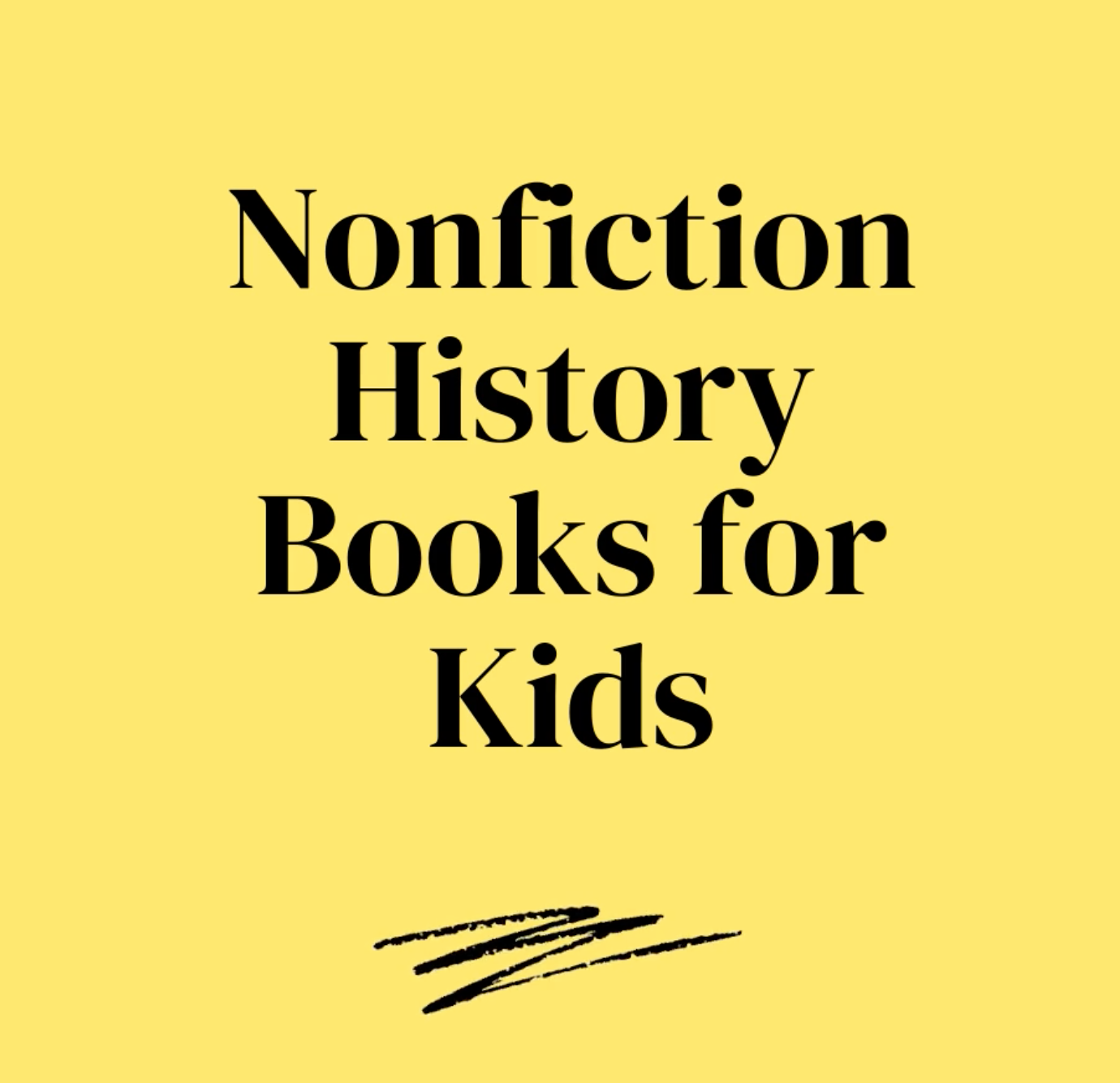
I am thrilled to introduce a new series that I am hosting, which explores nonfiction history books for kids. This is all we read in our house, and I’ve learned so much, so I am jazzed to dive deeply into some of the texts on the blog.

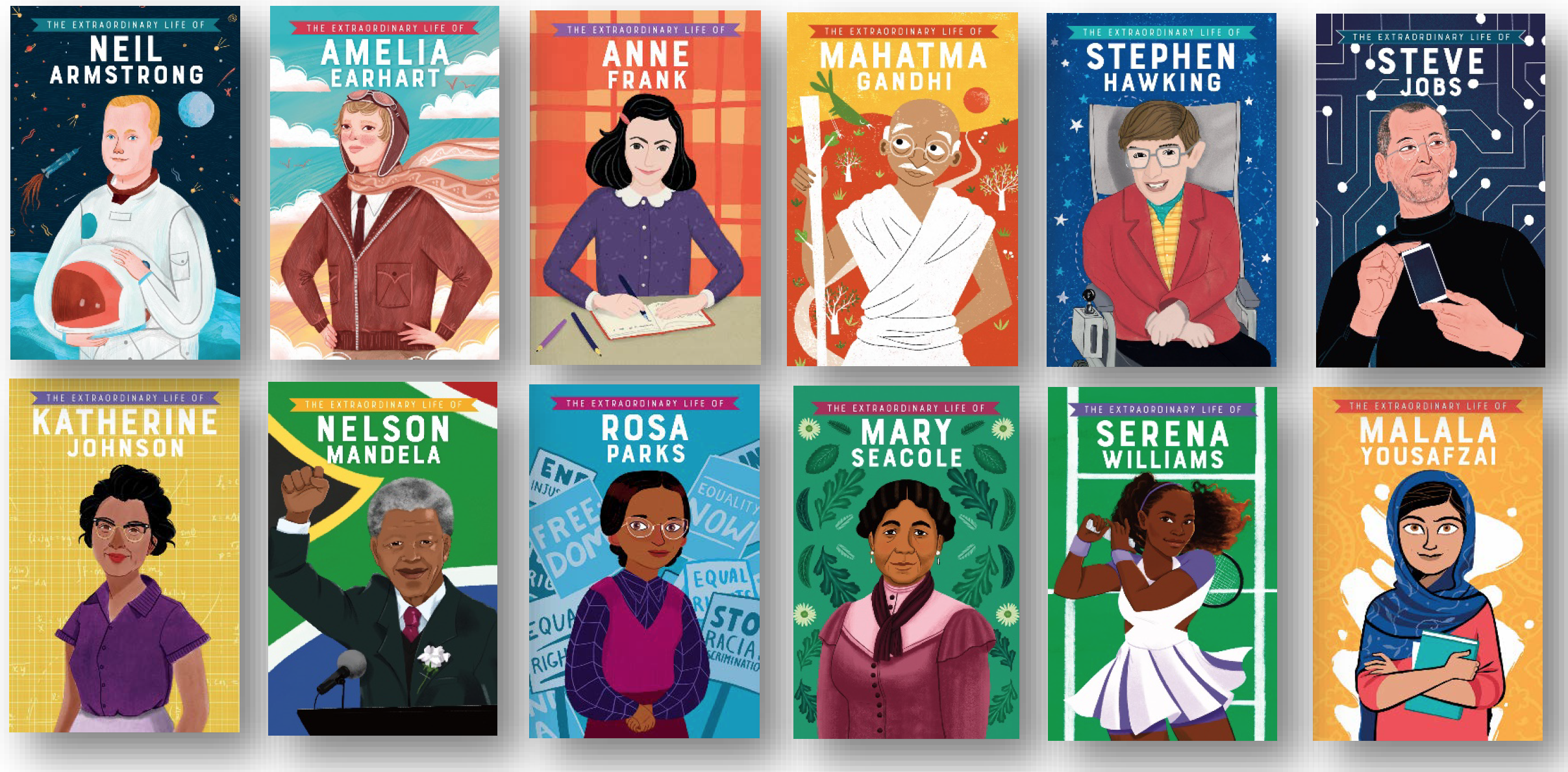
I want to start off by sharing a phenomenal series by Kane Miller: The Extraordinary Life of… series. You’ll want to get your hands on these.

Summary: A bold new series for young readers focusing on the lives of inspirational historical and modern figures.

Review: We have fallen in love with the Extraordinary Lives series. My first grader can’t get enough nonfiction. He could spend a full 12-hour day looking through the nonfiction section of the library. He devoured information about the election, reads history books that are above his age range, and just asks for more, more, more. When I learned about the Extraordinary Lives series, I knew it would be a good fit. What I didn’t realize was that my preschooler and I would get just as much joy from the series as my first grader.

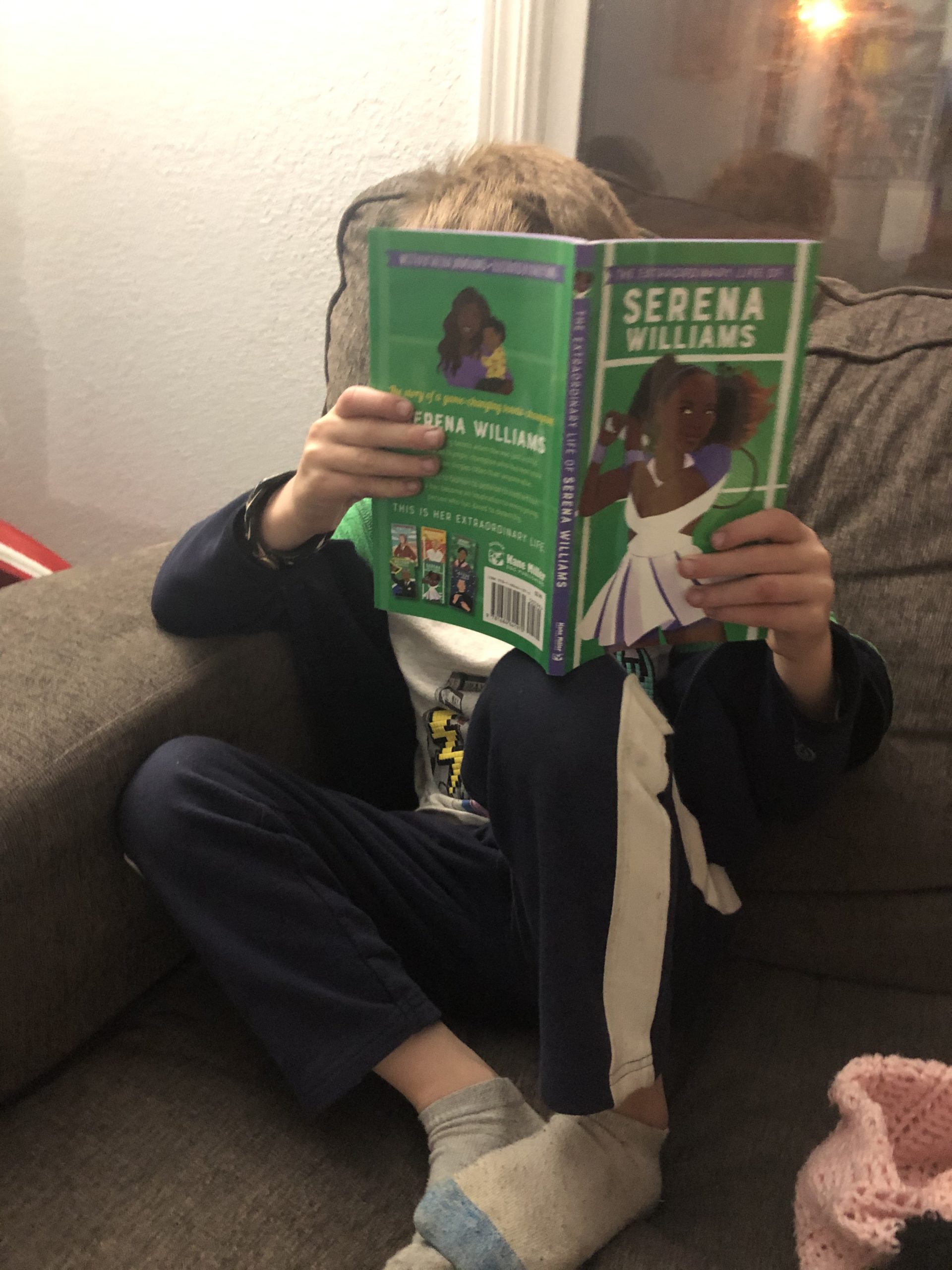
Here’s one picture I caught of my son reading them:

Here’s a closer look at the books:

PDF Loading...

Teachers’ Tools for Navigation: These books would be wonderful for use in book groups. I would be thrilled if my kids were in a classroom in which the teacher allowed them to choose the text of a person they were interested in studying. For instance, I LOVED learning about Mary Seacole. That particular book really captured me (although they were all fascinating to read). My sons each had their own favorites, and I imagine this would be the case in a classroom. Students might then present to their peers to teach about the person they chose. Choice is so important in the classroom, and this series offers such wonderful opportunities for learning.

Discussion Questions: 

  • Which book did you choose and why?
  • What did you learn?
  • How did the author create engaging content to help you learn more about the person?

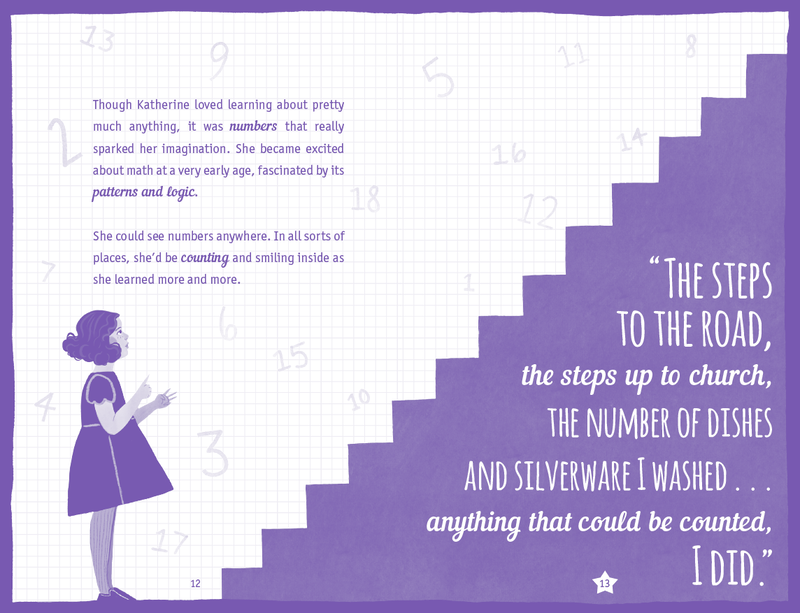
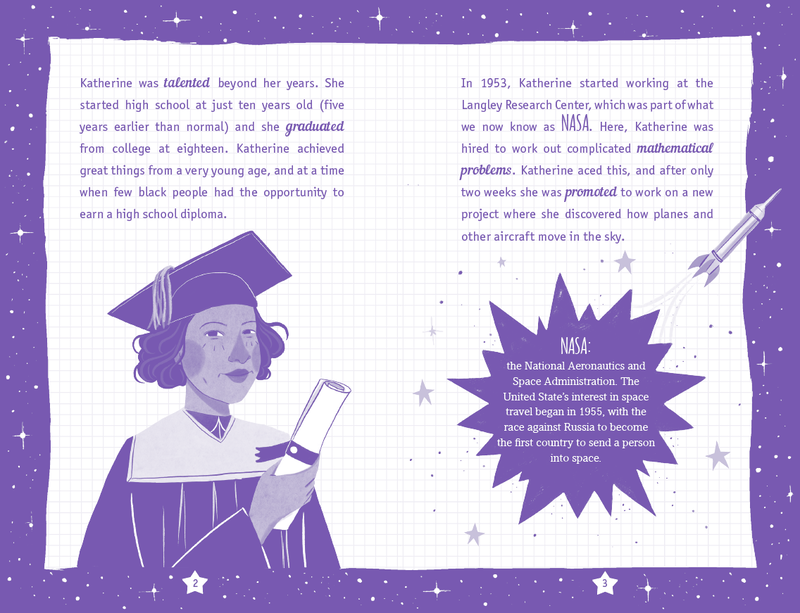
Flagged Passage from the Katherine Johnson Text: 

Read This If You Love: Nonfiction books, history books, biographies, Hidden Figures by Margot Lee Shetterly, Schomburg: The Man Who Built the Library by Carole Boston Weatherford, Radiant Child: The Story of Young Artist Jean-Michel Basquiat by Javaka Steptoe, Duke Ellington: The Piano Prince and His Orchestra by Andrea Davis Pinkney, We March by Shane W. Evans, Harlem’s Little Blackbird: The Story of Florence Mills by Renee Watson, Freedom in Congo Square by Carole Boston Weatherford

Recommended For: 

  classroomlibrarybuttonsmall

Educators’ Guide for Leave It to Abigail: The Revolutionary Life of Abigail Adams by Barb Rosenstock, Illustrated by Elizabeth Haddeley

Share

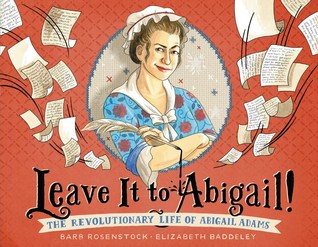
Leave It to Abigail!: The Revolutionary Life of Abigail Adams
Author: Barb Rosensock
Illustrator: Elizabeth Haddeley
Published: February 4th, 2020 by Little, Brown and Company

Summary: In this inspiring tribute, award-winning author Barb Rosenstock and New York Times bestselling artist Elizabeth Baddeley tell the true story of one of America’s greatest founding mothers: Abigail Adams.

Everyone knew Abigail was different.

Instead of keeping quiet, she blurted out questions. Instead of settling down with a wealthy minister, she married a poor country lawyer named John Adams. Instead of running from the Revolutionary War, she managed a farm and fed hungry soldiers. Instead of leaving the governing to men, she insisted they “Remember the Ladies.” Instead of fearing Europe’s kings and queens, she boldly crossed the sea to represent her new country. And when John become President of the United States, Abigail became First Lady, and a powerful advisor.

Leave it to Abigail–an extraordinary woman who surprised the world.

Teachers’ Tools for Navigation and Discussion Questions: 

Please view and enjoy the official educators’ guide for Leave It to Abigail (created by me!):

You can also access the teaching guide here.

You can learn more about Fight of the Century here.

Barb Rosenstock also created two other resources for educators:
A Pinterest Board
A Text Set

Recommended For: 

readaloudbuttonsmall classroomlibrarybuttonsmall litcirclesbuttonsmall closereadinganalysisbuttonsmall

Kellee Signature

William Still and His Freedom Stories: The Father of the Underground Railroad by Don Tate

Share

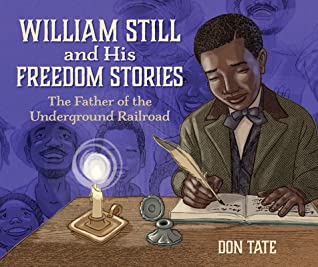
William Still and His Freedom Stories: The Father of the Underground Railroad
Author & Illustrator: Don Tate
Publication Date: November 1, 2020 by Peachtree Publishing Company

Summary: You might be familiar with Harriet Tubman and other key leaders of the Underground Railroad, but do you know about the Father of the Underground Railroad?

William Still’s parents escaped slavery but had to leave two of their children behind, a tragedy that haunted the family. As a young man, William went to work for the Pennsylvania Anti-Slavery Society, where he raised money, planned rescues, and helped freedom seekers who had traveled north. And then one day, a strangely familiar man came into William’s office, searching for information about his long-lost family. Could it be?

Motivated by his own family’s experience, William began collecting the stories of thousands of other freedom seekers. As a result, he was able to reunite other families and build a remarkable source of information, including encounters with Harriet Tubman, Henry Box Brown, and William and Ellen Craft.

Don Tate brings to life the incredible, stranger-than-fiction true story of William Still’s life and work as a record keeper of enslaved people who had fled to freedom. Tate’s powerful words and artwork are sure to inspire readers in this first-ever picture book biography of the Father of the Underground Railroad.

About the Author: DON TATE is the award-winning illustrator of numerous books for children, including Carter Reads the Newspaper, and is the author and illustrator of Poet: The Remarkable Story of George Moses Horton for  which he won the Ezra Jack Keats New Writer Award. He is also the co-contributor to the Brown Bookshelf, a blog designed to raise awareness of African Americans writing for young readers. He lives in Austin, Texas. Visit his website at www.dontate.com.

Review: I think history education is one of the ways I was let down as a kid, so I adore when I learn about a piece of history or a historical figure that we should all know about but has been left out of “chosen” history.

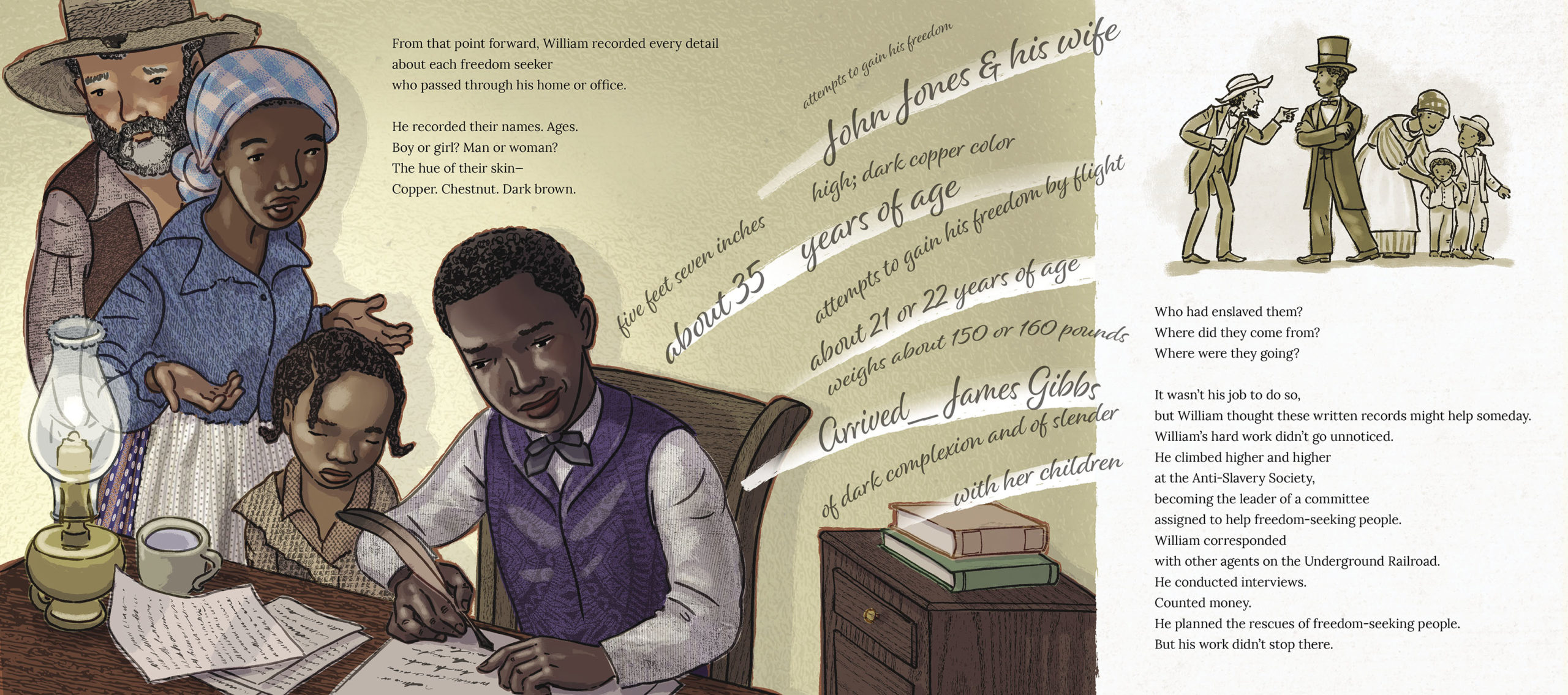
William Still was a huge part of abolitionism, the Underground Railroad, and the history of freed enslaved Americans. Based on Don Tate’s story, I learned that his transcription of the oral history of freedom seekers is how we know about many of the stories that are shared including Harriet Tubman’s and Henry Brown’s.

Don Tate’s book beautifully illustrates through his artwork and words the power of William Still and his impact on our history. We are lucky to have this book out in the world!

Teachers’ Tools for Navigation: 

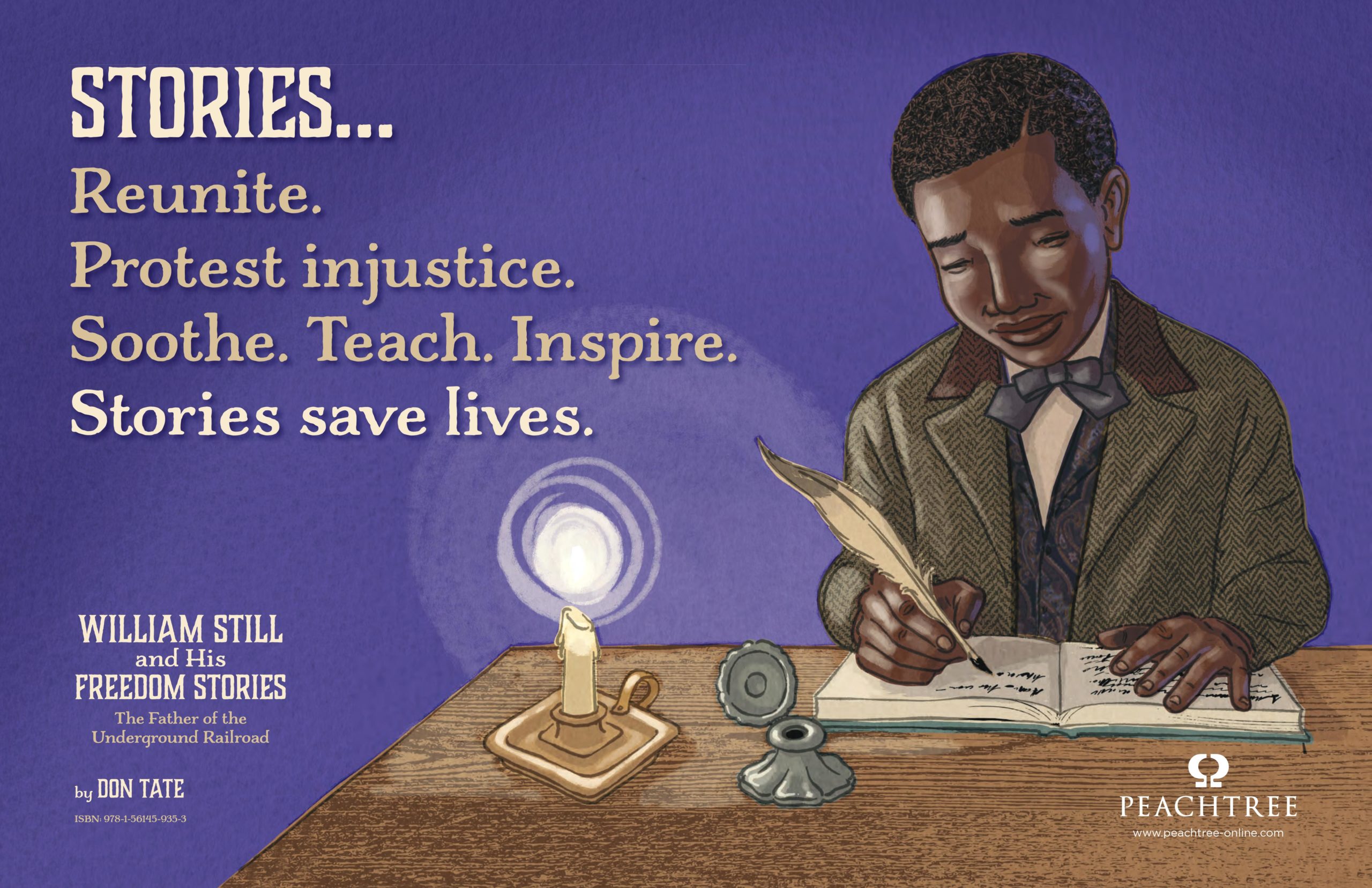
Peachtree Publishing has provided a downloadable poster which I love!

https://peachtree-online.com/wp-content/uploads/2020/03/William-Still-and-His-Freedom-Stories_poster.pdf

Flagged Passages: 

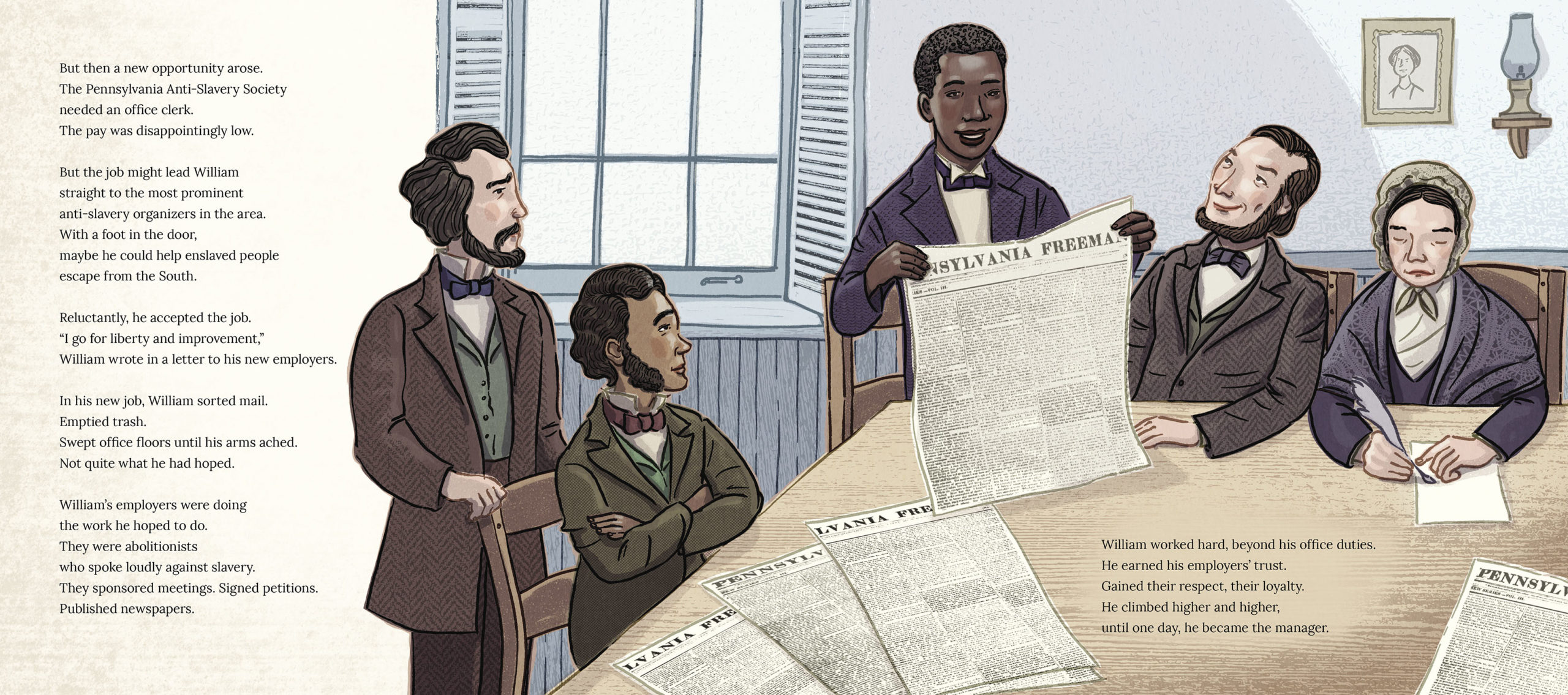
Read an excerpt of the book here: https://peachtree-online.com/wp-content/uploads/2020/05/WilliamStillandHisFreedomStoriesExcerpt.pdf 

Read This If You Love: History, specifically the Civil War, Emancipation, Underground Railroad; Don Tate’s books

Recommended For: 

classroomlibrarybuttonsmall 

Signature

**Thank you to Elyse at Peachtree for providing a copy for review!**

Educators’ Guide for Fight of the Century: Alice Paul Battles Woodrow Wilson for the Vote by Barb Rosenstock, Illustrated by Sarah Green

Share

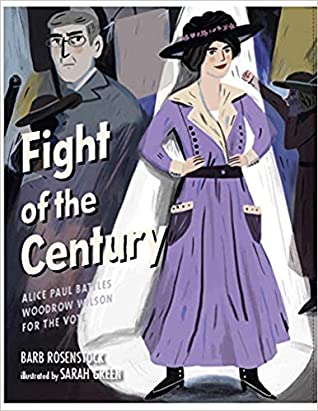
Fight of the Century: Alice Paul Battles Woodrow Wilson for the Vote
Author: Barb Rosensock
Illustrator: Sarah Green
Published: February 25th, 2020 by Calkins Creek

Summary: The fight for women’s suffrage between women’s rights leader Alice Paul and President Woodrow Wilson is presented as a four-round boxing match in this nonfiction picture book.

When Woodrow Wilson was elected President, he didn’t know that he would be participating in one of the greatest fights of the century: the battle for women’s right to vote. The formidable Alice Paul led the women’s suffrage movement, and saw President Wilson’s election as an opportunity to win the vote to women. She battered her opponent with endless strategic arguments and carefully coordinated protests, calling for a new amendment granting women the right to vote. With a spirit and determination that never quit–even when peaceful protests were met with violence and even when many women were thrown in jail–Paul eventually convinced President Wilson to support her cause, changing the country forever.

Teachers’ Tools for Navigation and Discussion Questions: 

Please view and enjoy the official educators’ guide for Fight of the Century (created by me!):

You can also access the teaching guide here.

You can learn more about Fight of the Century here.

Barb Rosenstock also created two other resources for educators:
A Pinterest Board
A Text Set

Recommended For: 

readaloudbuttonsmall classroomlibrarybuttonsmall litcirclesbuttonsmall closereadinganalysisbuttonsmall

Kellee Signature