Earth Day Recommended Reads: Gaia Warriors by Nicola Davies & 31 Ways to Change the World by 4,386 Children, We Are What We Do, and YOU!

Share

NFPB2016

Nonfiction Wednesday

Nonfiction Picture Book Wednesday is hosted by Kid Lit Frenzy and was started to help promote the reading of nonfiction texts. Most Wednesdays, we will be participating and will review a nonfiction text (though it may not always be a picture book).
Be sure to visit Kid Lit Frenzy and see what other nonfiction books are shared this week!
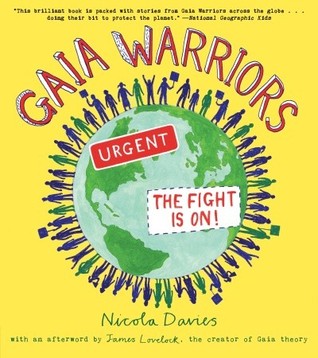
gaia warriors

 Gaia Warriors
Nicola Davies
Published March 22nd, 2011 by Candlewick Press

Goodreads Summary: A book on global warming like no other, merging key concepts with firsthand accounts from people of all ages who have found ways to help.

Inspired by the work of outstanding scientist and thinker James Lovelock and written by acclaimed author Nicola Davies, here is a book that takes a clear look at how and why Earth’s climate is changing and the ways we can deal with it. Its style is simple and its explanations are compelling, illuminating not only hard facts but also the opinions and potential solutions of scientists all over the world. But there are other voices too, those of people young and old — lawyers, food producers, fashion designers, scientists, rock stars, architects, conservationists, kids, campaigners, and more — who are trying to change the way they (and we) live on the planet. At once comprehensive and accessible, this galvanizing call to arms includes web links and resources that make it easy to join the cause.

My Thoughts: This is a text that takes the narratives of some global warming books and the information of others and combines them. I did not know what Gaia Theory was before this text, but now I know that it is the idea that we need to take care of our Mother Earth. “The Gaia Paradigm describes a productive confluence between scientific understandings of Earth as a living system with cultural understandings (ancient and new) of human society as a seamless continuum of that system.” Gaia Warriors is a text that shares why this idea makes sense, why it is up to us to make changes, and stories of those who have. I appreciated how it was set up with the climate change basics in Section One then the people stories in Section Two. It makes it even more inspiring because Davies makes sure you have all the facts before hitting us with emotional appeal.

Discussion Questions: Which of the Gaia Warriors inspires you the most?; How could you live differently to help climate change?; What could you do to become a Gaia Warrior?

And the chapter titles: What is climate change?; How do we know that climate change is happening?; What’s causing climate change? Is climate change our fault?

We Flagged: 

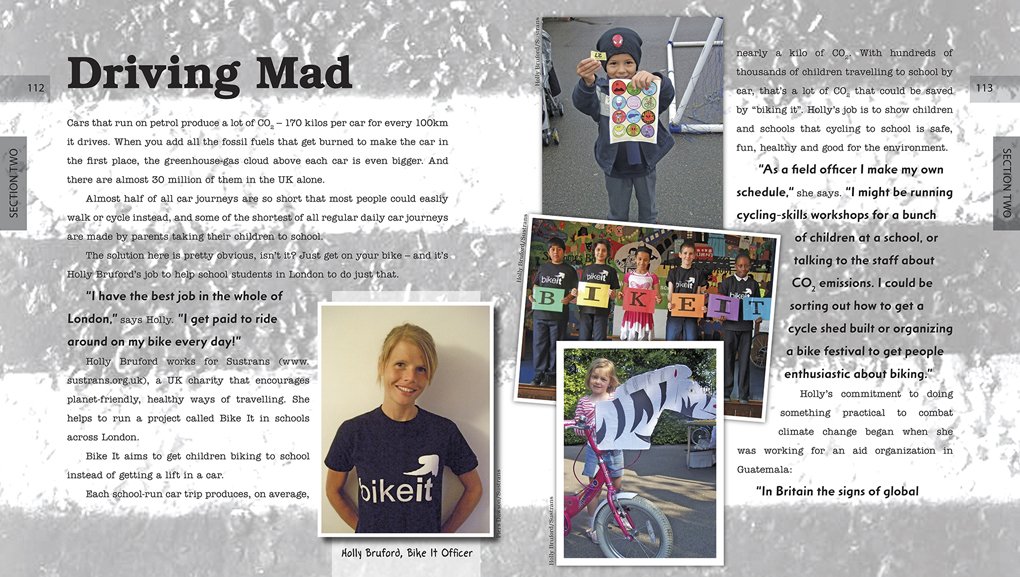
Gaia Warriors Spread


31 ways to change

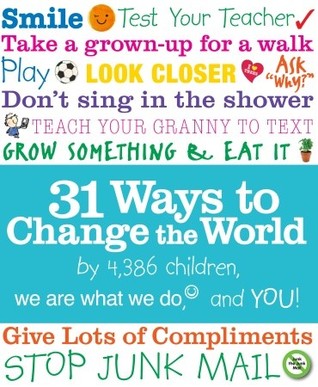
31 Ways to Change the World
Author: 4,386 Children, We Are What We Do©, and YOU!
Published March 9th, 2010 by Candlewick Press

Goodreads Summary: Children have lots of ideas for changing the world — and here are thirty-one fun and simple ways to get started.

Small actions multiplied by lots of people equals big change! That’s the driving belief behind the social change movement We Are What We Do — and it infuses this lively, motivating book packed with action steps for younger readers. Incorporating the suggestions of thousands of children, tips range from stirring (stand up for something) to silly (walk your dad); from earth-friendly (don’t charge your phone overnight) to eye-opening (where is that Waldo?); from social (teach your granny to text) to downright surprising (speak soccer!). These thirty-one creative, original ideas are contributed by kids for kids — and each is guaranteed to have a clear and positive impact. Of course, the book would not be complete without a final question to the reader: what’s the one thing you would do to change the world?

My Thoughts: What I really liked about this book vs. other “change the world” books was that there are so many different options and something that everyone could do. It would be so easy to go through and do most of these. Although this book doesn’t focus completely on global warming/climate change, I think it fits perfectly on Earth Day because one way to make our Earth better is to make humans nicer.

Discussion Questions: Which of these activities have you done?; Which of these activities could you do and help others do as well?; What other activities could you do to help our Earth, your school, your friends, your family, etc.?

We Flagged: 

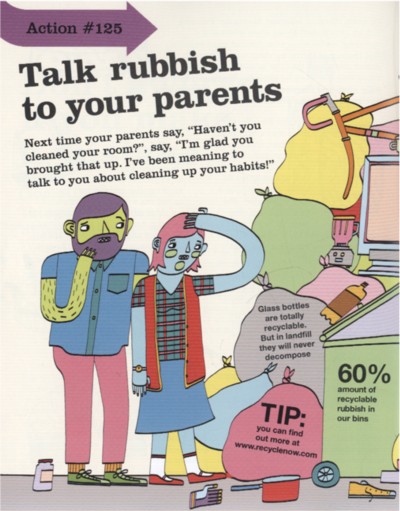
31 ways spread


Teachers’ Tools for Navigation: I think talking about climate change and changing our ways to help is so important with our youth. These books, along with other Earth Day friendly books, can help kids understand the importance of our decisions every day.

Read These Books If You Loved: The Lorax by Dr. Seuss, The Down-to-Earth Guide to Global Warming by Laurie David and Cambria Gordon, An Inconvenient Truth by Al Gore

Both Recommended For: 

classroomlibrarybuttonsmall closereadinganalysisbuttonsmall

Signature

**Thank you to Candlewick Press for providing copies for review!**

National Parks Week (April 16th-24th) Recommended Reads: A Weird and Wild Beauty by Erin Peabody and National Geographic’s National Parks Guide U.S.A.

Share

NFPB2016

Nonfiction Wednesday

Nonfiction Picture Book Wednesday is hosted by Kid Lit Frenzy and was started to help promote the reading of nonfiction texts. Most Wednesdays, we will be participating and will review a nonfiction text (though it may not always be a picture book).
Be sure to visit Kid Lit Frenzy and see what other nonfiction books are shared this week!

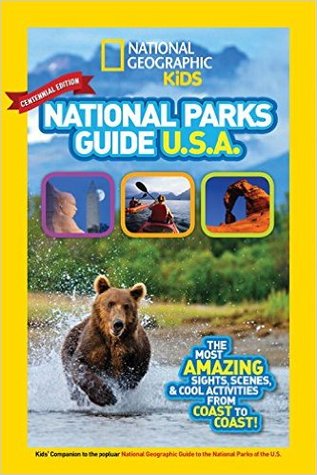
National Parks Guide

 National Parks Guide USA Centennial Edition: The Most Amazing Sights, Scenes, and Cool Activities from Coast to Coast!
National Geographic Kids
Published February 9th, 2016 by National Geographic Children’s Books

Goodreads Summary: Happy 100th Birthday, National Parks! Join the centennial celebration by reading all about these greatest of American treasures — from Acadia to Zion — in preparation for a parks visit sometime soon. Filled with color photos, information on animals, fascinating lists, fun facts, maps, cool things to do, conservation tips, and much more — think of this book as your trusted guide to these most majestic of places.

My Thoughts: This book makes me want to go on a road trip! As you all know, I am a huge fan of National Geographic books because of their brilliant graphics, text features, easy-to-follow text structure, and interesting information. This text is no different. Like the title states, it goes through many of the USA National Parks from the east to the west and gives the reader not only history about the national park but also beautiful photos, fun facts, visiting tips, a map, excursions within the park, and must-do activities. This text will be a great companion to any trip to these amazing parks.

Discussion Questions: Which national park do you want to visit?; What activity looks like the most fun to you at that park?; What national parks are near you?

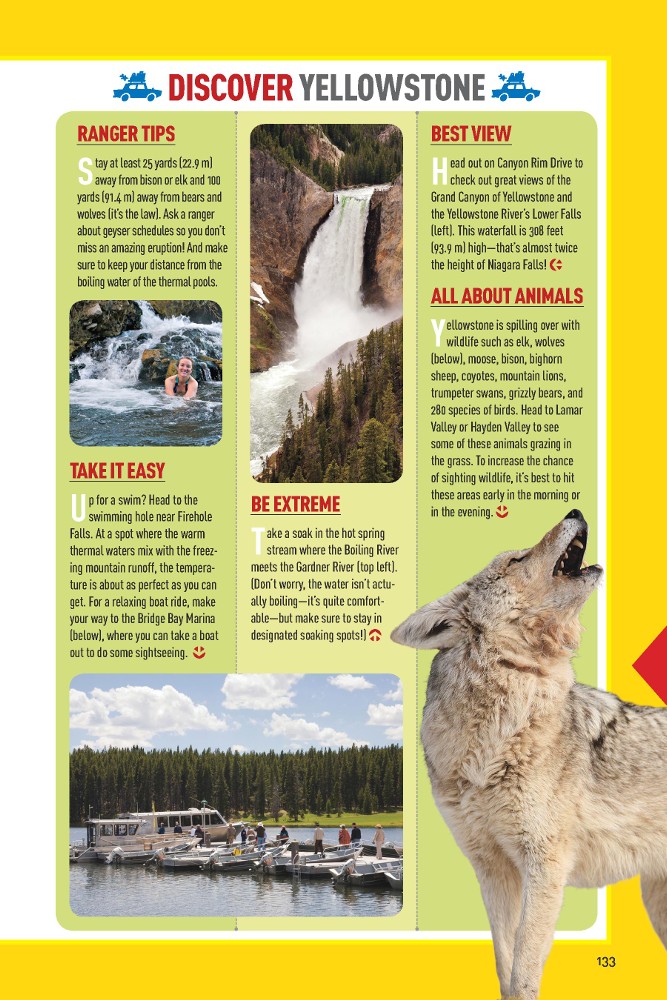
We Flagged: 

yellowstone

Giveaway and National Parks Video by National Geographic

Celebrate the beauty and wonder of America’s national parks during this centennial year with an amazing outdoor adventure! Climb mountains, hike trails, see wildlife, explore the country, and plan it now with National Geographic books as your inspiration and guide. Be sure to enter for the chance to win a National Geographic Expeditions family trip for four to Grand Canyon, Bryce, and Zion National Parks at nationalparkssweeps.com.


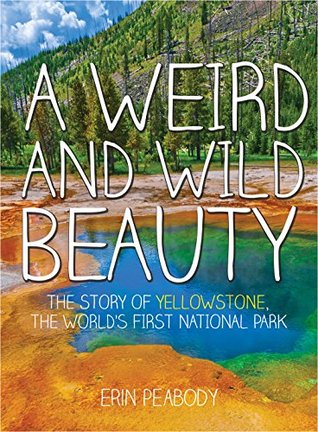
weird and wild

A Weird and Wild Beauty: The Story of Yellowstone, the World’s First National Park
Author: Erin Peabody
Published February 2nd, 2016 by Sky Pony Press

Goodreads Summary: The summer of 1871, a team of thirty-two men set out on the first scientific expedition across Yellowstone. Through uncharted territory, some of the day’s most renowned scientists and artists explored, sampled, sketched, and photographed the region’s breathtaking wonders—from its white-capped mountain vistas and thundering falls to its burping mud pots and cauldrons of molten magma. At the end of their adventure, the survey packed up their specimens and boarded trains headed east, determined to convince Congress that the country needed to preserve the land from commercial development. They returned with “stories of wonder hardly short of fairy tales,” to quote the New York Times.

With the support of conservationists such as Ralph Waldo Emerson, Henry David Thoreau, Frederick Law Olmsted, and John Muir, the importance of a national park was secured. On March 1, 1872, Ulysses S. Grant signed the Yellowstone Park Bill into law. It set aside over two million acres of one-of-a-kind wilderness as “a great national park for the benefit and enjoyment of people.” This important and fascinating book will introduce young adults to the astonishing adventure that led to “the best idea America ever had.” Today over 130 countries have copied the Yellowstone model, and billions of acres of critical habitat and spectacular scenery are being preserved for all of us to enjoy.

This book has a wonderful ecological and historical message for readers ages 12 and up. No book about Yellowstone’s founding has been written for this age group before, yet Yellowstone National Park is a major destination for many families, so many readers will likely have heard of Yellowstone or even have visited there. This is a great book for any school library or for history or science classrooms in middle and high school, where information can be used for research projects.

My Thoughts: Many of us take advantage of the national parks that have been preserved throughout the United States without knowing the history of the National Park Program or realizing how important it is to preserve these parks. This book will help middle grade and teen readers learn about this history and the beautify of a park they’ve probably heard of or been to but may not know everything about. Peabody does a good job making the history readable and interesting.

Discussion Questions: Why did President Grant pass the Yellowstone Park Bill? How did this bill change the direction of parks in the U.S.? If you went to Yellowstone, what would you most be looking forward to?

We Flagged: “J.G. Holland sat at his desk, staring wide-eyed at the pages spread before him. Holland was an editor at Scribner’s Monthly, a popular magazine and source of news for Americans in the mid- to late 1800s.

Holland had just received the most bizarre-sounding account. It spoke of a strange land where the ground gurgled and hissed. A land where scalding waters blew from craters and vats of steaming pink mud threatened to swallow a man whole. The place, according to the man who’d recently traveled through the region, abounded with ‘boiling springs,’ ‘mud volcanoes,’ and ‘huge mountains of sulphur.’

Incredulous, Holland tried to absorb the dazzling imagery. The author, clearly spellbound by what he saw, gushed about the brilliant turquoise pools and hot-water fountains. The mud volcano, the man wrote, erupted with the force of thundering cannons. Its boiling broth scalded trees hundreds of yards away.

This world of absurdities, the traveler informed Holland, was not some far-off land. It belonged to the United States.” (Prologue)


Teachers’ Tools for Navigation: The National Geographic book gives such a wonderful overview of all of the major national parks and would be a great introduction to these parks. Then, the students could choose to learn more about a specific national park. Erin Peabody’s book would be a fabulous resource for the students who choose Yellowstone. It is so thorough and it, combined with the National Geographic book, would give a detailed overview of Yellowstone.

Both Recommended For: 

classroomlibrarybuttonsmall closereadinganalysisbuttonsmall

Signature

**Thank you to Karen at Media Masters Publicity and Cheryl at Skyhorse Publishing for providing copies for review!**

The SLOWEST Book EVER by April Pulley Sayre

Share

NFPB2016

Nonfiction Wednesday

Nonfiction Picture Book Wednesday is hosted by Kid Lit Frenzy and was started to help promote the reading of nonfiction texts. Most Wednesdays, we will be participating and will review a nonfiction text (though it may not always be a picture book).
Be sure to visit Kid Lit Frenzy and see what other nonfiction books are shared this week!

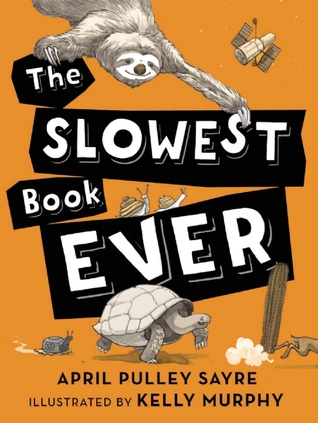
slowest book ever

The SLOWEST Book EVER
Author: April Pulley Sayre
Illustrator: Kelly Murphy
Published April 5th, 2016 by Boyds Miller Press

Goodreads Summary: April Pulley Sayre’s wry, quirky storytelling tone shines from the warning on the first page (“This is a S-L-O-W book. Do not read it while surfing, water skiing, or running to escape giant weasels.”) right through to the glossary at the end. In between, readers will explore an astounding variety of information about all things slow—in nature, geology, art, outer space, etc. Throughout, The SLOWEST Book EVER playfully encourages readers to slow down and savor everything. As Sayre shows: “If you think slowly enough, the entire world is amazing.” This innovative nonfiction work is a treasure trove of information that begs for multiple readings.  

Kellee’s Review: Anyone who teaches knows that the most popular nonfiction books are the ones that have a ton of information in short segments with fun pictures. Well, Sayre’s The SLOWEST Book EVER is exactly that but even better than you are picturing. Sayre does such a great job of having a small amount of information that packs a very big punch. Although each fact is over only a 2-page spread, the information is thorough, interesting, and specific. I loved the wide range of topics that were all covered under the big idea of SLOW, and I think students will be fascinated with all of the information.

Ricki’s Review: I read a lot of books, and I don’t think I’ve read a book that is quite like this one! It is a compilation of fascinating information that will compel readers to want to learn more about their world. It is apparent that a lot of thought and care went into the crafting and production of this book. Each page is a bit different, so if a reader is uninterested in a topic, he or she can flip the page and find something else entirely different. This book would make a great gift because all children will find sections that intrigue them, regardless of their interests. I’d look forward to going to a class where a teacher used this book used as a read-aloud, reading a few sections each day. This book makes learning fun!

Teachers’ Tools for Navigation: Since The SLOWEST Book EVER includes tidbits of information on many different topics, each spread could easily be used as a jumping off point for an inquiry project. Students browse through the book to determine which spread of information interests them the most then they do more research (using the back matter as a place to start) then share the extra information with their classmates.

The SLOWEST Book EVER also does an amazing thing by looking at all the different ways that SLOW can be defined. After finishing the book as a class, revisit all of the different ways slow was used then brainstorm different meanings of other subjective adjectives such as fast, large, and small. Then student, as a class, could write their own fact book using a different adjective but showing different meanings of that word.

Discussion Questions: Which fact surprised you the most?; The book doesn’t only focus on slow speeds–what ever definitions of slow did the author focus on?; What topics would you like to learn more about? Where could you go to get more information?

We Flagged: “Chewy Nature Thoughts
Read them. Think about them. S l o w l y.
Slow thoughts are often big thoughts. So don’t fret if it takes a while to understand them. Don’t worry if you need to read them twice. -Traveling in a circle is, after all, still traveling.” (p. 8-9)

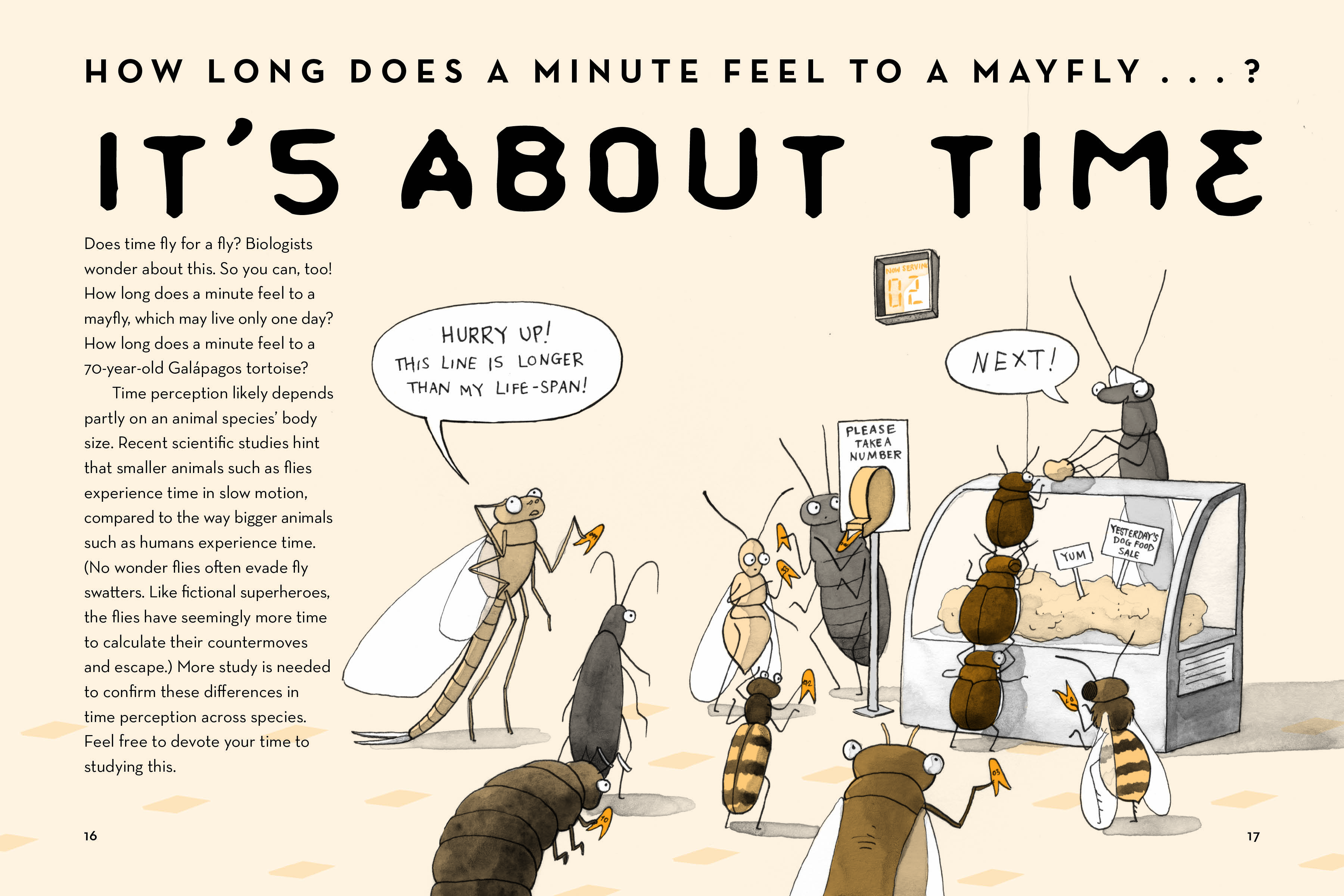
“How long does a minute feel to a mayfly…?
It’s About Time

Does time fly for a fly? Biologists wonder about this. So you can, too! How long does a minute feel to a mayfly, which may live only one day? How long does a minute feel to a 70-year-old Galápagos Tortoise?” (p. 16-17)

SLOWESTBOOK_16-17

Read This If You Loved: Nonfiction books such as Weird but True by National Geographic, Lifetime by Lola M. SchaeferExtreme Oceans and Extreme Earth Records by Seymour SimonIsland by Jason Chin, The Guinness Book of World Records

Recommended For: 

classroomlibrarybuttonsmall readaloudbuttonsmall closereadinganalysisbuttonsmall

Signatureand RickiSig

National Geographic Kids: Celebrate Easter by Deborah Heiligman

Share

NFPB2016

Nonfiction Wednesday

Nonfiction Picture Book Wednesday is hosted by Kid Lit Frenzy and was started to help promote the reading of nonfiction texts. Most Wednesdays, we will be participating and will review a nonfiction text (though it may not always be a picture book).
Be sure to visit Kid Lit Frenzy and see what other nonfiction books are shared this week!

easter

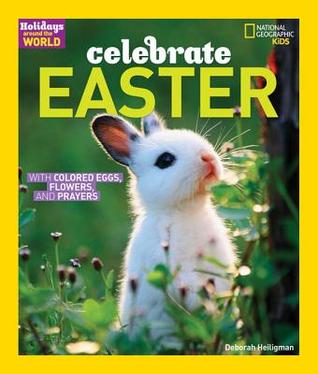
Holidays Around the World: Celebrate Easter with Colored Eggs, Flowers, and Prayer
Author: Deborah Heiligman
Photographs from National Geographic
Published February 9th, 2016 by National Geographic Children’s Books

Goodreads Summary: The joyous celebration of Easter is seen through a global perspective in this National Geographic volume featuring over 25 vibrant photographs. Witness the holiest day on the Christian calendar as it is celebrated throughout the world: from the famous Easter Egg Roll at the White House to the traditional bonfires throughout Europe, to colorful customs, to the universally popular dying of eggshells worldwide.

The first-person narrative leads young readers through the origins and traditions of this springtime festival of rebirth and hope. Reverend George Handzo gives parents and teachers a historical and cultural background in his informative note.

Kellee’s Review: This text is a wonderful informative introduction to Easter. It goes through not only the religious aspects of the holiday but also the traditions and secular parts. Although I think it could have gone into more detail about where the traditions came from (answered the WHY a bit more), it did a very good job of sharing all the different things that go along with Easter. I also loved the diversity within the book. The photos were from all over the world. And I am excited about the series Holidays Around the World because that means there are others within the series that will touch on holidays of other religions. This will help with understanding of holidays and religions that the reader may not be. 

Ricki’s Review: I completely agree with Kellee’s review! This book taught me a lot, and I enjoyed reading it. I would have loved to have read more about the WHY, but I found this to be quite a fun and interesting read, overall. Kids will really enjoy reading it, and it will be a resource for parents. Readers travel to many places in this single text, and it teaches an international appreciation. Like Kellee, I am really excited to see where this series goes, and I plan to read more books that National Geographic publishes! I love learning about international traditions and diverse cultures, so I appreciated all of the information in this book.

Teachers’ Tools for Navigation: I think it would be a powerful activity in a classroom to have many Holidays Around the World books and use them in both social studies, reading, and writing. Students could read about all of the different holidays, and they could then choose one to further research and share. Then there could be a walk-about in the classroom where different groups would have displays highlighting the different holidays.

Discussion Questions: What is the basis of Easter?; If you celebrate Easter, what are some traditions your family has?; What are some traditions around the world?; Why do you think the author chose to write the text in first person?

We Flagged: “Easter mornings brings special treats, too. Could it be the Easter Bunny was here? We get baskets of eggs–colored, decorated, and chocolate! Yummmm. In Germany, it’s the Easter Hare who brings us eggs. Bunnies, chicks, and eggs are symbols of new life.” (p. 16)

Read This If You Loved: Learning about religions, traditions, and holidays; Happy Easter, Mouse! by Laura Joffe Numeroff; Pete the Cat: Big Easter Adventure by Kimberly Dean

Recommended For: 

classroomlibrarybuttonsmall litcirclesbuttonsmall

Happy Easter to all who celebrate!

Signatureand RickiSig

**Thank you to Karen at Media Masters Publicity for providing copies for review!**

National Geographic Kids: Farm Animals & Rascally Rabbits!

Share

NFPB2016

Nonfiction Wednesday

Nonfiction Picture Book Wednesday is hosted by Kid Lit Frenzy and was started to help promote the reading of nonfiction texts. Most Wednesdays, we will be participating and will review a nonfiction text (though it may not always be a picture book).
Be sure to visit Kid Lit Frenzy and see what other nonfiction books are shared this week!

farm animals

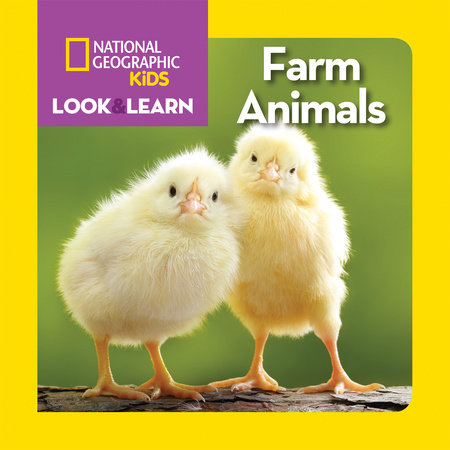
Farm Animals
Author: Catherine D. Hughes
Photographs from National Geographic
Published February 9th, 2016 by National Geographic Children’s Books

Goodreads Summary: Young readers will meet their favorite farm animals and learn more about them through simple, age-appropriate language in this colorful board book.

rascally

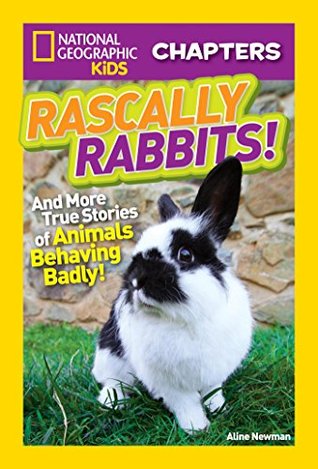
Rascally Rabbits! And More True Stories of Animals Behaving Badly!
Author: Aline Alexander Newman
Photographs from National Geographic
Published February 9th, 2016 by National Geographic Children’s Books

Goodreads Summary: These bunnies may look adorable, but there’s more than meets the eye! In Rascally Rabbits, meet some rabbits that cause nothing but trouble, a rescue pup who will eat ANYTHING, and a sneaky bear with a taste for treats. Readers won’t stop laughing as they read these hilarious–and completely true!–stories. Filled with engaging photos, fast facts, and fascinating sidebars, readers won’t want to put this book down.


Kellee’s Review: What I like so much about National Geographic Kids books are that they really do take nonfiction to the next level. First, they have nonfiction for all ages. The Look & Learn series are for kids ages 1-4 then move to their Readers Series which is an early reader then to Chapters that is primary level. Each level adds more text but continue to include interesting facts and photographs. Once you get up to Chapters, the text even includes sidebars, an index, and a bibliography. 

Farm Animals was a favorite with Trent immediately. One of his stations at school is all about animals and they spend their time there talking about the different animals, what color they are, and what sound they made, so Trent loved telling me all of the animals’ names and the sound they make. I loved that there were animals facts and sidebars in addition to just the animal photographs and sounds.

Rascally Rabbits! is a perfect first chapter book because it is quite funny (these animals do some crazy things), it is educational because it teaches about the animals as well, and it splits up the stories into nice sections.

Ricki’s Review: I completely agree with Kellee. I much prefer narrative nonfiction, so I always hesitate to pick up informational nonfiction. The National Geographic books remind me just how wrong my assumptions are. I am not crazy about leveling, particularly with nonfiction, but I think that some parents really like it. And I think the leveling in these books is far more accurate than in fiction texts. 

I knew Henry would love Farm Animals the second we got it in the mail. Like most kids, he loves animals. He immediately began singing “Old McDonald” as we started reading the book, and he was bouncing up and down as we went through each of the brightly colored pictures.

Rascally Rabbits! is a bit challenging for him, but he loved the pictures. I opted to read selected text to him aloud, and I read the entire book on my own. Kids who are interested in rabbits will absolutely adore these books. I still remember reading dozens of books about poodles when I was younger. Because I was so interested in the content, I didn’t realize how much I was learning! The book is organized very well, and they did a really nice job with this one.

Teachers’ Tools for Navigation: National Geographic Kids’ books should be a go to for a teacher’s informational nonfiction section. Students will love reading and learning from these texts. Farm Animals and other Look & Learn books are perfect for read alouds and helping young children learn about different parts of our world. Rascally Rabbits! and other chapter books can be used for read aloud, independent reading, or even within a lit circle/jigsaw. For example, with Rascally Rabbits! each group could read about each of the different animals who made a mistake then go group with one person from each of the other groups to share what they read.

Discussion Questions: (Farm Animals) What product do each of these animals give to us?; What other farm animals do you know? What sounds do they make?; (Rascally Rabbits!) What are some things that Babbity does to make Flopsy’s life tough?; What makes bears get near humans?; Why was Neil afraid something bad might happen with Moose? Did something bad happen? Was it Neil’s fault?

We Flagged: “Moo! Cows eat grass. A group of cows is called a herd. People drink milk that comes from cows. Guess What? One cow can give enough milk in a day to fill 400 glasses.” (Farm Animals)

“Did You Know? The best way to pet a rabbit is to gently scratch its forehead and between its eyes.” (Rascally Rabbits!, p. 9)

“A young black dog ran without purpose along a forest road in Lewis County, New York, U.S.A. Rain was pouring down and freezing on the ground. Tiny icicle hung from the dog’s ears and chin. He had a wild-eyed look on his face.” (Rascally Rabbits!, p. 71)

Read This If You Loved: Nonfiction animals books

Recommended For: 

classroomlibrarybuttonsmall readaloudbuttonsmall litcirclesbuttonsmall

Signatureand RickiSig

**Thank you Karen from Media Masters Publicity for providing copies for review!**

National Geographic Kids Early Reader Biographies: George Washington Carver & Sonia Sotomayor

Share

NFPB2016

Nonfiction Wednesday

Nonfiction Picture Book Wednesday is hosted by Kid Lit Frenzy and was started to help promote the reading of nonfiction texts. Most Wednesdays, we will be participating and will review a nonfiction text (though it may not always be a picture book).
Be sure to visit Kid Lit Frenzy and see what other nonfiction books are shared this week!

gwc

George Washington Carver
Author: Kitson Jazynka
Published January 12th, 2016 by National Geographic Children’s Books

Summary: Take a bite into the fascinating history of peanut butter and the man who invented it. Through leveled text and engaging photos, kids meet George Washington Carver and learn about his important work with peanuts and other plants. This Level 1 reader is carefully leveled for an early independent reading or read aloud experience, perfect to encourage the scientists and explorers of tomorrow!

Discussion Questions: Why did Carver have to move when he was 13?; What events in Carver’s life helped him become the first black student at Iowa State and eventually a professor?; What inventions did Carver discover?

We Flagged: “In Carver’s time, life was hard for many black people in the United States. They did not have the same rights as white people.

Carver felt that this was wrong. He used his ideas about farming to help change people’s lives.” (p. 7)

NG - Sonia Sotomayor

Sonia Sotomayor
Author: Barbara Kramer
Published January 12th, 2016 by National Geographic Children’s Books

Summary: Explore one of the most recognized names in modern America with this biography of Supreme Court Justice Sonya Sotomayor. Kids will learn about her rise to be the first Hispanic Supreme Court Justice and the trials she faced along the way. The level 3 text provides accessible, yet wide-ranging, information for independent readers.

Discussion Questions: What traits does Sotomayor have that helped her succeed in education to eventually become a Supreme Court justice?; Sotomayor has not forgotten where she comes from. In what ways does she give to her childhood community?; What did Sotomayor do that was so extraordinary?

We Flagged: “In August 2009, Sonia Sotomayor became a Super Court justice. It is a special job. Sotomayor is the 111th person ever to receive that honor. She is the third woman and the first Hispanic justice to serve on that court.” (p. 4)


My Review: These texts are such a wonderful way to introduce readers to some very important people in history. The books don’t back down from hard subjects like racism and poverty, but instead teach the reader about it in an easy to understand way. And to help the reader even more, throughout the books, any tough words are defined, sidebars are filled with additional information, and text features such as illustrations, graphs, and timelines elaborate on the story.

Teachers’ Tools for Navigation: These books could be used in many different ways including guided reading during a teacher-led small group or as biography lit circles.

Read These If You Love: Biographies

Recommended For: 

classroomlibrarybuttonsmall litcirclesbuttonsmall

Kellee Signature

**Thank you to Karen from Media Masters for providing copies for review!**

Learning to Labor: How Working Class Kids Get Working Class Jobs by Paul Willis

Share

learning to labor

A Reflection on the Educational Fallacy We Still Promote in Schools Today

The cover isn’t thrilling. The book is old (originally published in 1977), but goodness, it is still relevant. For those of you who missed this book the first time it came out, I will start with a brief synopsis. Paul Willis interviewed 12 “non-academic,” working class lads in Great Britain. He wanted to learn more about their subscription to a counter-culture and also was curious about their lives after school in the work force. These are the kids who smoked next to the school just to be seen smoking. They drank during lunch just out of defiance of the school. We know “these kids,” and they exist in every high school.

Willis found that regardless of their resistance to join the system, in the end, they ended up right where the system wanted them—in working class jobs in factories. He examines the masculinity perceived in these jobs, and he interviews the lads after they’ve entered the work force, too. He describes the optimism in the lads’ situation. They are very creative in the ways they thwart the school system. They say they’d never want office jobs or “mental labor.” The pessimism of their situation is the fact that the school system does not provide the upward mobility it claims to provide. They end up in “meaningless” jobs that offer them little pay.

When we tell students today to just do their best and work hard and that they will be successful, are we promoting an educational fallacy? We know that higher graduation rates will not produce more quality job opportunities for all. So why do we pretend that each student in our classes has an opportunity to be in a high-paying, “meaningful” job? Willis describes the ways that schools promote classism. Working class kids are prepared for working class jobs. (Obviously, we don’t technically have a working class anymore, but we can still find parallels in our school systems and job opportunities.)

Essentially, Willis describes how only a few individuals from these schools will end up in “meaningful” (according to culture’s standards) jobs, but the whole working class could never have upward mobility. The economy secures this disappointing truth, and without more opportunities, most of these students are destined for jobs in industrial factories. I was disturbed by how relevant this is to schools and jobs today. These lads’ refusal to cooperate in school (as a part of the “counter-school” culture) actually shows their refusal to collude with their own educational suppression. Willis depicts this beautifully. Those students who refuse to participate in lower-class schools may, in fact, have a perspective that is superior to that of the school. They understand, perhaps, that only a few students will make it in meaningful jobs, and they perceive these jobs to be unsatisfying, as well.

While I don’t believe I am as wholly pessimistic as Willis is, I think his points are valid and true. To what extent are we lying to students and promising them jobs that aren’t there? How do we fix this? Can it start in the ways we design schools, or must we rely on the political system? By teaching students about the power of education, I believe we are presenting them with opportunities they can or cannot choose to take. It is my hope that we can devise a system that opportunities truly exist for all who want them, rather than those hardworking, lucky few.

RickiSig