Blog Tour, Author Guest Post, and Review!: Reproductive Rights: Who Decides? by Vicki Oransky Wittenstein

Share

NFPB2016

Nonfiction Wednesday

Nonfiction Picture Book Wednesday is hosted by Kid Lit Frenzy and was started to help promote the reading of nonfiction texts. Most Wednesdays, we will be participating and will review a nonfiction text (though it may not always be a picture book).
Be sure to visit Kid Lit Frenzy and see what other nonfiction books are shared this week!
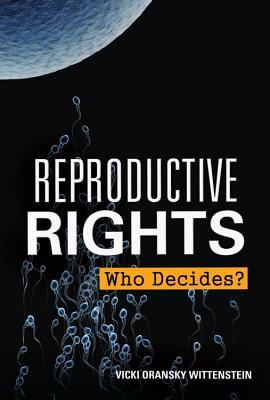
Reproductive Rights

Reproductive Rights: Who Decides?
Author: Vicki Oransky Wittenstein
Published January 1st, 2016 by Twenty-First Century Books

Summary: Throughout history, men and women have always found ways to control reproduction. In some ancient societies, people turned to herbs or traditional rituals. Others turned to methods that are still used in the twenty-first century, such as abstinence, condoms, and abortions.

Legislating access to birth control, sex education, and abortion is also not new. In 1873 the US Congress made it illegal to mail “obscene, lewd, or lascivious materials”—including any object designed for contraception or to induce abortion. In some states in the 1900s, it was illegal for Americans to possess, sell, advertise, or even speak about methods of controlling pregnancy.

At the beginning of the twentieth century, Margaret Sanger, Mary Ware Dennett, and others began to defy these laws and advocate for the legalization of birth control and for better women’s reproductive healthcare. By 1960 doctors had developed the Pill, but it wasn’t until 1972 that all US citizens had legal access to birth control. And in the landmark decision Roe v Wade (1973), the US Supreme Court ruled that women had a constitutional right to terminate a pregnancy.

Disputes over contraception, sex education, and abortion continue to roil the nation, leading to controversial legal and political rulings and occasionally violence. As society changes—and as new reproductive technologies expand the possibilities for controlling and initiating pregnancy—Americans will continue to debate reproductive rights for all.

About the Author: Before becoming an author, VICKI ORANKSY WITTENSTEIN prosecuted criminal cases as an assistant district attorney with the Manhattan District Attorney’s office. She earned an MFA in writing for children and young adults from Vermont College of Fine Arts. Vicki has written a number of science articles and books for the juvenile market, including Planet Hunter: Geoff Marcy and the Search for Other Earths, which won the 2011 Science Communication Award from the American Institute of Physics. Her book For the Good of Mankind? The Shameful History of Human Medical Experimentation was a Junior Literary Guild selection. Vicki and her husband live in Brooklyn, New York. Visit her website at vickiwittenstein.com.

Kellee’s Review: Wittenstein obviously did her research. Her text is filled to the brim with facts and unbiased information of all sides of the reproductive rights debate. I loved learning about the history of reproductive rights as well as the more details than I knew about the present situation and even information about possibilities in the future. I think Wittenstein did a good job with including primary sources, text features, and some narratives to help move the text along as well. 

Ricki’s Review: This is a very comprehensive book that was interesting to read from the beginning to the end! I enjoyed how Wittenstein presented factual information in ways that will engage readers. For instance, she describes the various ways that people of different cultures and time periods believe(d) they can (or could) avoid pregnancy. For instance, you might walk three times around a tree where a pregnant wolf has urinated. This sounds like it would be very difficult to do! This is a great book that students will enjoy. It is a controversial, so I’d probably check with students that they feel comfortable with the content before they sign it out. I don’t believe in censorship, and instead, I believe in allowing students to self-censor when they aren’t comfortable with content. This book is very important for classrooms because it ensures that kids are not in the dark about reproductive issues.

Teachers’ Tools for Navigation: This text is such an amazing resource. It will definitely be an asset either as a textbook or resource in a college or high school class that is touching on or researching reproductive rights, women’s rights, or legal proceedings. It is such a wonderful starting point for learning about the history and progression of reproductive rights.

Discussion Questions: What legal case was the biggest turning point for reproductive rights?; How has women’s rights progressed overtime?

Author Guest Post answering “What inspired you to write Reproductive Rights?” and “What was your research process for the book?”

There were so many inspirations for this book, so I will try to limit myself to a few! First, for as long as I can remember, I have been passionate about women’s rights. When I was in college, I co-organized one of the first domestic violence conferences in Philadelphia. Later, as an Assistant District Attorney in Manhattan, I spoke to many women who had been assaulted by their partners. That first-hand experience led me to chair the board of an organization that sheltered women victims. In addition, I grew up in the 60’s and 70’s during a time when women were just beginning to enter traditionally all-male professions, such as law and medicine. A good part of this new freedom was due to the availability of the Pill and the legality of contraception and abortion. These reproductive rights helped countless women believe they could achieve advanced degrees and build careers.

More recently, worries about setting the historical record straight sparked my interest in writing about this topic. Over the last decade or so, people have learned much of their worldwide news from short media sound bites flashed across the Internet. For many teens, these bits and pieces about new reproductive rights legislation or video clips of rallies against or for abortion are heard without an historical context. Without history, how can we expect young people to navigate through the minefield of these complex and controversial issues, understand what’s at stake with the hundreds of new laws that limit access to contraception and abortion, and form their own opinions?

For thousands of years—from ancient civilizations, through Colonial America, the development of the Pill, the legalization of contraception and abortion, and the brave new world of reproductive technologies—men and women have always found ways to control reproduction. By viewing reproductive rights through an historical lens, teens can learn that controlling procreation is a human need that is not new. This rich history can inform debate and analysis of availability of, access to, and funding for contraception, sex education, and abortion. Today’s teens are the ones who will be most affected by the laws enacted by our federal and state legislators and argued before our courts. And as new reproductive technologies expand the possibilities for controlling and initiating pregnancy, teens are the future adults who will define what it means to be a parent and under what circumstances. So, in many ways this book was inspired by my desire to lay a roadmap for the next generation of parents.

Most of my research was accomplished inside the New York City Public Library, a building filled with astounding resources and fabulous librarians. I also accessed many scholarly and legal articles online through university research collections, as well as letters, diaries, etc. Often just one article or the mention of an event or name led to the next kernel of information, as I worked to fit all the pieces into the puzzle. In many instances, my research uncovered names and events I had never heard of before. For example, I was astounded to learn about two largely unsung heroines: Mary Ware Dennett, who wrote one of the first pamphlets for young people about sex and paved the way for gutting the laws banning the discussion and use of contraception; and Katharine McCormick, the wealthy suffragist and biologist who funded and oversaw the initial development of the Pill. Another big help was the continual flow of media attention that reproductive rights issues provoke. Newspaper articles about state laws and court cases restricting access to women’s clinics led me to explore and understand the lay of the land today. I read lots of articles about the ways in which laws were restricting access to clinics by persuading women not to have abortions and forcing the closure of clinics.

Unfortunately, the media attention surrounding abortion has overshadowed what it means to be in favor of reproductive rights, as most reproductive health care involves cancer screenings, pregnancy prevention and care, and family planning—services mostly unrelated to abortion. I hope the current presidential debates and the appointment of a new Supreme Court justice shine a spotlight on reproductive rights, and that educators will continue to spur critical discussion of these important issues.

Thank you, Kellee and Ricki, for hosting me today!

We Flagged: “In the United States of the twenty-first century, reproductive health is hotly debated. For example, assisted reproductive technologies (ART) for infertile couples raise new ethical and moral issues…”

Read This If You Loved: Nonfiction texts about women’s rights

Follow the tour:
Mon, Feb 15
Proseandkahn
Tues, Feb 16
The Book Monsters
Wed, Feb 17
Library Fanatic
Thurs, Feb 18
Kid Lit Frenzy
Fri, Feb 19
The Nonfiction Detectives
Sat, Feb 20
Ms. Yingling Reads
Mon, Feb 22
The Launch Pad
Tues, Feb 23
Through the Tollbooth
Wed, Feb 24
Unleashing Readers
Thurs, Feb 25
The Pirate Tree
Fri, Feb 26
Teach Mentor Texts

Recommended For: 

classroomlibrarybuttonsmall

Signatureand RickiSig

**Thank you to Barbara at Blue Slip Media for providing copies for review!**
From Kellee’s (Huge) Library Pile Part Nine: More 2015 Nonfiction Titles | Poet by Don Tate, Water is Water by Miranda Paul, Winnie by Sally M. Walker, & Earmuffs for Everyone! by Meghan McCarthy

Share

NFPB2016

Nonfiction Wednesday

Nonfiction Picture Book Wednesday is hosted by Kid Lit Frenzy and was started to help promote the reading of nonfiction texts. Most Wednesdays, we will be participating and will review a nonfiction text (though it may not always be a picture book).
Be sure to visit Kid Lit Frenzy and see what other nonfiction books are shared this week!

From My (Huge) Library Pile

Because of It’s Monday! What Are You Reading? posts, I find myself often with huge piles of picture books from the library that were highly recommended by fellow bloggers. I celebrate many of the nonfiction pictures books on Wednesdays, but I want to share some of the fiction picture books I have enjoyed. So, I decided to start series here on UR where I can pass on the love for these books sporadically as I read them. Here is a list of some great pictures books that I’ve read recently from my huge library pile (part 9!).

I have read and reviewed about some amazing nonfiction titles throughout 2015: Women Who Broke the Rules (series) by Kathleen Krull, Frozen Wild by Jim Arnosky, Fab Four by Susanna Reich, I Am Lucille Ball by Brad Meltzer, Jump Back, Paul by Sally Derby, Honor Girl by Maggie Thrash, The Underground Abductor by Nathan Hale, Seeds of Freedom by Hester Bass, The Sky Painter by Margarita Engle, The Red Bicycle by Jude Isabella, and I am Jackie Robinson by Brad Meltzer. I also reviewed Trombone Shorty by Troy Andrews, Tricky Vic by Greg Pizzoli, and Drowned City by Don Brown last week (two award winners!).

However, at the end of the year when blogs such as Kid Lit Frenzy and There’s a Book for That were sharing their favorite nonfiction texts from 2015,  I realized there were some amazing books I had not read yet, but I made sure to fix that! Last week I shared three of the titles; today I am going to share four more.

horton poet

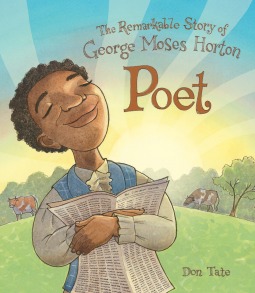
Poet: The Remarkable Story of George Moses Horton
Author and Illustrator: Don Tate
Published September 1st, 2015 by Peachtree

I know that I am blessed to live as I do, but I forget that even words are something that I am lucky to have. Tate’s story of George Moses Horton shows that words are not something we should take for granted, and also shows the beauty and strength of words. In Horton’s story, words not only influence him to become a poet but allow him to make money and live on his own throughout some of his life. Eventually, as a free man after the Civil War, Horton was able to live as the poet he always was. My favorite quote is the last lines of the book: “George’s love of words had taken him on a great journey. Words made him strong. Words allowed him to dream. Words loosened the chains of bondage long before his last day as a slave.”

water is water

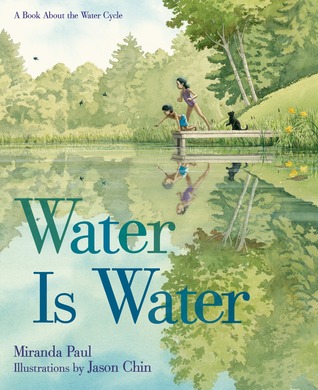
Water is Water
Author: Miranda Paul
Illustrator: Jason Chin
Published May 26th, 2015 by Roaring Brook Press

Chin’s artwork is some of my favorite of all picture book illustrators, and in this story of the beauty behind the water cycle, Chin’s illustrations bring Paul’s words to life. I really love the set up of this book. It is a mix of science and poetry. The only way to show you the beauty is to give an example:
” Drip. Sip. Pour me a cup. Water is water unless… it heats up. Whirl. Swirl. Watch it curl by. Steam is steam unless…”

winnie

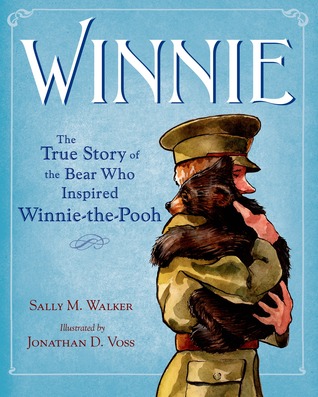
Winnie: The True Story of the Bear Who Inspired Winnie-the-Pooh
Author: Sally M. Walker
Illustrator: Jonathan D. Voss
Published January 20th, 2015 by Henry Holt and Co.

Winnie-the-Pooh is such a beloved character, but it is not common knowledge that Winnie was an actual bear that had quite a journey, and I loved learning the story behind the story. Walker begins the book with actual photos of Harry, the soldier who owned Winnie, and Winnie which grabs the readers attention and drags you into the time period and the truth of the story. She then writes a tribute to Winnie and Harry alongside Voss’s beautiful watercolor illustrations. By the end you love Winnie as much as Winnie-the-Pooh.

earmuffs

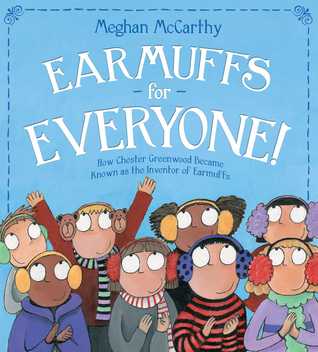
Earmuffs for Everyone!: How Chester Greenwood Became Known as the Inventor of Earmuffs
Author and Illustrator: Meghan McCarthy
Published January 6th, 2015 by Simon & Schuster/Paula Wiseman Books

Often times we forget that things we use every day were once none existent and someone had to invent them. This is the story of ear muffs and how one man didn’t invent them but instead made them better and is thought to be the inventor. McCarthy gives quite a history into muffs and ear muffs and other inventions alongside her fun illustrations.

Are there any must read 2015 nonfiction titles that I missed? 

Kellee Signature

Want to see Part One? You can view it HERE.
Want to see Part Two? You can view it HERE.
Want to see Part Three? You can view it HERE.
Want to see Part Four? You can view it HERE.
Want to see Part Five: We Need Diverse Books (NF)? You can view it HERE.
Want to see Part Six: We Need Diverse Books (F)? You can view it HERE.
Want to see Part Seven? You can view it HERE.
Want to see Part Eight: 2015 Nonfiction Titles? You can view it HERE.

From Kellee’s (Huge) Library Pile Part Eight: 2015 Nonfiction Titles | Tricky Vic by Greg Pizzoli, Trombone Shorty by Troy Andrews, & Drowned City by Don Brown

Share

NFPB2016

Nonfiction Wednesday

Nonfiction Picture Book Wednesday is hosted by Kid Lit Frenzy and was started to help promote the reading of nonfiction texts. Most Wednesdays, we will be participating and will review a nonfiction text (though it may not always be a picture book).
Be sure to visit Kid Lit Frenzy and see what other nonfiction books are shared this week!

From My (Huge) Library Pile

Because of It’s Monday! What Are You Reading? posts, I find myself often with huge piles of picture books from the library that were highly recommended by fellow bloggers. I celebrate many of the nonfiction pictures books on Wednesdays, but I want to share some of the fiction picture books I have enjoyed. So, I decided to start series here on UR where I can pass on the love for these books sporadically as I read them. Here is a list of some great pictures books that I’ve read recently from my huge library pile (part 8!).

I have read and reviewed about some amazing nonfiction titles throughout 2015: Women Who Broke the Rules (series) by Kathleen Krull, Frozen Wild by Jim Arnosky, Fab Four by Susanna Reich, I Am Lucille Ball by Brad Meltzer, Jump Back, Paul by Sally Derby, Honor Girl by Maggie Thrash, The Underground Abductor by Nathan Hale, Seeds of Freedom by Hester Bass, The Sky Painter by Margarita Engle, The Red Bicycle by Jude Isabella, and I am Jackie Robinson by Brad Meltzer.

However, at the end of the year when blogs such as Kid Lit Frenzy and There’s a Book for That shared their favorite nonfiction texts from 2015,  I realized there were some amazing books I had not read yet, but I made sure to fix that!

tricky vic

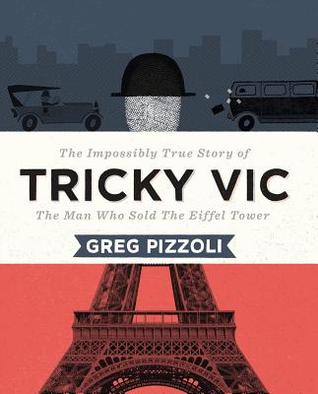
Tricky Vic: The Impossible Story of the Man Who Sold the Eiffel Tower
Author and Illustrator: Greg Pizzoli
Published March 10th, 2015 by Viking Books for Young Readers

This is one of the most fascinating, page-turning, funny, exciting nonfiction picture books I’ve ever read! Pizzoli does a wonderful job of bringing Tricky Vic’s story to life. Learning about all of his cons from conning Al Capone (and living!) to making people believe he was Count Victor Lustig to selling the Eiffel Tower, you just want to keep turning the pages to see what else he gets away with! I also loved the artwork. It is a simplistic almost political cartoon style, but Tricky Vic’s face is always just a finger print because who is he, really?!

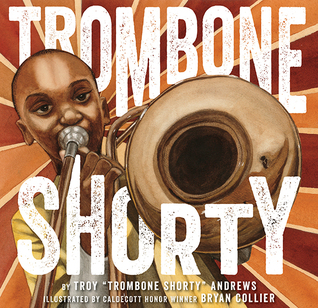
trombone shorty

Trombone Shorty
Author: Troy Andrews
Illustrator: Bryan Collier
Published April 14th, 2015 by Harry N. Abrams

I love stories that celebrate music, diversity, and passion, and this book does all of that. Troy’s story of learning how to play a trombone at age four, playing with Bo Diddley at the New Orleans Jazz & Heritage Festival at age 4, leading his own band by age 6, finding a deep love in music, and becoming a successful musician is inspiring. I love his stories of forming a band with his friends–nothing could stop them, even the lack of instruments! It is also so amazing that  The illustrations are beautiful as well. They are collage and watercolor and truly bring the story to life. I love how Collier brought the music to life by visualizing it in his illustrations.

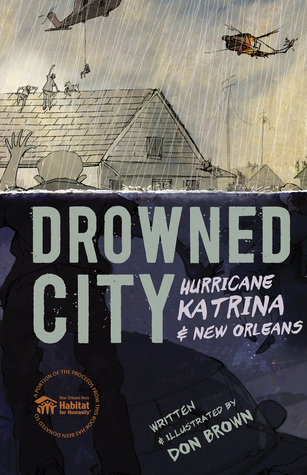
drowned

Drowned City: Hurricane Katrina and New Orleans
Author and Illustrator: Don Brown
Published August 4th, 2015 by HMH Books for Young Readers

I am a big fan of both of the books I’ve read by Don Brown because he does an amazing job at telling truth in an interesting way but without bringing any bias into it. He includes all of the truth with illustrations that make history come to life. Drowned City transports you back to the terror that was felt after Hurricane Katrina, but also shares information that wasn’t common knowledge because the media didn’t include it. This is a must read.

Check back next Wednesday for some more 2015 nonfiction titles!

Kellee Signature

Want to see Part One? You can view it HERE.
Want to see Part Two? You can view it HERE.
Want to see Part Three? You can view it HERE.
Want to see Part Four? You can view it HERE.
Want to see Part Five: We Need Diverse Books (NF)? You can view it HERE.
Want to see Part Six: We Need Diverse Books (F)? You can view it HERE.
Want to see Part Seven? You can view it HERE.

Culturally Responsive Teaching & the Brain by Zaretta Hammond

Share

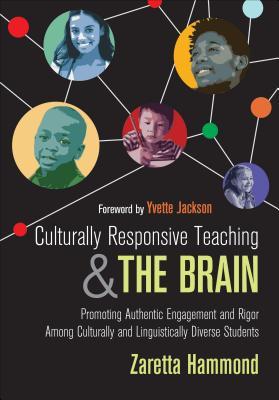
culturally responsive teaching and the brain

Culturally Responsive Teaching & the Brain: Promoting Authentic Engagement and Rigor Among Culturally and Linguistically Diverse Students
Author: Zaretta Hammond
Published: December 1, 2014 by Corwin

I’ve read about a dozen professional development texts about culturally responsive teaching because I am very committed to this pedagogical concept. I particularly liked this text because it offered a new angle. Zaretta Hammond weaves neuroscience with both traditional and contemporary ideas of culturally responsive teaching. She doesn’t just say how we can practice this pedagogy, but she tells what is happening in students’ brains when we do and do not use culturally responsive practices. Hammond provides an excellent layout for her ideas, and if anything, I would even love for some of the chapters and ideas to be expanded further. That said, her work connects well with other scholarship, so I would likely use this text in an education class and pair it with another more traditional text about the subject, such as Geneva Gay’s landmark Culturally Responsive Teaching: Theory, Research, and Practice.

I was fortunate enough to read this text with preservice teachers enrolled in a Multicultural Education class. While I have much experience with the ideas taught in this class, I am taking the course as a doctoral student with the intention of integrating the ideas into future courses I might teach. Therefore, from my discussions with peers, I have gotten an insider perspective of this text and how it might work in a classroom. They have enjoyed it very much. It is not a long text (falling just under 200 pages), but the ideas promote fantastic classroom discussions. Our discussion boards have been brimming with students’ thoughts, and there is no shortage of topics to discuss. I include a few topics I’ve discussed below.

As stated previously, Hammond discusses some of the main ideas featured in other culturally responsive texts. She argues that culturally responsive pedagogy is a mindset–not an easy list of tips or tools. However, she does provide many strategies, such as how to make our classrooms visually engaging and responsive to students. Instead of stock posters of MLK, Jr., she argues that teachers might include framed art from different cultures. I liked this idea a lot and agree that it is more culturally responsive. She also discusses the differences between cultures, such as oral versus written traditions and the role these play on student learning. She addresses myths, such as those about poverty and access and colorblindness.

A few chapters into the book, Hammond begins to introduce neuroscience and marries these concepts with culturally responsive practices. For instance, she describes the ways an individual’s brain reacts with the student feels fearful versus feeling accepted. This reminded me a bit of my 7th grade science class. I had a teacher who was quite cruel to me and very strict, overall. I don’t think I learned very much in that class because my brain felt a bit frozen. Then I think about all of the wonderful teachers I’ve had who were very open and accepting. I think I learned twice as much in these classrooms, and it shows the value of creating responsive rapport with students.

I could write pages upon pages about this book. It would be a disservice for me to summarize some of her sections, such as how the neurons in your brain fire, create new pathways, and connect to culture or the ways individualistic and collectivist positionings differ or how microaggressions impact students. So instead of summarizing and commenting on the whole book, I will recommend that you read it. It is excellent. The text offers ideas that are quite different from others I’ve seen about the topic. Hammond fills a gap in research that needed to be filled, and I look forward to reading other publications by her.

Which culturally responsive texts are your favorite?

RickiSig

Review, Giveaway, and Author Q&A!: Frozen Wild: How Animals Survive in the Coldest Places on Earth

Share

NFPB2015

Nonfiction Picture Book Wednesday

Nonfiction Picture Book Wednesday is hosted by Kid Lit Frenzy and was started to help promote the reading of nonfiction texts. Most Wednesdays, we will be participating and will review a nonfiction text (though it may not always be a picture book).
Be sure to visit Kid Lit Frenzy and see what other nonfiction books are shared this week!

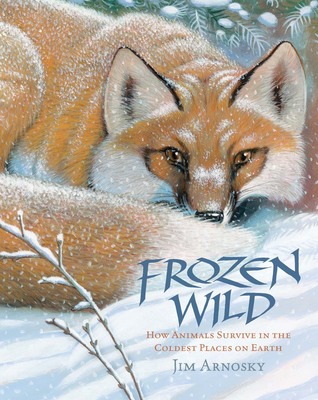
Frozen Wild

Frozen Wild: How Animals Survive in the Coldest Places on Earth
Author and Illustrator: Jim Arnosky
Published September 1st, 2015 by Sterling Children’s Books

Goodreads Summary: Quietly it comes—the dark and chill of winter. And in the snow-covered fields and forests, the great northern plains, vast stretches of frozen tundra, and icy polar regions, wild animals have to survive day after day, night after night, out in the cold. How do they do it? Kids can bundle up and join award-winning author, illustrator, and naturalist Jim Arnosky as he follows the tracks of otters, beavers, moose, polar bears, killer whales, penguins, fur seals, and other creatures to discover more about their lives during this frigid season. Arnosky’s stunning art includes five magnificent foldouts that reveal worlds under the ice and at the farthest, frostiest reaches of the globe.

Kellee’s Review: This was my first exposure to Arnosky’s work, and I truly enjoyed my first book by him (and I will definitely be finding more by him). What stood out to me first is that the book was organized very thoughtful and in a way that students will definitely find user friendly. I was then automatically blown away by the artwork. Jim Arnosky is truly an artist. All the illustrations were created using pencil and paint, and they are so realistic and beautiful. Then within each section, the facts that Arnosky choose to share are interesting, well researched, and support the illustrations perfectly. I also really liked the fold outs that expanded the illustrations to sometimes double the size possible without the fold out. Overall, the text is fact-checked and interesting and the illustrations were pieces of artwork.

Ricki’s Review: I knew this book was going to be a great read before I opened the first page. Kellee messaged me to tell me how much she liked it. We review a lot of books together each year, and we only message each other when we really, really like a book. I waited until I had a quiet time to fully immerse myself in the book. The beautiful artwork quickly enveloped me in the winter wildlife. I imagined Arnosky sitting beside his own photographs (which he used as references) to recreate the beauty of the wild. There is so much fantastic information in this text, and Aronsky presents the facts in an accessible way. I can’t wait until my son is a bit older because I know he will really enjoy reading it. It would make a great gift for a child who loves wildlife or wants to learn more about the coldest places on Earth.

Teachers’ Tools for Navigation: Frozen Wild, and the other books in his animal series, are made for classrooms. They can be used in may different ways. My first thought, beside having the book in classroom and school libraries, is using Arnosky’s books as a basis for lit circles where each group would have one of his books. They can use his book, his resources, and other resources to research the topic of each of his books. They then can do an inquiry project using all of their research.

Discussion Questions: What are some of the ways that animals stay warm during the winter?; What is the difference between the Artic and the Antarctic?; What are some ways that animals find food when it is cold?; Which animal do you think is made the best for surviving in the cold?

Author Q&A: 

Unleashing Readers: Frozen Wild is the newest book in your animal series. How do you choose the topics for each of your texts?

Jim Arnosky: Frozen Wild is my 137th book about wild animals and wild places. It is the newest book in my series of gatefold books for Sterling. The topics of these books came from either my own curiosity about certain groups of animals or from a suggestion on the part of my editor, Meredith Mundy, to have a book featuring a particular animal. When I work on a suggested topic (which has been rare) my job is to make that book reflect my own personality, viewpoint, experience, and research. That is the crux of being an author. Not just to pass along information, but to share any and all of your understanding gained in thinking about and studying the subject.

UR: How do you choose which animals to include in your books, and what is your research process for your books? 

JA: For Frozen Wild my process began with the animals around our farm in Northern Vermont whose tracks I follow all through our snow season. From there the book’s content expanded to my curiosity about the animals who live in places where cold weather can last most of the year. While portions of Frozen Wild were researched in books and conversations I’ve had with friends who have studied animals in these cold regions, and some of the book’s paintings were done from captive species in zoos, most of the time I research my books in the field with Deanna my wife. She photographs the animals while I videotape them.

The video allows me to study animal sounds, anatomy, movement, and behavior long after we have returned home. And Deanna’s still photos provide yet another viewpoint of the subjects I write about and paint.

UR: What is your art process? 

JA: For the painting, I sketch the scenes in pencil on my paper. Then I over- paint the sketch with a layer of acrylic colors, using colors that blend with portions of the scene. On this underpainting of various color area, I re-sketch the scene in white chalk, and then paint the next layer, blocking out the figures and the background. Layer after layer, I build a deeply colored picture that, if you look at the originals with a magnifying lens as I do while I detail the art, you can actually see the multiple layers of color one on top of the other, the first to the top layer. It always thrills me to see that physical dimensional quality of what I have done.

UR: Are there any nonfiction authors or illustrators that influence you? 

JA: My favorite authors are the singer-songwriters such as Bob Dylan, John Denver, James Taylor, Jimmy Buffett, and Joni Mitchell. We did not have books in our home while I was growing up. And our little school had no library to speak of. Later, I found favorite authors in the great books – Thor Heyerdahl’s Kon Tiki, Ernest Hemingway’s The Old Man and the Sea, Mark Twain, John Burrough (the great naturalist) Henry Benston, Aldo Leopold, and Hal Borland.

My favorite illustrators (and painters) are Bruno Liljefors, Bob Kuhn, N.C. Wyeth, Roger Tory Peterson, Audubon, Charles Tunniclyfe, Ernest Thompson Seton, and Winslow Homer.

I am self taught in both art and nature and have learned much about art from studying these great masters. Also, I have met and learned from many great naturalists and scientists who have been generous in sharing their knowledge with me.

UR: Any plans for the next book in the series? 

JA: Presently I am working with Starwalk Kids Media in bringing my popular Crinkleroot series of nature guides into the digital realm. I am also working on another picture book. I have a novel making the rounds and have just finished a picture book about the invasive species problem threatening our wildlands. It is called Wild Invaders. For the Sterling series, our next book will be about animal camouflage.

Thank you for your interest in my work! I am happy to Skype a conversation with you if you wish. Deanna (jarnosky@fairpoint.net) can set that up. Also for further info please go to my website (www.jimarnosky.com) There is a piece in there describing Deanna and my early days in the can where, living basically, I was able to find my way into nature and writing and illustrating books. It is called “Born In A Tree – A Natural History”.

We are seeing color change now. And the air is getting cooler. Soon winter will be upon us again.

Your friend in books, Jim Arnosky

We Flagged: 

Frozen-Wild-image

Read This If You Loved: Winter Bees & Other Poems of the Cold by Joyce Sideman and Rick AllenFirefly July by Paul JaneczkoFeathers by Melissa StewartBorn in the Wild by Lita JudgeForest Has a Song by Amy Ludwig VanDerwaterOver and Under Snow by Kate Messner, Seymour Simon animal books and extreme series

Recommended For: 

classroomlibrarybuttonsmall closereadinganalysisbuttonsmall

Giveaway!

a Rafflecopter giveaway

What to know more about the book? Check out Mrs. Knott’s Book Nook!

Signatureand RickiSig

**Thank you to Joshua at Sterling Publishing for providing copies for review and the giveaway!**

Flying Cars: The True Story by Andrew Glass

Share

NFPB2015

Nonfiction Picture Book Wednesday

Nonfiction Picture Book Wednesday is hosted by Kid Lit Frenzy and was started to help promote the reading of nonfiction texts. Most Wednesdays, we will be participating and will review a nonfiction text (though it may not always be a picture book).
Be sure to visit Kid Lit Frenzy and see what other nonfiction books are shared this week!

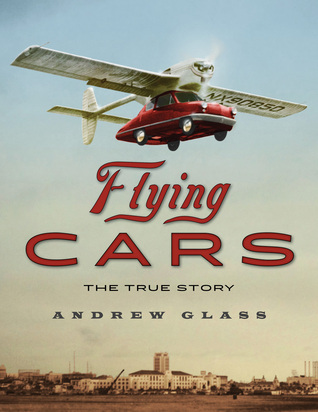
flying cars

Flying Cars: The True Story
Author: Andrew Glass
Various Photographers
Published August 25th, 2015 by Clarion Books

Goodreads Summary: Humans have always wanted to fly. As soon as there were planes and cars, many people saw a combination as the next step for personal transportation, and visionary engineers and inventors did their best to make the flying car (or the roadable plane) a reality. This book is a breezy account of hybrid vehicles and their creators, and of the intense drive that kept bringing inventors back to the drawing board despite repeated failures and the dictates of common sense. Illustrated with archival photos, this entertaining survey takes readers back as far as Icarus and forward into the present day, with a look toward the future. Includes author’s note, source notes, bibliography, index.

Kellee’s Review:  What an odd, interesting part of history! I had no idea I even wanted to learn about this, but I am glad that I was exposed to it. I think Andrew Glass did a good job mixing history of aviation in general and the idea of a flying car. It was a good combination of informational and literary nonfiction, so it will hold readers’ attention throughout. It was also fascinating to see all of the photographs of the prototypes made over time. What innovation! I think the photos will draw the reader in then the history and stories will keep them there. 

Ricki’s Review: The minute I pulled this book out of the mailer, my son had his hands all over it. He is much younger than the intended audience (middle or high school), but it made me chuckle. This shows how excited students will be about this concept! Like Kellee, I had no idea that flying cars existed. I asked my husband, “Did this really exist?” He launched into a full history lesson about the development about flying cars and said they were very interesting to him as a teenager. This is yet more proof that this book would be a great resource for classrooms. I liked learning about all of the different attempts of flying cars and think this book would inspire students to be innovative in their thinking, particularly in the context of design and engineering. The prototypes made me feel a bit wistful that I had more of an engineering brain!

Teachers’ Tools for Navigation: The trend of readable and interesting middle grade nonfiction that students will find accessible is really increasing the likelihood of students reading nonfiction text, and this text fits that bill. We think students will find the topic interesting and, thus, pick up the book. Teachers could use it to talk about text features and the importance of captions, photographs, and chapter titles as well as look at how the book is structured and discuss why the author decided to set it up the way it is. The book could also be a resource for an inquiry mini-project (see Discussion Questions below).

Discussion Questions: How would flying cars make our lives easier?; Why aren’t flying cars a reality?; What do you think the benefits of flying cars are and what are the struggles?; After watching some of the archival videos, which of the flying cars interests you the most? Use Flying Cars and other resources to learn more about it.

We Flagged: “Cars fly every day–in fantasy. They soar by pure magic, like the Wesley family car in the Harry Potter series, or by sprouting wings, like Chitty Chitty Ban Bang. Some use high-tech gadgetry, allowing well-equipped heroes like James Bond and Batman to make incredible cliffhanger escapes.

But visionary engineers and inventors haven’t just imagine flying cars. Some actually built them. . . and then drove them up into the sky” (p. 1).

Read This If You Loved: Nonfiction books about aviation or automobiles including Amelia Lost: The Life and Disappearance of Amelia Earhart by Candace Fleming

Recommended For: 

classroomlibrarybuttonsmall

Signatureand RickiSig

**Thank you to Barbara for providing copies for review!**
Children Growing Up with War by Jenny Matthews

Share

NFPB2015

Nonfiction Picture Book Wednesday

Nonfiction Picture Book Wednesday is hosted by Kid Lit Frenzy and was started to help promote the reading of nonfiction texts. Most Wednesdays, we will be participating and will review a nonfiction text (though it may not always be a picture book).
Be sure to visit Kid Lit Frenzy and see what other nonfiction books are shared this week!

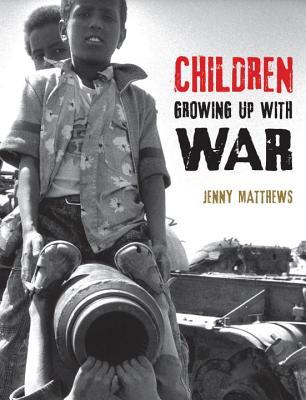
children growing

Children Growing Up with War
Author and Photographer: Jenny Matthews
Published October 14th, 2014 by Candlewick Press

Goodreads Summary: Through personal narrative and candid photographs, a photojournalist chronicles young lives upended by violence and strife.

The right to adequate nutrition and medical care.
The right to free education.
The right to a name and nationality.
The right to affection, love, and understanding.

In conflict zones around the world, children are denied these and other basic rights. Follow photographer Jenny Matthews into refugee camps, overcrowded cities, damaged villages, clinics, and support centers where children and their families live, work, play, learn, heal, and try to survive the devastating impact of war. This moving book depicts the resilience and resourcefulness of young people who, though heavily impacted by the ravages of war, search for a better future for themselves, their families, and their cultures.

Kellee’s Review:  This was a very tough book to read. I thought I’d be able to sit and read it all in one sitting, but I couldn’t. As a mother and a teacher, I love children, and it truly saddened me to see the situations that these children are in.

Fortunately, as an American, very few wars touch our lives. Unfortunately, our news doesn’t focus on many of the tumultuous conflicts that are active throughout the world, so we have become detached from reality. Our students are even more detached. That is why this book is important. It puts it all into perspective and really makes me feel and think. We rarely look at the humans that are being affected by the wars, we always focus on getting the bad guy. This book puts faces to the people, specifically the children, being affected every day.  I found it very interesting how the author set up the book. You can tell she is a photojournalist because it is set up to give information in the most impactful way.

Ricki’s Review: When I was teaching high school, one of my main goals was to provide my students with a more global perspective. I wish I had had this incredible text available at the time because it evoked powerful emotions in me. I know it would do the same for my students. The balance of photography and words is very well done, and I will admit that I took many breaks because these images and words hit me to my core. This is an important book that belongs in classrooms. It is a good length that teachers will easily be able to use it as a pairing with other texts about war and genocide. It is important to learn about our past, but it is just as important to understand the wars that persist today—which is foundational to this book. I wish I could meet this author to thank her for writing a text that moved me so deeply.

Teachers’ Tools for Navigation: This book presents many different discussion opportunities (e.g., the affects of war on children throughout the world, different active wars,Rights of the Child, importance of journalism). It would be fascinating to read with students and hear their perspective on the very tough topics and perspectives shared in the book.

Also, the book sets up nicely for a jigsaw discussion. The author set up the book to look at the different ways lives are affected: home & displacement, family, health, work, and school & play. Within each of these sections, she also looks at different places in the world such as Tunisia, Jordan, Afghanistan, Uganda, Rwanda, Gaza, and Kurdistan. She also includes different Rights of the Child throughout the book. The teacher could jigsaw either with the topic, the places, or the Rights and have students dig deeper.

Another way to look at this book is from a journalistic/photography point of view. I [Kellee] teach journalism, and I already plan on using Photos Framed as part of my photography unit, and I think this book will add an even deeper look into the importance of photography/journalism and with a topic (children’s lives) that my students can connect with.

Discussion Questions: How does Jenny Matthews’s photos, books, and stories help children who are growing up with war?; Why would Jenny Matthews choose to go into such dangerous situations?; If you had to choose one single photo to sum up Children Growing Up with War, which of these would you choose? (p. 42); Which of the UN’s Rights of the Child are affected when war is involved?; In what different way does war affect the children growing up in the conflict area?

We Flagged: “How would you feel if you lost your home and had to flee from your own country? Imagine losing some or all of your family, either as a direct result of fighting or indirectly through illness or disease. You might have to work to support your family or fight and kill other people just to survive. And how can you go to school if it’s being used as an army command outpost and all the books have been destroyed?

This is the reality for too many children and their families in the world. Today, children are still growing up with war—the consequences of which they’ll live with for the rest of their lives” (p. 3).

Read This If You Loved: Photos Framed: A Fresh Look at the World’s Most Memorable Photographs by Ruth Thomson
This would be an excellent nonfiction companion to: Never Fall Down by Patricia McCormick, Endangered by Eliot Schrefer, Caminar by Skila Brown, The Other Side of the Wall by Simon Schwartz, The Milk of Birds by Sylvia Whitman, or Son of a Gun by Anne de Graaf.

Recommended For: 

readaloudbuttonsmall closereadinganalysisbuttonsmall

Signatureand RickiSig