Review and Author Interview!: If Picasso Painted a Snowman by Amy & Greg Newbold

Share

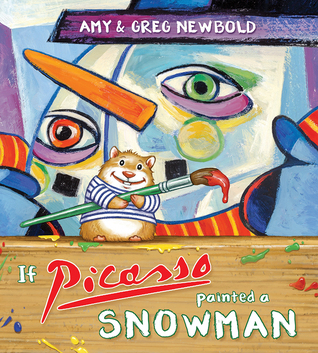
If Picasso Painted a Snowman
Author: Amy Newbold
Illustrator: Greg Newbold
Published October 3rd, 2017 by Tilbury House Publishers

Summary: If someone asked you to paint a snowman, you would probably start with three white circles stacked one upon another. Then you would add black dots for eyes, an orange triangle for a nose, and a black dotted smile. But if Picasso painted a snowman…

From that simple premise flows this delightful, whimsical, educational picture book that shows how the artist’s imagination can summon magic from a prosaic subject. Greg Newbold’s chameleon-like artistry shows us Roy Lichtenstein’s snow hero saving the day, Georgia O’Keefe’s snowman blooming in the desert, Claude Monet’s snowmen among haystacks, Grant Wood’s American Gothic snowman, Jackson Pollock’s snowman in ten thousand splats, Salvador Dali’s snowmen dripping like melty cheese, and snowmen as they might have been rendered by J. M. W. Turner, Gustav Klimt, Paul Klee, Marc Chagall, Georges Seurat, Pablita Velarde, Piet Mondrian, Sonia Delaunay, Jacob Lawrence, and Vincent van Gogh. Our guide for this tour is a lively hamster who—also chameleon-like—sports a Dali mustache on one spread, a Van Gogh ear bandage on the next.

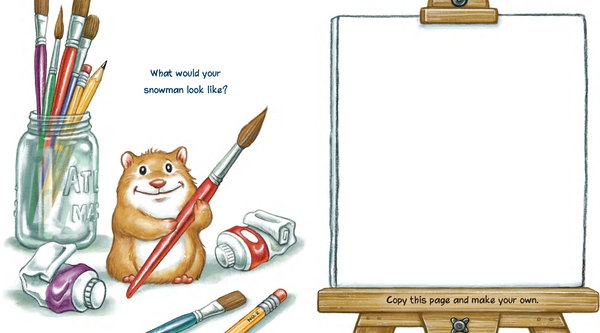
“What would your snowman look like?” the book asks, and then offers a page with a picture frame for a child to fill in. Backmatter thumbnail biographies of the artists complete this highly original tour of the creative imagination that will delight adults as well as children.

ReviewTrent and I are really big fans of this one! It has become a regular bedtime book. Amy & Greg Newbold did a fantastic job teaching about art and artists while at the same time adding an entertainment factor through an imaginative and narrative aspect. Now, my experience reading this book for the first time is very different than Trent’s and other readers’ experiences will be like because of prior knowledge. Since I already knew the artists, I could pick out the style elements that were included in the snowman artwork, loved many of the snowmen because of how much it did look like the artists’ work, and even found aspects funny. Trent, on the other hand, read the book from a different lens because he saw all the snowmen first then we talked about each artist and using the back matter and internet, he learned about each of the artists.

Teachers’ Tools for Navigation: It would be so interesting to use the book in both ways: either with giving background knowledge ahead of time or introducing the book then the artists. And the book does such a wonderful job promoting creative freedom and sharing that each artist has their own style and medium which would lead to some really great opportunities for students to explore what their artistic style would be.

Discussion Questions: 

  • [After studying an artist not in the book] How do you think ____ would paint/make/create a snowman?
  • What parts of each artist’s style did the Newbolds utilize when creating If Picasso Painted a Snowman?
  • Which snowman creation was your favorite? Why?
  • After reading the back matter, which artist would you like to learn more about?
  • Compare and contrast a “regular” snowman which each snowman in the book. Compare and contrast the different types of snowmen.

Author Interview: I was lucky enough to ask Amy & Greg interview questions. I chose to ask:

-How did you choose which artists to highlight in your book?
-How did you each prepare for writing the book?
-Any specific reason for the choice of a hamster?
-Other than art history, what do you hope readers get from the book?

Amy: I got the idea for If Picasso Painted a Snowman while visiting the Musee Picasso in Paris, France. Pablo Picasso’s work was so inventive, and I wondered what it would look like if he created a snowman. That was the beginning of the book. I knew right away certain artists that I wanted to include in the book, including Georges Seurat, Jackson Pollock, Piet Mondrian, and Salvador Dali. In the beginning, I wanted to include all my favorite artists, but as the project took shape, it became more important for me to include artists who made a significant contribution to art. Greg and I discussed each artist, as he had to envision how to paint a snowman in the style of that painter. He brought in artists like Paul Klee and Roy Lichtenstein. It was a wonderful experience to research each of these artists and we both gained a deeper appreciation for their work.

The actual writing of the book took place over many months. Some of the lines in the book came easily, while others took quite a bit of time to figure out. I read the text out loud multiple times and made changes if the words weren’t flowing.  Greg and I also participated in a workshop at a writing conference where we were able to get critiques on the book during the writing process. Testing out the manuscript in front of a group really helped. I didn’t write the biographies of each artist until we had signed our contract with Tilbury House to do the book. Once we had a contract, I got busy researching so I could write something that is hopefully informative and interesting about each of these amazing painters.

Greg: This project was so much fun that it often felt like playing rather than work. Before beginning a piece, I researched the artist’s style, the materials and techniques that they used and what motifs and design quirks made them unique. Each piece was a treat to work on and for the most part, I feel that I captured some of the essence of what each artist was known for. I learned many new processes but probably the most fun I had was imitating Jackson Pollock’s drip style “action paintings”. Some people look at Pollock’s work and assume that they could do it since all you have to do is splatter paint around. After more study I realized that Pollock’s work is far from random and unplanned. There is an interesting rhythm and process in the way he layered paint. I had a great afternoon in the back yard dancing around my canvas laid on the ground deciding where the next splash of paint would look the best and trying to put it there. My Pollock turned out pretty well and was also used as the endpapers of the book. I was so entertained by the process that I want to do it again.

I designed the hamster in honor of a family pet named Max. He is the visual tour guide through the book, and you can see evidence of him on nearly every page. His presence adds another dimension to the book as he does things like carry a ruler to get straight lines on the Mondrian piece. In another picture, he wears Picasso’s striped shirt, or Monet’s beret. The hamster is not in the text, but offers several fun references for readers in the know. Keep an eye out for him and his wardrobe changes throughout the book!

Amy & Greg: We both hope that this book encourages artists of all ages to have fun with art. It is simply an introduction, an invitation to try different techniques and styles, use unexpected colors, explore and distort shape and line. By looking at the variety of ways artists painted in history, we hope kids understand that they can find and express their own creative vision.

Flagged Passages: 
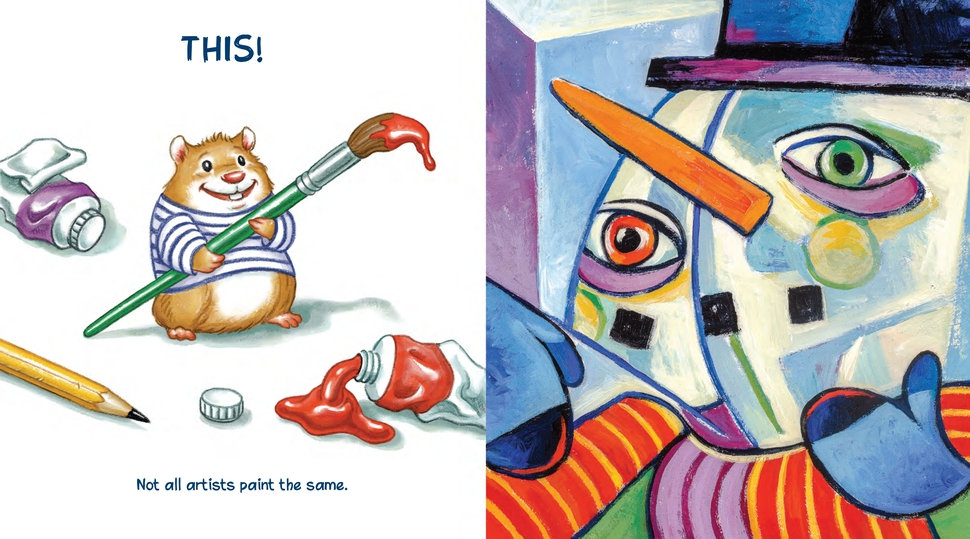
THIS! is how a snowman would look if Picasso painted one.

Read This If You Love: Art!; Biographies of artists such as The Noisy Paintbox by Barb RosenstockViva Frida by Yuyi Morales, Sandy’s Circus by Tanya Lee Stone, A Splash of Red by Jennifer Fisher Bryant; The Dot by Peter H. ReynoldsLinnea in Monet’s Garden by Christina Björk; Seen Art? by Jon Sciezska; The Day the Crayons Quit by Drew DaywaltPerfect Square by Michael Hall; My Pen by Christopher Myers, Paint Me a Picture by Emily Bannister, Mini Museum Series

Recommended For: 

Signature

**Thank you to Nicole Banholzer for providing a copy for review and to Amy & Greg Newbold for their answers!**
Red & Lulu by Matt Tavares

Share

Red & Lulu
Author & Illustrator: Matt Tavares
Published September 19th, 2017 by Candlewick Press

Summary: Separation and miles cannot keep a determined cardinal from his loved one in an ode to serendipity and belief that is destined to be a new Christmas classic.

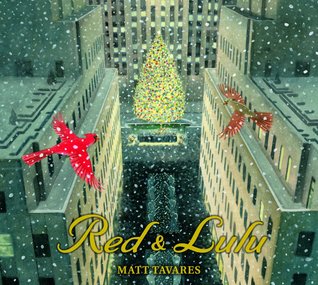
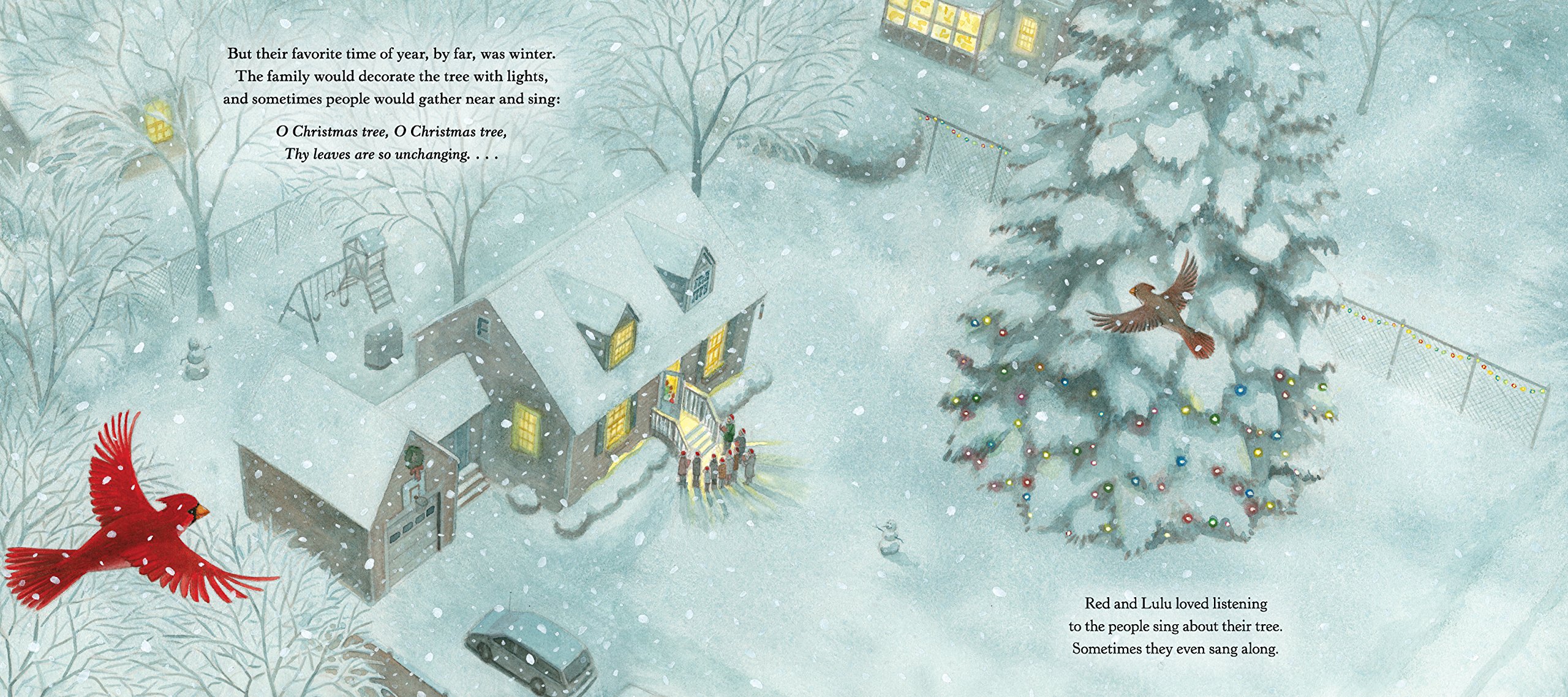
Red and Lulu make their nest in a particularly beautiful evergreen tree. It shades them in the hot months and keeps them cozy in the cold months, and once a year the people who live nearby string lights on their tree and sing a special song: O Christmas Tree, O Christmas Tree. But one day, something unthinkable happens, and Red and Lulu are separated. It will take a miracle for them to find each another again. Luckily, it’s just the season for miracles. . . .

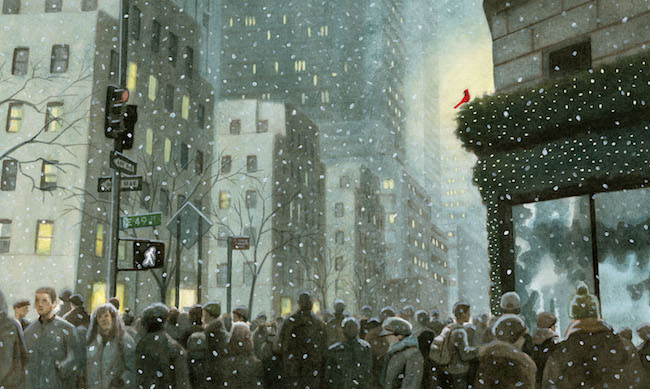
From Matt Tavares comes a heart-tugging story combining the cheer of Christmas, the magic of New York City, and the real meaning of the holiday season: how important it is to be surrounded by love.

Review: Wow, Matt Tavares! So much is going on in this book, and it is all beautiful. First, we meet the stars of our book: Red & Lulu, and you’ll love them right away. Their love flies off the page. And the scene when they are separated broke my heart! And since I don’t read summaries, I had no idea what was going to happen, and it was so sad, but Red would not give up.

In addition to the story of love and separation, it is also a story of the Rockefeller Christmas Tree. Tavares includes back matter about the tree, its history, and traditions. Through its inclusion and the repetition of “O, Christmas Tree,” the mood is set and you are transported to NYC at Christmas time.

Finally, I cannot forget to mention the AMAZINGLY BEAUTIFUL illustrations. They took my breath away. They are edge to edge, inclusive, and so detailed.

Teachers’ Tools for Navigation: Red & Lulu is going to be an instantaneous Christmas classic! And I loved the discussion of Rockefeller Center which allows for a historical and American tradition conversation around the book.

Discussion Questions: 

  • What is so special about the very final page of the book?
  • How can you tell the difference between Red & Lulu? Why did the author choose to illustrate them that way?
  • How did the author’s repetition of “O, Christmas Tree” affect the mood of the book? And what did the lyrics indicate in the story?
  • Before you knew where Lulu ended up, what clues did Matt Tavares include to foreshadow where Lulu was?
  • Which spread of illustrations is your favorite? Why?
  • What did you learn about Rockefeller Center and its Christmas Tree from the book? What would you like to learn more about?

Flagged Passages: 

Book Trailer: 


Read This If You Love: CHRISTMAS!, Birds by Kevin Henkes, Bluebird by Bob Staake, A Christmas Wish for Corduroy by B.G. Hennessy, Other titles on my student Maria’s Top Christmas Books List

Recommended For: 

Signature

**Thank you to Candlewick Press for providing a copy for review!**


Musnet Series by Kickliy

Share

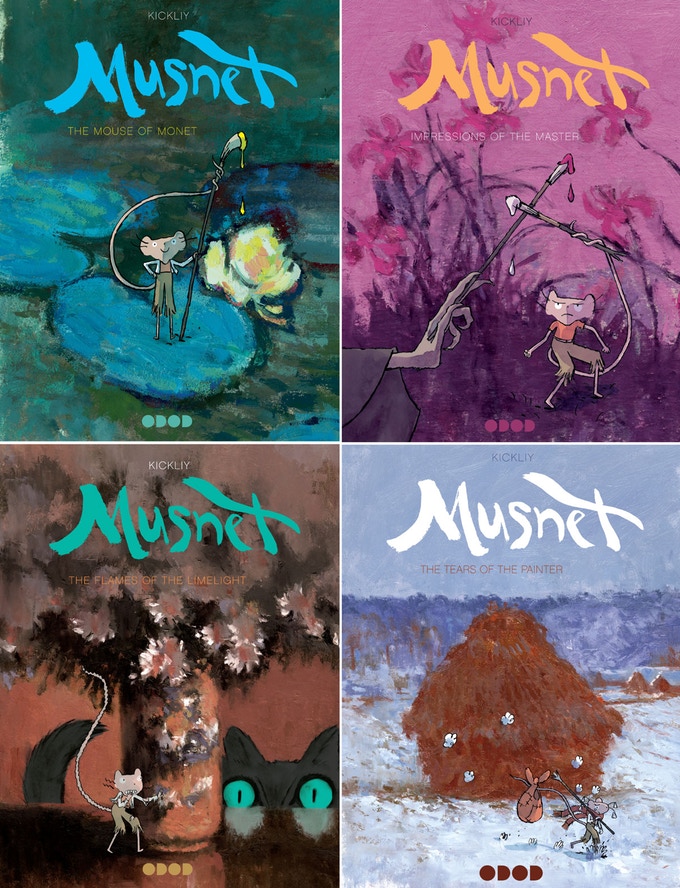
Musnet series
1. The Mouse of Monet
2. Impressions of the Master
3. The Flames of Limelight
4. The Tears of the Painter

Author: Kickliy
Published August 2nd, 2016; November 1st, 2016; April 11th, 2017; October 10th, 2017 by odod books

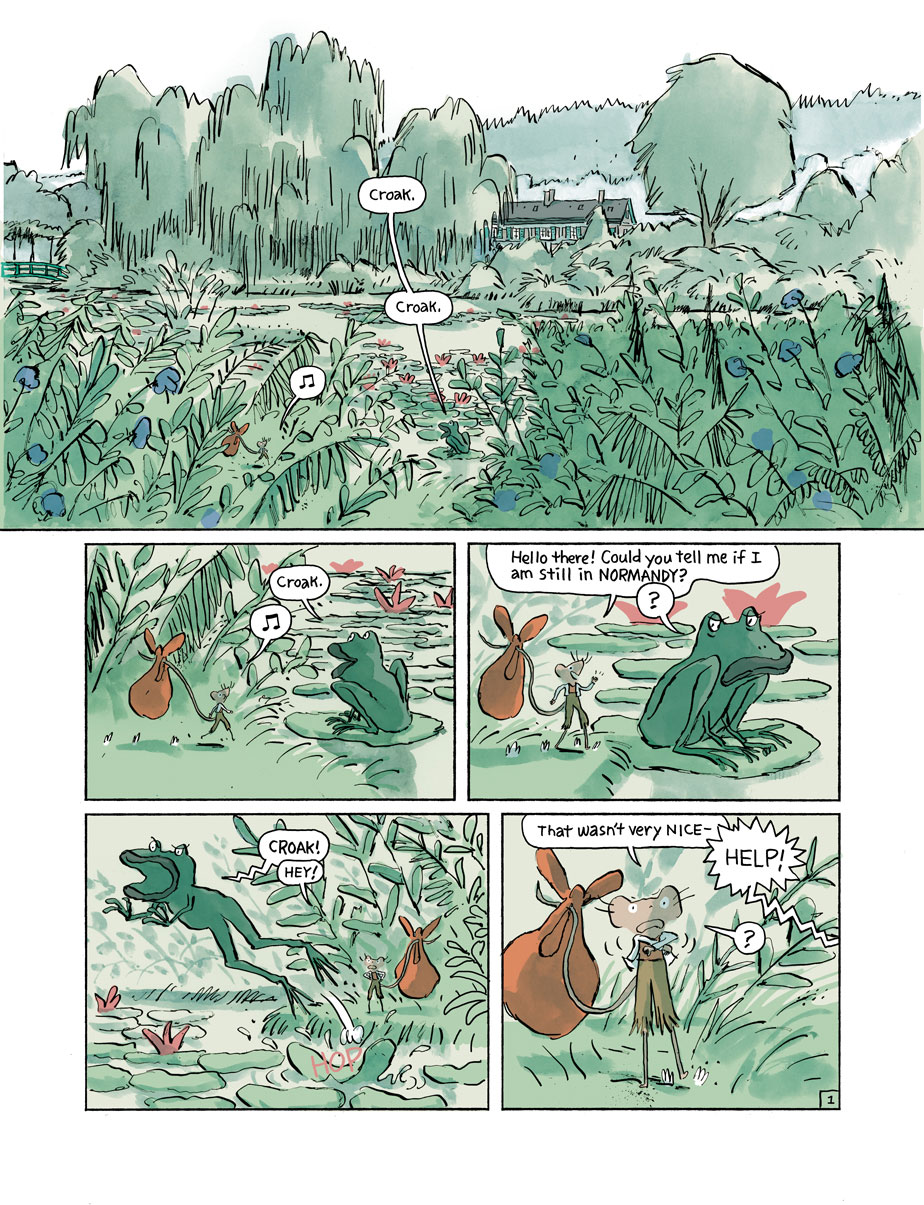
Summary: A young boy mouse travels the country side looking for work and happens upon the Monet’s garden. He takes on a job and becomes inspired to learn to paint. Will he paint in the classical ways, or in the new style of the impressionist? Which way will his brush sway?

Musnet wants to be the best mouse painter that ever was. But, he’s caught between two worlds. On one paw, Musnet loves the classical style of his old teacher, the squirrel Remi. On the other paw, Musnet can’t help to be drawn to the fresh and new art of the human master, Monet. Which path will the Mus choose?

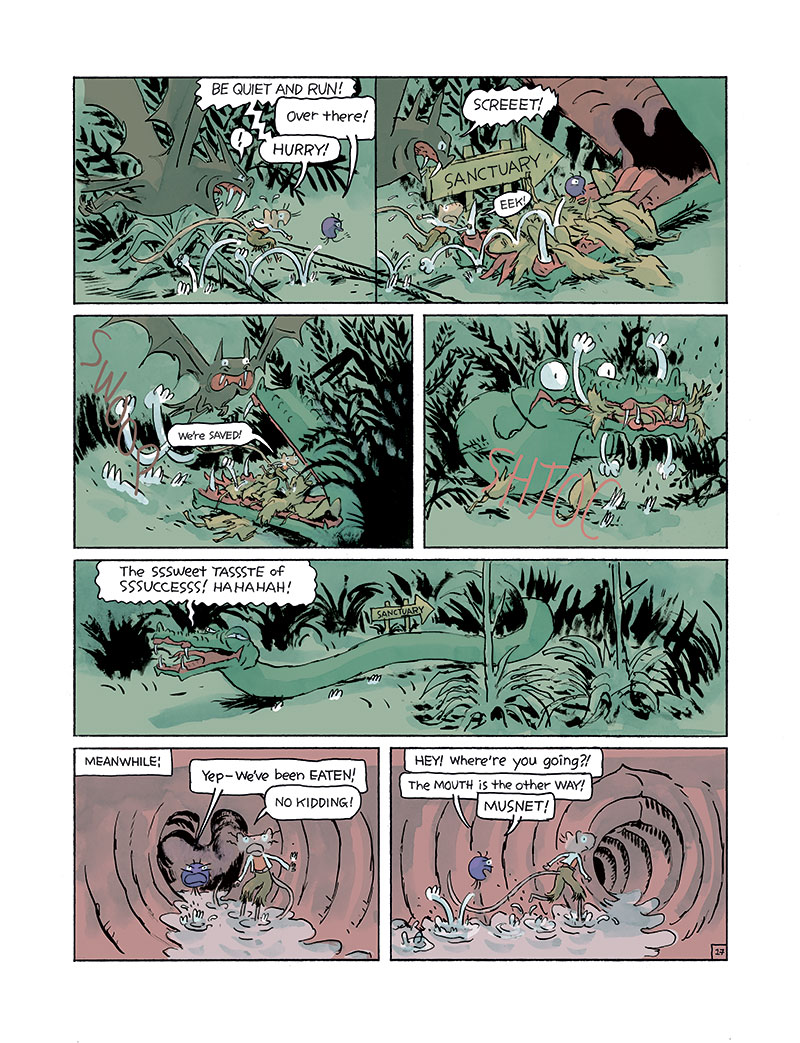
It’s dark season in Musnet’s world. His adoptive family faces eviction, his Master Remi is deathly ill, he’s chased by snakes, cats, and vampire bats, and—on top of all that—Musnet faces the most challenging painting commission of his life! Can he rise to challenges and brush them all away?

As snow and ice chill Monet’s garden, even colder things await Musnet this winter season. Mya, Musnet’s best friend, gets her own adventure. Chiby, the Japanese spider, gets in a tangle with a certain muscular rat. Is there even any room left for our vagabond mouse? Drama, action, adventure, abound in the final volume of the award nominated series.

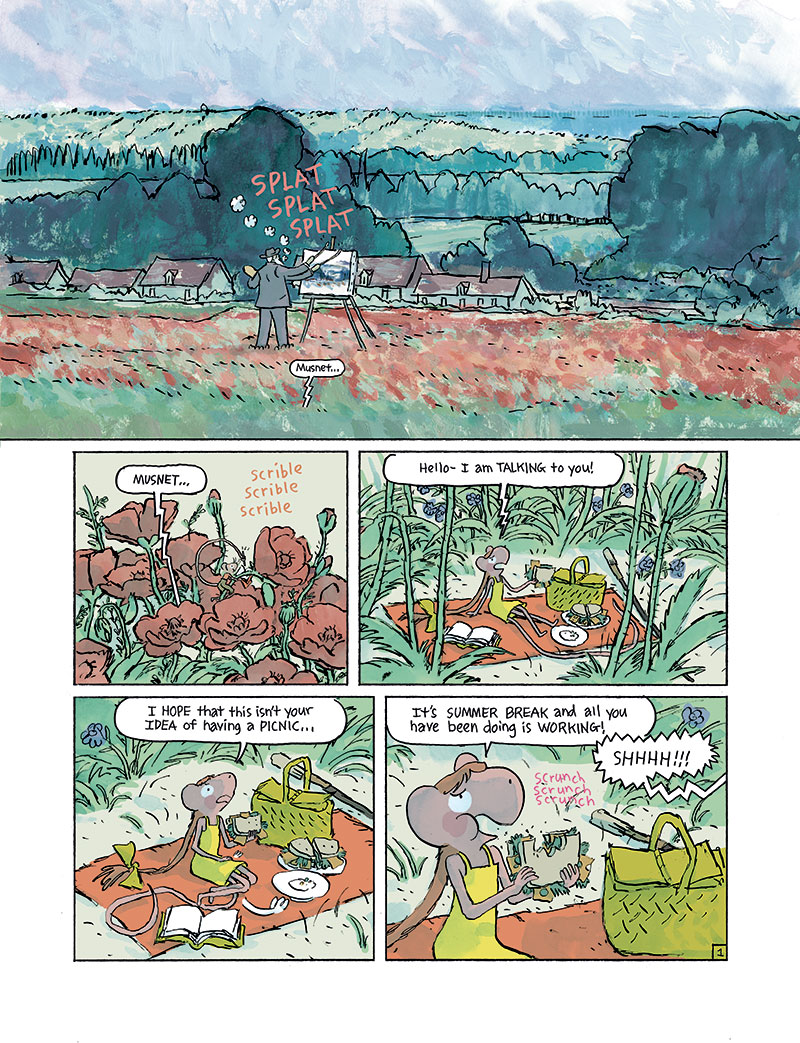
Musnet is drawn and painted in a beautiful, lush and inky style popularized by Paul Pope and French comics masters such Blutch and Christophe Blain.

“It’s a really enjoyable story that brings Monet’s paintings to life through some incredibly sweet and memorable characters. It’s challenging and imaginative, and I’m sure it will spark an obsession with painting (and maybe also mice).”—Girls Like Comics

“This new series revolves around a painting mouse found in Monet’s famous gardens in Giverny: the nameless, orphan mouse is befriended by Mya and her mouse family, who live inside the artist’s house. Introduced to painting after he begins working for Remy, an old squirrel painter, he is enchanted by Monet’s work. Beautifully painted […] charming tale of humour, art, and adventure, as the little mouse grows to find his meaning and place in the world.”—The Guardian

Musnet: The Mouse of Monet is a gorgeous and friendly story about a mouse discovering his calling in life and also what he wants to be called. Take a friendly and likable orphaned mouse, place him in a beautifully rendered watercolor and ink medium with miniature Monet masterpieces and you get a stunning and engaging story of a mouse learning to become an artist. He makes friends, finds a mentor, and even gets to sneak a peek inside Monet’s studio. It’s incredibly well executed, entertaining, informative, and absolutely absorbing. It is one of the best books I’ve read this year.” —The Picture Book Review

Review: After I read book one of this series, I could not wait to share it with everyone I talked to: “I love when books include art history in them because it makes me feel at home since I grew up in art museums as a museum director’s daughter. Musnet is no different. As soon as I realized that Musnet had ended up in Monet’s famous garden, I was fascinated with Musnet’s story and his journey to becoming an artist. Kickliy’s artwork pays perfect homage to Monet’s work and is a beautiful backdrop to Musnet’s story.” And I was really excited to read the rest of the books in the series.

Luckily they did not disappoint! Book one was just an introduction to the characters who continued to mature throughout the arc of the story. Musnet’s situation fluctuates causing the reader to quickly move from relief to panic which ensures the reader wants to keep going through the series. Although the series begins with Musnet just looking for a home, it ends with Musnet looking for what life has in store for him as an artist.

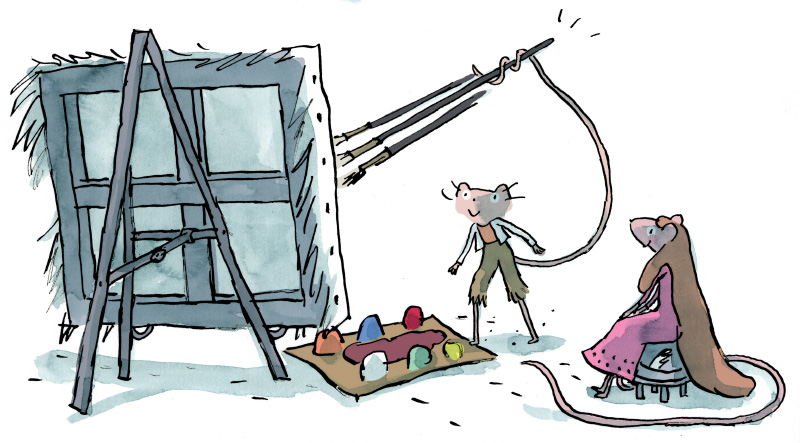
But what makes this series even more unique is the level of graphics. Kickliy’s ink, watercolor, and oil illustrations are reminiscent of the period in which Monet lived–it is like reading art. Kickliy even paints little oil paintings for the book for whenever a Musnet or Monet work is shown.

Teachers’ Tools for Navigation: “Musnet lives in Monet’s garden. Was there a roach under Van Gogh’s bed? Or a fish behind Munch’s Scream? If so, what would their story be like?” Have students create stories of animals that ‘live’ in the background of famous paintings. They’d need to research the art styles for illustrations and the time period/place of the painting for their setting, so this activity would be a perfect cross-curricular for writing, reading, art, and history.

Parts of the book would also be really great assets for engagement and information in art classrooms. Remi, Monet, and Musnet are talented artists who share insight throughout the series.

Discussion Questions: 

  • After book one, did you think Musnet was going to become a successful artist?
  • How does Kickliy’s illustrations fit the period of the book’s setting?
  • Which conflict in Musnet’s story affected Musnet’s conclusion the most?
  • Why do you think Kickliy chose Monet as the artist inspiration for his book?
  • What artist would you want to meet?
  • How did meeting Mya change Musnet’s life? Remi? Chiby?

Flagged Passages: 

Read This If You Love: Art, Graphic Novels, Monet, Mira’s Diary by Marissa Moss, The Museum by Susan Verde, Babymouse series by Jennifer and Matthew Holm, The Tale of Despereaux by Kate DiCamillo, Redwall by Brian Jacques, The Museum by Susan Verde

Recommended For: 

Signature

Prince and Pirate by Charlotte Gunnufson

Share

Prince and Pirate
Author: Charlotte Gunnufson
Illustrator: Mike Lowery
Anticipated Publication: May 9, 2017 by Putnam

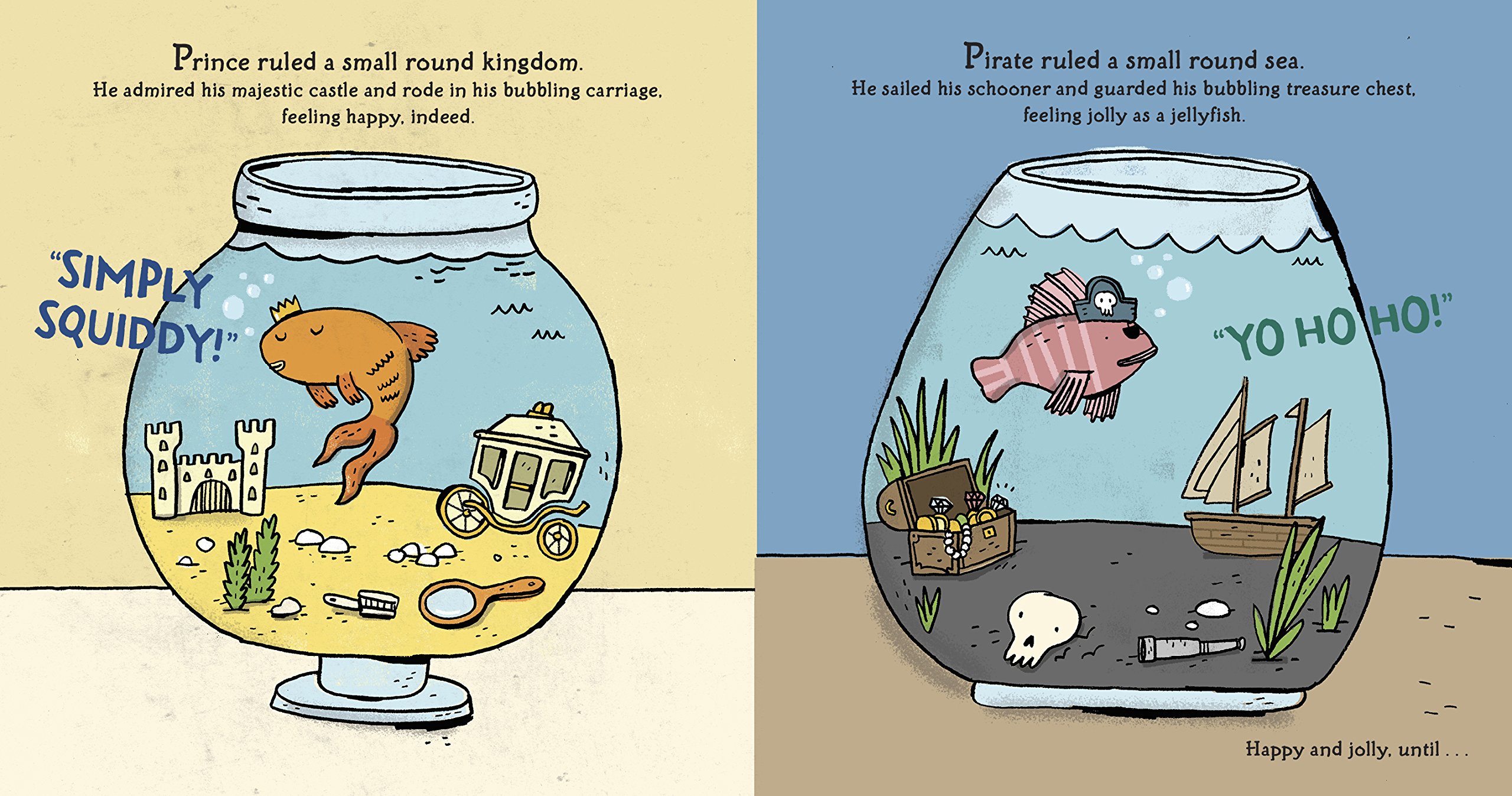
Goodreads Summary: When two little fish with big personalities have to share the same tank, there are rough seas ahead!

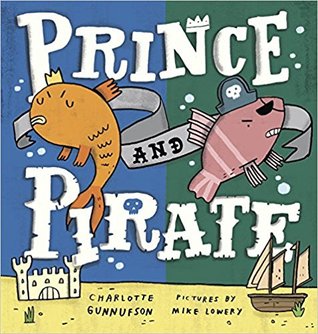
Prince and Pirate are proud masters of their very own fishbowls, and life goes along swimmingly–until they’re scooped up and plopped into shared waters.
Prince is horrified to find this cheeky cod trespassing in his kingdom.
Pirate is sure this scurvy sea slug has come to plunder his treasure.
Thus, a battle of regal sneers, seaworthy stink-eyes, and off-the-hook insults begins.
Prince and Pirate’s hilarious duel for territory will elicit gales of giggles, hearty guffaws, and heartfelt smiles. Just when it seems their struggle might end in a silly stalemate, a little surprise convinces them to find a way to get along–swimmingly.

Ricki’s Review: My son has Charlotte Gunnufson’s Halloween Hustle, and we read it quite often. He loves the kooky characters and fun within the text. Prince and Pirate is no different. I loved reading this book aloud, and my son was giggling as turned each page. The book is cleverly crafted, and the words and illustrations pop off of the pages. I can’t help but think about how the author conceptualized the novel. I imagine her looking at a fishbowl and thinking about the characters amongst her fish. This book would make a wonderful text to spur creative writing amongst students. I think their imaginations would soar after reading it. 

Kellee’s Review: I think Mike Lowery’s illustrations are so much fun and add such a special personality to any story, and with this book, his illustrations met a story that definitely lived up to his standards. (I also want to compliment the book’s designer who also made the font as fun as the illustrations.) Prince and Pirate were loners who all of a sudden are forced to live together and do. not. like. it. However, when they both have the same goal to try to reach, they are able to cooperate and learn to work (and live) together. Through humor and ridiculous name calling, Gunnufson tells a story that shows how differences don’t have to be the end of a possible friendship.

Teachers’ Tools for Navigation: Teachers might ask students to create their own fish characters. They could use the prince and pirate as a model and design a similar text. This book serves as a wonderful mentor text for learning about how to build character and/or teaching dialogue. Don’t forget to check out the Educator’s Guide along with other fun, free activities on the author’s website, https://www.booksbycharlotte.com/activities.

Discussion Questions: How do you think the author conceptualized this book?; How do the words and illustrations work together to form an effective story?; How does the author build character? What other fish characters might emerge in the story? How would the story be different if the author introduce a ____ type of fish?

Flagged Spread: 

Read This If You Loved: Halloween Hustle by Charlotte Gunnufson; Lady Pancake & Sir French Toast by Josh Funk; Whose Story is This, Anyway? by Mike Flaherty; Dragons Love Tacos by Adam Rubin, Doodle Adventures by Mike Lowery

Recommended For: 

readaloudbuttonsmall classroomlibrarybuttonsmall

RickiSigandSignature

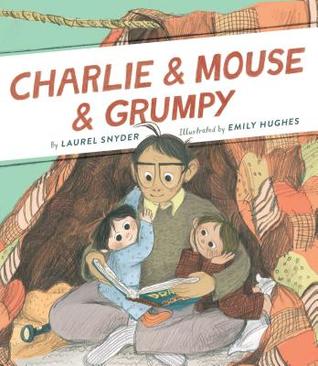
Teaching Guide with Activities and Discussion Questions for Charlie and Mouse and Grumpy by Laurel Snyder

Share

Charlie & Mouse & Grumpy
Author: Laurel Snyder
Illustrator: Emily Hughes
Published October 3rd, 2017 by Chronicle

Summary: In this heartwarming sequel to Laurel Snyder’s beginning chapter book Charlie & Mouse, the two brothers enjoy a special visit from their grandpa, Grumpy. Follow along as they discuss being medium, pounce each other, sing the wrong songs, build blanket forts, and more. Paired with effervescent illustrations by Emily Hughes, this touching, funny celebration of imagination and bonding will enchant readers young and old.

View our post about Charlie and Grumpy book one (with teaching guide) here!

Activities include: 

Bedtime Songs

Grumpy doesn’t know the right bedtime song to sing for Charlie and Mouse, so he tries to guess. Using the clues he gave, we can assume he was talking about “Circle Game” by Joni Mitchell, “Hush, Little Baby,” and possibly “Jump in the River” by Sinead O’Connor. Play these three songs for your students.

  • Which do you like the most? Why?
  • Which do you think would be the best bedtime song? Why?

After Grumpy guesses, Charlie sings the right bedtime song to Grumpy.

  • We don’t know what song Charlie sang, but what song would you have sung to Grumpy?

After gathering all of the bedtime songs discussed as a group, have students analyze the different songs (theirs and the three Grumpy mentioned) by having them (in groups or independently):

  • Identify rhyming words within the songs.
  • Does the author repeat any words? Why did the author choose to repeat these words?
  • How does the author supply rhythm in the song?

Infer

There are a few times in the book that the text doesn’t tell you what happened, but you can infer from the illustrations what occurred such as p. 17, p. 27, and p.37. Have students use the illustrations to see how each of these chapters concluded and have them write out what they see in the illustrations.

Rain

In the final chapter, it is raining while Charlie and Mouse say good-bye to Grumpy. Even though the rain seems to be happening because of the mood of the chapter, rain actually occurs because of the water cycle. After discussing the mood of the chapter (see discussion question), share the scientific reason for rain by sharing the water cycle. One activity that could be done to help students understand the water cycle is the “Simple Water Cycle in a Bag” experiment: http://www.rookieparenting.com/what-is-water-cycle/.

Discussion Questions include: 

  • The text never says that Grumpy is Charlie and Mouse’s grandfather, but you can infer he is. What clues from the text and illustration help you know that he is their grandfather?
  • In the final chapter, the author chose to have it be raining. Why does this type of weather make the most sense for this final chapter? What mood does it set for the chapter?
  • Using the clues throughout the book, how many days and nights did Grumpy stay with Charlie and Mouse? How did you know?

Teaching Guide Created by Me (Kellee): 

You can also access the teaching guide through Chronicle’s website here.

Recommended For: 

readaloudbuttonsmall classroomlibrarybuttonsmall closereadinganalysisbuttonsmall

Kellee Signature

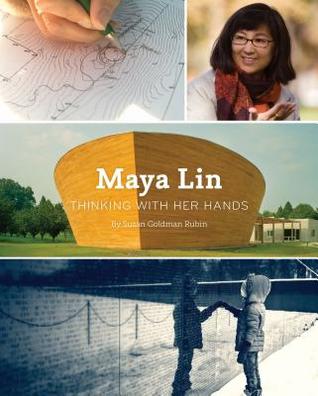
Teaching Guide with Activities and Discussion Questions for Maya Lin: Thinking With Her Hands by Susan Goldman Rubin

Share

Nonfiction Wednesday

Nonfiction Picture Book Wednesday is hosted by Kid Lit Frenzy and was started to help promote the reading of nonfiction texts. Most Wednesdays, we will be participating and will review a nonfiction text (though it may not always be a picture book).
Be sure to visit Kid Lit Frenzy and see what other nonfiction books are shared this week!

Maya Lin: Thinking With Her Hands
Author: Susan Goldman Rubin
Published November 7th, 2017 by Chronicle

Summary: In the tradition of DELICIOUS, WIDENESS & WONDER, and EVERYBODY PAINTS!, this is Susan Goldman Rubin’s extensively researched and very accessible biography of civic activist Maya Lin, most famous for her design of the Vietnam Veterans Memorial. The Vietnam Veterans Memorial in Washington, D.C., is one of the most famous pieces of civic architecture in the world. But most people are not as familiar with the reserved college student who entered and won the design competition to build it. This accessible biography tells the story of Maya Lin, from her struggle to stick with her vision of the memorial to the wide variety of works she has created since then. Illustrated extensively with photos and drawings, the carefully researched text crosses multiple interests–American history, civic activism, art history, and cultural diversity–and offers a timely celebration of the memorial’s 35th anniversary, as well as contributing to the current, important discussion of the role of women and minorities in American society.

Activities include: 

Pre-Reading

  • Building Historical and Scientific Background Knowledge: To better understand much of Maya Lin’s extensive work, background knowledge of certain historical and scientific events are needed. Before reading Maya Lin’s biography, separate the class into five groups and assign each group one of these events:
    1. Vietnam War
    2. Civil Rights Movement
    3. Chinese-American Immigration
    4. Endangered and threatened animals
    5. Lewis and Clark’s expedition and the effect on the Indigenous People of Washington State

    Have each group create a timeline using an interactive timeline creator that showcases their event chronologically.  Within the timeline, the students should not only have important dates but they should incorporate visuals, the impact of each event on history/science, and any other supplemental information/media that will increase the knowledge of their event.

    Students then will present their timelines to their classmates to allow for all students to possess knowledge of all five historical and scientific events before beginning Maya Lin’s biography.

Post-Reading

  • Symbolism: Unlike traditional minimalists, Maya Lin uses symbolism in her work. Begin with working with students on symbolism within familiar stories they know. Show students What is Symbolism? at https://www.youtube.com/watch?v=8Vwek28P9Gk then read the Story of William Tell (http://www.mainlesson.com/display.php?author=baldwin&book=fifty&story=tell) and discuss what the apple symbolizes. After this discussion tell students that symbolism in art is the same–symbolism is when a piece of art or an aspect of a piece of art represents something more than its literal meaning.Then, have students analyze her pieces of work for symbols within them. Students should then create a symbolism T-chart showing their found symbolism.Some examples:
    The ark shape of the Riggio-Lynch Chapel Symbolizes that the chapel is a safe place just as Noah’s Ark was.
    The water on the Civil Rights memorial Symbolizes the justice rolling down like waters and righteousness like a mighty stream mentioned in “I Have a Dream” speech by Martin Luther King, Jr.
  • Cumulative Writing Assignment: Legacy
    Maya Lin states, “You need to see me whole as an artist. What I’m doing is art, architecture, and memorials.” Have students write an informative essay explaining how Lin has fulfilled her legacy as an artist, architect, and memorial designer. Have students use evidence from the text, as well as other provided resources if you choose, to support their claim.Other resources:
    http://www.whatismissing.net/
    http://www.mayalin.com
    http://www.biography.com/people/maya-lin-37259
    http://www.theartstory.org/artist-lin-maya.htm

Discussion Questions include: 

  • From a young age, Maya Lin did not like the color red. Why does she not like the color red? What does red represent to her? The color red was included in the Museum of Chinese in America, however. Why was the color included in this project even though Maya Lin does not like it?
  • After completing the Vietnam War Memorial, Lin felt like she was boxed in as a “monument designer,” and refused many invitations to complete more memorials. Why do you think the Civil Rights Memorial was the work that she finally agreed to complete?
  • Maya Lin’s message of sustainability (avoiding the depletion of natural resources to maintain a balance within nature) reaches us through not only her What is Missing? project but through many of her other pieces of work. She states, “A lot of my work is not very glorious. If I succeed, you may never know I was here.” How did Maya Lin’s message of sustainability come through her works?
  • Susan Goldman Rubin’s chapter titles are very specific word choices. Looking at the titles (Clay, Granite, Water, Earth, Glass, Celadon, Dunes and Driftwood, Wood, and Memories), why do you believe the author choose these words to title each chapter?

Teaching Guide Created by Me (Kellee): 

You can also access the teaching guide through Chronicle’s website here.

Recommended For: 

readaloudbuttonsmall classroomlibrarybuttonsmall closereadinganalysisbuttonsmall

Kellee Signature

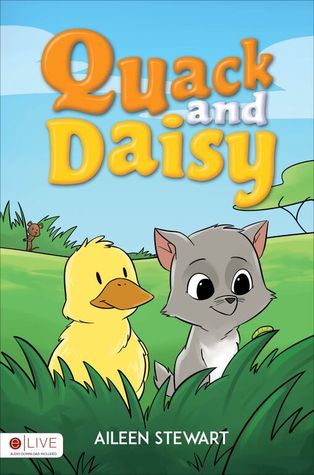
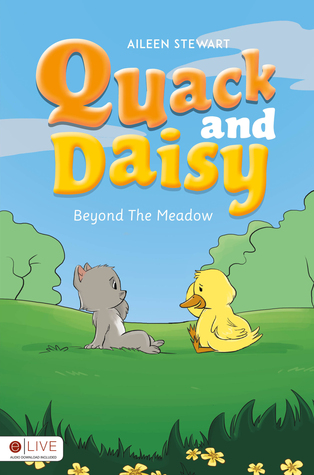
Quack and Daisy & Quack and Daisy: Beyond the Meadow by Aileen Stewart

Share


Quack and Daisy Quack and Daisy: Beyond the Meadow
Author and Illustrator: Aileen Stewart
Published September, 2015 & April, 2016 by Tate Publishing, Children’s Division

Quack and Daisy Summary: Quack the Duckling and Daisy the Kitten meet for the first time in the meadow and instantly become the best of friends.

Can two such unlikely friends stay friends when everyone else tells them it’s impossible? Will Daisy’s failure to swim and Quack’s inability to catch a mouse cause them to give up on each other? Or will their friendship survive? Find out in this fun new adventure!

Quack and Daisy: Beyond the Meadow Summary: Quack the duckling and Daisy the kitten are best friends who spend most days playing in the meadow. One day, Quack decides to tell Daisy a secret. She tells her of Mama Duck’s ominous warnings to not go beyond the meadow. Will the two friends heed Mama’s words about the dangers beyond the meadow, or will their curiosity get the better of them?

Review: Quack and Daisy’s story looks at friendship as something that completes you and makes you happy instead of something that others mandate and define. I think this is such an important lesson for young readers because too often they have to be friends with who their parents or siblings or other friends say they should be friends with. But Quack and Daisy ignore all that and find happiness with each other. Their story isn’t just one big lesson though–it is a story of a friendship and an adventure that two friends have. I also really love Aileen Stewart’s illustrations. They are so colorful and friendly and really brings the story to life.

Teachers’ Tools for Navigation: Quack and Daisy are a great opportunity to discuss comparing and contrasting. Daisy and Quck are so different on the surface, but if you look deep down, they are both adventurous, curious, and kind. If you check out the activity guide on the author’s website (http://aileenw4bobbyg.tripod.com/webonmediacontents/Workbook.pdf) it contains and similarities/differences activity. The guide also includes an activity about the meadow and a maze.

Something I think is really special is that each of these books comes with a complimentary audiobook. This is a wonderful resource for teachers to use with students in a reading station or as a whole class read.

Discussion Questions: 

  • How are Quack and Daisy similar? Different?
  • Everyone said the two friends shouldn’t be friends–do you agree or disagree? Explain.
  • Why did Quack’s and Daisy’s parents not want them to go beyond the meadow?
  • Quack and Daisy feel like they can only be their true selves and friends in the meadow–is this how is should be? Explain.
  • How did Daisy use problem solving to save Quack?

Flagged Passages: 

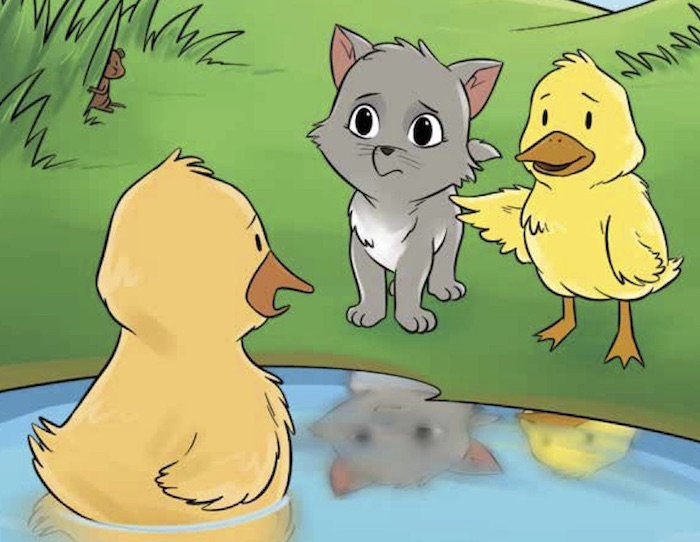
“The two friends headed through the meadow. As they reached the edge of the pond, Quack’s bother, Puddles, swam up. He looked at Daisy and frowned. ‘Who’s that?’

‘This is my friend Daisy. She lives in the red barn on the hill.’

Puddles continued to frown. ‘You can’t be friends with her. She’s not a duck. I bet she can’t even swim.'”

Read This If You Love: Little Elliott by Mike Curato, Hattie and Hudson by Chris Van Dusen, The Monster Next Door by David Soman, and other stories with unlikely friends

Recommended For: 

Signature