The Wolf Girls: An Unsolved Mystery from History by Jane Yolen and Heidi Elisabet Yolen Stemple

Share

NF PB 2013

Nonfiction Picture Book Wednesday

Nonfiction Picture Book Wednesday is hosted by Kid Lit Frenzy and was started to help promote the reading of nonfiction texts. Most Wednesdays, we will be participating and will review a nonfiction text (though it may not always be a picture book).
Be sure to visit Kid Lit Frenzy and see what other nonfiction books are shared this week!

wolf

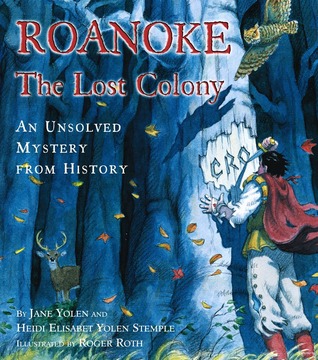
The Wolf Girls: An Unsolved Mystery from History
Authors: Jane Yolen and Heidi Elisabet Yolen Stemple
Illustrator: Roger Roth
Published August 1st, 2000 by Simon & Schuster Books for Young Readers

Goodreads Summary: In 1920 a missionary brought two young girls to an orphanage in India. The girls didn’t know how to talk, walk, or eat from a plate. Some people thought the girls had been abandoned by their parents. Some people said the girls were brought up by wolves in the wild. Still others thought that the missionary who ran the orphanage made up the story about the girls. No one knows for sure.

Become a detective as you read this true story, study the clues, and try to figure out the fate of the wolf girls of Midnapore. The Unsolved Mystery from History series is written by acclaimed author Jane Yolen and former private investigator Heidi Elisabet Yolen Stemple. Read carefully and check your clues. You might be the first to solve a puzzle that has baffled people for years.

My Review: This story was fascinating as I had never heard of the wolf girls and came in with no prior knowledge about the mystery. It was so much fun to be full on submerged in the mystery and following the clues that are given throughout the “case notebook”.

Teacher’s Tools for Navigation: This book is set up just like the Salem Witch Trials: An Unsolved Mystery from History and could be used the same way in the classroom: This book promotes studying history, inquiry, and vocabulary. The book begins with an introduction to a young girl who enjoys unsolved mysteries from history and then the book is set up like her case notebook. Each page of the case notebook includes a narrative nonfiction section, an informational nonfiction section where facts about the story are explained even more in detail, and then there are vocabulary words from the two sections defined for the reader. Finally, in the back of the book the different theories about what could be the answer to the unsolved mystery are shared and briefly discussed. The set up of this book leads to infinite possibilities of being used in the classroom. Students could debate, write research papers, could do their very own case notebook about a different mystery, etc. Another option is to get all of the Unsolved Mystery from History books and have students get into lit circle groups and have each group read a different mystery then research and share.

What I like particularly about this one is that there is so much to debate as there aren’t many clues given throughout the story. Many of the eye witnesses are unreliable and there aren’t many facts shared throughout the book. I think this book would lead to a great discussion about primary and secondary sources as well as reliability.

Discussion Questions: Which theory do you believe about the wolf girls?; Do you think a journal written a year after an incident is reliable?; Many of the scientific facts and theories shared are from the 18th and 19th century, are these facts still what science believes?; Why do you think the missionary’s wife never spoke of the wolf girls?; Why do you think that Singh’s accounts were different than his daughter’s?; Singh said he did not want to exploit the girls yet he let people come to see her – is this exploitation? Do you think what he did was wrong?

We Flagged: Narrative nonfiction “After nursing the two girls back to health, the Reverend Singh loaded them into the cart and drove them for eight days to his orphanage in Midnapore. But the wolf girls were so weak and emaciated, they could not move about, so at first no one outside of the orphanage saw them. Singh wrote in his journal, ‘They were accepted simply as neglected children.’

Informational Nonfiction Singh wrote in his journal that the girls were mud-covered, with scratches, scars, and fleas. The heels of their hands were callused from running on all fours. Their ears trembled like a dog’s when they were excited. Their brows were bushy and long. Each had arms almost reaching their knees. Their teeth were close-set, uneven, with fine, sharp edges, the canines longer and more pointed than is usual in humans. However, Singh took no scientific measurements and invited no scientists to examine the girls. He took photographs that were fuzzy and indistinct. Years later, his own daughter, when interviewed, did not remember the distinctive teeth or exceptional ears or terrifically bushy brows.

Vocabulary Emaciated: thin and feeble due to disease or poor food; Neglected: not take proper care of” (p. 20-21)

Read This If You Loved: Yolen’s other Unsolved Mystery from History books

Recommended For: 

classroomlibrarybuttonsmall litcirclesbuttonsmall

closereadinganalysisbuttonsmall readaloudbuttonsmall

What mystery from history do you wish Jane Yolen had written about? 

Signature

Hitler Youth: Growing Up in Hitler’s Shadow & The Boy Who Dared by Susan Campbell Bartoletti

Share

These two books are my favorite fiction/nonfiction companion books, so I wanted to share them with you together. 

hitleryouth

Hitler Youth: Growing Up in Hitler’s Shadow
Author: Susan Campbell Bartoletti
Published April 1st, 2005 by Scholastic Nonfiction

Goodreads Summary: In her first full-length nonfiction title since winning the Robert F. Sibert Award, Susan Campbell Bartoletti explores the riveting and often chilling story of Germany’s powerful Hitler Youth groups.

“I begin with the young. We older ones are used up . . . But my magnificent youngsters! Look at these men and boys! What material! With them, I can create a new world.” –Adolf Hitler, Nuremberg 1933

By the time Hitler became Chancellor of Germany in 1933, 3.5 million children belonged to the Hitler Youth. It would become the largest youth group in history. Susan Campbell Bartoletti explores how Hitler gained the loyalty, trust, and passion of so many of Germany’s young people. Her research includes telling interviews with surviving Hitler Youth members.

My Review: During World War II, Hitler controlled more than just the military; he controlled the entire country of Germany. Much of what this book explains are parts of the WWII history that is not taught in our schools and shows the true extent of the power that Hitler had over everyone.

The Hitler Youth began as a voluntary organization to support Hitler, but it quickly became a way for Hitler to control the youth. Soon the Hitler Youth was not voluntary and they were being used in much the same way as the military.

This book tells true stories of children in the Hitler Youth and children that were brave enough to speak up. It is truly horrific and fascinating. Susan Campbell Bartoletti uses a combination of narrative and expository writing to take her reader on a journey through Nazi controlled Germany starting with their depression and taking us through the the end of World War II. By intertwining true stories of the youth of Germany with historical fact, Bartoletti pulls at your heart strings and shows the true effect that Hitler had on the entire nation. It also takes you through the steps that Hitler took to brainwash the entire population, starting with the most desperate citizens, including the youth.

Although many nonfiction books are hard to get through and are dry, this one has a voice to it that is deeper and more sensitive than most. You become connected to the people of Germany and the youth of the story, so it doesn’t matter if that I already know the outcome- you have to know how they make it out of their deceit filled situation.

boywho

The Boy Who Dared
Author: Susan Campbell Bartoletti
Published February 1st, 2008 by Scholastic Press

Goodreads Summary: Bartoletti has taken one episode from her Newbery Honor Book, HITLER YOUTH, and fleshed it out into thought-provoking novel. When 16-year-old Helmut Hubner listens to the BBC news on an illegal short-wave radio, he quickly discovers Germany is lying to the people. But when he tries to expose the truth with leaflets, he’s tried for treason. Sentenced to death and waiting in a jail cell, Helmut’s story emerges in a series of flashbacks that show his growth from a naive child caught up in the patriotism of the times , to a sensitive and mature young man who thinks for himself.

My Review: Helmuth Hubener thought that Hitler was going to fix Germany, but the longer Hitler was in power, the more Helmuth realized that there was social injustice happening.

Based on a true story, The Boy Who Dared, accounts Helmuth’s life and the choices he makes. Told in flashback, I felt that some of the suspense is taken away since you know Helmuth’s current situation right from the beginning of the story; however, even with knowing the outcome, I wanted to read to figure out how Helmuth got there.

The exposition of the book helped me understand the extent of Helmuth’s society at the time which made me even more sympathetic then I would have been just jumping into Helmuth’s life. Although we all know about World War II and the Holocaust, unless you have read other books on World War II Germany, you may not understand the extent of Hitler’s power and brainwashing. With The Boy Who Dared, we follow Helmuth through his feelings about Hitler and the decisions he made.

This book is fabulous to read with the nonfiction book by Susan Campbell Bartoletti, Hitler Youth, which recounts the history around the Hitler Youth and what Helmuth was living through.

*     *     *     *     *

Teacher’s Tools For Navigation: If I taught a grade level where the Holocaust or WWII was taught in history, I would love to use these books supplementally in English class. These books tell a story within WWII that isn’t normally taught in history and really shines a light on a different side of the story. It would be a great way to discuss point of view, persuasion, and propaganda. I can also see these being used in thematic sets and then in lit circles. Each book adds to a whole look at WWII.

Discussion Questions: After reading both books, why was Hitler able to manipulate and affect the youth of Germany the way he did?; How did Helmuth affect those around him? History?

We Flagged: “The dark streets were already flooded with thousands of excited people, who, like Melita, were running out to watch the victory parade in honor of Adolf Hitler… Melita couldn’t understand why her parents didn’t support a great man like Adolf Hitler, who said that a person’s money and titles didn’t matter.  All that mattered was whether a person contributed to the well-being of the people.” (Hitler Youth p. 15-16)

“It’s morning.  Soft gray lights slips over the tall redbrick wall.  It stretches across the exercise yard and reaches through the high, barred windows.  In a cell on the ground floor, the light shifts dark shapes into a small stool, a scrawny table, and a bed made of wooden boards with no mattress or blanket.  On that bed, a thin, huddled figure, Helmuth, a boy of seventeen, lies awake.  Shivering. Trembling.
It’s Tuesday.
The executioner works on Tuesday.” (The Boy who Dared p. 1)

Read These If You Loved: Parallel Journeys by Eleanor Ayers, Alfons Heck & Helen Waterford, Briar Rose by Jane Yolen, The Book Thief by Markus Zusak, Resistance (series) by Carla Jablonski, London Calling by Edward Bloor, Once (series) by Morris Gleitzman, The Berlin Boxing Club by Robert Sharenow, Between Shades of Gray by Ruta Sepetys

Recommended For: 

classroomlibrarybuttonsmall litcirclesbuttonsmall closereadinganalysisbuttonsmall

Signature

Rose Under Fire by Elizabeth Wein

Share

17262236
Title: Rose under Fire
Author: Elizabeth Wein
Expected Publication: September 10th, 2013 by Miramax (Disney)

Summary: While flying an Allied fighter plane from Paris to England, American ATA pilot and amateur poet, Rose Justice, is captured by the Nazis and sent to Ravensbrück, the notorious women’s concentration camp. Trapped in horrific circumstances, Rose finds hope in the impossible through the loyalty, bravery and friendship of her fellow prisoners. But will that be enough to endure the fate that’s in store for her?

Elizabeth Wein, author of the critically-acclaimed and best-selling Code Name Verity, delivers another stunning WWII thriller. The unforgettable story of Rose Justice is forged from heart-wrenching courage, resolve, and the slim, bright chance of survival.

Review: Out of the thousands of books I’ve read, this one is going to sit among my all-time favorites. There is a phenomenal balance of history and narrative that will engage readers while offering harrowing lessons in history. I am not an air and space girl. My husband loves planes, and he was giddy when we went to the Smithsonian Air and Space Museum in Washington D.C. As much as I want to love planes, I don’t find them to be interesting. This book changed my outlook.

Rose under Fire has many similarities with Wein’s Code Name Verity. They are both written in an epistolary format, involve pilots/airplanes, and are set during World War II. Both offer wonderfully complex themes about friendship, loyalty, and the strength of women. However, Rose under Fire focuses more on concentration camps, while Code Name Verity dealt more with the interrogation techniques used during World War II. Neither of these two elements drove the novels, but they are two plot features that make the texts quite different from one other. I found CNV to be a bit slow in the beginning (which isn’t the case with all readers), but I was hooked to Rose under Fire from the very first page. Wein writes characters so vividly that I still feel their presence in my life, long after I finish the books. I recommend this book to everyone. It will appeal to readers of all ages, backgrounds, genders, and interest levels.

Teacher’s Tools for Navigation: Teachers, this is a MUST-HAVE book. It is phenomenally written and shows the truly complexity of young adult literature. It can be used to teach elements like setting, character, dialogue, the epistolary format, imagery, voice, and theme. Students might write letters back to Rose, or they could analyze one of the many well-developed characters in this story. It would also make for a great research unit of topics like the Nuremberg Trials, female WWII pilots, flying bombs, or the experimentation on Holocaust prisoners. History teachers will also find this text to be invaluable.

Discussion Questions: What loyalties did the Holocaust prisoners have for each other? What are some examples of incidents that showed this loyalty?; Why were the Rabbits so important to the concentration camp? What did they add to the story as a whole?; How does Maddie’s friendship with Rose differ from her friendship with Julie?; Why was Nick’s character important throughout the story? How does his level of importance change, and why?; Rose has very different friendships with many of the characters. Describe how three of these friendships differ from one another.; Does the novel end in a hopeful way? Why or why not?

We Flagged: I marked so many passages that it is hard to choose just a few, so I selected two longer quotes that show the quality of Wein’s writing.

Incredible Imagery:

“…and the reason everyone in there was trying to get out in the rain was because they were dying of thirst.

Really dying of it, I think.

Hands and arms and heads stuck out anywhere there was a gap—cupped hands collecting rainwater, some holding bowls or even just a piece of cloth to collect moisture—I saw one woman lying on her back with her hair in the black cinder mud at the tent’s edge, her mouth open, letting a rivulet of water stream down the canvas and into her mouth.”

And Beautiful Figurative Language:

“Hope—you think of hope as a bright thing, a strong thing, sustaining. But it’s not. It’s the opposite. It’s simply this: lumps of stale bread stuck down your shirt. Stale gray bread eked out with ground fish bones, which you won’t eat because you’re going to give it away, and maybe you’ll get a message through to your friend. That’s all you need.

God, I was hungry.”

Please note: The above quotes are from the Advanced Reader Copy. The e-book (a galley) did not provide page or chapter numbers. The quotes may change when the book is published.

Read This If You Loved: Code Name Verity by Elizabeth Wein, Between Shades of Gray by Ruta Sepetys, Nazi Hunters by Neal Bascomb, Night by Elie Wiesel

Recommended For:

 litcirclesbuttonsmall closereadinganalysisbuttonsmall classroomlibrarybuttonsmall

026F3FBCC8C3913BD3A4D3F6920340D5

Thank you to NetGalley and Disney for sending me the Advanced Reader Copy!

The Salem Witch Trials: An Unsolved Mystery from History by Jane Yolen & Heidi Elisabet Yolen Stemple

Share

NF PB 2013

Nonfiction Picture Book Wednesday

Nonfiction Picture Book Wednesday is hosted by Kid Lit Frenzy and was started to help promote the reading of nonfiction texts. Most Wednesdays, we will be participating and will review a nonfiction text (though it may not always be a picture book).
Be sure to visit Kid Lit Frenzy and see what other nonfiction books are shared this week!

salem

The Salem Witch Trials: An Unsolved Mystery from History
Authors: Jane Yolen & Heidi Elisabet Yolen Stemple
Illustrated by: Roger Roth
Published September 7th, 2004 by Simon & Schuster Books for Young Readers

Goodreads Summary: In 1692 Salem, Massachusetts, witnessed one of the saddest and most inexplicable chapters in American history. When a group of girls came down with a horrible, mysterious bout of illness, the town doctor looked in his medical books but failed to find a reasonable diagnosis. Pretty soon everyone in town was saying the same thing: The girls were ill because they were under a spell, the spell of witchcraft! And still, the question remains: Why did the hysteria occur? The townspeople had many things to worry about back then: smallpox, strife with the local Indians, a preacher demanding higher wages, and the division of land in the community. But did all of those problems justify a witch hunt?

Become a detective as you read this true story, study the clues, and try to understand the hysteria! The Unsolved Mystery from History series is written by acclaimed author Jane Yolen and former private investigator Heidi Elisabet Yolen Stemple. This is an innovative history lesson that’s sure to keep kids thinking throughout.

Review: The mystery of the Salem Witch Trials is one that has haunted the United States for over 3oo years now and is one that students love to read about (and I do, too!). Most of my thoughts about this book are about how awesome this book is for the classroom. The Yolens seemed to have written it specifically for teachers to use.

Teacher’s Tools For Navigation: This book promotes studying history, inquiry, and vocabulary. The book begins with an introduction to a young girl who enjoys unsolved mysteries from history and then the book is set up like her case notebook. Each page of the case notebook includes a narrative nonfiction section about what was going on in Salem, an informational nonfiction section where facts about the story are explained even more in detail, and then there are vocabulary words from the two sections defined for the reader. Finally, in the back of the book the different theories about what could be the answer to the unsolved mystery are shared and briefly discussed. The set up of this book leads to infinite possibilities of being used in the classroom. Students could debate, write research papers, could do their very own case notebook about a different mystery, etc. Another option is to get all of the Unsolved Mystery from History books and have students get into lit circle groups and have each group read a different mystery then research and share.

Discussion Questions: What do you think happened in Salem? [Could be a wonderful debate or cooperative research presentation/paper in class. Have each students, after reading the different theories, decide which they believe is true. Then within their groups come up with evidence that supports the theory that they believe in.]

We Flagged: Narrative Nonfiction Section: One bitterly cold day in February, Betty and Abigail both fell ill, collapsing onto their small rope beds. They convulsed. They contorted. Their arms and legs jerked about. They shouted bizarre, unintelligible words. They crouched under chairs and cowered as if frightened. In other houses in Salem Village several of their friends began to act the same way.

Informational Nonfiction Section: The other sick girls in Salem village included Ann Punam Jr. (age 12), Mercy Lewis (age 19), Mary Walcott (age 16), Elizabeth Hubbard (age 17), and Mary Warren (age 20). Like Abigail, Elizabeth and Mercy were orphans; Mercy may have witnessed her parents being killed in an Indian attack three years earlier in Main. Mary Walcott had lost her mother when she was eight. Ann and Betty were daughters of landowners, but Marry Warren, Elizabeth, and Mercy were maidservants.

Vocabulary: Convulsed: shook violently, Contorted: Twisted into unusual shapes, Unintelligible: Impossible to understand” (p. 12-13)

Read This If You Loved: I Walk in Dread by Lisa Rowe Fraustino, The Sacrifice by Kathleen Benner Duble, Witch Child by Celia Rees, The Witch of Blackbird Pond by Elizabeth George Speare, Witches: The Absolutely True Tale of Disaster in Salem by Rosalyn Schanzer and other nonfiction books about Salem

Recommended For: 

closereadinganalysisbuttonsmall readaloudbuttonsmall

classroomlibrarybuttonsmall litcirclesbuttonsmall

Signature

Each Kindness by Jacqueline Woodson (Kellee’s Review)

Share

kindness

Each Kindness
Author: Jacqueline Woodson
Illustrator: E.B. Lewis
Published October 2nd, 2012 by Nancy Paulsen Books

Summary: Each kindness makes the world a little better

Chloe and her friends won’t play with the new girl, Maya. Maya is different–she wears hand-me-downs and plays with old-fashioned toys. Every time Maya tries to join Chloe and her gang, they reject her. Eventually, Maya plays alone, and then stops coming to school altogether. When Chloe’s teacher gives a lesson about how even small acts of kindness can change the world, Chloe is stung by the lost opportunity for friendship, and thinks about how much better it could have been if she’d shown a little kindness toward Maya.

This unforgettable book is written and illustrated by the award-winning team that created The Other Side and the Caldecott Honor winner Coming On Home Soon. With its powerful message and striking art, it will resonate with readers long after they’ve put it down.

Review: When I read Each Kindness by Jacqueline Woodson for the first time, it made me not only want to share it with everyone I knew, but also make me want to do something nice for others. This pushed me to think more carefully about how everything affects those around me. What I really love about this book is how it can be used in the classroom.

Teacher’s Tool For Navigation: Today, I wanted to share with you what I did with my classes when it came to sharing Each Kindness with them. First, I will say that it affected them as much as it affected me. After reading, we had a great conversation about how the book connected to their lives and what it meant to them. This conversation moved to how Chloe’s actions affected Maya including inferences of Maya’s feelings that were not shared in the book. The insight that my students had were very deep and I believe it made them look at some of the choices they make in their daily lives. We also discussed how Chloe could have changed things. How could she have made Maya feel welcome?  We made multi-flow maps showing the causes/effects of decisions.

Following this discussion, I had the students make an oath to do a kind act that day- something they normally wouldn’t do and recorded them on as a poster to share. Then the next day we shared the kindness we did. Only through discussions and books like this, that students will think more about their choices and how it affects those around them. Since this book read aloud and discussion, my students have brought up Each Kindness often and have made connections to their lives as well as other books. Each Kindness is a book that can make the world a better place, but only if it is shared.

Discussion Questions: What could Chloe have done differently to make Maya seem welcome?; How did Chloe’s (and her friend’s) behavior affect Maya?; What could you do differently to make someone feel kindness?

We Flagged: “This is what kindness does, Ms.Albert said. Each little thing we do goes out, like a ripple, into the world.”

Read This If You Loved: Because Amelia Smiled by David Ezra Stein, Unicorn Thinks He’s Pretty Great by Bob Shea

Recommended For: 

classroomlibrarybuttonsmall readaloudbuttonsmall closereadinganalysisbuttonsmall

This is a great book to read during the first couple of weeks of school. 

Signature

Into That Forest by Louis Nowra

Share

17870105
Title: Into That Forest
Author: Louis Nowra
Expected Publication: September 3th, 2013 by Amazon Children’s Publishing

Summary: Hannah and Becky are traveling down a river in Tasmania, Australia with Hannah’s parents when a storm erupts. Their boat overturns, and Hannah and Becky are left to survive in the wild. Two Tasmanian tigers are nearby, and because they’ve recently lost their pups, the tigers adopt Hannah and Becky as their own children. The two girls slowly adapt to the tigers’ ways, adopting their habits and forgetting words. It isn’t long before they become feral children, acting only as animals would.

Review: I have never read a book quite like this one. When I tried to compare it to other books I’ve read, I immediately thought of Endangered (Eliot Schrefer), which describes bonobos rather than tigers. With both books, I developed a fondness for the animals and their habits. Also, they both roped me into their beautiful settings and imagery. The only other books I could compare this to were those about abuse and neglect, as the children slowly developed animalistic ways, as abandoned children do.

The language is a bit peculiar at first, as Hannah is writing the story as an elderly woman, and she admits her language isn’t very good. I found myself slipping into the beautiful wording by the third or fourth page, and I didn’t find that it distracted my reading, and instead, it added to the experience. If I could change anything, I might alter the ending a bit, but perhaps, I am being too particular. I loved learning about the tigers’ lifestyle, and I was hooked to this survival story from the very first page. The sisterly bond that develops between Hannah and Becky is remarkable, and the story teaches themes of loyalty and companionship. Readers will be left pondering humanity and the differences between animals and humans.

Teacher’s Tools for Navigation: Students may find the language to be a bit difficult to understand at first, so the teacher may need to provide some close readings at first. I suspect most students quickly adjust to the language and will no longer be distracted by the wording after the first few pages, and they will likely find that it adds a lot of color to the text. Teachers could have students select their favorite descriptions of the setting and imagery, as these elements are very well-developed and would serve as a great model for students. Upon completion of the text, students might research topics like Tasmania, feral children, and tigers. I was left wanting to learn more about the Tasmanian wilderness and lifestyle, and I imagine that students will also find this book to pique their curiosity.

Discussion Questions: What does it mean to be human? How do the girls lose their humanity?; What are some of the patterns of the tigers’ behavior that the girls adopt? Why is this necessary?; How do you imagine Hannah’s life today? How has this experience changed her?

We Flagged: “As the water boiled and foamed, we bounced along with me father, unable to steer the boat toward the shore. The river were so wild that all we could do were to cling on tight to the sides of the boat or each other as we were flung back and forward like puppets with no strings. The rain chucked down and we were soaked, so soggy it were like the rain were drilling through our skin into our marrow.”

“The more I looked at its black eyes, the more I seen kindness […] I knew it were saying to us, Come, I’ll take you home.”

Please note: The above quotes are from the Advanced Reader Copy. The e-book (a galley) did not provide page or chapter numbers. The quotes may change when the book is published.

Read This If You Loved: Endangered by Eliot Schrefer, Never Fall Down by Patricia McCormick, Dog Boy by Eva Hornung, Second Nature by Alice Hoffman, Into the Wild by Jon Krakauer

Recommended For:

readaloudbuttonsmall litcirclesbuttonsmall closereadinganalysisbuttonsmall classroomlibrarybuttonsmall

026F3FBCC8C3913BD3A4D3F6920340D5

Thank you to NetGalley and Amazon Children’s Publishing for sending me the Advanced Reader Copy!

Who Stole Mona Lisa? by Ruthie Knapp

Share

NF PB 2013

Nonfiction Picture Book Wednesday

Nonfiction Picture Book Wednesday is hosted by Kid Lit Frenzy and was started to help promote the reading of nonfiction texts. Most Wednesdays, we will be participating and will review a nonfiction text (though it may not always be a picture book).
Be sure to visit Kid Lit Frenzy and see what other nonfiction books are shared this week!

mona

Who Stole Mona Lisa?
Author: Ruthie Knapp
Illustrated by: Jill McElmurry
Published by September 1st, 2010 by Bloombury USA Childrens

Goodreads Summary: She has a legendary smile, and millions come to see her every day. Some say she is the most famous painting in the world. Who is she? Why, the Mona Lisa, of course! But did you know that she was once stolen from her wall at the Louvre? Who took her? Why? Where was she hidden? How was she found? Someone call the police!

Narrated by the lady of the enigmatic smile herself—and brought to life with gorgeous paintings that take the reader from da Vinci’s renaissance right up to the present day—this is a stylishly whimsical account of the glorious, wonderful, sometimes dangerous life of the best recognized painting of all time. Discover the secrets behind her mysterious smile, and hear for yourself the amazing true story of her kidnapping.

Review: How fascinating! First, let me tell you a little bit about my background. My father has a BA in Art History and an MFA in Museumology. These studies led him to become an executive director of art museums (he is currently directing the Hunter Museum of American Art in Chattanooga, TN) thus impacting my life greatly. My entire childhood has been surrounded by the arts (my mother is a photographer as well). This has made art history something that I am very interested in which then made this book so fascinating for me and I believe it will be incredibly fascinating for all readers.

Mona Lisa is probably the most famous painting of all time, but many, including me, do not know her history. She is more of a mystery that we all are enthralled with than a piece of artwork that is talked about in history class; however, Ruthie Knapp’s book shows us that Mona Lisa’s history is a lot more interesting than we probably thought. And what I think makes this book one that will draw in all sorts of readers is the way she tells the story. The story is told from Mona Lisa’s point of view which makes it more of a caper, mystery type story instead of just informational nonfiction.

Teacher’s Tools For Navigation: As soon as I read this book, I saw how I could use it in the classroom. Seeing things from different points of view and perspectives is something that, as a teacher, I am always trying to help my students achieve. This book, since it is told from Mona Lisa’s point of view, is a perfect example of seeing a situation from a different point of view. After reading Who Stole Mona Lisa? I would start a discussion on how others in the story might have viewed the situation. How would the director of the Louvre have told the story differently? How about Vincenzo Perugia? Parisians? All of these people would have viewed the loss of Mona Lisa differently. These thoughts then could be transferred to anything. Maybe have students choose a historical event and think about it from a different person’s point of view: Babe Ruth’s huge “called” home run from the pitchers point of view, atomic bombings of Japan from a Japanese citizen’s point of view, an event in a book from a different character’s point of view, etc. The options are infinite.

Discussion Questions: How would the director of the Louvre have told the story differently? How about Vincenzo Perugia? Parisians?; Look up other stolen pieces of art. What happened to them?

We Flagged: “Leonardo da Vinci is the artist who painted me. It took him four years! Leonardo loved me. He looked at me while he ate past. He would not travel without me. He said I was his masterpiece. I was famous because Leonardo was famous. Fans jammed his studio to watch him paint.” (p. 10-11)

“The man with the mustache loved me too. He said I reminded him of someone special. He looked at me at every meal: over apples, eggs, and trout; cake and prunes and piglet snout. He looked at me on rainy days, on snowy days, and during summer squalls. He looked at me when he bathed. He looked at me when he shaved. He looked at me for TWO years. I was tired of the man with the mustache. I missed my wall. I missed people staring. I missed children looking sideways and upside down. (p. 24-25)

Read This If You Loved: Nonfiction books about Leonardo da Vinci or Mona Lisa, any books told from inanimate objects’ points of view, Seen Art?  by Jon Sciezska, Capture the Flag by Kate Messner, Linnea in Monet’s Garden by Christina Bjork

Recommended For: 

classroomlibrarybuttonsmall closereadinganalysisbuttonsmall readaloudbuttonsmall

Signature