Review and Giveaway!: Goodnight Songs: A Celebration of the Seasons by Margaret Wise Brown

Share

goodnight songs

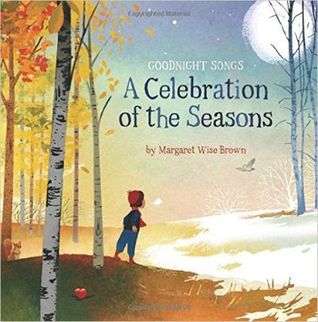
Goodnight Songs: A Celebration of the Seasons
Author: Margaret Wise Brown
Illustrators: Peter Brown, Floyd Cooper, Leo Espinosa, Dadu Shin, David Small, Bob Staake, Blanca Gomez, Molly Idle, Elly Mackay, Satoe Tone, Frank Viva, Mick Wiggins
Published: August 4, 2015 by Sterling Children’s Books

Summary: 

Some fine day, just run away
To a long unscheduled day
To where great clouds go sailing by
Above the birds and butterfly.

Fluffy clouds, butterflies, furry bunnies, and life from a bug’s-eye view: This stunning sequel to the New York Times bestseller Goodnight Songs celebrates the beauty and wonder of nature all year long. From Margaret Wise Brown, author of the beloved Goodnight Moon, comes a previously unpublished collection of charming lullabies, gorgeously illustrated by 12 award-winning artists. Once again, a treasure trove of Margaret Wise Brown’s newly uncovered verses receives loving treatment from 12 award-winning artists, including Floyd Cooper, Peter Brown, David Small, Molly Idle, and Bob Staake. From a little bear singing one morning in May to a soft snowfall, mysterious, deep, and glowing, each song is magical.

An accompanying CD, with lilting songs beautifully composed and sung by Emily Gary and Tom Proutt, makes this the perfect gift for children.

Ricki’s Review: This may be one of the most exciting books I’ve received by mail. I am an avid Margaret Wise Brown fan. Some of you may remember my son’s Goodnight Moon party. The minute this package arrived on my doorstep, I grabbed my CD player and put the CD in, and my son and I listened to every song together. We did some dancing and swaying. It was such a fun experience. Each spread is beautifully illustrated by a different artist, and I spent a long time flipping the pages back and forth, trying to pick my favorite song or spread—it was impossible! I fell in love with the poetry of the songs and with the different mood on each page. This book is sure to please both parents and teachers.

Kellee’s Review: I am amazed by everything Margaret Wise Brown can do. First children’s picture books and now beautiful poetry/lyrics in a stunning picture book. Almost all of Trent’s favorite books have music associated with him. Goodnight Songs is a perfect addition to his bedtime reading routine. We really loves all of the songs! In addition to the music and the poems/lyrics, what makes this book stand out even more is the phenomenal illustrations throughout. Some of my favorite illustrators including Melissa Sweet, Molly Idle, Peter Brown, and David Small.

Teachers’ Tools for Navigation: This book would be great in elementary school classrooms, but it would also be a great resource for creative writing teachers. We’d love to pair students together and have them work collaboratively to write a song and illustrate a spread to feature the song. We imagine a classroom wall covered in these spreads. Wouldn’t this set a great mood in the classroom?

Discussion Questions: How do the illustrations set the mood for each song? How do you think each illustrator interpreted the words into artwork without the author’s input?; How does this book differ from Margaret Wise Brown’s other work?; Can you find any patterns across the songs?; How does reading the songs differ from listening to them on the CD? How does the audio enhance your reading?

Giveaway! (U.S. Addresses only, please):

a Rafflecopter giveaway

Read This If You Love: Goodnight Moon by Margaret Wise Brown; Winter Bees and Other Poems of the Cold by Joyce Sidman; Firefly July: A Year of Very Short Poems by Paul B. Janeczko

Recommended For: 

classroomlibrarybuttonsmall readaloudbuttonsmall (with music!)

RickiSigandSignature

**Thank you to Josh at Sterling Publishing Co., Inc. for providing copies for review and giveaway!**

Flying Cars: The True Story by Andrew Glass

Share

NFPB2015

Nonfiction Picture Book Wednesday

Nonfiction Picture Book Wednesday is hosted by Kid Lit Frenzy and was started to help promote the reading of nonfiction texts. Most Wednesdays, we will be participating and will review a nonfiction text (though it may not always be a picture book).
Be sure to visit Kid Lit Frenzy and see what other nonfiction books are shared this week!

flying cars

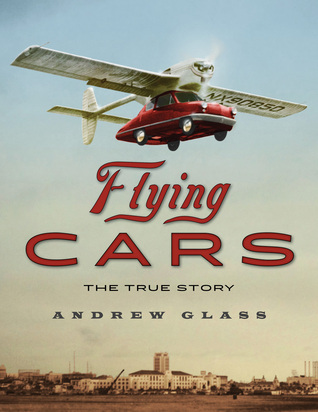
Flying Cars: The True Story
Author: Andrew Glass
Various Photographers
Published August 25th, 2015 by Clarion Books

Goodreads Summary: Humans have always wanted to fly. As soon as there were planes and cars, many people saw a combination as the next step for personal transportation, and visionary engineers and inventors did their best to make the flying car (or the roadable plane) a reality. This book is a breezy account of hybrid vehicles and their creators, and of the intense drive that kept bringing inventors back to the drawing board despite repeated failures and the dictates of common sense. Illustrated with archival photos, this entertaining survey takes readers back as far as Icarus and forward into the present day, with a look toward the future. Includes author’s note, source notes, bibliography, index.

Kellee’s Review:  What an odd, interesting part of history! I had no idea I even wanted to learn about this, but I am glad that I was exposed to it. I think Andrew Glass did a good job mixing history of aviation in general and the idea of a flying car. It was a good combination of informational and literary nonfiction, so it will hold readers’ attention throughout. It was also fascinating to see all of the photographs of the prototypes made over time. What innovation! I think the photos will draw the reader in then the history and stories will keep them there. 

Ricki’s Review: The minute I pulled this book out of the mailer, my son had his hands all over it. He is much younger than the intended audience (middle or high school), but it made me chuckle. This shows how excited students will be about this concept! Like Kellee, I had no idea that flying cars existed. I asked my husband, “Did this really exist?” He launched into a full history lesson about the development about flying cars and said they were very interesting to him as a teenager. This is yet more proof that this book would be a great resource for classrooms. I liked learning about all of the different attempts of flying cars and think this book would inspire students to be innovative in their thinking, particularly in the context of design and engineering. The prototypes made me feel a bit wistful that I had more of an engineering brain!

Teachers’ Tools for Navigation: The trend of readable and interesting middle grade nonfiction that students will find accessible is really increasing the likelihood of students reading nonfiction text, and this text fits that bill. We think students will find the topic interesting and, thus, pick up the book. Teachers could use it to talk about text features and the importance of captions, photographs, and chapter titles as well as look at how the book is structured and discuss why the author decided to set it up the way it is. The book could also be a resource for an inquiry mini-project (see Discussion Questions below).

Discussion Questions: How would flying cars make our lives easier?; Why aren’t flying cars a reality?; What do you think the benefits of flying cars are and what are the struggles?; After watching some of the archival videos, which of the flying cars interests you the most? Use Flying Cars and other resources to learn more about it.

We Flagged: “Cars fly every day–in fantasy. They soar by pure magic, like the Wesley family car in the Harry Potter series, or by sprouting wings, like Chitty Chitty Ban Bang. Some use high-tech gadgetry, allowing well-equipped heroes like James Bond and Batman to make incredible cliffhanger escapes.

But visionary engineers and inventors haven’t just imagine flying cars. Some actually built them. . . and then drove them up into the sky” (p. 1).

Read This If You Loved: Nonfiction books about aviation or automobiles including Amelia Lost: The Life and Disappearance of Amelia Earhart by Candace Fleming

Recommended For: 

classroomlibrarybuttonsmall

Signatureand RickiSig

**Thank you to Barbara for providing copies for review!**

Blog Tour and Review!: Monster Needs Your Vote by Paul Czajak

Share

monster-banner-4

monster needs vote

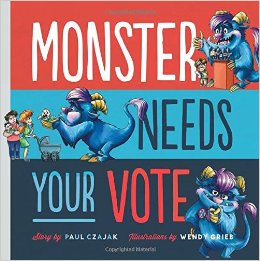
Monster Needs Your Vote
Author: Paul Czajak
Illustrator: Wendy Grieb
Expected Publication September 4th, 2015  by Mighty Media Kids

Goodreads Summary: Election season is here and Monster is ready to vote! But why cast your ballot when you can run for president instead? With speeches, debates, and a soapbox or two, Monster’s newest tale is a campaign encouraging kids to take a stand and fight for what they believe in.

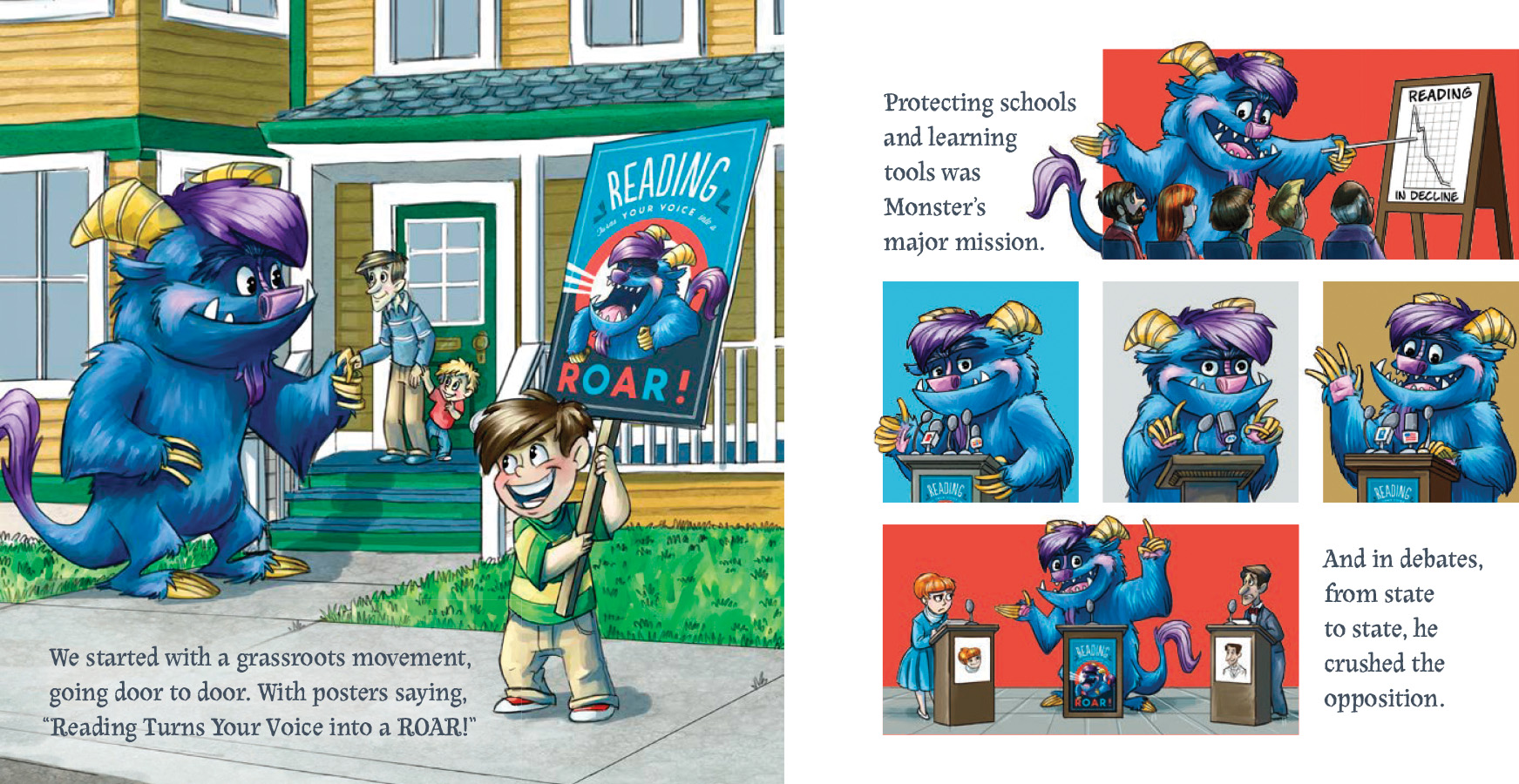
Kellee’s Review and Teachers’ Tools for Navigation: Monster wants to make a difference, but he has to go about it a little bit differently than he had planned. Monster Needs Your Vote is a great look at politics and making a difference in your community within a fun story with enjoyable characters. Monster is a little bit like Elephant in the Elephant and Piggie books. He gets so excited and wants to just go, go, go. The Boy is a bit more like Piggie. He reins Monster in. It is a great relationship! Then you add the fun story and the movie-like, colorful illustrations, and you have a book that kids, parents, and teachers are going to enjoy. Since there is such an underlying political charge to the book (who can be president, voting, education advocacy, etc.) teachers can use it in conjunction with introduction voting and democracy to students.

Ricki’s Review and Teachers’ Tools for Navigation: What a wonderful text to introduce kids to politics! Teachers might consider asking the class to look at different platforms that politicians might select. Then, they could consider different political platforms that interest them. Depending on the age of the students, these platforms could be silly or serious. Teachers might use this text to introduce the basic concepts of the election process or the requirements to run for presidency. As a child, I loved when we had mock votes in elementary school. This book is just in time for the election season and would be a fantastic way for teachers to connect literature to current events!

Campaign Kit: http://mightymediapress.com/wp-content/uploads/2015/07/MMP_MonsterCampaignKit.pdf
The kit contains presidential timelines, infographics, and activity sheets—even a ballot so kids can practice voting!

Info about the purpose and vocabulary in the Monster and Me series: http://www.bigredpaint.com/words_edit.mp4

Mini Monster and Me story: http://monsterwants.com/

Discussion Questions: Why wasn’t Monster able to run for President? What other laws are there for who can run for President?; Monster advocates for libraries and education. What would be your platform if you ran for President right now?; Why wasn’t summer and food something that drew attention from the masses? What did the people want instead?; How are Monster and the Boy different? How do they help each other?; What is the author’s purpose for writing this book?

We Flagged: 

Monster needs vote spread

Read This If You Loved: Other Monster and Me books, Books about politics, the Elephant and Piggie series by Mo Willems, the Mal and Chad series by Stephen McCranie

classroomlibrarybuttonsmall closereadinganalysisbuttonsmall readaloudbuttonsmall

Signatureand RickiSig

**Thank you to Sammy at Mighty Media Press for providing copies for review!!**

Race Car Count by Rebecca Kai Dotlich, Illustrated by Michael Slack

Share

Race car count

Race Car Count
Author: Rebecca Kai Dotlich
Illustrator: Michael Slack
Published: October 27, 2015 by Henry Holt and Co. (BYR)

Goodreads Summary: Race car 1 honks look at me!
He zooms in front with the turn of a key.

Race car 2 is close behind.
The sound of vroom is on his mind.

This simple, rhyming text is perfect for reinforcing counting with young children, and the vibrant, energetic illustrations make this a terrific package for the youngest vehicle enthusiasts.

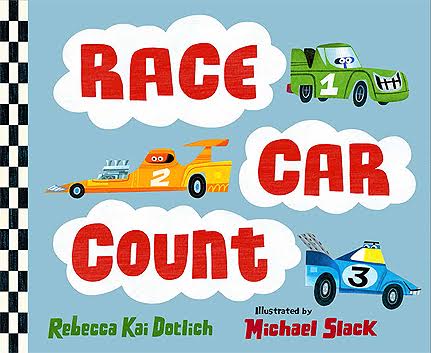
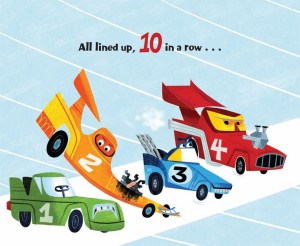
Ricki’s Review and Teachers’ Tools for Navigation: My son is absolutely obsessed with cars, so I consider myself to be a car book connoisseur. In the past year, I have read at least fifty books about cars, and Race Car Count stands out from the rest. Upon Henry’s request, we’ve read it about eight times in the last three days. Parents and teachers know that when kids take an interest in a topic, they want to read every book about that interest. I am very pleased that my son wants to read this book over and over again because we can practice counting several times a day. As we read each page, I ask him to count each car with me. He loves the ways the cars pile up on each page, and says “Uh oh!” each time we turn to a car pileup.

The illustrations are fantastic, and they keep him engaged. Each numbered car is consistent throughout the book, which adds great characterization/personification to each car. We spend a lot of time on the last page, where my son stares at all of the cars. Each car has different interests. For example, car number ten (my personal favorite) is yellow and named Groovy. It loves popcorn and collects bumper stickers. Teachers might ask students to illustrate car number 11 and share that car’s personality. Or, they can ask students to create their own number books with something that interests them! I suspect my son’s next step would be to create a book to count construction vehicles. 😉

Kellee’s Review and Teachers’ Tools for Navigation:  Whenever I think there cannot be any new interesting ABC and counting books, I am introduced to another book that proves me wrong. Race Car Counts is going to be loved by so many kids and teachers. Not only is it a fun story of racing with vibrant and colorful illustrations, it is a great book to teach counting, colors, personality/character traits, and rhyming. Each car is introduced, and the reader learns their number, their color, and a bit about their personality. And I think the addition of the character cards in the back of the book that includes more information about each race car really pushes the book into being a mentor text for writing as well because students could duplicate the cards with their own characters.

Discussion Questions: How does the author use rhymes to enhance the story?; How does she use adjectives to make the story fun and engaging?; How does the illustrator personify each car?; Which car is your favorite and why?

We Flagged: “Race car 4, all shiny red, rumbles grumbles, pulls ahead.”

race car count
From http://us.macmillan.com/racecarcount/rebeccakaidotlich

Read This If You Love: The Racecar Alphabet by Brian Floca, Alphabeep: A Zipping, Zooming ABC by Debora PearsonThe Three Little Rigs by David Gordon, Ten Little School Cars by School Specialty Publishing

Recommended For: 

classroomlibrarybuttonsmall readaloudbuttonsmall

RickiSigandSignature

**Thank you to Michael Slack for providing copies for review!**

Blog Tour and Review!: Fab Four Friends: The Boys Who Became the Beatles by Susanna Reich

Share

NFPB2015

Nonfiction Picture Book Wednesday

Nonfiction Picture Book Wednesday is hosted by Kid Lit Frenzy and was started to help promote the reading of nonfiction texts. Most Wednesdays, we will be participating and will review a nonfiction text (though it may not always be a picture book).
Be sure to visit Kid Lit Frenzy and see what other nonfiction books are shared this week!

fab four friends cover

Fab Four Friends: The Boys Who Became the Beatles
Author: Susanna Reich
Illustrator: Adam Gustavson
Published August 18th, 2015 by Henry Holt and Co.

Goodreads Summary: In 1957 in Liverpool, England, a young lad named John Lennon and his band played music at a local church fair. In the audience was Paul McCartney, who liked what he heard and soon joined the group. Paul’s friend George Harrison kept showing up at rehearsals until the older boys finally let him in. Eventually they found the perfect drummer, Ringo Starr, and the perfect name: The Beatles.

Told through a lyrical text and stunning paintings, this book spotlights four ordinary boys growing up amid the rubble of postwar England who found music to be a powerful, even life-saving, force.

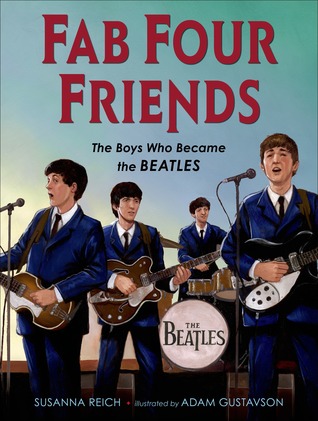
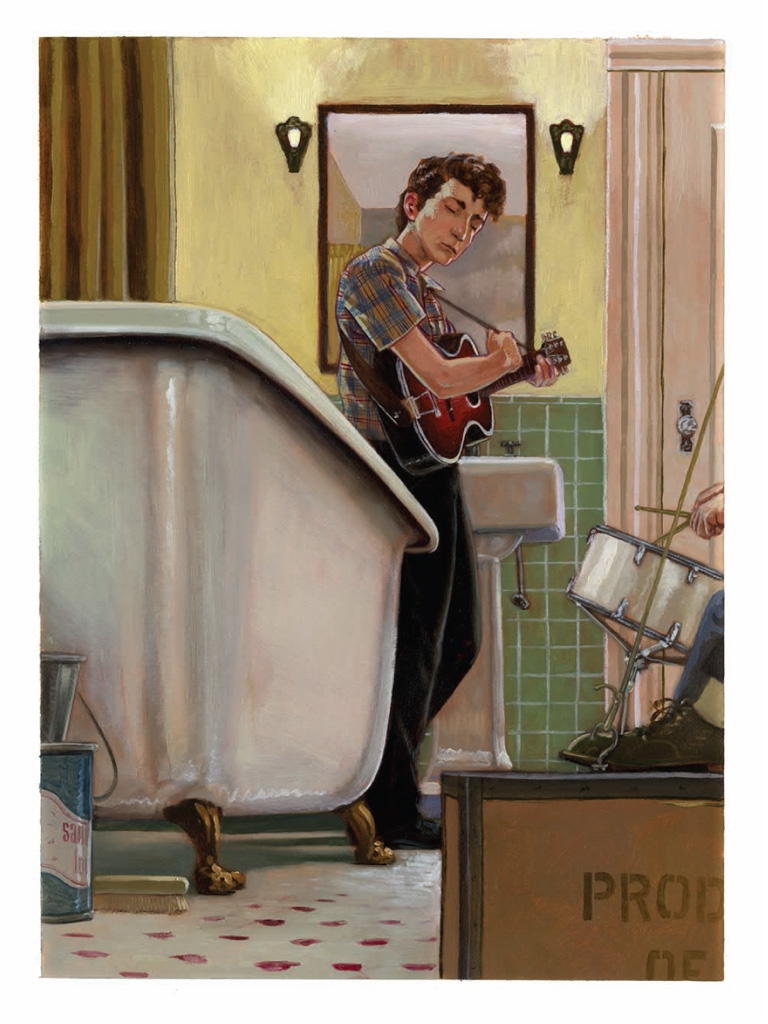
My Review:  I adore The Beatles. I think they, along with other artists like Elvis, Chuck Berry, Little Richard, and Bob Dylan, really changed the direction of music and opened up a whole new world of music that truly made modern rock and roll possible. Because of that, and how much I love their music, I have always enjoyed learning about them. This middle grade picture book biography really gives us a wonderful look into the childhood and the creation of the band. In addition to really giving us insight into each boys’ lives and how The Beatles began, Susanna Reich did a beautiful job combining fact, primary sources, and lyrical writing. In addition to the beautiful writing, the art that accompanies it is stunning. They are truly paintings as the summary states.

Teachers’ Tools for Navigation: I really hope that kids read this book! I want the story of The Beatles to continue because of their importance within music history.

I think one really interesting analysis of the book that the students could partake in is a visual analysis. Students would first read the text completely. They would then go back and reread a single page then look at the full page illustrations. They should discuss or write about why the artist chose the specific scene/person/activity to illustrate. What else could they have chosen to illustrate? Which do you think makes a bigger impact?

Discussion Questions: Which Beatle is the creator of the band?; What vocabulary in the text are obsolete in modern times?; How would The Beatles rise to fame be different if it was the 21st century when they formed?; What traits do each of the members have?

We Flagged: “John attacked the guitar, strumming as fast as he could. He didn’t give a fig about wrong notes.”

http://us.macmillan.com/fabfourfriends/susannareich

Read This If You Loved: Any books about The Beatles including The Beatles Were Fab by Kathleen Krull and John’s Secret Dreams by Doreen Rappaport, Little Melba and Her Big Trombone by Katheryn Russell-Brown, When Bob Met Woody by Gary Golio, Duke Ellington and Ella Fitzgerald by Andrea Davis Pinkney

Recommended For: 

classroomlibrarybuttonsmall readaloudbuttonsmall closereadinganalysisbuttonsmall

Make sure to visit other stops on the blog tour!

Monday, August 17 Booktalking
Nonfiction Monday

Tuesday, August 18 Shelf-Employed
Review plus Susanna reveals her favorite Beatles song

Wednesday, August 19 UnleashingReaders.com

Thursday, August 20 Elizabeth Dulemba
Susanna & Adam interview each other

Friday, August 21 Maurice on Books

Tuesday, August 25 Kidsbiographer’s Blog
Susanna writes about choosing subjects for kid’s biographies

Wednesday, August 26 Gail Gauthier

Thursday, August 27 Tales from the Rushmore Kid

Friday, August 28 Alphabet Soup
Interview with Susanna

Signature

**Thank you to Susanna for providing a copy for review!!**

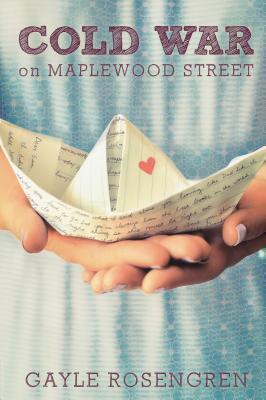
Review and Author Interview!: Cold War on Maplewood Street by Gayle Rosengren

Share

cold war maplewood

Cold War on Maplewood Street
Author: Gayle Rosengren
Published August 4, 2015 (Today!) by Putnam

Goodreads Summary: Cold War anxieties play out in a sensitively told story set during the Cuban missile crisis in the 1960s, perfect for fans of Gary Schmidt and Kristin Levine.

Joanna can’t get over how her brother broke his promise to never leave like their dad did. Sam is thousands of miles away on a navy ship, and no matter how often he sends letters, Joanna refuses to write back. When she makes a promise, she keeps it.

But then President Kennedy comes on TV with frightening news about Soviet missiles in Cuba—and that’s where Sam’s heading. Suddenly Joanna’s worries about being home alone, building up the courage to talk to a cute boy, and not being allowed to go to the first boy-girl party in her grade don’t seem so important. Maybe sometimes there are good reasons to break a promise.

The tense timeline of the Cuban missile crisis unfolds alongside a powerful, and ultimately hopeful, story about what it means to grow up in a world full of uncertainty.

Ricki’s Review: Cold War on Maplewood Street highlights a time period that isn’t common in the genre of historical fiction. I was intrigued from the very beginning because I have read few books focused on the Cuban missile crisis. The author excellently balances narrative and history in this engaging, thought-provoking text. Joanna is a strong girl who is ashamed of the way she treated her brother when he left for war. She makes a realistic mistake and tries to work through her emotions regarding her treatment of her brother and also the frightening events of war. There are many concepts for teachers to draw upon in this text—family, friendship, war, and fear, to name a few—and teachers will find this text offers rich opportunities for classroom discussion.

Kellee’s Review: What I think Ms. Rosengren does so well in this book is tell a real story with a piece of history as the backdrop. This is a Cold War/Cuban Missile Crisis story, but that isn’t what the book is all about. This book is about Joanna, her family, and her best friend. Her characters are very real and show the real emotions that must have been running through so many peoples’ veins during this tense time.  Because of how well this book is crafted as a narrative within a historical time period, I believe it would be a great introduction to this time period for middle grade readers. Many will have never heard of the Cold War or Cuban Missile Crisis, so learning about it through Joanna’s story is perfect. 

Teachers’ Tools for Navigation: Teachers might consider using this text to ask students to examine their regrets. Students could begin by closely examine characters that have regrets. Who are they? Do their regrets impact others? Then, the students could consider world leaders or pop culture to consider regrets that famous people might have and how these regrets impacted their lives. Finally, the students might journal to make connections with the text by examining mistakes they have made or regrets they hold in their personal lives.

Another interesting aspect of this book is the theme of communication. Students could compare the lack of communication of some of the characters in the book (which led to a major issue) and the lack of communication which led to the Cuban Missile Crisis. How could communication have helped either of these situations?

Discussion Questions: How would you react if your sibling went to war? Is Joanna’s reaction realistic? Is it fair?; How does war impact the lives of those who stay home? How do the characters of this text react differently from each other? Do you think the war impacted the choices Pamela’s family members make?; What is Mrs. Strenge’s role in the novel? How does she enhance our reading of the story?

Author Interview!: 

Unleashing Readers: What interested you in the Cold War, specifically?

Gayle Rosengren: When I wrote the first draft of Cold War on Maplewood Street–twenty years ago(!)–itwas to share a singular experience from my childhood, the Cuban Missile Crisis. But for several reasons, the manuscript never made it to an editor and I had to set it aside.

Years later I decided to revisit it with a different objective in mind. Now, I wanted to tell a story in which the crisis was the backdrop for a story about how poor communication can destroy relationships. The Cold War itself was an example of a break-down in communication on such a major scale that it very nearly led to destruction on a global level. In my novel, poor communication is demonstrated by main character Joanna’s failure to write to her brother and apologize for the terrible things she said to him when he left for the Navy. It’s also shown in her avoidance of a new tenant in their building, an old woman Joanna finds frightening for several reasons; and it’s demonstrated in her best friend Pamela Waterman’s family, when Mrs. Waterman runs away instead of confronting her husband about how desperate she is to see Paris.

UR: What does your research process look like?

GR: My research began with plumbing my own very vivid memories of the week of the crisis. I was twelve, and I was scared, especially since–although they tried to conceal it–I could see that adults were scared too.

But the major source of the historical details in Cold War on Maplewood Street came from the Chicago Tribune’s archives and actual headlines, photos, and articles that appeared in what was then The Chicago Daily Tribune. Remember, I wrote the first draft of the manuscript over twenty years ago. Pre-computer. And given that newspapers and television newscasts were the primary news sources of the day, I felt it was a solid source for my facts. I have a fat file full of copied newspaper pages that provided everything from the news to the weather and the television schedule. (All 4 channels!)

Today we know more about what was going on during that infamous week (in particular the note that Kennedy sent to Khrushchev agreeing to remove our nuclear weapons from Turkey) but I wanted Joanna to know only what anyone else living in the U.S, and specifically Chicago, would have known at the time.

UR: Did you decide on your time period or your protagonist/narrative first?

GR: This was an instance where the time period was clearly the inspiration for the story, and the protagonist and voice followed. I originally wrote this manuscript in the third person, rewrote it in first person, and then went back to third as I struggled to discover the character and voice that would best serve the story.

UR: Did anyone in your life inspire your characters?

GR: I modeled Joanna’s and Sam’s relationship on my close relationship with my brother Dennis. He was in the Air Force at the time of the missile crisis and based relatively safely in Okinawa, Japan, but I imagined that he was in the Navy, on a ship off the east coast of the U.S., and likely to be swept into action as part of the Cuba quarantine and blockade. I imagined how terrified I would have been for him. And then, to up the stakes, I imagined that when he’d left, Joanna in her hurt and anger accused him of deserting them just like their father had years before. The guilt she would feel knowing she might never get to apologize would be overwhelming.

Joanna’s mother was modeled after my single mother who always worked hard and scrimped to take care of us. Pamela was every good friend I ever had with a normal (which at the time meant two-parent) family.

As for Joanna, she was a lot like me at 12–childish and thoughtless one moment, grown-up and sensitive the next, taking awkward steps toward adulthood and all the while longing for the protective cocoon of childhood that was forever left behind in that unforgettable week. Like Joanna, I too loved horses and dogs and hated being alone in the house at night.

We Flagged: “[S]taying positive and hopeful—even pretending to—was much better than giving in to fear.” (p. 142)

Read This If You Loved: Countdown by Deborah Wiles; Paper Cowboy by Kristin Levine; What the Moon Said by Gayle Rosengren; Purple Heart by Patricia McCormick; Spy Catchers of Maple Hill by Megan Frazer Blakemore

Recommended For: 

  litcirclesbuttonsmall classroomlibrarybuttonsmall

 RickiSigandSignature

**Thank you to Penguin for providing copies for review and Ms. Rosengren for the author interview!**

Circus Mirandus by Cassie Beasley

Share


circus mirandus

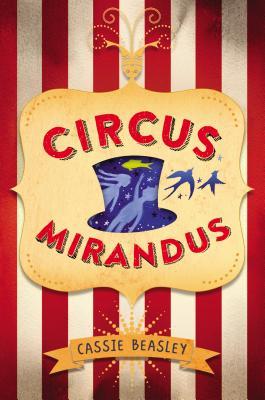
Circus Mirandus
Author: Cassie Beasley
Published January 1, 2015 by Dial

Goodreads Summary:
Do you believe in magic?
Micah Tuttle does.

Even though his awful Great-Aunt Gertrudis doesn’t approve, Micah believes in the stories his dying Grandpa Ephraim tells him of the magical Circus Mirandus: the invisible tiger guarding the gates, the beautiful flying birdwoman, and the magician more powerful than any other—the Man Who Bends Light. Finally, Grandpa Ephraim offers proof. The Circus is real. And the Lightbender owes Ephraim a miracle. With his friend Jenny Mendoza in tow, Micah sets out to find the Circus and the man he believes will save his grandfather.

The only problem is, the Lightbender doesn’t want to keep his promise. And now it’s up to Micah to get the miracle he came for.

Ricki’s Review: I was only a few pages in when I knew this book would be special. I was captivated by the beautifully described setting and the words that seemed to dance off the pages. This book is about magic, but the writing is quite magical in itself. I usually give my ARCs away, but I am hanging on to this copy because I plan to read it to my son when he is a bit older. I’ll likely buy another copy because I am eager to see the illustrations! I suspect that this text will create lifelong readers. It belongs in every classroom in America. Circus Mirandus is the kind of book that takes you to another world—one that will stay in your heart forever.

Kellee’s Review: I liked Circus Mirandus  from the very beginning, but as soon as the circus officially enters he story, the magic just engulfs you. I think it is the Lightbender that makes the story. He is a mystery, but also the person that I feel like I connected with the most. I truly feel that he is what makes this book as magical as it is. I also really liked Jenny. Jenny represents the main stream (which is odd to say because Jenny is a little bit odd), but Jenny has already moved past magic and is so straight forward. Convincing her to believe in anything past what she sees and knows was such a challenge for Micah. (But she is such a great friend!)

One of the things I really liked about the text is the theme of helping kids stay kids for as long as possible. Circus Mirandus is around to help keep the magic of childhood alive. That is something I can believe in!

Circus Mirandus was my informal Twitter book club’s choice for July, and I loved chatting with them about the book (and Ricki joined us this time!). To see the archive of our chat, you can view it here. (Warning: There are spoilers for the book in the chat.)
Some of my favorite quotes from the chat were:

“I loved that Jenny was willing to go along on the journey even if she had trouble believing.” -Alyson Beecher

–“Yes! That is what made me love her. She was willing to support her friend.” -Kellee Moye

–“And Jenny needed a friend, found something in herself that “might” want to believe, too?” -Linda Baie

–“I love how great Jenny and Micah are for each other…helping each other find courage and comfort.” -Beth Sanderson

“It was interesting that the light bender just dismissed G., rather as we all should dismiss evil people.” -Linda Baie

“I loved the relationship between Micah and Gpa. He had so many words of wisdom to prepare Micah.” -Leigh Anne Eck

–“The wonderful relationship between Micah and his Grandpa is what I will remember the most about this book.” -Cynthia Alaniz

“I don’t think we should hide kids from life truths like death. Kids need to be taught healthy ways to grieve.” -Ricki Ginsberg

“The artwork is special! It is interesting to read the Ch then look at the art & find the reasoning behind the art.” -Kellee Moye

–“Yes! There is something special when physical aesthetic of book matches aesthetic of the language.” -Christy Rush-Levine

Favorite quotes shared from the book:

“Because when you try too hard to hold on to something, you break it.”

“Who you are is more than good enough.”

Teachers’ Tools for Navigation: This book naturally lends itself to a creative project. I would love to have students work together to design their own circus. Perhaps each student could be in charge of designing a different section of the circus and writing about it. For example, one student might be in charge of writing the opening speech for a circus act; another student could be in charge of writing a newspaper article about the events; another student might be in charge of writing to the mayor to ask permission to use a field for the circus. I’d allow students to generate their own ideas, so they can take ownership of their work.

However, the best place that this book could end up is in as many kids’ hands as possible! It deserves to be read and read widely.

Discussion Questions: What is Jenny’s role in the novel? How does she add to the story?; Do you think you would believe in the circus? Why or why not?; Which characters showed bravery? Why or why not?; What role does fantasy play in this text? How would it be different if it was a work of realistic fiction?

We Flagged: “You never need an invitation to go home.”

Read This If You Loved: Books by Roald Dahl, A Snicker of Magic by Natalie Lloyd, Wonder Show by Hannah Barnaby, Miss Peregrine’s Home for Peculiar Children by Ransom Riggs, Big Fish by Daniel Wallace, Night Circus by Erin Morgenstern, Peter Pan by J.M. Barrie

Recommended For: 

 readaloudbuttonsmall litcirclesbuttonsmall closereadinganalysisbuttonsmall classroomlibrarybuttonsmall

 RickiSigandSignature

**Thank you to Penguin for providing copies for review!**