National Parks Week (April 16th-24th) Recommended Reads: A Weird and Wild Beauty by Erin Peabody and National Geographic’s National Parks Guide U.S.A.

Share

NFPB2016

Nonfiction Wednesday

Nonfiction Picture Book Wednesday is hosted by Kid Lit Frenzy and was started to help promote the reading of nonfiction texts. Most Wednesdays, we will be participating and will review a nonfiction text (though it may not always be a picture book).
Be sure to visit Kid Lit Frenzy and see what other nonfiction books are shared this week!
National Parks Guide

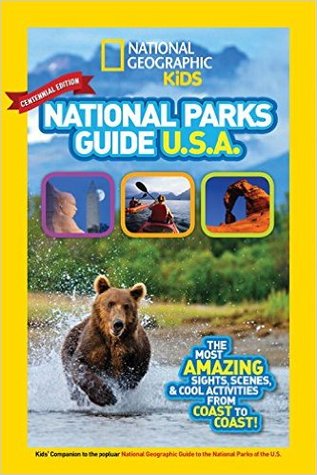
 National Parks Guide USA Centennial Edition: The Most Amazing Sights, Scenes, and Cool Activities from Coast to Coast!
National Geographic Kids
Published February 9th, 2016 by National Geographic Children’s Books

Goodreads Summary: Happy 100th Birthday, National Parks! Join the centennial celebration by reading all about these greatest of American treasures — from Acadia to Zion — in preparation for a parks visit sometime soon. Filled with color photos, information on animals, fascinating lists, fun facts, maps, cool things to do, conservation tips, and much more — think of this book as your trusted guide to these most majestic of places.

My Thoughts: This book makes me want to go on a road trip! As you all know, I am a huge fan of National Geographic books because of their brilliant graphics, text features, easy-to-follow text structure, and interesting information. This text is no different. Like the title states, it goes through many of the USA National Parks from the east to the west and gives the reader not only history about the national park but also beautiful photos, fun facts, visiting tips, a map, excursions within the park, and must-do activities. This text will be a great companion to any trip to these amazing parks.

Discussion Questions: Which national park do you want to visit?; What activity looks like the most fun to you at that park?; What national parks are near you?

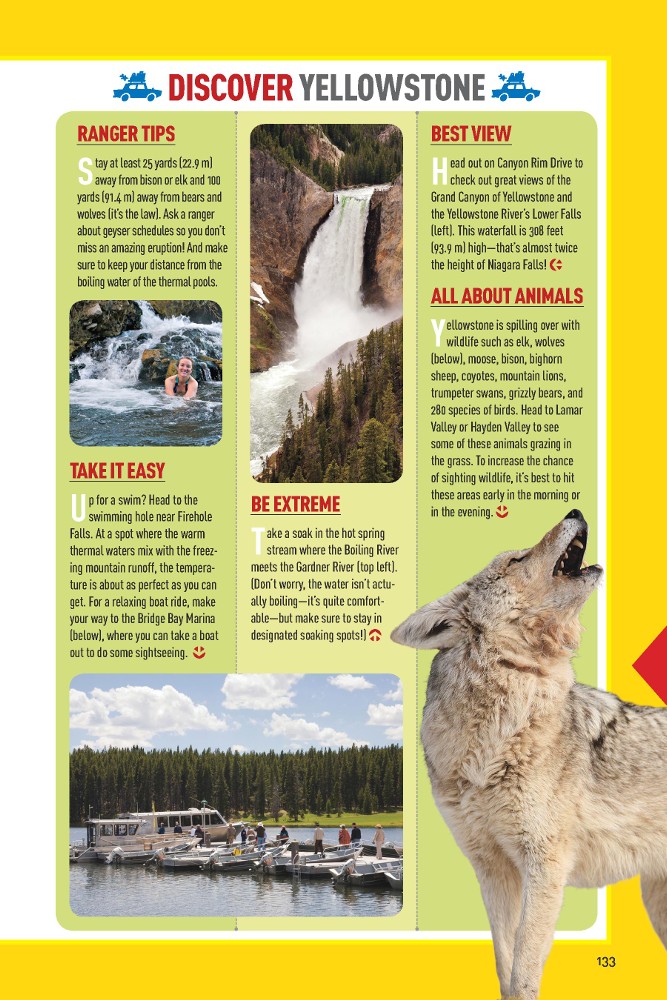
We Flagged: 
yellowstone

Giveaway and National Parks Video by National Geographic

Celebrate the beauty and wonder of America’s national parks during this centennial year with an amazing outdoor adventure! Climb mountains, hike trails, see wildlife, explore the country, and plan it now with National Geographic books as your inspiration and guide. Be sure to enter for the chance to win a National Geographic Expeditions family trip for four to Grand Canyon, Bryce, and Zion National Parks at nationalparkssweeps.com.

weird and wild

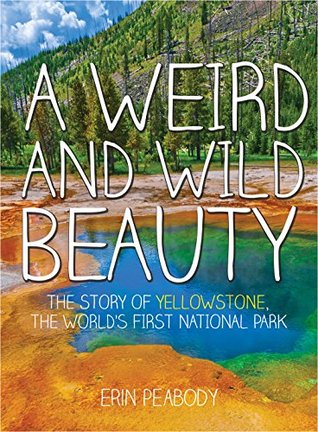
A Weird and Wild Beauty: The Story of Yellowstone, the World’s First National Park
Author: Erin Peabody
Published February 2nd, 2016 by Sky Pony Press

Goodreads Summary: The summer of 1871, a team of thirty-two men set out on the first scientific expedition across Yellowstone. Through uncharted territory, some of the day’s most renowned scientists and artists explored, sampled, sketched, and photographed the region’s breathtaking wonders—from its white-capped mountain vistas and thundering falls to its burping mud pots and cauldrons of molten magma. At the end of their adventure, the survey packed up their specimens and boarded trains headed east, determined to convince Congress that the country needed to preserve the land from commercial development. They returned with “stories of wonder hardly short of fairy tales,” to quote the New York Times.

With the support of conservationists such as Ralph Waldo Emerson, Henry David Thoreau, Frederick Law Olmsted, and John Muir, the importance of a national park was secured. On March 1, 1872, Ulysses S. Grant signed the Yellowstone Park Bill into law. It set aside over two million acres of one-of-a-kind wilderness as “a great national park for the benefit and enjoyment of people.” This important and fascinating book will introduce young adults to the astonishing adventure that led to “the best idea America ever had.” Today over 130 countries have copied the Yellowstone model, and billions of acres of critical habitat and spectacular scenery are being preserved for all of us to enjoy.

This book has a wonderful ecological and historical message for readers ages 12 and up. No book about Yellowstone’s founding has been written for this age group before, yet Yellowstone National Park is a major destination for many families, so many readers will likely have heard of Yellowstone or even have visited there. This is a great book for any school library or for history or science classrooms in middle and high school, where information can be used for research projects.

My Thoughts: Many of us take advantage of the national parks that have been preserved throughout the United States without knowing the history of the National Park Program or realizing how important it is to preserve these parks. This book will help middle grade and teen readers learn about this history and the beautify of a park they’ve probably heard of or been to but may not know everything about. Peabody does a good job making the history readable and interesting.

Discussion Questions: Why did President Grant pass the Yellowstone Park Bill? How did this bill change the direction of parks in the U.S.? If you went to Yellowstone, what would you most be looking forward to?

We Flagged: “J.G. Holland sat at his desk, staring wide-eyed at the pages spread before him. Holland was an editor at Scribner’s Monthly, a popular magazine and source of news for Americans in the mid- to late 1800s.

Holland had just received the most bizarre-sounding account. It spoke of a strange land where the ground gurgled and hissed. A land where scalding waters blew from craters and vats of steaming pink mud threatened to swallow a man whole. The place, according to the man who’d recently traveled through the region, abounded with ‘boiling springs,’ ‘mud volcanoes,’ and ‘huge mountains of sulphur.’

Incredulous, Holland tried to absorb the dazzling imagery. The author, clearly spellbound by what he saw, gushed about the brilliant turquoise pools and hot-water fountains. The mud volcano, the man wrote, erupted with the force of thundering cannons. Its boiling broth scalded trees hundreds of yards away.

This world of absurdities, the traveler informed Holland, was not some far-off land. It belonged to the United States.” (Prologue)


Teachers’ Tools for Navigation: The National Geographic book gives such a wonderful overview of all of the major national parks and would be a great introduction to these parks. Then, the students could choose to learn more about a specific national park. Erin Peabody’s book would be a fabulous resource for the students who choose Yellowstone. It is so thorough and it, combined with the National Geographic book, would give a detailed overview of Yellowstone.

Both Recommended For: 

classroomlibrarybuttonsmall closereadinganalysisbuttonsmall

Signature

**Thank you to Karen at Media Masters Publicity and Cheryl at Skyhorse Publishing for providing copies for review!**
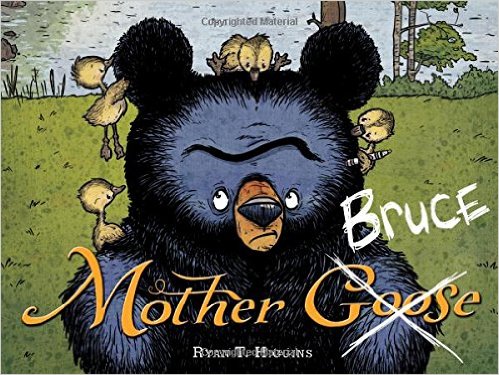
Mother Bruce by Ryan T. Higgins

Share

Mother Bruce

Mother Bruce
Author: Ryan T. Higgins
Published November 24, 2015 by Disney-Hyperion

Goodreads Summary: Bruce the bear likes to keep to himself. That, and eat eggs. But when his hard-boiled goose eggs turn out to be real, live goslings, he starts to lose his appetite. And even worse, the goslings are convinced he’s their mother. Bruce tries to get the geese to go south, but he can’t seem to rid himself of his new companions. What’s a bear to do?

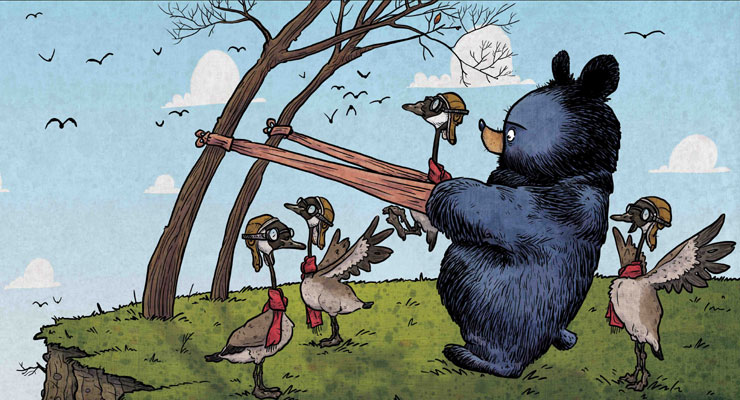
Ricki’s Review: I dare you to try reading this book without smiling. I had so much fun reading this book with my son. It tells the story of a grumpy bear who accidentally hatches goslings instead of hard-boiled eggs for his newest recipe. The goslings imprint on him, and he can’t get rid of them! As you can see below, the illustrations are hilarious. The author is very clever. I will be reading more of his work!

Teachers’ Tools for Navigation: It is always fun to look at original fairy tales and the ways they compare to fairy tale retellings. This book is a bit different because Mother Goose is the imaginary author of fairy tales. The title of this book is a pun on the Mother Goose name. ‘d love to hear the ways that kids can compare this story to other fairy tales. I imagine they would come up with some really clever ideas!

Discussion Questions: What strategies does Bruce use to try to get rid of the goslings?; How does Bruce change throughout the story?; In what ways does the author add humor to the story in both the language and illustrations?; What does the title mean?

We Flagged: 

Mother-Bruce-2

**Image from: http://www.modernmom.com/mother-bruce-giveaway-100-visa-gift-card-116459.html. **

Read This If You Loved: Wilfred by Ryan T. Higgins, Wolfie the Bunny by Ame Dyckman, No Fits, Nilson by Zacharia Ohora, Sylvester and the Magic Pebble by William Steig, This Is Not My Hat by Jon Klassen

Recommended For: 

readaloudbuttonsmall classroomlibrarybuttonsmall

RickiSig

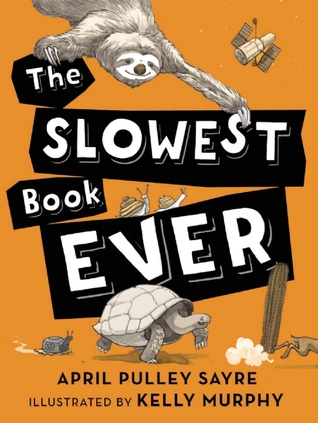
The SLOWEST Book EVER by April Pulley Sayre

Share

NFPB2016

Nonfiction Wednesday

Nonfiction Picture Book Wednesday is hosted by Kid Lit Frenzy and was started to help promote the reading of nonfiction texts. Most Wednesdays, we will be participating and will review a nonfiction text (though it may not always be a picture book).
Be sure to visit Kid Lit Frenzy and see what other nonfiction books are shared this week!

slowest book ever

The SLOWEST Book EVER
Author: April Pulley Sayre
Illustrator: Kelly Murphy
Published April 5th, 2016 by Boyds Miller Press

Goodreads Summary: April Pulley Sayre’s wry, quirky storytelling tone shines from the warning on the first page (“This is a S-L-O-W book. Do not read it while surfing, water skiing, or running to escape giant weasels.”) right through to the glossary at the end. In between, readers will explore an astounding variety of information about all things slow—in nature, geology, art, outer space, etc. Throughout, The SLOWEST Book EVER playfully encourages readers to slow down and savor everything. As Sayre shows: “If you think slowly enough, the entire world is amazing.” This innovative nonfiction work is a treasure trove of information that begs for multiple readings.  

Kellee’s Review: Anyone who teaches knows that the most popular nonfiction books are the ones that have a ton of information in short segments with fun pictures. Well, Sayre’s The SLOWEST Book EVER is exactly that but even better than you are picturing. Sayre does such a great job of having a small amount of information that packs a very big punch. Although each fact is over only a 2-page spread, the information is thorough, interesting, and specific. I loved the wide range of topics that were all covered under the big idea of SLOW, and I think students will be fascinated with all of the information.

Ricki’s Review: I read a lot of books, and I don’t think I’ve read a book that is quite like this one! It is a compilation of fascinating information that will compel readers to want to learn more about their world. It is apparent that a lot of thought and care went into the crafting and production of this book. Each page is a bit different, so if a reader is uninterested in a topic, he or she can flip the page and find something else entirely different. This book would make a great gift because all children will find sections that intrigue them, regardless of their interests. I’d look forward to going to a class where a teacher used this book used as a read-aloud, reading a few sections each day. This book makes learning fun!

Teachers’ Tools for Navigation: Since The SLOWEST Book EVER includes tidbits of information on many different topics, each spread could easily be used as a jumping off point for an inquiry project. Students browse through the book to determine which spread of information interests them the most then they do more research (using the back matter as a place to start) then share the extra information with their classmates.

The SLOWEST Book EVER also does an amazing thing by looking at all the different ways that SLOW can be defined. After finishing the book as a class, revisit all of the different ways slow was used then brainstorm different meanings of other subjective adjectives such as fast, large, and small. Then student, as a class, could write their own fact book using a different adjective but showing different meanings of that word.

Discussion Questions: Which fact surprised you the most?; The book doesn’t only focus on slow speeds–what ever definitions of slow did the author focus on?; What topics would you like to learn more about? Where could you go to get more information?

We Flagged: “Chewy Nature Thoughts
Read them. Think about them. S l o w l y.
Slow thoughts are often big thoughts. So don’t fret if it takes a while to understand them. Don’t worry if you need to read them twice. -Traveling in a circle is, after all, still traveling.” (p. 8-9)

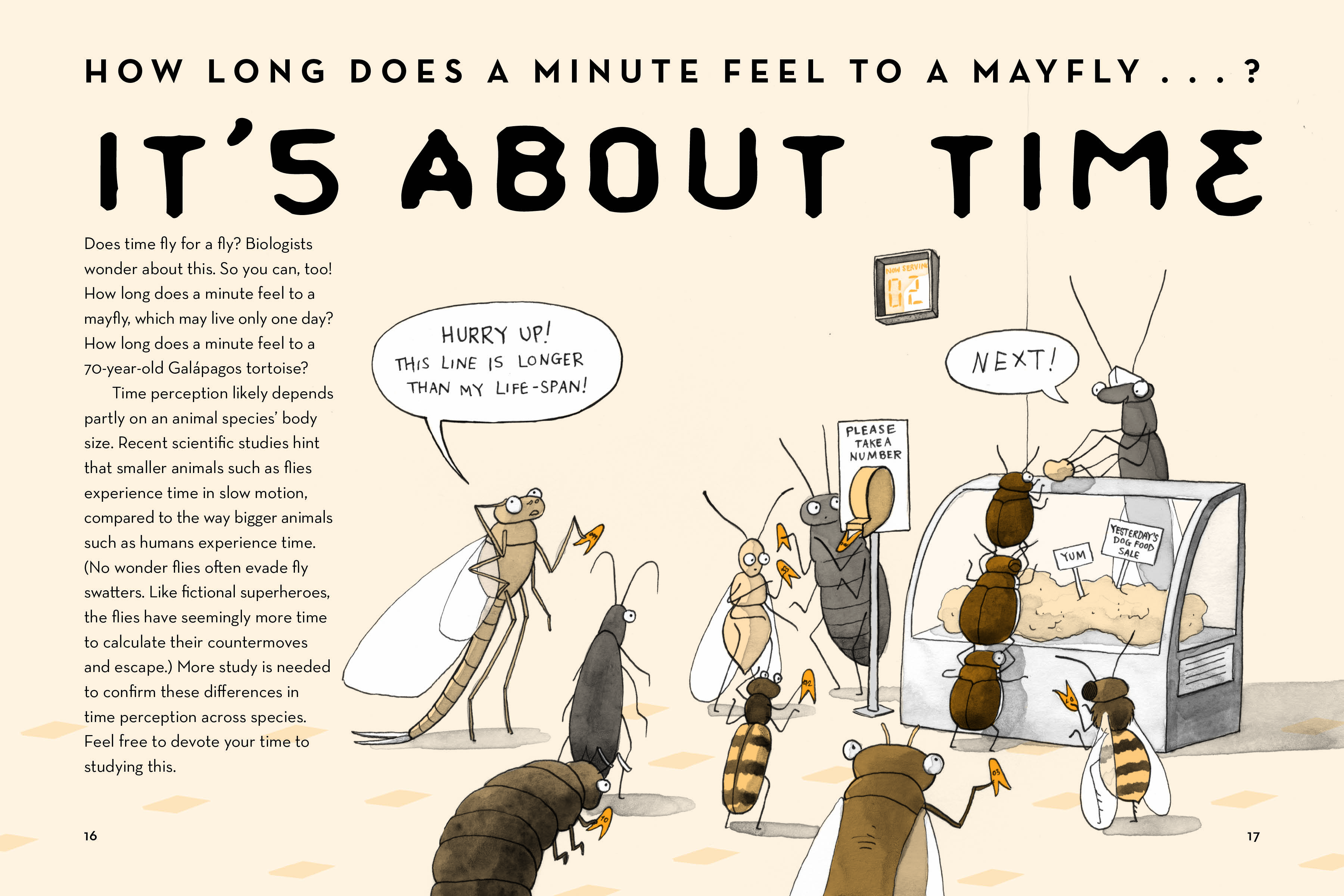
“How long does a minute feel to a mayfly…?
It’s About Time

Does time fly for a fly? Biologists wonder about this. So you can, too! How long does a minute feel to a mayfly, which may live only one day? How long does a minute feel to a 70-year-old Galápagos Tortoise?” (p. 16-17)

SLOWESTBOOK_16-17

Read This If You Loved: Nonfiction books such as Weird but True by National Geographic, Lifetime by Lola M. SchaeferExtreme Oceans and Extreme Earth Records by Seymour SimonIsland by Jason Chin, The Guinness Book of World Records

Recommended For: 

classroomlibrarybuttonsmall readaloudbuttonsmall closereadinganalysisbuttonsmall

Signatureand RickiSig

Blog Tour, Author Guest Post, and Review!: The Classy Crooks Club by Alison Cherry

Share

classy crooks club

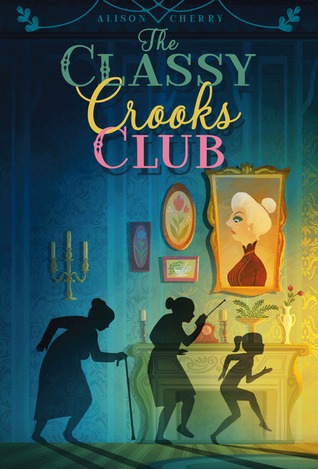
The Classy Crooks Club
Author: Alison Cherry
Published March 29th, 2016 by Aladdin

Goodreads Summary: Twelve-year-old AJ dreads spending an entire month living with her strict Grandma Jo. Not only does her grandmother dictate how she walks, what she eats, and which rooms she can enter, she fills all AJ’s free time with boring sewing lessons. Grandma Jo wants nothing more than to transform her adventurous, fun-loving granddaughter into a prim and proper lady.

But AJ’s dull summer takes a sharp turn when she discovers that her grandmother’s “bridge group” is actually a heist club. When Grandma Jo offers to let AJ learn lock-picking instead of embroidery in exchange for help with a few capers, AJ is happy to join her grandmother’s madcap band of thieves, who claim to steal only for ethical reasons. But even the most respectable ladies can hide truly surprising secrets, and AJ finds she must decide for herself what it means to be one of the good guys.

My Review: I love AJ. She is a perfect protagonist because she is just a real middle schooler. She is multi-faceted, funny, has quite a personality, has fears, makes mistakes, and is overall likeable. And she is not the only well-crafted character. Each of the characters, main, secondary, or supporting, are so fully developed that you feel like you know everyone in AJ’s life. I often am skeptical about first person POV because it is always tough to get a character/narrator’s voice perfect while also developing the characters, but Cherry does a great job of both. AJ is a normal middle school girl that is dealing with a quite terrible grandmother who happens to have an unexpected hobby.

Another thing that blew me away about this novel is that something happened that was completely unexpected! Usually when I am reading middle grade novels, I love them but am not often surprised because I can sense foreshadowing and predict; however, Cherry really caught me off guard in this one! You’ll have to let me know if you see it coming!

And finally, I loved the unique premise of the book! Who ever thought there’d be a book about a bunch of old ladies who “liberate” *cough* steal *cough* exotic birds and anything else that suits their fancy?!

Teachers’ Tools for Navigation: Alison’s guest post, below, made me really think about how grandparents play the role in different books, so Classy Crooks Club and the books listed below could be part of a grandparent-focused lit circle. How do the grandparents in the book differ from the parents (if they are present)? How are the grandparents different than stereotypical grandparents? How do the grandparents influence the main character?

Discussion Questions: Did you predict the climax of the story?; Why do you think the author chose first person point of view?; Why do you think the author doesn’t share what us about Betty’s past?; How does AJ overcome her fear?; Which of the Classy Crooks Club ladies would you want to hang out with and why?; What does Brianna teach AJ about not judging a book by its cover?; Why do you think Brianna is so mean to Maddie?; Why does Maddie get so mad at AJ? Would you have reacted the same way?

We Flagged: “Every single piece of furniture in my grandmother’s house has a name with too many syllables.

At home we have chairs. We have a couch. We have tables. But right now my grandmother is pointing at this hulking wooden thing in the corner of one of her guest bedrooms — my bedroom, for the next month — and calling it a ‘mission chifforobe.’ It looks like what might happen if a dresser and a closet had a really ugly baby. ‘I trust you’ll be very careful with this chiffrobe while you’re here,’ Grandma Jo says, like it’s some fragile, spindly thing I could possibly break by accident. ‘It was once owned by Buckminster Fuller, as was that ottoman.'” (p. 1)

Read This If You Loved: Wig in the WindowTiara on the Terrace by Kristen KittscherHeist Society by Ally Carter, Peter Nimble and his Fantastic Eyes by Jonathan Auxier

“Five Books I Loved That Featured Grandparents” by Alison Cherry: 

The Witches, Roald Dahl:

This creepy novel from 1983 features a boy who is sent to live with his grandmother after the death of his parents. Grandmother is a retired witch-hunter, and she makes sure her grandson knows how to recognize witches by their unusual traits: bald heads that they cover with wigs, square feet with no toes, clawed hands, and blue spit. Unfortunately, this doesn’t prevent the boy from having a run-in with witches while on vacation, and they turn him into a mouse. Grandmother is presented as incredibly kind and accepting—she doesn’t love her grandson any less once he’s a mouse. She’s also very clever and helps devise a plan to get revenge on the witches. The scene that sticks with me most is one in which Grandmother tells the boy that being a mouse will significantly shorten his lifespan, and he says he doesn’t mind because he doesn’t want to outlive her. I read this book over and over as a child!

Tortilla Sun, Jennifer Cervantes:

When her mother gets a grant to study in Costa Rica for the summer, twelve-year-old Izzy is sent to live with her nana in her tiny, rural New Mexican village. Izzy knows nothing about her Latina heritage or her dead father, whom her mother has always refused to discuss, and her summer with Nana is her first opportunity to learn where she comes from and who she is. Izzy’s nana is patient, wise, warm, and loving, and she lets her granddaughter discover pieces of her past slowly, when she’s ready and able to handle them. Reading this book is a rich sensory experience; the descriptions of Nana’s colorful house, the food she teaches Izzy to cook, and the rest of the characters in the neighborhood are beautifully drawn. It made me want to hang out in the world of the story long after it was over.

You’re Invited, Jen Malone and Gail Nall

This novel from four points of view is about a group of girls who start a party-planning business in their small seaside town. While the book isn’t centered around a grandparent like the other four on this list, Lauren’s grandmother Bubby is my favorite part of the story. Bubby is loud, opinionated, bubbly, and a total flirt—she spends most of the book zooming around on her bright red scooter, Wanda, and trying to catch the eye of “hot” Mr. Vernon from her retirement community. Despite her advanced age, Bubby tries her best to act and speak like a teenager—she’s active on “the Tweeter” and constantly refers to things as “amazeballs” and “ubercute.” This horrifies Lauren, who is significantly more dignified, but it delights me to no end. I sincerely wish I had a grandmother like Bubby.

The Lightning Queen, Laura Resau:

This gorgeous novel is about Teo, an indigenous Mexican boy, and Esma, a Romani girl who comes through his village with her caravan each summer. Despite their differences, a fortune teller states that they are destined to be friends for life, however unlikely it may seem. Because the story is told primarily in flashbacks, the reader gets to meet Teo as both a child and as an elderly healer who has lost touch with his lifelong friend and needs his grandson’s help to find her again. Teo is a delight in both incarnations—he’s kind and gentle and incredibly smart, the only boy in his village who braves school and learns to read. Teo also has a soft spot for rescuing animals—as a child, his constant companions are a duck, a blind goat, and a three-legged skunk. Both the Mixteco and Romani communities are treated with great sensitivity, and the writing is captivating.

The Secret Hum of a Daisy, Tracy Holczer:

When her mother dies suddenly, Grace is forced to move in with her estranged grandmother, who sent Grace’s mother away when she got pregnant as a teenager. Grace automatically assumes her grandmother is a horrible person and sets out to be a complete brat, hoping she’ll be sent away. Grace’s grandmother isn’t warm, but she’s patient and steady and gives Grace the space she needs to work out her grief; she’s there every time Grace needs her, but she doesn’t try to force her into a relationship before she’s ready. Grace eventually begins to respect her grandmother’s honesty, forthrightness, and willingness to take responsibility for mistakes she made in the past, even when it makes her look bad. The writing in this book is beautiful, lyrical, and deeply felt—it feels as if Tracy Holczer dug this story up from deep in her soul and pasted it directly onto the page. It’s one of my favorite depictions of two people who have suffered deep losses taking a chance on loving each other, even though it’s hard and painful.

Recommended For: 

classroomlibrarybuttonsmall litcirclesbuttonsmall

Don’t miss out on the other blog tour stops!

March 28-29: Pop! Goes the Reader (http://www.popgoesthereader.com/)
March 30: The Hiding Spot (http://thehidingspot.blogspot.com/)
March 31: Mundie Kids (http://mundiekids.blogspot.com/)
April 1: Unleashing Readers
April 4: Kidsmomo (http://www.kidsmomo.com/)
April 5: KidLit Frenzy (http://www.kidlitfrenzy.com/)
April 6: Kidliterati (http://www.kidliterati.com/)

Kellee Signature

**Thank you to Alison for providing a copy for review and the guest post!**

Bartholomew Quill: A Crow’s Quest to Know Who’s Who by Thor Hanson

Share

bartholomew quill

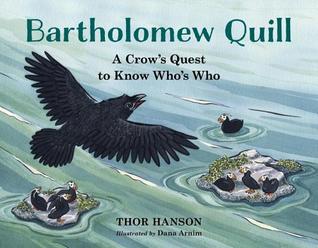
Bartholomew Quill: A Crow’s Quest to Know Who’s Who
Author: Thor Hanson
Illustrator: Dana Arnim
Expected publication April 5th, 2016 by Little Bigfoot

Goodreads Summary: Bartholomew Quill is clever and curious, but he doesn’t know who or what he is. He has feathers not fur, so he can’t be a moose; he is black like a puffin but his beak is the wrong color. This determined bird won’t stop asking questions until he discovers what the reader knows–Bartholomew Quill is a crow!

Acclaimed biologist Thor Hanson takes us on a journey through the animal kingdom, and Dana Arnim’s exuberant watercolor and ink illustrations add to the magic.

About the Author: Thor Hanson is a biologist and author renowned for his adult books about nature (The Impenetrable Forest, The Triumph of Seeds, and Feathers). He won a PNBA Award and The John Burroughs Medal for Feathers, which was also a finalist for the Washington State Book Award. Hanson is a Guggenheim Fellow, a Switzer Environmental Fellow, and sought-after public speaker.

About the Illustrator: Dana Arnim, a northwest native, earned her art degree from the University of Washington. She lives with her husband and family in Seattle and helps lead the Society of Children’s Book Writers and Illustrators (SCBWI) Western Washington chapter.

Kellee’s Review: Bartholomew Quill’s journey is a bit different than other books because the reader already knows the answer to the question the protagonist seeks. I can see reading this with students and students shouting answers and information to Bartholomew as he goes about his journey. What I think is quite wonderful about this book is that although the book is anthropomorphic, the animal information is still factual since it was written by a biologist. Arnim did a beautiful job with the illustrations as well, bringing the animals to life. 

Ricki’s Review: This book touched me in the way that it reminded me of the Native American creation myths my grandfather used to tell when I was a young child. He’d pull me onto his lap and tell me how the river became a river or why the wind whistles. I am sure that these myths made me the reader I am today. Bartholomew Quill is a beautiful story that will leave children to dream about other fictional connections with Mother Nature. It inspires me to get outside and look for animals like Bartholomew in order to learn their stories, too.

Teachers’ Tools for Navigation: Throughout the book, Bartholomew compares and contrasts himself with other animals to help figure out what animal he is. This book would be a great introduction to compare and contrast using the conversations Bartholomew has as well as the illustrations of the different animals.

Students could also use this book as a jumping off point for an animal study of one of the animals within the book. Each animals is quickly discussed, so students could pick the animal that interests them and complete an inquiry project about the animal.

Discussion Questions: How does Bartholomew determine that he is a crow?; How is he different from ______?; How is he the same as ______?

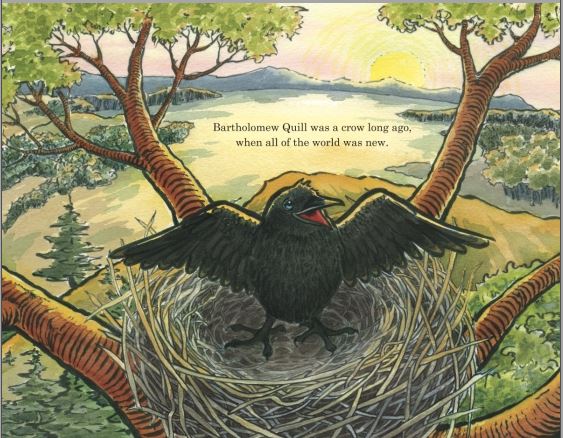
We Flagged: 

bartholomew quill illustration

Read This If You Loved: Frozen Wild by Jim Arnosky, Winter Bees by Joyce Sidman, Feathers by Melissa Stewart

Recommended For: 

readaloudbuttonsmall classroomlibrarybuttonsmall

Kellee Signature andRickiSig

**Thank you Nicole at Sasquatch Books for providing copies for review!**
Finding Winnie: The True Story of the World’s Most Famous Bear by Lindsay Mattick

Share

NFPB2016

Nonfiction Wednesday

Nonfiction Picture Book Wednesday is hosted by Kid Lit Frenzy and was started to help promote the reading of nonfiction texts. Most Wednesdays, we will be participating and will review a nonfiction text (though it may not always be a picture book).
Be sure to visit Kid Lit Frenzy and see what other nonfiction books are shared this week!

finding winnie

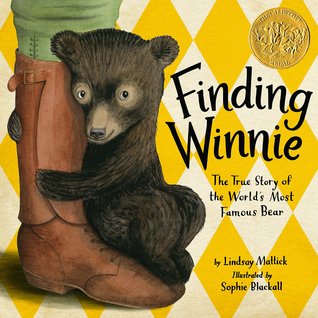
Finding Winnie: The True Story of the World’s Most Famous Bear
Author: Lindsay Mattick
Illustrator: Sophie Blackall
Published October 20, 2015 by Little, Brown Books for Young Readers

Goodreads Summary: Before Winnie-the-Pooh, there was a real bear named Winnie.

In 1914, Harry Colebourn, a veterinarian on his way to tend horses in World War I, followed his heart and rescued a baby bear. He named her Winnie, after his hometown of Winnipeg, and he took the bear to war.

Harry Colebourn’s real-life great-granddaughter tells the true story of a remarkable friendship and an even more remarkable journey–from the fields of Canada to a convoy across the ocean to an army base in England…

And finally to the London Zoo, where Winnie made another new friend: a real boy named Christopher Robin.

Here is the remarkable true story of the bear who inspired Winnie-the-Pooh.

Ricki’s Review: Many of my blogger friends raved about this book. I knew I needed to read it, but my library hold list was very long. When I saw it won the Caldecott Award, I took action. I drove my son to the bookstore and read the book to him while he sat on my lap. My aunt came with me, and she cried through the entire book.

When we reached the end, we just stared at each other and she said, “Ricki, you have to buy this book. Henry needs to have this special story.” And this is how I broke my rule about buying books. Finding Winnie sits elegantly on my son’s bookshelf, and I don’t regret breaking my rule. We love reading it together. The story is captivating from the beginning to the end, and the author and illustrator paint the scene in a remarkable way that readers will be unable to put the book down. Depicting history in picture books is very difficult, and Mattick and Blackall nail it. I highly recommend this charming book if you haven’t read it yet. It will stay close to your heart.

Kellee’s Review: One of the things I particularly loved about Finding Winnie, that Ricki didn’t mention in her beautiful review above, was that the book was written by the great-granddaughter of Captain Coleburn, the serviceman who owned Winnie originally. Having Lindsay Mattick’s close knowledge of the story helped her delve into the story and transport the reader into Winnie’s stories. The backmatter filled with photos and other primary documents also make it feel like we are peaking into the family’s scrap book.

I also want to praise Sophie Blackall’s illustrations. I love Sophie’s soft style with what seems like pencil and paints just is angelic and brings Mattick’s story to life. Although they both would shine separately, they are stellar together.

Teachers’ Tools for Navigation: As a teacher, I’d love to do two things with this book. First, I’d want to compare it to the Winnie the Pooh stories by A. A. Milne. It would be great to compare and contrast the stories to make connections about how Milne might have been inspired. Then, I’d put this book in semi-literature circles. Students might read all of the books (in the “Read This If You Loved” section below) in small groups, and rotate the books across groups. Then, they could discuss the topic and depiction of animals during wars throughout literature. They could compare and contrast the stylistic choices of the authors and also delve into potential ways that animals might be symbolic of each particular war.

Discussion Questions: How do the author and illustrator depict Winnie? How does Winnie’s story evolve?; What does Harry’s friendship with Winnie teach us about human nature?; How might this story have inspired the fictional Winnie the Pooh story?; Why do you think it won the Caldecott? What qualities make it an award winner?

We Flagged: 

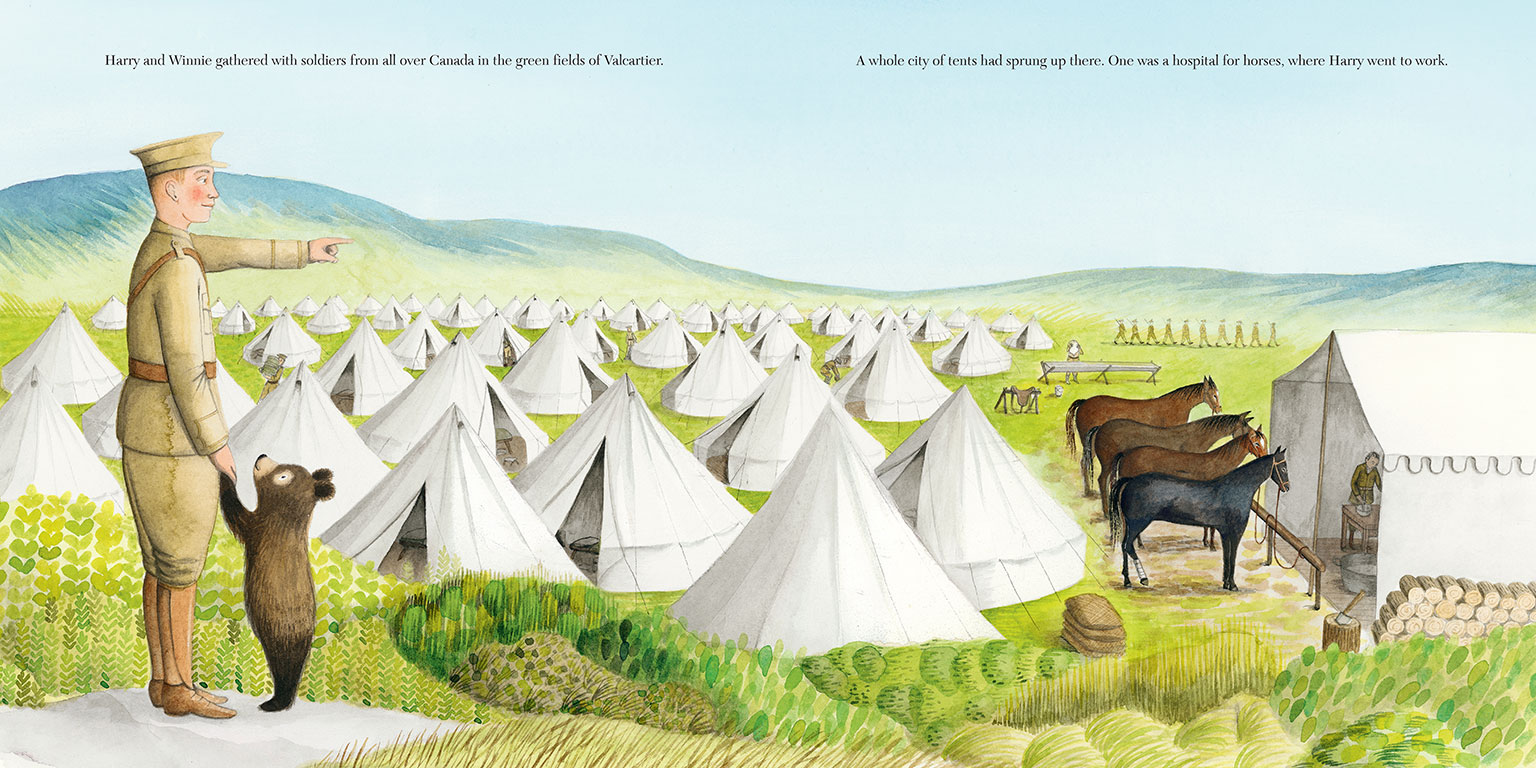
Finding WInnie Spread

**Image from: https://thewalrus.ca/finding-winnie/. We recommend this site, which includes many great images related to the text!**

Read This If You Loved: Winnie: The True Story of the Bear That Inspired Winnie-the-Pooh by Sally M. Walker, Winnie the Pooh  by A. A. Milne, Midnight, A True Story of Loyalty in World War I by Mark Greenwood, Stubby, the War Dog by Ann Bausum, Dogs of War by Sheila Keenan, Faithful Elephants by Yukio Tsuchiya

Recommended For: 

readaloudbuttonsmall classroomlibrarybuttonsmall litcirclesbuttonsmall

RickiSigandSignature

Blog Tour, Giveaway, and Review!: Twenty Yawns by Jane Smiley and Lauren Castillo

Share

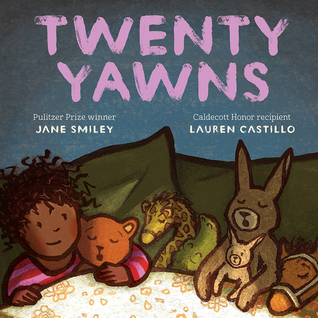
Twenty Yawns

Twenty Yawns
Author: Jane Smiley; Illustrator: Lauren Castillo
Published April 1, 2016 by Two Lions

Goodreads Summary: Featuring lyrical text and beautiful illustrations, this bedtime tale from Pulitzer Prize winner Jane Smiley and Caldecott Honor recipient Lauren Castillo evokes the splashy fun of the beach and the quietude of a moonlit night, with twenty yawns sprinkled in for children to discover and count.

As her mom reads a bedtime story, Lucy drifts off. But later, she awakens in a dark, still room, and everything looks mysterious. How will she ever get back to sleep?

Ricki’s Review: My son asks me to read this book every single night. (I’m not kidding. Imagine his sweet voice asking, “Twenty Yawns, please, Mama?”) My favorite part about this book is that there are many interactive sections that we can read together. He can’t read yet, but he is slowly learning sight words and loves reading the “Flap! Flap! Flap! Flap!” of the umbrella and each of the twenty “yawns.” He also tells me what Lucy is doing on each page. There are a lot of bedtime books out there, but this book truly makes me sleepy. I’m getting sleepy as I think about it right now! My son and I both yawn as we see each character yawn. Parents, READ: This book will make your child(ren) tired! I’d be remiss if I didn’t mention that the illustrations are breathtaking. The drawings of Lucy’s stuffed animals capture my attention every time I read this book. I feel lucky to have this book in my bedtime arsenal. My son is falling asleep more quickly. Could it be the twenty yawns?

Kellee’s Review: I love Ricki’s story of how Henry has imprinted on this book! Trent and I read it, and he said “Night, night!” on each of the pages where someone was going to sleep. And like Ricki said, in addition to having beautiful illustrations and a sweet story, this book will definitely make your child sleepy! I cannot help but yawn when I am reading it.

One other thing Trent loves is a promotional piece we received with the book (and you could win below!): a door hanger. One side says, “Shhh…we’re yawning.” And the other side says, “Come in. We’re ready to play.” It is hanging on his door, and we have to flip it back and forth depending on if he is getting up or going to bed. And on the “Shhh” side, he says goodnight to the little girl.

Teachers’ Tools for Navigation: Teachers might use this book to teach figurative language. Kids will enjoy the bold print of onomatopoeias. The illustrations feature aspects of the story that aren’t always present in the text. I love with authors and illustrators don’t match the illustrations and text perfectly because it provides such great opportunities for students to compare and contrast the story and pictures. They might talk about why the text doesn’t include all of the information from the illustrations and how this enhances the narrative. Also, kindergarten teachers and daycare providers can use this book right before nap time! I would have loved to have listened to this book as a child. Check out the Activity Kit!

Discussion Questions: Why doesn’t the author number the twenty yawns? How does this make the story more interesting to read?; What does Lucy do when she is frightened? How might you learn to soothe yourself when you are scared?; What activities do Lucy and her parents do together? What activities do you enjoy doing with family?

We Flagged: “Lucy started to carry Molasses back to her bed. But the other toys were looking at her, even Leonard, the baby Kangaroo. They seemed lonely.”

Read This If You Loved: Goodnight Moon by Margaret Wise BrownGoodnight Songs by Margaret Wise Brown

Recommended For: 

readaloudbuttonsmall classroomlibrarybuttonsmall

  Follow All of the Stops on the Tour, and Don’t Forget to Enter the Giveaway!:

About the Authors:
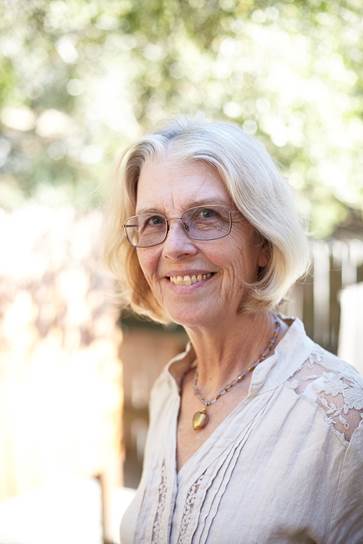
Jane Smiley photo
Jane Smiley is the author of numerous novels, including A Thousand Acres, which was awarded the Pulitzer Prize, as well as five works of nonfiction and a series of books for young adults. In 2001 she was inducted into the American Academy of Arts and Letters, and in 2006 she received the PEN USA Lifetime Achievement Award for Literature. This is her first picture book. She lives in Northern California.
laurencastillo_headshot (2)
Lauren Castillo is the illustrator of many books, including The Reader by Amy Hest. She has also written and illustrated several books, including Caldecott Honor book Nana in the City and The Troublemaker. She lives in Harrisburg, Pennsylvania. To learn more, visit www.laurencastillo.com.
Twitter: @studiocastillo.

RickiSigand Kellee Signature

**Thank you to Barbara Fisch for sending us this book and for allowing us to host the giveaway!**