What Do You Do with an Idea? by Kobi Yamada

Share

idea

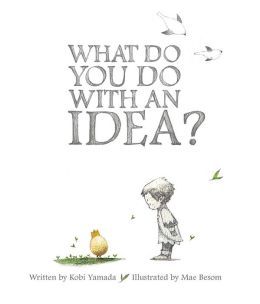
What Do You Do with an Idea?
Author: Kobi Yamada; Illustrator: Mae Besom
Published: February 1, 2014 by Compendium Inc.

Summary: This is the story of one brilliant idea and the child who helps to bring it into the world. As the child’s confidence grows, so does the idea itself. And then, one day, something amazing happens. This is a story for anyone, at any age, who’s ever had an idea that seemed a little too big, too odd, too difficult. It’s a story to inspire you to welcome that idea, to give it some space to grow, and to see what happens next. Because your idea isn’t going anywhere. In fact, it’s just getting started.

Review: I read this book slowly and purposefully. By page two, I realized I had come upon something very special, and I wanted to savor the moment—because while we can enjoy books over and over again, we can never read a book for the first time twice. When I think of this book, I will remember reading it quietly aloud (cross-legged on the floor of the bookstore) as my son played with trains beside me. What Do You Do with an Idea? illustrates the complexity of ideas, which are inherently imbued with feelings of self-doubt. The child in this book learns to treasure his idea and comes to realize the beauty of its potential. After I read this book, I immediately mailed a copy to my younger sister (who works at Google) because her mind brims with ideas. This book is inspirational for people of all ages. I hope you find it to be inspirational, too.  

Check out Kellee’s review of this text.

Teacher’s Tools for Navigation: The author and illustrator combine efforts to illustrate an abstract idea as a physical thing. Readers might consider how they do this with words and illustrations. Then, they could try to illustrated a different abstract idea in a story of their own.

Discussion Questions: Why might the illustrator have chosen to characterize the idea as an egg with a crown?; How is color intentionally used to tell the story?; Why might the author have chosen to use a first person point-of-view? How might the story have been different otherwise?; What is the author’s purpose?; Why/How might this book resonate with readers of all ages?

We Flagged: 

What Do You Do with an Idea 2

Image from: www.amazon.com

Read This If You Loved: The Most Magnificent Thing by Ashley Spires; The Dot by Peter H. Reynolds, The Noisy Paint Box by Barb Rosenstock, Lost and Found by Oliver Jeffers, Journey by Aaron Becker

Recommended For:

  readaloudbuttonsmall closereadinganalysisbuttonsmall classroomlibrarybuttonsmall

RickiSig

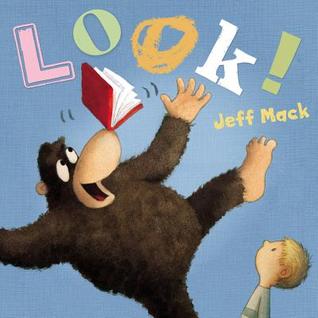
Look! by Jeff Mack

Share

look!

Look!
Author and Illustrator: Jeff Mack
Published April 7th, 2015 by Philomel Books

Goodreads Summary: This hilarious tale of a friendship that develops over a love of books is the perfect picture book for fans of It’s a Book and Officer Buckle and Gloria!

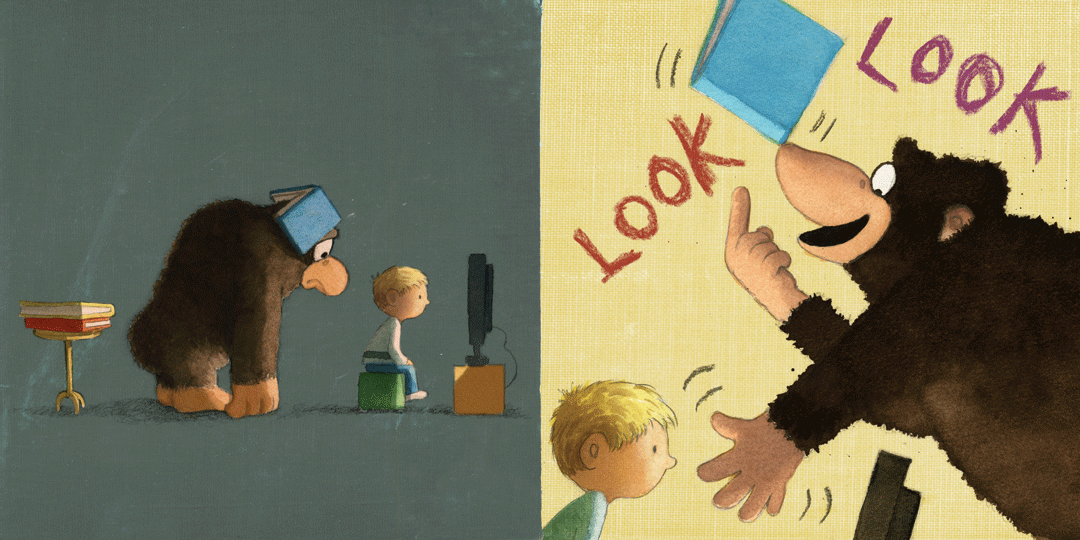
Everyone needs a little attention from time to time. Just ask our gorilla who will stop at nothing to be noticed by the boy with his eyes glued to the TV set. But for the gorilla, it’s going to take more than a quiet nudge to steal away the boy’s attention. When his usual antics fail to catch the boy’s eye—LOOK OUT! The gorilla has some other tricks up his sleeve.

Using only two words—LOOK and OUT—Jeff Mack relates an adorably hilarious story about an attention-loving gorilla, a television-loving boy, and a friendship that develops over books. Simple in construct yet richly creative, this interactive and colorful tale will leave children laughing and loving books for years to come.

Ricki’s Review: Ah! It only uses two words! This creative story about a friendship between a gorilla and a boy captured my heart. It teaches kids the importance of avoiding the TV and picking up a book instead. I am an unapologetic book pusher, so I always appreciate books that promote reading. Readers are forced to use their imaginations to follow the storyline, and the illustrations and characters’ personalities will make them giggle. This playful tale is sure to capture readers’ hearts.

Kellee’s Review: I love how this book teaches a lesson about the importance of getting away from electronics without seeming preaching. The gorilla is entertaining, and it’d be fun to predict what he is going to do next to try to get the boy’s attention. I also think the book will make kids get mad at the boy then will need help realizing that they may be doing the same thing on a daily basis. The use of only two words is also going to be a big conversation starter as well. Look! would also be a good first book to introduce the idea of theme. What is this book trying to teach the reader?  And like Ricki, I am big fan of books that promote reading, and this one is a great addition to those out there!

Teachers’ Tools for Navigation: We are suckers for books that feature only a few words. One great, fun way to improve speaking skills is to give students only the words of the book to start (the book should remain hidden). Students pair up or work in small groups to speak the words in expressive way to tell a story. They perform a skit for the class, and then the class discusses the various ways that words can be interpreted. Then, the teacher reads the book for the first time to the students. Ricki used to do this in her class each year to introduce speaking skills. She stole the idea from her methods class with Wendy Glenn. 🙂

Discussion Questions: How do the illustrations help you understand the book? What do the characters teach you?; Why might the author have chosen to feature only two words in the book? Did you think it was effective?; What is the theme of Look!?

We Flagged: 

Look

Image from www.jeffmack.com.

Read This If You Loved: Yo! Yes? by Chris Raschka, Moo by David LaRochelle, Ball by Mary Sullivan, It’s a Book by Lane Smith, Officer Buckle and Gloria by Peggy Rathmann, Smick by Doreen Cronin, Miss Books Loves Books! by Barbara Bottner

Recommended For: 

readaloudbuttonsmall classroomlibrarybuttonsmall

RickiSig andSignature

**Thank you to Penguin Young Readers for providing a copy for review!**

Roller Girl by Victoria Jamieson

Share

Roller Girl

Roller Girl
Author and Illustrator: Victoria Jamieson
Published March 10th, 2015 by Dial Books

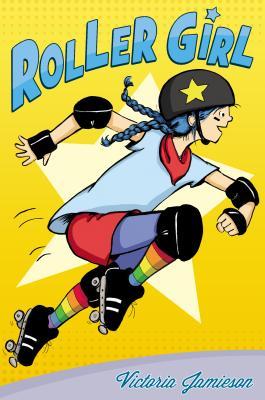
Goodreads Summary: For most of her twelve years, Astrid has done everything with her best friend Nicole. But after Astrid falls in love with roller derby and signs up for derby camp, Nicole decides to go to dance camp instead. And so begins the most difficult summer of Astrid’s life as she struggles to keep up with the older girls at camp, hang on to the friend she feels slipping away, and cautiously embark on a new friendship. As the end of summer nears and her first roller derby bout (and junior high!) draws closer, Astrid realizes that maybe she is strong enough to handle the bout, a lost friendship, and middle school… in short, strong enough to be a roller girl.

In her graphic novel debut, real-life derby girl Victoria Jamieson has created an inspiring coming-of-age story about friendship, perseverence, and girl power!

My Review and Teachers’ Tools for Navigation: How did I not read this book the instant it came out?! First, it has eye-catching, colorful artwork which is my favorite in graphic novels. Yes, everyone is comparing it to Raina’s work, and I can see why, because they are both just so well done and fun to read. Second, it is such a girl power book. Not an over-the-top girl power book, but it is a book about being a girl and being awesome at it. Third, it has roller derby in it! I love that we get to learn about the sport with Astrid. Fourth, the book has an awesome mom! Even when Astrid is complaining about her, she is being awesome (like taking her to poetry readings and the art museum). Fifth, this book is also about friendships and the ebbs and flows that come with teenage friends. Finally, it is about putting your mind to something and doing it! Astrid works her butt off, and it pays off.  I think Roller Girl is also a great jumping off point to talk about bullying, friendship, and working hard to meet a goal.

This book is going to be loved by fans of Raina Telgemeier, El Deafo, The Dumbest Idea Ever!, Astronaut Academy, and Cleopatra in Space. It is definitely going to make the rounds in my classroom library!

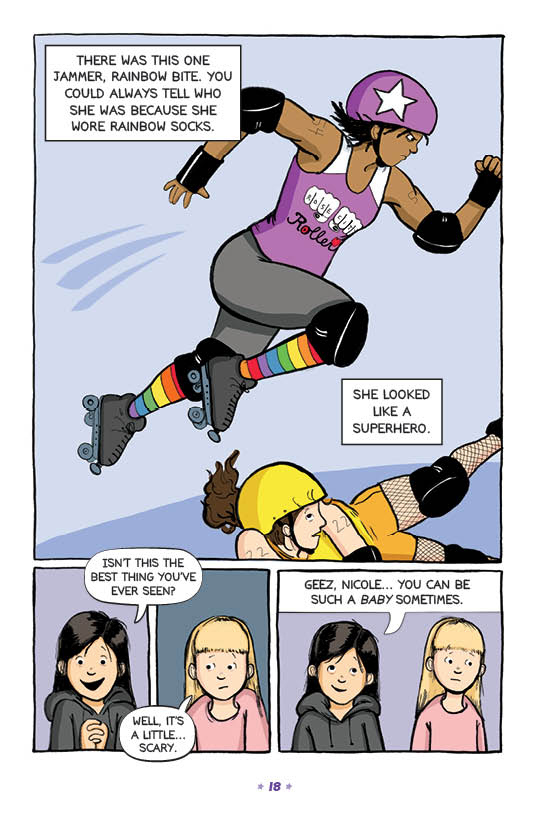
Discussion Questions: How should Astrid had dealt with Nicole not going to derby camp?; Have you had a friend like Nicole?; Astrid really wants to learn roller derby; Nicole wants to get better at ballet–what is your passion?; How did Rainbow Brite help Astrid?; What do you think about Astrid’s mom?

We Flagged: 

Roller-Girl-1

Read This If You Loved: Smile, Sisters, and Drama by Raina Telgemeier, El Deafo by Cece BellThe Dumbest Idea Ever! by Jimmy Gownley, Astronaut Academy by Dave Roman, Cleopatra in Space by Mike Maihack

Recommended For: 

classroomlibrarybuttonsmall

Signature

Here’s Hank: Fake Snakes and Weird Wizards by Henry Winkler and Lin Oliver

Share

fakesnakes

Here’s Hank #4: Fake Snakes and Weird Wizards
Author: Henry Winkler and Lin Oliver
Illustrator: Scott Garrett
Published February 10th, 2015 by Grosset & Dunlap

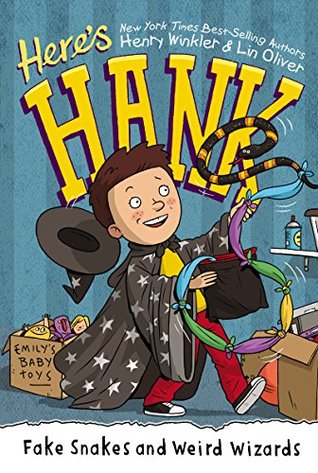
Goodreads Summary: Hank’s sister Emily wants Ralph’s Reptile Show to perform at her birthday party more than anything, but Ralph is booked solid. So Hank comes up with a plan: he’ll disguise himself as a magician called The Westside Wizard and pull a snake from thin air! But when Hank’s true identity is revealed during his performance, his good deed might just turn into a huge disaster.

About the Authors: Henry Winkler is an actor, producer, and director, and he speaks publicly all over the world. In addition, he has a star on the Hollywood Boulevard, was awarded an honorary Order of the British Empire, and the jacket he wore as the Fonz hangs in the Smithsonian Museum in Washington, DC. But if you asked him what he was proudest of, he would say, “Writing the Hank Zipzer books with my partner, Lin Oliver,” He lives in Los Angeles with his wide, Stacey. They have three children named Jed, Zoe, and Max, and two dogs named Monty and Charlotte. Charlotte catches a ball so well that she could definitely play outfield for the New York Mets.

Lin Oliver is a writer and producer of movies, book, and television series for children and families. She has written more than twenty-five novels for children and one hundred episodes of television. She is cofounder and executive director of the Society of Children’s Book Writers and Illustrators, an international organization of twenty thousand authors and illustrators of children’s books. She lives in Los Angeles with her husband, Alan. They have three sons named Theo, Ollie, and Cole. She loves tuna melts, curious kids, any sport that involves a racket and children’s book writers everywhere.

My Review: I like Hank! I am so glad to be introduced to him! Hank is a good friend, a great brother, and just all around a good kid. This book was all about how he was going to make sure his sister’s birthday party was the best she could have. Throughout there are some funny moments and some definite “learning a lesson” times, but in the end, it is all about friends and family. I like that although Hank is a bit of a funny guy, he isn’t a trouble maker or bad kid. He is a good role model, but not over-the-top goody-goody. I think kids are going to really like him, and his books are a great early chapter book!

Teachers’ Tools for Navigation: This is the first book I’ve read that was published in Dyslexie, an easy-to-read font designed especially for dyslexic readers. Dyslexie is “designed to make letters more distinct from one another and to keep them tied down, so to speak, so that the readers are less likely to flip them in their minds. The letters in the font are also spaced wide apart to make reading them easier.” I love that Winkler, a dyslexic, is using his published novels to help make books more accessible to readers with learning disabilities.

A few facts about dyslexia:
  • 1 in 10 Americans has dyslexia
  • Over 40 million American adults have dyslexia and only 2 million know it
  • 20% of school-aged children in the US are dyslexic
  • Dyslexia is not tied to IQ (over 50% of NASA employees are dyslexic, as was Einstein and many other leading thinkers)

I would definitely recommend these books for classroom libraries! Not only because of the new font but because Hank is such a relatable and good kid!

Discussion Questions: Do you think Emily should have been mad at Hank?; What type of personality traits does Hank show by not giving up on learning the magic trick?; What is the one thing you would love to have at your next birthday party?

We Flagged: “Our family was spending the morning at the West End Avenue street fair. The whole block was lined with booths selling everything from blueberry muffins to tube socks. Leave it to Emily to find the one snake booth. That girl can sniff out a reptile better than my dog, Cheerio, can sniff out a hunk of pot roast under the dining-room table.” (p. 2)

Read This If You Loved: Cody and the Fountain of Happiness by Tricia Springstubb, Lulu and the Brontosaurus by Judith Viorst, Marty McGuire by Kate Messner, Leroy Ninker Saddles Up by Kate DiCamillo

Recommended For: 

classroomlibrarybuttonsmall

Signature

**Thank you to Penguin Young Readers for providing a copy for review!**

Cody and the Fountain of Happiness by Tricia Springstubb

Share

cody

Cody and the Fountain of Happiness
Author: Tricia Springstubb
Illustrator: Eliza Wheeler
Published April 14th, 2015 by Candlewick Press

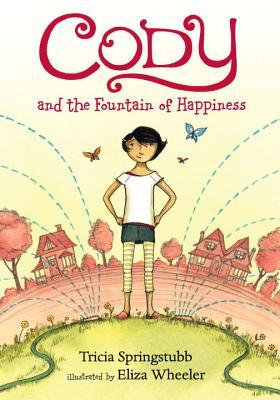
Goodreads Summary: For whimsical Cody, many things are beautiful, especially ants who say hello by rubbing feelers. But nothing is as beautiful as the first day of summer vacation, and Cody doesn’t want to waste one minute of it. Meanwhile, teenage brother Wyatt is moping over a girl, Mom is stressed about her new job as Head of Shoes, Dad is off hauling chairs in his long-distance truck, and even camp has been closed for the summer. What to do? Just when all seems lost, Cody bumps into a neighborhood boy named Spencer who is looking for a runaway cat. With a new friend and a soon-to-be-found cat, Cody is on her way to the fountain of happiness.

Kellee’s Review: Cody is one of those spunky, smart, caring, sweet young ladies who anyone would want as a friend. I loved being part of Cody’s summer which was full of a quirky set of characters and an unexpected misadventure. I have been talking to Carrie Gelson about my book gap when it comes to early chapter books, so I am so glad that I found Cody because I think she is going to be loved as much as Marty McGuire, Lulu, Ivy & Bean, and many other loved early chapter book characters.

Ricki’s Review: Kellee’s review made me laugh. I agree that my knowledge of early chapter books is my biggest weakness, so I loved reading this odd-in-a-good-way tale! The illustrations are great–as a young reader, I hated when my chapter books didn’t have pictures, so this will be very appealing to kids. I loved how the author incorporated Spanish words for beginning readers. Also, the quirky bond between Cody and her brother, Wyatt, made me giggle at several points. Wyatt reminded me of my older brother, and I think readers will find similar qualities in their siblings. I will absolutely be recommending this book to younger readers.

Teachers’ Tools of Navigation: Lots of things go into Cody’s fountain of happiness: her family, Mew Mew, Spencer, GG, and her ants; however, each of us have our own fountain of happiness. Have students make their own fountain of happiness list, and then assemble the things they included into a list poem.
(Idea from Tricia Springstubb)

Additionally, Tricia Springstubb’s writing is exceptional and would definitely serve as a mentor text for voice and descriptive writing. The lyrical way that Tricia Springstubb describes Cody’s feelings and surroundings is beautiful and is a wonderful example for student writers and readers.

Discussion Questions: What makes up your fountain of happiness?; Cody uses onomatopoeias to describe things such as her mother’s walking “click-click-click” and her coffee drinking “gulp-gulp-gulp.” What onomatopoeias do you hear around you on a daily basis?

We Flagged: “Late that night, Cody woke up. Her Dad radar was beeping. She raced to the kitchen. Dad sat at the table with Mom. Jumping into his arms, Cody breathed in great gulps of dad smell, a mix of diesel oil, coffee, and eggs over easy.”

cody2

Book Trailer: 

Cody & The Fountain of Happiness-Trailer from Tim Kaegi on Vimeo.

Read This If You Loved: Marty McGuire by Kate Messner, Eleanor books by Julie Sternberg, Lulu books by Judith Viorst, Babymouse by Jenni L. Holm; Annika Riz, Math Whiz by Claudia Mills

Recommended For: 

classroomlibrarybuttonsmall readaloudbuttonsmall

Signatureand RickiSig

Rain Reign by Ann M. Martin (Ricki’s Review)

Share

rain

Rain Reign
Author: Ann M. Martin
Published October 7th, 2014 by Feiwel & Friends

Goodreads Summary: In her most powerful novel yet, Newbery Honor author Ann M. Martin tells the story of girl with mental/emotional challenges and the dog she loves.

Rose Howard has OCD, Asperger’s syndrome, and an obsession with homonyms (even her name is a homonym). She gave her dog Rain a name with two homonyms (Reign, Rein), which, according to Rose’s rules of homonyms, is very special. Rain was a lost dog Rose’s father brought home. Rose and Rain are practically inseparable. And they are often home alone, as Rose’s father spends most evenings at a bar, and doesn’t have much patience for his special-needs daughter.

Just as a storm hits town, Rain goes missing. Rose’s father shouldn’t have let Rain out. Now Rose has to find her dog, even if it means leaving her routines and safe places to search. Rose will find Rain, but so will Rain’s original owners.

Hearts will break and spirits will soar for this powerful story, brilliantly told from Rose’s point of view.

My Review and Teachers’ Tools for Navigation: Rose reminded me of a dear student I had when I was teaching. Because I had this strong connection with her character, I felt very attached to the story, in general. Rose is a passionate, caring young girl, and I think students will learn much from her.The story line is well-done, and I appreciated that it wasn’t a problem novel that only focused on her disorder. Her bond with her dog, her bravery, and her relationship with her uncle teach great lessons. This book reminded me of Wonder by R.J. Palacio because it teaches empathy quite well. It is one of those books that makes me want to be a better person. While Rose’s repetition may feel overdone, it is her reality, and Ann M. Martin hits that home. Rose pushes and pushes her father and teachers (at the same time as she pushes and pushes the reader) in ways that are a hallmark of Asperger’s. It shows the realities of individuals who live with this disorder. I think it is incredibly important for students to read books about people who are different from them, so they can see the similarities despite the differences in characters. I would love to use this book as a read-aloud.

Kellee’s Review: Check out Kellee’s Review here!

Discussion Questions: Was Rose’s dad an evil man? What can we learn from him?; Do you think Rose made the right choice about Rain?; How does Rose make friends in school? What can we learn from her?

We Flagged: “I’m going to tell you a story. It’s a true story, which makes it a piece of nonfiction.”

Read This If You Loved: Rules by Cynthia Lord, Wonder by R.J. Palacio, Mockingbird by Kathryn Erskine, Out of my Mind by Sharon Draper, Each Kindness by Jaqueline Woodson; The Curious Incident of the Dog in the Night-Time by Mark Haddon

Recommended For: 

classroomlibrarybuttonsmall readaloudbuttonsmall litcirclesbuttonsmall

RickiSig

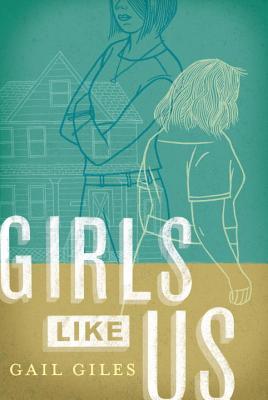
Girls Like Us by Gail Giles

Share

girls like us

Girls Like Us
Author: Gail Giles
Published May 27th, 2014 by Candlewick Press

Goodreads Summary: With gentle humor and unflinching realism, Gail Giles tells the gritty, ultimately hopeful story of two special ed teenagers entering the adult world.

We understand stuff. We just learn it slow. And most of what we understand is that people what ain’t Speddies think we too stupid to get out our own way. And that makes me mad.

Quincy and Biddy are both graduates of their high school’s special ed program, but they couldn’t be more different: suspicious Quincy faces the world with her fists up, while gentle Biddy is frightened to step outside her front door. When they’re thrown together as roommates in their first “real world” apartment, it initially seems to be an uneasy fit. But as Biddy’s past resurfaces and Quincy faces a harrowing experience that no one should have to go through alone, the two of them realize that they might have more in common than they thought — and more important, that they might be able to help each other move forward.

Hard-hitting and compassionate, Girls Like Us is a story about growing up in a world that can be cruel, and finding the strength — and the support — to carry on.

My Review: While reading this book, I had no question that it deserved the Schneider Teen Award. The Schneider Family Book Award honors a “book that embodies an artistic expression of the disability experience for adolescent audiences,” and Girls Like Us take us into Quincy and Biddy’s worlds as they learn to transition from a special-ed classroom in high school to real life in such a true matter, it definitely meets the criteria for the award. In many ways, the book is like any book about girls who just graduated from high school: learning to live with a roommate you don’t understand, learning to be responsible, etc. However, the challenges that these young ladies face because of their disabilities  puts the book on a whole different level. Although the book is primarily about Quincy and Biddy’s life, it does illuminate some serious issues towards the treatment of differently abled individuals. (P.S. I love the ending very much!)

There is so much to talk about with this book! Because it impacted myself and a few of my friends, we decided to have a Twitter chat focused around it (#GLUChat). If you have read the book (because there are spoilers) check out our conversation: https://storify.com/trkravtin/girls-like-us-twitter-chat. Thank you to Teresa for archiving and Michele, Carrie, Alyson, and Leigh for taking part in it with me!

Teachers’ Tools for Navigation: The characters in this book are so complex! Even the secondary characters are fleshed out and have a presence. Girls Like Us is a wonderful example of character building and voice and how that can make (or break) a novel. It is especially fascinating to compare the voice and tone of the two girls’ sections. Extremely well crafted.

Discussion Questions: How do Quincy and Biddy complement each other?; How does Miss Lizzy help Quincy and Biddy overcome the challenges they face leaving school?; How did you (and Miss Lizzy) underestimate Quincy and Biddy? Why did you/she do so?; If you were going to record your feelings like Biddy and Quincy do, what would your recording say?; Did you predict why Biddy didn’t like males correctly? Did you predict the ending?

We Flagged: “My name is Biddy. Some call me other names. Granny calls me Retard. Quincy call me White Trash sometimes and Fool most of the time. Most kids call me Speddie. That’s short for Special Education.

I can’t write or read. A little bit, but not good enough to matter. There’s a lot of stuff I don’t know. If I could write I could make a long list. List might reach lal the way through Texas to someplace like Chicago. I don’t know where Chicago is. That’s another thing for the list.

But there’s some things I do know. And once I know a thing, I hold it tight and don’t let it stray off. Granny shouldn’t call me Retard. I know that. It ain’t nice. It hurts my feelings. I know it’s a wrong thing to hurt somebody’s feelings. I know that I ain’t White Trash. Trash is something you throw away. You don’t throw nobody away. That’s wrong. Even if my mama done it to me.” (p. 1)

Recommended For: 

classroomlibrarybuttonsmall

Signature