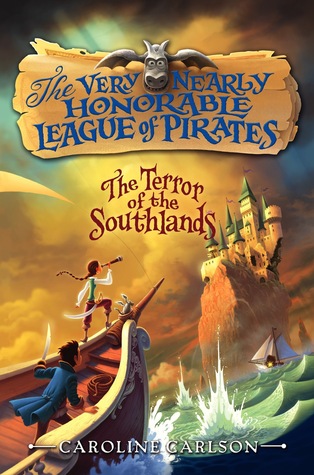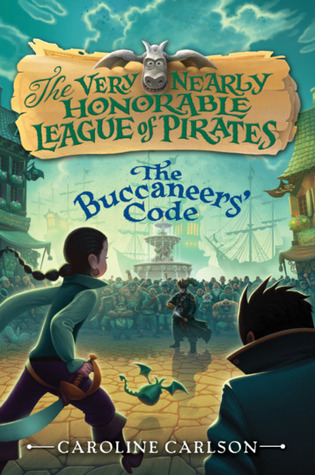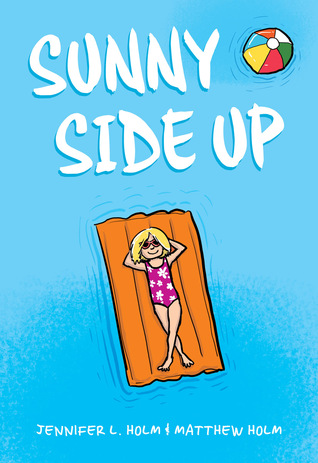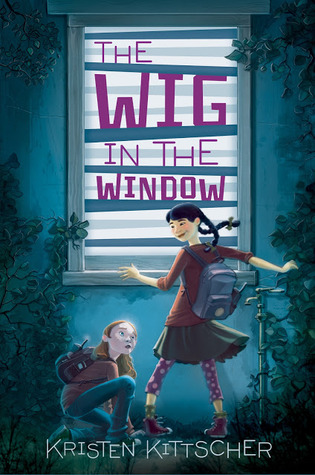
Baba Yaga’s Assistant by Marika McCoola, Illustrated by Emily Carroll

Share

Halloween Button 2015

baba yaga

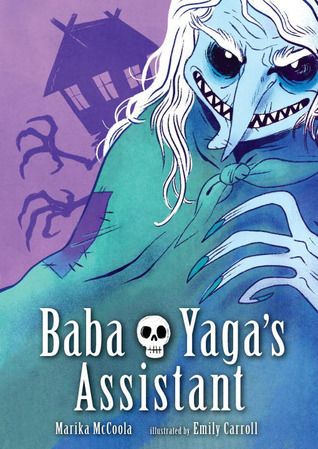
Baba Yaga’s Assistant
Author: Marika McCoola
Illustrator: Emily Carroll
Published August 4th, 2015 by Candlewick Press

Goodreads Summary: 

ASSISTANT WANTED ASAP
Must have skills in hauling, obeying orders, cooking, and cleaning. Magical talent a bonus. Must be good with heights. Enter Baba Yaga’s house to apply.

Most children think twice before braving a haunted wood filled with terrifying beasties to match wits with a witch, but not Masha. Her beloved grandma taught her many things: that stories are useful, that magic is fickle, and that nothing is too difficult or too dirty to clean. The fearsome witch of folklore needs an assistant, and Masha needs an adventure. She may be clever enough to enter Baba Yaga’s house on chicken legs, but within its walls, deceit is the rule. To earn her place, Masha must pass a series of tests, outfox a territorial bear, and make dinner for her host. No easy task, with children on the menu!

Wry, spooky and poignant, Marika McCoola’s debut–with richly layered art by acclaimed graphic artist Emily Carroll–is a storytelling feat and a visual fest.

Kellee’s Review: I first learned about Baba Yaga when I was in middle school, and I learned about Mussorgsky’s Pictures at an Exhibition suites based on paintings by Viktor Hartmann. Suite 9, “The Hut on Fowl’s Legs” was based off of his painting of a clock in the form of Baba Yaga’s hut. Because I liked the music so much when I first heard it, I wanted to learn more about it, and one of the things I distinctly remember researching was Baba Yaga who I found fascinating! I then was reintroduced to Baba Yaga when I was reading the Fables series by Bill Willingham, and once again I went and read all about her folklore. Which meant when I saw that there was an upcoming graphic novel, my favorite!, about her, I had to get it. 

Marika McCoola’s retelling of the Baba Yaga folktales does them justice. With a mix of classic stories of Baba Yaga and McCoola’s story of Masha, the book does a wonderful job of introducing the readers to who Baba Yaga is at the core, a conflicted witch, and also puts a twist on it all. Masha’s story is more than just an addition to Baba Yaga’s story though. She is the star. Her story is a sad one, and Baba Yaga may just be what she needs. This text will really start some discussions around Masha’s family status and why Baba Yaga and her may just be perfect for each other.

Teachers’ Tools for Navigation: Although it isn’t necessary, knowing the history of Baba Yaga would definitely make the reading of this text even more meaningful. I would love to have Baba Yaga’s Assistant during a traditional literature unit looking at diverse folktales and retellings of those tales.

Discussion Questions: Why was Masha prone to working well with Baba Yaga?; How did Masha’s grandmother influence who she is today?; How did the author intertwine traditional literature with a new story of Baba Yaga?; What do you think is going to happen next?

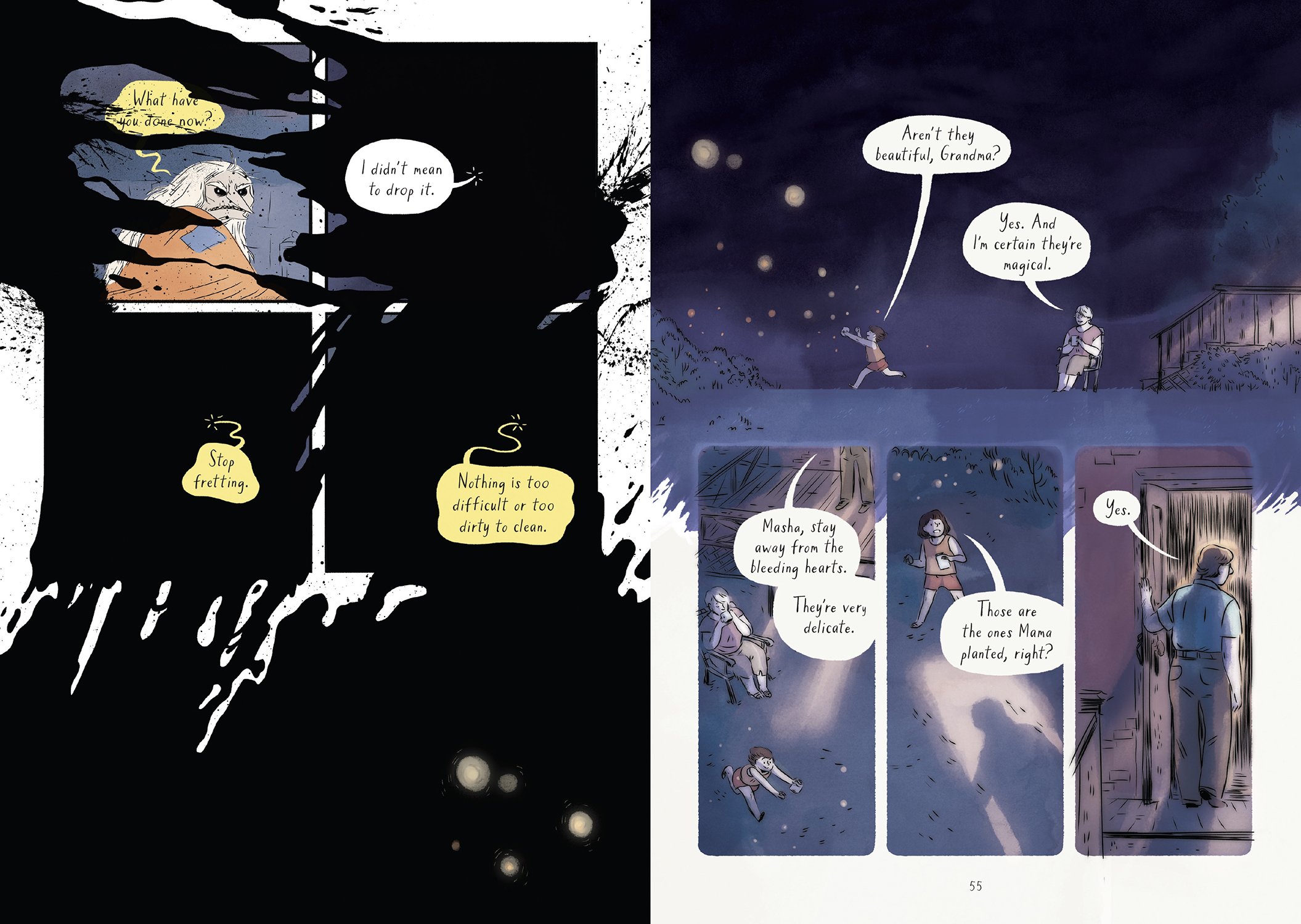
We Flagged:

baba yaga spread

Read This If You Loved: Tale Dark and Grimm by Adam Gidwitz, Fairy Tale Comics edited by Chris Duffy, Rump by Liesl ShurtliffCastle Waiting by Linda Medley, Breadcrumbs by Anne Ursu

Recommended For:

classroomlibrarybuttonsmall closereadinganalysisbuttonsmall

  Signature

**Thank you to Candlewick for providing copies for review!**

Happy Birthday, Mercy Watson! Review and Giveaway!: Mercy Watson and Deckadoo Drive Books by Kate DiCamillo

Share

Mercy Birthday

One of the most popular chapter book series for newly independent readers turns ten

And beloved creators Kate DiCamillo and Chris Van Dusen give fans even more reason to celebrate with a new spin-off series Tales from Deckawoo Drive

Mercy Watson, the best-selling early chapter-book series written by the two-time Newbery Medal winner and National Ambassador for Young People’s Literature Kate DiCamillo celebrates its tenth anniversary this year. Launched in 2005 the fun-filled stories aimed at readers age five to eight star Mercy Watson, Deckawoo Drive resident, lover of hot buttered toast and the most single-minded of pigs when it comes to the pursuit of adventure – and treats. Illustrated in full color by award-winning artist Chris Van Dusen in his signature retro style, the Mercy Watson books are a popular choice with younger readers making the transition from picture books to chapter books.

Although the sixth and final Mercy Watson installment was published in 2009, the series continues to attract new fans and is published in ten languages with sales of over two million copies worldwide. Last year Kate DiCamillo reunited children with Mercy and her neighbours in the first book in her spin-off series, Tales from Deckawoo Drive. Once more illustrated by Chris Van Dusen, and with all the rip-roaring adventure of Mercy Watson, the series is aimed at older readers of six to nine. The longer chapters and fewer illustrations allow Kate DiCamillo to introduce another level of pathos and sentiment to this series of funny, touching stories starring some unforgettable, heart-warming characters.

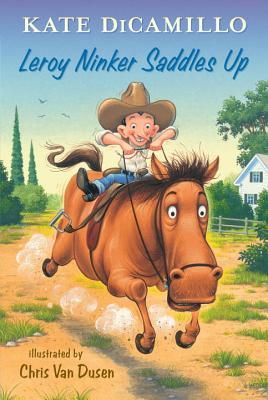
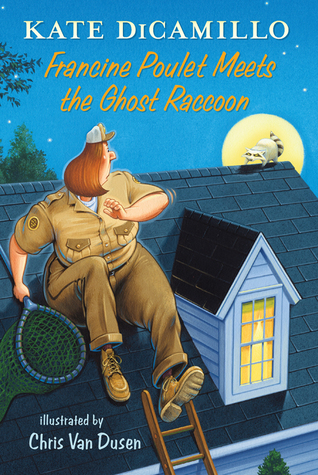
The first title in the new series, Leroy Ninker Saddles Up, became a New York Times bestseller and Amazon Best Book of the Year. Leroy and his rusty rather than trusty steed Maybelline star in this love story bursting with impassioned declarations and plenty of hilarious horsing around. This summer saw the release of book two, Francine Poulet meets the Ghost Raccoon, which also joined the New York Times Best Seller list earlier this month. Francine Poulet is the greatest animal control officer in Gizzford County – but it looks like she may finally have met her match. Funny, fast-paced and with an empowering message at its heart, readers are reunited with some familiar characters amid some riotous raccoon wrangling!

Tales from Deckawoo Drive is the perfect follow-on for original  fans who grew up with Mercy Watson and are ready to move on to a longer read. And for those readers new to Deckawoo Drive, this series is a wonderful introduction to a warm and witty world where readers are left feeling all buttery-toasty inside.

Mercy Watson

My Review: The characters in this story are so endearing. Even Eugenia! The antics of Mercy within these pages mixed with DiCamillo’s way of writing really push the Mercy Watson books past all the other early chapter books into its own league. No wonder Mercy is considered a porcine wonder!

Discussion Questions: What makes the Watsons love Mercy so much? What makes Eugenia dislike Mercy so much?; Did Mercy actually save the day or do you think it was all a coincidence?

We Flagged: 

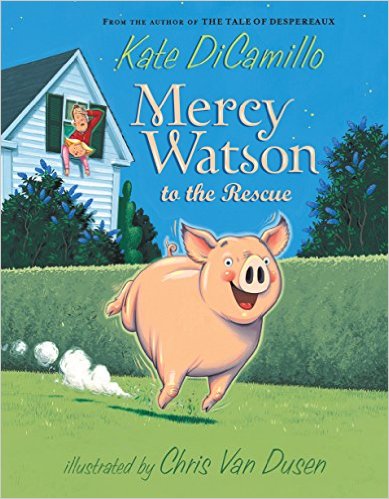
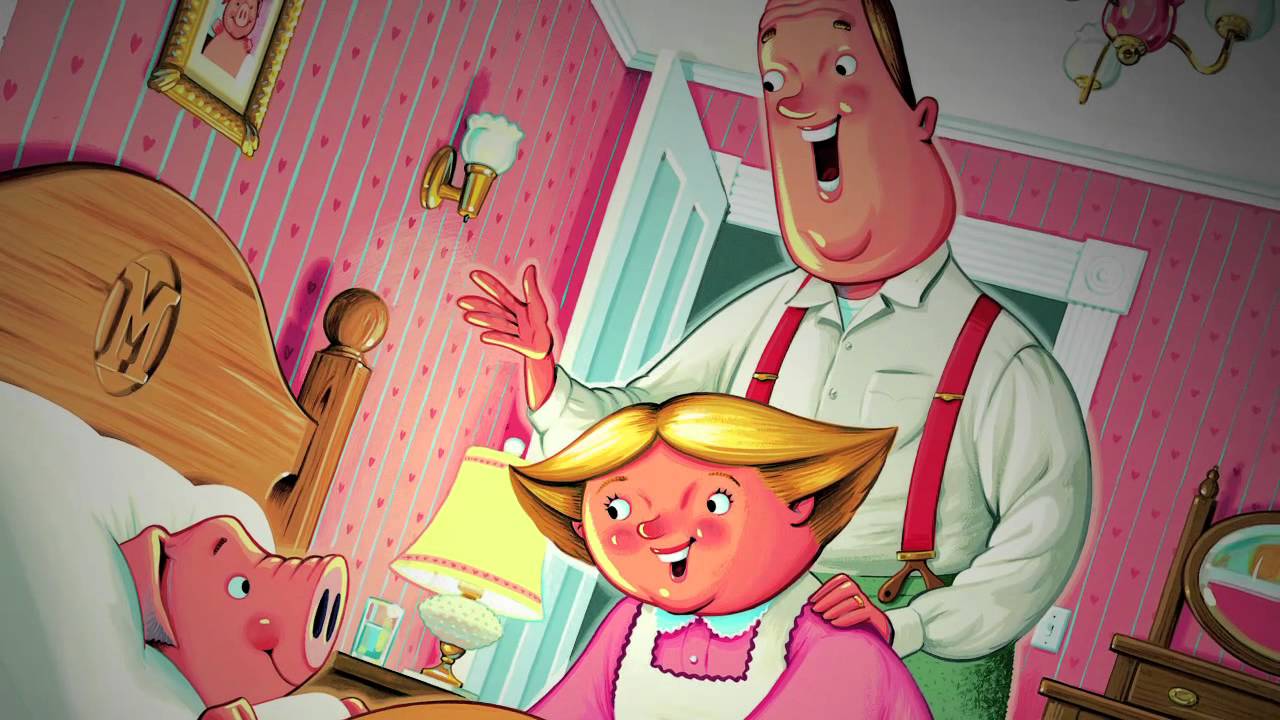
Mercy Illustration

“Mr. Watson and Mrs. Watson have a pig named Mercy.

Each night they sing Mercy to sleep.

‘Bright, bright is the morning sun,” sing Mr. and Mrs. Watson,
but brighter still is our darling one
Dark, dark is the coming night,
but oh, our Mercy shines so bright.

leroy ninker

Goodreads Summary: Yippie-i-oh! Saddle up for the first in a spin-off series starring favorite characters from Kate DiCamillo’s New York Timesbest-selling Mercy Watson books.

Leroy Ninker has a hat, a lasso, and boots. What he doesn’t have is a horse — until he meets Maybelline, that is, and then it’s love at first sight. Maybelline loves spaghetti and sweet nothings, and she loves Leroy, too. But when Leroy forgets the third and final rule of caring for Maybelline, disaster ensues. Can Leroy wrestle fate to the ground, rescue the horse of his heart, and lasso loneliness for good? Join Leroy, Maybelline, and a cast of familiar characters — Stella, Frank, Mrs. Watson, and everyone’s favorite porcine wonder, Mercy — for some hilarious and heartfelt horsing around on Deckawoo Drive.

My Review: Leroy is just so darn loveable. His personality shines through the pages and you just are so happy that Leroy and Maybelline found each other. Also, Kate DiCamillo has a way with voice! I can always hear her characters talking in my head, and they each are so very distinct. I also love her use of vocabulary and humor–perfect! This one is going to be loved by many!

Discussion Questions: Why do you think that Maybelline is the perfect horse for Leroy?; Was Leroy truly prepared to have a horse? How do you know?; Why does Leroy want to be a cowboy?

We Flagged:

leroy ninker

“Leroy Ninker said ‘Yippie-i-oh’ because Leroy Ninker had a dream. He wanted to be a cowboy.

On Wednesday nights, the Bijou Drive-In Theater ran a Western double feature, and Leroy Ninker Stood and watched in wonder as the great white expanse of the Bijou screen filled with purple mountains, wide-open plains, and cowboys.

The cowboys wore ten-gallon hats. The wore boots. They carried lassos. The cowboys were men who cast long shadows and knew how to fight injustice. They were men who where never, ever afraid.

‘Yippie-i-oh,’ Leroy Ninker whispered to the screen. ‘That is the life for me. A cowboy is who I was meant to be.’”

francine poulet

Goodreads Summary: Deckawoo Drive’s intrepid Animal Control Officer meets her match—or does she? A funny, heartfelt, and fast-paced romp from the National Ambassador for Young People’s Literature.

Francine Poulet is the greatest Animal Control Officer in Gizzford County. She hails from a long line of Animal Control Officers. She’s battled snakes, outwitted squirrels, and stared down a bear. “The genuine article,” Francine’s dad always called her. She is never scared—until, that is, she’s faced with a screaming raccoon that may or may not be a ghost. Maybe Francine isn’t cut out to be an Animal Control Officer after all! But the raccoon is still on the loose, and the folks on Deckawoo Drive need Francine back. Can she face her fears, round up the raccoon, and return to the ranks of Animal Control? Join a cast of familiar characters—Frank, Stella, Mrs. Watson, and Mercy the porcine wonder—for some riotous raccoon wrangling on Deckawoo Drive

My Review: Kate DiCamillo has a special way of writing stories. Her characterization is amazing which leads to truly full characters. Her vocabulary always pushes the reader yet never leaves the reader out of the story either. Her voice rings throughout the pages to where you can hear the narrator in your head. In this book, Francine Poulet is a character that all readers will love. She is determined, good at her job, and loves what she is doing. But then she faces her adversary. What happens after is what truly shows what type of person Francine Poulet can be.

Discussion Questions: Do you think Francine does her job because she loves it or because she felt pressured to do it because of her father and grandfather?; What vocabulary words do Kate DiCamillo use throughout the book to add more descriptive language and imagery to the book?; How would you describe Francine? Frank? The raccoon?

We Flagged: 

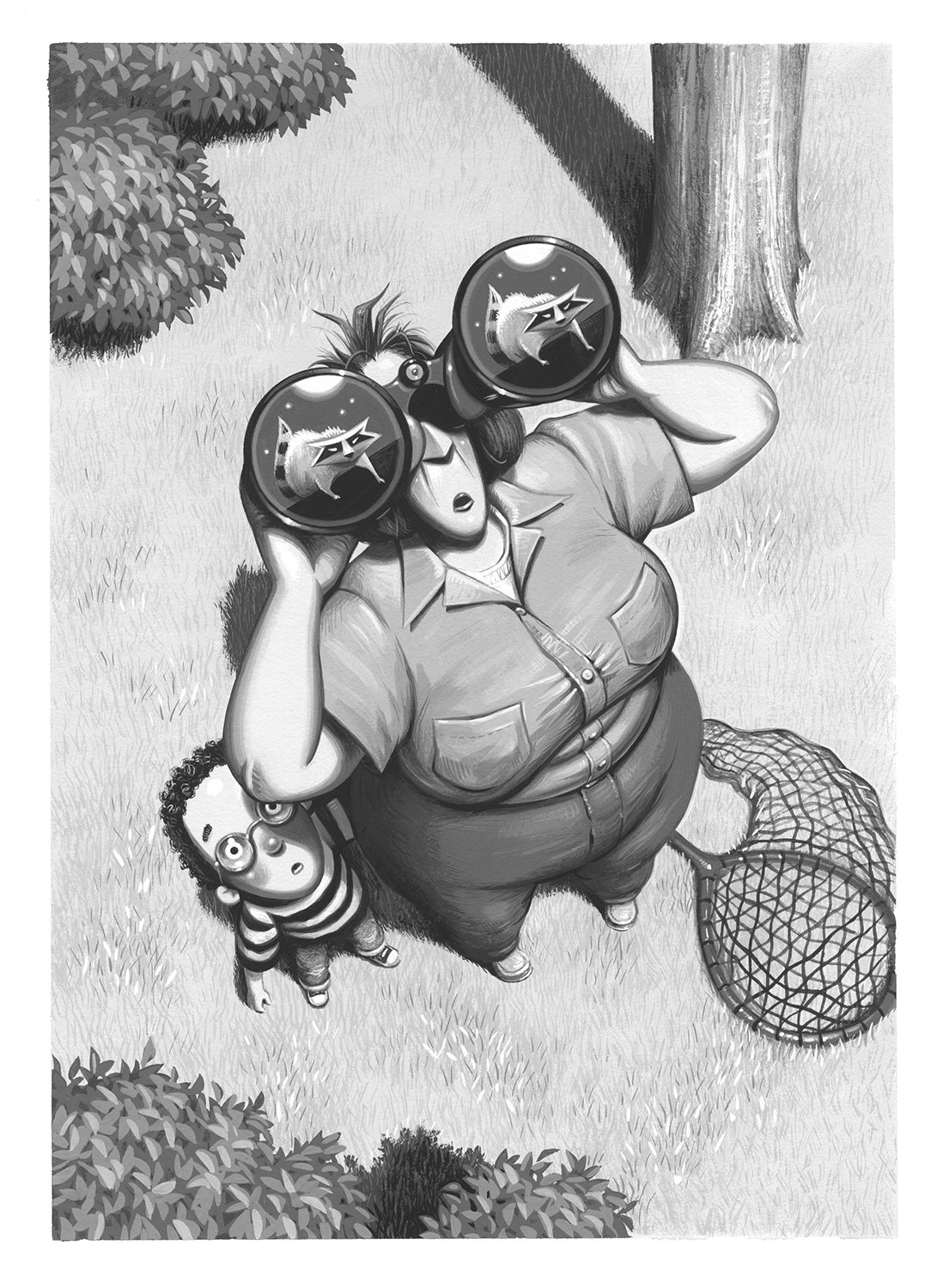
Francine Poulet Image

“Francine put the net on the ground. She took the binoculars. She held them up and looked through them. She saw the raccoon sitting on the roof, staring at her.

The moon was bright, and it was shining on the raccoon’s fur. The raccoon shimmered.”


Teachers’ Tools for Navigation: Teachers’ Guides for Mercy Watson, Leroy Ninker, and Francine Poulet can be found on Candlewick’s website:

Mercy Watson:
http://www.candlewick.com/book_files/0763636444.btg.1.pdf

Leroy Ninker:
http://www.candlewick.com/book_files/0763663395.btg.2.pdf

Francine Poulet:
http://www.candlewick.com/book_files/0763668869.btg.1.pdf

Read These If You Loved: Lulu series by Judish Viorst, Frankie Pickle series by Eric Wight, Bramble and Maggie (series) by Jessie Haas, The Princess in Black (and #2!) by Shannon Hale

Recommended For: 
readaloudbuttonsmall classroomlibrarybuttonsmall litcirclesbuttonsmall closereadinganalysisbuttonsmall

Giveaway!

a Rafflecopter giveaway

Kellee Signature

**Thank you to Alice at Candlewick for providing copies for review and for giveaway!**


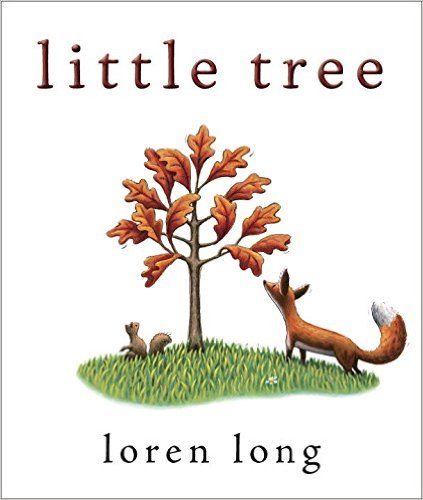
Little Tree by Loren Long

Share

little tree

Little Tree
Author and Illustrator: Loren Long
Expected Publication: October 27th, 2015 by Philomel Books

Goodreads Summary: In the middle of a little forest, there lives a Little Tree who loves his life and the splendid leaves that keep him cool in the heat of long summer days. Life is perfect just the way it is.

Autumn arrives, and with it the cool winds that ruffle Little Tree’s leaves. One by one the other trees drop their leaves, facing the cold of winter head on. But not Little Tree—he hugs his leaves as tightly as he can. Year after year Little Tree remains unchanged, despite words of encouragement from a squirrel, a fawn, and a fox, his leaves having long since turned brown and withered. As Little Tree sits in the shadow of the other trees, now grown sturdy and tall as though to touch the sun, he remembers when they were all the same size. And he knows he has an important decision to make. From #1 New York Times bestselling Loren Long comes a gorgeously-illustrated story that challenges each of us to have the courage to let go and to reach for the sun.

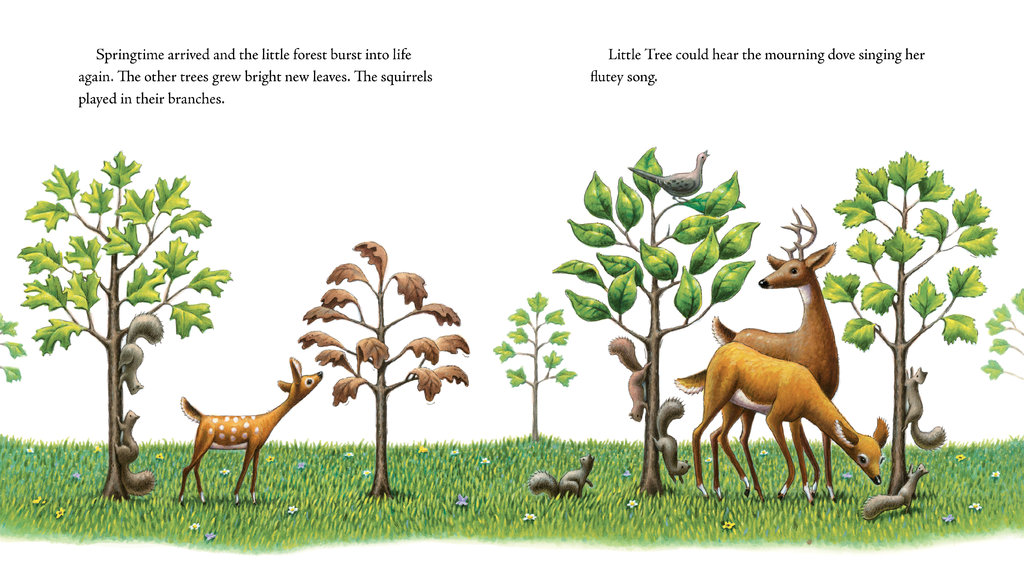
Kellee’s Review: Loren Long’s books, Otis and The Little Engine That Could, are household names, and I believe Little Tree will find its home along side these books. Little Tree is a sweet, little story at the surface, but it is really very deep. The story can be read as a story at bedtime to talk about nature or as a starting point for a discussion about growing up and/or making hard choices. The illustrations are beautiful yet simple, so that the readers eyes are drawn into Little Tree and its friends.

Ricki’s Review: This book represents everything I love in literature. From the moment I cracked the cover, I was whisked into the quiet story, and I felt a bit of a rush as I turned each page. The publishers graciously sent me a print from the book, which I plan to hang in my son’s bedroom. My advisor has the print resting behind her desk in the office. Kellee accurately described this book. While it seems simple, there are so many ways this texts could be used to promote quality conversations in the classroom. This would be my mentor text to teach personification.

Teachers’ Tools for Navigation: Little Tree will be a read aloud favorite for many teachers and students, but it can also be used to promote great discussions. At the surface, the book is a great jumping off point to talk about the seasons and nature and how nature changes throughout the seasons and would be a great companion to nonfiction books about the seasons. If you want to go a bit deeper, there is definitely a message in Little Tree about letting go, growing up, and making choices that may not be easy.

Discussion Questions: Why did Little Tree not want to let go of its leaves?; What happened as a result of not letting go of its leaves?; What does the author want you to think about after reading Little Tree’s story?

We Flagged:

little tree image
From http://www.nytimes.com/interactive/2015/09/11/books/review/13bookshelf-lettinggo.html?_r=0

Read This If You Loved: The Little Engine That Could by Watty Piper and Loren Long, The Story of Ferdinand by Munro Leaf, Frozen Wild by Jim ArnoskyCounting Crows by Kathi Appelt, and other nonfiction texts about seasons

Recommended For:
classroomlibrarybuttonsmall readaloudbuttonsmall

  Signatureand RickiSig

**Thank you to Penguin for providing copies for review!**

Cock-a-Doodle Oops! by Lori Degman, Illustrated by Deborah Zemke

Share

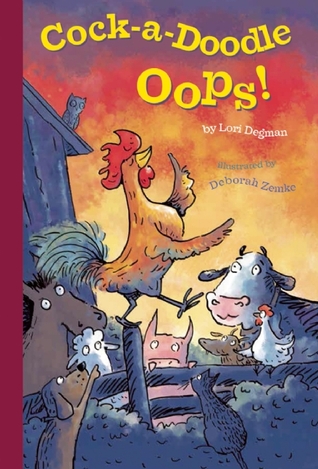
cock a doodle oops

Cock-A-Doodle Oops!
Author: Lori Degman
Illustrator: Deborah Zemke
Published May 13th, 2014 by Creston Books

Goodreads Summary: When the rooster is away, who is there to ring in the day? Cock-a-Doodle Oops! is the humorous tale of a community of farm animals who band together to help out a rooster who is badly in need of a vacation. How hard can it be to wake up a sleeping farmer? While the rooster is gone, the pig, cow, sheep, and other farm animals attempt to rouse Farmer McPeeper with “cock-a-doodle SQUEAL,” “cock-a-doodle MOO,” and “cock-a-doodle BAAAA,” with hilarious results. The irresistible humor in this barnyard comedy builds vocabulary while encouraging children to cock-a-doodle-uh-oh along with the silly farm animals.

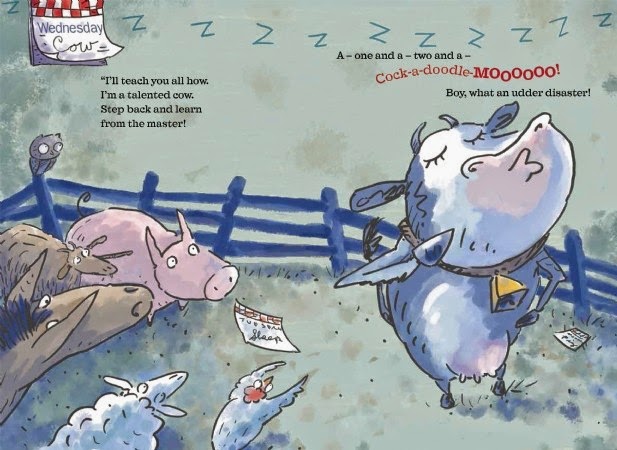
Kellee’s Review: The text in Cock-a-Doodle Oops has such a wonderful rhythm and rhyme. I was so impressed as I read it out loud to Trent because it flowed so well. Trent was enthralled throughout the entire read aloud, and he loved the tie in of each animal’s sound whenever they tried to be the rooster. The book will also be a good first introduction to the days of the week since it goes through a week of the rooster being away. Zemke’s illustrations also add so much to the book. They are fun and really show the character traits of each animals: the way sheep stands so still shows her shyness, the way mule’s eyes bug show how scared he is, etc.

Teachers’ Tools for Navigation: While this book is read aloud to students, there are many things that can be discussed. At the surface there is the animal sounds and days of the week, but students could also do character webs for each character based on their verse and their illustration and also analyze the rhyme/rhythm of the text.

Discussion Questions: Why were none of the other animals able to wake up the farmer?; Why is the end of the book ironic?; Which character did you like the most? Why?

We Flagged:

cock a doodle spread

Read This If You Loved: Moo! by David LaRochelle; Moo, Baa, La, La, La by Sandra Boynton; Farmer Dale’s Red Pickup Truck by Lisa Wheeler

Recommended For:
readaloudbuttonsmall classroomlibrarybuttonsmall

  Signature

**Thank you to Deborah Zemke and Creston Books for providing a copy for review!**

I’ll Give You the Sun by Jandy Nelson

Share

I'll Give You the Sun

I’ll Give You the Sun
Author: Jandy Nelson
Published: September 16, 2014 by Dial

Summary: A brilliant, luminous story of first love, family, loss, and betrayal for fans of John Green, David Levithan, and Rainbow Rowell

Jude and her twin brother, Noah, are incredibly close. At thirteen, isolated Noah draws constantly and is falling in love with the charismatic boy next door, while daredevil Jude cliff-dives and wears red-red lipstick and does the talking for both of them. But three years later, Jude and Noah are barely speaking. Something has happened to wreck the twins in different and dramatic ways . . . until Jude meets a cocky, broken, beautiful boy, as well as someone else—an even more unpredictable new force in her life. The early years are Noah’s story to tell. The later years are Jude’s. What the twins don’t realize is that they each have only half the story, and if they could just find their way back to one another, they’d have a chance to remake their world.

This radiant novel from the acclaimed, award-winning author of The Sky Is Everywhere will leave you breathless and teary and laughing—often all at once.

Review: I haven’t been able to stop talking about this book since I read it. I anxiously awaited its release after reading (and loving) The Sky is Everywhere, and it most certainly didn’t disappoint. Jandy Nelson writes characters that step off of the pages and into readers’ hearts. I cried along with Jude and Noah and felt their grief as if it was my own. The passion of the characters was refreshing, and I felt as if they were my friends by the end of the book. Jandy Nelson is a literary genius. This book is quirky, colorful, and different, which makes it unforgettable for me. I plan to use this in my future Methods courses, and I only reserve those reading spots for the best of the best in YAL. It crosses genres a bit (Jude talks to ghosts), and the alternating perspectives span several years in the siblings’ lives. Students and teachers will find many topics and literary qualities that are worthy of analysis and discussion.

Teacher’s Tools for Navigation: Nelson touches on many life lessons in the text, and she presents them in an implicit way. (We all know that readers hate didactic texts!) I would ask my students to create a billboard: “Lessons I Learned from I’ll Give You the Sun.” Then, they could create a word map of different lessons they learned and cut out quotes or draw illustrations of scenes that taught these life lessons.

Discussion Questions: What does this story teach us about humanity?; How do the different characters cope with tragedy? What outlets (creative, emotional, etc.) do the characters use as coping mechanisms?; How does Jude and Noah’s relationship evolve throughout the text?; How does the nonlinear format impact the story?

We Flagged: “I gave up practically the whole world for you,” I tell him, walking through the front door of my own love story. “The sun, stars, ocean, trees, everything, I gave it all up for you.”

Read This If You Loved: All the Bright Places by Jennifer Niven, Love Letters to the Dead by Ava Dellaira, The Impossible Knife of Memory by Laurie Halse Anderson, The Gargoyle by Andrew Davidson, The Perks of Being a Wallflower by Stephen Chbosky, The Secret Hum of a Daisy by Tracey Holczer, Ask the Passengers by A.S. King

Recommended For:

closereadinganalysisbuttonsmall litcirclesbuttonsmall classroomlibrarybuttonsmall

RickiSig

Author Guest Post!: “What’s in a Name?” by Royce Leville, Author of The Book of Names

Share

“What’s in a Name?”

A pseudonym is much more than a writer taking a different name, or even a writer hiding behind a different name. It requires a process of creating a whole new writing style.

Like hitting a tennis ball, making a quilt or playing an instrument, writing is a skill.1 As a skill, it can be trained, honed and improved. Talent is useful, but most writers agree that talent only takes you so far, especially when it comes to writing fiction.2

There are many ways to work on the skill of writing and to hone the craft.3 A favorite is the “write as someone else” exercise. In fact, writing as someone else was such a boon, it allowed for the creation of me, Royce Leville.

Okay, before we give birth to a pseudonym,4 let’s take a few steps back. Why write as someone else? Good question. If you’re working towards writing fiction, especially novel-length, then you need to accept that there’s a lot of preparation and work involved before you even get to chapter one. Part of that is writing character descriptions.5 And the character really comes to life when he or she is given a voice; that is, when you attempt to write “in character.”6

Here’s a good sample exercise for writing as someone else:

  • Step 1: Write down some details of a character, including age, gender, profession, nationality, brief back story
  • Step 2: Move on to personal interests (past and present), taste in music, sports, books, etc
  • Step 3: Give the character some applicable (or even contrary) attributes, based on what’s already been listed in steps 1 and 2
  • Step 4: Start to populate the character’s world: car, house, furniture, clothing, accessories. Maybe make a list of the items found in the character’s fridge or wallet
  • Step 5: Now comes the Frankenstein moment. Can you bring the character to life on the page? Write in the first person, trying to use this character’s voice. Start with very simple things, such as making a cup of coffee or getting ready for work. See if you can write “in character”
  • Step 6: Now place the character in situations with other people. Think about dialogue and how this character speaks, and how this character behaves and reacts

Hopefully, through such a process, the character moves from being a blur of features to a sharply drawn and detailed person, one you might find yourself having conversations with inside your head.7

The more work you do in fleshing out the character, the more complex and believable the character becomes. In fact, the character may become so complete, he or she might even become the writer, with a unique style and a specific genre. And you’ve got yourself a pseudonym.8

Once there, the trick is how to get in character. Royce Leville has a black hat. With this hat on, Royce is writing.

This Jekyll and Hyde act might sound weird, but it can open some very interesting creative doors.

SANYO DIGITAL CAMERA

Notes:

  1. This is the best thing to understand about writing, as it will help you with all forms of writing, whether it’s a birthday card for grandma, an important report at work, or a speech of some kind. If you work at writing, you can get better at it.
  2. There are plenty of writers out there low on talent who churn out successful books.
  3. Solitary writing endeavors result in little progress. Attend workshops, take creative writing classes, join a writing group. Book clubs are also good. Take the time to master the tenses and understand things like point-of-view, narrator knowledge and character consistency.
  4. Royce has written before about the benefits of writing under a pseudonym: http://chapterbreak.net/2015/01/12/guest-post-seven-reasons-to-write-under-a-pseudonym-by-royce-leville/
  5. Who hasn’t read a book with characters that seemed more like lazy sketches on napkins rather than intricately detailed and artistically drawn portraits? Or where a character said something that the character was completely unlikely to say?
  6. Have no illusions. This is much more difficult than it sounds.
  7. Not necessarily a bad thing.
  8. And you’ve possibly opened up a little can of crazy, because you’ll be writing as a character you’ve created, who then starts writing as characters he or she creates. Neat, huh?

ABOUT THE BOOK OF NAMES:

There’s a benevolent locksmith with keys to every lock in town, a serial-killing vet who harvests his victims’ organs, a group of men locked inside a container and stranded at a harbor somewhere, and a performance artist who can open a bottle of champagne in an extraordinary way

Strange situations, unsolvable problems, secret lives, redemption and revenge. At times THE BOOK OF NAMES invokes the spirit of The Twilight Zone, yielding tales of morality, sexuality, and power.

Book of Names


ABOUT THE AUTHOR:

Campbell is a prolific author, journalist and advertising writer who has published three books under his own name and two as Royce Leville.  He has won four independent publishing awards and received three prestigious writing residencies.  Campbell, born in Australia and residing in Germany, took second place in the 2012 Next Generation Indie Book Awards for his first Leville book, A Little Leg Work.  His articles have featured in numerous magazines and newspapers, while his short stories have appeared in Australian Reader, Spotlight Magazine, Italy from a Backpack and the Fellowship of Australian Writers (WA) compilation, Lines in the Sand.

Find more information at: www.rippplemedia.com

Thank you to Royce for this fascinating look at pseudonyms and building characterization within writing!

Kellee Signature andRickiSig

Blog Tour!: Roar! by Julie Bayless

Share

roar

Roar!
Author and Illustrator: Julie Bayless
Expected Publication October 13th, 2015 by Running Press Kids

Goodreads Summary: A moonlit tale of friendship and play.

It is nighttime in the savanna, which means that it is time to play for one rambunctious lion cub! The cub tries to make new friends with the hippos and the giraffes, but roaring at them only chases them away. The young lion is about to give up, but when a rabbit accidentally mistakes the cub’s tail for a carrot, the lion realizes she might have met her match, in all the right ways.

Kellee’s Review: Roar! is told in mostly onomatopoeias, so it is up to the reader to really read into the colorful and clue-filled illustrations. Bayless does a really great job at using her illustrations to build her characters without ever giving them anything to say next to ROAR and MORE and YAWN and SNORE. Trent loves reading this book because he is obsessed with saying ROAR if you even mention a lion and bunny is one of the newest animals he can identify. 

Ricki’s Review: I had so much fun reading this book with my son. He knows a lot of words, but he specializes in sound effects. He takes great pride in his roar, so it was fun for me to point to the word and wait for him to respond with a big “ROAAAR!” This would be a great book to use for kids who are just learning to read because the repetition is very helpful. It will build their reading confidence. As Kellee said, the illustrations add significantly to the character development. I smiled through the entire reading.

Teachers’ Tools for Navigation: Roar! is made to be read with kids. I think it’d be so much fun to make it interactive and have the students read the word bubbles as the teacher turns the pages. Another fun activity that could be done with Roar! is having students write out what is happening on each page and even naming the characters and using the illustrations to figure out their character traits.

Discussion Questions: In nature, would the lion and rabbit have been friends?; What onomatopoeias can you find within Roar!?; How would you describe the lion’s personality? The rabbit’s?

We Flagged:

roar spread

Read This If You Loved: Yo! Yes? by Chris Raschka, Moo by David LaRochelle, Look! by Jeff Mack, Giraffes Can’t Dance by Giles Andreae, Night Animals by Gianna Marino, Cat Says Meow and Other Onomatopoeia by Michael Arndt

Recommended For:
readaloudbuttonsmall

  Signatureand RickiSig

**Thank you to Cassie at Running Press for providing copies for review!!**