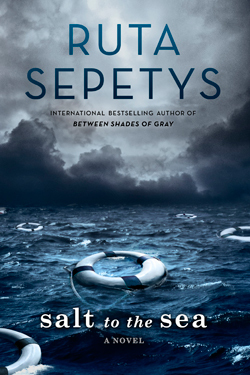
Salt to the Sea by Ruta Sepetys

Share

salt to the sea

Salt to the Sea
Author: Ruta Sepetys
Published: February 2nd, 2016 by Philomel Books

GoodReads Summary: The author of Between Shades of Gray returns to WWII in this epic novel that shines a light on one of the war’s most devastating—yet unknown—tragedies.

In 1945, World War II is drawing to a close in East Prussia, and thousands of refugees are on a desperate trek toward freedom, almost all of them with something to hide. Among them are Joana, Emilia, and Florian, whose paths converge en route to the ship that promises salvation, the Wilhelm Gustloff. Forced by circumstance to unite, the three find their strength, courage, and trust in each other tested with each step closer toward safety.

Just when it seems freedom is within their grasp, tragedy strikes. Not country, nor culture, nor status matter as all ten thousand people aboard must fight for the same thing: survival.

My Review: This is a book about humanity. Each voice serves a unique purpose to foster a complete picture of this great tragedy in history. The characters feel real, and their stories and perspectives are so different that readers are able to fully understand a diversity of experiences toward the war. Wow, wow, wow. I don’t feel that summarizing or reviewing this book will even do it justice. I felt like I couldn’t eat or sleep until I finished it. Salt to the Sea takes readers on an epic adventure and throws them for an emotional tailspin. After I closed the cover, I was reeling.  The language is powerful and the story is captivating.

Ruta Sepetys holds a special place in my heart. She is a powerful force in historical fiction, and this book is no exception. Several years ago, I was fortunate to be sharing a drink with Ruta at the ALAN cocktail party. When I asked her what she was working on, her eyes glinted as she talked about the concept of this book. She felt a connection to this tragedy, and while nothing had been written at the time, I knew it would be a remarkable novel. For the next several years, I thought about the way Ruta described the historical event, and I consistently checked her pages to see if I would see any further information about its progress. Several years later, I would (fortunately) receive this book in the mail. Boy was it worth the wait.

Teachers’ Tools for Navigation: The teaching opportunities for this book are endless. I would love to use this book to teach the theme: What does it mean to be human? or What does it mean to be a good person? Then, I might pair other texts (e.g. Kite Runner by Khaled Hosseini) and create a text set to consider these themes. The perspective and voice of these characters are strong, and I imagine rich classroom discussions about the ways these four characters show us a slice of humanity. (One of the four main characters is debatably evil, and this would offer excellent, critical conversations). Beyond these four characters, readers might consider the minor characters of this text (or tangential war figures, such as Hitler or Stalin). Are humans innately selfish? Are the innately good? Are we all flawed? Are there any universal characteristics amongst these characters, or are they too different?

Discussion Questions: How does the author balance historical information and story? What tools does she use to do this?; Why do you think the author chose to feature four points-of-view rather than one? Does it add or detract from the story? What similarities do you see across these voices? What differences?

We Flagged: “Survival had its price: guilt.”

*Quote taken from an advanced reader copy. It may change after publication.*

Read This If You Loved: Between Shades of Gray by Ruta Sepetys; The Watch that Ends the Night by Allan Wolf; The Book Thief by Markus Zusak; A Night to Remember by Walter Lord; The Guernsey Literary and Potato Peel Pie Society by Mary Ann Shaffer; Schindler’s List by Thomas Keneally; Code Name Verity by Elizabeth Wein

Recommended For:

 closereadinganalysisbuttonsmall litcirclesbuttonsmall classroomlibrarybuttonsmall

RickiSig

Review and Author Q&A: Alistair Grim’s Odditorium by Gregory Funaro

Share

odditorium

Alistair Grim’s Odditorium
Author: Gregory Funaro
Illustrator: Vivienne To
Published January 6th, 2015 by Disney-Hyperion

Summary: Grubb, age twelve (or thereabouts), has never known anything beyond his miserable existence as a chimney sweep, paid only in insults and abuse by his cruel master.

All of that changes the day he stows away in the coach belonging to a mysterious guest at the inn that he is tasked with cleaning. Grubb emerges from Alistair Grim’s trunk and into the wondrous world of the Odditorium. Fueled by a glowing blue energy that Grubb can only begin to understand, the Odditorium is home to countless enchanted objects and an eccentric crew that embraces Grubb as one of their own.

There’s no time for Grubb to settle into his new role as apprentice to the strange, secretive Mr. Grim. When the Odditorium comes under attack, Grubb is whisked off on a perilous adventure. Only he can prevent the Odditorium’s magic from falling into evil hands-and his new family from suffering a terrible fate.

Grubb knows he’s no hero. He’s just a chimney sweep. But armed with only his courage and wits, Grubb will confront the life-or-death battle he alone is destined to fight.

About the Author: Gregory Funaro is the NY Times Best Selling author of the Odditorium series from Disney-Hyperion. He grew up in Cranston, Rhode Island, and wrote his first story, “The Ghost in the Window”, in the fourth grade. He considers this to be his finest work, but unfortunately it has been lost to time. Following high school Greg majored in theatre at the University of New Hampshire, and after various acting gigs, received his AM in Theatre Arts from Brown University and an MFA in Acting from the FSU/Asolo Conservatory. Greg teaches drama at East Carolina University, and spends far too much time on the internet looking for vintage lunchboxes.

greg funaro

Follow him on Facebook or Twitter (@GregoryFunaro) and visit his website at http://www.gregoryfunaro.com/

Review: Take a bit of Oliver Twist add in some Harry Potter and Charlie and the Chocolate Factory mix it with the snark of Lemony Snicket and Frankenstein’s monster then top it off with some Emerald Atlas and (more) Harry Potter adventure with mythology and fairy tale sprinkles and voila! You have yourself Alistair Grim’s Odditorium. But do not let me fool you into thinking that Gregory Funaro’s story is like anything you’ve read before because even though it alludes to many fantastical adventures, it is its own story through and through.

What makes Odditorium soar is not just the amazing adventure that Grubb and Mr. Grim go on (because it is amazing!), but the cast of characters that accompany them. Without Mrs. Pinch, Nigel, Mack, Lord Dreary, the samurai, and others, the book just wouldn’t be the same. Gregory Funaro did an amazing job creating a fully-developed supporting cast of characters that help push this adventure to the next level.

Author Interview: Thank you so much to Gregory for being willing to answer some questions for us!

KelleeAlistair Grim’s Odditorium seems to allude to many traditional stories such as mythology and Grimm fairy tales. What other pieces of literature inspired your story?

Gregory Funaro: The works of Charles Dickens, especially Great Expectations and Oliver Twist. The setting is Dickensian London, and you’ll find a lot of common themes from Victorian literature running throughout the series, such as hidden identities, unrequited love, upper-class destiny, etc. There are echoes of Charlie and the Chocolate Factory, of course, and the fantasy works of Lloyd Alexander (The Chronicles of Prydain), but like so many Dickens novels, underneath all the magic and adventure, Odditorium is just a simple story of one boy’s journey toward acceptance and self-discovery.

K: Grubb has quite an odd name–how did that come about?

GF: His original name was Twip–a mash-up of Twist (Oliver) and Pip from Great Expectations. However, one day when I was writing in my office (the building is very old) I spied what looked like a maggot in the cracks between the floor tiles. It ended up being just a rogue grain of rice from some sushi I’d had a few days earlier, but the “maggot” sparked the idea for grub. The extra “b” was just something I threw in there for fun.

K: The illustrations in the novel really help bring it to life and seem to perfectly embody your words. What was your process with working with the illustrator?

GF: Along with the editors, at the beginning of the publication process I was very involved in the initial shape explorations of the Odditorium itself, but after that, as far as I know Vivienne To was pretty much on her own. I was also involved in some tweaking of illustrations along the way to make sure they jived with the story–especially in Aquaticum–but in terms of conceptualizing characters and whatnot, all that came from Vivienne. Fine by me. She is amazing.

K: Although the story is primarily adventure and fantasy, you threw in some humor throughout (I particularly love Mack!). How important do you think it was to add that to your story?

GF: Indispensable. You must have humor even in the most tragic of stories. You need a break once in a while from all the tension(Shakespeare was the master at this) and having a humorous character like Mack (who can also be serious if needed), provides a much richer experience for the reader. I think having a “comedian” in children’s books is especially important because kids can relate. However, you have to be careful, because too much (i.e., just throwing in a bunch of random jokes or snarky comments) can get annoying very quickly.

K: You majored in and teach theater–how did you find yourself writing for young adults?

GF: I actually started writing thrillers during my spare time about eight years ago. I had a couple published (they weren’t very good) and then moved over to children’s literature after the birth of my daughter. Oddly, though, I didn’t see Odditorium as a children’s book at first. In the original premise, Nigel (Mr. Grim’s right hand man) was going to be the focus of a story about Frankenstein’s monster being reunited with his long lost daughter. That idea rolled around in my head until the following summer, and by the time I started Odditorium, it was a children’s book, the monster’s daughter had somehow become Grubb, and the focus was on his journey with Alistair Grim. Nigel and his daughter’s story still exists in the book, but it’s one of the subplots.

K: Book 2 is out now! Can you give us a non-spoilery peak into what Alistair and Grubb are up to next?

GF: Book 2, Alistair Grim’s Odd Aquaticum, centers around an underwater quest for the legendary sword Excalibur–the only weapon powerful enough to penetrate Prince Nightshade’s armor. That’s right, the evil prince and his gang of baddies are back, along with some new characters, including a banshee assassin and a witch named Mad Malmuirie, who wants revenge on Grim for stealing her magical objects. The rest of the Odditorium’s crew is back, too, and they all journey to the mythical realm of Avalon, where the story takes a magical turn that not even Alistair Grim could have predicted.

Teachers’ Tools for Navigation: First and foremost, I think this book is going to find some major love in libraries. If we can get this into students’ hands, they are going to talk about it and pass it around. It is that kind of book. Students will want to talk about it.

In addition, aspects of the book can definitely be used to discuss allusion. Teachers can pull out excerpts of the text and excerpts of the alluded text to compare and contrast and look at how the author made parts of or ideas from the classic text come alive in this new story.

Discussion Questions: Do you believe what Mr. Grim did to help Nigel was right?; What part does Mrs. Pinch play in the story?; What stories/books does Alistair Grim’s Odditorium remind you of? Which parts of the story remind you of what story/book?; Did the author give you any clues (foreshadowing) about Grubb’s true identity?; What do you think happened to Kiyoko?

Book Trailer:  

Read This If You Loved: Harry Potter (series) by J.K. Rowling, Charlie and the Chocolate Factory by Roald Dahl, Emerald Atlas by John Stephens, Series of Unfortunate Events (series) by Lemony Snicket, The Magician’s Elephant by Kate DiCamillo, Circus Mirandus by Cassie Beasley, The Vanishing Islands by Barry Wolverton, The Dungeoneers by John David Anderson

Recommended For: 

classroomlibrarybuttonsmall

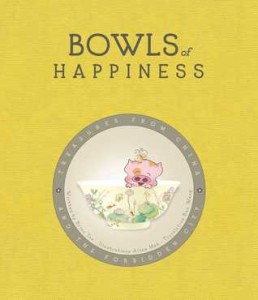
Bowls of Happiness: Treasures from China and the Forbidden City by Brian Tse

Share

Bowls of Happiness

Bowls of Happiness
Author: Brian Tse, Illustrator: Alice Mak, Translator: Ben Wang, Editor: Nancy S. Steinhardt
Published: November 17, 2015 by China Institute in America

GoodReads Summary: Piggy’s mom loves her so much that she has decided to make a special porcelain bowl just for her. As mom makes the bowl, Piggy enters the world being painted on its outside. There she meets and learns about the animals used on these Chinese artworks and the messages of happiness and good-fortune that they convey.

Created by internationally renowned children’s book artists Brian Tse and Alice Mak, this book teaches children about Chinese artwork and culture and their universal spirit of generosity, love, and respect for nature. The lovable illustrations are coupled with photographs of porcelain art found in the Palace Museum’s collection. Children will learn about how bowls are made and be able to draw their own Bowl of Happiness after they have finished reading the story.

My Review: It was a lot of fun reading this book. It begins with an imaginative story reflecting the designs on a Chinese bowl. Then, in the second part, the book shifts to informational nonfiction. The author shares a variety of different bowls and their meaning. In the last portion, the readers are given instructions on how to create their own bowls. This book taught me a lot about these bowls of happiness, and I wanted to make my own bowl! Readers will enjoy learning about these bowls and will be intrigued to learn and research more.

Teacher’s Tools for Navigation: I would love to teach a book like this one. I’d have students begin by researching even more about these bowls, their symbolic meaning. Then, I might have the students create drafts of their own bowls. The book provides a wealth of information about the symbols and colors of bowls, and students could select their own designs and symbols. While their bowls would not be authentic and teachers would have to be careful to explain appropriation, it would teach the students to enjoy and appreciate another culture and reinforce their knowledge about the bowls.

Discussion Questions: What symbols do you find most interesting? If you could have any of the bowls in the book, which would you pick, and why?; What symbols are used in your culture? How might they compare to the symbols on these bowls?; Why do you think the author divided the book into such different sections?

We Flagged: “These two bowls were not used for eating. Chinese emperors used them for important rituals that paid respect to Heaven and Earth.”

Read This If You Love: Books about culture, history, art, or museums

Recommended For:

  classroomlibrarybuttonsmall

RickiSig

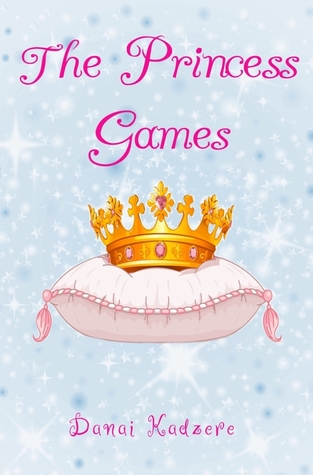
The Princess Games by Danai Kadzere

Share

x-default

The Princess Games
Author: Danai Kadzere
Published July 27th, 2015 by Lands Atlantic Publishing

Summary: King Winkle and Queen Periwinkle have a problem. They need a princess, and they need her fast. With the upcoming peace-keeping marriage between Prince Linus of Branninia and the princess of the fair Kingdom of Hoggenbottom, it’s a bit risky to admit they don’t have a princess.

Instead, they decide to host The Princess Games. Soon enough, the fairest maidens of the land are gathered in front of the castle, fairy-godmothers in tow! With a goofy king, an obsessive compulsive advisor, and a fairy godmother whose spells do whatever they want, these games are about to get interesting.

Even if Emma and her clumsy Fairy Louise can manage to do well in the competition, she’ll have to get past the expert spells of Fairy Faye and the beauty of Laralyn, who is intent on pleasing her ambitious mother at any cost.

My Review: What a fun fractured fairy tale! I love the humor! It really does include some laugh-out-loud moments. The book actually reminds me a bit of Princess Academy by Shannon Hale, but The Princess Games is more light-hearted.

I think what makes this book work the best is the different voices throughout. Each chapter changes point of view which gives a different insight to the games as they are going on. This helps with characterization especially because each character has such a distinctive voice.

One of my only criticisms is that I actually wish it was a bit longer! I would have loved to have some of the scenes be longer than they were and to have really gotten to know some of the secondary characters.

Teachers’ Tools for Navigation: I think this book is a wonderful example of voice. I would have students look at chapters written from different character’s points of view and have them look for how the author crafted their sections to build the character’s voice. When you look, you can find different vocabulary choices, different sentence patterns, different focuses, and different sense of humor.

Discussion Questions: Which princess do you think the royal couple will choose?; Why does Faye and Laralyn not like Emma and Louise?; How would the tone and voice have been different if the book had been written in first person?; What is the theme of the novel?

We Flagged: “Emma rued that last scone, stuffed with clotted cream and spiced rosehip jam, as the carriage bumped aong the uneven country road. ‘Ohhhhh,’ she groaned, clutching her stomach.

Fairy Faye looked at Laralyn, deigning to acknowledge Emma only to say, ‘And that, Laralyn, is why princesses eat daintily. Particularly on long journeys.'” (p. 45)

Book Trailer: 

Read This If You Loved: Princess Academy by Shannon Hale, The League of Princes series by Christopher Healy, Upon a Marigold series by Jean Ferris

Recommended For: 

classroomlibrarybuttonsmall

Kellee Signature

**Thank you to Danai for providing a copy for review!!**

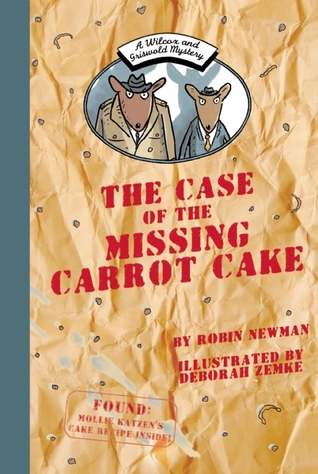
A Wilcox and Griswold Mystery: The Case of the Missing Carrot Cake by Robin Newman, Illustrated by Deborah Zemke

Share

case of the missing carrot

A Wilcox and Griswold Mystery: The Case of the Missing Carrot Cake
Author: Robin Newman
Illustrator: Deborah Zemke
Published May 12th, 2015 by Creston Books

Goodreads Summary: When food goes missing on Ed’s farm, Detectives Wilcox and Griswold do what it takes to track down the thieves. In this case, Miss Rabbit’s carrot cake has disappeared. Has it been stolen? Or eaten? Or both? Who dunnit?

“Readers ready for chapter books will solve the crime and then be surprised by the twist at the end. Here’s hoping for more hard-boiled detecting from Wilcox and Griswold!”
— Kirkus Reviews, Starred Review

My Review: This book starts with a letter to the reader about the two detectives who will be leading the case, and I automatically thought of Dragnet as soon as I read it, and that was the voice I heard all the way through the book which made it even more fun to read! I love how this book was crafted: set up like a police file with times of interviews, suspects, and clues throughout. The detectives are also quite humorous and the ending is just surprising enough though some students may be able to predict it if they follow the clues. 

Teachers’ Tools for Navigation: The Case of the Missing Carrot is a perfect read aloud to practice inferring and prediction as students try to figure out what is going on at the farm. Students can keep track of clues and characters (suspects), and the book also gives opportunities to discuss sequence, vocabulary, dialogue, point of view, and voice. The text is just so much fun to read, but can also be a great discussion starter/exemplar for so many language arts topics.

Discussion Questions: (Thoughout the book) What clues did this section give us? Who is a new suspect? Who is no longer a suspect? How has your prediction changed? What is your prediction now?

We Flagged: 

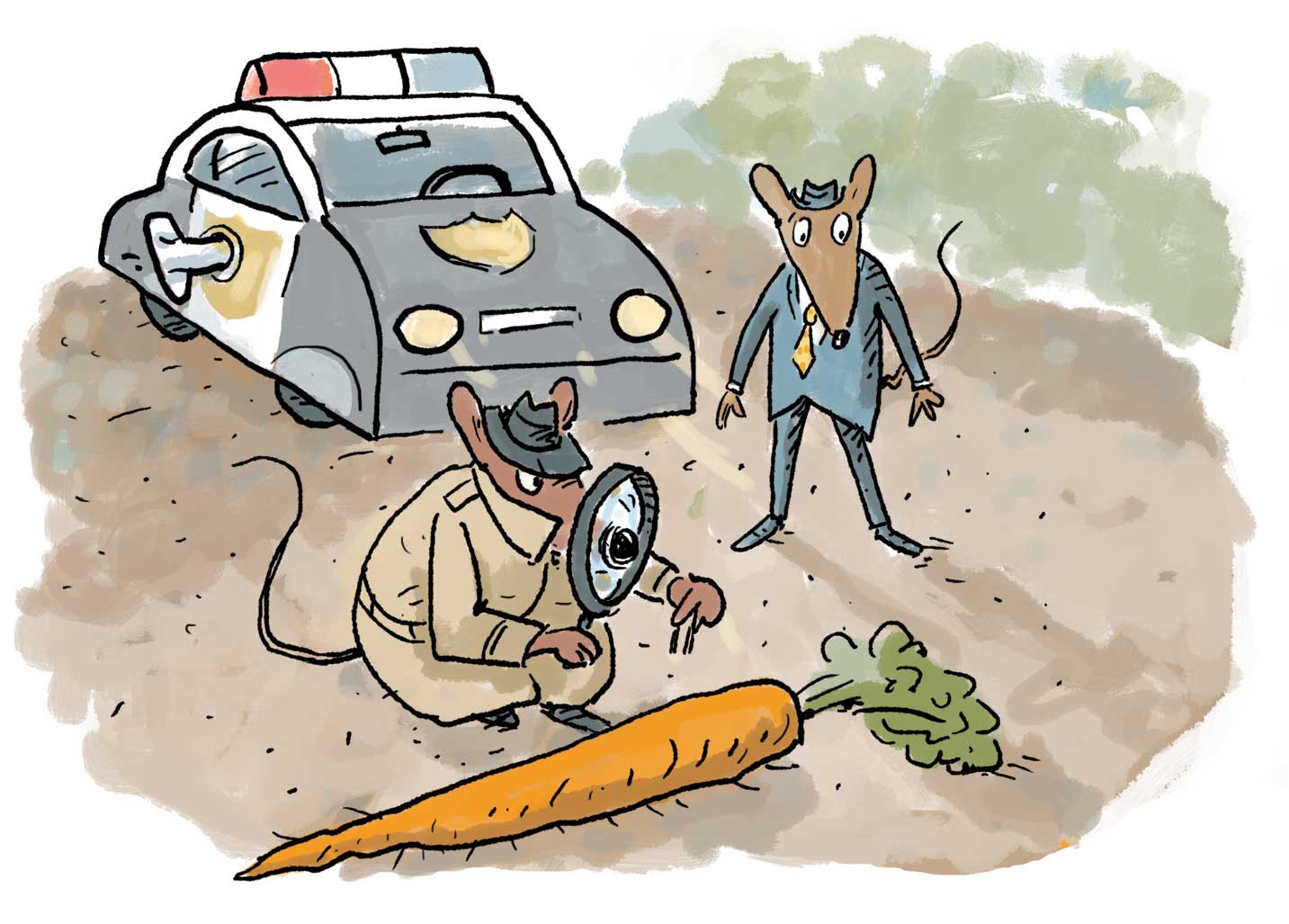
case of the missing carrot illustration

“Captain, stop the car!” I shouted. “There’s something up ahead. It’s orange.”

The captain grabbed his magnifying glass and tweezers. He picked up the object.

“A carrot!” I said.

I ran back to the squad car to get the crime scene photos.

“This carrot matches the ones we found in Miss Rabbit’s kitchen. We’re onto something.”

The captain twitched his tail furiously. (p. 19)

Read This If You Loved: Francine Poulet Meets the Ghost Raccoon by Kate DiCamilloThe Troublemaker by Lauren Castillo, Mercy Watson series by Kate DiCamillo, Lulu series by Judith Viorst

Recommended For:

classroomlibrarybuttonsmall readaloudbuttonsmall

  Signature

*Thank you to Creston Books for providing copies for review!**

Interstellar Cinderella by Deborah Underwood

Share

interstellar cinderella

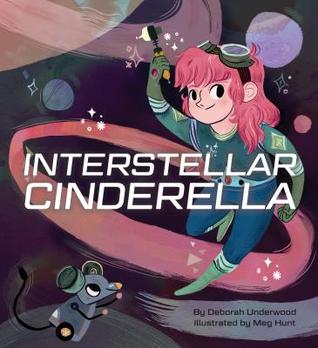
Interstellar Cinderella
Author: Deborah Underwood
Illustrator: Meg Hunt
Published May 5th, 2015 by Chronicle Books

Goodreads Summary: 

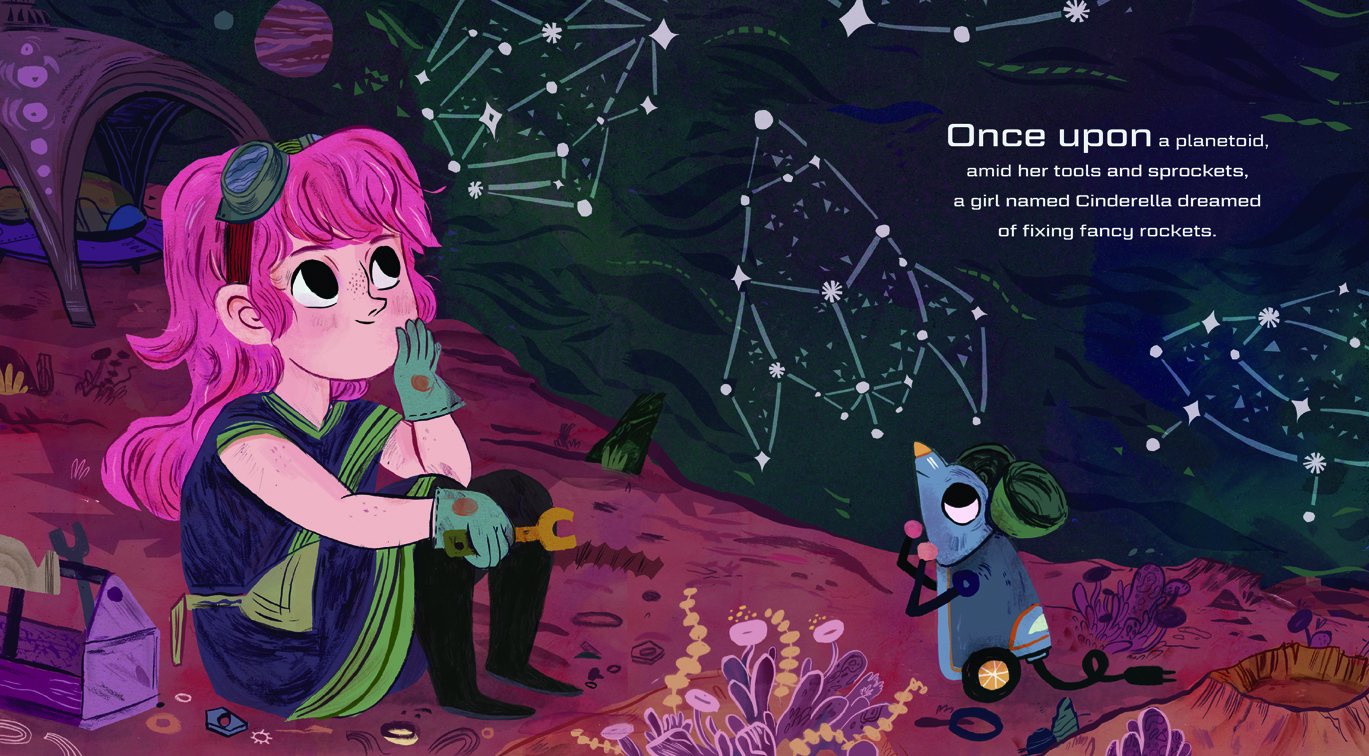
Once upon a planetoid,
amid her tools and sprockets,
a girl named Cinderella dreamed
of fixing fancy rockets.

With a little help from her fairy godrobot, Cinderella is going to the ball–but when the prince’s ship has mechanical trouble, someone will have to zoom to the rescue! Readers will thank their lucky stars for this irrepressible fairy tale retelling, its independent heroine, and its stellar happy ending.

My Review:  I am a huge fan of fairy tale retellings, and I am an even bigger fan of fairy tale retellings that take away the “whoa is me” aspect of the female protagonist. Interstellar Cinderella does just that. Deborah Underwood has given us a Cinderella that we all would aspire to be. She can fix rockets, has robots, and even is quite sensible when it comes to the prince. I am also very impressed with the rhyming of the text. It does not seemed forced and is actually quite humorous at times.

Teachers’ Tools for Navigation: Interstellar Cinderella would be a great addition to a fairy tale unit. I can picture a jigsaw/lit circle of sorts where each group reads an original fairy tale and a picture book retelling the fairy tale then the group discusses how the story was changed, the themes of both stories, compare/contrast the characters and other narrative elements, and then share with the class their analysis. Interstellar Cinderella is also a great example of a science fiction picture book for a genre lesson.

Discussion Questions: How is this Cinderella different than other Cinderellas?; Do you think the book ended with a “happily ever after”?; How does Cinderella save herself?

We Flagged: 

interstellar cinderella spread

Read This If You Loved: Rapunzel’s Revenge by Shannon Hale, Ninja Red Riding Hood by Corey Rosen Schwartz, Fairy Tale Comics edited by Chris Duffy, Princeless by Jeremy Whitely

Recommended For: 

classroomlibrarybuttonsmall readaloudbuttonsmall closereadinganalysisbuttonsmall litcirclesbuttonsmall

Signature

Blog Tour, Review, and Giveaway!: The Not Very Merry Pout-Pout Fish by Deborah Diesen and Illustrated by Dan Hanna

Share

The Not Very Merry Pout-Pout Fish

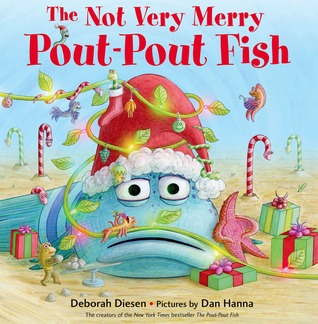
The Not Very Merry Pout-Pout Fish
Author: Deborah Diesen; Illustrator: Dan Hanna
Published: September 8, 2015 byFarrar, Straus and Giroux (BYR)

Summary: Holiday sequel to The New York Times bestselling Pout-Pout Fish series reminds young readers what being merry is all about

The grumpiest fish in children’s literature is back with another case of “the dreary wearies.” This time, Mr. Fish, star ofThe New York Times bestselling Pout-Pout Fish series, is down in the dumps over holiday shopping. With a message for readers of all ages, The Not Very Merry Pout-Pout Fish (Farrar, Straus, & Giroux Books | Macmillan Children’s Publishing Group, Ages 2-6) finds Mr. Fish so consumed with finding that perfect gift for each of his friends that he forgets the true meaning of the holidays.

When Mr. Fish—with his signature Pout-Pout Fish frown—comes up empty-handed, Miss Shimmer intervenes with a plan to make homemade gifts. He soon learns that it’s not about busting the budget or gifting the season’s hottest item, but giving from the heart. Together they experience the joy that comes from giving and sharing—the merriest gifts of all.

Ricki’s Review: Ever since I received this book, my toddler has demanded I read it to him multiple times a day. The story has a wonderful moral that is very important for the gift-giving season. As a mom, I work really hard to try to show my son that material items should not be significant. Not only does this book teach lessons related to this topic, but it prizes friendship. I suspect we will be reading this book again and again in years to come because the need for this lesson will recur as he grows older. He loves the complexity of the illustrations. There is so much to look at on each page!

Teachers’ Tools for Navigation: This book offers opportunities for students to create their own homemade gifts for friends, family, or those in need. It will inspire students to want to create something that will be greatly appreciated by another person.

Discussion Questions: How might you show your love to a family member or friend without buying anything? Do you think they would appreciate it more or less? Why?; How does pout-pout fish learn the value of gift-giving? What do his friends think about his gifts?

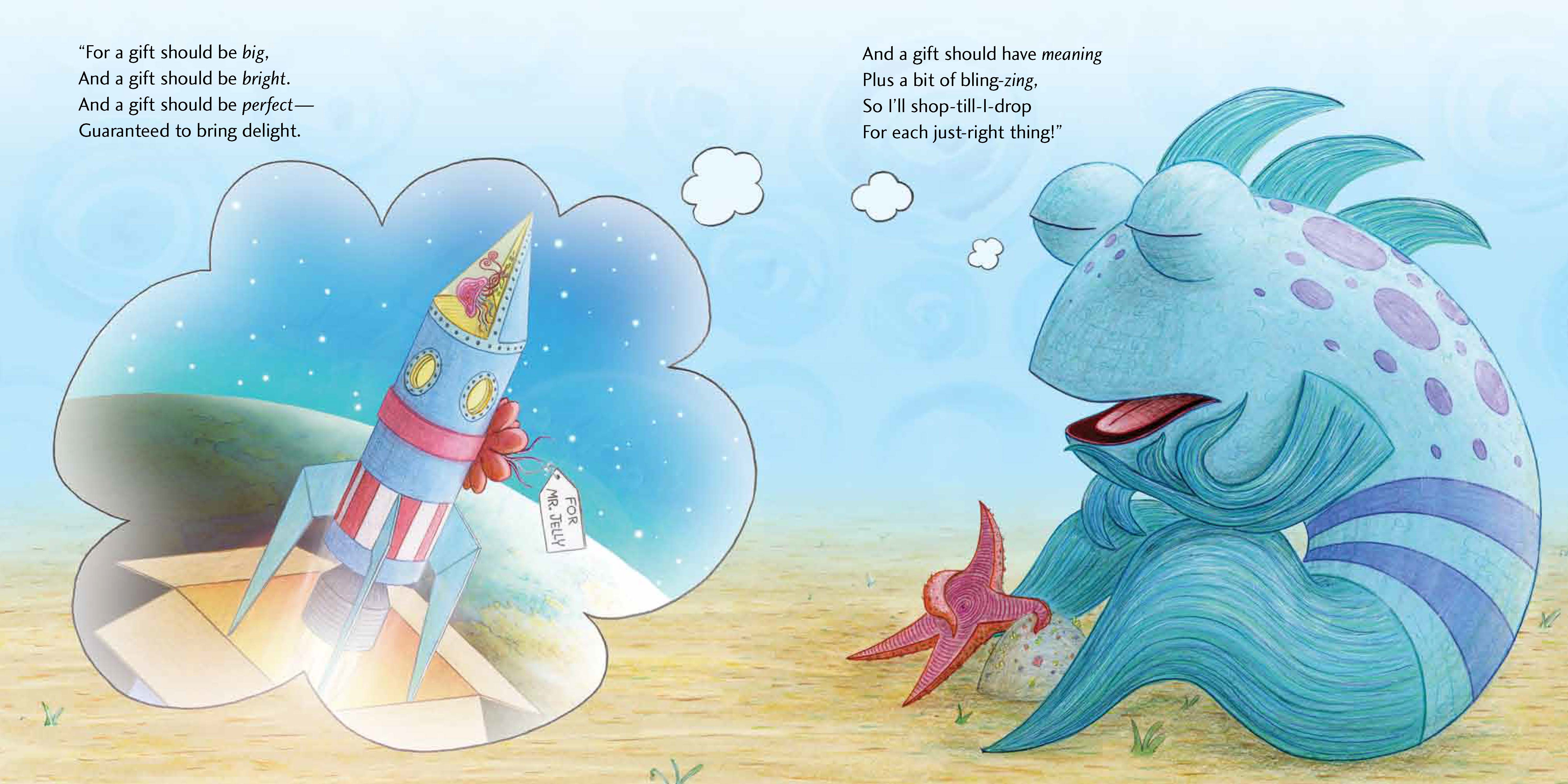
We Flagged:
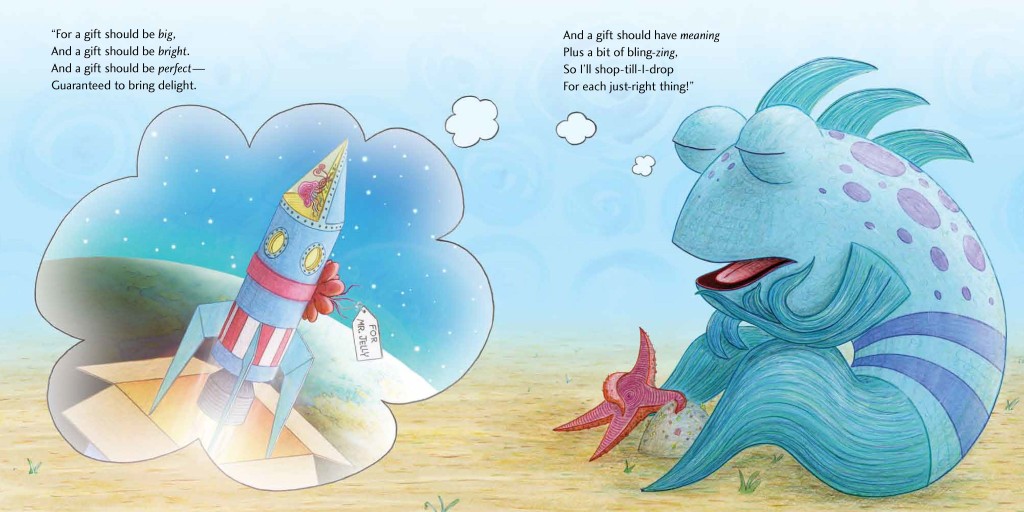
Pout Pout 2 (1)

Read This If You Loved: The Pout-Pout Fish by Deborah Diesen; The Giving Tree by Shel Silverstein; Books about Giving and Generosity; Books about Christmas

Giveaway!

a Rafflecopter giveaway

Recommended For: 

 readaloudbuttonsmall classroomlibrarybuttonsmall

Q&A with Author Deborah Diesen

How did you come up with the original Pout-Pout fish book in 2008?

The story grew out of an actual pout! One day many, many years ago, when my elder son was a preschooler, he was having a very grouchy afternoon. Hoping to amuse him, I made an exaggerated pouty face at him. He smiled and then pouted right back, which got us both laughing. “We look like fish,” I said. “Like pout-pout fish!” As soon as I said that out loud, it became a story idea. I jotted the idea down and I started writing The Pout-Pout Fish that same day. Years later, I started sending the story to publishers, and in 2005 it was accepted at Farrar, Straus & Giroux Books for Young Readers. The book was published in 2008 and began a series of stories, all featuring Mr. Fish, his friends, and their adventures.

Since the first book, we’ve seen Mr. Fish go to school, learn to smile, face the dark, discover how to dream and play hide-and-seek. What do kids (and their parents) love most about the series?

I think one of the things that makes Mr. Fish an appealing character for many kids and parents is that kids and parents alike can identify with his experiences. Toddlers sometimes pout; so do adults! Preschoolers have things they’re scared of; so do adults! Kindergarteners get nervous about starting something new; so do adults! Mr. Fish’s experiences provide a way for kids and grown-ups to explore those issues together. In addition, the stories have rhyme, repetition, and wordplay, which are fun in a read-aloud book. And Dan Hanna’s illustrations! They’re fantastic. They truly bring the stories to life.

What is Mr. Fish up to now? Does he have a case of the “dreary wearies” in the latest book, too?

Mr. Fish’s newest adventure is called The Not Very Merry Pout-Pout Fish. In it, Mr. Fish is in a bit of a holiday panic, searching for perfect gifts for all of his friends. His shopping trip is unsuccessful, and Mr. Fish is sure that he’s let all of his friends down. But his friend Miss Shimmer reminds him that the best gifts of all come straight from the heart, and she helps him craft simple and meaningful presents to bring to the holiday party. His friends are delighted with their presents, and together everyone celebrates peace, joy, and love – what a very merry gift!

What do you hope young readers (ages 3-6) will learn from The Not Very Merry Pout-Pout Fish? Is there a message here for grown-ups as well?

I hope that Mr. Fish’s latest tale will help children to realize that presents don’t need to be expensive or complicated or splashy. Simple, heartfelt presents that connect us to one another are the best gifts of all. A drawing; a craft project; time spent together; even just a smile! These sorts of gifts are the most cherished and the most enduring. It’s a lesson we grown-ups have to re-learn periodically as well.

Do you have any tips for parents of toddlers about the joy of giving presents, rather than just receiving them, this holiday season?

Kids love to give presents, and they especially love having an active role in the process of creating the presents. Try a craft idea or project that’s extremely simple and stress-free, and then let your child have at it with a minimum of help. The more messy, lopsided, and imperfect the results the better! Have fun with the process, and as you do you’ll create not just gifts but memories as well.

How do you and the illustrator, Dan Hanna, work together on the books? (Are there any special stories about the illustrations on Not-Very-Merry that you can share?)

I absolutely adore Dan’s art, and I credit it as the reason for the success of the series. We work independently of one another during the creation of the books. I work with our editor on the stories; then, when a story is finished and ready, she passes it along to Dan. Dan moves through the art creation process, from sketches to finished product, working with our editor and with the art director. I do see some of the steps along the way, but during the illustration process the author’s most important task is to stay out of the way! And that’s for the best, because it allows the artist to bring the story to life in the way only an artist can. Dan brings a thousand times more to the illustrations than I could ever begin to imagine – the characters and their expressions; the settings and their details; and all the funny and quirky extras. For instance, in The Not Very Merry Pout-Pout Fish, one of the spreads shows a store full of what I describe in the text as shiny trinkets and handy gadgets. Dan took that description and brought it alive by imagining, drawing, and labeling shelf after shelf in the gift shop with hilarious and unique sea gifts. His creativity is amazing. I feel very grateful and happy to get to make books with Dan!

Any future plans for Mr. Fish? What adventures can we expect to see him in next?

Mr. Fish has a new mini-adventure coming out later this year called Kiss-Kiss, Pout-Pout Fish. This mini-adventure, like the previous mini-adventures Smile, Pout-Pout Fish and Sweet Dreams, Pout-Pout Fish, is a very short board book with just a few words per page, meant for babies and young toddlers. In spring 2016, there will be a touch-and-feel alphabet book and a sticker book. Another mini-adventure, called Trick or Treat, Pout-Pout Fish, will arrive later in 2016. And in 2017, Mr. Fish will be in a new full-length hardcover called The Pout-Pout Fish, Far, Far From Home. He stays pretty busy these days! But he’s enjoying all of his adventures.

As am I!

Q&A with Illustrator Dan Hanna

How long have you been illustrating the Pout-Pout Fish books? What inspired your depiction of the main character, Mr. Fish?

I started illustrating the first book in early 2007 and so it’s been about 8 or 9 years now.

About 15 years ago I was scuba diving in Fiji.  There was a huge rusting hulk of a shipwreck about 80 feet down.  At the end of a pole extending above the deck was a small metal basket.  Resting in that basket was a pudgy fish about the size of my fist.  I swam up and looked right into his eyes and he looked right back with a deep, gloomy frown.  Years later, when I received the manuscript for The Pout-Pout Fish, that memory bubbled up.  I realized, at that moment, that Mr. Fish was an actual fish, living on the other side of the world, 80 feet down on a shipwreck.

When there’s a new Pout-Pout story to illustrate, how do you collaborate with author Deborah Diesen?

It may seem odd but I don’t communicate with Debbie regarding the illustrations.  I work with are the Editor (Janine O’Malley) and Art Director (Roberta Pressel).  When I initially receive a manuscript I’m given complete freedom to break it down into pages and to illustrate it however I think best.  After I complete the first dummy (a mock-up of the book) I send it to Janine and Roberta.  That begins a long series of feedback and changes until we get to a version that we’re all happy with.  At that point I begin the final art that will eventually be delivered to make the book.

What has been your favorite Pout-Pout book to illustrate? Why?

The first book!  Nothing can compare to getting your first book published.  Its success paved the way for all the others.  The original book was the first for both Debbie and me and that made it extra special.  Usually a publisher will team up a first timer with someone who has experience.  Fortunately, FSG took a chance on two rookies.

What medium do you use to make the illustrations? What’s your favorite to work with? Tell us about your creative process.

I use the PPPPP approach: Paper, Pencils, Pens, Paint and Photoshop.

My favorite is just pencil and paper.  When I start a new book I like to visit a variety of coffee shops in my area.  I let my caffeinated mind roam, scribbling out ideas and laughing to myself.  If a sketch doesn’t make me laugh then it usually doesn’t make the cut.

What illustration in The Not Very Merry Pout-Pout Fish did you have the most fun creating?

I especially like the one where Mr. Fish imagines giving Ms. Clam the robot body.  She just looks so happy and empowered.

The items in the shop and the gifts Mr. Fish imagines in this story are so detailed and quirky. How did you come up with them? Did you have a specific inspiration?

For the imagined gifts, I drew on my own experience as a kid where I would dream up magnificent presents for my family and friends.  Eventually, as with Mr. Fish, I would have to confront reality and drastically scale back my plans.

The shop items are based on all the goofy stuff you can find on the shelves of some of the more interesting gift shops.

Of all the items that the Pout-Pout fish dreams up (robot, spaceship, submarine etc.), which one would you love to get this Christmas?

The Submarine!  When I was a kid there was an ad in the back of a comic book for a submarine.  The ad went something like this:

“Delux Submarine!  Life Size!  Torpedo Tubes!  Absolutely NO Cardboard Parts!  Only $10!!

I saved up the money and sent away for it.   As I waited for it to be delivered my dreams were filled with visions of underwater adventure.  Eventually it arrived and sank my dreams into the abyss.  It was just a cardboard box with torpedo tubes made from toilet roll tubes.  It was even more depressing than the Sea Monkeys and X-Ray Glasses.

What do you think was your most valuable childhood experience?

Being bored.  I firmly believe that having enough free time to sit around and be bored is very important for the development of a healthy imagination.

What kinds of things inspire you to work?

I’m primarily motivated by death.  When I contemplate my eventual demise it scares me into action.  Although what really gets me going — is death and a cup of coffee.

What do you want the students to get out of your school visits?

That being a writer or illustrator is like being a wizard.  Your magic wand is a pencil.  Your potions are words and scribbles.  And the spells you cast will be the stories you write and the pictures you draw.  So pick up a pencil and make some magic happen!

Do you enjoy researching or do you prefer working totally from your imagination?

Initially I let my imagination run wild.  Then I knock it out with a tranquilizer dart while I do some research.  Finally, my groggy imagination re-awakes, snarls angrily and then runs wild again.  I’ve found that this approach works best for me.

Do you have any advice for aspiring picture book illustrators?

Buy one thousand parrots and place them in a room with a looped recording saying something like: “Dan Hanna can sure draw fish!” Then release the parrots, using a helicopter, over each of the major publishing houses. When the editors leave for lunch they’ll hear the parrots in the trees screeching “Aaaaccck, Dan Hanna can sure draw fish!” Now I know this scheme seems rather elaborate, but it worked for me.

How did it feel to have your first book (and author Deborah Diesen’s first book) become so successful?

It feels like a hot air balloon ride.  But not like one of those rides where the basket catches on fire or the balloon hits a power line or something.

What do you think will be the ultimate fate of your work?

Five billion years from now, when our sun has blown up and the Earth is a smoldering chunk of charcoal, humanity will hopefully have escaped to another planet.  Perhaps, packed away in one of the zillions of moving boxes will be an old, dusty copy of “The Pout-Pout Fish”.  Maybe then, some remnant of my wandering soul will smile as a genetically enhanced child stumbles across it and cracks open its ancient spine.

www.BlueBellyLizard.com

www.DanHanna.com

 RickiSig

**Thank you to Alessandra for providing a copy for review!**