The Perfect Percival Priggs by Julie-Anne Graham

Share

Perfect Percival Priggs

The Perfect Percival Priggs
Author: Julie-Anne Graham
Published: May 26, 2015 by Running Press

Goodreads Summary: Percival Priggs seems to be the perfect child. His parents are perfect, his grandparents are perfect, and even his pets are perfect. Percy’s shelf is packed with gleaming trophies. But with all the practice and preparation needed for his competitions, Percy never has a free moment.

Percy worries that his parents will not love him if he does not smile his prize-winning smile and perform perfectly in every competition. But after his rocket experiment turns into an imperfect mess, Mr. and Mrs. Priggs reveal their own funny imperfections and show Percy they are proud of him exactly as he is.

The message of reassurance and acceptance in The Perfect Percival Priggs is timely in our age of helicopter parenting, overscheduling, and increased testing standards for young children. But it is debut author Julie-Anne Graham’s fresh art style that truly sets the book apart. A former fashion designer with a love of textiles, Graham has built on each page a collage of textured patterns and drawn characters, adding humor and a world of detail to the Priggs’ home and story.

Ricki’s Review: I loved the layered textures of this book. The wide-eyed illustrations will draw readers in and allow them to pay close attention to the important lessons of this story. Many kids battle with inner desires for perfection, and Percival Priggs is no exception. He struggles to be just as perfect as his perfect family, and it weighs on him. He comes to learn that perhaps perfection isn’t all that important.

Kellee’s Review: I loved the unique illustrations of this one. They are eye-catching and are just quirky enough. I also think this is a perfect read aloud for all levels because of its theme. It is definitely going in my read aloud pile for home and school. It has a fun story, but has a much deeper message. I think so many of us face the pressure of being perfect and having a discussion with kids about this pressure and the unrealistic aspect of it would really help with anxiety they may be feeling. I also love the message of family.

Teachers’ Tools for Navigation: This text would offer meaningful classroom discussions about the fallacies of perfection. Students might share times they made mistakes, and this would allow them to understand that we are all human. They might analyze perfection as it is portrayed in society and the media. Additionally, teachers might use this book as a mentor text to teach alliteration in writing.

Discussion Questions: How does Percival’s family react to his worries about perfection?; Can a person be truly perfect?; Why do people have the desire to be perfect?; Share with a partner some of the ways you are an imperfect person and why this might just be okay.

We Flagged: 

Percival Spread

Read This If You Loved: The Most Magnificent Thing by Ashley Spires; You Are (Not) Small by Anna Kang; Unicorn Thinks He’s Pretty Great by Bob Shea; Giraffes Can’t Dance by Giles Andreae; The Invisible Boy by Tracy Ludwig; The Dot by Peter H. Reynolds

Recommended For: 

readaloudbuttonsmall classroomlibrarybuttonsmall

RickiSigandKellee Signature

**Thank you to Running Press for providing copies for review!**

Top Ten Tuesday: Villains

Share

top ten tuesday

Top Ten Tuesday is an original feature/weekly meme created at The Broke and the Bookish. The feature was created because The Broke and Bookish are particularly fond of lists (as are we!). Each week a new Top Ten list topic is given and bloggers can participate.

 Today’s Topic: Villains

Halloween came early.

Ricki

1. Satan in Paradise Lost by John Milton 

Paradise Lost

Satan seems to star in a lot of novels, but he really shines in this one. 😉

2. Grendel’s Mother in Beowulf by Unknown

Beowulf

If anyone harmed my son, I’d turn into Grendel’s mother.

3. Anna from Anna Dressed in Blood by Kendare Blake

Anna Dressed in Blood

She gives me the shivers!

4. O’Brien from 1984 by George Orwell

1984

He is so methodical. You can’t help but respect that.

5. Abigail Williams from The Crucible by Arthur Miller

Crucible

She is one of the ultimate villains in history and literature.

Kellee

There are so many great villains in YAL, but I tried to narrow it down to the most infamous! If you want to know who I would have included in a longer list, I’d be happy to share.

1. Voldemort (and Umbridge and Beatrix Lestrange) from the Harry Potter series by J.K. Rowling

harry potter series

How can I not include them? Harry’s epic 7 book battle with Voldemort and his legions is the best hero vs. villain story ever.

2. The villain from The Skinjacker Series by Neil Shusterman

skinjacker

I cannot tell you who it is, but s/he is one of those villains that really believes they are doing what is best where actually they are twisted and evil.

3. Aaron and Mayor/President Prentiss from the Chaos Walking series by Patrick Ness

chaos walking series

A sociopath in power is just the scariest thing in the world.

4. The government in the Uglies series by Scott Westerfeld

uglies series

I know this isn’t exactly following the theme, but I think the government that Westerfeld built in the Uglies series is the most dystopic and evil, so I had to include them.

5. Leck from the Graceling Realm series by Kristin Cashore

graceling series

The way that Cashore builds Leck’s character throughout all of the books is brilliant.

Who are your favorite villains? 

RickiSigand Kellee Signature

It’s Monday! What Are You Reading? #IMWAYR 9/14/15

Share

IMWAYR 2015 logo

It’s Monday! What Are You Reading? From Picture Books to YA!

It’s Monday! What are you Reading? is a meme hosted by Sheila at Book Journeys. It is a great way to recap what you read and/or reviewed the previous week and to plan out your reading and reviews for the upcoming week. It’s also a great chance to see what others are reading right now…you just might discover the next “must-read” book!

Jen Vincent, of Teach Mentor Texts, and Kellee decided to give It’s Monday! What Are You Reading? a kidlit focus. If you read and review books in children’s literature – picture books, chapter books, middle grade novels, young adult novels, anything in the world of kidlit – join us! We love this meme and think you will, too.

We encourage everyone who participates to support the blogging community by visiting at least three of the other book bloggers that link up and leave comments for them.

It’s Monday! What are you reading? has a new button! Make sure to grab it and update your blog post.

CONGRATULATIONS

CRISTEN K.

FOR WINNING A COPY OF THAT’S (NOT) MINE!

Last Week’s Posts

top ten tuesday Liberty's Voice Your Alien sparky and tidbit princess in black 2 francine poulet DCFS cover

Tuesday: Top Ten Bookish Pet Peeves

Thursday: Review and Giveaway!: Your Alien by Tammi Sauer

Giveaway open until Wednesday!

Sunday:  Author Guest Post: “Space: The Next Frontier in Children’s Books?” by Christopher Peter, Author of Danny Chaucer’s Flying Saucer

**Click on any picture/link to view the post**

 Last Week’s Journeys

Kellee: This week I read a SUPER CREEPY book. Now, I am quite sensitive to ghost stories and other horror things, but the book must be super good if it is affecting my dreams. I cannot wait to share Ghostlight with you on Friday. I also read Princess in Black and the Perfect Princess Party by Shannon Hale & Dean Hale, Francine Poulet Meets the Ghost Raccoon by Kate DiCamillo, and Sparky and Tidbit by Karthryn O. Galbraith for last Friday’s post. I think I can blanketly say that I enjoy everything that Shannon Hale and Kate DiCamillo write.

Ricki: This week, I started by reading a book about potty training (Oh Crap!). The author made me laugh, and I feel as prepared as I could be! I also read several picture books with Henry. We read Red: A Crayon’s Story by Michael Hall every night. I’ve mentioned this book on the blog before, but I continue to love the depth to this book. Every time I read it, I think critically about the world. Henry is also obsessed with the Playtown series by Roger Priddy. These are my favorite lift-the-flap books and are great for young kids.

This Week’s Expeditions

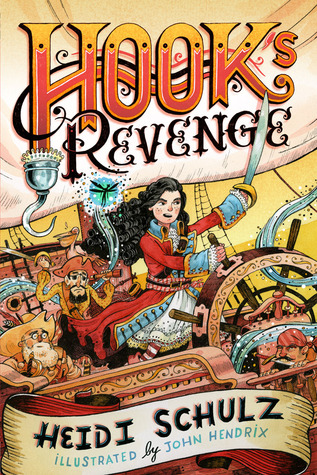
Kellee: This week I hope to read Hook’s Revenge by Heidi Schulz, Crenshaw by Katherine Applegate, or Read Between the Lines by Jo Knowles. I want (need) to finish all three of these by the 23rd (or at least two of them), so I need to read as much as I can this week. I am very much looking forward to all of them.

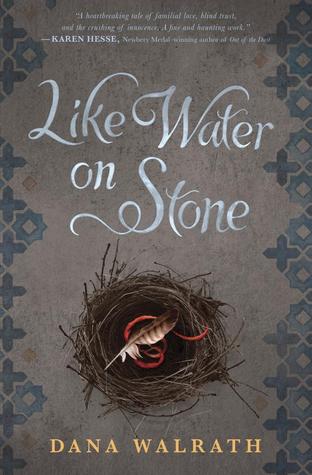
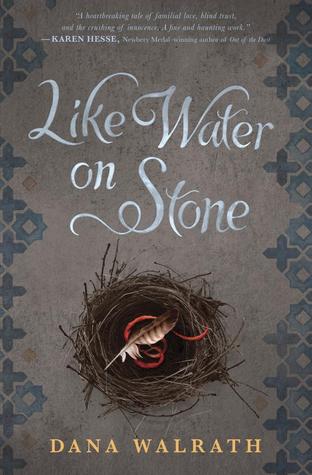
Ricki: I am loving A.S. King’s Glory O’Brien’s History of the Future. Next, I am excited to read Like Water on Stone by Dana Walrath. I’ve heard it is incredible.

Upcoming Week’s Posts

top ten tuesday honor girl Perfect Percival Priggs Ghostlight Mr. Fact & Miss Opinion Cover

Tuesday: Top Ten Villains

Friday: Blog Tour with Review, Author Guest Post, and Giveaway!: Ghostlight by Sonia Gensler

Sunday: Author Guest Post: “An Element of Fun: A Teacher’s Reflection” by Melissa Polyakov, Author of Mr. Fact and Miss Opinion

 So, what are you reading?

Link up below and go check out what everyone else is reading. Please support other bloggers by viewing and commenting on at least 3 other blogs. If you tweet about your Monday post, tag the tweet with #IMWAYR!

 Signature andRickiSig

Author Guest Post: “Space: The Next Frontier in Children’s Books?” by Christopher Peter, Author of Danny Chaucer’s Flying Saucer

Share

“Space: The Next Frontier in Children’s Books?”

As a kid I loved science fiction. My imagination was fired by stories set in space, a place of boundless possibilities; tales of future worlds, stunning galaxies, brave human colonists, exotic aliens.

As I began writing the Danny Chaucer’s Flying Saucer series, I renewed my interest in all things space-y, particularly books aimed at 8-12-year-olds / middle grade. But sci-fi isn’t exactly in vogue in children’s literature right now, or at least not space-set books specifically. It got me thinking, why not?

Fashions come and go of course. But I also wonder whether it’s because, space-wise, the future turned out to be a bit of a, well, disappointment really. I mean, I’m too young to remember the Apollo moon missions of the 1960s and 1970s, but I did fall in love with books in the years soon after, and it was a time very much influenced by those heady lunar-treading days when anything seemed not only possible but also within imminent reach.

Look back at movies like 2001 and Blade Runner and TV shows like Space 1999. Back then, dates like 1999, 2001 – and certainly 2015 – seemed impossibly futuristic. Surely we’d have flying cars, moon bases, men on Mars, and charismatic yet slightly sinister AI computers by then, right? Well – um – not exactly … but hey, we do have very cool phones …

(And by the way, what happened to that army of robots that were supposed to gift us all carefree lives of leisure and pleasure??)

I’m not dismissing NASA by the way, nor the other research agencies and institutions with all their talented and dedicated people. Nor have I forgotten the space shuttle. And yes, space exploration is mind-numbingly expensive. It’s just that – I don’t know – as amazing as the International Space Station is, it’s not exactly a Martian colony. (And speaking of Mars, disappointingly it turned out not to be home to little green aliens after all.) I can’t help thinking the child of 1970 would be asking, ‘Is that it?’

And yet I believe things are changing. In 2019 we’ll be celebrating the 50th anniversary of Neil Armstrong’s historic first step on the moon, and we’ll be reminded again of what a galactically awesome achievement that really was (especially with 1960s technology!). Meanwhile there’s much excitement about a manned mission to Mars, with some even predicting it could happen in the next 10-15 years, with a permanent colony not long after.

The amazing pictures of Pluto recently sent back by the New Horizons probe have come after the steady stream of incredible images of deep space from the Hubble space telescope.

We’ve got the eagerly-awaited new Star Wars movie coming soon, and that’s following some pretty amazing sci-fi cinema in recent years – think Moon, Gravity, Ex Machina and Interstellar. Meanwhile sci-fi continues to thrive on the small screen too.

So why not children’s books?

The whole concept of space has the incredible ability to feed the imaginations of the young (and old). The possibilities are literally endless. We’ve already been to the moon and sent unmanned spacecraft to Mars and far beyond. What will the human race have achieved in another fifty years? A hundred? Five hundred?

And what about life on other worlds? Of course we haven’t come across aliens yet (or so we’re told …) but that mind-bending prospect remains.

Writing about space and sci-fi is also a brilliant opportunity to encourage kids’ interest in science. Space is an amazing, huge, fascinating place, about which we’re finding out more and more incredible things all the time. Just take a look at some of the dazzling Hubble images. Consider for example the famous picture of the Pillars of Creation in the Eagle Nebula. How dizzyingly huge it is, how unimaginably far away … and how it’s a place where stars are made! It’s almost beyond words (though I’ve had a crack at describing it in Danny Chaucer. I simply had to include it).

And of course (on a clear night at least) you can look up and see space for yourselves! Well part of it anyway.

I want kids today to discover the power of stories, especially boys who generally less inclined to read than girls and so may need more encouragement. And the 8-12 age group is a vitally important time for fostering a love of books, an age when children start to read more independently and develop their own tastes.

I wrote Danny Chaucer partly for my own sons, the older of whom is now 11 and hasn’t been getting into books very much. He doesn’t particularly like the fantasy, paranormal or dystopian themes which seem to dominate children’s fiction these days. He does however like science and gadgets and is into Doctor Who, so space is right up his street.

To finish, I’d like to highlight a small selection of kids’ sci-fi books – some old favourites, some new, but all have the power to launch young imaginations into the great beyond … all ideal for 8-12-year-olds, depending on reading ability, though the last two might be less suited to younger readers.

  • Doctor Who and the Daleks, by David Whitaker. A classic Who adventure, launching an ordinary man from his humdrum earth-bound existence to a distant alien world with distinctly unfriendly inhabitants. And if this goes down well, there are dozens of other Doctor Who books including a series aimed especially at younger readers (the Young Reader Adventures).
  • Cosmic, by Frank Cottrell Boyce. A young boy gets to go on a mission to the moon! Slightly slow build-up so it takes a long time to take off (literally), but it’s worth sticking with. The writing is great – funny and moving in places, with strong likeable characters. Quite educational too – the reader really gets a feel of what it would be like in space.
  • Jacob Wonderbar and the Cosmic Space Kapow, by Nathan Bransford. In contrast to Cosmic, this book makes no pretence to be educational, but it’s fun, fast-moving and wonderfully imaginative, and may appeal to younger readers in particular.
  • The Lotus Caves, by John Christopher. On the moon, two bored teenagers go off in a lunar rover and discover something amazing. A classic from a renowned YA sci-fi author.
  • Futuretrack 5, by Robert Westall. More YA (probably 11+ I’d say) with some adult themes, this is actually an earth-bound dystopian thriller, but I had to include it because it’s brilliant and by one of my all-time favourite authors. Dark, witty, compelling and with an unexpected ending.
  • Galactic Warlord, by Douglas Hill. Again, may be better for 10/11+ as there’s some violence, though nothing too gratuitous or graphic. I read this when I was about 10 and loved it. Set in distant space, a lone survivor of an attack on his planet broods and plans revenge … the first book in a series of five.

DCFS cover

Danny Chaucer’s Flying Saucer Summary:

One night Danny Chaucer, a lonely eleven-year-old boy, sees a strange light and hears odd sounds in his garden – and the next day there seems to be something there but he can’t quite see it. His Uncle Colin, who works at the mysterious Ganymede Institute, reveals that something top-secret has gone missing from there. Danny teams up with the new girl in his class, Nat Ford, to dodge the school bullies and investigate what’s going on. They encounter the sinister Captain Frost who is also on the trail of the mysterious missing object. Danny works out how to make the thing in his garden become visible, and it is revealed to be a flying saucer. Inside Danny and Nat meet the computer, BOB, who controls the saucer. Meanwhile Captain Frost is close to tracking down the saucer too, and she manages to get on board. They all take off and into space and then on a virtual reality journey to the Pillars of Creation in the distant reaches of the galaxy. Captain Frost intends to sell the saucer for her own profit, but Danny outwits her, and then the saucer terrifies the school bullies back on Earth. Finally BOB wipes Captain Frost’s memory to foil her plans, and then the saucer takes off leaving Danny and Nat to keep their adventure a secret.

Book Passage:

What would you do if a flying saucer landed outside your home?

Danny Chaucer is lonely. Life’s boring since his best friend moved away. Nat Ford is the new girl in class and spends half her time trying to dodge the school bullies.

Nothing interesting ever happens in their dead-end village. Nothing that is until one still, starry night when something lands in the trees behind Danny’s house. And then the sinister Captain Frost arrives…

There might be only one way to escape—and that’s up…


Christopher Peter author pic

About the Author: Christopher lives near Oxford, UK and is married with three children. He has always loved writing but only began to write more seriously after he turned 40 (a kind of mid-life crisis perhaps?). He self-published two YA novels (Falling Girl and BASIC Boy), before writing Danny Chaucer’s Flying Saucer. He has always leaned towards writing for children and teenagers because he feels strongly that good stories are very important to help the younger generation fall in love with the written word; this will enrich their whole lives; and also because he has such fond memories of the books he loved which shaped him when he was younger.

Thank you so much to Christopher for his reflections on space as the next frontier! 

RickiSigandSignature

Review and Giveaway!: Your Alien by Tammi Sauer

Share

Your Alien

Your Alien
Author: Tammi Sauer
Illustrator: Gorō Fujita
Published: August 4, 2015 by Sterling Children’s Books

Summary: When a little boy meets a stranded alien child, the two instantly strike up a fabulous friendship. They go to school, explore the neighborhood, and have lots of fun. But at bedtime, the alien suddenly grows very, very sad. Can the boy figure out what his new buddy needs most of all? This funny, heartwarming story proves that friends and family are the most important things in the universe . . . no matter who or where you are.

Ricki’s Review and Teachers’ Tools for Navigation: This charming story hooked me from the very first page. Books are rarely written in second person point-of-view, and I am always intrigued by this stylistic choice. I’d love to have students write their own stories in the second person point-of-view. This would offer valuable discussions about the power of POV and why authors might intentionally use this in their writing. Beyond considering the point-of-view, I also enjoyed thinking about the several, implicit themes. This is a story about friendship and about family. However, it is also a story about homesickness. I can imagine that this would be a great story for kids to read when they go off to camp. Teachers might also read this book to a class if students are considering keeping a wild animal, which may be missing its natural home and a habitat. While the main character wants to keep the alien, it has a different home. I suspect that teachers and parents can find a variety of clever ways to integrate this book into their units. The illustrations are captivating, and I suspect that students will fall in love with the story.  

Kellee’s Review and Teachers’ Tools for Navigation: I love the little boy and the alien in this book! They are both so cute and sweet. I was impressed with the story which is much deeper than it looks, and the illustrations are so full and colorful. Like Ricki, I am completely intrigued by the point-of-view of the book. The second person point-of-view really makes the reader become invested in the story.  I’ve only read novels in second person, so this is a wonderful addition to the picture book world. In addition to the themes Ricki discussed, I think it is also a discussion about sometimes not being able to keep/get everything you want and sometimes you have to say good bye to those you love. The book also has a perfect plot arc with an easy to discuss conflict and resolution. Would be a good introduction to this element of narratives as well as characterization and point of view.  This book is going to be a read aloud favorite and is going to start a lot of important discussions.

Discussion Questions: Why was the alien sad? Have you ever been sad for a similar reason?; Do you think the main character made the right choice? Would you have made the same choice?; Why is the book written in second person point-of-view? How does this enhance your reading of the story?

We Flagged: “One day, you’ll be looking out your window when something wonderful comes your way… and you will want to keep him.”

Read This If You Love: Boy + Bot by Ame Dyckman, Space Boy and His Dog by Dian Curtis ReganFaraway Friends by Russ CoxEven Aliens Need Snacks by Matthew McElligott

Giveaway

a Rafflecopter giveaway

Recommended For: 

classroomlibrarybuttonsmall readaloudbuttonsmall closereadinganalysisbuttonsmall

RickiSigandSignature

**Thank you to Lauren at Sterling Publishing Co., Inc. for providing copies for review and for the giveaway!**

Top Ten Tuesday: Bookish Pet Peeves

Share

top ten tuesday

Top Ten Tuesday is an original feature/weekly meme created at The Broke and the Bookish. The feature was created because The Broke and Bookish are particularly fond of lists (as are we!). Each week a new Top Ten list topic is given and bloggers can participate.

 Today’s Topic: Bookish Pet Peeves

We were inspired by this awesome post, and we wanted to add our own!

Ricki

1. Coincidences

You met your long-lost father while you were hitchhiking? Really?

2. Predictable plot twists

There is a murder. Introduce the mysterious (obvious) guy. Introduce his lovable friend. The lovable friend is always the murderer, isn’t he?

3. Amnesia

It’s so rare, but it isn’t rare in fiction.

4. The charming new guy in town

He walks into the classroom with his brooding face and slides smoothly into the seat.

5. Books that follow trends (just to follow trends)

Why can’t we have just a few vampire books, so we don’t all get sick of vampires? It will be thirty years before I can read another book that has a vampire in it.

Kellee

This one was actually really hard for me. I usually am not bothered by much; however, here are some things that do seem to be overdone in YAL in particular.

1. LBTGQ being treated like a rarity

Being gay is not rare and is not weird, so I hate when a gay character is treated as such

2. Girls being treated lesser

It still happens in 2015! I really don’t like when girls fit a “lesser than” stereotype.

3. Stereotypes

Actually, any stereotypical character bothers me.

4. Girls having no positive interactions with other girls

Not all girls hate each other and fight over boys.

4. Love triangles

I know, I know. It makes it more interesting, but it seems like love triangles happen a lot more in YAL than in real life.

What are your bookish pet peeves? 

RickiSigand Kellee Signature

Author Guest Post and Giveaway!: “Why We Still Need Coming Out Stories in YA Fiction” by Emily O’Beirne, Author of A Story of Now

Share

“Why We Still Need Coming Out Stories in YA Fiction”

A friend of mine recently complained that the LGBT literary market seems to be dominated by coming out stories. “Why do all the gay stories have to be about people coming to terms with their sexual identity?” she asked. This focus is limiting and narrow, she argues.

I have seen this sentiment in many Goodreads reviews of LGBT stories, too, ya fiction included. And I see the point. I do. It is based in the argument that as much as we need diversity in the kinds of people we tell stories about, we also need diversity in the kinds of stories we tell about them. In this modern and increasingly tolerant world there should now be a place for books where the sexuality of gay characters need not be the focus of the story, but simply an element of character.

Sure, that sounds great, but coming from the perspective of someone who both teaches and writes for young people, I would argue (and did) that coming out narratives still have a vital role in the realm of ya fiction. And it doesn’t surprise me that those arguing for less focus on coming out stories on Goodreads are often adult readers and reviewers of ya fiction, not the primary audience.

I think we’d be pretty misguided to think we are living in a world so progressive that stories about realizing your sexuality aren’t still vital for young people who are in the process of discovering who they are. Because that’s growing up, isn’t it? It’s the experience of becoming yourself in the world. And it is a time when questions of your sexual identity have suddenly become psychologically and hormonally urgent.

Coming out stories give ya readers an opportunity to see how other young people negotiate these uncertain terrains, and to give perspective to an experience they are going through. And as anyone who has been through the war zone that is puberty can attest, it’s hard enough to go through the uncertainty of adolescence. But it’s even harder to discover you are different from most of those around you. And if you are gay, that is statistically likely to be the case. And difference, sadly, must always be made known, and it is always there to be noticed.

As a young gay person, you are asked to recognise and announce yourself in terms of your difference from others, and at a time of life when there is so much pressure to socially conform. For some this is difficult and stories about negotiating and surviving these pressures are vital. For example, in Kelly Quindlen’s Her Name in the Sky, Hanna and Baker both try to ignore their feelings for each other in order to conform to their religious and heteronormative environment, but ultimately realise they cannot. They slowly discover they do not need to fit into tightly prescribed social categories to be accepted and happy.

Coming out is also a jarringly public process. Few heterosexual girls will ever have to announce, ‘Hey, I’ve decided I want to make out with boys!’ In fact, it’s expected. But if it’s a teenage boy, he’s probably going to have to say it out aloud at least once. For some young people, the scrutiny this declaration invites can be awkward. For example, in A Story of Now, Mia is not uncomfortable about realising she is gay, but with the fact that her newfound identity is something she must announce to the world, rendering her private life immediately public.

Another point where I think my friend has really missed the importance of coming out stories is that coming out is as much about coming out to yourself as it is to the world. Coming out is also about a person figuring out who they mean when they say ‘I’, and where this places them in the world.

For some young gay people, accepting and embracing their sexual identity can be the most difficult part of coming out. A perfect example of a story that sympathetically depicts this struggle is A.S. King’s Ask the Passengers. For the reader, it might seem like the job of coming out is half-done at the start of the novel: Astrid has a girlfriend and she has gay friends. But Astrid is not yet ready to accept who she might be. And while everyone around her tries to push her toward certainty, she stubbornly takes her own sweet time to come to terms with her sexual identity.
How can books that shows readers how negotiate these experiences not just be good, but be necessary? George Gerbner describes storytelling as the process that makes us recognize ourselves. And as ya writers it remains our responsibility to pass down the kind of stories where young people have the opportunity to think, ‘Hey I feel like that too.’ We do this so they can recognize themselves at a crucial time in their lives. It. So I am sorry, my friend, you are wrong. There is one domain at least where coming out stories are still sorely needed.


a story of now

A Story of Now

About the Book: Nineteen-year-old Claire Pearson knows she needs a life. And some new friends. But brittle, beautiful, and just a little bit too sassy for her own good sometimes, she no longer makes friends easily. And she has no clue where to start on the whole finding a life front, either. Not after a confidence-shattering year dogged by bad break-ups, friends who have become strangers, and her constant failure to meet her parents sky-high expectations.

When Robbie and Mia walk into Claire’s work they seem the least likely people to help her find a life. But despite Claire’s initial attempts to alienate them, an unexpected new friendship develops.

And it’s the warm, brilliant Mia who seems to get Claire like no one has before. Soon, Claire begins to question her feelings for her new friend.

Author’s Note: The characters are university aged and thus the story contains elements like drinking and mild sexual content.
a Rafflecopter giveaway

About Emily O’Beirne

Author website: http://emilyobeirne.com/

Goodreads: https://www.goodreads.com/author/show/13543645.Emily_O_Beirne

Tumblr: http://it-used-to-be-fun.tumblr.com/

Excerpt of A Story of Now: http://emilyobeirne.com/2015/06/18/excerpt-a-story-of-now/


 Thank you so much to Emily for allowing us to host this giveaway and for writing about something we genuinely believe in. 
RickiSig and Signature