Teaching Tuesday: Using Dialogue Journals with High Schoolers

Share

When I was my Methods of Teaching English course as an undergraduate many moons ago (with my smart, thoughtful mentor Wendy Glenn), she used dialogue journals with us. I absolutely loved the idea and used it with my own students when I became a teacher. Since my graduation, I’ve seen dialogue journals used in a variety of different ways. Many teachers have students write to each other. I like this, but there is something particularly special about getting to know your students through their dialogue journals and having a conversation with them.

I follow the way that I was taught to use dialogue journals. I begin with a prompt and staple it to the first page. The student writes a response to the prompt or writes about anything of interest. I then write back (a minimum of a paragraph but usually longer). The student then responds to me and writes back to me. Throughout, I introduce new prompts, or the students can continue our conversations.

How do I evaluate them?

I choose to evaluate dialogue journals based on completeness. I ask students to write a lengthy note to me, and as long as they do this, they receive an A. For me, dialogue journals are not about the grade. They are about a) me getting to know my students, b) me showing my students that I am interested in their lives and passions, c) me learning about my students’ interests to cater the curriculum to their needs, and d) me learning about their strengths and needs with respect to writing.

How do I purchase that many journals?

I invite students to get their own journal. They enjoy picking them out. But I always buy a few dozen cheap journals before the school year starts (during the crazy sales) to support students who prefer to use mine. To prevent a divide between the haves and the have-nots, I typically say, “If you don’t feel like going out and getting one, you can have one of mine.” Some teachers request department money be allocated for this.

How do I grade 100 dialogue journals in a semester?

Easy. I stagger when the students turn them in. I take home five to seven journals a night, and I read students’ journals every two weeks or so. If I am having a light grading time period, I take more of them home. I know that this is the scariest part for teachers, but I have always found it to be manageable. I have learned so much about my students’ lives in these journals, and they have been an invaluable part of my teaching.

What ideas do you have for using dialogue journals with students? What recommendations do you have for teachers? I’d love to hear your thoughts and suggestions! 

Review and Giveaway!: Eraser by Anna Kang, Illustrated by Christopher Weyant

Share

Eraser
Author: Anna Kang
Illustrator: Christopher Weyant
Published August 1, 2018 by Two Lions

Summary: Eraser is always cleaning up everyone else’s mistakes. Except for Ruler and Pencil Sharpener, none of the other school supplies seem to appreciate her. They all love how sharp Pencil is and how Tape and Glue help everyone stick together. Eraser wants to create so that she can shine like the others. She decides to give it a try, but it’s not until the rubber meets the road that Eraser begins to understand a whole lot about herself.

Inspired by a school essay their daughter Kate wrote in the third grade, the author and illustrator behind Theodor Seuss Geisel Award–winner You Are (Not) Small have created a desktop drama about figuring out who you are, finding happiness, and the importance of second, third, and maybe even fourth chances.

About the Creators: Anna Kang and Christopher Weyant are the creators of Theodor Seuss Geisel Award winner You Are (Not) Small and its follow-ups That’s (Not) Mineand I Am (Not) Scared. Christopher’s work can be seen routinely in The New Yorker magazine and his cartoons are syndicated worldwide. As an author, Anna regularly goes through first, second, and third drafts. Chris wears down many erasers while making his art. This husband-and-wife team lives in New Jersey with their two daughters and their rescue dog. Visit them at www.annakang.com and www.christopherweyant.com.
Twitter: @annakang27 @chrisweyant05
Instagram: annakangbooks; christopherweyant
Facebook: Anna Kang – Author; Christopher Weyant

Ricki’s Review: I love this author-illustrator team. Every book that they’ve written has been brilliant. This book offers readers a glimpse inside the mind of the lesser-known characters in life. It forces us to think about who we are overlooking and who deserves more praise. It’s easy to get caught up in our own lives and the lives of those who are close to us, and we often forget to consider those who feel distant to us. My son and I talked about this together, and he said there are some kids at school that he doesn’t talk with often. I asked him what this book taught him, and he said that it reminded him to talk with more friends in his class and to be kind. With a valuable message and a powerful punch, this book is sure to become a favorite in classrooms.

Kellee’s Review: There are times in all of our lives that we question our purpose. Someone louder, prettier, more aggressive, or different than you may get recognition where you don’t even though you feel you deserve it. But it is all about valuing yourself and showing others that value, but we don’t need others to tell us our worth. That is what Eraser teaches us. When we finished, Trent said that Pencil learned that she needed help and Eraser learned she IS important. If that isn’t a message that I want my son to learn, I don’t know what is. Oh, and it is quite funny sometimes, and like Kang & Weyant’s other books, it is told in dialogue only so the illustrations play a big part in the telling of the story.

Teachers’ Tools for Navigation: Teachers might give students a list of the names of all of the students in their class. The students might look through this list and ask themselves, “Who do I talk to often? Who could I get to know more? Do I show every person on this list that they matter?” This activity connects well with the theme of the book and reminds students to support others in their world.

For more information, and to download a free activity kit, visit annakang.com, or download here.

Discussion Questions: 

  • How does Eraser’s feelings change throughout the book? What causes these changes?
  • How do the other school supplies act toward Eraser? Does this remind you of any instances in your life?
  • What is the message of the book? What does it teach us?

Book Trailer!:

Spreads:

Giveaway!:

a Rafflecopter giveaway

Read This If You Loved: Red: A Crayon’s Story by Michael Hall; The Day the Crayons Quit by Drew DaywaltThat’s (Not) Mine by Anna KangYou Are (Not) Small by Anna Kang

Recommended For:

readaloudbuttonsmall classroomlibrarybuttonsmall

RickiSigand  Signature

**Thank you to Barbara at Blue Slip Media for providing copies for review!**

Little Man, Little Man: A Story of Childhood by James Baldwin and Yoran Cazac

Share

Little Man, Little Man: A Story of Childhood
Authors: James Baldwin and Yoran Cazac
Published August 27, 2018 by Duke University Press

Summary: Four-year-old TJ spends his days on his lively Harlem block playing with his best friends WT and Blinky and running errands for neighbors. As he comes of age as a “Little Man” with big dreams, TJ faces a world of grown-up adventures and realities. Baldwin’s only children’s book, Little Man, Little Man celebrates and explores the challenges and joys of black childhood.

Now available for the first time in forty years, this new edition of Little Man, Little Man—which retains the charming original illustrations by French artist Yoran Cazac—includes a foreword by Baldwin’s nephew Tejan “TJ” Karefa-Smart and an afterword by his niece Aisha Karefa-Smart, with an introduction by two Baldwin scholars. In it we not only see life in 1970s Harlem from a black child’s perspective, but we also gain a fuller appreciation of the genius of one of America’s greatest writers.

Ricki’s Review: When I was asked to review this book, I jumped at the opportunity. I am a huge fan of James Baldwin’s work, and I was completely unaware that this book existed! It lived up to my high expectations. The illustrations are beautiful, and the message is powerful. It is harshly realistic and difficult to read, and the book cuts deeply. It will serve as both windows and mirrors for children. This book took me to 1970s Harlem, and I am grateful for the experience. It is a must-read for fans of Baldwin, for those with interest in historical perspectives, and for those seeking a compelling story that will endure.

Kellee’s Review: In the 1970s, Harlem was a different place. TJ is 4 and roams with his friends, and we get to see his community from his point of view. Even the plot felt like his point of view as the story is very focused on events and is almost liked different episodes of his life. Although TJ is quite young, the story is anything but immature. TJ is an active participant in his community: the good and the bad. Mixed with Cazac’s slightly abstract, colorful and emotion-filled art, Baldwin’s story is overall a fascinating historical look at Harlem in the 1970s.

Teachers’ Tools for Navigation: This book is certainly written for younger children, but high schoolers would also find value in a close examination of the text. We’d love to pair this book with some of Baldwin’s texts for adults. High schoolers would have rich conversations if they examined Little Man, Little Man through the lens of some of Baldwin’s other works.

Teacher Resource Guide

Aisha Karefa-Smart, Tejan’s sister, is interviewed today on The Takeaway.

Discussion Questions: 
  • This is a book that has been reprinted from several decades ago. How does the book feel different from other picture books?
  • What did you learn about 1970s Harlem?
  • What did you notice about the phrasing of the book? How does this support your reading?
  • What is the mood of the text?
  • What lessons did you learn?

Flagged Passage: “Music all up and down this street, TJ runs it every day” (p. 2-3).

Book Trailer (Tejan [the character “TJ” is modeled after him] narrates it!):


Read This If You Love: Books by James Baldwin, Matt de la Peña, Coe Booth, Nikki Grimes, or Jacqueline Woodson

Recommended For: 

classroomlibrarybuttonsmall closereadinganalysisbuttonsmall

andSignature

**Thank you to Barbara at Blue Slip Media for providing copies for review!**

Book By Book’s 2018 Big Book Summer Reading Challenge Follow-Up

Share

We loved taking part in Book by Book’s 2018 Big Book Summer Reading Challenge — we had a lot of fun with it. Here are the books we read to meet Sue’s challenge:

Kellee

Anger is a Gift
Author: Mark Oshiro
Published May 22, 2018 by Tor Teen
463 pages

The first big book I read this summer was Anger is a Gift by Mark Oshiro. I shared my thoughts when we first shared that we were joining the challenge.

Author: Rick Riordan

The Lost Hero
Published October 12th, 2010 by Disney-Hyperion Books
557 pages

The Son of Neptune
Published October 4th, 2011 by Disney-Hyperion Books
521 pages

The Mark of Athena
Published October 2nd, 2012 by Disney-Hyperion Books
586 pages

I also read the first three books of the Heroes of Olympus series by Ricki Riordan and am currently reading the fourth. The Lost Hero was a reread, but I had never continued. This series is a continuation of the Percy Jackson series; however, it isn’t exactly a sequel as I have students who have read this series first, but I would say that there is a lot of mentions (and kind of spoilers) during this series for the first one. Although I cannot say that I love this one as much as Percy (The Lightning Thief was one of the WHOA books for me), I am definitely sucked in: so much adventure, humor, craziness, mythology, drama, and suspense! I cannot wait to see where it all goes!

Ricki

Children of Blood and Bone
Author: Tomi Adeyemi
Published March 6, 2018 by Holt
525 pages

I loved this book. I listened to it on audio, and it blew me away. Before I read it, I chose five books for my Teaching Reading students to use for their unit frameworks. I casually mentioned that they could use this book, too, and several students jumped on the opportunity. We talked about how it offers great opportunity for talking about science, mythology, contemporary political issues, etc. I am really excited to see what they come up with. I was thrilled to see this book as Jimmy Fallon’s summer read. It will knock your socks off. If you haven’t read it yet, do it.

Which Big Books did you read in the Summer of 2018?

 and

Drawn Together by Minh Lê

Share

Drawn Together
Author: Minh Lê
Illustrator: Dan Santat
Published: June 5, 2018 by Disney-Hyperion

Summary: When a young boy visits his grandfather, their lack of a common language leads to confusion, frustration, and silence. But as they sit down to draw together, something magical happens-with a shared love of art and storytelling, the two form a bond that goes beyond words.

With spare, direct text by Minh Lê and luminous illustrations by Caldecott Medalist Dan Santat, this stirring picture book about reaching across barriers will be cherished for years to come.

Ricki’s Review: This book is absolutely stunning. It will certainly be making my favorites list this year. It is a solid contender for the Caldecott this year. The story and illustrations are absolutely beautiful. Due to a language barrier, a boy and his grandfather have difficulty communicating with each other. Through drawing, they discover a deep, magical connection with each other. This book pulled at my heart. It is one that I will remember for a long time.

Kellee’s Review: This gorgeous book took my breath away. Actually. I read it at ALA Annual, and when I finished, I looked around to find someone to just feel with because the emotions were overflowing within me! The celebration of art and family and the feeling of being stuck between two worlds and not being to connect with a family member were all things that just touched me. It is a book that I had to own, I now will buy for so many people, and I cannot wait to share with my students and my son.

Teacher’s Tool For Navigation: Teachers might ask students to try to sit with a peer partner that they don’t know very well and try to connect with each other without speaking. Then, they might take a piece of paper and use drawing as a means to try to connect with their partner. This has the potential to spark conversations about language, relationship, and humanity.

Discussion Questions: 
  • How does the story evolve? How do the characters evolve?;
  • What do the characters learn?;
  • What does the story teach us about language? Communication? Relationships? Bravery?

We Flagged:


Read This If You Loved:  Last Stop on Market Street by Matt de la Peña, Nana in the City by Lauren Castillo, Each Kindness by Jacqueline Woodson, A Bus Called Heaven by Bob Graham, Harlem by Walter Dean Myers

Recommended For: 

readaloudbuttonsmall classroomlibrarybuttonsmall 

RickiSig andSignature

Teaching Tuesday: Books for Ricki’s Fall 2018 Adolescents’ Literature Course

Share

Selecting books for my Adolescents’ Literature course is always a struggle. There are so many good books out there, and a week after I submit my book order, I always wonder if I should have used X book or highlighted the amazing work of X author. I will admit that some of my favorite authors aren’t even on the list. I try to mix it up each semester. I believe that I am only keeping four (of almost forty) books from last semester. This allows me to spread the author love and placate my guilt for not being able to include X work or X author. I am really excited to hear what the students think about the books this semester! Sharing this list brings some anxiety for me. I really struggle to build a list that is diverse, but I recognize that I am missing major topics and texts. This feels inevitable, but it doesn’t make it feel right.

For some of the weekly topics, only one book is listed. This means the entire class is reading the book. For other topics, three books are listed. This means that the class is divided in thirds. Each third reads a different book, and then we look across the texts to talk about the topic. I recognize that categorizing books has its problems, but we unpack this and discuss how it also helps us talk about many aspects of adolescence in a focused way. Many of the texts on this list could fit under several topics.

Identity (and Complications with Studying Identity)

If I Ever Get Out of Here by Eric Gansworth

Nontraditional Forms of YAL

American Born Chinese by Gene Luen Yang

Family and Friendship

Piecing Me Together by Renée Watson

Drums, Girls, and Dangerous Pie by Jordan Sonnenblick

They Both Die at the End by Adam Silvera

Sexuality

Aristotle and Dante Discover the Secrets of the Universe by Benjamin Alire Sáenz.

Gender

If I Was Your Girl by Meredith Russo

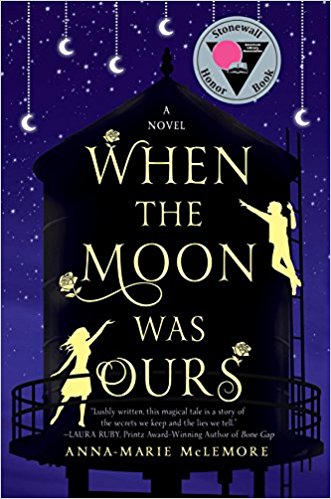
When the Moon Was Ours by Anna-Marie McLemore

The 57 Bus by Dashka Slater

Time and Place

Between Shades of Gray by Ruta Sepetys

Grief

Goodbye Days by Jeff Zentner

We Are Okay by Nina LaCour

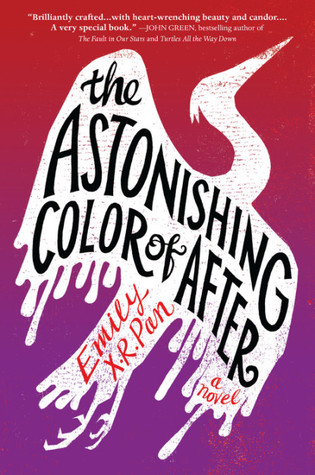
The Astonishing Color of After by Emily X. R. Pan

Nonfiction

Americanized: Rebel Without a Green Card by Sara Saedi

Vincent and Theo by Deborah Heiligman

Mary’s Monster by Lita Judge

Mental Health

Anger is a Gift by Mark Oshiro

Highly Illogical Behavior by John Corey Whaley

Little & Lion by Brandy Colbert

Considerations of Class

The Smell of Other People’s Houses by Bonnie-Sue Hitchcock

The Serpent King by Jeff Zentner

Me and Marvin Gardens by A.S. King

Refugees and Immigration

Refugee by Alan Gratz

American Street by Ibi Zoboi

A Land of Permanent Goodbyes by Atia Abawi

Disability and the Body (Literature Circles)

Wintergirls by Laurie Halse Anderson

Out of My Mind by Sharon Draper

Girls Like Us by Gail Giles

Fish in a Tree by Lynda Mullaly Hunt

Wonder by R. J. Palacio

Not If I See You First by Eric Lindstrom

Challenger Deep by Neal Shusterman

Marcelo in the Real World by Francisco X. Stork

The Politics of Adolescence

All American Boys by Jason Reynolds and Brendan Kiely

Tyler Johnson Was Here by Jay Coles

The Hate U Give by Angie Thomas

What books do/would you include on a course list? 

It’s Your First Day of School, Busy Bus! by Jody Jensen Shaffer

Share

It’s Your First Day of School, Busy Bus!
Author: Jody Jensen Shaffer;  Illustrator: Claire Messer
Published: July 3, 2018 by Beach Lane Books

Goodreads Summary: It’s the first day of school! But is Busy Bus ready? Find out in this darling picture book that showcases the excitement and worries little ones experience as they prepare for their first day.

Today is the very first day of school! Busy Bus is excited, but he also has some first-day jitters. Will the children like him? Will he be homesick? What if he gets lost?! Luckily, bus driver Ben knows just what to do to make sure that the school year gets off to a great start.

My Review: We have had so much fun with this book in our household. I read the book aloud, and my two sons act out the pages. Parents can substitute their children’s names for the bus driver to add a layer of fun! Almost all of the bus books that exist feature busses with children already on them. I loved the concept of this book—the bus is preparing for the first day of school and is very nervous the children won’t like him. This book is a must-have for bus-loving children, and it would make for a great first day of kindergarten read-aloud.

Teachers’ Tools for Navigation: Children would have great fun re-envisioning this book with other vehicles and inanimate objects. For example, what might the classroom be feeling before the first day of school? Children could create their own books of their imaginations.

Discussion Questions: 

  • How does the bus prepare for the children?
  • What is he worried about?
  • How does the bus driver help him with his jitters?
  • What other things might be nervous for the first day of school?

Flagged Passage: 

Read This If You Loved: Dump Truck Duck by Megan E. BryantGoodnight, Goodnight, Construction Site by Sherri Duskey Rinker, Demolition by Sally Sutton, Little Blue Truck by Alice Shertle, Where Do Diggers Sleep at Night? by Brianna Caplan Sayres

Recommended For: 

readaloudbuttonsmall classroomlibrarybuttonsmall

Don’t miss out on other stops on the tour!

RickiSig

**Thank you to Jody for providing a copy for review!**