Educators’ and Discussion Guide for What Can a Citizen Do? by Dave Eggers

Share

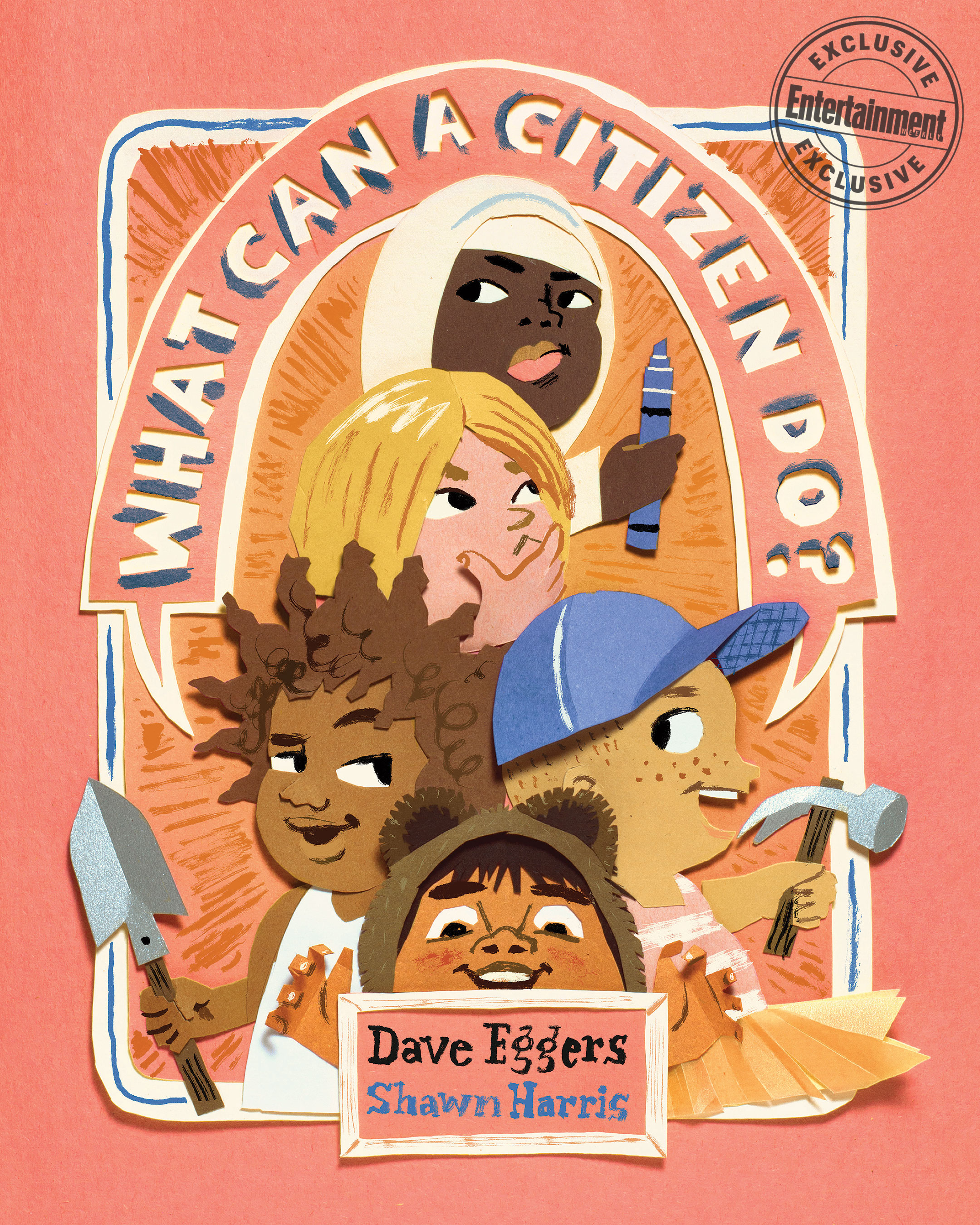
What Can a Citizen Do?
Author: Dave Eggers
Illustrator: Shawn Harris
Published: September 11th, 2018 by Chronicle Books

Summary: This is a book about what citizenship—good citizenship—means to you, and to us all: Across the course of several seemingly unrelated but ultimately connected actions by different children, we watch how kids turn a lonely island into a community—and watch a journey from what the world should be to what the world could be.

• What Can a Citizen Do? is the latest collaboration from the acclaimed behind the bestselling Her Right Foot: Dave Eggers and Shawn Harris.

• For today’s youngest readers about what it means to be a citizen and the positive role they can play in society.

• Includes beautiful illustrations and intriguing, rhyming text.

What Can a Citizen Do is an empowering and timeless read with an important message for all ages.

Praise:

“[This] charming book provides examples and sends the message that citizens aren’t born but are made by actions taken to help others and the world they live in.” —The Washington Post

“Obligatory reading for future informed citizens.” —The New York Times

Teachers’ Tools for Navigation and Discussion Questions: 

Please view and enjoy the teachers’ and discussion guide I created for What Can a Citizen Do?:

You can also access the teaching guide here.

You can learn more about the book on Chronicle Book’s What Can a Citizen Do? page.

Recommended For: 

readaloudbuttonsmall classroomlibrarybuttonsmall litcirclesbuttonsmall closereadinganalysisbuttonsmall

Kellee Signature

OCPS Appetite for Instruction Podcast with Kellee: Unleashing Young Readers

Share

Orange County Public Schools’ Innovation Office opened in 2018 to support identified “Schools of Innovation” and to support staff in the implementation and development of innovative practices within and across these schools. My school was lucky enough to be considered a “School of Innovation” when the learning community opened in 2018. Then, in the Spring of 2019, the Innovation Office began recording their Appetite for Instruction podcast, and my colleague, Caitlin Chacon, and I were so lucky to be asked to participate.

Our podcast episode was titled “Unleashing Young Readers,” I’m assuming as an homage to this blog, and we shared what literacy instruction looks like at our school, both in the podcast and the companion write up:

Unleashing Young Readers (Episode 3)

Happy listening 🙂

Signature

Teachers’ Guide for Barkus series updated with Barkus: Dog Dreams by Patricia MacLachlan

Share

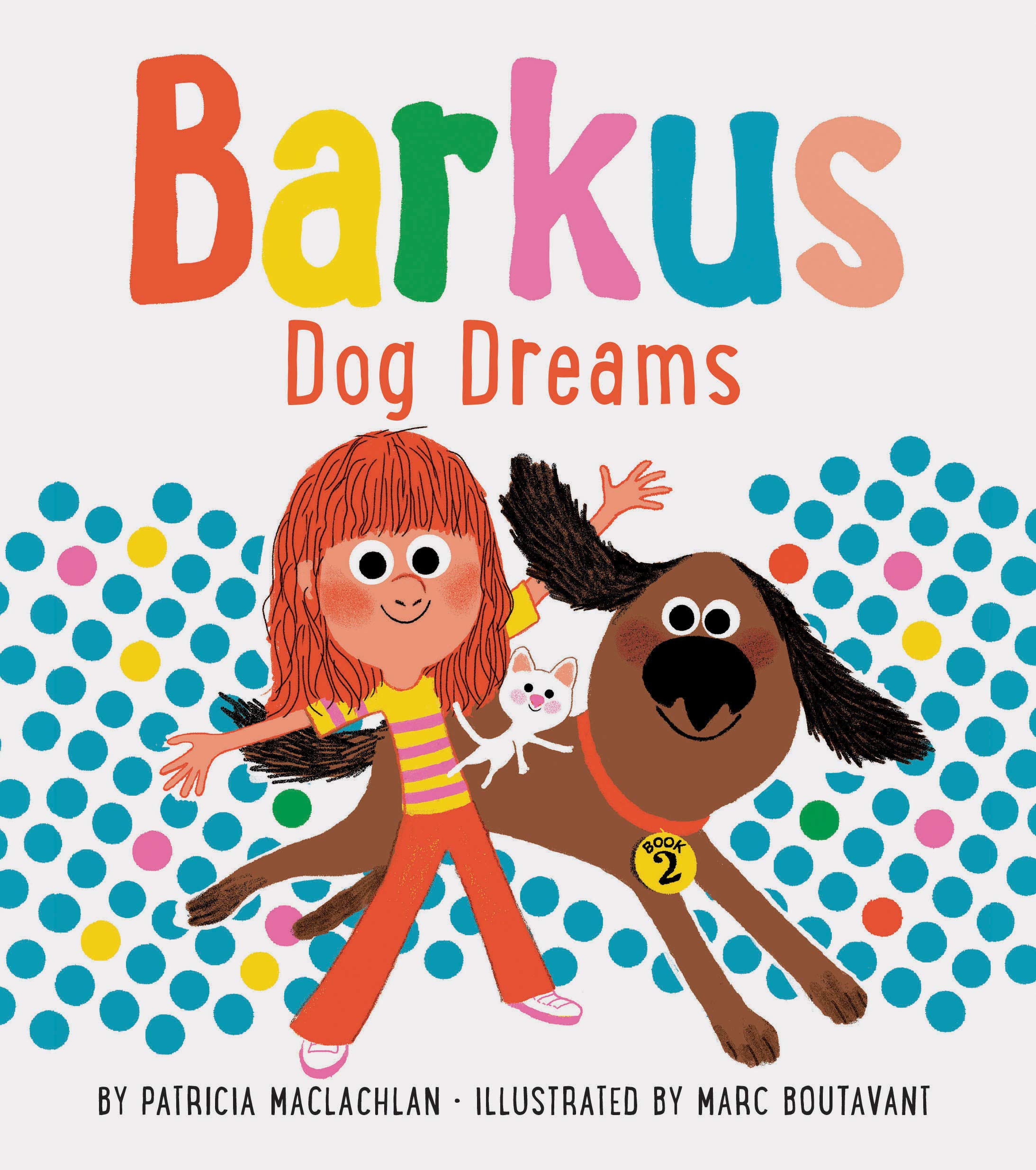
Barkus: Dog Dreams
Author: Patricia MacLachlan
Illustrator: Marc Boutavant
Published: August 7th, 2018 by Chronicle Books

Summary: Barkus is back! With new tricks. New friends. And lots more fun.

The lovable Barkus and his lucky young owner romp through the pages of this delightful series from Newbery Medal–winning author Patricia MacLachlan. The simple text told in short chapters is just right for children ready to take their first steps toward reading on their own.

View my post about Barkus to learn about book one.

Teachers’ Tools for Navigation and Discussion Questions: 

Please view and enjoy the teachers’ guide I created for the Barkus series:

You can also access the teaching guide here.

You can learn more about Barkus on Chronicle Book’s Barkus Book 2 page.

Recommended For: 

readaloudbuttonsmall classroomlibrarybuttonsmall litcirclesbuttonsmall closereadinganalysisbuttonsmall

Kellee Signature

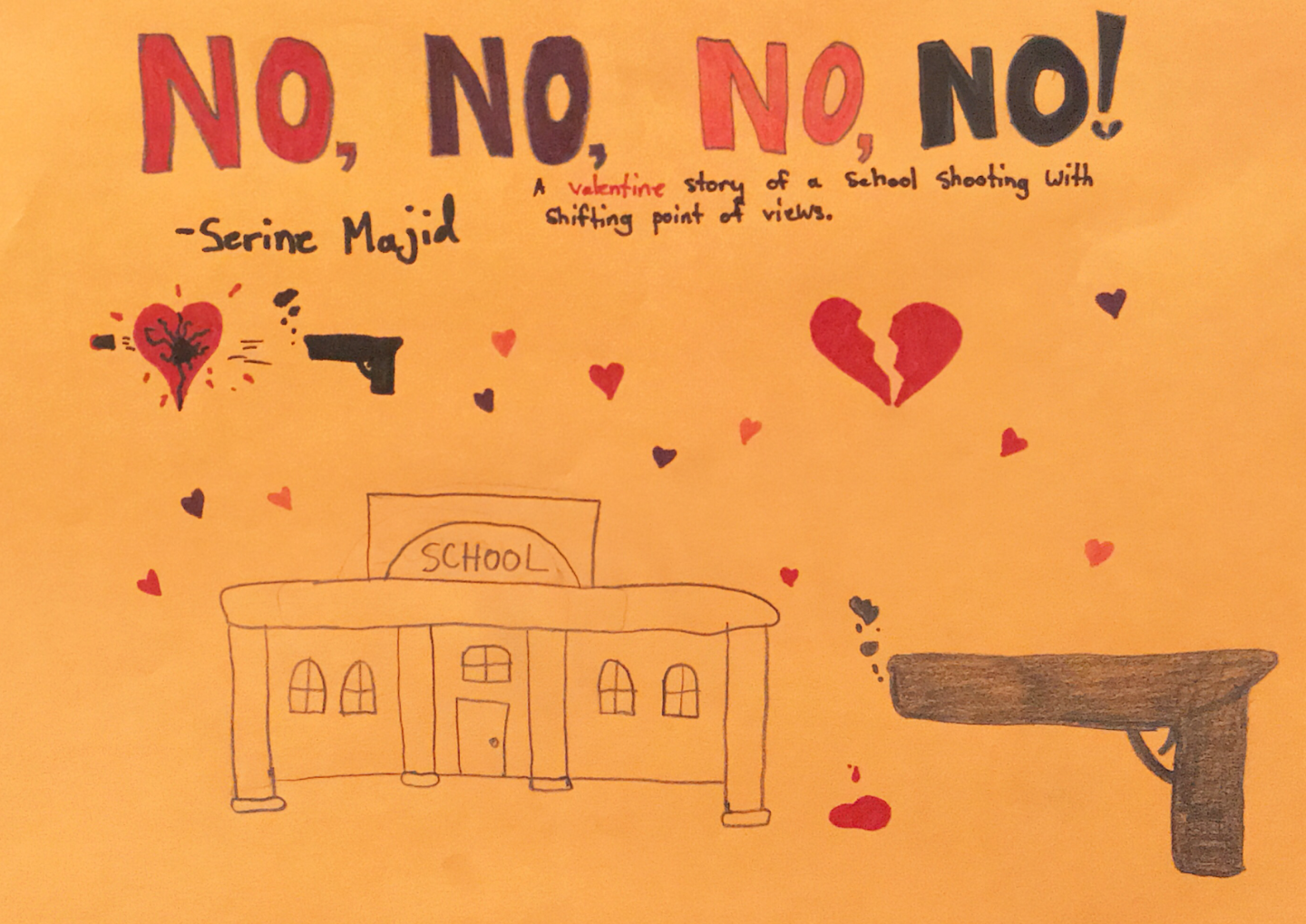
Student Voices!: “We Shouldn’t Be…” (A Poem) by Monika & Jordan with an image by Serine

Share

The best way to learn what kids are thinking & feeling is by listening to them, so I am happy to share my students’ voices!

We Shouldn’t Be… by Monika & Jordan, 7th Grade

We shouldn’t be scared, 
scared of the guy with the bullets
who can end our lives with a push
of a trigger. 
Shouldn’t be scared of the people
who have jobs to protect us, yet murder
us without thinking what we’re up to. 

We shouldn’t be scared
scared of the big bad men
who look at us like we’re a meal
and lick their lips hungrily.
Shouldn’t be scared of being beautiful
even though we were all made gorgeously. 

We should be scared
Scared of loving the wrong person, 
scared of THEM who will judge us
because of who and what we love. 

We shouldn’t be scared 
Scared of being judged by what we wear
or how we do our hair instead
of being judged by how we act
and hand situations. 

But guess what? We are. 

We are scared of the bullets that are
out there in the wrong hands. 

We are scared of being beautiful
because those men would kill for us. 

We are scared of loving because 
THEY end up hating us. 

We are scared of wearing the 
wrong thing or saying the wrong thing
because of THEM.

They, them
It’s the world. 
We are scared of the world. But we shouldn’t 
be anymore. Let’s stop being scared. 
We are strong. We can overcome the 
fear, only if we come together. We 
don’t have to constantly be in fear. 

We need to listen.

Signature

Student Voices!: Pros and Cons About Digital Schools by Maelynn

Share

The best way to learn what kids are thinking & feeling is by listening to them, so I am happy to share my students’ voices!

Pros and Cons About Digital School by Maelynn, 7th Grade

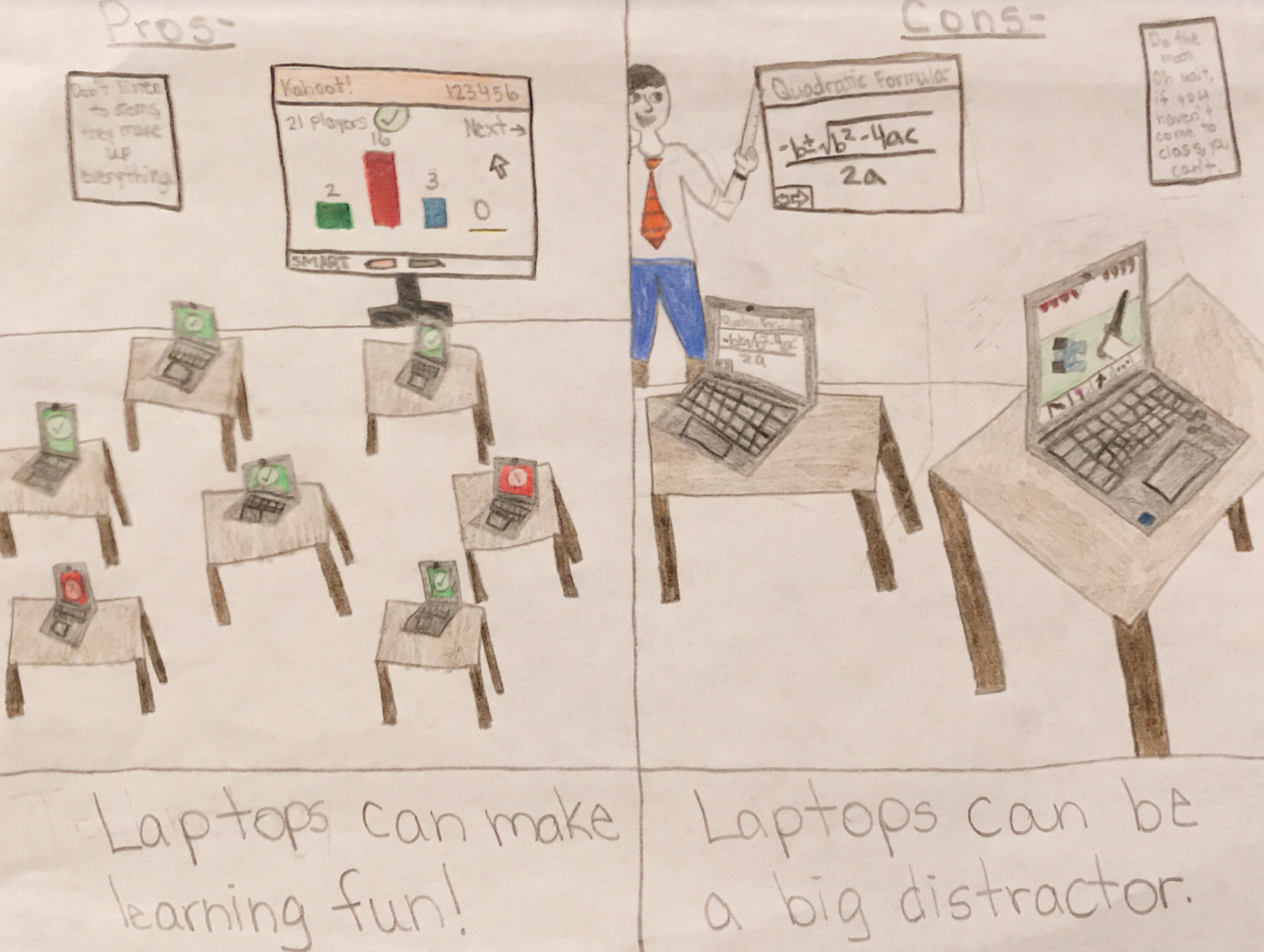
Schools all over are starting to go digital; however, this leads to a heated debate about whether or not schools should have their students using computers. Some see them as a useful tool to make learning fun and easy and others see them as a big distractor. Here are 10 pros and cons about students using computers. 

PROS-

  • New skills: Because of being at a digital school, students learn how to type. Not only will it help them now, it will help them in the future. Most people nowadays type up their resumes and other reports. Also, tons of jobs now use technology. Learning how to work and run a computer could be proven helpful later on. With technology popping up more and more, digital schools are providing students with a skill early. 
  • Research is easier: Most teachers eventually give out a research project for their students to complete. If those students go to a digital school, research will be easier for them. All they have to do is search something up. If they’re writing an argumentative essay, they can easily find evidence to support different claims because their laptops provide quick, easy access. They’re capable of browsing the internet to help them with school and expand their branch of knowledge. 
  • Establishes responsibility: Like most electronic devices, you have to plug laptops in to charge them. At a digital school, students can establish a new form of responsibility by having to plug in their laptop each day. As a student, I’ve witnessed other students not being able to do certain things because their battery died. Charging one’s laptop is similar to walking one’s dog–you’ve got to do it or there can be consequences. 
  • Typing is faster: Typing is a lot faster than writing. If you’re typing an essay, report, or something else, typing is way faster because you aren’t writing something word for word. Since it’s faster, students will be able to get more time for their own time like hanging out with family and friends. More free time also means less time on your laptop which is good because of the screen time at school already. 
  • Makes learning fun: As a student, I know technology helps make learning more fun. Teachers like using games to test their students’ knowledge (like Kahoot, Quizizz, Gimkit). Certain games also allow teams letting students interact with each other. Students can be very competitive, so this is a good way for them to blow off steam, have fun, and learn all at the same time. 

CONS-

  • Big distractor: Laptops can be super distracting. As a student, I’ve witnessed kids playing games while the teacher is talking. Instead of doing work, students decide to play games first and assignments later. Games such as Minecraft and websites like CoolMathGames.com tend to be what students mainly play. Since students have tons of websites at their fingertips, it can be hard to not get distracted. Also, games can be distracting to surrounding students who have a view of the screen. Now the student playing the game and the other students are focusing on the laptop distracted from learning. All of this can lead to bad habits. 
  • Can be unreliable: Every once in a while, wifi can stop temporarily or certain systems shut down. But what happens if things start shutting down at a digital school? Teachers may not be prepared for an unexpected internet issue and this leads to them spending the period figuring out a plan. Shut downs hurt students, too. With the wifi down, they can’t work on or submit any assignments. This usually means students have to now do it for homework, biting away form their time. Being a student, I’ve witnessed systems not working during end-of-year exams, too. This particular scenario affects much of the school and those unlucky students get their exams rescheduled. 
  • Harmful effects: Students who go to digital schools spend a lot of time on electronics. Too much screen time can make it harder for the body to relax, according to research. Furthermore, most students continue to go on their electronics after school. Too much screen time can potentially be harmful. Students should try to spend less time on electronics and more time doing other activities. 
  • Easier to cheat: With laptops, students have access to lots of websites at their finger tips. With this in mind, what’s to stop a student from cheating? If a teacher assigns an essay, summary, or another type of report, it can be easy for students to search it up and copy and paste. Students can also go on certain apps to get answers for their math homework and other subjects. 
  • Writing benefits more: Research shows that writing benefits students more than typing. When you physically write information down, you get a stronger understanding than you do with typing. Research shows that writing is better than typing because typing is faster. Since writing is slower, you process information better. Also, when you write, you get more creative because you aren’t searching anything up for ideas. 

Thank you Maelynn for your analysis of digital schools!

Signature

Student Voices!: Thoughts on Middle School by Breno, Leila, Josh, Nick, Damon, & Nathan

Share

The best way to learn what kids are thinking & feeling is by listening to them, so I am happy to share my students’ voices!

How Mrs. Moye’s Class Made My Year Better by Breno, 8th Grade

To start with, we read a lot which is awesome. We did things we like while learning. And every single assignment we did was fun–there were no assignment I was bored while doing. And because of this class, I found some great books I would have never found. Sometimes I didn’t want to go to school or was feeling sick, and this class made my day less stressful. When I thought I wouldn’t be able to do something, Mrs. Moye always helped me. So thank you Mrs. Moye for being an awesome teacher and for making my year better!

Tips for Middle School by Leila, 8th Grade

Middle School is like a journey. There’s going to be some things that are hard. Or it may feel like you can’t push through certain trials. But you can! Starting middle school was a pretty scary experience for me. Maybe it will be for you, too, so here are my tips. 

My first tip to surviving middle school is to get a sense of what the people are like. Try to surround yourself with people you feel safe with and people that would be a good influence on you. If you find the right friends, they will always be there for you. 

Tip two is to join any clubs or groups you are passionate about: music, art, sports, whatever it may be–just do it! Don’t let anyone tell you otherwise. 

Tip three is to NOT PROCRASTINATE! It is the worst thing you can do when you start getting into more advanced classes. Organize your time and study well. 

Tip four is to go to all of those fun field trips and activities your grade level participates in. These events could be one of the best nights of your life. It really gives you a chance to just have fun and be with the ones you care about while you still can. 

My last and final tip is to make the most of your time. It may seem like a big deal at the start, but as it begins to get closer to the end of the year, you realize how important this part of your life is. Get all of your friends’ phone numbers, have them sign your yearbook, hang out with them over the summer. Make every moment count. They might not go to the same high school as you. Take pictures will all your friends, and make it all count while it still lasts!

Favorite 6th Grade Activities by Josh, Nick, Damon, and Nathan, 6th Grade

  • Frog Dissection in Science
  • Teacher vs. Student Volleyball Game
  • Hoops for Hearts
  • Trackfest
  • Valentine’s Day Dance
  • Jazz Field Trip at the Bob Carr
  • End of Year Level Up Party
  • Book Trailer Creation using Animoto in Mrs. Moye’s Claass
  •  PE Units: Track, Basketball, Racketball, Badminton, Capture the Flag, and Friday Freeday
  • Creating a Civilization Activity in World History
  • Finishing the Last Standardized Test of the Year
  • In-Class Book Clubs in Mrs. Moye’s Class
  • Jennifer Nielsen Author Visit
  • Watching a Movie in Language Arts
  • Weird But True Activity in Mrs. Moye’s Class
  • Writing Blog Posts for Unleashing Readers
  • ICT: Coding
  • ICT: Typing and Nitrotype,
  • Online Safety Netiquette Project in ICT
  • Word Webs in World History
  • No Read Ink in Language Arts

Thank you everyone for your thoughts on middle school!

Signature

Student Voices!: Short Essays on Reading and Books by Luis, Star, Paola, Amy, Alex, Maya, Axel, Cooper, & Jacob

Share

The best way to learn what kids are thinking & feeling is by listening to them, so I am happy to share my students’ voices!

Why Teachers Should Let Students Read Manga by Luis, 8th Grade

Mrs. Moye let me read manga for most of the year. I read a huge variety of awesome mangas, but some teachers don’t like manga for different reasons. But I feel like I have the right to read whatever I want. Manga isn’t just fighting cartoons, some of them have a better plot than books. For example, Jojo’s Bizarre Adventure has a better vampire plot than other vampire books out there. Some have great love stories or more realistic action. Manga is truly something that teachers should let their students read and enjoy. And who knows–they may even learn Japanese!

Why 6th Graders Should Be Allowed to Read More Mature Books If They Want by Star, 6th Grade

I believe 6th graders should be allowed to read more mature books. It allows the kids to venture into a world they still have a while to actually enter. They allow kids to feel more emotions, such as sadness in love. For example, in the book The Fault in our Stars by John Green, Hazel and Augustus express such love for each other despite their differences. And when something sad happens at the end of the book, it causes the reader to be sad. Another reason 6th graders should be allowed to read more mature books is because they get kids into more real world situations before they have to experience it themselves. For example, in the book Orbiting Jupiter the author throws the reader into a real life situation. 

Why We Shouldn’t Ban Books by Paola & Amy, 7th Grade

Book banning: The horrible act of taking a book deemed “inappropriate” for students and then restricting access to that book. This has been done for years and many people actually think that this helps keep children from certain material. While it actually causes problems. 

It Keeps Important Topics Away From Kids

The biggest problem with banning books is that most of the banned books talk about very important social topics. While many people think that exposing kids to these topics will hurt them, the opposite can actually be said. The more kids learn about these topics, the better educated they are. They could then form their own opinions and even come up with ideas to help other people. Additionally, by keeping these materials away from teens and kids, they might make bad decisions because they’ve never thought about it. And by banning the books, people are making the topics more intriguing.

Why I Like Books About Social Justice by Alex, 8th Grade

I think that social justice books are the best to read for multiple reaasons. One big reason is that social justice is a very relevant topic that goes on daily, whether between a cop and an unarmed man or people of different races experiencing racial tension. I think that no matter what the situation is, it’s always interesting to see it unfold. After reading a book that deals with heavy teantion, I like to put myself in that persn’s shoes and think about how I would have handled the situation. Another reason why I believe that social justice books are interesting is because I have never had to deal with much oppression in my life which is why I think it is good to learn about other people that have dealt with oppression beacuse it makes me feel like I am not ignorant about the situations in our society. Just because I don’t deal with  them, doesn’t mean I should know about them. 

My top social justice books:

  • Ghost by Jason Renolds
  • I Am Alfonso Jones
  • Long Way Down by Jason Reynolds
  • Yummy by G. Neri
  • All American Boys by Jason Reynolds and Brendan Kiely
  • Dear Martin by Nic Stone
  • The Hate U Give by Angie Thomas

Why I Like K.A. Holt Books by Maya, 6th Grade

My first ever K.A. Holt book that I read was House Arrest, and ever since then, I have fallen in love with her writing. After I read House Arrest, I read Knockout, Redwood & Ponytail, and Rhyme Schemer. I love how her books are written like a verse of a poem because not many authors write the way she does and it captures emotions. I also love how in House Arrest she wrote the book over weeks to follow along. Also, I love that House Arrest, Knockout, and Redwood & Ponytail are in a series but you don’t have to read them in a certain order. Redwood & Ponytail was an amazing book to me; it has an important message which is never be afraid to show who you are no matter what others think. Thank you, K.A. Holt, for writing amazing books!

Reasons Why I Like Diary of a Wimpy Kid by Axel, 6th Grade

I like the Diary of a Wimpy Kid series because it is fun to know how Greg lives his life and learn about him. It also includes comedy which makes me laugh time to time while reading it. Greg’s family is really funny and weird and sometimes do embarrassing things which is fun to read about. Greg and Rowley do funny things too–usually activities for their own purposes that always end up as a disaster because Greg tries to imagine how to make everything perfect for him and when he tries to make it perfect, something goes wrong. All of these are why I like the Diary of a Wimpy Kid Series. Oh! And every year a new book comes out, and so far each one I’ve read is great!

Book Stereotypes That Are NOT TRUE! by Cooper & Jacob, 6th Grade and Mrs. Moye

  • There are girl and boy books.
    • This stereotype has lasted for many years and is still believed vy people. There is no such thing as a girl or a boy book. 
  • Long books are boring
    • Long books are not boring because a long book just has more action and fun in it. 
  • Graphic novels are for children.
    • Graphic novels are for everyone. They have life lessons and the images bring it all together. 
  • Books are the same as movies.
    • Movies have to cut things out because of time. To get the full story, you have to read the book. 
  • Cool kids don’t read/Only nerds read.
    • Smart people read.
  • Judge books by their cover.
    • The cover isn’t even chosen by the author and sometimes covers are so misleading!
  • Non-fiction books are boring.
    • Then you aren’t reading the right nonfiction books for you! Try a different kind. 
  • “I don’t have time to read.”
    • Yes you do. You aren’t making time to read. Just 20 minutes a day can impact your life in such a positive way!
  • Children’s books aren’t good.
    • Any children’s book will prove this wrong because they have a huge impact on the reader. 
  • Independent reading doesn’t help you learn anything./Books are a waste of money.
    • Books can help the reader learn! Instead of playing and buying video games, buy books!

Thank you everyone for your great essays!

Signature