In the World of Books: 25 Girls Who Stand Out For Ricki

Share

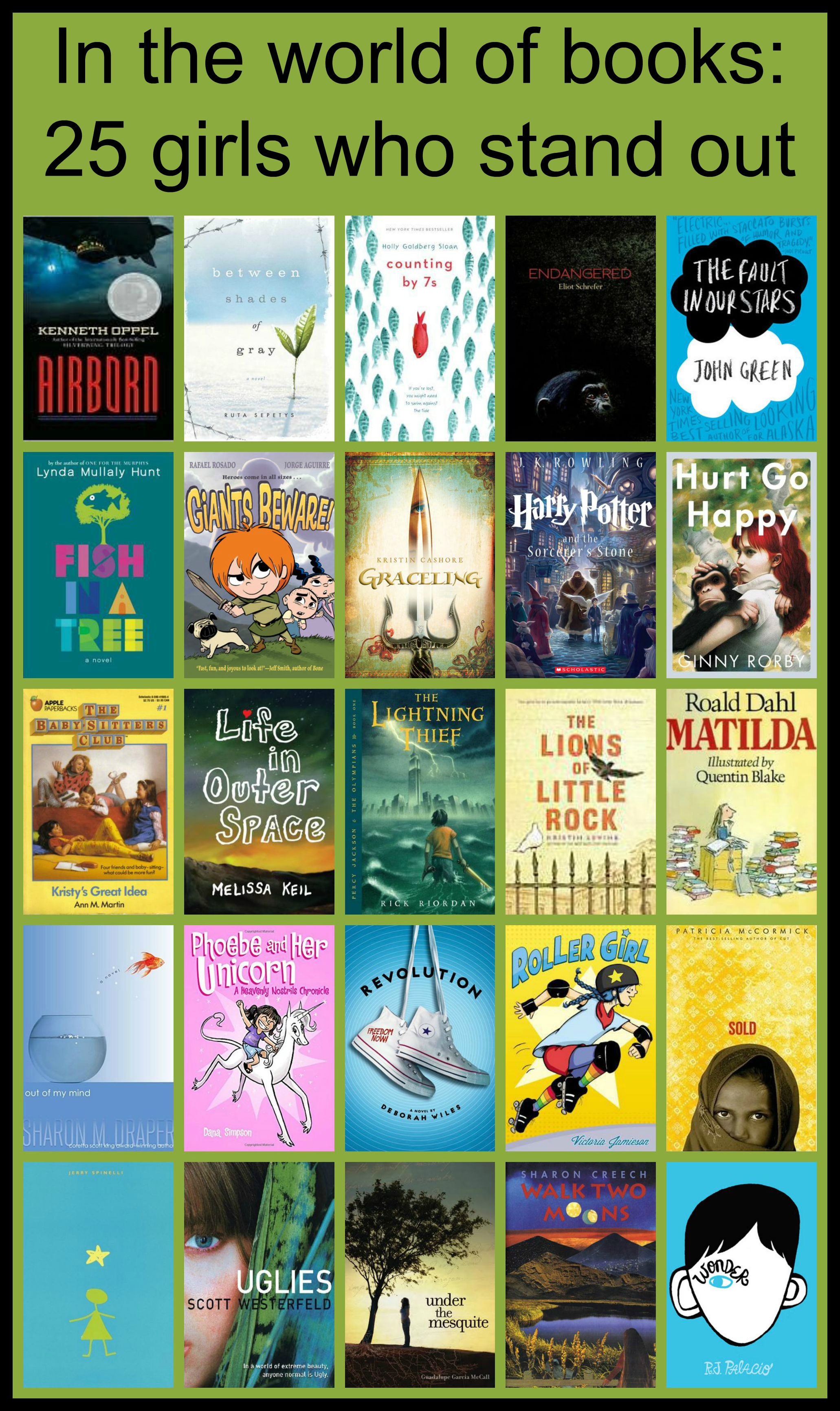
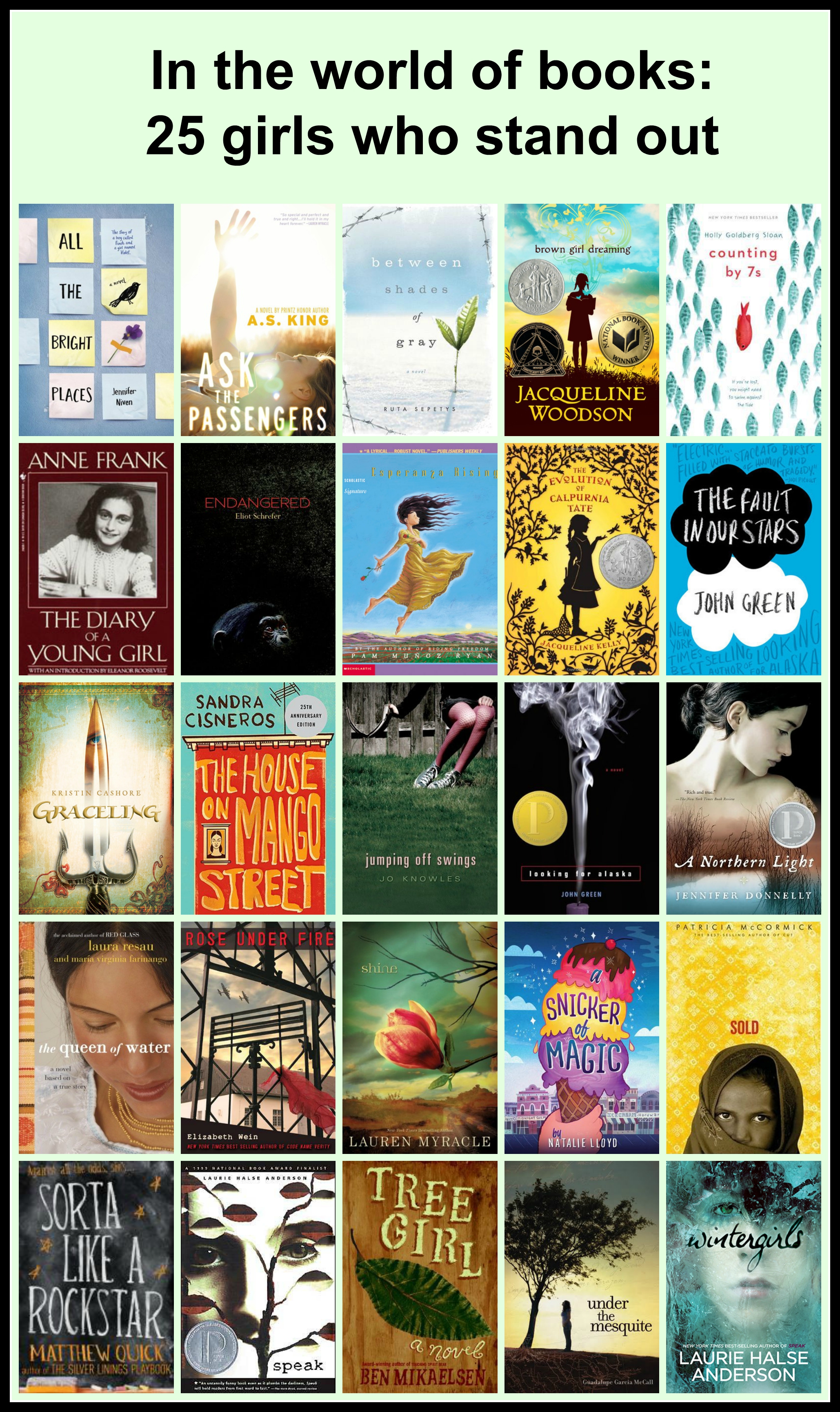
When Carrie Gelson asked Kellee and I to join her post about 25 girls who stand out in middle grade and young adult literature, we jumped at the opportunity. Kellee and I devour hundreds of books each year, yet we find that there are characters who stick with us through the years. It was difficult for me to limit my list to just 25 girls, but I am very proud of this group of young women. They don’t always make the right choices,  but they really stand out for me. I hope you find (or have found) these girls to be just as as special as I have. Next Thursday, I will share the boys!

Ricki 25 girls


  1. Violet Markey from All the Bright Places by Jennifer Niven
  2. Astrid Jones from Ask the Passengers by A.S. King
  3. Lina from Between Shades of Gray by Ruta Sepetys
  4. Jackie Woodson from brown girl dreaming by Jacqueline Woodson
  5. Willow Chance from Counting by 7s by Holly Goldberg Sloan
  6. Anne Frank from The Diary of a Young Girl by Anne Frank
  7. Sophie Biyoya-Ciardulli from Endangered by Eliot Schrefer
  8. Esperanza from Esperanza Rising by Pam Muñoz Ryan
  9. Calpurnia Tate from The Evolution of Calpurnia Tate by Jacqueline Kelly
  10. Hazel Grace Lancaster from The Fault in Our Stars by John Green
  11. Katsa from Graceling by Kristen Cashore
  12. Esperanza Cordero from The House on Mango Street by Sandra Cisneros
  13. Ellie from Jumping off Swings by Jo Knowles
  14. Alaska Young from Looking for Alaska by John Green
  15. Mattie Gokey from A Northern Light by Jennifer Donnelly
  16. Maria Virginia Farinango from The Queen of Water by Laura Resau
  17. Rose Justice from Rose Under Fire by Elizabeth Wein
  18. Cat from Shine by Lauren Myracle
  19. Lakshmi from Sold by Patricia McCormick
  20. Felicity Pickle from A Snicker of Magic by Natalie Lloyd
  21. Amber Appleton from Sorta Like a Rockstar by Matthew Quick
  22. Melinda Sordino from Speak by Laurie Halse Anderson
  23. Gabriella from Tree Girl by Ben Mikaelsen
  24. Lupita from Under the Mesquite by Guadalupe Garcia McCall
  25. Lia from Wintergirls by Laure Halse Anderson

Who makes it to your list?

RickiSig

Check out Kellee’s list of 25 girls that stand out for her.

Check out Kellee’s list of 25 boys that stand out for her.

Windsnap Wednesday! Blog Tour, Giveaway, and Author Interview: Emily Windsnap by Liz Kessler

Share

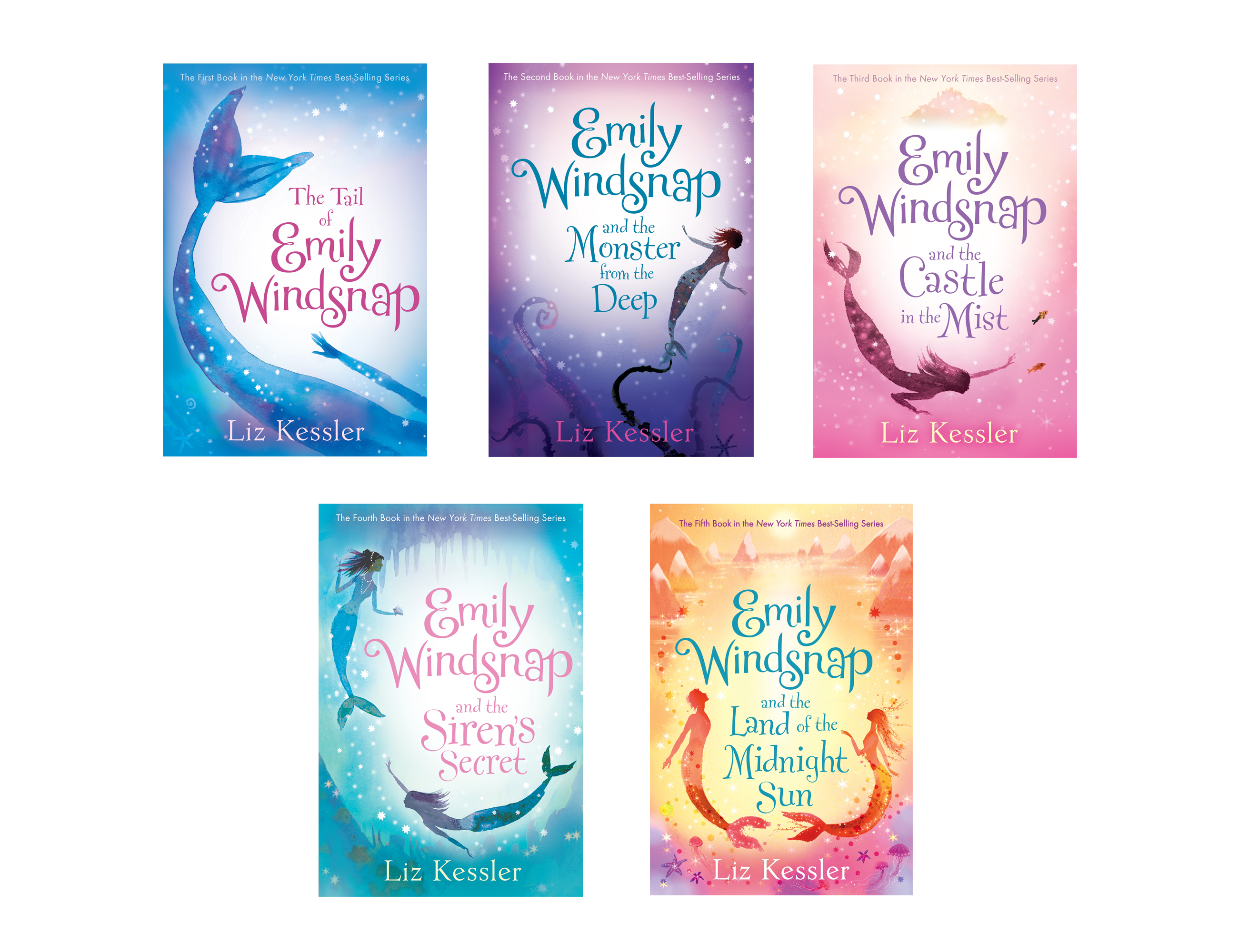
EmilyWindsnap_series_shot

9780763676889

Emily Windsnap series
Author: Liz Kessler
Illustrator: Sarah Gibb

Book 1: The Tail of Emily Windsnap
Published April 27th, 2010 by Candlewick Press

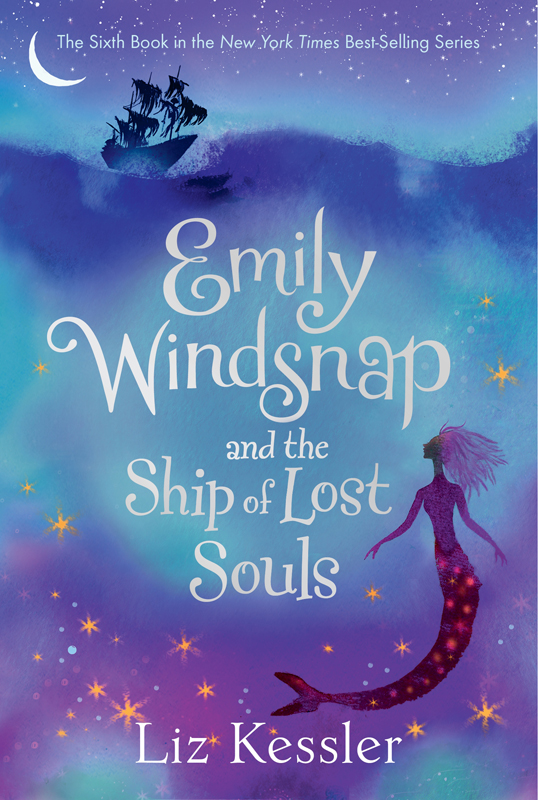
Book 6: Emily Windsnap and the Ship of Lost Souls
Published August 4th, 2015 by Candlewick Press

To celebrate the book birthday of the sixth book in the Emily Windsnap series, we want to share with you information about the series, a link to the activity kit for the series, an exclusive interview with the author, and a giveaway of ALL of the books in the series!

The Tail of Emily Windsnap Goodread’s Summary: For as long as she can remember, twelve-year-old Emily Windsnap has lived on a boat. And, oddly enough, for just as long, her mother has seemed anxious to keep her away from the water. But when Mom finally agrees to let her take swimming lessons, Emily makes a startling discovery – about her own identity, the mysterious father she’s never met, and the thrilling possibilities and perils shimmering deep below the water’s surface. With a sure sense of suspense and richly imaginative details, first-time author Liz Kessler lures us into a glorious undersea world where mermaids study shipwrecks at school and Neptune rules with an iron trident – an enchanting fantasy about family secrets, loyal friendship, and the convention-defying power of love.

Emily Windsnap and the Ship of Lost Souls Publisher’s Summary: A field trip to a mysterious island quickly turns into an adventure when Emily Windsnap and Aaron discover a secret lookout point from which they spot a ghostly ship that no one else seems to be able to see. The ship appears and disappears only at certain times of day—growing fainter each time. Searching for answers only leads to more questions until Emily and her friends confront the island’s keeper, uncovering the incredible story of a ship caught between land and sea, day and night . . . life and death. Only Emily, with her ability to transform from mermaid to human, can enter Atlantis to try to bring the ship’s passengers back before the portal is closed forever. Emily knows that if she fails, not only will the passengers never see their loved ones again, but Emily won’t be able to return either. Will she be able to resist the allure of Atlantis and return home before it’s too late?

Activity Kit can be accessed here.

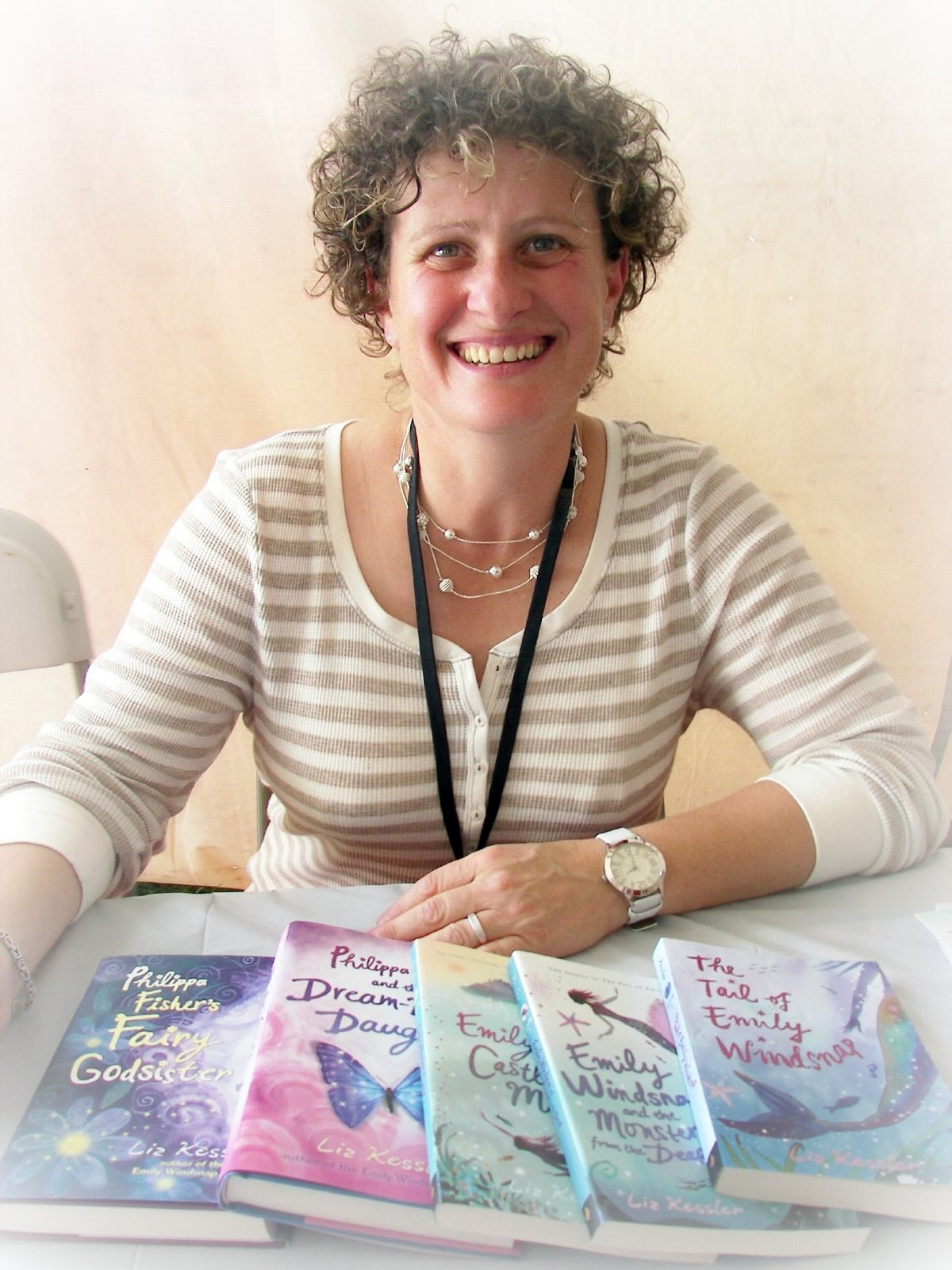
About the Author: Liz Kessler is the author of the New York Times best-selling series about Emily Windsnap as well as three adventures about Philippa Fisher and her fairy godsister. She is also the author of the middle-grade novels A Year Without Autumn, North of Nowhere, and Has Anyone Seen Jessica Jenkins? and the Poppy the Pirate Dog series for young readers. Liz Kessler lives in England.
Twitter: @LizKessler
Website: http://www.lizkessler.co.uk/

Kessler_photo_by_P.Baraloto

Unleashing Readers: What has been the hardest aspect of writing a series? What has been the most rewarding?

Liz Kessler: The hardest thing is making sure I remember everything that has gone before. I once knew an author who had one of her characters doing something in a book and had forgotten that she’d killed him off in an earlier chapter! Luckily, I don’t generally kill off my characters (I’d miss them too much) but when you are writing the sixth book in a series, that’s five books-worth of characters and stories to remember!

Most rewarding – I love having interaction with my readers and hearing about how Emily has inspired them, either with their reading or in their lives in general.

UR: How has Emily changed and grown throughout the series?

LK: Well, in many ways, she is the same person as she started out being: she likes adventure, she will always look after her friends and family, and she will always stand up for what she believes in. But she has matured a bit as the series has gone on. For one thing, she now has a boyfriend as well as a best friend! For another, I think that she thinks about things a little bit more before plunging into the next adventure. Luckily for me – and for my readers – she still plunges in once she’s thought about it! Life would be boring if she didn’t!

UR: How did you plan the series? Did you have the whole series outlined when you wrote the first book?

LK: Not at all. I wrote one book, had the second in mind and didn’t know what would happen after that! Each time, I’ve had a new idea and something that I’ve wanted to explore, and I’ve loved diving back into each book.

UR: What other character in the series do you think has had the biggest effect on Emily?

LK: Gosh. Good question. The other characters affect her in different ways. Shona gives her confidence and makes her feel good about having a best friend. Emily has a LOT of adventures because of her friendship with Shona. Mandy made her think about forgiveness on quite a deep level, as did Mr Beeston. Neptune is the one who challenges her the most. And Aaron has brought out a whole new side to her. Can I say all of them???! 🙂

UR: Next to Emily, who is your favorite mermaid?

LK: I love the ‘Real Mermaids’ series by Hélène Boudreau right now.

a Rafflecopter giveaway

Check out other U.S. Windsnap Wednesday stops

Watch. Connect. Read.

Barnes and Noble Kids Blog

Thank you so much to Liz Kessler for the interview and Candlewick Press for providing copies of the books for giveaway!

Signatureand RickiSig

Review and Author Interview!: Cold War on Maplewood Street by Gayle Rosengren

Share

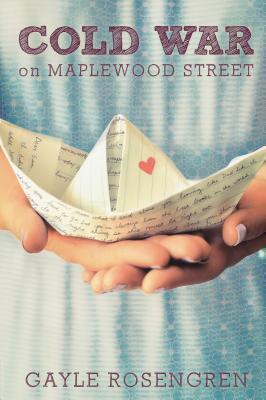
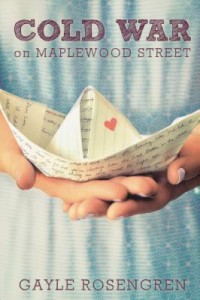
cold war maplewood

Cold War on Maplewood Street
Author: Gayle Rosengren
Published August 4, 2015 (Today!) by Putnam

Goodreads Summary: Cold War anxieties play out in a sensitively told story set during the Cuban missile crisis in the 1960s, perfect for fans of Gary Schmidt and Kristin Levine.

Joanna can’t get over how her brother broke his promise to never leave like their dad did. Sam is thousands of miles away on a navy ship, and no matter how often he sends letters, Joanna refuses to write back. When she makes a promise, she keeps it.

But then President Kennedy comes on TV with frightening news about Soviet missiles in Cuba—and that’s where Sam’s heading. Suddenly Joanna’s worries about being home alone, building up the courage to talk to a cute boy, and not being allowed to go to the first boy-girl party in her grade don’t seem so important. Maybe sometimes there are good reasons to break a promise.

The tense timeline of the Cuban missile crisis unfolds alongside a powerful, and ultimately hopeful, story about what it means to grow up in a world full of uncertainty.

Ricki’s Review: Cold War on Maplewood Street highlights a time period that isn’t common in the genre of historical fiction. I was intrigued from the very beginning because I have read few books focused on the Cuban missile crisis. The author excellently balances narrative and history in this engaging, thought-provoking text. Joanna is a strong girl who is ashamed of the way she treated her brother when he left for war. She makes a realistic mistake and tries to work through her emotions regarding her treatment of her brother and also the frightening events of war. There are many concepts for teachers to draw upon in this text—family, friendship, war, and fear, to name a few—and teachers will find this text offers rich opportunities for classroom discussion.

Kellee’s Review: What I think Ms. Rosengren does so well in this book is tell a real story with a piece of history as the backdrop. This is a Cold War/Cuban Missile Crisis story, but that isn’t what the book is all about. This book is about Joanna, her family, and her best friend. Her characters are very real and show the real emotions that must have been running through so many peoples’ veins during this tense time.  Because of how well this book is crafted as a narrative within a historical time period, I believe it would be a great introduction to this time period for middle grade readers. Many will have never heard of the Cold War or Cuban Missile Crisis, so learning about it through Joanna’s story is perfect. 

Teachers’ Tools for Navigation: Teachers might consider using this text to ask students to examine their regrets. Students could begin by closely examine characters that have regrets. Who are they? Do their regrets impact others? Then, the students could consider world leaders or pop culture to consider regrets that famous people might have and how these regrets impacted their lives. Finally, the students might journal to make connections with the text by examining mistakes they have made or regrets they hold in their personal lives.

Another interesting aspect of this book is the theme of communication. Students could compare the lack of communication of some of the characters in the book (which led to a major issue) and the lack of communication which led to the Cuban Missile Crisis. How could communication have helped either of these situations?

Discussion Questions: How would you react if your sibling went to war? Is Joanna’s reaction realistic? Is it fair?; How does war impact the lives of those who stay home? How do the characters of this text react differently from each other? Do you think the war impacted the choices Pamela’s family members make?; What is Mrs. Strenge’s role in the novel? How does she enhance our reading of the story?

Author Interview!: 

Unleashing Readers: What interested you in the Cold War, specifically?

Gayle Rosengren: When I wrote the first draft of Cold War on Maplewood Street–twenty years ago(!)–itwas to share a singular experience from my childhood, the Cuban Missile Crisis. But for several reasons, the manuscript never made it to an editor and I had to set it aside.

Years later I decided to revisit it with a different objective in mind. Now, I wanted to tell a story in which the crisis was the backdrop for a story about how poor communication can destroy relationships. The Cold War itself was an example of a break-down in communication on such a major scale that it very nearly led to destruction on a global level. In my novel, poor communication is demonstrated by main character Joanna’s failure to write to her brother and apologize for the terrible things she said to him when he left for the Navy. It’s also shown in her avoidance of a new tenant in their building, an old woman Joanna finds frightening for several reasons; and it’s demonstrated in her best friend Pamela Waterman’s family, when Mrs. Waterman runs away instead of confronting her husband about how desperate she is to see Paris.

UR: What does your research process look like?

GR: My research began with plumbing my own very vivid memories of the week of the crisis. I was twelve, and I was scared, especially since–although they tried to conceal it–I could see that adults were scared too.

But the major source of the historical details in Cold War on Maplewood Street came from the Chicago Tribune’s archives and actual headlines, photos, and articles that appeared in what was then The Chicago Daily Tribune. Remember, I wrote the first draft of the manuscript over twenty years ago. Pre-computer. And given that newspapers and television newscasts were the primary news sources of the day, I felt it was a solid source for my facts. I have a fat file full of copied newspaper pages that provided everything from the news to the weather and the television schedule. (All 4 channels!)

Today we know more about what was going on during that infamous week (in particular the note that Kennedy sent to Khrushchev agreeing to remove our nuclear weapons from Turkey) but I wanted Joanna to know only what anyone else living in the U.S, and specifically Chicago, would have known at the time.

UR: Did you decide on your time period or your protagonist/narrative first?

GR: This was an instance where the time period was clearly the inspiration for the story, and the protagonist and voice followed. I originally wrote this manuscript in the third person, rewrote it in first person, and then went back to third as I struggled to discover the character and voice that would best serve the story.

UR: Did anyone in your life inspire your characters?

GR: I modeled Joanna’s and Sam’s relationship on my close relationship with my brother Dennis. He was in the Air Force at the time of the missile crisis and based relatively safely in Okinawa, Japan, but I imagined that he was in the Navy, on a ship off the east coast of the U.S., and likely to be swept into action as part of the Cuba quarantine and blockade. I imagined how terrified I would have been for him. And then, to up the stakes, I imagined that when he’d left, Joanna in her hurt and anger accused him of deserting them just like their father had years before. The guilt she would feel knowing she might never get to apologize would be overwhelming.

Joanna’s mother was modeled after my single mother who always worked hard and scrimped to take care of us. Pamela was every good friend I ever had with a normal (which at the time meant two-parent) family.

As for Joanna, she was a lot like me at 12–childish and thoughtless one moment, grown-up and sensitive the next, taking awkward steps toward adulthood and all the while longing for the protective cocoon of childhood that was forever left behind in that unforgettable week. Like Joanna, I too loved horses and dogs and hated being alone in the house at night.

We Flagged: “[S]taying positive and hopeful—even pretending to—was much better than giving in to fear.” (p. 142)

Read This If You Loved: Countdown by Deborah Wiles; Paper Cowboy by Kristin Levine; What the Moon Said by Gayle Rosengren; Purple Heart by Patricia McCormick; Spy Catchers of Maple Hill by Megan Frazer Blakemore

Recommended For: 

  litcirclesbuttonsmall classroomlibrarybuttonsmall

 RickiSigandSignature

**Thank you to Penguin for providing copies for review and Ms. Rosengren for the author interview!**

It’s Monday! What Are You Reading? #IMWAYR 8/3/15

Share

IMWAYR

It’s Monday! What Are You Reading? From Picture Books to YA!

It’s Monday! What are you Reading? is a meme hosted by Sheila at Book Journeys. It is a great way to recap what you read and/or reviewed the previous week and to plan out your reading and reviews for the upcoming week. It’s also a great chance to see what others are reading right now…you just might discover the next “must-read” book!

Jen Vincent, of Teach Mentor Texts, and Kellee decided to give It’s Monday! What Are You Reading? a kidlit focus. If you read and review books in children’s literature – picture books, chapter books, middle grade novels, young adult novels, anything in the world of kidlit – join us! We love this meme and think you will, too.

We encourage everyone who participates to support the blogging community by visiting at least three of the other book bloggers that link up and leave comments for them.

Last Week’s Posts

top ten tuesday walden lucille ball circus mirandus reading workshop 2.0

Tuesday: Ten Characters Who Are Fellow Book Nerds

Tuesday: Special Announcement!: Glory O’Brien’s History of the Future by A.S. King Wins the 2015 Amelia Elizabeth Walden Award

Friday: Preview of August’s #rwworkshop chat on 8/5 at 9PM ET

**Click on any picture/link to view the post**

 Last Week’s Journeys

Kellee: My parents are visiting!!! This is a huge plus except when it comes to reading. Just like vacation, family visiting equals reading being pushed to the side. However, I was able to finish a novel and a graphic novel as well as a picture book. Cold War on Maplewood Street by Gayle Rosengren is a great historical fiction novel that is more than just a history lesson. I look forward to reviewing it on Tuesday. I also finished George O’Connor’s newest “Olympians” book, Apollo: The Brilliant One. It is set up a bit differently than the others in the series, but I think it worked for Apollo’s stories. This book doesn’t publish until January, so I don’t want to give too much away. I also read Tim Federle’s new picture book Tommy Can’t Stop! If you remember, I loved Federle’s Nate books, so when I saw this at the book store, I knew I needed to sit down and read it right then. Boy, am I glad I did. What a fun book about finding the right creative outlet for kids (and the need for creative outlets for all).

Ricki: This week, I read a variety of books. I finished a PD text called Researching Lived Experience by Max Van Manen. It was theoretical, but I found it to be interesting. I learned about Jean-Jacques Rousseau, an 18th century philosopher–considered to be one of the first philosophers who looked at and truly considered the child. His book was transformative in education and parenting. It, for example, inspired women to stop using wet nurses and to nurse themselves. Yet, ironically and sadly, he put all five of his children in orphanages (and all died of ill treatment in the orphanages). I am still pondering this, days after I closed the book.

I also read and enjoyed Cold War on Maplewood Street by Gayle Rosengren. I love historical fiction, and this is one of the few books I’ve read about the Cuban Missile Crisis, so I found it to be very compelling. Henry and I enjoyed the picture book, Henri’s Scissors by Jeanette Winter. I love books about artists, so I enjoyed this one.

This Week’s Expeditions

Kellee: I have already started The Rise of Aurora West by Paul Pope, and I plan on reading the sequel after. So far I am really liking the premise. Then I’m going to continue my graphic novel reading with The Nameless City by Erin Faith Hicks. After that, I plan on reading one of the books by the authors on my NCTE humor panelPickle: The (Formerly) Anonymous Prank Club of Fountain Point Middle School by Kim Baker, Hook’s Revenge by Heidi Schulz, or The Tiara on the Terrace by Kristen Kittscher. I also want to tackle some more of my #mustreadin2015. However, the summer is getting so short!!! I hope I can squeeze in some great reading during this last couple of weeks.

Ricki: Next week, I just might keep my promise and finish Harper Lee’s Go Set a Watchman. I’m struggling. I also plan to read Children Growing Up with War by Jenny Matthews.

Upcoming Week’s Posts

cold war maplewood 9780763676889 Temple of Doubt

Ricki 25 girls 25 Girls Collage

Wednesday: Windsnap Wednesday! Blog Tour, Giveaway, and Author Interview: Emily Windsnap by Liz Kessler

Thursday and Friday: 25 Girls Who Stand Out (in Middle Grade and Young Adult Literature)

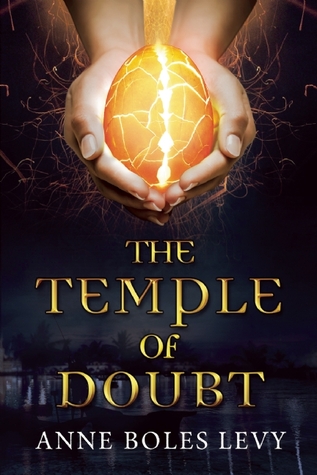
Sunday: Author Guest Post!: “How Settings Help Shape Characters’ Character” by Anne Boles Levy, Author of The Temple of Doubt

 So, what are you reading?

Link up below and go check out what everyone else is reading. Please support other bloggers by viewing and commenting on at least 3 other blogs. If you tweet about your Monday post, tag the tweet with #IMWAYR!

 Signature andRickiSig

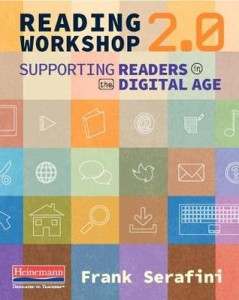
Reading Workshop 2.0 by Frank Serafini

Share

reading workshop 2.0

Reading Workshop 2.0
Author: Frank Serafini
Published March 26th, 2015 by Heinemann Educational Books

Goodreads Summary: As reading teachers, how do we deal with the massive shifts that digital literacy is creating? We can’t abandon what we know works to keep up with the latest online-literacy fads. Yet, we need to prepare readers for a world of digital content. Reading Workshop 2.0 gives us teaching that puts reading for meaning first while also balancing the need for kids to become sophisticated users of books as well as online reading resources.

“This book,” writes Frank Serafini, “is designed to help teachers organize their reading workshops in order to take advantage of the latest technologies.” With his guidance, you’ll bring more digital reading into your teaching without sacrificing sound instructional principles or practices. Reading print shares four essential processes with digital reading: accessing and navigating; archiving and sharing; commenting and discussing; and interpreting and analyzing.

Frank introduces important, well-established digitally based resources that further these processes, while his lesson ideas transfer learning from classroom to real-world digital reading.

“If it doesn’t help children develop as readers,” writes Frank Serafini, “it doesn’t matter how shiny the new object is.” With Reading Workshop 2.0, you’ll help students with print while also helping them use online resources and technologies as they are intended-to make sense of texts more deeply, effectively, and efficiently.

My Thoughts: When I read a professional text, I hope that it is a perfect mix of theory and practical practices so that not only do I understand the WHY and WHAT but also the HOW. This book does just that. Part One of the text deals with the foundations of reading workshop. Dr. Serafini shares a brief overview of what can be found in his initial book about workshop, The Reading Workshop: Creating Space for Readers, including the “Ten Theoretical Principles About Teaching Reading,” “Pedagogical Strands” of reading workshop, and “Instructional Components of the Reading Workshop.” As I haven’t read any other texts by Dr. Serafini, I loved this overview (this will be fixed soon though as I have now bought 4 others books by him!). Throughout this part of the book, I found myself thinking, “YES!” and wanting to go share what I was reading with every teacher I knew. He writes about much of what I stand for when it comes to teaching reading.

Part two jumps into the 2.0 part of the text. He breaks up this part into four processes that should be added to reading workshop to move it into the digital age: “Accessing and Navigating Digital Texts,” “Archiving and Sharing Our Reading Lives,” “Commenting on and Discussing Digital Texts,” and “Interpreting and Analyzing Digital Texts.” He stresses throughout that this isn’t instead of reading workshop, this is along with. Students must get familiar with digital texts, so our workshops really need to move to 2.0. Within each chapter on a process, he gives information, resources, and explicit lessons for teaching the process. So informative and practical.

Loved this expansion on the traditional reading workshop. Filled with theory, resources, and practical practices, this PD text was very beneficial!

Teachers’ Tools for Navigation: Dr. Serafini has “Resources for Supporting Readers in the Digital Age” on his website that he will update regularly.

We Flagged: There is so much highlighting and underlining in my text that it is hard to choose what to share, but one of my favorite foundational things that was said was:

“Time is the second dimension of the opportunity strand–time to read, time to share ideas, time to wonder, and time to explore new texts. We cannot master something we don’t dedicate our time to, it’s that simple.”

Dr. Serafini joined #rwworkshop (reading/writing workshop) chat on August 5th, and really gave us great insight into his text and moving reading workshop to the digital era. Check out the archive at the #rwworkshop wiki http://rwworkshop.wikispaces.com

Read This If You Loved: Other texts by Dr. Frank Serafini, Nancie Atwell texts, The Book Whisperer by Donalyn Miller, Book Love by Penny Kittle,

Signature

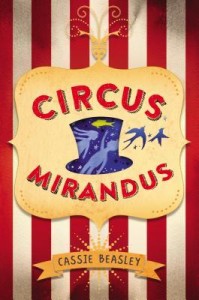
Circus Mirandus by Cassie Beasley

Share


circus mirandus

Circus Mirandus
Author: Cassie Beasley
Published January 1, 2015 by Dial

Goodreads Summary:
Do you believe in magic?
Micah Tuttle does.

Even though his awful Great-Aunt Gertrudis doesn’t approve, Micah believes in the stories his dying Grandpa Ephraim tells him of the magical Circus Mirandus: the invisible tiger guarding the gates, the beautiful flying birdwoman, and the magician more powerful than any other—the Man Who Bends Light. Finally, Grandpa Ephraim offers proof. The Circus is real. And the Lightbender owes Ephraim a miracle. With his friend Jenny Mendoza in tow, Micah sets out to find the Circus and the man he believes will save his grandfather.

The only problem is, the Lightbender doesn’t want to keep his promise. And now it’s up to Micah to get the miracle he came for.

Ricki’s Review: I was only a few pages in when I knew this book would be special. I was captivated by the beautifully described setting and the words that seemed to dance off the pages. This book is about magic, but the writing is quite magical in itself. I usually give my ARCs away, but I am hanging on to this copy because I plan to read it to my son when he is a bit older. I’ll likely buy another copy because I am eager to see the illustrations! I suspect that this text will create lifelong readers. It belongs in every classroom in America. Circus Mirandus is the kind of book that takes you to another world—one that will stay in your heart forever.

Kellee’s Review: I liked Circus Mirandus  from the very beginning, but as soon as the circus officially enters he story, the magic just engulfs you. I think it is the Lightbender that makes the story. He is a mystery, but also the person that I feel like I connected with the most. I truly feel that he is what makes this book as magical as it is. I also really liked Jenny. Jenny represents the main stream (which is odd to say because Jenny is a little bit odd), but Jenny has already moved past magic and is so straight forward. Convincing her to believe in anything past what she sees and knows was such a challenge for Micah. (But she is such a great friend!)

One of the things I really liked about the text is the theme of helping kids stay kids for as long as possible. Circus Mirandus is around to help keep the magic of childhood alive. That is something I can believe in!

Circus Mirandus was my informal Twitter book club’s choice for July, and I loved chatting with them about the book (and Ricki joined us this time!). To see the archive of our chat, you can view it here. (Warning: There are spoilers for the book in the chat.)
Some of my favorite quotes from the chat were:

“I loved that Jenny was willing to go along on the journey even if she had trouble believing.” -Alyson Beecher

–“Yes! That is what made me love her. She was willing to support her friend.” -Kellee Moye

–“And Jenny needed a friend, found something in herself that “might” want to believe, too?” -Linda Baie

–“I love how great Jenny and Micah are for each other…helping each other find courage and comfort.” -Beth Sanderson

“It was interesting that the light bender just dismissed G., rather as we all should dismiss evil people.” -Linda Baie

“I loved the relationship between Micah and Gpa. He had so many words of wisdom to prepare Micah.” -Leigh Anne Eck

–“The wonderful relationship between Micah and his Grandpa is what I will remember the most about this book.” -Cynthia Alaniz

“I don’t think we should hide kids from life truths like death. Kids need to be taught healthy ways to grieve.” -Ricki Ginsberg

“The artwork is special! It is interesting to read the Ch then look at the art & find the reasoning behind the art.” -Kellee Moye

–“Yes! There is something special when physical aesthetic of book matches aesthetic of the language.” -Christy Rush-Levine

Favorite quotes shared from the book:

“Because when you try too hard to hold on to something, you break it.”

“Who you are is more than good enough.”

Teachers’ Tools for Navigation: This book naturally lends itself to a creative project. I would love to have students work together to design their own circus. Perhaps each student could be in charge of designing a different section of the circus and writing about it. For example, one student might be in charge of writing the opening speech for a circus act; another student could be in charge of writing a newspaper article about the events; another student might be in charge of writing to the mayor to ask permission to use a field for the circus. I’d allow students to generate their own ideas, so they can take ownership of their work.

However, the best place that this book could end up is in as many kids’ hands as possible! It deserves to be read and read widely.

Discussion Questions: What is Jenny’s role in the novel? How does she add to the story?; Do you think you would believe in the circus? Why or why not?; Which characters showed bravery? Why or why not?; What role does fantasy play in this text? How would it be different if it was a work of realistic fiction?

We Flagged: “You never need an invitation to go home.”

Read This If You Loved: Books by Roald Dahl, A Snicker of Magic by Natalie Lloyd, Wonder Show by Hannah Barnaby, Miss Peregrine’s Home for Peculiar Children by Ransom Riggs, Big Fish by Daniel Wallace, Night Circus by Erin Morgenstern, Peter Pan by J.M. Barrie

Recommended For: 

 readaloudbuttonsmall litcirclesbuttonsmall closereadinganalysisbuttonsmall classroomlibrarybuttonsmall

 RickiSigandSignature

**Thank you to Penguin for providing copies for review!**

I Am Lucille Ball by Brad Meltzer

Share

NFPB2015

Nonfiction Picture Book Wednesday

Nonfiction Picture Book Wednesday is hosted by Kid Lit Frenzy and was started to help promote the reading of nonfiction texts. Most Wednesdays, we will be participating and will review a nonfiction text (though it may not always be a picture book).
Be sure to visit Kid Lit Frenzy and see what other nonfiction books are shared this week!

lucille ball

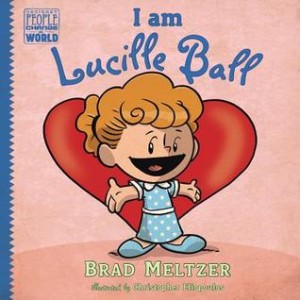
I Am Lucille Ball
Author: Brad Meltzer
Illustrator: Christopher Eliopoulos
Published July 14th, 2015

Goodreads Summary: “Kids always search for heroes, so we might as well have a say in it,” Brad Meltzer realized, and so he envisioned this friendly, fun approach to biography—for his own kids, and for yours. Each book tells the story of one of America’s icons in a vivacious, conversational way that works well for the youngest nonfiction readers, those who aren’t quite ready for the Who Was biography series. Each book focuses on a particular character trait that made that role model heroic. For example, Lucille Ball could make any situation funny. By making people around the world laugh, she proved that humor can take on anything.

This engaging series is the perfect way to bring American history to life for young children, providing them with the right role models, supplementing Common Core learning in the classroom, and best of all, inspiring them to strive and dream.

My Review:  The first “Ordinary People Change the World” book I read was I am Jackie Robinson, and I immediately loved the way the book was set up. I am Lucille Ball is the same way. Like I stated in my review of Jackie Robinson, I love that it is in first person which sucks the reader into Lucy’s life. The series is also a picture book/graphic novel mix which not only adds to the engagement aspect of the book, I think it really makes you feel like you know the subject more. It also is where Meltzer puts some of his funniest parts of the story.

The reason why I knew I had to review this book, though, was because of the subject matter. All of the other subjects of the books in the series (Lincoln, Parks, Einstein, Earhart, and Robinson) are pretty well-known amazing people although they did all start out with quite ordinary lives. Lucille Ball deserves to be talked about along with them though many do not know that she does. I love that Meltzer decided to tackle a story about someone that not everyone may understand why he chose her. Brad Meltzer addressed this on his Facebook page:

“To my surprise, some have asked: Why Lucy? So let me explain: I wrote this book because I wanted my daughter to finally have a female entertainment hero who wasn’t famous just because she was thin and known only for her looks. Lucy is different than everyone else. She’s funny, driven, and the first woman to run a major movie studio (producing Star Trek and Mission: Impossible). Her success came from her drive — and because she so perfectly wasn’t like everyone else. Plus she taught me, throughout my own childhood, that humor can take on anything. I wanted my daughter to learn that. 

But in terms of Lucy and Ethel crazy ideas, here’s my most Lucy and Ethel-ish. Share this book with someone who’s different. Share it with little girls and boys, as well as big girls and boys. Show them that it’s not just okay to be different…it’s SPECTACULAR to be different.”

Teachers’ Tools for Navigation: The “Ordinary People” books definitely need to be in classrooms. They are going to be loved by students. However, I think Meltzer’s subjects are definitely worth looking at. I see them being used in a lit circle where each group gets a different one of Meltzer’s books then after reading and discussing the books, they share what they learned about their Ordinary Person.

It would also be so much fun to use Meltzer’s books as a mentor text to writing their own Ordinary People picture book. A fun twist on a research project!

More information on I am Lucille Ball can be found here.

Discussion Questions: What made Lucille Ball a standout in the entertainment industry?; How did Lucille Ball pave the way for comediennes like Melissa McCarthy and others? How does Meltzer’s mix of picture book/graphic novel help make the book more enjoyable to read yet still informative?

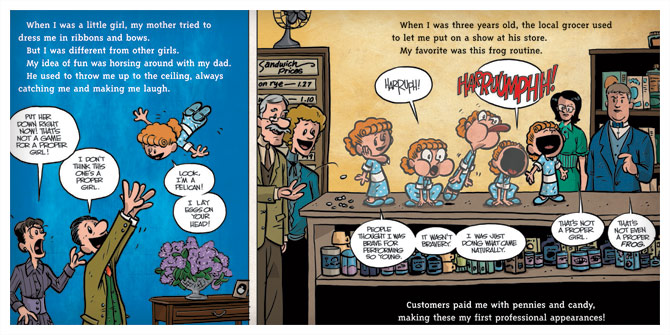
We Flagged: 

look_ball1
From http://ordinarypeoplechangetheworld.com/lucille_ball.php

Interview with Brad Meltzer about I am Lucille Ball: https://youtu.be/OHK5uOiRBto 

Read This If You Loved: “Ordinary People Change the World” (series) by Brad Meltzer, “Who Was…” (biography series) by various

Recommended For: 

classroomlibrarybuttonsmall litcirclesbuttonsmall readaloudbuttonsmall

Signature

**Thank you to Penguin for providing a copy for review!!**