Educators’ Guide for A Universe of Wishes Edited by Dhonielle Clayton

Share

A Universe of Wishes
Editor: Dhonielle Clayton
Authors: Tara Sim, Natalie C. Parker, Libba Bray, Anna-Marie Mclemore, Kwame Mbalia, V.E. Schwab, Rebecca Roadhouse, Nic Stone, Jenni Balch, Dhonielle Clayton, Mark Oshiro, Samira Ahmed, Tessa Gratton, Zoraida Cordova, Tochi Onyebuchi
Published: December 8th, 2020 by Random House Children’s Books

Summary: From We Need Diverse Books, the organization behind Flying Lessons & Other Stories, comes a young adult fantasy short story collection featuring some of the best children’s authors, including New York Times bestselling authors Libba Bray (The Diviners), V. E. Schwab (A Darker Shade of Magic), Natalie C. Parker (Seafire), and many more. Edited by Dhonielle Clayton (The Belles).

In the fourth collaboration with We Need Diverse Books, fifteen award-winning and celebrated diverse authors deliver stories about a princess without need of a prince, a monster long misunderstood, memories that vanish with a spell, and voices that refuse to stay silent in the face of injustice. This powerful and inclusive collection contains a universe of wishes for a braver and more beautiful world.

Teachers’ Tools for Navigation and Discussion Questions: 

Please view and enjoy the educators’ guide I created for We Need Diverse Books for A Universe of Wishes:

You can also access the educators’ guide here.

You can learn more about A Universe of Wishes on We Need Diverse Book’s page.

Recommended For: 

readaloudbuttonsmall classroomlibrarybuttonsmall litcirclesbuttonsmall closereadinganalysisbuttonsmall

Kellee Signature

It’s Monday! What Are You Reading? #IMWAYR 10/27/25

Share

It’s Monday! What Are You Reading?
For readers of all ages

It’s Monday! What Are You Reading? is a weekly blog hop we host which focuses on sharing what we’re reading. This Kid Lit version of IMWAYR focuses primarily on books marketed for kids and teens, but books for readers of all ages are shared. We love this community and how it offers opportunities to share and recommend books with each other.

The original IMWAYR, with an adult literature focus, was started by Sheila at Book Journeys and is now hosted by Kathryn at The Book Date. The Kid Lit IMWAYR was co-created by Kellee & Jen at Teach Mentor Texts.

We encourage you to write your own post sharing what you’re reading, link up below, leave a comment, and support other IMWAYR bloggers by visiting and commenting on at least three of the other linked blogs.

Happy reading!

Bold_line

Thursday: Sofia’s YA Book Nook: Sequels and Prequels Worth Reading

Sunday: Author Guest Post: “My Hope” by Frank W. Baker, Author of Risk, Resilience, and Redemption: A Miraculous Holocaust Survival Story

**Click on any picture/link to view the post**

Bold_line

Kellee

Middle Grade

  • The Trials of Apollo #4 (The Tyrant’s Tomb) and #5 (The Tower of Nero) by Rick Riordan: I cannot really review these because of how far they are into the series, but I will say that reading this series was truly a pleasure. I loved the narrator, characters, plot, quests, adventures… everything. I really enjoyed every book and every chance I had to read.
  • Mid-Air by Alicia D. Williams: This book is on the 6th-8th grade Sunshine State Young Reader Award list, so when I was deciding what to listen to next, I picked it because SSYRA books are usually good, and man, am I happy I chose this one! Isaiah is feeling lost the summer before high school and then a tragedy strikes sending his world into shambles; he soon realizes he may need a change to truly get over this tough time. This book is heartbreaking at times but ends with so much hope and speaks to those of us who may not always be the coolest or the may be a little weird–we have the right to joy also.
  • Where There Be Monsters by Alby C. Williams: Glory is so tired of her quiet life at home and wants an adventure more than anything, but when she finds herself in an adventure that puts her and others’ lives in danger and shows how dangerous her world can be, she wonders if she made the right choice. In a fantastical world full of monsters, fantastical characters, other worlds, and magic, I enjoyed learning about the mythology of the world and following Glory on her journeys.

Young Adult

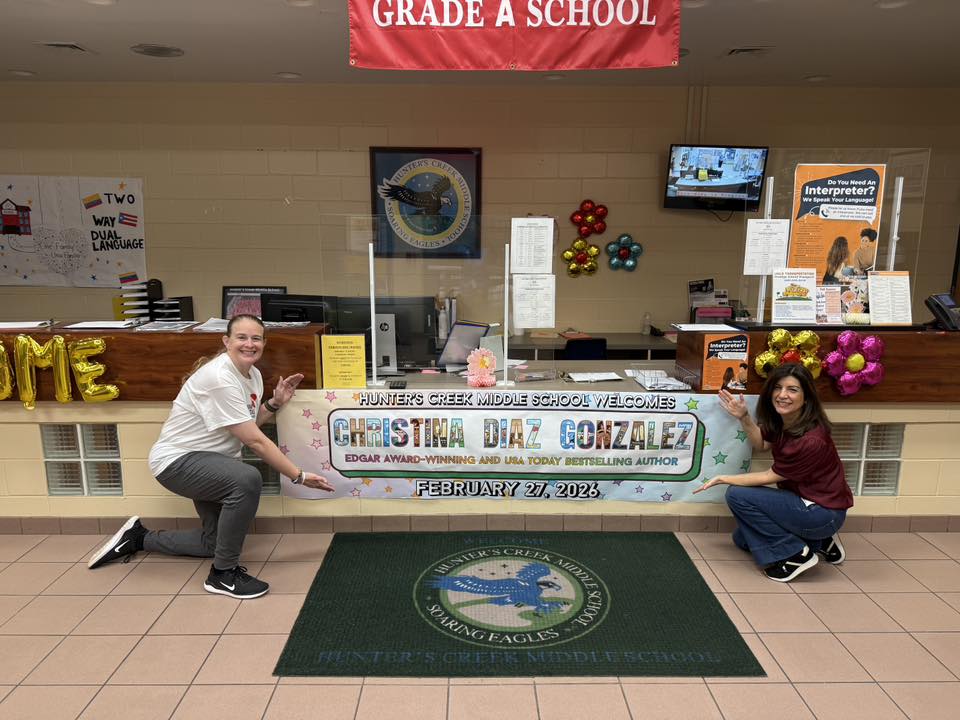
  • Anger is a Gift by Mark Oshiro: Since Mark Oshiro is coming to my school (in less than 2 weeks!), I am still reading their books in preparation. Anger is a Gift was a Schneider Book Award Winner and was Mark’s debut. I read it in 2018 and it really made me feel and think, so I wanted to reread it before their visit. I am glad I did. This book is very different than their middle grade books and the messages within Anger is a Gift are ones that are so important. Moss’s story is heartwrenching and brutal, and the book takes the reader through so many emotions, including the fear around one of Moss’s panic attacks, anger at the violence that took his father, love when Moss looks at Javier… and that is just at the beginning of the book. A very tough read but one I am glad I read.

And you can always learn more about any of the books I’ve been reading by checking out my read bookshelf on Goodreads.

Ricki

This is my week off; see you next week!

Bold_line

Kellee

Bold_line

Wednesday: Educators’ Guide for A Universe of Wishes Edited by Dhonielle Clayton

Bold_line

Link up below and go check out what everyone else is reading. Please support other bloggers by viewing and commenting on at least 3 other blogs. If you tweet about your Monday post, tag the tweet with #IMWAYR!

 Signature andRickiSig

Author Guest Post: “My Hope” by Frank W. Baker, Author of Risk, Resilience, and Redemption: A Miraculous Holocaust Survival Story

Share

“My Hope”

My newest book, Risk, Resilience and Redemption: A Miraculous Holocaust Story, is the story of two people who survived Hitler’s Final Solution. The paperback book is a narrative version of the YA graphic novel We Survived the Holocaust: The Bluma and Felix Goldberg Story, which was published in September 2022. Both books detail the harrowing journey two young Polish Jews, from their capture and forced labor as slaves to their eventual liberation, marriage, and emigration to the United States. But the book is much more than their personal story. It explores the widespread antisemitism Bluma, Felix, and millions of others faced in Nazi Germany.

The narrative raises important issues I believe every student should understand. In my talks to middle and high school students reading Risk, Resilience, and Redemption, I begin by asking a series of questions:

  • Who knows what the Holocaust was?
  • Who knows who Adolf Hitler was?
  • Who knows how many Jews died during the Holocaust?
  • Who knows the names of the other groups that collaborated with Nazis to target the Jews?
  • Who knows what propaganda is?
  • Who knows what antisemitism means?

It is these last three questions that have students stumped.

It has been my experience that public education has given short shrift to the Holocaust, leaving many students with little knowledge about this horrific time in world history. For example, a 2025 Claims Conference survey found that “41 percent [of millennials] believe that substantially less than 6 million Jews were killed [two million or fewer] during the Holocaust.” I began asking social studies teachers I knew why our students are so apparently lacking in essential knowledge about the Holocaust, and the answer I consistently received was, “We don’t have the time.” But as a colleague of mine once said, “It’s not about time; it’s about priority.”

And that is what drives my work today: making the Holocaust a priority by connecting it to the skills and awareness students need most in this era of misinformation.

So how do we make teaching the Holocaust a priority? I think one way is to provide students with opportunities to learn by hearing directly from survivors themselves, using the media/technology students already pay attention to. In other words, we can reach out to them using social media sites such as TikTok and YouTube. For example, 21-year-old Dov Forman used TikTok to tell his great-grandmother’s survival story, and the clips received millions of views. My decision to tell the Goldberg story as a graphic novel was my acknowledgment that graphic novels, a medium that has exploded in growth and popularity, are yet another way to reach students.

In my presentations to students, I also try to make them aware, if they aren’t already, that some rhetoric and actions in 2025 closely resemble actions taken by Nazi Germany in the 1940s. I have to remind them that history repeats itself. In the graphic novel, there is an image of Bluma’s family running from their burning home, frantically trying to survive after the Nazis entered their small town in Poland in 1939. When my illustrator first showed me this image, I said to myself, “This is Ukraine…this is exactly what happened when Russia invaded, forcing people from their homes.” History does repeat.

Teaching about the Holocaust isn’t just about remembering history. It’s also about recognizing how misinformation and propaganda still influence people today.

Another concern of mine is where students first learn about the Holocaust. I ask, “Was it from a book? A movie? Television? Social media? Or perhaps listening to a survivor’s story?” Because where they get that information is vital. Do the students know what a reliable source is and how to verify it?  In 2025, Holocaust denial and distortion are rampant, and many students believe what they see and read without question. That is why I remind them to be doubly careful about what they consume on social media, because so much of it today is manipulated.

Teaching about the Holocaust isn’t just about remembering history; it’s about helping students think critically about the information they encounter every day. For more than 25 years, I have been teaching media literacy, which I define as applying critical thinking and viewing skills to all media messages. It is painfully obvious that too many young people believe what they read without question. They rarely verify or consider the sources. This is troubling.

There are many groups (I like to call them “bad actors”) who are deliberately manipulating content to fool a media-illiterate population and sway opinion. The bad actors are most active around breaking news events: a hurricane will bring images of sharks swimming in a city’s downtown flooded streets (NOT); ongoing wars will bring a plethora of fake and manipulated images. And with the advent of Artificial Intelligence, images and video are being altered every day, often seen and shared by unsuspecting audiences.

Recently, the Columbia Journalism Review produced a short video, The PSAi, designed to raise awareness of the techniques being used in AI. If you are a parent or an educator, consider showing this to students and leading a discussion about how easily digital content can be manipulated and what questions students should ask before they believe or share it. Fact-checking is one of the most important tools students (and the rest of us) can use to navigate the fake news, disinformation, and conspiracy theories.

Finally, let me give a shout-out to the school librarians in this country. Thankfully, they are the educators in most schools who are actively teaching students “information literacy,” which is closely related to media literacy. Together, classroom teachers and librarians can make a powerful difference by helping students develop the critical thinking habits that protect both truth and democracy.

We have our work cut out for us. We must all work harder to counter the junk that’s out there. Thomas Jefferson said (and I paraphrase here) the health of a democracy depends on an informed electorate. But what happens when the electorate is mostly misinformed? My hope is that by teaching truth and critical thinking, we can help our students make sure that doesn’t happen.

Publishing October 21st, 2025 by Tree of Life Books

About the Book: From acclaimed media literacy educator and author Frank W. Baker comes a powerful new narrative: Risk, Resilience, and Redemption: A Miraculous Holocaust Survival Story. This moving retelling of the true story of Holocaust survivors Bluma and Felix Goldberg is written specifically for young readers in prose form. At just 40 pages, this accessible edition shares their courage, resilience, and message of hope with students in grades 5 through 12.

Two young polish Jews, Bluma Tishgarten and Felix Goldberg, were torn from their families and communities as Hitler led the Nazis in their murderous march across Europe and beyond from 1939 to 1945. Despite not knowing if their friends, neighbors, and families were still alive, they struggled through the grueling conditions of near-starvation and slave labor as well as torture and terror with only the faint glimmer of hope as their beacon leading them to survival. Then they found each other. They found a life together, and they found their way to America. This is their miraculous story of the risks they took, the resilience to persevere, and their ultimate redemption.

This version preserves the emotional depth of the original graphic novel, We Survived The Holocaust: The Bluma and Felix Goldberg Story, making it an excellent choice for classrooms, book clubs, and educational programs that want to introduce Holocaust history through narrative storytelling. In today’s world, helping students think critically and care deeply about others is more important than ever. This book offers a powerful starting point for those conversations.

Risk, Resilience, and Redemption also serves as a valuable resource by addressing essential themes and fostering skills that connect past and present. Its concise length makes it especially useful for educators seeking a focused, impactful story that fits into tight classroom schedules.

Key talking points include:
• Understanding the Past, Thinking About the Future: Bluma and Felix’s firsthand accounts help readers connect historical events to current challenges, including prejudice, nationalism, and the spread of false information.
• Navigating Today’s Media: An accessible introduction to media literacy that helps students question and evaluate what they see and hear in today’s digital world.
• A Timely Resource for Classrooms: This book supports meaningful discussion on history, identity, and justice.
• Hope, Resilience, and Courage: While grounded in tragic history, the story ultimately offers a message of strength and survival that can inspire young readers.

“After reading this book you must take away a new sense of urgency that lies in the forefront of your mind to eliminate the latest scourge of antisemitism that is sweeping the world.” Henry Goldberg, second-generation survivor

About the Author: Frank W. Baker has worked in television news, public education and public television. In 2019, Frank was recognized by UNESCO with its GAPMIL (Global Alliance Partnership for Media & Information Literacy) honor. In 1998, he founded the Media Literacy Clearinghouse website and began working with teachers and students to help them better understand how to think critically about the media. Other books include Coming Distractions: Questioning Movies (Capstone, 2007), Political Campaigns & Political Advertising: A Media Literacy Guide (Greenwood, 2009), Media Literacy in The K-12 Classroom (ISTE, 2012), Close Reading the Media: Literacy Lessons and Activities for Every Month of the Year (Routledge, 2017), and We Survived the Holocaust: The Bluma and Felix Goldberg Story – The Graphic Novel (Tree of Life Books, 2022). You can find him online at www.frankwbaker.com.

Thank you, Frank, for this post about media and history literacy and the importance of including it in a curriculum to help grow hope for our future!

Sofia’s YA Book Nook: Sequels and Prequels Worth Reading

Share

Sofia is a 13-year-old brilliant reader who aspires to be a book reviewer. Since she was 8 years old, on select weeks, Sofia shares her favorite books with other young people her age! She is one of the most well-read youth that we know, so she is highly qualified for this role!


Dear readers,

Hello, it’s Sofia again and welcome to another book review! Today I am talking about sequels (or prequels) that I have read that have been as good or better than the original book! I have made this list because I know that when I finish a book, most of the time the sequel hasn’t come out yet and I just forget about the original book. This means that I only learn about the sequel through a book review, or I stumble upon it by chance in the library! I am hoping this book review will make you aware of a sequel to a book you have enjoyed, or just inspire you to start a new duology! Also, all of the original books will have my book review for them linked, just click on the underlined title!

Heist Royale, sequel to Thieves Gambit

Let me introduce you to the book that started this idea… Heist Royale by Kayvion Lewis! I have already read and reviewed the first book in the series, Thieves Gambit and I loved it! If you want to learn more about the first book in the series, just click on the underlined Thieves Gambit! Fun fact, this was actually the only sequel I read within a month of it coming out! That is how excited I was for it! Anyway, onto the actual review! I already had high expectations for this book but it surpassed them all. In the book, Ross is pulled back into playing a competition similar to the Thieves Gambit after she and her family are threatened by their enemy, Devroe’s mom. The organization is willing to accept a new leader so Count and Baron step forward. They ask Ross and her friends to pick sides for a new competition between them, splitting them in two. As Ross and her friends are pulled apart from each other, Ross is devastated by her friends leaving her. As she gets sucked into another high-stakes game, she has to figure out the importance of her friends, and her family. You will absolutely love this book if you have read Thieves Gambit, or watched movies like Now You See Me, or the Ocean’s movies, since Heist Royale has the same atmosphere. 

The First to Die at the End, prequel to They Both Die At the End and 

The Survivor Wants to Die at the End, sequel to They Both Die at the End

Welcome to…The First to Die at the End by Adam Silvera! If you have read the original book, you know how sad and emotional this author’s writing is! This book I actually think is better than the original, which is saying a lot because They Both Die at the End was phenomenal! The First to Die at the End is told from many perspectives, but mainly Orion and Valentino, who are the main characters. This prequel is all about the day that the service DeathCast was created, and the havoc that ensued. It shows perspectives from two young adults, the creator of the service, and other people that we meet along the way. This was a very moving book and really emphasizes that any day could be your last and to live life to the fullest. This is a beautiful book and I would highly encourage you to read it! You can also read this without reading the original but it makes more sense if you read They Both Die at the End first! 
Since the time of writing this review, I have also read The Survivor Wants to Die at the End, which is an amazing sequel to the first book in the series! It shows you the perspective of a highly suicidal boy named Paz, and the complex perspective of Alano (the Death-Cast heir). As the story continues, you get to see Paz and Alano’s friendship develop, with many sharp bumps along the way. For The Survivor Wants to Die at the End, I would highly recommend reading They Both Die at the End first, since reading this would spoil the first book and also be confusing. In terms of content advisories, The Survivor Wants to Die at the End was the most emotionally intense to me, but all of the books in the series are pretty heavy. Some topics include suicide, self-harm, dealing with mental health, and grief.

Past, Present, Future, sequel to Today, Tonight, Tomorrow

Drumroll please, Past, Present, Future by Rachel Lynn Solomon! Wow, this book really was a rollercoaster of emotions. It is about Rowan and Neil, the two characters who fell in love in the first book, Today, Tonight, Tomorrow, during high school, now managing their relationship while in college. They are both studying in different places on the East Coast, which is far from their homes in Seattle and handling making friends and keeping up with classes. They mostly communicate via technology but they visit each other every couple of months which is hard for them since they are used to being able to spend all of their time with each other. When Rowan starts struggling in her Creative Writing class and questions whether she should be a writer, Neil is also questioning his major, Linguistics. They realize that maintaining a romantic relationship while in college may not be as easy as it seems. When family issues strike Neil, he chooses to distance himself from Rowan and their relationship. Past, Present, Future is a heartfelt, emotional story about two college students exploring and managing their relationship while far away from each other. I highly recommend this book and am honestly mad I didn’t read it sooner. Like the original, this is a book with two perspectives, one from Rowan and one from Neil and it is always so interesting to see their lives from their own and partner’s perspectives. 

Kill Joy, prequel/novella to A Good Girl’s Guide to Murder

Please welcome, Kill Joy by Holly Jackson! It is a novella of the A Good Girl’s Guide to Murder series that takes place before the first book. It is a short read which I quickly finished on my road trip this Spring Break. It is set at one of Pip’s friends’ houses as they are having a murder mystery birthday party, where each friend pretends to be a character in the story while simultaneously trying to solve the murder. In the story, the friends are all on an island to celebrate Reginald Remy’s birthday when he is suddenly found dead! The friends are acting as different people who are attending this birthday party like his sons and the cook. Together, Pip and her friends must find out who the killer is through a series of clues that lead them closer to the answer! Overall, this book is a fun addition to the series, with lower stakes while still being fun and entertaining! I also really enjoyed how the ending of Kill Joy ties right into the beginning of the first book in the series. If you are wondering in what order to read the A Good Girl’s Guide to Murder series, I would read the first book, then this novella and then the rest of the books in their respective order. This way, you already know the characters going into the novella but don’t get too confused by having already read all of the other books.

I hope you enjoy reading these books and the other ones in their series!

**Thanks so much, Sofia!**

It’s Monday! What Are You Reading? #IMWAYR 10/20/25

Share

It’s Monday! What Are You Reading?
For readers of all ages

It’s Monday! What Are You Reading? is a weekly blog hop we host which focuses on sharing what we’re reading. This Kid Lit version of IMWAYR focuses primarily on books marketed for kids and teens, but books for readers of all ages are shared. We love this community and how it offers opportunities to share and recommend books with each other.

The original IMWAYR, with an adult literature focus, was started by Sheila at Book Journeys and is now hosted by Kathryn at The Book Date. The Kid Lit IMWAYR was co-created by Kellee & Jen at Teach Mentor Texts.

We encourage you to write your own post sharing what you’re reading, link up below, leave a comment, and support other IMWAYR bloggers by visiting and commenting on at least three of the other linked blogs.

Happy reading!

Bold_line

There were no posts last week because I (Ricki) had COVID! 🙂

Bold_line

Kellee

Today is my day off from IMWAYR, but you can learn more about any of the books I’ve been reading by checking out my read bookshelf on Goodreads.

Ricki

Picture Book

This picture book is absolutely gorgeous. I haven’t been doing full reviews lately, but I will absolutely be reviewing this book in full—it blew me away. And They Walk On by Kevin Maillard.

Middle Grade

Kyle Lukoff does a phenomenal job capturing the characters’ hearts in A World Worth Saving. I appreciated the Jewish representation, and the main character is trans. His parents are doing conversion therapy for him, but then some very unexpected events occur, starting with his good friend going missing.

Young Adult

I am trying to read all of the Walden Award finalists because they are always really good, and Grief in the Fourth Dimension by Jennifer Yu did not disappoint. It’s a book about two kids who recently died and are sitting in a sort of purgatory room—watching over their loved ones. I cried a lot while reading this book.

I had never read Throne of Glass by Sarah J. Maas, so I decided to try it out. It was very enjoyable.

Tall Water by SJ Sindu and Dion MBD is a graphic novel about a girl who visits Sri Lanka to meet her mother for the first time in 16 years. This story has so much heart.

Angeline Boulley’s Sisters in the Wind is a phenomenal book that I can’t share much about because there would be so many spoilers. I found the story riveting—and the main character exists in the world of the previous two books!

I convinced my book club to read a YA book, and we read Heir by Sabaa Tahir. Every time I read one of her books, I am just floored by her talent. This book follows three characters’ stories, and I felt like I fell into the world she created.

Adult

Max Barry’s Lexicon was a book club book that I didn’t choose but enjoyed. What I liked a lot about this book was that it explored the ethics of persuasion. I found this to be very interesting.

So many friends in Colorado have recommended Go As a River by Shelley Read, so I went for it. I appreciated the historical nature of this text and how place-based it was. It reminded me a lot of Broken Country.

My incredible coworker Sarah Perry wrote Sweet Nothings, a creative nonfiction text that explores many, many different types of candies. This is a book about much more than candy, though. Perry masterfully weaves in stories from her life and others—I loved it (and I swear I am not just saying that because I know her). This book made me want to journal, which I think is the sign of a really great book.!

Adult Romance

My sister-in-law loves Elle Kennedy, so I had to keep up with her by reading The Dixon Rule and The Charlie Method. These are some pretty spicy romances.

Bold_line

Thursday: Sofia’s YA Book Nook: Sequels and Prequels Worth Reading

Sunday: Author Guest Post: “My Hope” by Frank W. Baker, Author of Risk, Resilience, and Redemption: A Miraculous Holocaust Survival Story

Bold_line

Link up below and go check out what everyone else is reading. Please support other bloggers by viewing and commenting on at least 3 other blogs. If you tweet about your Monday post, tag the tweet with #IMWAYR!

 Signature andRickiSig

It’s Monday! What Are You Reading? #IMWAYR 10/13/25

Share

It’s Monday! What Are You Reading?
For readers of all ages

It’s Monday! What Are You Reading? is a weekly blog hop we host which focuses on sharing what we’re reading. This Kid Lit version of IMWAYR focuses primarily on books marketed for kids and teens, but books for readers of all ages are shared. We love this community and how it offers opportunities to share and recommend books with each other.

The original IMWAYR, with an adult literature focus, was started by Sheila at Book Journeys and is now hosted by Kathryn at The Book Date. The Kid Lit IMWAYR was co-created by Kellee & Jen at Teach Mentor Texts.

We encourage you to write your own post sharing what you’re reading, link up below, leave a comment, and support other IMWAYR bloggers by visiting and commenting on at least three of the other linked blogs.

Happy reading!

Bold_line


Wednesday: What Kellee’s Students Read in September

Sunday: Author Guest Post: “Beyond ‘What’s Wrong?’: How the Stories in Our Classrooms Can Heal Fading Dreams, by Andrei Goanta, Author of The Library of Lost Dreams

**Click on any picture/link to view the post**

Bold_line

Kellee

Today is my day off from IMWAYR, but you can learn more about any of the books I’ve been reading by checking out my read bookshelf on Goodreads.

Ricki

I’m sorry I can’t post today; I should be back on my next turn.

Bold_line

No posts this week–use this time to check out some of our other posts or posts by our IMWAYR blogs that link below.

Bold_line

Link up below and go check out what everyone else is reading. Please support other bloggers by viewing and commenting on at least 3 other blogs. If you tweet about your Monday post, tag the tweet with #IMWAYR!

 Signature andRickiSig

Author Guest Post: “Beyond ‘What’s Wrong?’: How the Stories in Our Classrooms Can Heal Fading Dreams” by Andrei Goanta, Author of The Library of Lost Dreams

Share

“Beyond “What’s Wrong?’: How the Stories in Our Classrooms Can Heal Fading Dreams”

I think every parent and educator knows that moment. When a child comes home from school or retreats to a corner of the classroom, shoulders slumped, a silent storm brewing behind their eyes. You ask, “What’s wrong?” and the answer you get is a “Nothing” that shuts a door in your face. And you’re left on the other side, without a key. As a father, I’d often feel this sense of helplessness. I just wanted to understand what was truly going on in their heads and hearts.

So I started asking myself, what if I could actually see the story behind the sadness? The truth is, The Library of Lost Dreams didn’t start with some grand idea; it started right here, at home. The world of the library is, in essence, a map of my family’s heart.

My main character, Dahlia, has this deep empathy… it’s the same thing I see in my own daughter every day. That’s her superpower in the book, and I think it’s a real one in life, too. And Astra, the wise owl who guides Dahlia with such patience and strength? Yep, that’s my wife, our family’s steady compass.

But like any real family, things get a little mixed up. Anyone who has read Book 2, Journey into the Past, has met a much younger, more impulsive Astra. That whirlwind of unchecked joy, endless curiosity, and slightly chaotic energy? That is my son, Tudor, right there on the page.

And where do I fit in? It’s funny, I thought I was the wise guide, but I’m definitely more like Sol, the fluffy companion from Book 3. He’s this little ball of love and loyalty, but he’s also the guy cracking bad jokes. That’s my job in the family: bringing some goofy energy when things get heavy, while always being that loving, protective presence.

From My Home to Your Classroom: The Magic of Empathetic Listening

For me, that’s where the real magic is. It has nothing to do with spells. The power Dahlia uses is something we can all do: the simple, profound act of empathetic listening. It’s the power of saying, “I see you. I hear you. Your story matters.”

And I believe this idea works perfectly in a classroom. A child’s dream isn’t always about becoming an astronaut or a painter. Sometimes, the dream is simply to feel understood, to have the courage to ask a question, or to believe their voice is worth hearing. When these small dreams start to fade, when a student becomes quiet, withdraws, or says “I can’t,” that’s when we, as their Keepers of Stories, can step in.

We don’t need a magic portal to enter their world. We just need a set of keys. Here are three strategies, inspired by The Library of Lost Dreams, to help rediscover the fading dreams in your classroom:

1. The “Safe Chapter” Key: Creating a Space for Unspoken Stories

In the first book, a shadow called “The Silence” feeds on forgotten dreams and untold stories. In the classroom, this “Silence” can take the form of fear of making a mistake or anxiety about speaking up.

  • Classroom Application: Create a “Dream Journal” or a “Worry Box.” It doesn’t have to be complicated. It can be a special notebook where students can write or draw freely, without the fear of being graded. It could be a decorated shoebox where they can leave anonymous notes about their thoughts or fears. The goal is to provide a pressure valve, a safe space where their inner story can come to life without judgment. It’s a first step in showing a child that what they feel is valid, even if they aren’t ready to say it out loud.

2. The “Guiding Owl” Key: Providing the Compass, Not the Map

In the books, Astra acts as Dahlia’s compass, not her map. She doesn’t have all the answers, and she doesn’t pretend to. When faced with a shadow like “The Silence” or a new threat, her strength isn’t in providing a step-by-step solution, but in pointing Dahlia toward the only available path, even when the destination is unknown to them both. She trusts Dahlia’s unique power of empathy to navigate the parts of the journey that her own wisdom cannot.

  • Classroom Application: As educators, we often feel the pressure to be the “expert” with all the answers. This approach reminds us that sometimes, the most powerful thing we can do is admit we don’t know, and then become a co-explorer with the student.
    • Instead of feeling you need a solution for a student’s problem, try validating the challenge: “That sounds really tough, and I don’t have an easy answer for you, but I’m here to think it through with you.”
    • Frame challenges as shared quests: “I’m not sure what the best way to start this project is either. Let’s look at the very first possible step together.”
    • Empower their unique skills: “You have such a creative way of looking at things. I’m stuck on this problem, but I have a feeling you might see something I don’t.” This transforms the dynamic from teacher/student to a team of adventurers. It shows children that it’s okay not to have all the answers and that their unique perspective is a valuable tool for finding the way forward, together.

3. The “First Draft” Key: Validating the Process, Not Just the Product

Many of the children Dahlia helps, like Rowan the painter or Rose the violinist, lost their dream because they were afraid the final result wouldn’t be “good enough.” They forgot the joy of the process.

  • Classroom Application: Celebrate the “first draft.” Praise the effort, the curiosity, and the courage to try, regardless of the outcome. When a student shows you a drawing, focus first on the joy behind it: “I can tell you had fun choosing these colors!” or “What a brave idea you had here!” When a student is struggling with a math problem, validate the persistence: “I really appreciate how you didn’t give up. Let’s look at the steps together again.” This shifts the focus from the pressure of perfection to the joy of exploration and teaches children that every attempt, even a “failed” one, is a valuable part of their learning story.

Whether we are parents at home or teachers in the classroom, we have an incredible role. We are the companions in our children’s stories. By helping them believe their voice is worth hearing, we give them the courage to face any shadow, in any world.

This little adventure that started with my kids has grown into a world I’m so happy to share. And just so you know, Book 1, The Library of Lost Dreams, and Book 2, Journey into the Past, are now out in their fully polished second editions. I am currently in the process of bringing Book 3, Journey into the Future, to that same standard. Afterward, I will begin writing the final book in this story arc, Parallel World. It will be a more intricate adventure designed for slightly older readers (10+), exploring even more complex emotional landscapes.

Thank you for letting me share a piece of my world with you.

Published July 9th, 2025

About the Book: The Library of Lost Dreams is about a young girl named Dahlia who has a pretty cool gift: she can feel the old stories and emotions that places hold. It leads her to a magical library, and it turns out every book there is a kid’s dream. The problem is, a shadow called “The Silence” is making the dreams fade. So Dahlia has to use her empathy (not magic spells) to jump into those dreams. She’s there to help other kids find their courage and start believing in their own stories again. The book is really all about how important it is to listen, and how no dream is ever really lost if someone just cares enough.

About the Author: As a dad, Andrei Goanta gets his best ideas from his kids. He writes worlds that he hopes are more than just fun and fantastical; he wants them to feel safe and real for young readers.  You could say his series, The Library of Lost Dreams, is a love letter to imagination, to the guts it takes for any kid to share their story, and to the courage to be brave no matter what.

Thank you, Andei! We love books that celebrate imagination and the good in people!