“Games to Battle Writer’s Block” by Madelyn Rosenberg, Author of How to Behave at a Dog Show and Nanny X Returns

Share

“Games to Battle Writer’s Block”

A few years ago, I visited a fifth grade classroom after a long week of state testing. The students were still grumbling, particularly about the writing test, which was new that year in Virginia. They’d spent weeks practicing various writing prompts. But some of them still got stuck.

“Writer’s block,” one of them told me. I’d seen the same expression on my daughter’s face after a recent soccer loss. I hated to think the kids felt like they were losing at writing, too.

But there was good news: If they had writer’s block, that meant they were thinking of themselves as writers. The bad news, of course, is that thinking like a writer didn’t help with the stuck part. I spent part of my time in the classroom talking about the games professional writers sometimes play when they’re stuck, too. It wouldn’t help with that year’s school testing. But maybe it would help loosen the students up when they received classroom writing prompts in the years ahead. I’m listing some of my writing games here, in the hopes they’ll be of help in other classrooms as well.
 
Game 1: Fortunately/Unfortunately
In this game, I start out with a simple prompt, usually based on the classroom teacher: “Mrs. Wohlford walked into the classroom carrying a giant box.”
Then I walk around the room, tapping heads like we’re playing Duck, Duck, Goose.
“Unfortunately,” I say, tapping Head No. 1.
The kid in the Minecraft shirt, picks up the story. “Unfortunately the box was full of snakes.”
I touch another head. “Fortunately.”
“Fortunately the snakes weren’t poisonous,” says a girl with a Katniss braid.
I touch the shoulder of the girl sitting next to her. “Unfortunately…” I begin.
“… one of them was,” she finishes.
By the time we make it around the classroom, poor Mrs. Wohlford has died and been resuscitated about six times. I make sure to end on a “fortunately.”
My son’s friend Patrick, who has played this game with us a few times, says it reminds him of the Direct TV commercials (https://www.youtube.com/watch?v=NZ80SVOHKoo). Except in the Direct TV commercials, they don’t live happily ever after.
 
Game 2: What if?
I ask myself this when I’m not satisfied with a plot point. And then I ask myself again. And again. And again. I ask until I have a situation that will move my story onward and upward.
In the classroom, I give the kids a scenario. “The fifth graders were sitting quietly at their desks, just before lunch. What if?”
Hands pop up like popcorn.
 “What if they heard a rumble and aliens landed on the roof?”
“What if an earthquake split the classroom in two?”
“What if  a dinosaur broke loose from the Smithsonian and grew flesh and stuff and started charging toward the school.”
Admittedly in this game, we are often dealing with an elementary school version of the apocalypse. But there’s plenty of laughter, too.
 
Game 3: Take a walk.
This isn’t a game so much as an activity, but take a walk. When I have true writer’s block, nothing unblocks me more quickly than changing the scenery and going for a walk outside. A walk outside with your students might be a great way to unstick them, too. And it’s also something they can do if they get stuck in their writing at home.
If you’re unable to walk, due to time constraints or weather, try suggesting a change of scenery in the writing prompt itself. Have the students move their character outside, to a park, to the mountains, to the sea.
 
Game 4: Reverse the order.
Stuck on a beginning? Have the students start in the middle or at the end. Sometimes, initial writing directions can be intimidating: Write five paragraphs, use complete sentences, don’t forget your summary sentence, etc. It’s not as daunting if you plunge in, kind of like jumping off the diving board without testing the water.
Once you’re in, you’re in deep.
 
Game 5: Add an elephant.
When students get stuck, have them add an extra ingredient that can change the plot, even if it doesn’t make total sense. There’s a lot that can happen when an elephant lumbers into the cafeteria.
Or better yet, keep a jar full of types of animals, planets, natural disasters, and methods of time travel on your desk. When the kids get stuck, let them pluck something from the jar to add into their story. Bonus activity: Have the kids fill the jar themselves–their own arsenal of writer’s block busters.
 
Game 6: Pass it on.
Remember the Exquisite Corpse game you used to play as a kid? Someone draws the head, then folds the paper and you draw the middle, and then you fold the paper and pass it to a friend for the legs? This works the same way, except with a story.
Students split into groups of three. They can each write a beginning, and then pass the story around so a different student writes the middle and a third student writes the end. They can do it completely blind, to make a nonsense story. Or they can do it reading one line from the section above. Either way, the results are always fun. And that’s exactly how we want students to think of writing.


About the Author: 
Madelyn Rosenberg is the author of eight books for kids of all ages. Her most recent books include Nanny X Returns and How to Behave at a Dog Show. Visit her online at www.madelynrosenberg.com or @madrosenberg.


About the Books:

How to Behave at a Dog Show
How to Behave at a Dog Show
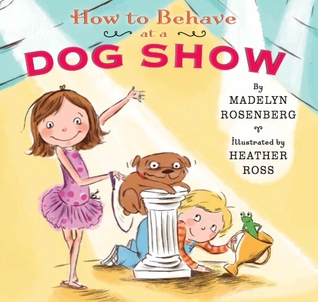
In How to Behave at a Dog Show, a picture book written by me and illustrated by Heather Ross, Julia and Charles learn that Rexie is not exactly Best-in-Show material. But he IS best at lots of other things. We’re hoping readers will see what’s best in their own pets, and in themselves. This book can be used in classrooms as a mentor text (How to Behave at a Tea Party is also in the series and kids could easily discuss how to do anything!) I also have a guide for how to host a classroom pet show. I’m attaching the link for that here, along with the link for the book trailer my son made for me. Teacher’s Guide


Nanny X Returns
Nanny X Returns
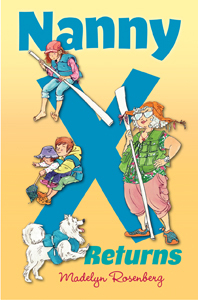
Nanny X Returns is a middle-grade novel. The first book in the series, Nanny X, has found favor among reluctant readers and I’m hoping this book will, too. The first Nanny X is a finalist for the Land of Enchantment Book Award. The follow-up chases Nanny X and her young charges around Washington, D.C., as they attempt to save our national treasures from someone named The Angler, who wants a statue of a fish installed on the White House lawn. I’m enclosing a discussion guide that can be used in classrooms. Teacher’s Guide


Thank you to Madelyn for these fantastic games and activities to battle writer’s block!

RickiSigandKellee Signature

Reviews and Giveaway!: The Color Monster by Anna Llenas, Dining with Monsters by Agnese Baruzzi, Mind Your Monsters by Catherine Bailey, and Monster Trouble! by Lane Fredrickson

Share

Halloween Button 2015

Monster Color Monster

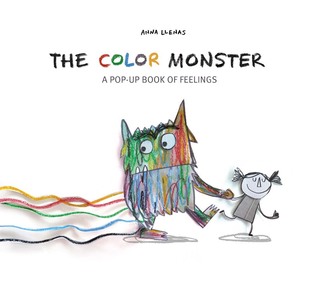
The Color Monster: A Pop-Up Book of Feelings
Author and Illustrator: Anna Llenas
Published September 1st, 2015 by Sterling Children’s Books

Goodreads Summary: We teach toddlers to identify colors, numbers, shapes, and letters—but what about their feelings? By illustrating such common emotions as happiness, sadness, anger, fear, and calm, this sensitive book gently encourages young children to open up with parents, teachers, and daycare providers. And kids will LOVE the bright illustrations and amazing 3-D pop-ups on every page!

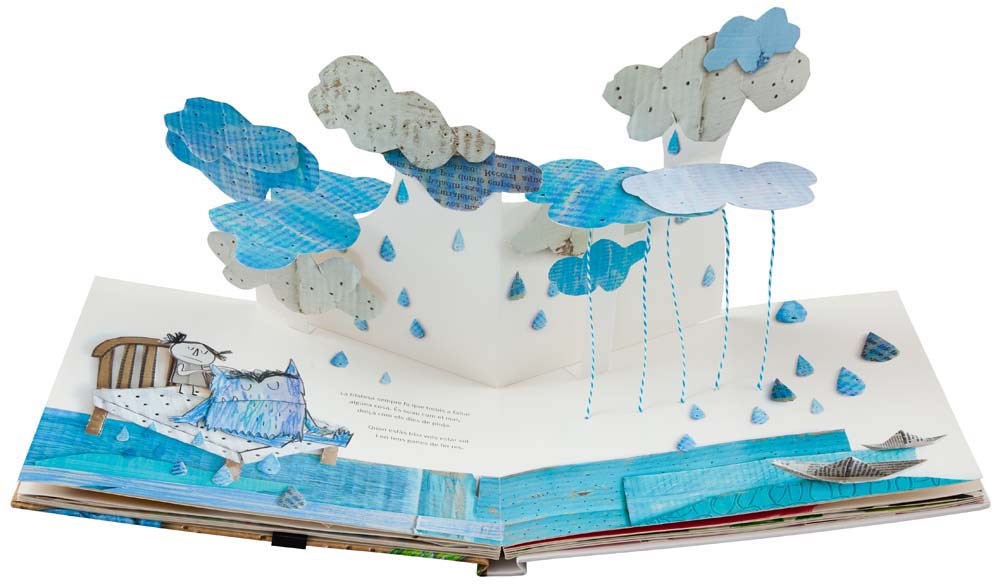
Kellee’s Review: I was blown away by this book. The personification (monsterfication?) of the emotions were so well done. It is hard to explain without showing an example: 

Monster Color Monster spread

Llenas did a beautiful job making entire scenes and monsters that embodied the emotions. I also liked the uniqueness of the pop ups. They were multimedia with collages and rope.

Ricki’s Review: Opening a pop-up book is exciting. Opening this pop-up book is mind-blowing. This text is a work of art, and I kept spinning the book in different ways while wondering, “Wow. How did she do that?” My son couldn’t keep his hands off of this book. It is quite magical. Every child deserves to have this book. It would make a great gift.

Teachers’ Tools for Navigation: The Color Monster would be a great text to mix socio-emotional lessons with academic lessons. While reading the book, the class can discuss the different emotions, why the author illustrated them the way she did, and how emotions look in real life. Then students could choose emotions and illustrate them with their own setting and monster.

Recommended For:

classroomlibrarybuttonsmall readaloudbuttonsmall closereadinganalysisbuttonsmall


U7566717 Cop A pranzo coi mostri WSPdef.jpg

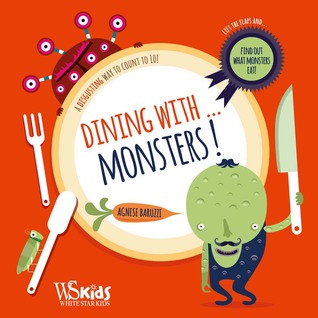
Dining With…Monsters!: A Disgusting Way to Count to 10!
Author and Illustrator: Agnese Baruzzi
Published September 1st, 2015 by White Star Kids

Goodreads Summary: What do hungry monsters like to eat? 1 spider swallowed whole, 2 leaping frogs, and 3 entire whales for the ogre with gigantic claws and scales! And for Mr. One-Eye, four mice are very nice. Kids will enjoy this fun feast of a counting book, with 10 colorful creatures and their meals of grasshoppers, scorpions, owls, and prickly porcupines. Foldout pages and simple, humorous rhyming text make this a delight to read aloud.

Kellee’s Review: This book is so much fun! Trent had such a fun time reading this book with me because the flaps are like a little surprise each time you lift them. We would open and close them like the monsters’ mouths and make nom nom noises. The illustrations of the scary-ish, (though more) funny monsters are elaborate and colorful, and the text is quite funny. 

Ricki’s Review: My son absolutely loves books with flaps, and he is a tough critic. If the flaps aren’t interesting enough, he tosses the book over his head. He was engaged in this book from the front to the back cover. At each flap, he started bouncing up and down in excitement. I am really happy to have this book because it will be very helpful for me as I teach my son to count. This is an excellent counting book, and I highly recommend it.

Teachers’ Tools for Navigation: What a fun text to use in early education classrooms to talk about colors, adjectives, rhyming, and counting! This text would be perfect for around Halloween because each page has a different monster that is described with adjectives then, with a flap flip, you find out a rhyming thing the monster eats.  This text could also then lead to a writing activity with describing a monster and finding a rhyming thing for it to eat. Additionally, there are some great vocabulary words (shrieks, icky, grisly).

Recommended For:

classroomlibrarybuttonsmall readaloudbuttonsmall


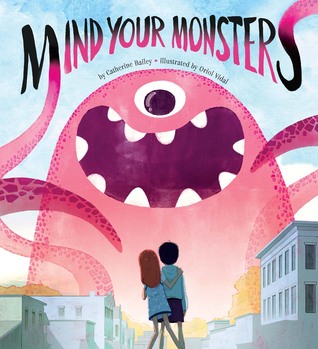
Monster Mind your Monsters

Mind Your Monsters
Author: Catherine Bailey
Illustrator: Oriol Vidal
Published August 4th, 2015 by Sterling Children’s Books

Goodreads Summary: Vampires and werewolves and zombies—oh my! It’s a monster invasion, and the stinky-smelling creatures are destroying Wally’s peaceful little town. They scare the kids, knock over the lampposts, and make a mess of everything. And no one can stop them—until, fed up, Wally says . . . the magic word, “PLEASE.” Learning good manners has never been as monstrously fun!

Kellee’s Review: I love the realistic setting and character illustrations mixed with the huge, imaginative monsters in the book. It really brings the book to life. I also think the protagonists will be kids that readers can connect with because they just seem so real and easy-going. Also, this book will be a very fun book to read with kids because it really doesn’t go the way you think it is going to go when you start reading it (and the message is one that we want all kids to learn).   

Side note: I appreciate the author including diversity in the town featured in the story. There are all different types of people which really does reflect society realistically.

Ricki’s Review: Parents and teachers love books about manners, and this book is no exception. Both teachers and parents will nod enthusiastically when Wally says, “Please.” The illustrations are gorgeous, and readers will be drawn to the beauty of this text. I loved the many different kinds of monsters that were featured in the story (from more traditional to contemporary). This will provide teachers and students with many opportunities to make connections to other texts about monsters and scary things! 

Teachers’ Tools for Navigation: Like many teachers, we enjoy making social contracts with my students. Together, we created a list of rules and then signed the contract. It involves students in a more democratic process. We think that this book would be a great way to kick off a discussion on rules and manners. This could precede the creation of the social contracts.

Recommended For:

classroomlibrarybuttonsmall readaloudbuttonsmall


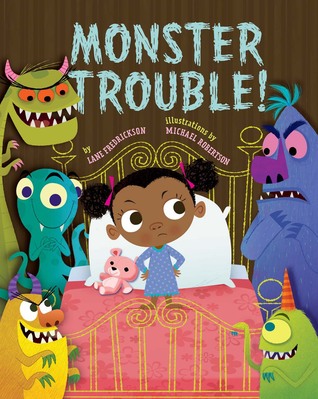
Monster Trouble

Monster Trouble!
Author: Lane Fredrickson
Illustrator: Michael Robertson
Published September 1st, 2015 by Sterling Children’s Books

Goodreads Summary: Nothing frightens Winifred Schnitzel—but she DOES need her sleep, and the neighborhood monsters WON’T let her be! Every night they sneak in, growling and belching and making a ruckus. Winifred constructs clever traps, but nothing stops these crafty creatures. What’s a girl to do? (Hint: Monsters HATE kisses!) The delightfully sweet ending will have every kid—and little monster—begging for an encore.

Kellee’s Review: What a fun premise and a great way to promote love instead of fear! I can just picture this book being paired with Monsters, Inc. to discuss perceptions and fears of monsters. Maybe teachers could even talk about where the folklores that started the “monster/bogeyman in your closet” fear. My only worry about reading this book aloud at bed time is that this book will make young readers think monsters are going to invade their room, but I think it is something we can discuss and hopefully move on from after talking about how there isn’t anything to be afraid of. 

Ricki’s Review: The monsters in this book are illustrated in a silly way, which makes the concept of monsters much more approachable for kids. I was giggling as I read this one to my son, and that made him giggle, too. (Then, of course, I smothered him in kisses.) I loved the premise of this charming book and will absolutely be keeping it in my library for when my son develops a fear (monsters or not).

Teachers’ Tools for Navigation: Teachers could hold a classroom discussion of fears, and students might critically examine their fears. Winifred is quite brave, so the students could discuss how they would show bravery when they encounter their fears.

Recommended For:

classroomlibrarybuttonsmall readaloudbuttonsmall


Giveaway!

a Rafflecopter giveaway

  Signatureand RickiSig

**Thank you to Josh at Sterling Children’s Books for providing copies for review!**

Monstrous Fun: A Doodle and Activity Book by Travis Nichols

Share

Halloween Button 2015

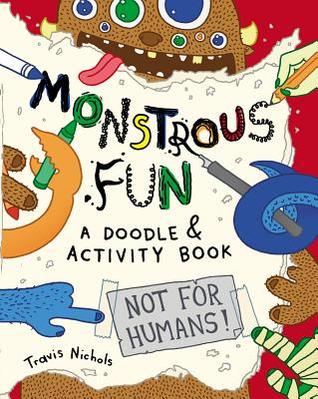
Monstrous Fun

Monstrous Fun: A Doodle and Activity Book
Author and Illustrator: Travis Nichols
Published: August 11, 2015 by Price Stern Sloan (Penguin Young Readers)

Goodreads Summary: You may think you know your holidays, but have you ever heard of Eggster? What about Fangsgiving? This fun-filled book has 64 pages of fantastic monster-themed activities, puzzles, and games, plus plenty of space to color, doodle, and imagine what these wild monster celebrations might look like. Get your pens and pencils ready, and start being monsterific-ly creative!

Ricki’s Review: We don’t typically review activity books on the blog, but we loved the way that this one takes a playful interpretation on holidays. Plus, it is Halloween week, so it is a perfect fit! This fun doodle and activity book is not intended for humans. The pages are designed only for monsters, and each activity flips a holiday on its head (from a monster’s perspective). This would be a great book for parents and teachers to get kids thinking about creatively reimagining the holidays. It would be a great kickstart to a creative writing unit.

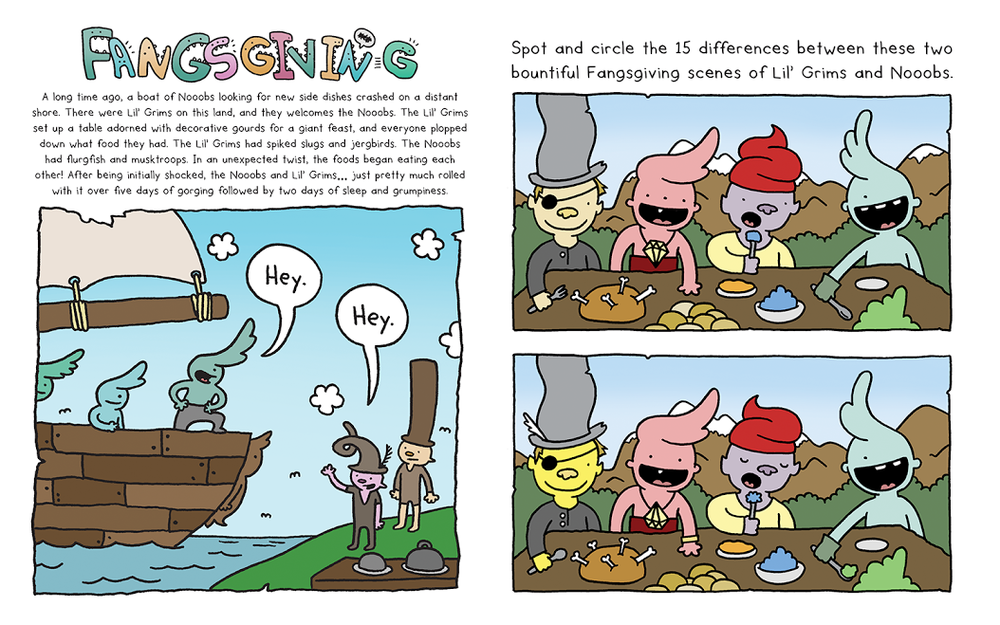
Kellee’s Review: What I loved specifically about this activity book is the variety of fun it includes. For parents, kids, and adults alike, there are so many fun activities to do such as word searches, drawing & coloring, finding differences, mazes, hidden pictures, and more!

For teachers, I specifically like the Claws brothers trading cards which includes a photo, description, likes, and dislikes of each Claws brother. This would be a great start to writing a narrative or as a jumping off point for talking about characterization. There’s also Halloween songs that rhyme, made up holidays that could allow students to think out of the box and create their own, a comic to complete, and a page to design a machine that accomplishes a task. All of these activities are fun, but also have educational implications if done correctly. 

Teachers’ Tools for Navigation: Ask students to pick holidays they celebrate. Ask them to research customs and traditions of that holiday and to write a reflection about what that holiday means to them. Then, have all of the students design activities that creatively reimagine those holidays. This can lead to classroom conversations about perspective.

Discussion Questions: What are classic traditions behind holidays or traditions your family celebrates? How might these be different for other families?; How does the author take a monster’s perspective for this text? How might you use a different perspective in your own writing?; When creating a character, what should you think about?; What is essential in writing a comic?

We Flagged:

fangs

Image from: http://iamtravisnichols.com/monstrousfun

Read This If You Love: Warning: Do Not Open this Book by Adam Lehrhaupt; The Monster at the End of This Book by Jon Stone; Leonardo, the Terrible Monster by Mo Willems; Activity, Coloring, and Doodle Books

Recommended For:

classroomlibrarybuttonsmall

  RickiSigandSignature

**Thank you to Katharine at Penguin for providing copies for review!!**

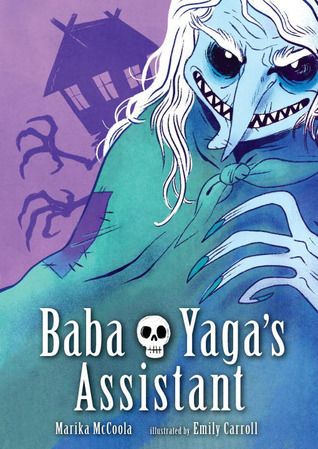
Baba Yaga’s Assistant by Marika McCoola, Illustrated by Emily Carroll

Share

Halloween Button 2015

baba yaga

Baba Yaga’s Assistant
Author: Marika McCoola
Illustrator: Emily Carroll
Published August 4th, 2015 by Candlewick Press

Goodreads Summary: 

ASSISTANT WANTED ASAP
Must have skills in hauling, obeying orders, cooking, and cleaning. Magical talent a bonus. Must be good with heights. Enter Baba Yaga’s house to apply.

Most children think twice before braving a haunted wood filled with terrifying beasties to match wits with a witch, but not Masha. Her beloved grandma taught her many things: that stories are useful, that magic is fickle, and that nothing is too difficult or too dirty to clean. The fearsome witch of folklore needs an assistant, and Masha needs an adventure. She may be clever enough to enter Baba Yaga’s house on chicken legs, but within its walls, deceit is the rule. To earn her place, Masha must pass a series of tests, outfox a territorial bear, and make dinner for her host. No easy task, with children on the menu!

Wry, spooky and poignant, Marika McCoola’s debut–with richly layered art by acclaimed graphic artist Emily Carroll–is a storytelling feat and a visual fest.

Kellee’s Review: I first learned about Baba Yaga when I was in middle school, and I learned about Mussorgsky’s Pictures at an Exhibition suites based on paintings by Viktor Hartmann. Suite 9, “The Hut on Fowl’s Legs” was based off of his painting of a clock in the form of Baba Yaga’s hut. Because I liked the music so much when I first heard it, I wanted to learn more about it, and one of the things I distinctly remember researching was Baba Yaga who I found fascinating! I then was reintroduced to Baba Yaga when I was reading the Fables series by Bill Willingham, and once again I went and read all about her folklore. Which meant when I saw that there was an upcoming graphic novel, my favorite!, about her, I had to get it. 

Marika McCoola’s retelling of the Baba Yaga folktales does them justice. With a mix of classic stories of Baba Yaga and McCoola’s story of Masha, the book does a wonderful job of introducing the readers to who Baba Yaga is at the core, a conflicted witch, and also puts a twist on it all. Masha’s story is more than just an addition to Baba Yaga’s story though. She is the star. Her story is a sad one, and Baba Yaga may just be what she needs. This text will really start some discussions around Masha’s family status and why Baba Yaga and her may just be perfect for each other.

Teachers’ Tools for Navigation: Although it isn’t necessary, knowing the history of Baba Yaga would definitely make the reading of this text even more meaningful. I would love to have Baba Yaga’s Assistant during a traditional literature unit looking at diverse folktales and retellings of those tales.

Discussion Questions: Why was Masha prone to working well with Baba Yaga?; How did Masha’s grandmother influence who she is today?; How did the author intertwine traditional literature with a new story of Baba Yaga?; What do you think is going to happen next?

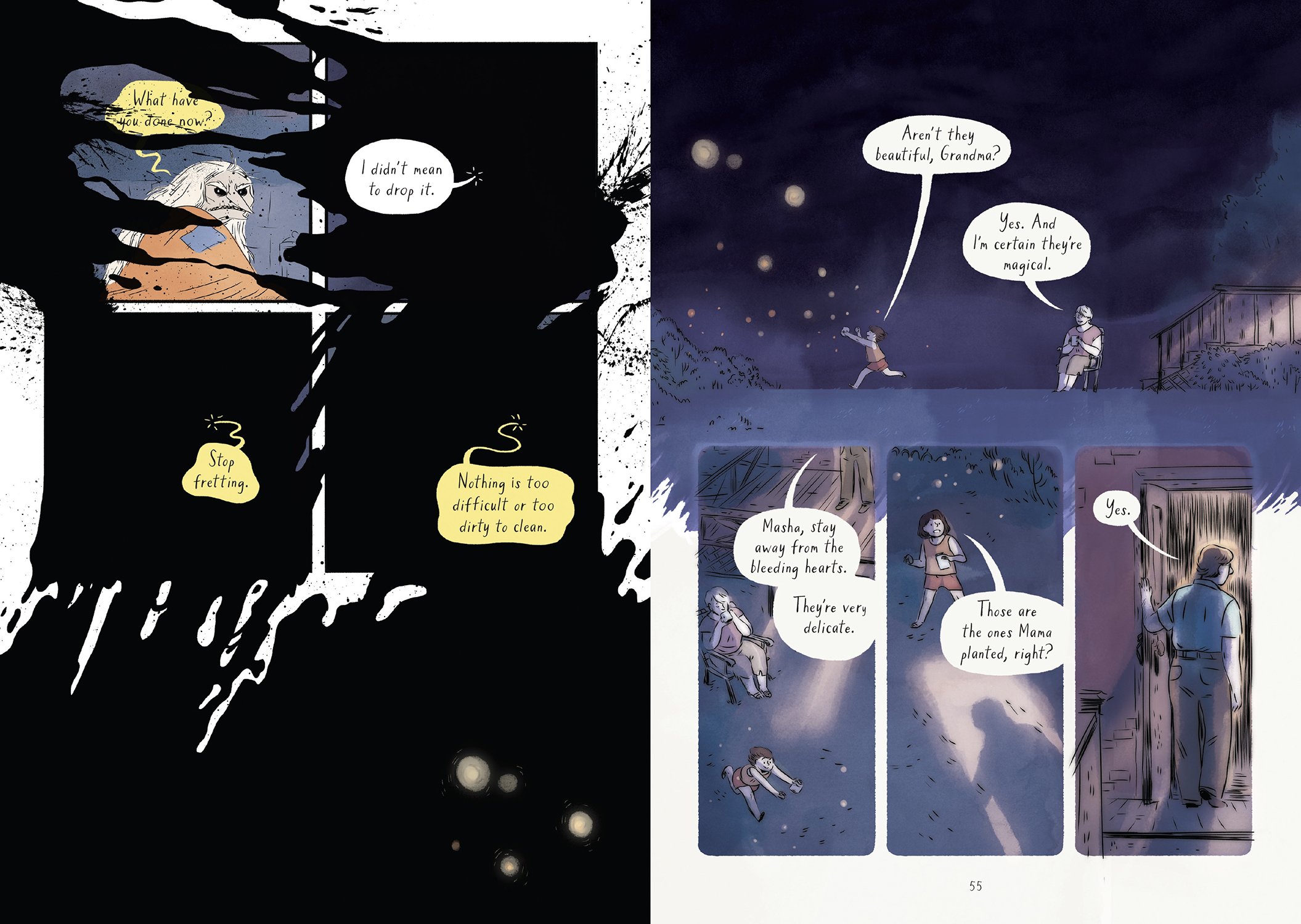
We Flagged:

baba yaga spread

Read This If You Loved: Tale Dark and Grimm by Adam Gidwitz, Fairy Tale Comics edited by Chris Duffy, Rump by Liesl ShurtliffCastle Waiting by Linda Medley, Breadcrumbs by Anne Ursu

Recommended For:

classroomlibrarybuttonsmall closereadinganalysisbuttonsmall

  Signature

**Thank you to Candlewick for providing copies for review!**

Top Ten Tuesday: Scariest Topics

Share

Halloween Button 2015

top ten tuesday

Top Ten Tuesday is an original feature/weekly meme created at The Broke and the Bookish. The feature was created because The Broke and Bookish are particularly fond of lists (as are we!). Each week a new Top Ten list topic is given and bloggers can participate.

 Today’s Topic: Scariest Topics

These topics give us nightmares.

Ricki

1. Serial Killers

Ever since I was very young, I’ve found the idea of serial killers to be terrifying. Books about this topic scare me!

2. Death of Family Members

Because this is my greatest fear, reading about others who have lost family members makes me feel a wealth of terrifying emotions.

3. Drownings

Luckily, many books don’t feature drownings. When I was about five years old, I almost drowned, so reading drowning scenes makes me very frightened.

4. Bugs

I am embarrassed to say that I am very frightened by ladybugs. If a book has a bug scene, I flip a few pages.

5. Scenes in the Woods at Night

Do the woods creep anyone else out? I won’t go camping with my husband because of it.

Kellee

1. Realistic Apocalypse

I can read dystopian books without ever being afraid, but a realistic apocalypse in a novel freaks me out because there is such a chance those events could happen. The Living and Life As We Knew It are the ones that scare me the most.

2. Poltergeists

I don’t believe in ghosts, but I don’t not believe in ghosts, so realistic ghost stories with freaky poltergeists can give me some interesting dreams.

3. School Shootings

As a school teacher, this is too close to home.

4. Breaking & Entering & Killing

This is a real life fear, so anytime it is in a book, it really freaks me out.

5. Children Dying

No words for how terrifying this is. Sad and scary.

What topics give you nightmares?

RickiSig and Signature

It’s Monday! What Are You Reading? #IMWAYR 10/26/15

Share

IMWAYR 2015 logo

It’s Monday! What Are You Reading? From Picture Books to YA!

It’s Monday! What are you Reading? is a meme hosted by Sheila at Book Journeys. It is a great way to recap what you read and/or reviewed the previous week and to plan out your reading and reviews for the upcoming week. It’s also a great chance to see what others are reading right now…you just might discover the next “must-read” book!

Jen Vincent, of Teach Mentor Texts, and Kellee decided to give It’s Monday! What Are You Reading? a kidlit focus. If you read and review books in children’s literature – picture books, chapter books, middle grade novels, young adult novels, anything in the world of kidlit – join us! We love this meme and think you will, too.

We encourage everyone who participates to support the blogging community by visiting at least three of the other book bloggers that link up and leave comments for them.

CONGRATULATIONS

Vicky R.

for winning a copy of Frozen Wild!

Last Week’s Posts

top ten tuesday little tree One Word from Sophia

Mercy Watson leroy ninker francine poulet Finders Keepers

Tuesday: Ten Wishes We’d Ask the Book Genie to Grant Us

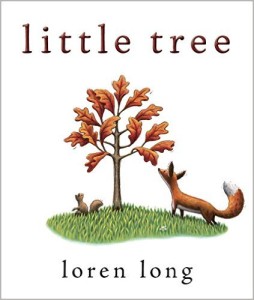
Wednesday: Little Tree by Loren Long

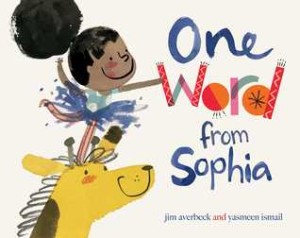
Thursday: Blog Tour and Review! One Word from Sophia by Jim Averbeck

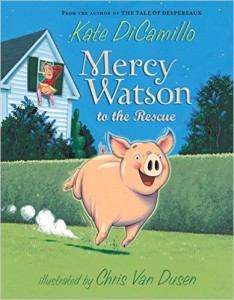
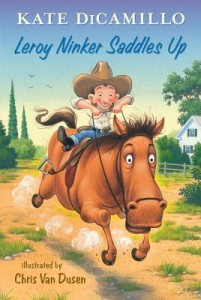
Friday: Happy birthday, Mercy Watson! Review and Giveaway!: Mercy Watson and Deckadoo Drive Books by Kate DiCamillo

Giveaway open until Friday!

Sunday: Author Guest Post!: “Why Read (And Write) Fantasy” by Dorothy Winsor, Author of Finders Keepers

 Last Week’s Journeys

Kellee: I am doing better at balancing reading, blogging, and life, so I am happily reading more which makes my soul happy! I think I just needed to get into the swing of the new year and my new schedule at school. This week I read a novel, a graphic novel, an early chapter book, and four picture books!

First, I read the four monster books we will be reviewing on Friday. I love monsters in general (Monsters, Inc. is one of my favorite movies!), and these four very different monster books were so much fun to read. I also read Baba Yaga’s Assistant which I am reviewing this week. The third book I read was A Wilcox and Griswold Mystery: The Case of the Missing Carrot Cake by Robin Newman and illustrated by Deborah Zemke. I want to read more of Wilcox and Griswold’s books! They are a fun duo, and the book is filled with humor and puns.

Last, but definitely not least, I read the second book in Roland Smith’s Peak series, The Edge, and it was as good, if not better, than the first! Peak finds himself in Afghanistan on a charity climb, but it definitely does not go the way they have it planned. The suspense just built and built throughout the book–so good!

Ricki: This week, I read Gena/Finn by Hannah Moskowitz and Kat Helgeson. I like Hannah’s description of the book on Goodreads: “Once upon a time I met my best friend through fandom, and we wrote a book about two girls who meet their best friend through fandom.” The book is told entirely in blog posts, chats, texts, letters, etc., and I thought it was executed very well. Like Kellee, I also read the four monster picture books (see below) that we will be reviewing on Friday. They were all very fun, and my son loved them.

This Week’s Expeditions

Kellee: I am currently reading my last book for my ALAN panel: The Lost Tribes by Christine Taylor-Butler. It is an interesting mix of science fiction and history/archaeology.  After I finish the books for my panel, I have a pile of Women Who Broke the Rules to read, and I cannot wait! Additionally, I ordered the second book in Hook’s Revenge and the third book in The Very Nearly Honorable League of Pirates series because I just love them both so much (and the authors are just rock stars!).

Ricki: This week, I’ll be continuing to read adult nonfiction bestseller Between the World and Me by Ta-Nehisi Coates. It is excellent, but I am so troubled by the text that I take frequent breaks. I will also be starting Surviving Santiago by Lyn Miller-Lachmann.

Upcoming Week’s Posts

top ten tuesday baba yaga Monstrous Fun Monster Color Monster Monster Mind your Monsters Monster Trouble U7566717 Cop A pranzo coi mostri WSPdef.jpg How to Behave at a Dog Show Nanny X Returns

Tuesday: Scariest Topics

Wednesday: Baba Yaga’s Assistant by Marika McCoola

Thursday: Monstrous Fun by Travis Nichols

Friday: Reviews and Giveaway! Monster Books from Sterling Children’s Books

Sunday: Author Guest Post!: “Games to Battle Writer’s Block” by Madelyn Rosenberg, Author of How to Behave at a Dog Show and Nanny X Returns

 So, what are you reading?

Link up below and go check out what everyone else is reading. Please support other bloggers by viewing and commenting on at least 3 other blogs. If you tweet about your Monday post, tag the tweet with #IMWAYR!

 Signature andRickiSig

Author Guest Post!: “Why Read (And Write) Fantasy” by Dorothy Winsor, Author of Finders Keepers

Share

“Why Read (And Write) Fantasy”

Not infrequently, I run into adults who are clearly skeptical about fantasy novels. Sometimes they even ask why I write fantasy rather than something “real.” These same adults roll their eyes when their kids read Rick Riordan or J. K. Rowling and say, “Well, at least they’re reading,” as if a fantasy novel is some sort of lesser book that might build a bridge to “real” reading.

In at least one way, I understand that skepticism because I’m an intensely practical person who’s uncomfortable with too much magic. At some point, I reach the end of my willing suspension of disbelief, and that point comes sooner for me that it does for many other people. As a matter of fact, I started reading fantasy only when my son was a young reader who was entranced by it.

I’ve come to see that fantasy is a good way for a middle-grade or tween reader to try out adult responsibilities and see kids take actions with real consequences.

Middle-grade and young adult fantasy allow a writer to put young characters in dangerous situations they wouldn’t face in Ames, Iowa, for instance. If the writer is clever enough, fantasy lets them take a dilemma a young reader might face in our world and show it acted out in a way our world doesn’t allow.

Readers can follow characters is stressful situations because in a quasi-medieval world, young characters aren’t stuck in school all day. Anyone who remembers high school or middle school knows that being locked up there can be pretty maddening. Adults boss you around and you have to do what they say no matter how unreasonable it is. And that doesn’t touch the jungle world of life among your fellow adolescents.

But in a traditional fantasy world, characters take on responsibilities that we reserve for adults. Most notably, they work, meaning they interact with adults and wider events. Their families often depend on the results of their labor to survive. They sometimes have to make decisions that affect another character’s survival or the way a war will turn out. In other words, in such a setting, a writer can up the stakes and strengthen tension.

For example, in Finders Keepers, Cade takes a delivery boy job partly to earn enough to eat and partly to search rich people’s houses for his missing mother. There’s no adult to check his less considered actions because he and his teenaged brother are on their own, a situation unlikely to occur in our world. That lack of guidance lets Cade get into situations that make for a much more entertaining story.

Urban fantasy achieves the same goal by throwing powerful supernatural creatures into our world, so the young character has to engage in a bigger than life struggle.

Given how crappy school can be, readers may be relieved to identify with someone not slumped in a desk. As a writer, I like being able to expose a character to danger and increase what’s at stake if the character screws up.

Additionally, both urban and traditional fantasy situations can be used as metaphors for normal life. For instance, when Cade learns he’s a Finder, he’s horrified because he’s been taught Finders are stone-mad and destructive. Through the story, he learns to accept what he is and be proud of it. Most readers aren’t going to learn they’re from a group their society imprisons, but they are going to find they’re nerds, or fat, or gay, or unacceptable in some other way, and maybe Cade’s situation will speak to them. So the fantasy genre gives me a way to treat a common young person’s need in a more intense, metaphorical way.

Not all genres speak to all readers, but for me, fantasy isn’t “unreal.” Rather it’s a way to get at reality in a more vivid and heartfelt way.

Headhshot

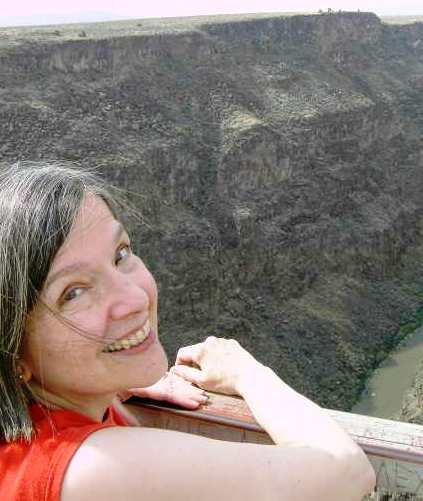
About the Author: Dorothy A. Winsor spent years as a technical communications professor, studying the writing of engineers, before discovering that writing YA and MG fantasy was much more fun. Finders Keepers is Winsor’s first novel, though if you look closely, you can probably find a literal million words of Winsor’s Tolkien fanfiction posted somewhere. Winsor lives in Iowa.

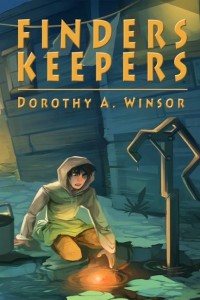
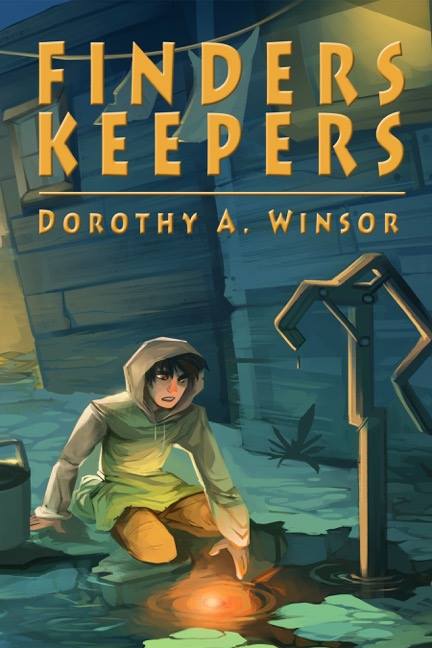
Finders Keepers

140-character story pitch: Boy senses presence of heart stones. Girl recruits him to steal some. World ends at New Year if they fail. Boy also rescues mother. Tricky.

Summary of Finders Keepers: The eight gods that govern the world are tricky and fickle, and even the most innocuous of their blessings comes with consequences. Those who find a blessing are cursed to dance on strings in exchange for good fortune. Which raises the question: is finding one good fortune at all?

Cade lives a simple life with his mother and brother, but when he finds a heart stone, he wonders if he can’t change that. Heart stones are said to bring luck to those who hold them, and Cade’s tiny family could surely do with good fortune.

But heart stones aren’t just tokens of good luck; simply tracking one down is a sign of a special gift. Cade is a Finder, just like his mother before him, but this gift is hardly what is seems; if the larger community finds out about this, Cade’s entire life will change.

And not for the better.

Now he lives outside the law, struggling to find a way to repair the disaster he brought home to him family, all while fending off a new hardship that he never anticipated: an overwhelming desire to have heart stones in his hands.

No matter the cost.

Thank you to Dorothy for her post!

Kellee Signature andRickiSig