The First Step: How One Girl Put Segregation on Trial by Susan E. Goodman

Share

NFPB2016

Nonfiction Wednesday

Nonfiction Picture Book Wednesday is hosted by Kid Lit Frenzy and was started to help promote the reading of nonfiction texts. Most Wednesdays, we will be participating and will review a nonfiction text (though it may not always be a picture book).
Be sure to visit Kid Lit Frenzy and see what other nonfiction books are shared this week!

first step

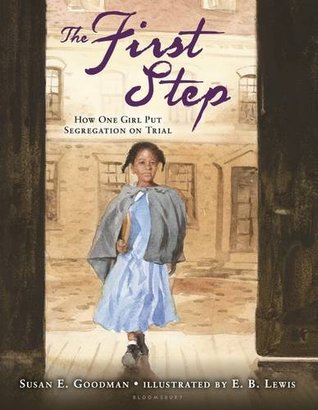
The First Step: How One Girl Put Segregation on Trial
Author: Susan E. Goodman
Illustrator: E.B. Lewis
Published January 5th, 2016 by Bloomsbury Children’s Books

Goodreads Summary: In 1847, a young African American girl named Sarah Roberts was attending a school in Boston. Then one day she was told she could never come back. She didn’t belong. The Otis School was for white children only.

Sarah deserved an equal education, and the Roberts family fought for change. They made history. Roberts v. City of Boston was the first case challenging our legal system to outlaw segregated schools. It was the first time an African American lawyer argued in a supreme court.

These first steps set in motion changes that ultimately led to equality under the law in the United States. Sarah’s cause was won when people–black and white–stood together and said, No more. Now, right now, it is time for change!

With gorgeous art from award-winning illustrator E. B. Lewis,The First Step is an inspiring look at the first lawsuit to demand desegregation–long before the American Civil Rights movement, even before the Civil War.

Backmatter includes: integration timeline, bios on key people in the book, list of resources, and author’s note.

My Review: I really appreciate the abundance of quality nonfiction books about the early civil rights in our country because I fear that so much of the prejudice still remains, so it is important to learn about history so hopefully it will not repeat itself. The First Step is a story that shows how even if you do not win your fight, that doesn’t mean that the effort you put forth was for naught. Sarah Roberts and her family were so brave in standing up for her education and rights, and their fight helped pave the way for the bumpy road of integration in schools. Goodman does a wonderful job starting with Sarah’s story but tying it to the Brown v. Board of Education trial while not taking away any credit from the Roberts’ part of history.  

Teachers’ Tools for Navigation: My first thought is to do a jigsaw type activity with The First Step and other civil rights nonfiction picture books (such as the ones listed below in recommended reading). Students can learn about different parts of the history of civil rights by reading the picture books and maybe even researching extra. They would then either present as a group to the class or you can jigsaw the kids back together (pull one person from picture book and put them together as a group), and they can each teach each other about what they learned. This is one of my favorite activities to do with picture books because it allows students to learn in depth about one subject then teach the rest of their class thus everyone learns about all subjects.

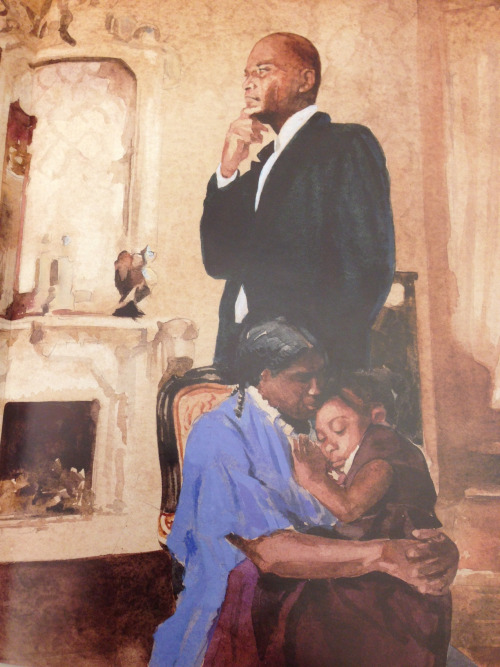
Discussion Questions: How did Sarah Roberts’s family’s fight lead to the integration of schools even though she did not win her case?; How did the author structure the book to go through the history of segregation?; How do the illustrations by Lewis help bring Goodman’s story to life?

We Flagged: 

first step spread

“Adeline and Benjamin Roberts tried to imagine Sarah’s walk to the Smith School, which was for African American children. She would have to zigzag through many streets, crossing one neighborhood after another.

Sarah would have to go all that way for a school that never taught subjects like history or drawing. All that way for Boston’s only school without a play yard. A school that owned only one book.”

Read This If You Loved: Separate is Never Equal by Duncan TonatiuhFreedom Summer (Kellee’s Review, Ricki’s Review) by Deborah Wiles, Seeds of Freedom by Hester Bass

Recommended For: 

classroomlibrarybuttonsmall readaloudbuttonsmall litcirclesbuttonsmall

Signature

Top Ten Tuesday: Most Anticipated Releases For The Second Half Of The Year

Share

top ten tuesday

Top Ten Tuesday is an original feature/weekly meme created at The Broke and the Bookish. The feature was created because The Broke and Bookish are particularly fond of lists (as are we!). Each week a new Top Ten list topic is given and bloggers can participate.

 Today’s Topic: Most Anticipated Releases for the Second Half of the Year 

Ricki

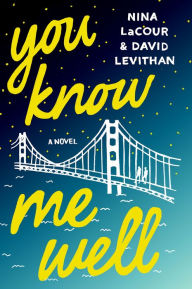
1. You Know Me Well by Nina LaCour & David Levithan

you know me well

This dynamic duo author pairing will surely be a crowd-pleaser. I love their individual work, so I am very excited about this one!

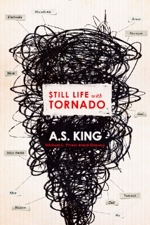
2. Still Life with Tornado by A.S. King

askbooks_99_1609002735

I love this woman, and I will read anything she writes!

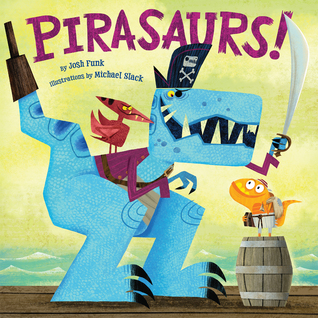
3. Pirasaurs! by Josh Funk

pirasaurs

I eagerly await this book! I got my hands on an early copy of Dear Dragon, and it was just as great as Lady Pancake & Sir French Toast. I can’t wait to read Pirasaurs!

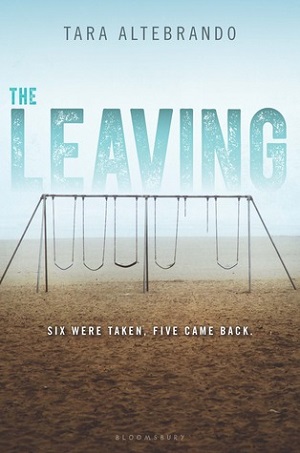
4. The Leaving by Tara Altebrando

the leaving

I love a good mystery and am intrigued by this cover.

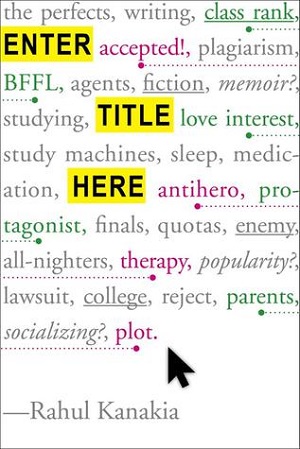
5. Enter Title Here by Rahul Kanakia

entertitlehere-rahulkanakia

I’ve heard this book is excellent, and it is right up my alley! I am very excited for its release!

Kellee

I am so looking forward to King’s newest and Josh Funk’s two new picture books also! Here are some other upcoming novels (if I did picture books too, my list would be way too long!) I’m excited to read:

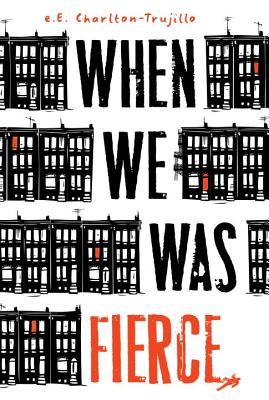
1. When We Was Fierce by E.E. Charloton-Trujillo

when we was fierce

This book reminds me of How It Went Down by Kekla Magoon and Tyrell by Coe Booth, both books which I love.

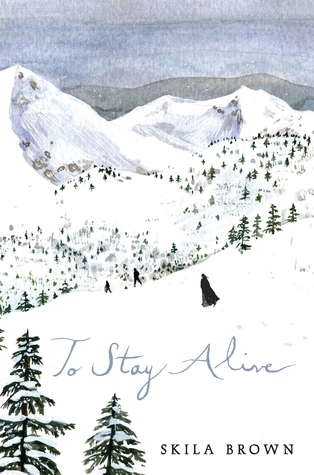
2. To Stay Alive: Mary Ann Graves and the Tragic Journey of the Donner Party by Skila Brown

to stay alive

I am fascinated by the Donner Party, and I love books in verse, so this one seems like a win-win for me!

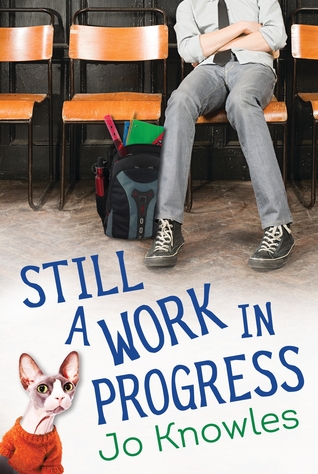
3. Still a Work in Progress by Jo Knowles

still a work in progress

I cannot wait! First, why is there a hairless cat in a sweater on the cover?! Second, yay Jo Knowles!

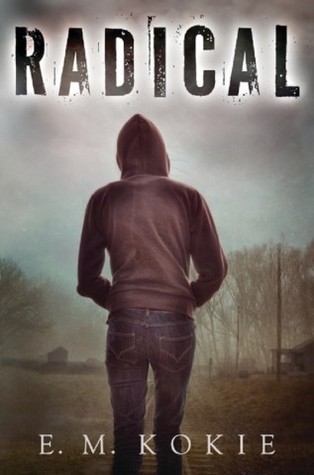
4. Radical by E.M. Kokie

radical

I loved Kokie’s debut novel, so I am very much looking forward to the follow up.

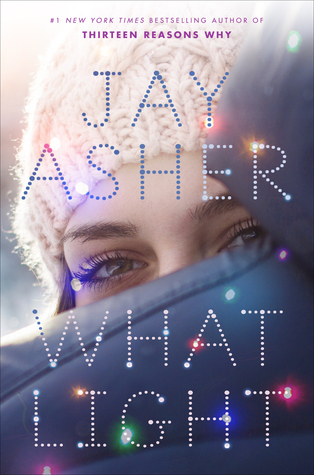
5. What Light by Jay Asher

This sounds so unlike Thirteen Reasons Why which really interests me.

Which books are you eagerly awaiting?

RickiSig and Signature

It’s Monday! What Are You Reading? #IMWAYR 6/13/16

Share

IMWAYR 2015 logo

It’s Monday! What Are You Reading? From Picture Books to YA!

It’s Monday! What are you Reading? is a meme started by Sheila at Book Journeys and now hosted by Kathryn at The Book Date. It is a great way to recap what you read and/or reviewed the previous week and to plan out your reading and reviews for the upcoming week. It’s also a great chance to see what others are reading right now…you just might discover the next “must-read” book!

Kellee and Jen, of Teach Mentor Texts, decided to give It’s Monday! What Are You Reading? a kidlit focus. If you read and review books in children’s literature – picture books, chapter books, middle grade novels, young adult novels, anything in the world of kidlit – join us! We love this meme and think you will, too.

We encourage everyone who participates to support the blogging community by visiting at least three of the other book bloggers that link up and leave comments for them.

Bold_line

Last Week’s Posts

**Click on any picture/link to view the post**

top ten tuesday belle last mule can we help who's like me boy who fell what do you do with a problem can you canoe nethergrim

Tuesday: Ten Reasons We Love Being Moms to Readers

Wednesday: Candlewick Nonfiction Picture Books: Who’s Like Me? by Nicola Davies, Can We Help? by George Ancona, Belle, the Last Mule at Gee’s Bend by Calvin Alexander Ramsey & Bettye Stroud, and The Boy Who Fell Off the Mayflower by P.J. Lynch

Thursday: What Do You Do With a Problem? by Kobi Yamada

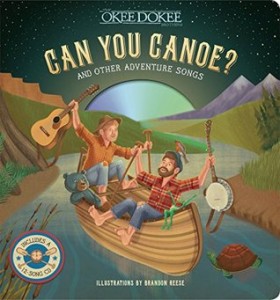
Friday: Review and Giveaway!: Can You Canoe? And Other Adventure Songs by The Okee Dokee Brothers
Giveaway open until Thursday!

Sunday: Author Guest Post!: “How to Love the Language Your Students Use” By Matthew Jobin, Author of The Nethergrim series

Bold_line

 Last Week’s Journeys
Kellee

The school year is over, graduation has passed, Future Problem Solvers International Competition is done, and summer had begun–I think I can start getting back to normal over here! I want to apologize for being a bit MIA recently with visiting blogs on Mondays, Wednesdays, and throughout the week–life has just been so busy! Thank you for understanding!

Because of the craziness, I wasn’t able to read as much as I’d hoped, but I did get in First Step (review on Wednesday), Ms. Bixby’s Last Day (review on Friday), and  six graphic novels:

sweaterweather varmints science comics bera narwhal hilo

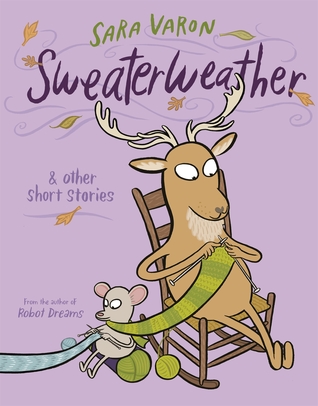
Sweaterweather by Sara Varnon was a short story comic collection which was exactly what I would have expected from Varnon. Her comics are clever and cute, and I loved her little notes at the beginning of each new story.

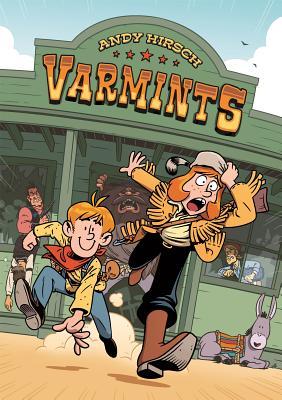
Varmints by Andy Hirsch was quite a wild, western adventure following two siblings, Opie the hothead and Ned the sweetheart, trying to find their Pa. There are problems around every corner, and you never know how they are going to get through the situation, but somehow they do! I know my students who like adventurous graphic novels will be a fan of this one. The story ended with a cliffhanger, so I am assuming there will be more to come!

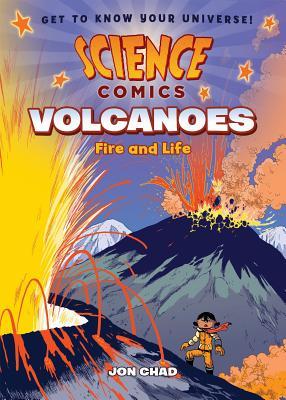
Science Comics: Volcanoes by Jon Chad was an interesting combination of science fiction and informational nonfiction. The story takes place in the future where a new ice age has set in and a society is looking for heat. When Aurora discovers a book about volcanoes she cannot stop teaching her siblings and guide about them because she feels like they can save their civilization. It is through Aurora that we learn about volcanoes in a very detailed way. I think the author did a good job combining nonfiction and fiction, and you definitely learn a lot about volcanoes during the story.

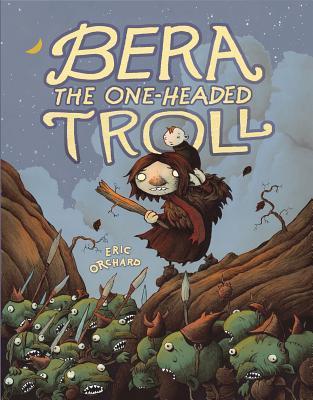
Bera, the One-Headed Troll by Eric Orchard is a dark yet heartwarming story about a troll that wants to save a baby. Bera, who has no idea what to do, sets off on a quest to hopefully save the child. I loved how the author/illustrator built a fantastical world that was very dark but threw in Bera who has a heart of gold. You will root for her the entire book!

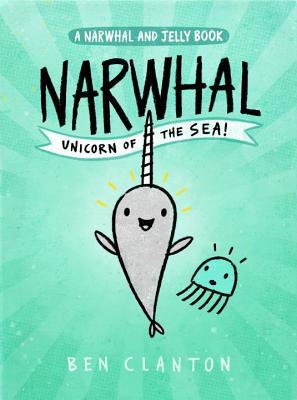
Narwhal: Unicorn of the Sea by Ben Clanton was perfection! This is the graphic novel equivalent of Elephant and Piggie and is a ladder to Phoebe and her Unicorn. Filled with laugh-out-loud moments as well as thoughtful moments covered in friendship and cuteness, Narwhal equals such a charming graphic novel for all ages.

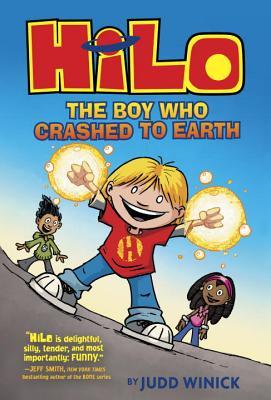
Hilo is the first book in a series that I know will be popular in my classroom. Funny, adventurous, and science fiction–all things my graphic novel readers love! Also, the end is a great cliff hanger which will keep readers wanting more!

Ricki

No cover

I finished my author friend’s untitled, secret fantasy that she is working on and sent her some feedback. It was really fun to read a book in its entirety with an editor’s eyes. I’ve never done this with a full book, and I had a lot of fun with it. I am hoping the work is published, and I will share news later!

belle last mule

Henry and I read Belle, the Last Mule at Gee’s Bend by Calvin Alexander Ramsey and Bettye Stroud. I loved learning new information about MLK Jr. and the mules of Gee’s Bend. This nonfiction was a great read!

Bold_line

This Week’s Expeditions
Kellee

Since summer is upon us, I hope to partake in #bookaday (or in my world: read as much as I can). I brought home a pile of books from school that include books from my #mustreadin2016 list as well as the Sunshine State Young Reader list (I’m going to read all 15 this year!). I also have 7 novels (and a ton of picture and nonfiction books) to read for review this summer. I am so looking forward to jumping feet first into all of this reading!

Ricki 

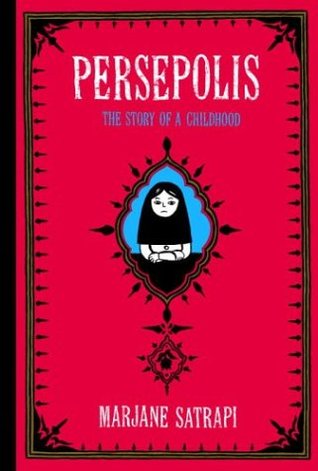
Persepolis

I’ve always meant to read Persepolis by Marjane Satrapi. This week, I saw it in the library and nabbed it. I enjoy reading graphic novels in between transcribing for my dissertation because my fingers get tired!


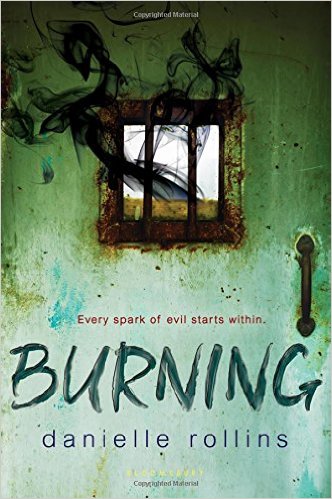
burning

I reviewed Merciless last year, and Danielle Rollins saw the review and sent me her newest book, Burning. I am very excited to read it. Thrillers make my heart flutter!

Bold_line

Upcoming Week’s Posts

top ten tuesday first step nibbles ms bixby

Tuesday: Most Anticipated Releases for the Second Half of 2016

Wednesday: The First Step: How One Girl Put Segregation on Trial by Susan E. Goodman

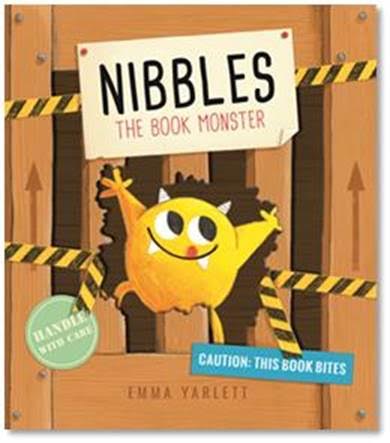
Thursday: Nibbles: The Book Monster by Emma Yarlet

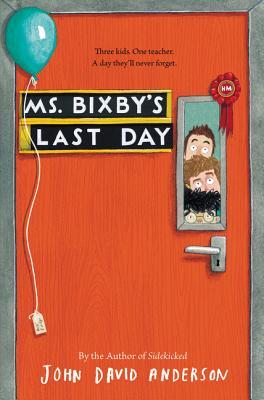
Friday: Teacher Appreciation Book Tour with Review and Giveaway!: Ms. Bixby’s Last Day by John David Anderson

Sunday: Author Guest Post!

 So, what are you reading?

Link up below and go check out what everyone else is reading. Please support other bloggers by viewing and commenting on at least 3 other blogs. If you tweet about your Monday post, tag the tweet with #IMWAYR!

 Signature andRickiSig

Author Guest Post!: “How to Love the Language Your Students Use” By Matthew Jobin, Author of The Nethergrim series

Share

“How to Love the Language Your Students Use”
By Matthew Jobin, Author of The Nethergrim series

In sooth, I know not why I am so sad:
It wearies me; you say it wearies you;
Antonio, The Merchant of Venice (slightly abridged), Act 1, Scene 1.

It is a truism, or at least a trope, of adult life that we grownups inevitably begin to hear slang uttered by children and teens that we fail to understand. It’s never fun to hear words bandied back and forth between your juniors and be unable to follow it. Worse still, an adult might justifiably fear breaking into the conversation of younger people with the equivalent of ‘Hey, cool cats, I sure am hip to your rad lingo!’. No one has to deal with this divide more than teachers, who are not only grownups in constant contact with children, but also the gatekeepers to those students’ future. One of the things I learned in graduate school studying anthropology is that language serves many functions, only one of which is the simple conveyance of information. Another major function is inclusion within or exclusion from a group. Using slang correctly is a way of waving a door pass to get into a club. If you use the words the same way the cool kids do, then the cool kids either have to admit you know what they are talking about or change the slang to make sure you no longer do. The latter is, of course, the most likely occurrence of a fortysomething bursting into a gang of teenagers uttering “O hai random swag is amazeballs, bae!” or something to that effect. Knowing that there are words set up to exclude you from youth culture can sting (though to be honest, I’m fine with no longer being fifteen), but more importantly, a teacher might worry that he will have trouble getting ideas across in full to his students.

One way to talk across that barrier without breaking it down is to show students how language changes over time, and thus how what now sounds archaic was once the latest slang. Consider the currently hated word ‘literally’. It drives many people nuts to hear the word used to emphasize truth in a statement. It drives me especially nuts to hear it emerging from my own mouth from time to time, knowing all the while that I was getting by just fine without saying it nearly so much five years ago. It is easy to simply dismiss this as a symptom of the lazy thinking that goes on these days, or lax standards in the home, or not enough ten-year-olds reading Kant’s Critique of Pure Reason, or some such. Don’t go that way; the kids are all right, just like you were. I am not saying that it is nice to hear ‘literally’ overused, but consider, though, what this use of ‘literally’ actually means. It is a way of saying “I assert the truth of this statement”. Can you think of other ways to say this? Have a look up at the Shakespeare quote from the top. Yup, that’s right. “In sooth” and “forsooth” do more or less the same job as “literally”. We might not talk exactly the same way they did in 1602, but we have mostly the same things to talk about. Connecting students to the fact that slang is ever-changing but at the same time never really new might give them a fresh perspective on the classics.

“I literally do not know why I am so sad:
It wearies me; you say it wearies you;”
Antonio, The Merchant of Venice (slightly abridged), Act 1, Scene 1.

Let’s go one step further. Some of you might have taken on the task of teaching Beowulf, a text in English so old that it is no longer intelligible to the untrained reader. The very first line, however, begins with “Hwaet!”, the call from the poet for the listeners to shut up, put down their mead cups and bend an ear. The word is an opener, a way to convey the idea that the speaker needs to to start listening so that he can tell you what he needs you to hear. That sounds an awful lot to me like “Listen up!” or even “O hai!”.

Is not “boon companion” another way of saying “bruh”? Is not “Zounds!” a form of “Wow. Just wow.”? Meanings shift and change context, but the basics of human life do not. The struggle for personal identity that characterizes late childhood and adolescence is much older than Shakespeare and the Beowulf poet. It is something fundamentally human, something our language hints at over and over in ever-changing guises through the years.

Personally, I would love to hear young folks bandying around ‘forsooth’ and ‘yea verily!’ for a while, just for a change-up. If any teacher out there can make a game out of that, she might find that she has squared the proverbial circle and made learning fun. Good writing deals in universals, and the interested reader will find more similarities than differences between his world and the world of the book he reads. This is because we are humans making human stories for humans. The jargon of Shakespeare might seem at first as impenetrable and intimidating as a gang of cool kids uttering the very latest gatekeeper slang around a teacher (or a nerd), but once the bridge has been crossed and the student understands that with slang, ’twas ever thus, he might begin to see the outlines of the very familiar ideas underneath the archaic forms of speech. After all, many of Dickens’ works are exposés of social injustice and inequality. Romeo and Juliet, rather famously, is partly about a gang war. If you read The Canterbury Tales and do not feel like taking a gap year and going backpacking through Europe, then I think you must be reading it upside-down. Slang, usage and jargon is surface; the depths are the common experiences of human life.

We few, we cray, cray few, we band of bruhs;
For he to-day that sheds his blood with me
Shall be my bruh; be he just some random n00b,
This day he shall be totally amazeballs.
Once more unto the breach, bruh. Yolo.
Henry V, King Henry V (slightly abridged and a bit mashed up), Act 4, Scene 3-ish.

So, hope that was not too random, but anyway, meh whatever. Hungry. Time for noms.

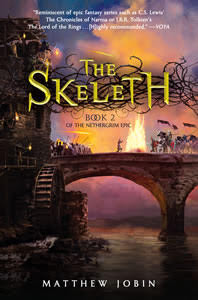
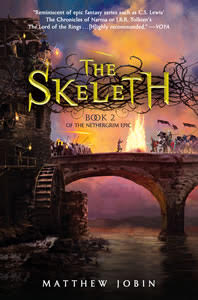
Matthew Jobin’s latest book, “The Skeleth”, second in the Nethergrim series, will be published May 2016.

Author Bio: A native of Canada, Matthew Jobin holds a Ph.D. in anthropology from Stanford University. He lectures in anthropology at Santa Clara University. The idea for The Nethergrim came to Matthew as a young boy exploring the forest surrounding his home. Intent on telling the story of this fantasy world, he’s been developing it and its inhabitants ever since. Matthew lives in the San Francisco Bay Area with his wife, Tina.

For more information visit his website at: http://www.matthewjobin.com and follow him on Facebook and Twitter.
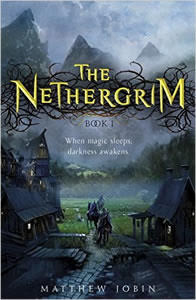
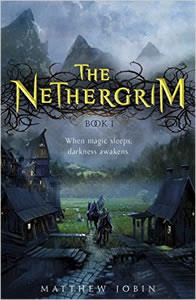
nethergrim nethergrim 2

By Matthew Jobin
Series: The Nethergrim (Book 1)
Published by Puffin Books
Paperback: 368 pages
Age Range: 10 and up
February 5, 2015; $8.99 US/$9.99 CAN; 9780142422687

Description
The Next Great Fantasy Epic is here! For fans of Ranger’s Apprentice and the Chronicles of Narnia.

Everyone in Moorvale believes the legend: The brave knight Tristan and the famed wizard Vithric, in an epic battle decades ago, had defeated the evil Nethergrim and his minions. To this day, songs are sung and festivals held in the heroes’ honor. Yet now something dark has crept over the village. First animals disappear, their only remains a pile of bones licked clean. Then something worse: children disappear. The whispers begin quietly yet soon turn into a shout: The Nethergrim has returned!

Edmund’s brother is one of the missing, and Edmund knows he must do something to save his life. But what? Though a student of magic, he struggles to cast even the simplest spell. Still, he and his friends swallow their fear and set out to battle an ancient evil whose powers none of them can imagine. They will need to come together–and work apart–in ways that will test every ounce of resolve.

In a story reminiscent of the Ranger’s Apprentice epic and the Chronicles of Narnia, Matthew Jobin weaves reality, magic, and adventure into the next great fantasy phenomenon.

The Skeleth
By Matthew Jobin
Series: The Nethergrim (Book 2)
Published by Philomel Books
Hardcover: 400 pages
Age Range: 10 and up
May 10, 2016; $17.99 US/$23.99 CAN; 9780399159992

Description
Discover for yourself why reviewers are comparing The Nethergrim to Lord of the RingsNarnia, and Ranger’s Apprentice! The next great epic fantasy is here . . .

For the lords of the north, land is power. The Nethergrim, now awoken and free to wreak its evil upon the world, offers the promise of victory to those ruthless enough to accept its foul bargain. One ambitious lord, eager for the chance to conquer and rule, succumbs to temptation and helps to free the Skeleth — eerie, otherworldly beings said to be unstoppable in battle. The Skeleth merge with the bodies of their victims, ruling their minds and turning them into remorseless killers. Worse yet, to kill the man inside the Skeleth only frees it to seize a new host, starting a cycle of violence that has no end.

Such chilling tales are not enough to stop young Edmund, innkeeper’s son and would-be wizard, from seeking for a way to turn back the oncoming tide of destruction. Along with his best friends — Katherine the trainer of war-horses and Tom the runaway slave — Edmund searches for a magical weakness in the Skeleth, something that might allow him to break their never-ending curse. The three friends join with the legendary hero Tristan in a battle of courage, wisdom, wits, and sacrifice to stop the Skeleth from ravaging their homeland and all they hold dear.

This adventurous tale that marries earthly greed to otherworldly evil is perfect for fans who enjoy the epic worlds of John Flanagan’s Ranger’s Apprentice, Robert Jordan’s The Wheel of Time, J.R.R. Tolkien’s The Lord of the Rings, and George R.R. Martin’s Game of Thrones. Discover for yourself why so many are making the comparisons!

Thank you Matthew for this thought-provoking post!

Kellee Signature andRickiSig

Review and Giveaway!: Can You Canoe? and Other Adventure Songs by The Okee Dokee Brothers

Share

can you canoe

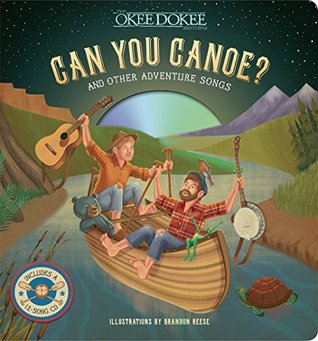
Can You Canoe? And Other Adventure Songs
Author: The Okee Dokee Brothers
Illustrator: Brandon Reese
Published April 19th, 2016 by Sterling Children’s Books

Summary: Can You Canoe? invites you to journey cross-country with The Okee Dokee Brothers through twelve of their irresistible, boot-stompin’ tunes. You’ll encounter hungry black bears and tall-tale spinners; quiet canoes and cozy camping tents; a jumpin’ jamboree and a bullfrog opera. As you listen to the songs and follow along with the illustrated lyrics in this collection, you might even be inspired to head out on some outdoor adventure of your own!

Kellee’s Review: We love music in my house, so anytime a book and music can be connected really makes me happy. I think the Okee Dokee Brothers’ music is catchy, knee-slapping, sometimes funny, and have great messages. I love how they all promote the out doors and adventure. And just when you think it cannot get any better, you see the illustrations. Brandon Reese’s illustrations are perfect! They are so colorful and loud and cartoon-ish. Just the type of fun you think would be in a book by the Okee Dokee Brothers. 

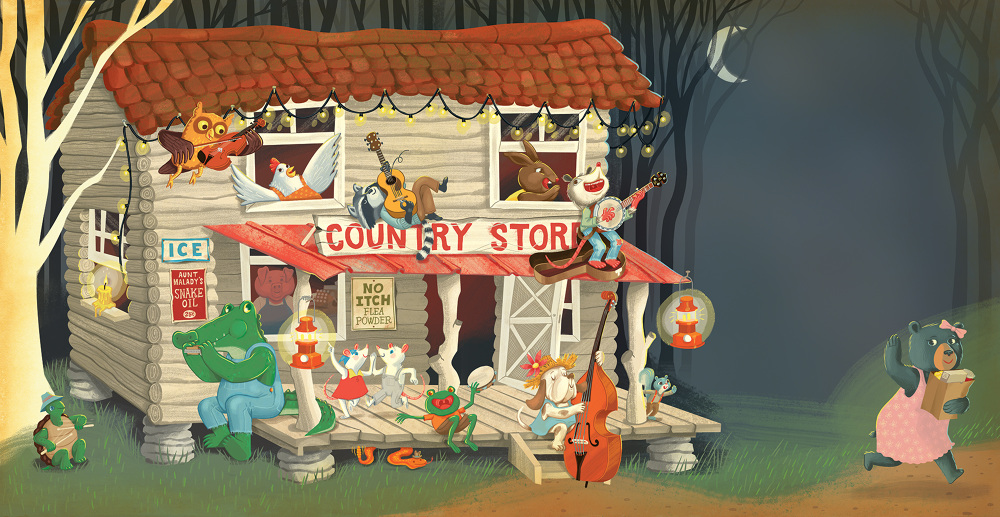
Ricki’s Review: This book is pure fun. My toddler was bouncing around the room as I played the CD. My husband is an outdoorsy guy, so he particularly liked the messages within the songs. The rhymes are great, and they will help my son learn the lyrics as we listen/read. I’ve never been to an Okee Dokee concert, and now I want to go to one! We’ll be bringing this CD along for long car rides. Below, we include an illustration, and you can see the pure beauty of this text. I will be buying it as a gift for my music-loving friends.

Teachers’ Tools for Navigation: We love using music during my poetry lessons because it helps students hear poetry and not be as afraid of it like they are with classics. Starting with music and lyrics allows you to help them understand how to read poetry differently than prose while using something they can easily understand. Can You Canoewould be a perfect text to use this for because you can analyze for poetic elements and meaning, but the Okee Dokee Brothers also have a field journal in the back which help give background information about each song making analyzing them less of a guessing game.

Can You Canoe? would also be a wonderful poetry mentor texts. The authors talk about how they find ideas for their songs and many of their songs have a format that could be emulated (like Jack in Love that Dog) if you wanted to go that route in class.

Discussion Questions: How do the authors use rhythm and rhyme in their lyrics?; What is a time that the authors used descriptive language to help the reader imagine the scene they are describing?; What is a time the authors used figurative language to add imagery to their songs?

Flagged Passages:

“There’s a country store
In a country town.
Every Friday night
The people dance around.
It don’t look like much
And it ain’t no chore,
But while they’re dancin’
They polish that floor.

They play this song
Right on key.
They play this song –
It’s called JAMBOREE.”

Okee_Jamboree_1000
(c) http://www.brandonreese.com/

Check out their You Tube channel to hear some of their music:
https://www.youtube.com/user/OkeeDokeeBros

Read This If You Loved: Goodnight Songs by Margaret Wise BrownFresh Delicious by Irene Latham

Recommended For:

  readaloudbuttonsmall closereadinganalysisbuttonsmall

Enter to win your own copy!

a Rafflecopter giveaway

Kellee Signatureand RickiSig

**Thank you to Lauren at Sterling Publishing for providing a copy for review!**

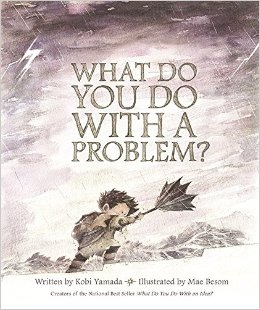
What Do You Do with a Problem? by Kobi Yamada

Share

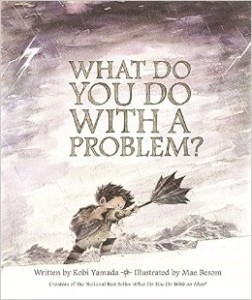
what do you do with a problem

What Do You Do with a Problem?
Author: Kobi Yamada; Illustrator: Mae Besom
Published: July 1, 2016 by Compendium Inc.

GoodReads Summary: From the same author and illustrator as our #1 nationally best-selling What Do You Do With an Idea? comes a new book to encourage you to look closely at problems and discover the possibilities they can hold.

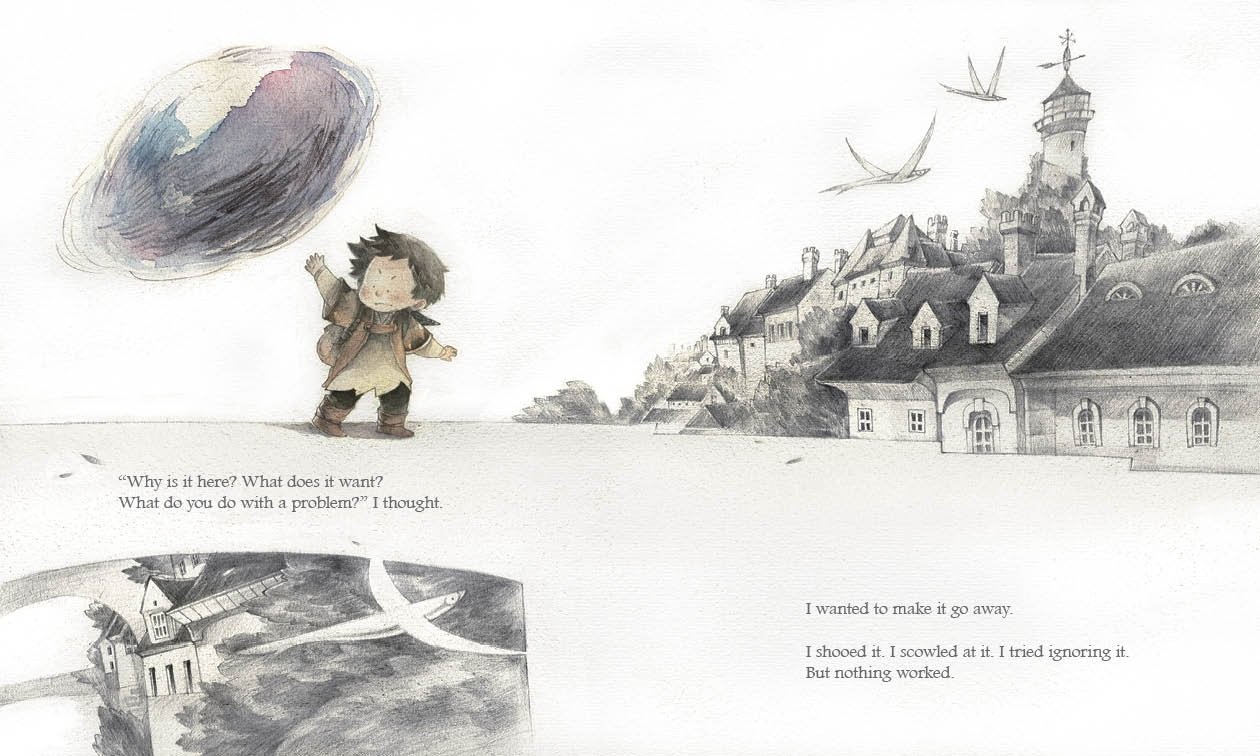
What do you do with a problem? Especially one that follows you around and doesn’t seem to be going away? Do you worry about it? Ignore it? Do you run and hide from it?

This is the story of a persistent problem and the child who isn’t so sure what to make of it. The longer the problem is avoided, the bigger it seems to get. But when the child finally musters up the courage to face it, the problem turns out to be something quite different than it appeared.

This is a story for anyone, at any age, who has ever had a problem that they wished would go away. It’s a story to inspire you to look closely at that problem and to find out why it’s here. Because you might discover something amazing about your problem… and yourself.

What are problems for? They challenge us, shape us, push us, and help us to discover just how strong and brave and capable we really are. Even though we don’t always want them, problems have a way of bringing unexpected gifts.

So, what will you do with your problem? Now that’s up to you.

Review: There is something so magical about the combination of writer Kobi Yamada and illustrator Mae Besom. When I saw that these creators of What Do You Do with an Idea? had another book, I jumped at the chance to read it. It’s no secret that I am in love with this first book. I have gifted it to many friends and children, and I include it on many of my favorites and Top Ten Tuesday lists. I was pleased that What Do You Do with a Problem? is just as stunning. These two books are a teacher’s dream. They utilize many literary elements and are perfect for close analysis. I would use them at all grade levels. What Do You Do with a Problem? is a great text to teach readers how to reconsider a problem (or problems) that they might have. They can compare the problem with illustrations and consider how that problem may, for example, be all-encompassing. I like how the book balances both the weight of the problem and the proverbial light at the end of the tunnel. By looking at this problem in a new light, readers will be able to take more of an outside perspective of the conflict—and hopefully/potentially work toward a resolution.

Teacher’s Tools for Navigation: To start, teachers might ask students to consider the symbolism within the text. They might even grapple with the definition of an allegory and discuss ways the definition might be connected with the text and illustrations. Then, students could think of an abstract idea and try to associate an object with that idea. They might even consider writing their own picture book that connects the object and abstract idea. I also think it would be great for teachers to read both this text and What Do You Do with an Idea? to students. Then, they might compare and contrast the stories and their messages.

Discussion Questions: What do you do with a problem? How do we deal with problems in different ways? How do others in our lives deal with problems in ways that differ from us?; How do the author and illustrator work together to create a compelling story? What symbols do they use to convey their message?

Flagged Passage: 

what do you do with a problem spread

Image from: www.amazon.com

Read This If You Loved: What Do You Do with an Idea? by Kobi Yamada; The Most Magnificent Thing by Ashley Spires; The Dot by Peter H. Reynolds, The Noisy Paint Box by Barb Rosenstock, Lost and Found by Oliver Jeffers, Journey by Aaron Becker

Recommended For:

  readaloudbuttonsmall closereadinganalysisbuttonsmall classroomlibrarybuttonsmall

RickiSig

Candlewick Nonfiction Picture Books: Who’s Like Me? by Nicola Davies; Can We Help? by George Ancona; Belle, the Last Mule at Gee’s Bend by Calvin Alexander Ramsey & Bettye Stroud; and The Boy Who Fell Off the Mayflower by P.J. Lynch

Share

NFPB2016

Nonfiction Wednesday

Nonfiction Picture Book Wednesday is hosted by Kid Lit Frenzy and was started to help promote the reading of nonfiction texts. Most Wednesdays, we will be participating and will review a nonfiction text (though it may not always be a picture book).
Be sure to visit Kid Lit Frenzy and see what other nonfiction books are shared this week!

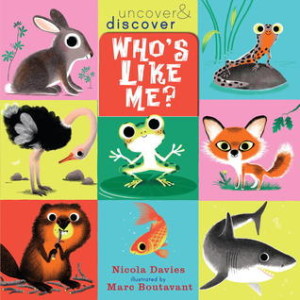
who's like me

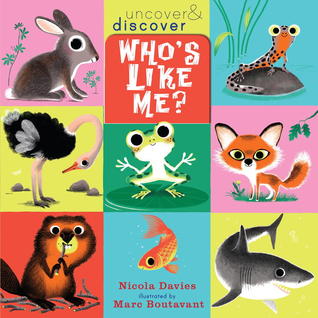
Who’s Like Me?
Author: Nicola Davis
Illustrator: Marc Boutavant
Published February 28th, 2012 by Candlewick Press

Goodreads Summary: Lift the flaps and learn about animal life in this fresh, fun-filled book for curious preschoolers.

A bunny is furry and breathes air. Who else is like that — a pigeon, a fish, a chameleon, or a fox? Some animals have fins to swim with, some have feathers and a beak, some have skin that is scaly, or smooth and wet. But whatever features a creature has, someone else has them, too. Can you guess who? Big flaps and a matching spread at the end make animal classification fun.

My Thoughts: This flap book is going to be a big hit in my house both because it is entertaining and because it is informative. First, the author does a great job making the identification of animal types a game including flaps and comparisons/contrasts then she ensures that factual information follows the matching to explain the type of animal and the characteristics of the type.

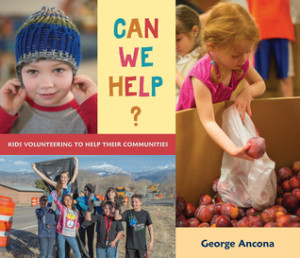
can we help

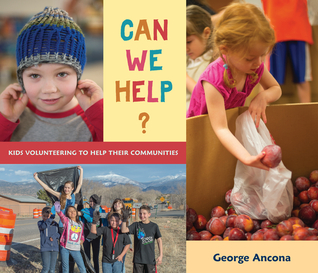
Can We Help? Kids Volunteering to Help their Communities
Author: George Ancona
Published August 25th, 2015 by Candlewick Press

Goodreads Summary: Real kids make a real difference in their communities in this vibrantly photographed chronicle by George Ancona.

George Ancona celebrates the joy of kids giving back. In one after-school program, middle-school students mentor and tutor younger children. Via a special partnership, schoolchildren help professionals train assistance dogs for people with disabilities. At a community farm, families plant, grow, and harvest produce for soup kitchens and charities. In these and other examples of volunteering, kids of all ages work together knitting hats and scarves for those who could use warm clothes, packing hot meals to deliver to housebound people, and keeping roadways clean. Young humanitarians reading these accounts may well be inspired to find ways that they can help, too.

My Thoughts: I think this picture book would be a wonderful one to read in conjunction with the 31 Ways to Change the World because that book includes suggestions while this one gives us narratives about those actually making a difference. I love the variety of ways the author highlights: from knitting to a community farm to training dogs and mentoring. These stories are inspiring and will make the reader (adult or child) want to do something to make a difference!

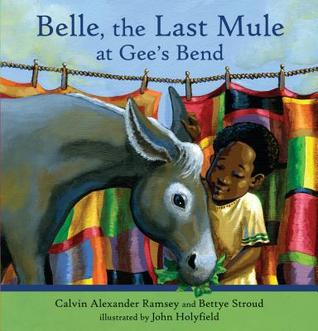
belle last mule

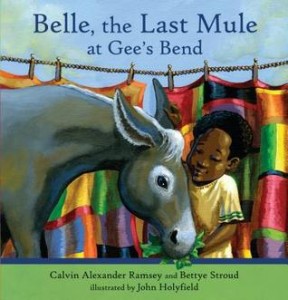
Belle, the Last Mule at Gee’s Bend
Authors: Calving Alexander Ramsey and Bettye Stroud
Illustrator: John Holyfield
Published September 13th, 2011 by Candlewick Press

Goodreads Summary: A true story inspires the moving tale of a mule that played a key role in the civil rights movement– and a young boy who sees history anew.

Sitting on a bench waiting for his mother, Alex spies a mule chomping on greens in someone’s garden, and he can’t help but ask about it.””Ol Belle?” says Miz Pettway next to him. “She can have all the collards she wants. She’s earned it.” And so begins the tale of a simple mule in Gee’s Bend, Alabama, who played a singular part in the civil rights movement of the 1960s. When African-Americans in a poor community– inspired by a visit from Dr. Martin Luther King, Jr.– defied local authorities who were trying to stop them from registering to vote, many got around a long detour on mule-drawn wagons. Later, after Dr. King’s assassination, two mules from Gee’s Bend pulled the farm wagon bearing his casket through the streets of Atlanta. As Alex looks into the eyes of gentle Belle, he begins to understand a powerful time in history in a very personal way.

My Thoughts: This story adds an extra truth to the story of Martin Luther King that many of us know. MLK was an advocate and leader and activist for all African and Black Americans and this meant a lot to so many communities of people around America including Gee’s Bend. To learn about Belle and King’s reason for having Belle pull his coffin really just shows how true his intentions of being a man of the people while fighting for the rights of all. And I loved how this story was told as a story from a Bender to a young boy visiting the town. Gee’s Bend is such a historical place, and I love this new part of their history that I didn’t know. (I love the quilts produced in Gee’s Bend! If you haven’t viewed them, Google it now!)

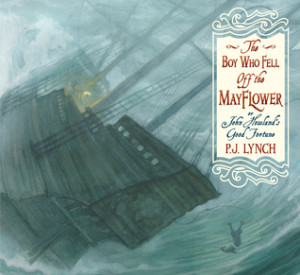
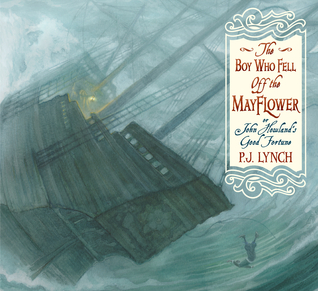
boy who fell

The Boy Who Fell Off the Mayflower or John Howland’s Good Fortune
Author and Illustrator: P.J. Lynch
Published September 22nd, 2015 by Candlewick Press

Goodreads Summary: In the first book he has both written and illustrated, master artist P.J. Lynch brings a Mayflower voyager’s story to vivid life.

At a young age, John Howland learned what it meant to take advantage of an opportunity. Leaving the docks of London on the Mayflower as an indentured servant to Pilgrim John Carver, John Howland little knew that he was embarking on the adventure of a lifetime. By his great good fortune, John survived falling overboard on the crossing of the Atlantic Ocean, and he earned his keep ashore by helping to scout a safe harbor and landing site for his bedraggled and ill shipmates. Would his luck continue to hold amid the dangers and adversity of the Pilgrims’ lives in New England? John Howland’s tale is masterfully told in his own voice, bringing an immediacy and young perspective to the oft-told Pilgrims’ story. P.J. Lynch captures this pivotal moment in American history in precise and exquisite detail, from the light on the froth of a breaking wave to the questioning voice of a teen in a new world.
My Thoughts: I have to start my review with discussing the art work. Describing P.J. Lynch as a master artist is a perfect statement. His watercolor and gouache full page plus illustrations are so lifelike and beautiful that the reader will spend time on each page viewing the art in addition to reading the text. And what makes the book even better is that the text is interesting. Told in first person from John Howland’s point of view, we travel from London to America through storms, a fall off the Mayflower, death, disease, famine, and shows how friendship and kindness pay. In the classroom, this text would be an informational and interesting introduction to the Mayflower voyage and Plymouth.

All Recommended For: 

classroomlibrarybuttonsmall readaloudbuttonsmall litcirclesbuttonsmall

Kellee Signature