The Astonishing Color of After by Emily X. R. Pan

Share

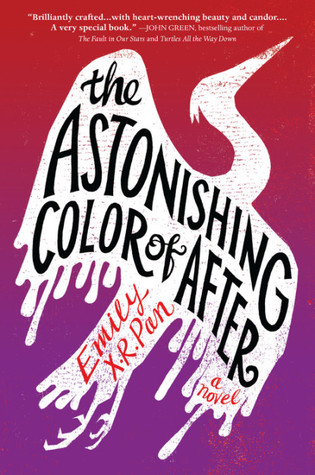
The Astonishing Color of After
Author: Emily X. R. Pan
Published: March 20, 2018 by Little, Brown

Goodreads Summary: Leigh Chen Sanders is absolutely certain about one thing: When her mother died by suicide, she turned into a bird.

Leigh, who is half Asian and half white, travels to Taiwan to meet her maternal grandparents for the first time. There, she is determined to find her mother, the bird. In her search, she winds up chasing after ghosts, uncovering family secrets, and forging a new relationship with her grandparents. And as she grieves, she must try to reconcile the fact that on the same day she kissed her best friend and longtime secret crush, Axel, her mother was taking her own life.

Alternating between real and magic, past and present, friendship and romance, hope and despair, The Astonishing Color of After is a novel about finding oneself through family history, art, grief, and love.

My Review: I just finished discussing this book with my class, and they loved it. It is a bit of a longer book and moves somewhat slowly, but even my students who didn’t finish it in time insisted that I should use it again next year. The writing is absolutely stunning. Pan depicts humanity in ways that are very powerful. She integrates color and emotion to connect readers to the characters. We had two one-hour class periods to discuss this book, and there were so many things to talk about. Discussion was easy, and students made meaningful connections with the book. This book is simply unforgettable. I recommend it highly and hope it wins some awards in January!

Teachers’ Tools for Navigation: My students said that they Googled the colors within the text as they read. We spent a lot of time talking about the colors as an effective writing tool. I asked students to think of a moment in their lives that they’d be willing to share. Then, I asked them to attach a color with the moment. They shared beautiful stories of working at drive-ins, meeting their SOs, visiting places with friends, etc. The colors they attached with the images were fascinating and made the stories come alive.

Discussion Questions: 

  • How does the author incorporate magical realism in the text? Is it effective?
  • Did Leigh and Axel’s relationship feel realistic to you? Why or why not?
  • Which scenes are beautifully written, and how do they demonstrate excellent writing?
  • Should we forgive Leigh’s father? Why might he make the decisions he makes?

We Flagged: “Once you figure out what matters, you’ll figure out how to be brave.”

Read This If You Loved: Goodbye Days by Jeff Zentner, When the Moon Was Ours by Anna-Marie McLemore, Miles Away From You by A. B. Rutledge, All the Bright Places by Jennifer Niven, Looking for Alaska by John Green, Forgive Me, Leonard Peacock by Matthew Quick

Recommended For:classroomlibrarybuttonsmall

  RickiSig

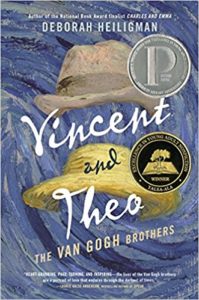
Vincent and Theo by Deborah Heiligman

Share

Vincent and Theo: The Van Gogh Brothers
Author: Deborah Heiligman
Published April 18th, 2017 by Henry Holt and Co.

Summary: The deep and enduring friendship between Vincent and Theo Van Gogh shaped both brothers’ lives. Confidant, champion, sympathizer, friend, Theo supported Vincent as he struggled to find his path in life. They shared everything, swapping stories of lovers and friends, successes and disappointments, dreams and ambitions. Meticulously researched, drawing on the 658 letters Vincent wrote to Theo during his lifetime, Deborah Heiligman weaves a tale of two lives intertwined and the love of the Van Gogh brothers.

About the Author: Deborah Heiligman has written many books for children, including National Book Award Finalist Charles and Emma: The Darwins’ Leap of Faith and The Boy Who Loved Math. She lives with her family in New York City.

AccoladesMichael L. Printz Award – Honor, School Library Best Books of the Year, CPL: Chicago Public Library Best of the Best, NYPL Books for the Teen Age, Booklist Editors’ Choice, YALSA Award for Excellence in Nonfiction Finalist, YALSA Award for Excellence in Nonfiction Winner, BCCB Blue Ribbon Award, Boston Globe – Horn Book Award, Kirkus Best Teen Books of the Year, Publishers Weekly Best Books of the Year, Texas TAYSHAS High School Reading List, Horn Book Magazine Fanfare List

Praise: 

“A remarkably insightful, profoundly moving story of fraternal interdependence and unconditional love.” —Kirkus, starred review

“A breathtaking achievement that will leave teens eager to learn more.” —School Library Journal, starred review

“In fittingly painterly language, Heiligman offers vivid descriptions of Vincent’s artwork and life, which grow more detailed and colorful as Vincent’s own artistic style becomes richer and more refined . . . This illuminating glimpse into the van Goghs’ turbulent life and historical period will add compelling depth to readers’ understanding of the iconic painter. ” —Booklist, starred review

“A unique and riveting exploration of art, artists, and brotherly love.” —The Horn Book, starred review

“An intensive exploration of their turbulent lives” —Publishers Weekly, starred review

“This title is a treasure for readers who want to immerse in a roiling domestic drama and who don’t back away from a good cry” —The Bulletin, starred review

Review: I could not stop talking about this book while I was listening to it. That, and that I couldn’t stop listening to the book–I would listen whenever I could, show me what a fabulous book it was. Hieligman does an amazing job making Vincent and Theo’s story come to life through such emotional narrative that the reader cannot help but feel as if we are living alongside the Van Gogh brothers. As someone who loves learning about history and art as well as an interest in brain health, this was a story that was more fascinating than I can even describe.

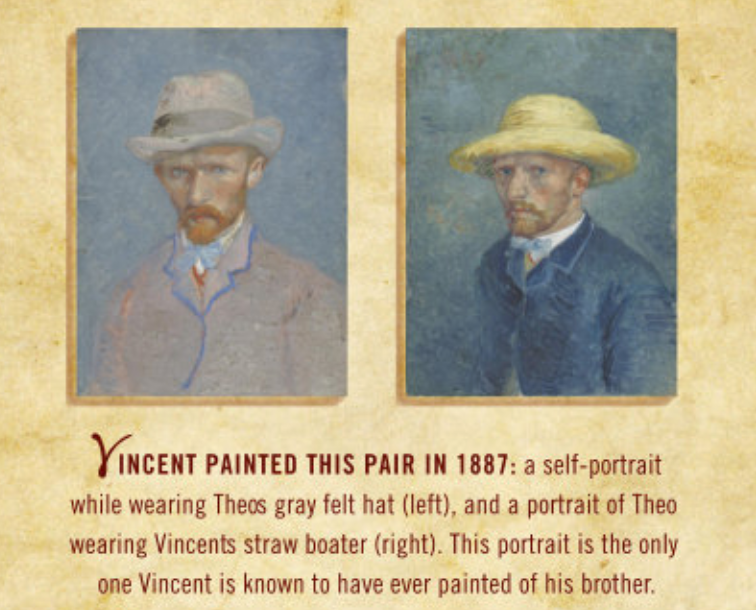
Also, I feel personally connected to this book in a fun way. In November, 2016 Deborah Heiligman and I had a dinner at NCTE, and we got talking about art since she had just finished Vincent and Theo. If you didn’t know, my dad has a BA in Art History and a MFA in Museumology and runs art museums (currently the LSU Museum of Art), so I have grown up around art museums my whole life and with art as a big part of it. One of the things we spoke about is the new information that a painting thought to be a self-portrait (right below) was actually the only known painting of Theo Van Gogh that Vincent painted. One thing that made it hard to determine this was that Theo is wearing the straw hat that Vincent is known to wear while Vincent is wearing Theo’s business felt hat. And this is where Deborah’s question came in: “The hats on the cover matched the hats the men are wearing in the photo although those are not actually their hats. Does it matter?” Now although I love art, I am not the expert, so I offered to ask my dad, and he responded with, “I like the cover as it is. I think it causes a questioning that evidences the new research in an interesting way. It defies previous thoughts and expectations.” Thus the cover stayed as is with an explanation on the jacket (below).
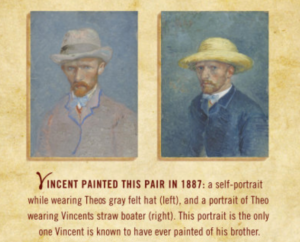
But I think what can show you about the book more than just me raving is all of the awards it received, ⇑ see above, and all of the amazing information about how Deborah researched for the book, ⇓ see below, and of course an excerpt from the book, ⇓ also below.

Teachers’ Tools for Navigation: View Deborah Hieligman’s research for Vincent and Theo and view all the articles & interviews about the book to use with students when reading this nonfiction text. There is so much that can be done with this story and the author’s writing process; use this amazing text in your classrooms, have it in your libraries, read it yourself–however you see fit, but read and share it!

Discussion Questions: 

  • How were Vincent and Theo’s life parallel with each other?
  • In what way were Vincent and Theo’s view of love part of their downfall emotionally?
  • Looking at the two portraits above and after reading the article about the portrait being of Theo, what do you believe? What similarities and differences do you see between the two?
  • How did Deborah Hieligman take all of the letters and research she did and turn them into a narrative?
  • I described this book to my sister as “A love story about two brothers.” Why would I call it a love story?
  • How did Theo’s short but mighty marriage set up for the current popularity of Vincent Van Gogh?
  • Why did it take so long for Vincent to find art?
  • In what way did finding friends in the impressionist art community help Vincent as an artist?

Flagged Passages: 1. TWO BROTHERS, ONE APARTMENT, PARIS, 1887

There was a time when I loved Vincent very much, and he was my best friend, but that’s over now. —Theo van Gogh to his sister Willemien, March 14, 1887

THEO’S BROTHER VINCENT has been living with him for just over a year, and Theo cannot take it anymore.

It is “almost intolerable for me at home,” he writes to their sister Wil in March 1887. Even though Theo has moved them to a larger apartment, this one still feels too small to hold Vincent’s outsized personality and Theo’s desperate need for quiet. He’s dying to tell Vincent to move out, but he knows if he does, Vincent will just be more determined to stay.

Dogged. Contrary. Stubborn. Vincent.

Theo van Gogh is the manager of Goupil & Cie, a successful art gallery on the fashionable Boulevard Montmartre in Paris. Theo is good at his job, but it’s terrifically frustrating for him right now. The owners of the gallery want him to sell paintings in the traditional style because they’re popular and bring in money. Though Theo certainly needs to make money—he has to support himself and Vincent and help their mother—he wants to sell art that is truly exciting to him, paintings by the Impressionists and their crowd, friends of his and Vincent’s: Émile Bernard, Paul Gauguin, Claude Monet, and Henri de Toulouse-Lautrec. Soon, maybe even paintings by Vincent himself.

But these modern painters don’t bring in enough money, so it’s a constant battle with his bosses. Theo haspersuaded them to let him set up a little display of Impressionists on the entresol. The entresol is not the ground floor, and it’s not the first floor. It’s the floor in between. It’s as if the paintings are there, but not quite yet, a glimpse into the future. It’s a start. But he spends his days working hard and comes back to the apartment at 54 Rue Lepic exasperated and exhausted. What he needs at home is rest and peace, but instead he gets VINCENT.

Theo loves his brother’s brilliant mind, his gregariousness, even his fiery temperament. Vincent can be a good antidote to Theo’s own inwardness and tendency to melancholy.

But after so many months of the cold Parisian winter spent indoors with Vincent, Theo is a wreck both mentally and physically. A few months back, in December, he was actually paralyzed—he couldn’t move at all for a few days. Although Theo knows he can’t blame his bad health on his brother, to get better he needs a break from Vincent’s gusts, his squalls, his constant talking and lecturing.

And, to make matters worse, lately Vincent has been furious at him. “He loses no opportunity to let me see that he despises me and I inspire aversion in him,” Theo tells Wil.

A portrait done of the brothers at this time would be sizzling with streaks of red-orange paint.

* * *

WHEN VINCENT AND THEO were young, growing up in the village of Zundert in the Netherlands, their father, a pastor, had written a special prayer. All the Van Gogh children had to memorize it and recite it when they left home:

“O Lord, join us intimately to one another and let our love for Thee make that bond ever stronger.”

Theo has valiantly been living up to that prayer. He’s been Vincent’s best friend for most of the last fifteen years, ever since they made a pledge to each other on a walk. And through many ups and downs and storms, for the past seven years, Theo has been giving Vincent money for paint, pencils and pens, ink, canvases, paper, clothing, food, and, until he moved in, rent.

On March 30 Vincent turns thirty-four; on May 1 Theo will be thirty. They’ve made it this far in their journey together—how can Theo kick him out now?

* * *

VINCENT AND THEO VAN GOGH look a lot alike: They both have red hair, though Vincent’s is redder, Theo’s more reddish blond. Vincent has freckles; Theo does not. They are both medium height—around five feet seven—but Vincent is broader, bigger; Theo slighter, thinner. They have pale blue eyes that sometimes darken to greenish blue. They are definitely brothers.

But they couldn’t give more different impressions.

Vincent in his workman’s clothes spends his days painting, outside if it’s not too cold, or inside the apartment. He is covered with Parisian soot and grime, overlaid with splatters and spatters of paint: ochre, brick red, orange, lemon chrome, cobalt blue, green, black, zinc white.

He doesn’t bathe often, which is typical for a nineteenth-century man, but it’s even less often than he should. He stinks—of body odor, dirt, food, paint, turpentine, wine, and tobacco. He usually has a pipe in his mouth, though he has very few teeth left, and those that are left are rotten.

And yet Vincent looks healthy: he’s robust, sturdy, and vehemently alive. Passion pours from him, as if the world he’s trying to capture is inside him, bursting to come out.

Theo is tidy, well dressed in a suit, looking very much the proper Parisian businessman. His features are finer, more refined. He would be handsome if he weren’t so sick: he’s thin and pale; he looks as though the life is being sucked out of him. He feels that way, too.

* * *

IN MANY WAYS, Vincent’s move to Paris has been good for both brothers. Thanks to Theo’s influence, to the artists he’s met, and to his own tenacious work, Vincent’s paintings are better than ever: they are imbued with color and light and Vincent’s own particular style.

And Vincent has given Theo more of a life. He’d been lonely in Paris, so lonely, and now, even though he doesn’t have a wife and family, Theo at least has a circle of friends through Vincent. For that he is grateful. So even though he’s desperate, Theo doesn’t kick out his brother. Yet.

In April, Theo acknowledges to another sister, Lies, that he’s been ill, “particularly in my spirit, and have had a great struggle with myself.” If he were well, he could deal with Vincent.

In fact both brothers do better with sun and warm air and hours spent outside. The Parisian days are getting longer—by minutes, anyway. If only spring would arrive! But there’s still too much gloom outside and in.

Gloom and fire.

It’s as if there are two Vincents, Theo has told Wil. He knows both sides of his brother very well. Sometimes Vincent is ebulliently happy and kind, sometimes furiously angry and difficult. He has a huge heart, but he’s stubborn and argumentative.

Vincent argues not only with Theo, and with himself, but also with friends and people he admires. One cold and fiery night in the near future, Vincent will fight with another roommate. And that argument will end in blood.

Read This If You Love: History, Art, Brain health, Van Gogh, Heiligman’s writing

Recommended For: 

classroomlibrarybuttonsmall 

Signature

Native November is Coming…

Share


Native November is coming. This means that the Natives are (sometimes) celebrated as living people instead of people of the past. November is a good month in that it recognizes the cultures as alive and well. Like Black History month and other months, it is great that schools dedicate a month to consider the cultures. But Native Americans live every day, so it shouldn’t be relegated to just one month.

November is a scary month for parents of little ones. It comes with the risk that your child might have to participate in a Thanksgiving play with paper/fluorescent feathers. They will be asked to run across the stage doing the “Indian call” by chanting and hitting their mouth with a flat hand. The pilgrims will walk with grace across the stage (with no sign that they intend to steal the Natives’ land, of course). They will sit down to a nice feast, and everyone will feel happy about that nice time in history when they go to eat their Thanksgiving dinners. (Don’t get me wrong, I enjoy eating on Thanksgiving as much as the next guy, but I recognize the holiday for what it is. Cultural genocide is a real thing.)

As November approaches, we should think carefully about the ways in which we honor Natives all year long. I always get anxious as November approaches because it brings difficult memories of my own schooling. We should think about representation and whether we willingly cheer on a team that uses a Native slur as its team name or a cartoonish representation of a Native person. We should think about the literature we teach and the ideologies we value. What are your thoughts about Native November?


It’s Monday! What Are You Reading? #IMWAYR 10/8/18

Share

IMWAYR 2015 logo

It’s Monday! What Are You Reading? From Picture Books to YA!

It’s Monday! What are you Reading? is a meme started by Sheila at Book Journeys and now hosted by Kathryn at The Book Date. It is a great way to recap what you read and/or reviewed the previous week and to plan out your reading and reviews for the upcoming week. It’s also a great chance to see what others are reading right now…you just might discover the next “must-read” book!

Kellee and Jen, of Teach Mentor Texts, decided to give It’s Monday! What Are You Reading? a kidlit focus. If you read and review books in children’s literature – picture books, chapter books, middle grade novels, young adult novels, anything in the world of kidlit – join us! We love this meme and think you will, too.

We encourage everyone who participates to support the blogging community by visiting at least three of the other book bloggers that link up and leave comments for them.

Bold_line

CONGRATULATIONS
Michele K.
for winning our A Dastardly Plot by Christopher Healy giveaway!

Bold_line

Tuesday: Vocabulary Instruction Using Word Parts (Affixes) in Kellee’s Middle School Classroom

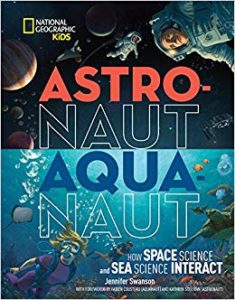
Wednesday: Astronaut, Aquanaut: How Space Science and Sea Science Interact by Jennifer Swanson

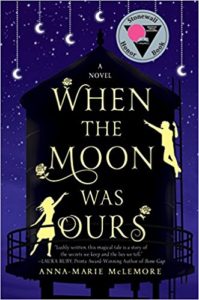
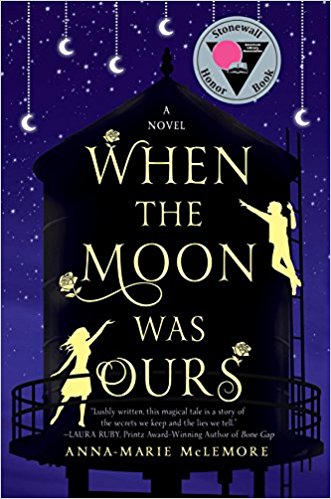
Thursday: When the Moon was Ours by Anna-Marie McLemore

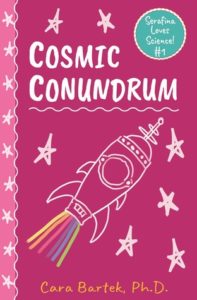
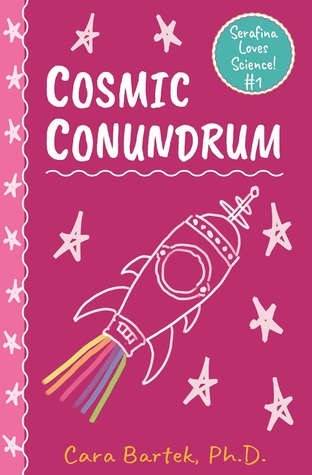
Friday: Serafina Loves Science #1: Cosmic Conundrum by Cara Bartek

Sunday: Author Guest Post by Cara Bartek, Author of the Serafina Loves Science Series

**Click on any picture/link to view the post**

Bold_line

Kellee

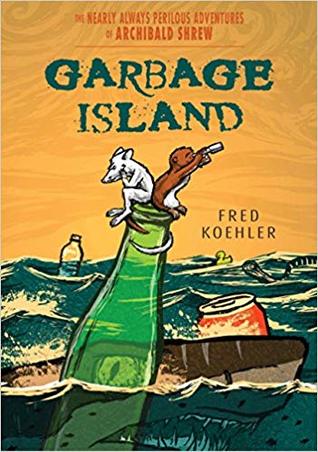
I finished Garbage Island by Fred Koehler this week, and I am SO EXCITED to share it on Friday!

Ricki

I am so sorry to abandon everyone for the second Monday in a row! I have a big deadline tomorrow for a writing project, so I’m unable to log all of my titles. I have a bunch of wonderful new books to share and look forward to next week!

Bold_line

Kellee

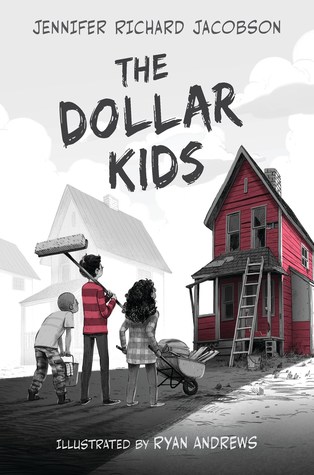
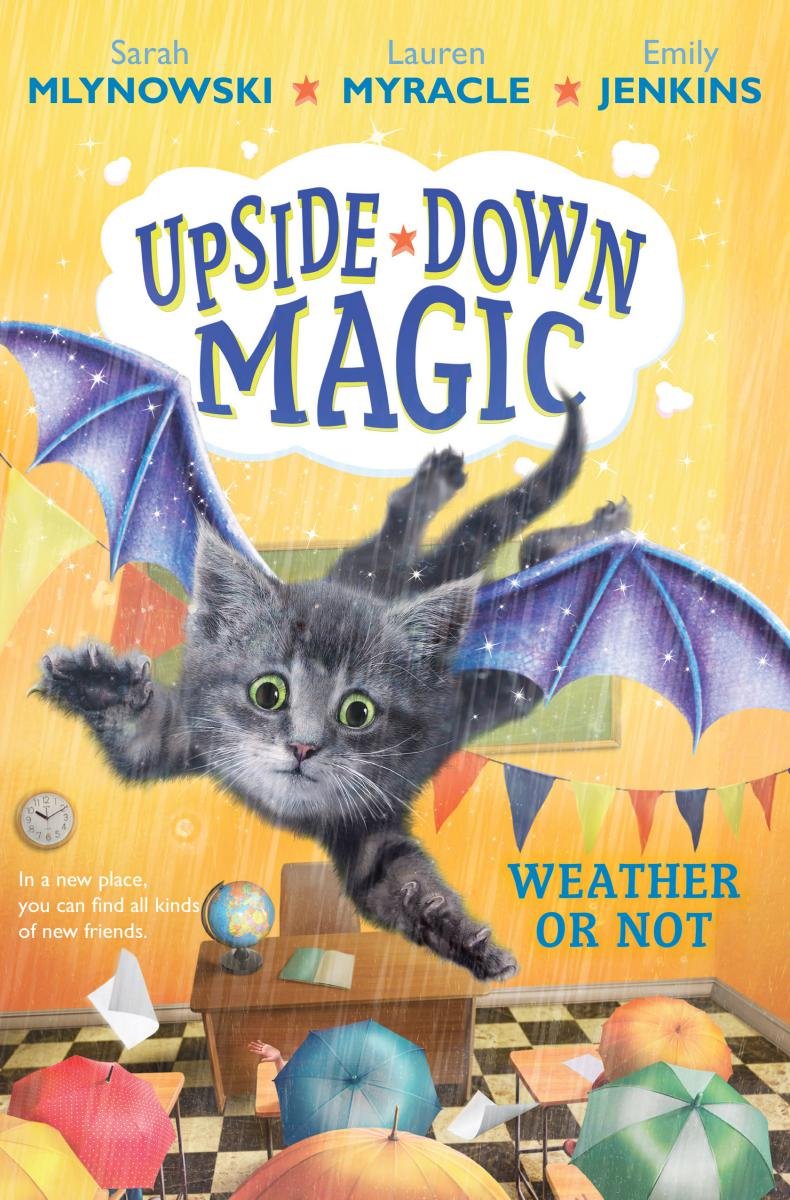
I am almost done with both The Dollar Kids and Upside-Down Magic: Weather or Not. They are both ones that I will definitely be sharing with my students. Upside-Down Magic, the series, is so fun, but it really does make kids think about acceptance and empathy, and The Dollar Kids fits right into that same vein (though I look forward to see what the resolution is).

I am not sure what I am going to read next. I have two novels to read for potential review for the blog, one novel to read for ALAN, and at least three novels to read for NCTE! I am excited for all of them! (Though the realization that NCTE and ALAN are 6 weeks away is really hitting home!)

Bold_line

Tuesday: Teaching Tuesday: Native November is Coming…

Wednesday: Vincent and Theo: The Van Gogh Brothers by Deborah Heiligman

Thursday: The Astonishing Color of After by Emily X.R. Pan

Friday: Blog Tour with Review and Giveaway!: Garbage Island by Fred Koehler

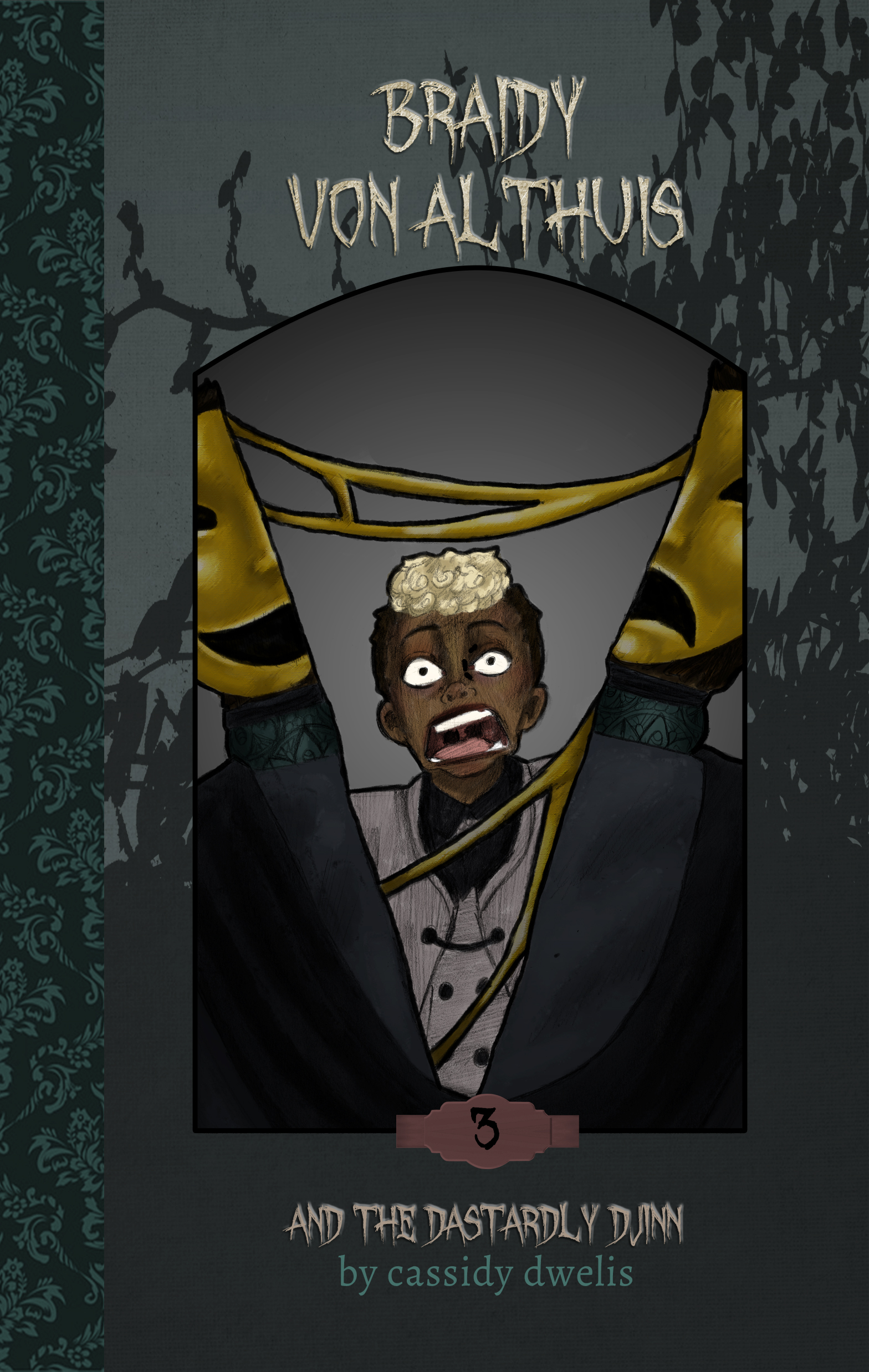
Sunday: “Behold the Power of Books!” by Cassidy Dwelis, Author of Braidy von Althuis series

Bold_line

Link up below and go check out what everyone else is reading. Please support other bloggers by viewing and commenting on at least 3 other blogs. If you tweet about your Monday post, tag the tweet with #IMWAYR!

 Signature andRickiSig

Author Guest Post!: “Things Sure Were Different In My Day” by Cara Bartek, Ph.D., Author of Serafina Loves Science

Share

“Things Sure Were Different In My Day”

I caught myself saying something the other day that I never thought I would say to my children, and I’m still reeling from the sheer horror of how those words felt as they spilled out of my mouth. In my defense, my kids had been complainingin high-pitched, whiny voices that could crack the most ardent sainthow bored they were. As I looked around at their toys, their bikes, their swing set in the backyard, their books, their tablets, without even thinking I said, “How can you girls be bored with so much stuff to do? You should be grateful for all this entertainment because things sure were different in my day.”

That’s right, I said the dreaded phrase: THINGS SURE WERE DIFFERENT IN MY DAY.

The girls looked at me like I was a dog walking on my back legs. I could almost see them trying to calculate what “in my day” looked like, their eyes blinking and squinting as numbers and Greek symbols flashed above their heads like a cartoon. Maybe they saw cavemen walking around in mammoth-skin skinny jeans, or those old-timey gangsters hanging out in saloons with cigars dangling from their lips drinking kombucha teas from Starbucks. It had to be some strange, foreign amalgam of their own reality and the reality they could only assume their screamy old mom came from.

But the truth is, my day was very different. My childhood was arguably simpler. There was no online shopping or Prime deliveries and certainly no social media. Kids “in my day” were not as connected as kids are today, with information at their fingertips. This makes our children much more knowledgeable, and this is great for learning and exploring. Whenever we have a science project or a social studies report due, my girls and I head to the web. We have found loads of practical and fun information. It is also very easy to stay in touch with our friends and family. For anyone who has moved and left behind people they care about, social media can be a wonderful tool to preserve friendships. But as with all wonderful things in this world, there are disadvantages, too. Our tightly connected and information-saturated world means our kids know a lot more about tough realities.

This difficult knowledge hit home when my oldest child’s class practiced emergency protocols. She often would come home and tell me what she would do when “code red” was activated. Her demeanor was calm and even happy as she described the role she would play. One day she happened to see coverage about a school shooting. The reporter spoke about the different ways that students and teachers worked to save the lives of their fellow classmates and staff. The actions they described, such as barricading doors and hiding in closets, were similar to what her class had been practicing. I could see her brain making the connections, and this led to inevitable questions and a very difficult conversation. While this was something I never wanted to talk about with my little girl, it was a conversation that was necessary. Children are exposed to and must face difficult realities.

Difficult Realities for Developing Kids

Kids begin to develop their own identities almost as soon as they are born. They say “no” to gooey green baby food and later wear black lipstick to their grandma’s 80th birthday party. Or maybe that was just me? Regardless of the black lipstick, healthy emotional, physical, and spiritual development is rooted in the development of one’s identity. Difficult circumstances such as school violence, bullying, and even divorce can destabilize or strengthen their identity.

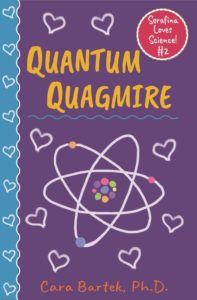
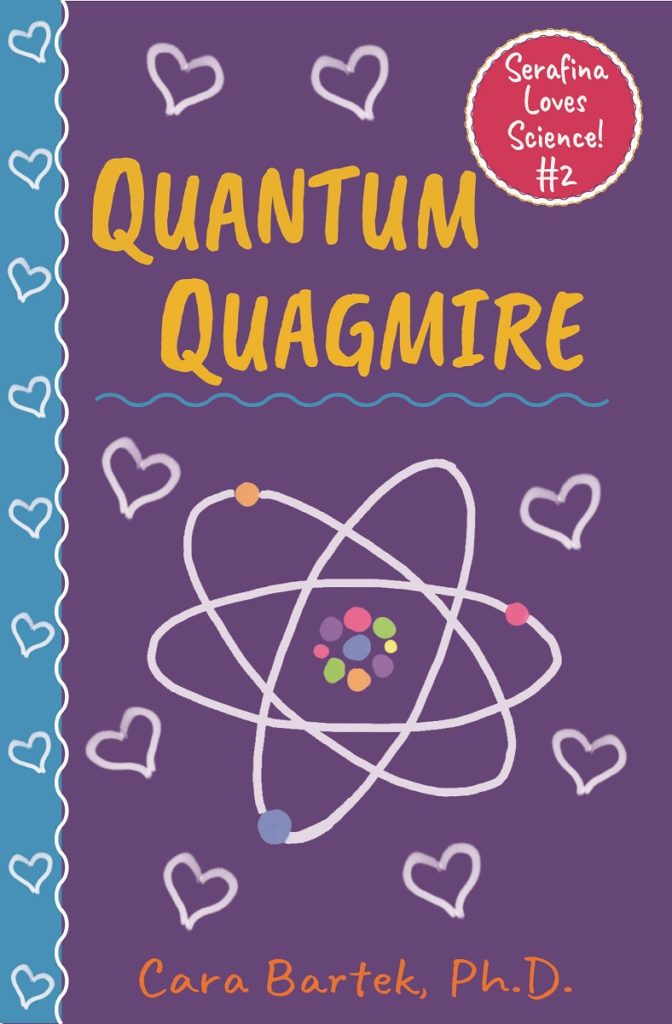
In my science-themed middle grade book, Quantum Quagmire, I cover the topic of divorce. Serafina Sterling learns her best friend, Tori Copper, is going through a difficult time when she starts to lose interest in her most beloved hobbies, bug hunting and pizza eating. And what’s troubling Tori is more difficult for Serafina to understand than cold fusion: Tori’s parents are getting a divorce. 

Serafina turns to her friends and science to try to figure out how to prevent the divorce. Using the scientific method, trial and error, and one disastrous release of a dangerous class pet, Serafina realizes her beloved science has reached its limit. Or has it? In the end, Serafina is able to understand a very important quantum principle and use it to help Tori accept the inevitable split. Serafina and her friends realize that while they may not be able to prevent a divorce, they have the tools to understand and accept the difficult reality.

The purpose of this book was not only to convey one of my favorite quantum concepts, quantum entanglement, but to also help kids navigate through difficult realities they may face. Especially in today’s information heavy world.

 Change versus Acceptance

We all have some control over our lives. Where we live. The job we have. What’s for dinner? We can’t, however, control the weather, what our neighbors are like, and who our bosses are. Kids have even less control. They can’t vote. They can’t get their own place. And they can’t understand what they can and can’t change without some guidance.

In Quantum Quagmire, I emphasize the importance of acceptance. Serafina and her friends try to reunite Tori Copper’s parents. When those efforts fail, her mother helps her understand that sometimes bad things happen in a person’s life. Serafina was able to take these lessons and help Tori accept the change. More importantly, she helped her see that even though her parents would not be living in the same house anymore, they would always be connected as a family. 

Sugarcoating is Good. Perspective is Better. 

My hope is that my entire Serafina Loves Science! series helps lay the groundwork for difficult conversations with children. Our kids will face a lot of challenges and failures in their lives, just as we have “back in our day”. Their relative success or failure in life will be the result of how well they can navigate, recover, and later thrive because of those bumps in the road.

When my oldest daughter recently lost her front tooth and was concerned she would “look weird” in class, I tried giving her a sugarcoated answer. I told her that the little hole in her face was “cute” and that at least she had a very handy soup strainer until her grown-up tooth came in. Those answers seemed to placate her for about 10 minutes. But as I stared at my gap-tooth seven-year-old, with her arms folded tightly across her chest and her brows pinched into a tight knot, I realized she was onto my bogus mom answers. I took a deep breath and tried to put it into perspective for her. I told her that, in my day, I also had been self-conscious about looking like a piano missing a lot of keys, and that her friends probably felt the same way. I listed some of her friends who also were missing their front teeth. She seemed to respond to this and even gave me a hug.

While having a missing tooth isn’t as difficult as divorce or school violence, the method of providing perspective remains. Kids are smart, and they are growing. Providing them with truthful, honest, and loving guidance can make a difference. It certainly did for Serafina and her friends!

Serafina Loves Science
Cosmic Conundrum
Quantum Quagmire
Published by Absolute Love Publishing

Series Summary: Serafina Loves Science! is a middle grade fiction series that focuses on 11-year-old Serafina Sterling. Serafina is just like other kids who have to deal with issues like annoying older brothers, cliques at school, and parents who restrict her use of noxious chemicals. But she has a secret … Serafina loves science! Her passion for all things scientific helps her make new friends and figure out the old ones, understand her family, invent new devices for space travel, and appreciate the basic principles of the universe.

Cosmic Conundrum Summary: See Kellee’s review from Friday!

Quantum Quagmire Summary: Serafina suspects something is wrong when her best friend, Tori Copper, loses interest in their most cherished hobbies: bug hunting and pizza nights. When she learns Tori’s parents are getting a divorce and that Tori’s mom is moving away, Serafina vows to discover a scientific solution to a very personal problem so that Tori can be happy again. But will the scientific method, a clever plan, and a small army of arachnids be enough to reunite Tori’s parents? When the situation goes haywire, Serafina realizes she has overlooked the smallest, most quantum of details. Will love be the one challenge science can’t solve?

About the Author: Cara Bartek, Ph.D. lives in Texas with her husband and two daughters. The Serafina Loves Science! series was inspired in part by her career path and in part by her two little girls. Her hope is to make this world a more equitable and opportune place for her daughters one silly story at a time. Visit www.carabartek.com.

Thank you to Cara and Absolute Love Publishing for sharing this awesome outlook into the changes in childhood in the 21st century and how Serafina deals with these changes!

Serafina Loves Science: Cosmic Conundrum by Cara Bartek, Ph.D.

Share

Serafina Loves Science #1: Cosmic Conundrum
Author: Cara Bartek, Ph.D.
Published by Absolute Love Publishing

Summary: In Cosmic Conundrum, sixth grader Serafina Sterling finds herself accepted into the Ivy League of space adventures for commercial astronauts, where she’ll study with Jeronimo Musgrave, a famous and flamboyant scientist who brought jet-engine minivans to the suburbs. Unfortunately, Serafina also meets Ida Hammer, a 12-year-old superstar of science who has her own theorem, a Nobel-Prize-winning mother, impeccable fashion sense—and a million social media followers. Basically, she’s everything Serafina’s not. Or so Serafina thinks.

Even in an anti-gravity chamber, Serafina realizes surviving junior astronaut training will take more than just a thorough understanding of Newton’s Laws. She’ll have to conquer her fear of public speaking, stick to the rules, and overcome the antics of Ida. How will Serafina survive this cosmic conundrum?

About the Author: Cara Bartek, Ph.D. lives in Texas with her husband and two daughters. The Serafina Loves Science! series was inspired in part by her career path and in part by her two little girls. Her hope is to make this world a more equitable and opportune place for her daughters one silly story at a time. Visit www.carabartek.com.

Also, stop by on Sunday for an author guest post by Cara Bartek including information about the second book in the series!

Praise: “Through the quirky character of Serafina, Cosmic Conundrum shows us that science can be fascinating! Girls, you can embrace your curiosity, follow your passions, and most importantly, just be you! As an environmental scientist, I love this series!” -Emily Thompson, Edwards Aquifer Authority Environmental Scientist

Review: Serafina is a genius. And eleven. Both things that can cause strife which leads us to her story. At its heart, it is a story of an eleven year old navigating a new situation and a new bully with the help of her friends and brains. At its brains, it is a story of a genius young woman who wants to do amazing things with her life and uses her brains in ways that are unexpected and important. Combined, you get a wonderful middle grade story that shows how interesting science can be and how important it is to just be yourself! I am looking forward to reading the second book in the series and getting both for my classroom.

Teachers’ Tools for Navigation: First, the book belongs in libraries so that kids can read them. So many readers are going to enjoy Serafina: your realistic fiction readers who love to read about school and other things they relate to, your science fans, ya=our sci-fi fans who want to think about inventions for the future. It is definitely going to find some readers!

As a cross-curricular text, one way it could be used is to use it to examine science. The back matter of the book shares the science behind much of the book in a “blog post” by Serafina about Newton’s Laws of Motion. While still being told in the voice of Serafina, the blog post is filled with information about all three laws. This blog would be a great place to start then as students read the book, they can look for times when these laws were in effect and also connect them to real life.

Discussion Questions: 

  • Why was Serafina’s invention so different than everyone else’s?
  • How does friendship play a role in Serafina’s story?
  • How does the zero gravity plane work?
  • What does the story say about money and influence versus brains and hard work?
  • How did Newton’s Laws of Motion fit into the story?
  • What do you think is going to happen in the next Serafina story?

Flagged Passages: “I took another deep breath and straightened my shoulders. ‘I got into Musgrave Space Adventure!’ My face-splitting smile returned. ‘It’s the best news ever!’

It was. The Musgrave Space Adventure was not an ordinary space adventure. It was the Ivy League of space adventures, founded by the great scientific entrepreneur Jeronimo Musgrave himself. The Jeronimo Musgrave! The man who, legend has it, personally greeted visitors from space and studied a real-life spaceship while working at the Los Alamos Laboratory in New Mexico in 1995…

Six months earlier, Jeronimo had issued an open call to all scientists under the age of 13 to apply for 50 open spots for a grueling scientific competition to see who could earn a coveted spot in his junior astronaut development program. The application had been killer. Wannabe commercial astronauts had to submit notarized transcripts; a 10-page autobiography complete with philosophical stances on such topics as politics, the environment, and the role of the Kardashian family in modern society; a DNA sample; a fully executed last will and testament; and an original working invention designed to make space travel more bearable.

I had struggled for months trying to think of an invention. While space food definitely left something to be desired–it looked like cat food squeezed out of a toothpaste tube–at least you got to eat it while performing back flips in midair. That seemed bearable enough, even if those flips were just about the only real activities you could enjoy in the shuttle. They seemed to have the water and pooping things down pretty well, too, so I was at a loss. Until it hit me: The hardest part of space travel would be missing everyone back home.” (Chapter 1)

Read This If You Love: Frank Einstein series by Jon Sciezska, Ellie Engineer by Jackson Pearce, Galaxy Girls by Libby Jackson, Hidden Figures by Margot Lee Shetterly, Finding Wonders by Jeannine Atkins, Women in Science by Rachel Ignotofsky, Almost Astronauts by Tanya Lee Stone

Recommended For: 
classroomlibrarybuttonsmall

Signature

**Thank you to Absolute Love Publishing for providing a copy for review!**

When the Moon Was Ours by Anna-Marie McLemore

Share

When the Moon Was Ours
Author: Anna-Marie McLemore
Published October 4, 2016 by Thomas Dunne

Goodreads Summary: To everyone who knows them, best friends Miel and Sam are as strange as they are inseparable. Roses grow out of Miel’s wrist, and rumors say that she spilled out of a water tower when she was five. Sam is known for the moons he paints and hangs in the trees, and for how little anyone knows about his life before he and his mother moved to town. But as odd as everyone considers Miel and Sam, even they stay away from the Bonner girls, four beautiful sisters rumored to be witches. Now they want the roses that grow from Miel’s skin, convinced that their scent can make anyone fall in love. And they’re willing to use every secret Miel has fought to protect to make sure she gives them up.

My Review: This book appears again and again on English department lists for courses about gender and sexuality. After I saw it for the dozenth time, I realized that I had to read it. I loved it so much that I adopted it for my course, and my students read it along with three other texts when we talked about gender and sexuality as they pertain to adolescence. I will admit that a few of my students had difficulty with the magical realism of the book, but overall, they found this book to be incredibly powerful and recommended I continue to use it in the course. There is so much to discuss, and it offers beautiful insight. I attach so many emotions to this book, which proves how much I cared deeply for the characters and content. If you missed this one, you should read it. I promise it will be different than any other book that you’ve read.

Teachers’ Tools for Navigation: The third of my class that read this book developed a great activity to inspire their peers to want to read it. They asked the students: “If an egg could cure your heartsickness, what color would it be? If a flower grew from your wrist, what type of flower would it be? If you could hang a moon from the trees to help you sleep at night, what would it look like? Or, pick another object to connect with.” We had a lot of fun discussing the great possibilities.

Discussion Questions: 

  • Why is this book used often in college English courses? What makes it so impactful?
  • What does this book teach you about people, places, life, and quite frankly, humanity as a whole?
  • There are a very many magically realistic objects in the text. If you examine them closely, what does each mean? For example, why are glass pumpkins growing in the town?

We Flagged: “Miel was a handful of foil stars, but they were the fire that made constellations” (p. 12).

Read This If You Love: Magical realism, books that make you think, books that push binary traditions of gender

Recommended For: 
closereadinganalysisbuttonsmall classroomlibrarybuttonsmall litcirclesbuttonsmall

RickiSig