It’s Monday! What Are You Reading? #IMWAYR 5/13/19

Share

IMWAYR 2015 logo

It’s Monday! What Are You Reading? From Picture Books to YA!

It’s Monday! What are you Reading? is a meme started by Sheila at Book Journeys and now hosted by Kathryn at The Book Date. It is a great way to recap what you read and/or reviewed the previous week and to plan out your reading and reviews for the upcoming week. It’s also a great chance to see what others are reading right now…you just might discover the next “must-read” book!

Kellee and Jen, of Teach Mentor Texts, decided to give It’s Monday! What Are You Reading? a kidlit focus. If you read and review books in children’s literature – picture books, chapter books, middle grade novels, young adult novels, anything in the world of kidlit – join us! We love this meme and think you will, too.

We encourage everyone who participates to support the blogging community by visiting at least three of the other book bloggers that link up and leave comments for them.

Bold_line

Thursday: Guest Review: The Upside of Unrequited by Becky Albertalli

Friday: The Atlas of Monsters by Sandra Lawrence and Stuart Hill

Sunday: Author Guest Post!: “Dares, Diseases, and Decisions: How Wreck Came to Be” by Kirstin Cronn Mills

**Click on any picture/link to view the post**

Bold_line

Kellee Ricki

Happy Mother’s Day to all!

Bold_line

Tuesday: Blog Tour with Giveaway, Educators’ Guide, and Review!: Finding Orion by John David Anderson

Thursday: Guest Review: The Forest Queen by Betsy Cornwell

Sunday: Author Guest Post!: “Combining History with Fantasy – Why and Three Hows” by Malayna Evans, Author of Jagger Jones & the Mummy’s Ankh

Bold_line

Link up below and go check out what everyone else is reading. Please support other bloggers by viewing and commenting on at least 3 other blogs. If you tweet about your Monday post, tag the tweet with #IMWAYR!

 Signature andRickiSig

Author Guest Post!: “Dares, Diseases, and Decisions: How Wreck Came to Be” by Kirstin Cronn-Mills, Author of Wreck

Share

“Dares, Diseases, and Decisions: How Wreck Came to Be” Trigger Warning: Death, Assisted Suicide

In the summer of 2015, an editor said to me, “You know, I’ve never seen a YA novel about assisted suicide.”  And I thought, “Game on,” because I’m a dumbass, of course.  In hindsight, it was a completely stupid idea to tackle. It was hard and huge. But I knew I had a lot of grief I could loan to a book like that, so I had the emotional resonance I’d need to create a character who was dealing with such a huge topic. But outside the necessary emotional knowledge? Big shrug. How the hell could a person write about that topic? After the editor’s dare (she had no idea was a dare), the idea for WRECK came to me in a big gush, while I was working with students at my college. I went to the library in between registration events and wrote a paragraph that outlined the idea. I knew it would be a father/daughter book, and I knew the dad needed a reason for assisted suicide, but I didn’t know what it was.

My first thought: active dude, marathon runner, then he suddenly can’t run. That would make anyone despondent. However, my agent at that time was a very wise, kind woman who acquired a disability in her 30s. She was very clear that Steve couldn’t just have a car accident and want to die—it’s unfair and unethical to suggest that acquiring a disability should mean you should kill yourself. She was exactly right, of course. So then I had to figure out an illness or situation where an awful end was inevitable. Then the dad’s choice would be a decision about agency, and retaining control in an uncontrollable future.

I decided early on not to write about cancer. The loved ones I’ve had with cancer have recovered. I had a loved one with Alzheimer’s, which does, in fact, lead to a horrible end, but it’salso a slow end. To be realistic, the book would have to cover years of time. But then a writing group member was telling me about her friend whose father had ALS, which is maybe more devastating than all of the terrible illnesses combined. I started doing research, and developed the utmost respect for the tenacity ALS patients and families show in the face of an infuriating, destructive, and relentlessly shitty illness.

Before I talked with the man whose dad had ALS, I had been doing  different research about assisted suicide, and ran across an article about an academic (one I remember studying, as an undergrad), who decided to end her life early because she was diagnosed with Alzheimer’s. The New York Times did a story about her decision, and as I read it, I thought, “Here we go. This is what my character’s dad can do.” I knew how to hasten my character’s inevitable, awful end.

Then I had all my story elements: a teen and her dad, an illness to cause a horrific demise, and a way for the dad to carry out his decision. But I still didn’t have a place to set everything.

A few weeks after I scribbled that initial paragraph, we went on our annual family vacation to Duluth, and the light bulb went off again. No matter how many times I stick my feet into Lake Superior, I’m always shocked by how brutally cold the water is. And that cold became a metaphor. Then we spent some time on a beach on Park Point, where I saw an old, beat-up house among all the mansions. Suddenly Tobin and Steve had a place to live.

And then I had to write it. And it was horrifying. All of the emotional resonance I had with grief came in handy. When I wrote the most intense scene between Tobin and her dad, I had to cry for about twenty minutes before I could even get a word on the page. I had more than one weep session, in the process of the book, but none as intense as that one.

Even through all the sadness, the book got shaped, and then the editor who dared me to write it decided against it, and then it got shaped a few more times, and then it found another home, then it lost its second editor, then it found another, and . . . yeah. It was a process, as all books are. But it was the hardest, saddest book I’ve written. It used to be called THE SADDEST BOOK IN THE WORLD, but who’d buy that book?

This book caused more stress and heartache than most of my novels, but I’m proud of WRECK. I found a place to put my grief, I did justice to the father-daughter relationship between Tobin and Steve, and I wrote about one of the most beautiful places in the country. Gut-wrenching tears or not, I’m glad I did it.

More About Wreck by Kirstin Cronn-Mills

Steve’s life as a paramedic and a runner comes to an abrupt halt just as Tobin is preparing her application for a scholarship to art school. With the help of Steve’s personal care assistant (and family friend) Ike, Tobin attends to both her photography and to Steve as his brain unexpectedly fails right along with his body.

Tobin struggles to find a “normal” life, especially as Steve makes choices about how his own will end, and though she fights hard, Tobin comes to realize that respecting her father’s decision is the ultimate act of love.

About the author

Kirstin Cronn-Mills is a writer and teacher. Her novel Beautiful Music for Ugly Children won the 2014 Stonewall Award from the American Library Association, and several of her books have received both state and national recognition. She lives with her family and her goofball animals in southern Minnesota, which is entirely too far from Lake Superior. Her website is: http://kirstincronn-mills.com.

Advance Reviews

“Wreck wrecked me. Kirstin Cronn-Mills has a singular way of getting inside characters heads and making their stories come to life. This book will make you cry.” —Bill Konigsberg, award-winning author of The Music of What Happens?

“A provocative, unflinching, and emotionally-complex deep dive into mortality and loss while Tobin and her father grapple with almost unfathomable decisions. A wrenching and empathetic look at the tumultuous waters and seemingly bottomless grief that can interrupt an otherwise placid life.” —Amanda MacGregor, Teen Librarian Toolbox

“This book has heart and empathy as vast and deep as the Great Lake on which it’s set.” —Geoff Herbach, award-winning author of Stupid Fast and Hooper

“Every so often a book comes along that is so sharp, so moving, so real, and so good, you want to press it into everyone’s hands and say, Read this! READ THIS!” —Courtney Summers, author of Cracked Up to Be, on Beautiful Music for Ugly Children

“A kind and satisfyingly executed portrait.” —Kirkus Reviews

Thank you, Kristin, for your post about going from an idea to a novel!

The Atlas of Monsters: Mythical Creatures from Around the World by Sandra Lawrence and Stuart Hill

Share

The Atlas of Monsters: Mythical Creatures from Around the World
Creators: Sandra Lawrence and Stuart Hill
Published April 23rd, 2019 by Running Press

Summary: A whimsical and imaginative catalog of fantastical beasts and creatures of myth and legend from around the world-complete with a code that needs cracking to uncover the mystery of the monster atlas!

One day a collection of very old maps is found in a dusty library. They show where in the world monsters and creatures from mythology and folklore can be found. According to the notes left with the maps, they were made by Cornelius Walters, an intrepid explorer from the 15th century. But did Walters really make these elaborate maps, or is it all a hoax? The librarian who discovered them is not certain . . . and what are the strange messages in a cryptic code that Walters records in his ship’s log? The codes throughout, once cracked, may indeed lead to something sinister that will happen should the atlas ever be published!

This is a gorgeously illustrated and comprehensive catalog of monsters, beasts, and mythical creatures from around the globe, with an easy-to-read format and incredible detail on each spread. It is many things, all at once:

  • A reference guide: Grouped by continent, this illustrated atlas lists and defines magical creatures from folklore around the world. Readers will find creatures from stories they’ve heard–like leprachauns, manticores, zombies–and learn about lesser-known creatures like the squonk, the tatzelwurm, and the fengu.
  • A journal: Presented as a record created by a fifteenth-century voyager named Cornelius Walters, the book includes Cornelius’s personal anecdotes about encountering monsters during his journey.
  • A mystery: The book also includes notes from a librarian who supposedly found the atlas and is trying to figure out whether Cornelius was making up stories for the monsters…or whether monsters are real.
  • A code: A mysterious code appears on each page and is referred to by both Cornelius and the librarian, encouraging readers to crack it…before it’s too late.

For kids (and adults) who love mythology, the supernatural, mysteries, or code-breaking, this whimsical blend of folklore and fiction provides both a joy and a surprise on every page.

About the Creators: 

Sandra Lawrence is an author and journalist. She is the author of two middle grade history books: Grisly History: Death and Destruction and Grisly History: Trials and Treachery. She lives in London, England.

Stuart Hill is an illustrator and designer. He is especially interested in printed textures, hand-lettering, and map illustration. He lives in England.

Review: This book is really everything that the summary states. It is fascinating! And beautiful! There is some humor because of the voyager’s anecdotes and the librarian’s notes, too, which is always nice. And the addition of the code adds an interactive element to the text. Highly recommended for any teacher teaching mythology or any traditional stories with monsters/creatures.

Teachers’ Tools for Navigation: This text would be perfect for teaching and discussing the Literacy.RL.9 standard which discusses how modern texts uses traditional text. Using The Atlas of Monsters, students can get an introduction to allusion around a discussion of where they have heard of the monsters before. And this is just the beginning! It would be so much fun to make your own Atlas of Monsters!

Discussion Questions: 

  • Find the clues throughout each page, and crack the codes in the book.
  • How many different points of view are shared in the book? How does this affect the reading experience?
  • Pick one of the creatures and do further research and create a longer profile about them.
  • Before reading about one of the continents, do your own research and try to predict which mythical creatures will be mentioned.
  • What are some similarities/differences between what you knew about ____ and what is in the text?

Flagged Passages: 

Read This If You Love: Mythology, Cryptozoology, Folklore, the supernatural, code breaking

Recommended For: 

classroomlibrarybuttonsmall 

Signature

**Thank you Running Press Kids for providing a copy of the book to review!**

The Upside of Unrequited by Becky Albertalli

Share

The Upside of Unrequited
Author: Becky Albertalli
Published: April 11, 2018 by Balzer + Bray

Guest Review by Rachel Krieger

Summary: Seventeen-year-old Molly Peskin-Suso knows all about unrequited love—she’s lived through it twenty-six times. She crushes hard and crushes often, but always in secret. Because no matter how many times her twin sister, Cassie, tells her to woman up, Molly can’t stomach the idea of rejection. So she’s careful. Fat girls always have to be careful.

Then a cute new girl enters Cassie’s orbit, and for the first time ever, Molly’s cynical twin is a lovesick mess. Meanwhile, Molly’s totally not dying of loneliness—except for the part where she is. Luckily, Cassie’s new girlfriend comes with a cute hipster-boy sidekick. Will is funny and flirtatious and just might be perfect crush material. Maybe more than crush material. And if Molly can win him over, she’ll get her first kiss and she’ll get her twin back.

There’s only one problem: Molly’s coworker Reid. He’s an awkward Tolkien superfan with a season pass to the Ren Faire, and there’s absolutely no way Molly could fall for him. Right?

Review: This heart-warming, flirtatious, love-filled book will bring you a wave of nostalgia. From the sunny summer days to all of Molly’s firsts, Becky Albertalli’s story is sure to set your heart a-flutter. The main characters make up an interracial family with LGBTQ members and an amazing affinity for love and forgiveness. With every passing page, the characters grow a little more, figuring out how to live their own lives while still making time for each other. There can be no doubt for the reader that despite all the conflict, Molly and Cassie will survive their teenage years with their strong relationship intact. Albertalli’s firm grasp on young love makes this book sweet and fun, with twists and turns that will make you read until the last word. This is a must read for any young adults, parents of teens, teachers, or anyone who enjoys a quick, uplifting read.

Teacher’s Tool For Navigation: The Upside of Unrequited can start a lot of amazing conversations in the classroom. One really important aspect of the story is the main character, Molly’s weight. She has felt her whole life as though she deserves the harsh words people send her way simply because of her weight. It could be very interesting to start a conversation with students about bullying and the effect it can have on people in the long run. Another important aspect of the story that can be brought up in the classroom is identity. In the novel, Molly self-identifies as fat. She doesn’t necessarily want to become skinnier or have people stop looking at her as fat, but she wishes that her weight didn’t matter. She adopts it as part of her identity and wants acceptance for it. It would be really beneficial to discuss identity and the specific positives and negatives that can stem from it.

Discussion Questions: 

  • What did the first-person point of view do for the story?
  • Did you find the adult characters in this novel realistic?
  • What was important about the familial relationships in this novel?
  • What is the poignancy of the title?

We Flagged: “I think this is me letting go. Bit by bit. I think these are our tiny steps away from each other. Making not-quite-identical footprints in not-quite-opposite directions. And it’s the end of the world and the beginning of the world and we’re seventeen. And it’s an awesome thing.”

Read This If You Loved: Simon vs. The Homo Sapiens Agenda by Becky Albertalli, Aristotle and Dante Discover the Secrets of the Universe by Benjamin Alire Sáenz, Fangirl by Rainbow Rowell, I’ll Give You the Sun by Jandy Nelson

Recommended For: 

classroomlibrarybuttonsmall 

RickiSig

It’s Monday! What Are You Reading? #IMWAYR 5/6/19

Share

IMWAYR 2015 logo

It’s Monday! What Are You Reading? From Picture Books to YA!

It’s Monday! What are you Reading? is a meme started by Sheila at Book Journeys and now hosted by Kathryn at The Book Date. It is a great way to recap what you read and/or reviewed the previous week and to plan out your reading and reviews for the upcoming week. It’s also a great chance to see what others are reading right now…you just might discover the next “must-read” book!

Kellee and Jen, of Teach Mentor Texts, decided to give It’s Monday! What Are You Reading? a kidlit focus. If you read and review books in children’s literature – picture books, chapter books, middle grade novels, young adult novels, anything in the world of kidlit – join us! We love this meme and think you will, too.

We encourage everyone who participates to support the blogging community by visiting at least three of the other book bloggers that link up and leave comments for them.

Bold_line

Tuesday: In-Class Book Clubs in Kellee’s Classes

Thursday: Guest Review: Picture Us in the Light by Kelly Loy Gilbert

Friday: Blog Tour with Review and Giveaway!: We Are (Not) Friends by Anna Kang

Sunday: Author Guest Post!: “Environmental Science Activities for Kids” by Donna Latham, Author of Biomes: Discover the Earth’s Ecosystems with Environmental Science Activities for Kids

**Click on any picture/link to view the post**

Bold_line

Kellee

  • Song for a Whale by Lynne Kelly is a story about a girl connecting with the story of a lonely whale and doing anything to be there for him.
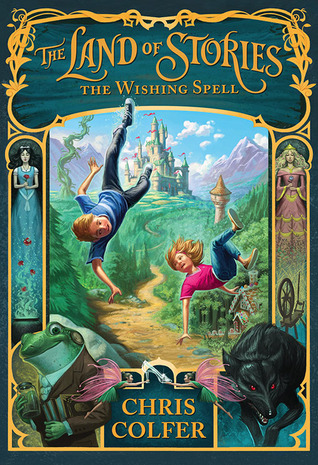
  • My students are right! The Land of Stories true conflict doesn’t truly begin until Beyond the Kingdoms. WOW! Craziness!

Ricki

Ricki is away on maternity leave and will return mid-June. Happy reading!

Bold_line

Kellee

  • Reading: Finding Orion by John David Anderson
  • Listening: Sasquatch and the Muckleshoot by Adam Gidwitz and Joseph Bruchac
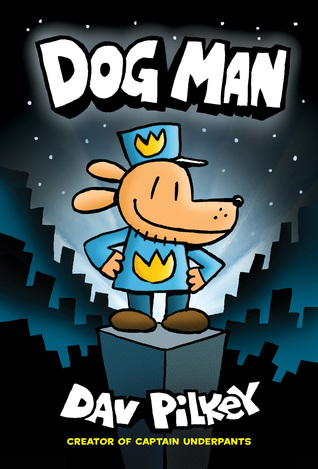
  • Reading with Trent: Ricky Ricotta’s Mighty Robot by Dav Pilkey
  • Listening with Trent: A Bear Called Paddington by Michael Bond
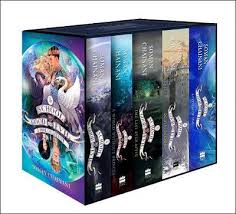
  • Reading next: ?? The True History of Lyndie B. Hawkins by Gail Shepherd, The Mighty Heart of Sunny St. James by Ashley Herring Black, or Glass Sword by Victoria Aveyard

Bold_line

Thursday: Guest Review: The Upside of Unrequited by Becky Albertalli

Friday: The Atlas of Monsters by Sandra Lawrence and Stuart Hill

Sunday: Author Guest Post!: “Dares, Diseases, and Decisions: How Wreck Came to Be” by Kirstin Cronn Mills

Bold_line

Link up below and go check out what everyone else is reading. Please support other bloggers by viewing and commenting on at least 3 other blogs. If you tweet about your Monday post, tag the tweet with #IMWAYR!

 Signature andRickiSig

Author Guest Post: “Environmental Science Activities for Kids” by Donna Latham, Author of Biomes: Discover the Earth’s Ecosystems with Environmental Science Activities for Kids

Share

“Environmental Science Activities for Kids”

We can all agree that Earth is a pretty amazing planet. We’ve got oceans, rainforests, icebergs, and a huge range of diverse species living all over the place!

Earth is amazing, and it’s also enormous. It can be easy to forget and hard to imagine just how much area there is and how many organisms share it. One way that makes it easier is to think of the planet as a whole system and imagine it as being sectioned into different biomes. That’s what I did when I set out to write a book about what it’s like to live on Planet Earth. By taking a tour of the earth’s different biomes, we can see how interconnected all species actually are and how important it is to take of the environment where you live—because whatever happens to the land, water, and air where you are will have repercussions elsewhere in the world.

In Biomes: Discover the Earth’s Ecosystems with Environmental Science Activities for Kids, I focused on nine biomes: deciduous forests, coniferous forests, tropical rainforests, deserts, temperate grasslands, tropical savannas, tundra, mountains, and oceans. Each one had an entire ecosystem to discover and explore, along with distinct species that had adapted specifically to their environment.

Inviting children along the journey is especially important. Climate change is no longer a slow-moving, far-away issue. Intense storms, rising sea levels, and altered seasons are all readily apparent in ways they didn’t use to be, and children are noticing and asking what they can do to be of service to the planet and help keep it healthy.

So, fasten your helmet as we get ready to embark on a bumpy ride around the world on a tour of the nine biomes! Our first stop is some super cool projects designed to get kids thinking about the environment and their role in its care.

MAKE RECYCLED PAPER

This activity is pretty messy! Be sure to do it outside if possible! You can use your homemade paper to take notes or send letters to friends about your biome discoveries.

Caution: Have an adult help with the blender.

Rip scrap paper into teeny pieces. Place about 1/2 cup of it into a blender. Pour about 2 cups of hot water over the paper. Repeat this process until the blender is halfway full. Cover the blender and set it at a low speed. Mix the paper and water until it reaches a pulpy consistency. If the blender gets sluggish, add a bit more water.

Carefully take the pulp outside. Spread newspaper on a flat surface, and place a towel or rag over it. Set it aside for a moment.

Place a window screen in a pan or on a baking sheet. Pour the pulp over the window screen. Wiggle the screen back and forth until the pulp coats it. Gently lift the screen from the pan or sheet, and allow any excess pulp to drip off.

Set the screen on top of the towel and newspaper. Keep the screen’s pulpy side up. Layer a second towel or rag and more newspaper on top of the screen, creating a sandwich. Use a rolling pin or other tool to press on the sandwich from one end to another until you’ve wrung out all the water.

Spread out a third towel or rag in a warm, dry spot, and carefully place the sandwich on top of it. Allow it to dry for 24 hours. If you live in a humid place, it will probably require more time.

When the paper is completely dry, peel the newspaper and towels away. You’ve got homemade paper!
Think About It:

  • How might this method of recycling paper into new paper work for large amounts of paper?
  • Could a factory use this process?
  • What are some ways companies could change this process so they could work with recycled paper from an entire school?

SALT AND SEED GERMINATION

During periods of drought, soil becomes salty. How does salt concentration in soil impact seed germination? Sprout radish seeds to find out!
Use three plastic deli tubs of the same size. Individually label the tubs, each with a different solution identifier: Solution 1: 1 Teaspoon; Solution 2: 2 Teaspoons; Solution 3: 3 Teaspoons.

Place a piece of paper towel or coffee filter at the bottom of each container. Sprinkle quick-sprouting radish seeds over each piece. Label three plastic cups to match the solution identifiers of each deli tub.

Prepare the solutions. Pour 1 cup of distilled water into each plastic cup. In the Solution 1 cup, add 1 teaspoon of salt. In the Solution 2 cup, add 2 teaspoons. In the Solution 3 cup, add 3 teaspoons. Stir to thoroughly dissolve the salt.

Use an eyedropper to add a small amount of each solution to its corresponding container. Make sure you completely wet each paper towel or coffee filter, but don’t drench it. Cover each container with a piece of clingwrap.

Predict what will happen over a two-week period as you tend the seeds. How will different salt solutions impact seed germination? How will the solutions affect seedlings as they begin to grow?

Place the containers in the same location, where they can receive sunlight undisturbed. Monitor the seeds each day. Write down your observations. Add more solution to each corresponding plant. After two weeks, assess and analyze your results. What are your findings about soil content’s impact on germination and growth?

Think About It:

  • What do your conclusions mean for large-scale agriculture?
  • What happens when entire farms have soil that becomes too salty?

TEST YOUR AIR QUALITY

Arctic haze is a certain kind of polar air mass. Chock-full of chemical pollutants from Canada, Eurasia, and the United States, this reddish-brown smog sometimes hangs over Alaska, creating poor air quality. What’s the air quality like where you live? Conduct this test to find out.

Choose four separate areas, both indoors and outdoors, to test the air. Indoors, you might select  your kitchen, and outdoors, target a bush or shrub.

Label one index card for each location. Your labels should match those in your science journal. Use a craft stick to spread petroleum jelly over the cards. Leave each card in a safe spot in its target area. Wait 8 hours.

To collect data, visit each location and gather its card. Use a magnifying glass to study each sample. Do you observe any particles? What color are they? Can you identify what they are? Record your findings in a notebook.

While you’re at each location, use your senses to take in your surroundings. In your journal, write your observations of the area on the correct page. Can you smell anything? Does the air feel dusty or damp? Do you see blowing sand or plant parts? Is there cigarette smoke, industrial emissions, or road construction that are affecting air quality?

Place each sample in a row. Use the magnifying glass to compare and contrast each card. Which sample is the cleanest? The dirtiest? What conclusions can you draw about the air quality?

Think About It:

  • Saharan sunsets occur when gigantic dust clouds from Africa’s Sahara Desert travel thousands of miles across the globe. These produce hazy skies, hotter temperatures, allergies—and beautiful sunsets.

DISCUSSION QUESTIONS

  • What type of biome do you live in?
  • How does Earth sustain life?
  • How are food chains essential to life on Earth?
  • How are living things adapted for life in the coniferous forest?
  • Why are tropical rainforests called “the lungs of the planet?”
  • What changes will occur if the desert continues to be Earth’s fastest growing biome?
  • How are grasses and hooved animals adapted to thrive in wide-open spaces?
  • What happens when ecosystems change?
  • In the interconnected web of life, how do warming temperatures in the Arctic impact the planet?
  • What makes mountains different from other biomes?
  • How does ocean depth impact biodiversity?
  • What have you discovered about Earth’s vast interconnections?

More classroom resources can be found at https://nomadpress.net/wordpress/wp-content/uploads/2014/04/Biomes-Classroom-Guide.pdf.

Biomes: Discover the Earth’s Ecosystems with Environmental Science Activities for Kids
Author: Donna Lathan
Illustrator: Tom Casteel
Published March 5th, 2019 by Nomad Press

About the Book: What’s the difference between a desert and a rain forest? A tundra and a coniferous forest? These are all examples of biomes, and they are all home to plants and animals that are uniquely adapted to live in those environments!

In Biomes: Discover the Earth’s Ecosystems with Science Activities for Kids, middle school kids journey across the planet and visit the world’s nine terrestrial and aquatic biomes to learn about the distinctive climates, geologies, resources, and organisms that can be found there. Kids will wander through forests, sizzle in deserts, shiver in the tundra, slog through marshy waters, and plunge beneath the seas to explore coral reefs. Along the way, readers will encounter the flora and fauna adapted for survival in each unique climate zone. They’ll learn about gnarly krumholz trees, bioluminescent sea creatures, camouflage, carnivorous plants, and blubbery marine critters.

The health and wellbeing of the world’s biomes are an essential part of the balance of the planet as a whole. Biomes and their inhabitants around the world are being threatened by climate change and human behavior. In Biomes, kids will learn how to take steps toward positive change and keep the environment healthy and functioning in a way that best supports sustainable life on Earth!

Biomes includes hands-on STEM activities and critical thinking exercises to encourage readers to consider threats to the environment and figure out ways to be part of the solution. Fun facts, links to online primary sources and other supplemental material, and essential questions take readers on an exploration of the biomes of Earth.

About the Author: Donna Latham is an award-winning author and playwright. She is the author of Amazing Biome Projects You Can Build YourselfBackyard Biology Investigate Habitats Outside Your Door With 25 ProjectsDeciduousForestsDesertsGarbage Investigate What Happens When You Throw It Out With 25 ProjectsNorah JonesOceansRespiration and PhotosynthesisSavannas and Grasslands, and Tundra. She is a member of the Society of Children’s Book Writers and Illustrators and the Society of Midland Authors. She lives in Batavia, Illinois. Website: donnalatham.com

Thank you so much for this guest post about our amazing Earth and how it works!

Blog Tour with Reviews and Giveaway!: We Are (Not) Friends by Anna Kang and Christopher Weyant

Share

We Are (Not) Friends
Author: Anna Kang
Illustrator: Christopher Weyant
Published May 1st, 2019 by Two Lions

Summary: Two fuzzy friends are having a fun playdate when a new pal hops in. As the day continues, each friend feels left out at times. It isn’t so easy to figure out how to act when everything seems to change. With humor and heart, the beloved characters from Theodor Seuss Geisel Award winner You Are (Not) Small navigate a friendship triangle as only they can.

About the Creators: Anna Kang and Christopher Weyant are the creators of Theodor Seuss Geisel Award winner You Are (Not) Small as well as series titles That’s (Not) Mine, I Am (Not) Scared, and We Are (Not) Friends. They also wrote and illustrated Eraser, which was recently honored with The Christopher Award, Can I Tell You a Secret?, and Will You Help Me Fall Asleep? Christopher’s work can also be seen in The New Yorker, and his cartoons are syndicated worldwide. This husband-and-wife team lives in New Jersey with their two daughters and their rescue dog. Visit them at www.annakang.com and www.christopherweyant.com.

Twitter: @annakang27 @christophweyant
Instagram: annakangbooks; christopherweyant
Facebook: Anna Kang – Author; Christopher Weyant

Praise for You Are (Not) Small:

Winner of the 2015 Theodore Seuss Geisel Award
ALA Notable Children’s Book
Parents’ Choice Awards Silver Honor
NPR Best Books of 2014

Kellee’s Review: When I first read this series to my son, he had a hard time because so much of it has to do with reading facial expressions and understanding dialogue; however, now that he is five (vs. three), this series is a favorite! The conversations we have around the two aspects that made this book better for a pre-k kid instead of a preschooler are phenomenal. And although I loved the series as a reader when I first was introduced, now as a mom I appreciate it so much more. The newest one is definitely a perfect one to read with someone Trent’s age as it is about playing nice, sharing friends and toys, and just overall being a kind person. 

Ricki’s Review: I absolutely love this series, and my kids love it, too. I have gifted a few copies of the books to friends with young kids. The messages are wonderful, and they allow for discussions about important topics in age-appropriate ways. For instance, when I was reading it to my two-year-old, I pointed to the picture of the character who was sad and asked questions like, “How does he feel? Why does he feel sad? Have you ever felt sad? Have you ever felt left out? What do you do when you see a friend who is sad?” I particularly liked this book because it focuses on issues of friendship. Sometimes, kids feel like they need to claim other kids as their best friends, and this makes other kids feel left out. Also, sometimes, kids get excluded from play. This is an issue I see in both my two-year-old’s and five-year-old’s classes. The book is accessible for kids of many ages, and the lessons are important. If you haven’t read the books in this series, I recommend them highly!

Teachers’ Tools for Navigation: Read this series with kids! Read it to them, discuss it with them, let them navigate it on their own, and let them love it. Each book has a different lesson without being didactic. And they are just so much fun and have fantastic illustrations!

Discussion Questions: 

  • How does ____ feel? How can you tell?
  • Why do you think ____ feels this way?
  • What could ____ have done to make the situation different?
  • How is what happened in the book like something in your life?

Flagged Passages: 

Read This If You Love: Anything by the Kang and Weyant team

Recommended For: 

classroomlibrarybuttonsmall 

Giveaway!

a Rafflecopter giveaway

Signatureand

**Thank you to Blue Slip Media and Two Lions for copies for review and giveaway!!**