Crankee Doodle by Tom Angleberger

Share

crankee
Crankee Doodle
Author: Tom Angelberger
Illustrator: Cece Bell
Published June 4th, 2013 by Clarion Books

Goodreads Summary: “Yankee Doodle went to town / a-riding on a pony / stuck a feather in his hat / and called it macaroni.” Many know the song “Yankee Doodle Dandy,” but few understand it. This unapologetically silly picture book reveals that the legendary ride to town (and the whole macaroni thing) was all suggested by Mr. Doodle’s overeager pony. This just makes Mr. Doodle cranky: “I do not want macaroni. I do not want a feather. I do not want any other clothing, any other pasta, or any other parts of a bird. I do not want anything that they have in town!” A historical note ends this colorful, comical take on a nonsensical old song.

My Review: Tom Angleberger and Cece Bell are a match made in heaven (good think they found each other)! This book is funny from page one and will definitely get the reader giggling.  The hilarious story line mixed with the colorful, exaggerated, silly illustrations make the reader purely engaged in the book.  This book will definitely make the reader sing “Yankee Doodle” and want to read the book again.

Teacher’s Tools For Navigation: What I love about this book is that it’ll be a perfect read aloud, but it also connects to history by having a historical note in the back. Who wrote “Yankee Doodle”? No one knows, but what a great conversation started and a way to introduce Colonial America.

In the story, the word macaroni is also discussed. Macaroni used to mean fancy, but now it obviously doesn’t. What a way to begin a discussion of how words change meaning over time. There are TONS of words that have changed their meaning.  Going over this and giving would really start a great discussion and could lead to some amazing activities.

Discussion Questions: Why would the British want to make fun of Americans during Colonial America?; How did the horse persuade Doodle to go to town?; How would this story have been different if the pony was the lazy and Doodle wasn’t?

We Flagged: Pony: “Macaroni is just another word for fancy.”
Doodle: “Says you. That’s the silliest thing I ever heard. Macaroni isn’t fancy. It’s macaroni. You know what’s fancy? Lasagna. Lasagna is fancy. Lasagna has all those little ripples in it, and then it gets baked with cheese and tomatoes and vegetables. Then you eat it with some garlic bread. Now, that’s fancy!” (p. 14-15)

Read This If You Loved: Imogene’s Last Stand by Candace Fleming, Rabbit and Robot by Cece Bell, Those Rebels, John and Tom by Barbara Kerley

Recommended For: 

readaloudbuttonsmall classroomlibrarybuttonsmall

Signature

The Boy Who Loved Math by Deborah Heiligman

Share

NF PB 2013

Nonfiction Picture Book Wednesday

Nonfiction Picture Book Wednesday is hosted by Kid Lit Frenzy and was started to help promote the reading of nonfiction texts. Most Wednesdays, we will be participating and will review a nonfiction text (though it may not always be a picture book).
Be sure to visit Kid Lit Frenzy and see what other nonfiction books are shared this week!

lovedmath

The Boy Who Loved Math: The Improbable Life of Paul Erdos
Author: Deborah Heiligman
Illustrator: LeUyen Pham
Published June 25th, 2013 by Roaring Brook Press

Goodreads Review: Most people think of mathematicians as solitary, working away in isolation. And, it’s true, many of them do. But Paul Erdos never followed the usual path. At the age of four, he could ask you when you were born and then calculate the number of seconds you had been alive in his head. But he didn’t learn to butter his own bread until he turned twenty. Instead, he traveled around the world, from one mathematician to the next, collaborating on an astonishing number of publications. With a simple, lyrical text and richly layered illustrations, this is a beautiful introduction to the world of math and a fascinating look at the unique character traits that made “Uncle Paul” a great man.

My Review: I have been on a great streak of picture book narrative biographies and this is another one. I love how the author so cleverly combined Erdos’s story and mathematics without ever overloading the story with numbers. This book is so much fun (and the colorful illustrations add even more playfulness to it) yet teaches so much within its story.  What impresses me the most is just how much the book makes you think about math, want to learn more math, and want to play with numbers. Even in book form, Erdos is making math understandable.

Teacher’s Tools For Navigation: What a great book to use in a math classroom (or elementary classroom). This book makes math sound fun and would definitely be a jumping off point for many different mathematical ideas (such as prime numbers, harmonic primes, amicable numbers, odd/even numbers, Euclid’s Proof of the Infinity of Prime Numbers, Sieve of Eratosthenes, Euler’s map of Konigsburg, negative numbers, the Party Problem, Erdos distinct distances problem, Erdos number, epsilon). Many of the ideas are shared in a fun way and would help be a foundation for scaffolding.

Discussion Questions: What math idea/activity do you find to be the most fun?; Use math to complete Paul’s trick- how old are you in seconds? Minutes? Hours? Days?; What are the answers to Paul’s questions about prime numbers? Do they go on forever? Is there a pattern to them? Why is it that the higher you go up, the farther apart the prime numbers are?

We Flagged: “Paul played with numbers. He added them together and subtracted them. One day he subtracted a bigger number from a smaller number.
The answer was less than 0.
How could a nubmer be <0?
Mama told him numbers below zero are called NEGATIVE NUMBERS. Paul thought that was so cool.
Now he knew for sure he wanted to be a mathematician when he grew up. But first he had to tackle another big problem…” (p. 9)

Read This If You Loved: On a Beam of Light: A Story of Albert Einstein by Jennifer Berne, Jim Henson: The Guy Who Played with Puppets by Kathleen Krull, Lost Boy: The Story of the Man who Created Peter Pan by Jane Yolen, Odd Boy Out: Young Albert Einstein by Don Brown, A Wizard from the Start: The Incredible Boyhood and Amazing Inventions of Thomas Edison by Don Brown, Sandy’s Circus: A Story about Alexander Calder by Tanya Lee StoneMe…Jane by Patrick McDonnell

Recommended For: 

readaloudbuttonsmall classroomlibrarybuttonsmall

This book just makes me want to learn more!

Signature

Barbed Wire Baseball by Marissa Moss

Share

NF PB 2013

Nonfiction Picture Book Wednesday

Nonfiction Picture Book Wednesday is hosted by Kid Lit Frenzy and was started to help promote the reading of nonfiction texts. Most Wednesdays, we will be participating and will review a nonfiction text (though it may not always be a picture book).
Be sure to visit Kid Lit Frenzy and see what other nonfiction books are shared this week!

barbed

Barbed Wire Baseball
Author: Marissa Moss
Illustrated by: Yuko Shimizu
Published April 9th, 2013 by Harry N. Abrams

Goodreads Summary: As a boy, Kenichi “Zeni” Zenimura dreams of playing professional baseball, but everyone tells him he is too small. Yet he grows up to be a successful player, playing with Babe Ruth and Lou Gehrig! When the Japanese attack Pearl Harbor in 1941, Zeni and his family are sent to one of ten internment camps where more than 110,000 people of Japanese ancestry are imprisoned without trials. Zeni brings the game of baseball to the camp, along with a sense of hope.

This true story, set in a Japanese internment camp during World War II, introduces children to a little-discussed part of American history through Marissa Moss’s rich text and Yuko Shimizu’s beautiful illustrations. The book includes author and illustrator notes, archival photographs, and a bibliography.

Review: World War II is the most infamous war and it is taught to all students at some point in their career. They learn about Pearl Harbor and the Atomic Bomb and the Holocause and Hitler, but way too often what happened here in the US is not discussed. All of the Japanese Americans living on the West Coast of the US (62% were US citizens) were interned because our fear overwhelmed us so much that it was the only solution that seemed plausible. I felt that the fear that was felt after the Pearl Harbor bombings is very similar to what was felt 12 years ago today.

Barbed Wire Baseball does discuss the internment camps, but I think that the theme of this book is not about the camps but about how a love of something can turn a poor situation into something else if you are determined.

The story is just one part of the book. What moves it to a higher level is the author and illustrator. Marissa Moss has someone captured the tone of the story. It begins with hopefulness then to hopelessness and finally back to joyousness. Her ability to manipulate the tone throughout makes the story touch the reader even more. Yuko Shimizu’s illustrations are done with a Japenese calligraphy brush and ink adding to the connection the reader will feel with the story. Just beautiful.

Teacher’s Tools for Navigation: I think this book mostly leads to a discussion about the historical event that is shared in the book. In my classroom, I would share it as a read aloud and then jump into a discussion about Zeni, baseball, the internment camps, and World War II. The bibliography in the back of the book gives great websites to visit to continue the discussion.

Discussion Questions: Zeni doesn’t listen to his parents and went for what he wanted: baseball. He overcame his height and those who didn’t believe in him and was able to work towards his dreams. What is something that you’ve overcome even though others didn’t believe in you?; How can you compare/contrast how US citizens responded to Japanese Americans after Pearl Harbor to how US citizens responded to American Muslims after 9/11?

We Flagged: “Zeni stood staring at the dry earth, which was broken up every now and then by a few scrubby bits of green. In all the brown and gray, with a dull, coppery sky overhead, he felt as if he were shrinking into a tiny hard ball.

There was only one thing that could make the desert camp a home – baseball. Zeni unpacked his favorite photo, the one that showed him in uniform, lined up with baseball legends Babe Ruth and Lou Gehrig towering like redwood trees beside him. He had played with the Yankee stars in an exhibition game back home in Fresno, and he hadn’t felt small at all. He pinned the picture up over his bed. He was going to play baseball again. Here, in the desolate middle of nowhere.” (p. 9-10)

Read This If You Loved: Something to Prove by Robert Skead, Silent Star by Bill Wise, Brothers at Bat by Audrey Vernick, Keeping Score by Linda Sue Park, Nonfiction books about World War II or Japanese Internment Camps

Recommended For: 

readaloudbuttonsmall classroomlibrarybuttonsmall closereadinganalysisbuttonsmall

Signature

The Salem Witch Trials: An Unsolved Mystery from History by Jane Yolen & Heidi Elisabet Yolen Stemple

Share

NF PB 2013

Nonfiction Picture Book Wednesday

Nonfiction Picture Book Wednesday is hosted by Kid Lit Frenzy and was started to help promote the reading of nonfiction texts. Most Wednesdays, we will be participating and will review a nonfiction text (though it may not always be a picture book).
Be sure to visit Kid Lit Frenzy and see what other nonfiction books are shared this week!

salem

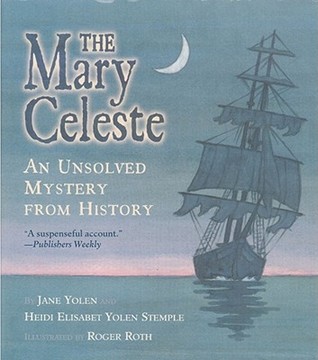
The Salem Witch Trials: An Unsolved Mystery from History
Authors: Jane Yolen & Heidi Elisabet Yolen Stemple
Illustrated by: Roger Roth
Published September 7th, 2004 by Simon & Schuster Books for Young Readers

Goodreads Summary: In 1692 Salem, Massachusetts, witnessed one of the saddest and most inexplicable chapters in American history. When a group of girls came down with a horrible, mysterious bout of illness, the town doctor looked in his medical books but failed to find a reasonable diagnosis. Pretty soon everyone in town was saying the same thing: The girls were ill because they were under a spell, the spell of witchcraft! And still, the question remains: Why did the hysteria occur? The townspeople had many things to worry about back then: smallpox, strife with the local Indians, a preacher demanding higher wages, and the division of land in the community. But did all of those problems justify a witch hunt?

Become a detective as you read this true story, study the clues, and try to understand the hysteria! The Unsolved Mystery from History series is written by acclaimed author Jane Yolen and former private investigator Heidi Elisabet Yolen Stemple. This is an innovative history lesson that’s sure to keep kids thinking throughout.

Review: The mystery of the Salem Witch Trials is one that has haunted the United States for over 3oo years now and is one that students love to read about (and I do, too!). Most of my thoughts about this book are about how awesome this book is for the classroom. The Yolens seemed to have written it specifically for teachers to use.

Teacher’s Tools For Navigation: This book promotes studying history, inquiry, and vocabulary. The book begins with an introduction to a young girl who enjoys unsolved mysteries from history and then the book is set up like her case notebook. Each page of the case notebook includes a narrative nonfiction section about what was going on in Salem, an informational nonfiction section where facts about the story are explained even more in detail, and then there are vocabulary words from the two sections defined for the reader. Finally, in the back of the book the different theories about what could be the answer to the unsolved mystery are shared and briefly discussed. The set up of this book leads to infinite possibilities of being used in the classroom. Students could debate, write research papers, could do their very own case notebook about a different mystery, etc. Another option is to get all of the Unsolved Mystery from History books and have students get into lit circle groups and have each group read a different mystery then research and share.

Discussion Questions: What do you think happened in Salem? [Could be a wonderful debate or cooperative research presentation/paper in class. Have each students, after reading the different theories, decide which they believe is true. Then within their groups come up with evidence that supports the theory that they believe in.]

We Flagged: Narrative Nonfiction Section: One bitterly cold day in February, Betty and Abigail both fell ill, collapsing onto their small rope beds. They convulsed. They contorted. Their arms and legs jerked about. They shouted bizarre, unintelligible words. They crouched under chairs and cowered as if frightened. In other houses in Salem Village several of their friends began to act the same way.

Informational Nonfiction Section: The other sick girls in Salem village included Ann Punam Jr. (age 12), Mercy Lewis (age 19), Mary Walcott (age 16), Elizabeth Hubbard (age 17), and Mary Warren (age 20). Like Abigail, Elizabeth and Mercy were orphans; Mercy may have witnessed her parents being killed in an Indian attack three years earlier in Main. Mary Walcott had lost her mother when she was eight. Ann and Betty were daughters of landowners, but Marry Warren, Elizabeth, and Mercy were maidservants.

Vocabulary: Convulsed: shook violently, Contorted: Twisted into unusual shapes, Unintelligible: Impossible to understand” (p. 12-13)

Read This If You Loved: I Walk in Dread by Lisa Rowe Fraustino, The Sacrifice by Kathleen Benner Duble, Witch Child by Celia Rees, The Witch of Blackbird Pond by Elizabeth George Speare, Witches: The Absolutely True Tale of Disaster in Salem by Rosalyn Schanzer and other nonfiction books about Salem

Recommended For: 

closereadinganalysisbuttonsmall readaloudbuttonsmall

classroomlibrarybuttonsmall litcirclesbuttonsmall

Signature

Each Kindness by Jacqueline Woodson (Kellee’s Review)

Share

kindness

Each Kindness
Author: Jacqueline Woodson
Illustrator: E.B. Lewis
Published October 2nd, 2012 by Nancy Paulsen Books

Summary: Each kindness makes the world a little better

Chloe and her friends won’t play with the new girl, Maya. Maya is different–she wears hand-me-downs and plays with old-fashioned toys. Every time Maya tries to join Chloe and her gang, they reject her. Eventually, Maya plays alone, and then stops coming to school altogether. When Chloe’s teacher gives a lesson about how even small acts of kindness can change the world, Chloe is stung by the lost opportunity for friendship, and thinks about how much better it could have been if she’d shown a little kindness toward Maya.

This unforgettable book is written and illustrated by the award-winning team that created The Other Side and the Caldecott Honor winner Coming On Home Soon. With its powerful message and striking art, it will resonate with readers long after they’ve put it down.

Review: When I read Each Kindness by Jacqueline Woodson for the first time, it made me not only want to share it with everyone I knew, but also make me want to do something nice for others. This pushed me to think more carefully about how everything affects those around me. What I really love about this book is how it can be used in the classroom.

Teacher’s Tool For Navigation: Today, I wanted to share with you what I did with my classes when it came to sharing Each Kindness with them. First, I will say that it affected them as much as it affected me. After reading, we had a great conversation about how the book connected to their lives and what it meant to them. This conversation moved to how Chloe’s actions affected Maya including inferences of Maya’s feelings that were not shared in the book. The insight that my students had were very deep and I believe it made them look at some of the choices they make in their daily lives. We also discussed how Chloe could have changed things. How could she have made Maya feel welcome?  We made multi-flow maps showing the causes/effects of decisions.

Following this discussion, I had the students make an oath to do a kind act that day- something they normally wouldn’t do and recorded them on as a poster to share. Then the next day we shared the kindness we did. Only through discussions and books like this, that students will think more about their choices and how it affects those around them. Since this book read aloud and discussion, my students have brought up Each Kindness often and have made connections to their lives as well as other books. Each Kindness is a book that can make the world a better place, but only if it is shared.

Discussion Questions: What could Chloe have done differently to make Maya seem welcome?; How did Chloe’s (and her friend’s) behavior affect Maya?; What could you do differently to make someone feel kindness?

We Flagged: “This is what kindness does, Ms.Albert said. Each little thing we do goes out, like a ripple, into the world.”

Read This If You Loved: Because Amelia Smiled by David Ezra Stein, Unicorn Thinks He’s Pretty Great by Bob Shea

Recommended For: 

classroomlibrarybuttonsmall readaloudbuttonsmall closereadinganalysisbuttonsmall

This is a great book to read during the first couple of weeks of school. 

Signature

Unicorn Thinks He’s Pretty Great by Bob Shea

Share

unicorn

Unicorn Thinks He’s Pretty Great
Author and Illustrator: Bob Shea
Published June 25th, 2013 by Disney-Hyperion

Goodreads Summary: Hi, I’m Goat.
Things were just fine around here until UNICORN showed up.
So what if he can fly?
Or make it rain cupcakes?
And turn stuff into gold?
Big deal.
I can do some cool stuff too, like…
Hey! What are you doing? Why are you opening the book?
He’s just going to tell you how great he is. Blah, blah, blah.
Go ahead. Just don’t say I didn’t warn you.
Dopey Unicorn.

Review: Nothing can promote this book better than the book trailer – it is a must watch!

And the book trailer truly captures the essence of Unicorn. It is fun and colorful! However, the best part of the book is that after the fun story it does have a message that is so important and is a great read aloud for classrooms.

Teacher’s Tools for Navigation: This book is a great one to read at the beginning of the school year. It promotes friendship and not judging others. It will be a great discussion starter about making new friends and starting the new year with a clean slate as well as self-esteem, being a good loser, and jealousy.

Discussion Questions: Is there someone you met that you judged at first and they turned out to be completely different?; Have you ever thought you were going to win something only to have someone beat you? How did this make you feel?

We Flagged: “Things are a lot different around here since that Unicorn moved in. I thought I was pretty cool when I rode my bike to school. Until that show-off went flying by!

Or the time I made marshmallow squares that almost came out right. He made it rain cupcakes!” (p. 4-8)

Check out Amazon’s Look Inside of Unicorn Thinks He’s Pretty Great to see the illustrations.

Read This If You Loved: Each Kindness by Jacqueline Woodson, Odd Duck by Cecil Castellucci, Elephant and Piggie series by Mo Willems, Boy + Bot by Ame Dyckman, One Cool Friend by Toni Buzzeo, You Will Be My Friend! by Peter Brown, Duck on a Bike by David Shannon

Recommended For: 

readaloudbuttonsmall classroomlibrarybuttonsmall

Remember: Don’t judge a book by its flashy, colorful, magical cover.

Signature

The Day the Crayons Quit by Drew Daywalt

Share

crayons

The Day the Crayons Quit
Author: Drew Daywalt
Illustrator: Oliver Jeffers
Published June 27th, 2013 by Philomel

Goodreads Summary: Crayons have feelings, too, in this funny back-to-school story illustrated by the creator of Stuck and This Moose Belongs to Me 

Poor Duncan just wants to color. But when he opens his box of crayons, he finds only letters, all saying the same thing: His crayons have had enough! They quit! Beige Crayon is tired of playing second fiddle to Brown Crayon. Black wants to be used for more than just outlining. Blue needs a break from coloring all those bodies of water. And Orange and Yellow are no longer speaking—each believes he is the true color of the sun.

What can Duncan possibly do to appease all of the crayons and get them back to doing what they do best?

Review: Told through letters, this story of revolt reminds me a bit of Toy Story in that when I finished, I felt like I needed to get out my crayons and use each one and let them know they are loved. This is probably one of my favorite picture books this year (maybe in general) because it promotes so much that I believe in: art, imagination, and caring. This book would be a great addition to Dot Day activities (Sept. 15, 2013).

Teacher’s Tools for Navigation: Automatically, after reading, I saw that the best way to use this book in the classroom is to first use it to promote imagination. Too many kids aren’t told to use their imagination often any more.

Also, I would use the inanimate object point of views to have students participate in a RAFT writing activity which helps students think about different perspectives. RAFT stands for R: Role, A: Audience, F: Format, T: Topic. In the book, Drew Daywalt was writing as a crayon (R) to their owner (A) in a letter (F) about their use (T). The students could pick their own toy and write a letter to themselves about their use.  So many possibilities!

Discussion Questions: What toy do you use at home more than others? What would this toy say to you? What about a toy you don’t use?; Draw a picture of a zoo or ocean scene, but use your imagination when it comes to size, color, and placement.

We Flagged: “Dear Duncan, It has been great being your FAVORITE color this PAST year. And the year before. And the YEAR before THAT! I have really enjoyed all those oceans, lakes, rivers, raindrops, rain clouds, and clear skies. but the BAD NEWS is that I am so short and stubby, I can’t even see over the railing in the crayon box anymore! I need a break! Your very stubby friend, Blue Crayon”

Read This If You Loved: Who Stole Mona Lisa? by Ruthie Knapp, The Dot and Sky Color by Peter H. Reynolds, Chalk by Bill Thomson, Art & Max by David Weisner, Not a… series by Antoinette Portis, Art by Patrick McDonnell, Perfect Square by Michael Hall, Cloudette by Tom Lichtenheld

Recommended For: 

readaloudbuttonsmall classroomlibrarybuttonsmall

I think we should all get out some crayons today and color; enjoy your crayons, but make sure to use imagination and don’t show favoritism! 

Signature