Biographical Picture Books about Strong Women

Share

NF PB 2014

Nonfiction Picture Book Wednesday

Nonfiction Picture Book Wednesday is hosted by Kid Lit Frenzy and was started to help promote the reading of nonfiction texts. Most Wednesdays, we will be participating and will review a nonfiction text (though it may not always be a picture book).
Be sure to visit Kid Lit Frenzy and see what other nonfiction books are shared this week!
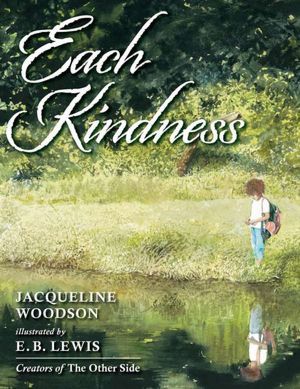
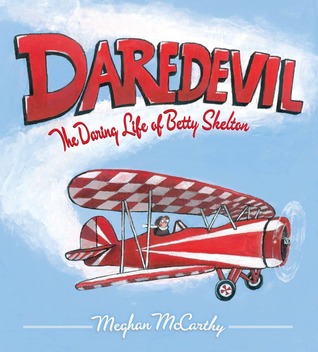
Over the last few years I have noticed a trend (a trend I love!) of biographical picture books about strong women from history. After reading a wonderful batch of them, I decided I need to share all of the amazing ones that I have read.
[Each picture book cover can be clicked on to take you to either Goodreads or a review of mine.]

16075946 17245740

1405439 

13722312 16074914 15818081 

16002028 50175 13330625 

12396987 6891554 

I love that these woman are getting their stories told!

Were there any that I missed? Please share!

Signature

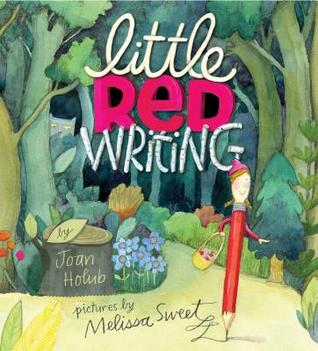
Little Red Writing by Joan Holub

Share

little

Little Red Writing
Author: Joan Holub
Illustrator: Melissa Sweet
Published September 24th, 2013 by Chronicle Books

Goodreads Summary: Acclaimed writer Joan Holub and Caldecott Honoree Melissa Sweet team up in this hilarious and exuberant retelling of Little Red Riding Hood, in which a brave, little red pencil finds her way through the many perils of writing a story, faces a ravenous pencil sharpener (the Wolf 3000)… and saves the day.

My Review and Teachers’ Tools for Navigation: I really think these wonderful woman created this book for just for teachers. It is a perfect, perfect, perfect book for a read aloud AND for a mentor text!

First, the book is a direct allusion to Red Riding Hood and is a great book to throw into the mix when looking at different versions of Red Riding Hood. I can just picture this book, with a version of the original story, Hoodwinked the movie, and Lon Po Po. Wow! What great discussions and activities you could do with this.

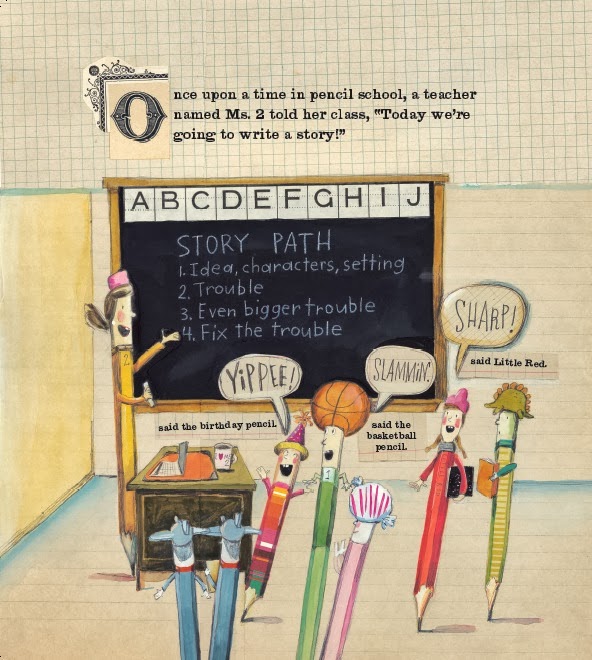
Second, this book is not just an awesome narrative and it includes a great lesson about writing a narrative. Red, our main character, is given the job to write a story and the book takes us through her journey of writing the story where she needs to include characters, setting, trouble, and fixing the trouble. A perfect opportunity to discuss narrative elements.  Taking this even further, it would be so much fun to look at the ideas that each of the other pencils had for their stories and write the entire story. You would have to look at each pencil’s personality and think about how s/he would write the story.

Finally, the book also deals with some parts of speech and how to use them. First are verbs where Red looks for more interesting verbs. She then looks for adjectives to add description. Then learns the importance of conjunctions (but watch out! They can lead to run-on sentences). Finally came adverbs with a bit of punctuation and capitalization discussion. Each part of speech is discussed in a nonboring way and the introduction could be a jumping off point to a deeper discussion.

Discussion Questions: How did Red use adjectives throughout the story to help you visualize the action?; What ended up being Red’s trouble, how did it get worse, and how did she fix it?; Pick one of the other pencils’ stories. How do you think it would end?

We Flagged: 

Read This If You Loved: Red Riding Hood by Brothers Grimm, Lon Po Po by Ed Young, The Day the Crayons Quit by Drew Daywalt

Recommended For: 
readaloudbuttonsmall closereadinganalysisbuttonsmall classroomlibrarybuttonsmall

Signature

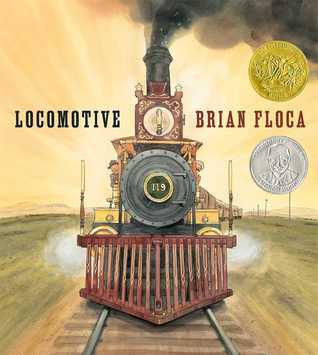
Locomotive by Brian Floca (Ricki’s Review)

Share

locomotive

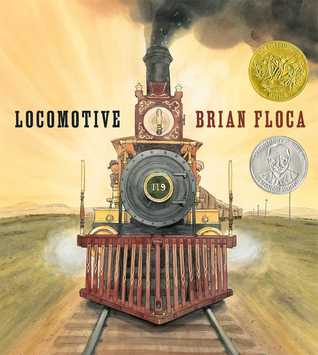
Locomotive
Author and Illustrator: Brian Floca
Published September 3rd, 2013 by Atheneum Books for Young Readers

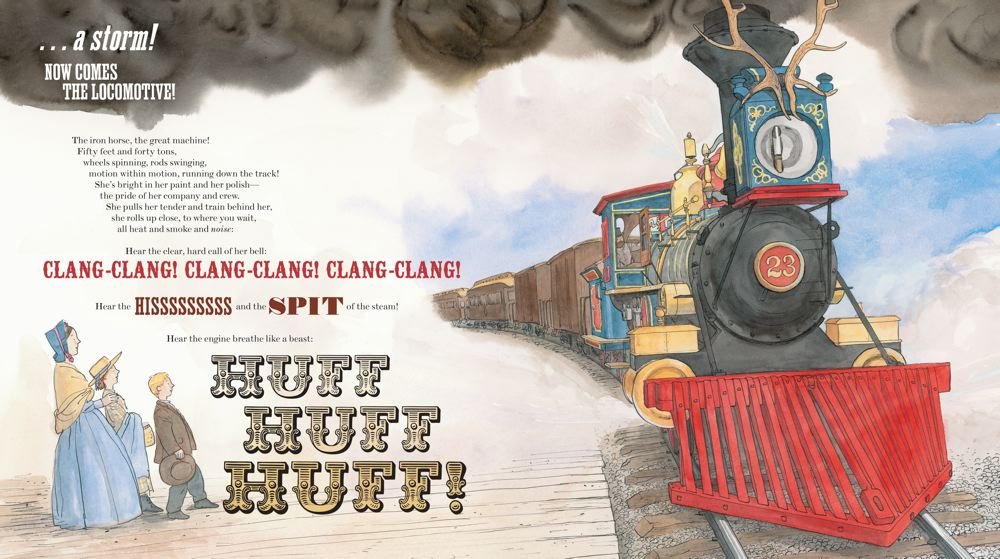
Goodreads Summary: The Caldecott Medal Winner, Sibert Honor Book, and New York Timesbestseller Locomotive is a rich and detailed sensory exploration of America’s early railroads, from the creator of the “stunning” (BooklistMoonshot.

It is the summer of 1869, and trains, crews, and family are traveling together, riding America’s brand-new transcontinental railroad. These pages come alive with the details of the trip and the sounds, speed, and strength of the mighty locomotives; the work that keeps them moving; and the thrill of travel from plains to mountain to ocean.

Come hear the hiss of the steam, feel the heat of the engine, watch the landscape race by. Come ride the rails, come cross the young country!

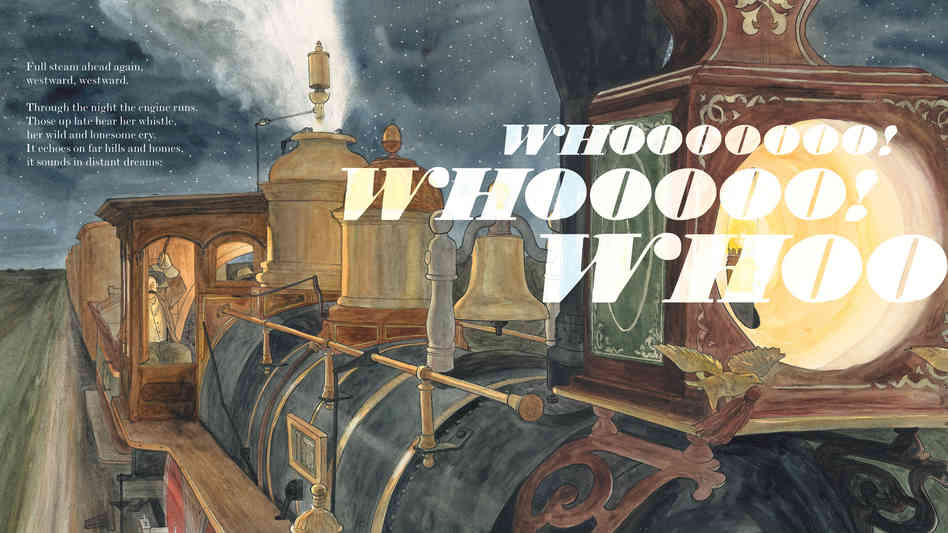
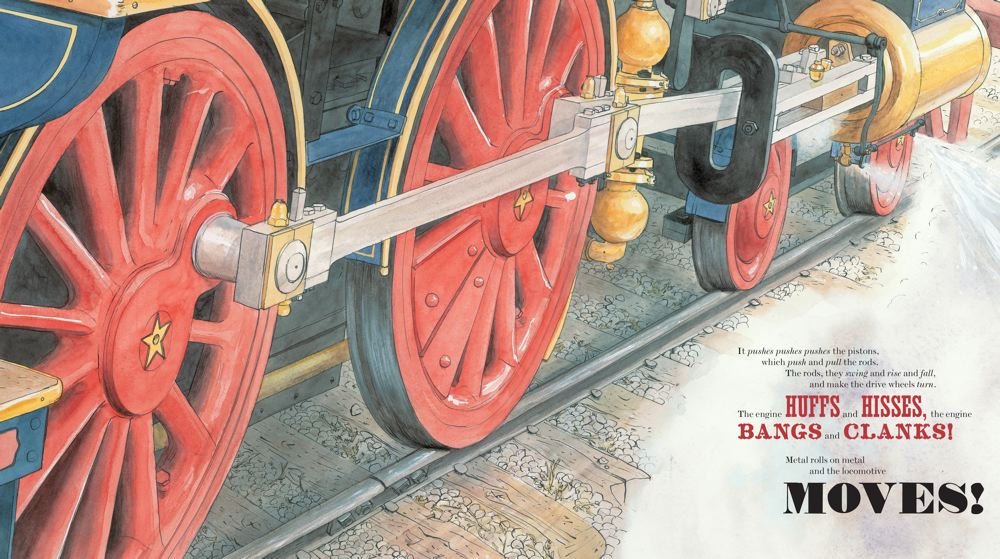
My Review: Filled with a beautiful array images (watercolor, ink, acrylic, etc.), this incredibly well-researched book takes readers on a journey through the summer of 1869. It took my husband and me three nights to read this title to our son because we needed to pause and take in its magic. After I closed the last page of the book, a library copy, my husband looked at me and mouthed (because our son was asleep), “Let’s buy this one.” There is a wonderful balance of factual information about the train and lyrical language that brims with gorgeous figurative language. This book is a standout and well-deserving of the accolades it has received.

**A special thanks to Kellee, who texted me that I had to read this one. You can read her review here.**

Teachers’ Tools for Navigation: I would use this text in any grade level. I envision the eager eyes of elementary school students as their curiosity is piqued… middle schoolers, suddenly interested in trains and this time in our history…or high schoolers, researching the different parts of the train and learning how effective figurative language can be in writing. This book would be a great mentor text to teach creativity. The layout of the pages is so very purposeful, which pave the way for great classroom discussions.

Discussion Questions: How does Brian Floca grab the readers’ attention? How is his writing purposeful?; In what ways does Floca manipulate language?; How does the second person point-of-view add to the story?; What does this book teach us? Go beyond the obvious.; How do the pages differ in their visual appeal? Why do you think this is?

We Flagged:

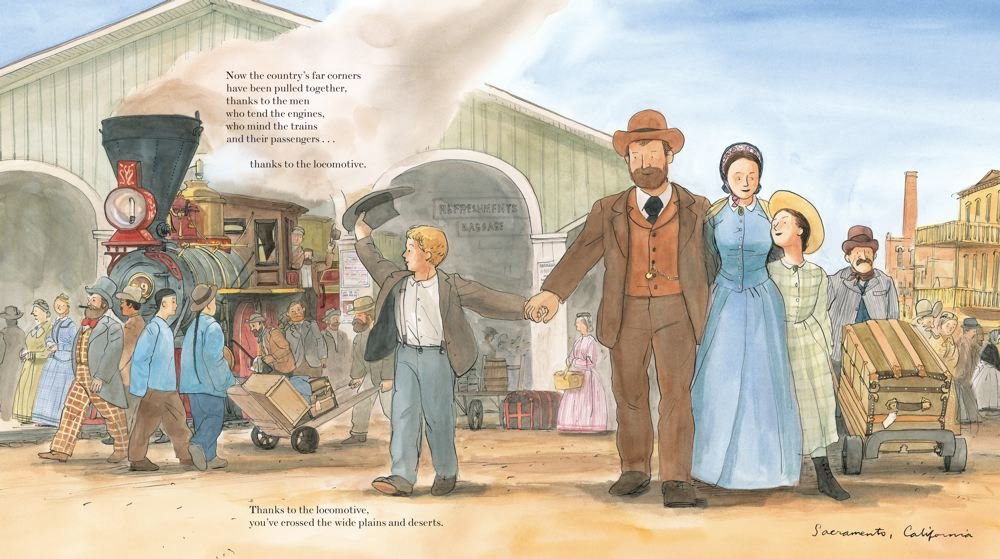
Rather than including a quote here, I wanted to show you a few of the gorgeous spreads with this book. These pages are pulled from images posted on Amazon.

locomotive1 locomotive2 locomotive4 locomotive3

Read This If You Loved: The Polar Express by Chris Van Allsburg

Recommended For: 
readaloudbuttonsmall closereadinganalysisbuttonsmall classroomlibrarybuttonsmall

RickiSig

Flying Solo: How Ruth Elder Soared into America’s Heart by Julie Cummins

Share

NF PB 2014

Nonfiction Picture Book Wednesday

Nonfiction Picture Book Wednesday is hosted by Kid Lit Frenzy and was started to help promote the reading of nonfiction texts. Most Wednesdays, we will be participating and will review a nonfiction text (though it may not always be a picture book).
Be sure to visit Kid Lit Frenzy and see what other nonfiction books are shared this week!

flying

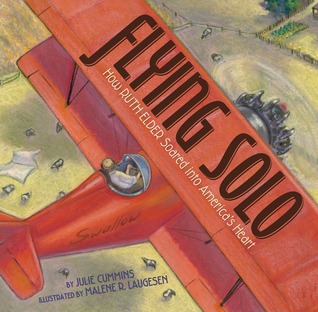
Flying Solo: How Ruth Elder Soared into America’s Heart
Author: Julie Cummins
Illustrator: Malene R. Laugesen
Published July 23rd, 2013 by Roaring Brook Press

Goodreads Summary: In 1927, airplanes were a thrilling but dangerous novelty. Most people, men and women, believed that a woman belonged in the kitchen and not in a cockpit. One woman, Ruth Elder, set out to prove them wrong by flying across the Atlantic Ocean. Ruth didn’t make it, crashing spectacularly, but she flew right into the spotlight and America’s heart. This is the story of a remarkable woman who chased her dreams with grit and determination, and whose appetite for adventure helped pave the way for future generations of female flyers.

My Review and Teachers’ Tools for Navigation: Ruth Elder joins the group of amazing women who have eye-opening picture books about them and how they changed history. (I love this trend!) More and more brilliant and brave women from history are getting recognition through their story being told. Ruth Elder was America’s sweetheart daredevil, and through her crazy feats showed America that woman were brave too. Although Amelia Earhart beat her in her mission to cross the Atlantic, she never stopped pushing herself and the women around her. I would love to see a unit about amazing women in history that uses the slew of beautiful picture books about these woman. One idea would be splitting up kids into groups, having them each read about one of the picture books, maybe doing some extra research, and then sharing with the other groups what they learned. It’d be a great way to give these women the spotlight they deserve.

Discussion Questions: Although Ruth did not cross the Atlantic, why did she become famous?; Ruth had the chance to be a Hollywood star, but she chose to go back to flying–why would she make this decision? Do you agree with her decision?; How did Ruth and her race help change America’s view of woman pilots?

We Flagged: “On August 18, 1929, Ruth and nineteen other women set out to show that women could fly airplanes just as well as men in the first women’s cross-country air race. The pilots had more than headwinds to counteract. One reporter sputtered, “The only thing worse than dames in planes is dames racing planes!””

Look inside Flying Solo at Amazon

Read This If You Loved: Daredevil by Meghan McCarthy, Amelia Lost by Candace Fleming

Recommended For: 
readaloudbuttonsmall classroomlibrarybuttonsmall litcirclesbuttonsmall

Signature

The Tree Lady: The True Story of How One Tree-Loving Woman Changed a City Forever by H. Joseph Hopkins

Share

NF PB 2014

Nonfiction Picture Book Wednesday

Nonfiction Picture Book Wednesday is hosted by Kid Lit Frenzy and was started to help promote the reading of nonfiction texts. Most Wednesdays, we will be participating and will review a nonfiction text (though it may not always be a picture book).
Be sure to visit Kid Lit Frenzy and see what other nonfiction books are shared this week!

tree

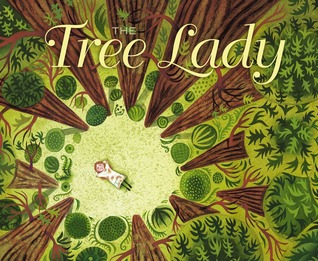
The Tree Lady: The True Story of How One Tree-Loving Woman Changed a City Forever
Author: H. Joseph Hopkins
Illustrator: Jill McElmurry
Published September 17th, 2013 by Beach Lane Books

Goodreads Summary: Unearth the true story of green-thumbed pioneer and activist Kate Sessions, who helped San Diego grow from a dry desert town into a lush, leafy city known for its gorgeous parks and gardens. Katherine Olivia Sessions never thought she’d live in a place without trees. After all, Kate grew up among the towering pines and redwoods of Northern California. But after becoming the first woman to graduate from the University of California with a degree in science, she took a job as a teacher far south in the dry desert town of San Diego. Where there were almost no trees.

Kate decided that San Diego needed trees more than anything else. So this trailblazing young woman singlehandedly started a massive movement that transformed the town into the green, garden-filled oasis it is today. Now, more than 100 years after Kate first arrived in San Diego, her gorgeous gardens and parks can be found all over the city.

Part fascinating biography, part inspirational story, this moving picture book about following your dreams, using your talents, and staying strong in the face of adversity is sure to resonate with readers young and old.

My Review: This book was fascinating! I love learning about strong woman who changed the course of history and did so when no one thought they could. Like Jane Goodall, Kate Sessions love of nature and learning started at a very young age, and she let this desire to learn drive her to become an amazing woman. She is an inspiration and one that many people probably do not even know about.

Teachers’ Tools for Navigation: I can picture this book being used so many different ways in the classroom! It is perfect just for a read aloud and discussion. It has some beautiful descriptive and figurative language that could be discussed. It could also be read in lit circles where each group gets a different strong female who changed the world and then they could each present and share on their woman. AND it has very unique science facts and information that help it cross seamlessly into science.  Just a fantastic book for the classroom.

Discussion Questions: How did Kate change San Diego?; What did Kate do, that others didn’t, to help her transform San Diego?; Why did Kate go to San Diego?; What other women in history does Kate remind you of?

We Flagged: “Kate felt the trees were her friends. She loved the way they reached toward the sky and how their branches stretched wide to catch the light. Trees seemed to Kate like giant umbrellas that sheltered her and the animals, birds, and plants that lived in the forest.” (p. 7)

Read This If You Loved: Me…Jane by Patrick McDonnell, Who Says Women Can’t Be Doctorsby Tanya Lee Stone, Daredevil by Meghan McCarthy, The Boy Who Loved Math by Deborah Heiligman, Brave Girl by Michelle Markel, Primates by Jim Ottaviani, Look Up! by Annette LeBlanc Cate, Players in Pigtails by Shana Corey

Recommended For: 
readaloudbuttonsmall closereadinganalysisbuttonsmall

classroomlibrarybuttonsmall litcirclesbuttonsmall

Signature

Plastic, Ahoy! Investigating the Great Pacific Garbage Patch by Patricia Newman

Share

NF PB 2014

Nonfiction Picture Book Wednesday

Nonfiction Picture Book Wednesday is hosted by Kid Lit Frenzy and was started to help promote the reading of nonfiction texts. Most Wednesdays, we will be participating and will review a nonfiction text (though it may not always be a picture book).
Be sure to visit Kid Lit Frenzy and see what other nonfiction books are shared this week!

plastic

Plastic, Ahoy! Investigating the Great Pacific Garbage Patch
Author: Patricia Newman
Photographer: Annie Crawley
Expected Publication April 1st, 2014 by Millbrook Press

Goodreads Summary: These scientists are on a mission. As part of a research expedition known as SEAPLEX, they’re studying the massive accumulation of plastic in the Pacific Ocean known as the Great Pacific Garbage Patch. As they use the scientific method to conduct their investigation, their adventures will introduce readers to the basics of ocean science and the hazards of plastics.

Kellee’s Review: At my school, I am an adviser of Future Problem Solvers which is a club that looks at futuristic issues and, by using the 6-step creative problem solving process, tries to come up with an action plan to solve the futuristic problems. One of our past competitions had the topic of “Ocean Soup,” and my students and I did research about the state of our ocean. It was at that time that I became aware of the Great Pacific Garbage Patch and was disgusted by it. I am so glad that this book exists now, because just like I didn’t know about the issue, my students didn’t either, until we began researching. This nonfiction picture book takes the reader through a mission with scientists to study the Great Pacific Garbage Patch and by making it a mission instead of just a book of facts will help engage readers in the problem that we are facing now.

Ricki’s Review: I was most impressed by the layout of this clever book. I loved how the design was fashioned to draw the reader’s eye to different portions of text. This will really capture kids’ attention. Young scientists will be sucked into this text, and the zoomed in pictures help readers unravel this mystery at sea along with these real-life explorers. The language and headlines made me smile–“Trash Talk: Nurdles and Triangles” and “Ocean Science: Munching Microbes.” Students in the upper elementary and middle school grades will find much to study in this fascinating text.

Teachers’ Tool for Navigation: This book would be an interesting addition to an environmental unit (or Earth Day activity) to look at how humans affect the Earth. It has a lot of information about why the Garbage Patch is happening and what humans could do to stop it–all information that would fit right in with any discussion about the environment.  The book would also be a great resource whenever talking about being a scientist, the type of work they do, and the type of equipment they use. The book was very informative about all of these things as it followed the scientists on their mission. The author also has a curriculum guide you can access here.

Book Trailer: 

Discussion Questions: What is the explorers’ mission? What do you find interesting about their jobs?; Why is the Great Pacific Garbage Patch happening?; What do humans need to do to diminish the amount of damage we are causing the Earth?

We Flagged: “The SEAPLEX Trash Detectives found plastic in 130 of their 132 net tows over 1,700 miles of open ocean. That’s the same distance as between New York City and Denver, Colorado. ‘To see plastic debris in the middle of this large stretch of ocean, far from land,’ Chelsea said, ‘offers a wake-up call for the way we leave our footprint even on remote pieces of the Earth.'” (p. 36)

Read This If You Loved: Let’s Make a Difference (series) by Gabriella Francine, The Lorax by Dr. Seuss, Island by Jason Chin, Giant Squid by Mary M. Cerullo, Can We Save the Tiger? by Martin Jenkins

Recommended For: 
closereadinganalysisbuttonsmall classroomlibrarybuttonsmall

Signature andRickiSig

**Thank you to Barbara Fisch at Blue Slip Media for providing us with copies for review**

The Beatles Were Fab (and They Were Funny) by Kathleen Krull & Paul Brewer

Share

NF PB 2014

Nonfiction Picture Book Wednesday

Nonfiction Picture Book Wednesday is hosted by Kid Lit Frenzy and was started to help promote the reading of nonfiction texts. Most Wednesdays, we will be participating and will review a nonfiction text (though it may not always be a picture book).
Be sure to visit Kid Lit Frenzy and see what other nonfiction books are shared this week!

beatles

The Beatles Were Fab (and They Were Funny)
Authors: Kathleen Krull & Paul Brewer
Illustrator: Stacy Innerst
Published March 19th, 2013 by HMH Books for Young Readers

Goodreads Summary: Q: How do you find all this business of having screaming girls following you all over the place?
George: Well, we feel flattered . . .
John: . . . and flattened.
When the Beatles burst onto the music scene in the early 1960s, they were just four unknown lads from Liverpool. But soon their off-the-charts talent and offbeat humor made them the most famous band on both sides of the Atlantic. Lively, informative text and expressive, quirky paintings chronicle the phenomenal rise of Beatlemania, showing how the Fab Four’s sense of humor helped the lads weather everything that was thrown their way—including jelly beans.

My Review and Teachers’ Tools for Navigation: I love The Beatles. There has never been anyone like them and that is what this book is about. It is about their popularity, their brilliance, and their humor. I liked how although the book is nonfiction and a biography of the Fab Four, it was about more than that. It was about how they changed over time and how they changed us over time.  It was also quite funny to read some of their interviews and see how they dealt with the fame that enveloped them so quickly. All with illustrations that were a bit zany and like caricatures, but were so well done. This picture book is definitely an excellent introduction to The Beatles for our 21st century kids.

Discussion Questions: How did The Beatles deal with all of the fame when they first became famous? How did their reaction to the fame change over time?; How did their favorite candy cause them trouble in the end?; Which Beatle do you think was the funniest?

We Flagged: “From the time they got together as lads until they became superstars, the Fab Four made music, made history, and made people laugh.”

Read This If You Loved: When Bob Met Woody by Gary Colio, John’s Secret Dreams by Doreen Rappaport, The Beatles by Jeremy Roberts

Recommended For: 
classroomlibrarybuttonsmall

Signature